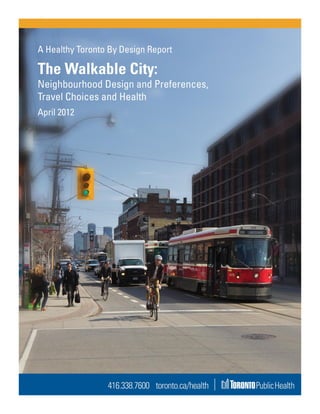
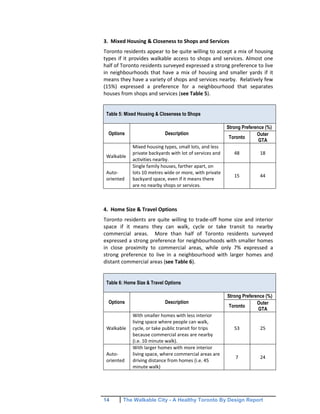
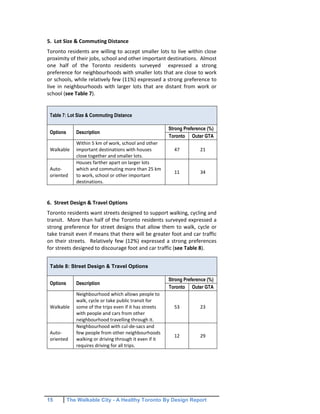
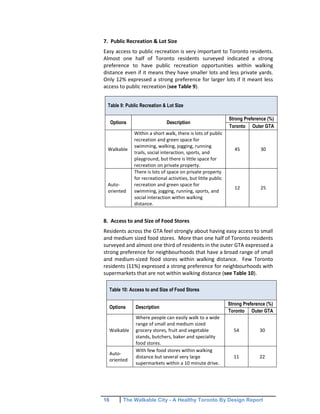
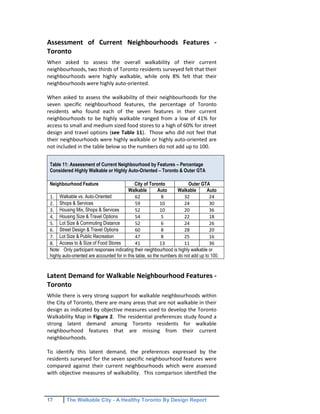
This document summarizes the findings of a residential preferences study conducted in Toronto and Vancouver. The study examined preferences for walkable neighbourhoods and how neighbourhood design relates to travel choices and health. Key findings for Toronto include:
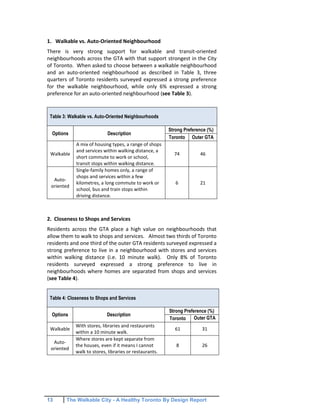
- An overwhelming preference for walkable neighbourhoods, especially in Toronto.
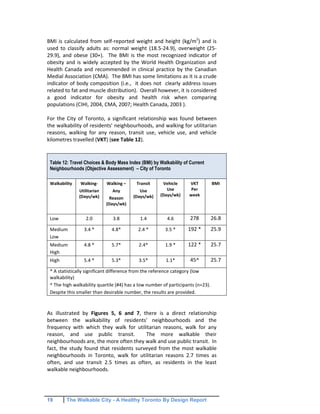
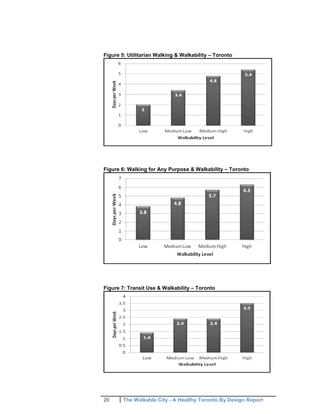
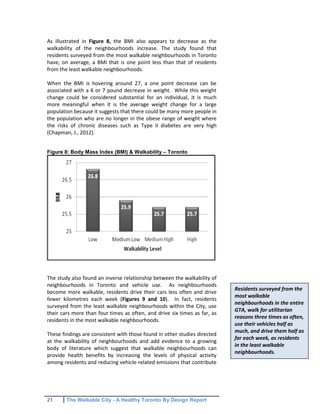
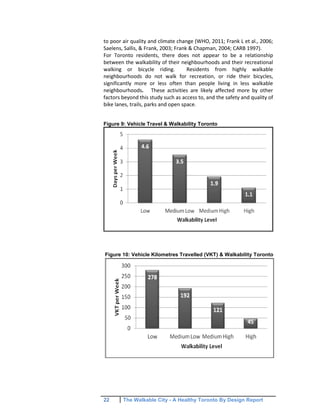
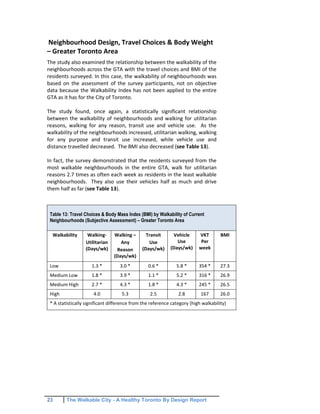
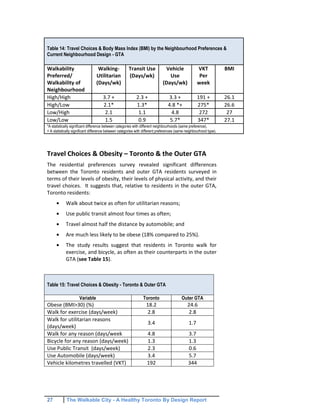
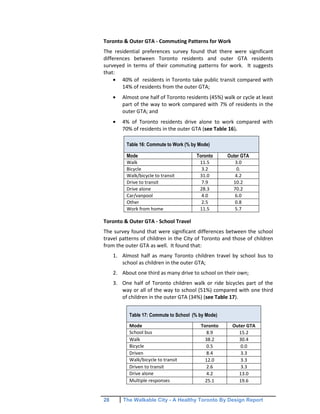
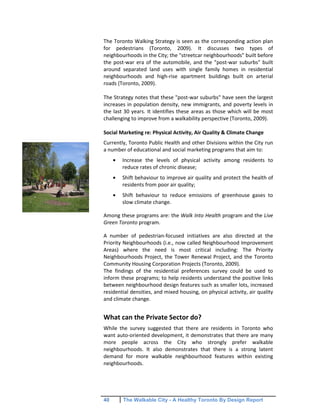
- Living in a walkable neighbourhood is associated with more walking, more transit use, less driving, lower body weights, and greater physical activity.
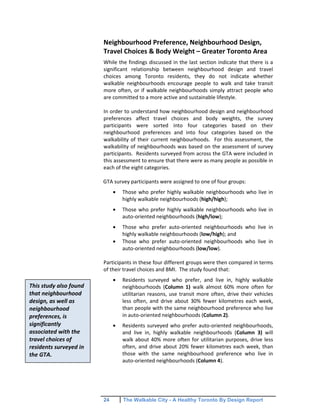
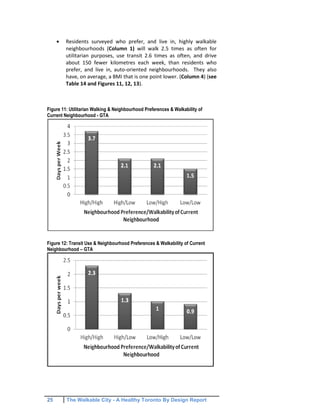
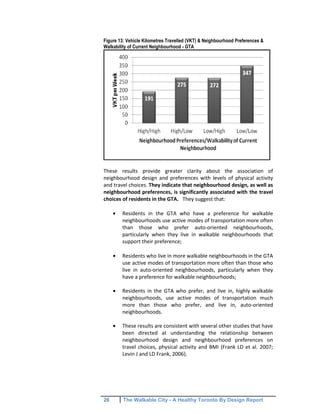
- Neighbourhood design and preferences significantly influence travel choices and body weight. Residents who prefer walkable neighbourhoods have healthier travel patterns.
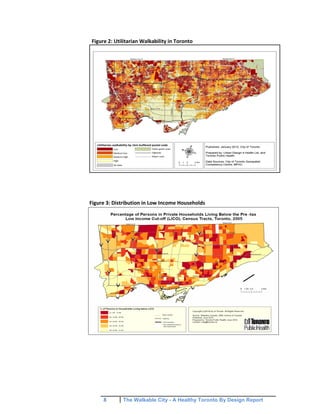
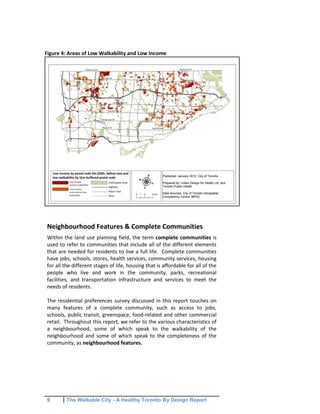
- Many Toronto neighbourhoods that are currently not walkable and have low-income residents could benefit the most from improved walkability.