T
P
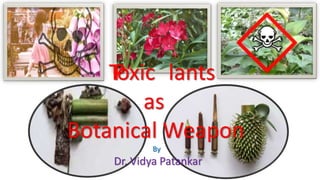
oxic lants
as
Botanical Weapon
By
Dr. Vidya Patankar
Plants
Food
Shelter
Clothes
Medicine
Medicine in a toxic dose is a poison and a poison in a small dose may be a
medicine.
“Everything is poison, there is poison in everything,
only the dose makes a thing not a poison”
Paracelsus (1493-1541)
Bacteria,
fungi,
protists,
plants and
animals.
Poisonous
plants can
cause serious
problems or
even death
Poisoned
weapons
were used in
ancient India
War tactics in
ancient India
have
references to
plant poison.
Natural poisons
“Waters of wells were to be
mixed with poison and thus
polluted.” Chanakya (c. 350–
283 BC)
Susruta Samhita has
described several modes of
poisoning in ancient India.
Historical Evidences
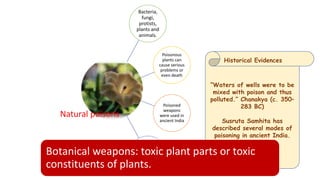
Botanical weapons: toxic plant parts or toxic
constituents of plants.
Datura metel
(Solanaceae)
 Very toxic plants
 homicidal and suicidal purposes
 Almost no other plant has such a history of crime
as datura
 Toxic Parts: seeds are favorite poisons used for
this purpose.
 Toxic Constituents Atropine, Hyoscyamine,
Hyscine and Dutarin
 Fatal Dose: 0.6 - 1 gram
 Fatal period: 24 h
Strychnos nux-vomica
(Loganiaceae)
Poison nut and Kuchila
(Hindi)
Toxic Parts: Juice and roots
Toxic Constituents: Strychnine, Brucine and
Vomicine
Fatal Dose: 15 – 20 mg/kg (1 seed - Oral)
Fatal period: 1 – 2 h
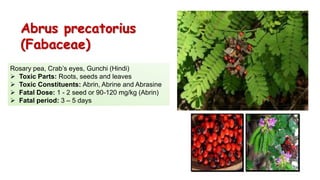
Abrus precatorius
(Fabaceae)
Rosary pea, Crab’s eyes, Gunchi (Hindi)
 Toxic Parts: Roots, seeds and leaves
 Toxic Constituents: Abrin, Abrine and Abrasine
 Fatal Dose: 1 - 2 seed or 90-120 mg/kg (Abrin)
 Fatal period: 3 – 5 days
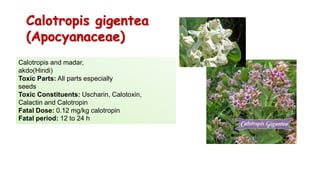
Calotropis gigentea
(Apocyanaceae)
Calotropis and madar,
akdo(Hindi)
Toxic Parts: All parts especially
seeds
Toxic Constituents: Uscharin, Calotoxin,
Calactin and Calotropin
Fatal Dose: 0.12 mg/kg calotropin
Fatal period: 12 to 24 h
Survey Study for toxic plants
Sr.
No.
Plants Name Toxicity
1. Argemone mexicana (Mexican poppy,
Mexican prickly poppy)
It has bright yellow latex, and though poisonous to
grazing animals, is rarely eaten, but has been used
medicinally by many people including those in its
native area.
2. Cryptostegia grandiflora (rubber vine) less than 10 grams of rubber vine leaves can kill a
400 kilogram horse within six days, and it is also
highly toxic to cattle, sheep and goats (Mcgavin MD
1969, Sangle et al. 2015)
3. Calotropis procera (apple of Sodom) Milky sap is toxic
4. Tribulus terrestris (Goat's-head, Bullhead) Toxins can cause liver damage and accumulation of
phylloerythrin in the blood.
5. Azadirachta indica (Neem) Neem oil causes toxic encephalopathy and
ophthalmopathy if consumed in large quantity.
6. Senna occidentalis (Septicweed, Coffee
senna)
The plant is reported to be poisonous to cattle and
tribal children .
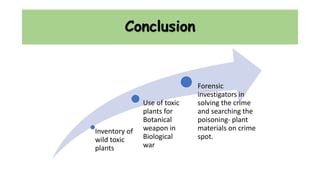
Conclusion
Inventory of
wild toxic
plants
Use of toxic
plants for
Botanical
weapon in
Biological
war
Forensic
investigators in
solving the crime
and searching the
poisoning- plant
materials on crime
spot.
References
• Khajja BS, Sharma M, Singh R, Mathur GK (2011) Forensic Study of Indian
Toxicological Plants as Botanical Weapon (BW): A Review. J Environment
Analytic Toxicol 1:112. doi:10.4172/2161-0525.1000112
• Narayan Reddy K S, Medical Jurisprudence and Toxicology (law practice &
procedure) ALT Publications, Hyderabad (2005).
• Boesche, Roger (2003) “Kautilya’s Arthasastra on War and Diplomacy in
Ancient India”. The Journal of Military History 67 : 9–37. ISSN 0899-3718.
• Qureshi JM, Bano S, Mohammad T, Khan MA (2001) Medicinal potential
ofpoisonous plants of tehsil Kahuta from district
Rawalpindi,Pakistan.Pakistan Journal of Biological Sciences.4 :331-332.
• Ballantyne B, Mars T C, Turner P (1995) Fundamentals of toxicology,
General and Applied Toxicology, McMillan Press.
Toxic Plants Garden
Alnwick Garden
Thank you

Toxic plants.pptx

  • 1.
  • 2.
    Plants Food Shelter Clothes Medicine Medicine in atoxic dose is a poison and a poison in a small dose may be a medicine. “Everything is poison, there is poison in everything, only the dose makes a thing not a poison” Paracelsus (1493-1541)
  • 3.
    Bacteria, fungi, protists, plants and animals. Poisonous plants can causeserious problems or even death Poisoned weapons were used in ancient India War tactics in ancient India have references to plant poison. Natural poisons “Waters of wells were to be mixed with poison and thus polluted.” Chanakya (c. 350– 283 BC) Susruta Samhita has described several modes of poisoning in ancient India. Historical Evidences Botanical weapons: toxic plant parts or toxic constituents of plants.
  • 4.
    Datura metel (Solanaceae)  Verytoxic plants  homicidal and suicidal purposes  Almost no other plant has such a history of crime as datura  Toxic Parts: seeds are favorite poisons used for this purpose.  Toxic Constituents Atropine, Hyoscyamine, Hyscine and Dutarin  Fatal Dose: 0.6 - 1 gram  Fatal period: 24 h
  • 5.
    Strychnos nux-vomica (Loganiaceae) Poison nutand Kuchila (Hindi) Toxic Parts: Juice and roots Toxic Constituents: Strychnine, Brucine and Vomicine Fatal Dose: 15 – 20 mg/kg (1 seed - Oral) Fatal period: 1 – 2 h
  • 6.
    Abrus precatorius (Fabaceae) Rosary pea,Crab’s eyes, Gunchi (Hindi)  Toxic Parts: Roots, seeds and leaves  Toxic Constituents: Abrin, Abrine and Abrasine  Fatal Dose: 1 - 2 seed or 90-120 mg/kg (Abrin)  Fatal period: 3 – 5 days
  • 7.
    Calotropis gigentea (Apocyanaceae) Calotropis andmadar, akdo(Hindi) Toxic Parts: All parts especially seeds Toxic Constituents: Uscharin, Calotoxin, Calactin and Calotropin Fatal Dose: 0.12 mg/kg calotropin Fatal period: 12 to 24 h
  • 8.
    Survey Study fortoxic plants Sr. No. Plants Name Toxicity 1. Argemone mexicana (Mexican poppy, Mexican prickly poppy) It has bright yellow latex, and though poisonous to grazing animals, is rarely eaten, but has been used medicinally by many people including those in its native area. 2. Cryptostegia grandiflora (rubber vine) less than 10 grams of rubber vine leaves can kill a 400 kilogram horse within six days, and it is also highly toxic to cattle, sheep and goats (Mcgavin MD 1969, Sangle et al. 2015) 3. Calotropis procera (apple of Sodom) Milky sap is toxic 4. Tribulus terrestris (Goat's-head, Bullhead) Toxins can cause liver damage and accumulation of phylloerythrin in the blood. 5. Azadirachta indica (Neem) Neem oil causes toxic encephalopathy and ophthalmopathy if consumed in large quantity. 6. Senna occidentalis (Septicweed, Coffee senna) The plant is reported to be poisonous to cattle and tribal children .
  • 9.
    Conclusion Inventory of wild toxic plants Useof toxic plants for Botanical weapon in Biological war Forensic investigators in solving the crime and searching the poisoning- plant materials on crime spot.
  • 10.
    References • Khajja BS,Sharma M, Singh R, Mathur GK (2011) Forensic Study of Indian Toxicological Plants as Botanical Weapon (BW): A Review. J Environment Analytic Toxicol 1:112. doi:10.4172/2161-0525.1000112 • Narayan Reddy K S, Medical Jurisprudence and Toxicology (law practice & procedure) ALT Publications, Hyderabad (2005). • Boesche, Roger (2003) “Kautilya’s Arthasastra on War and Diplomacy in Ancient India”. The Journal of Military History 67 : 9–37. ISSN 0899-3718. • Qureshi JM, Bano S, Mohammad T, Khan MA (2001) Medicinal potential ofpoisonous plants of tehsil Kahuta from district Rawalpindi,Pakistan.Pakistan Journal of Biological Sciences.4 :331-332. • Ballantyne B, Mars T C, Turner P (1995) Fundamentals of toxicology, General and Applied Toxicology, McMillan Press.
  • 11.

Editor's Notes

  • #4 “Waters of wells were to be mixed with poison and thus polluted.” Chanakya (c. 350–283 BC), also known as Kautilya, was adviser and prime minister to the first Maurya Emperor Chandragupta (c. 340–293 BC). Kautilya suggested employing means such as seduction, secret use of weapons, and poison for political gain [5]. He has explained how the poisons are mixed with food, drink, honey, and snuff or sprinkled over cloths, beds, couches, shoes, garlands and jewellary, saddles of horses, etc
  • #5 There are some plants like Cerbera odollum, Cleistanthus collinus, Strychnos nux –vomica,Abrus precatorius, Colchicum autumnale, and Datura metel . Colchicum autumnale poisoning has been compared with arsenic poisoning. Those plants which are allergens or less poisonous, are used in burglary purpose in buses/trains Mucuna prurita is most useful plants for burglary purpose. Sometimes accidental poisoning by poisonous plants has also been observed in tribal area of south Rajasthan.
  • #7 There are some plants like Cerbera odollum, Cleistanthus collinus, Strychnos nux –vomica,Abrus precatorius, Colchicum autumnale, and Datura metel . Colchicum autumnale poisoning has been compared with arsenic poisoning. Those plants which are allergens or less poisonous, are used in burglary purpose in buses/trains Mucuna prurita is most useful plants for burglary purpose. Sometimes accidental poisoning by poisonous plants has also been observed in tribal area of south Rajasthan.