Overview:Tourism laws form the backbone of a fair,
safe, and regulated travel industry, safeguarding the
interests of travelers and service providers alike.
Importance:Traveler Protection: Ensures safety,
compensation for issues like cancellations, and fair
treatment.
Business Regulation: Guides the tourism industry,
ensuring compliance with environmental and labor
laws.
Key Areas Covered: Aviation, immigration,
environmental sustainability, and consumer protection.
• Definition: A travel agent serves as a mediator between travelers and
service providers, offering tailored travel solutions.
• Key Functions:Advisor Role:Travel agents recommend destinations,
book flights, accommodations, and offer visa guidance.
• Problem Solver:They handle emergencies such as cancellations, re-
bookings, and refunds.
1.Types of Travel Agents:Retail Travel Agents: Serve leisure travelers.
2.Corporate Travel Agents: Handle business travel.
3.Online Travel Agents (OTAs): E.g., Expedia, operating primarily
through websites and apps.
4.Specialized Agents: Cater to niche markets such as eco-tourism or
luxury travel.
• Definition:Tour operators design travel experiences by creating packages
that include transport, lodging, excursions, and meals.
• Key Functions:Comprehensive Service: Handle end-to-end travel
arrangements, ensuring a seamless experience.
• Negotiation Power: Partner with hotels, airlines, and local businesses to offer
cost-effective travel packages.
Types of Tour Operators:
1.Inbound Operators: Organize travel experiences for international visitors
coming to a country.
2.Outbound Operators: Send local tourists abroad with curated packages.
3.Domestic Operators: Focus on travel within a single country.
4.Ground Operators: Specialize in local transportation and accommodations
once tourists reach a destination.
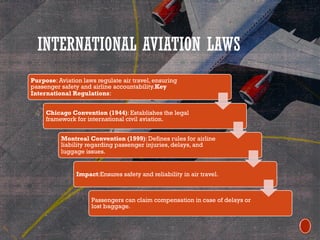
INTERNATIONAL AVIATION LAWS
Purpose: Aviation laws regulate air travel, ensuring
passenger safety and airline accountability.Key
International Regulations:
Chicago Convention (1944): Establishes the legal
framework for international civil aviation.
Montreal Convention (1999): Defines rules for airline
liability regarding passenger injuries, delays, and
luggage issues.
Impact:Ensures safety and reliability in air travel.
Passengers can claim compensation in case of delays or
lost baggage.
1.Purpose:Visa laws control the entry and stay of
foreign visitors, ensuring compliance with a
country’s rules and regulations.CommonVisa
Types:TouristVisa: For leisure travel.
2.BusinessVisa: For short-term work or attending
conferences.
3.StudentVisa: For education abroad.
4.Work Visa: For employment in a foreign country.
• Global Examples:SchengenVisa: Allows travel
to 26 European countries with one visa.
• U.S.Visa Waiver Program: Enables citizens of
select countries to visit the U.S. without a visa for
up to 90 days.
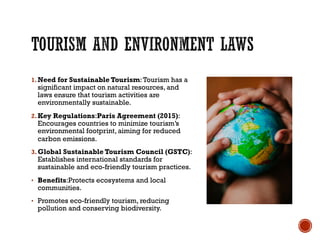
1.Need for Sustainable Tourism:Tourism has a
significant impact on natural resources, and
laws ensure that tourism activities are
environmentally sustainable.
2.Key Regulations:Paris Agreement (2015):
Encourages countries to minimize tourism’s
environmental footprint, aiming for reduced
carbon emissions.
3.Global Sustainable Tourism Council (GSTC):
Establishes international standards for
sustainable and eco-friendly tourism practices.
• Benefits:Protects ecosystems and local
communities.
• Promotes eco-friendly tourism, reducing
pollution and conserving biodiversity.
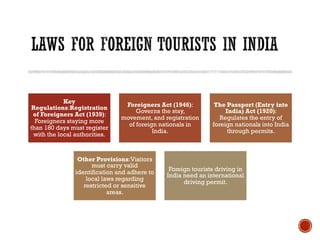
Key
Regulations:Registration
of Foreigners Act (1939):
Foreigners staying more
than 180 days must register
with the local authorities.
Foreigners Act (1946):
Governs the stay,
movement, and registration
of foreign nationals in
India.
The Passport (Entry into
India) Act (1920):
Regulates the entry of
foreign nationals into India
through permits.
Other Provisions:Visitors
must carry valid
identification and adhere to
local laws regarding
restricted or sensitive
areas.
Foreign tourists driving in
India need an international
driving permit.
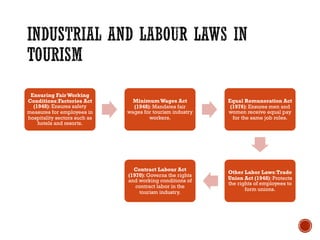
Ensuring Fair Working
Conditions:Factories Act
(1948): Ensures safety
measures for employees in
hospitality sectors such as
hotels and resorts.
Minimum Wages Act
(1948): Mandates fair
wages for tourism industry
workers.
Equal Remuneration Act
(1976): Ensures men and
women receive equal pay
for the same job roles.
Other Labor Laws:Trade
Union Act (1948): Protects
the rights of employees to
form unions.
Contract Labour Act
(1970): Governs the rights
and working conditions of
contract labor in the
tourism industry.
Importance of Compliance:Tourism businesses need various licenses to operate
legally and ensure safety and service standards.
Key Licenses:Liquor License: Required for serving alcohol in hotels, resorts, and
restaurants.
Fire and Safety License: Ensures fire safety compliance in tourist establishments.
Public Amusement License: Needed to host entertainment events and activities
in tourism venues.
Additional Requirements:Swimming Pool License: For hotels or resorts with
pool facilities.
Cybersecurity Compliance: Protects customer data in online booking platforms
and digital transactions.
• Purpose: Protects consumers
from fraudulent activities, non-
performance of services, and
unfair treatment during travel.
• Key Protections:Compensation
for canceled or delayed
services.
• Protection against overbooking
or deceptive marketing.
§ Global Standards:The Global
Sustainable Tourism Council
(GSTC) ensures that businesses
meet sustainable and ethical
standards for tourists.
Tourism Laws and tour operator presentation

Tourism Laws and tour operator presentation

  • 2.
    Overview:Tourism laws formthe backbone of a fair, safe, and regulated travel industry, safeguarding the interests of travelers and service providers alike. Importance:Traveler Protection: Ensures safety, compensation for issues like cancellations, and fair treatment. Business Regulation: Guides the tourism industry, ensuring compliance with environmental and labor laws. Key Areas Covered: Aviation, immigration, environmental sustainability, and consumer protection.
  • 3.
    • Definition: Atravel agent serves as a mediator between travelers and service providers, offering tailored travel solutions. • Key Functions:Advisor Role:Travel agents recommend destinations, book flights, accommodations, and offer visa guidance. • Problem Solver:They handle emergencies such as cancellations, re- bookings, and refunds. 1.Types of Travel Agents:Retail Travel Agents: Serve leisure travelers. 2.Corporate Travel Agents: Handle business travel. 3.Online Travel Agents (OTAs): E.g., Expedia, operating primarily through websites and apps. 4.Specialized Agents: Cater to niche markets such as eco-tourism or luxury travel.
  • 4.
    • Definition:Tour operatorsdesign travel experiences by creating packages that include transport, lodging, excursions, and meals. • Key Functions:Comprehensive Service: Handle end-to-end travel arrangements, ensuring a seamless experience. • Negotiation Power: Partner with hotels, airlines, and local businesses to offer cost-effective travel packages. Types of Tour Operators: 1.Inbound Operators: Organize travel experiences for international visitors coming to a country. 2.Outbound Operators: Send local tourists abroad with curated packages. 3.Domestic Operators: Focus on travel within a single country. 4.Ground Operators: Specialize in local transportation and accommodations once tourists reach a destination.
  • 5.
    INTERNATIONAL AVIATION LAWS Purpose:Aviation laws regulate air travel, ensuring passenger safety and airline accountability.Key International Regulations: Chicago Convention (1944): Establishes the legal framework for international civil aviation. Montreal Convention (1999): Defines rules for airline liability regarding passenger injuries, delays, and luggage issues. Impact:Ensures safety and reliability in air travel. Passengers can claim compensation in case of delays or lost baggage.
  • 6.
    1.Purpose:Visa laws controlthe entry and stay of foreign visitors, ensuring compliance with a country’s rules and regulations.CommonVisa Types:TouristVisa: For leisure travel. 2.BusinessVisa: For short-term work or attending conferences. 3.StudentVisa: For education abroad. 4.Work Visa: For employment in a foreign country. • Global Examples:SchengenVisa: Allows travel to 26 European countries with one visa. • U.S.Visa Waiver Program: Enables citizens of select countries to visit the U.S. without a visa for up to 90 days.
  • 7.
    1.Need for SustainableTourism:Tourism has a significant impact on natural resources, and laws ensure that tourism activities are environmentally sustainable. 2.Key Regulations:Paris Agreement (2015): Encourages countries to minimize tourism’s environmental footprint, aiming for reduced carbon emissions. 3.Global Sustainable Tourism Council (GSTC): Establishes international standards for sustainable and eco-friendly tourism practices. • Benefits:Protects ecosystems and local communities. • Promotes eco-friendly tourism, reducing pollution and conserving biodiversity.
  • 8.
    Key Regulations:Registration of Foreigners Act(1939): Foreigners staying more than 180 days must register with the local authorities. Foreigners Act (1946): Governs the stay, movement, and registration of foreign nationals in India. The Passport (Entry into India) Act (1920): Regulates the entry of foreign nationals into India through permits. Other Provisions:Visitors must carry valid identification and adhere to local laws regarding restricted or sensitive areas. Foreign tourists driving in India need an international driving permit.
  • 9.
    Ensuring Fair Working Conditions:FactoriesAct (1948): Ensures safety measures for employees in hospitality sectors such as hotels and resorts. Minimum Wages Act (1948): Mandates fair wages for tourism industry workers. Equal Remuneration Act (1976): Ensures men and women receive equal pay for the same job roles. Other Labor Laws:Trade Union Act (1948): Protects the rights of employees to form unions. Contract Labour Act (1970): Governs the rights and working conditions of contract labor in the tourism industry.
  • 10.
    Importance of Compliance:Tourismbusinesses need various licenses to operate legally and ensure safety and service standards. Key Licenses:Liquor License: Required for serving alcohol in hotels, resorts, and restaurants. Fire and Safety License: Ensures fire safety compliance in tourist establishments. Public Amusement License: Needed to host entertainment events and activities in tourism venues. Additional Requirements:Swimming Pool License: For hotels or resorts with pool facilities. Cybersecurity Compliance: Protects customer data in online booking platforms and digital transactions.
  • 11.
    • Purpose: Protectsconsumers from fraudulent activities, non- performance of services, and unfair treatment during travel. • Key Protections:Compensation for canceled or delayed services. • Protection against overbooking or deceptive marketing. § Global Standards:The Global Sustainable Tourism Council (GSTC) ensures that businesses meet sustainable and ethical standards for tourists.