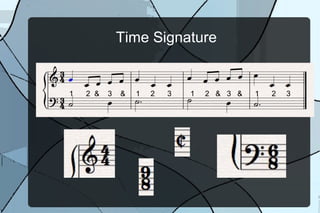
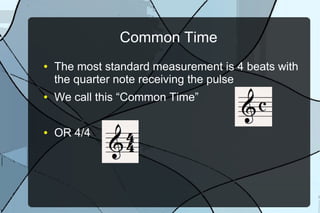
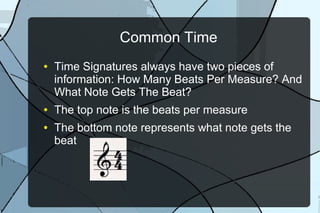
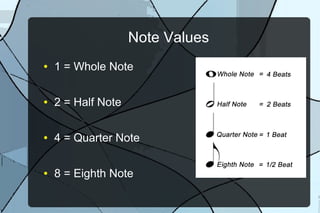
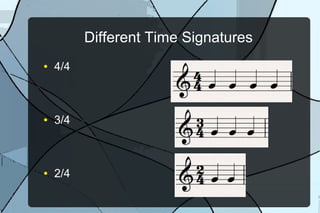
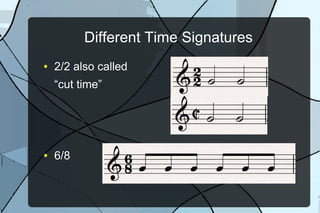
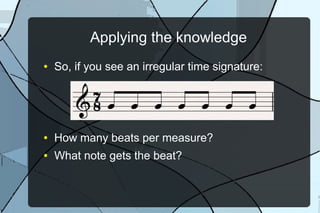
Time signatures are used to define the meter or rhythmic feel of a piece of music. They indicate how many beats are in each measure and which note value receives the beat. The top number tells how many beats per measure, while the bottom number denotes the note value that receives one beat. Common time, represented as 4/4, is the most standard time signature, with four quarter note beats per measure. Other examples include 3/4, 2/4, 2/2 or cut time, and 6/8. Understanding time signatures allows musicians to properly play and interpret the rhythmic feel of a composition.