!!!Tigers!!!
Jenna Coulter
Computer Applications 1
Links
 Tigers!!!
 Scientific Name
 Where  do they live?
 Their diet
 Physical description
 Breeding information
Scientific Name
 The scientific name for tigers are Panthera
 Tigeris.
Where do they live?
 Tigers live in Asia and east Russia. Less than
 100 years ago, tigers lived in all of Asia. But
 now, they have lost 93% of their living range.
Their diet
  Don’t fret…tigers do NOT eat people. But they
  do have an interesting diet of :
 Leopards
 Pythons
 Crocodiles
 Monkeys
 Camels
Physical description
 Tigers color ranges from yellow to red.
 Tigers are much darker in the northern areas.
 Tigers usually live about 15 years.
 The average adult male is 10ft long.
 The average adult female is 8 ft long.
 Its very unusual when tigers are white with
  black.
Breeding information
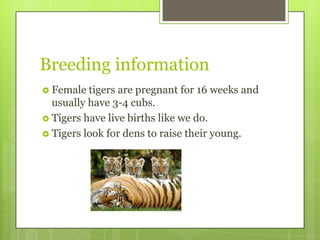
 Female  tigers are pregnant for 16 weeks and
  usually have 3-4 cubs.
 Tigers have live births like we do.
 Tigers look for dens to raise their young.
Special behaviors and/or unique
    anatomical features
 Tigers   usually live near water.

 Tigers
       commonly prey upon the medium and larger
 animals.

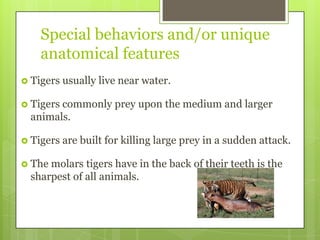
 Tigers   are built for killing large prey in a sudden attack.

 Themolars tigers have in the back of their teeth is the
 sharpest of all animals.
Weird information
 There once was a tiger who was pregnant with
 3 cubs. When she gave birth, the cubs were
 premature. They all died shortly after birth.
 The zoologists felt that the tiger went into a
 deep depression. So they tried to replace the
 cubs with another tiger. There were none
 available so, they dressed up pigs like tigers,
 and gave them to her. She loved them as if
 they were her own.
conclusion
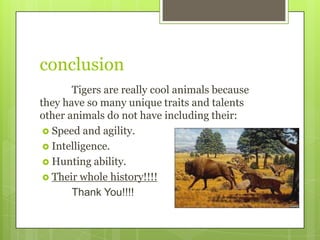
       Tigers are really cool animals because
they have so many unique traits and talents
other animals do not have including their:
  Speed and agility.
  Intelligence.
  Hunting ability.
  Their whole history!!!!
       Thank You!!!!
Links
 Special behaviors and/or unique anatomical
  features
 Weird information
 Conclusion

Tigers!!!

  • 1.
  • 2.
    Links  Tigers!!!  ScientificName  Where do they live?  Their diet  Physical description  Breeding information
  • 3.
    Scientific Name Thescientific name for tigers are Panthera Tigeris.
  • 4.
    Where do theylive? Tigers live in Asia and east Russia. Less than 100 years ago, tigers lived in all of Asia. But now, they have lost 93% of their living range.
  • 5.
    Their diet Don’t fret…tigers do NOT eat people. But they do have an interesting diet of :  Leopards  Pythons  Crocodiles  Monkeys  Camels
  • 6.
    Physical description  Tigerscolor ranges from yellow to red.  Tigers are much darker in the northern areas.  Tigers usually live about 15 years.  The average adult male is 10ft long.  The average adult female is 8 ft long.  Its very unusual when tigers are white with black.
  • 7.
    Breeding information  Female tigers are pregnant for 16 weeks and usually have 3-4 cubs.  Tigers have live births like we do.  Tigers look for dens to raise their young.
  • 8.
    Special behaviors and/orunique anatomical features  Tigers usually live near water.  Tigers commonly prey upon the medium and larger animals.  Tigers are built for killing large prey in a sudden attack.  Themolars tigers have in the back of their teeth is the sharpest of all animals.
  • 9.
    Weird information Thereonce was a tiger who was pregnant with 3 cubs. When she gave birth, the cubs were premature. They all died shortly after birth. The zoologists felt that the tiger went into a deep depression. So they tried to replace the cubs with another tiger. There were none available so, they dressed up pigs like tigers, and gave them to her. She loved them as if they were her own.
  • 10.
    conclusion Tigers are really cool animals because they have so many unique traits and talents other animals do not have including their:  Speed and agility.  Intelligence.  Hunting ability.  Their whole history!!!! Thank You!!!!
  • 11.
    Links  Special behaviorsand/or unique anatomical features  Weird information  Conclusion