Building on Jive
Technology, Culture and Collaboration
Global technology company - focused on technology strategy, custom software delivery
and how that affects your business
4500 employees, 40 Offices, 15 countries
But working in even more locations than that - many of our PS people are working directly
with clients from the clients’ offices
Decentralised ‘flat’ organisation - founded in Chicago in 1993 - but that’s no longer really
‘HQ’ - our operations teams are there, London, Bangalore, Xi’an, as well as in many other
locations. And with increasing frequency we’re seeing operations folks working outside our
offices too. Our leadership team (of 10) is also spread across the globe - with decision
making pushed out to the regions, to project teams and to the folks who are ‘doing the
work’.
In summary: distributed, decentralised, dramatically different working contexts
ANDY YATES
Technology Strategy
Comms & Collaboration
@yrnclndymn
ayates@thoughtworks.com
So 
 this is me. I look after technology strategy with a focus on the digital workplace
As a company we are organised along business lines - there are IT teams for each of the
functions (sales, marketing, finance) embedded within those functions.
One function, mine, that is perhaps a bit different from those in similar companies, explicitly

are set up to serve the needs of ‘all our people’ - and a large part of that is ‘communications
and collaboration’
Scope - to help colleagues:
Stay connected with the community
Tap into the collective knowledge pool
Work together to solve problems
62GB
230,000+
I have a confession to make.
I *love* email
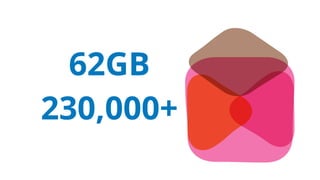
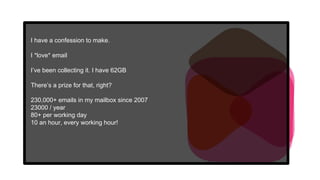
I’ve been collecting it. I have 62GB
There’s a prize for that, right?
230,000+ emails in my mailbox since 2007
23000 / year
80+ per working day
10 an hour, every working hour!
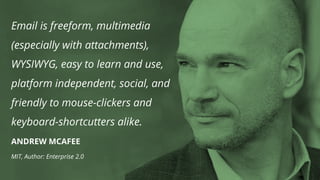
Email is freeform, multimedia
(especially with attachments),
WYSIWYG, easy to learn and use,
platform independent, social, and
friendly to mouse-clickers and
keyboard-shortcutters alike.
ANDREW MCAFEE
MIT, Author: Enterprise 2.0
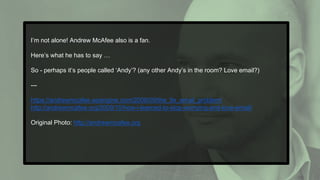
I’m not alone! Andrew McAfee also is a fan.
Here’s what he has to say 

So - perhaps it’s people called ‘Andy’? (any other Andy’s in the room? Love email?)
---
https://andrewmcafee.wpengine.com/2006/09/the_9x_email_problem/
http://andrewmcafee.org/2009/10/how-i-learned-to-stop-worrying-and-love-email/
Original Photo: http://andrewmcafee.org
zero
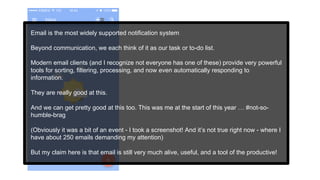
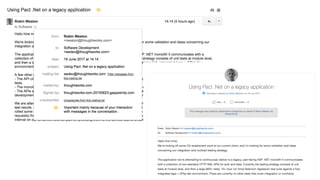
Email is the most widely supported notification system
Beyond communication, we each think of it as our task or to-do list.
Modern email clients (and I recognize not everyone has one of these) provide very powerful
tools for sorting, filtering, processing, and now even automatically responding to
information.
They are really good at this.
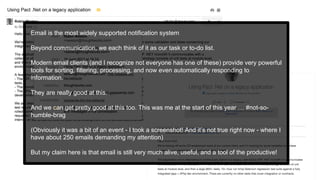
And we can get pretty good at this too. This was me at the start of this year 
 #not-so-
humble-brag
(Obviously it was a bit of an event - I took a screenshot! And it’s not true right now - where I
have about 250 emails demanding my attention)
But my claim here is that email is still very much alive, useful, and a tool of the productive!
So what am I doing here on this stage?!?
We use Jive - why?
I’m going to share our 3 primary reasons - illustrated by some pictures from my walking
around the city
Just as an aside - I find huge inspiration in the city, which, as the ultimate community,
should not really be a surprise, I guess. But by paying attention to the details, I find a rich
seam of metaphors, and often it’s a great way to think about the problems we are trying to
solve, and in thinking about how enterprise communities work
THE SHOP FRONT
The Shop Front
-- no internal comms function - everyone is responsible for comms - peer-to-peer
-- landing pages are key to this - here’s everything you need to know, at a glance
-- Bring together all the content on a topic, for a group or about an initiative ..
-- And a place to go find all those landing pages. Just as if you want to find electronics, you
know to head to Tottenham Court Rd 

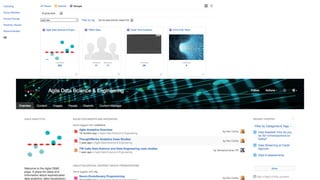
So if I were looking to buy me some agile data science 
 I can type it in, and find out
who’s selling :)
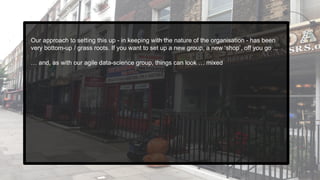
Our approach to setting this up - in keeping with the nature of the organisation - has been
very bottom-up / grass roots. If you want to set up a new group, a new ‘shop’, off you go ...

 and, as with our agile data-science group, things can look 
 mixed
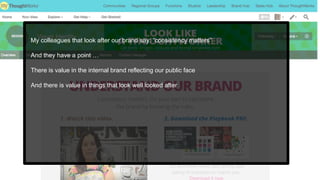
My colleagues that look after our brand say: “consistency matters”
And they have a point 

There is value in the internal brand reflecting our public face
And there is value in things that look well looked after
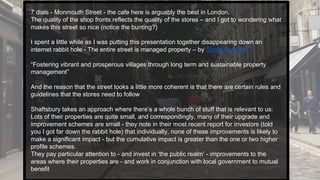
7 dials - Monmouth Street - the cafe here is arguably the best in London.
The quality of the shop fronts reflects the quality of the stores – and I got to wondering what
makes this street so nice (notice the bunting?)
I spent a little while as I was putting this presentation together disappearing down an
internet rabbit hole - The entire street is managed property – by Shaftsbury PLC
“Fostering vibrant and prosperous villages through long term and sustainable property
management”
And the reason that the street looks a little more coherent is that there are certain rules and
guidelines that the stores need to follow
Shaftsbury takes an approach where there’s a whole bunch of stuff that is relevant to us:
Lots of their properties are quite small, and correspondingly, many of their upgrade and
improvement schemes are small - they note in their most recent report for investors (told
you I got far down the rabbit hole) that individually, none of these improvements is likely to
make a significant impact - but the cumulative impact is greater than the one or two higher
profile schemes.
They pay particular attention to - and invest in ‘the public realm’ - improvements to the
areas where their properties are - and work in conjunction with local government to mutual
benefit
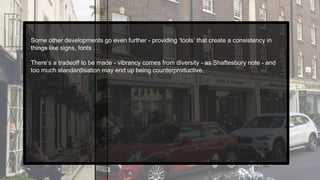
Some other developments go even further - providing ‘tools’ that create a consistency in
things like signs, fonts 

There’s a tradeoff to be made - vibrancy comes from diversity - as Shaftesbury note - and
too much standardisation may end up being counterproductive.
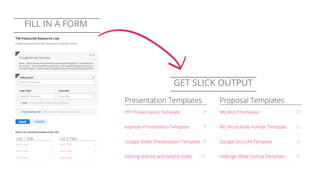
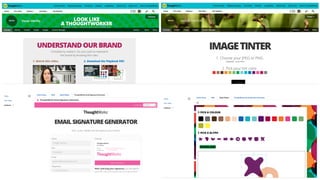
FILL IN A FORM
GET SLICK OUTPUT
FILL IN A FORM
So let’s turn back to the intranet again, and put this into practice 

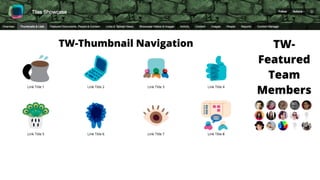
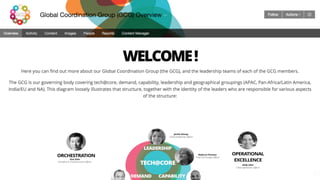
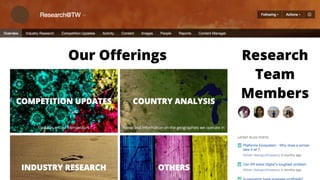
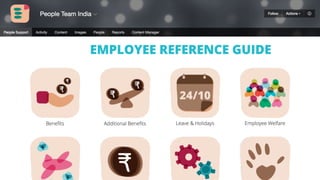
.. our team has been building on Jive - extending the out-of-the-box features by creating
custom tiles, that make it really easy for our group owners to keep things on brand, and
looking good ...
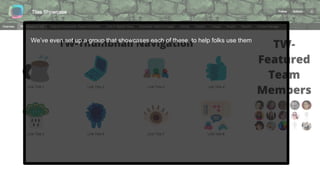
We’ve even set up a group that showcases each of these, to help folks use them
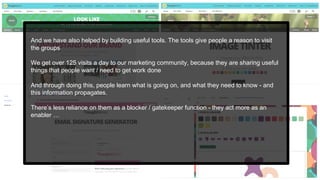
And we have also helped by building useful tools. The tools give people a reason to visit
the groups
We get over 125 visits a day to our marketing community, because they are sharing useful
things that people want / need to get work done
And through doing this, people learn what is going on, and what they need to know - and
this information propagates.
There’s less reliance on them as a blocker / gatekeeper function - they act more as an
enabler 

SERENDIPITY
I just touched on this when I mentioned that tools bring people into groups, where they find
out what else is happening - it’s this that is our second advantage of Jive - the opportunities
the platform presents for accidental or serendipitous discovery of information
Email lists are walled gardens - if you are a member, you get the messages, but searching
history (where you weren’t involved) isn’t great
You are also limited in what you can follow - can’t do it by people, by tags, or by single
conversation thread
What we’d like to encourage is more serendipitous discovery of information
-- When a colleague I’m following comments in a group that I am not, I find out about that
conversation
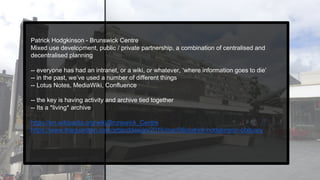
Patrick Hodgkinson - Brunswick Centre
Mixed use development, public / private partnership, a combination of centralised and
decentralised planning
-- everyone has had an intranet, or a wiki, or whatever, ‘where information goes to die’
-- in the past, we’ve used a number of different things
-- Lotus Notes, MediaWiki, Confluence
-- the key is having activity and archive tied together
-- Its a *living* archive
https://en.wikipedia.org/wiki/Brunswick_Centre
https://www.theguardian.com/artanddesign/2016/mar/08/patrick-hodgkinson-obituary
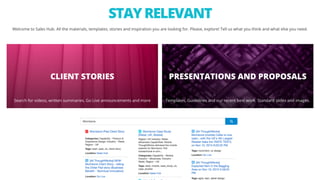
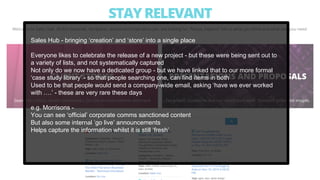
Sales Hub - bringing ‘creation’ and ‘store’ into a single place
Everyone likes to celebrate the release of a new project - but these were being sent out to
a variety of lists, and not systematically captured
Not only do we now have a dedicated group - but we have linked that to our more formal
‘case study library’ - so that people searching one, can find items in both
Used to be that people would send a company-wide email, asking ‘have we ever worked
with 
.’ - these are very rare these days
e.g. Morrisons -
You can see ‘official’ corporate comms sanctioned content
But also some internal ‘go live’ announcements
Helps capture the information whilst it is still ‘fresh’
PEOPLE, SEARCH:
CONNECTION
The third differentiator I want to cover concerns search too.
With email / mailing lists, search also tends to be more ‘document’ based - I search for
‘tensor flow’ and I get all the threads that mention tensor flow
but we’ve done a bit of research into search within the organisation. And it turns out that, in
general, if I’m searching internally I’m not looking for ‘the answer’. If I was looking for that,
I’d go to Google, or to StackOverflow - outside of the company. Internally, more often than
not, I’m looking for the experts - people I can work with, in order to solve the problem
together.
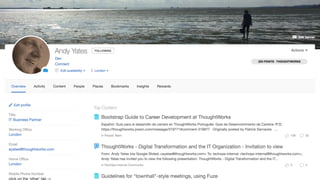
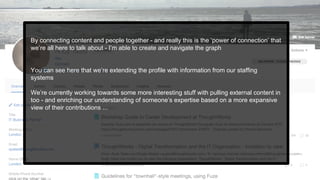
By connecting content and people together - and really this is the ‘power of connection’ that
we’re all here to talk about - I’m able to create and navigate the graph
You can see here that we’re extending the profile with information from our staffing
systems
We’re currently working towards some more interesting stuff with pulling external content in
too - and enriching our understanding of someone’s expertise based on a more expansive
view of their contributions ...
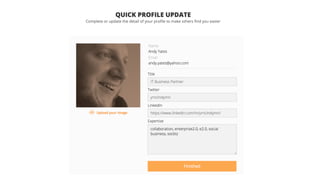
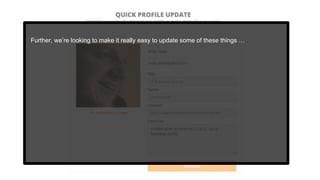
Further, we’re looking to make it really easy to update some of these things 

Back to my love affair with email.
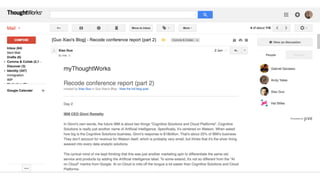
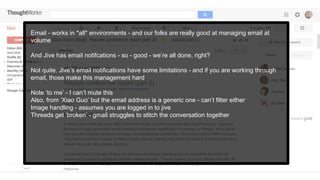
Email - works in *all* environments - and our folks are really good at managing email at
volume
And Jive has email notifcations - so - good - we’re all done, right?
Not quite. Jive’s email notifications have some limitations - and if you are working through
email, those make this management hard
Note ‘to me’ - I can’t mute this
Also, from ‘Xiao Guo’ but the email address is a generic one - can’t filter either
Image handling - assumes you are logged in to jive
Threads get ‘broken’ - gmail struggles to stitch the conversation together
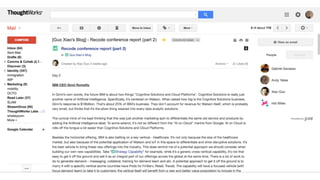
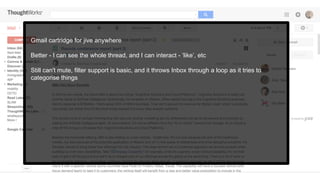
Gmail cartridge for jive anywhere
Better - I can see the whole thread, and I can interact - ‘like’, etc
Still can't mute, filter support is basic, and it throws Inbox through a loop as it tries to
categorise things
Now, Google Groups does support email. Very well. It was what it was born to do.
But (as discussed) it lacks those properties that we are looking for in our platform - there’s
no shop front, no serendipitous discovery, and profiles aren’t extensible in a way that will
aid discovery.
So we got to thinking, perhaps there’s a way to have the best of both?
Jive is an extensible platform, that can pull in content from other sources, so maybe we can
treat Google groups in a similar way?
https://jivesoftware.com/products/extend/platform/
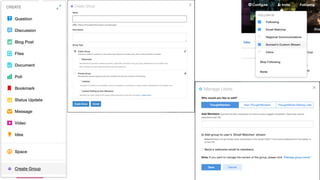
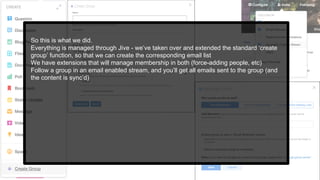
So this is what we did.
Everything is managed through Jive - we’ve taken over and extended the standard ‘create
group’ function, so that we can create the corresponding email list
We have extensions that will manage membership in both (force-adding people, etc)
Follow a group in an email enabled stream, and you’ll get all emails sent to the group (and
the content is sync’d)
Email is the most widely supported notification system
Beyond communication, we each think of it as our task or to-do list.
Modern email clients (and I recognize not everyone has one of these) provide very powerful
tools for sorting, filtering, processing, and now even automatically responding to
information.
They are really good at this.
And we can get pretty good at this too. This was me at the start of this year 
 #not-so-
humble-brag
(Obviously it was a bit of an event - I took a screenshot! And it’s not true right now - where I
have about 250 emails demanding my attention)
But my claim here is that email is still very much alive, useful, and a tool of the productive!
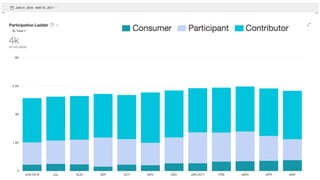
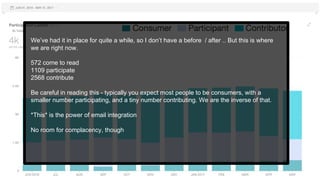
We’ve had it in place for quite a while, so I don’t have a before / after .. But this is where
we are right now.
572 come to read
1109 participate
2568 contribute
Be careful in reading this - typically you expect most people to be consumers, with a
smaller number participating, and a tiny number contributing. We are the inverse of that.
*This* is the power of email integration
No room for complacency, though
DAU
MAU
25.35%=
(approximately 1000 users on the platform every day)
SUMMARY
The Shopfront
Serendipity
People, Search: Connection
+ INTEGRATION
Just to wrap up, then. We’ve talked about how we build out tools for collaboration.
These need to provide shop fronts to promote initiatives, the opportunity for serendipitous
interactions, and mechanisms that help people find and connect with one another. In each
case, I’ve talked not just about how Jive supports these, but how we are able to build on
top of it, to further advantage. I’ve also covered the need to interconnect with the other
tools that people are already using, and again, how we’ve been able to extend Jive to
support us here too.
And before I say any more, I want to be clear. Email is something that works for us, and in
our context. For you, that may be a different tool, or a different way of working. The point
remains, though. Looking for a one-size-fits-all stand-alone solution to all your needs just
isn’t going to work out.
Diversity in the workforce, distribution in the places they sit, and differences in the ways
they work – all of these are increasing; and if we are to cater to this diversity, I think we
need to look to a strategy of integration. Thinking back to our friends at Shaftsbury, we
need to be thinking not just about the infrastructure we provide, but what else is going on in
the ‘public realm’ of our organisations (and beyond)
THANK YOU
For questions or suggestions:
Andy Yates
@yrnclndymn
ayates@thoughtworks.com
PLEASE NOTE - ALL PICTURES PART OF A
COLLABORATIVE LIBRARY - CREATED THROUGH
THE CONTRIBUTIONS THAT ARE OF
THOUGHTWORKS OR BY THOUGHTWORKERS -
SHARED THROUGH DRIVE
UNLESS OTHERWISE STATED © THOUGHTWORKS
THANK YOU

ThoughtWorks - Building on Jive

  • 1.
    Building on Jive Technology,Culture and Collaboration
  • 3.
    Global technology company- focused on technology strategy, custom software delivery and how that affects your business 4500 employees, 40 Offices, 15 countries But working in even more locations than that - many of our PS people are working directly with clients from the clients’ offices Decentralised ‘flat’ organisation - founded in Chicago in 1993 - but that’s no longer really ‘HQ’ - our operations teams are there, London, Bangalore, Xi’an, as well as in many other locations. And with increasing frequency we’re seeing operations folks working outside our offices too. Our leadership team (of 10) is also spread across the globe - with decision making pushed out to the regions, to project teams and to the folks who are ‘doing the work’. In summary: distributed, decentralised, dramatically different working contexts
  • 4.
    ANDY YATES Technology Strategy Comms& Collaboration @yrnclndymn ayates@thoughtworks.com
  • 5.
    So 
 thisis me. I look after technology strategy with a focus on the digital workplace As a company we are organised along business lines - there are IT teams for each of the functions (sales, marketing, finance) embedded within those functions. One function, mine, that is perhaps a bit different from those in similar companies, explicitly are set up to serve the needs of ‘all our people’ - and a large part of that is ‘communications and collaboration’ Scope - to help colleagues: Stay connected with the community Tap into the collective knowledge pool Work together to solve problems
  • 6.
  • 7.
    I have aconfession to make. I *love* email I’ve been collecting it. I have 62GB There’s a prize for that, right? 230,000+ emails in my mailbox since 2007 23000 / year 80+ per working day 10 an hour, every working hour!
  • 8.
    Email is freeform,multimedia (especially with attachments), WYSIWYG, easy to learn and use, platform independent, social, and friendly to mouse-clickers and keyboard-shortcutters alike. ANDREW MCAFEE MIT, Author: Enterprise 2.0
  • 9.
    I’m not alone!Andrew McAfee also is a fan. Here’s what he has to say 
 So - perhaps it’s people called ‘Andy’? (any other Andy’s in the room? Love email?) --- https://andrewmcafee.wpengine.com/2006/09/the_9x_email_problem/ http://andrewmcafee.org/2009/10/how-i-learned-to-stop-worrying-and-love-email/ Original Photo: http://andrewmcafee.org
  • 10.
  • 11.
    Email is themost widely supported notification system Beyond communication, we each think of it as our task or to-do list. Modern email clients (and I recognize not everyone has one of these) provide very powerful tools for sorting, filtering, processing, and now even automatically responding to information. They are really good at this. And we can get pretty good at this too. This was me at the start of this year 
 #not-so- humble-brag (Obviously it was a bit of an event - I took a screenshot! And it’s not true right now - where I have about 250 emails demanding my attention) But my claim here is that email is still very much alive, useful, and a tool of the productive!
  • 13.
    So what amI doing here on this stage?!? We use Jive - why? I’m going to share our 3 primary reasons - illustrated by some pictures from my walking around the city Just as an aside - I find huge inspiration in the city, which, as the ultimate community, should not really be a surprise, I guess. But by paying attention to the details, I find a rich seam of metaphors, and often it’s a great way to think about the problems we are trying to solve, and in thinking about how enterprise communities work
  • 15.
  • 16.
    The Shop Front --no internal comms function - everyone is responsible for comms - peer-to-peer -- landing pages are key to this - here’s everything you need to know, at a glance -- Bring together all the content on a topic, for a group or about an initiative .. -- And a place to go find all those landing pages. Just as if you want to find electronics, you know to head to Tottenham Court Rd 

  • 18.
    So if Iwere looking to buy me some agile data science 
 I can type it in, and find out who’s selling :)
  • 20.
    Our approach tosetting this up - in keeping with the nature of the organisation - has been very bottom-up / grass roots. If you want to set up a new group, a new ‘shop’, off you go ... 
 and, as with our agile data-science group, things can look 
 mixed
  • 22.
    My colleagues thatlook after our brand say: “consistency matters” And they have a point 
 There is value in the internal brand reflecting our public face And there is value in things that look well looked after
  • 24.
    7 dials -Monmouth Street - the cafe here is arguably the best in London. The quality of the shop fronts reflects the quality of the stores – and I got to wondering what makes this street so nice (notice the bunting?) I spent a little while as I was putting this presentation together disappearing down an internet rabbit hole - The entire street is managed property – by Shaftsbury PLC “Fostering vibrant and prosperous villages through long term and sustainable property management” And the reason that the street looks a little more coherent is that there are certain rules and guidelines that the stores need to follow Shaftsbury takes an approach where there’s a whole bunch of stuff that is relevant to us: Lots of their properties are quite small, and correspondingly, many of their upgrade and improvement schemes are small - they note in their most recent report for investors (told you I got far down the rabbit hole) that individually, none of these improvements is likely to make a significant impact - but the cumulative impact is greater than the one or two higher profile schemes. They pay particular attention to - and invest in ‘the public realm’ - improvements to the areas where their properties are - and work in conjunction with local government to mutual benefit
  • 26.
    Some other developmentsgo even further - providing ‘tools’ that create a consistency in things like signs, fonts 
 There’s a tradeoff to be made - vibrancy comes from diversity - as Shaftesbury note - and too much standardisation may end up being counterproductive.
  • 27.
    FILL IN AFORM GET SLICK OUTPUT
  • 28.
    FILL IN AFORM So let’s turn back to the intranet again, and put this into practice 
 .. our team has been building on Jive - extending the out-of-the-box features by creating custom tiles, that make it really easy for our group owners to keep things on brand, and looking good ...
  • 30.
    We’ve even setup a group that showcases each of these, to help folks use them
  • 32.
    And we havealso helped by building useful tools. The tools give people a reason to visit the groups We get over 125 visits a day to our marketing community, because they are sharing useful things that people want / need to get work done And through doing this, people learn what is going on, and what they need to know - and this information propagates. There’s less reliance on them as a blocker / gatekeeper function - they act more as an enabler 

  • 37.
  • 38.
    I just touchedon this when I mentioned that tools bring people into groups, where they find out what else is happening - it’s this that is our second advantage of Jive - the opportunities the platform presents for accidental or serendipitous discovery of information
  • 40.
    Email lists arewalled gardens - if you are a member, you get the messages, but searching history (where you weren’t involved) isn’t great You are also limited in what you can follow - can’t do it by people, by tags, or by single conversation thread What we’d like to encourage is more serendipitous discovery of information -- When a colleague I’m following comments in a group that I am not, I find out about that conversation
  • 42.
    Patrick Hodgkinson -Brunswick Centre Mixed use development, public / private partnership, a combination of centralised and decentralised planning -- everyone has had an intranet, or a wiki, or whatever, ‘where information goes to die’ -- in the past, we’ve used a number of different things -- Lotus Notes, MediaWiki, Confluence -- the key is having activity and archive tied together -- Its a *living* archive https://en.wikipedia.org/wiki/Brunswick_Centre https://www.theguardian.com/artanddesign/2016/mar/08/patrick-hodgkinson-obituary
  • 44.
    Sales Hub -bringing ‘creation’ and ‘store’ into a single place Everyone likes to celebrate the release of a new project - but these were being sent out to a variety of lists, and not systematically captured Not only do we now have a dedicated group - but we have linked that to our more formal ‘case study library’ - so that people searching one, can find items in both Used to be that people would send a company-wide email, asking ‘have we ever worked with 
.’ - these are very rare these days e.g. Morrisons - You can see ‘official’ corporate comms sanctioned content But also some internal ‘go live’ announcements Helps capture the information whilst it is still ‘fresh’
  • 45.
  • 46.
    The third differentiatorI want to cover concerns search too.
  • 48.
    With email /mailing lists, search also tends to be more ‘document’ based - I search for ‘tensor flow’ and I get all the threads that mention tensor flow but we’ve done a bit of research into search within the organisation. And it turns out that, in general, if I’m searching internally I’m not looking for ‘the answer’. If I was looking for that, I’d go to Google, or to StackOverflow - outside of the company. Internally, more often than not, I’m looking for the experts - people I can work with, in order to solve the problem together.
  • 50.
    By connecting contentand people together - and really this is the ‘power of connection’ that we’re all here to talk about - I’m able to create and navigate the graph You can see here that we’re extending the profile with information from our staffing systems We’re currently working towards some more interesting stuff with pulling external content in too - and enriching our understanding of someone’s expertise based on a more expansive view of their contributions ...
  • 52.
    Further, we’re lookingto make it really easy to update some of these things 

  • 54.
    Back to mylove affair with email.
  • 56.
    Email - worksin *all* environments - and our folks are really good at managing email at volume And Jive has email notifcations - so - good - we’re all done, right? Not quite. Jive’s email notifications have some limitations - and if you are working through email, those make this management hard Note ‘to me’ - I can’t mute this Also, from ‘Xiao Guo’ but the email address is a generic one - can’t filter either Image handling - assumes you are logged in to jive Threads get ‘broken’ - gmail struggles to stitch the conversation together
  • 58.
    Gmail cartridge forjive anywhere Better - I can see the whole thread, and I can interact - ‘like’, etc Still can't mute, filter support is basic, and it throws Inbox through a loop as it tries to categorise things
  • 60.
    Now, Google Groupsdoes support email. Very well. It was what it was born to do. But (as discussed) it lacks those properties that we are looking for in our platform - there’s no shop front, no serendipitous discovery, and profiles aren’t extensible in a way that will aid discovery.
  • 62.
    So we gotto thinking, perhaps there’s a way to have the best of both? Jive is an extensible platform, that can pull in content from other sources, so maybe we can treat Google groups in a similar way? https://jivesoftware.com/products/extend/platform/
  • 64.
    So this iswhat we did. Everything is managed through Jive - we’ve taken over and extended the standard ‘create group’ function, so that we can create the corresponding email list We have extensions that will manage membership in both (force-adding people, etc) Follow a group in an email enabled stream, and you’ll get all emails sent to the group (and the content is sync’d)
  • 66.
    Email is themost widely supported notification system Beyond communication, we each think of it as our task or to-do list. Modern email clients (and I recognize not everyone has one of these) provide very powerful tools for sorting, filtering, processing, and now even automatically responding to information. They are really good at this. And we can get pretty good at this too. This was me at the start of this year 
 #not-so- humble-brag (Obviously it was a bit of an event - I took a screenshot! And it’s not true right now - where I have about 250 emails demanding my attention) But my claim here is that email is still very much alive, useful, and a tool of the productive!
  • 68.
    We’ve had itin place for quite a while, so I don’t have a before / after .. But this is where we are right now. 572 come to read 1109 participate 2568 contribute Be careful in reading this - typically you expect most people to be consumers, with a smaller number participating, and a tiny number contributing. We are the inverse of that. *This* is the power of email integration No room for complacency, though
  • 69.
  • 70.
  • 71.
    Just to wrapup, then. We’ve talked about how we build out tools for collaboration. These need to provide shop fronts to promote initiatives, the opportunity for serendipitous interactions, and mechanisms that help people find and connect with one another. In each case, I’ve talked not just about how Jive supports these, but how we are able to build on top of it, to further advantage. I’ve also covered the need to interconnect with the other tools that people are already using, and again, how we’ve been able to extend Jive to support us here too. And before I say any more, I want to be clear. Email is something that works for us, and in our context. For you, that may be a different tool, or a different way of working. The point remains, though. Looking for a one-size-fits-all stand-alone solution to all your needs just isn’t going to work out. Diversity in the workforce, distribution in the places they sit, and differences in the ways they work – all of these are increasing; and if we are to cater to this diversity, I think we need to look to a strategy of integration. Thinking back to our friends at Shaftsbury, we need to be thinking not just about the infrastructure we provide, but what else is going on in the ‘public realm’ of our organisations (and beyond)
  • 72.
    THANK YOU For questionsor suggestions: Andy Yates @yrnclndymn ayates@thoughtworks.com
  • 73.
    PLEASE NOTE -ALL PICTURES PART OF A COLLABORATIVE LIBRARY - CREATED THROUGH THE CONTRIBUTIONS THAT ARE OF THOUGHTWORKS OR BY THOUGHTWORKERS - SHARED THROUGH DRIVE UNLESS OTHERWISE STATED © THOUGHTWORKS THANK YOU