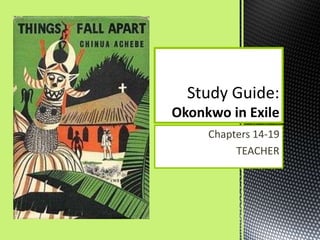
Study Guide:
Okonkwo in Exile
     Chapters 14-19
          TEACHER
 Uchendu (uncle of Okonkwo) and kinsmen give a
  warm reception - building a compound and lending
  yam seeds.
 Farming season arrives. Okonkwo works hard, but
  with less enthusiasm. He has toiled all his life, but
  now his dream “to become one of the lords of the
  clan” is not possible.
 Uchendu perceives Okonkwo’s disappointment; he
  waits to speak until after his son’s wedding.
 Next day, Uchendu gathers entire family. Speaks
  about most common names - Nneka, meaning
  “Mother is Supreme.”
 “A man belongs to his fatherland and stays there
  when life is good, but he seeks refuge in his
  motherland when life is bitter and harsh.”
 Uchendu advises Okonkwo to receive the comfort of
  the motherland gratefully.
 Uchendu lost all but one of his six wives and buried
  twenty-two children. Even so, he says, “I did not
  hang myself, and I am still alive.”
 Year 2 of exile: Obierika brings bags of cowries to
  Okonkwo.
 Bad news: the village Abame has been destroyed
  after a white man on an “iron horse” (bicycle).
 Oracle prophesied that he would be followed by
  others, who would bring destruction to Abame, so
  they killed him, tied his bicycle to their sacred tree.
 Weeks later, Abame’s market surrounded; almost
  everybody died.
 Uchendu asks Obierika what the first white man said
  to the villagers. Obierika: he said things that the
  villagers did not understand.
 Uchendu declares that Abame was foolish to kill a
  man who said nothing.
 Okonkwo agrees that villagers were fools, but he
  believes they should have armed themselves.
 Obierika will continue to bring Okonkwo the money
  from his yams until Okonkwo returns to Iguedo.
 3 years after Okonkwo’s exile: Obierika returns to
  Mbanta. He has seen Nwoye with Christian
  missionaries. Most converts are efulefu, men who
  hold no status (titles).
 Nwoye’s mother tells Obierika of Nwoye’s
  conversion: six missionaries, headed by a white man,
  traveled to Mbanta, speaking through an interpreter.
 Interpreter’s dialect is different. He says “my
  buttocks” when he means “myself.” He tells the
  villagers that they are all brothers and sons of God.
 Missionaries try to persuade villagers to accept the
  one true God. Villagers laugh at many beliefs.
 Missionaries use evangelical song. Okonkwo thinks
  they must be insane. Nwoye is instantly captivated.
 The “poetry of the new religion” seems to answer his
  questions about the deaths of Ikemefuna and the
  twin newborns, soothing him “like the drops of
  frozen rain melting on the dry palate.”
 The missionaries request a piece of land to build a
  church. They’re given a plot in the Evil Forest.
 To elders’ amazement, missionaries rejoice in the
  offer. Later, they are surprised when nothing bad
  happens to missionaries; church soon wins 3 converts.
 The villagers point out that sometimes their ancestral
  spirits will allow grace period of 28 days; astounded
  when nothing happens after 28 days, church wins
  more converts.
 One is a pregnant woman, Nneka. Husband & his
  family are not sorry to see her go; she had 4 previous
  sets of twins.
 Okonkwo’s cousin notices Nwoye among the
  Christians. When Nwoye returns, Okonkwo chokes him
  by the neck. Uchendu orders him to let go.
 Nwoye leaves his father’s compound, travels to school
  in Umuofia to learn reading and writing. Okonkwo
  wonders how he could ever have fathered such an
  effeminate, weak son.
 Church wins many converts from the efulefu (titleless,
  worthless men). Then osu (outcasts) come to church
  and other converts do not want them there.
 Mr. Kiaga firmly argues that they will not die if they cut
  their hair or break any of the other taboos.
 His steadfast conviction persuades most of the other
  converts not to reject their new faith.
 Osu soon become most zealous members of the
  church.
 One boasts that he killed the sacred royal python.
 Okonkwo urges Mbanta to drive the Christians out
  with violence, but rulers & elders decide to ostracize
  them instead. Okonkwo: this is a “womanly” clan.
 Later, elders learn - man who boasted of killing the
  snake has died of an illness. Villagers’ trust in gods is
  reaffirmed. They cease to ostracize the converts.
 Okonkwo’s 7 years of exile in Mbanta are
  drawing to an end.
 He provides a large feast for his kinsmen.
 He is grateful for their 7 years of hospitality, but
  more than this, he regrets missing out on the
  chance to increase his status in Umuofia.
 He disagrees with the choices of Mbanta’s un-
  masculine people.
 At the feast, one man is surprised by Okonkwo’s
  generosity. Another praises Okonkwo’s
  adherence to the bond of kinship.
 There is concern for the younger generation;
  Christianity is winning more followers.
 What will become of their families and
  traditions?

Things Fall Apart - Chapter Guide (14-19)

  • 1.
    Study Guide: Okonkwo inExile Chapters 14-19 TEACHER
  • 2.
     Uchendu (uncleof Okonkwo) and kinsmen give a warm reception - building a compound and lending yam seeds.  Farming season arrives. Okonkwo works hard, but with less enthusiasm. He has toiled all his life, but now his dream “to become one of the lords of the clan” is not possible.  Uchendu perceives Okonkwo’s disappointment; he waits to speak until after his son’s wedding.  Next day, Uchendu gathers entire family. Speaks about most common names - Nneka, meaning “Mother is Supreme.”  “A man belongs to his fatherland and stays there when life is good, but he seeks refuge in his motherland when life is bitter and harsh.”  Uchendu advises Okonkwo to receive the comfort of the motherland gratefully.  Uchendu lost all but one of his six wives and buried twenty-two children. Even so, he says, “I did not hang myself, and I am still alive.”
  • 3.
     Year 2of exile: Obierika brings bags of cowries to Okonkwo.  Bad news: the village Abame has been destroyed after a white man on an “iron horse” (bicycle).  Oracle prophesied that he would be followed by others, who would bring destruction to Abame, so they killed him, tied his bicycle to their sacred tree.  Weeks later, Abame’s market surrounded; almost everybody died.  Uchendu asks Obierika what the first white man said to the villagers. Obierika: he said things that the villagers did not understand.  Uchendu declares that Abame was foolish to kill a man who said nothing.  Okonkwo agrees that villagers were fools, but he believes they should have armed themselves.  Obierika will continue to bring Okonkwo the money from his yams until Okonkwo returns to Iguedo.
  • 4.
     3 yearsafter Okonkwo’s exile: Obierika returns to Mbanta. He has seen Nwoye with Christian missionaries. Most converts are efulefu, men who hold no status (titles).  Nwoye’s mother tells Obierika of Nwoye’s conversion: six missionaries, headed by a white man, traveled to Mbanta, speaking through an interpreter.  Interpreter’s dialect is different. He says “my buttocks” when he means “myself.” He tells the villagers that they are all brothers and sons of God.  Missionaries try to persuade villagers to accept the one true God. Villagers laugh at many beliefs.  Missionaries use evangelical song. Okonkwo thinks they must be insane. Nwoye is instantly captivated.  The “poetry of the new religion” seems to answer his questions about the deaths of Ikemefuna and the twin newborns, soothing him “like the drops of frozen rain melting on the dry palate.”
  • 5.
     The missionariesrequest a piece of land to build a church. They’re given a plot in the Evil Forest.  To elders’ amazement, missionaries rejoice in the offer. Later, they are surprised when nothing bad happens to missionaries; church soon wins 3 converts.  The villagers point out that sometimes their ancestral spirits will allow grace period of 28 days; astounded when nothing happens after 28 days, church wins more converts.  One is a pregnant woman, Nneka. Husband & his family are not sorry to see her go; she had 4 previous sets of twins.  Okonkwo’s cousin notices Nwoye among the Christians. When Nwoye returns, Okonkwo chokes him by the neck. Uchendu orders him to let go.  Nwoye leaves his father’s compound, travels to school in Umuofia to learn reading and writing. Okonkwo wonders how he could ever have fathered such an effeminate, weak son.
  • 6.
     Church winsmany converts from the efulefu (titleless, worthless men). Then osu (outcasts) come to church and other converts do not want them there.  Mr. Kiaga firmly argues that they will not die if they cut their hair or break any of the other taboos.  His steadfast conviction persuades most of the other converts not to reject their new faith.  Osu soon become most zealous members of the church.  One boasts that he killed the sacred royal python.  Okonkwo urges Mbanta to drive the Christians out with violence, but rulers & elders decide to ostracize them instead. Okonkwo: this is a “womanly” clan.  Later, elders learn - man who boasted of killing the snake has died of an illness. Villagers’ trust in gods is reaffirmed. They cease to ostracize the converts.
  • 7.
     Okonkwo’s 7years of exile in Mbanta are drawing to an end.  He provides a large feast for his kinsmen.  He is grateful for their 7 years of hospitality, but more than this, he regrets missing out on the chance to increase his status in Umuofia.  He disagrees with the choices of Mbanta’s un- masculine people.  At the feast, one man is surprised by Okonkwo’s generosity. Another praises Okonkwo’s adherence to the bond of kinship.  There is concern for the younger generation; Christianity is winning more followers.  What will become of their families and traditions?