Topic: Evolving Resistance Patterns and Clinical
Response to Antibiotics in Enteric Fever: A Tertiary
Care Hospital Study in New Delhi, India
Presenter: Dr. Arnav Chauhan
DNB Primary
Department - Internal Medicine
Investigators
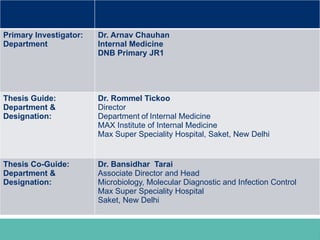
Primary Investigator:
Department
Dr. Arnav Chauhan
Internal Medicine
DNB Primary JR1
Thesis Guide:
Department &
Designation:
Dr. Rommel Tickoo
Director
Department of Internal Medicine
MAX Institute of Internal Medicine
Max Super Speciality Hospital, Saket, New Delhi
Thesis Co-Guide:
Department &
Designation:
Dr. Bansidhar Tarai
Associate Director and Head
Microbiology, Molecular Diagnostic and Infection Control
Max Super Speciality Hospital
Saket, New Delhi
INTRODUCTION AND BACKGROUND
• "Enteric fever" is a term that encompasses both typhoid and paratyphoid fever. Enteric fever is
marked by a severe systemic illness that includes fever and abdominal pain.1
The disease is
typically caused by Salmonella enterica serotype Typhi (formerly known as S. typhi).
• Other serotypes, such as S. enterica serotypes Paratyphi A, B, or C, can also produce a similar
illness; however, clinical symptoms alone are not usually sufficient to accurately identify the
specific causative organism.2
• Epidemiology: Enteric fever is most widespread in poor, overcrowded regions with inadequate
sanitation. Estimates indicate that south-central Asia, Southeast Asia, and southern Africa have
high rates of S. Typhi infection, with over 100 cases per 100,000 person-years.3-6
• A study in India from 2017 to 2020 tracked acute febrile illness weekly in more than 24,000
patients across three urban and one rural site7
. Typhoid fever risk, confirmed through blood
culture, was higher in urban areas, with incidence rates ranging from 576 to 1173 cases per
100,000 patient-years, compared to 35 cases per 100,000 patient-years in the rural site.
INTRODUCTION AND BACKGROUND
● Some evidence suggests that S. Paratyphi is more commonly transmitted via food, whereas
S. Typhi is more likely to spread through contaminated water8
● S. Paratyphi is increasingly causing enteric fever among vaccinated travelers, as the Vi
polysaccharide typhoid vaccine does not protect against most S. Paratyphi9,10
, which lacks
the Vi antigen targeted by the vaccine.
● Clinical Features in the Antibiotic Era: With the advent of antibiotic therapy, the clinical
profile of enteric fever has significantly shifted, with comparisons between case series from
the United States in the 1930s and those from the 1970s and 1980s showing declines in
splenomegaly prevalence from 63 percent to 10 percent, in rose spots from 30 percent to
1.5 percent11
, and a decrease in the occurrence of intestinal bleeding.
● Gastrointestinal symptoms include constipation, diarrhea, abdominal tenderness,
distension, rectal bleeding, and intestinal perforation, the latter associated with high
mortality rates.
INTRODUCTION AND BACKGROUND
● Neurological symptoms of enteric fever include headache, disordered sleep, psychosis,
myelitis, rigidity, meningitis, and focal CNS infections. Severe cases may cause "typhoid
encephalopathy," marked by altered consciousness, delirium, and confusion.
● Laboratory Findings: Patients with enteric fever often present with anemia and either
leukopenia or leukocytosis, with leukopenia being more common in adults and leukocytosis
more prevalent in children. Anemia and abnormal liver function tests are frequently
observed11,12
, along with elevated serum C-reactive protein levels13.
INTRODUCTION AND BACKGROUND
Anti-Microbial Resistance:
● The treatment of enteric fever has become increasingly complex due to the growing
challenge of resistance to fluoroquinolones and cephalosporins.
● Fluoroquinolone Resistance: CLSI guidelines consider a ciprofloxacin MIC ≤0.06 mcg/mL
and levofloxacin or ofloxacin MIC ≤0.12 mcg/mL as susceptible. In South Asia, over 80
percent of S. Typhi strains show nonsusceptibility to fluoroquinolones.14
● Ceftriaxone Resistance: Resistance to ceftriaxone is on the rise, with cases of extended-
spectrum beta-lactamase-producing S. Typhi and S. Paratyphi infections reported15-17
.
Several reports describe ceftriaxone-resistant infections mediated by the acquisition of
drug-resistant plasmids, such as IncX3, particularly in India.
● Azithromycin Resistance: The first documented case of azithromycin resistance (MIC by E-
test 64 mcg/mL) in S. Paratyphi A, leading to treatment failure, involved a traveler returning
to Great Britain from Pakistan.18
An increasing number of azithromycin-resistant S. Typhi
and S. Paratyphi A isolates have also been reported from South Asia19-21
. The resistance
seems to be mediated by R717Q/L mutations in the acrB gene.22
INTRODUCTION AND BACKGROUND
● Multidrug resistance (MDR): MDR strains of S. Typhi and S. Paratyphi have triggered
numerous outbreaks in endemic areas such as South and Southeast Asia, China, and
Africa23-25
. The prevalence of MDR strains varies across regions, ranging from 10 to 80
percent in Africa, the Middle East, and Central Asia26-28
. Genome sequencing has identified a
dominant MDR S. Typhi strain, H58, which has spread throughout Asia and Africa, replacing
more susceptible strains and fueling ongoing MDR epidemics.29
● Antimicrobial resistance in Salmonella species leads to higher treatment failure rates and
prolonged recovery periods, complicating infection management.
● Increased resistance elevates healthcare costs and hampers efforts to control and prevent
outbreaks, underscoring the need for localized resistance data to guide effective treatment
strategies.
• Mandeep Walia , Rajni Gaind, Rajesh Mehta, Premila Paul, Pushpa Aggarwal, Mani Kalaivani
conducted a study titled “Current perspectives of enteric fever: a hospital-based study from India”.
• Aim: To undertake a retrospective analysis of blood culture-confirmed cases of enteric fever diagnosed
at Safdarjang Hospital, New Delhi, India from January 2001 to December 2003.
• Method: The epidemiological details, clinical features, treatment outcome and antimicrobial resistance
patterns were studied.
BRIEF REVIEW OF LITERATURE
• Result: Of 377 blood culture-positive cases, 80.6% were Salmonella typhi and 19.4% Salmonella
paratyphi A; 21. A significant decline in MDRS was observed, from 21.9% in 2001 to 12.4% in
2003 (p=0.04). There was a significant increase in nalidixic acid-resistant Salmonella (NARS)
from 56.9% in 2001 to 88.9% in 2003 (p=0.0001). Complete resistance to ciprofloxacin (MIC>4
microg/ml) was detected in only two isolates, both Salmonella paratyphi A. NARS had a
significantly longer fever defervescence time (7.7 vs 4.7 days, p<0.001) and hospital stay (12.1
vs 8.2 days, p<0.001), and higher rates of complications (55.5% vs 24.0%, p=0.014) and
mortality than nalidixic acid-sensitive Salmonella (NASS). The rate of isolation of MDRS was
higher in NARS than NASS (18.8% vs 7.3%, p=0.013).
• Surinder Kumar, Meher Rizvi, Nidhika Berry conducted a study titled “Rising
prevalence of enteric fever due to multidrug-resistant Salmonella: an
epidemiological study”
• Aim: To undertake a prospective study of the prevalent aetiology of enteric fever at a
tertiary care hospital in North India at intervals of every 3 years.
• Results: Salmonella spp. were isolated from 174 (7%) patients. Amongst these, 140 (80%)
patients were infected by Salmonella enterica subspecies enterica serovar Typhi (S. Typhi)
and 16 (9%) by S. enterica serovar Paratyphi A; the remaining 11% were infected by other S.
enterica serogroups, Typhimurium, Paratyphi C and Senftenberg, and other group E
salmonella.
BRIEF REVIEW OF LITERATURE
• A significantly greater number of S. Typhi were isolated in the summer and
monsoon months. Multidrug resistance (resistance to chloramphenicol, ampicillin
and co-trimoxazole) sequentially increased from 34% in 1999 to 66% in 2005.
Increasing resistance was also noticed to the other antibiotics, especially to the
cephalosporins. Moreover 8% of the S. Typhi isolates were found to be
presumptive extended spectrum beta-lactamase producers. There was a gradual
development of resistance to fluoroquinolones over the 7 years. No resistance
was observed to fluoroquinolones in 1999, while in 2005 4.4% resistance was
observed to sparfloxacin, 8.8% resistance to ofloxacin and a high resistance, 13%,
to ciprofloxacin.
• Limited Data on Current Resistance Patterns:
The literature highlights a lack of comprehensive, up-to-date data on the current
resistance patterns of Salmonella Typhi and Salmonella Paratyphi. This gap makes it
challenging to track and respond to antibiotic resistance effectively.
• Geographical Variability:
Salmonella resistance patterns vary significantly by geographical location, influenced
by local healthcare practices, infrastructure, and antibiotic use. Therefore, resistance
data from other regions may not accurately represent current trends in New Delhi and
surrounding areas in North India, underscoring the need for localized studies to inform
effective treatment strategies.
LACUNAE IN THE LITERATURE
• Impact of Vaccination:
Another gap is the limited understanding of how vaccination, particularly with the Vi
polysaccharide vaccine, influences the resistance patterns of non-Typhi Salmonella
strains. This is particularly important as S. Paratyphi A is not covered by the current
vaccines .
• Lack of Detailed Comparative Studies:
There is a scarcity of detailed comparative studies that systematically analyze the
differences in clinical outcomes, complications, and recovery patterns between
typhoid and paratyphoid fevers. Most studies focus on one or the other, rather than a
comparative analysis .
LACUNAE IN THE LITERATURE
AIM
AIM :
To conduct a comprehensive analysis of the current resistance patterns of
Salmonella species responsible for enteric fever and to evaluate the clinical
response to antibiotics used in treatment. This investigation will be carried
out in a tertiary care setting in New Delhi, India, with the goal of identifying
current patterns of antibiotic resistance and determining the most effective
therapeutic approaches for managing enteric fever in this specific
healthcare environment.
PRIMARY AND SECONDARY OBJECTIVES
Primary objectives:
❖ To examine the current antibiotic resistance trends in patients diagnosed with enteric
fever at a tertiary care hospital in New Delhi, India
❖ To evaluate the clinical outcomes and time to fever defervescence, in patients treated for
enteric fever.
Secondary objectives:
❖ To compare the clinical profile of patients with typhoid fever versus paratyphoid fever.
❖ To assess the impact of vaccination on resistance patterns of non-Typhi Salmonella strains
❖ .To compare the minimum inhibitory concentrations (MICs) of different antibiotics used in
treating enteric fever.
SAMPLE SIZE CALCULATION
• For the purpose of calculation of sample size, we have considered
Chloramphenicol as the main drug.
• In a study by Walia et al, this has been reported as 39% in their cases. To
estimate this in our study with a margin of error of 5% on either side &
confidence level 95%, the sample size comes to a minimum of 366 as per
the following formula
where,
• z1-α/2 = 1.96 for 95% level of confidence
• π = anticipated value of the proportion in the population
• L = specified precision of the estimate on either side of proportion (margin of
error)
MATERIALS AND METHODS
• Study Area
Present study will be conducted in patients admitted in Medical ward and
ICU of Max Super Speciality hospital , Saket, New Delhi.
• Study Design
Prospective Observational study.
• Study Duration
From approval of Ethical Committee till completion of sample size [1 year]
• Study Population
Study will include patients admitted in medical ward and ICU of Max Super
Specialty Hospital, Saket, New Delhi and :
❏ Inclusion and exclusion criteria will be applied to the patients admitted
with enteric fever.
❏ Informed consent will be obtained from eligible patients.
DATA COLLECTION METHODS
• Data will be retrieved from the Computerized Patient Record System (CPRS).
• Data collection will continue post-admission until discharge, or demise, whichever is earlier.
• Collected data will be entered into Microsoft Excel for analysis.
• Clinical data including history, physical examination, and lab investigations (Blood Culture)
will be noted.
• Information collected will include:
➢ Clinical signs and symptoms of Enteric Fever (Fever, Abdominal Pain, Diarrhea, Constipation,
Headache, Dry Cough)
➢ Antimicrobial treatment
➢ Laboratory and radiological investigations
➢ Vaccination Status
➢ Epidemiological factors such as age, sex, comorbidities.
INCLUSION AND EXCLUSION CRITERIA
Inclusion Criteria:
• Inclusion criteria include patients admitted to Max Super Specialty Hospital.
• Single/Paired Blood Culture Positive for Salmonella species
• Able to provide informed consent or have a legal representative able to provide informed consent.
Exclusion Criteria:
• Patients below 18 years of age.
• Patients with diagnosed Enteric Fever who are treated on an outpatient basis.
• Patients who have chronic illnesses (Malignancy or Immune disorders).
• Patients unable to provide consent/unwilling to participate in the study.
PLAN OF STATISTICAL ANALYSIS
• Data will be entered in MS excel and analysis will be done using SPSS 21.0
version. Data will be presented as mean and standard deviation or
median and interquartile range if the data are continuous in nature. Data
will be presented as percentages if it is categorical in nature. Unpaired t
test or Mann Whitney U test will be done to compare two groups mean
or median. Chi square or Fisher exact test will be done to find out
association between categorical variables. p value of less than 0.05 will
be considered significant. Logistic regression analysis will be performed
to identify the independent factors associated with antibiotic resistance
pattern.
EXPECTED CLINICAL UTILITY OF THE ANTICIPATED
RESULTS
• Enhanced Treatment Strategies: The study's findings will provide valuable insights into
the current antibiotic resistance patterns of Salmonella species in New Delhi, aiding in
the development of more effective and targeted treatment protocols.
• Informed Public Health Policies: By understanding local resistance trends and the
impact of vaccination, public health officials can design better vaccination programs
and antibiotic stewardship initiatives to reduce the burden of enteric fever.
• Comprehensive Clinical Management: Comparing the clinical profiles of typhoid and
paratyphoid fever patients will enhance the understanding of disease presentation and
progression, allowing for more personalized patient management and care.
• Basis for Future Research: The localized data generated from this study will serve as a
foundation for future research on enteric fever, facilitating further investigations into
emerging resistance patterns and new treatment modalities.
BIBLIOGRAPHY
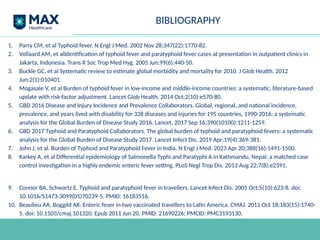
1. Parry CM, et al Typhoid fever. N Engl J Med. 2002 Nov 28;347(22):1770-82.
2. Vollaard AM, et alIdentification of typhoid fever and paratyphoid fever cases at presentation in outpatient clinics in
Jakarta, Indonesia. Trans R Soc Trop Med Hyg. 2005 Jun;99(6):440-50.
3. Buckle GC, et al Systematic review to estimate global morbidity and mortality for 2010. J Glob Health. 2012
Jun;2(1):010401.
4. Mogasale V, et al Burden of typhoid fever in low-income and middle-income countries: a systematic, literature-based
update with risk-factor adjustment. Lancet Glob Health. 2014 Oct;2(10):e570-80.
5. GBD 2016 Disease and Injury Incidence and Prevalence Collaborators. Global, regional, and national incidence,
prevalence, and years lived with disability for 328 diseases and injuries for 195 countries, 1990-2016: a systematic
analysis for the Global Burden of Disease Study 2016. Lancet. 2017 Sep 16;390(10100):1211-1259.
6. GBD 2017 Typhoid and Paratyphoid Collaborators. The global burden of typhoid and paratyphoid fevers: a systematic
analysis for the Global Burden of Disease Study 2017. Lancet Infect Dis. 2019 Apr;19(4):369-381.
7. John J, et al. Burden of Typhoid and Paratyphoid Fever in India. N Engl J Med. 2023 Apr 20;388(16):1491-1500.
8. Karkey A, et al Differential epidemiology of Salmonella Typhi and Paratyphi A in Kathmandu, Nepal: a matched case
control investigation in a highly endemic enteric fever setting. PLoS Negl Trop Dis. 2013 Aug 22;7(8):e2391.
9. Connor BA, Schwartz E. Typhoid and paratyphoid fever in travellers. Lancet Infect Dis. 2005 Oct;5(10):623-8. doi:
10.1016/S1473-3099(05)70239-5. PMID: 16183516.
10. Beaulieu AA, Boggild AK. Enteric fever in two vaccinated travellers to Latin America. CMAJ. 2011 Oct 18;183(15):1740-
5. doi: 10.1503/cmaj.101320. Epub 2011 Jun 20. PMID: 21690226; PMCID: PMC3193130.
BIBLIOGRAPHY
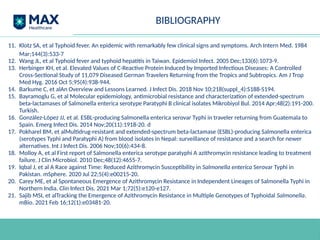
11. Klotz SA, et al Typhoid fever. An epidemic with remarkably few clinical signs and symptoms. Arch Intern Med. 1984
Mar;144(3):533-7
12. Wang JL, et al Typhoid fever and typhoid hepatitis in Taiwan. Epidemiol Infect. 2005 Dec;133(6):1073-9.
13. Herbinger KH, et al. Elevated Values of C-Reactive Protein Induced by Imported Infectious Diseases: A Controlled
Cross-Sectional Study of 11,079 Diseased German Travelers Returning from the Tropics and Subtropics. Am J Trop
Med Hyg. 2016 Oct 5;95(4):938-944.
14. Barkume C, et alAn Overview and Lessons Learned. J Infect Dis. 2018 Nov 10;218(suppl_4):S188-S194.
15. Bayramoglu G, et al Molecular epidemiology, antimicrobial resistance and characterization of extended-spectrum
beta-lactamases of Salmonella enterica serotype Paratyphi B clinical isolates Mikrobiyol Bul. 2014 Apr;48(2):191-200.
Turkish.
16. González-López JJ, et al. ESBL-producing Salmonella enterica serovar Typhi in traveler returning from Guatemala to
Spain. Emerg Infect Dis. 2014 Nov;20(11):1918-20. d
17. Pokharel BM, et alMultidrug-resistant and extended-spectrum beta-lactamase (ESBL)-producing Salmonella enterica
(serotypes Typhi and Paratyphi A) from blood isolates in Nepal: surveillance of resistance and a search for newer
alternatives. Int J Infect Dis. 2006 Nov;10(6):434-8.
18. Molloy A, et al First report of Salmonella enterica serotype paratyphi A azithromycin resistance leading to treatment
failure. J Clin Microbiol. 2010 Dec;48(12):4655-7.
19. Iqbal J, et al A Race against Time: Reduced Azithromycin Susceptibility in Salmonella enterica Serovar Typhi in
Pakistan. mSphere. 2020 Jul 22;5(4):e00215-20.
20. Carey ME, et al Spontaneous Emergence of Azithromycin Resistance in Independent Lineages of Salmonella Typhi in
Northern India. Clin Infect Dis. 2021 Mar 1;72(5):e120-e127.
21. Sajib MSI, et alTracking the Emergence of Azithromycin Resistance in Multiple Genotypes of Typhoidal Salmonella.
mBio. 2021 Feb 16;12(1):e03481-20.
BIBLIOGRAPHY
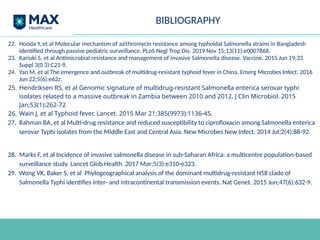
22. Hooda Y, et al Molecular mechanism of azithromycin resistance among typhoidal Salmonella strains in Bangladesh
identified through passive pediatric surveillance. PLoS Negl Trop Dis. 2019 Nov 15;13(11):e0007868.
23. Kariuki S, et al Antimicrobial resistance and management of invasive Salmonella disease. Vaccine. 2015 Jun 19;33
Suppl 3(0 3):C21-9.
24. Yan M, et al The emergence and outbreak of multidrug-resistant typhoid fever in China. Emerg Microbes Infect. 2016
Jun 22;5(6):e62z.
25. Hendriksen RS, et al Genomic signature of multidrug-resistant Salmonella enterica serovar typhi
isolates related to a massive outbreak in Zambia between 2010 and 2012. J Clin Microbiol. 2015
Jan;53(1):262-72
26. Wain J, et al Typhoid fever. Lancet. 2015 Mar 21;385(9973):1136-45.
27. Rahman BA, et al Multi-drug resistance and reduced susceptibility to ciprofloxacin among Salmonella enterica
serovar Typhi isolates from the Middle East and Central Asia. New Microbes New Infect. 2014 Jul;2(4):88-92.
28. Marks F, et al Incidence of invasive salmonella disease in sub-Saharan Africa: a multicentre population-based
surveillance study. Lancet Glob Health. 2017 Mar;5(3):e310-e323.
29. Wong VK, Baker S, et al Phylogeographical analysis of the dominant multidrug-resistant H58 clade of
Salmonella Typhi identifies inter- and intracontinental transmission events. Nat Genet. 2015 Jun;47(6):632-9.
DATA COLLECTION SHEET
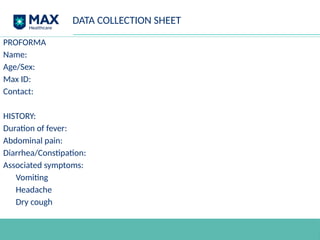
PROFORMA
Name:
Age/Sex:
Max ID:
Contact:
HISTORY:
Duration of fever:
Abdominal pain:
Diarrhea/Constipation:
Associated symptoms:
Vomiting
Headache
Dry cough
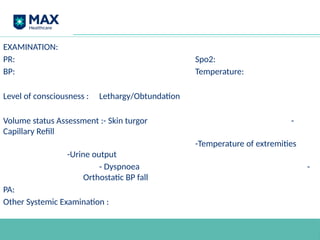
EXAMINATION:
PR: Spo2:
BP: Temperature:
Level of consciousness : Lethargy/Obtundation
Volume status Assessment :- Skin turgor -
Capillary Refill
-Temperature of extremities
-Urine output
- Dyspnoea -
Orthostatic BP fall
PA:
Other Systemic Examination :
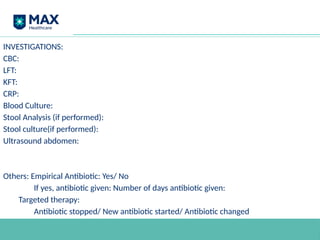
INVESTIGATIONS:
CBC:
LFT:
KFT:
CRP:
Blood Culture:
Stool Analysis (if performed):
Stool culture(if performed):
Ultrasound abdomen:
Others: Empirical Antibiotic: Yes/ No
If yes, antibiotic given: Number of days antibiotic given:
Targeted therapy:
Antibiotic stopped/ New antibiotic started/ Antibiotic changed
PARTICIPANT INFORMATION SHEET
Name of the Principal Investigator : Dr. Arnav Chauhan
Tel. No. 9653029942
Title of the Study: “Evolving Resistance Patterns and Clinical Response to Antibiotics in
Enteric Fever: A Tertiary Care Hospital Study in New Delhi, India”
1. What is the background and purpose of the study?
The purpose of my study is to thoroughly examine the current patterns of antibiotic resistance in
Salmonella species responsible for enteric fever. Additionally, it seeks to assess the clinical
outcomes of antibiotic treatment used at a tertiary care hospital in New Delhi, India, with the
ultimate goal of identifying effective therapeutic strategies and improving patient
management.
2. Do I have to take part?
Your participation in this study is voluntary.
3. What will happen to me if I take part?
For all patients admitted to the medical wards and ICU of Max Hospital Saket with Enteric Fever,
we will confidentially record clinical data, including medical history, physical examination results,
and laboratory tests. Your treatment will follow the standard medical protocol.
PARTICIPANT INFORMATION SHEET
4. What do I have to do?
You are only requested to give consent for using data and information required as a part of
standard procedure. The data will be used for publication after completion of the study.
5. What are the possible side effects, risks and discomforts of taking part?
There are no risks and side effects expected by volunteering for the project.
6. What are the possible benefits of taking part?
There is no direct risk or benefit in taking part in the study. However, the information produced
during the study will be for the benefit of patients in the near future.
7. What if new information becomes available?
The new information available will be used in future for better management of patients with enteric
fever, preventing prolonged hospitalizations, and helping towards antibiotic stewardship.
8. What are the costs of taking part?
There is no cost for participating in the study.
PARTICIPANT INFORMATION SHEET
9. How will my personal data be used?
All the records of treatment will be kept confidential. Your name will not be mentioned on any report
or paper describing the results of this study.
10. Will there be provision for free treatment for research related injury?
There will be no research related injury as we are only recording and compiling the data without any
intervention in the treatment protocol.
11. Will compensation be paid to the subjects if disability or death results from such injury?
This research does not involve any intervention, so there will be no disability or death resulting from
this research project, and therefore no compensation is applicable.
12. Whom should I contact if I need more information or help?
If you have any questions during the study or if you experience any side effect, please contact:
1. DNB Resident: Dr. Arnav Chauhan: 9653029942
2. Study Guide: Dr. Rommel Tickoo: 9899766006
3.Study Co-Guide: Dr. Bansidhar Tarai: 9971020844
PARTICIPANT INFORMATION SHEET
If you desire or have any query and any further information regarding your rights as
a research patient, you may contact the Ethics Committee Member Secretary:
Member Secretary
Max Healthcare Ethics Committee
Max Super speciality Hospital,
1, Press Enclave Road, Saket, New Delhi -110017
Phone No- 011-26515050
प्रतिभागी के लिए सूचना पत्र
प्रधान अन्वेषक का नाम: डॉ अर्णव चौहान
फोन नंबर: 9653029942
अध्ययन का शीर्षक: तृतीयक स्तरीय अस्पताल में आंत्र ज्वर (टाइफॉइड बुखार) में एंटीबायोटिक दवाओं के प्रति प्रतिरोध
पैटर्न, ​
​
और नैदानिक प्रतिक्रिया का विकास
1. अध्ययन की पृष्ठभूमि और उद्देश्य क्या है?
मेरे अध्ययन का उद्देश्य आंत्र ज्वर (टाइफॉइड बुखार) के लिए जिम्मेदार साल्मोनेला प्रजातियों में एंटीबायोटिक
प्रतिरोध के वर्तमान पैटर्न का गहन विश्लेषण करना है। इसके अतिरिक्त, यह नई दिल्ली, भारत के एक तृतीयक स्तरीय
अस्पताल में उपयोग किए गए एंटीबायोटिक उपचार के नैदानिक परिणामों का मूल्यांकन करना चाहता है, ताकि
प्रभावी चिकित्सीय रणनीतियों की पहचान की जा सके और रोगी प्रबंधन में सुधार किया जा सके।
2. क्या मुझे भाग लेना है?
इस अध्ययन में आपकी भागीदारी स्वैच्छिक है।
3. यदि मैं भाग लेता हूँ तो मेरा क्या होगा?
मैक्स अस्पताल साकेत के मेडिकल वार्ड और आईसीयू में भर्ती (टाइफॉइड बुखार) बुखार के सभी मरीजों के लिए, हम
गोपनीय रूप से नैदानिक डेटा रिकॉर्ड करेंगे, जिसमें चिकित्सा इतिहास, शारीरिक जांच के परिणाम और प्रयोगशाला
परीक्षण शामिल होंगे। आपका उपचार मानक चिकित्सा प्रोटोकॉल के अनुसार होगा।
प्रतिभागी के लिए सूचना पत्र
4. मुझे क्या करना होगा?
आपसे केवल मानक प्रक्रिया के हिस्से के रूप में आवश्यक डेटा और जानकारी के उपयोग के लिए सहमति देने
का अनुरोध किया जाता है। अध्ययन के पूरा होने के बाद डेटा का प्रकाशन के लिए उपयोग किया जाएगा।
5. अध्ययन में भाग लेने के संभावित दुष्प्रभाव, जोखिम और असुविधाएं क्या हैं?
इस अध्ययन से कोई जोखिम और साइड इफे क्ट संभावित नहीं हैं।
6. भाग लेने के संभावित लाभ क्या हैं?
आपको अध्ययन से सीधा लाभ या हानि नहीं होगी। हालांकि, अध्ययन के दौरान प्राप्त जानकारी निकट भविष्य
में रोगियों के लाभ के लिए सहायक होगी।
7. क्या होगा यदि नई जानकारी उपलब्ध हो जाती है?
उपलब्ध नई जानकारी का उपयोग भविष्य में टाइफॉइड बुखार के मरीजों के बेहतर प्रबंधन, लंबे समय तक
अस्पताल में भर्ती होने से बचाने, और एंटीबायोटिक उपयोग में सुधार के लिए किया जाएगा।
8. भाग लेने की लागत क्या है?
अध्ययन में शामिल होने से रोगी पर कोई वित्तीय भार नहीं होगा।
9. मेरे व्यक्तिगत डेटा का उपयोग कैसे किया जाएगा?
आपके इलाज के सभी रिकॉर्ड गोपनीय रखे जाएंगे। इस अध्ययन के परिणामों का वर्णन करने वाली किसी रिपोर्ट
या कागज पर आपके नाम का उल्लेख नहीं किया जाएगा।
10. क्या अनुसंधान से संबंधित चोट के लिए मुफ्त इलाज का प्रावधान होगा?
कोई अनुसंधान संबंधी चोट नहीं होगी क्योंकि हम उपचार प्रोटोकॉल में किसी भी हस्तक्षेप के बिना केवल डेटा
को रिकॉर्ड और संकलित कर रहे हैं।
11. यदि ऐसी चोट के परिणामस्वरूप विकलांगता या मृत्यु हो जाती है तो क्या संबंधित व्यक्ति को मुआवजा दिया
जाएगा?
इस अनुसंधान से कोई दुष्प्रभाव नहीं जुड़ा है, इसलिए इस शोध अध्ययन से कोई विकलांगता या मृत्यु नहीं
होगी।
12. यदि मुझे अधिक जानकारी या सहायता की आवश्यकता हो तो मुझे किससे संपर्क करना चाहिए?
यदि अध्ययन के दौरान आपके कोई प्रश्न हैं या आप किसी दुष्प्रभाव का अनुभव कर रहे हैं, तो कृपया संपर्क करें:
1. डीएनबी: डॉ अर्णव चौहान : 9653029942
2. अध्ययन गाइड: डॉ रोम्मेल टिक्कू : 9899766006
3. अध्ययन सह-गाइड : डॉ बंसीधर तरई: 9971020844
प्रतिभागी के लिए सूचना पत्र
यदि आप शोध रोगी के रूप में अपने अधिकारों के संबंध में कोई प्रश्न पूछना चाहते हैं या कोई अन्य
जानकारी चाहते हैं, तो आप आचार समिति के सदस्य सचिव से संपर्क कर सकते हैं:
सदस्य सचिव
मैक्स हेल्थकेयर एथिक्स कमेटी
मैक्स सुपर स्पेशलिटी अस्पताल,
1, प्रेस एन्क्लेव रोड, साकेत, नई दिल्ली -110017
फोन नंबर- 011-26515050
प्रतिभागी के लिए सूचना पत्र
CONSENT FORM
STUDY TITLE: “Evolving Resistance Patterns and Clinical Response to
Antibiotics in Enteric Fever: A Tertiary Care Hospital Study in New Delhi,
India”
Patient’s Name:
Age/Sex:
1. I confirm that I have read and understood the information sheet for the above study and have
had the opportunity to ask questions.[ ]
2. I understand that my participation in the study is voluntary and that I am free to withdraw at
any time, without giving any reason, without my medical care or legal rights being affected. [ ]
3. I understand that the Ethics Committee and the regulatory authorities will not need my
permission to look at my health records both in respect of the current study and any further
research that may be conducted in relation to it, even if I withdraw from the trial. I agree to
this access. However, I understand that my identity will not be revealed in any information
released to third parties or published. [ ]
4. I agree not to restrict the use of any data or results that arise from this study provided such a
use is only for scientific purpose(s). [ ]
5. I agree to take part in the above study. [ ]
CONSENT FORM
6. I have read the foregoing information, or it has been read to me. I have had the
opportunity to ask questions about it and any questions that I have asked have been answered
to my satisfaction. I consent voluntarily to participate as a participant in this research and
understand that I have the right to withdraw from the research at any time without in any way
affecting my medical care.
Name & Signature of Participant :
Date :
I have read or witnessed the accurate reading of the consent form to the potential participant,
and the individual has had the opportunity to ask questions. I confirm that the individual has
given consent freely.
Name of Researcher : Dr. Arnav Chauhan
Signature of Researcher
Date Place
सूचित सहमति पत्र
अध्ययन का शीर्षक : “तृतीयक स्तरीय अस्पताल में आंत्र ज्वर (टाइफाइड बुखार) में एंटीबायोटिक दवाओं के प्रति प्रतिरोध पैटर्न,
​
​
और नैदानिक प्रतिक्रिया का विकास”
मरीज का नाम :
आयु/ लिंग:
1. मैं इस बात की सहमति देता/देती हूँ कि मैंने अध्ययन सूचना पत्र पढ़ा और समझा है, और मुझे सवाल पूछने का अवसर दिया
गया है।
2. मैं समझता/समझती हूँ कि इस अध्ययन में मेरी भागीदारी स्वैच्छिक है और मैं इस अध्ययन से बिना कारण बताए कभी भी
अलग हो सकता/सकती हूँ। जिससे मेरे इलाज और कानूनी हक पर कोई प्रभाव नहीं पड़ेगा।
3. मुझे समझ में आया है कि आचार समिति और नियामक प्राधिकरण को मेरी स्वास्थ्य रिकॉर्ड्स को देखने के लिए मेरी अनुमति
की आवश्यकता नहीं होगी, न केवल वर्तमान अध्ययन के संदर्भ में, बल्कि किसी भी अतिरिक्त अनुसंधान के संदर्भ में भी, यदि
मैं अध्ययन से अलग हो जाता/जाती हूँ। मैं इस बात से सहमत हूँ। हालांकि, मुझे समझ में आया है कि मेरी पहचान किसी भी
सूचना को तीसरे पक्षों को जारी किए जाने या प्रकाशित किए जाने पर उजागर नहीं की जाएगी।
4. मैं यह समझता/समझती हूँ कि मेरा डेटा केवल वैज्ञानिक अध्ययन के उद्देश्यों के लिए ही उपयोग में लाया जाएगा।
सूचित सहमति पत्र
5. मैं इस अध्ययन में भाग लेने के लिए सहमत हूँ।
6. मैंने ऊपर दी गई जानकारी को पढ़ लिया है / मुझे बता दी गई है। मुझे इस अध्ययन से संबंधित सवाल पूछने का अवसर मिला और
उनका संतोषजनक जवाब दिया गया है।
7. मैं इस अध्ययन में अपनी इच्छा से भाग लेने के लिए सहमत हूँ, और मैं इस अध्ययन से कभी भी अलग हो सकता हूँ, बिना मेरे
इलाज पर किसी प्रभाव के।
भागीदार का हस्ताक्षर/ अंगूठे का निशान ..........................................।
भागीदार का नाम .........................................।
दिनांक:
मैंने संभावित प्रतिभागी को सहमति पत्र पढ़ते देखा है, और प्रतिभागी को सवाल पूछने का अवसर दिया गया है। मैं पुष्टि करता हूँ कि
प्रतिभागी ने स्वतंत्र रूप से सहमति दी है।
अध्ययन जांचकर्ता का नाम : डॉ अर्णव चौहान
दिनांक और समय :
स्थान :
Thank You!

Thesis Protocol PPT arnav dengue typhoid.pptx

  • 1.
    Topic: Evolving ResistancePatterns and Clinical Response to Antibiotics in Enteric Fever: A Tertiary Care Hospital Study in New Delhi, India Presenter: Dr. Arnav Chauhan DNB Primary Department - Internal Medicine
  • 2.
    Investigators Primary Investigator: Department Dr. ArnavChauhan Internal Medicine DNB Primary JR1 Thesis Guide: Department & Designation: Dr. Rommel Tickoo Director Department of Internal Medicine MAX Institute of Internal Medicine Max Super Speciality Hospital, Saket, New Delhi Thesis Co-Guide: Department & Designation: Dr. Bansidhar Tarai Associate Director and Head Microbiology, Molecular Diagnostic and Infection Control Max Super Speciality Hospital Saket, New Delhi
  • 3.
    INTRODUCTION AND BACKGROUND •"Enteric fever" is a term that encompasses both typhoid and paratyphoid fever. Enteric fever is marked by a severe systemic illness that includes fever and abdominal pain.1 The disease is typically caused by Salmonella enterica serotype Typhi (formerly known as S. typhi). • Other serotypes, such as S. enterica serotypes Paratyphi A, B, or C, can also produce a similar illness; however, clinical symptoms alone are not usually sufficient to accurately identify the specific causative organism.2 • Epidemiology: Enteric fever is most widespread in poor, overcrowded regions with inadequate sanitation. Estimates indicate that south-central Asia, Southeast Asia, and southern Africa have high rates of S. Typhi infection, with over 100 cases per 100,000 person-years.3-6 • A study in India from 2017 to 2020 tracked acute febrile illness weekly in more than 24,000 patients across three urban and one rural site7 . Typhoid fever risk, confirmed through blood culture, was higher in urban areas, with incidence rates ranging from 576 to 1173 cases per 100,000 patient-years, compared to 35 cases per 100,000 patient-years in the rural site.
  • 4.
    INTRODUCTION AND BACKGROUND ●Some evidence suggests that S. Paratyphi is more commonly transmitted via food, whereas S. Typhi is more likely to spread through contaminated water8 ● S. Paratyphi is increasingly causing enteric fever among vaccinated travelers, as the Vi polysaccharide typhoid vaccine does not protect against most S. Paratyphi9,10 , which lacks the Vi antigen targeted by the vaccine. ● Clinical Features in the Antibiotic Era: With the advent of antibiotic therapy, the clinical profile of enteric fever has significantly shifted, with comparisons between case series from the United States in the 1930s and those from the 1970s and 1980s showing declines in splenomegaly prevalence from 63 percent to 10 percent, in rose spots from 30 percent to 1.5 percent11 , and a decrease in the occurrence of intestinal bleeding. ● Gastrointestinal symptoms include constipation, diarrhea, abdominal tenderness, distension, rectal bleeding, and intestinal perforation, the latter associated with high mortality rates.
  • 5.
    INTRODUCTION AND BACKGROUND ●Neurological symptoms of enteric fever include headache, disordered sleep, psychosis, myelitis, rigidity, meningitis, and focal CNS infections. Severe cases may cause "typhoid encephalopathy," marked by altered consciousness, delirium, and confusion. ● Laboratory Findings: Patients with enteric fever often present with anemia and either leukopenia or leukocytosis, with leukopenia being more common in adults and leukocytosis more prevalent in children. Anemia and abnormal liver function tests are frequently observed11,12 , along with elevated serum C-reactive protein levels13.
  • 6.
    INTRODUCTION AND BACKGROUND Anti-MicrobialResistance: ● The treatment of enteric fever has become increasingly complex due to the growing challenge of resistance to fluoroquinolones and cephalosporins. ● Fluoroquinolone Resistance: CLSI guidelines consider a ciprofloxacin MIC ≤0.06 mcg/mL and levofloxacin or ofloxacin MIC ≤0.12 mcg/mL as susceptible. In South Asia, over 80 percent of S. Typhi strains show nonsusceptibility to fluoroquinolones.14 ● Ceftriaxone Resistance: Resistance to ceftriaxone is on the rise, with cases of extended- spectrum beta-lactamase-producing S. Typhi and S. Paratyphi infections reported15-17 . Several reports describe ceftriaxone-resistant infections mediated by the acquisition of drug-resistant plasmids, such as IncX3, particularly in India. ● Azithromycin Resistance: The first documented case of azithromycin resistance (MIC by E- test 64 mcg/mL) in S. Paratyphi A, leading to treatment failure, involved a traveler returning to Great Britain from Pakistan.18 An increasing number of azithromycin-resistant S. Typhi and S. Paratyphi A isolates have also been reported from South Asia19-21 . The resistance seems to be mediated by R717Q/L mutations in the acrB gene.22
  • 7.
    INTRODUCTION AND BACKGROUND ●Multidrug resistance (MDR): MDR strains of S. Typhi and S. Paratyphi have triggered numerous outbreaks in endemic areas such as South and Southeast Asia, China, and Africa23-25 . The prevalence of MDR strains varies across regions, ranging from 10 to 80 percent in Africa, the Middle East, and Central Asia26-28 . Genome sequencing has identified a dominant MDR S. Typhi strain, H58, which has spread throughout Asia and Africa, replacing more susceptible strains and fueling ongoing MDR epidemics.29 ● Antimicrobial resistance in Salmonella species leads to higher treatment failure rates and prolonged recovery periods, complicating infection management. ● Increased resistance elevates healthcare costs and hampers efforts to control and prevent outbreaks, underscoring the need for localized resistance data to guide effective treatment strategies.
  • 8.
    • Mandeep Walia, Rajni Gaind, Rajesh Mehta, Premila Paul, Pushpa Aggarwal, Mani Kalaivani conducted a study titled “Current perspectives of enteric fever: a hospital-based study from India”. • Aim: To undertake a retrospective analysis of blood culture-confirmed cases of enteric fever diagnosed at Safdarjang Hospital, New Delhi, India from January 2001 to December 2003. • Method: The epidemiological details, clinical features, treatment outcome and antimicrobial resistance patterns were studied. BRIEF REVIEW OF LITERATURE
  • 9.
    • Result: Of377 blood culture-positive cases, 80.6% were Salmonella typhi and 19.4% Salmonella paratyphi A; 21. A significant decline in MDRS was observed, from 21.9% in 2001 to 12.4% in 2003 (p=0.04). There was a significant increase in nalidixic acid-resistant Salmonella (NARS) from 56.9% in 2001 to 88.9% in 2003 (p=0.0001). Complete resistance to ciprofloxacin (MIC>4 microg/ml) was detected in only two isolates, both Salmonella paratyphi A. NARS had a significantly longer fever defervescence time (7.7 vs 4.7 days, p<0.001) and hospital stay (12.1 vs 8.2 days, p<0.001), and higher rates of complications (55.5% vs 24.0%, p=0.014) and mortality than nalidixic acid-sensitive Salmonella (NASS). The rate of isolation of MDRS was higher in NARS than NASS (18.8% vs 7.3%, p=0.013).
  • 10.
    • Surinder Kumar,Meher Rizvi, Nidhika Berry conducted a study titled “Rising prevalence of enteric fever due to multidrug-resistant Salmonella: an epidemiological study” • Aim: To undertake a prospective study of the prevalent aetiology of enteric fever at a tertiary care hospital in North India at intervals of every 3 years. • Results: Salmonella spp. were isolated from 174 (7%) patients. Amongst these, 140 (80%) patients were infected by Salmonella enterica subspecies enterica serovar Typhi (S. Typhi) and 16 (9%) by S. enterica serovar Paratyphi A; the remaining 11% were infected by other S. enterica serogroups, Typhimurium, Paratyphi C and Senftenberg, and other group E salmonella. BRIEF REVIEW OF LITERATURE
  • 11.
    • A significantlygreater number of S. Typhi were isolated in the summer and monsoon months. Multidrug resistance (resistance to chloramphenicol, ampicillin and co-trimoxazole) sequentially increased from 34% in 1999 to 66% in 2005. Increasing resistance was also noticed to the other antibiotics, especially to the cephalosporins. Moreover 8% of the S. Typhi isolates were found to be presumptive extended spectrum beta-lactamase producers. There was a gradual development of resistance to fluoroquinolones over the 7 years. No resistance was observed to fluoroquinolones in 1999, while in 2005 4.4% resistance was observed to sparfloxacin, 8.8% resistance to ofloxacin and a high resistance, 13%, to ciprofloxacin.
  • 12.
    • Limited Dataon Current Resistance Patterns: The literature highlights a lack of comprehensive, up-to-date data on the current resistance patterns of Salmonella Typhi and Salmonella Paratyphi. This gap makes it challenging to track and respond to antibiotic resistance effectively. • Geographical Variability: Salmonella resistance patterns vary significantly by geographical location, influenced by local healthcare practices, infrastructure, and antibiotic use. Therefore, resistance data from other regions may not accurately represent current trends in New Delhi and surrounding areas in North India, underscoring the need for localized studies to inform effective treatment strategies. LACUNAE IN THE LITERATURE
  • 13.
    • Impact ofVaccination: Another gap is the limited understanding of how vaccination, particularly with the Vi polysaccharide vaccine, influences the resistance patterns of non-Typhi Salmonella strains. This is particularly important as S. Paratyphi A is not covered by the current vaccines . • Lack of Detailed Comparative Studies: There is a scarcity of detailed comparative studies that systematically analyze the differences in clinical outcomes, complications, and recovery patterns between typhoid and paratyphoid fevers. Most studies focus on one or the other, rather than a comparative analysis . LACUNAE IN THE LITERATURE
  • 14.
    AIM AIM : To conducta comprehensive analysis of the current resistance patterns of Salmonella species responsible for enteric fever and to evaluate the clinical response to antibiotics used in treatment. This investigation will be carried out in a tertiary care setting in New Delhi, India, with the goal of identifying current patterns of antibiotic resistance and determining the most effective therapeutic approaches for managing enteric fever in this specific healthcare environment.
  • 15.
    PRIMARY AND SECONDARYOBJECTIVES Primary objectives: ❖ To examine the current antibiotic resistance trends in patients diagnosed with enteric fever at a tertiary care hospital in New Delhi, India ❖ To evaluate the clinical outcomes and time to fever defervescence, in patients treated for enteric fever. Secondary objectives: ❖ To compare the clinical profile of patients with typhoid fever versus paratyphoid fever. ❖ To assess the impact of vaccination on resistance patterns of non-Typhi Salmonella strains ❖ .To compare the minimum inhibitory concentrations (MICs) of different antibiotics used in treating enteric fever.
  • 16.
    SAMPLE SIZE CALCULATION •For the purpose of calculation of sample size, we have considered Chloramphenicol as the main drug. • In a study by Walia et al, this has been reported as 39% in their cases. To estimate this in our study with a margin of error of 5% on either side & confidence level 95%, the sample size comes to a minimum of 366 as per the following formula where, • z1-α/2 = 1.96 for 95% level of confidence • π = anticipated value of the proportion in the population • L = specified precision of the estimate on either side of proportion (margin of error)
  • 17.
    MATERIALS AND METHODS •Study Area Present study will be conducted in patients admitted in Medical ward and ICU of Max Super Speciality hospital , Saket, New Delhi. • Study Design Prospective Observational study. • Study Duration From approval of Ethical Committee till completion of sample size [1 year] • Study Population Study will include patients admitted in medical ward and ICU of Max Super Specialty Hospital, Saket, New Delhi and : ❏ Inclusion and exclusion criteria will be applied to the patients admitted with enteric fever. ❏ Informed consent will be obtained from eligible patients.
  • 18.
    DATA COLLECTION METHODS •Data will be retrieved from the Computerized Patient Record System (CPRS). • Data collection will continue post-admission until discharge, or demise, whichever is earlier. • Collected data will be entered into Microsoft Excel for analysis. • Clinical data including history, physical examination, and lab investigations (Blood Culture) will be noted. • Information collected will include: ➢ Clinical signs and symptoms of Enteric Fever (Fever, Abdominal Pain, Diarrhea, Constipation, Headache, Dry Cough) ➢ Antimicrobial treatment ➢ Laboratory and radiological investigations ➢ Vaccination Status ➢ Epidemiological factors such as age, sex, comorbidities.
  • 19.
    INCLUSION AND EXCLUSIONCRITERIA Inclusion Criteria: • Inclusion criteria include patients admitted to Max Super Specialty Hospital. • Single/Paired Blood Culture Positive for Salmonella species • Able to provide informed consent or have a legal representative able to provide informed consent. Exclusion Criteria: • Patients below 18 years of age. • Patients with diagnosed Enteric Fever who are treated on an outpatient basis. • Patients who have chronic illnesses (Malignancy or Immune disorders). • Patients unable to provide consent/unwilling to participate in the study.
  • 20.
    PLAN OF STATISTICALANALYSIS • Data will be entered in MS excel and analysis will be done using SPSS 21.0 version. Data will be presented as mean and standard deviation or median and interquartile range if the data are continuous in nature. Data will be presented as percentages if it is categorical in nature. Unpaired t test or Mann Whitney U test will be done to compare two groups mean or median. Chi square or Fisher exact test will be done to find out association between categorical variables. p value of less than 0.05 will be considered significant. Logistic regression analysis will be performed to identify the independent factors associated with antibiotic resistance pattern.
  • 21.
    EXPECTED CLINICAL UTILITYOF THE ANTICIPATED RESULTS • Enhanced Treatment Strategies: The study's findings will provide valuable insights into the current antibiotic resistance patterns of Salmonella species in New Delhi, aiding in the development of more effective and targeted treatment protocols. • Informed Public Health Policies: By understanding local resistance trends and the impact of vaccination, public health officials can design better vaccination programs and antibiotic stewardship initiatives to reduce the burden of enteric fever. • Comprehensive Clinical Management: Comparing the clinical profiles of typhoid and paratyphoid fever patients will enhance the understanding of disease presentation and progression, allowing for more personalized patient management and care. • Basis for Future Research: The localized data generated from this study will serve as a foundation for future research on enteric fever, facilitating further investigations into emerging resistance patterns and new treatment modalities.
  • 22.
    BIBLIOGRAPHY 1. Parry CM,et al Typhoid fever. N Engl J Med. 2002 Nov 28;347(22):1770-82. 2. Vollaard AM, et alIdentification of typhoid fever and paratyphoid fever cases at presentation in outpatient clinics in Jakarta, Indonesia. Trans R Soc Trop Med Hyg. 2005 Jun;99(6):440-50. 3. Buckle GC, et al Systematic review to estimate global morbidity and mortality for 2010. J Glob Health. 2012 Jun;2(1):010401. 4. Mogasale V, et al Burden of typhoid fever in low-income and middle-income countries: a systematic, literature-based update with risk-factor adjustment. Lancet Glob Health. 2014 Oct;2(10):e570-80. 5. GBD 2016 Disease and Injury Incidence and Prevalence Collaborators. Global, regional, and national incidence, prevalence, and years lived with disability for 328 diseases and injuries for 195 countries, 1990-2016: a systematic analysis for the Global Burden of Disease Study 2016. Lancet. 2017 Sep 16;390(10100):1211-1259. 6. GBD 2017 Typhoid and Paratyphoid Collaborators. The global burden of typhoid and paratyphoid fevers: a systematic analysis for the Global Burden of Disease Study 2017. Lancet Infect Dis. 2019 Apr;19(4):369-381. 7. John J, et al. Burden of Typhoid and Paratyphoid Fever in India. N Engl J Med. 2023 Apr 20;388(16):1491-1500. 8. Karkey A, et al Differential epidemiology of Salmonella Typhi and Paratyphi A in Kathmandu, Nepal: a matched case control investigation in a highly endemic enteric fever setting. PLoS Negl Trop Dis. 2013 Aug 22;7(8):e2391. 9. Connor BA, Schwartz E. Typhoid and paratyphoid fever in travellers. Lancet Infect Dis. 2005 Oct;5(10):623-8. doi: 10.1016/S1473-3099(05)70239-5. PMID: 16183516. 10. Beaulieu AA, Boggild AK. Enteric fever in two vaccinated travellers to Latin America. CMAJ. 2011 Oct 18;183(15):1740- 5. doi: 10.1503/cmaj.101320. Epub 2011 Jun 20. PMID: 21690226; PMCID: PMC3193130.
  • 23.
    BIBLIOGRAPHY 11. Klotz SA,et al Typhoid fever. An epidemic with remarkably few clinical signs and symptoms. Arch Intern Med. 1984 Mar;144(3):533-7 12. Wang JL, et al Typhoid fever and typhoid hepatitis in Taiwan. Epidemiol Infect. 2005 Dec;133(6):1073-9. 13. Herbinger KH, et al. Elevated Values of C-Reactive Protein Induced by Imported Infectious Diseases: A Controlled Cross-Sectional Study of 11,079 Diseased German Travelers Returning from the Tropics and Subtropics. Am J Trop Med Hyg. 2016 Oct 5;95(4):938-944. 14. Barkume C, et alAn Overview and Lessons Learned. J Infect Dis. 2018 Nov 10;218(suppl_4):S188-S194. 15. Bayramoglu G, et al Molecular epidemiology, antimicrobial resistance and characterization of extended-spectrum beta-lactamases of Salmonella enterica serotype Paratyphi B clinical isolates Mikrobiyol Bul. 2014 Apr;48(2):191-200. Turkish. 16. González-López JJ, et al. ESBL-producing Salmonella enterica serovar Typhi in traveler returning from Guatemala to Spain. Emerg Infect Dis. 2014 Nov;20(11):1918-20. d 17. Pokharel BM, et alMultidrug-resistant and extended-spectrum beta-lactamase (ESBL)-producing Salmonella enterica (serotypes Typhi and Paratyphi A) from blood isolates in Nepal: surveillance of resistance and a search for newer alternatives. Int J Infect Dis. 2006 Nov;10(6):434-8. 18. Molloy A, et al First report of Salmonella enterica serotype paratyphi A azithromycin resistance leading to treatment failure. J Clin Microbiol. 2010 Dec;48(12):4655-7. 19. Iqbal J, et al A Race against Time: Reduced Azithromycin Susceptibility in Salmonella enterica Serovar Typhi in Pakistan. mSphere. 2020 Jul 22;5(4):e00215-20. 20. Carey ME, et al Spontaneous Emergence of Azithromycin Resistance in Independent Lineages of Salmonella Typhi in Northern India. Clin Infect Dis. 2021 Mar 1;72(5):e120-e127. 21. Sajib MSI, et alTracking the Emergence of Azithromycin Resistance in Multiple Genotypes of Typhoidal Salmonella. mBio. 2021 Feb 16;12(1):e03481-20.
  • 24.
    BIBLIOGRAPHY 22. Hooda Y,et al Molecular mechanism of azithromycin resistance among typhoidal Salmonella strains in Bangladesh identified through passive pediatric surveillance. PLoS Negl Trop Dis. 2019 Nov 15;13(11):e0007868. 23. Kariuki S, et al Antimicrobial resistance and management of invasive Salmonella disease. Vaccine. 2015 Jun 19;33 Suppl 3(0 3):C21-9. 24. Yan M, et al The emergence and outbreak of multidrug-resistant typhoid fever in China. Emerg Microbes Infect. 2016 Jun 22;5(6):e62z. 25. Hendriksen RS, et al Genomic signature of multidrug-resistant Salmonella enterica serovar typhi isolates related to a massive outbreak in Zambia between 2010 and 2012. J Clin Microbiol. 2015 Jan;53(1):262-72 26. Wain J, et al Typhoid fever. Lancet. 2015 Mar 21;385(9973):1136-45. 27. Rahman BA, et al Multi-drug resistance and reduced susceptibility to ciprofloxacin among Salmonella enterica serovar Typhi isolates from the Middle East and Central Asia. New Microbes New Infect. 2014 Jul;2(4):88-92. 28. Marks F, et al Incidence of invasive salmonella disease in sub-Saharan Africa: a multicentre population-based surveillance study. Lancet Glob Health. 2017 Mar;5(3):e310-e323. 29. Wong VK, Baker S, et al Phylogeographical analysis of the dominant multidrug-resistant H58 clade of Salmonella Typhi identifies inter- and intracontinental transmission events. Nat Genet. 2015 Jun;47(6):632-9.
  • 25.
    DATA COLLECTION SHEET PROFORMA Name: Age/Sex: MaxID: Contact: HISTORY: Duration of fever: Abdominal pain: Diarrhea/Constipation: Associated symptoms: Vomiting Headache Dry cough
  • 26.
    EXAMINATION: PR: Spo2: BP: Temperature: Levelof consciousness : Lethargy/Obtundation Volume status Assessment :- Skin turgor - Capillary Refill -Temperature of extremities -Urine output - Dyspnoea - Orthostatic BP fall PA: Other Systemic Examination :
  • 27.
    INVESTIGATIONS: CBC: LFT: KFT: CRP: Blood Culture: Stool Analysis(if performed): Stool culture(if performed): Ultrasound abdomen: Others: Empirical Antibiotic: Yes/ No If yes, antibiotic given: Number of days antibiotic given: Targeted therapy: Antibiotic stopped/ New antibiotic started/ Antibiotic changed
  • 28.
    PARTICIPANT INFORMATION SHEET Nameof the Principal Investigator : Dr. Arnav Chauhan Tel. No. 9653029942 Title of the Study: “Evolving Resistance Patterns and Clinical Response to Antibiotics in Enteric Fever: A Tertiary Care Hospital Study in New Delhi, India” 1. What is the background and purpose of the study? The purpose of my study is to thoroughly examine the current patterns of antibiotic resistance in Salmonella species responsible for enteric fever. Additionally, it seeks to assess the clinical outcomes of antibiotic treatment used at a tertiary care hospital in New Delhi, India, with the ultimate goal of identifying effective therapeutic strategies and improving patient management. 2. Do I have to take part? Your participation in this study is voluntary. 3. What will happen to me if I take part? For all patients admitted to the medical wards and ICU of Max Hospital Saket with Enteric Fever, we will confidentially record clinical data, including medical history, physical examination results, and laboratory tests. Your treatment will follow the standard medical protocol.
  • 29.
    PARTICIPANT INFORMATION SHEET 4.What do I have to do? You are only requested to give consent for using data and information required as a part of standard procedure. The data will be used for publication after completion of the study. 5. What are the possible side effects, risks and discomforts of taking part? There are no risks and side effects expected by volunteering for the project. 6. What are the possible benefits of taking part? There is no direct risk or benefit in taking part in the study. However, the information produced during the study will be for the benefit of patients in the near future. 7. What if new information becomes available? The new information available will be used in future for better management of patients with enteric fever, preventing prolonged hospitalizations, and helping towards antibiotic stewardship. 8. What are the costs of taking part? There is no cost for participating in the study.
  • 30.
    PARTICIPANT INFORMATION SHEET 9.How will my personal data be used? All the records of treatment will be kept confidential. Your name will not be mentioned on any report or paper describing the results of this study. 10. Will there be provision for free treatment for research related injury? There will be no research related injury as we are only recording and compiling the data without any intervention in the treatment protocol. 11. Will compensation be paid to the subjects if disability or death results from such injury? This research does not involve any intervention, so there will be no disability or death resulting from this research project, and therefore no compensation is applicable. 12. Whom should I contact if I need more information or help? If you have any questions during the study or if you experience any side effect, please contact: 1. DNB Resident: Dr. Arnav Chauhan: 9653029942 2. Study Guide: Dr. Rommel Tickoo: 9899766006 3.Study Co-Guide: Dr. Bansidhar Tarai: 9971020844
  • 31.
    PARTICIPANT INFORMATION SHEET Ifyou desire or have any query and any further information regarding your rights as a research patient, you may contact the Ethics Committee Member Secretary: Member Secretary Max Healthcare Ethics Committee Max Super speciality Hospital, 1, Press Enclave Road, Saket, New Delhi -110017 Phone No- 011-26515050
  • 32.
    प्रतिभागी के लिएसूचना पत्र प्रधान अन्वेषक का नाम: डॉ अर्णव चौहान फोन नंबर: 9653029942 अध्ययन का शीर्षक: तृतीयक स्तरीय अस्पताल में आंत्र ज्वर (टाइफॉइड बुखार) में एंटीबायोटिक दवाओं के प्रति प्रतिरोध पैटर्न, ​ ​ और नैदानिक प्रतिक्रिया का विकास 1. अध्ययन की पृष्ठभूमि और उद्देश्य क्या है? मेरे अध्ययन का उद्देश्य आंत्र ज्वर (टाइफॉइड बुखार) के लिए जिम्मेदार साल्मोनेला प्रजातियों में एंटीबायोटिक प्रतिरोध के वर्तमान पैटर्न का गहन विश्लेषण करना है। इसके अतिरिक्त, यह नई दिल्ली, भारत के एक तृतीयक स्तरीय अस्पताल में उपयोग किए गए एंटीबायोटिक उपचार के नैदानिक परिणामों का मूल्यांकन करना चाहता है, ताकि प्रभावी चिकित्सीय रणनीतियों की पहचान की जा सके और रोगी प्रबंधन में सुधार किया जा सके। 2. क्या मुझे भाग लेना है? इस अध्ययन में आपकी भागीदारी स्वैच्छिक है। 3. यदि मैं भाग लेता हूँ तो मेरा क्या होगा? मैक्स अस्पताल साकेत के मेडिकल वार्ड और आईसीयू में भर्ती (टाइफॉइड बुखार) बुखार के सभी मरीजों के लिए, हम गोपनीय रूप से नैदानिक डेटा रिकॉर्ड करेंगे, जिसमें चिकित्सा इतिहास, शारीरिक जांच के परिणाम और प्रयोगशाला परीक्षण शामिल होंगे। आपका उपचार मानक चिकित्सा प्रोटोकॉल के अनुसार होगा।
  • 33.
    प्रतिभागी के लिएसूचना पत्र 4. मुझे क्या करना होगा? आपसे केवल मानक प्रक्रिया के हिस्से के रूप में आवश्यक डेटा और जानकारी के उपयोग के लिए सहमति देने का अनुरोध किया जाता है। अध्ययन के पूरा होने के बाद डेटा का प्रकाशन के लिए उपयोग किया जाएगा। 5. अध्ययन में भाग लेने के संभावित दुष्प्रभाव, जोखिम और असुविधाएं क्या हैं? इस अध्ययन से कोई जोखिम और साइड इफे क्ट संभावित नहीं हैं। 6. भाग लेने के संभावित लाभ क्या हैं? आपको अध्ययन से सीधा लाभ या हानि नहीं होगी। हालांकि, अध्ययन के दौरान प्राप्त जानकारी निकट भविष्य में रोगियों के लाभ के लिए सहायक होगी। 7. क्या होगा यदि नई जानकारी उपलब्ध हो जाती है? उपलब्ध नई जानकारी का उपयोग भविष्य में टाइफॉइड बुखार के मरीजों के बेहतर प्रबंधन, लंबे समय तक अस्पताल में भर्ती होने से बचाने, और एंटीबायोटिक उपयोग में सुधार के लिए किया जाएगा। 8. भाग लेने की लागत क्या है? अध्ययन में शामिल होने से रोगी पर कोई वित्तीय भार नहीं होगा।
  • 34.
    9. मेरे व्यक्तिगतडेटा का उपयोग कैसे किया जाएगा? आपके इलाज के सभी रिकॉर्ड गोपनीय रखे जाएंगे। इस अध्ययन के परिणामों का वर्णन करने वाली किसी रिपोर्ट या कागज पर आपके नाम का उल्लेख नहीं किया जाएगा। 10. क्या अनुसंधान से संबंधित चोट के लिए मुफ्त इलाज का प्रावधान होगा? कोई अनुसंधान संबंधी चोट नहीं होगी क्योंकि हम उपचार प्रोटोकॉल में किसी भी हस्तक्षेप के बिना केवल डेटा को रिकॉर्ड और संकलित कर रहे हैं। 11. यदि ऐसी चोट के परिणामस्वरूप विकलांगता या मृत्यु हो जाती है तो क्या संबंधित व्यक्ति को मुआवजा दिया जाएगा? इस अनुसंधान से कोई दुष्प्रभाव नहीं जुड़ा है, इसलिए इस शोध अध्ययन से कोई विकलांगता या मृत्यु नहीं होगी। 12. यदि मुझे अधिक जानकारी या सहायता की आवश्यकता हो तो मुझे किससे संपर्क करना चाहिए? यदि अध्ययन के दौरान आपके कोई प्रश्न हैं या आप किसी दुष्प्रभाव का अनुभव कर रहे हैं, तो कृपया संपर्क करें: 1. डीएनबी: डॉ अर्णव चौहान : 9653029942 2. अध्ययन गाइड: डॉ रोम्मेल टिक्कू : 9899766006 3. अध्ययन सह-गाइड : डॉ बंसीधर तरई: 9971020844 प्रतिभागी के लिए सूचना पत्र
  • 35.
    यदि आप शोधरोगी के रूप में अपने अधिकारों के संबंध में कोई प्रश्न पूछना चाहते हैं या कोई अन्य जानकारी चाहते हैं, तो आप आचार समिति के सदस्य सचिव से संपर्क कर सकते हैं: सदस्य सचिव मैक्स हेल्थकेयर एथिक्स कमेटी मैक्स सुपर स्पेशलिटी अस्पताल, 1, प्रेस एन्क्लेव रोड, साकेत, नई दिल्ली -110017 फोन नंबर- 011-26515050 प्रतिभागी के लिए सूचना पत्र
  • 36.
    CONSENT FORM STUDY TITLE:“Evolving Resistance Patterns and Clinical Response to Antibiotics in Enteric Fever: A Tertiary Care Hospital Study in New Delhi, India” Patient’s Name: Age/Sex: 1. I confirm that I have read and understood the information sheet for the above study and have had the opportunity to ask questions.[ ] 2. I understand that my participation in the study is voluntary and that I am free to withdraw at any time, without giving any reason, without my medical care or legal rights being affected. [ ] 3. I understand that the Ethics Committee and the regulatory authorities will not need my permission to look at my health records both in respect of the current study and any further research that may be conducted in relation to it, even if I withdraw from the trial. I agree to this access. However, I understand that my identity will not be revealed in any information released to third parties or published. [ ] 4. I agree not to restrict the use of any data or results that arise from this study provided such a use is only for scientific purpose(s). [ ] 5. I agree to take part in the above study. [ ]
  • 37.
    CONSENT FORM 6. Ihave read the foregoing information, or it has been read to me. I have had the opportunity to ask questions about it and any questions that I have asked have been answered to my satisfaction. I consent voluntarily to participate as a participant in this research and understand that I have the right to withdraw from the research at any time without in any way affecting my medical care. Name & Signature of Participant : Date : I have read or witnessed the accurate reading of the consent form to the potential participant, and the individual has had the opportunity to ask questions. I confirm that the individual has given consent freely. Name of Researcher : Dr. Arnav Chauhan Signature of Researcher Date Place
  • 38.
    सूचित सहमति पत्र अध्ययनका शीर्षक : “तृतीयक स्तरीय अस्पताल में आंत्र ज्वर (टाइफाइड बुखार) में एंटीबायोटिक दवाओं के प्रति प्रतिरोध पैटर्न, ​ ​ और नैदानिक प्रतिक्रिया का विकास” मरीज का नाम : आयु/ लिंग: 1. मैं इस बात की सहमति देता/देती हूँ कि मैंने अध्ययन सूचना पत्र पढ़ा और समझा है, और मुझे सवाल पूछने का अवसर दिया गया है। 2. मैं समझता/समझती हूँ कि इस अध्ययन में मेरी भागीदारी स्वैच्छिक है और मैं इस अध्ययन से बिना कारण बताए कभी भी अलग हो सकता/सकती हूँ। जिससे मेरे इलाज और कानूनी हक पर कोई प्रभाव नहीं पड़ेगा। 3. मुझे समझ में आया है कि आचार समिति और नियामक प्राधिकरण को मेरी स्वास्थ्य रिकॉर्ड्स को देखने के लिए मेरी अनुमति की आवश्यकता नहीं होगी, न केवल वर्तमान अध्ययन के संदर्भ में, बल्कि किसी भी अतिरिक्त अनुसंधान के संदर्भ में भी, यदि मैं अध्ययन से अलग हो जाता/जाती हूँ। मैं इस बात से सहमत हूँ। हालांकि, मुझे समझ में आया है कि मेरी पहचान किसी भी सूचना को तीसरे पक्षों को जारी किए जाने या प्रकाशित किए जाने पर उजागर नहीं की जाएगी। 4. मैं यह समझता/समझती हूँ कि मेरा डेटा केवल वैज्ञानिक अध्ययन के उद्देश्यों के लिए ही उपयोग में लाया जाएगा।
  • 39.
    सूचित सहमति पत्र 5.मैं इस अध्ययन में भाग लेने के लिए सहमत हूँ। 6. मैंने ऊपर दी गई जानकारी को पढ़ लिया है / मुझे बता दी गई है। मुझे इस अध्ययन से संबंधित सवाल पूछने का अवसर मिला और उनका संतोषजनक जवाब दिया गया है। 7. मैं इस अध्ययन में अपनी इच्छा से भाग लेने के लिए सहमत हूँ, और मैं इस अध्ययन से कभी भी अलग हो सकता हूँ, बिना मेरे इलाज पर किसी प्रभाव के। भागीदार का हस्ताक्षर/ अंगूठे का निशान ..........................................। भागीदार का नाम .........................................। दिनांक: मैंने संभावित प्रतिभागी को सहमति पत्र पढ़ते देखा है, और प्रतिभागी को सवाल पूछने का अवसर दिया गया है। मैं पुष्टि करता हूँ कि प्रतिभागी ने स्वतंत्र रूप से सहमति दी है। अध्ययन जांचकर्ता का नाम : डॉ अर्णव चौहान दिनांक और समय : स्थान :
  • 40.