1
USABILITY OF WEB-BASED FINANCIAL SERVICES
AUSTIN DIMMER B.Eng. (Hons.)
Project Report Submitted in Part Fulfillment of the
Requirements for the Postgraduate Course in Ergonomics
In Collaboration with
2
TABLE OF CONTENTS
ABSTRACT ...................................................................................................5
INTRODUCTION.........................................................................................5
Scient............................................................................................................................... 6
Project Context, Aims and Activities........................................................................... 6
THE FINANCIAL SERVICES ENVIRONMENT....................................8
The Integrated Financial Services Provider ............................................................... 9
The Importance of Relationship Marketing ............................................................. 10
The Internet Ecosystem............................................................................................... 13
The Regulatory Environment..................................................................................... 17
Stakeholders in the New Product Design Process..................................................... 25
THE FINANCIAL SERVICES CONSUMER .........................................28
The Hierarchy of Financial Needs ............................................................................. 29
Lifecycle Stages............................................................................................................ 33
Segmentation................................................................................................................ 37
Customer Loyalty ........................................................................................................ 39
Attitude Towards Delivery Channel.......................................................................... 43
Attitude Towards Technology Adoption / Product Innovation............................... 44
The Financial Decision Making Process.................................................................... 46
THE USER CENTRED DESIGN PROCESS ..........................................50
Why test for and what is Usability?........................................................................... 50
Contextual Enquiry ..................................................................................................... 54
Ethnographic Study Field Observation..................................................................... 54
Interviews and Focus Groups..................................................................................... 55
Surveys.......................................................................................................................... 55
Questionnaires ............................................................................................................. 55
Journaled Sessions....................................................................................................... 56
Self-reporting Logs...................................................................................................... 56
Screen Snapshots ......................................................................................................... 57
Heuristic Evaluation.................................................................................................... 57
Cognitive Walkthroughs ............................................................................................. 58
Pluralistic Walkthroughs ............................................................................................ 58
Consistency Inspection................................................................................................ 58
Usability Testing .......................................................................................................... 59
Automated Usability Testing ...................................................................................... 60
Web Server Log Analysis............................................................................................ 60
METHODOLOGY......................................................................................61
Apparatus ..................................................................................................................... 70
RESULTS AND DISCUSSION..................................................................71
SUMMARY AND FURTHER WORK .....................................................83
ACKNOWLEDGEMENTS........................................................................84
REFERENCES............................................................................................85
3
LIST OF FIGURES
Figure 1 The Fully Integrated Financial Services Provider.......................................... 10
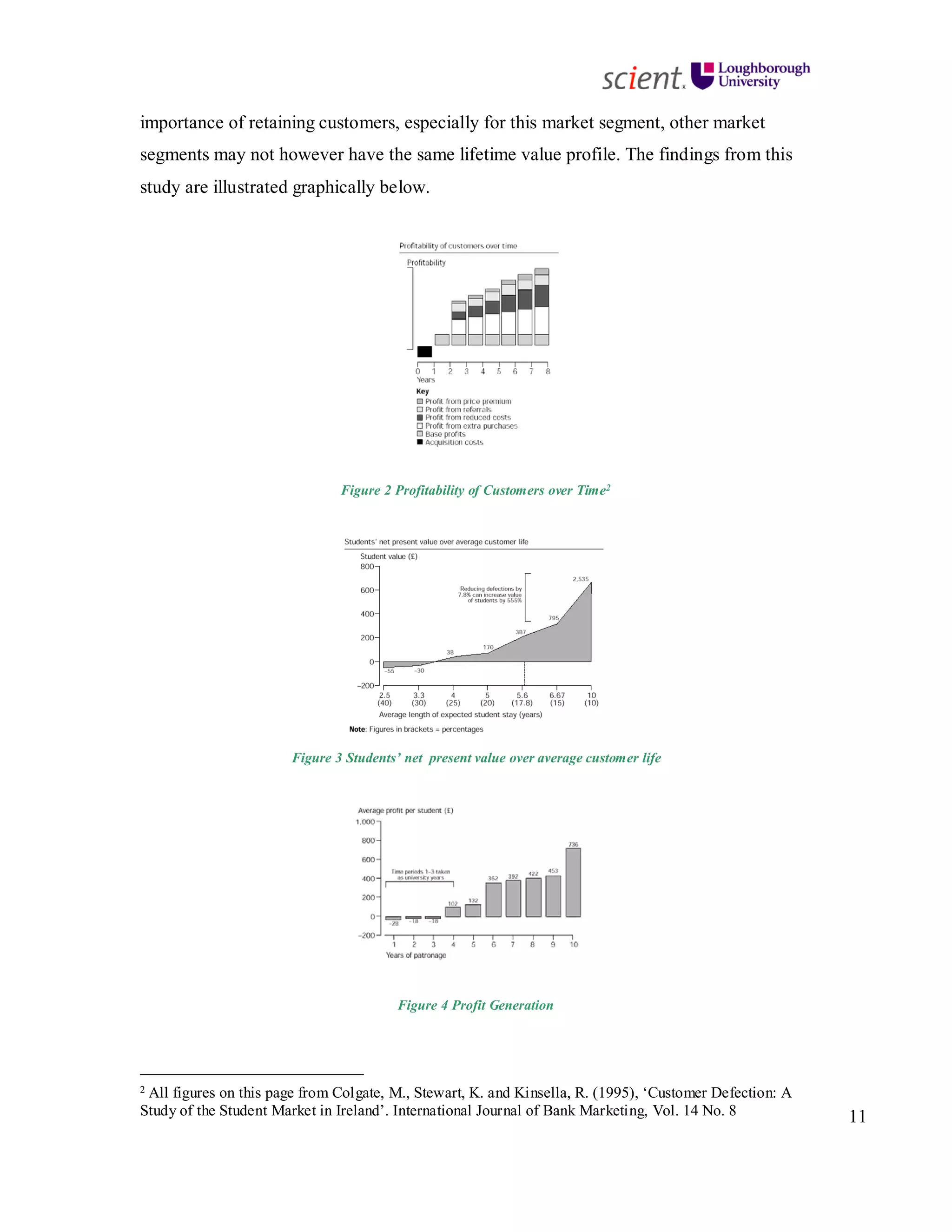
Figure 2 Profitability of Customers over Time............................................................... 11
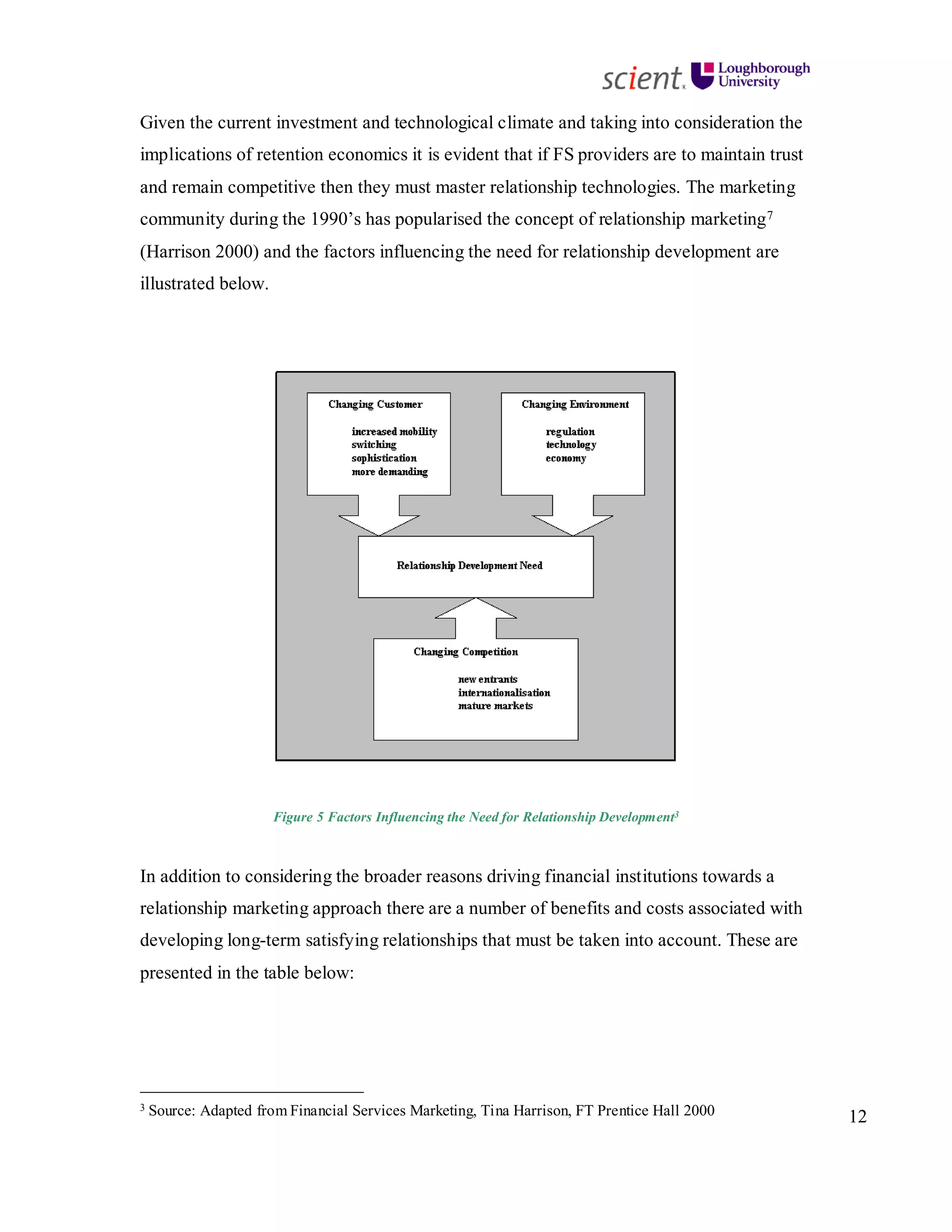
Figure 3 Students’ net present value over average customer life................................. 11
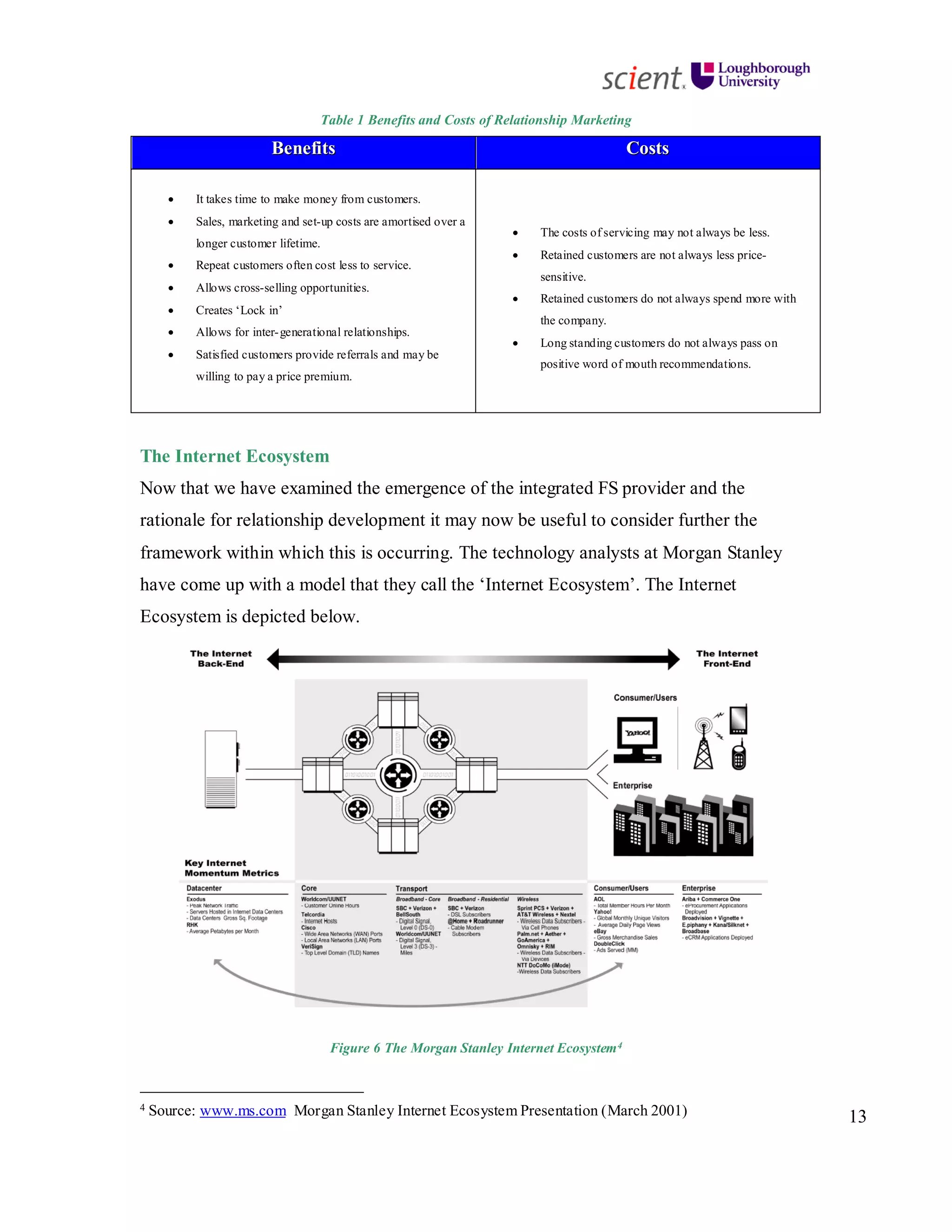
Figure 4 Profit Generation.............................................................................................. 11
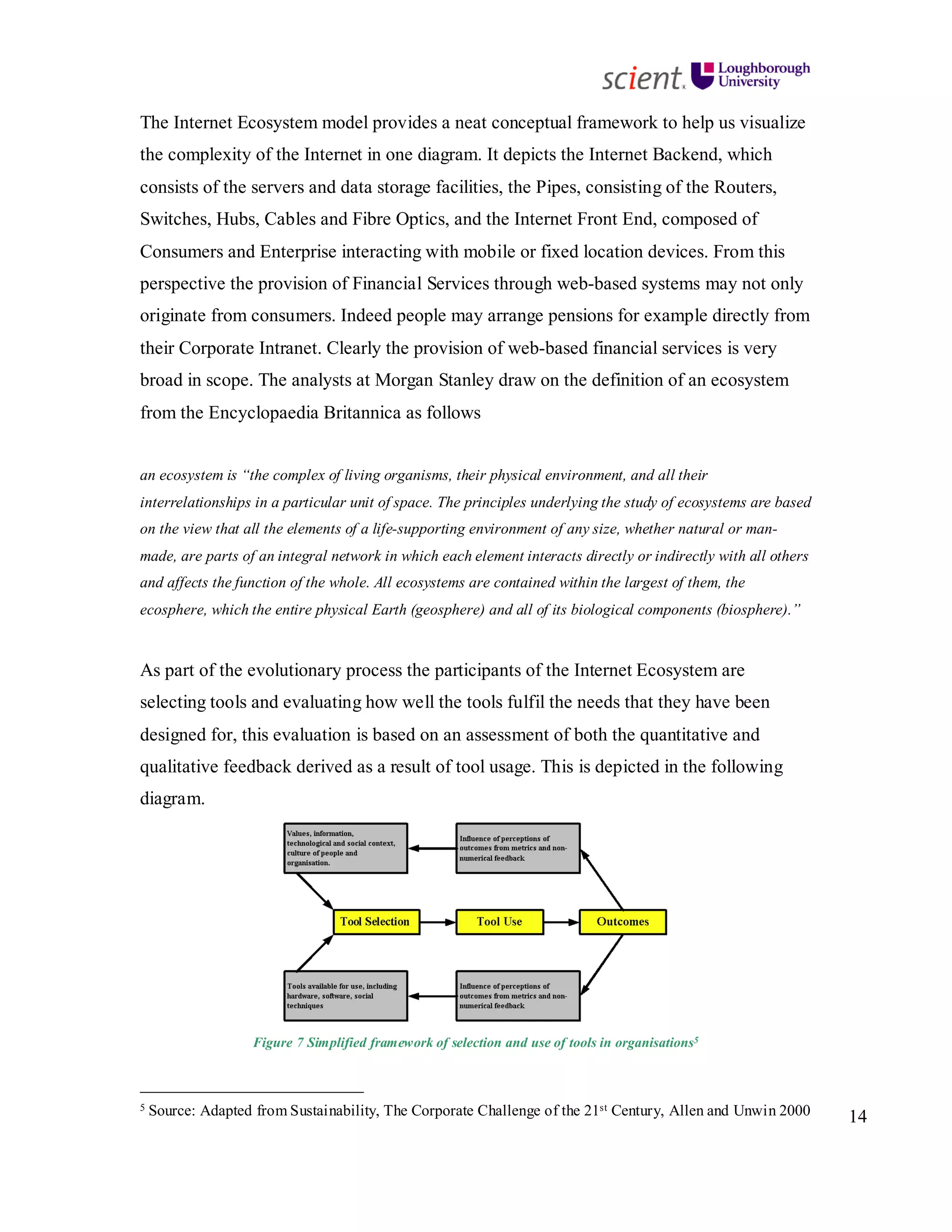
Figure 5 Factors Influencing the Need for Relationship Development........................ 12
Figure 6 The Morgan Stanley Internet Ecosystem......................................................... 13
Figure 7 Simplified framework of selection and use of tools in organisations............. 14
Figure 8 Smile Customer Satisfaction ............................................................................ 16
Figure 9 The Competitive Environment Changes.......................................................... 16
Figure 10 Stakeholders in the New Product Design Process......................................... 26
Figure 11 World Map ...................................................................................................... 28
Figure 12 The Hierarchy of Financial Needs ................................................................ 29
Figure 13 Investment Strategies – Risk and Return....................................................... 31
Figure 14 Forces of Social and Economic Change........................................................ 33
Figure 15 Ladder of Customer Loyalty........................................................................... 40
Figure 16 Loyalty Profiles Across Financial Services Products.................................... 42
Figure 17 Product Complexity, Frequency and Channel Utilization............................ 43
Figure 18 Technology Satisfaction Curve ...................................................................... 44
Figure 19 The Change in Customers as a Product Matures.......................................... 45
Figure 20 Simplified Financial Decision Making Process........................................... 46
Figure 21 Relative Positioning on Service Attributes for Different FS Providers........ 47
Figure 22 A Conceptual Model of the FS Purchase Decision Process ......................... 49
Figure 23 Detailed User Centred Design Process Lifecycle .......................................... 53
Figure 24 Taxonomy of WWW User Tasks .................................................................... 69
Figure 25 The Apparatus Used ....................................................................................... 70
Figure 26 Proportion of Usability problems found against Number of Evaluators ..... 79
Figure 27 Usability problems found by different Evaluators for a Banking System.... 80
4
LIST OF TABLES
Table 1 Benefits and Costs of Relationship Marketing.................................................. 13
Table 2 Basic Consumer and Financial Institution Needs............................................ 15
Table 3 Influence of Financial Services Employees on Customers............................... 27
Table 4 Basic Investment Objectives............................................................................... 32
Table 5 Comparisons of Traditional and Emerging Life-Cycle Cash Flows ................ 35
Table 6 General Segmentation Characteristics .............................................................. 38
Table 7 Defector Types .................................................................................................... 41
Table 8 Loyalist / Migrator Characteristics.................................................................... 42
Table 9 Technology Adoption Segments......................................................................... 45
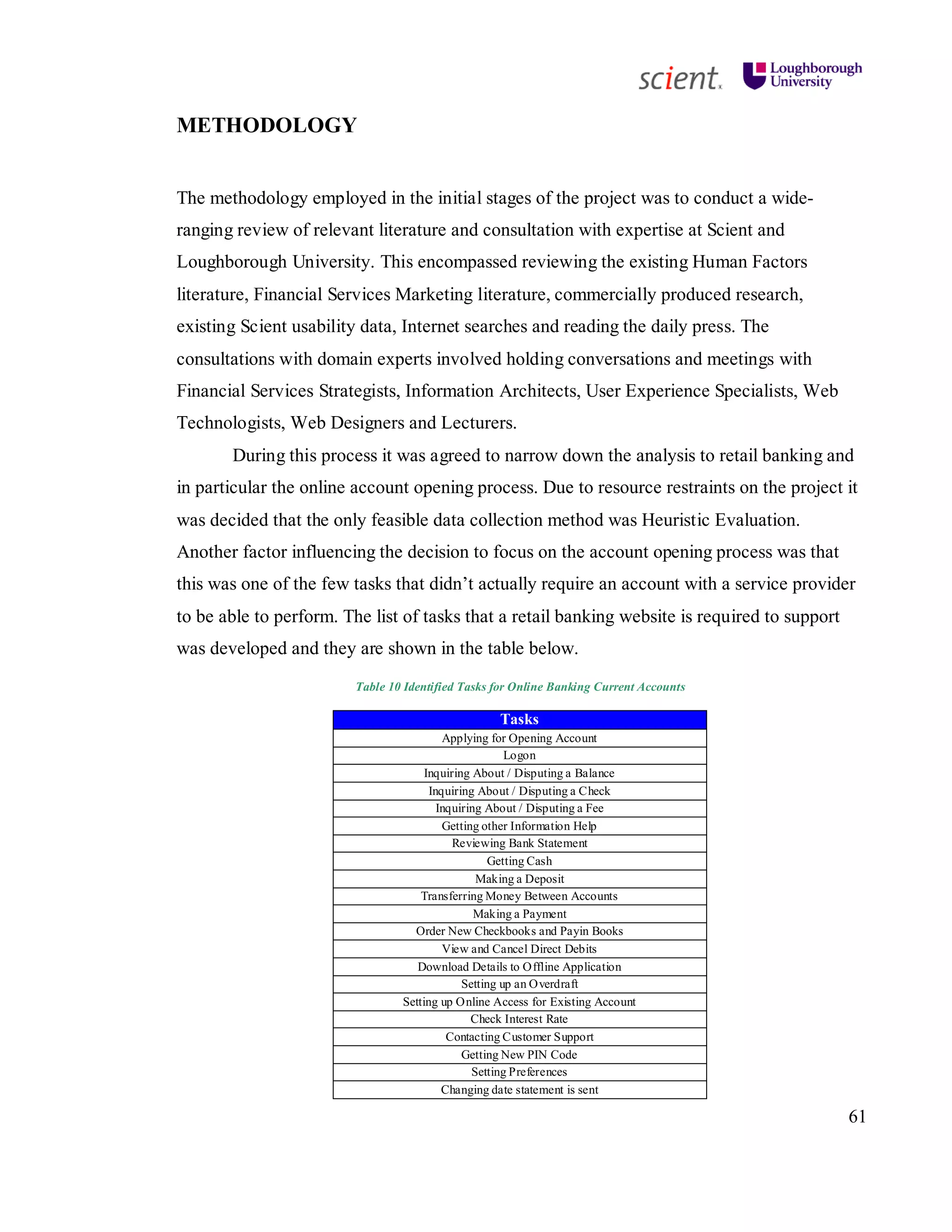
Table 10 Identified Tasks for Online Banking Current Accounts................................. 61
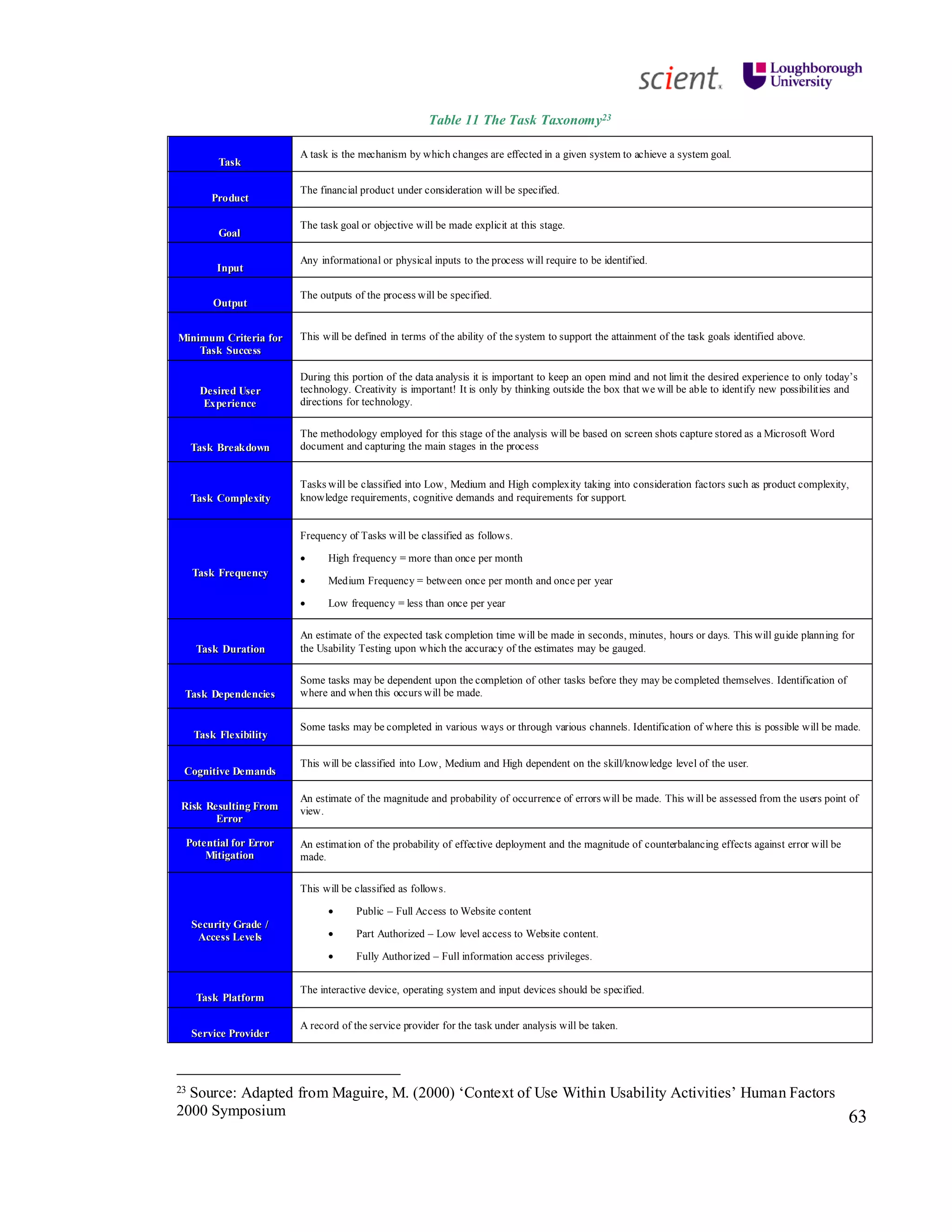
Table 11 The Task Taxonomy ......................................................................................... 63
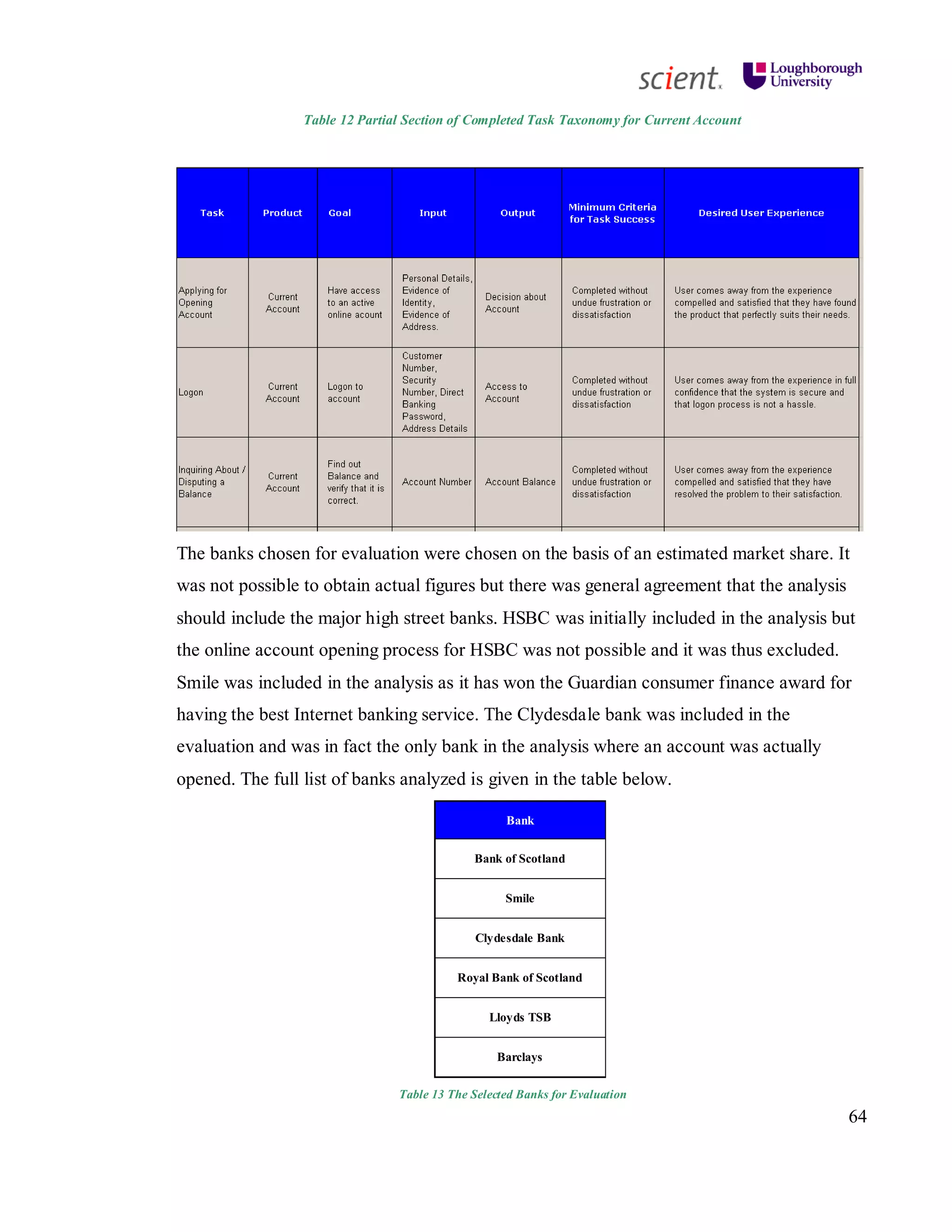
Table 12 Partial Section of Completed Task Taxonomy for Current Account ............. 64
Table 13 The Selected Banks for Evaluation.................................................................. 64
Table 14 Heuristic Rating Scale...................................................................................... 67
Table 15 The Heuristic Template.................................................................................... 68
Table 16 Equipment Specification .................................................................................. 70
Table 17 Heuristic Evaluation Results............................................................................ 71
Table 18 Company Ranking ............................................................................................ 72
Table 19 Visibility of System Status Ranking ................................................................. 73
Table 20 Match Between System and Real World Ranking........................................... 73
Table 21 User Control and Freedom Ranking ............................................................... 74
Table 22 Consistency and Standards Ranking ............................................................... 74
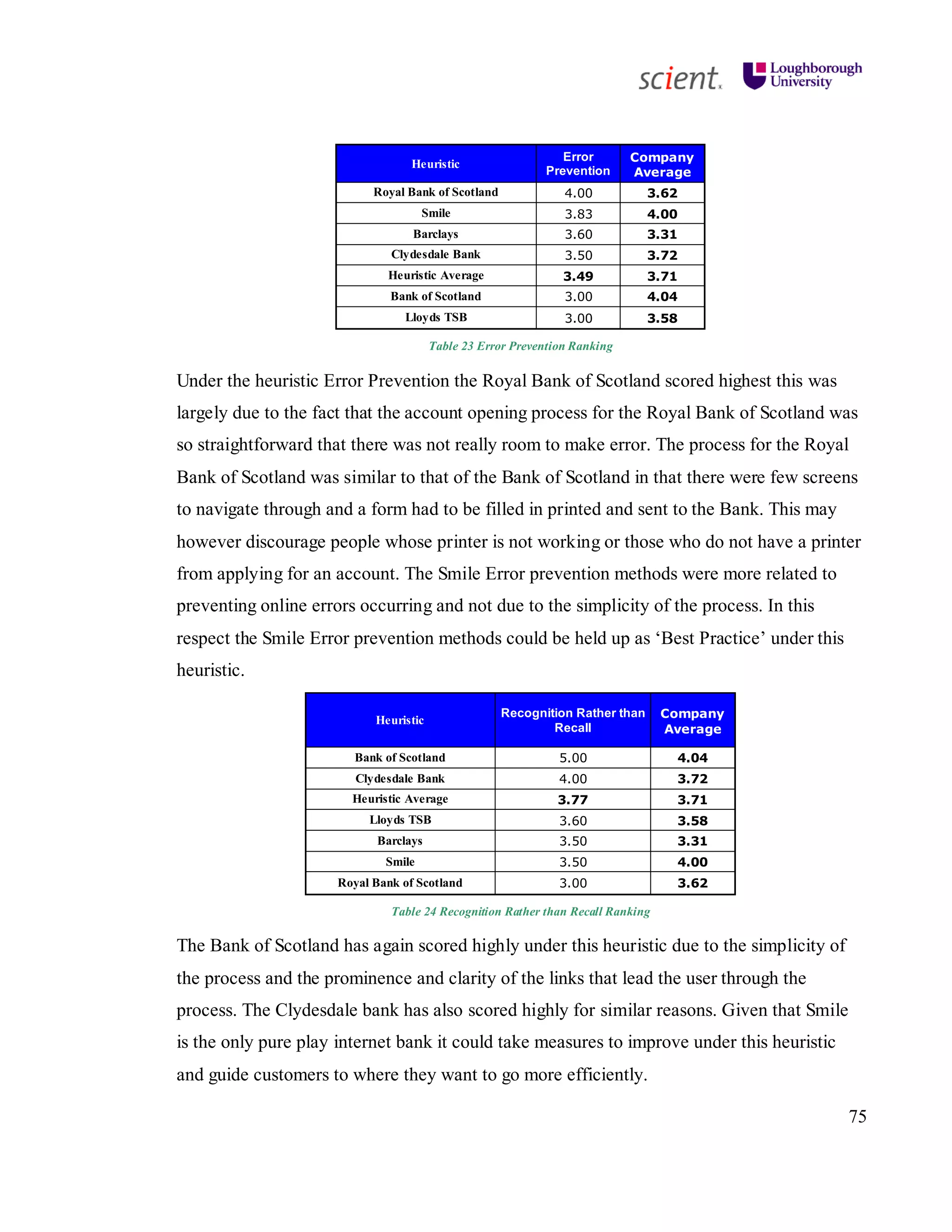
Table 23 Error Prevention Ranking................................................................................ 75
Table 24 Recognition Rather than Recall Ranking........................................................ 75
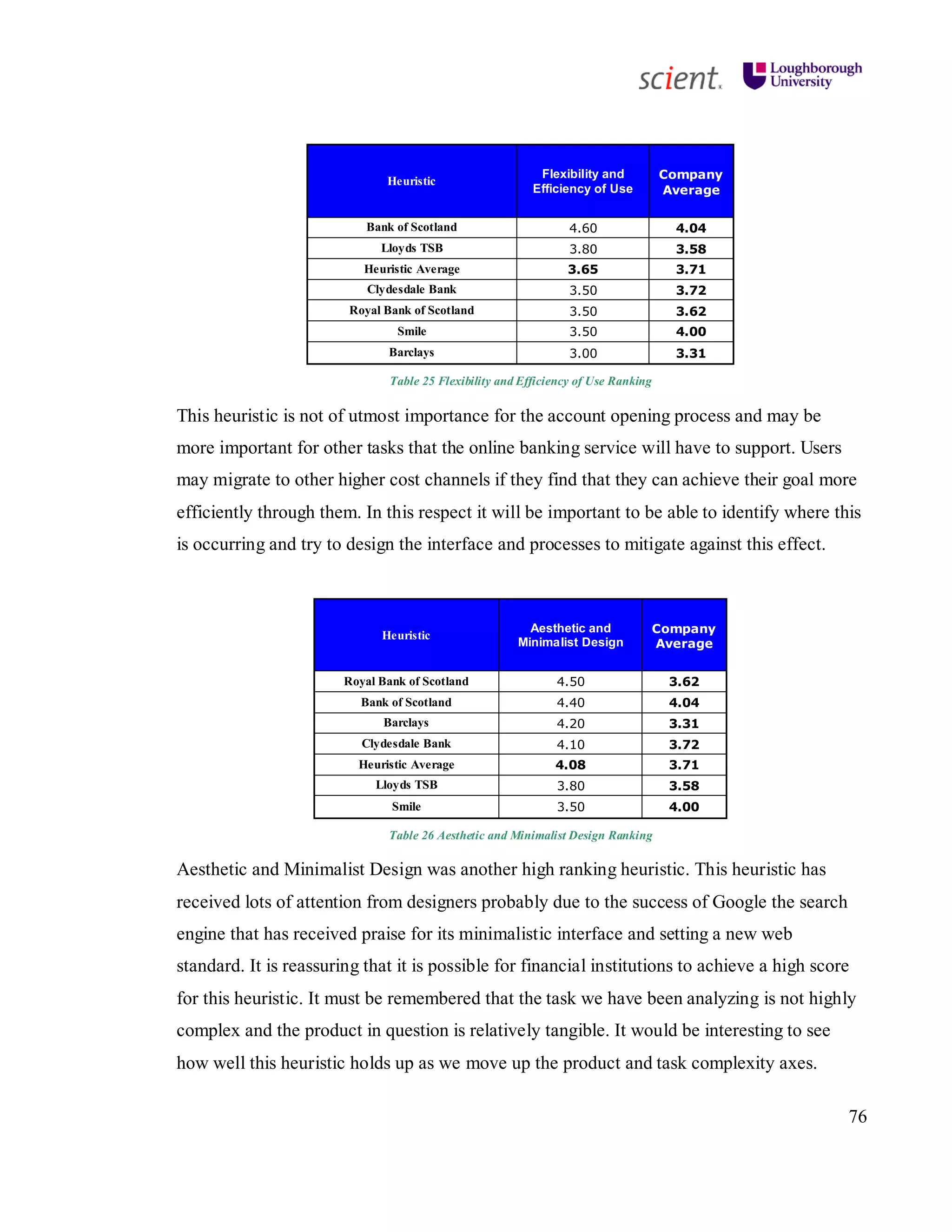
Table 25 Flexibility and Efficiency of Use Ranking ...................................................... 76
Table 26 Aesthetic and Minimalist Design Ranking...................................................... 76
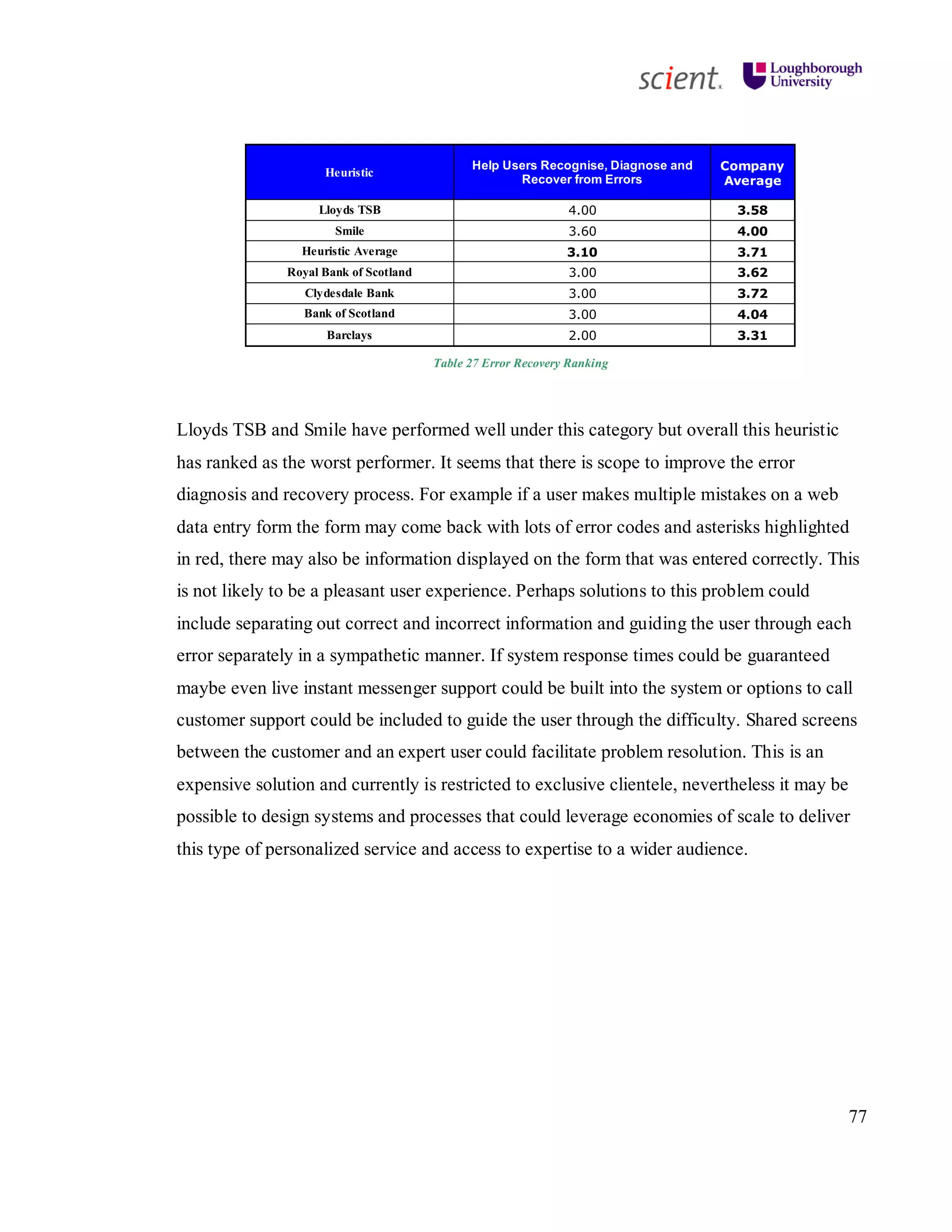
Table 27 Error Recovery Ranking................................................................................... 77
Table 28 Help and Documentation Ranking .................................................................. 78
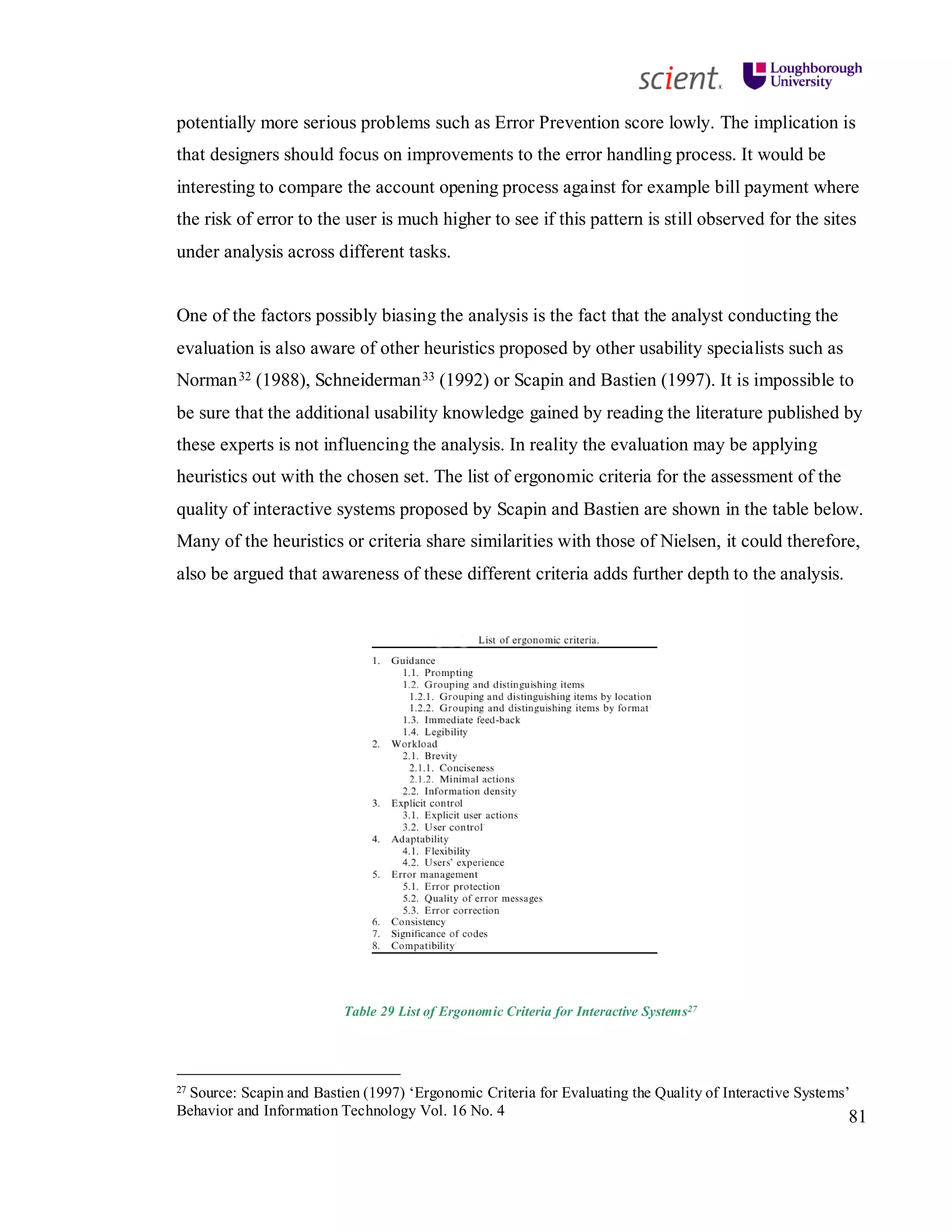
Table 29 List of Ergonomic Criteria for Interactive Systems......................................... 81
5
ABSTRACT
Usability of financial services websites is one of the inhibitors for banks to provide
effective customer service. In assessing the usability of financial services websites this
study has: generated a descriptive framework of the current financial services
environment, descriptive models of the financial services consumer, a taxonomy of tasks,
a list of tasks online retail banks are required to support and carried out an Heuristic
Evaluation of the online account opening process.
Findings show that whilst the design of the sites seem to effectively support the
less critical usability heuristics improvements could be made to the design that would
enhance the performance of the sites on the more critical usability heuristics.
INTRODUCTION
According to Scapin and Bastien (1997)1 some very specialized tasks or tasks involving
highly skilled users, ergonomic issues cannot be reduced to sets of dimensions and
recommendations. They suggest that such situations require sophisticated knowledge on
context, users, and tasks. Maguire (2000)2 asserts that before any usability design or
evaluation activity may begin, it is necessary to understand the context of use for the
product. To this extent the nature of this study has been mainly exploratory. The initial
investigation has focused on gaining an understanding of the financial services consumer
and the needs of key stakeholders in the financial system. The document has been
designed to enable ‘Mental Models’ of the problem space to be developed and encourage
organisational learning. According to Senge (1990)3 ‘Mental Models’ help guide the
strategic conversation, encourage organisational learning and enable system participants
to break from existing practice by encouraging innovative new ways of doing things.
The report will begin by modelling the current environment faced by the financial
services industry. The next stage of analysis will concern the financial services consumer.
The territory covered in this section includes the hierarchy of financial needs, financial
consumer lifecycle stages and descriptive consumer segmentation models. Attention shall
6
then be turned to the UCD process and the various methods that may be employed. The
final sections of the report shall detail the methodology employed to conduct an Heuristic
Evaluation of the account opening process for six retail banks. The results of the
evaluation shall be presented, discussion made and areas of further work identified.
Scient
Dedicated to using the science of experience strategy, design and technology to create
extraordinary results for its’ clients Scient has developed unique solutions for guiding
clients through the uncharted waters of the digital age. The entire Scient team is
committed to working with clients to transform their businesses from fractured, multi
layered user experiences to one seamless, enjoyable experience. This is accomplished
through the creation of unified multi-channel experiences that inspire and strengthen
dynamic connections among people, businesses and communities.
Scient has sponsored this project in conjunction with Loughborough University as part of
its research and development activities. The analyst conducting the investigation has a
diverse experience of working in the financial services sector having worked in a Stock-
broking Firm, an Asset Management Company and an Investment Bank. The analyst also
holds a pass in the Securities and Futures Authority Securities Representatives exam. It is
hoped that this experience combined with the Ergonomic knowledge gained whilst
undertaking the Msc in Ergonomics at Loughborough University will provide a rich
analysis of the problem space. One of the main aims of the project will be to disseminate
any knowledge gained from the research to other members of the Scient team. The thesis
has therefore been designed as a tool to support organizational learning within Scient.
Project Context, Aims and Activities
The subject of this project is the usability of web based interactive systems for the
provision of financial services (FS). The aims of the project are: to generate a taxonomy
of tasks that identified FS web based products are required to support; to collect usability
7
performance data for identified FS domains; to produce best practice design guidelines
and heuristics, and; in the process document required improvements to Scient’s usability
testing and user centred design approach.
Project activities have included:
• Identification of FS domains for analysis. The chosen domain has been narrowed
down to the account opening process for the major UK retail banks.
• Development of a list and description of key financial services delivery platforms
e.g Web, wireless, ATM.
• Review and analysis of existing Scient usability data.
• Review and analysis of existing usability literature.
• Review and analysis of existing financial services marketing literature.
• Review and analysis of commercially produced research.
• Development of a taxonomy of tasks associated with the FS domain identified.
• Classification of the key stakeholders/users linked to the financial products and
tasks identified.
• Analysis of how effective the system is in supporting the specified tasks for
specified user groups in specified contexts.
• Identification of points of high usability risk in the selected FS domain system
processes.
• Synthesis of the above analysis to produce generic interactive system design
guidelines for the account opening process.
• Identify improvements to Scient’s usability testing and user centred design
approach
8
THE FINANCIAL SERVICES ENVIRONMENT
Before the advent of the Internet the financial services community operated a trading
system that enabled the participants on the international financial markets to transact with
each other on a global basis. The result of this climate was that information asymmetries
were created and power fell into the hands of the market professionals who could exploit
their ‘insider’ knowledge to generate excess returns by investing in the market. With the
advent of the Internet this situation has apparently changed, the consumer has now been
empowered with access to real time information via the Internet and a supportive
regulatory environment has been established in the developed markets. In theory these
factors combine to create a more level playing field between consumers and professional
market participants.
Rapid technological innovation has enabled what the financial community has
dubbed ‘the Bacardi Banking culture’ reflecting the desire of consumers to be able to
bank anytime, anyplace and anywhere. In a recent television advertisement by Barclays
Bank Robbie Coltrane proclaimed “You can even pay your bills half way up Mount Fuji
wearing your Jimjams” adding “You know what this means: We are all Bankers now!”
The dot-com bubble fuelled an appetite from consumers for all kinds of new media,
ranging from dedicated financial television channels such as Bloomberg to investment
magazines such as the Investors Chronicle, the audiences and readership of these media
providers were soaring during the ‘irrational exuberance’ of the dot-com frenzy and
trading volumes and equity ownership reached record levels.
Cataclysmic events like September 11, the bursting of the bubble, falling trading
volumes, the pensions mis-selling scandal, the crisis of confidence in corporate
governance, increased political posturing, warmongering and so forth have coalesced to
create an environment of increased fear, uncertainty and doubt in the financial markets.
The global financial system has, however, shown remarkable resilience and continues to
function in the face of adversity. Some market commentators4 (Soros 1998) have
indicated that it is fear, uncertainty and doubt that move the market in the first place as
they lead to increased share price volatility. This is perhaps one of the reasons why we
are witnessing an increase in investor interest in hedge funds as an asset class. These
9
funds trade and make profits or losses by conducting complex derivative transactions
whose value increases as volatility increases; volatility is therefore generally seen to be
good for this class of investment vehicle. At the moment this type of fund has limited
distribution although the Financial Services Authority is currently assessing the
regulatory status of these investment instruments for retail consumers. Proponents of
these funds state portfolio diversification as a key reason as to why investors should
include this class of investment in their portfolio.
It can be said that the means for assessing whether or not these products are
suitable for particular portfolios have become more complex and that there is an
increasing need for advice to support the marketing of these products, thereby ensuring
that the right products are sold to the right people at the right time and in the right place.
In essence this is the goal of an efficiently functioning financial system. The internet is
providing a platform upon which investors may learn the complex techniques required to
construct or analyse such investment strategies, but it may still be the case that financial
power in the future is held by the leading institutions whose industrial strength analytical
capabilities, expertise and investment insight are able to deliver excess returns and
competitive advantage. The initial empowerment that the Internet has promised may
deliver new information asymmetries.
The Integrated Financial Services Provider
As a result of these information asymmetries financial advice will become the next
battleground for FS providers. The rationale for this argument has been staged in one of
the more complex areas of the capital markets but we must include in our analysis other
sectors of the financial services industry such as pensions, credit cards, mortgages,
insurance and savings which also require advice and support. These products will also be
a part of consumers’ financial portfolios and as such offer cross selling opportunities for
FS providers. FS providers have recognized that it is very difficult to provide ‘Best in
Class’ products across the financial spectrum that are able to meet the needs of a diverse
client base. Consolidation and convergence are key themes in the FS domain as a result.
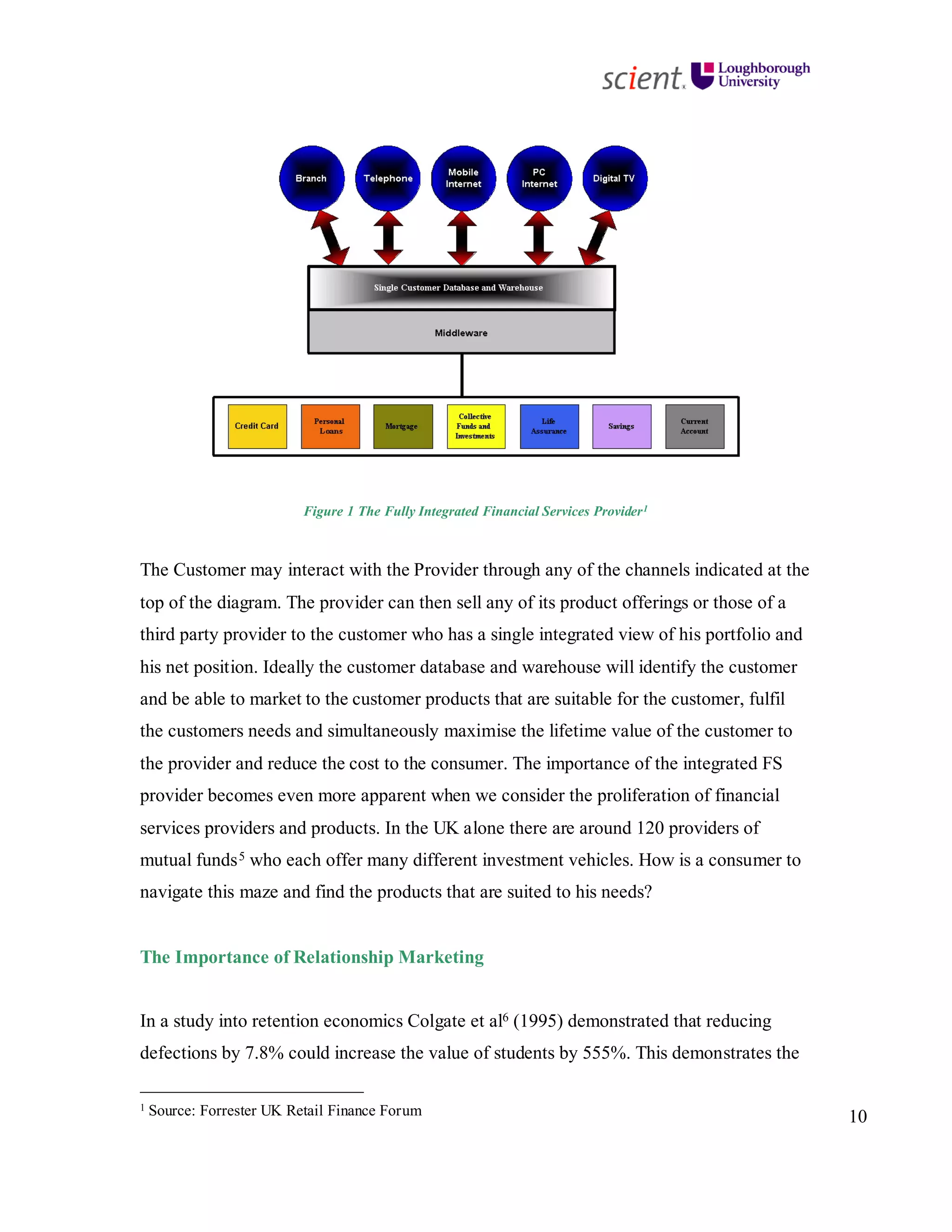
Figure 1 illustrates the concept of the fully integrated Financial Services provider.
10
Figure 1 The Fully Integrated Financial Services Provider1
The Customer may interact with the Provider through any of the channels indicated at the
top of the diagram. The provider can then sell any of its product offerings or those of a
third party provider to the customer who has a single integrated view of his portfolio and
his net position. Ideally the customer database and warehouse will identify the customer
and be able to market to the customer products that are suitable for the customer, fulfil
the customers needs and simultaneously maximise the lifetime value of the customer to
the provider and reduce the cost to the consumer. The importance of the integrated FS
provider becomes even more apparent when we consider the proliferation of financial
services providers and products. In the UK alone there are around 120 providers of
mutual funds5 who each offer many different investment vehicles. How is a consumer to
navigate this maze and find the products that are suited to his needs?
The Importance of Relationship Marketing
In a study into retention economics Colgate et al6 (1995) demonstrated that reducing
defections by 7.8% could increase the value of students by 555%. This demonstrates the
1 Source: Forrester UK Retail Finance Forum
11
importance of retaining customers, especially for this market segment, other market
segments may not however have the same lifetime value profile. The findings from this
study are illustrated graphically below.
Figure 2 Profitability of Customers over Time2
Figure 3 Students’ net present value over average customer life
Figure 4 Profit Generation
2 All figures on this page from Colgate, M., Stewart, K. and Kinsella, R. (1995), ‘Customer Defection: A
Study of the Student Market in Ireland’. International Journal of Bank Marketing, Vol. 14 No. 8
12
Given the current investment and technological climate and taking into consideration the
implications of retention economics it is evident that if FS providers are to maintain trust
and remain competitive then they must master relationship technologies. The marketing
community during the 1990’s has popularised the concept of relationship marketing7
(Harrison 2000) and the factors influencing the need for relationship development are
illustrated below.
Figure 5 Factors Influencing the Need for Relationship Development3
In addition to considering the broader reasons driving financial institutions towards a
relationship marketing approach there are a number of benefits and costs associated with
developing long-term satisfying relationships that must be taken into account. These are
presented in the table below:
3 Source: Adapted from Financial Services Marketing, Tina Harrison, FT Prentice Hall 2000
13
Table 1 Benefits and Costs of Relationship Marketing
BBeenneeffiittss CCoossttss
• It takes time to make money from customers.
• Sales, marketing and set-up costs are amortised over a
longer customer lifetime.
• Repeat customers often cost less to service.
• Allows cross-selling opportunities.
• Creates ‘Lock in’
• Allows for inter-generational relationships.
• Satisfied customers provide referrals and may be
willing to pay a price premium.
• The costs of servicing may not always be less.
• Retained customers are not always less price-
sensitive.
• Retained customers do not always spend more with
the company.
• Long standing customers do not always pass on
positive word of mouth recommendations.
The Internet Ecosystem
Now that we have examined the emergence of the integrated FS provider and the
rationale for relationship development it may now be useful to consider further the
framework within which this is occurring. The technology analysts at Morgan Stanley
have come up with a model that they call the ‘Internet Ecosystem’. The Internet
Ecosystem is depicted below.
Figure 6 The Morgan Stanley Internet Ecosystem4
4 Source: www.ms.com Morgan Stanley Internet Ecosystem Presentation (March 2001)
14
The Internet Ecosystem model provides a neat conceptual framework to help us visualize
the complexity of the Internet in one diagram. It depicts the Internet Backend, which
consists of the servers and data storage facilities, the Pipes, consisting of the Routers,
Switches, Hubs, Cables and Fibre Optics, and the Internet Front End, composed of
Consumers and Enterprise interacting with mobile or fixed location devices. From this
perspective the provision of Financial Services through web-based systems may not only
originate from consumers. Indeed people may arrange pensions for example directly from
their Corporate Intranet. Clearly the provision of web-based financial services is very
broad in scope. The analysts at Morgan Stanley draw on the definition of an ecosystem
from the Encyclopaedia Britannica as follows
an ecosystem is “the complex of living organisms, their physical environment, and all their
interrelationships in a particular unit of space. The principles underlying the study of ecosystems are based
on the view that all the elements of a life-supporting environment of any size, whether natural or man-
made, are parts of an integral network in which each element interacts directly or indirectly with all others
and affects the function of the whole. All ecosystems are contained within the largest of them, the
ecosphere, which the entire physical Earth (geosphere) and all of its biological components (biosphere).”
As part of the evolutionary process the participants of the Internet Ecosystem are
selecting tools and evaluating how well the tools fulfil the needs that they have been
designed for, this evaluation is based on an assessment of both the quantitative and
qualitative feedback derived as a result of tool usage. This is depicted in the following
diagram.
Figure 7 Simplified framework of selection and use of tools in organisations5
5 Source: Adapted from Sustainability, The Corporate Challenge of the 21st Century, Allen and Unwin 2000
15
In the context of web-based financial services the tool represents the interface. If after
both a quantitative and qualitative analysis the tool is deemed by users as insufficient at
fulfilling their needs it will be redesigned or discarded until an appropriate tool that does
actually fulfil users needs is developed and implemented. From the perspective of the
users and providers of financial services the basic needs that must be satisfied have been
identified8 and are given in the following table.
Table 2 Basic Consumer and Financial Institution Needs
BBaassiicc CCoonnssuummeerr NNeeeeddss BBaassiicc FFiinnaanncciiaall IInnssttiittuuttiioonn NNeeeeddss
Cash Accessibility Increase Transaction Values / Frequency
Asset Security Increase Assets Under Management
Money Transfer Reduce Transaction Costs / Enhance Profitability
Deferred Payment Enhance Brand Image / Reputation / Market Share
Financial Advice Deliver Shareholder Value
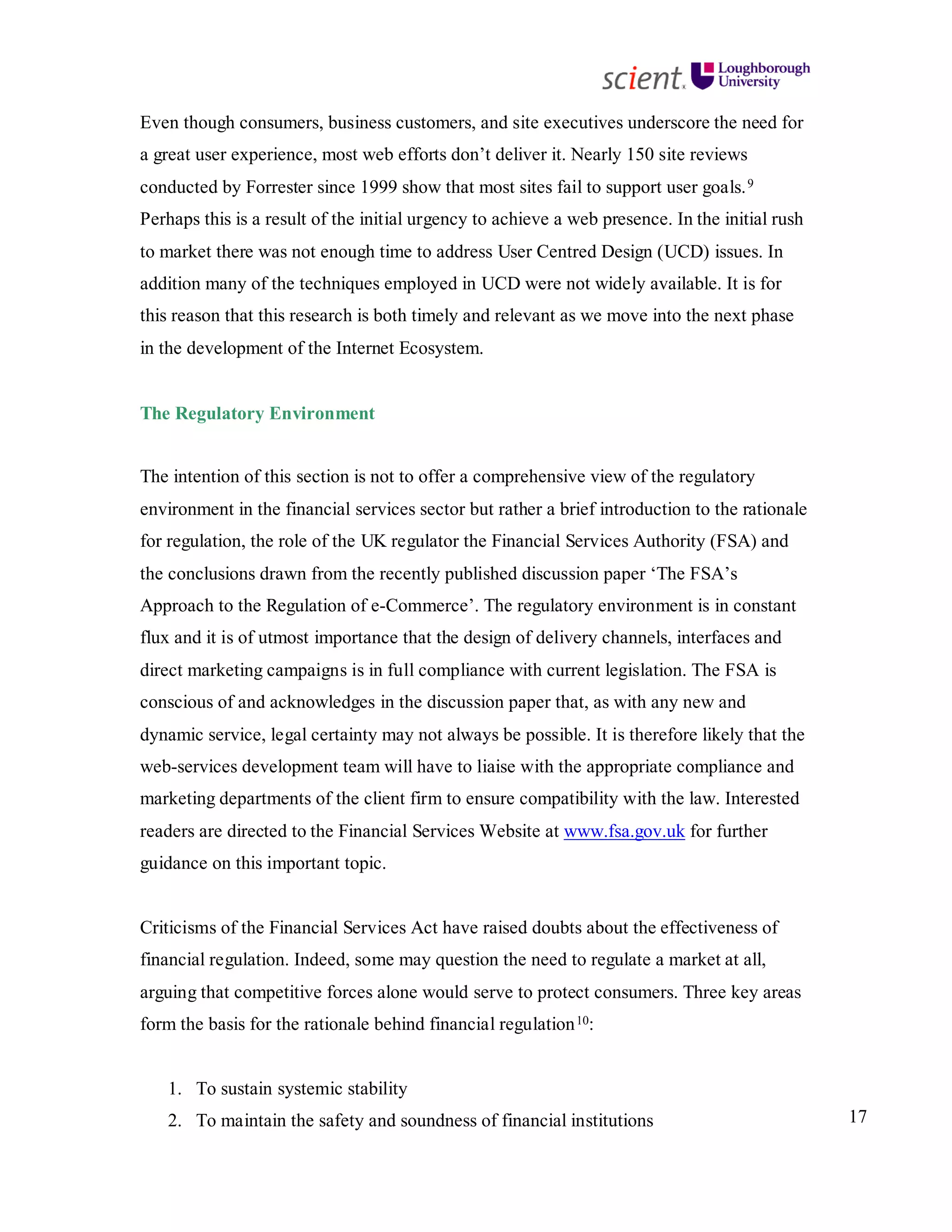
Evidence that it is possible to achieve incremental system improvements whilst satisfying
a broad range of needs is emerging from Smile the Internet Bank. This evidence is
presented below. Interestingly Smile has also recently won the Guardian Consumer
finance Internet Bank awards and has also been voted best Internet Bank by the consumer
watchdog magazine Which.
16
Figure 8 Smile Customer Satisfaction6
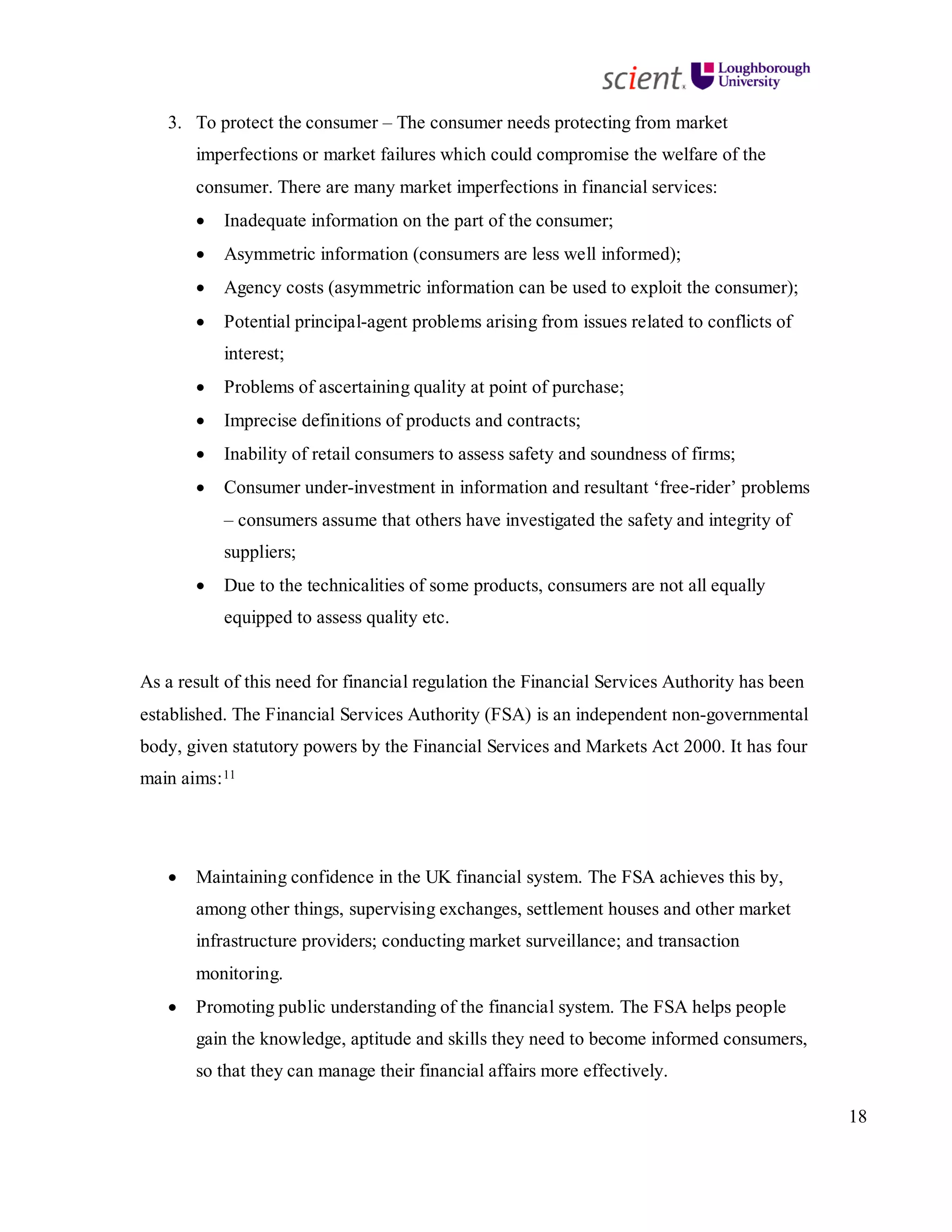
Perhaps one last factor to consider within the framework of the Internet Ecosystem is
how the competitive environment and the urgency to have a web presence have changed
over time. The idea is captured in the illustration below.
Figure 9 The Competitive Environment Changes7
6 Source: http://www.co-operativebank.co.uk/ The Partnership Report 2001.
7 Source: IT Decision Making Excellence, Scient White Paper 2002
17
Even though consumers, business customers, and site executives underscore the need for
a great user experience, most web efforts don’t deliver it. Nearly 150 site reviews
conducted by Forrester since 1999 show that most sites fail to support user goals.9
Perhaps this is a result of the initial urgency to achieve a web presence. In the initial rush
to market there was not enough time to address User Centred Design (UCD) issues. In
addition many of the techniques employed in UCD were not widely available. It is for
this reason that this research is both timely and relevant as we move into the next phase
in the development of the Internet Ecosystem.
The Regulatory Environment
The intention of this section is not to offer a comprehensive view of the regulatory
environment in the financial services sector but rather a brief introduction to the rationale
for regulation, the role of the UK regulator the Financial Services Authority (FSA) and
the conclusions drawn from the recently published discussion paper ‘The FSA’s
Approach to the Regulation of e-Commerce’. The regulatory environment is in constant
flux and it is of utmost importance that the design of delivery channels, interfaces and
direct marketing campaigns is in full compliance with current legislation. The FSA is
conscious of and acknowledges in the discussion paper that, as with any new and
dynamic service, legal certainty may not always be possible. It is therefore likely that the
web-services development team will have to liaise with the appropriate compliance and
marketing departments of the client firm to ensure compatibility with the law. Interested
readers are directed to the Financial Services Website at www.fsa.gov.uk for further
guidance on this important topic.
Criticisms of the Financial Services Act have raised doubts about the effectiveness of
financial regulation. Indeed, some may question the need to regulate a market at all,
arguing that competitive forces alone would serve to protect consumers. Three key areas
form the basis for the rationale behind financial regulation10:
1. To sustain systemic stability
2. To maintain the safety and soundness of financial institutions
18
3. To protect the consumer – The consumer needs protecting from market
imperfections or market failures which could compromise the welfare of the
consumer. There are many market imperfections in financial services:
• Inadequate information on the part of the consumer;
• Asymmetric information (consumers are less well informed);
• Agency costs (asymmetric information can be used to exploit the consumer);
• Potential principal-agent problems arising from issues related to conflicts of
interest;
• Problems of ascertaining quality at point of purchase;
• Imprecise definitions of products and contracts;
• Inability of retail consumers to assess safety and soundness of firms;
• Consumer under-investment in information and resultant ‘free-rider’ problems
– consumers assume that others have investigated the safety and integrity of
suppliers;
• Due to the technicalities of some products, consumers are not all equally
equipped to assess quality etc.
As a result of this need for financial regulation the Financial Services Authority has been
established. The Financial Services Authority (FSA) is an independent non-governmental
body, given statutory powers by the Financial Services and Markets Act 2000. It has four
main aims:11
• Maintaining confidence in the UK financial system. The FSA achieves this by,
among other things, supervising exchanges, settlement houses and other market
infrastructure providers; conducting market surveillance; and transaction
monitoring.
• Promoting public understanding of the financial system. The FSA helps people
gain the knowledge, aptitude and skills they need to become informed consumers,
so that they can manage their financial affairs more effectively.
19
• Securing the right degree of protection for consumers. Vetting at entry aims to
allow only those firms and individuals satisfying the necessary criteria (including
honesty, competence and financial soundness) to engage in regulated activity.
Once authorized, the FSA expects firms and individuals to maintain particular
standards set by the FSA. The FSA monitors how far firms and individuals are
meeting these standards. Where serious problems arise the FSA will investigate
and, if appropriate, discipline or prosecute those responsible for conducting
financial business outside the rules. The FSA can also use its’ powers to restore
funds to consumers.
• Helping to reduce financial crime. The work of the FSA focuses on three main
types of financial crime: money laundering; fraud and dishonesty; and criminal
market misconduct such as insider dealing.
In June 2001 the FSA published a discussion paper entitled ‘The FSA’s approach to the
regulation of e-commerce’ presented here are the main conclusions drawn from the
paper.
Conclusions of the review
The assessment that has been carried out indicates that further action is needed by the
FSA. This work may be grouped into three areas. These are that:
a) Firms and markets have adequate IT systems and controls to address the risks in their
business;
b) Consumers have access to relevant and comprehensible information and guidance
about obtaining financial services via e-commerce channels; and consumers appreciate
that, once armed with this information, they have a responsibility to protect themselves
from the risks they can best manage. For example, banks own and control the ATM
network; this is very different from the position of on-line banking. However, for other
services such as stock broking, the use of e-commerce delivery channels may provide
20
greater levels of security in some circumstances than the use of traditional
communication, such as post or telephone.
c) The FSA adapts regulation to e-commerce developments. Although the paper identifies
actions which the industry, consumers and the FSA should consider, one of the common
themes that runs through the analysis is that no one group can do everything. Achieving
appropriate standards in this area, as in many others, is a shared responsibility in which
roles interlock. As the discussion of consumer security makes clear, neither firms nor
consumers can completely counteract a failure to maintain proper controls by the other.
Adequate IT Systems and Controls
For the majority of firms and markets, IT provides the backbone of the business, whether
or not the firm uses e-commerce delivery channels. It is not the FSA’s job to specify in
detail what systems and controls a firm should use. That is the responsibility of its senior
management. However, the FSA can make clear its expectation that senior management
is responsible in this area and that the controls which are in place should adequately
address the risks to which the business is exposed.
Consumer Security and Information
E-commerce is likely to provide consumers with more opportunities than risks, but
consumer security and appropriate information are key.
Consumer security has always been important; for example consumers have to keep
secret the PIN number on their credit, debit and cash cards. In the past firms themselves
were able to control security in the delivery channel; they could secure their own
machines, the communications link to ATMs or other remote devices and the remote
device itself. The use of e-commerce channels reduces firms’ end-to-end control of
security. It is the consumer who controls access to his computer and it is the consumer
who can take steps to secure it. The FSA believes that consumer security is a shared
endeavor between firms, consumers and the FSA. The FSA plans to publicize what
21
consumers can do to reduce the risk that they compromise their own security when using
e-commerce channels.
Good quality information is a key requirement if consumers are to select material
sensibly from the abundance of data in cyberspace. Information needs to be presented in
a way that consumers can understand. The FSA is one of a number of organizations with
responsibilities to provide general consumer financial information. As a regulator, the
FSA can play a valuable role in helping consumers become aware of what protections
exist within the UK, of the circumstances in which consumers may not be covered by UK
regulatory protection, and the potential consequences of not being so covered. The FSA
can also provide independent information to help consumers make an informed choice
about obtaining financial services.
Account Aggregation and Digital Certificates
The growth of e-commerce has seen the development of new products with new risks and
also of novel solutions to mitigate risks. Two new services have received particular
attention: aggregation and digital certificates supporting electronic signatures.
Aggregation is a new service. It enables a consumer to be presented with all his or her
account details (banks, stockbrokers, air miles etc) on a single page. The most common
method of aggregation currently requires consumers to provide their account passwords
to the aggregator. The aggregator uses the passwords to access automatically the
consumer’s accounts. The information is then provided to the consumer on a consolidated
basis on a single page. The paper clarifies the FSA’s approach to aggregation in a number
of important areas: These are:
a) That accessing data from a variety of sources and consolidating the information onto a
single web page is not regulated under financial services legislation, although services an
aggregator may choose to add to its site, for example providing investment advice, or
arranging deals, may trigger an authorization requirement;
22
b) As with any new business activity, authorized firms planning to undertake account
aggregation are expected to undertake appropriate levels of due diligence, in particular on
the legal issues relating to certain methods of aggregation where the law has not been
tested. Authorized firms should seek legal advice from an expert and reputable source
and should not provide aggregation services if the advice received is that any aspect of
their business model is more likely than not to be illegal, even if prosecution is believed
to be unlikely; and
c) A consumer who decides to use an aggregation service which asks the consumer to
disclose his or her password, should check very carefully that he or she is not breaching
an account provider’s terms and conditions, and whether the level of security provided by
his or her on-line bank or investment firm will be diminished by that use.
Relevant legislation includes the Computer Misuse Act 1990, the Copyright Designs and
Patents Act 1988, the Copyright and Rights in Databases Regulations 1997 and the Data
Protection Act 1998. Aggregation does not fall within the scope of Financial Services and
Markets Act 2000 (FiSMA)
Digital certificates supporting electronic signatures are widely believed to be an
important building block in the development of e-commerce. European law prevents
Member States from requiring firms providing digital certificates and other trust services
to be authorized. However, voluntary accreditation and other schemes are encouraged
and are being set up. Under the law, therefore, any firm (financial or non-financial) is free
to warrant that a particular person is who he or she purports to be for the purposes of a
specific transaction. The key issue for a firm relying on such a warranty is the need to
appreciate that not all those who provide certificates are equally reliable. Firms will need
to develop procedures for determining how much reliance may be placed on a particular
certificate. The discussion paper poses a number of questions about:
a) The standards that would have to apply in this area before certificates could be used for
the purpose of entering into a financial relationship;
23
b) The issuing of digital certificates by authorized firms;
c) The acceptance by authorized firms of digital certificates issued by others;
d) The use by authorized firms of digital certificates in the course of business;
e) The use of electronic signatures by consumers.
An example of where the Internet can provide a novel solution to risk is in the possible
use of domain names. A financial domain name could be used to help consumers identify
whether or not a firm is authorized. Consumers can and should check with the FSA’s
Central Register, but currently not everyone does. A special Internet address (for example
.fin) reserved for financial services firms, and possibly made compulsory for them to use,
might be one way of mitigating that risk. This could also help regulators conduct
surveillance more effectively, since an unauthorized .fin web-site would be relatively
easy to uncover.
There are two versions of the .fin approach. One is for a sub-level domain, i.e.
www.firm.fin.uk, the other is for a top-level domain, i.e. www.firm.uk.fin.
The paper analyses the advantages and disadvantages of the use of .fin as top-level
domain because ICANN, the agency that controls such domains, has indicated that it is
willing to authorize its use. The review has concluded that the difficulties and costs
associated with operating a financial top-level domain are not currently justified by the
prospective benefits. However, the balance between costs and benefits can be expected to
change over time. This is an issue to which the FSA may wish to return.
24
Direct Marketing of Financial Services
There are three main areas of legislation that must be taken into consideration when
direct marketing of financial services is practiced by a financial institution. Compliance
with one area does not remove the necessity to comply with other areas of legislation.
The three main areas of legislation are as follows:12
• The Telecommunications (Data Protection and Privacy) (Direct Marketing)
Regulations 1999.
• The Proposed EU Distance Selling of Consumer Financial Services Directive.
• The Data Protection Act 1998.
Consumer Education
The FSA considers consumer education is a key part of consumer protection, and the
FSA aims to help consumers make informed choices and manage their finances better.
Consumer education should also lead to more competition in financial services markets
by increasing consumer pressure. This should in turn encourage innovation, better quality
and better value for money. Work by the FSA to achieve this falls under two main
headings:
• Education for financial capability – to give individuals the knowledge,
understanding and skills necessary to become questioning and informed financial
consumers; and
• Consumer information and advice – to give impartial information and general
advice to help consumers plan their finances and make informed choices. This
work does not involve recommending individual products and services.
Over the longer term, the FSA is working to ensure that financial literacy is part of the
education system preparing school students for adult life. The FSA provide information,
25
general advice and education for adults and young people, focusing on the retail mass
markets for financial products such as banking services, insurance and pensions, and on
the needs of inexperienced and vulnerable consumers of financial services.
Stakeholders in the New Product Design Process
In the consideration of the provision of web-based financial services analysis would not
be complete without consideration of the broader group of stakeholders who have an
interest in the services and products being supplied.
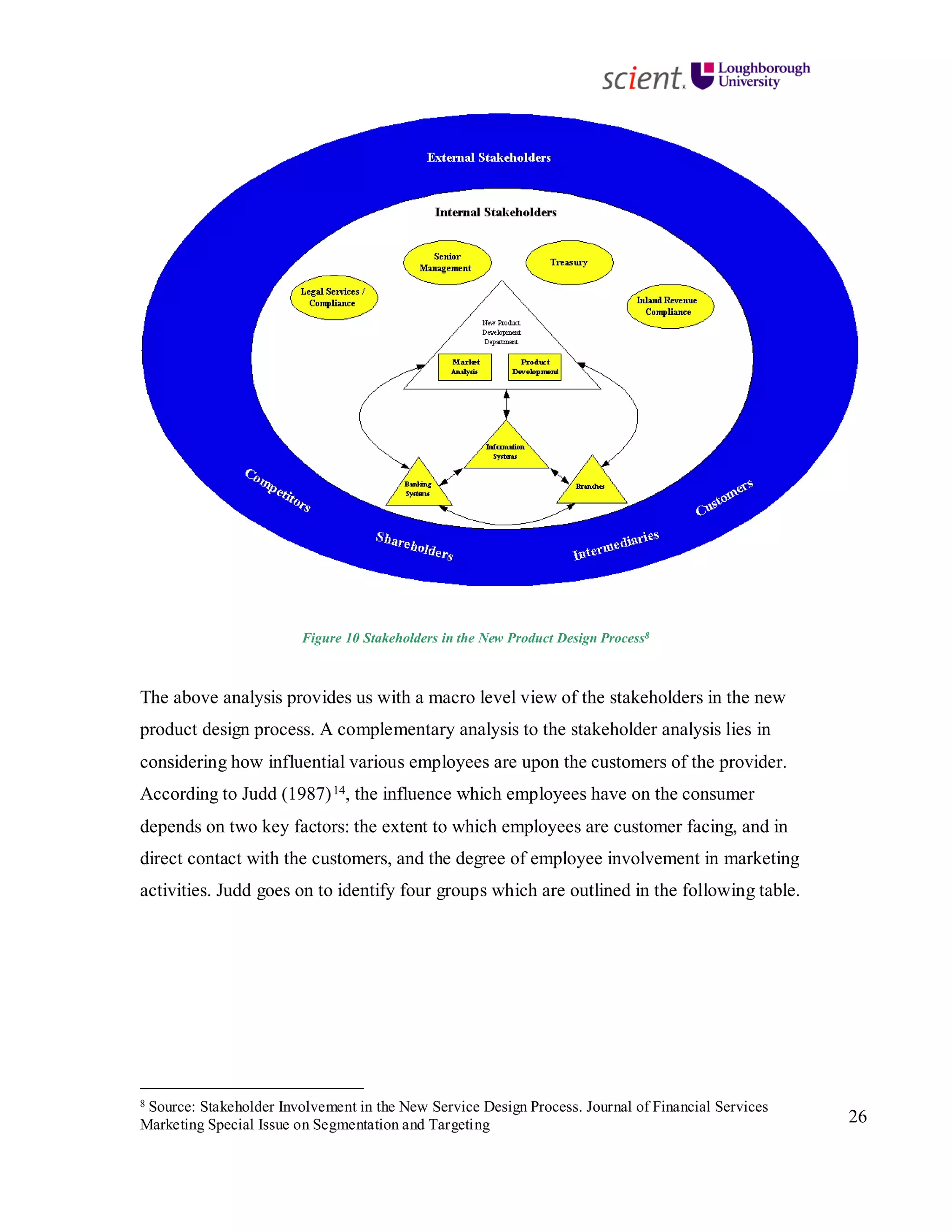
In a paper by Smith and Fischbacher (2000)13 various stakeholders were
identified from a case study of a financial institution. The stakeholders are outlined in the
following diagram. Although not every financial institution will have the same
stakeholders the paper does outline the range of different perspectives that have to be
taken into account when designing a new product or service and its relevance in the
context of web-based financial services is obvious. For example there was seen to be
conflict in the approach adopted by the marketing personnel and the product development
personnel. This was largely due to the more conservative nature of the product
development personnel who came from traditional banking backgrounds and had
excellent product knowledge but were suspicious of the techniques and ideas proposed by
the marketing team.
The study concludes that to overcome these and other difficulties in the
introduction of new products an organization wide design orientation needs to be
engendered. The recommendations are that although this is a difficult process, it can be
enabled by a greater emphasis on inter-departmental team working during which actors
share design criteria, processes and experience, and thus learn about and develop good
design. They add that stakeholder involvement can be further understood by adopting
techniques such as stakeholder mapping, which when employed at an early stage, would
identify the nature of their stake, expectations, relative power and interests.
26
Figure 10 Stakeholders in the New Product Design Process8
The above analysis provides us with a macro level view of the stakeholders in the new
product design process. A complementary analysis to the stakeholder analysis lies in
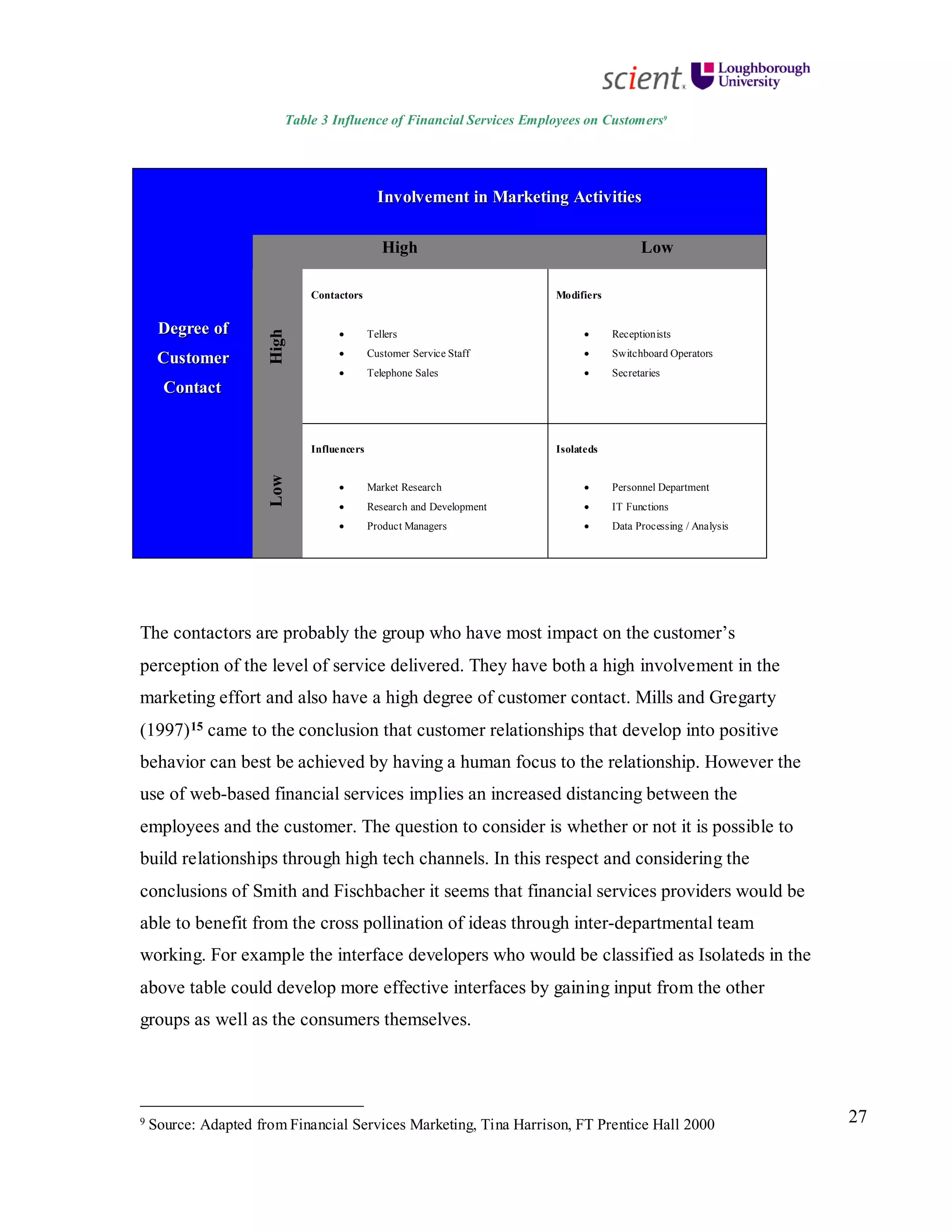
considering how influential various employees are upon the customers of the provider.
According to Judd (1987)14, the influence which employees have on the consumer
depends on two key factors: the extent to which employees are customer facing, and in
direct contact with the customers, and the degree of employee involvement in marketing
activities. Judd goes on to identify four groups which are outlined in the following table.
8 Source: Stakeholder Involvement in the New Service Design Process. Journal of Financial Services
Marketing Special Issue on Segmentation and Targeting
27
Table 3 Influence of Financial Services Employees on Customers9
DDeeggrreeee ooff
CCuussttoommeerr
CCoonnttaacctt
IInnvvoollvveemmeenntt iinn MMaarrkkeettiinngg AAccttiivviittiieess
High Low
High
Contactors
• Tellers
• Customer Service Staff
• Telephone Sales
Modifiers
• Receptionists
• Switchboard Operators
• Secretaries
Low
Influencers
• Market Research
• Research and Development
• Product Managers
Isolateds
• Personnel Department
• IT Functions
• Data Processing / Analysis
The contactors are probably the group who have most impact on the customer’s
perception of the level of service delivered. They have both a high involvement in the
marketing effort and also have a high degree of customer contact. Mills and Gregarty
(1997)15 came to the conclusion that customer relationships that develop into positive
behavior can best be achieved by having a human focus to the relationship. However the
use of web-based financial services implies an increased distancing between the
employees and the customer. The question to consider is whether or not it is possible to
build relationships through high tech channels. In this respect and considering the
conclusions of Smith and Fischbacher it seems that financial services providers would be
able to benefit from the cross pollination of ideas through inter-departmental team
working. For example the interface developers who would be classified as Isolateds in the
above table could develop more effective interfaces by gaining input from the other
groups as well as the consumers themselves.
9 Source: Adapted from Financial Services Marketing, Tina Harrison, FT Prentice Hall 2000
28
THE FINANCIAL SERVICES CONSUMER
In this section we shall examine in greater detail the financial services consumer. We will
cover areas such as the hierarchy of financial needs, lifecycle considerations,
segmentation methods, the financial decision-making process and customer loyalty.
Before covering these topics it is worthwhile considering the increasingly international
nature of the financial services industry. With the advent of the web and trends towards
globalization it is now possible to market financial services on a global basis. Of course
financial institutions will only market their services where regulatory controls and so
forth are accommodating to their activities. Nevertheless there is a general trend towards
opening up national markets to international competition. The European Union has
introduced the Investment Services Directive as a means towards stimulating
international competition in the financial services markets, American providers like
Citibank are already marketing products in UK and other markets. The essential point to
note is that with the internationalization of the client base, the clients are becoming
increasingly diverse. Recognizing the differences between national markets is the easy
part it’s understanding the similarities and leveraging them to achieve economies of scale
that will be the difficult part. This is one of the major challenges for financial services
providers to address in the years ahead if they are to develop sustainable competitive
advantage in a global market.
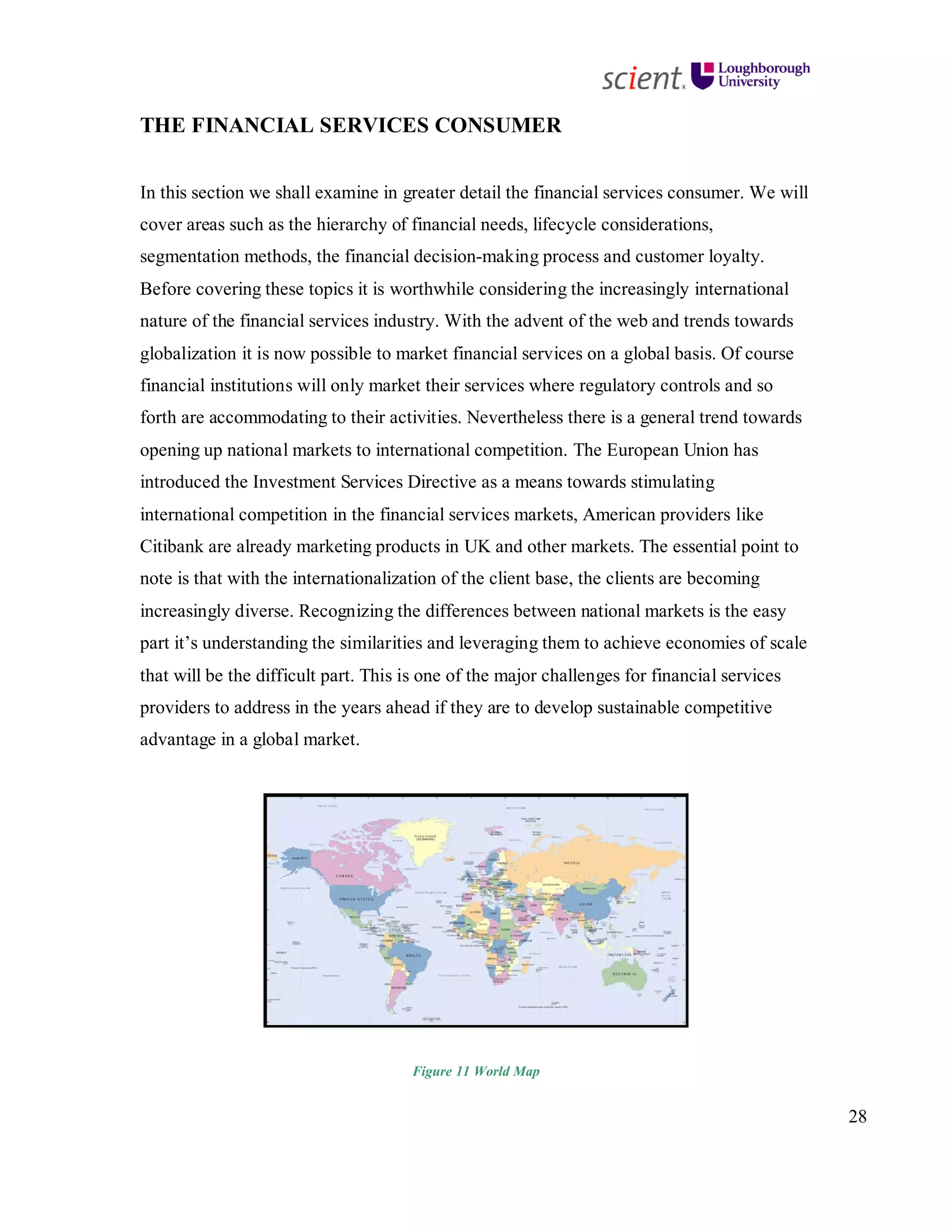
Figure 11 World Map
29
The above point is interesting in a usability context also. It may not be sufficient to
develop a web-based system in one country, conduct a usability evaluation and then roll
the product out on a global basis. The needs of the financial consumer will vary from
country to country and the criteria for acceptability may not remain constant across
borders. These issues may also be relevant in addressing broader international issues such
as access to information technology and services and the increasing disparities between
the information haves and the information have-nots. With a growing emphasis on
corporate responsibility it may not be long before issues like these are on executives radar
screens. However as always in business the solution will have to be a profitable one.
The Hierarchy of Financial Needs
Risk and Tax
Protection
Growth to Offset Inflation
Risk
Management
Emergency
Cash
Reserves
Foundation
Products
Cash Availability
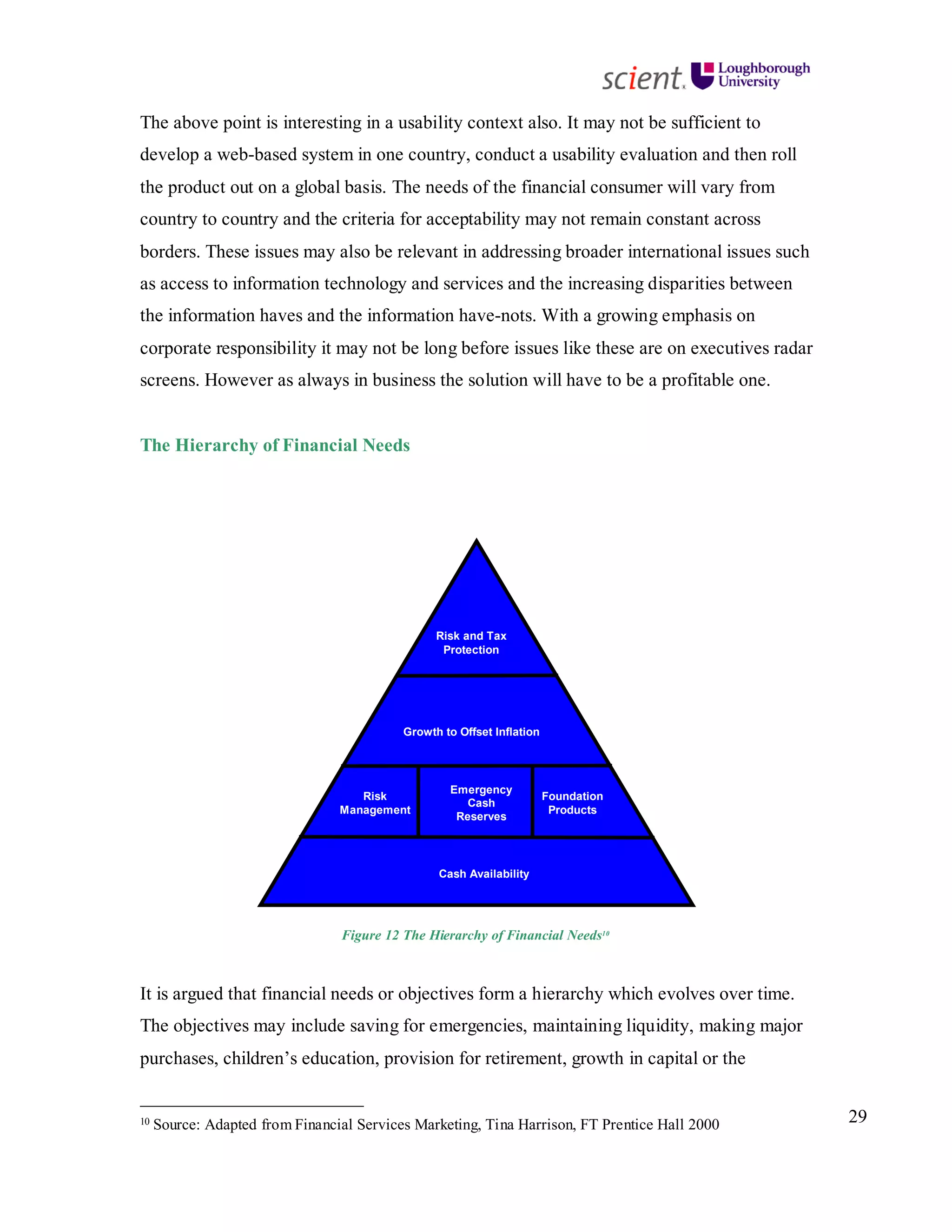
Figure 12 The Hierarchy of Financial Needs10
It is argued that financial needs or objectives form a hierarchy which evolves over time.
The objectives may include saving for emergencies, maintaining liquidity, making major
purchases, children’s education, provision for retirement, growth in capital or the
10 Source: Adapted from Financial Services Marketing, Tina Harrison, FT Prentice Hall 2000
30
generation of income. The above diagram depicts the hierarchy of financial needs. The
assumption is that over time individuals move from higher liquidity, lower risk products
to those requiring greater resources and with lower liquidity. The hierarchy of financial
needs is similar to the hierarchy of needs proposed by Maslow (1970) which states that
the lower, basic needs pertaining to human survival must be met before the higher needs,
which are not directly related to human survival but relate to life enhancement and
quality of life. It is, therefore, expected that basic objectives such as liquidity, cash
reserves and insurance are satisfied before allocating funds to higher-order products.
However, similar to Maslow’s hierarchy of needs, the extent and rapidity of the upward
movement varies from individual to individual as a result of a number of factors.
Web based financial services will enable consumers to construct a financial plan with
easy access to information and tools. The benefits to consumers of having a financial plan
are numerous. They will enable consumers to assess their financial situation by helping
them track income and expenses, establish an emergency fund, and determine their net
worth. Other benefits include:
1. Save for major expenses like funding a child's education, buying a house or car,
or developing a cash reserve for special occasions like weddings and vacations.
2. Plan for retirement by estimating retirement income and expenses and the value of
government programs. Consumers can then begin to determine the amount they
need to save to meet retirement goals.
3. Assess their risk tolerance and develop an asset allocation strategy.
4. Plan to reduce taxes, project the effect of income taxes, and develop a tax-
deferred strategy.
5. Protect themselves and their family against financial crisis should they become
disabled or die.
6. Estate planning to ensure assets are distributed in the desired way, or fund estate
taxes, and minimize their effects where possible.
Finally, a financial plan can give the consumer a clear picture of where they are, a
strategy about where they are going, and peace of mind about their future.
31
Financial objectives and investor behavior can be further understood through a
deeper consideration of the risk-return profile of specific financial instruments and their
relation to different investment objectives. The idea is encapsulated in the following
diagram.
Figure 13 Investment Strategies – Risk and Return
The expected return on the instrument is given on the y-axis and the risk of the
instrument in terms of historical price volatility is given on the x-axis. The concept of the
risk-return spectrum may be used as a basis for formulating an investment strategy
dependent on the investor characteristics and thus enable the construction of a portfolio
suited to the investors needs and wants. The following basic strategies have been
identified.
32
Table 4 Basic Investment Objectives
IInnvveessttmmeenntt OObbjjeeccttiivvee DDeessccrriippttiioonn
Capital Preservation
This investor's main objective is to maintain capital.
Investment returns may be relatively low, or in some
years negative, in exchange for high liquidity and
reduced risk of principal loss.
Income
The main objective is to obtain a continuing income
stream from dependable debt and equity sources.
This investor should be willing to absorb some risk
of principal loss in order to satisfy current yield
requirements.
Income and Growth.
This investor's objective is to strike a balance
between current income and growth. Despite the
relatively balanced nature of the portfolio, an
investor should be willing to assume risk of principal
loss.
Growth.
The objective of a growth-oriented investor is to
accumulate wealth over time rather than obtain
current income. To seek growth, this investor will
accept the risk of price volatility.
Aggressive Growth.
The objective is to achieve above-average growth
over time. Income is of little, if any, concern. This
investor is willing to take substantial risk in seeking
above-average returns.
Accordingly the investor aiming for capital preservation will be more likely to invest a
greater proportion of the portfolio towards money market instruments and government
bonds. The investor adopting the aggressive growth strategy is prepared to deal in riskier
instruments and will allocate more of the portfolio to equities.
33
Lifecycle Stages
As part of our consideration of the financial services consumer it is useful to understand
the social and economic factors affecting the demand for financial services and how these
translate into new or emerging customer lifecycle models. These trends will ultimately
influence the design of financial products and services. The general trends that are
affecting the market have been identified by Harrison (2000) and are outlined in the
following diagram.
Figure 14 Forces of Social and Economic Change11
In developed markets the emerging consumer is more likely to be older. This is a direct
result of the aging population and the net result is that there will be fewer workers in the
future to support the same number of retired people. This has been labelled the ‘pensions
crisis’. Some countries are likely to be affected worse than others.
There is also an increased importance of women on the financial services
landscape. This is due to the increased economic independence that women experience in
modern life and the diminished importance of the male as the chief breadwinner.
11 Source: Adapted from Financial Services Marketing, Tina Harrison, FT Prentice Hall 2000
34
The nature of income generation is also changing and impacting the traditional
lifecycle cash flows and thus the demand for financial services products. The table on the
following page examines in more detail the differences between the traditional and
emergent life-cycle cash flows. Essentially factors such as divorce, periods of
unemployment, inheritance and the demands of caring for the elderly drastically alter the
cash flow. Inherited wealth causes the windfall effect, which essentially describes the
situation in which people who already own their own homes, usually on a mortgage,
inherit mortgage-free property from parents. The windfall effect has largely been brought
about by the growth in property ownership since the Second World War. The effect is
that increasingly numerous lump sums of money are injected into the economy, either as
consumer expenditure or seeking investment channels. This will undoubtedly have
implications for financial services, particularly the need for advice and inheritance
planning and investment.
35
Table 5 Comparisons of Traditional and Emerging Life-Cycle Cash Flows12
LLiiffee--ccyyccllee SSttaaggeess DDeeffiinneedd bbyy
AAggee
TTrraaddiittiioonnaall LLiiffee--ccyyccllee CCaasshh
FFlloowwss
EEmmeerrggiinngg LLiiffee--ccyyccllee CCaasshh
FFlloowwss
Twenties to early thirties
‘The Early Years’
Financial Independence
The majority of people expected to enter a
lifetime of stable employment.
Income rises steadily, outweighing expenditure
in the early (single) years but is then outweighed
by expenditure during the family formation
years.
Financial Responsibility
Income rises steadily in line with expenditure.
Expenditure outweighs income in the later years
but this is likely to be due to house purchases by
single individuals rather than family formation.
Mid-thirties to mid-forties
‘The Family Years’
Financial Freedom
Income and expenditure stabilize and are fairly
evenly balanced.
Expenditure continues to be relatively high due
to dependants.
Financial fluctuation
Income fluctuates, possibly due to job changes,
redundancies and relocations, Expenditures rises
dramatically, possibly due to divorce of early
marriages or family formation of later marriages.
Mid-forties to mid-fifties
‘The Mid-life Years’
Financial Freedom
Children leave home, bringing about a dramatic
fall in expenditure. Income remains constant.
Financial Injection
Children leave home or start full time education,
resulting in a dramatic fall in expenditure.
Income continues to be unpredictable, due to
redundancies and early retirements. Possible
injected sums of money from inheritance.
Mid-fifties to mid-sixties
‘The Golden Years’
Financial Prosperity
A short, but enjoyable period of unprecedented
financial freedom with high disposable income
before retirement.
Financial Uncertainty
An unsettling period in which incomes continue
to fluctuate in the early part of this stage is
relatively low providing a very brief period of
disposable income. However, over the course of
this stage expenditure rises due to the provision
of care for elderly relatives, leaving expenditure
outweighing income by the end of this life stage.
Mid-sixties and beyond
‘The Twilight Years’
Financial Survival
A sharp fall in income brought about by
retirement, resulting in a fall in living standards.
Financial Deficiency
Expenditure falls as older dependent relatives
die and then rises again as individuals
themselves are being cared for.
Income remains constant.
Another major factor influencing the demand for financial services are increasing levels
of customer mobility. Harrison (2000) states that customer loyalty in the past was largely
due to inertia and lack of suitable alternatives. The first reason she gives for this is that
the financial institutions had created a ‘lock in’ situation where the costs of switching
provider outweighed the benefits to be gained thereby deterring switching behavior thus a
kind of false loyalty was created. The second reason she gives is that for many financial
services there is no decision making. Taking the example of the current account, saving
12 Source: Adapted from Financial Services Marketing, Tina Harrison, FT Prentice Hall 2000
36
account or a credit card. The use of these facilities essentially amounts to one-off
transactions in a continuous process. The lack of decision-making presents limited
opportunity for switching. Reasons for the increased propensity for financial consumers
to switch provider are given as increased consumer sophistication, helped by financial
market regulation and the explosion of financial journalism, increased cynicism of
financial services providers, due to the pension mis-selling scandal and finally because of
increasingly competitive and aggressive acquisition strategies employed by the financial
institutions themselves.
The final social trend that we shall consider is that of the increasingly socially
conscious consumer. Whereas the ‘Thatcherite’ consumer of the late 1980’s was more
concerned with individualism the emergent consumer is increasingly taking into account
the longer term consequences and implications of their purchasing decisions. The ethical
investment sector has been one of the fastest growing sectors in the investment universe
albeit from a low base. The power exerted by investment funds that have explicit ethical
mandates is becoming increasingly influential in corporate boardrooms. The legislative
environment is also mildly supportive of this trend. Pension funds are now required to
disclose whether or not ethical criteria are used as a basis for managers’ investment
decisions. Financial service institutions are also becoming more transparent in their
reporting procedures and addressing issues such as corporate sustainability with greater
emphasis than previously. Interested readers are directed to the UBS Environmental
Report16 or the Co-operative Bank Partnership Report17 as examples of this trend. It
could be argued that the trend towards investor sophistication and rising education levels
is a key influence on the trend towards greater social and environmental awareness.
Indeed the process is inextricably interlinked. The Co-operative bank website serves in
part as an educational forum where the interested browser can investigate issues from
oppressive regimes and corporate involvement to genetically modified food production.
Bank customers are then able to make more informed decisions that in turn help shape
the operational and investment policies of the bank through feedback from the customers.
This trend is likely to continue to gain strength and influence as we move ahead into the
new millennium. The Dow Jones sustainability indexes and the FTSE4Good Index are
also helping to increase public and professional investors’ awareness of social and
environmental investment criteria. Companies are increasingly using the positive
37
publicity that inclusion in these indexes can have to help increase the companies’
reputation and brand image in the eyes of the consumer and other interested stakeholders.
Segmentation
In order to optimize the effectiveness of any marketing expenditure it is common practice
to identify certain target markets or segments that are most likely to want or need the
product on offer. Those companies that can consistently offer what the customer needs, at
the right time, at an acceptable price, using the right channel and message to sell the
product have cracked Customer Relationship Management (CRM).18 This is important in
the context of web-based financial services because the data that is known about the
customers is essentially what will determine the design of the interaction channels. This
may include delivering content or promotional materials to the web-based interaction
channels that are relevant to the consumer and do not unnecessarily cause frustration or
dissatisfaction on the users behalf. To this end various segmentation techniques have
been developed to facilitate the process. The majority of techniques employed have used
descriptive post hoc techniques to model the consumer. The following table identifies
four different segments according to the perceived knowledge level of the consumer and
their degree of financial maturity.
In truth, of course, segmentation of the customer base is highly oversimplified. The world
market consists of billions of people, with a wide variety of interests, skills,
socioeconomic and educational levels, and concerns. The needs vary, the threshold being
low for some, high for others. Any individual plays multiple roles in society: parent or
child, student or worker, employee or manager, serious adult or playful youth.
Oversimplifications are however useful if they capture the essence of a phenomenon and
it is for this reason that they are included here.
38
Table 6 General Segmentation Characteristics13
PPeerrcceeiivveedd
KKnnoowwlleeddggee
FFiinnaanncciiaall MMaattuurriittyy
Low High
Low Financially Confused
• Least Financially Active
• Most likely never to save
• Savings of £100 p.a. or less on
average
• Least likely to make use of loans
and credit cards but most likely to
use a retailer storecard
• Credit card balances tend to be
paid in installments not in full
Apathetic Minimalists
• Exhibit an average use of
financial services generally
• Moderate saving activity, on
average savings of £1000
p.a.
• Less likely to have shares,
unit trusts or PEPs
• Trusting of financial
advisors and are likely to be
‘sold’ financial products
High
Cautious Investors
• Generally very active financially
• Tendency to opt for ‘safer’
savings and investment products
• Save between £1000 and £3000
p.a.
• Avoid ‘riskier’ investments in
equities
• Not very heavy users of credit
cards and tend to pay balances in
full
Capital Accumulators
• The most financially active
• The most frequent and
heaviest savers
• Savings of £3000 p.a. on
average
• Bias towards equity-based
investments
• Frequent use of credit cards
but mainly to take advantage
of the deferred payment
period with balances paid in
full
Lowe (2001)19 documents a case study which describes how Fleming Premier Banking
defined its’ target market, designed an integrated communications strategy across
channels and deployed the plan in the field. The result was that Business and Individual
account deposits grew, product and service literature was requested more often, there was
greater coverage of the company by the media and subsequently awareness of the
Fleming Premier Banking brand image was improved. An interesting aspect of this
campaign was the use of a transparent acetate mailer as opposed to a normal envelope.
This was very much in line with the banks central proposition of transparency. The mail-
shot was also nominated for two industry awards. The case study illustrates how a well-
designed, implemented and integrated communications strategy can enhance business
performance. It may also have implications for usability data gathering, the data gathered
13 Source: Adapted from Financial Services Marketing, Tina Harrison, FT Prentice Hall 2000
39
must be representative of the target market, thus the usability testing teams may have to
work closely with the providers marketing team to make sure this condition is met.
As has been previously mentioned in this paper, customer retention has an
important impact on future cash flows, the above mentioned case study also illustrates
how customer acquisition can also impact cash flows and assets under management.
Once the customer has been acquired the emphasis will however shift to customer
retention and the optimization of customer lifetime value. With this in mind we shall now
turn our attention to customer loyalty.
Customer Loyalty
The aim behind any customer loyalty and retention program is to try and move the
customer through various stages from prospective client to advocate for the company in
order to maximize company performance. If this results in gaining a disproportionate
share of the most important clients highest margin business, there will be resulting
improvements to business performance. If these twin objectives can be achieved it is
likely that a sustainable and robust business proposition will be in place.
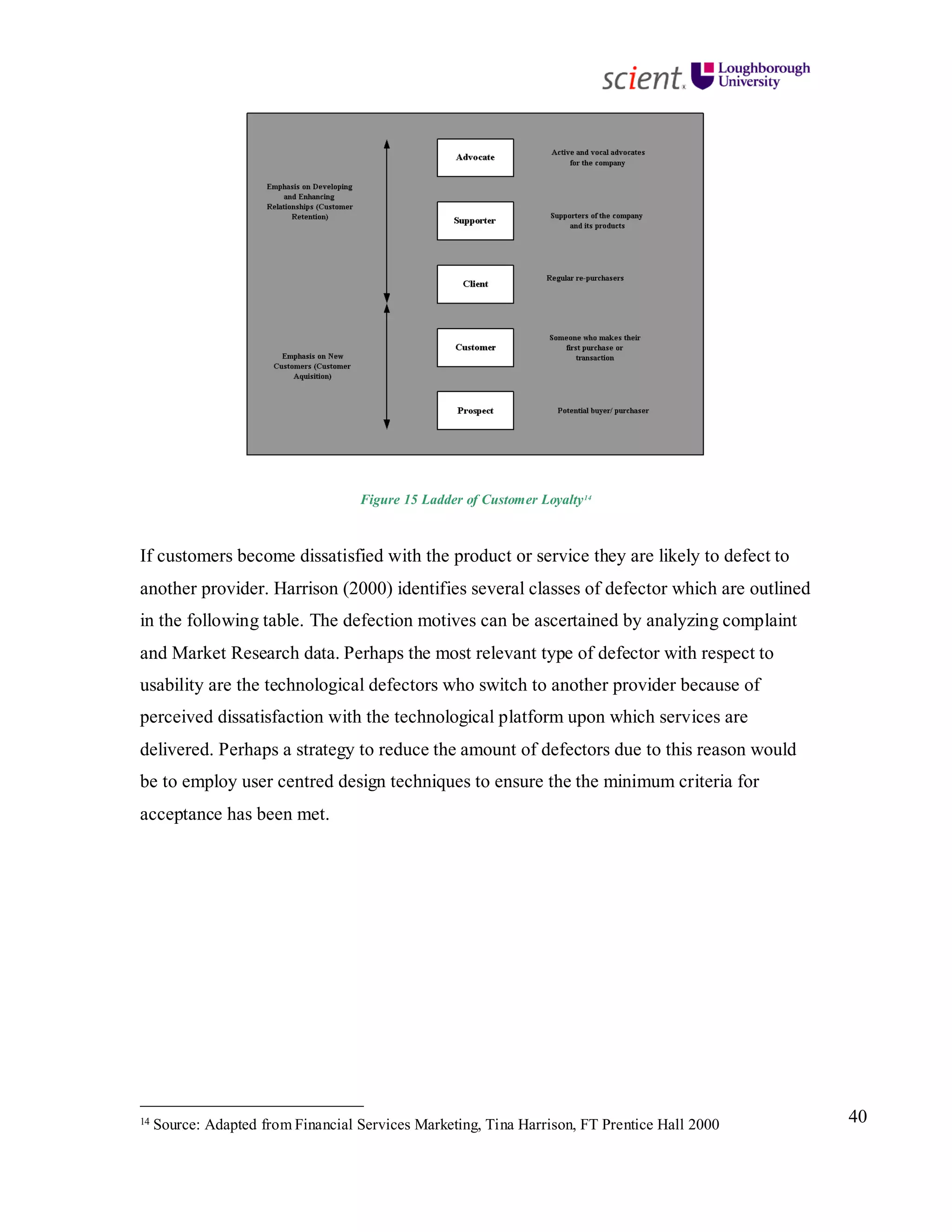
The concept of moving the customer through the various stages is encapsulated in
the following diagram called the ‘Ladder of Customer Loyalty’. Initially the emphasis is
on customer acquisition of the prospective clients. Once the client has been acquired the
focus of the relationship changes and the emphasis is on enhancing the relationship and
trying to turn the customer into an advocate of the company. This is likely to lead to an
increased propensity to own multiple products and make product referrals all of which
should be good for business.
40
Figure 15 Ladder of Customer Loyalty14
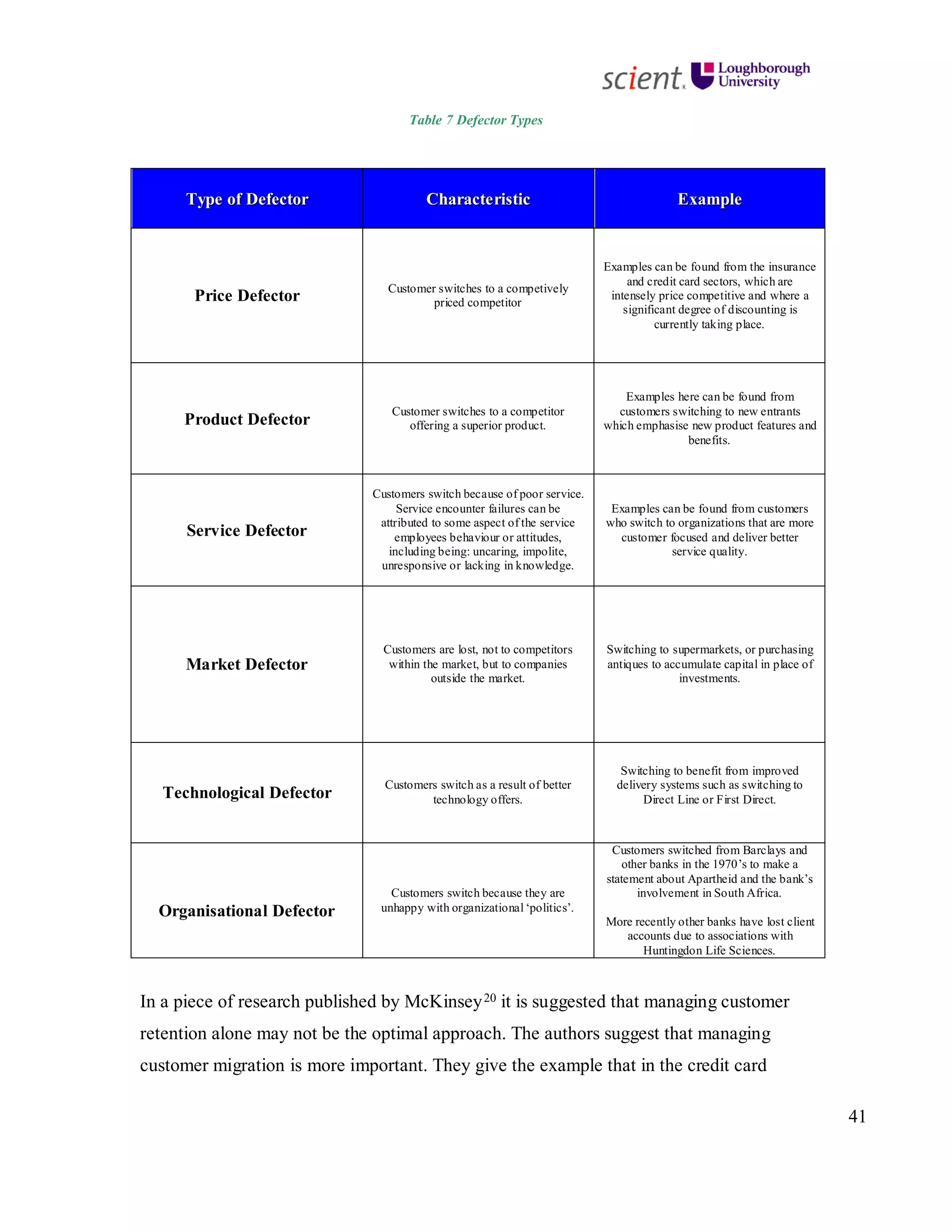
If customers become dissatisfied with the product or service they are likely to defect to
another provider. Harrison (2000) identifies several classes of defector which are outlined
in the following table. The defection motives can be ascertained by analyzing complaint
and Market Research data. Perhaps the most relevant type of defector with respect to
usability are the technological defectors who switch to another provider because of
perceived dissatisfaction with the technological platform upon which services are
delivered. Perhaps a strategy to reduce the amount of defectors due to this reason would
be to employ user centred design techniques to ensure the the minimum criteria for
acceptance has been met.
14 Source: Adapted from Financial Services Marketing, Tina Harrison, FT Prentice Hall 2000
41
Table 7 Defector Types
TTyyppee ooff DDeeffeeccttoorr CChhaarraacctteerriissttiicc EExxaammppllee
Price Defector
Customer switches to a competively
priced competitor
Examples can be found from the insurance
and credit card sectors, which are
intensely price competitive and where a
significant degree of discounting is
currently taking place.
Product Defector
Customer switches to a competitor
offering a superior product.
Examples here can be found from
customers switching to new entrants
which emphasise new product features and
benefits.
Service Defector
Customers switch because of poor service.
Service encounter failures can be
attributed to some aspect of the service
employees behaviour or attitudes,
including being: uncaring, impolite,
unresponsive or lacking in knowledge.
Examples can be found from customers
who switch to organizations that are more
customer focused and deliver better
service quality.
Market Defector
Customers are lost, not to competitors
within the market, but to companies
outside the market.
Switching to supermarkets, or purchasing
antiques to accumulate capital in place of
investments.
Technological Defector
Customers switch as a result of better
technology offers.
Switching to benefit from improved
delivery systems such as switching to
Direct Line or First Direct.
Organisational Defector
Customers switch because they are
unhappy with organizational ‘politics’.
Customers switched from Barclays and
other banks in the 1970’s to make a
statement about Apartheid and the bank’s
involvement in South Africa.
More recently other banks have lost client
accounts due to associations with
Huntingdon Life Sciences.
In a piece of research published by McKinsey20 it is suggested that managing customer
retention alone may not be the optimal approach. The authors suggest that managing
customer migration is more important. They give the example that in the credit card
42
industry, the annual value lost from customers who defect is only one-third of that lost
from those who remain customers but use their cards less.
Table 8 Loyalist / Migrator Characteristics
LLooyyaalliisstt // MMiiggrraattoorr TTyyppee CChhaarraacctteerriissttiicc
Emotive Loyalists
(e.g. Coke drinkers)
• Infrequently reevaluate purchase decisions
• Strongly feel that chosen brand is best for them
Deliberative Loyalists
(Honda drivers)
• Frequently reevaluate purchase decisions
• Reaffirm chosen brand based on merits
Inertial Loyalists
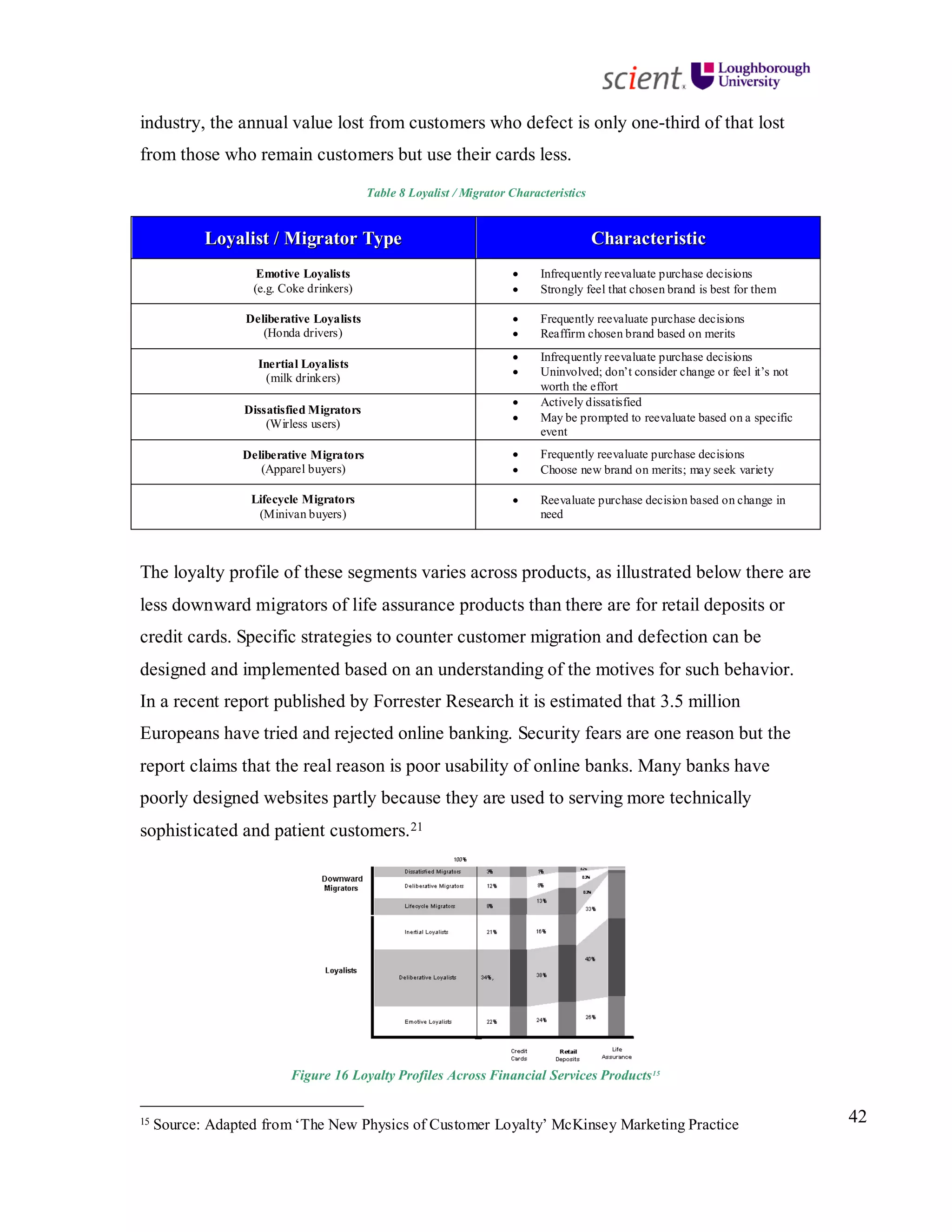
(milk drinkers)
• Infrequently reevaluate purchase decisions
• Uninvolved; don’t consider change or feel it’s not
worth the effort
Dissatisfied Migrators
(Wirless users)
• Actively dissatisfied
• May be prompted to reevaluate based on a specific
event
Deliberative Migrators
(Apparel buyers)
• Frequently reevaluate purchase decisions
• Choose new brand on merits; may seek variety
Lifecycle Migrators
(Minivan buyers)
• Reevaluate purchase decision based on change in
need
The loyalty profile of these segments varies across products, as illustrated below there are
less downward migrators of life assurance products than there are for retail deposits or
credit cards. Specific strategies to counter customer migration and defection can be
designed and implemented based on an understanding of the motives for such behavior.
In a recent report published by Forrester Research it is estimated that 3.5 million
Europeans have tried and rejected online banking. Security fears are one reason but the
report claims that the real reason is poor usability of online banks. Many banks have
poorly designed websites partly because they are used to serving more technically
sophisticated and patient customers.21
Figure 16 Loyalty Profiles Across Financial Services Products15
15 Source: Adapted from ‘The New Physics of Customer Loyalty’ McKinsey Marketing Practice
43
Attitude Towards Delivery Channel
A study looking at consumer attitudes towards delivery channels across a range of
financial products was conducted by Lee. (2002)22
Based on consumers’ preference toward face-to-face interactions and direct
means across 15 different financial products and services, respondents were grouped into
four, using cluster analysis. One cluster, named ``Need Human Touch (NHT),’’ had a
strong preference for face-to-face interaction, while another cluster, ``Open to Direct
Means (ODM),’’ was most open to direct means. The third cluster, ``Undecided,’’ had no
strong preference for a particular channel. Finally, a unique cluster, ``Cherry Pickers,’’
showed an interesting pattern of mixed preference. For some products, such as loan and
investment products, they preferred human interaction, while for credit card and
insurance products, they were open to direct means.
The study concludes that rapid developments in database technology, financial
institutions can make advances towards mass customization. Although it is cost effective
to market to customers based on the above clusters. Financial institutions should gather
data on each individual’s preferences toward different channels for different products and
utilized for further relationship building with the client.
The diagram below illustrates how different products are suited to the different
delivery channels based on product complexity, frequency or familiarity with the product.
Figure 17 Product Complexity, Frequency and Channel Utilization16
16 Source: Forrester UK Retail Finance Forum 2000
44
Attitude Towards Technology Adoption / Product Innovation
Figure 18 Technology Satisfaction Curve17
The above diagram illustrates the concept of the technology satisfaction curve. In the
early days of the technology consumers want more technology and demand better
performance, however, once the technology has reached the stage where basic needs have
been satisfied the technology is deemed good enough and therefore it is the user
experience that dominates. The experience of European consumers of Internet Banking
indicated that online banking has not yet reached the stage where the basic consumer
needs have been satisfied. It is likely that we are in the transition stage learning how to
satisfy the basic needs. Of course once we have reached the stage where the basic needs
are met the emphasis will be on user experience. Taking the major service quality
dimensions of process and outcome23 and considering process as the satisfaction of basic
needs and outcome as user experience, then the performance of the financial products as
perceived by the consumer will dominate the user experience with the system. Thus it is
likely that the usability issues will be resolved in the near future, and then resources will
be diverted to the satisfaction of needs on a different level.
17 Source: The Invisible Computer, Donald A. Norman, MIT Press 1999
45
The following table and diagram elaborate more on the concept of technology adoption
for various segments.
Table 9 Technology Adoption Segments
SSeeggmmeenntt CChhaarraacctteerriissttiiccss
Innovators: “Techies”
• “Explorers” - appreciate technology for its own sake, take pleasure in
mastering its intricacies.
• Love to be first to get their hands on latest technology.
• Ones you consult when you want to know how things work.
• Not the ones with money, but do influence real decision-makers.
Early Adopters: “Visionaries”
• “Exploiters” - intuitively seek possibilities from technology.
• Motivated by future opportunities, willing to take risks to breakwith
the past.
• Have the money and influence to publicize innovations.
• Hard to please, and want customization and modifications.
Early Majority: “Pragmatists”
• Practically and analytically pursue what is probable, believe in
evolution, not revolution.
• Motivated by present problems; need to be assured of product’s worth
in their particular business or setting.
• Consult with colleagues; look for proven track record and strong
references from early market. Prefer to buy from the market
• leader. Often responsible for mission-critical purchases.
Late Majority: “Conservatives”
• Pessimistic about value of technology, and fearful of it.
• Very price sensitive, skeptical and demanding. Demands rarely can be
met at their price point, so only buy under duress.
• Prefer products that are simple, bundled and commoditized.
Laggards: “Critics”
• Gadflies of hi-tech! Goal is to sell around them.
Figure 19 The Change in Customers as a Product Matures18
18 Source: The Invisible Computer, Donald A. Norman, MIT Press 1999
46
The Financial Decision Making Process
The financial decision making process can be broken down into three main elements
these are
1. Pre-purchase information search.
2. Evaluation of alternatives.
3. Post-purchase evaluation.
The process is illustrated in the following diagram.
Figure 20 Simplified Financial Decision Making Process19
In the initial stages prior to making the purchase decision, the consumer is likely to have
a number of motivating influences that will lead to the recognition that they have an
unfilled need. Motivating influences may include legal requirements for the product, as in
the case of car insurance, lifestyle, attitude or personality profile of the consumer.
Consumers can draw on a variety of sources of information to inform themselves about
what they are buying and to make sure that it fits their needs and requirements. The
extent to which the consumer engages in searching for information will depend on many
factors such as product familiarity, product complexity and the degree of uncertainty felt
by the consumer about purchasing the product. The information sources may include
personal experience, advertisements, referrals from friends, web-browsing or
conversations with a financial advisor etc.
In the second stage the consumer will be more concerned with evaluating the
alternatives and gauging the pros and cons of each product and how well the product fits
into their financial portfolio. If at this stage the consumer is very uncertain about the
19 Source: Adapted from Forrester UK Retail Finance Forum, September 2000
Find Encounter Explore Analyse
Advise and
Plan Decide MonitorDeal
47
purchase they may enlist the help of a financial advisor who will help them assess
product suitability. At this stage all the individual criteria will be coming together to form
the basis of the decision. Factors such as personalized service, product range, service
convenience, the prestige or brand reputation of the provider and the perceived security
of the provider may be taken into account. The variation of these service attributes across
different classes of provider is illustrated in the following diagram.
Once a decision has been made and the product purchased post-purchase
evaluation will commence. The customer will periodically assess the performance of the
product to ensure that it continues to satisfy their needs and fit into their long-term
financial plan. If the product does not continue to meet their needs or expectations the
decision to sell or to add new products to the portfolio will be made. In this case the
consumer will cycle through the previous stages.
Figure 21 Relative Positioning on Service Attributes for Different FS Providers20
20 Source: Wealth Management the Challenge Booz, Allen and Hamilton
48
The diagram on the following page illustrates a conceptual model of the financial
services purchase decision process as proposed by Harrison (2000). The model aims to
describe the process consumers go through in the purchase or take-up of a new product or
contract with a financial institution, for example opening a current account or savings
account or starting a personal pension. It focuses mainly on situations where the ultimate
decision to take or reject the product rests with the consumer. This is in contrast with
situations in which the decision rests with the product provider as in the case of a loan
approval. The model is mainly applicable to high-involvement and complex financial
services and does not apply to situations where there is essentially no decision, as when
the consumer writes a cheque or makes a deposit into a savings account.
49
Figure 22 A Conceptual Model of the FS Purchase Decision Process21
21 Source: Adapted from Financial Services Marketing, Tina Harrison, FT Prentice Hall 2000
50
THE USER CENTRED DESIGN PROCESS
Why test for and what is Usability?
The first question that we need to consider when undertaking an evaluation is ‘What do
we want to know and why?’ The general answer to this question is that we want to know
what the users needs are in order that we may develop products that satisfy those needs
adequately. This does however pose to be an enormous undertaking, after all sometimes
even the users themselves do not know what their needs are. The general reasons for
conducting an evaluation are as follows:
• Understanding the real world – How do users employ the product? Are they
using it for things that were not envisaged in the original design? Could this
indicate that the design could be improved? Are there other tasks that the users
would like to be able to accomplish with the product that cannot currently be
done?
• Comparing designs – Which is the best? Comparison of new product releases
with legacy products or with competing products may yield useful information.
• Engineering towards a target – Is it good enough? This involves the use of
metrics to ensure that the product meets certain design goals. For example one
may specify that X% of novice users should be able to complete a task in a certain
amount of time and making less than a specified number of errors, conducting test
will enable us to ascertain whether or not this criteria has been met.
• Checking conformance to a standard – Does this product conform to the
standard? An example may be the electromagnetic interference exhibited by
computer peripherals. The regulatory and standards bodies have strict testing
criteria to test that the products conform to any specified standards.
Formative evaluation provides information that contributes to the development of the
system or product whereas summative evaluation is concerned with assessing the finished
51
product. It is therefore evident that evaluation can be undertaken at many stages in the
design cycle. Indeed this is a key component of the star life cycle (Hix and Hartson 1993)
Which places evaluation at the centre of separate design activities to provide useful
feedback at each stage.
Good product or system design principally depends upon solving the dynamic interacting
needs of the four principal components of any user-system situation: user, task, tool and
environment. (Shackel 1991) Likewise Usability a desirable goal of good product or
system design is dependent on these four dynamically interacting components. I would
therefore like to draw on a formal of Usability definition proposed by Shackel.
‘the capability in human functional terms to be used easily and effectively by the
specified range of users, given specified training and user support, to fulfil the specified
range of tasks, within the specified range of environmental scenarios’.
Shackel 199124
The early work by Shackel did in fact lead to the formation of the ISO 9241-11 definition
of usability which is as follows:
The effectiveness, efficiency, and satisfaction with which specified users achieve specified
goals in particular environments.
This definition is conceptually satisfactory but still rather generalized in form. To further
enhance the utility of this definition we have to be able to identify usability in more
quantifiable and measurable terms. To this effect it is worthwhile to consider the
definition in terms of the FLAT paradigm.
• Flexibility – the tolerance ranges of the system allowing adaptation to a specified
variation in tasks and or environments beyond those first specified.
• Learnability – the time taken to learn the system in order to reach specified
performance targets from specified levels of input.
• Attitude – the ability of the system to engender a feeling of satisfaction and
acceptance from the user community.
• Throughput – the output of the system in relation to inputs adjusted for quality
and in relation to the systems ability to meets its objectives.
52
From the above it is seen that we could generate a wide range of metrics which could be
quantified and tested. Some of this data will be able to be objectively gathered whereas
other data will have to rely on more subjective data gathering methods. We shall now
turn our attention to the User Centred Design Process (UCD) and a description of some
of the methods that may be used to acquire the data.
The UCD process may be described as a philosophy that places the needs of the user at
the core of technology development in balance with technology and business
requirements. The process includes user input, evaluation and usability requirements as
part of the product lifecycle. Currently it is the best-known method for the development
and delivery of a quality product that meets customer and end user needs and
expectations. The UCD methods typically advocate the use of multidisciplinary teams
who have knowledge of design, programming, technology, people, tasks, marketing and
engineering to develop the product in question. The methods emphasise the active
involvement of users early in the product lifecycle to ensure an appropriate allocation of
tasks between the human and the system and assure a balance between the marketing,
engineering and human needs in feature implementation. The active involvement of users
in the UCD process should also ensure that the iteration of design solutions is possible
based on user feedback at each stage of the process. The key advantages and goals of the
UCD process are as follows:25 26
• Reduce use costs and increased productivity.
• Reduced errors
• Reduced development time and production costs.
• Reduced training, support and return costs.
• Expanded total market available by removing barriers to purchase.
• Enhanced reputation
53
The UCD process is illustrated in the diagram below and can be broken down into four
key stages the Exploratory stage, the Planning stage, the Development stage and the
Deployment stage. The techniques employed in the exploratory stage should serve as
inputs into the conceptual prototype. At the planning stage it is necessary that a detailed
understanding of the context of use and the tasks to be supported is developed.
Quantitative specification of the relevant usability metrics should be established and used
as a benchmark for subsequent testing. The outputs of the planning stage feed into the
development stage after which an 80% validated prototype will be produced. Finally in
deployment data can be gathered from product support centres, competitive usability tests
and post sale satisfaction surveys. The results of this analysis will feed into the design
brief for the next revision of the product.
Figure 23 Detailed User Centred Design Process Lifecycle22
22 Source: www.eouroundtable.com Ease of Use Computing Roundtable
54
The following methods are amongst the most common techniques employed by Usability
professionals as data gathering methods for input into the UCD process. Source
http://jthom.best.vwh.net/usability/ ‘The Usability Methods Toolbox’ unless otherwise
indicated.
Contextual Enquiry
Contextual inquiry is basically a structured field interviewing method, based on a few
core principles that differentiate this method from plain, journalistic interviewing.
Contextual inquiry is more a discovery process than an evaluative process; more like
learning than testing. Contextual inquiry is based on three core principles: that
understanding the context in which a product is used (the work being performed) is
essential for elegant design, that the user is a partner in the design process, and that the
usability design process, including assessment methods like contextual inquiry and
usability testing, must have a focus. This technique is best used in the early stages of
development, since a lot of the information gathered is subjective--how people feel about
their jobs, how work or information flows through the organization, etc.
Ethnographic Study Field Observation
Observing users in the field is often the best way to determine their usability
requirements. Traditional usability testing, while providing a laboratory environment that
makes data collection and recording easy, also removes the user and the product from the
context of the workplace. Sometimes, it's best to see exactly how things are done in the
real world. This technique is best used in the early stages of development, when you need
to know more about the issues surrounding the use of a product rather than actual metrics.
In the really early stages of development, when you just have an idea that you might need
a product to satisfy this particular need, field observations help gather user requirements
and issues for incorporation into preliminary designs.
55
Interviews and Focus Groups
Interviews and focus groups let evaluators query users about their experiences and
preferences with a product. Both are formal, structured events where the evaluator
directly interacts with users, asking them to voice their opinions and experiences
regarding the product. This technique can be used at any stage of development,
depending on the questions that are asked. Often, interviews or focus groups are used
after products are shipped to assess customer satisfaction with the product. More likely,
though, interviews and focus groups are held at very early stages of development, when
the product requirements are still not firm. Focus groups are then held to extract user
requirements prior to initial design.
Surveys
Surveys are ad hoc interviews with users, where a set list of questions is asked and the
users' responses recorded. Surveys differ from questionnaires in that they are interactive
interviews, although not structured like contextual inquiries nor formally scheduled and
organized like focus groups. This technique can be used at any stage of development,
depending on the questions that are asked in the survey. Often, surveys are used after
products are shipped to assess customer satisfaction with the product. Such surveys often
identify usability issues that should have been caught in-house before the product was
released to the market.
Questionnaires
Questionnaires are written lists of questions that are distributed to users. Questionnaires
differ from surveys in that they are written lists, not ad hoc interviews, and as such
require more effort on the part of the users to fill out the questionnaire and return it. This
technique can be used at any stage of development, depending on the questions that are
asked in the questionnaire. Often, questionnaires are used after products are shipped to
assess customer satisfaction with the product. Such questionnaires often identify usability
issues that should have been caught in-house before the product was released to the
market.
56
Journaled Sessions
Journaled sessions are often used as a remote inquiry method for software user interface
evaluation. A disk is distributed to a number of test subjects containing a prototype of the
software product, as well as additional code to capture (or journalize) the subjects' actions
when using the prototype. Users perform several tasks with the prototype, much as in
formal usability tests, and their actions are captured with the journalizing software. Upon
completion of the series of tasks, the users return the disks for evaluation. This technique
is best used in the early stages of development--probably even pre-development, where
the information gathered is more preferential than empirical. It is important to ensure that
the user pool is rather straightforward and honest, so the assumption that their journaled
sessions actually depict what they'd actually do with the product is valid.
Self-reporting Logs
Self-reporting logs are paper-and-pencil journals in which users are requested to log their
actions and observations while interacting with a product. Like journaled sessions, this
technique allows user evaluation to be performed at a distance. Unlike journaled sessions
though, this technique requires much more work on the part of the subject user. This
technique is best used in the early stages of development--probably even pre-
development, where the information you're attempting to gather is more preferential than
empirical. You'll want to ensure that your user pool is rather straightforward and honest,
so you can assume their journaled sessions actually depict what they'd actually do with
the product.
57
Screen Snapshots
Snapshots is a method where the user takes screen snapshots at different times during the
execution of a task or series of tasks. This technique is best used in the early to middle
stages of development, when there is some working software to be evaluated but are not
to the point of requiring full testing. Snapshots are most often used in conjunction with
other remote inquiry methods, such as journaled sessions or self-reporting logs. In
journaled sessions, the journaling software usually tracks the user's interaction and can be
thought of as a series of user-taken snapshots. With self-reporting logs, however,
snapshots can provide a much-needed visual basis for interpreting the user's comments in
their logs.
Heuristic Evaluation
Heuristic evaluation is a variation of usability inspection where usability specialists judge
whether each element of a user interface follows established usability principles. This
method is the part of the so-called "discount usability engineering" method. Basically,
heuristic evaluation is a fancy name for having a bunch of experts scrutinize the interface
and evaluate each element of the interface against a list of commonly accepted principles-
-heuristics. Early lists of heuristics were quite long, resulting in tedious evaluation
sessions and tired experts. These long lists rather defeated the purpose of this method,
which was to save time and money over testing. Nielsen distilled his list of heuristics
down to ten that have served him and others well in evaluating designs. Heuristic
evaluation can be used at almost any time during the development cycle, although it's
probably best suited to earlier stages, when there is not anything firm enough to test. You
can provide the experts with paper mockups, or even just design specifications, and still
get a good amount of usability problems discovered before actual production work
begins.
58
Cognitive Walkthroughs
Cognitive walkthrough is a review technique where expert evaluators construct task
scenarios from a specification or early prototype and then role play the part of a user
working with that interface--"walking through" the interface. They act as if the interface
was actually built and they (in the role of a typical user) were working through the tasks.
Each step the user would take is scrutinized: impasses where the interface blocks the
"user" from completing the task indicate that the interface is missing something.
Convoluted, circuitous paths through function sequences indicate that the interface needs
a new function that simplifies the task and collapses the function sequence. Cognitive
walkthroughs are great for the early stages of development because they can be
performed using just system specifications as a basis. Artists conceptions of what screens
might look like can be used to give the walkthrough a more realistic bent.
Pluralistic Walkthroughs
Pluralistic walkthroughs are meetings where users, developers, and usability
professionals step through a task scenario, discussing and evaluating each element of
interaction. Group walkthroughs have the advantage of providing a diverse range of skills
and perspectives to bear on usability problems. As with any inspection, the more people
looking for problems, the higher the probability of finding problems. Also, the interaction
between the team during the walkthrough helps to resolve usability issues faster. This
technique is best used in the early stages of development, as the feedback garnered from
pluralistic walkthrough sessions is often in the form of user preferences and opinions.
Consistency Inspection
Consistency inspections ensure consistency across multiple products from the same
development effort. For example, in a suite of office productivity applications, common
functions should look and work the same whether the user is using the word processor,
spreadsheet, presentation, or database program. Consistency inspections begin with a
59
usability professional analyzing the interfaces to all of the products and noting the
various ways that each product implements a particular user interaction or function. An
evaluation team then meets, and using the usability analysis as a basis, negotiates and
decides on the one golden implementation for the usability attributes of each product.
This technique is best used in the early stages of development, when initial development
work has not progressed to the point where products that require extensive changes to
ensure consistency will not require total overhauls. The ideal time for consistency
inspections are when design documents for each of the individual products are almost
done, and before any actual work on building the products has commenced.
Usability Testing
Usability testing entails carrying out experiments to find out specific information about a
design. Tests have their roots in experimental psychology, which used to mean reliance
upon heavy-duty statistical analysis of data. Today, with more emphasis on the
interpretation of the results rather than actual data-driven figures, there is less importance
given to the hard numbers and more to the other things found out during the test. For
example, a lot of tests that are done today use the thinking-aloud protocol in conjunction
with some sort of performance measurement. While performance measurement is still
useful, information gathered from the thinking aloud protocol often makes its way into
the product faster - it doesn't need to be aggregated and analyzed before you can act on it.
The overall process is simple; find a representative sample of users to find out how they
work with the product. Usually individuals will be observed performing specific tasks
with the product. Data is collected on time taken to complete the tasks, number of errors
and so on. Finally the data is analyzed to see if there are any trends that may be
generalized to a wider population. Usability testing is used throughout the product
development lifecycle. In early stages of product development, testing the previous
version or competitors' products gives the design team benchmarks to shoot for in the
design. In middle stages of development, testing validates the design and provides
feedback with which to refine the design. At the later stages, testing ensures that the
product meets the design objectives.
60
Automated Usability Testing
Usability evaluation can be expensive in terms of time and human resources, and
automation is therefore a promising way to augment existing approaches. An interesting
article by Ivory and Hearst (2001)27 presents an extensive survey of usability evaluation
methods, organized according to a new taxonomy that emphasizes the role of automation.
The survey analyzes existing techniques, identifies which aspects of usability evaluation
automation are likely to be of use in future research, and suggests new ways to expand
existing approaches to better support usability evaluation.
Web Server Log Analysis
Many web page designers may be unaware that web servers record transaction
information each time they send a file to a browser. Others may know that a server log
exists but they may see it only as a source of general statistical information such as site
use distributed over time or counts of the number of times that each page was served. An
interesting paper by Drott (1998)28 describes how server logs can be used to give
designers a much more detailed view of how users are accessing their site. This paper
describes the use of server logs to monitor user patterns and employ them to improve the
design and functionality of the web site. Web log data has been used to analyze and
redesign a wide range of web-based material, including: online tutorials, databases, fact
sheets, and reference material. Web log analysis to improve web page content and design
is not an easy task. The information available is often incomplete or subject to multiple
interpretations. On the other hand, to authors who are conscious of their intended
audience and of their communications goals, small clues may yield significant insights.
Software tools such as WebTrends (WebTrends Corporation 2000) facilitate analysis by
presenting results in graphical and report format.
61
METHODOLOGY
The methodology employed in the initial stages of the project was to conduct a wide-
ranging review of relevant literature and consultation with expertise at Scient and
Loughborough University. This encompassed reviewing the existing Human Factors
literature, Financial Services Marketing literature, commercially produced research,
existing Scient usability data, Internet searches and reading the daily press. The
consultations with domain experts involved holding conversations and meetings with
Financial Services Strategists, Information Architects, User Experience Specialists, Web
Technologists, Web Designers and Lecturers.
During this process it was agreed to narrow down the analysis to retail banking and
in particular the online account opening process. Due to resource restraints on the project it
was decided that the only feasible data collection method was Heuristic Evaluation.
Another factor influencing the decision to focus on the account opening process was that
this was one of the few tasks that didn’t actually require an account with a service provider
to be able to perform. The list of tasks that a retail banking website is required to support
was developed and they are shown in the table below.
Table 10 Identified Tasks for Online Banking Current Accounts
Tasks
Applying for Opening Account
Logon
Inquiring About / Disputing a Balance
Inquiring About / Disputing a Check
Inquiring About / Disputing a Fee
Getting other Information Help
Reviewing Bank Statement
Getting Cash
Making a Deposit
Transferring Money Between Accounts
Making a Payment
Order New Checkbooks and Payin Books
View and Cancel Direct Debits
Download Details to Offline Application
Setting up an Overdraft
Setting up Online Access for Existing Account
Check Interest Rate
Contacting Customer Support
Getting New PIN Code
Setting Preferences
Changing date statement is sent
62
In addition to developing the list of tasks that an online banking website is required to
support the analysis was fleshed out by developing a task taxonomy. This enables
comparisons across tasks to be made and similarities between tasks to be identified. The
task taxonomy draws on the research by Macguire (2000)29 to develop a modified
framework tailored to the Financial Services domain. The task taxonomy along with
descriptions of the data items is given in the table on the following page.
63
Table 11 The Task Taxonomy23
TTaasskk
A task is the mechanism by which changes are effected in a given system to achieve a system goal.
PPrroodduucctt
The financial product under consideration will be specified.
GGooaall
The task goal or objective will be made explicit at this stage.
IInnppuutt
Any informational or physical inputs to the process will require to be identified.
OOuuttppuutt
The outputs of the process will be specified.
MMiinniimmuumm CCrriitteerriiaa ffoorr
TTaasskk SSuucccceessss
This will be defined in terms of the ability of the system to support the attainment of the task goals identified above.
DDeessiirreedd UUsseerr
EExxppeerriieennccee
During this portion of the data analysis it is important to keep an open mind and not limit the desired experience to only today’s
technology. Creativity is important! It is only by thinking outside the box that we will be able to identify new possibilities and
directions for technology.
TTaasskk BBrreeaakk ddoowwnn
The methodology employed for this stage of the analysis will be based on screen shots capture stored as a Microsoft Word
document and capturing the main stages in the process
TTaasskk CCoommpplleexxiittyy
Tasks will be classified into Low, Medium and High complexity taking into consideration factors such as product complexity,
knowledge requirements, cognitive demands and requirements for support.
TTaasskk FFrreeqquueennccyy
Frequency of Tasks will be classified as follows.
• High frequency = more than once per month
• Medium Frequency = between once per month and once per year
• Low frequency = less than once per year
TTaasskk DDuurraattiioonn
An estimate of the expected task completion time will be made in seconds, minutes, hours or days. This will guide planning for
the Usability Testing upon which the accuracy of the estimates may be gauged.
TTaasskk DDeeppeennddeenncciieess
Some tasks may be dependent upon the completion of other tasks before they may be completed themselves. Identification of
where and when this occurs will be made.
TTaasskk FFlleexxiibbiilliittyy
Some tasks may be completed in various ways or through various channels. Identification of where this is possible will be made.
CCooggnniittiivvee DDeemmaannddss
This will be classified into Low, Medium and High dependent on the skill/knowledge level of the user.
RRiisskk RReessuullttiinngg FFrroomm
EErrrroorr
An estimate of the magnitude and probability of occurrence of errors will be made. This will be assessed from the users point of
view.
PPootteennttiiaall ffoorr EErrrroorr
MMiittiiggaattiioonn
An estimation of the probability of effective deployment and the magnitude of counterbalancing effects against error will be
made.
SSeeccuurriittyy GGrraaddee //
AAcccceessss LLeevveellss
This will be classified as follows.
• Public – Full Access to Website content
• Part Authorized – Low level access to Website content.
• Fully Authorized – Full information access privileges.
TTaasskk PPllaattffoorrmm
The interactive device, operating system and input devices should be specified.
SSeerrvviiccee PPrroovviiddeerr
A record of the service provider for the task under analysis will be taken.
23 Source: Adapted from Maguire, M. (2000) ‘Context of Use Within Usability Activities’ Human Factors
2000 Symposium
64
Table 12 Partial Section of Completed Task Taxonomy for Current Account
The banks chosen for evaluation were chosen on the basis of an estimated market share. It
was not possible to obtain actual figures but there was general agreement that the analysis
should include the major high street banks. HSBC was initially included in the analysis but
the online account opening process for HSBC was not possible and it was thus excluded.
Smile was included in the analysis as it has won the Guardian consumer finance award for
having the best Internet banking service. The Clydesdale bank was included in the
evaluation and was in fact the only bank in the analysis where an account was actually
opened. The full list of banks analyzed is given in the table below.
Bank
Bank of Scotland
Smile
Clydesdale Bank
Royal Bank of Scotland
Lloyds TSB
Barclays
Table 13 The Selected Banks for Evaluation
65
The Heuristics chosen for conducting the evaluation are those of Nielsen. Nielsen’s
heuristics are probably the most widely used set of heuristics and Nielsen30 (1994) has
made an attempt to verify their explanatory power, this was deemed an acceptable reason to
use these heuristics over others. Nielsen suggests the use of the following ten heuristics that
can be applied by expert and non-expert evaluators to a given interface in order to help
improve usability.
Visibility of system status
The system should always keep users informed about what is going on, through
appropriate feedback within reasonable time.
Match between system and the real world
The system should speak the users' language, with words, phrases and concepts
familiar to the user, rather than system-oriented terms. Follow real-world
conventions, making information appear in a natural and logical order.
User control and freedom
Users often choose system functions by mistake and will need a clearly marked
"emergency exit" to leave the unwanted state without having to go through an
extended dialogue. Support undo and redo.
Consistency and standards
Users should not have to wonder whether different words, situations, or actions
mean the same thing. Follow platform conventions.
Error prevention
Even better than good error messages is a careful design which prevents a problem
from occurring in the first place.
Recognition rather than recall
Make objects, actions, and options visible. The user should not have to remember
information from one part of the dialogue to another. Instructions for use of the
system should be visible or easily retrievable whenever appropriate.
66
Flexibility and efficiency of use
Accelerators -- unseen by the novice user -- may often speed up the interaction for
the expert user such that the system can cater to both inexperienced and experienced
users. Allow users to tailor frequent actions.
Aesthetic and minimalist design
Dialogues should not contain information which is irrelevant or rarely needed.
Every extra unit of information in a dialogue competes with the relevant units of
information and diminishes their relative visibility
Help users recognize, diagnose, and recover from errors
Error messages should be expressed in plain language (no codes), precisely indicate
the problem, and constructively suggest a solution.
Help and documentation
Even though it is better if the system can be used without documentation, it may be
necessary to provide help and documentation. Any such information should be easy
to search, focused on the user's task, list concrete steps to be carried out, and not be
too large.
A pass through each banks account opening process was made before scoring took place.
Screen shots and impressions of the interface were also taken in the initial pass and
captured in a word document. For the scoring pass reference was made to this document so
that first impressions of the Web sites were also captured in the analysis, not just the
official evaluation impressions. It was deemed that this would help make the evaluation a
little more representative of the real life account application process. Each of the heuristics
was rated in the evaluation by utilizing a five point bi-polar scale. The higher the score the
better the interface performed on this heuristic. The rating scale used is shown in the table
14. Table 15 is an example of the template used to capture screenshots, scores and
comments.
67
Table 14 Heuristic Rating Scale
68
DDaattaa IItteemm VVaalluuee CCoommmmeenntt
Screen Shot
HHeeuurriissttiicc SSccoorree CCoommmmeenntt
Visibility of System
Status
Match Between
System and Real
World
User Control and
Freedom
Consistency and
standards
Error Prevention
Recognition Rather
than Recall
Flexibility and
Efficiency of Use
Aesthetic and
Minimalist Design
Help Users
Recognise, Diagnose
and Recover from
Errors
Help and
documentation
Table 15 The Heuristic Template
69
It was not possible to score for every Heuristic on every screen during the process and the
banks all had differing numbers of screens that were captured. The averages were thus
computed as the arithmetic average of the total number of scores recorded for that
particular Heuristic. Averages were calculated on individual Banks and Heuristics.
The diagram below was useful to use as an ‘aid memoire’ when it came to testing out how
well the web sites supported common browser tasks as well as the actual account opening
process. For example the Royal Bank of Scotland and the Bank of Scotland required the
user to print out an application form. Other browser features tested and the ability of the
site to support these features were the support of keyboard shortcuts (generally the Tab
function) and the use of window management features, for example, holding Ctrl and using
the Scroll wheel on the mouse to control text size. This feature and the ability of the site to
support it may have implications for users with impaired vision who need larger text in
order to be able to read.
Figure 24 Taxonomy of WWW User Tasks24
24 Source: http://chil.rice.edu/byrne/Pubs/chi99web.pdfhttp://chil.rice.edu/byrne/Pubs/chi99web.pdf The
Tangled Web We Wove: A Taskonomy of WWW Use. Byrne, John, Wehrle, Crow. Conference Proceedings
from CHI 99
70
Apparatus
The specifications of the apparatus used to conduct the Heuristic Evaluation are given in
the following table.
PPrroodduucctt DDeessccrriippttiioonn
Computer IBM ThinkPad 600E Pentium 2 366MHz
RAM 163,184 Kb RAM
Browser Microsoft Internet Explorer 5.5
Monitor 14” Mitsubishi Diamond Pro
Network Connection 100 Mb/s
Keyboard Datahand Systems Professional II
Mouse 1 Kensington Turboball Trackball USB
Mouse 2 Kensington Webracer Touchpad PS/2
Mouse 3 Microsoft Trackball Explorer USB
Mouse 4 Wacom Digitizing Tablet USB
Chair Stokke Thatsit
Table 16 Equipment Specification
Figure 25 The Apparatus Used
71
RESULTS AND DISCUSSION
Table 17 Heuristic Evaluation Results
The results above document the scores allocated to each bank and each heuristic. The table
is ranked by the heuristic average column. As can be seen the heuristic with the highest
score is Match Between System and Real World. This is not surprising since the website
branding and products on each website generally match those available through offline
channels. For the account opening process there is not really a need to explain complex
interface elements through the use of metaphors and so forth. Second in ranking is
Aesthetic and Minimalist Design again this is not surprising as it has long been made
apparent to web designers to keep their designs as simple as possible, it would seem from
this analysis that they are taking this idea on board. If we consider at this stage that if the
banks are trying to encourage users to open accounts then the appropriate heuristics are at
the top of the table. The account opening process is not highly risky and errors caused at
this stage are unlikely to be catastrophic. (You can’t mistakenly transfer your life savings
into someone else’s account through this process) Thus Error Prevention, Help and
Documentation and Help Users Recognise, Diagnose and Recover from Errors have not
received a priority of attention from the designers. However it may be argued that if a user
is not able to complete a form because they cannot diagnose what they are doing wrong
they may become frustrated and leave the site thereby losing a potential client and their
72
future cash flows. In terms of Flexibility and Efficiency of Use, the fact that this process is
‘one off’ the impact of any improvements is likely to be minimal. Users are only likely to
be frustrated by this heuristic is they are repeating a process many times. On the whole the
banks seem to support their brand image well and engender a sense of trust on the users
behalf by focusing on the top ranking heuristics for the account opening process. There are
not huge differences between their online and offline presences and they are able to guide
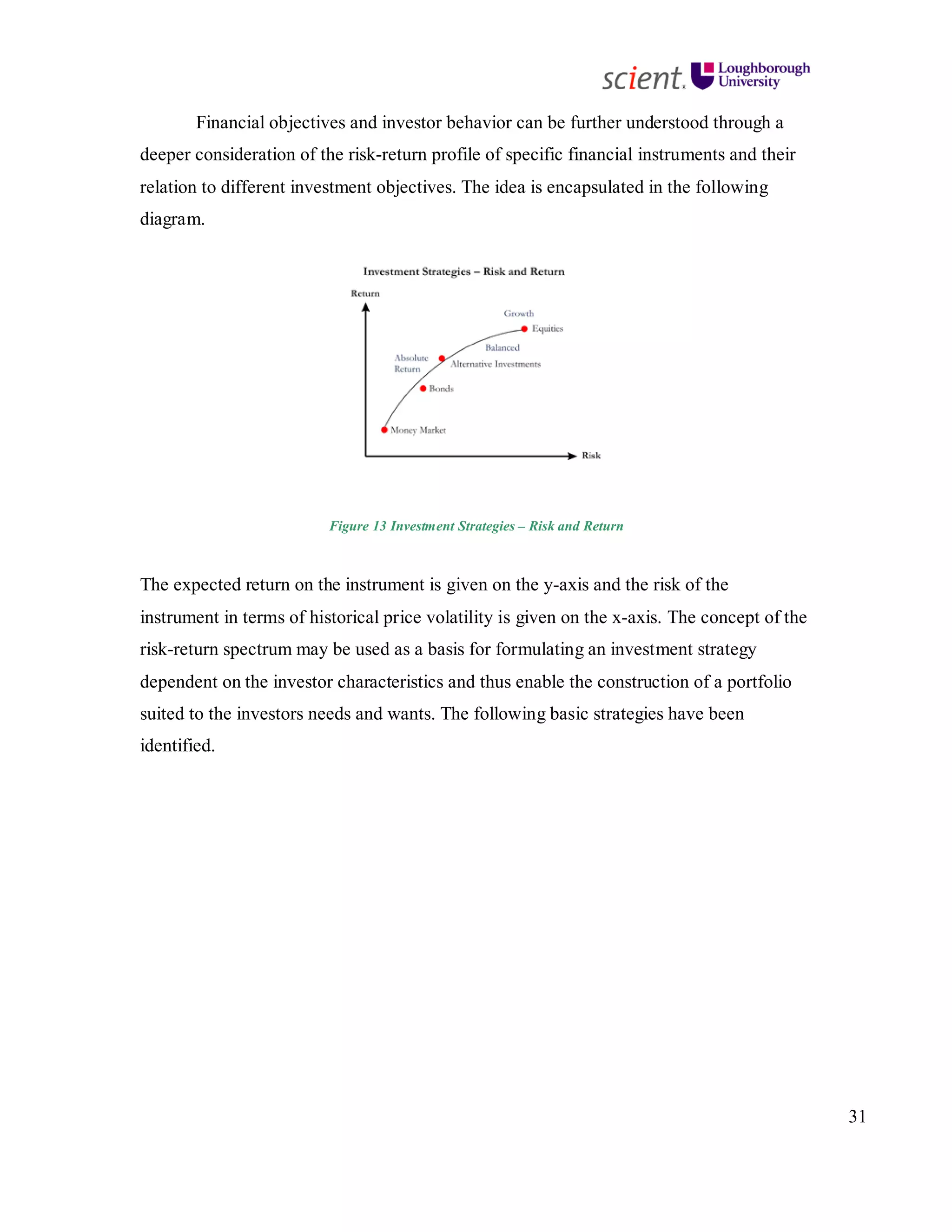
the users to their target fairly effectively. The most optimal strategy may be to concentrate
on improving the error handling and prevention aspects of the system whilst seeking
simultaneously to improve the other aspects.
Heuristic
Company
Average
Bank of Scotland 4.04
Smile 4.00
Clydesdale Bank 3.72
Heuristic Average 3.71
Royal Bank of Scotland 3.62
Lloyds TSB 3.58
Barclays 3.31
Table 18 Company Ranking
The above table documents the final ranking for each of the banks across all heuristics. It
can be seen the Bank of Scotland emerges as the winner with Smile in second place. It
should be borne in mind that the account opening process for each of these banks was very
different. The Bank of Scotland process involved only navigating through about four
screens and then filling in a form and sending it to the Bank of Scotland. This gave the user
freedom to fill the form in online and then print it, or if they preferred to print it out and
then fill it in. The form could however have been branded better with the Bank of Scotland
logo to give a feel of better consistency and coherence. The Smile process was however
completed entirely online and the user has to navigate around ten screens to be able to
73
complete the process. There are advantages in this in that the application can be processed
immediately.
Heuristic
Visibility of System
Status
Company
Average
Smile 4.25 4.00
Bank of Scotland 4.00 4.04
Lloyds TSB 4.00 3.58
Clydesdale Bank 3.80 3.72
Heuristic Average 3.76 3.71
Barclays 3.50 3.31
Royal Bank of Scotland 3.00 3.62
Table 19 Visibility of System Status Ranking
A design guideline can be drawn up for this heuristic. My preference would be that there is
a status indicator and an indication of what stage I am at in terms of completion. For
example combining an indicator with stage X of Y. Where Y is the total number of stages.
Heuristic
Match Between System
and Real World
Company
Average
Smile 4.88 4.00
Royal Bank of Scotland 4.70 3.62
Lloyds TSB 4.40 3.58
Heuristic Average 4.38 3.71
Barclays 4.20 3.31
Bank of Scotland 4.20 4.04
Clydesdale Bank 3.88 3.72
Table 20 Match Between System and Real World Ranking
This was the highest ranking heuristic and seems important for the established retail banks
who do not want to establish an independently branded offline presence. It is important that
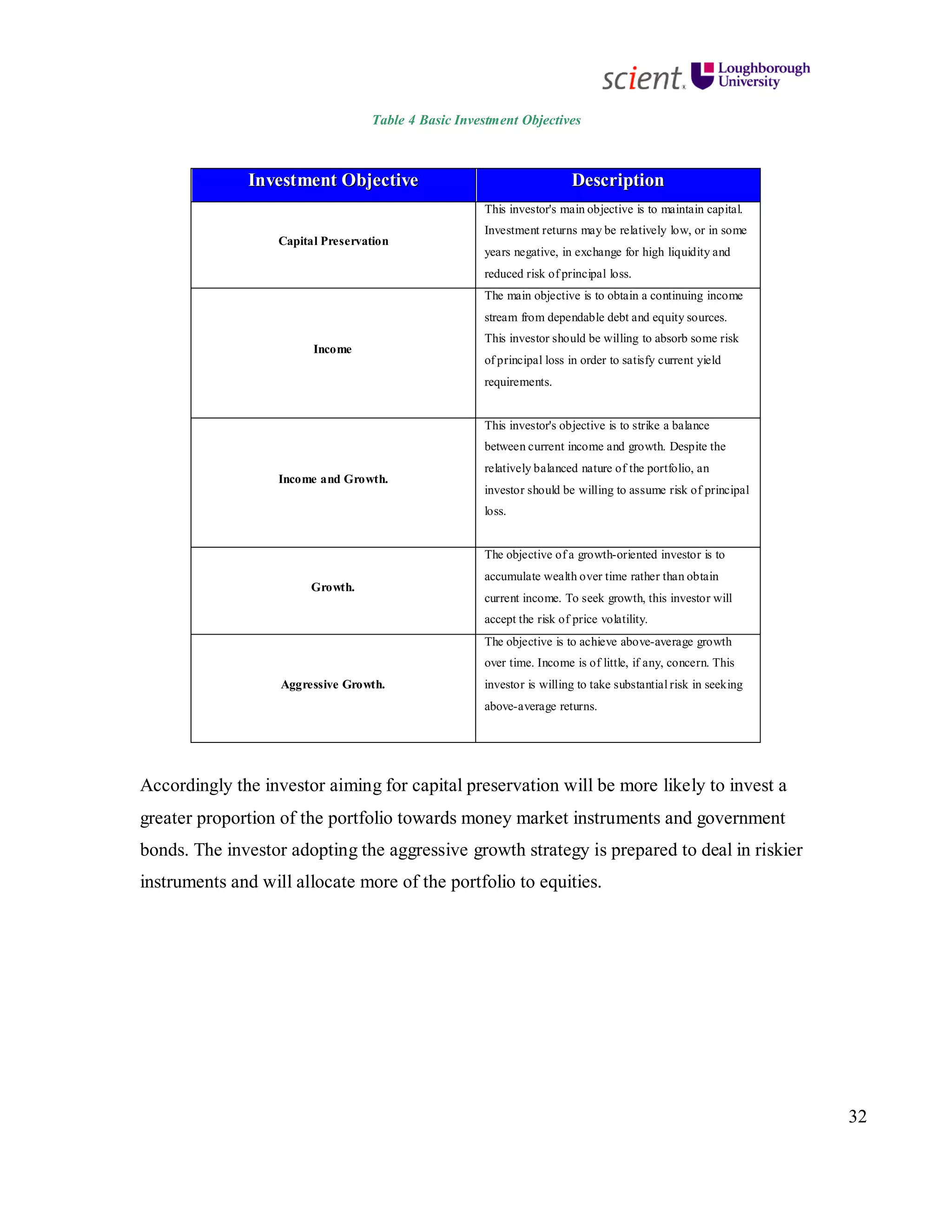
the online channel is consistent with their established operations and engenders a sense of
trust in the brand in the minds of their customers.
74
Heuristic
User Control and
Freedom
Company
Average
Bank of Scotland 5.00 4.04
Smile 4.75 4.00
Heuristic Average 3.82 3.71
Clydesdale Bank 3.75 3.72
Royal Bank of Scotland 3.50 3.62
Lloyds TSB 3.40 3.58
Barclays 2.50 3.31
Table 21 User Control and Freedom Ranking
Again this heuristic may be important in terms of not putting the potential customer off
applying for an account. Ultimately the consumer wants to gain financial freedom and
control of their financial affairs, if their first impression of the financial institution through
a graphical interface engenders a sense of control and freedom this is likely to bode well for
the future. It is said that first impressions last.
Heuristic
Consistency and
standards
Company
Average
Smile 4.75 4.00
Bank of Scotland 4.20 4.04
Heuristic Average 3.76 3.71
Clydesdale Bank 3.71 3.72
Barclays 3.60 3.31
Royal Bank of Scotland 3.50 3.62
Lloyds TSB 2.80 3.58
Table 22 Consistency and Standards Ranking
The above table shows the ranking for the Consistency and Standards heuristic. Again this
is important in terms of perception of the Brand.
75
Heuristic
Error
Prevention
Company
Average
Royal Bank of Scotland 4.00 3.62
Smile 3.83 4.00
Barclays 3.60 3.31
Clydesdale Bank 3.50 3.72
Heuristic Average 3.49 3.71
Bank of Scotland 3.00 4.04
Lloyds TSB 3.00 3.58
Table 23 Error Prevention Ranking
Under the heuristic Error Prevention the Royal Bank of Scotland scored highest this was
largely due to the fact that the account opening process for the Royal Bank of Scotland was
so straightforward that there was not really room to make error. The process for the Royal
Bank of Scotland was similar to that of the Bank of Scotland in that there were few screens
to navigate through and a form had to be filled in printed and sent to the Bank. This may
however discourage people whose printer is not working or those who do not have a printer
from applying for an account. The Smile Error prevention methods were more related to
preventing online errors occurring and not due to the simplicity of the process. In this
respect the Smile Error prevention methods could be held up as ‘Best Practice’ under this
heuristic.
Heuristic
Recognition Rather than
Recall
Company
Average
Bank of Scotland 5.00 4.04
Clydesdale Bank 4.00 3.72
Heuristic Average 3.77 3.71
Lloyds TSB 3.60 3.58
Barclays 3.50 3.31
Smile 3.50 4.00
Royal Bank of Scotland 3.00 3.62
Table 24 Recognition Rather than Recall Ranking
The Bank of Scotland has again scored highly under this heuristic due to the simplicity of
the process and the prominence and clarity of the links that lead the user through the
process. The Clydesdale bank has also scored highly for similar reasons. Given that Smile
is the only pure play internet bank it could take measures to improve under this heuristic
and guide customers to where they want to go more efficiently.
76
Heuristic
Flexibility and
Efficiency of Use
Company
Average
Bank of Scotland 4.60 4.04
Lloyds TSB 3.80 3.58
Heuristic Average 3.65 3.71
Clydesdale Bank 3.50 3.72
Royal Bank of Scotland 3.50 3.62
Smile 3.50 4.00
Barclays 3.00 3.31
Table 25 Flexibility and Efficiency of Use Ranking
This heuristic is not of utmost importance for the account opening process and may be
more important for other tasks that the online banking service will have to support. Users
may migrate to other higher cost channels if they find that they can achieve their goal more
efficiently through them. In this respect it will be important to be able to identify where this
is occurring and try to design the interface and processes to mitigate against this effect.
Heuristic
Aesthetic and
Minimalist Design
Company
Average
Royal Bank of Scotland 4.50 3.62
Bank of Scotland 4.40 4.04
Barclays 4.20 3.31
Clydesdale Bank 4.10 3.72
Heuristic Average 4.08 3.71
Lloyds TSB 3.80 3.58
Smile 3.50 4.00
Table 26 Aesthetic and Minimalist Design Ranking
Aesthetic and Minimalist Design was another high ranking heuristic. This heuristic has
received lots of attention from designers probably due to the success of Google the search
engine that has received praise for its minimalistic interface and setting a new web
standard. It is reassuring that it is possible for financial institutions to achieve a high score
for this heuristic. It must be remembered that the task we have been analyzing is not highly
complex and the product in question is relatively tangible. It would be interesting to see
how well this heuristic holds up as we move up the product and task complexity axes.
77
Heuristic
Help Users Recognise, Diagnose and
Recover from Errors
Company
Average
Lloyds TSB 4.00 3.58
Smile 3.60 4.00
Heuristic Average 3.10 3.71
Royal Bank of Scotland 3.00 3.62
Clydesdale Bank 3.00 3.72
Bank of Scotland 3.00 4.04
Barclays 2.00 3.31
Table 27 Error Recovery Ranking
Lloyds TSB and Smile have performed well under this category but overall this heuristic
has ranked as the worst performer. It seems that there is scope to improve the error
diagnosis and recovery process. For example if a user makes multiple mistakes on a web
data entry form the form may come back with lots of error codes and asterisks highlighted
in red, there may also be information displayed on the form that was entered correctly. This
is not likely to be a pleasant user experience. Perhaps solutions to this problem could
include separating out correct and incorrect information and guiding the user through each
error separately in a sympathetic manner. If system response times could be guaranteed
maybe even live instant messenger support could be built into the system or options to call
customer support could be included to guide the user through the difficulty. Shared screens
between the customer and an expert user could facilitate problem resolution. This is an
expensive solution and currently is restricted to exclusive clientele, nevertheless it may be
possible to design systems and processes that could leverage economies of scale to deliver
this type of personalized service and access to expertise to a wider audience.
78
Heuristic Help and documentation
Company
Average
Clydesdale Bank 4.00 3.72
Royal Bank of Scotland 3.50 3.62
Smile 3.40 4.00
Heuristic Average 3.32 3.71
Bank of Scotland 3.00 4.04
Lloyds TSB 3.00 3.58
Barclays 3.00 3.31
Table 28 Help and Documentation Ranking
The Clydesdale Bank has scored highly on this heuristic and can be held up as ‘Best
Practice’ for help and documentation. The help is not prominently displayed which explains
the less than perfect score, however, once the user has located the help system it is
comprehensive and context sensitive dependent on where the user is in the process or what
task they are trying to accomplish. The help system is distributed in a separate browser
window but the structure of the help is consistent with the standard windows help system,
thus the user familiar with this help system does not have the cognitive burden of trying to
work out how the help system functions. The Royal Bank of Scotland help system
explained the function of the various frames and elements of the web interface. There were
however problems in the Windows management capabilities of the pop up dialogue that
displayed the help and some browser functionality was not supported through the mouse
but was through the keyboard i.e. forward and back. The idea was deemed to be good
though and hence the high score. The ideal may be to combine the context sensitive
benefits of the Clydesdale Bank help system with the idea and presentation techniques of
the Royal Bank of Scotland system whilst eliminating the system functionality issues.
The key challenge to the validity and reliability of this analysis of this study is the fact that
only one evaluator has performed the analysis. The analysis is to a large extent subjective
and as such is subject to a high degree of evaluator bias. Nielsen suggests that around five
evaluators are required to find at least 75% of the Usability problems in a system. This is
illustrated below as a curve showing the proportion of usability problems in an interface
found by heuristic evaluation using various numbers of evaluators. The curve represents
79
the average of six case studies of heuristic evaluation. It is thus unlikely that the analysis
presented will have identified all of the usability issues. The choice to only have one
evaluator has been determined by the resource constraints placed on the project.
Figure 26 Proportion of Usability problems found against Number of Evaluators25
.
Another factor to consider is the fact that this is the first time the analyst conducting the
study has undertaken such an evaluation and it is likely that the quality of the analysis is
suspect as a result. It takes time and experience to be able to interpret the heuristics in the
correct manner and indeed in the manner in which they are supposed to be interpreted. One
of the problems found by the analyst was that the heuristics seemed to cross over and the
interpretations of them could be moulded dependent on the context. Practice with the
method and greater familiarity with the domain should help improve the evaluators
performance and add depth to the analysis. The figure on the following page illustrates how
different evaluators performed whilst identifying usability problems for a banking system.
It can be noted that no evaluators found all problems and some evaluators were better at
identifying hard to identify usability problems as opposed to easy to identify problems.
25 Source www.useit.com
80
Figure 27 Usability problems found by different Evaluators for a Banking System26
The illustration above shows which evaluators found which usability problems in a
heuristic evaluation of a banking system. Each row represents one of the 19 evaluators and
each column represents one of the 16 usability problems. Each square shows whether the
evaluator represented by the row found the usability problem represented by the column:
The square is black if this is the case and white if the evaluator did not find the problem.
The rows have been sorted in such a way that the most successful evaluators are at the
bottom and the least successful are at the top. The columns have been sorted in such a way
that the usability problems that are the easiest to find are to the right and the usability
problems that are the most difficult to find are to the left.
A criticism of the heuristic evaluation method is that it is often noted that a very large
proportion of the usability problems found by heuristic evaluation tend to be minor
problems.31 This preponderance of minor problems is seen as a drawback, even though it is
still possible to focus on the serious problems by using a severity rating method to prioritize
the list of usability problems found by a heuristic evaluation of a given interface. In any
case, it is probably desirable to increase the proportion of serious usability problems found
by heuristic evaluation. The analysis presented here tends to show, however, that the minor
usability problems such as Aesthetic and Minimalist Design score highly whereas the
26 Source www.useit.com
81
potentially more serious problems such as Error Prevention score lowly. The implication is
that designers should focus on improvements to the error handling process. It would be
interesting to compare the account opening process against for example bill payment where
the risk of error to the user is much higher to see if this pattern is still observed for the sites
under analysis across different tasks.
One of the factors possibly biasing the analysis is the fact that the analyst conducting the
evaluation is also aware of other heuristics proposed by other usability specialists such as
Norman32 (1988), Schneiderman33 (1992) or Scapin and Bastien (1997). It is impossible to
be sure that the additional usability knowledge gained by reading the literature published by
these experts is not influencing the analysis. In reality the evaluation may be applying
heuristics out with the chosen set. The list of ergonomic criteria for the assessment of the
quality of interactive systems proposed by Scapin and Bastien are shown in the table below.
Many of the heuristics or criteria share similarities with those of Nielsen, it could therefore,
also be argued that awareness of these different criteria adds further depth to the analysis.
Table 29 List of Ergonomic Criteria for Interactive Systems27
27 Source: Scapin and Bastien (1997) ‘Ergonomic Criteria for Evaluating the Quality of Interactive Systems’
Behavior and Information Technology Vol. 16 No. 4
82
The Banks chosen for inclusion in the analysis were selected on the basis of estimated
market share, industry awards or convenience. The figures for market share in the online
banking space were not readily available. This must lead us to ask the question on whether
or not the selected interfaces are representative of the retail-banking sector. This problem
could be addressed by including more online banks in the evaluation.
An intensive evaluation like the one conducted, where each interface is evaluated one after
the other, and the evaluation for all six banks taking upwards of two days to complete does
not replicate the situation a typical user faces in trying to apply for an account. To this
extent the data would have to be validated by conducting live user testing or another
complementary usability technique. It must also be taken into consideration that the
equipment utilized for the evaluation and the network connection speeds are probably not
representative of the typical situation the large majority of users would be faced with.
83
SUMMARY AND FURTHER WORK
It should be clear from the analysis that much work remains to be done in this domain as
there is a significant ‘knowledge gap’ and there is literally no data available that is robust
enough to stand as a scientific hypothesis. The subject matter is literally too complex given
current knowledge levels and technological capabilities. As the evidence presented by the
Long Term Capital Management34 (LTCM) debacle has illustrated all too clearly, even
Economics, the most influential of the Social Sciences has failed miserably in its attempt to
explain the inner workings of the financial system. It must be remembered that two Nobel
Prize winning Economists established LTCM and the collapse of this hedge fund
precipitated a financial crisis, which affected the lives of millions of people on the planet.
Nevertheless, and on a more practical level, there are a number of ways in which the quality
of the present analysis could be improved.
Firstly separate bank accounts could be established in numerous retail banks with
funds available in them. These accounts could then be used to assess how well the sites
support the other tasks identified. Complementary usability techniques could be employed
to validate the analysis. The analysis could broaden the scope of the present study to
include different interactive channels, input devices, financial products, applications and
operating systems. Attention could also be paid to the important topic of Website
Accessibility for the physically and mentally challenged segments of the population.
One of the aims of this project was to design a streamlined quantitative data
acquisition system that would enable a cost effective method to collect usability data and
produce reports for subsequent qualitative analysis. Unfortunately the resources required to
implement such a system have not been available and this aim has not been achieved. It
would be desirable to be able to develop such a system, as we must be able to avoid
rejecting numbers when they show more promise of accuracy than intuition and hunch.
This is a key factor behind financial risk management which is now a central part of the
financial system.
Opposed though he was to mechanical applications of the laws of probability and the
quantification of uncertainty, John Maynard-Keynes recognized that this body of thought
had profound implications for humanity:
The importance of probability can only be derived from the judgment that it is rational to be guided
by it in action; and a practical dependence on it can only be justified by a judgment that in action we
ought to act to take some account of it.
It is for this reason that probability is to us the “guide of life,” since to us, as Locke says, “in
the greatest part of our concernment, God has afforded only the Twilight, as I may so say, of
Probability, suitable, I presume, to that state of Mediocrity and Probationership He has been pleased
to place us in here.”35
84
ACKNOWLEDGEMENTS
The author would like to thank the following for help and support whilst conducting the
project.
Susan Harker – Loughborough University
Murray Sinclair – Loughborough University
Ken Eason – Loughborough University
Jane Purvey – Loughborough University
Mary Hewitt – Loughborough University
Robert Ballantine – Scient
Christopher McGann – Scient
Andrea Gallagher – Scient
Trevor Smyth – Scient
Phillip Freeguard –Scient
Liz Smith - Scient
Yogita Joshi – Scient
Ethan – Scient
Lucy Culshaw - Scient
85
REFERENCES
1 Scapin and Bastien (1997) ‘Ergonomic Criteria for Evaluating the Quality of Interactive Systems’ Behavior
and Information Technology Vol. 16 No. 4
2 Maguire, M. (2000) ‘Context of Use Within Usability Activities’ Human Factors 2000 Symposium
3 Senge, P, M. (1990) ‘The Fifth Discipline’ Random House
4 Soros, G., (1998), ‘The Crisis of Global Capitalism’ Little Brown
5 Investment Management Association www.investmentuk.org
6 Colgate, M., Stewart, K. and Kinsella, R. (1995), ‘Customer Defection: A Study of the Student Market in
Ireland’. International Journal of Bank Marketing, Vol. 14 No. 8
7 Harrison, T. (2000), ‘Financial Services Marketing’ Financial Times Prentice Hall Page 228
8 Harrison, T. (2000), ‘Financial Services Marketing’ Financial Times Prentice Hall
9 Forrester Research, (June 2001) ‘Get ROI from Design’
10 Harrison, T. (2000), ‘Financial Services Marketing’ Financial Times Prentice Hall Page 22
11 www.fsa.gov.uk
12 Gaskill, S. (2001) ‘Consent to direct marketing in the financial services sector’ Journal of Financial
Services Marketing Vol. 5
13 Smith, A, Fischbacher, M. (2000) ‘Stakeholder involvement in the new service design process’ Journal of
Financial Services Marketing Vol. 5
14 Quoted in Harrison, T. (2000), ‘Financial Services Marketing’ Financial Times Prentice Hall Page 246
15 Mills, P. and Geraghty, M. (1997), ‘Remote Relationships’, Journal of Financial Services Marketing, Vol.1,
No 4.
16 UBS Environmental Report 2000 www.ubs.com
17 Co-operative Bank Partnership Report 2001 www.cooperativebank.co.uk
18 Brotherton, D. (2000) ‘CRM analytics: The Fuel for the Engine’ Journal of Financial Services Marketing,
Vol. 5
19 Lowe, A. (2001) ‘Effective Communication to your Chosen Segments’ Journal of Financial Services
Marketing, Vol. 5
20 Gokey, T., Yin, H. ‘The New Physics of Customer Loyalty’ McKinsey Marketing Practice
21 Hayward, D. September 4th 2002 ‘New kid on the Block set for Starring Role’ FT-IT Review Online
Banking
22 Lee, J. (2002) ‘The Right Mix of Products, Services, Channels and Customers’ Journal of Service
Marketing, Vol. 16 No. 3
23 Levesque, T., McDougall, G., (1994) ‘Benefit Segmentation Using Service Quality Dimensions’
International Journal of Bank Marketing Vol. 12 No. 2
24 Shackel, B. Richardson, S, J. (1991) ‘Human Factors for Informatics Usability’ Cambridge University
Press.
25 Maguire, M. (2001) ‘Methods to Support Human-Centred Design’ International Journal of Human-
Computer Studies Vol. 5 No. 4
26 Sorensen, P, F., (2002) ‘User Centred Methods in Product Development at Intel and the Ease of Use PC
Quality Roundtable’ Powerpoint presentation. www.eouroundtable.com
27 Ivory, M, Y., Hearst, M, A., (2001) ‘The State of the Art in Automating Usability Evaluation of User
Interfaces’ ACM Computing Surveys, Vol. 33, No 4.
28 Drott, C, M., (1998) ‘Using Web Server Logs to Improve Site Design’ proceedings of ACMSIGDOC 98
29 Maguire, M. (2000) ‘Context of Use Within Usability Activities’ Human Factors 2000 Symposium
30 Nielsen, J. (1994) ‘Enhancing the Explanatory Power of Usability Heuristics’ CHI 94 Conference Paper.
31 Nielsen, J. (1994) ‘Enhancing the Explanatory Power of Usability Heuristics’ CHI 94 Conference Paper.
32 Norman, D. (1988) ‘The Psychology of Everyday Things’ Basic Books
33 Schneiderman, B. (1992) ‘Designing the User Interface’ 2nd Edition Addison-Wesley
34 Soros, G., (1998), ‘The Crisis of Global Capitalism’ Little Brown
35 Bernstein, P, L. (1998) ‘Against the Gods – The Remarkable Story of Risk’ Wiley quoting John Maynard
Keynes (1921) ‘A Treatise on Probability’ Macmillan

Usability of Web Based Financial Services

  • 1.
    1 USABILITY OF WEB-BASEDFINANCIAL SERVICES AUSTIN DIMMER B.Eng. (Hons.) Project Report Submitted in Part Fulfillment of the Requirements for the Postgraduate Course in Ergonomics In Collaboration with
  • 2.
    2 TABLE OF CONTENTS ABSTRACT...................................................................................................5 INTRODUCTION.........................................................................................5 Scient............................................................................................................................... 6 Project Context, Aims and Activities........................................................................... 6 THE FINANCIAL SERVICES ENVIRONMENT....................................8 The Integrated Financial Services Provider ............................................................... 9 The Importance of Relationship Marketing ............................................................. 10 The Internet Ecosystem............................................................................................... 13 The Regulatory Environment..................................................................................... 17 Stakeholders in the New Product Design Process..................................................... 25 THE FINANCIAL SERVICES CONSUMER .........................................28 The Hierarchy of Financial Needs ............................................................................. 29 Lifecycle Stages............................................................................................................ 33 Segmentation................................................................................................................ 37 Customer Loyalty ........................................................................................................ 39 Attitude Towards Delivery Channel.......................................................................... 43 Attitude Towards Technology Adoption / Product Innovation............................... 44 The Financial Decision Making Process.................................................................... 46 THE USER CENTRED DESIGN PROCESS ..........................................50 Why test for and what is Usability?........................................................................... 50 Contextual Enquiry ..................................................................................................... 54 Ethnographic Study Field Observation..................................................................... 54 Interviews and Focus Groups..................................................................................... 55 Surveys.......................................................................................................................... 55 Questionnaires ............................................................................................................. 55 Journaled Sessions....................................................................................................... 56 Self-reporting Logs...................................................................................................... 56 Screen Snapshots ......................................................................................................... 57 Heuristic Evaluation.................................................................................................... 57 Cognitive Walkthroughs ............................................................................................. 58 Pluralistic Walkthroughs ............................................................................................ 58 Consistency Inspection................................................................................................ 58 Usability Testing .......................................................................................................... 59 Automated Usability Testing ...................................................................................... 60 Web Server Log Analysis............................................................................................ 60 METHODOLOGY......................................................................................61 Apparatus ..................................................................................................................... 70 RESULTS AND DISCUSSION..................................................................71 SUMMARY AND FURTHER WORK .....................................................83 ACKNOWLEDGEMENTS........................................................................84 REFERENCES............................................................................................85
  • 3.
    3 LIST OF FIGURES Figure1 The Fully Integrated Financial Services Provider.......................................... 10 Figure 2 Profitability of Customers over Time............................................................... 11 Figure 3 Students’ net present value over average customer life................................. 11 Figure 4 Profit Generation.............................................................................................. 11 Figure 5 Factors Influencing the Need for Relationship Development........................ 12 Figure 6 The Morgan Stanley Internet Ecosystem......................................................... 13 Figure 7 Simplified framework of selection and use of tools in organisations............. 14 Figure 8 Smile Customer Satisfaction ............................................................................ 16 Figure 9 The Competitive Environment Changes.......................................................... 16 Figure 10 Stakeholders in the New Product Design Process......................................... 26 Figure 11 World Map ...................................................................................................... 28 Figure 12 The Hierarchy of Financial Needs ................................................................ 29 Figure 13 Investment Strategies – Risk and Return....................................................... 31 Figure 14 Forces of Social and Economic Change........................................................ 33 Figure 15 Ladder of Customer Loyalty........................................................................... 40 Figure 16 Loyalty Profiles Across Financial Services Products.................................... 42 Figure 17 Product Complexity, Frequency and Channel Utilization............................ 43 Figure 18 Technology Satisfaction Curve ...................................................................... 44 Figure 19 The Change in Customers as a Product Matures.......................................... 45 Figure 20 Simplified Financial Decision Making Process........................................... 46 Figure 21 Relative Positioning on Service Attributes for Different FS Providers........ 47 Figure 22 A Conceptual Model of the FS Purchase Decision Process ......................... 49 Figure 23 Detailed User Centred Design Process Lifecycle .......................................... 53 Figure 24 Taxonomy of WWW User Tasks .................................................................... 69 Figure 25 The Apparatus Used ....................................................................................... 70 Figure 26 Proportion of Usability problems found against Number of Evaluators ..... 79 Figure 27 Usability problems found by different Evaluators for a Banking System.... 80
  • 4.
    4 LIST OF TABLES Table1 Benefits and Costs of Relationship Marketing.................................................. 13 Table 2 Basic Consumer and Financial Institution Needs............................................ 15 Table 3 Influence of Financial Services Employees on Customers............................... 27 Table 4 Basic Investment Objectives............................................................................... 32 Table 5 Comparisons of Traditional and Emerging Life-Cycle Cash Flows ................ 35 Table 6 General Segmentation Characteristics .............................................................. 38 Table 7 Defector Types .................................................................................................... 41 Table 8 Loyalist / Migrator Characteristics.................................................................... 42 Table 9 Technology Adoption Segments......................................................................... 45 Table 10 Identified Tasks for Online Banking Current Accounts................................. 61 Table 11 The Task Taxonomy ......................................................................................... 63 Table 12 Partial Section of Completed Task Taxonomy for Current Account ............. 64 Table 13 The Selected Banks for Evaluation.................................................................. 64 Table 14 Heuristic Rating Scale...................................................................................... 67 Table 15 The Heuristic Template.................................................................................... 68 Table 16 Equipment Specification .................................................................................. 70 Table 17 Heuristic Evaluation Results............................................................................ 71 Table 18 Company Ranking ............................................................................................ 72 Table 19 Visibility of System Status Ranking ................................................................. 73 Table 20 Match Between System and Real World Ranking........................................... 73 Table 21 User Control and Freedom Ranking ............................................................... 74 Table 22 Consistency and Standards Ranking ............................................................... 74 Table 23 Error Prevention Ranking................................................................................ 75 Table 24 Recognition Rather than Recall Ranking........................................................ 75 Table 25 Flexibility and Efficiency of Use Ranking ...................................................... 76 Table 26 Aesthetic and Minimalist Design Ranking...................................................... 76 Table 27 Error Recovery Ranking................................................................................... 77 Table 28 Help and Documentation Ranking .................................................................. 78 Table 29 List of Ergonomic Criteria for Interactive Systems......................................... 81
  • 5.
    5 ABSTRACT Usability of financialservices websites is one of the inhibitors for banks to provide effective customer service. In assessing the usability of financial services websites this study has: generated a descriptive framework of the current financial services environment, descriptive models of the financial services consumer, a taxonomy of tasks, a list of tasks online retail banks are required to support and carried out an Heuristic Evaluation of the online account opening process. Findings show that whilst the design of the sites seem to effectively support the less critical usability heuristics improvements could be made to the design that would enhance the performance of the sites on the more critical usability heuristics. INTRODUCTION According to Scapin and Bastien (1997)1 some very specialized tasks or tasks involving highly skilled users, ergonomic issues cannot be reduced to sets of dimensions and recommendations. They suggest that such situations require sophisticated knowledge on context, users, and tasks. Maguire (2000)2 asserts that before any usability design or evaluation activity may begin, it is necessary to understand the context of use for the product. To this extent the nature of this study has been mainly exploratory. The initial investigation has focused on gaining an understanding of the financial services consumer and the needs of key stakeholders in the financial system. The document has been designed to enable ‘Mental Models’ of the problem space to be developed and encourage organisational learning. According to Senge (1990)3 ‘Mental Models’ help guide the strategic conversation, encourage organisational learning and enable system participants to break from existing practice by encouraging innovative new ways of doing things. The report will begin by modelling the current environment faced by the financial services industry. The next stage of analysis will concern the financial services consumer. The territory covered in this section includes the hierarchy of financial needs, financial consumer lifecycle stages and descriptive consumer segmentation models. Attention shall
  • 6.
    6 then be turnedto the UCD process and the various methods that may be employed. The final sections of the report shall detail the methodology employed to conduct an Heuristic Evaluation of the account opening process for six retail banks. The results of the evaluation shall be presented, discussion made and areas of further work identified. Scient Dedicated to using the science of experience strategy, design and technology to create extraordinary results for its’ clients Scient has developed unique solutions for guiding clients through the uncharted waters of the digital age. The entire Scient team is committed to working with clients to transform their businesses from fractured, multi layered user experiences to one seamless, enjoyable experience. This is accomplished through the creation of unified multi-channel experiences that inspire and strengthen dynamic connections among people, businesses and communities. Scient has sponsored this project in conjunction with Loughborough University as part of its research and development activities. The analyst conducting the investigation has a diverse experience of working in the financial services sector having worked in a Stock- broking Firm, an Asset Management Company and an Investment Bank. The analyst also holds a pass in the Securities and Futures Authority Securities Representatives exam. It is hoped that this experience combined with the Ergonomic knowledge gained whilst undertaking the Msc in Ergonomics at Loughborough University will provide a rich analysis of the problem space. One of the main aims of the project will be to disseminate any knowledge gained from the research to other members of the Scient team. The thesis has therefore been designed as a tool to support organizational learning within Scient. Project Context, Aims and Activities The subject of this project is the usability of web based interactive systems for the provision of financial services (FS). The aims of the project are: to generate a taxonomy of tasks that identified FS web based products are required to support; to collect usability
  • 7.
    7 performance data foridentified FS domains; to produce best practice design guidelines and heuristics, and; in the process document required improvements to Scient’s usability testing and user centred design approach. Project activities have included: • Identification of FS domains for analysis. The chosen domain has been narrowed down to the account opening process for the major UK retail banks. • Development of a list and description of key financial services delivery platforms e.g Web, wireless, ATM. • Review and analysis of existing Scient usability data. • Review and analysis of existing usability literature. • Review and analysis of existing financial services marketing literature. • Review and analysis of commercially produced research. • Development of a taxonomy of tasks associated with the FS domain identified. • Classification of the key stakeholders/users linked to the financial products and tasks identified. • Analysis of how effective the system is in supporting the specified tasks for specified user groups in specified contexts. • Identification of points of high usability risk in the selected FS domain system processes. • Synthesis of the above analysis to produce generic interactive system design guidelines for the account opening process. • Identify improvements to Scient’s usability testing and user centred design approach
  • 8.
    8 THE FINANCIAL SERVICESENVIRONMENT Before the advent of the Internet the financial services community operated a trading system that enabled the participants on the international financial markets to transact with each other on a global basis. The result of this climate was that information asymmetries were created and power fell into the hands of the market professionals who could exploit their ‘insider’ knowledge to generate excess returns by investing in the market. With the advent of the Internet this situation has apparently changed, the consumer has now been empowered with access to real time information via the Internet and a supportive regulatory environment has been established in the developed markets. In theory these factors combine to create a more level playing field between consumers and professional market participants. Rapid technological innovation has enabled what the financial community has dubbed ‘the Bacardi Banking culture’ reflecting the desire of consumers to be able to bank anytime, anyplace and anywhere. In a recent television advertisement by Barclays Bank Robbie Coltrane proclaimed “You can even pay your bills half way up Mount Fuji wearing your Jimjams” adding “You know what this means: We are all Bankers now!” The dot-com bubble fuelled an appetite from consumers for all kinds of new media, ranging from dedicated financial television channels such as Bloomberg to investment magazines such as the Investors Chronicle, the audiences and readership of these media providers were soaring during the ‘irrational exuberance’ of the dot-com frenzy and trading volumes and equity ownership reached record levels. Cataclysmic events like September 11, the bursting of the bubble, falling trading volumes, the pensions mis-selling scandal, the crisis of confidence in corporate governance, increased political posturing, warmongering and so forth have coalesced to create an environment of increased fear, uncertainty and doubt in the financial markets. The global financial system has, however, shown remarkable resilience and continues to function in the face of adversity. Some market commentators4 (Soros 1998) have indicated that it is fear, uncertainty and doubt that move the market in the first place as they lead to increased share price volatility. This is perhaps one of the reasons why we are witnessing an increase in investor interest in hedge funds as an asset class. These
  • 9.
    9 funds trade andmake profits or losses by conducting complex derivative transactions whose value increases as volatility increases; volatility is therefore generally seen to be good for this class of investment vehicle. At the moment this type of fund has limited distribution although the Financial Services Authority is currently assessing the regulatory status of these investment instruments for retail consumers. Proponents of these funds state portfolio diversification as a key reason as to why investors should include this class of investment in their portfolio. It can be said that the means for assessing whether or not these products are suitable for particular portfolios have become more complex and that there is an increasing need for advice to support the marketing of these products, thereby ensuring that the right products are sold to the right people at the right time and in the right place. In essence this is the goal of an efficiently functioning financial system. The internet is providing a platform upon which investors may learn the complex techniques required to construct or analyse such investment strategies, but it may still be the case that financial power in the future is held by the leading institutions whose industrial strength analytical capabilities, expertise and investment insight are able to deliver excess returns and competitive advantage. The initial empowerment that the Internet has promised may deliver new information asymmetries. The Integrated Financial Services Provider As a result of these information asymmetries financial advice will become the next battleground for FS providers. The rationale for this argument has been staged in one of the more complex areas of the capital markets but we must include in our analysis other sectors of the financial services industry such as pensions, credit cards, mortgages, insurance and savings which also require advice and support. These products will also be a part of consumers’ financial portfolios and as such offer cross selling opportunities for FS providers. FS providers have recognized that it is very difficult to provide ‘Best in Class’ products across the financial spectrum that are able to meet the needs of a diverse client base. Consolidation and convergence are key themes in the FS domain as a result. Figure 1 illustrates the concept of the fully integrated Financial Services provider.
  • 10.
    10 Figure 1 TheFully Integrated Financial Services Provider1 The Customer may interact with the Provider through any of the channels indicated at the top of the diagram. The provider can then sell any of its product offerings or those of a third party provider to the customer who has a single integrated view of his portfolio and his net position. Ideally the customer database and warehouse will identify the customer and be able to market to the customer products that are suitable for the customer, fulfil the customers needs and simultaneously maximise the lifetime value of the customer to the provider and reduce the cost to the consumer. The importance of the integrated FS provider becomes even more apparent when we consider the proliferation of financial services providers and products. In the UK alone there are around 120 providers of mutual funds5 who each offer many different investment vehicles. How is a consumer to navigate this maze and find the products that are suited to his needs? The Importance of Relationship Marketing In a study into retention economics Colgate et al6 (1995) demonstrated that reducing defections by 7.8% could increase the value of students by 555%. This demonstrates the 1 Source: Forrester UK Retail Finance Forum
  • 11.
    11 importance of retainingcustomers, especially for this market segment, other market segments may not however have the same lifetime value profile. The findings from this study are illustrated graphically below. Figure 2 Profitability of Customers over Time2 Figure 3 Students’ net present value over average customer life Figure 4 Profit Generation 2 All figures on this page from Colgate, M., Stewart, K. and Kinsella, R. (1995), ‘Customer Defection: A Study of the Student Market in Ireland’. International Journal of Bank Marketing, Vol. 14 No. 8
  • 12.
    12 Given the currentinvestment and technological climate and taking into consideration the implications of retention economics it is evident that if FS providers are to maintain trust and remain competitive then they must master relationship technologies. The marketing community during the 1990’s has popularised the concept of relationship marketing7 (Harrison 2000) and the factors influencing the need for relationship development are illustrated below. Figure 5 Factors Influencing the Need for Relationship Development3 In addition to considering the broader reasons driving financial institutions towards a relationship marketing approach there are a number of benefits and costs associated with developing long-term satisfying relationships that must be taken into account. These are presented in the table below: 3 Source: Adapted from Financial Services Marketing, Tina Harrison, FT Prentice Hall 2000
  • 13.
    13 Table 1 Benefitsand Costs of Relationship Marketing BBeenneeffiittss CCoossttss • It takes time to make money from customers. • Sales, marketing and set-up costs are amortised over a longer customer lifetime. • Repeat customers often cost less to service. • Allows cross-selling opportunities. • Creates ‘Lock in’ • Allows for inter-generational relationships. • Satisfied customers provide referrals and may be willing to pay a price premium. • The costs of servicing may not always be less. • Retained customers are not always less price- sensitive. • Retained customers do not always spend more with the company. • Long standing customers do not always pass on positive word of mouth recommendations. The Internet Ecosystem Now that we have examined the emergence of the integrated FS provider and the rationale for relationship development it may now be useful to consider further the framework within which this is occurring. The technology analysts at Morgan Stanley have come up with a model that they call the ‘Internet Ecosystem’. The Internet Ecosystem is depicted below. Figure 6 The Morgan Stanley Internet Ecosystem4 4 Source: www.ms.com Morgan Stanley Internet Ecosystem Presentation (March 2001)
  • 14.
    14 The Internet Ecosystemmodel provides a neat conceptual framework to help us visualize the complexity of the Internet in one diagram. It depicts the Internet Backend, which consists of the servers and data storage facilities, the Pipes, consisting of the Routers, Switches, Hubs, Cables and Fibre Optics, and the Internet Front End, composed of Consumers and Enterprise interacting with mobile or fixed location devices. From this perspective the provision of Financial Services through web-based systems may not only originate from consumers. Indeed people may arrange pensions for example directly from their Corporate Intranet. Clearly the provision of web-based financial services is very broad in scope. The analysts at Morgan Stanley draw on the definition of an ecosystem from the Encyclopaedia Britannica as follows an ecosystem is “the complex of living organisms, their physical environment, and all their interrelationships in a particular unit of space. The principles underlying the study of ecosystems are based on the view that all the elements of a life-supporting environment of any size, whether natural or man- made, are parts of an integral network in which each element interacts directly or indirectly with all others and affects the function of the whole. All ecosystems are contained within the largest of them, the ecosphere, which the entire physical Earth (geosphere) and all of its biological components (biosphere).” As part of the evolutionary process the participants of the Internet Ecosystem are selecting tools and evaluating how well the tools fulfil the needs that they have been designed for, this evaluation is based on an assessment of both the quantitative and qualitative feedback derived as a result of tool usage. This is depicted in the following diagram. Figure 7 Simplified framework of selection and use of tools in organisations5 5 Source: Adapted from Sustainability, The Corporate Challenge of the 21st Century, Allen and Unwin 2000
  • 15.
    15 In the contextof web-based financial services the tool represents the interface. If after both a quantitative and qualitative analysis the tool is deemed by users as insufficient at fulfilling their needs it will be redesigned or discarded until an appropriate tool that does actually fulfil users needs is developed and implemented. From the perspective of the users and providers of financial services the basic needs that must be satisfied have been identified8 and are given in the following table. Table 2 Basic Consumer and Financial Institution Needs BBaassiicc CCoonnssuummeerr NNeeeeddss BBaassiicc FFiinnaanncciiaall IInnssttiittuuttiioonn NNeeeeddss Cash Accessibility Increase Transaction Values / Frequency Asset Security Increase Assets Under Management Money Transfer Reduce Transaction Costs / Enhance Profitability Deferred Payment Enhance Brand Image / Reputation / Market Share Financial Advice Deliver Shareholder Value Evidence that it is possible to achieve incremental system improvements whilst satisfying a broad range of needs is emerging from Smile the Internet Bank. This evidence is presented below. Interestingly Smile has also recently won the Guardian Consumer finance Internet Bank awards and has also been voted best Internet Bank by the consumer watchdog magazine Which.
  • 16.
    16 Figure 8 SmileCustomer Satisfaction6 Perhaps one last factor to consider within the framework of the Internet Ecosystem is how the competitive environment and the urgency to have a web presence have changed over time. The idea is captured in the illustration below. Figure 9 The Competitive Environment Changes7 6 Source: http://www.co-operativebank.co.uk/ The Partnership Report 2001. 7 Source: IT Decision Making Excellence, Scient White Paper 2002
  • 17.
    17 Even though consumers,business customers, and site executives underscore the need for a great user experience, most web efforts don’t deliver it. Nearly 150 site reviews conducted by Forrester since 1999 show that most sites fail to support user goals.9 Perhaps this is a result of the initial urgency to achieve a web presence. In the initial rush to market there was not enough time to address User Centred Design (UCD) issues. In addition many of the techniques employed in UCD were not widely available. It is for this reason that this research is both timely and relevant as we move into the next phase in the development of the Internet Ecosystem. The Regulatory Environment The intention of this section is not to offer a comprehensive view of the regulatory environment in the financial services sector but rather a brief introduction to the rationale for regulation, the role of the UK regulator the Financial Services Authority (FSA) and the conclusions drawn from the recently published discussion paper ‘The FSA’s Approach to the Regulation of e-Commerce’. The regulatory environment is in constant flux and it is of utmost importance that the design of delivery channels, interfaces and direct marketing campaigns is in full compliance with current legislation. The FSA is conscious of and acknowledges in the discussion paper that, as with any new and dynamic service, legal certainty may not always be possible. It is therefore likely that the web-services development team will have to liaise with the appropriate compliance and marketing departments of the client firm to ensure compatibility with the law. Interested readers are directed to the Financial Services Website at www.fsa.gov.uk for further guidance on this important topic. Criticisms of the Financial Services Act have raised doubts about the effectiveness of financial regulation. Indeed, some may question the need to regulate a market at all, arguing that competitive forces alone would serve to protect consumers. Three key areas form the basis for the rationale behind financial regulation10: 1. To sustain systemic stability 2. To maintain the safety and soundness of financial institutions
  • 18.
    18 3. To protectthe consumer – The consumer needs protecting from market imperfections or market failures which could compromise the welfare of the consumer. There are many market imperfections in financial services: • Inadequate information on the part of the consumer; • Asymmetric information (consumers are less well informed); • Agency costs (asymmetric information can be used to exploit the consumer); • Potential principal-agent problems arising from issues related to conflicts of interest; • Problems of ascertaining quality at point of purchase; • Imprecise definitions of products and contracts; • Inability of retail consumers to assess safety and soundness of firms; • Consumer under-investment in information and resultant ‘free-rider’ problems – consumers assume that others have investigated the safety and integrity of suppliers; • Due to the technicalities of some products, consumers are not all equally equipped to assess quality etc. As a result of this need for financial regulation the Financial Services Authority has been established. The Financial Services Authority (FSA) is an independent non-governmental body, given statutory powers by the Financial Services and Markets Act 2000. It has four main aims:11 • Maintaining confidence in the UK financial system. The FSA achieves this by, among other things, supervising exchanges, settlement houses and other market infrastructure providers; conducting market surveillance; and transaction monitoring. • Promoting public understanding of the financial system. The FSA helps people gain the knowledge, aptitude and skills they need to become informed consumers, so that they can manage their financial affairs more effectively.
  • 19.
    19 • Securing theright degree of protection for consumers. Vetting at entry aims to allow only those firms and individuals satisfying the necessary criteria (including honesty, competence and financial soundness) to engage in regulated activity. Once authorized, the FSA expects firms and individuals to maintain particular standards set by the FSA. The FSA monitors how far firms and individuals are meeting these standards. Where serious problems arise the FSA will investigate and, if appropriate, discipline or prosecute those responsible for conducting financial business outside the rules. The FSA can also use its’ powers to restore funds to consumers. • Helping to reduce financial crime. The work of the FSA focuses on three main types of financial crime: money laundering; fraud and dishonesty; and criminal market misconduct such as insider dealing. In June 2001 the FSA published a discussion paper entitled ‘The FSA’s approach to the regulation of e-commerce’ presented here are the main conclusions drawn from the paper. Conclusions of the review The assessment that has been carried out indicates that further action is needed by the FSA. This work may be grouped into three areas. These are that: a) Firms and markets have adequate IT systems and controls to address the risks in their business; b) Consumers have access to relevant and comprehensible information and guidance about obtaining financial services via e-commerce channels; and consumers appreciate that, once armed with this information, they have a responsibility to protect themselves from the risks they can best manage. For example, banks own and control the ATM network; this is very different from the position of on-line banking. However, for other services such as stock broking, the use of e-commerce delivery channels may provide
  • 20.
    20 greater levels ofsecurity in some circumstances than the use of traditional communication, such as post or telephone. c) The FSA adapts regulation to e-commerce developments. Although the paper identifies actions which the industry, consumers and the FSA should consider, one of the common themes that runs through the analysis is that no one group can do everything. Achieving appropriate standards in this area, as in many others, is a shared responsibility in which roles interlock. As the discussion of consumer security makes clear, neither firms nor consumers can completely counteract a failure to maintain proper controls by the other. Adequate IT Systems and Controls For the majority of firms and markets, IT provides the backbone of the business, whether or not the firm uses e-commerce delivery channels. It is not the FSA’s job to specify in detail what systems and controls a firm should use. That is the responsibility of its senior management. However, the FSA can make clear its expectation that senior management is responsible in this area and that the controls which are in place should adequately address the risks to which the business is exposed. Consumer Security and Information E-commerce is likely to provide consumers with more opportunities than risks, but consumer security and appropriate information are key. Consumer security has always been important; for example consumers have to keep secret the PIN number on their credit, debit and cash cards. In the past firms themselves were able to control security in the delivery channel; they could secure their own machines, the communications link to ATMs or other remote devices and the remote device itself. The use of e-commerce channels reduces firms’ end-to-end control of security. It is the consumer who controls access to his computer and it is the consumer who can take steps to secure it. The FSA believes that consumer security is a shared endeavor between firms, consumers and the FSA. The FSA plans to publicize what
  • 21.
    21 consumers can doto reduce the risk that they compromise their own security when using e-commerce channels. Good quality information is a key requirement if consumers are to select material sensibly from the abundance of data in cyberspace. Information needs to be presented in a way that consumers can understand. The FSA is one of a number of organizations with responsibilities to provide general consumer financial information. As a regulator, the FSA can play a valuable role in helping consumers become aware of what protections exist within the UK, of the circumstances in which consumers may not be covered by UK regulatory protection, and the potential consequences of not being so covered. The FSA can also provide independent information to help consumers make an informed choice about obtaining financial services. Account Aggregation and Digital Certificates The growth of e-commerce has seen the development of new products with new risks and also of novel solutions to mitigate risks. Two new services have received particular attention: aggregation and digital certificates supporting electronic signatures. Aggregation is a new service. It enables a consumer to be presented with all his or her account details (banks, stockbrokers, air miles etc) on a single page. The most common method of aggregation currently requires consumers to provide their account passwords to the aggregator. The aggregator uses the passwords to access automatically the consumer’s accounts. The information is then provided to the consumer on a consolidated basis on a single page. The paper clarifies the FSA’s approach to aggregation in a number of important areas: These are: a) That accessing data from a variety of sources and consolidating the information onto a single web page is not regulated under financial services legislation, although services an aggregator may choose to add to its site, for example providing investment advice, or arranging deals, may trigger an authorization requirement;
  • 22.
    22 b) As withany new business activity, authorized firms planning to undertake account aggregation are expected to undertake appropriate levels of due diligence, in particular on the legal issues relating to certain methods of aggregation where the law has not been tested. Authorized firms should seek legal advice from an expert and reputable source and should not provide aggregation services if the advice received is that any aspect of their business model is more likely than not to be illegal, even if prosecution is believed to be unlikely; and c) A consumer who decides to use an aggregation service which asks the consumer to disclose his or her password, should check very carefully that he or she is not breaching an account provider’s terms and conditions, and whether the level of security provided by his or her on-line bank or investment firm will be diminished by that use. Relevant legislation includes the Computer Misuse Act 1990, the Copyright Designs and Patents Act 1988, the Copyright and Rights in Databases Regulations 1997 and the Data Protection Act 1998. Aggregation does not fall within the scope of Financial Services and Markets Act 2000 (FiSMA) Digital certificates supporting electronic signatures are widely believed to be an important building block in the development of e-commerce. European law prevents Member States from requiring firms providing digital certificates and other trust services to be authorized. However, voluntary accreditation and other schemes are encouraged and are being set up. Under the law, therefore, any firm (financial or non-financial) is free to warrant that a particular person is who he or she purports to be for the purposes of a specific transaction. The key issue for a firm relying on such a warranty is the need to appreciate that not all those who provide certificates are equally reliable. Firms will need to develop procedures for determining how much reliance may be placed on a particular certificate. The discussion paper poses a number of questions about: a) The standards that would have to apply in this area before certificates could be used for the purpose of entering into a financial relationship;
  • 23.
    23 b) The issuingof digital certificates by authorized firms; c) The acceptance by authorized firms of digital certificates issued by others; d) The use by authorized firms of digital certificates in the course of business; e) The use of electronic signatures by consumers. An example of where the Internet can provide a novel solution to risk is in the possible use of domain names. A financial domain name could be used to help consumers identify whether or not a firm is authorized. Consumers can and should check with the FSA’s Central Register, but currently not everyone does. A special Internet address (for example .fin) reserved for financial services firms, and possibly made compulsory for them to use, might be one way of mitigating that risk. This could also help regulators conduct surveillance more effectively, since an unauthorized .fin web-site would be relatively easy to uncover. There are two versions of the .fin approach. One is for a sub-level domain, i.e. www.firm.fin.uk, the other is for a top-level domain, i.e. www.firm.uk.fin. The paper analyses the advantages and disadvantages of the use of .fin as top-level domain because ICANN, the agency that controls such domains, has indicated that it is willing to authorize its use. The review has concluded that the difficulties and costs associated with operating a financial top-level domain are not currently justified by the prospective benefits. However, the balance between costs and benefits can be expected to change over time. This is an issue to which the FSA may wish to return.
  • 24.
    24 Direct Marketing ofFinancial Services There are three main areas of legislation that must be taken into consideration when direct marketing of financial services is practiced by a financial institution. Compliance with one area does not remove the necessity to comply with other areas of legislation. The three main areas of legislation are as follows:12 • The Telecommunications (Data Protection and Privacy) (Direct Marketing) Regulations 1999. • The Proposed EU Distance Selling of Consumer Financial Services Directive. • The Data Protection Act 1998. Consumer Education The FSA considers consumer education is a key part of consumer protection, and the FSA aims to help consumers make informed choices and manage their finances better. Consumer education should also lead to more competition in financial services markets by increasing consumer pressure. This should in turn encourage innovation, better quality and better value for money. Work by the FSA to achieve this falls under two main headings: • Education for financial capability – to give individuals the knowledge, understanding and skills necessary to become questioning and informed financial consumers; and • Consumer information and advice – to give impartial information and general advice to help consumers plan their finances and make informed choices. This work does not involve recommending individual products and services. Over the longer term, the FSA is working to ensure that financial literacy is part of the education system preparing school students for adult life. The FSA provide information,
  • 25.
    25 general advice andeducation for adults and young people, focusing on the retail mass markets for financial products such as banking services, insurance and pensions, and on the needs of inexperienced and vulnerable consumers of financial services. Stakeholders in the New Product Design Process In the consideration of the provision of web-based financial services analysis would not be complete without consideration of the broader group of stakeholders who have an interest in the services and products being supplied. In a paper by Smith and Fischbacher (2000)13 various stakeholders were identified from a case study of a financial institution. The stakeholders are outlined in the following diagram. Although not every financial institution will have the same stakeholders the paper does outline the range of different perspectives that have to be taken into account when designing a new product or service and its relevance in the context of web-based financial services is obvious. For example there was seen to be conflict in the approach adopted by the marketing personnel and the product development personnel. This was largely due to the more conservative nature of the product development personnel who came from traditional banking backgrounds and had excellent product knowledge but were suspicious of the techniques and ideas proposed by the marketing team. The study concludes that to overcome these and other difficulties in the introduction of new products an organization wide design orientation needs to be engendered. The recommendations are that although this is a difficult process, it can be enabled by a greater emphasis on inter-departmental team working during which actors share design criteria, processes and experience, and thus learn about and develop good design. They add that stakeholder involvement can be further understood by adopting techniques such as stakeholder mapping, which when employed at an early stage, would identify the nature of their stake, expectations, relative power and interests.
  • 26.
    26 Figure 10 Stakeholdersin the New Product Design Process8 The above analysis provides us with a macro level view of the stakeholders in the new product design process. A complementary analysis to the stakeholder analysis lies in considering how influential various employees are upon the customers of the provider. According to Judd (1987)14, the influence which employees have on the consumer depends on two key factors: the extent to which employees are customer facing, and in direct contact with the customers, and the degree of employee involvement in marketing activities. Judd goes on to identify four groups which are outlined in the following table. 8 Source: Stakeholder Involvement in the New Service Design Process. Journal of Financial Services Marketing Special Issue on Segmentation and Targeting
  • 27.
    27 Table 3 Influenceof Financial Services Employees on Customers9 DDeeggrreeee ooff CCuussttoommeerr CCoonnttaacctt IInnvvoollvveemmeenntt iinn MMaarrkkeettiinngg AAccttiivviittiieess High Low High Contactors • Tellers • Customer Service Staff • Telephone Sales Modifiers • Receptionists • Switchboard Operators • Secretaries Low Influencers • Market Research • Research and Development • Product Managers Isolateds • Personnel Department • IT Functions • Data Processing / Analysis The contactors are probably the group who have most impact on the customer’s perception of the level of service delivered. They have both a high involvement in the marketing effort and also have a high degree of customer contact. Mills and Gregarty (1997)15 came to the conclusion that customer relationships that develop into positive behavior can best be achieved by having a human focus to the relationship. However the use of web-based financial services implies an increased distancing between the employees and the customer. The question to consider is whether or not it is possible to build relationships through high tech channels. In this respect and considering the conclusions of Smith and Fischbacher it seems that financial services providers would be able to benefit from the cross pollination of ideas through inter-departmental team working. For example the interface developers who would be classified as Isolateds in the above table could develop more effective interfaces by gaining input from the other groups as well as the consumers themselves. 9 Source: Adapted from Financial Services Marketing, Tina Harrison, FT Prentice Hall 2000
  • 28.
    28 THE FINANCIAL SERVICESCONSUMER In this section we shall examine in greater detail the financial services consumer. We will cover areas such as the hierarchy of financial needs, lifecycle considerations, segmentation methods, the financial decision-making process and customer loyalty. Before covering these topics it is worthwhile considering the increasingly international nature of the financial services industry. With the advent of the web and trends towards globalization it is now possible to market financial services on a global basis. Of course financial institutions will only market their services where regulatory controls and so forth are accommodating to their activities. Nevertheless there is a general trend towards opening up national markets to international competition. The European Union has introduced the Investment Services Directive as a means towards stimulating international competition in the financial services markets, American providers like Citibank are already marketing products in UK and other markets. The essential point to note is that with the internationalization of the client base, the clients are becoming increasingly diverse. Recognizing the differences between national markets is the easy part it’s understanding the similarities and leveraging them to achieve economies of scale that will be the difficult part. This is one of the major challenges for financial services providers to address in the years ahead if they are to develop sustainable competitive advantage in a global market. Figure 11 World Map
  • 29.
    29 The above pointis interesting in a usability context also. It may not be sufficient to develop a web-based system in one country, conduct a usability evaluation and then roll the product out on a global basis. The needs of the financial consumer will vary from country to country and the criteria for acceptability may not remain constant across borders. These issues may also be relevant in addressing broader international issues such as access to information technology and services and the increasing disparities between the information haves and the information have-nots. With a growing emphasis on corporate responsibility it may not be long before issues like these are on executives radar screens. However as always in business the solution will have to be a profitable one. The Hierarchy of Financial Needs Risk and Tax Protection Growth to Offset Inflation Risk Management Emergency Cash Reserves Foundation Products Cash Availability Figure 12 The Hierarchy of Financial Needs10 It is argued that financial needs or objectives form a hierarchy which evolves over time. The objectives may include saving for emergencies, maintaining liquidity, making major purchases, children’s education, provision for retirement, growth in capital or the 10 Source: Adapted from Financial Services Marketing, Tina Harrison, FT Prentice Hall 2000
  • 30.
    30 generation of income.The above diagram depicts the hierarchy of financial needs. The assumption is that over time individuals move from higher liquidity, lower risk products to those requiring greater resources and with lower liquidity. The hierarchy of financial needs is similar to the hierarchy of needs proposed by Maslow (1970) which states that the lower, basic needs pertaining to human survival must be met before the higher needs, which are not directly related to human survival but relate to life enhancement and quality of life. It is, therefore, expected that basic objectives such as liquidity, cash reserves and insurance are satisfied before allocating funds to higher-order products. However, similar to Maslow’s hierarchy of needs, the extent and rapidity of the upward movement varies from individual to individual as a result of a number of factors. Web based financial services will enable consumers to construct a financial plan with easy access to information and tools. The benefits to consumers of having a financial plan are numerous. They will enable consumers to assess their financial situation by helping them track income and expenses, establish an emergency fund, and determine their net worth. Other benefits include: 1. Save for major expenses like funding a child's education, buying a house or car, or developing a cash reserve for special occasions like weddings and vacations. 2. Plan for retirement by estimating retirement income and expenses and the value of government programs. Consumers can then begin to determine the amount they need to save to meet retirement goals. 3. Assess their risk tolerance and develop an asset allocation strategy. 4. Plan to reduce taxes, project the effect of income taxes, and develop a tax- deferred strategy. 5. Protect themselves and their family against financial crisis should they become disabled or die. 6. Estate planning to ensure assets are distributed in the desired way, or fund estate taxes, and minimize their effects where possible. Finally, a financial plan can give the consumer a clear picture of where they are, a strategy about where they are going, and peace of mind about their future.
  • 31.
    31 Financial objectives andinvestor behavior can be further understood through a deeper consideration of the risk-return profile of specific financial instruments and their relation to different investment objectives. The idea is encapsulated in the following diagram. Figure 13 Investment Strategies – Risk and Return The expected return on the instrument is given on the y-axis and the risk of the instrument in terms of historical price volatility is given on the x-axis. The concept of the risk-return spectrum may be used as a basis for formulating an investment strategy dependent on the investor characteristics and thus enable the construction of a portfolio suited to the investors needs and wants. The following basic strategies have been identified.
  • 32.
    32 Table 4 BasicInvestment Objectives IInnvveessttmmeenntt OObbjjeeccttiivvee DDeessccrriippttiioonn Capital Preservation This investor's main objective is to maintain capital. Investment returns may be relatively low, or in some years negative, in exchange for high liquidity and reduced risk of principal loss. Income The main objective is to obtain a continuing income stream from dependable debt and equity sources. This investor should be willing to absorb some risk of principal loss in order to satisfy current yield requirements. Income and Growth. This investor's objective is to strike a balance between current income and growth. Despite the relatively balanced nature of the portfolio, an investor should be willing to assume risk of principal loss. Growth. The objective of a growth-oriented investor is to accumulate wealth over time rather than obtain current income. To seek growth, this investor will accept the risk of price volatility. Aggressive Growth. The objective is to achieve above-average growth over time. Income is of little, if any, concern. This investor is willing to take substantial risk in seeking above-average returns. Accordingly the investor aiming for capital preservation will be more likely to invest a greater proportion of the portfolio towards money market instruments and government bonds. The investor adopting the aggressive growth strategy is prepared to deal in riskier instruments and will allocate more of the portfolio to equities.
  • 33.
    33 Lifecycle Stages As partof our consideration of the financial services consumer it is useful to understand the social and economic factors affecting the demand for financial services and how these translate into new or emerging customer lifecycle models. These trends will ultimately influence the design of financial products and services. The general trends that are affecting the market have been identified by Harrison (2000) and are outlined in the following diagram. Figure 14 Forces of Social and Economic Change11 In developed markets the emerging consumer is more likely to be older. This is a direct result of the aging population and the net result is that there will be fewer workers in the future to support the same number of retired people. This has been labelled the ‘pensions crisis’. Some countries are likely to be affected worse than others. There is also an increased importance of women on the financial services landscape. This is due to the increased economic independence that women experience in modern life and the diminished importance of the male as the chief breadwinner. 11 Source: Adapted from Financial Services Marketing, Tina Harrison, FT Prentice Hall 2000
  • 34.
    34 The nature ofincome generation is also changing and impacting the traditional lifecycle cash flows and thus the demand for financial services products. The table on the following page examines in more detail the differences between the traditional and emergent life-cycle cash flows. Essentially factors such as divorce, periods of unemployment, inheritance and the demands of caring for the elderly drastically alter the cash flow. Inherited wealth causes the windfall effect, which essentially describes the situation in which people who already own their own homes, usually on a mortgage, inherit mortgage-free property from parents. The windfall effect has largely been brought about by the growth in property ownership since the Second World War. The effect is that increasingly numerous lump sums of money are injected into the economy, either as consumer expenditure or seeking investment channels. This will undoubtedly have implications for financial services, particularly the need for advice and inheritance planning and investment.
  • 35.
    35 Table 5 Comparisonsof Traditional and Emerging Life-Cycle Cash Flows12 LLiiffee--ccyyccllee SSttaaggeess DDeeffiinneedd bbyy AAggee TTrraaddiittiioonnaall LLiiffee--ccyyccllee CCaasshh FFlloowwss EEmmeerrggiinngg LLiiffee--ccyyccllee CCaasshh FFlloowwss Twenties to early thirties ‘The Early Years’ Financial Independence The majority of people expected to enter a lifetime of stable employment. Income rises steadily, outweighing expenditure in the early (single) years but is then outweighed by expenditure during the family formation years. Financial Responsibility Income rises steadily in line with expenditure. Expenditure outweighs income in the later years but this is likely to be due to house purchases by single individuals rather than family formation. Mid-thirties to mid-forties ‘The Family Years’ Financial Freedom Income and expenditure stabilize and are fairly evenly balanced. Expenditure continues to be relatively high due to dependants. Financial fluctuation Income fluctuates, possibly due to job changes, redundancies and relocations, Expenditures rises dramatically, possibly due to divorce of early marriages or family formation of later marriages. Mid-forties to mid-fifties ‘The Mid-life Years’ Financial Freedom Children leave home, bringing about a dramatic fall in expenditure. Income remains constant. Financial Injection Children leave home or start full time education, resulting in a dramatic fall in expenditure. Income continues to be unpredictable, due to redundancies and early retirements. Possible injected sums of money from inheritance. Mid-fifties to mid-sixties ‘The Golden Years’ Financial Prosperity A short, but enjoyable period of unprecedented financial freedom with high disposable income before retirement. Financial Uncertainty An unsettling period in which incomes continue to fluctuate in the early part of this stage is relatively low providing a very brief period of disposable income. However, over the course of this stage expenditure rises due to the provision of care for elderly relatives, leaving expenditure outweighing income by the end of this life stage. Mid-sixties and beyond ‘The Twilight Years’ Financial Survival A sharp fall in income brought about by retirement, resulting in a fall in living standards. Financial Deficiency Expenditure falls as older dependent relatives die and then rises again as individuals themselves are being cared for. Income remains constant. Another major factor influencing the demand for financial services are increasing levels of customer mobility. Harrison (2000) states that customer loyalty in the past was largely due to inertia and lack of suitable alternatives. The first reason she gives for this is that the financial institutions had created a ‘lock in’ situation where the costs of switching provider outweighed the benefits to be gained thereby deterring switching behavior thus a kind of false loyalty was created. The second reason she gives is that for many financial services there is no decision making. Taking the example of the current account, saving 12 Source: Adapted from Financial Services Marketing, Tina Harrison, FT Prentice Hall 2000
  • 36.
    36 account or acredit card. The use of these facilities essentially amounts to one-off transactions in a continuous process. The lack of decision-making presents limited opportunity for switching. Reasons for the increased propensity for financial consumers to switch provider are given as increased consumer sophistication, helped by financial market regulation and the explosion of financial journalism, increased cynicism of financial services providers, due to the pension mis-selling scandal and finally because of increasingly competitive and aggressive acquisition strategies employed by the financial institutions themselves. The final social trend that we shall consider is that of the increasingly socially conscious consumer. Whereas the ‘Thatcherite’ consumer of the late 1980’s was more concerned with individualism the emergent consumer is increasingly taking into account the longer term consequences and implications of their purchasing decisions. The ethical investment sector has been one of the fastest growing sectors in the investment universe albeit from a low base. The power exerted by investment funds that have explicit ethical mandates is becoming increasingly influential in corporate boardrooms. The legislative environment is also mildly supportive of this trend. Pension funds are now required to disclose whether or not ethical criteria are used as a basis for managers’ investment decisions. Financial service institutions are also becoming more transparent in their reporting procedures and addressing issues such as corporate sustainability with greater emphasis than previously. Interested readers are directed to the UBS Environmental Report16 or the Co-operative Bank Partnership Report17 as examples of this trend. It could be argued that the trend towards investor sophistication and rising education levels is a key influence on the trend towards greater social and environmental awareness. Indeed the process is inextricably interlinked. The Co-operative bank website serves in part as an educational forum where the interested browser can investigate issues from oppressive regimes and corporate involvement to genetically modified food production. Bank customers are then able to make more informed decisions that in turn help shape the operational and investment policies of the bank through feedback from the customers. This trend is likely to continue to gain strength and influence as we move ahead into the new millennium. The Dow Jones sustainability indexes and the FTSE4Good Index are also helping to increase public and professional investors’ awareness of social and environmental investment criteria. Companies are increasingly using the positive
  • 37.
    37 publicity that inclusionin these indexes can have to help increase the companies’ reputation and brand image in the eyes of the consumer and other interested stakeholders. Segmentation In order to optimize the effectiveness of any marketing expenditure it is common practice to identify certain target markets or segments that are most likely to want or need the product on offer. Those companies that can consistently offer what the customer needs, at the right time, at an acceptable price, using the right channel and message to sell the product have cracked Customer Relationship Management (CRM).18 This is important in the context of web-based financial services because the data that is known about the customers is essentially what will determine the design of the interaction channels. This may include delivering content or promotional materials to the web-based interaction channels that are relevant to the consumer and do not unnecessarily cause frustration or dissatisfaction on the users behalf. To this end various segmentation techniques have been developed to facilitate the process. The majority of techniques employed have used descriptive post hoc techniques to model the consumer. The following table identifies four different segments according to the perceived knowledge level of the consumer and their degree of financial maturity. In truth, of course, segmentation of the customer base is highly oversimplified. The world market consists of billions of people, with a wide variety of interests, skills, socioeconomic and educational levels, and concerns. The needs vary, the threshold being low for some, high for others. Any individual plays multiple roles in society: parent or child, student or worker, employee or manager, serious adult or playful youth. Oversimplifications are however useful if they capture the essence of a phenomenon and it is for this reason that they are included here.
  • 38.
    38 Table 6 GeneralSegmentation Characteristics13 PPeerrcceeiivveedd KKnnoowwlleeddggee FFiinnaanncciiaall MMaattuurriittyy Low High Low Financially Confused • Least Financially Active • Most likely never to save • Savings of £100 p.a. or less on average • Least likely to make use of loans and credit cards but most likely to use a retailer storecard • Credit card balances tend to be paid in installments not in full Apathetic Minimalists • Exhibit an average use of financial services generally • Moderate saving activity, on average savings of £1000 p.a. • Less likely to have shares, unit trusts or PEPs • Trusting of financial advisors and are likely to be ‘sold’ financial products High Cautious Investors • Generally very active financially • Tendency to opt for ‘safer’ savings and investment products • Save between £1000 and £3000 p.a. • Avoid ‘riskier’ investments in equities • Not very heavy users of credit cards and tend to pay balances in full Capital Accumulators • The most financially active • The most frequent and heaviest savers • Savings of £3000 p.a. on average • Bias towards equity-based investments • Frequent use of credit cards but mainly to take advantage of the deferred payment period with balances paid in full Lowe (2001)19 documents a case study which describes how Fleming Premier Banking defined its’ target market, designed an integrated communications strategy across channels and deployed the plan in the field. The result was that Business and Individual account deposits grew, product and service literature was requested more often, there was greater coverage of the company by the media and subsequently awareness of the Fleming Premier Banking brand image was improved. An interesting aspect of this campaign was the use of a transparent acetate mailer as opposed to a normal envelope. This was very much in line with the banks central proposition of transparency. The mail- shot was also nominated for two industry awards. The case study illustrates how a well- designed, implemented and integrated communications strategy can enhance business performance. It may also have implications for usability data gathering, the data gathered 13 Source: Adapted from Financial Services Marketing, Tina Harrison, FT Prentice Hall 2000
  • 39.
    39 must be representativeof the target market, thus the usability testing teams may have to work closely with the providers marketing team to make sure this condition is met. As has been previously mentioned in this paper, customer retention has an important impact on future cash flows, the above mentioned case study also illustrates how customer acquisition can also impact cash flows and assets under management. Once the customer has been acquired the emphasis will however shift to customer retention and the optimization of customer lifetime value. With this in mind we shall now turn our attention to customer loyalty. Customer Loyalty The aim behind any customer loyalty and retention program is to try and move the customer through various stages from prospective client to advocate for the company in order to maximize company performance. If this results in gaining a disproportionate share of the most important clients highest margin business, there will be resulting improvements to business performance. If these twin objectives can be achieved it is likely that a sustainable and robust business proposition will be in place. The concept of moving the customer through the various stages is encapsulated in the following diagram called the ‘Ladder of Customer Loyalty’. Initially the emphasis is on customer acquisition of the prospective clients. Once the client has been acquired the focus of the relationship changes and the emphasis is on enhancing the relationship and trying to turn the customer into an advocate of the company. This is likely to lead to an increased propensity to own multiple products and make product referrals all of which should be good for business.
  • 40.
    40 Figure 15 Ladderof Customer Loyalty14 If customers become dissatisfied with the product or service they are likely to defect to another provider. Harrison (2000) identifies several classes of defector which are outlined in the following table. The defection motives can be ascertained by analyzing complaint and Market Research data. Perhaps the most relevant type of defector with respect to usability are the technological defectors who switch to another provider because of perceived dissatisfaction with the technological platform upon which services are delivered. Perhaps a strategy to reduce the amount of defectors due to this reason would be to employ user centred design techniques to ensure the the minimum criteria for acceptance has been met. 14 Source: Adapted from Financial Services Marketing, Tina Harrison, FT Prentice Hall 2000
  • 41.
    41 Table 7 DefectorTypes TTyyppee ooff DDeeffeeccttoorr CChhaarraacctteerriissttiicc EExxaammppllee Price Defector Customer switches to a competively priced competitor Examples can be found from the insurance and credit card sectors, which are intensely price competitive and where a significant degree of discounting is currently taking place. Product Defector Customer switches to a competitor offering a superior product. Examples here can be found from customers switching to new entrants which emphasise new product features and benefits. Service Defector Customers switch because of poor service. Service encounter failures can be attributed to some aspect of the service employees behaviour or attitudes, including being: uncaring, impolite, unresponsive or lacking in knowledge. Examples can be found from customers who switch to organizations that are more customer focused and deliver better service quality. Market Defector Customers are lost, not to competitors within the market, but to companies outside the market. Switching to supermarkets, or purchasing antiques to accumulate capital in place of investments. Technological Defector Customers switch as a result of better technology offers. Switching to benefit from improved delivery systems such as switching to Direct Line or First Direct. Organisational Defector Customers switch because they are unhappy with organizational ‘politics’. Customers switched from Barclays and other banks in the 1970’s to make a statement about Apartheid and the bank’s involvement in South Africa. More recently other banks have lost client accounts due to associations with Huntingdon Life Sciences. In a piece of research published by McKinsey20 it is suggested that managing customer retention alone may not be the optimal approach. The authors suggest that managing customer migration is more important. They give the example that in the credit card
  • 42.
    42 industry, the annualvalue lost from customers who defect is only one-third of that lost from those who remain customers but use their cards less. Table 8 Loyalist / Migrator Characteristics LLooyyaalliisstt // MMiiggrraattoorr TTyyppee CChhaarraacctteerriissttiicc Emotive Loyalists (e.g. Coke drinkers) • Infrequently reevaluate purchase decisions • Strongly feel that chosen brand is best for them Deliberative Loyalists (Honda drivers) • Frequently reevaluate purchase decisions • Reaffirm chosen brand based on merits Inertial Loyalists (milk drinkers) • Infrequently reevaluate purchase decisions • Uninvolved; don’t consider change or feel it’s not worth the effort Dissatisfied Migrators (Wirless users) • Actively dissatisfied • May be prompted to reevaluate based on a specific event Deliberative Migrators (Apparel buyers) • Frequently reevaluate purchase decisions • Choose new brand on merits; may seek variety Lifecycle Migrators (Minivan buyers) • Reevaluate purchase decision based on change in need The loyalty profile of these segments varies across products, as illustrated below there are less downward migrators of life assurance products than there are for retail deposits or credit cards. Specific strategies to counter customer migration and defection can be designed and implemented based on an understanding of the motives for such behavior. In a recent report published by Forrester Research it is estimated that 3.5 million Europeans have tried and rejected online banking. Security fears are one reason but the report claims that the real reason is poor usability of online banks. Many banks have poorly designed websites partly because they are used to serving more technically sophisticated and patient customers.21 Figure 16 Loyalty Profiles Across Financial Services Products15 15 Source: Adapted from ‘The New Physics of Customer Loyalty’ McKinsey Marketing Practice
  • 43.
    43 Attitude Towards DeliveryChannel A study looking at consumer attitudes towards delivery channels across a range of financial products was conducted by Lee. (2002)22 Based on consumers’ preference toward face-to-face interactions and direct means across 15 different financial products and services, respondents were grouped into four, using cluster analysis. One cluster, named ``Need Human Touch (NHT),’’ had a strong preference for face-to-face interaction, while another cluster, ``Open to Direct Means (ODM),’’ was most open to direct means. The third cluster, ``Undecided,’’ had no strong preference for a particular channel. Finally, a unique cluster, ``Cherry Pickers,’’ showed an interesting pattern of mixed preference. For some products, such as loan and investment products, they preferred human interaction, while for credit card and insurance products, they were open to direct means. The study concludes that rapid developments in database technology, financial institutions can make advances towards mass customization. Although it is cost effective to market to customers based on the above clusters. Financial institutions should gather data on each individual’s preferences toward different channels for different products and utilized for further relationship building with the client. The diagram below illustrates how different products are suited to the different delivery channels based on product complexity, frequency or familiarity with the product. Figure 17 Product Complexity, Frequency and Channel Utilization16 16 Source: Forrester UK Retail Finance Forum 2000
  • 44.
    44 Attitude Towards TechnologyAdoption / Product Innovation Figure 18 Technology Satisfaction Curve17 The above diagram illustrates the concept of the technology satisfaction curve. In the early days of the technology consumers want more technology and demand better performance, however, once the technology has reached the stage where basic needs have been satisfied the technology is deemed good enough and therefore it is the user experience that dominates. The experience of European consumers of Internet Banking indicated that online banking has not yet reached the stage where the basic consumer needs have been satisfied. It is likely that we are in the transition stage learning how to satisfy the basic needs. Of course once we have reached the stage where the basic needs are met the emphasis will be on user experience. Taking the major service quality dimensions of process and outcome23 and considering process as the satisfaction of basic needs and outcome as user experience, then the performance of the financial products as perceived by the consumer will dominate the user experience with the system. Thus it is likely that the usability issues will be resolved in the near future, and then resources will be diverted to the satisfaction of needs on a different level. 17 Source: The Invisible Computer, Donald A. Norman, MIT Press 1999
  • 45.
    45 The following tableand diagram elaborate more on the concept of technology adoption for various segments. Table 9 Technology Adoption Segments SSeeggmmeenntt CChhaarraacctteerriissttiiccss Innovators: “Techies” • “Explorers” - appreciate technology for its own sake, take pleasure in mastering its intricacies. • Love to be first to get their hands on latest technology. • Ones you consult when you want to know how things work. • Not the ones with money, but do influence real decision-makers. Early Adopters: “Visionaries” • “Exploiters” - intuitively seek possibilities from technology. • Motivated by future opportunities, willing to take risks to breakwith the past. • Have the money and influence to publicize innovations. • Hard to please, and want customization and modifications. Early Majority: “Pragmatists” • Practically and analytically pursue what is probable, believe in evolution, not revolution. • Motivated by present problems; need to be assured of product’s worth in their particular business or setting. • Consult with colleagues; look for proven track record and strong references from early market. Prefer to buy from the market • leader. Often responsible for mission-critical purchases. Late Majority: “Conservatives” • Pessimistic about value of technology, and fearful of it. • Very price sensitive, skeptical and demanding. Demands rarely can be met at their price point, so only buy under duress. • Prefer products that are simple, bundled and commoditized. Laggards: “Critics” • Gadflies of hi-tech! Goal is to sell around them. Figure 19 The Change in Customers as a Product Matures18 18 Source: The Invisible Computer, Donald A. Norman, MIT Press 1999
  • 46.
    46 The Financial DecisionMaking Process The financial decision making process can be broken down into three main elements these are 1. Pre-purchase information search. 2. Evaluation of alternatives. 3. Post-purchase evaluation. The process is illustrated in the following diagram. Figure 20 Simplified Financial Decision Making Process19 In the initial stages prior to making the purchase decision, the consumer is likely to have a number of motivating influences that will lead to the recognition that they have an unfilled need. Motivating influences may include legal requirements for the product, as in the case of car insurance, lifestyle, attitude or personality profile of the consumer. Consumers can draw on a variety of sources of information to inform themselves about what they are buying and to make sure that it fits their needs and requirements. The extent to which the consumer engages in searching for information will depend on many factors such as product familiarity, product complexity and the degree of uncertainty felt by the consumer about purchasing the product. The information sources may include personal experience, advertisements, referrals from friends, web-browsing or conversations with a financial advisor etc. In the second stage the consumer will be more concerned with evaluating the alternatives and gauging the pros and cons of each product and how well the product fits into their financial portfolio. If at this stage the consumer is very uncertain about the 19 Source: Adapted from Forrester UK Retail Finance Forum, September 2000 Find Encounter Explore Analyse Advise and Plan Decide MonitorDeal
  • 47.
    47 purchase they mayenlist the help of a financial advisor who will help them assess product suitability. At this stage all the individual criteria will be coming together to form the basis of the decision. Factors such as personalized service, product range, service convenience, the prestige or brand reputation of the provider and the perceived security of the provider may be taken into account. The variation of these service attributes across different classes of provider is illustrated in the following diagram. Once a decision has been made and the product purchased post-purchase evaluation will commence. The customer will periodically assess the performance of the product to ensure that it continues to satisfy their needs and fit into their long-term financial plan. If the product does not continue to meet their needs or expectations the decision to sell or to add new products to the portfolio will be made. In this case the consumer will cycle through the previous stages. Figure 21 Relative Positioning on Service Attributes for Different FS Providers20 20 Source: Wealth Management the Challenge Booz, Allen and Hamilton
  • 48.
    48 The diagram onthe following page illustrates a conceptual model of the financial services purchase decision process as proposed by Harrison (2000). The model aims to describe the process consumers go through in the purchase or take-up of a new product or contract with a financial institution, for example opening a current account or savings account or starting a personal pension. It focuses mainly on situations where the ultimate decision to take or reject the product rests with the consumer. This is in contrast with situations in which the decision rests with the product provider as in the case of a loan approval. The model is mainly applicable to high-involvement and complex financial services and does not apply to situations where there is essentially no decision, as when the consumer writes a cheque or makes a deposit into a savings account.
  • 49.
    49 Figure 22 AConceptual Model of the FS Purchase Decision Process21 21 Source: Adapted from Financial Services Marketing, Tina Harrison, FT Prentice Hall 2000
  • 50.
    50 THE USER CENTREDDESIGN PROCESS Why test for and what is Usability? The first question that we need to consider when undertaking an evaluation is ‘What do we want to know and why?’ The general answer to this question is that we want to know what the users needs are in order that we may develop products that satisfy those needs adequately. This does however pose to be an enormous undertaking, after all sometimes even the users themselves do not know what their needs are. The general reasons for conducting an evaluation are as follows: • Understanding the real world – How do users employ the product? Are they using it for things that were not envisaged in the original design? Could this indicate that the design could be improved? Are there other tasks that the users would like to be able to accomplish with the product that cannot currently be done? • Comparing designs – Which is the best? Comparison of new product releases with legacy products or with competing products may yield useful information. • Engineering towards a target – Is it good enough? This involves the use of metrics to ensure that the product meets certain design goals. For example one may specify that X% of novice users should be able to complete a task in a certain amount of time and making less than a specified number of errors, conducting test will enable us to ascertain whether or not this criteria has been met. • Checking conformance to a standard – Does this product conform to the standard? An example may be the electromagnetic interference exhibited by computer peripherals. The regulatory and standards bodies have strict testing criteria to test that the products conform to any specified standards. Formative evaluation provides information that contributes to the development of the system or product whereas summative evaluation is concerned with assessing the finished
  • 51.
    51 product. It istherefore evident that evaluation can be undertaken at many stages in the design cycle. Indeed this is a key component of the star life cycle (Hix and Hartson 1993) Which places evaluation at the centre of separate design activities to provide useful feedback at each stage. Good product or system design principally depends upon solving the dynamic interacting needs of the four principal components of any user-system situation: user, task, tool and environment. (Shackel 1991) Likewise Usability a desirable goal of good product or system design is dependent on these four dynamically interacting components. I would therefore like to draw on a formal of Usability definition proposed by Shackel. ‘the capability in human functional terms to be used easily and effectively by the specified range of users, given specified training and user support, to fulfil the specified range of tasks, within the specified range of environmental scenarios’. Shackel 199124 The early work by Shackel did in fact lead to the formation of the ISO 9241-11 definition of usability which is as follows: The effectiveness, efficiency, and satisfaction with which specified users achieve specified goals in particular environments. This definition is conceptually satisfactory but still rather generalized in form. To further enhance the utility of this definition we have to be able to identify usability in more quantifiable and measurable terms. To this effect it is worthwhile to consider the definition in terms of the FLAT paradigm. • Flexibility – the tolerance ranges of the system allowing adaptation to a specified variation in tasks and or environments beyond those first specified. • Learnability – the time taken to learn the system in order to reach specified performance targets from specified levels of input. • Attitude – the ability of the system to engender a feeling of satisfaction and acceptance from the user community. • Throughput – the output of the system in relation to inputs adjusted for quality and in relation to the systems ability to meets its objectives.
  • 52.
    52 From the aboveit is seen that we could generate a wide range of metrics which could be quantified and tested. Some of this data will be able to be objectively gathered whereas other data will have to rely on more subjective data gathering methods. We shall now turn our attention to the User Centred Design Process (UCD) and a description of some of the methods that may be used to acquire the data. The UCD process may be described as a philosophy that places the needs of the user at the core of technology development in balance with technology and business requirements. The process includes user input, evaluation and usability requirements as part of the product lifecycle. Currently it is the best-known method for the development and delivery of a quality product that meets customer and end user needs and expectations. The UCD methods typically advocate the use of multidisciplinary teams who have knowledge of design, programming, technology, people, tasks, marketing and engineering to develop the product in question. The methods emphasise the active involvement of users early in the product lifecycle to ensure an appropriate allocation of tasks between the human and the system and assure a balance between the marketing, engineering and human needs in feature implementation. The active involvement of users in the UCD process should also ensure that the iteration of design solutions is possible based on user feedback at each stage of the process. The key advantages and goals of the UCD process are as follows:25 26 • Reduce use costs and increased productivity. • Reduced errors • Reduced development time and production costs. • Reduced training, support and return costs. • Expanded total market available by removing barriers to purchase. • Enhanced reputation
  • 53.
    53 The UCD processis illustrated in the diagram below and can be broken down into four key stages the Exploratory stage, the Planning stage, the Development stage and the Deployment stage. The techniques employed in the exploratory stage should serve as inputs into the conceptual prototype. At the planning stage it is necessary that a detailed understanding of the context of use and the tasks to be supported is developed. Quantitative specification of the relevant usability metrics should be established and used as a benchmark for subsequent testing. The outputs of the planning stage feed into the development stage after which an 80% validated prototype will be produced. Finally in deployment data can be gathered from product support centres, competitive usability tests and post sale satisfaction surveys. The results of this analysis will feed into the design brief for the next revision of the product. Figure 23 Detailed User Centred Design Process Lifecycle22 22 Source: www.eouroundtable.com Ease of Use Computing Roundtable
  • 54.
    54 The following methodsare amongst the most common techniques employed by Usability professionals as data gathering methods for input into the UCD process. Source http://jthom.best.vwh.net/usability/ ‘The Usability Methods Toolbox’ unless otherwise indicated. Contextual Enquiry Contextual inquiry is basically a structured field interviewing method, based on a few core principles that differentiate this method from plain, journalistic interviewing. Contextual inquiry is more a discovery process than an evaluative process; more like learning than testing. Contextual inquiry is based on three core principles: that understanding the context in which a product is used (the work being performed) is essential for elegant design, that the user is a partner in the design process, and that the usability design process, including assessment methods like contextual inquiry and usability testing, must have a focus. This technique is best used in the early stages of development, since a lot of the information gathered is subjective--how people feel about their jobs, how work or information flows through the organization, etc. Ethnographic Study Field Observation Observing users in the field is often the best way to determine their usability requirements. Traditional usability testing, while providing a laboratory environment that makes data collection and recording easy, also removes the user and the product from the context of the workplace. Sometimes, it's best to see exactly how things are done in the real world. This technique is best used in the early stages of development, when you need to know more about the issues surrounding the use of a product rather than actual metrics. In the really early stages of development, when you just have an idea that you might need a product to satisfy this particular need, field observations help gather user requirements and issues for incorporation into preliminary designs.
  • 55.
    55 Interviews and FocusGroups Interviews and focus groups let evaluators query users about their experiences and preferences with a product. Both are formal, structured events where the evaluator directly interacts with users, asking them to voice their opinions and experiences regarding the product. This technique can be used at any stage of development, depending on the questions that are asked. Often, interviews or focus groups are used after products are shipped to assess customer satisfaction with the product. More likely, though, interviews and focus groups are held at very early stages of development, when the product requirements are still not firm. Focus groups are then held to extract user requirements prior to initial design. Surveys Surveys are ad hoc interviews with users, where a set list of questions is asked and the users' responses recorded. Surveys differ from questionnaires in that they are interactive interviews, although not structured like contextual inquiries nor formally scheduled and organized like focus groups. This technique can be used at any stage of development, depending on the questions that are asked in the survey. Often, surveys are used after products are shipped to assess customer satisfaction with the product. Such surveys often identify usability issues that should have been caught in-house before the product was released to the market. Questionnaires Questionnaires are written lists of questions that are distributed to users. Questionnaires differ from surveys in that they are written lists, not ad hoc interviews, and as such require more effort on the part of the users to fill out the questionnaire and return it. This technique can be used at any stage of development, depending on the questions that are asked in the questionnaire. Often, questionnaires are used after products are shipped to assess customer satisfaction with the product. Such questionnaires often identify usability issues that should have been caught in-house before the product was released to the market.
  • 56.
    56 Journaled Sessions Journaled sessionsare often used as a remote inquiry method for software user interface evaluation. A disk is distributed to a number of test subjects containing a prototype of the software product, as well as additional code to capture (or journalize) the subjects' actions when using the prototype. Users perform several tasks with the prototype, much as in formal usability tests, and their actions are captured with the journalizing software. Upon completion of the series of tasks, the users return the disks for evaluation. This technique is best used in the early stages of development--probably even pre-development, where the information gathered is more preferential than empirical. It is important to ensure that the user pool is rather straightforward and honest, so the assumption that their journaled sessions actually depict what they'd actually do with the product is valid. Self-reporting Logs Self-reporting logs are paper-and-pencil journals in which users are requested to log their actions and observations while interacting with a product. Like journaled sessions, this technique allows user evaluation to be performed at a distance. Unlike journaled sessions though, this technique requires much more work on the part of the subject user. This technique is best used in the early stages of development--probably even pre- development, where the information you're attempting to gather is more preferential than empirical. You'll want to ensure that your user pool is rather straightforward and honest, so you can assume their journaled sessions actually depict what they'd actually do with the product.
  • 57.
    57 Screen Snapshots Snapshots isa method where the user takes screen snapshots at different times during the execution of a task or series of tasks. This technique is best used in the early to middle stages of development, when there is some working software to be evaluated but are not to the point of requiring full testing. Snapshots are most often used in conjunction with other remote inquiry methods, such as journaled sessions or self-reporting logs. In journaled sessions, the journaling software usually tracks the user's interaction and can be thought of as a series of user-taken snapshots. With self-reporting logs, however, snapshots can provide a much-needed visual basis for interpreting the user's comments in their logs. Heuristic Evaluation Heuristic evaluation is a variation of usability inspection where usability specialists judge whether each element of a user interface follows established usability principles. This method is the part of the so-called "discount usability engineering" method. Basically, heuristic evaluation is a fancy name for having a bunch of experts scrutinize the interface and evaluate each element of the interface against a list of commonly accepted principles- -heuristics. Early lists of heuristics were quite long, resulting in tedious evaluation sessions and tired experts. These long lists rather defeated the purpose of this method, which was to save time and money over testing. Nielsen distilled his list of heuristics down to ten that have served him and others well in evaluating designs. Heuristic evaluation can be used at almost any time during the development cycle, although it's probably best suited to earlier stages, when there is not anything firm enough to test. You can provide the experts with paper mockups, or even just design specifications, and still get a good amount of usability problems discovered before actual production work begins.
  • 58.
    58 Cognitive Walkthroughs Cognitive walkthroughis a review technique where expert evaluators construct task scenarios from a specification or early prototype and then role play the part of a user working with that interface--"walking through" the interface. They act as if the interface was actually built and they (in the role of a typical user) were working through the tasks. Each step the user would take is scrutinized: impasses where the interface blocks the "user" from completing the task indicate that the interface is missing something. Convoluted, circuitous paths through function sequences indicate that the interface needs a new function that simplifies the task and collapses the function sequence. Cognitive walkthroughs are great for the early stages of development because they can be performed using just system specifications as a basis. Artists conceptions of what screens might look like can be used to give the walkthrough a more realistic bent. Pluralistic Walkthroughs Pluralistic walkthroughs are meetings where users, developers, and usability professionals step through a task scenario, discussing and evaluating each element of interaction. Group walkthroughs have the advantage of providing a diverse range of skills and perspectives to bear on usability problems. As with any inspection, the more people looking for problems, the higher the probability of finding problems. Also, the interaction between the team during the walkthrough helps to resolve usability issues faster. This technique is best used in the early stages of development, as the feedback garnered from pluralistic walkthrough sessions is often in the form of user preferences and opinions. Consistency Inspection Consistency inspections ensure consistency across multiple products from the same development effort. For example, in a suite of office productivity applications, common functions should look and work the same whether the user is using the word processor, spreadsheet, presentation, or database program. Consistency inspections begin with a
  • 59.
    59 usability professional analyzingthe interfaces to all of the products and noting the various ways that each product implements a particular user interaction or function. An evaluation team then meets, and using the usability analysis as a basis, negotiates and decides on the one golden implementation for the usability attributes of each product. This technique is best used in the early stages of development, when initial development work has not progressed to the point where products that require extensive changes to ensure consistency will not require total overhauls. The ideal time for consistency inspections are when design documents for each of the individual products are almost done, and before any actual work on building the products has commenced. Usability Testing Usability testing entails carrying out experiments to find out specific information about a design. Tests have their roots in experimental psychology, which used to mean reliance upon heavy-duty statistical analysis of data. Today, with more emphasis on the interpretation of the results rather than actual data-driven figures, there is less importance given to the hard numbers and more to the other things found out during the test. For example, a lot of tests that are done today use the thinking-aloud protocol in conjunction with some sort of performance measurement. While performance measurement is still useful, information gathered from the thinking aloud protocol often makes its way into the product faster - it doesn't need to be aggregated and analyzed before you can act on it. The overall process is simple; find a representative sample of users to find out how they work with the product. Usually individuals will be observed performing specific tasks with the product. Data is collected on time taken to complete the tasks, number of errors and so on. Finally the data is analyzed to see if there are any trends that may be generalized to a wider population. Usability testing is used throughout the product development lifecycle. In early stages of product development, testing the previous version or competitors' products gives the design team benchmarks to shoot for in the design. In middle stages of development, testing validates the design and provides feedback with which to refine the design. At the later stages, testing ensures that the product meets the design objectives.
  • 60.
    60 Automated Usability Testing Usabilityevaluation can be expensive in terms of time and human resources, and automation is therefore a promising way to augment existing approaches. An interesting article by Ivory and Hearst (2001)27 presents an extensive survey of usability evaluation methods, organized according to a new taxonomy that emphasizes the role of automation. The survey analyzes existing techniques, identifies which aspects of usability evaluation automation are likely to be of use in future research, and suggests new ways to expand existing approaches to better support usability evaluation. Web Server Log Analysis Many web page designers may be unaware that web servers record transaction information each time they send a file to a browser. Others may know that a server log exists but they may see it only as a source of general statistical information such as site use distributed over time or counts of the number of times that each page was served. An interesting paper by Drott (1998)28 describes how server logs can be used to give designers a much more detailed view of how users are accessing their site. This paper describes the use of server logs to monitor user patterns and employ them to improve the design and functionality of the web site. Web log data has been used to analyze and redesign a wide range of web-based material, including: online tutorials, databases, fact sheets, and reference material. Web log analysis to improve web page content and design is not an easy task. The information available is often incomplete or subject to multiple interpretations. On the other hand, to authors who are conscious of their intended audience and of their communications goals, small clues may yield significant insights. Software tools such as WebTrends (WebTrends Corporation 2000) facilitate analysis by presenting results in graphical and report format.
  • 61.
    61 METHODOLOGY The methodology employedin the initial stages of the project was to conduct a wide- ranging review of relevant literature and consultation with expertise at Scient and Loughborough University. This encompassed reviewing the existing Human Factors literature, Financial Services Marketing literature, commercially produced research, existing Scient usability data, Internet searches and reading the daily press. The consultations with domain experts involved holding conversations and meetings with Financial Services Strategists, Information Architects, User Experience Specialists, Web Technologists, Web Designers and Lecturers. During this process it was agreed to narrow down the analysis to retail banking and in particular the online account opening process. Due to resource restraints on the project it was decided that the only feasible data collection method was Heuristic Evaluation. Another factor influencing the decision to focus on the account opening process was that this was one of the few tasks that didn’t actually require an account with a service provider to be able to perform. The list of tasks that a retail banking website is required to support was developed and they are shown in the table below. Table 10 Identified Tasks for Online Banking Current Accounts Tasks Applying for Opening Account Logon Inquiring About / Disputing a Balance Inquiring About / Disputing a Check Inquiring About / Disputing a Fee Getting other Information Help Reviewing Bank Statement Getting Cash Making a Deposit Transferring Money Between Accounts Making a Payment Order New Checkbooks and Payin Books View and Cancel Direct Debits Download Details to Offline Application Setting up an Overdraft Setting up Online Access for Existing Account Check Interest Rate Contacting Customer Support Getting New PIN Code Setting Preferences Changing date statement is sent
  • 62.
    62 In addition todeveloping the list of tasks that an online banking website is required to support the analysis was fleshed out by developing a task taxonomy. This enables comparisons across tasks to be made and similarities between tasks to be identified. The task taxonomy draws on the research by Macguire (2000)29 to develop a modified framework tailored to the Financial Services domain. The task taxonomy along with descriptions of the data items is given in the table on the following page.
  • 63.
    63 Table 11 TheTask Taxonomy23 TTaasskk A task is the mechanism by which changes are effected in a given system to achieve a system goal. PPrroodduucctt The financial product under consideration will be specified. GGooaall The task goal or objective will be made explicit at this stage. IInnppuutt Any informational or physical inputs to the process will require to be identified. OOuuttppuutt The outputs of the process will be specified. MMiinniimmuumm CCrriitteerriiaa ffoorr TTaasskk SSuucccceessss This will be defined in terms of the ability of the system to support the attainment of the task goals identified above. DDeessiirreedd UUsseerr EExxppeerriieennccee During this portion of the data analysis it is important to keep an open mind and not limit the desired experience to only today’s technology. Creativity is important! It is only by thinking outside the box that we will be able to identify new possibilities and directions for technology. TTaasskk BBrreeaakk ddoowwnn The methodology employed for this stage of the analysis will be based on screen shots capture stored as a Microsoft Word document and capturing the main stages in the process TTaasskk CCoommpplleexxiittyy Tasks will be classified into Low, Medium and High complexity taking into consideration factors such as product complexity, knowledge requirements, cognitive demands and requirements for support. TTaasskk FFrreeqquueennccyy Frequency of Tasks will be classified as follows. • High frequency = more than once per month • Medium Frequency = between once per month and once per year • Low frequency = less than once per year TTaasskk DDuurraattiioonn An estimate of the expected task completion time will be made in seconds, minutes, hours or days. This will guide planning for the Usability Testing upon which the accuracy of the estimates may be gauged. TTaasskk DDeeppeennddeenncciieess Some tasks may be dependent upon the completion of other tasks before they may be completed themselves. Identification of where and when this occurs will be made. TTaasskk FFlleexxiibbiilliittyy Some tasks may be completed in various ways or through various channels. Identification of where this is possible will be made. CCooggnniittiivvee DDeemmaannddss This will be classified into Low, Medium and High dependent on the skill/knowledge level of the user. RRiisskk RReessuullttiinngg FFrroomm EErrrroorr An estimate of the magnitude and probability of occurrence of errors will be made. This will be assessed from the users point of view. PPootteennttiiaall ffoorr EErrrroorr MMiittiiggaattiioonn An estimation of the probability of effective deployment and the magnitude of counterbalancing effects against error will be made. SSeeccuurriittyy GGrraaddee // AAcccceessss LLeevveellss This will be classified as follows. • Public – Full Access to Website content • Part Authorized – Low level access to Website content. • Fully Authorized – Full information access privileges. TTaasskk PPllaattffoorrmm The interactive device, operating system and input devices should be specified. SSeerrvviiccee PPrroovviiddeerr A record of the service provider for the task under analysis will be taken. 23 Source: Adapted from Maguire, M. (2000) ‘Context of Use Within Usability Activities’ Human Factors 2000 Symposium
  • 64.
    64 Table 12 PartialSection of Completed Task Taxonomy for Current Account The banks chosen for evaluation were chosen on the basis of an estimated market share. It was not possible to obtain actual figures but there was general agreement that the analysis should include the major high street banks. HSBC was initially included in the analysis but the online account opening process for HSBC was not possible and it was thus excluded. Smile was included in the analysis as it has won the Guardian consumer finance award for having the best Internet banking service. The Clydesdale bank was included in the evaluation and was in fact the only bank in the analysis where an account was actually opened. The full list of banks analyzed is given in the table below. Bank Bank of Scotland Smile Clydesdale Bank Royal Bank of Scotland Lloyds TSB Barclays Table 13 The Selected Banks for Evaluation
  • 65.
    65 The Heuristics chosenfor conducting the evaluation are those of Nielsen. Nielsen’s heuristics are probably the most widely used set of heuristics and Nielsen30 (1994) has made an attempt to verify their explanatory power, this was deemed an acceptable reason to use these heuristics over others. Nielsen suggests the use of the following ten heuristics that can be applied by expert and non-expert evaluators to a given interface in order to help improve usability. Visibility of system status The system should always keep users informed about what is going on, through appropriate feedback within reasonable time. Match between system and the real world The system should speak the users' language, with words, phrases and concepts familiar to the user, rather than system-oriented terms. Follow real-world conventions, making information appear in a natural and logical order. User control and freedom Users often choose system functions by mistake and will need a clearly marked "emergency exit" to leave the unwanted state without having to go through an extended dialogue. Support undo and redo. Consistency and standards Users should not have to wonder whether different words, situations, or actions mean the same thing. Follow platform conventions. Error prevention Even better than good error messages is a careful design which prevents a problem from occurring in the first place. Recognition rather than recall Make objects, actions, and options visible. The user should not have to remember information from one part of the dialogue to another. Instructions for use of the system should be visible or easily retrievable whenever appropriate.
  • 66.
    66 Flexibility and efficiencyof use Accelerators -- unseen by the novice user -- may often speed up the interaction for the expert user such that the system can cater to both inexperienced and experienced users. Allow users to tailor frequent actions. Aesthetic and minimalist design Dialogues should not contain information which is irrelevant or rarely needed. Every extra unit of information in a dialogue competes with the relevant units of information and diminishes their relative visibility Help users recognize, diagnose, and recover from errors Error messages should be expressed in plain language (no codes), precisely indicate the problem, and constructively suggest a solution. Help and documentation Even though it is better if the system can be used without documentation, it may be necessary to provide help and documentation. Any such information should be easy to search, focused on the user's task, list concrete steps to be carried out, and not be too large. A pass through each banks account opening process was made before scoring took place. Screen shots and impressions of the interface were also taken in the initial pass and captured in a word document. For the scoring pass reference was made to this document so that first impressions of the Web sites were also captured in the analysis, not just the official evaluation impressions. It was deemed that this would help make the evaluation a little more representative of the real life account application process. Each of the heuristics was rated in the evaluation by utilizing a five point bi-polar scale. The higher the score the better the interface performed on this heuristic. The rating scale used is shown in the table 14. Table 15 is an example of the template used to capture screenshots, scores and comments.
  • 67.
  • 68.
    68 DDaattaa IItteemm VVaalluueeCCoommmmeenntt Screen Shot HHeeuurriissttiicc SSccoorree CCoommmmeenntt Visibility of System Status Match Between System and Real World User Control and Freedom Consistency and standards Error Prevention Recognition Rather than Recall Flexibility and Efficiency of Use Aesthetic and Minimalist Design Help Users Recognise, Diagnose and Recover from Errors Help and documentation Table 15 The Heuristic Template
  • 69.
    69 It was notpossible to score for every Heuristic on every screen during the process and the banks all had differing numbers of screens that were captured. The averages were thus computed as the arithmetic average of the total number of scores recorded for that particular Heuristic. Averages were calculated on individual Banks and Heuristics. The diagram below was useful to use as an ‘aid memoire’ when it came to testing out how well the web sites supported common browser tasks as well as the actual account opening process. For example the Royal Bank of Scotland and the Bank of Scotland required the user to print out an application form. Other browser features tested and the ability of the site to support these features were the support of keyboard shortcuts (generally the Tab function) and the use of window management features, for example, holding Ctrl and using the Scroll wheel on the mouse to control text size. This feature and the ability of the site to support it may have implications for users with impaired vision who need larger text in order to be able to read. Figure 24 Taxonomy of WWW User Tasks24 24 Source: http://chil.rice.edu/byrne/Pubs/chi99web.pdfhttp://chil.rice.edu/byrne/Pubs/chi99web.pdf The Tangled Web We Wove: A Taskonomy of WWW Use. Byrne, John, Wehrle, Crow. Conference Proceedings from CHI 99
  • 70.
    70 Apparatus The specifications ofthe apparatus used to conduct the Heuristic Evaluation are given in the following table. PPrroodduucctt DDeessccrriippttiioonn Computer IBM ThinkPad 600E Pentium 2 366MHz RAM 163,184 Kb RAM Browser Microsoft Internet Explorer 5.5 Monitor 14” Mitsubishi Diamond Pro Network Connection 100 Mb/s Keyboard Datahand Systems Professional II Mouse 1 Kensington Turboball Trackball USB Mouse 2 Kensington Webracer Touchpad PS/2 Mouse 3 Microsoft Trackball Explorer USB Mouse 4 Wacom Digitizing Tablet USB Chair Stokke Thatsit Table 16 Equipment Specification Figure 25 The Apparatus Used
  • 71.
    71 RESULTS AND DISCUSSION Table17 Heuristic Evaluation Results The results above document the scores allocated to each bank and each heuristic. The table is ranked by the heuristic average column. As can be seen the heuristic with the highest score is Match Between System and Real World. This is not surprising since the website branding and products on each website generally match those available through offline channels. For the account opening process there is not really a need to explain complex interface elements through the use of metaphors and so forth. Second in ranking is Aesthetic and Minimalist Design again this is not surprising as it has long been made apparent to web designers to keep their designs as simple as possible, it would seem from this analysis that they are taking this idea on board. If we consider at this stage that if the banks are trying to encourage users to open accounts then the appropriate heuristics are at the top of the table. The account opening process is not highly risky and errors caused at this stage are unlikely to be catastrophic. (You can’t mistakenly transfer your life savings into someone else’s account through this process) Thus Error Prevention, Help and Documentation and Help Users Recognise, Diagnose and Recover from Errors have not received a priority of attention from the designers. However it may be argued that if a user is not able to complete a form because they cannot diagnose what they are doing wrong they may become frustrated and leave the site thereby losing a potential client and their
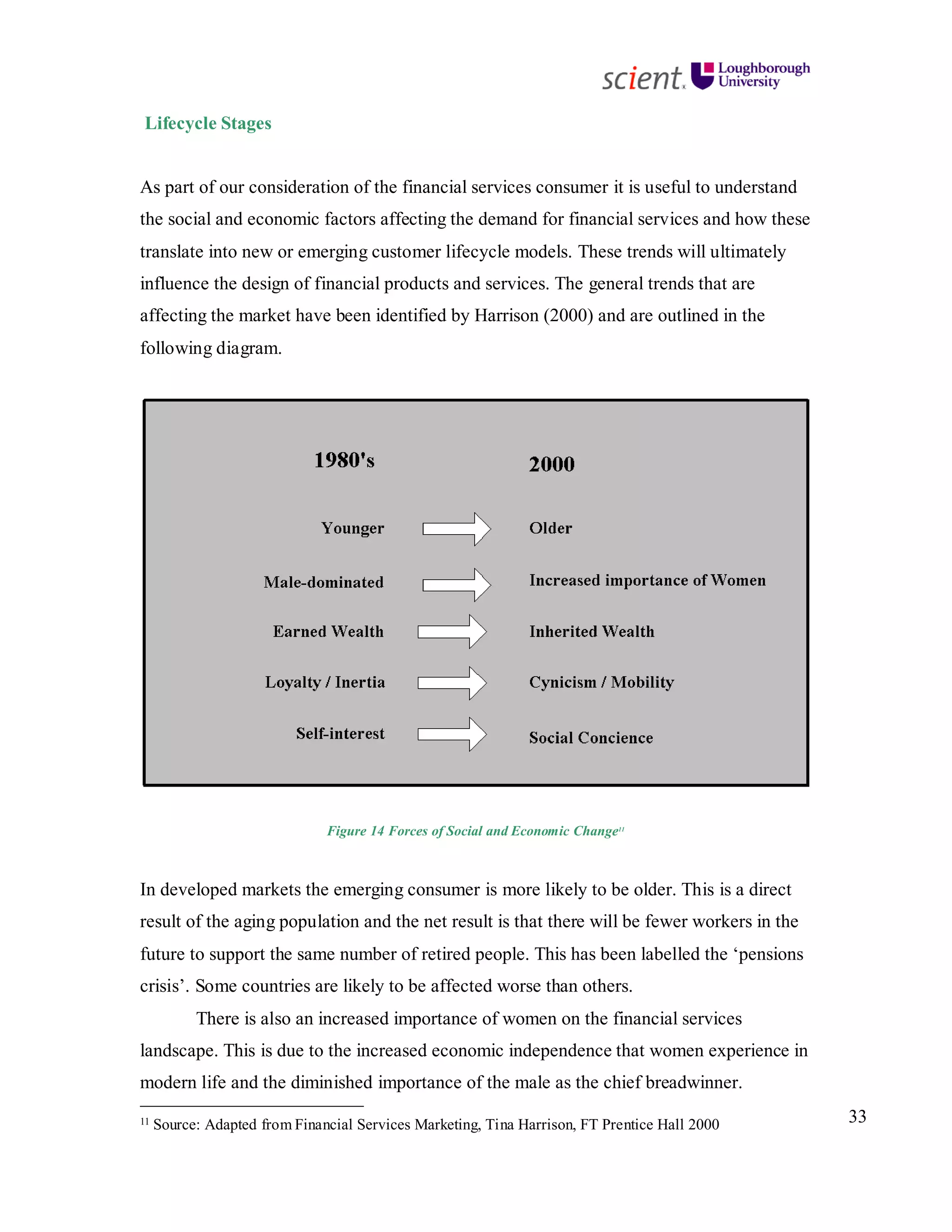
  • 72.
    72 future cash flows.In terms of Flexibility and Efficiency of Use, the fact that this process is ‘one off’ the impact of any improvements is likely to be minimal. Users are only likely to be frustrated by this heuristic is they are repeating a process many times. On the whole the banks seem to support their brand image well and engender a sense of trust on the users behalf by focusing on the top ranking heuristics for the account opening process. There are not huge differences between their online and offline presences and they are able to guide the users to their target fairly effectively. The most optimal strategy may be to concentrate on improving the error handling and prevention aspects of the system whilst seeking simultaneously to improve the other aspects. Heuristic Company Average Bank of Scotland 4.04 Smile 4.00 Clydesdale Bank 3.72 Heuristic Average 3.71 Royal Bank of Scotland 3.62 Lloyds TSB 3.58 Barclays 3.31 Table 18 Company Ranking The above table documents the final ranking for each of the banks across all heuristics. It can be seen the Bank of Scotland emerges as the winner with Smile in second place. It should be borne in mind that the account opening process for each of these banks was very different. The Bank of Scotland process involved only navigating through about four screens and then filling in a form and sending it to the Bank of Scotland. This gave the user freedom to fill the form in online and then print it, or if they preferred to print it out and then fill it in. The form could however have been branded better with the Bank of Scotland logo to give a feel of better consistency and coherence. The Smile process was however completed entirely online and the user has to navigate around ten screens to be able to

  • 73.
    73 complete the process.There are advantages in this in that the application can be processed immediately. Heuristic Visibility of System Status Company Average Smile 4.25 4.00 Bank of Scotland 4.00 4.04 Lloyds TSB 4.00 3.58 Clydesdale Bank 3.80 3.72 Heuristic Average 3.76 3.71 Barclays 3.50 3.31 Royal Bank of Scotland 3.00 3.62 Table 19 Visibility of System Status Ranking A design guideline can be drawn up for this heuristic. My preference would be that there is a status indicator and an indication of what stage I am at in terms of completion. For example combining an indicator with stage X of Y. Where Y is the total number of stages. Heuristic Match Between System and Real World Company Average Smile 4.88 4.00 Royal Bank of Scotland 4.70 3.62 Lloyds TSB 4.40 3.58 Heuristic Average 4.38 3.71 Barclays 4.20 3.31 Bank of Scotland 4.20 4.04 Clydesdale Bank 3.88 3.72 Table 20 Match Between System and Real World Ranking This was the highest ranking heuristic and seems important for the established retail banks who do not want to establish an independently branded offline presence. It is important that the online channel is consistent with their established operations and engenders a sense of trust in the brand in the minds of their customers.
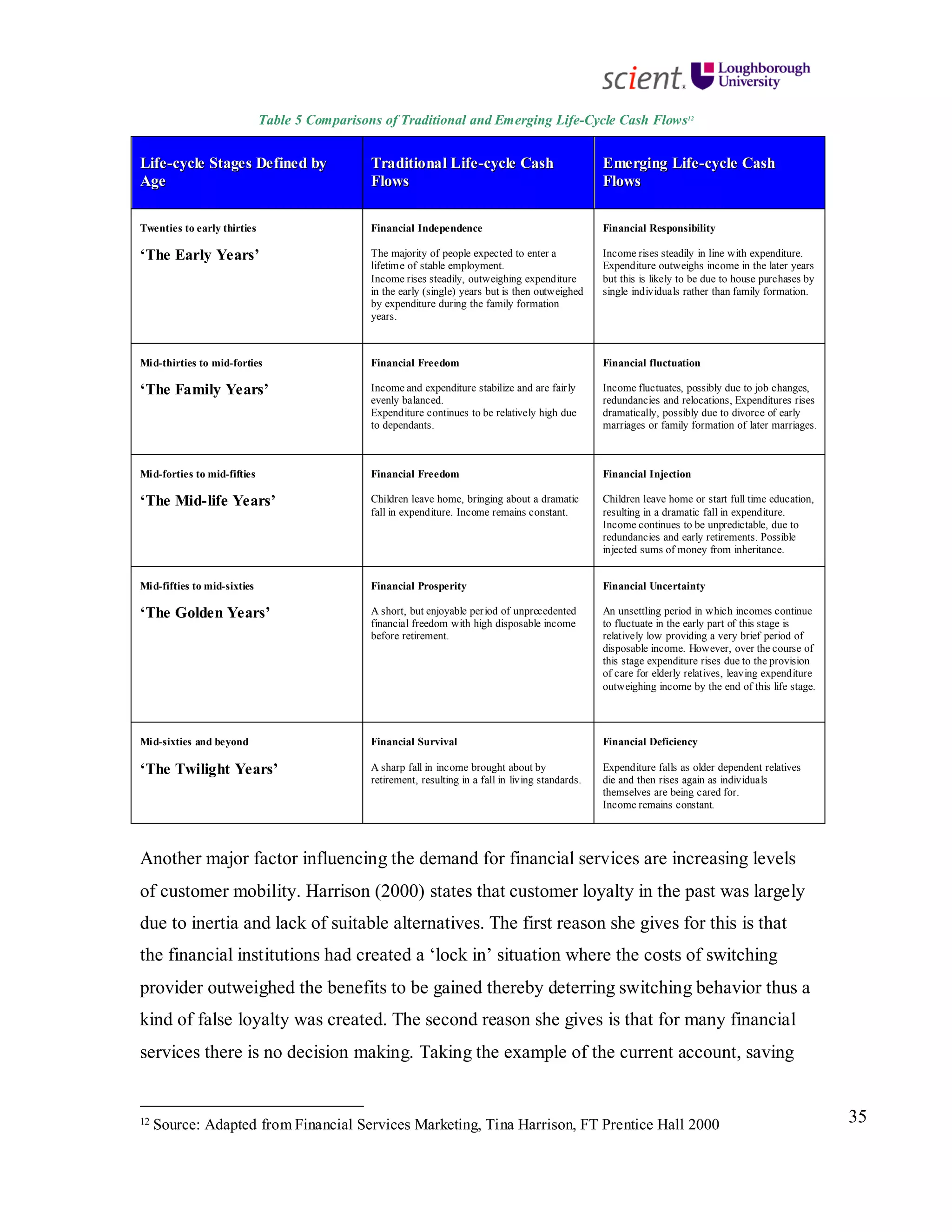
  • 74.
    74 Heuristic User Control and Freedom Company Average Bankof Scotland 5.00 4.04 Smile 4.75 4.00 Heuristic Average 3.82 3.71 Clydesdale Bank 3.75 3.72 Royal Bank of Scotland 3.50 3.62 Lloyds TSB 3.40 3.58 Barclays 2.50 3.31 Table 21 User Control and Freedom Ranking Again this heuristic may be important in terms of not putting the potential customer off applying for an account. Ultimately the consumer wants to gain financial freedom and control of their financial affairs, if their first impression of the financial institution through a graphical interface engenders a sense of control and freedom this is likely to bode well for the future. It is said that first impressions last. Heuristic Consistency and standards Company Average Smile 4.75 4.00 Bank of Scotland 4.20 4.04 Heuristic Average 3.76 3.71 Clydesdale Bank 3.71 3.72 Barclays 3.60 3.31 Royal Bank of Scotland 3.50 3.62 Lloyds TSB 2.80 3.58 Table 22 Consistency and Standards Ranking The above table shows the ranking for the Consistency and Standards heuristic. Again this is important in terms of perception of the Brand.
  • 75.
    75 Heuristic Error Prevention Company Average Royal Bank ofScotland 4.00 3.62 Smile 3.83 4.00 Barclays 3.60 3.31 Clydesdale Bank 3.50 3.72 Heuristic Average 3.49 3.71 Bank of Scotland 3.00 4.04 Lloyds TSB 3.00 3.58 Table 23 Error Prevention Ranking Under the heuristic Error Prevention the Royal Bank of Scotland scored highest this was largely due to the fact that the account opening process for the Royal Bank of Scotland was so straightforward that there was not really room to make error. The process for the Royal Bank of Scotland was similar to that of the Bank of Scotland in that there were few screens to navigate through and a form had to be filled in printed and sent to the Bank. This may however discourage people whose printer is not working or those who do not have a printer from applying for an account. The Smile Error prevention methods were more related to preventing online errors occurring and not due to the simplicity of the process. In this respect the Smile Error prevention methods could be held up as ‘Best Practice’ under this heuristic. Heuristic Recognition Rather than Recall Company Average Bank of Scotland 5.00 4.04 Clydesdale Bank 4.00 3.72 Heuristic Average 3.77 3.71 Lloyds TSB 3.60 3.58 Barclays 3.50 3.31 Smile 3.50 4.00 Royal Bank of Scotland 3.00 3.62 Table 24 Recognition Rather than Recall Ranking The Bank of Scotland has again scored highly under this heuristic due to the simplicity of the process and the prominence and clarity of the links that lead the user through the process. The Clydesdale bank has also scored highly for similar reasons. Given that Smile is the only pure play internet bank it could take measures to improve under this heuristic and guide customers to where they want to go more efficiently.
  • 76.
    76 Heuristic Flexibility and Efficiency ofUse Company Average Bank of Scotland 4.60 4.04 Lloyds TSB 3.80 3.58 Heuristic Average 3.65 3.71 Clydesdale Bank 3.50 3.72 Royal Bank of Scotland 3.50 3.62 Smile 3.50 4.00 Barclays 3.00 3.31 Table 25 Flexibility and Efficiency of Use Ranking This heuristic is not of utmost importance for the account opening process and may be more important for other tasks that the online banking service will have to support. Users may migrate to other higher cost channels if they find that they can achieve their goal more efficiently through them. In this respect it will be important to be able to identify where this is occurring and try to design the interface and processes to mitigate against this effect. Heuristic Aesthetic and Minimalist Design Company Average Royal Bank of Scotland 4.50 3.62 Bank of Scotland 4.40 4.04 Barclays 4.20 3.31 Clydesdale Bank 4.10 3.72 Heuristic Average 4.08 3.71 Lloyds TSB 3.80 3.58 Smile 3.50 4.00 Table 26 Aesthetic and Minimalist Design Ranking Aesthetic and Minimalist Design was another high ranking heuristic. This heuristic has received lots of attention from designers probably due to the success of Google the search engine that has received praise for its minimalistic interface and setting a new web standard. It is reassuring that it is possible for financial institutions to achieve a high score for this heuristic. It must be remembered that the task we have been analyzing is not highly complex and the product in question is relatively tangible. It would be interesting to see how well this heuristic holds up as we move up the product and task complexity axes.
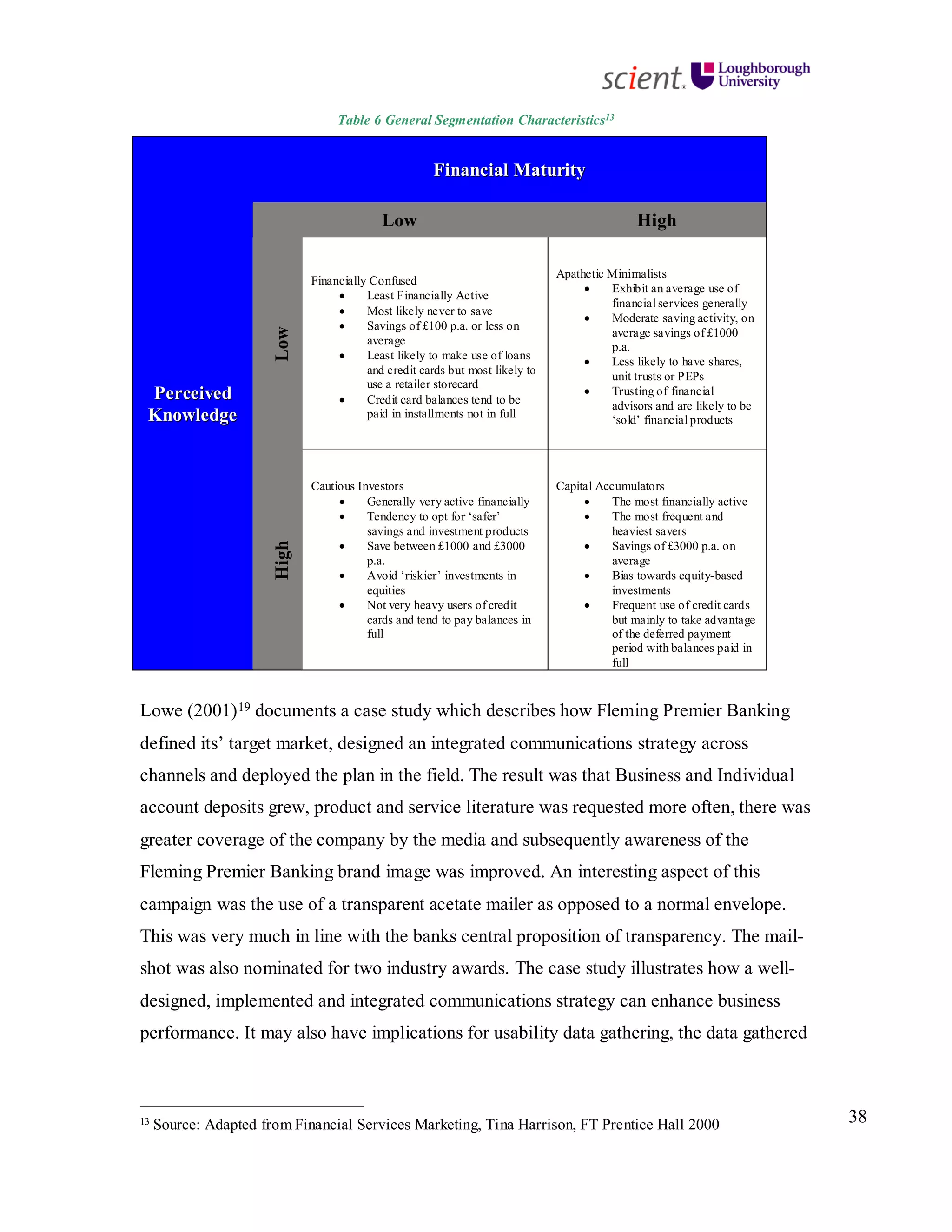

  • 77.
    77 Heuristic Help Users Recognise,Diagnose and Recover from Errors Company Average Lloyds TSB 4.00 3.58 Smile 3.60 4.00 Heuristic Average 3.10 3.71 Royal Bank of Scotland 3.00 3.62 Clydesdale Bank 3.00 3.72 Bank of Scotland 3.00 4.04 Barclays 2.00 3.31 Table 27 Error Recovery Ranking Lloyds TSB and Smile have performed well under this category but overall this heuristic has ranked as the worst performer. It seems that there is scope to improve the error diagnosis and recovery process. For example if a user makes multiple mistakes on a web data entry form the form may come back with lots of error codes and asterisks highlighted in red, there may also be information displayed on the form that was entered correctly. This is not likely to be a pleasant user experience. Perhaps solutions to this problem could include separating out correct and incorrect information and guiding the user through each error separately in a sympathetic manner. If system response times could be guaranteed maybe even live instant messenger support could be built into the system or options to call customer support could be included to guide the user through the difficulty. Shared screens between the customer and an expert user could facilitate problem resolution. This is an expensive solution and currently is restricted to exclusive clientele, nevertheless it may be possible to design systems and processes that could leverage economies of scale to deliver this type of personalized service and access to expertise to a wider audience.
  • 78.
    78 Heuristic Help anddocumentation Company Average Clydesdale Bank 4.00 3.72 Royal Bank of Scotland 3.50 3.62 Smile 3.40 4.00 Heuristic Average 3.32 3.71 Bank of Scotland 3.00 4.04 Lloyds TSB 3.00 3.58 Barclays 3.00 3.31 Table 28 Help and Documentation Ranking The Clydesdale Bank has scored highly on this heuristic and can be held up as ‘Best Practice’ for help and documentation. The help is not prominently displayed which explains the less than perfect score, however, once the user has located the help system it is comprehensive and context sensitive dependent on where the user is in the process or what task they are trying to accomplish. The help system is distributed in a separate browser window but the structure of the help is consistent with the standard windows help system, thus the user familiar with this help system does not have the cognitive burden of trying to work out how the help system functions. The Royal Bank of Scotland help system explained the function of the various frames and elements of the web interface. There were however problems in the Windows management capabilities of the pop up dialogue that displayed the help and some browser functionality was not supported through the mouse but was through the keyboard i.e. forward and back. The idea was deemed to be good though and hence the high score. The ideal may be to combine the context sensitive benefits of the Clydesdale Bank help system with the idea and presentation techniques of the Royal Bank of Scotland system whilst eliminating the system functionality issues. The key challenge to the validity and reliability of this analysis of this study is the fact that only one evaluator has performed the analysis. The analysis is to a large extent subjective and as such is subject to a high degree of evaluator bias. Nielsen suggests that around five evaluators are required to find at least 75% of the Usability problems in a system. This is illustrated below as a curve showing the proportion of usability problems in an interface found by heuristic evaluation using various numbers of evaluators. The curve represents
  • 79.
    79 the average ofsix case studies of heuristic evaluation. It is thus unlikely that the analysis presented will have identified all of the usability issues. The choice to only have one evaluator has been determined by the resource constraints placed on the project. Figure 26 Proportion of Usability problems found against Number of Evaluators25 . Another factor to consider is the fact that this is the first time the analyst conducting the study has undertaken such an evaluation and it is likely that the quality of the analysis is suspect as a result. It takes time and experience to be able to interpret the heuristics in the correct manner and indeed in the manner in which they are supposed to be interpreted. One of the problems found by the analyst was that the heuristics seemed to cross over and the interpretations of them could be moulded dependent on the context. Practice with the method and greater familiarity with the domain should help improve the evaluators performance and add depth to the analysis. The figure on the following page illustrates how different evaluators performed whilst identifying usability problems for a banking system. It can be noted that no evaluators found all problems and some evaluators were better at identifying hard to identify usability problems as opposed to easy to identify problems. 25 Source www.useit.com
  • 80.
    80 Figure 27 Usabilityproblems found by different Evaluators for a Banking System26 The illustration above shows which evaluators found which usability problems in a heuristic evaluation of a banking system. Each row represents one of the 19 evaluators and each column represents one of the 16 usability problems. Each square shows whether the evaluator represented by the row found the usability problem represented by the column: The square is black if this is the case and white if the evaluator did not find the problem. The rows have been sorted in such a way that the most successful evaluators are at the bottom and the least successful are at the top. The columns have been sorted in such a way that the usability problems that are the easiest to find are to the right and the usability problems that are the most difficult to find are to the left. A criticism of the heuristic evaluation method is that it is often noted that a very large proportion of the usability problems found by heuristic evaluation tend to be minor problems.31 This preponderance of minor problems is seen as a drawback, even though it is still possible to focus on the serious problems by using a severity rating method to prioritize the list of usability problems found by a heuristic evaluation of a given interface. In any case, it is probably desirable to increase the proportion of serious usability problems found by heuristic evaluation. The analysis presented here tends to show, however, that the minor usability problems such as Aesthetic and Minimalist Design score highly whereas the 26 Source www.useit.com
  • 81.
    81 potentially more seriousproblems such as Error Prevention score lowly. The implication is that designers should focus on improvements to the error handling process. It would be interesting to compare the account opening process against for example bill payment where the risk of error to the user is much higher to see if this pattern is still observed for the sites under analysis across different tasks. One of the factors possibly biasing the analysis is the fact that the analyst conducting the evaluation is also aware of other heuristics proposed by other usability specialists such as Norman32 (1988), Schneiderman33 (1992) or Scapin and Bastien (1997). It is impossible to be sure that the additional usability knowledge gained by reading the literature published by these experts is not influencing the analysis. In reality the evaluation may be applying heuristics out with the chosen set. The list of ergonomic criteria for the assessment of the quality of interactive systems proposed by Scapin and Bastien are shown in the table below. Many of the heuristics or criteria share similarities with those of Nielsen, it could therefore, also be argued that awareness of these different criteria adds further depth to the analysis. Table 29 List of Ergonomic Criteria for Interactive Systems27 27 Source: Scapin and Bastien (1997) ‘Ergonomic Criteria for Evaluating the Quality of Interactive Systems’ Behavior and Information Technology Vol. 16 No. 4
  • 82.
    82 The Banks chosenfor inclusion in the analysis were selected on the basis of estimated market share, industry awards or convenience. The figures for market share in the online banking space were not readily available. This must lead us to ask the question on whether or not the selected interfaces are representative of the retail-banking sector. This problem could be addressed by including more online banks in the evaluation. An intensive evaluation like the one conducted, where each interface is evaluated one after the other, and the evaluation for all six banks taking upwards of two days to complete does not replicate the situation a typical user faces in trying to apply for an account. To this extent the data would have to be validated by conducting live user testing or another complementary usability technique. It must also be taken into consideration that the equipment utilized for the evaluation and the network connection speeds are probably not representative of the typical situation the large majority of users would be faced with.
  • 83.
    83 SUMMARY AND FURTHERWORK It should be clear from the analysis that much work remains to be done in this domain as there is a significant ‘knowledge gap’ and there is literally no data available that is robust enough to stand as a scientific hypothesis. The subject matter is literally too complex given current knowledge levels and technological capabilities. As the evidence presented by the Long Term Capital Management34 (LTCM) debacle has illustrated all too clearly, even Economics, the most influential of the Social Sciences has failed miserably in its attempt to explain the inner workings of the financial system. It must be remembered that two Nobel Prize winning Economists established LTCM and the collapse of this hedge fund precipitated a financial crisis, which affected the lives of millions of people on the planet. Nevertheless, and on a more practical level, there are a number of ways in which the quality of the present analysis could be improved. Firstly separate bank accounts could be established in numerous retail banks with funds available in them. These accounts could then be used to assess how well the sites support the other tasks identified. Complementary usability techniques could be employed to validate the analysis. The analysis could broaden the scope of the present study to include different interactive channels, input devices, financial products, applications and operating systems. Attention could also be paid to the important topic of Website Accessibility for the physically and mentally challenged segments of the population. One of the aims of this project was to design a streamlined quantitative data acquisition system that would enable a cost effective method to collect usability data and produce reports for subsequent qualitative analysis. Unfortunately the resources required to implement such a system have not been available and this aim has not been achieved. It would be desirable to be able to develop such a system, as we must be able to avoid rejecting numbers when they show more promise of accuracy than intuition and hunch. This is a key factor behind financial risk management which is now a central part of the financial system. Opposed though he was to mechanical applications of the laws of probability and the quantification of uncertainty, John Maynard-Keynes recognized that this body of thought had profound implications for humanity: The importance of probability can only be derived from the judgment that it is rational to be guided by it in action; and a practical dependence on it can only be justified by a judgment that in action we ought to act to take some account of it. It is for this reason that probability is to us the “guide of life,” since to us, as Locke says, “in the greatest part of our concernment, God has afforded only the Twilight, as I may so say, of Probability, suitable, I presume, to that state of Mediocrity and Probationership He has been pleased to place us in here.”35
  • 84.
    84 ACKNOWLEDGEMENTS The author wouldlike to thank the following for help and support whilst conducting the project. Susan Harker – Loughborough University Murray Sinclair – Loughborough University Ken Eason – Loughborough University Jane Purvey – Loughborough University Mary Hewitt – Loughborough University Robert Ballantine – Scient Christopher McGann – Scient Andrea Gallagher – Scient Trevor Smyth – Scient Phillip Freeguard –Scient Liz Smith - Scient Yogita Joshi – Scient Ethan – Scient Lucy Culshaw - Scient
  • 85.
    85 REFERENCES 1 Scapin andBastien (1997) ‘Ergonomic Criteria for Evaluating the Quality of Interactive Systems’ Behavior and Information Technology Vol. 16 No. 4 2 Maguire, M. (2000) ‘Context of Use Within Usability Activities’ Human Factors 2000 Symposium 3 Senge, P, M. (1990) ‘The Fifth Discipline’ Random House 4 Soros, G., (1998), ‘The Crisis of Global Capitalism’ Little Brown 5 Investment Management Association www.investmentuk.org 6 Colgate, M., Stewart, K. and Kinsella, R. (1995), ‘Customer Defection: A Study of the Student Market in Ireland’. International Journal of Bank Marketing, Vol. 14 No. 8 7 Harrison, T. (2000), ‘Financial Services Marketing’ Financial Times Prentice Hall Page 228 8 Harrison, T. (2000), ‘Financial Services Marketing’ Financial Times Prentice Hall 9 Forrester Research, (June 2001) ‘Get ROI from Design’ 10 Harrison, T. (2000), ‘Financial Services Marketing’ Financial Times Prentice Hall Page 22 11 www.fsa.gov.uk 12 Gaskill, S. (2001) ‘Consent to direct marketing in the financial services sector’ Journal of Financial Services Marketing Vol. 5 13 Smith, A, Fischbacher, M. (2000) ‘Stakeholder involvement in the new service design process’ Journal of Financial Services Marketing Vol. 5 14 Quoted in Harrison, T. (2000), ‘Financial Services Marketing’ Financial Times Prentice Hall Page 246 15 Mills, P. and Geraghty, M. (1997), ‘Remote Relationships’, Journal of Financial Services Marketing, Vol.1, No 4. 16 UBS Environmental Report 2000 www.ubs.com 17 Co-operative Bank Partnership Report 2001 www.cooperativebank.co.uk 18 Brotherton, D. (2000) ‘CRM analytics: The Fuel for the Engine’ Journal of Financial Services Marketing, Vol. 5 19 Lowe, A. (2001) ‘Effective Communication to your Chosen Segments’ Journal of Financial Services Marketing, Vol. 5 20 Gokey, T., Yin, H. ‘The New Physics of Customer Loyalty’ McKinsey Marketing Practice 21 Hayward, D. September 4th 2002 ‘New kid on the Block set for Starring Role’ FT-IT Review Online Banking 22 Lee, J. (2002) ‘The Right Mix of Products, Services, Channels and Customers’ Journal of Service Marketing, Vol. 16 No. 3 23 Levesque, T., McDougall, G., (1994) ‘Benefit Segmentation Using Service Quality Dimensions’ International Journal of Bank Marketing Vol. 12 No. 2 24 Shackel, B. Richardson, S, J. (1991) ‘Human Factors for Informatics Usability’ Cambridge University Press. 25 Maguire, M. (2001) ‘Methods to Support Human-Centred Design’ International Journal of Human- Computer Studies Vol. 5 No. 4 26 Sorensen, P, F., (2002) ‘User Centred Methods in Product Development at Intel and the Ease of Use PC Quality Roundtable’ Powerpoint presentation. www.eouroundtable.com 27 Ivory, M, Y., Hearst, M, A., (2001) ‘The State of the Art in Automating Usability Evaluation of User Interfaces’ ACM Computing Surveys, Vol. 33, No 4. 28 Drott, C, M., (1998) ‘Using Web Server Logs to Improve Site Design’ proceedings of ACMSIGDOC 98 29 Maguire, M. (2000) ‘Context of Use Within Usability Activities’ Human Factors 2000 Symposium 30 Nielsen, J. (1994) ‘Enhancing the Explanatory Power of Usability Heuristics’ CHI 94 Conference Paper. 31 Nielsen, J. (1994) ‘Enhancing the Explanatory Power of Usability Heuristics’ CHI 94 Conference Paper. 32 Norman, D. (1988) ‘The Psychology of Everyday Things’ Basic Books 33 Schneiderman, B. (1992) ‘Designing the User Interface’ 2nd Edition Addison-Wesley 34 Soros, G., (1998), ‘The Crisis of Global Capitalism’ Little Brown 35 Bernstein, P, L. (1998) ‘Against the Gods – The Remarkable Story of Risk’ Wiley quoting John Maynard Keynes (1921) ‘A Treatise on Probability’ Macmillan