APPROACHES TO BE DISCUSSED
INFORMATION
PROCESSING
APPROACH
SOCIAL
INTERACTION
APPROACH
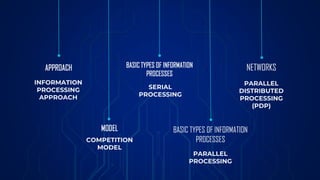
APPROACH
INFORMATION
PROCESSING
APPROACH
BASIC TYPES OF INFORMATION
PROCESSES
SERIAL
PROCESSING
NETWORKS
PARALLEL
DISTRIBUTED
PROCESSING
(PDP)
BASIC TYPES OF INFORMATION
PROCESSES
PARALLEL
PROCESSING
MODEL
COMPETITION
MODEL
INFORMATION PROCESSING APPROACH
Developed by American psychologists
including George Miller in the 1950s.
Focuses on how information is encoded
into our memory.
This approach views children as
qualitatively similar to adults.
Children are information processors in
transition from novice to skilled status.
INFORMATION
PROCESSING
APPROACH
Encodes stimuli from the environment.
Interprets those stimuli.
Stores memory stimulus
representations and results of
operations on them,
Allows information retrieval.
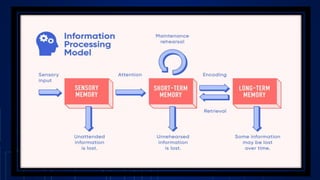
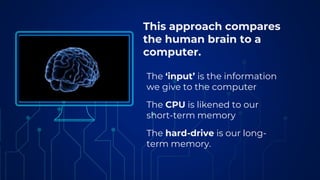
This approach compares
the human brain to a
computer.
The ‘input’ is the information
we give to the computer
The CPU is likened to our
short-term memory
The hard-drive is our long-
term memory.
COMPETITION MODEL
Developed by Elizabeth Bates and Brian MacWhinney (1982)
Emphasizes both structure and function in learning language, but
in a novel way.
Sentences are interpreted using various linguistic cues in the
sentence context to compute a probable value for each
interpretation, eventually choosing the interpretation with the
highest likelihood.
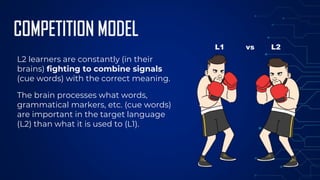
COMPETITION MODEL
L1 vs L2
L2 learners are constantly (in their
brains) fighting to combine signals
(cue words) with the correct meaning.
The brain processes what words,
grammatical markers, etc. (cue words)
are important in the target language
(L2) than what it is used to (L1).
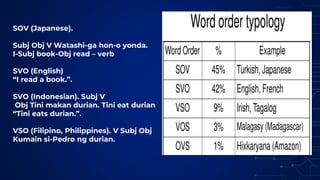
SOV (Japanese).
Subj Obj V Watashi-ga hon-o yonda.
I-Subj book-Obj read – verb
SVO (English)
“I read a book.”.
SVO (Indonesian). Subj V
Obj Tini makan durian. Tini eat durian
“Tini eats durian.”.
VSO (Filipino, Philippines). V Subj Obj
Kumain si-Pedro ng durian.
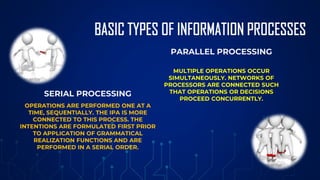
BASIC TYPES OF INFORMATION PROCESSES
SERIAL PROCESSING
PARALLEL PROCESSING
OPERATIONS ARE PERFORMED ONE AT A
TIME, SEQUENTIALLY. THE IPA IS MORE
CONNECTED TO THIS PROCESS. THE
INTENTIONS ARE FORMULATED FIRST PRIOR
TO APPLICATION OF GRAMMATICAL
REALIZATION FUNCTIONS AND ARE
PERFORMED IN A SERIAL ORDER.
MULTIPLE OPERATIONS OCCUR
SIMULTANEOUSLY. NETWORKS OF
PROCESSORS ARE CONNECTED SUCH
THAT OPERATIONS OR DECISIONS
PROCEED CONCURRENTLY.
Consists of a series of processing units called
activation nodes.
Each node is connected to other nodes by
pathways that vary in the strengths of their
connections.
Activation nodes, like neurons are decision
mechanisms that receive input from other nodes,
weighs it and decides to forward the information to
subsequent levels where it is further processed.
PARALLEL DISTRIBUTED PROCESSING
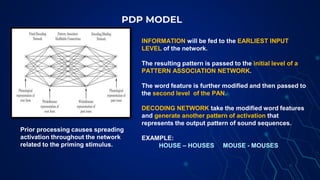
PDP MODEL
INFORMATION will be fed to the EARLIEST INPUT
LEVEL of the network.
The resulting pattern is passed to the initial level of a
PATTERN ASSOCIATION NETWORK.
The word feature is further modified and then passed to
the second level of the PAN.
DECODING NETWORK take the modified word features
and generate another pattern of activation that
represents the output pattern of sound sequences.
EXAMPLE:
HOUSE – HOUSES MOUSE - MOUSES
Prior processing causes spreading
activation throughout the network
related to the priming stimulus.
PARALLEL DISTRIBUTED PROCESSING
The patterns that most successfully
match adult speech are more likely to
occur again are strengthened while
erroneous primitive patterns will
eventually disappear.
CUE AVAILABILITY – forms most
frequently addressed to children will be
learned before rarer forms.
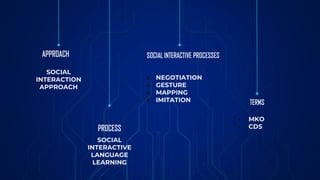
APPROACH
SOCIAL
INTERACTION
APPROACH
SOCIAL INTERACTIVE PROCESSES
 NEGOTIATION
 GESTURE
 MAPPING
 IMITATION
• MKO
• CDSPROCESS
SOCIAL
INTERACTIVE
LANGUAGE
LEARNING
TERMS
SOCIAL INTERACTION APPROACH
SOCIAL INTERACTIVE LANGUAGE LEARNING
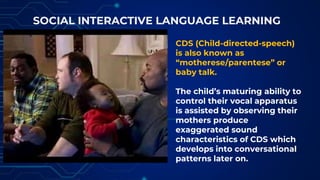
CDS (Child-directed-speech)
is also known as
“motherese/parentese” or
baby talk.
The child’s maturing ability to
control their vocal apparatus
is assisted by observing their
mothers produce
exaggerated sound
characteristics of CDS which
develops into conversational
patterns later on.
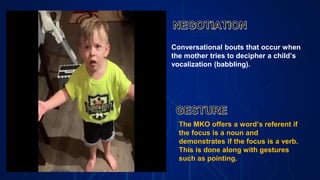
Conversational bouts that occur when
the mother tries to decipher a child’s
vocalization (babbling).
The MKO offers a word’s referent if
the focus is a noun and
demonstrates if the focus is a verb.
This is done along with gestures
such as pointing.
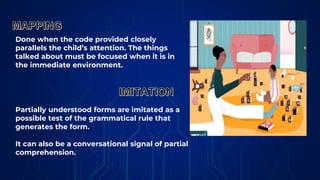
Partially understood forms are imitated as a
possible test of the grammatical rule that
generates the form.
It can also be a conversational signal of partial
comprehension.
Done when the code provided closely
parallels the child’s attention. The things
talked about must be focused when it is in
the immediate environment.
That’s all!
Thank you!

THEORETICAL APPROACHES TO LANGUAGE ACQUISITION

  • 2.
    APPROACHES TO BEDISCUSSED INFORMATION PROCESSING APPROACH SOCIAL INTERACTION APPROACH
  • 3.
    APPROACH INFORMATION PROCESSING APPROACH BASIC TYPES OFINFORMATION PROCESSES SERIAL PROCESSING NETWORKS PARALLEL DISTRIBUTED PROCESSING (PDP) BASIC TYPES OF INFORMATION PROCESSES PARALLEL PROCESSING MODEL COMPETITION MODEL
  • 5.
    INFORMATION PROCESSING APPROACH Developedby American psychologists including George Miller in the 1950s. Focuses on how information is encoded into our memory. This approach views children as qualitatively similar to adults. Children are information processors in transition from novice to skilled status.
  • 6.
    INFORMATION PROCESSING APPROACH Encodes stimuli fromthe environment. Interprets those stimuli. Stores memory stimulus representations and results of operations on them, Allows information retrieval.
  • 7.
    This approach compares thehuman brain to a computer. The ‘input’ is the information we give to the computer The CPU is likened to our short-term memory The hard-drive is our long- term memory.
  • 8.
    COMPETITION MODEL Developed byElizabeth Bates and Brian MacWhinney (1982) Emphasizes both structure and function in learning language, but in a novel way. Sentences are interpreted using various linguistic cues in the sentence context to compute a probable value for each interpretation, eventually choosing the interpretation with the highest likelihood.
  • 9.
    COMPETITION MODEL L1 vsL2 L2 learners are constantly (in their brains) fighting to combine signals (cue words) with the correct meaning. The brain processes what words, grammatical markers, etc. (cue words) are important in the target language (L2) than what it is used to (L1).
  • 10.
    SOV (Japanese). Subj ObjV Watashi-ga hon-o yonda. I-Subj book-Obj read – verb SVO (English) “I read a book.”. SVO (Indonesian). Subj V Obj Tini makan durian. Tini eat durian “Tini eats durian.”. VSO (Filipino, Philippines). V Subj Obj Kumain si-Pedro ng durian.
  • 11.
    BASIC TYPES OFINFORMATION PROCESSES SERIAL PROCESSING PARALLEL PROCESSING OPERATIONS ARE PERFORMED ONE AT A TIME, SEQUENTIALLY. THE IPA IS MORE CONNECTED TO THIS PROCESS. THE INTENTIONS ARE FORMULATED FIRST PRIOR TO APPLICATION OF GRAMMATICAL REALIZATION FUNCTIONS AND ARE PERFORMED IN A SERIAL ORDER. MULTIPLE OPERATIONS OCCUR SIMULTANEOUSLY. NETWORKS OF PROCESSORS ARE CONNECTED SUCH THAT OPERATIONS OR DECISIONS PROCEED CONCURRENTLY.
  • 12.
    Consists of aseries of processing units called activation nodes. Each node is connected to other nodes by pathways that vary in the strengths of their connections. Activation nodes, like neurons are decision mechanisms that receive input from other nodes, weighs it and decides to forward the information to subsequent levels where it is further processed. PARALLEL DISTRIBUTED PROCESSING
  • 13.
    PDP MODEL INFORMATION willbe fed to the EARLIEST INPUT LEVEL of the network. The resulting pattern is passed to the initial level of a PATTERN ASSOCIATION NETWORK. The word feature is further modified and then passed to the second level of the PAN. DECODING NETWORK take the modified word features and generate another pattern of activation that represents the output pattern of sound sequences. EXAMPLE: HOUSE – HOUSES MOUSE - MOUSES Prior processing causes spreading activation throughout the network related to the priming stimulus.
  • 14.
    PARALLEL DISTRIBUTED PROCESSING Thepatterns that most successfully match adult speech are more likely to occur again are strengthened while erroneous primitive patterns will eventually disappear. CUE AVAILABILITY – forms most frequently addressed to children will be learned before rarer forms.
  • 15.
    APPROACH SOCIAL INTERACTION APPROACH SOCIAL INTERACTIVE PROCESSES NEGOTIATION  GESTURE  MAPPING  IMITATION • MKO • CDSPROCESS SOCIAL INTERACTIVE LANGUAGE LEARNING TERMS
  • 16.
  • 17.
    SOCIAL INTERACTIVE LANGUAGELEARNING CDS (Child-directed-speech) is also known as “motherese/parentese” or baby talk. The child’s maturing ability to control their vocal apparatus is assisted by observing their mothers produce exaggerated sound characteristics of CDS which develops into conversational patterns later on.
  • 18.
    Conversational bouts thatoccur when the mother tries to decipher a child’s vocalization (babbling). The MKO offers a word’s referent if the focus is a noun and demonstrates if the focus is a verb. This is done along with gestures such as pointing.
  • 19.
    Partially understood formsare imitated as a possible test of the grammatical rule that generates the form. It can also be a conversational signal of partial comprehension. Done when the code provided closely parallels the child’s attention. The things talked about must be focused when it is in the immediate environment.
  • 20.