Tysen Quaintance
         11-27-11
      History 140
      Dr. Arguello
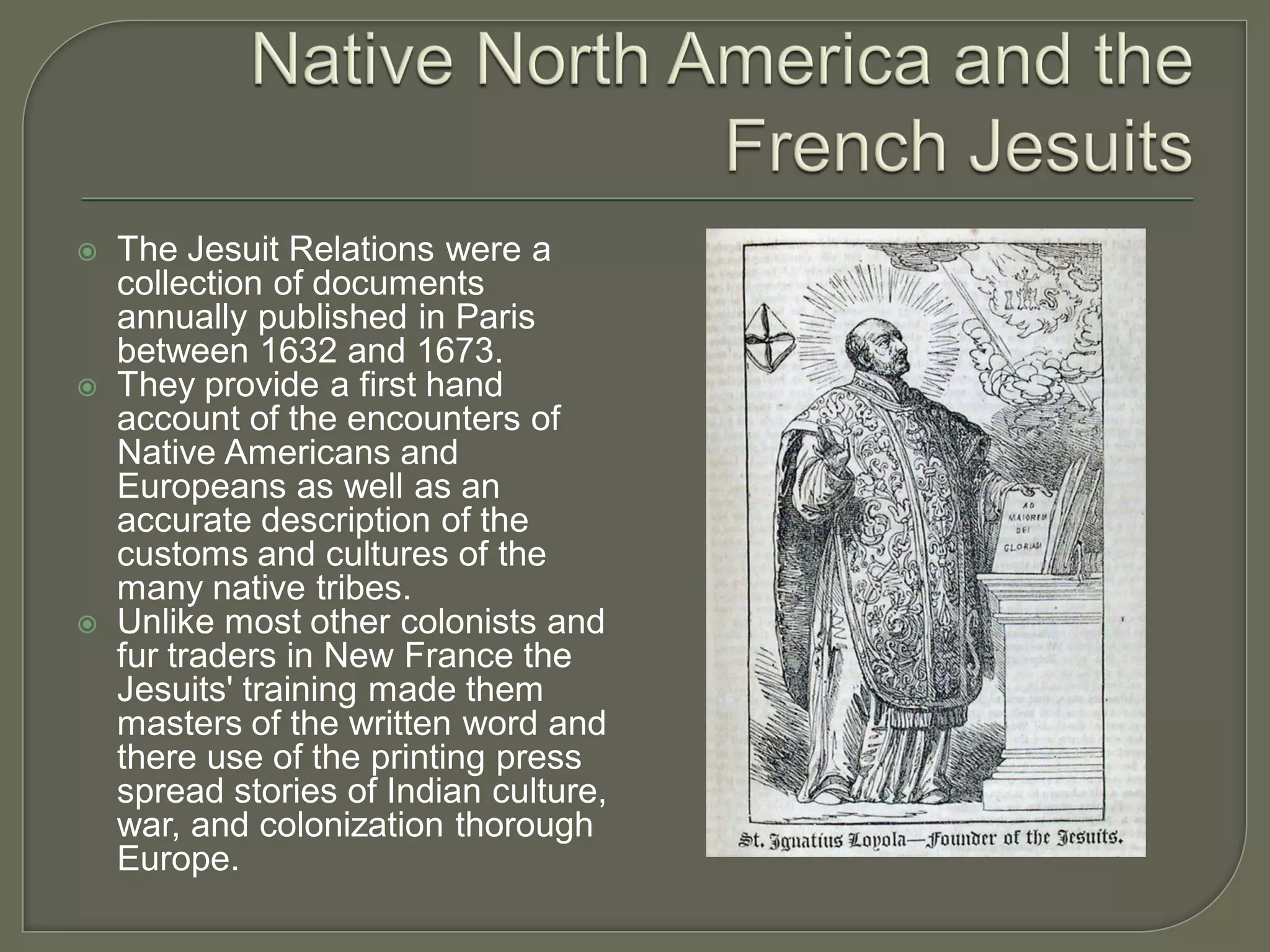
   The Jesuit Relations were a
    collection of documents
    annually published in Paris
    between 1632 and 1673.
   They provide a first hand
    account of the encounters of
    Native Americans and
    Europeans as well as an
    accurate description of the
    customs and cultures of the
    many native tribes.
   Unlike most other colonists and
    fur traders in New France the
    Jesuits' training made them
    masters of the written word and
    there use of the printing press
    spread stories of Indian culture,
    war, and colonization thorough
    Europe.
   Unique to the Relations when
    compared to other colonialist
    texts the presence of the
    “natives voice”.
   When reading the Relations it
    is important to remember the
    cultural differences between
    Jesuits and Natives but also
    the differenced between the
    seventeenth century culture
    and today.
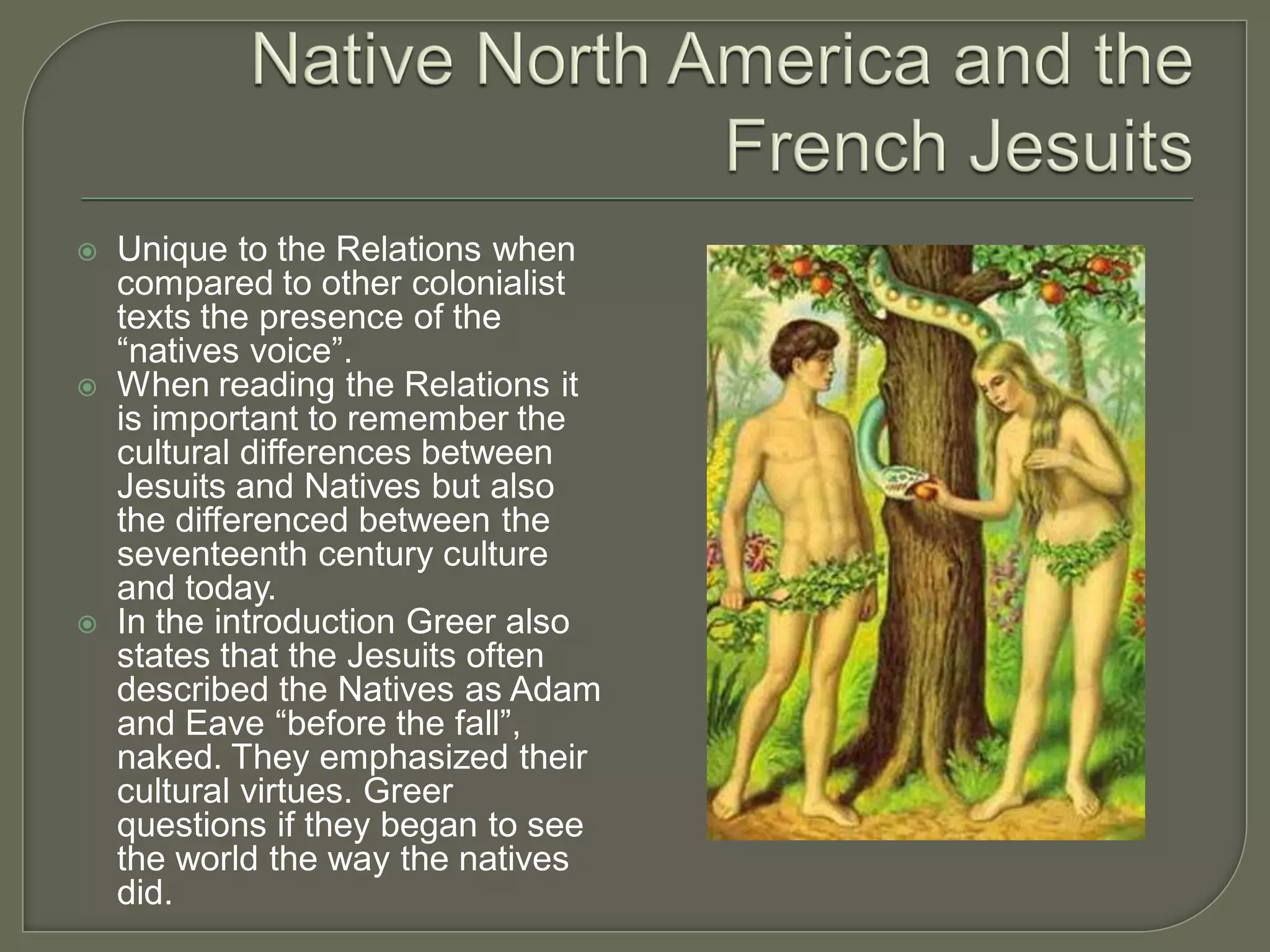
   In the introduction Greer also
    states that the Jesuits often
    described the Natives as Adam
    and Eave “before the fall”,
    naked. They emphasized their
    cultural virtues. Greer
    questions if they began to see
    the world the way the natives
    did.
   The first published Jesuit
    Relations were written by
    Father Paul Jeune mainly on
    the Montagnais tribe.
   The Montagnais and
    Algonquins had superb
    knowledge of the seasonal
    landscapes as well as be
    technologically sophisticated
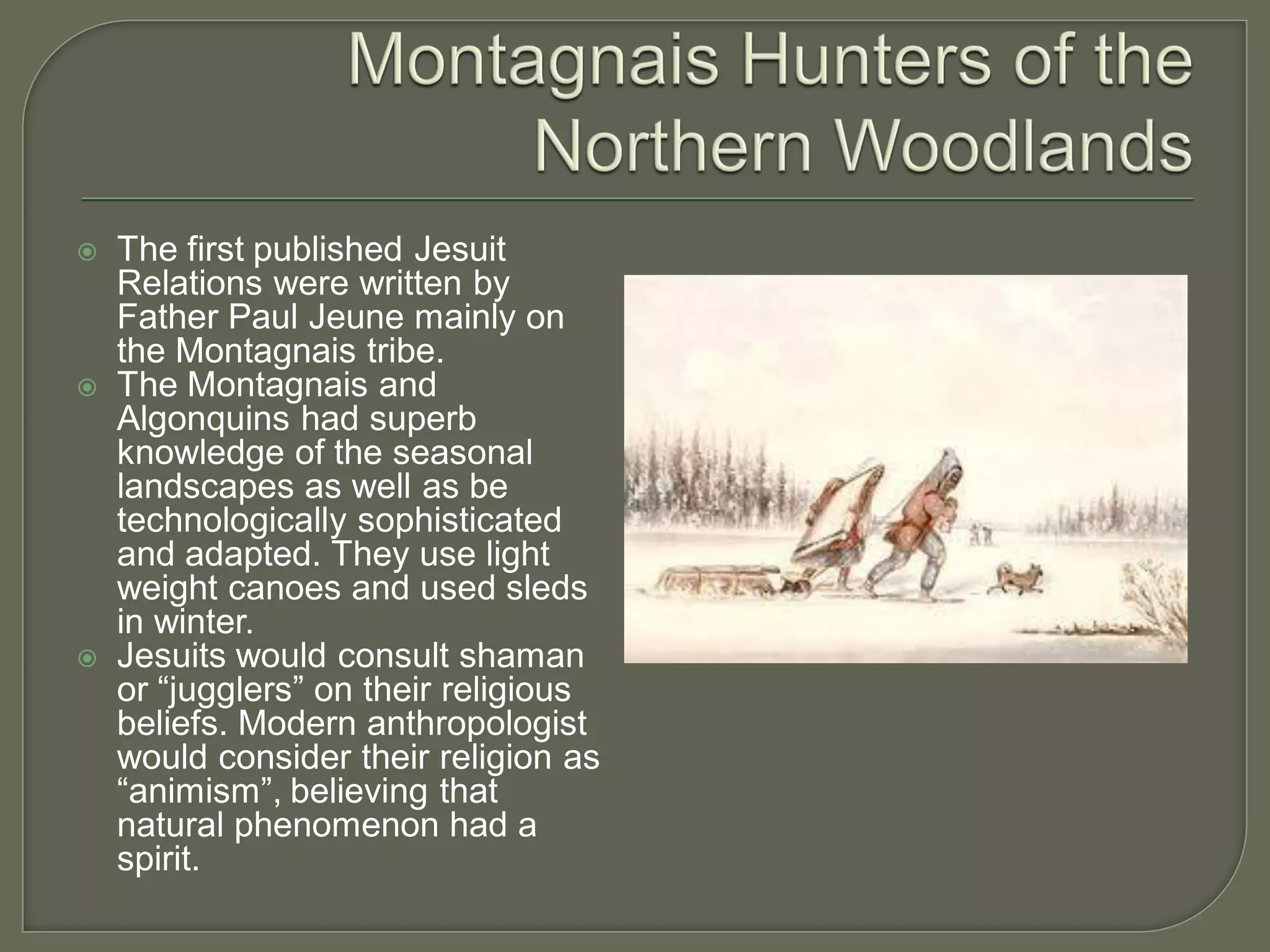
    and adapted. They use light
    weight canoes and used sleds
    in winter.
   Jesuits would consult shaman
    or “jugglers” on their religious
    beliefs. Modern anthropologist
    would consider their religion as
    “animism”, believing that
    natural phenomenon had a
    spirit.
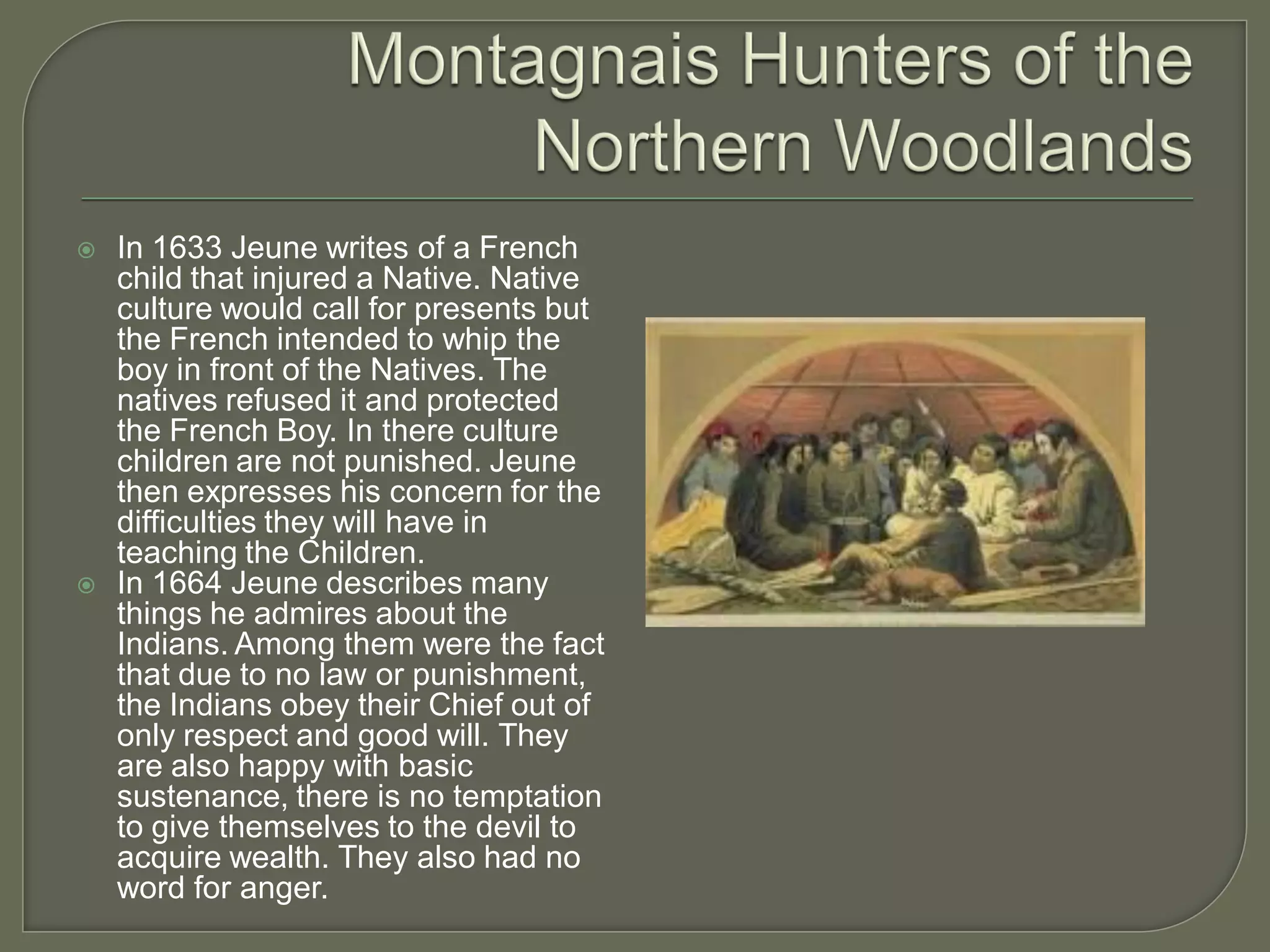
   In 1633 Jeune writes of a French
    child that injured a Native. Native
    culture would call for presents but
    the French intended to whip the
    boy in front of the Natives. The
    natives refused it and protected
    the French Boy. In there culture
    children are not punished. Jeune
    then expresses his concern for the
    difficulties they will have in
    teaching the Children.
   In 1664 Jeune describes many
    things he admires about the
    Indians. Among them were the fact
    that due to no law or punishment,
    the Indians obey their Chief out of
    only respect and good will. They
    are also happy with basic
    sustenance, there is no temptation
    to give themselves to the devil to
    acquire wealth. They also had no
    word for anger.
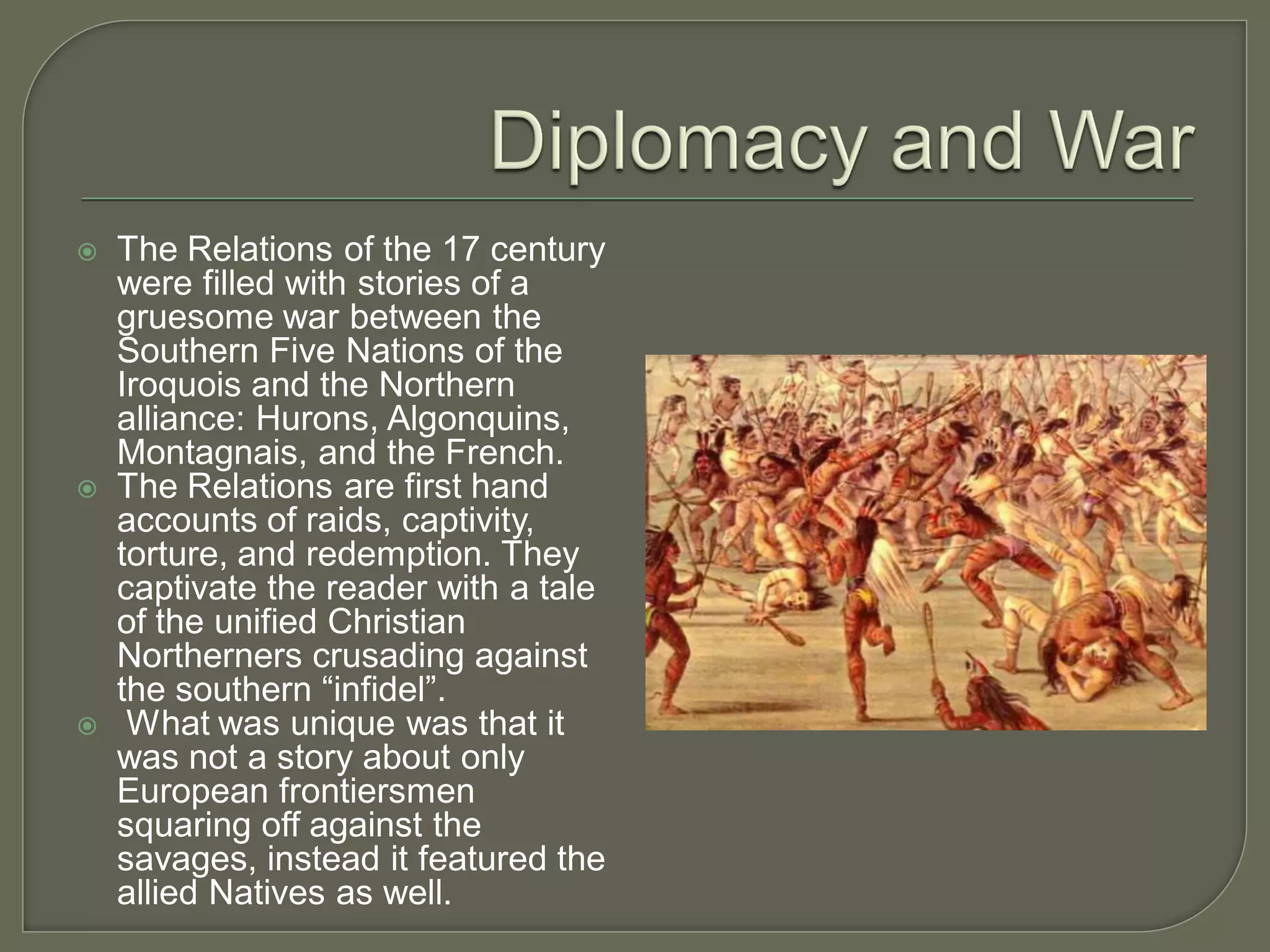
   The Relations of the 17 century
    were filled with stories of a
    gruesome war between the
    Southern Five Nations of the
    Iroquois and the Northern
    alliance: Hurons, Algonquins,
    Montagnais, and the French.
   The Relations are first hand
    accounts of raids, captivity,
    torture, and redemption. They
    captivate the reader with a tale
    of the unified Christian
    Northerners crusading against
    the southern “infidel”.
    What was unique was that it
    was not a story about only
    European frontiersmen
    squaring off against the
    savages, instead it featured the
    allied Natives as well.
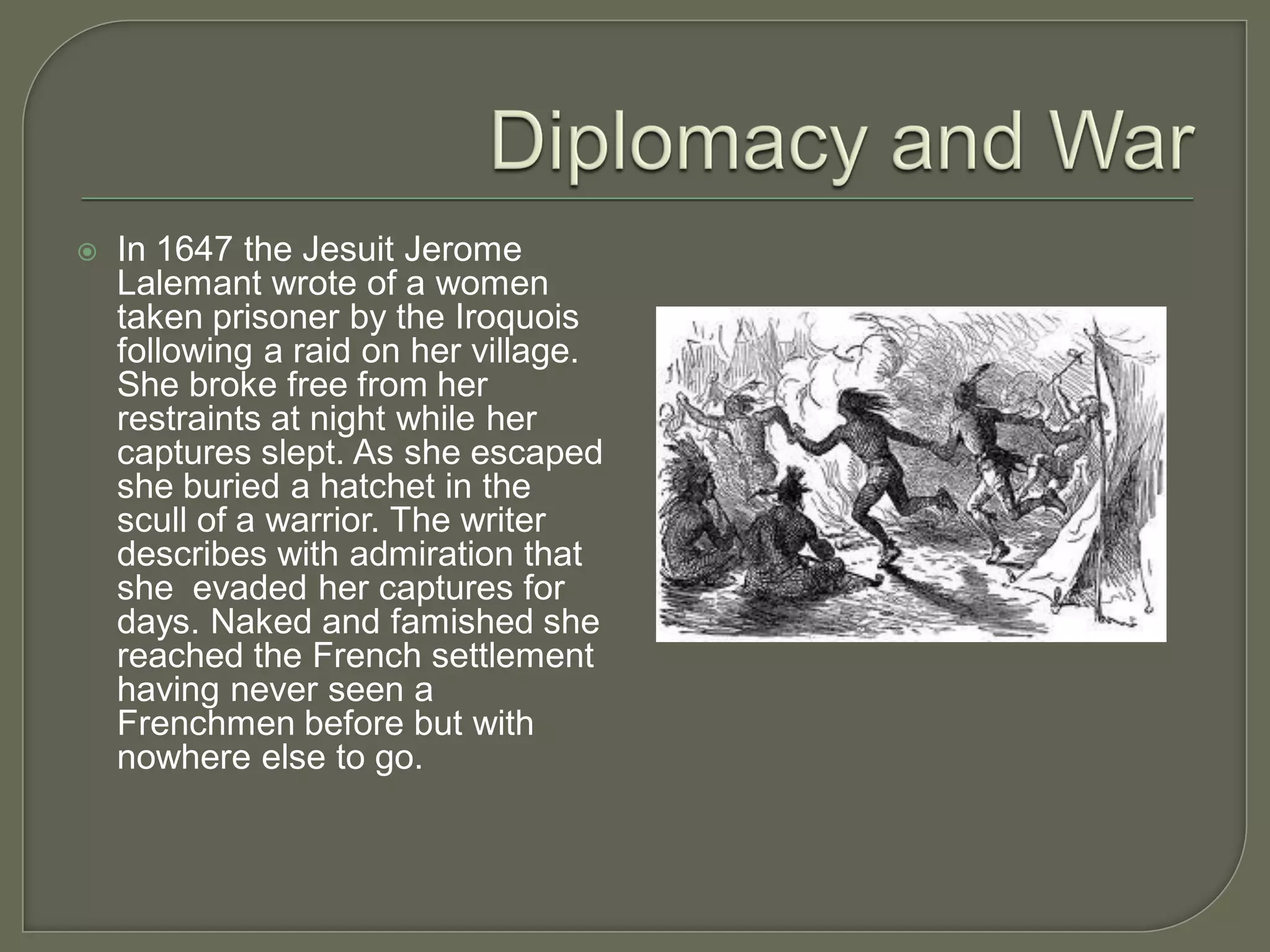
   In 1647 the Jesuit Jerome
    Lalemant wrote of a women
    taken prisoner by the Iroquois
    following a raid on her village.
    She broke free from her
    restraints at night while her
    captures slept. As she escaped
    she buried a hatchet in the
    scull of a warrior. The writer
    describes with admiration that
    she evaded her captures for
    days. Naked and famished she
    reached the French settlement
    having never seen a
    Frenchmen before but with
    nowhere else to go.
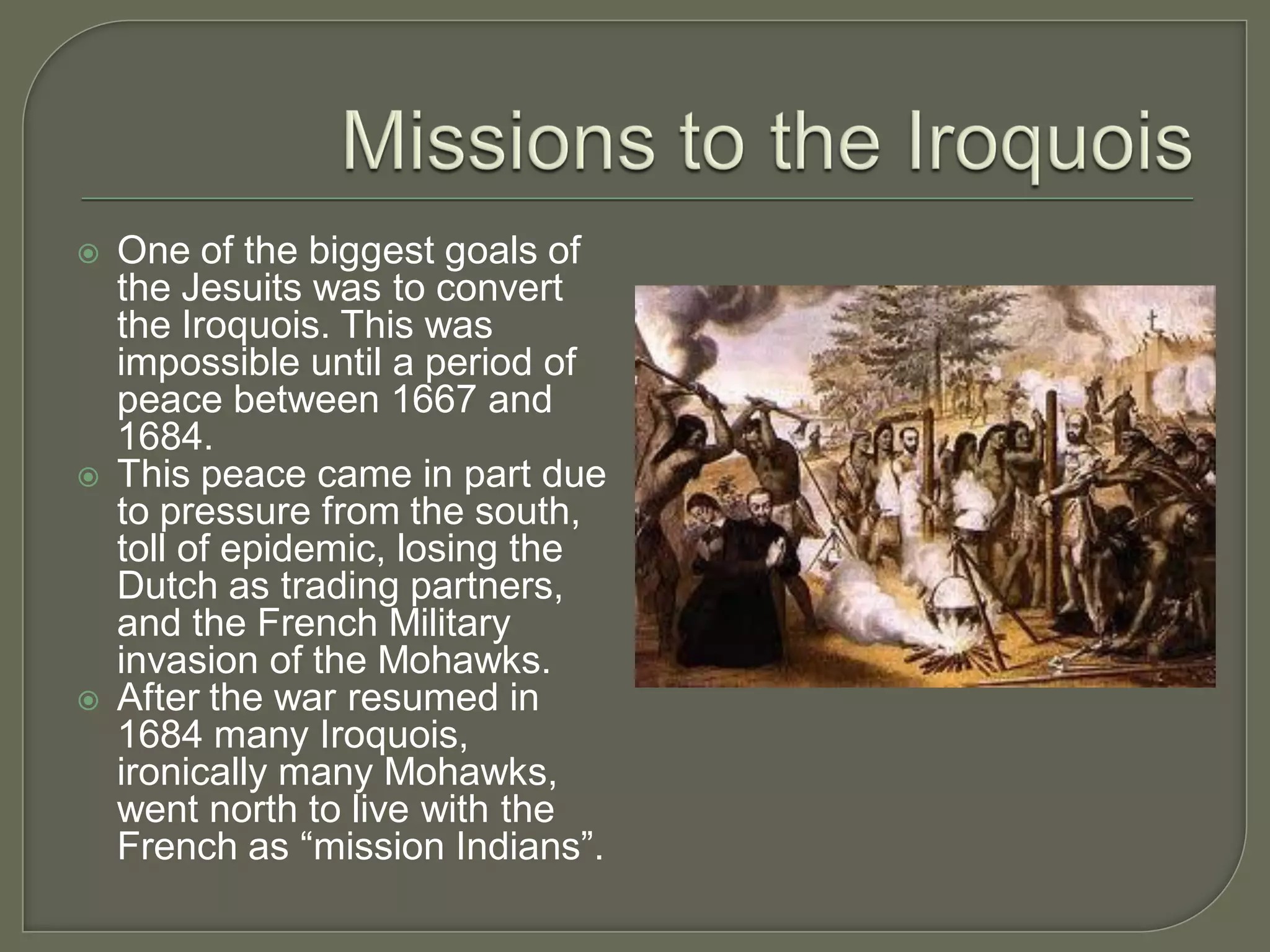
   One of the biggest goals of
    the Jesuits was to convert
    the Iroquois. This was
    impossible until a period of
    peace between 1667 and
    1684.
   This peace came in part due
    to pressure from the south,
    toll of epidemic, losing the
    Dutch as trading partners,
    and the French Military
    invasion of the Mohawks.
   After the war resumed in
    1684 many Iroquois,
    ironically many Mohawks,
    went north to live with the
    French as “mission Indians”.
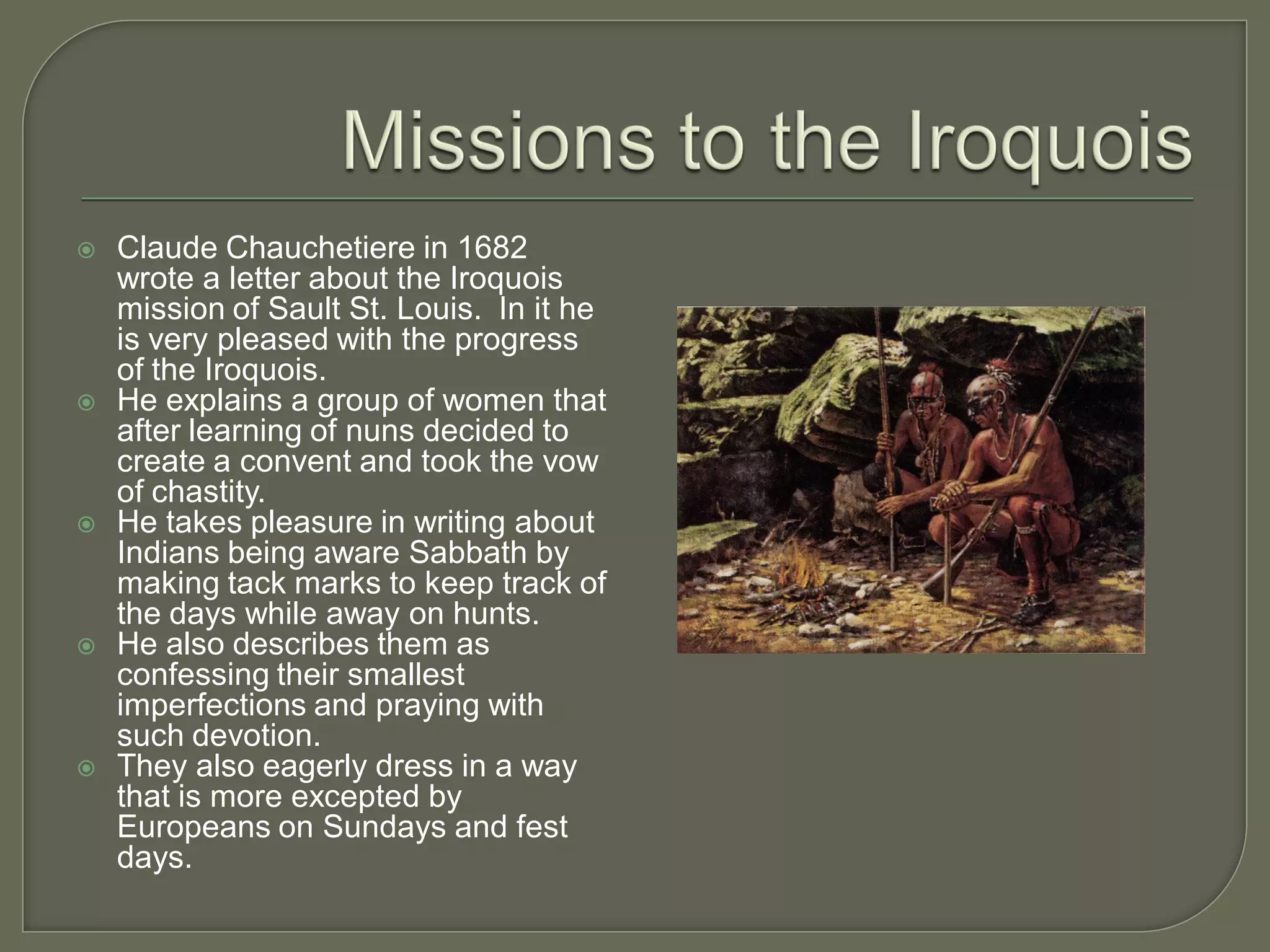
   Claude Chauchetiere in 1682
    wrote a letter about the Iroquois
    mission of Sault St. Louis. In it he
    is very pleased with the progress
    of the Iroquois.
   He explains a group of women that
    after learning of nuns decided to
    create a convent and took the vow
    of chastity.
   He takes pleasure in writing about
    Indians being aware Sabbath by
    making tack marks to keep track of
    the days while away on hunts.
   He also describes them as
    confessing their smallest
    imperfections and praying with
    such devotion.
   They also eagerly dress in a way
    that is more excepted by
    Europeans on Sundays and fest
    days.
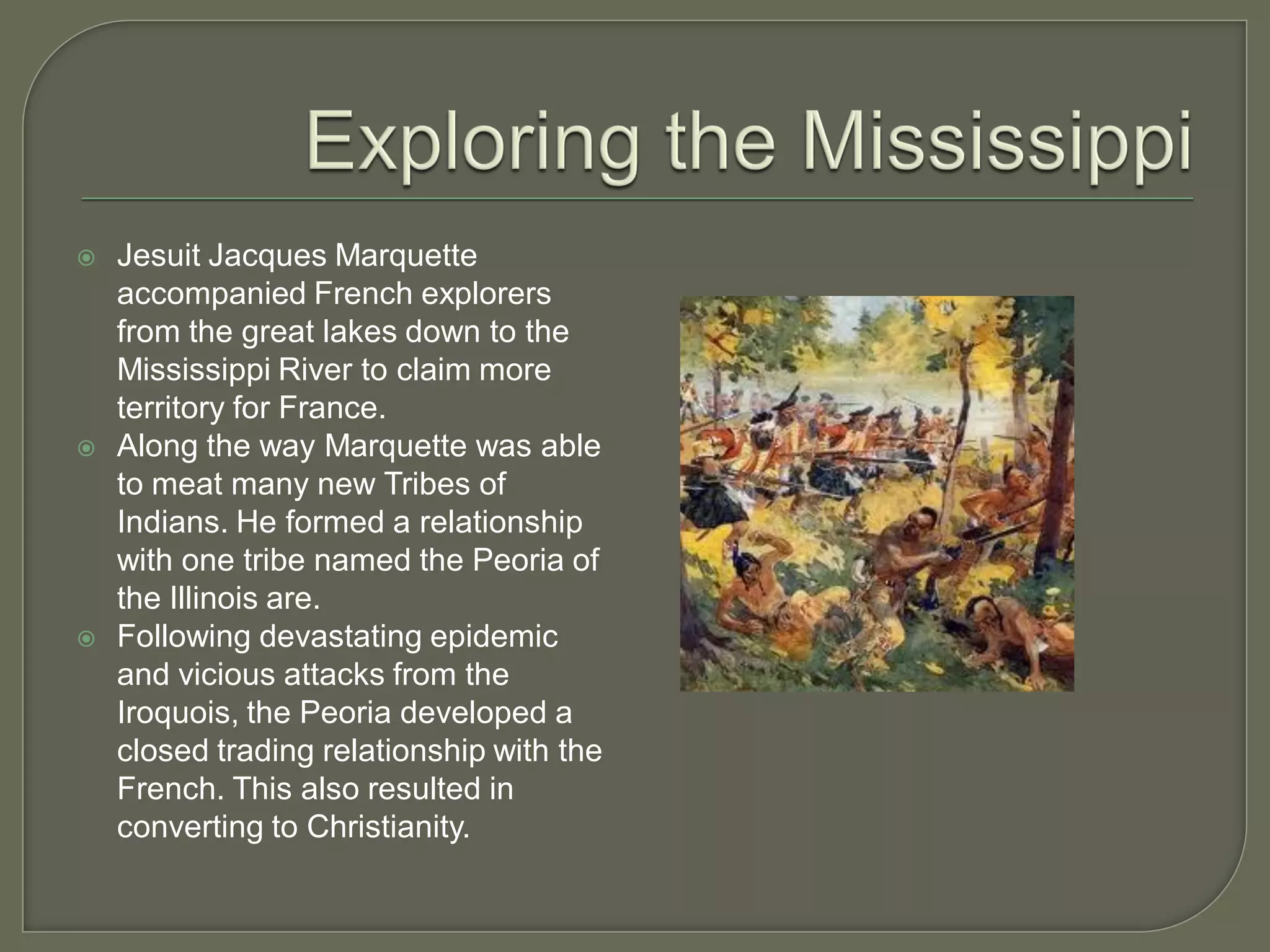
   Jesuit Jacques Marquette
    accompanied French explorers
    from the great lakes down to the
    Mississippi River to claim more
    territory for France.
   Along the way Marquette was able
    to meat many new Tribes of
    Indians. He formed a relationship
    with one tribe named the Peoria of
    the Illinois are.
   Following devastating epidemic
    and vicious attacks from the
    Iroquois, the Peoria developed a
    closed trading relationship with the
    French. This also resulted in
    converting to Christianity.
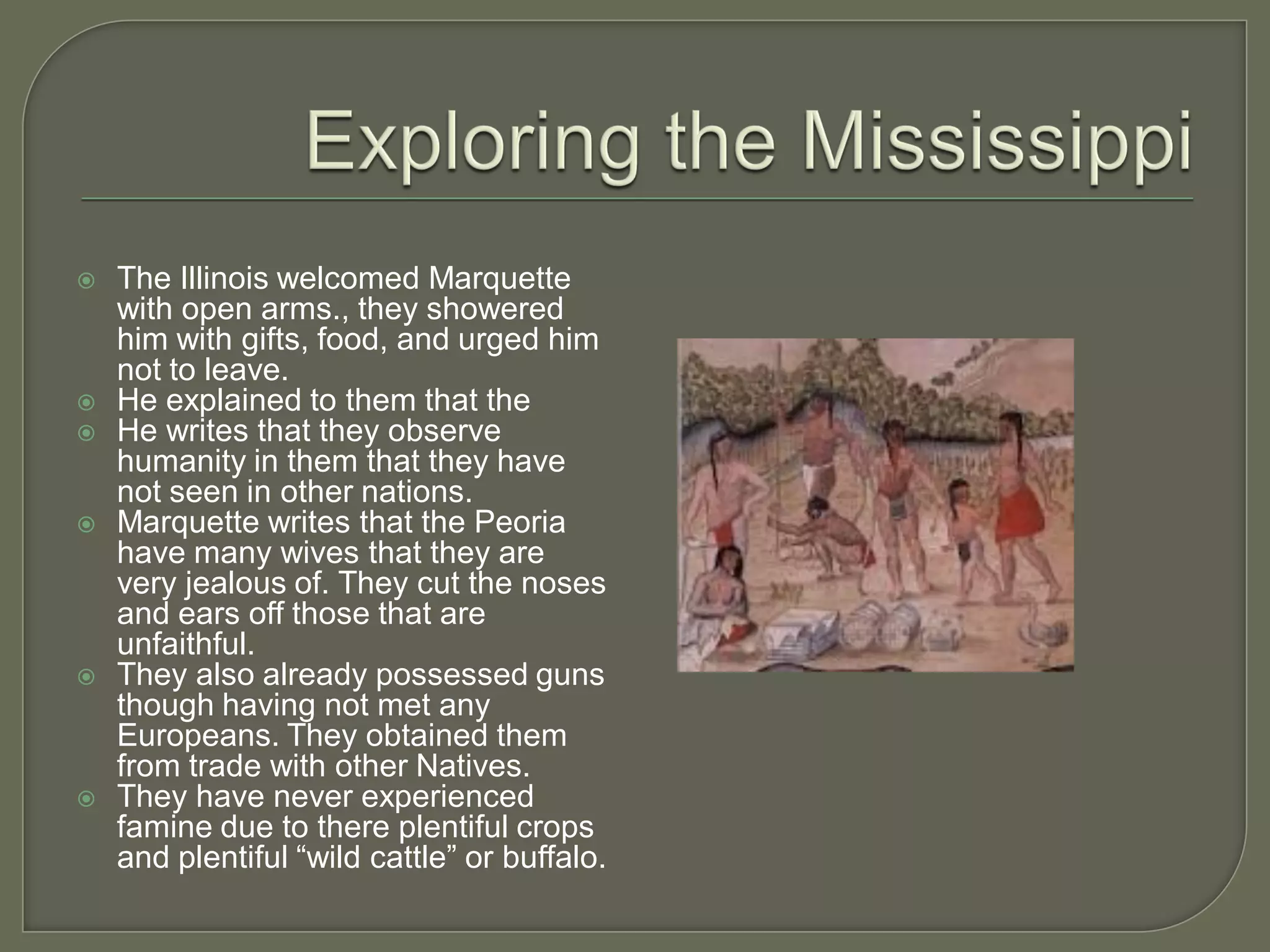
   The Illinois welcomed Marquette
    with open arms., they showered
    him with gifts, food, and urged him
    not to leave.
   He explained to them that the
   He writes that they observe
    humanity in them that they have
    not seen in other nations.
   Marquette writes that the Peoria
    have many wives that they are
    very jealous of. They cut the noses
    and ears off those that are
    unfaithful.
   They also already possessed guns
    though having not met any
    Europeans. They obtained them
    from trade with other Natives.
   They have never experienced
    famine due to there plentiful crops
    and plentiful “wild cattle” or buffalo.

Theme 5 part 1

  • 1.
    Tysen Quaintance 11-27-11 History 140 Dr. Arguello
  • 2.
    The Jesuit Relations were a collection of documents annually published in Paris between 1632 and 1673.  They provide a first hand account of the encounters of Native Americans and Europeans as well as an accurate description of the customs and cultures of the many native tribes.  Unlike most other colonists and fur traders in New France the Jesuits' training made them masters of the written word and there use of the printing press spread stories of Indian culture, war, and colonization thorough Europe.
  • 3.
    Unique to the Relations when compared to other colonialist texts the presence of the “natives voice”.  When reading the Relations it is important to remember the cultural differences between Jesuits and Natives but also the differenced between the seventeenth century culture and today.  In the introduction Greer also states that the Jesuits often described the Natives as Adam and Eave “before the fall”, naked. They emphasized their cultural virtues. Greer questions if they began to see the world the way the natives did.
  • 4.
    The first published Jesuit Relations were written by Father Paul Jeune mainly on the Montagnais tribe.  The Montagnais and Algonquins had superb knowledge of the seasonal landscapes as well as be technologically sophisticated and adapted. They use light weight canoes and used sleds in winter.  Jesuits would consult shaman or “jugglers” on their religious beliefs. Modern anthropologist would consider their religion as “animism”, believing that natural phenomenon had a spirit.
  • 5.
    In 1633 Jeune writes of a French child that injured a Native. Native culture would call for presents but the French intended to whip the boy in front of the Natives. The natives refused it and protected the French Boy. In there culture children are not punished. Jeune then expresses his concern for the difficulties they will have in teaching the Children.  In 1664 Jeune describes many things he admires about the Indians. Among them were the fact that due to no law or punishment, the Indians obey their Chief out of only respect and good will. They are also happy with basic sustenance, there is no temptation to give themselves to the devil to acquire wealth. They also had no word for anger.
  • 6.
    The Relations of the 17 century were filled with stories of a gruesome war between the Southern Five Nations of the Iroquois and the Northern alliance: Hurons, Algonquins, Montagnais, and the French.  The Relations are first hand accounts of raids, captivity, torture, and redemption. They captivate the reader with a tale of the unified Christian Northerners crusading against the southern “infidel”.  What was unique was that it was not a story about only European frontiersmen squaring off against the savages, instead it featured the allied Natives as well.
  • 7.
    In 1647 the Jesuit Jerome Lalemant wrote of a women taken prisoner by the Iroquois following a raid on her village. She broke free from her restraints at night while her captures slept. As she escaped she buried a hatchet in the scull of a warrior. The writer describes with admiration that she evaded her captures for days. Naked and famished she reached the French settlement having never seen a Frenchmen before but with nowhere else to go.
  • 8.
    One of the biggest goals of the Jesuits was to convert the Iroquois. This was impossible until a period of peace between 1667 and 1684.  This peace came in part due to pressure from the south, toll of epidemic, losing the Dutch as trading partners, and the French Military invasion of the Mohawks.  After the war resumed in 1684 many Iroquois, ironically many Mohawks, went north to live with the French as “mission Indians”.
  • 9.
    Claude Chauchetiere in 1682 wrote a letter about the Iroquois mission of Sault St. Louis. In it he is very pleased with the progress of the Iroquois.  He explains a group of women that after learning of nuns decided to create a convent and took the vow of chastity.  He takes pleasure in writing about Indians being aware Sabbath by making tack marks to keep track of the days while away on hunts.  He also describes them as confessing their smallest imperfections and praying with such devotion.  They also eagerly dress in a way that is more excepted by Europeans on Sundays and fest days.
  • 10.
    Jesuit Jacques Marquette accompanied French explorers from the great lakes down to the Mississippi River to claim more territory for France.  Along the way Marquette was able to meat many new Tribes of Indians. He formed a relationship with one tribe named the Peoria of the Illinois are.  Following devastating epidemic and vicious attacks from the Iroquois, the Peoria developed a closed trading relationship with the French. This also resulted in converting to Christianity.
  • 11.
    The Illinois welcomed Marquette with open arms., they showered him with gifts, food, and urged him not to leave.  He explained to them that the  He writes that they observe humanity in them that they have not seen in other nations.  Marquette writes that the Peoria have many wives that they are very jealous of. They cut the noses and ears off those that are unfaithful.  They also already possessed guns though having not met any Europeans. They obtained them from trade with other Natives.  They have never experienced famine due to there plentiful crops and plentiful “wild cattle” or buffalo.