The World Wants
Interoperability: NISO and
Community-Driven Standards
CHINA-U.S. FORUM ON STANDARDS FOR DIGITAL RESOURCES
WASHINGTON, DC – MARCH 19, 2018
NETTIE LAGACE
ASSOCIATE DIRECTOR FOR PROGRAMS,
NATIONAL INFORMATION STANDARDS ORGANIZATION
NLAGACE@NISO.ORG / @ABUGSEYE
About NISO
Non-profit industry trade association accredited by ANSI with 150+ members
Mission of developing and maintaining standards related to information,
documentation, discovery and distribution of published materials and media
Represent U.S. interests to ISO TC 46 (Information and Documentation) and also serve
as Secretariat for ISO TC46/SC9 (Identification and Description). New in 2017: TAG for
ISO/IEC JTC 1/SC 34 - Document description and processing languages
Responsible for standards such as ISSN, DOI, Dublin Core metadata, DAISY digital
talking books, OpenURL, SIP, NCIP, MARC records and ISBN (indirectly)
Volunteer-driven organization: 400+ across the world
2
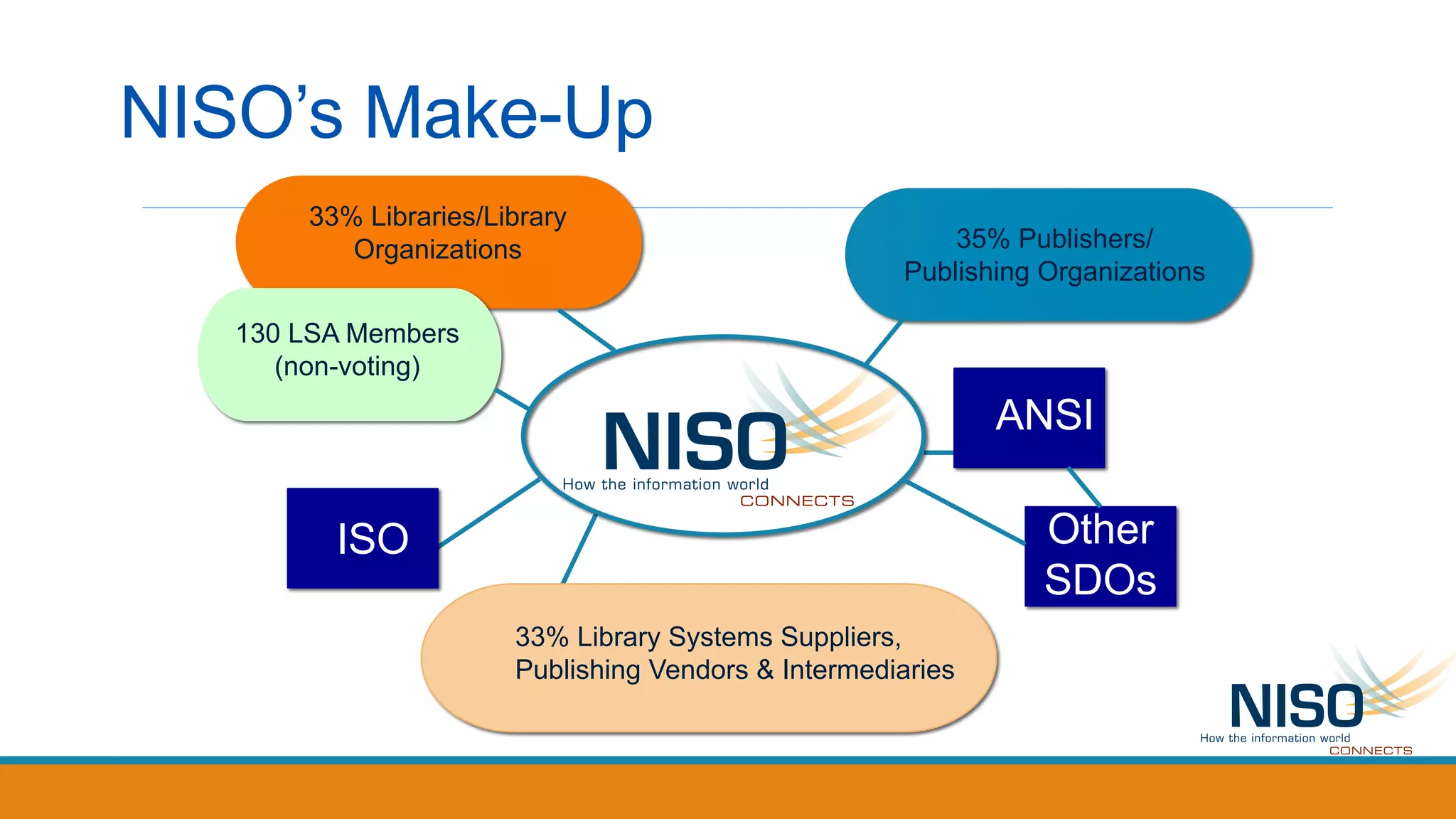
NISO’s Make-Up
33% Library Systems Suppliers,
Publishing Vendors & Intermediaries
33% Libraries/Library
Organizations
130 LSA Members
(non-voting)
35% Publishers/
Publishing Organizations
ANSI
Other
SDOs
ISO
NISO…
• Creates, publishes and maintains standards
and best practices
• Fosters adoption of existing standards
• Educates the community on technology-related
issues
• Incubates thought leadership activities to
advance technology
5
Standards for Community Practice
Standards can be used to:
• Make sure things work together
• Ensure things are done the same way
• Help people understand what/how to do
something
• Understand what consumers/users are getting
• Build trust among suppliers and customers and
users
NISO Areas of Work & Example Projects
Information Creation & Curation Topic Committee
◦ JATS and STS
◦ E-Book Metadata Working Group
◦ Z39.19, Z39.29
Information Policy & Assessment Topic Committee
◦ SERU
◦ Transfer
◦ Altmetrics Initiative
Information Discovery & Interchange Topic Committee
◦ Open Discovery Initiative
◦ KBART
◦ Access & License Indicators
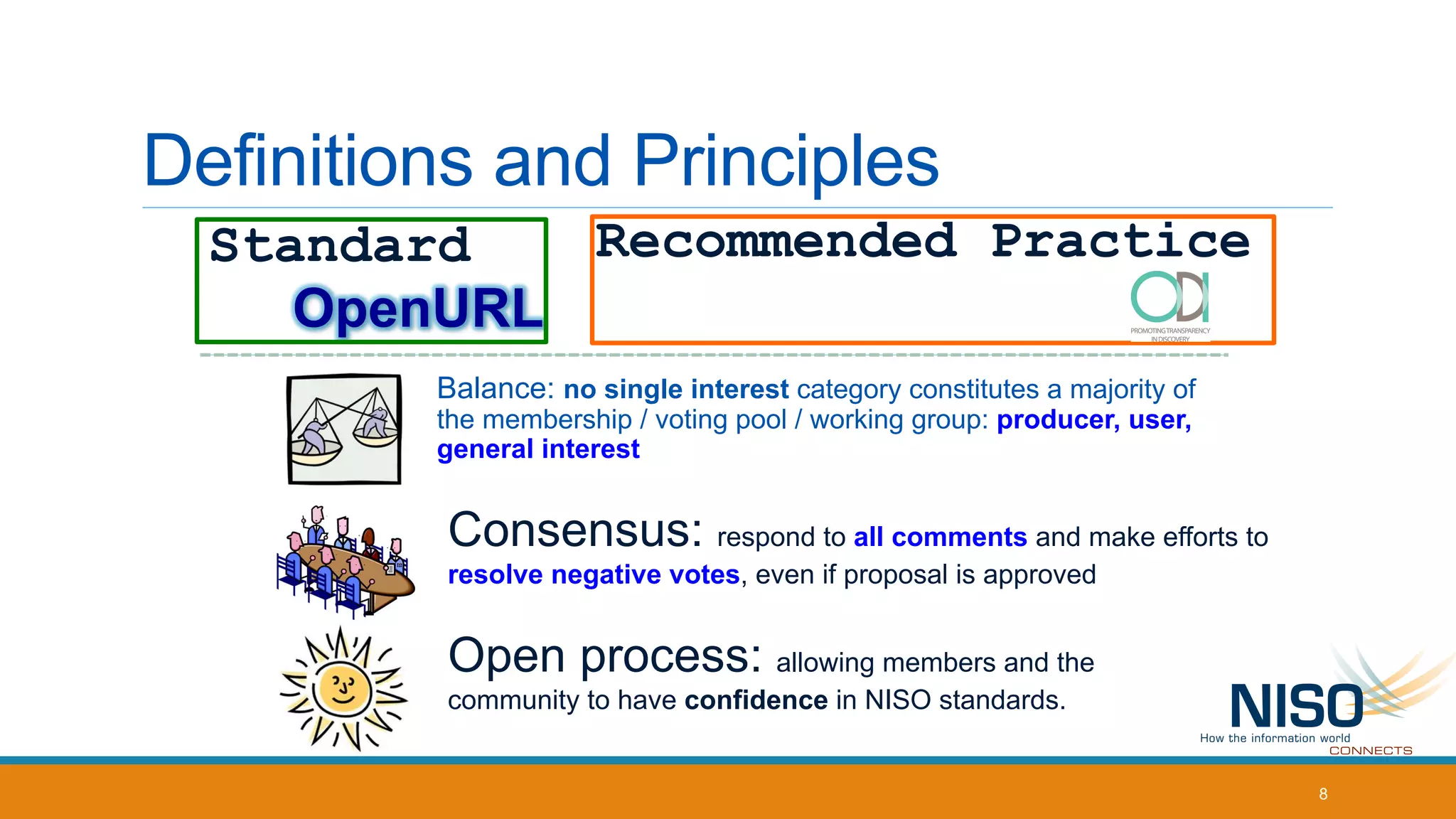
Definitions and Principles
Balance: no single interest category constitutes a majority of
the membership / voting pool / working group: producer, user,
general interest
8
Recommended PracticeStandard
Consensus: respond to all comments and make efforts to
resolve negative votes, even if proposal is approved
Open process: allowing members and the
community to have confidence in NISO standards.
NISO Standards Development Principles
Transparency & Openness
Broad consensus
Balance / Lack of Dominance
Notification of Standards Development
Coordination & Harmonization
Consideration of views
Appeals
Written Procedures Govern
NISO Working Group Process
NISO Approval
Working Group formed
Scope & determine deliverables
Gather input
Produce draft output
Public review
Respond & Modify
Publish final version
Market/Educate
Maintain & Update
Marketing for Better Uptake
NISO Standing Committees
◦ Formed following publication of Document
◦ Same balance of Stakeholders
◦ Responsible for
◦ Awareness
◦ Support
◦ Education
◦ Determinate when Recommended Practice/Standard should
be updated
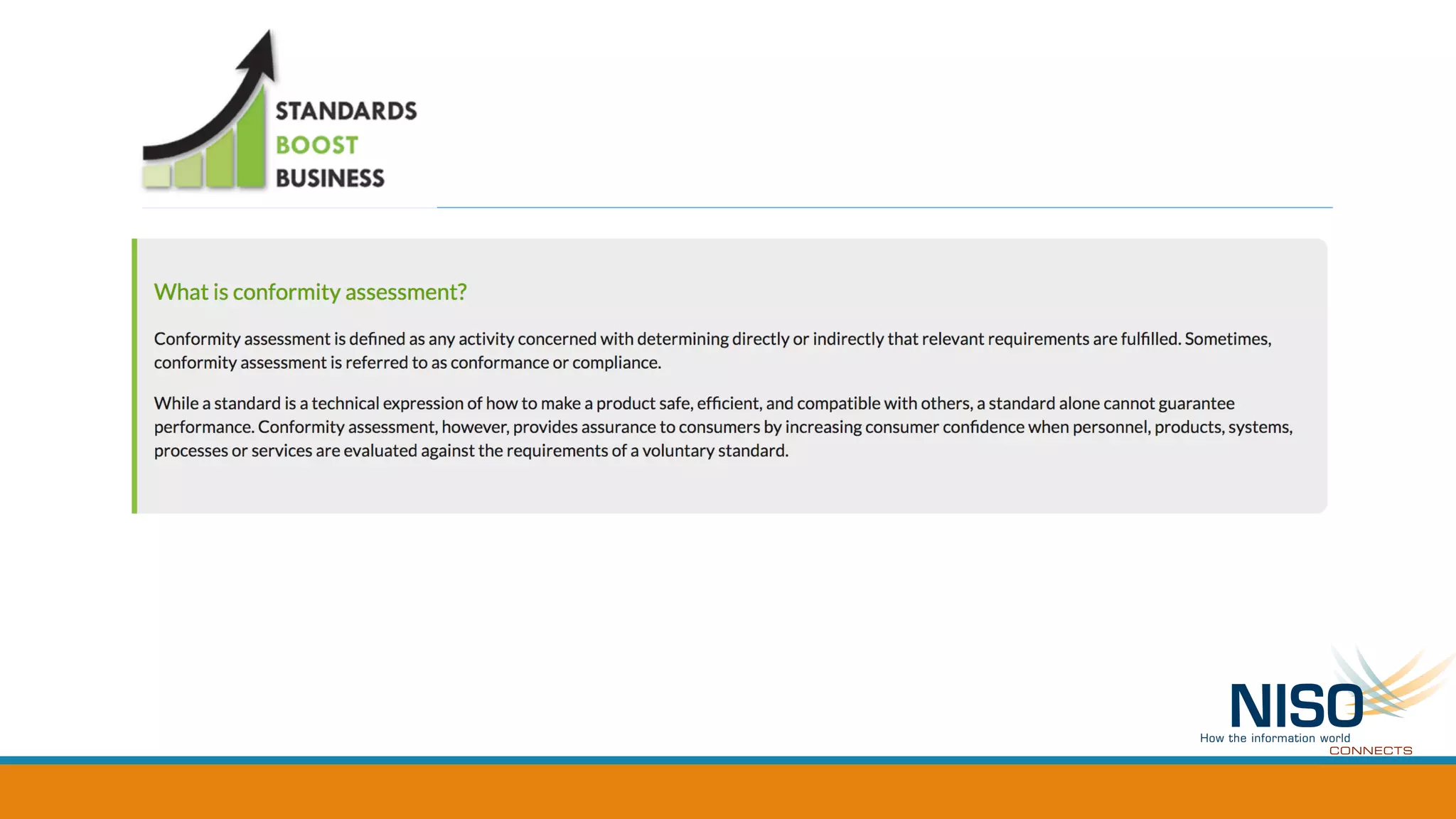
What About NISO Compliance?
• NISO does nor formally measure compliance/create scores – all standards and
recommended practices are voluntary [not regulatory]
• Some NISO Standing Committees maintain Registries
• ODI
• KBART
• SUSHI
• Other compliance-related activities
• Circulate surveys
• Education sessions
• Include adherence to standards in RFPs
• Good Citizen
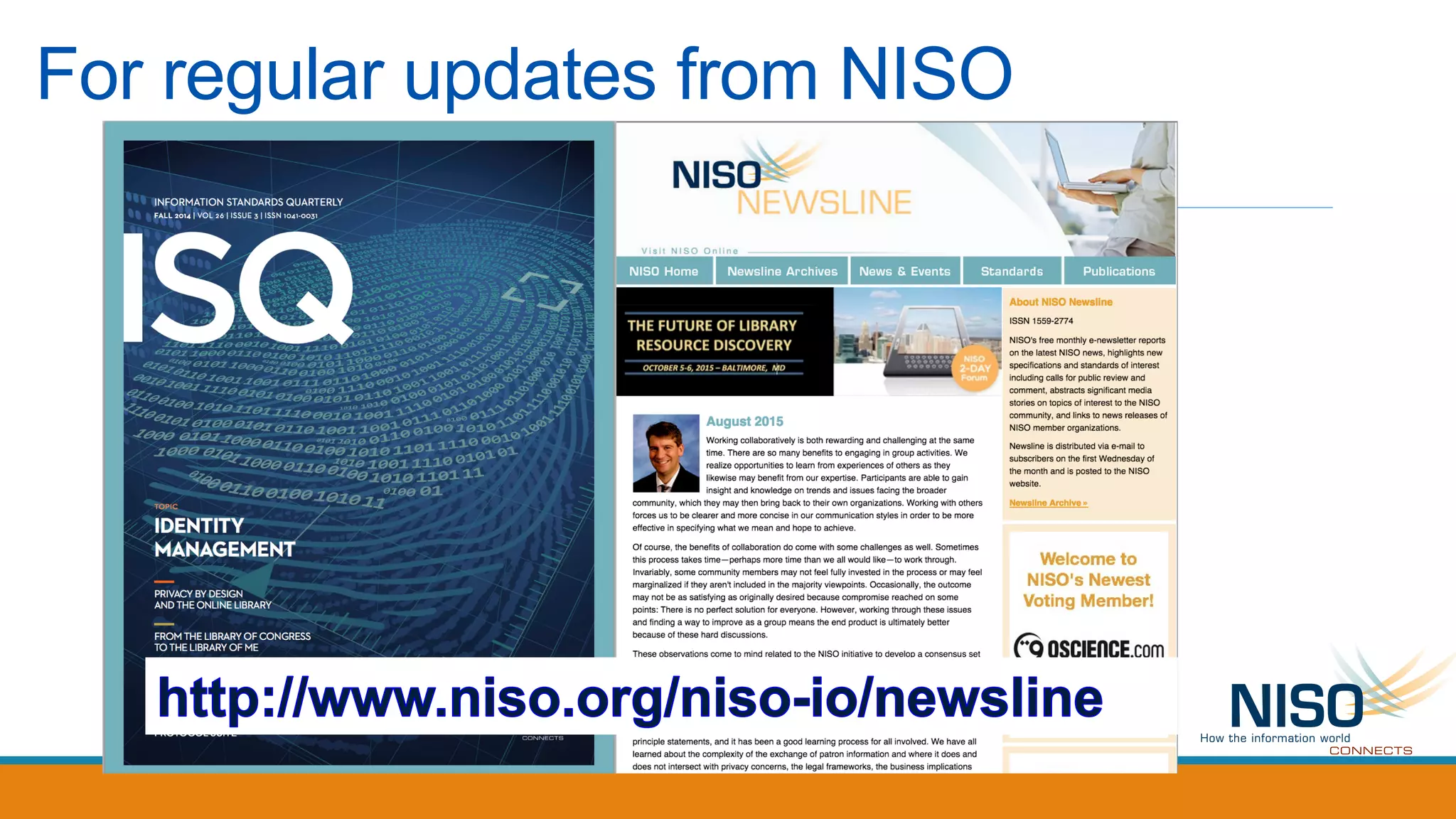
For regular updates from NISO
Standards do the Heavy Lifting!
Questions?
nlagace@niso.org
@abugseye

The World Wants Interoperability: NISO & Community Driven Standards

  • 1.
    The World Wants Interoperability:NISO and Community-Driven Standards CHINA-U.S. FORUM ON STANDARDS FOR DIGITAL RESOURCES WASHINGTON, DC – MARCH 19, 2018 NETTIE LAGACE ASSOCIATE DIRECTOR FOR PROGRAMS, NATIONAL INFORMATION STANDARDS ORGANIZATION NLAGACE@NISO.ORG / @ABUGSEYE
  • 2.
    About NISO Non-profit industrytrade association accredited by ANSI with 150+ members Mission of developing and maintaining standards related to information, documentation, discovery and distribution of published materials and media Represent U.S. interests to ISO TC 46 (Information and Documentation) and also serve as Secretariat for ISO TC46/SC9 (Identification and Description). New in 2017: TAG for ISO/IEC JTC 1/SC 34 - Document description and processing languages Responsible for standards such as ISSN, DOI, Dublin Core metadata, DAISY digital talking books, OpenURL, SIP, NCIP, MARC records and ISBN (indirectly) Volunteer-driven organization: 400+ across the world 2
  • 4.
    NISO’s Make-Up 33% LibrarySystems Suppliers, Publishing Vendors & Intermediaries 33% Libraries/Library Organizations 130 LSA Members (non-voting) 35% Publishers/ Publishing Organizations ANSI Other SDOs ISO
  • 5.
    NISO… • Creates, publishesand maintains standards and best practices • Fosters adoption of existing standards • Educates the community on technology-related issues • Incubates thought leadership activities to advance technology 5
  • 6.
    Standards for CommunityPractice Standards can be used to: • Make sure things work together • Ensure things are done the same way • Help people understand what/how to do something • Understand what consumers/users are getting • Build trust among suppliers and customers and users
  • 7.
    NISO Areas ofWork & Example Projects Information Creation & Curation Topic Committee ◦ JATS and STS ◦ E-Book Metadata Working Group ◦ Z39.19, Z39.29 Information Policy & Assessment Topic Committee ◦ SERU ◦ Transfer ◦ Altmetrics Initiative Information Discovery & Interchange Topic Committee ◦ Open Discovery Initiative ◦ KBART ◦ Access & License Indicators
  • 8.
    Definitions and Principles Balance:no single interest category constitutes a majority of the membership / voting pool / working group: producer, user, general interest 8 Recommended PracticeStandard Consensus: respond to all comments and make efforts to resolve negative votes, even if proposal is approved Open process: allowing members and the community to have confidence in NISO standards.
  • 9.
    NISO Standards DevelopmentPrinciples Transparency & Openness Broad consensus Balance / Lack of Dominance Notification of Standards Development Coordination & Harmonization Consideration of views Appeals Written Procedures Govern
  • 10.
    NISO Working GroupProcess NISO Approval Working Group formed Scope & determine deliverables Gather input Produce draft output Public review Respond & Modify Publish final version Market/Educate Maintain & Update
  • 11.
    Marketing for BetterUptake NISO Standing Committees ◦ Formed following publication of Document ◦ Same balance of Stakeholders ◦ Responsible for ◦ Awareness ◦ Support ◦ Education ◦ Determinate when Recommended Practice/Standard should be updated
  • 13.
    What About NISOCompliance? • NISO does nor formally measure compliance/create scores – all standards and recommended practices are voluntary [not regulatory] • Some NISO Standing Committees maintain Registries • ODI • KBART • SUSHI • Other compliance-related activities • Circulate surveys • Education sessions • Include adherence to standards in RFPs • Good Citizen
  • 14.
  • 15.
    Standards do theHeavy Lifting!
  • 16.