The Technical Debt Management Cycle:
Evaluating the Costs and
Risks of IT Assets
Dr. Bill Curtis
Director, Consortium for IT Software Quality
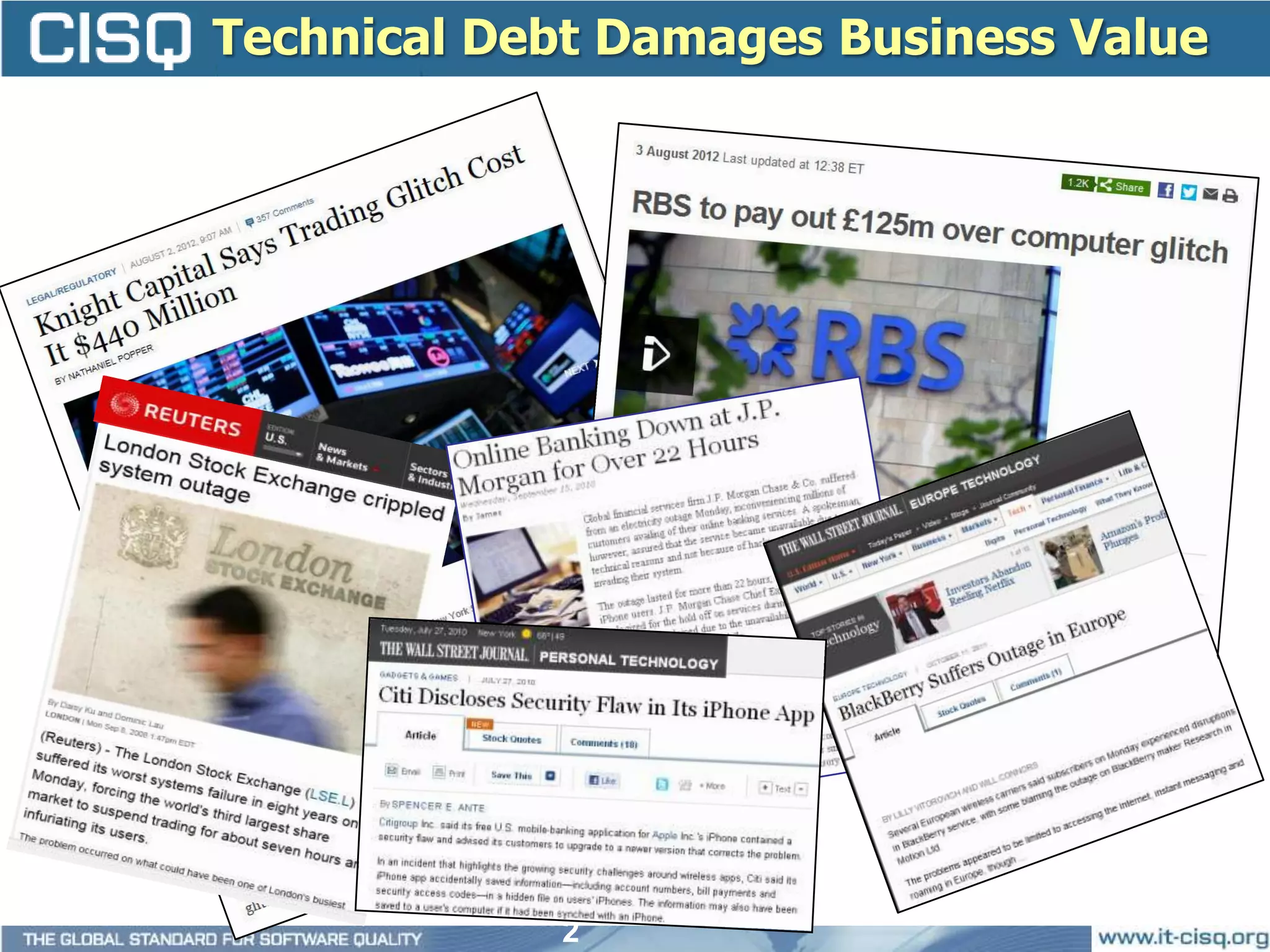
Technical Debt Damages Business Value


            2
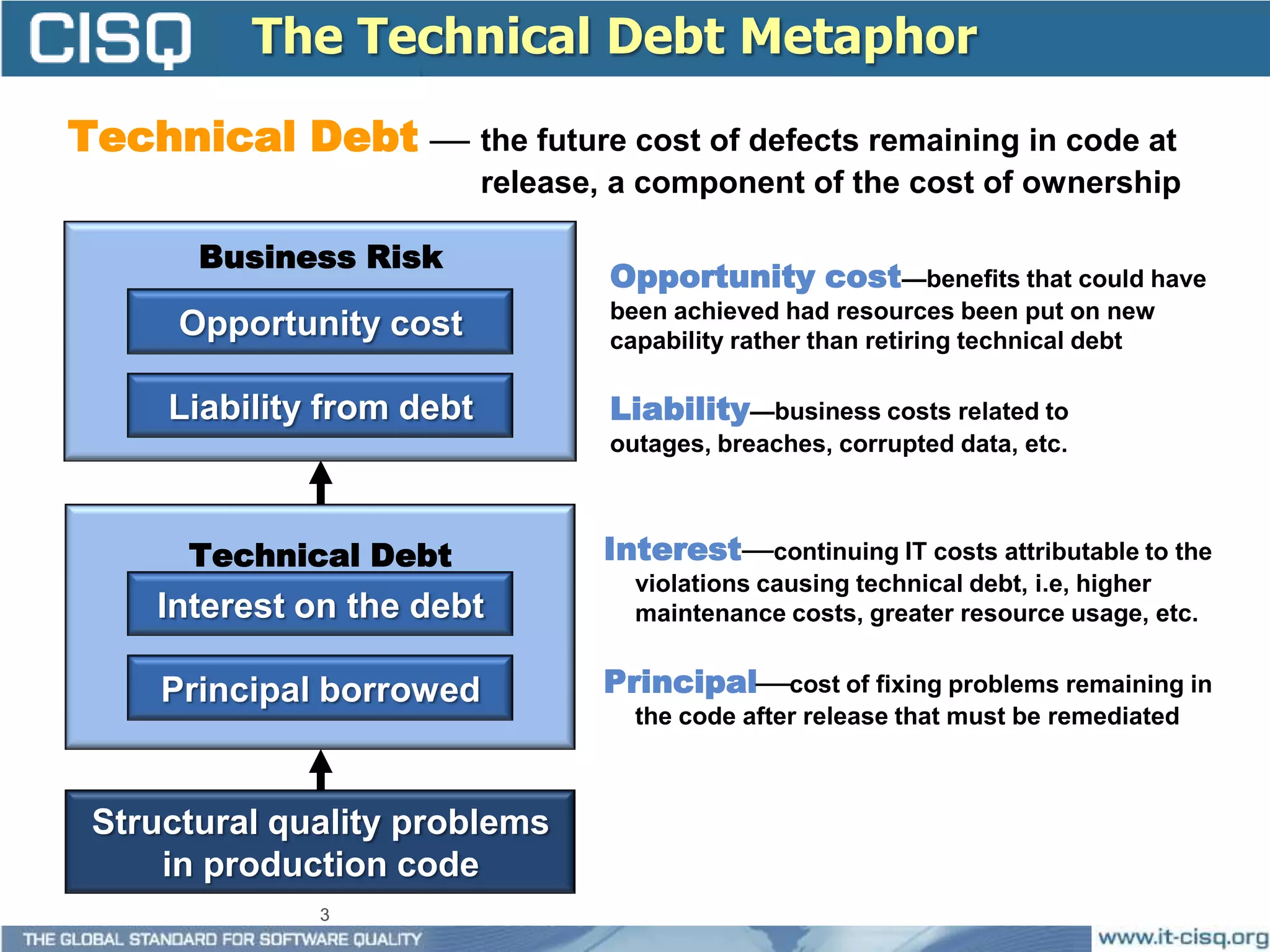
The Technical Debt Metaphor
Technical Debt           the future cost of defects remaining in code at
                          release, a component of the cost of ownership

      Business Risk
                                  Opportunity cost—benefits that could have
                                  been achieved had resources been put on new
     Opportunity cost             capability rather than retiring technical debt

    Liability from debt           Liability—business costs related to
                                  outages, breaches, corrupted data, etc.


     Technical Debt               Interest—continuing IT costs attributable to the
                                    violations causing technical debt, i.e, higher
   Interest on the debt             maintenance costs, greater resource usage, etc.


    Principal borrowed            Principalcost of fixing problems remaining in
                                    the code after release that must be remediated


Structural quality problems
    in production code
             3
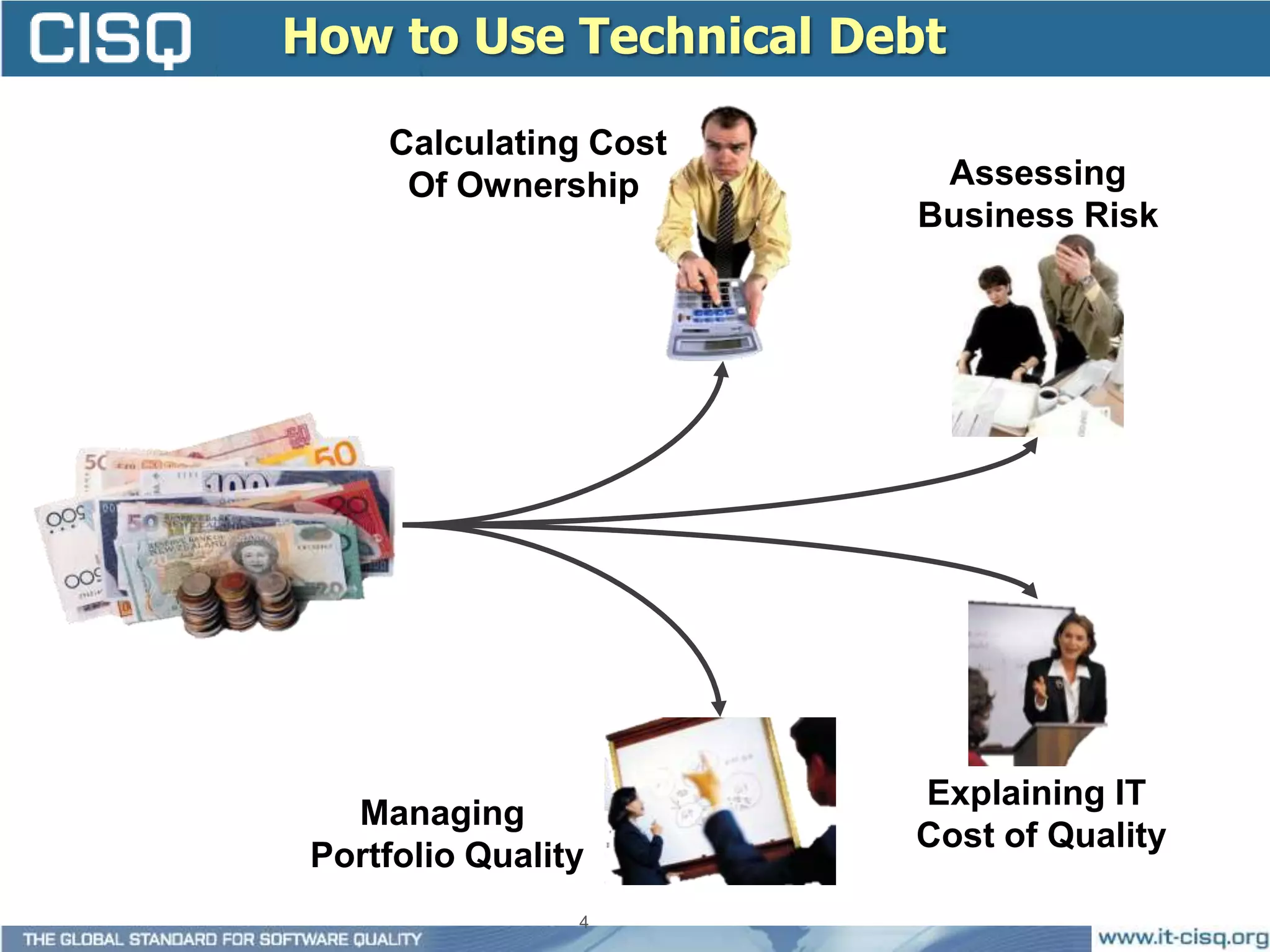
How to Use Technical Debt

                 Calculating Cost
                  Of Ownership       Assessing
                                    Business Risk


 Estimate of
Technical Debt


                                    Explaining IT
             Managing
                                    Cost of Quality
           Portfolio Quality
                           4
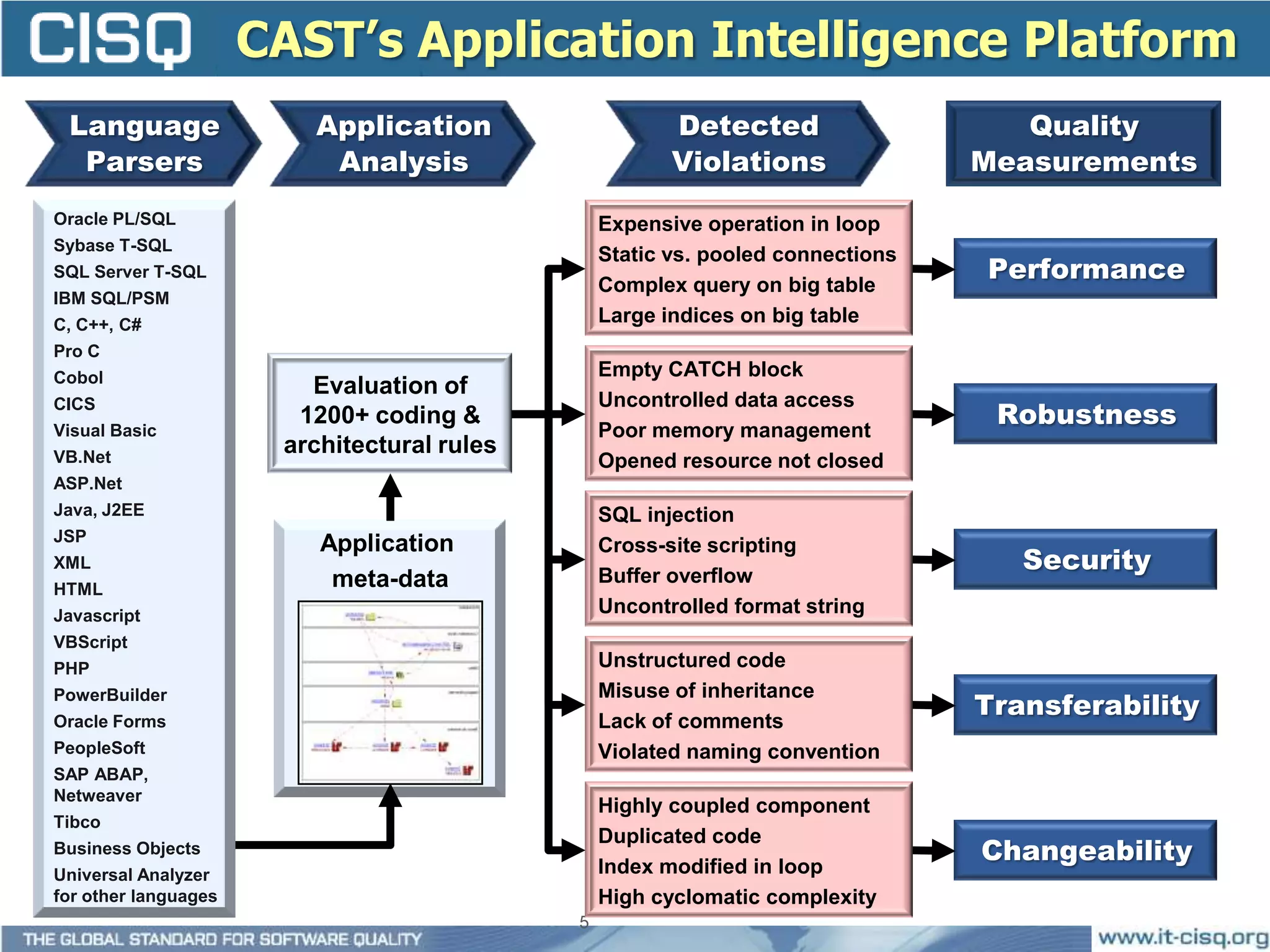
CAST’s Application Intelligence Platform
 Language                Application                    Detected                    Quality
  Parsers                 Analysis                      Violations               Measurements
Oracle PL/SQL                                    Expensive operation in loop
Sybase T-SQL
                                                 Static vs. pooled connections
SQL Server T-SQL
                                                 Complex query on big table
                                                                                 Performance
IBM SQL/PSM
C, C++, C#                                       Large indices on big table
Pro C
Cobol                                            Empty CATCH block
                         Evaluation of
                                                 Uncontrolled data access
CICS
Visual Basic
                        1200+ coding &
                                                 Poor memory management
                                                                                  Robustness
VB.Net
                       architectural rules
                                                 Opened resource not closed
ASP.Net
Java, J2EE                                       SQL injection
JSP
                          Application            Cross-site scripting
XML
                                                 Buffer overflow
                                                                                    Security
HTML                       meta-data
Javascript                                       Uncontrolled format string
VBScript
PHP                                              Unstructured code
                                                 Misuse of inheritance
PowerBuilder
Oracle Forms                                     Lack of comments
                                                                                 Transferability
PeopleSoft                                       Violated naming convention
SAP ABAP,
Netweaver
                                                 Highly coupled component
Tibco
                                                 Duplicated code
Business Objects
                                                 Index modified in loop
                                                                                 Changeability
Universal Analyzer
for other languages                              High cyclomatic complexity
                                             5
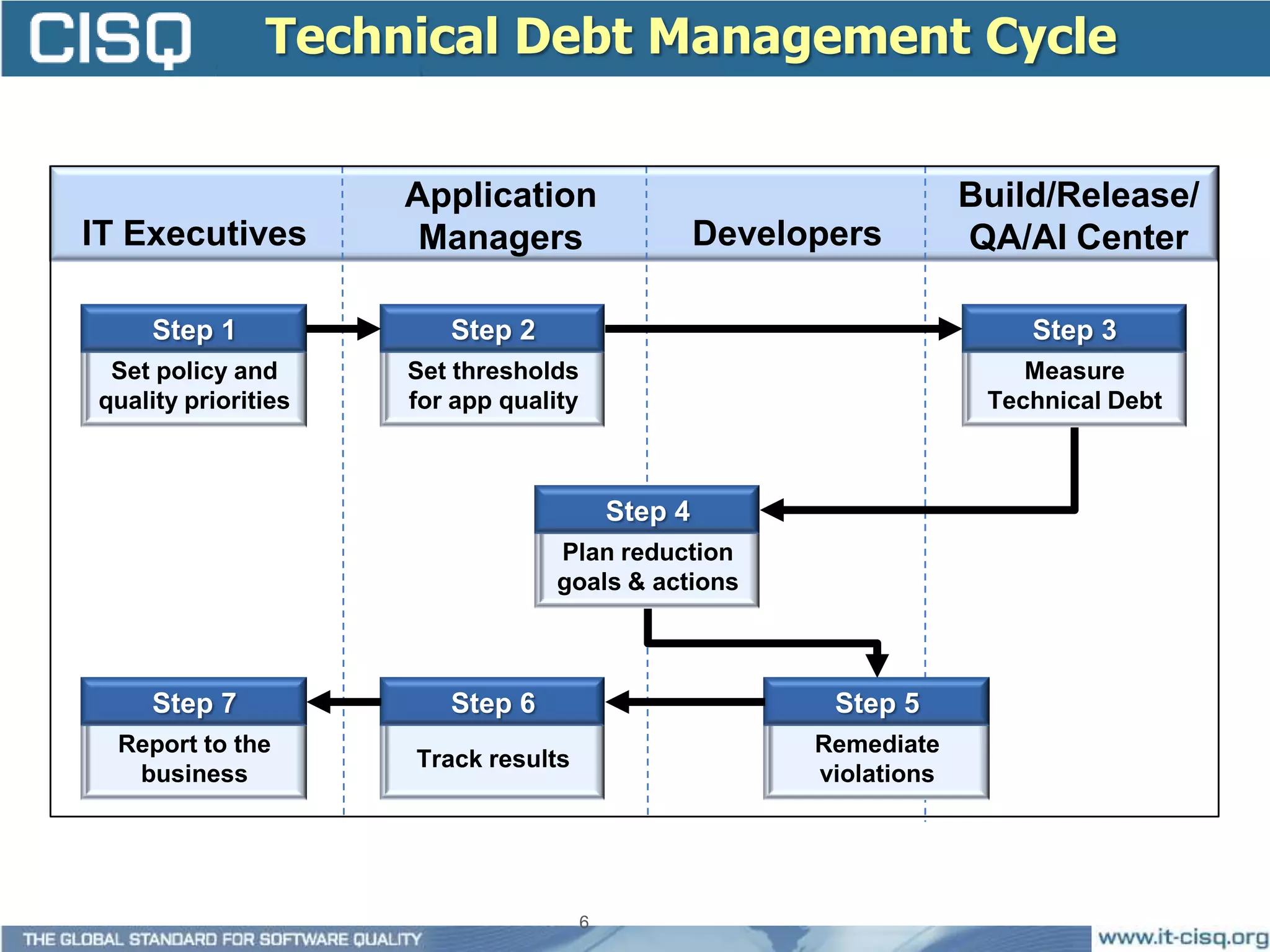
Technical Debt Management Cycle


                     Application                                       Build/Release/
IT Executives         Managers                      Developers         QA/AI Center

     Step 1             Step 2                                             Step 3
 Set policy and      Set thresholds                                        Measure
quality priorities   for app quality                                    Technical Debt


                                           Step 4
                                  Plan reduction
                                  goals & actions


     Step 7             Step 6                             Step 5
  Report to the                                           Remediate
                     Track results
   business                                               violations


                                       6
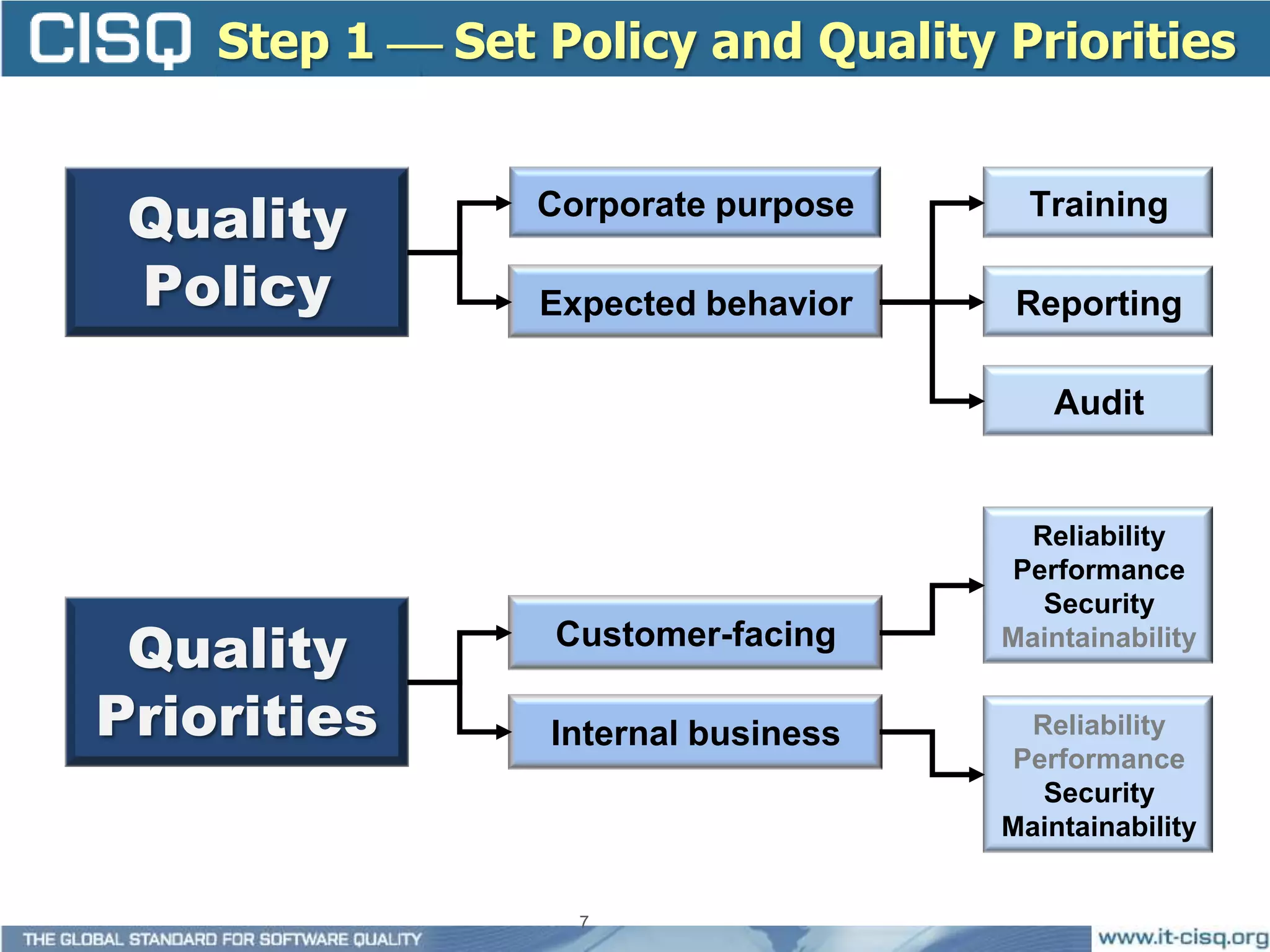
Step 1  Set Policy and Quality Priorities


 Quality         Corporate purpose     Training

 Policy          Expected behavior    Reporting

                                         Audit


                                       Reliability
                                     Performance
                                        Security
 Quality         Customer-facing     Maintainability


Priorities       Internal business     Reliability
                                     Performance
                                        Security
                                     Maintainability


                   7
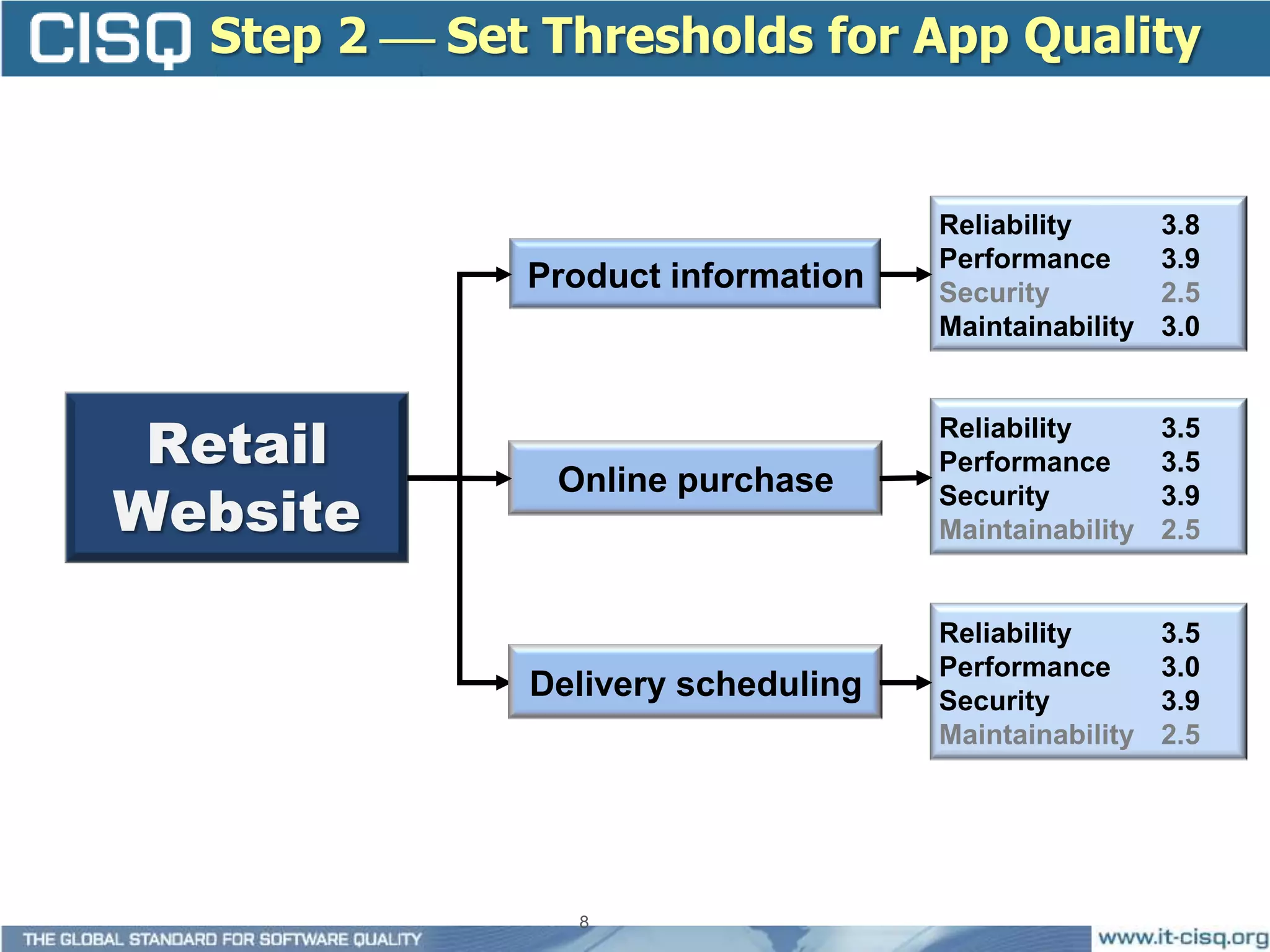
Step 2  Set Thresholds for App Quality


                                    Reliability       3.8
                                    Performance       3.9
              Product information   Security          2.5
                                    Maintainability   3.0


 Retail                             Reliability
                                    Performance
                                                      3.5
                                                      3.5
               Online purchase
Website                             Security
                                    Maintainability
                                                      3.9
                                                      2.5


                                    Reliability       3.5
                                    Performance       3.0
              Delivery scheduling   Security          3.9
                                    Maintainability   2.5


                8
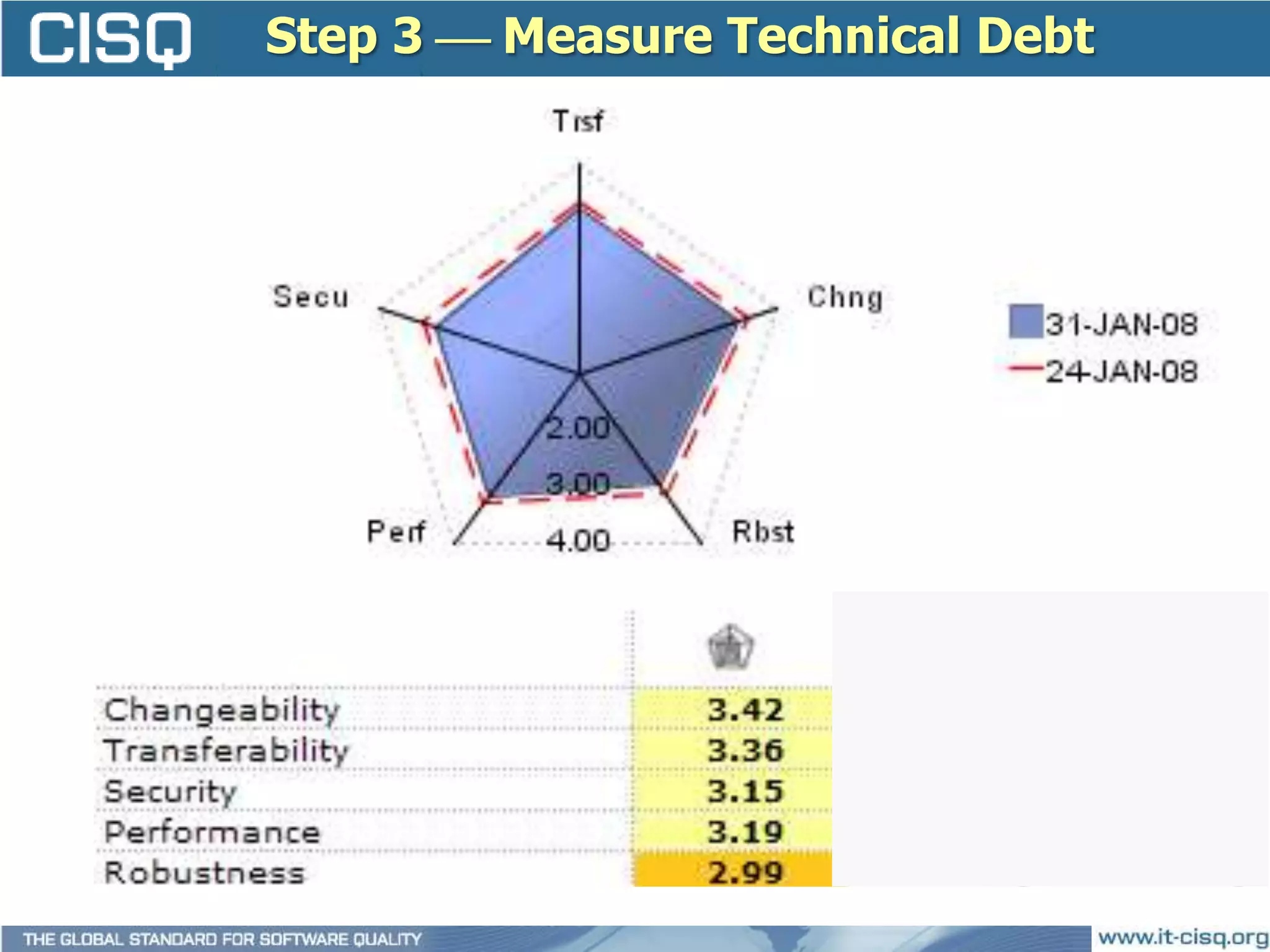
Step 3  Measure Technical Debt
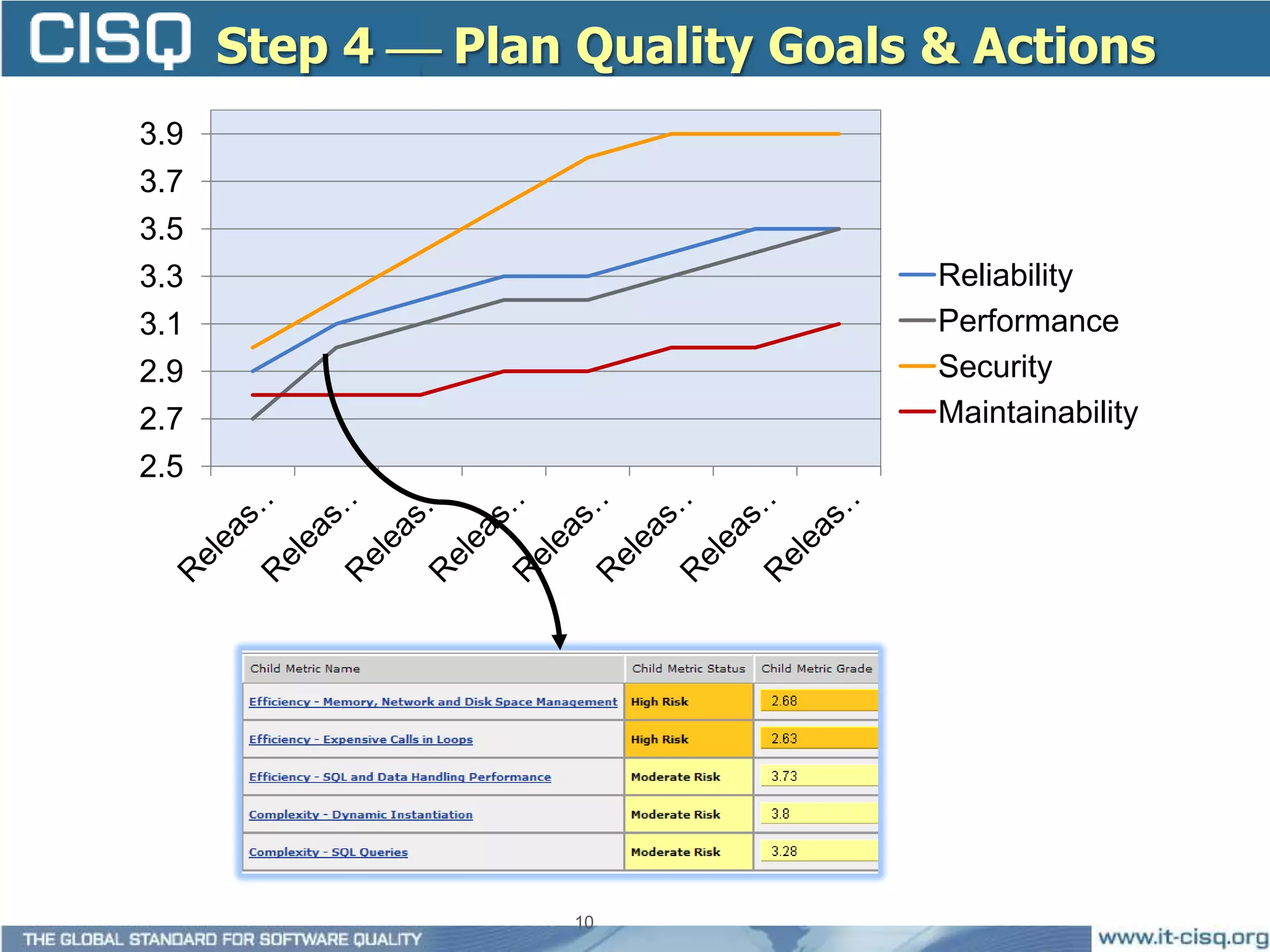
Step 4  Plan Quality Goals & Actions
        3.9                             Quality Score Target
        3.7                             by Release
        3.5
        3.3                               Reliability
Score


        3.1                               Performance
        2.9                               Security
        2.7                               Maintainability
        2.5


                            10
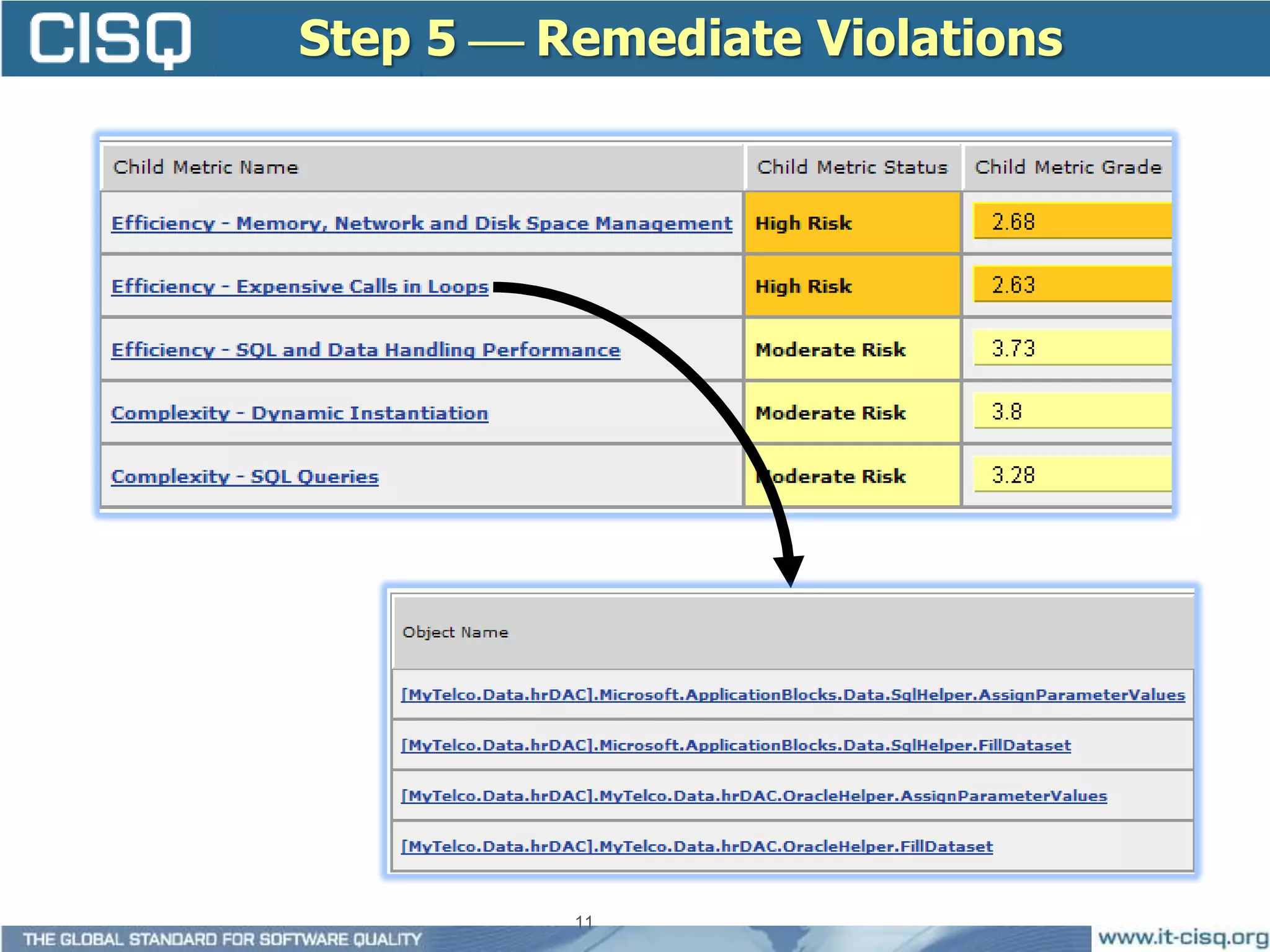
Step 5  Remediate Violations


          11
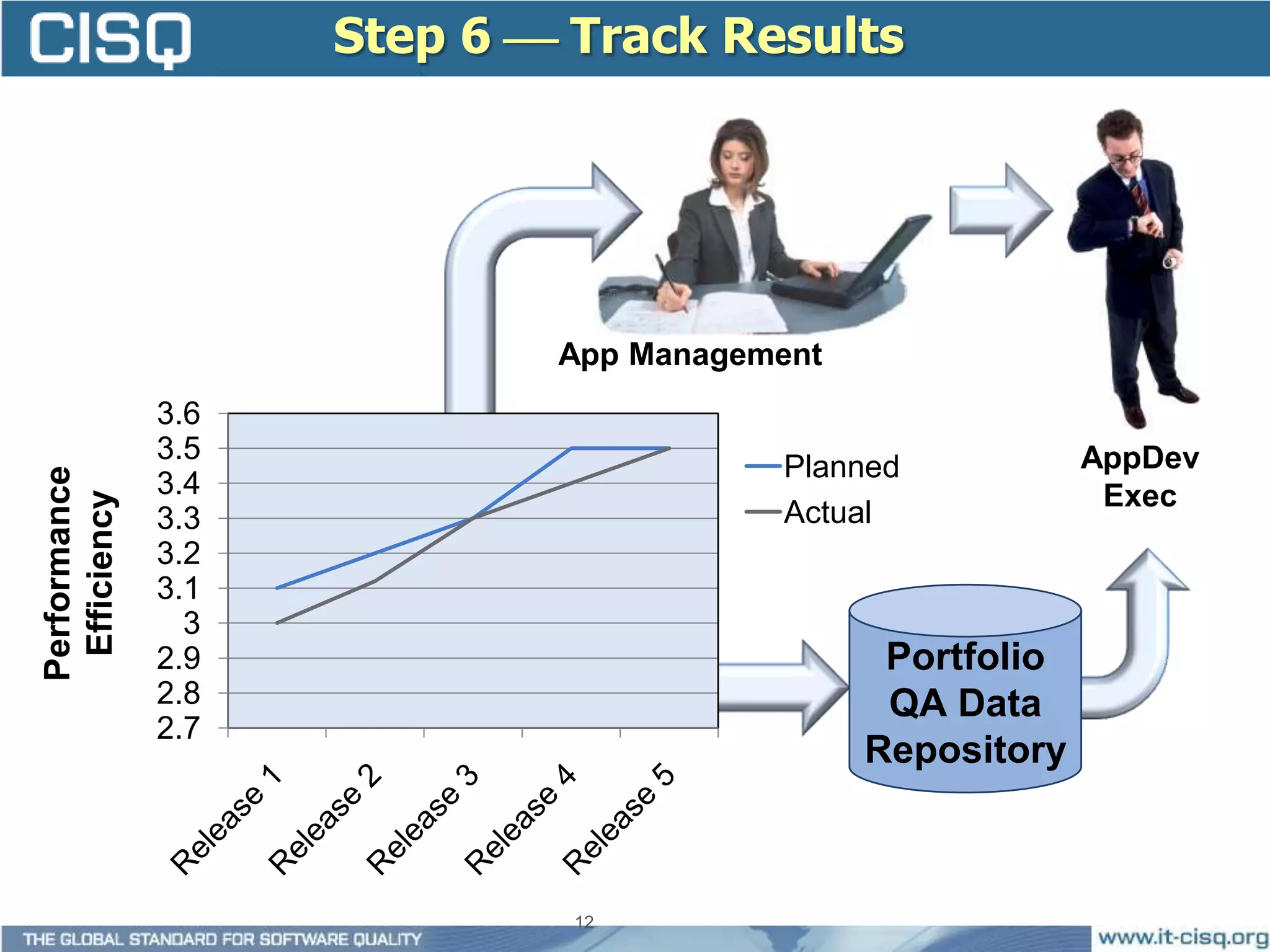
Step 6  Track Results


                            App Management
              3.6
              3.5                                         AppDev
                                       Planned
Performance


              3.4                                          Exec
 Efficiency


              3.3                      Actual
              3.2
              3.1
                3
              2.9                             Portfolio
              2.8                             QA Data
              2.7
                                             Repository


                             12
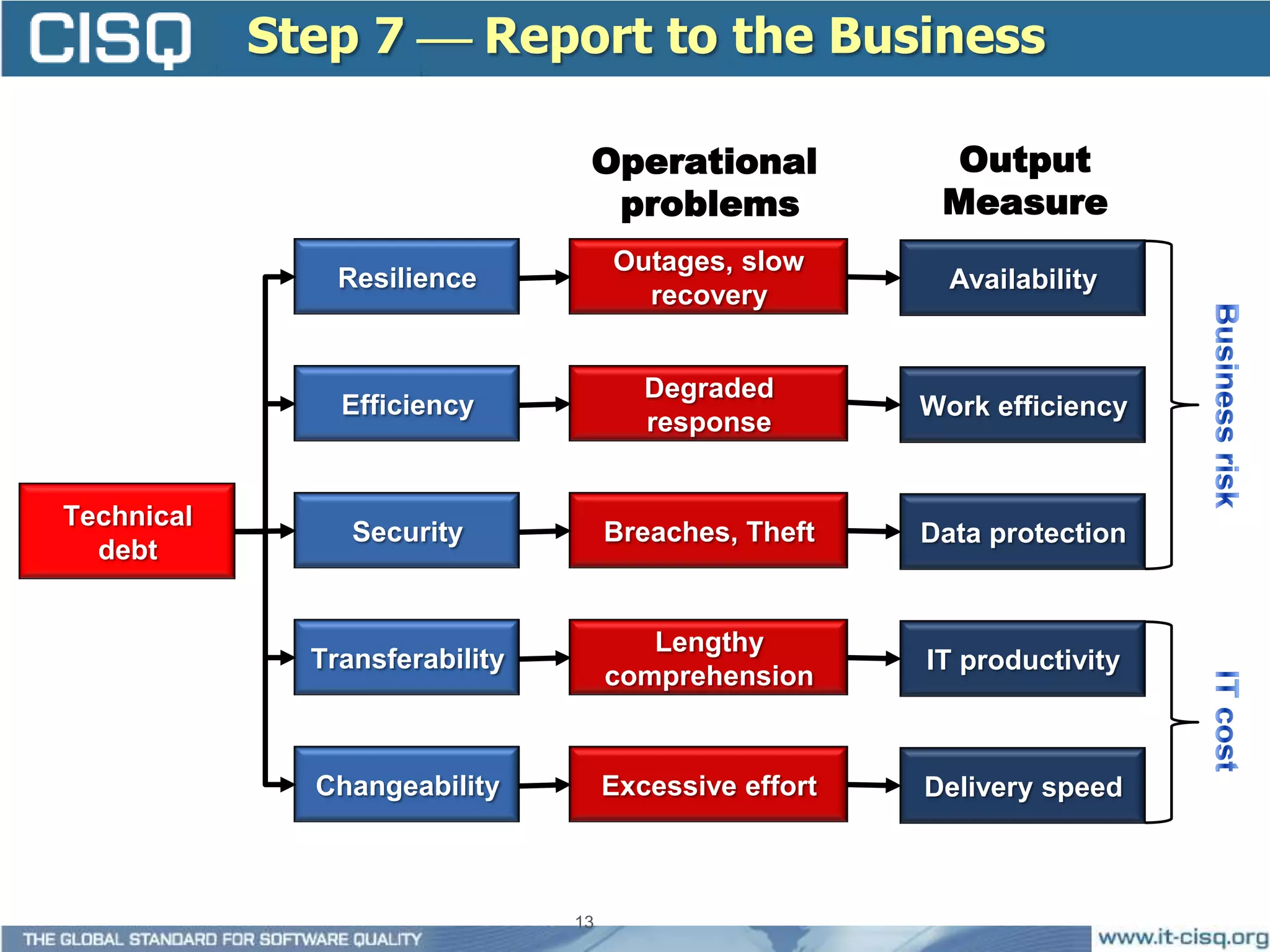
Step 7  Report to the Business

               Quality           Operational             Output
              Category            problems               Measure
                                     Outages, slow
                Resilience                                Availability
                                       recovery


                                        Degraded
                Efficiency                              Work efficiency
                                        response


Technical
                 Security            Breaches, Theft    Data protection
  debt


                                        Lengthy
              Transferability                           IT productivity
                                     comprehension


              Changeability          Excessive effort   Delivery speed


                                13
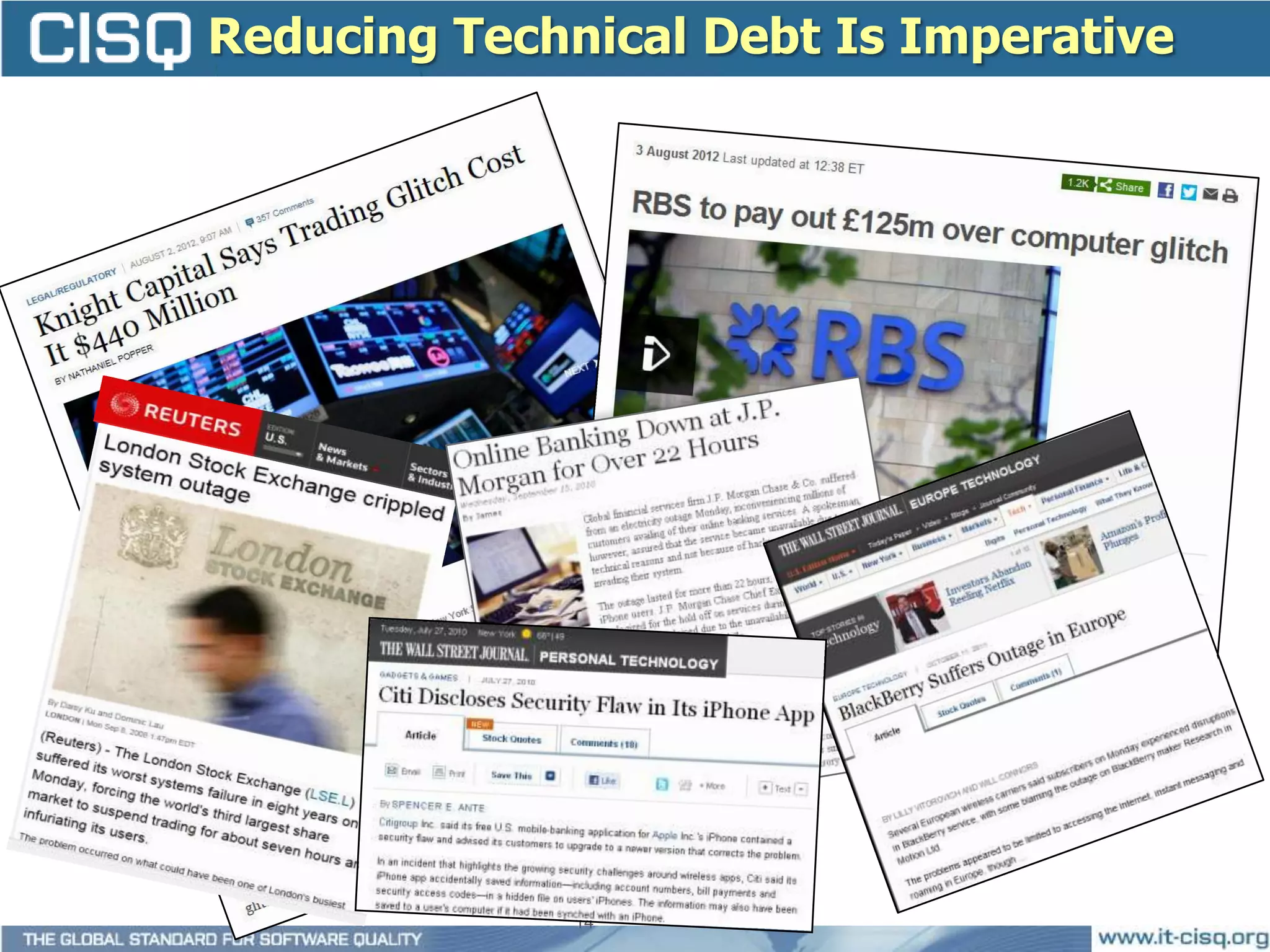
Reducing Technical Debt Is Imperative


              14

The Technical Debt Management Cycle

  • 1.
    The Technical DebtManagement Cycle: Evaluating the Costs and Risks of IT Assets Dr. Bill Curtis Director, Consortium for IT Software Quality
  • 2.
    Technical Debt DamagesBusiness Value 2
  • 3.
    The Technical DebtMetaphor Technical Debt  the future cost of defects remaining in code at release, a component of the cost of ownership Business Risk Opportunity cost—benefits that could have been achieved had resources been put on new Opportunity cost capability rather than retiring technical debt Liability from debt Liability—business costs related to outages, breaches, corrupted data, etc. Technical Debt Interest—continuing IT costs attributable to the violations causing technical debt, i.e, higher Interest on the debt maintenance costs, greater resource usage, etc. Principal borrowed Principalcost of fixing problems remaining in the code after release that must be remediated Structural quality problems in production code 3
  • 4.
    How to UseTechnical Debt Calculating Cost Of Ownership Assessing Business Risk Estimate of Technical Debt Explaining IT Managing Cost of Quality Portfolio Quality 4
  • 5.
    CAST’s Application IntelligencePlatform Language Application Detected Quality Parsers Analysis Violations Measurements Oracle PL/SQL Expensive operation in loop Sybase T-SQL Static vs. pooled connections SQL Server T-SQL Complex query on big table Performance IBM SQL/PSM C, C++, C# Large indices on big table Pro C Cobol Empty CATCH block Evaluation of Uncontrolled data access CICS Visual Basic 1200+ coding & Poor memory management Robustness VB.Net architectural rules Opened resource not closed ASP.Net Java, J2EE SQL injection JSP Application Cross-site scripting XML Buffer overflow Security HTML meta-data Javascript Uncontrolled format string VBScript PHP Unstructured code Misuse of inheritance PowerBuilder Oracle Forms Lack of comments Transferability PeopleSoft Violated naming convention SAP ABAP, Netweaver Highly coupled component Tibco Duplicated code Business Objects Index modified in loop Changeability Universal Analyzer for other languages High cyclomatic complexity 5
  • 6.
    Technical Debt ManagementCycle Application Build/Release/ IT Executives Managers Developers QA/AI Center Step 1 Step 2 Step 3 Set policy and Set thresholds Measure quality priorities for app quality Technical Debt Step 4 Plan reduction goals & actions Step 7 Step 6 Step 5 Report to the Remediate Track results business violations 6
  • 7.
    Step 1 Set Policy and Quality Priorities Quality Corporate purpose Training Policy Expected behavior Reporting Audit Reliability Performance Security Quality Customer-facing Maintainability Priorities Internal business Reliability Performance Security Maintainability 7
  • 8.
    Step 2 Set Thresholds for App Quality Reliability 3.8 Performance 3.9 Product information Security 2.5 Maintainability 3.0 Retail Reliability Performance 3.5 3.5 Online purchase Website Security Maintainability 3.9 2.5 Reliability 3.5 Performance 3.0 Delivery scheduling Security 3.9 Maintainability 2.5 8
  • 9.
    Step 3 Measure Technical Debt
  • 10.
    Step 4 Plan Quality Goals & Actions 3.9 Quality Score Target 3.7 by Release 3.5 3.3 Reliability Score 3.1 Performance 2.9 Security 2.7 Maintainability 2.5 10
  • 11.
    Step 5 Remediate Violations 11
  • 12.
    Step 6 Track Results App Management 3.6 3.5 AppDev Planned Performance 3.4 Exec Efficiency 3.3 Actual 3.2 3.1 3 2.9 Portfolio 2.8 QA Data 2.7 Repository 12
  • 13.
    Step 7 Report to the Business Quality Operational Output Category problems Measure Outages, slow Resilience Availability recovery Degraded Efficiency Work efficiency response Technical Security Breaches, Theft Data protection debt Lengthy Transferability IT productivity comprehension Changeability Excessive effort Delivery speed 13
  • 14.
    Reducing Technical DebtIs Imperative 14