Download to read offline
![Almudena Vivanco
(@MrsDaehin)
import random
import time
import requests
class Speaker(object):
def __init__(self):
born = "Avilés - Asturias"
studies = "Applied Maths and Computability"
jobdescription = "Performance Jedi"
company = "SCRM"
project = "LidlPlus"
talks = [VLC Testing, Devops BCN, DevopsDays, WebPerfDays, Velocity]
def talk(self):
start_timer = time.time()
r = requests.get('http://www.slideshare.net/almudenavivanco')
r.raw.read()
latency = time.time() - start_timer
self.custom_timers[ExpoQA] = latency
if __name__ == '__main__':
speech = Speaker()
speech.talk()
print trans.custom_timers](https://image.slidesharecdn.com/netconfbcn2019-191028170636/85/The-sWag-of-performance-Testing-2-320.jpg)
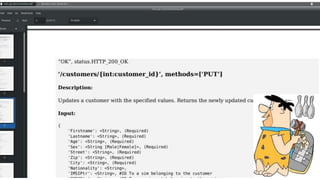
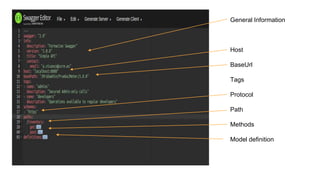
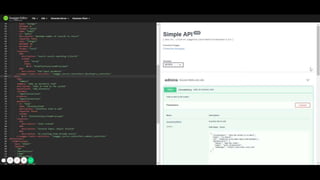




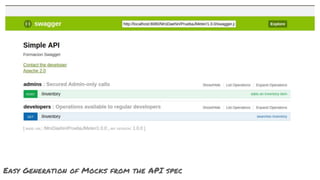

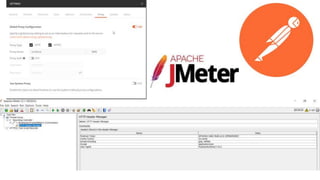
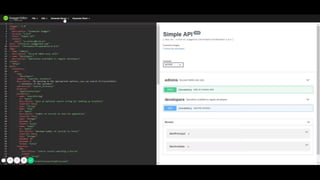
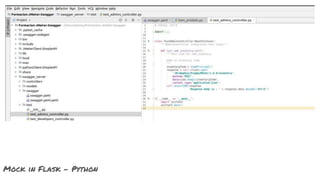
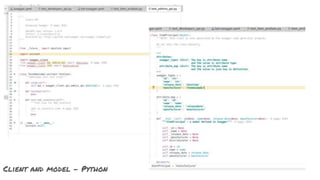
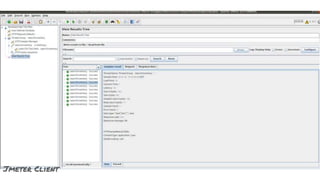
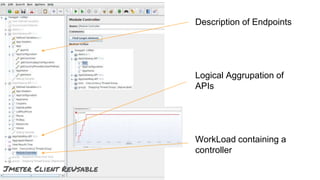

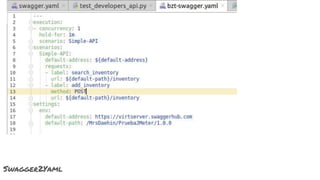

The document discusses the OpenAPI Specification, which is a standard way to describe RESTful APIs using JSON or YAML. It allows APIs to be designed, built, documented, tested, and visualized. The specification can be used to generate mock servers and clients in various programming languages from a single API description. This helps address issues in microservices development by facilitating reuse and shifting testing earlier in the development cycle.


![How Big Brands are Taking Your Traffic in Alberta [Data Inside].pptx](https://cdn.slidesharecdn.com/ss_thumbnails/howbigbrandsaretakingyourtrafficinalbertadatainside-260123180142-42d276f3-thumbnail.jpg?width=640&height=640&fit=bounds)


