The role of
algorithms and
software in music
production.
R A F A E L G U M E R O V
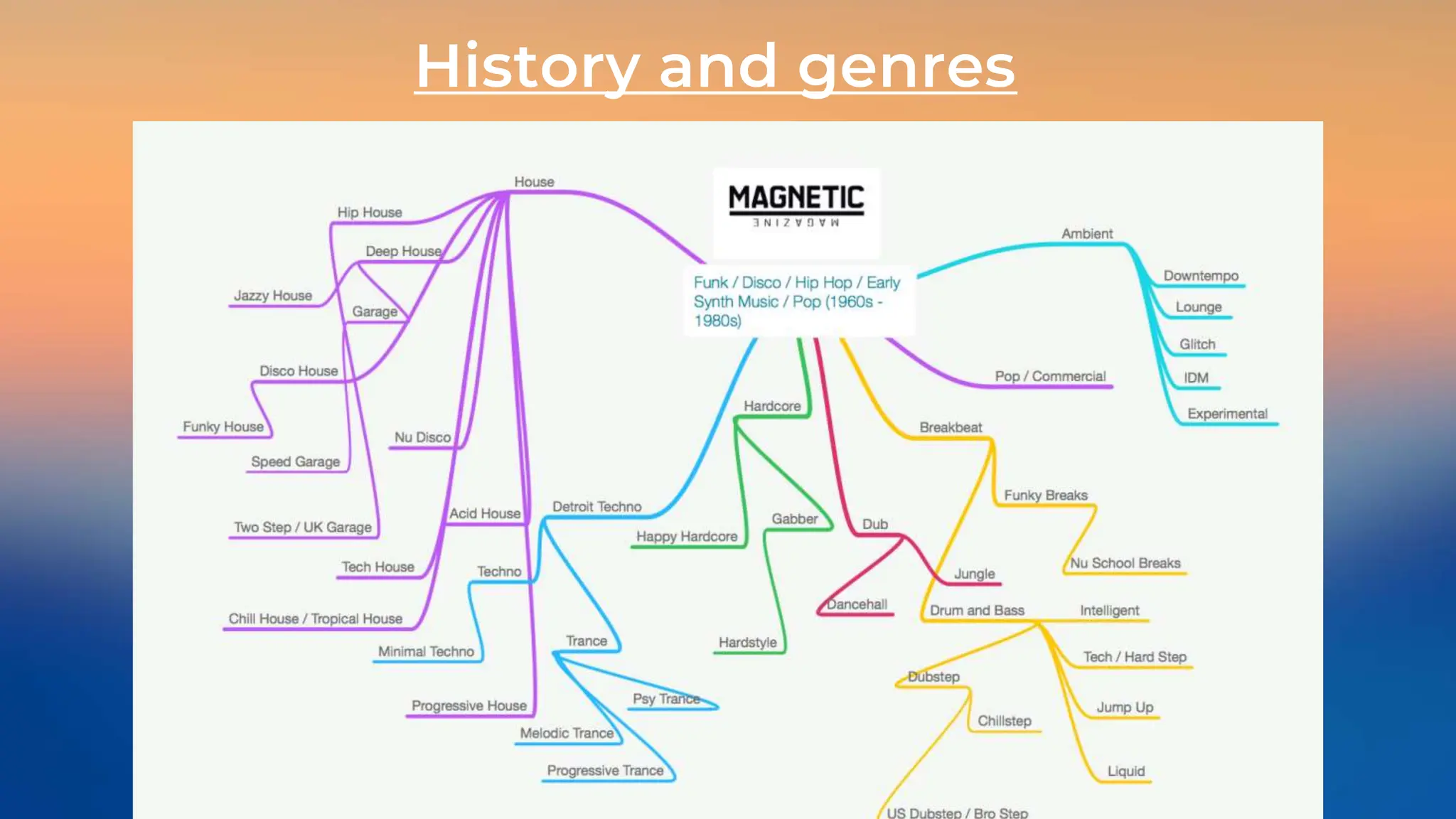
History and genres.
01
02
03
04
05
Overview
What is a DAW?
Algorithms used in DAWs.
Live Performance and DJing.
Machine learning in music
History and genres
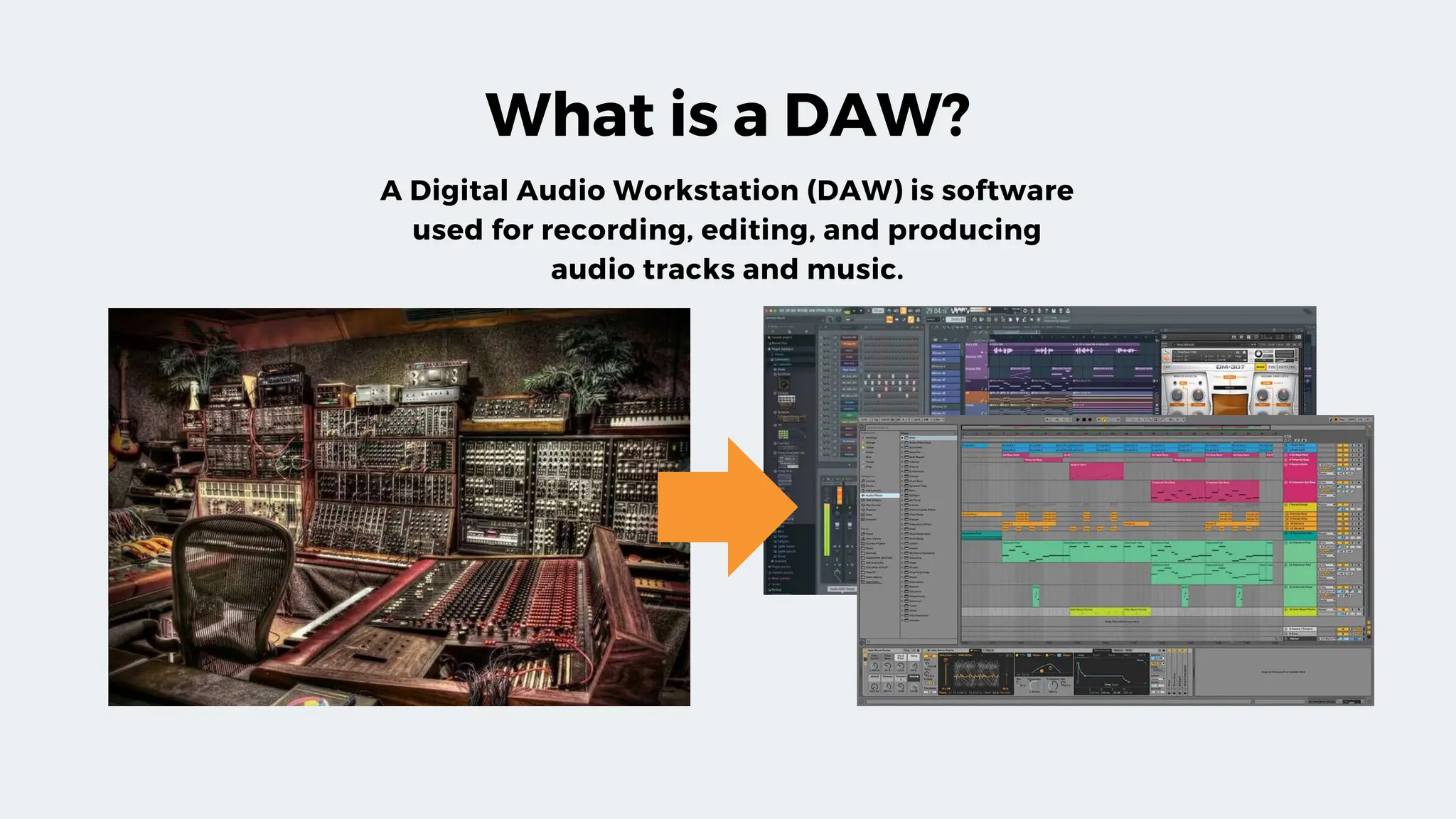
What is a DAW?
A Digital Audio Workstation (DAW) is software
used for recording, editing, and producing
audio tracks and music.
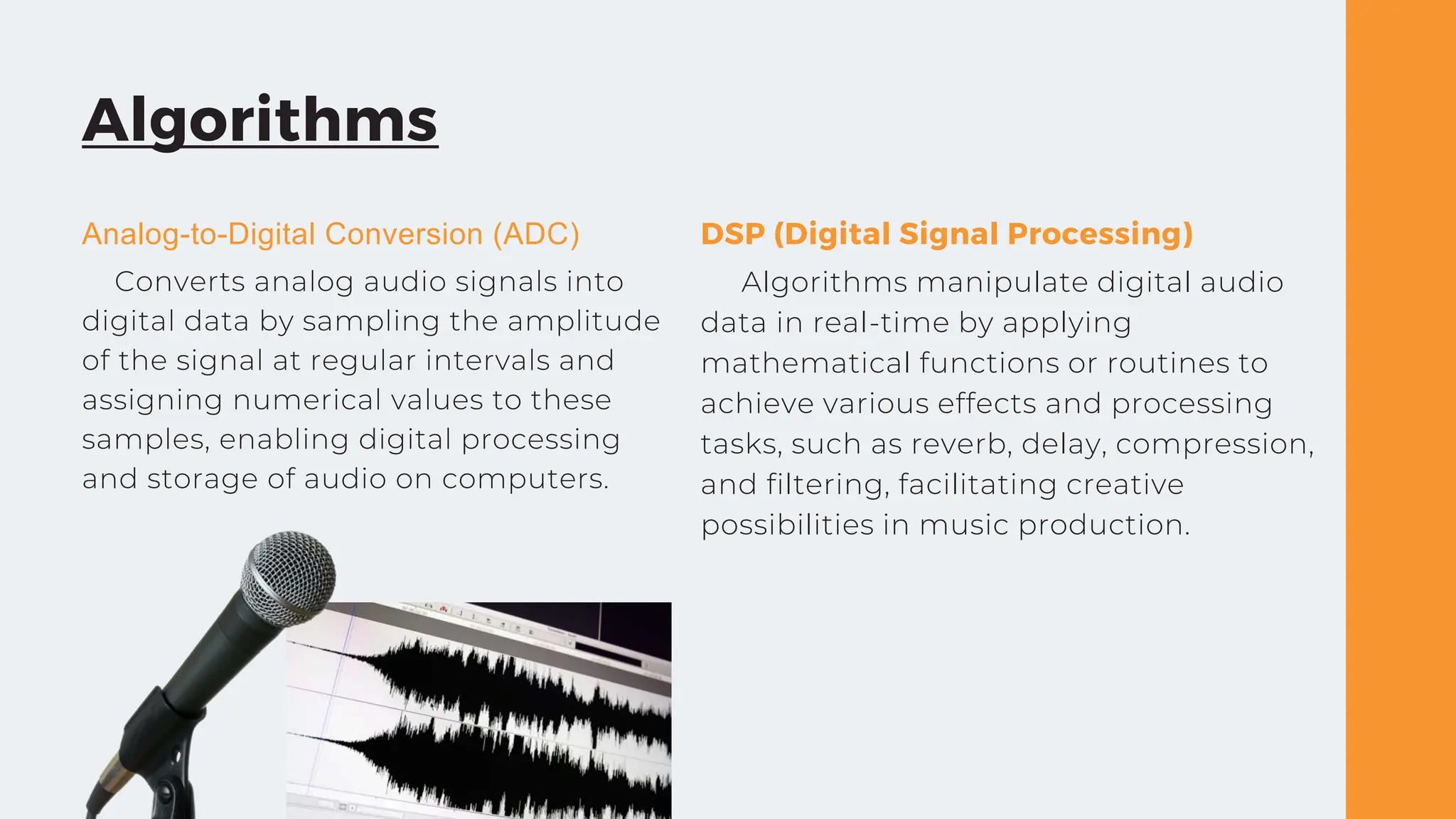
Converts analog audio signals into
digital data by sampling the amplitude
of the signal at regular intervals and
assigning numerical values to these
samples, enabling digital processing
and storage of audio on computers.
Analog-to-Digital Conversion (ADC)
Algorithms manipulate digital audio
data in real-time by applying
mathematical functions or routines to
achieve various effects and processing
tasks, such as reverb, delay, compression,
and filtering, facilitating creative
possibilities in music production.
DSP (Digital Signal Processing)
Algorithms
DJing
Machine learning in music.
Music Composition and
Generation
Music Recommendation
Systems
Music Transcription and
Analysis
ML algorithms can
analyze audio recordings
to transcribe musical
elements such as notes,
chords, rhythms, and
melodies.
Algorithms can then
generate new musical
compositions in various
styles, ranging from classical
to electronic.
Algorithms recommend
personalized playlists,
songs, and artists based
on factors such as
listening history, user
demographics, and
music similarity metrics.
Thank You for your
attention.

The role of algorithms and software in music production..pptx

  • 1.
    The role of algorithmsand software in music production. R A F A E L G U M E R O V
  • 2.
    History and genres. 01 02 03 04 05 Overview Whatis a DAW? Algorithms used in DAWs. Live Performance and DJing. Machine learning in music
  • 3.
  • 4.
    What is aDAW? A Digital Audio Workstation (DAW) is software used for recording, editing, and producing audio tracks and music.
  • 5.
    Converts analog audiosignals into digital data by sampling the amplitude of the signal at regular intervals and assigning numerical values to these samples, enabling digital processing and storage of audio on computers. Analog-to-Digital Conversion (ADC) Algorithms manipulate digital audio data in real-time by applying mathematical functions or routines to achieve various effects and processing tasks, such as reverb, delay, compression, and filtering, facilitating creative possibilities in music production. DSP (Digital Signal Processing) Algorithms
  • 6.
  • 7.
    Machine learning inmusic. Music Composition and Generation Music Recommendation Systems Music Transcription and Analysis ML algorithms can analyze audio recordings to transcribe musical elements such as notes, chords, rhythms, and melodies. Algorithms can then generate new musical compositions in various styles, ranging from classical to electronic. Algorithms recommend personalized playlists, songs, and artists based on factors such as listening history, user demographics, and music similarity metrics.
  • 8.
    Thank You foryour attention.