The Roaring Twenties
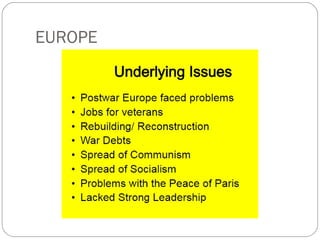
EUROPE
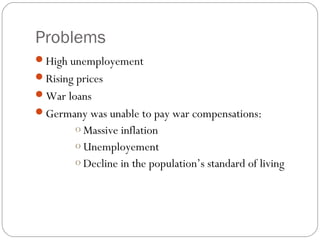
Problems
High unemployement
Rising prices
War loans
Germany was unable to pay war compensations:
o Massive inflation
o Unemployement
o Decline in the population’s standard of living
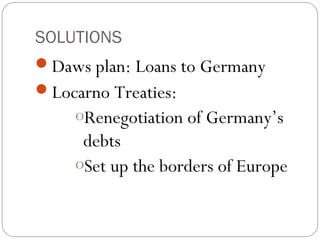
SOLUTIONS
Daws plan: Loans to Germany
Locarno Treaties:
oRenegotiation of Germany’s
debts
oSet up the borders of Europe
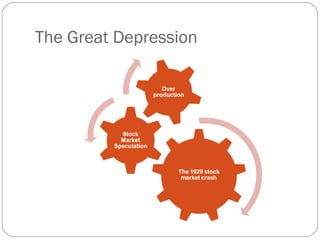
The Great Depression
Great Depression
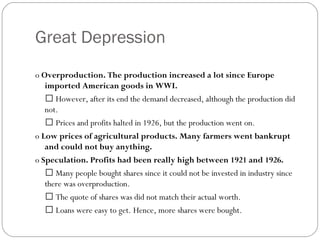
o Overproduction. The production increased a lot since Europe
imported American goods in WWI.
 However, after its end the demand decreased, although the production did
not.
 Prices and profits halted in 1926, but the production went on.
o Low prices of agricultural products. Many farmers went bankrupt
and could not buy anything.
o Speculation. Profits had been really high between 1921 and 1926.
 Many people bought shares since it could not be invested in industry since
there was overproduction.
 The quote of shares was did not match their actual worth.
 Loans were easy to get. Hence, more shares were bought.
Great Depression
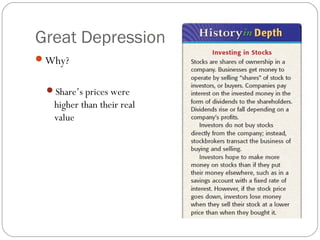
Why?
Share’s prices were
higher than their real
value
Great Depression
Great Depression
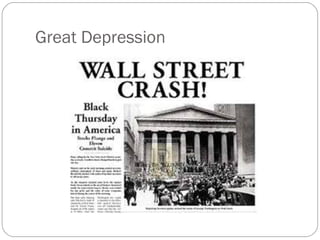
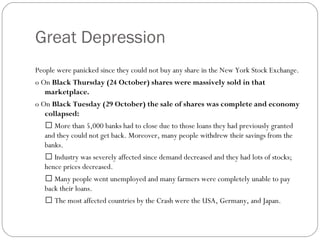
People were panicked since they could not buy any share in the New York Stock Exchange.
o On Black Thursday (24 October) shares were massively sold in that
marketplace.
o On Black Tuesday (29 October) the sale of shares was complete and economy
collapsed:
 More than 5,000 banks had to close due to those loans they had previously granted
and they could not get back. Moreover, many people withdrew their savings from the
banks.
 Industry was severely affected since demand decreased and they had lots of stocks;
hence prices decreased.
 Many people went unemployed and many farmers were completely unable to pay
back their loans.
 The most affected countries by the Crash were the USA, Germany, and Japan.
The Great Depression
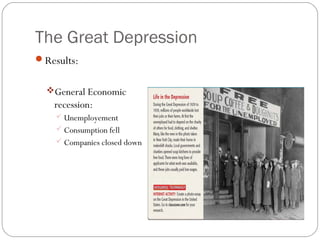
Results:
General Economic
recession:
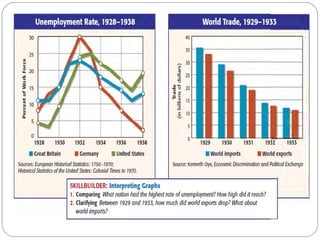
 Unemployement
 Consumption fell
 Companies closed down
The Great Depression
International consequences:
U.S. banks withdrew their money from Europe (they asked
for their loans)
Solutions
NEW DEAL
Problems in Europe
The roaring twenties

The roaring twenties

  • 1.
  • 4.
  • 5.
    Problems High unemployement Rising prices Warloans Germany was unable to pay war compensations: o Massive inflation o Unemployement o Decline in the population’s standard of living
  • 6.
    SOLUTIONS Daws plan: Loansto Germany Locarno Treaties: oRenegotiation of Germany’s debts oSet up the borders of Europe
  • 7.
  • 8.
    Great Depression o Overproduction.The production increased a lot since Europe imported American goods in WWI.  However, after its end the demand decreased, although the production did not.  Prices and profits halted in 1926, but the production went on. o Low prices of agricultural products. Many farmers went bankrupt and could not buy anything. o Speculation. Profits had been really high between 1921 and 1926.  Many people bought shares since it could not be invested in industry since there was overproduction.  The quote of shares was did not match their actual worth.  Loans were easy to get. Hence, more shares were bought.
  • 9.
    Great Depression Why? Share’s priceswere higher than their real value
  • 10.
  • 11.
    Great Depression People werepanicked since they could not buy any share in the New York Stock Exchange. o On Black Thursday (24 October) shares were massively sold in that marketplace. o On Black Tuesday (29 October) the sale of shares was complete and economy collapsed:  More than 5,000 banks had to close due to those loans they had previously granted and they could not get back. Moreover, many people withdrew their savings from the banks.  Industry was severely affected since demand decreased and they had lots of stocks; hence prices decreased.  Many people went unemployed and many farmers were completely unable to pay back their loans.  The most affected countries by the Crash were the USA, Germany, and Japan.
  • 12.
    The Great Depression Results: GeneralEconomic recession:  Unemployement  Consumption fell  Companies closed down
  • 13.
    The Great Depression Internationalconsequences: U.S. banks withdrew their money from Europe (they asked for their loans)
  • 14.