Sara Rossio
Chief Product Officer
G2
The Playbook for
Data-Oriented Product Design
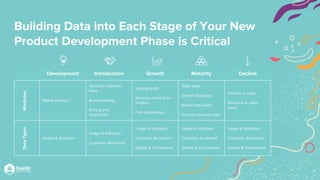
Building Data into Each Stage of Your New
Product Development Phase is Critical
Development Introduction Growth Maturity Decline
Ready product
Growing customer
base
Brand building
Pricing and
distribution
Gaining profit
Growing demand for
product
First competitors
Sales peak
Growth stabilizes
Market saturation
Need to innovate new
Decline in sales
Reinvent or ramp
down
Attributes
Usage & Adoption
Usage & Adoption
Customer Sentiment
Usage & Adoption
Customer Sentiment
Quality & Compliance
Usage & Adoption
Customer Sentiment
Quality & Compliance
Usage & Adoption
Customer Sentiment
Quality & Compliance
Data
Types
Internal applications Customer dashboards
Data is most valuable when it is readily available
Transparency →
Employee Loyalty
Transparency was the #1 factor
contributing to employee
overall happiness
Transparency →
Business Loyalty
73% of business leaders say
that trust builds customer
loyalty.
The first step to data transparency is hardest
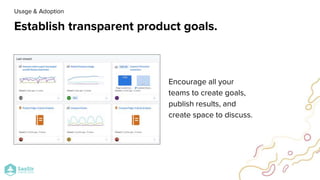
Establish transparent product goals.
Encourage all your
teams to create goals,
publish results, and
create space to discuss.
Usage & Adoption
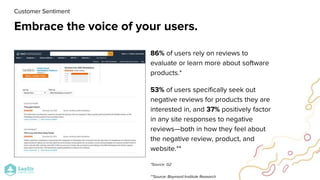
Embrace the voice of your users.
86% of users rely on reviews to
evaluate or learn more about software
products.*
53% of users specifically seek out
negative reviews for products they are
interested in, and 37% positively factor
in any site responses to negative
reviews—both in how they feel about
the negative review, product, and
website.**
*Source: G2
**Source: Baymard Institute Research
Customer Sentiment
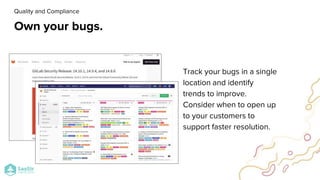
Own your bugs.
Track your bugs in a single
location and identify
trends to improve.
Consider when to open up
to your customers to
support faster resolution.
Quality and Compliance
1. Create always-on product data monitoring with your internal teams with
usage, sentiment, and compliance data.
1. Provide structure, tools and encouragement to analyze data sets and
iterate.
1. Use data to create conversations with your customers through data
transparency to increase loyalty.
My Top Takeaways
THANK YOU

The Playbook for Data-Oriented Product Design

  • 1.
    Sara Rossio Chief ProductOfficer G2 The Playbook for Data-Oriented Product Design
  • 2.
    Building Data intoEach Stage of Your New Product Development Phase is Critical Development Introduction Growth Maturity Decline Ready product Growing customer base Brand building Pricing and distribution Gaining profit Growing demand for product First competitors Sales peak Growth stabilizes Market saturation Need to innovate new Decline in sales Reinvent or ramp down Attributes Usage & Adoption Usage & Adoption Customer Sentiment Usage & Adoption Customer Sentiment Quality & Compliance Usage & Adoption Customer Sentiment Quality & Compliance Usage & Adoption Customer Sentiment Quality & Compliance Data Types
  • 3.
    Internal applications Customerdashboards Data is most valuable when it is readily available
  • 4.
    Transparency → Employee Loyalty Transparencywas the #1 factor contributing to employee overall happiness
  • 5.
    Transparency → Business Loyalty 73%of business leaders say that trust builds customer loyalty.
  • 6.
    The first stepto data transparency is hardest
  • 7.
    Establish transparent productgoals. Encourage all your teams to create goals, publish results, and create space to discuss. Usage & Adoption
  • 8.
    Embrace the voiceof your users. 86% of users rely on reviews to evaluate or learn more about software products.* 53% of users specifically seek out negative reviews for products they are interested in, and 37% positively factor in any site responses to negative reviews—both in how they feel about the negative review, product, and website.** *Source: G2 **Source: Baymard Institute Research Customer Sentiment
  • 9.
    Own your bugs. Trackyour bugs in a single location and identify trends to improve. Consider when to open up to your customers to support faster resolution. Quality and Compliance
  • 10.
    1. Create always-onproduct data monitoring with your internal teams with usage, sentiment, and compliance data. 1. Provide structure, tools and encouragement to analyze data sets and iterate. 1. Use data to create conversations with your customers through data transparency to increase loyalty. My Top Takeaways
  • 11.

Editor's Notes

  • #2 Full outline doc: https://docs.google.com/document/d/1cVuCiLPjn2q3GbeJdS4KtX4_mR3ZIoLnRhvSmGNCwVo/edit Session descriptor: How can your product design and development processes be more data-oriented? In this session, G2 Chief Product Officer Sara Rossio will answer this question and discuss how your product team can put forward the best product for your customers. Study Links: https://www.oliverwymanforum.com/future-of-data/2021/jul/digital-consumers-value-data-transparency-and-privacy.html https://medium.com/@Chaineum/trust-economy-the-21st-century-main-market-21afdb69bb4e https://www.pwc.com/us/en/zz-test/assets/pwc-consumer-intelligence-series-customer-experience.pdf https://www.pwc.com/us/en/library/trust-in-business-survey.html
  • #3 Establish Trust Economy around Data in New Product Development Define the new product development lifecycle of where and to whom you expose data Highlight types of data (usage, sentiment, compliance, etc.) Remind the audience of the typical data transparency - individual vs. aggregate Usage, sentiment, compliance as icons Include graphic at end as well as a reminder to reiterate
  • #4 Specific points around the migration from always present office dashboards for monitoring has shifted to new ways to be alerted of changes and engagement. Slack is the perfect example. Customer dashboards should be all inclusive and also follow the same goals to drive action. New relic instead of G2 Shift from dashboards to engagement - as product evolves, dashboard needs to as well to become more engaging
  • #5 A whopping 87% of workers surveyed by Slack in our 2018 Future of Work study said they hoped their next job would be transparent; another study from employee-feedback company TINYpulse surveying more than 40,000 workers found that transparency was the number one factor contributing to their overall happiness.
  • #6 PwC Study: https://www.pwc.com/us/en/library/trust-in-business-survey.html \One survey from consulting firm Label Insight found that 94% of consumers prefer brands that practice transparency. 73% of business leaders say that trust helps “a lot” with customer loyalty.
  • #7 Start early in your process. There is a willingness to share Establish clear user goals. Embrace the good and the bad user reviews. Share even when it isn’t comfortable. Create strong awareness of the current data points, and share more ways to improve 63% of U.S. consumers say they’d share more information with a company that offers a great experience
  • #9 86% of users rely on reviews to evaluate or learn more about software products.* 53% of users specifically seek out negative reviews for products they are interested in, and 37% positively factor in any site responses to negative reviews—both in how they feel about the negative review, product, and website.**
  • #10 https://about.gitlab.com/releases/2022/05/02/security-release-gitlab-14-10-1-released/ Pricing (Productiv/Vendr) Usage / Behavioral (Key product analytics - Google Analytics, Amplitude) Sentiment (G2) Security (Buyer Behavior Study)
  • #11 While it feels hard to start, lean into building transparency internally and externally on your new products. Internally: cross-functional teams like engineering, product management, UX, research, project management, etc. Externally: customers AND prospects Consider the places that can generate engagement and agreement in line with your strategy. Where in the customer journey should these engagement points take place? Earlier or later? Evaluate the potential outcomes of building loyalty What will it mean in terms of growing your product, revenue and business?