Scaling CS:
From 0-5,000 Customers
Ashley Hyman
VP, Customer Experience
Drata
Wen Yao
VP, Customer Success Management
Drata
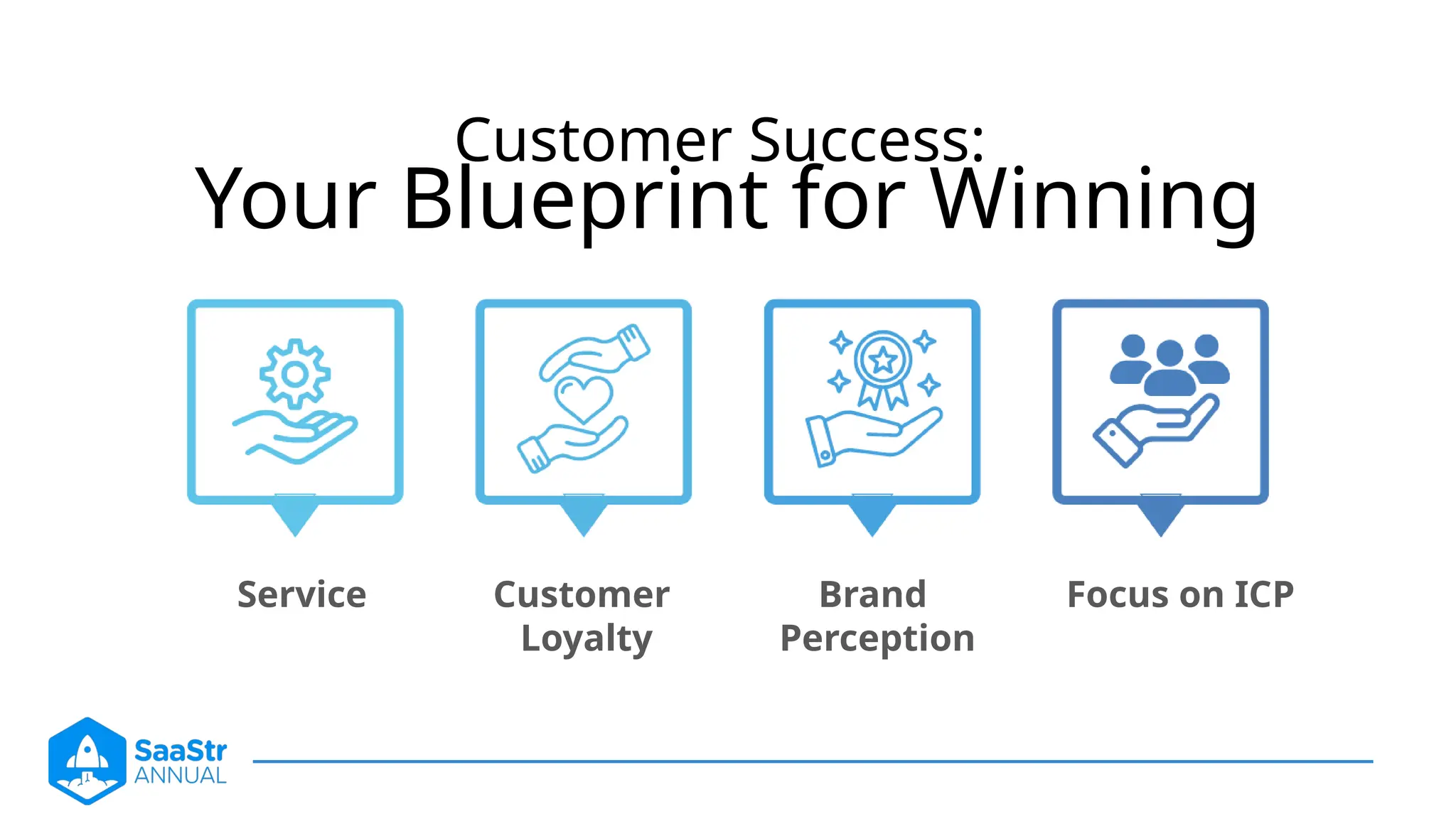
Customer Success:
Your Blueprint for Winning
Service Customer
Loyalty
Brand
Perception
Focus on ICP
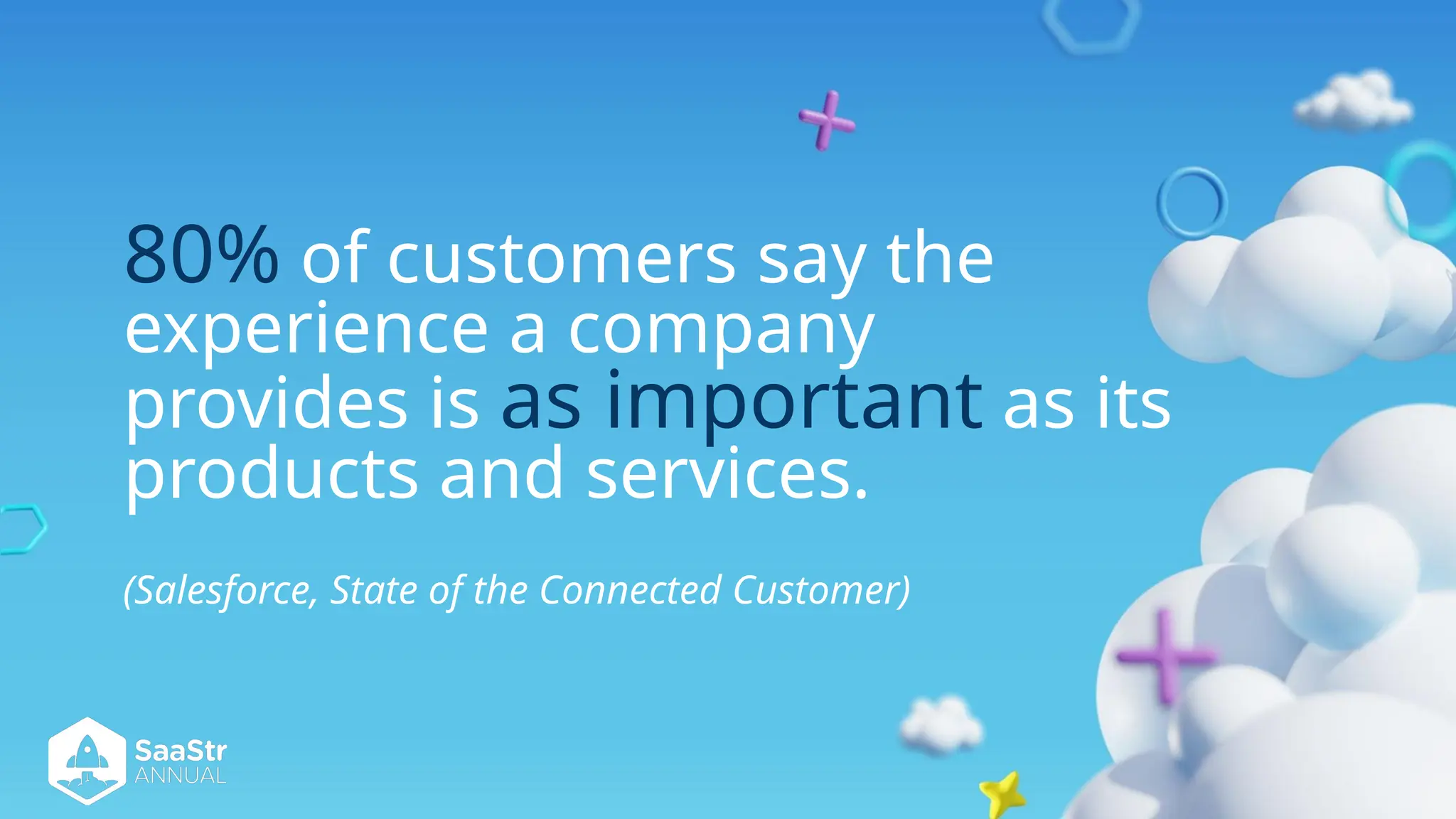
80% of customers say the
experience a company
provides is as important as its
products and services.
(Salesforce, State of the Connected Customer)
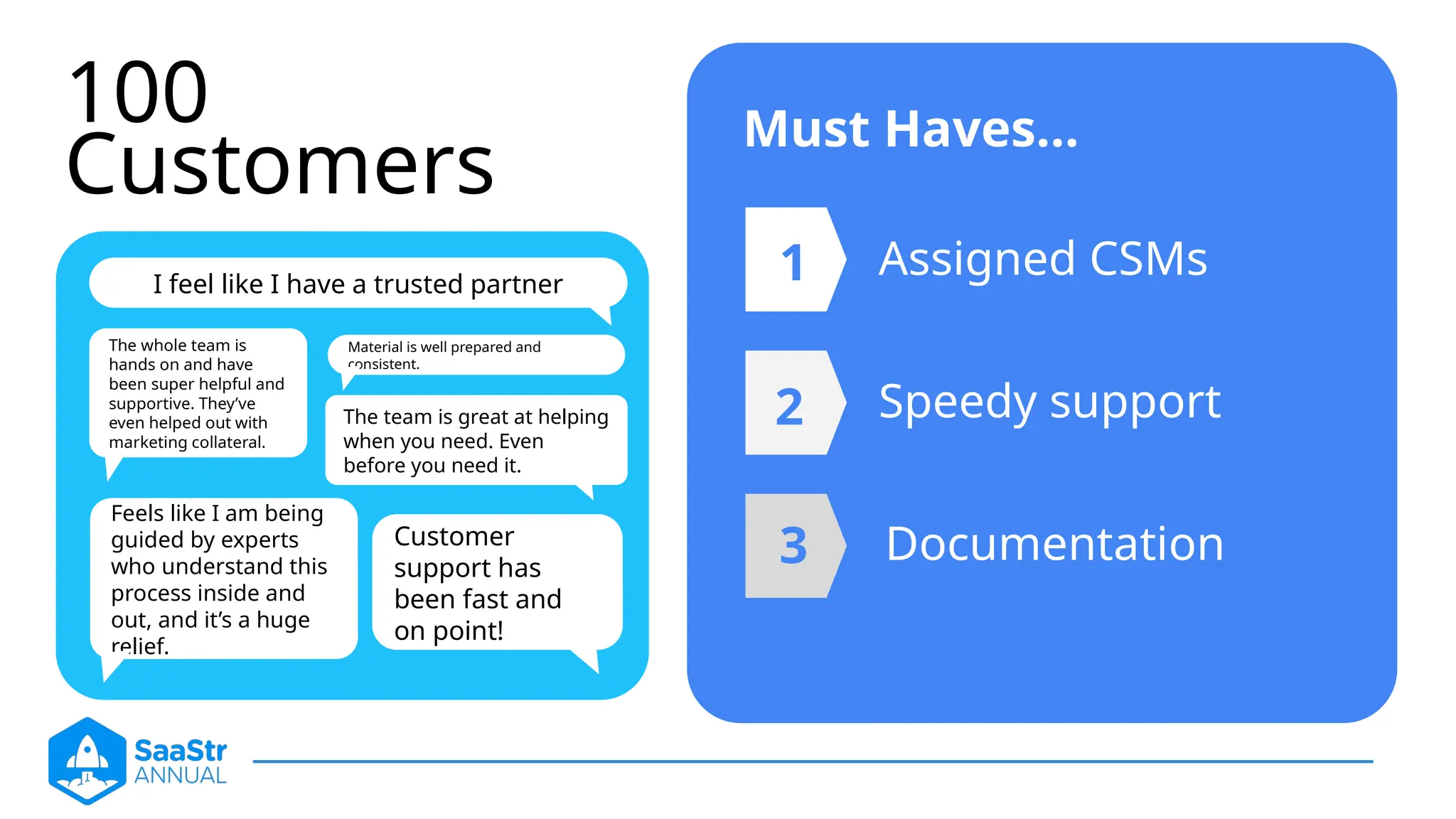
100
Customers
Must Haves…
2
1
3
I feel like I have a trusted partner
Customer
support has
been fast and
on point!
The whole team is
hands on and have
been super helpful and
supportive. They’ve
even helped out with
marketing collateral.
The team is great at helping
when you need. Even
before you need it.
Material is well prepared and
consistent.
Feels like I am being
guided by experts
who understand this
process inside and
out, and it’s a huge
relief.
Assigned CSMs
Speedy support
Documentation
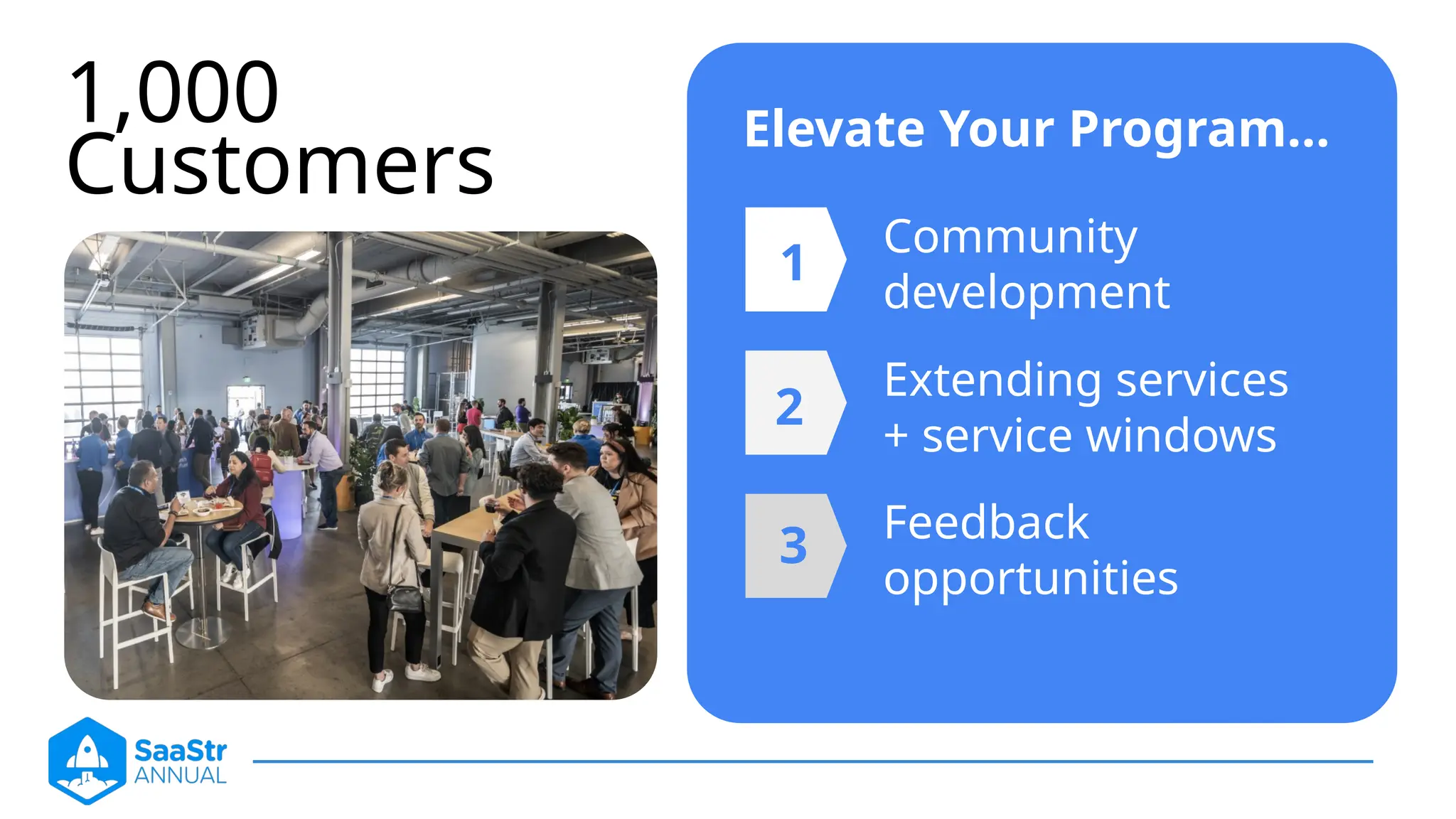
1,000
Customers
Elevate Your Program…
2
1
3
Community
development
Extending services
+ service windows
Feedback
opportunities
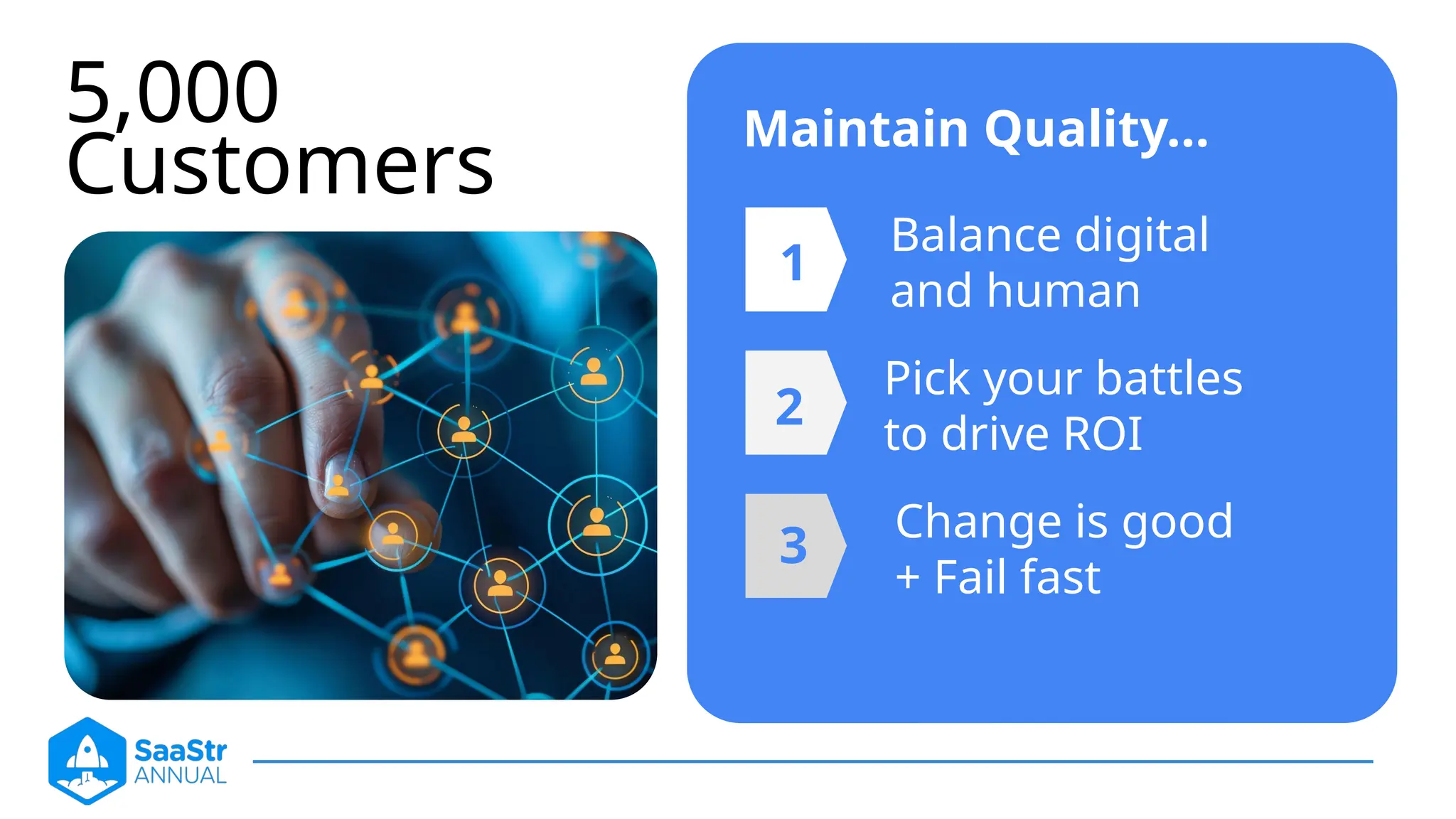
5,000
Customers
Maintain Quality…
Balance digital
and human
Pick your battles
to drive ROI
Change is good
+ Fail fast
2
1
3
Key Takeaways
New stage = new challenges
Never underestimate
customer feedback
Don’t neglect value delivery
Want to chat more? Come see us
at:
DRATA BOOTH: P301
1
2
3
Drata booth: P301
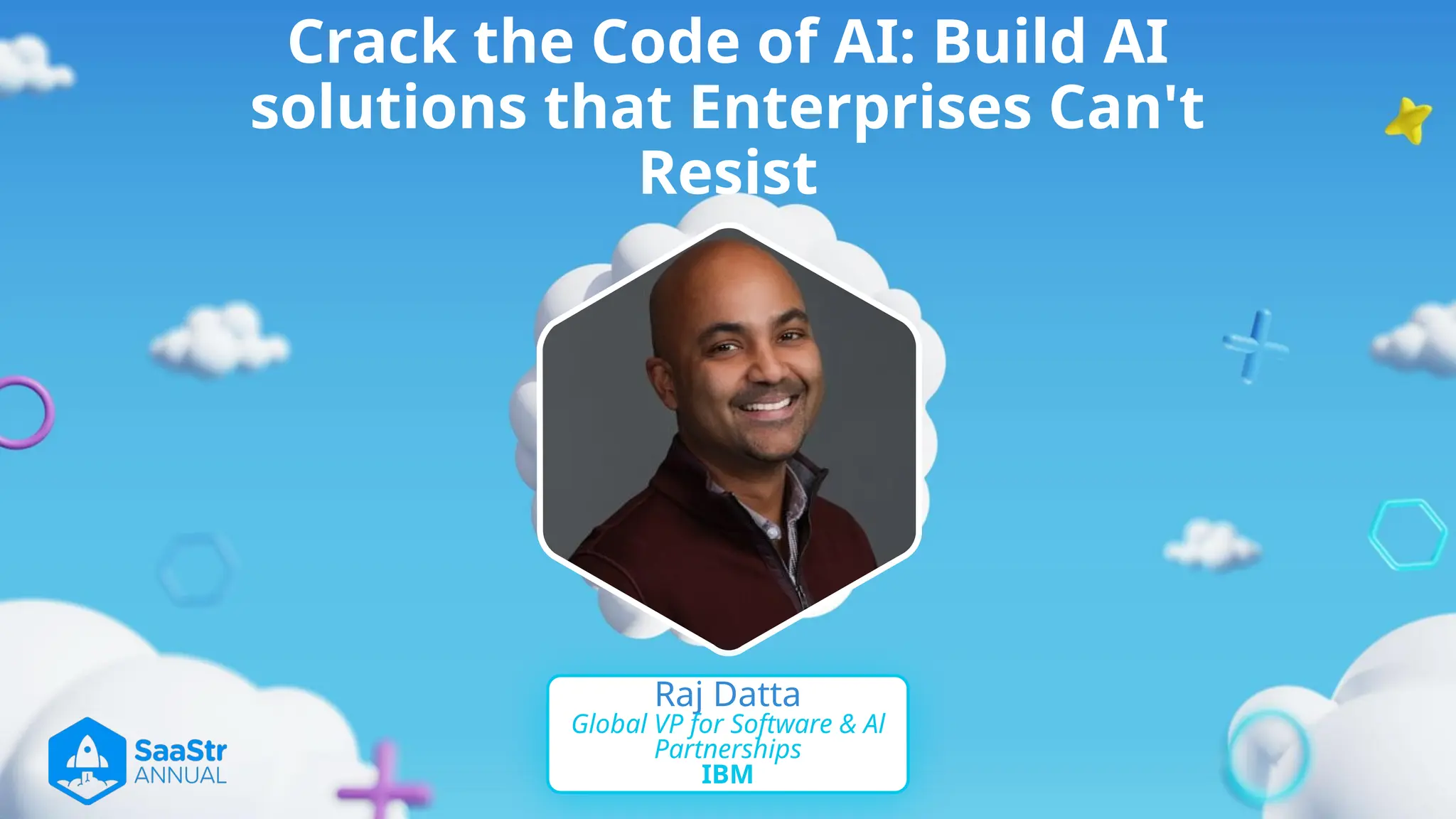
Crack the Code of AI: Build AI
solutions that Enterprises Can't
Resist
Raj Datta
Global VP for Software & Al
Partnerships
IBM

SaaStr Annual 2024: Scaling CS: From 0-5,000 Customers with Drata

Editor's Notes

  • #1 [Ashley, 30 sec] Hi everyone, I’m Ashley Hyman, VP of Customer Experience at Drata, a continuous compliance automation company. [Wen, 30 sec] Hi everyone, I’m Wen Yao VP of Customer Success Management at Drata, and we’re here to dive into what it takes to Scale Customer Success, growing from 0 - 5,000 Customers
  • #2 [Wen, 3 min] First, let’s set the stage a little bit. For most early startups, your product likely isn’t at a mature stage. And while the company is trying to differentiate the product or even just to get to that product parity with your competitors, you have to also differentiate yourselves elsewhere. That’s where Customer Success comes in. It’s the most fundamental building block to your organization, that can make or break your ability to grow. By focusing on things like customer service, customer loyalty, brand perception, and Ideal customer profile early on, you’re able to get your foot in the door with your respective market and compete aggressively. We took on this approach at Drata and it’s helped us scale to 5,000 customers in just 3.5 years.
  • #3 [Wen, 30 sec] having said that, it is not surprising that from many successful SaaS organizations that have gone through this journey like SalesForce and others, Customer Success is key to growth: from your first interaction, to onboarding and beyond. Every touch point matters. And for long-term scalability, your Customer Success program has to evolve at different stages of your org. So let’s get into it.
  • #4 [Ashley, 3 min] Getting to your first 100 customers is an incredible milestone. While you might not be thinking about scaling your CS program at this stage, you should be thinking about your reputation and brand perception. When you’re in this stage competing against more mature companies, CS is ultimately the differentiator. Very few companies invest in CS let alone make CS one of their first 10 hires—I can tell you firsthand, for us, it made a huge difference. We put CS first and built the company around CS and it was and is our key differentiator. And at the start, this meant giving everything to everyone–building your reputation is the priority. For example, when Drata launched, we knew this was an area our competitors had neglected. So we invested heavily in: -Assigned CSMs: having a human to guide our customers every step of the way -Setting up support channels: from our platform to email and Slack and everything in between, we made sure we were reachable for feedback and questions -Providing detailed documentation: things like help guides, FAQs, and templates to truly show we were anticipating their every need These were the first elements we had in place for CS and it helped us earn our first 100 customers in just 45 days since our public launch.
  • #5 [Ashley, 3 min] Now, growing to 1,000 customers can feel like a blur. But it’s a critical next step that requires formalizing your CS program. You’re starting to build a community, so you need to treat it like one. For starters, establish a Customer Advisory Board for your high value customers to help mature your product roadmap. And we personally meet with our customers at every trade show - either at dinner, lunch, baseball game, whatever it may be. It’s important to connect on a human to human level especially in a SaaS environment. Extend your service windows. Continue to invest in your support channels as you scale, especially internationally. Having human support in different time zones that address a large portion of your customer base is a major differentiator. Expand opportunities for customers to provide feedback. Feedback is gold, and needs to be strategically collected. Deploy surveys, interactive product sessions, or in-app tooling to gather feedback from a variety of sources that are most convenient to your customer.
  • #6 [Wen, 3 min] Alright… 1,000 customers is now 5,000 - which by the way, can quickly turn into 8,000! The stakes are incredibly high for your organization at this stage and it requires you to take a step back and re-evaluate your CS program. This means avoiding spreading yourself too thin - know how to get the most out of your CSM relationships and create efficiency. Not every interaction requires a human touchpoint, but there’s a delicate balance. Be intentional. And the reality is that the budget might become tighter due to various reasons esp in this economy we live in today. (wen suggests: Your Ops team is your best friend - having a strong ops team that can help your analyze data to drive more efficiency, especially by now, you have a lot of customer insight and data, and this will ultimately guide you to make better/smarter decisions as you scale. And you absolutely have to do this on a regular basis, AB test this frequently so you have a good combination of hypothesis and data to support and articulate your asks/findings to your leadership team including board members) You’ll have to pick your battles to drive ROI and future investments. What customer segment is driving revenue? What segment is keeping the lights on, and what industry or org size is your bread and butter? Asking these questions will help you make smart decisions to achieve your goals. For example, you might have to build out and scale your services in order to go upmarket. This means re-prioritizing what’s truly important for CS. Finally, just because you implemented something 3 months ago doesn’t mean you can’t modify it. In reality, your annual operating plan is probably good for 8 months rather than an entire year. But scaling fast also means you have to learn fast. At Drata, we tell ourselves failing is ok as long as you take what you learned and use it to improve.
  • #7 [Ashley, 1 min] It’s important to remember each stage of your CS program brings new challenges. Don’t ignore them, adapt to them and continue to iterate. Never underestimate customer feedback, it’s not just the differentiator for your CS program, but it ultimately can differentiate your product innovation and place in the market. And don’t neglect value delivery. Anticipating and exceeding expectations is table stakes. Trust me, it’ll show up in your G2 reviews. We appreciate you all joining us for our chat today! Thank you!