The OSI Model: Understanding
Data Communication
Exploring the fundamental principles of data communication through the lens of the OSI model
Name : Sachin Sarker
ID : 232-15-249
Section : 65_D
Introduction to the OSI Model
Fundamental Concept in Data
Communication
The OSI model provides a structured framework for
understanding how information is transmitted and
received in data communication systems.
Layered Architecture
The OSI model consists of seven distinct layers, each
with its own specific functions and responsibilities.
Standardized Approach
The OSI model helps to ensure interoperability
and compatibility between different
communication devices and protocols.
By understanding the OSI model, students will gain a comprehensive understanding of
the fundamental principles of data communication and be able to design, troubleshoot,
and optimize data communication systems.
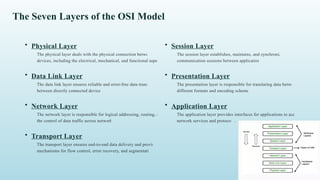
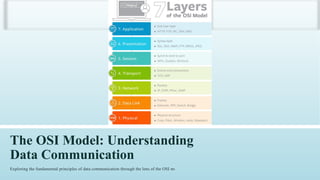
The Seven Layers of the OSI Model
• Physical Layer
The physical layer deals with the physical connection between
devices, including the electrical, mechanical, and functional aspects.
• Data Link Layer
The data link layer ensures reliable and error-free data transfer
between directly connected devices.
• Network Layer
The network layer is responsible for logical addressing, routing, and
the control of data traffic across networks.
• Transport Layer
The transport layer ensures end-to-end data delivery and provides
mechanisms for flow control, error recovery, and segmentation.
• Session Layer
The session layer establishes, maintains, and synchronizes
communication sessions between applications.
• Presentation Layer
The presentation layer is responsible for translating data between
different formats and encoding schemes.
• Application Layer
The application layer provides interfaces for applications to access
network services and protocols.
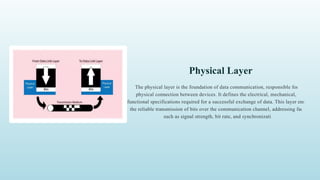
Physical Layer
The physical layer is the foundation of data communication, responsible for the
physical connection between devices. It defines the electrical, mechanical, and
functional specifications required for a successful exchange of data. This layer ensures
the reliable transmission of bits over the communication channel, addressing factors
such as signal strength, bit rate, and synchronization.
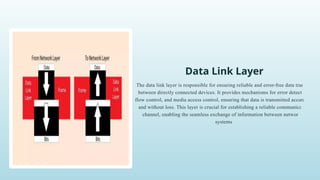
Data Link Layer
The data link layer is responsible for ensuring reliable and error-free data transfer
between directly connected devices. It provides mechanisms for error detection,
flow control, and media access control, ensuring that data is transmitted accurately
and without loss. This layer is crucial for establishing a reliable communication
channel, enabling the seamless exchange of information between networked
systems.
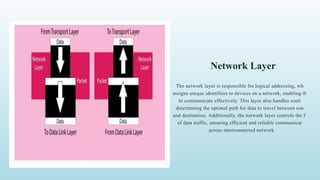
Network Layer
The network layer is responsible for logical addressing, which
assigns unique identifiers to devices on a network, enabling them
to communicate effectively. This layer also handles routing,
determining the optimal path for data to travel between source
and destination. Additionally, the network layer controls the flow
of data traffic, ensuring efficient and reliable communication
across interconnected networks.
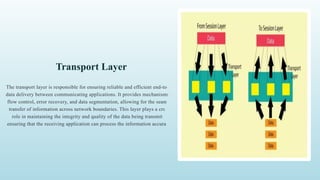
Transport Layer
The transport layer is responsible for ensuring reliable and efficient end-to-end
data delivery between communicating applications. It provides mechanisms for
flow control, error recovery, and data segmentation, allowing for the seamless
transfer of information across network boundaries. This layer plays a crucial
role in maintaining the integrity and quality of the data being transmitted,
ensuring that the receiving application can process the information accurately.
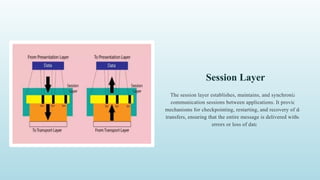
Session Layer
The session layer establishes, maintains, and synchronizes
communication sessions between applications. It provides
mechanisms for checkpointing, restarting, and recovery of data
transfers, ensuring that the entire message is delivered without
errors or loss of data.
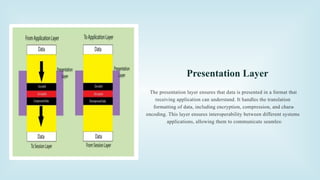
Presentation Layer
The presentation layer ensures that data is presented in a format that the
receiving application can understand. It handles the translation and
formatting of data, including encryption, compression, and character
encoding. This layer ensures interoperability between different systems and
applications, allowing them to communicate seamlessly.
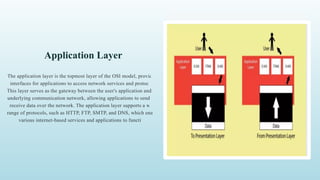
Application Layer
The application layer is the topmost layer of the OSI model, providing
interfaces for applications to access network services and protocols.
This layer serves as the gateway between the user's application and the
underlying communication network, allowing applications to send and
receive data over the network. The application layer supports a wide
range of protocols, such as HTTP, FTP, SMTP, and DNS, which enable
various internet-based services and applications to function.
The OSI Model: Understanding
Data Communication
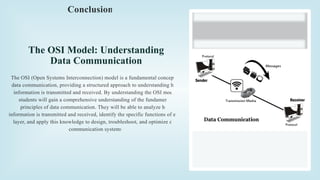
The OSI (Open Systems Interconnection) model is a fundamental concept in
data communication, providing a structured approach to understanding how
information is transmitted and received. By understanding the OSI model,
students will gain a comprehensive understanding of the fundamental
principles of data communication. They will be able to analyze how
information is transmitted and received, identify the specific functions of each
layer, and apply this knowledge to design, troubleshoot, and optimize data
communication systems.
Conclusion
Reference
Geeksfor Geeks: Retrieved from https://www.geeksforgeeks.org/types-of-network-topology/ (2025, 11 March )
IBM :Retrieved from https://www.ibm.com/think/topics/network-topology/ (2025, February 28)
Cato Networks: Retrieved from https://www.catonetworks.com/glossary/network-topologies/ topology (2025).
Wikipedia: Retrieved from https://en.wikipedia.org/wiki/Network_topology (2025, March 13).
Course Lecture Slides: BLC (2025, January 18)
THANK YOU

The OSI Model Understanding Data Communication (FINAL).pptx

  • 1.
    The OSI Model:Understanding Data Communication Exploring the fundamental principles of data communication through the lens of the OSI model
  • 2.
    Name : SachinSarker ID : 232-15-249 Section : 65_D
  • 3.
    Introduction to theOSI Model Fundamental Concept in Data Communication The OSI model provides a structured framework for understanding how information is transmitted and received in data communication systems. Layered Architecture The OSI model consists of seven distinct layers, each with its own specific functions and responsibilities. Standardized Approach The OSI model helps to ensure interoperability and compatibility between different communication devices and protocols. By understanding the OSI model, students will gain a comprehensive understanding of the fundamental principles of data communication and be able to design, troubleshoot, and optimize data communication systems.
  • 4.
    The Seven Layersof the OSI Model • Physical Layer The physical layer deals with the physical connection between devices, including the electrical, mechanical, and functional aspects. • Data Link Layer The data link layer ensures reliable and error-free data transfer between directly connected devices. • Network Layer The network layer is responsible for logical addressing, routing, and the control of data traffic across networks. • Transport Layer The transport layer ensures end-to-end data delivery and provides mechanisms for flow control, error recovery, and segmentation. • Session Layer The session layer establishes, maintains, and synchronizes communication sessions between applications. • Presentation Layer The presentation layer is responsible for translating data between different formats and encoding schemes. • Application Layer The application layer provides interfaces for applications to access network services and protocols.
  • 5.
    Physical Layer The physicallayer is the foundation of data communication, responsible for the physical connection between devices. It defines the electrical, mechanical, and functional specifications required for a successful exchange of data. This layer ensures the reliable transmission of bits over the communication channel, addressing factors such as signal strength, bit rate, and synchronization.
  • 6.
    Data Link Layer Thedata link layer is responsible for ensuring reliable and error-free data transfer between directly connected devices. It provides mechanisms for error detection, flow control, and media access control, ensuring that data is transmitted accurately and without loss. This layer is crucial for establishing a reliable communication channel, enabling the seamless exchange of information between networked systems.
  • 7.
    Network Layer The networklayer is responsible for logical addressing, which assigns unique identifiers to devices on a network, enabling them to communicate effectively. This layer also handles routing, determining the optimal path for data to travel between source and destination. Additionally, the network layer controls the flow of data traffic, ensuring efficient and reliable communication across interconnected networks.
  • 8.
    Transport Layer The transportlayer is responsible for ensuring reliable and efficient end-to-end data delivery between communicating applications. It provides mechanisms for flow control, error recovery, and data segmentation, allowing for the seamless transfer of information across network boundaries. This layer plays a crucial role in maintaining the integrity and quality of the data being transmitted, ensuring that the receiving application can process the information accurately.
  • 9.
    Session Layer The sessionlayer establishes, maintains, and synchronizes communication sessions between applications. It provides mechanisms for checkpointing, restarting, and recovery of data transfers, ensuring that the entire message is delivered without errors or loss of data.
  • 10.
    Presentation Layer The presentationlayer ensures that data is presented in a format that the receiving application can understand. It handles the translation and formatting of data, including encryption, compression, and character encoding. This layer ensures interoperability between different systems and applications, allowing them to communicate seamlessly.
  • 11.
    Application Layer The applicationlayer is the topmost layer of the OSI model, providing interfaces for applications to access network services and protocols. This layer serves as the gateway between the user's application and the underlying communication network, allowing applications to send and receive data over the network. The application layer supports a wide range of protocols, such as HTTP, FTP, SMTP, and DNS, which enable various internet-based services and applications to function.
  • 12.
    The OSI Model:Understanding Data Communication The OSI (Open Systems Interconnection) model is a fundamental concept in data communication, providing a structured approach to understanding how information is transmitted and received. By understanding the OSI model, students will gain a comprehensive understanding of the fundamental principles of data communication. They will be able to analyze how information is transmitted and received, identify the specific functions of each layer, and apply this knowledge to design, troubleshoot, and optimize data communication systems. Conclusion
  • 13.
    Reference Geeksfor Geeks: Retrievedfrom https://www.geeksforgeeks.org/types-of-network-topology/ (2025, 11 March ) IBM :Retrieved from https://www.ibm.com/think/topics/network-topology/ (2025, February 28) Cato Networks: Retrieved from https://www.catonetworks.com/glossary/network-topologies/ topology (2025). Wikipedia: Retrieved from https://en.wikipedia.org/wiki/Network_topology (2025, March 13). Course Lecture Slides: BLC (2025, January 18)

  • 14.