Welcome to The Money Path!

Presented by Kim Yuhl,

creator of secretsofbetterbusiness.com
Who Am I?
Wife & Mom

• Small Business Owner

• Passionate About Social

• Blogger

• Coach, Mentor, Advisor

• Martini Drinker

• World Traveler

!
kimyuhl.com

secretsofbetterbusiness.com

twomartinilunch.com
•
WHAT IS THE MONEY PATH?
About This Course

•

Understanding Your Business Model

•

Do Your Homework

•

Answer Honestly; The Score is Meaningless
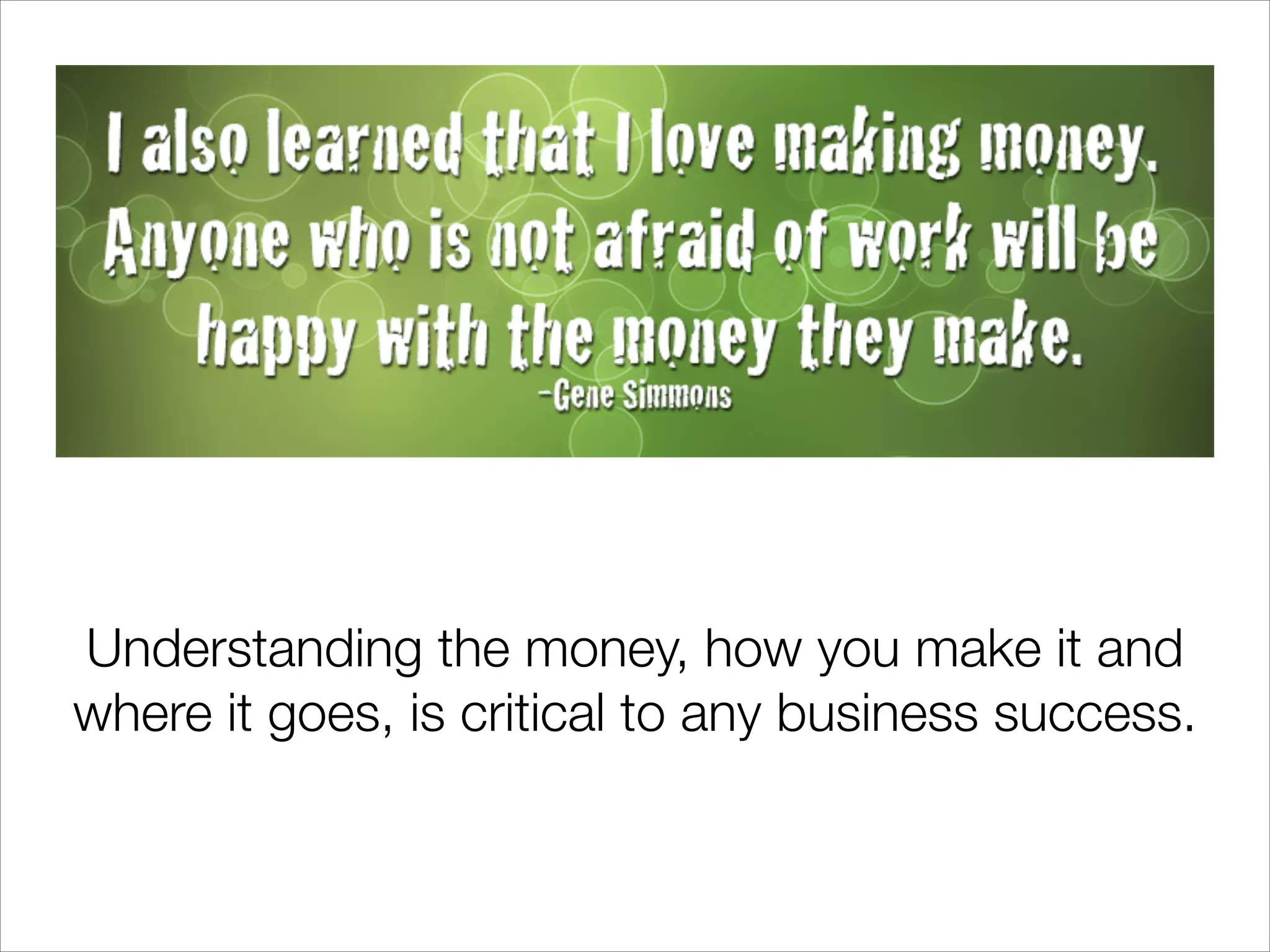
Understanding the money, how you make it and
where it goes, is critical to any business success.
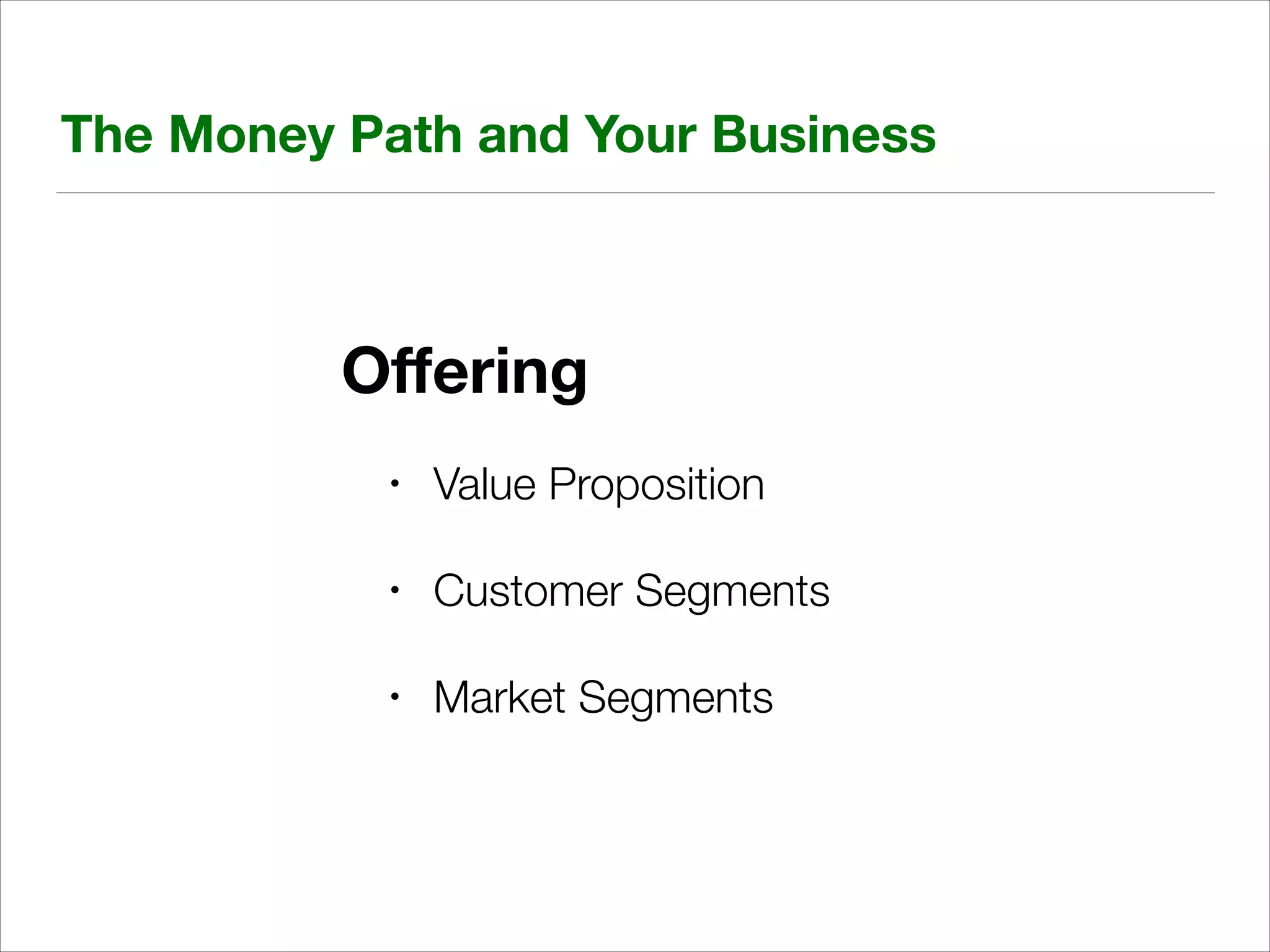
The Money Path and Your Business

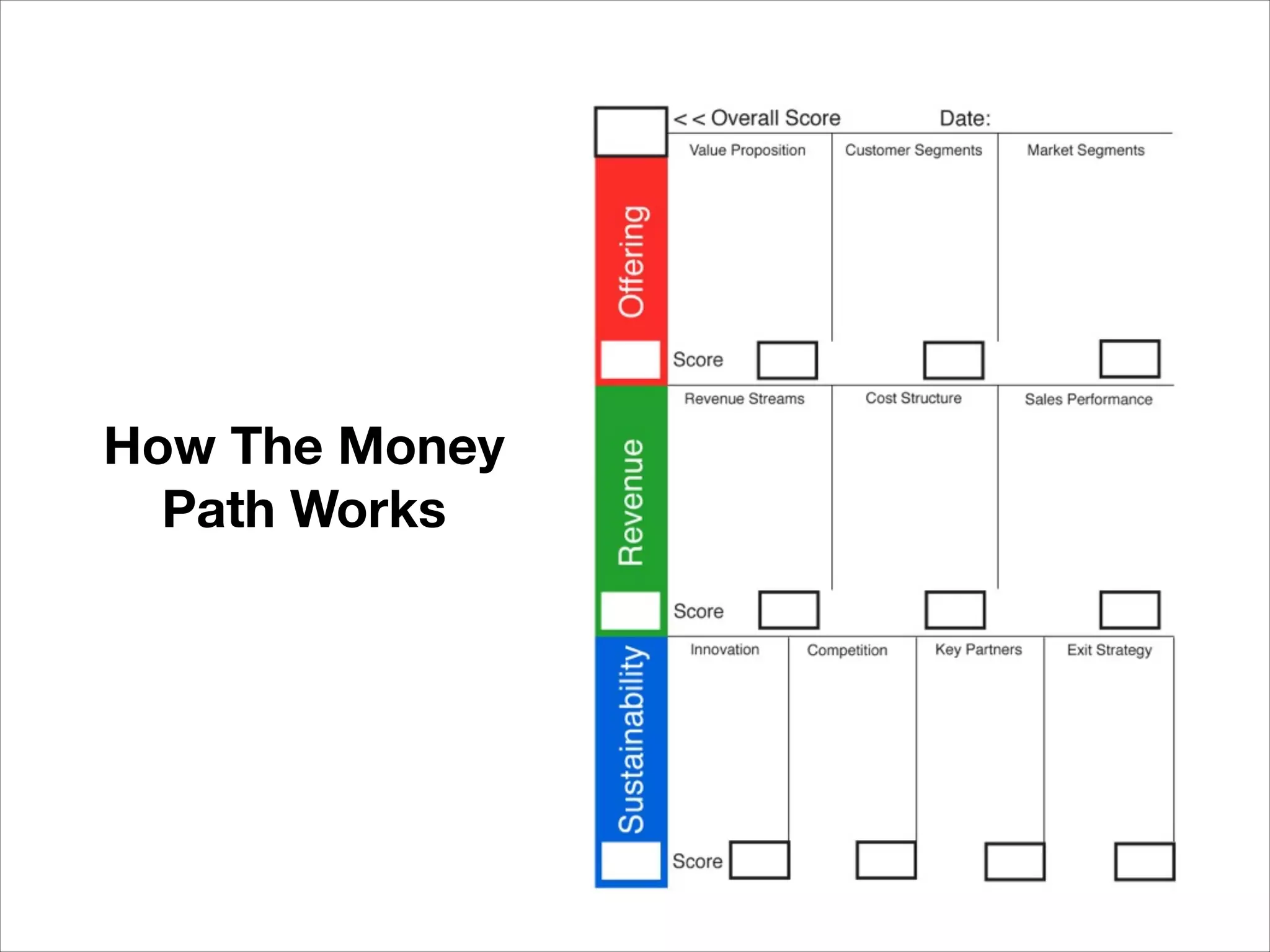
Offering
•

Value Proposition

•

Customer Segments

•

Market Segments
The Money Path and Your Business

Revenue
•

Revenue Stream

•

Cost Structure

•

Sales Performance
The Money Path and Your Business

Sustainability
•

Innovation

•

Competitive Advantage

•

Key Partners

•

Exit Strategy
How The Money
Path Works
Offering: Value Proposition

•

How unique and different is your product or service?

•

Is there a customer need for your product or service?

•

How valuable is what you offer to your customers?

•

Is your product or service priced competitively?
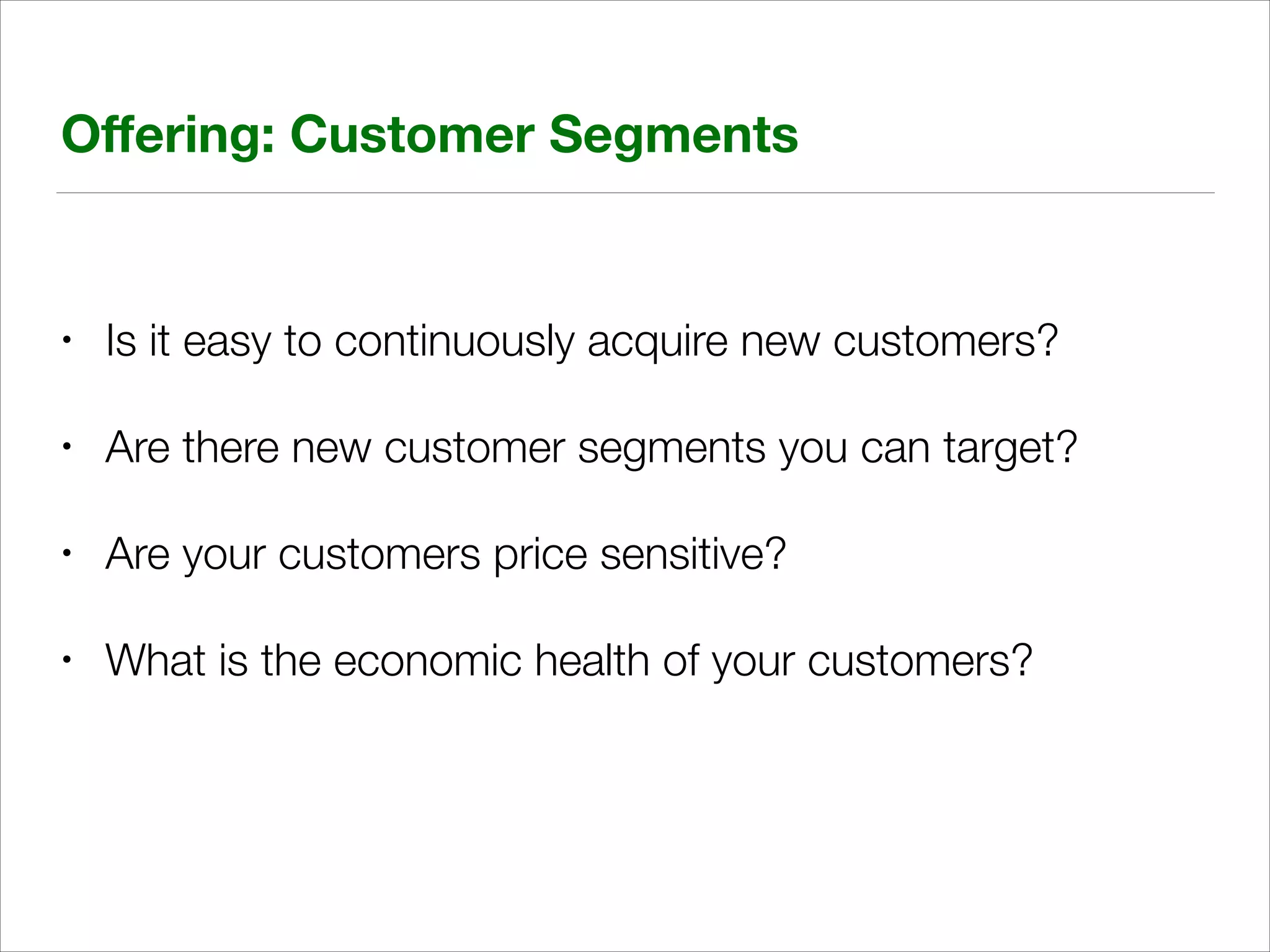
Offering: Customer Segments

•

Is it easy to continuously acquire new customers?

•

Are there new customer segments you can target?

•

Are your customers price sensitive?

•

What is the economic health of your customers?
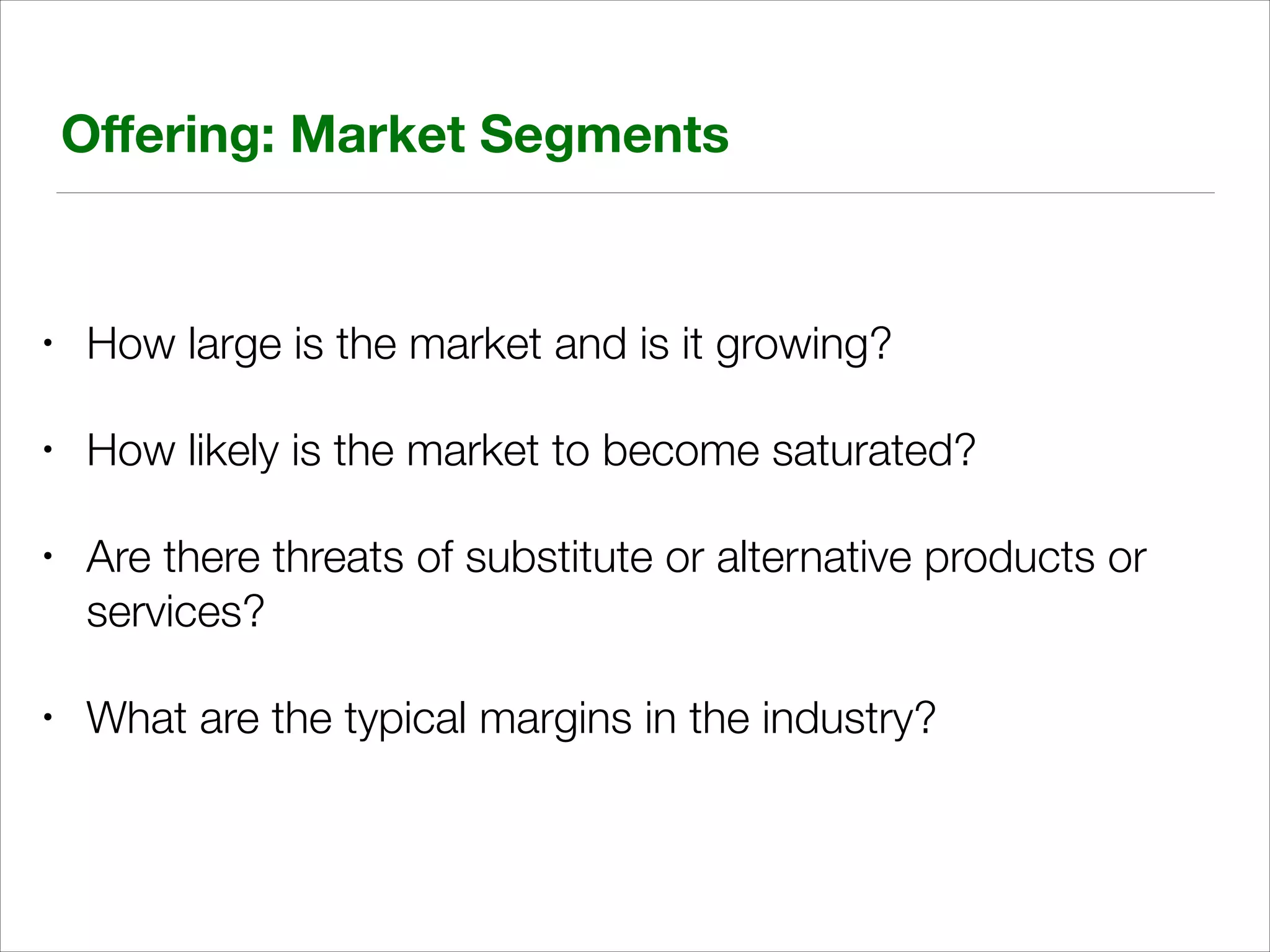
Offering: Market Segments

•

How large is the market and is it growing?

•

How likely is the market to become saturated?

•

Are there threats of substitute or alternative products or
services?

•

What are the typical margins in the industry?
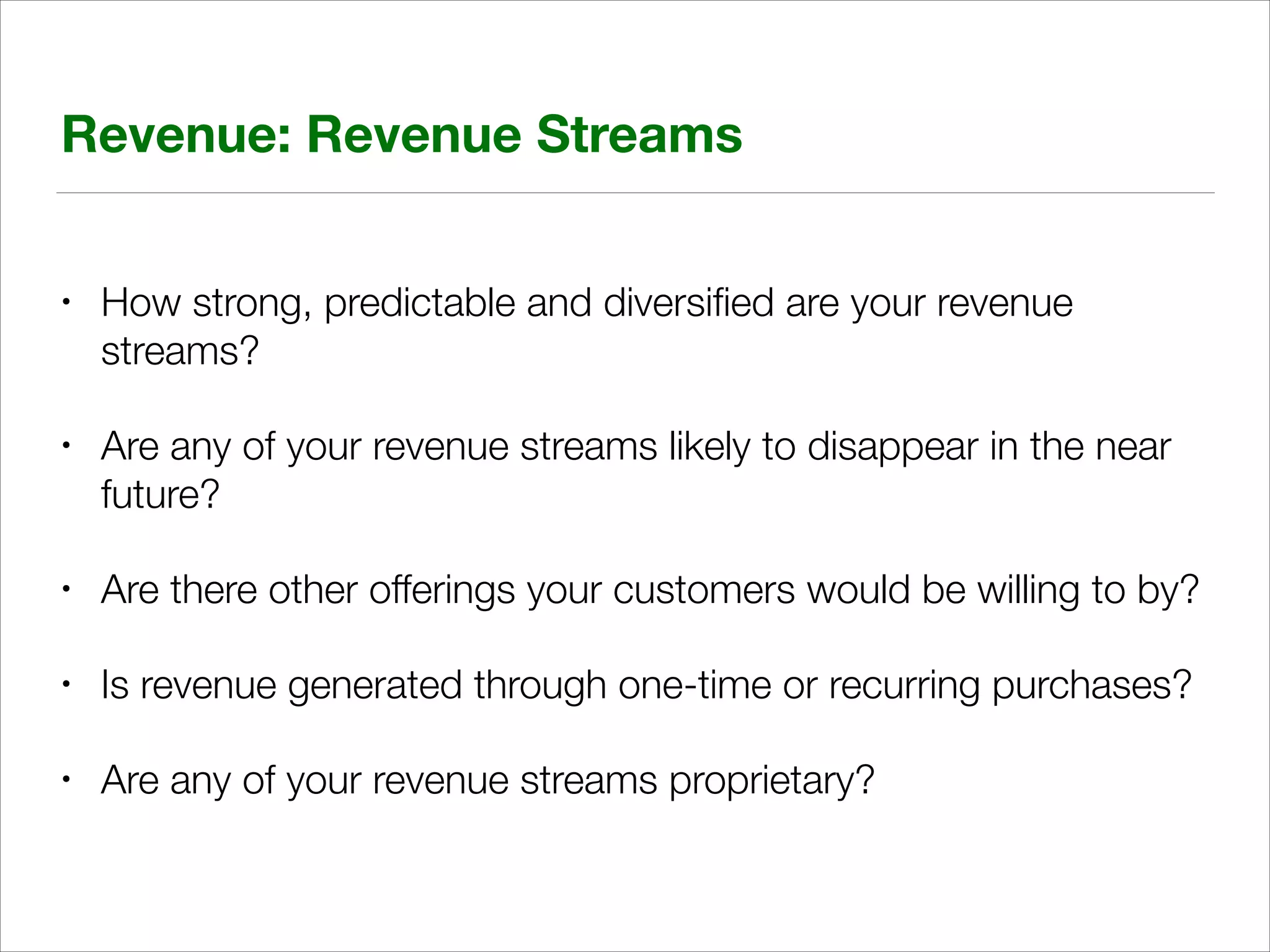
Revenue: Revenue Streams
•

How strong, predictable and diversified are your revenue
streams?

•

Are any of your revenue streams likely to disappear in the near
future?

•

Are there other offerings your customers would be willing to by?

•

Is revenue generated through one-time or recurring purchases?

•

Are any of your revenue streams proprietary?
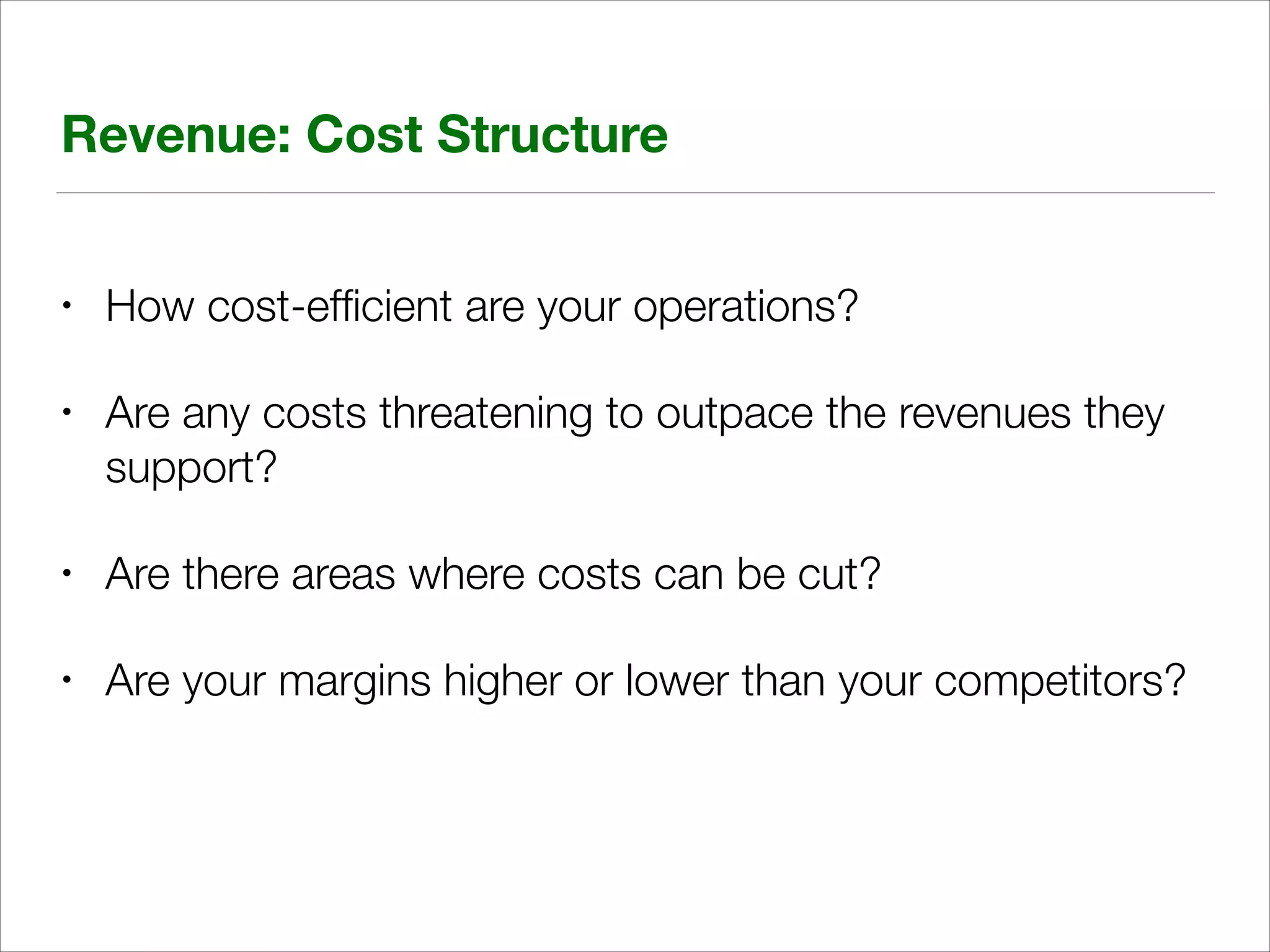
Revenue: Cost Structure
•

How cost-efficient are your operations?

•

Are any costs threatening to outpace the revenues they
support?

•

Are there areas where costs can be cut?

•

Are your margins higher or lower than your competitors?
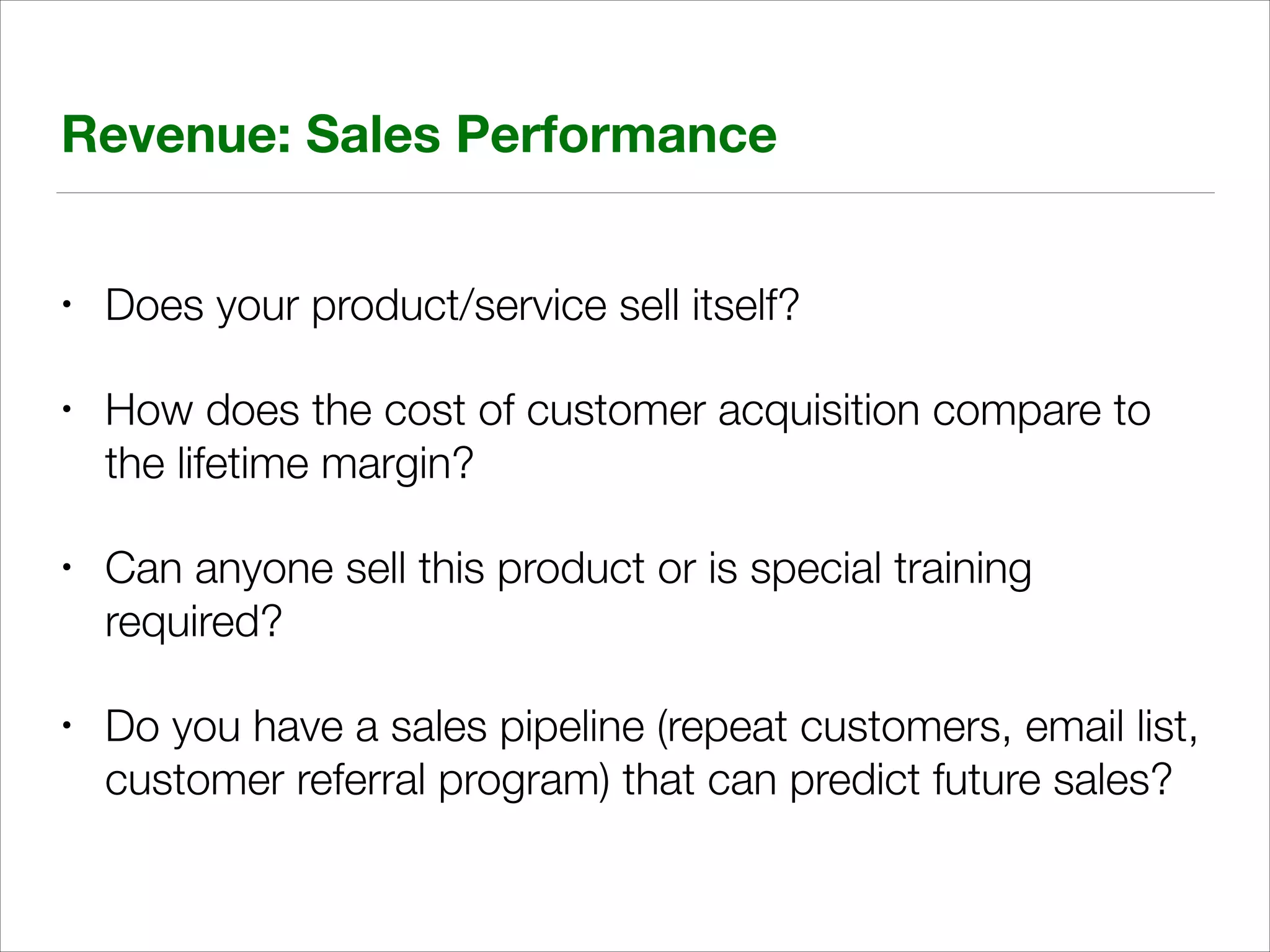
Revenue: Sales Performance
•

Does your product/service sell itself?

•

How does the cost of customer acquisition compare to
the lifetime margin?

•

Can anyone sell this product or is special training
required?

•

Do you have a sales pipeline (repeat customers, email list,
customer referral program) that can predict future sales?
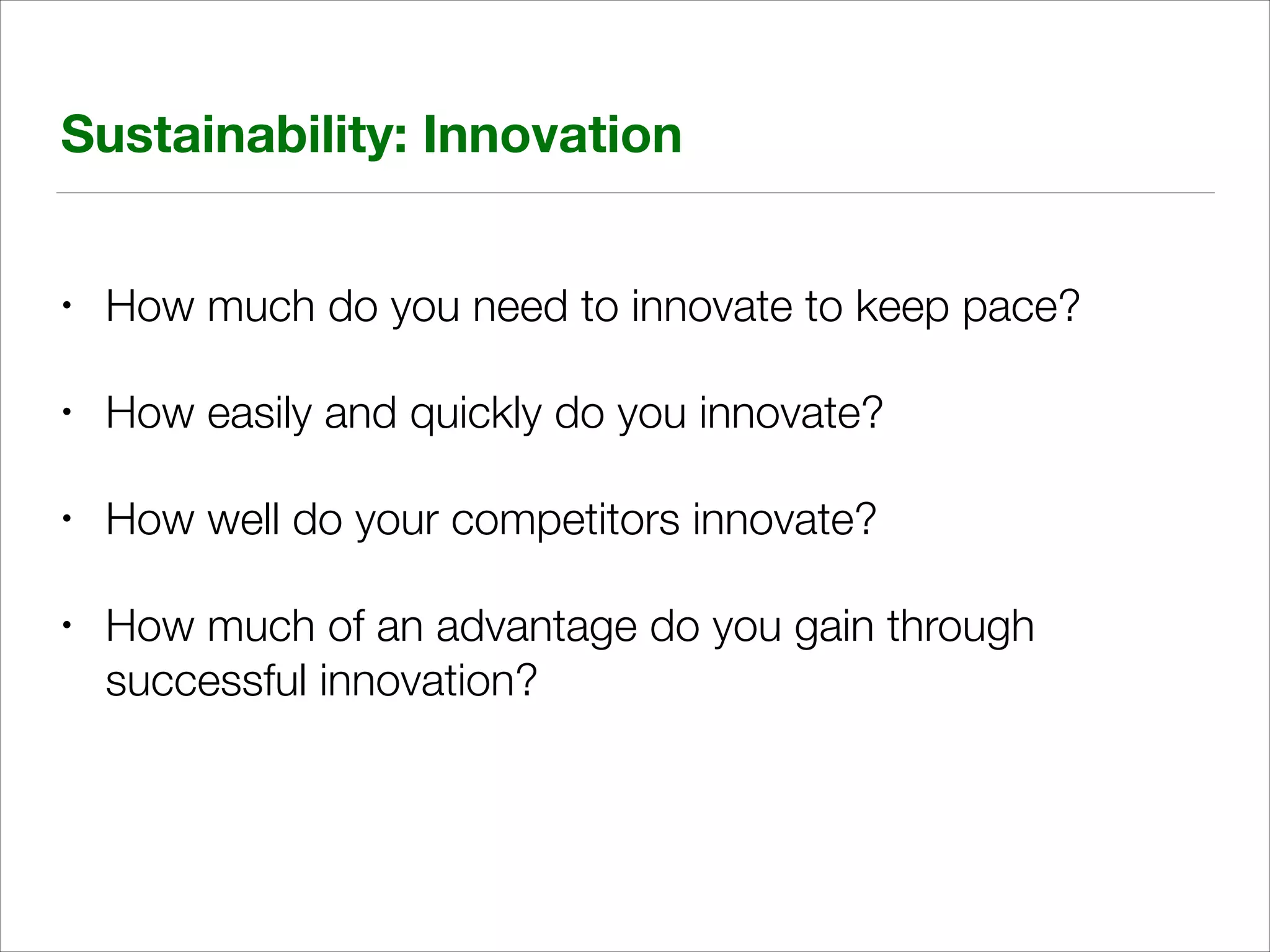
Sustainability: Innovation
•

How much do you need to innovate to keep pace?

•

How easily and quickly do you innovate?

•

How well do your competitors innovate?

•

How much of an advantage do you gain through
successful innovation?
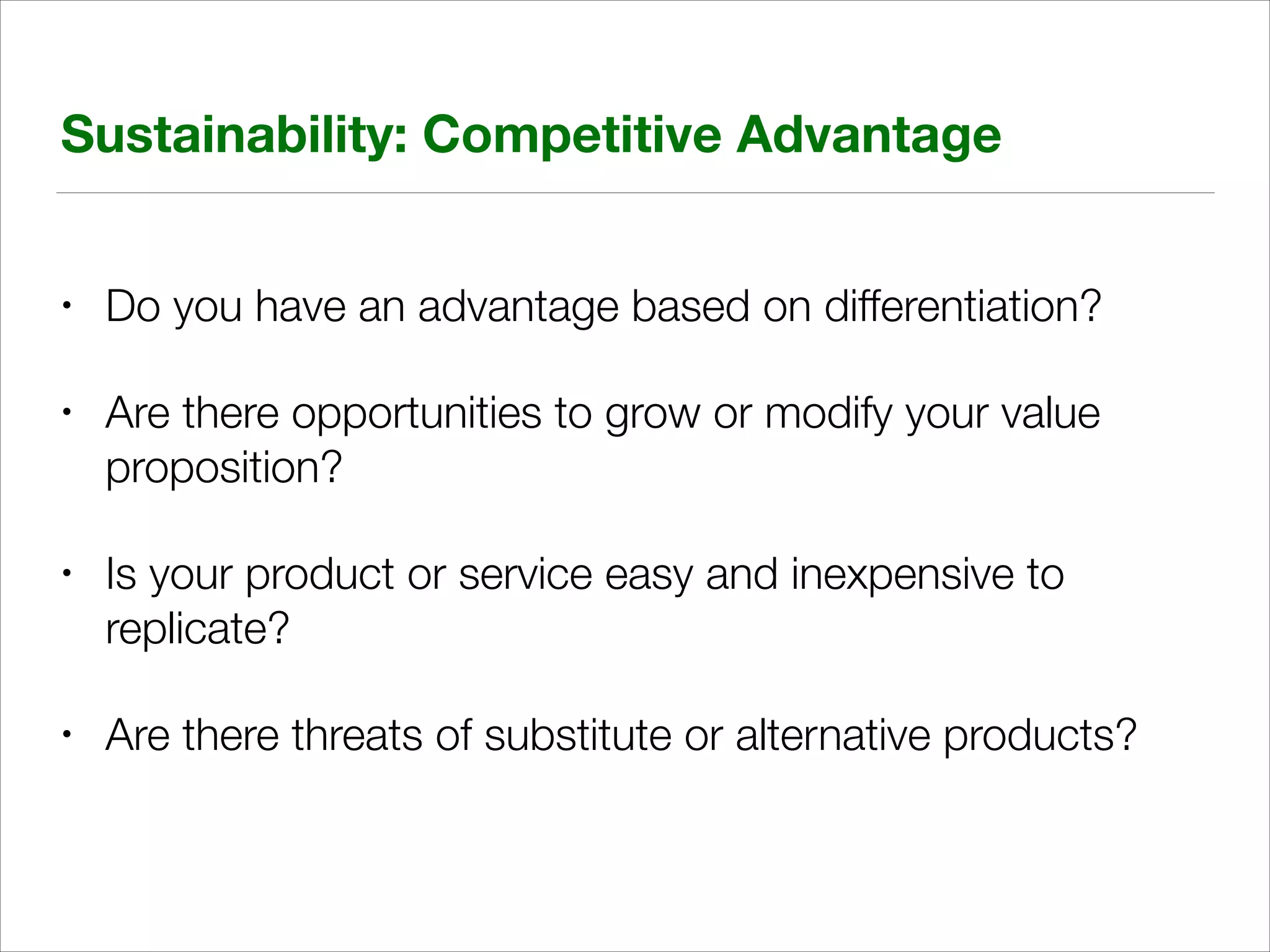
Sustainability: Competitive Advantage
•

Do you have an advantage based on differentiation?

•

Are there opportunities to grow or modify your value
proposition?

•

Is your product or service easy and inexpensive to
replicate?

•

Are there threats of substitute or alternative products?
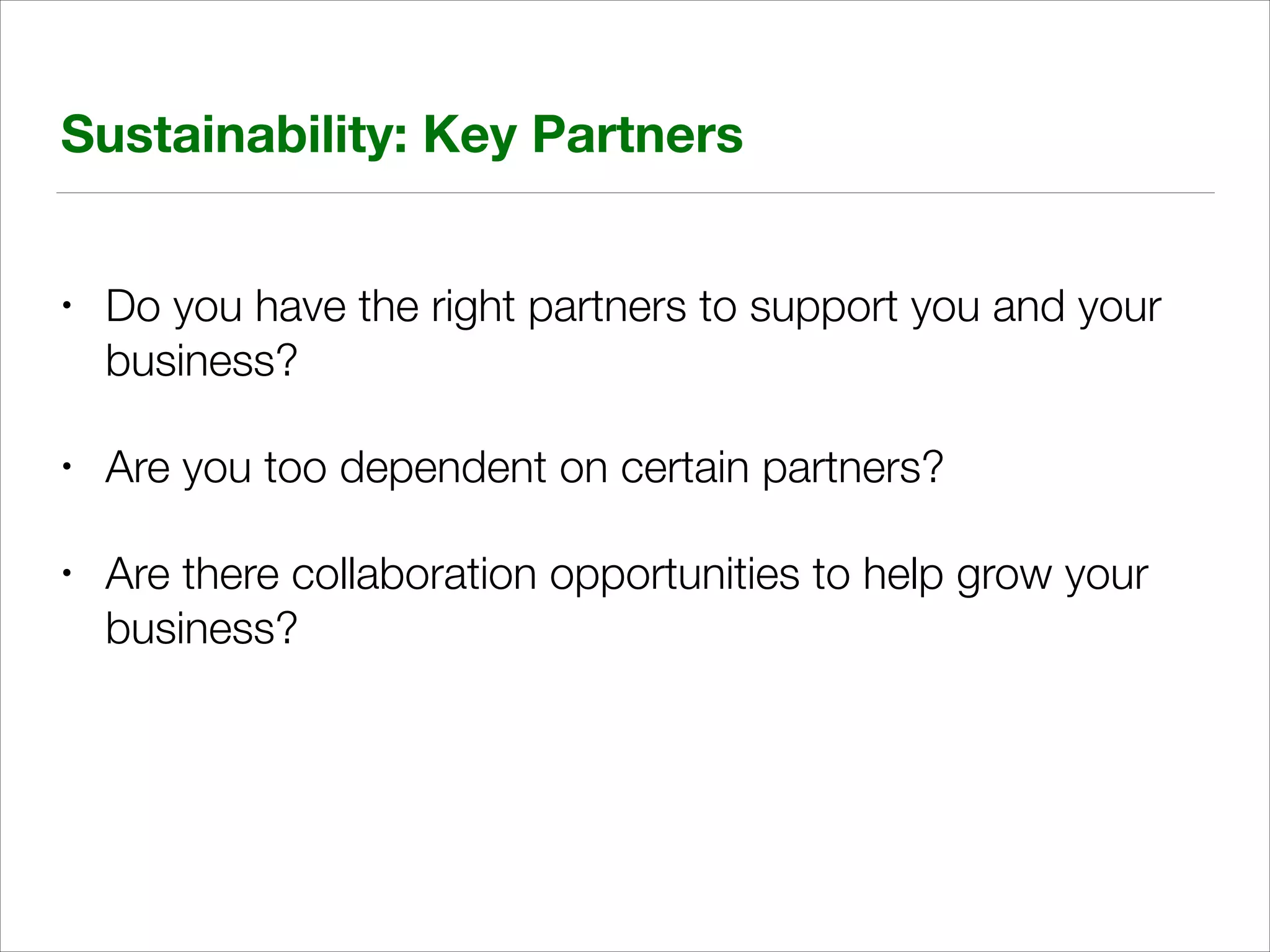
Sustainability: Key Partners
•

Do you have the right partners to support you and your
business?

•

Are you too dependent on certain partners?

•

Are there collaboration opportunities to help grow your
business?
Sustainability: Exit Strategy
•

What happens to the business if you can't work?

•

Would you be able to sell your business for enough
money so you won't have to work again?

•

Is your business over-dependent on a few customers?

•

How reliant is sales success on your involvement?
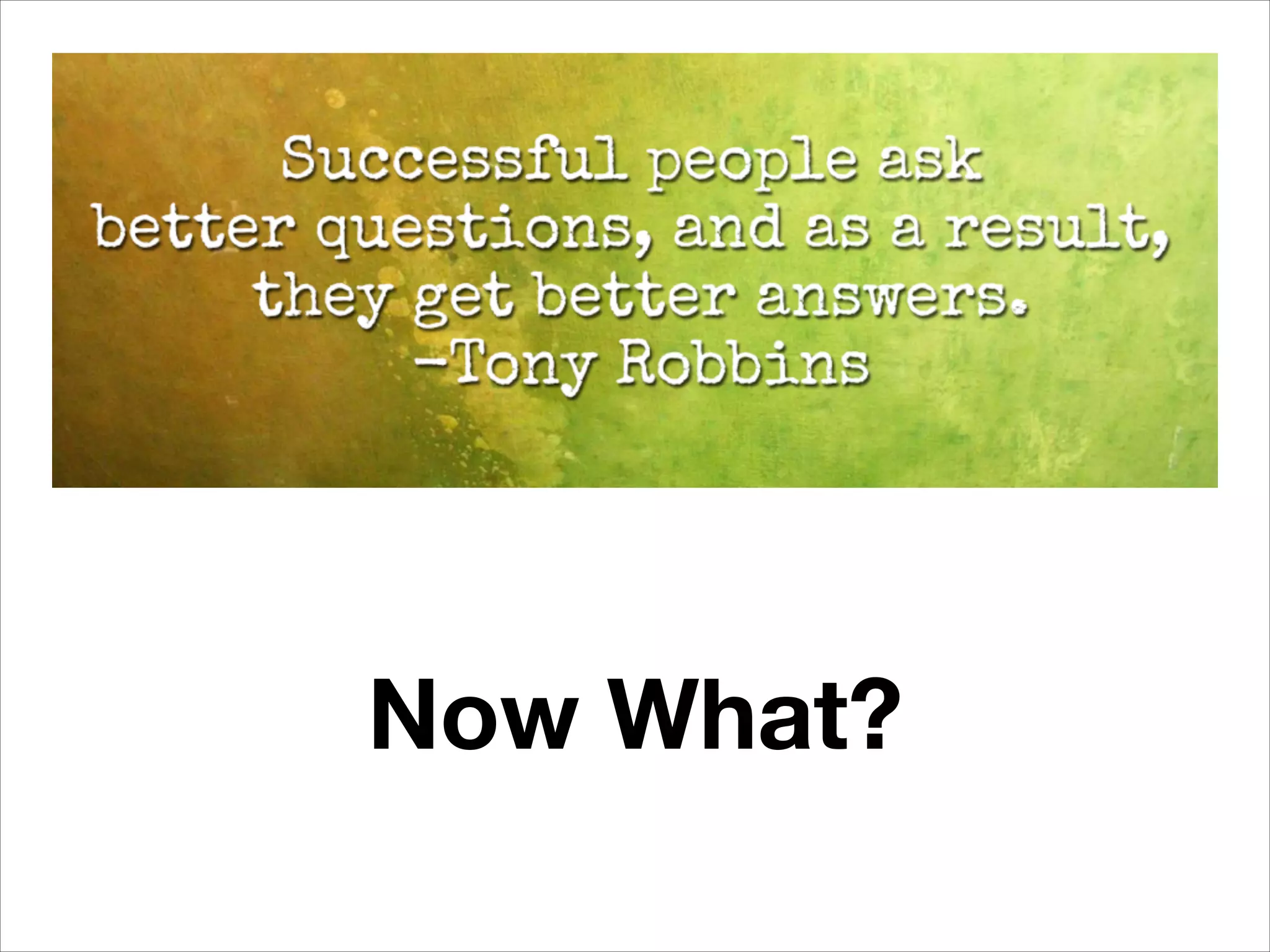
Now What?
What To Do With The Information

•

Note Areas for Improvement

•

Prioritize & Improve

•

The Score is Just a Score
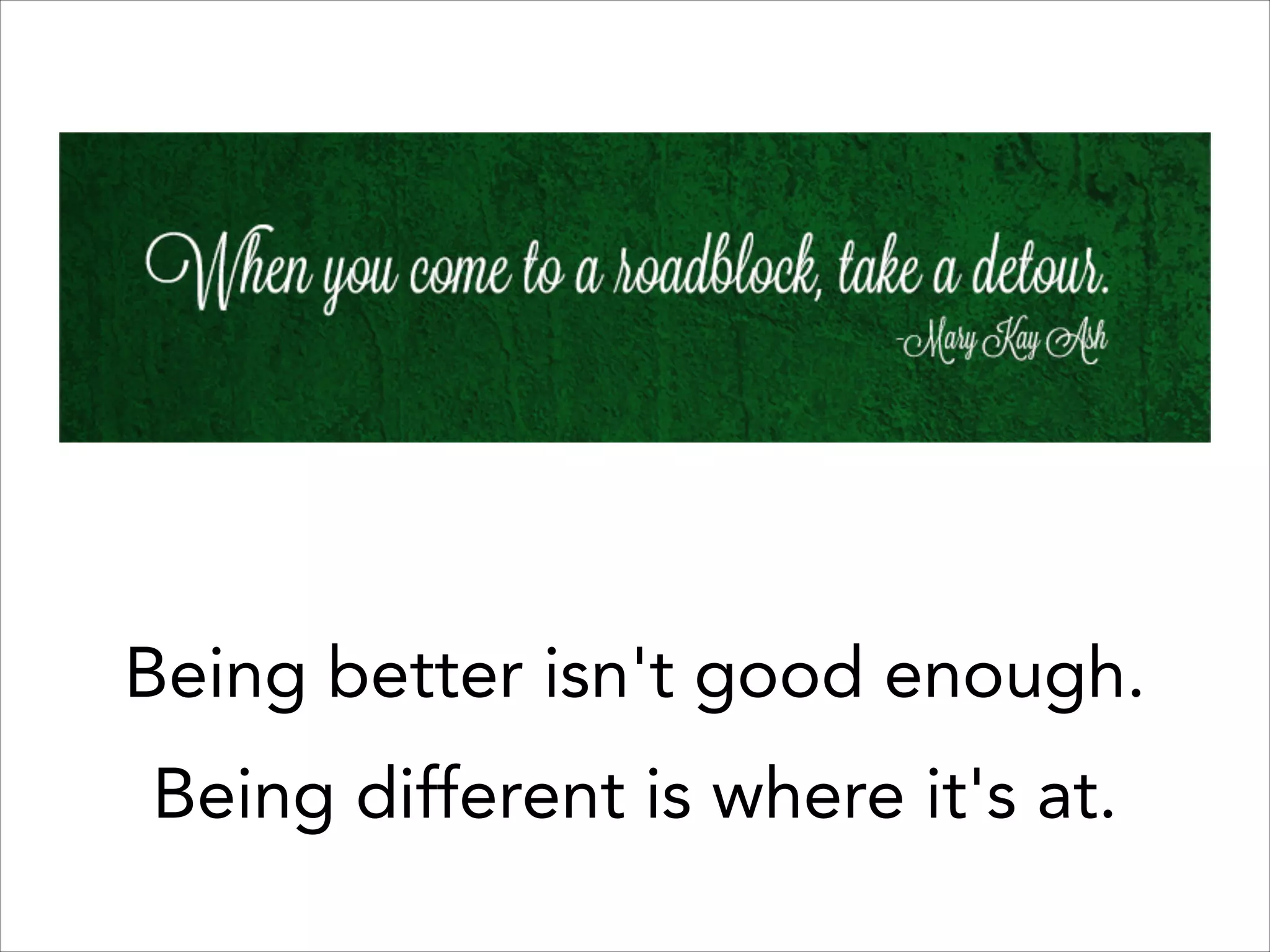
Being better isn't good enough. 

Being different is where it's at.
Brainstorming

•

You may not want to introduce a product
that relies only on you or highly skilled
professionals to sell it.

•

You may not want to implement something
with low margins and high costs.

•

You may not want to create something that
people will only buy once.
•
•
•
•

You learned how to score your business
You started to think about areas for improvement
You became equipped to assess your business
You learned how to evaluate new products or
services prior to implementation
QUESTIONS?
You can reach me at:
kim@kimyuhl.com
!

Interested in more free live trainings? 

I announce them in my weekly newsletter. 

Go to kimyuhl.com/get-boost/ to sign up.
!

This course is part of The Secrets of Better Business Education Series designed to help small business owners work smarter and live better.

secretsofbetterbusiness.com

The Money Path

  • 1.
    Welcome to TheMoney Path! Presented by Kim Yuhl, creator of secretsofbetterbusiness.com
  • 2.
    Who Am I? Wife& Mom • Small Business Owner • Passionate About Social • Blogger • Coach, Mentor, Advisor • Martini Drinker • World Traveler ! kimyuhl.com secretsofbetterbusiness.com twomartinilunch.com •
  • 3.
    WHAT IS THEMONEY PATH?
  • 4.
    About This Course • UnderstandingYour Business Model • Do Your Homework • Answer Honestly; The Score is Meaningless
  • 5.
    Understanding the money,how you make it and where it goes, is critical to any business success.
  • 6.
    The Money Pathand Your Business Offering • Value Proposition • Customer Segments • Market Segments
  • 7.
    The Money Pathand Your Business Revenue • Revenue Stream • Cost Structure • Sales Performance
  • 8.
    The Money Pathand Your Business Sustainability • Innovation • Competitive Advantage • Key Partners • Exit Strategy
  • 9.
  • 10.
    Offering: Value Proposition • Howunique and different is your product or service? • Is there a customer need for your product or service? • How valuable is what you offer to your customers? • Is your product or service priced competitively?
  • 11.
    Offering: Customer Segments • Isit easy to continuously acquire new customers? • Are there new customer segments you can target? • Are your customers price sensitive? • What is the economic health of your customers?
  • 12.
    Offering: Market Segments • Howlarge is the market and is it growing? • How likely is the market to become saturated? • Are there threats of substitute or alternative products or services? • What are the typical margins in the industry?
  • 13.
    Revenue: Revenue Streams • Howstrong, predictable and diversified are your revenue streams? • Are any of your revenue streams likely to disappear in the near future? • Are there other offerings your customers would be willing to by? • Is revenue generated through one-time or recurring purchases? • Are any of your revenue streams proprietary?
  • 14.
    Revenue: Cost Structure • Howcost-efficient are your operations? • Are any costs threatening to outpace the revenues they support? • Are there areas where costs can be cut? • Are your margins higher or lower than your competitors?
  • 15.
    Revenue: Sales Performance • Doesyour product/service sell itself? • How does the cost of customer acquisition compare to the lifetime margin? • Can anyone sell this product or is special training required? • Do you have a sales pipeline (repeat customers, email list, customer referral program) that can predict future sales?
  • 16.
    Sustainability: Innovation • How muchdo you need to innovate to keep pace? • How easily and quickly do you innovate? • How well do your competitors innovate? • How much of an advantage do you gain through successful innovation?
  • 17.
    Sustainability: Competitive Advantage • Doyou have an advantage based on differentiation? • Are there opportunities to grow or modify your value proposition? • Is your product or service easy and inexpensive to replicate? • Are there threats of substitute or alternative products?
  • 18.
    Sustainability: Key Partners • Doyou have the right partners to support you and your business? • Are you too dependent on certain partners? • Are there collaboration opportunities to help grow your business?
  • 19.
    Sustainability: Exit Strategy • Whathappens to the business if you can't work? • Would you be able to sell your business for enough money so you won't have to work again? • Is your business over-dependent on a few customers? • How reliant is sales success on your involvement?
  • 20.
  • 21.
    What To DoWith The Information • Note Areas for Improvement • Prioritize & Improve • The Score is Just a Score
  • 22.
    Being better isn'tgood enough. 
 Being different is where it's at.
  • 23.
    Brainstorming • You may notwant to introduce a product that relies only on you or highly skilled professionals to sell it. • You may not want to implement something with low margins and high costs. • You may not want to create something that people will only buy once.
  • 24.
    • • • • You learned howto score your business You started to think about areas for improvement You became equipped to assess your business You learned how to evaluate new products or services prior to implementation
  • 25.
    QUESTIONS? You can reachme at: kim@kimyuhl.com ! Interested in more free live trainings? 
 I announce them in my weekly newsletter. 
 Go to kimyuhl.com/get-boost/ to sign up. ! This course is part of The Secrets of Better Business Education Series designed to help small business owners work smarter and live better. secretsofbetterbusiness.com