Introduction
 Hallyu literally denotes “Korean (Cultural)
 Wave/Current,” and was first used by the Chinese
 media in the late 1990s. These days, “K-Pop” means
 overall Korean pop culture including music, movies,
 dramas, and fashion.

 The first wave of Hallyu started in Japan a decade ago
 with the Korean TV drama “Winter Sonata.”
The Winter Sonata
Examples
 The second wave of Hallyu reached beyond Asia, with
 singers like Rain, Boa and the Wonder Girls advancing
 into the United States.

 The third wave of Hallyu has broadened the sphere. It
 has become a global phenomenon. Music videos of
 idol stars like Girls’ Generation, 2NE1, Big Bang, Super
 Junior and 2PM are popular around the world and the
 most recent phenomena has been caused by Psy’s “
 Gangnam style” when the video went viral on YouTube
 reaching over 500,000,000.
Hallyu Influence
 The cultural wave, or hallyu, is establishing itself as a
  global phenomenon and reaching all over the world.

 As a result, there are now more than 830 hallyu fan
  clubs in more than 80 countries, with a total of 6
  million members.
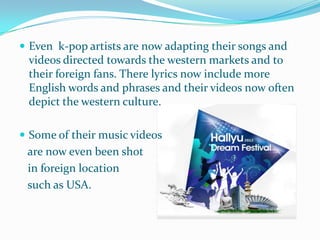
 Even k-pop artists are now adapting their songs and
 videos directed towards the western markets and to
 their foreign fans. There lyrics now include more
 English words and phrases and their videos now often
 depict the western culture.

 Some of their music videos
 are now even been shot
 in foreign location
 such as USA.
K-pop Videos
 http://www.youtube.com/watch?v=oyftIOv0qQo


 http://www.youtube.com/watch?v=ZCyuAwftPY0
Conclusion
 The hallyu wave, enabled by globalization and
  through the power of Internet is making access to
  Korean entertainment media easy for overseas fans.

 The language barrier is not really a barrier at all. K-
  dramas are subtitled very well and the melodies of
  the songs are universal.

 Thus, the initial surge of interest in Korean television
  dramas and popular music and nowadays all things
  Korean, from food, movies and dances to fashion and
  language are quite the rage.
감사합니다
(Thank You)

The korean wave

  • 2.
    Introduction  Hallyu literallydenotes “Korean (Cultural) Wave/Current,” and was first used by the Chinese media in the late 1990s. These days, “K-Pop” means overall Korean pop culture including music, movies, dramas, and fashion.  The first wave of Hallyu started in Japan a decade ago with the Korean TV drama “Winter Sonata.”
  • 3.
  • 4.
    Examples  The secondwave of Hallyu reached beyond Asia, with singers like Rain, Boa and the Wonder Girls advancing into the United States.  The third wave of Hallyu has broadened the sphere. It has become a global phenomenon. Music videos of idol stars like Girls’ Generation, 2NE1, Big Bang, Super Junior and 2PM are popular around the world and the most recent phenomena has been caused by Psy’s “ Gangnam style” when the video went viral on YouTube reaching over 500,000,000.
  • 6.
    Hallyu Influence  Thecultural wave, or hallyu, is establishing itself as a global phenomenon and reaching all over the world.  As a result, there are now more than 830 hallyu fan clubs in more than 80 countries, with a total of 6 million members.
  • 7.
     Even k-popartists are now adapting their songs and videos directed towards the western markets and to their foreign fans. There lyrics now include more English words and phrases and their videos now often depict the western culture.  Some of their music videos are now even been shot in foreign location such as USA.
  • 8.
    K-pop Videos  http://www.youtube.com/watch?v=oyftIOv0qQo http://www.youtube.com/watch?v=ZCyuAwftPY0
  • 9.
    Conclusion  The hallyuwave, enabled by globalization and through the power of Internet is making access to Korean entertainment media easy for overseas fans.  The language barrier is not really a barrier at all. K- dramas are subtitled very well and the melodies of the songs are universal.  Thus, the initial surge of interest in Korean television dramas and popular music and nowadays all things Korean, from food, movies and dances to fashion and language are quite the rage.
  • 10.