Global Risks 2015
10th Edition
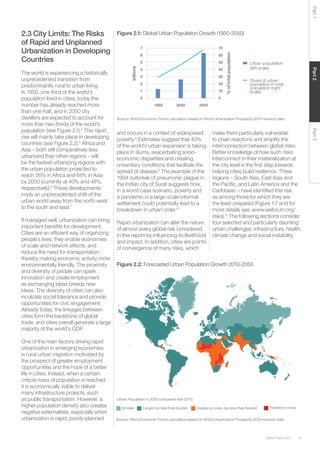
Insight Report
World Economic Forum
91-93 route de la Capite
CH-1223 Cologny/Geneva
Switzerland
Tel.:	 +41 (0) 22 869 1212
Fax:	 +41 (0) 22 786 2744
contact@weforum.org
www.weforum.org
Global Risks 2015, 10th Edition is published
by the World Economic Forum within the
framework of The Global Competitiveness and
Benchmarking Network.
The information in this report, or on which
this report is based, has been obtained from
sources that the authors believe to be reliable
and accurate. However, it has not been
independently verified and no representation or
warranty, express or implied, is made as to the
accuracy or completeness of any information
obtained from third parties. In addition, the
statements in this report may provide current
expectations of future events based on certain
assumptions and may include statements
that do not directly relate to a historical or
current fact. These statements involve known
and unknown risks, uncertainties and other
factors which are not exhaustive. Readers are
cautioned not to place undue reliance on these
statements. The companies contributing to this
report undertake no obligation to publicly revise
or update any statements, whether as a result
of new information, future events or otherwise,
and they shall in no event be liable for any loss or
damage arising in connection with the use of the
information in this report.
World Economic Forum
Geneva
World Economic Forum®
© 2015 – All rights reserved.
No part of this publication may be reproduced or
Transmitted in any form or by any means,
including Photocopying and recording, or by any
information Storage and retrieval system.
REF: 090115
This report and an interactive data platform are
available at www.weforum.org/risks.
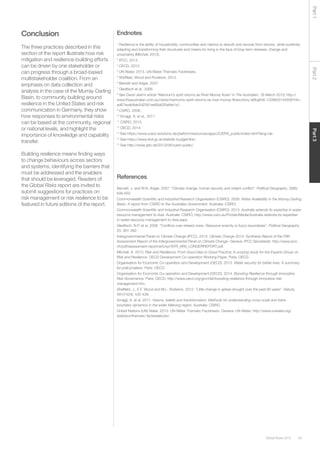
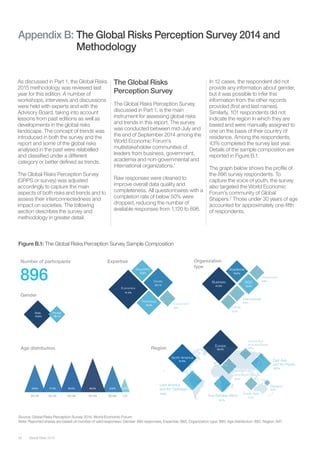
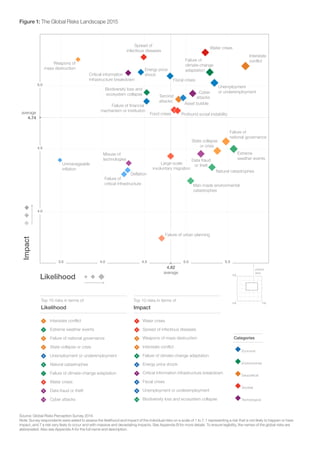
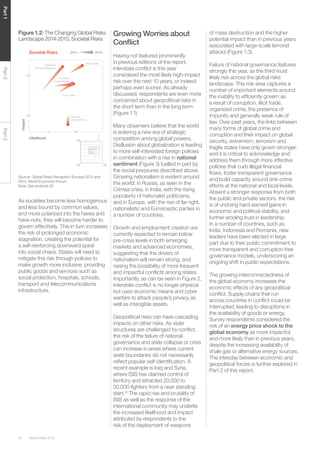
Figure 1: The Global Risks Landscape 2015
4.54.03.5 5.0 5.5
4.0
4.5
5.0
4.82
average
average
4.74
Likelihood
Impact
Top 10 risks in terms of
Likelihood
Categories
Interstate conflict
Extreme weather events
Failure of national governance
State collapse or crisis
Unemployment or underemployment
Natural catastrophes
Failure of climate-change adaptation
Water crises
Data fraud or theft
Cyber attacks
Top 10 risks in terms of
Impact
Water crises
Weapons of mass destruction
Interstate conflict
Energy price shock
Failure of climate-change adaptation
Fiscal crises
Unemployment or underemployment
Biodiversity loss and ecosystem collapse
Spread of infectious diseases
Critical information infrastructure breakdown
1
2
3
4
5
6
7
8
9
10
1
2
3
4
5
6
7
8
9
10
7.0
1.0 7.0
plotted
area
Economic
Geopolitical
Environmental
Societal
Technological
Misuse of
technologies Data fraud
or theft
Cyber
attacks
Critical information
infrastructure breakdown
Water crises
Spread of
infectious diseases
Profound social instability
Large-scale
involuntary migration
Food crises
Failure of urban planning
Weapons of
mass destruction
Terrorist
attacks
State collapse
or crisis
Interstate
conflict
Failure of
national governance
Natural catastrophes
Man-made environmental
catastrophes
Failure of
climate-change
adaptation
Biodiversity loss and
ecosystem collapse
Unmanageable
inflation
Unemployment
or underemployment
Fiscal crises
Failure of
critical infrastructure
Energy price
shock
Deflation
Asset bubble
Extreme
weather events
Failure of financial
mechanism or institution
Source: Global Risks Perception Survey 2014.
Note: Survey respondents were asked to assess the likelihood and impact of the individual risks on a scale of 1 to 7, 1 representing a risk that is not likely to happen or have
impact, and 7 a risk very likely to occur and with massive and devastating impacts. See Appendix B for more details. To ensure legibility, the names of the global risks are
abbreviated. Also see Appendix A for the full name and description.
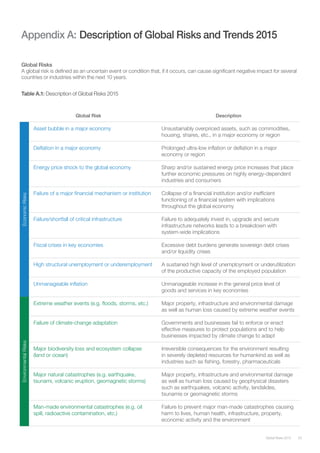
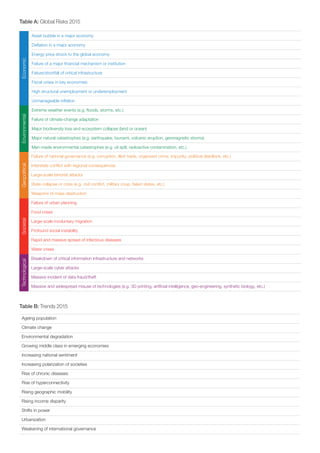
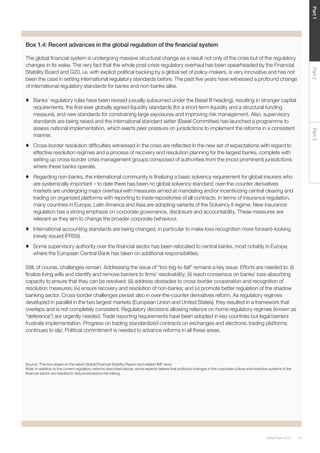
Table A: Global Risks 2015
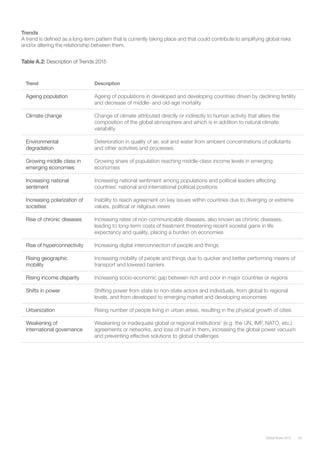
Table B: Trends 2015
Asset bubble in a major economy
Deflation in a major economy
Energy price shock to the global economy
Failure of a major financial mechanism or institution
Failure/shortfall of critical infrastructure
Fiscal crises in key economies
High structural unemployment or underemployment
Unmanageable inflation
Extreme weather events (e.g. floods, storms, etc.)
Failure of climate-change adaptation
Major biodiversity loss and ecosystem collapse (land or ocean)
Major natural catastrophes (e.g. earthquake, tsunami, volcanic eruption, geomagnetic storms)
Man-made environmental catastrophes (e.g. oil spill, radioactive contamination, etc.)
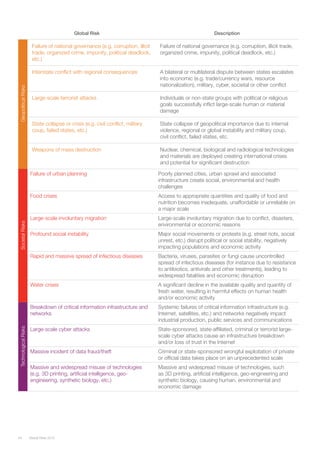
Failure of national governance (e.g. corruption, illicit trade, organized crime, impunity, political deadlock, etc.)
Interstate conflict with regional consequences
Large-scale terrorist attacks
State collapse or crisis (e.g. civil conflict, military coup, failed states, etc.)
Weapons of mass destruction
Failure of urban planning
Food crises
Large-scale involuntary migration
Profound social instability
Rapid and massive spread of infectious diseases
Water crises
Breakdown of critical information infrastructure and networks
Large-scale cyber attacks
Massive incident of data fraud/theft
Massive and widespread misuse of technologies (e.g. 3D printing, artificial intelligence, geo-engineering, synthetic biology, etc.)
SocietalTechnologicalGeopoliticalEconomicEnvironmental
Ageing population
Climate change
Environmental degradation
Growing middle class in emerging economies
Increasing national sentiment
Increasing polarization of societies
Rise of chronic diseases
Rise of hyperconnectivity
Rising geographic mobility
Rising income disparity
Shifts in power
Urbanization
Weakening of international governance
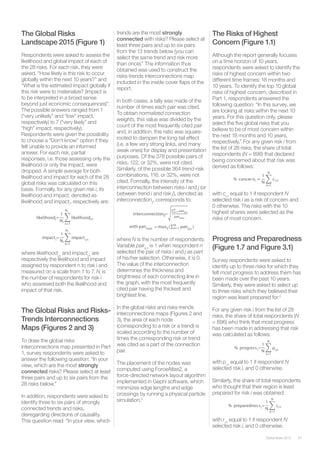
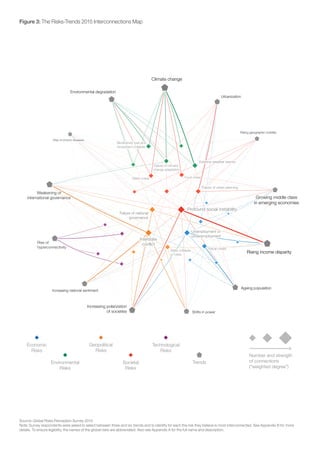
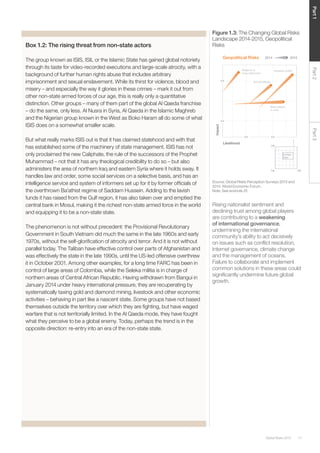
Figure 3: The Risks-Trends 2015 Interconnections Map
Trend Interconnection Map
Asset bubbleAsset bubble
Data fraud or theftData fraud or theft
Asset bubbleAsset bubble
Data fraud or theftData fraud or theft
Ageing populationAgeing population
Climate change
Environmental degradationEnvironmental degradation
Increasing national sentimentIncreasing national sentiment
Increasing polarization
of societies
Rise of chronic diseasesRise of chronic diseases
Rise of
hyperconnectivity
Rising geographic mobilityRising geographic mobility
Rising income disparityRising income disparity
Shifts in powerShifts in power
UrbanizationUrbanization
Weakening of
international governance Growing middle class
in emerging economies
Failure of national
governance
Profound social instability
State collapse
or crisis
Fiscal crises
Unemployment or
underemployment
Extreme weather events
Failure of climate-
change adaptation
Biodiversity loss and
ecosystem collapse
Failure of urban planning
Food crisesWater crises
Asset bubbleAsset bubble
Data fraud or theftData fraud or theft
Asset bubbleAsset bubble
Data fraud or theftData fraud or theft
Ageing populationAgeing population
Climate change
Environmental degradationEnvironmental degradation
Increasing national sentimentIncreasing national sentiment
Increasing polarization
of societies
Rise of chronic diseasesRise of chronic diseases
Rise of
hyperconnectivity
Rising geographic mobilityRising geographic mobility
Rising income disparityRising income disparity
Shifts in powerShifts in power
UrbanizationUrbanization
Weakening of
international governance Growing middle class
in emerging economies
Profound social instability
Failure of national
governance
State collapse
or crisis
Fiscal crises
Unemployment or
underemployment
Extreme weather events
Failure of climate-
change adaptation
Biodiversity loss and
ecosystem collapse
Failure of urban planning
Food crisesWater crises
Interstate
conflict
Economic
Risks
Geopolitical
Risks
Environmental
Risks
Societal
Risks
Technological
Risks
Trends
Number and strength
of connections
(“weighted degree”)
Source: Global Risks Perception Survey 2014.
Note: Survey respondents were asked to select between three and six trends and to identify for each the risk they believe is most interconnected. See Appendix B for more
details. To ensure legibility, the names of the global risks are abbreviated. Also see Appendix A for the full name and description.
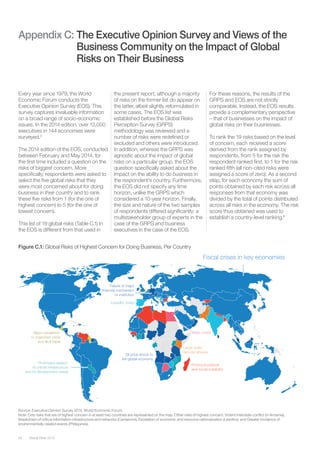
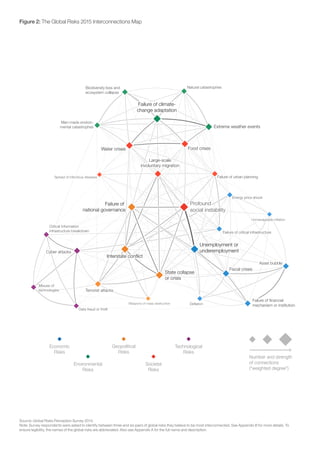
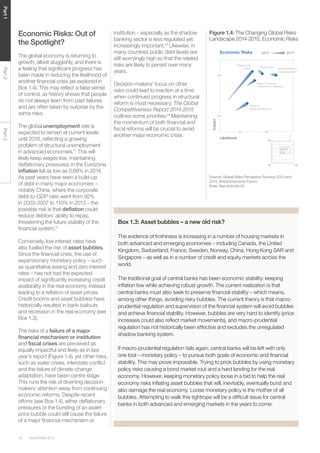
Figure 2: The Global Risks 2015 Interconnections Map
Risk Interconnection Map
Economic
Risks
Geopolitical
Risks
Environmental
Risks
Societal
Risks
Technological
Risks
Number and strength
of connections
(“weighted degree”)
Asset bubble
Deflation
Energy price shock
Failure of financial
mechanism or institution
Failure of critical infrastructure
Fiscal crises
Unemployment or
underemployment
Unmanageable inflation
Extreme weather events
Failure of climate-
change adaptation
Biodiversity loss and
ecosystem collapse
Natural catastrophes
Man-made environ-
mental catastrophes
Failure of
national governance
Interstate conflict
Terrorist attacks
State collapse
or crisis
Weapons of mass destruction
Failure of urban planning
Food crises
Large-scale
involuntary migration
Profound
social instability
Spread of infectious diseases
Water crises
Critical information
infrastructure breakdown
Cyber attacks
Data fraud or theft
Misuse of
technologies
Asset bubble
Deflation
Energy price shock
Failure of financial
mechanism or institution
Failure of critical infrastructure
Fiscal crises
Unemployment or
underemployment
Unmanageable inflation
Extreme weather events
Biodiversity loss and
ecosystem collapse
Natural catastrophes
Man-made environ-
mental catastrophes
Failure of
national governance
Interstate conflict
Terrorist attacks
State collapse
or crisis
Weapons of mass destruction
Failure of urban planning
Food crises
Profound
social instability
Spread of infectious diseases
Water crises
Cyber attacks
Data fraud or theft
Misuse of
technologies
Large-scale
involuntary migration
Critical information
infrastructure breakdown
Failure of climate-
change adaptation
Source: Global Risks Perception Survey 2014.
Note: Survey respondents were asked to identify between three and six pairs of global risks they believe to be most interconnected. See Appendix B for more details. To
ensure legibility, the names of the global risks are abbreviated. Also see Appendix A for the full name and description.
Global Risks 2015
10th Edition
Strategic Partners
Marsh & McLennan Companies
Zurich Insurance Group
Academic Advisers
National University of Singapore
Oxford Martin School, University of Oxford
Wharton Risk Management and Decision Processes Center, University of Pennsylvania
Contents
6 	 Preface
Klaus Schwab
7 	 Foreword
Espen Barth Eide
8 	 Executive Summary
10 	 Introduction
11	 Box 1: How has the Global Risks report been
used?
12	 Part 1: Global Risks 2015
14	 Box 1.1: The evolution of the risks of highest
impact/likelihood
17	 Box 1.2: The rising threat from non-state actors
18	 Box 1.3: Asset bubbles – a new old risk?
19	 Box 1.4: Recent advances in the global regulation
of the financial system
20	 Box 1.5: Black Sky – risks to critical infrastructure
21	 Box 1.6: The road to Paris – is 2015 make or break
for climate change?
22	 Box 1.7: Governing the Internet – the need for
mechanisms to maintain a unified and resilient
network
26	 Part 2: Risks in Focus
26	 2.1 Introduction
27	 2.2 Global Risks Arising from the Accelerated Interplay
between Geopolitics and Economics
29	 Box 2.1: Global supply chains – too lean?
30	 Box 2.2: The World Economic Forum’s work on
geo-economics
31	 2.3 City Limits: The Risks of Rapid and Unplanned
Urbanization in Developing Countries
32	 Box 2.3: Life in the city – how smart is smart?
33	 Box 2.4: Health in cities – robust plans are needed
to face the threat of pandemics
36	 2.4 Engineering the Future: How Can the Risks and
Rewards of Emerging Technologies Be Balanced?
36	 Box 2.5: Classifying emerging technologies
37	 Box 2.6: Synthetic biology – protecting mother
nature
39	 Box 2.7: Gene drives – promises and regulatory
challenges
40	 Box 2.8: Artificial intelligence – rise of the
machines
44	 Part 3: Good Practices on Risk Management and Risk
Resilience
50 	 Conclusion
53 	 Appendix A: Description of Global Risks and Trends 2015
56 	 Appendix B: The Global Risks Perception Survey 2014
and Methodology
58 	 Appendix C: The Executive Opinion Survey and Views of
the Business Community on the Impact of Global Risks
on Their Business
62 	 Acknowledgements
Global Risks 20156
This 10th edition of the Global Risks
report is published at a time of profound
transformations to our global context.
Ongoing political, economic, social,
environmental and technological
developments are challenging many of
our underlying assumptions. Across
every sector of society, decision-makers
are struggling to cope with heightened
complexity and uncertainty resulting
from the world’s highly interconnected
nature and the increasing speed of
change.
Faster communication systems, closer
trade and investment links, increasing
physical mobility and enhanced access
to information have combined to bind
countries, economies and businesses
more tightly together. In the coming
decade – the time horizon of this report
– our lives will be even more intensely
shaped by transformative forces that are
under way already. The effects of
climate change are accelerating and the
uncertainty about the global geopolitical
context and the effects it will have on
international collaboration will remain. At
the same time, societies are increasingly
under pressure from economic, political
and social developments including
rising income inequality, but also
increasing national sentiment. Last but
not least, new technologies, such as the
Internet or emerging innovations will not
bear fruit if regulatory mechanisms at
the international and national levels
cannot be agreed upon.
In a world where risks transcend
borders and sectors, the motivations
underlying the Global Risks report at its
inception in 2005 – to shed light on
global risks and help create a shared
understanding of the most pressing
issues, the ways they interconnect and
their potential negative impacts – are
more relevant than ever. The shared
understanding of challenges is needed
as a base for multistakeholder
collaboration, which has seen
increasing recognition as the most
effective way to address global risks and
build resilience against them. To further
inspire action, in this year’s report we
include a new section sharing examples
of risk mitigation and resilience
practices.
As in previous years, the report is based
on the annual Global Risks Perception
Survey, completed by almost 900
members of the World Economic
Forum’s global multistakeholder
community. This year’s report
introduces a new distinction between
risks and trends, which allows the
highlighting of trends as an enlarged
solution space to many possible risks.
The report also presents deep-dive
discussions of the risks posed by a
resurgence of interlinked economic and
geopolitical power plays, the rapid
urbanization of the developing world
and the exciting realm of emerging
technologies, from synthetic biology to
artificial intelligence.
The coming year offers unprecedented
opportunities for much-needed
collective action to address key global
risks, such as the Sendai world
conference on disaster risk reduction
and the 2015 United Nations Climate
Change Conference in Paris. As we
mark the 10th anniversary of the report
and highlight progress that has been
achieved over the past decade, my
hope remains that this work will
contribute to the debate on how we
think about global risks, mitigate them
and strengthen resilience.
Klaus Schwab
Founder and Executive Chairman
World Economic Forum
Preface
7Global Risks 2015
Foreword
Collaboration across countries, areas of
expertise and stakeholder groups is
necessary to effectively address global
risks. As one of the flagship reports of
the World Economic Forum, the Global
Risks report has been a collaborative
effort since its first edition in 2006.
Produced within the World Economic
Forum’s forward looking networked
think tank, the Centre for Global
Strategies, the report is able to draw on
unique expertise available within the
different communities and the
knowledge networks of the World
Economic Forum as well as within the
organization as a whole.
The 2015 edition has established a
Steering Board to provide strategic
guidance as well as a high-level
multistakeholder Advisory Board for
advising on the methodology and the
content of the report. The report’s
corporate partners, academic advisors,
and members of the Advisory Board
contributed greatly to this endeavour. It
also strongly builds on ongoing
research, projects, debates and
initiatives within the World Economic
Forum. The insights presented here are
the result of numerous discussions,
consultations, and workshops and
reflect the views of leaders from our
various communities through the Global
Risks Perception Survey.
With this in mind, I would like to thank
our corporate report partners, Marsh &
McLennan Companies and Zurich
Insurance Group, represented on the
Steering Board by John Drzik,
President, Global Risk and Specialties,
Marsh, and Axel Lehmann, Member,
Group Chief Risk Officer, Zurich
Insurance Group. Further, I am grateful
to our academic advisers the National
University of Singapore, Oxford Martin
School at the University of Oxford and
the Wharton Risk Management and
Decision Processes Center at the
University of Pennsylvania.
The report has also greatly benefited
from the dedication and valuable
guidance of the members of the Global
Risks 2015 Advisory Board. Members
are Rolf Alter, Organisation for
Economic Co-operation and
Development; Mario Blejer, Banco
Hipotecario; Oliver Chen, Global
Valuation, who represents the National
University of Singapore; Megan Clark,
Commonwealth Scientific and Industrial
Research Organization; Marie-Valentine
Florin, International Risk Governance
Council; Julian Laird, Oxford Martin
School; Pascal Lamy, Notre Europe –
Jacques Delors Institute; Ursula von der
Leyen, Federal Minister of Defence of
Germany; Erwann Michel-Kerjan, the
Wharton School, University of
Pennsylvania; Moisés Naím, Carnegie
Endowment for International Peace;
Jonathan Ostry, International Monetary
Fund; Manuel Pulgar-Vidal Otalora,
Minister of Environment of Peru; Nouriel
Roubini, New York University; Anders
Sandberg, University of Oxford; Richard
Smith-Bingham, Marsh & McLennan
Companies; Michelle Tuveson,
University of Cambridge; Margareta
Wahlström, United Nations International
Strategy for Disaster Reduction; and
Steve Wilson, Zurich Insurance Group.
I am also grateful to Margareta Drzeniek
Hanouz, Lead Economist and Head,
Global Competitiveness and Risks, and
the Global Risks 2015 project team
members Ciara Browne, Jonathon Cini,
Roberto Crotti, Attilio Di Battista, Gaëlle
Dreyer, Caroline Galvan, Thierry Geiger,
Tania Gutknecht and Cecilia Serin for
their contributions to the report.
Last but not least, I would like to thank
the respondents that completed the
Global Risks Perception Survey.
Espen Barth Eide
Managing Director
and Member of the Managing Board
World Economic Forum
Global Risks 20158
The 2015 edition of the Global Risks
report completes a decade of
highlighting the most significant
long-term risks worldwide, drawing on
the perspectives of experts and global
decision-makers. Over that time,
analysis has moved from risk
identification to thinking through risk
interconnections and the potentially
cascading effects that result. Taking
this effort one step further, this year’s
report underscores potential causes as
well as solutions to global risks. Not
only do we set out a view on 28 global
risks in the report’s traditional
categories (economic, environmental,
societal, geopolitical and technological)
but also we consider the drivers of
those risks in the form of 13 trends. In
addition, we have selected initiatives for
addressing significant challenges,
which we hope will inspire collaboration
among business, government and civil
society communities.
Mapping Global Risks in
2015
The Global Risks Landscape, a map of
the most likely and impactful global
risks, puts forward that, 25 years after
the fall of the Berlin Wall, “interstate
conflict” is once again a foremost
concern (see Table 1). However, 2015
differs markedly from the past, with
rising technological risks, notably cyber
attacks, and new economic realities,
which remind us that geopolitical
tensions present themselves in a very
different world from before. Information
flows instantly around the globe and
Executive
Summary
A global risk is an uncertain
event or condition that, if it
occurs, can cause significant
negative impact for several
countries or industries within
the next 10 years.
A trend is defined as a long-
term pattern that is currently
taking place and that could
amplify global risks and/or
alter the relationship between
them.
emerging technologies have boosted
the influence of new players and new
types of warfare. At the same time,
past warnings of potential
environmental catastrophes have
begun to be borne out, yet insufficient
progress has been made – as reflected
in the high concerns about failure of
climate-change adaptation and
looming water crises in this year’s
report.
These multiple cross-cutting
challenges can threaten social stability,
perceived to be the issue most
interconnected with other risks in 2015,
and additionally aggravated by the
legacy of the global economic crisis in
the form of strained public finances and
persistent unemployment. The central
theme of profound social instability
highlights an important paradox that
has been smouldering since the crisis
but surfaces prominently in this year’s
report. Global risks transcend borders
and spheres of influence and require
stakeholders to work together, yet
these risks also threaten to undermine
the trust and collaboration needed to
adapt to the challenges of the new
global context.
The world is, however, insufficiently
prepared for an increasingly complex
risk environment. For the first time, the
report provides insights on this at the
regional level: social instability features
among the three global risks that
Europe, Latin America and the
Caribbean, and the Middle East and
North Africa are least prepared for.
Other societal risks, ranging from the
failure of urban planning in South Asia
to water crises in the Middle East and
North Africa, are also prominent. And
capacity to tackle persistent
unemployment – an important risk
connected with social instability – is a
major concern in Europe and sub-
Saharan Africa.
As in previous years, Part 2 explores
three risk constellations that bear on
the survey findings. In 2015, these are:
Interplay between geopolitics and
economics: The interconnections
between geopolitics and economics
are intensifying because states are
making greater use of economic tools,
from regional integration and trade
treaties to protectionist policies and
9Global Risks 2015
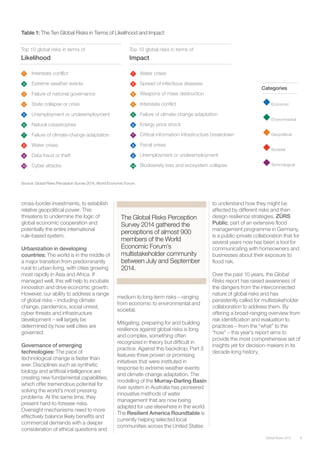
Table 1: The Ten Global Risks in Terms of Likelihood and Impact
Source: Global Risks Perception Survey 2014, World Economic Forum.
Top 10 global risks in terms of
Likelihood
Categories
Interstate conflict
Extreme weather events
Failure of national governance
State collapse or crisis
Unemployment or underemployment
Natural catastrophes
Failure of climate-change adaptation
Water crises
Data fraud or theft
Cyber attacks
Top 10 global risks in terms of
Impact
Water crises
Weapons of mass destruction
Interstate conflict
Energy price shock
Failure of climate-change adaptation
Fiscal crises
Unemployment or underemployment
Biodiversity loss and ecosystem collapse
Spread of infectious diseases
Critical information infrastructure breakdown
1
2
3
4
5
6
7
8
9
10
1
2
3
4
5
6
7
8
9
10
Economic
Geopolitical
Environmental
Societal
Technological
The Global Risks Perception
Survey 2014 gathered the
perceptions of almost 900
members of the World
Economic Forum’s
multistakeholder community
between July and September
2014.
cross-border investments, to establish
relative geopolitical power. This
threatens to undermine the logic of
global economic cooperation and
potentially the entire international
rule-based system.
Urbanization in developing
countries: The world is in the middle of
a major transition from predominantly
rural to urban living, with cities growing
most rapidly in Asia and Africa. If
managed well, this will help to incubate
innovation and drive economic growth.
However, our ability to address a range
of global risks – including climate
change, pandemics, social unrest,
cyber threats and infrastructure
development – will largely be
determined by how well cities are
governed.
Governance of emerging
technologies: The pace of
technological change is faster than
ever. Disciplines such as synthetic
biology and artificial intelligence are
creating new fundamental capabilities,
which offer tremendous potential for
solving the world’s most pressing
problems. At the same time, they
present hard-to-foresee risks.
Oversight mechanisms need to more
effectively balance likely benefits and
commercial demands with a deeper
consideration of ethical questions and
medium to long-term risks – ranging
from economic to environmental and
societal.
Mitigating, preparing for and building
resilience against global risks is long
and complex, something often
recognized in theory but difficult in
practice. Against this backdrop, Part 3
features three proven or promising
initiatives that were instituted in
response to extreme weather events
and climate-change adaptation. The
modelling of the Murray-Darling Basin
river system in Australia has pioneered
innovative methods of water
management that are now being
adapted for use elsewhere in the world.
The Resilient America Roundtable is
currently helping selected local
communities across the United States
to understand how they might be
affected by different risks and then
design resilience strategies. ZÜRS
Public, part of an extensive flood
management programme in Germany,
is a public-private collaboration that for
several years now has been a tool for
communicating with homeowners and
businesses about their exposure to
flood risk.
Over the past 10 years, the Global
Risks report has raised awareness of
the dangers from the interconnected
nature of global risks and has
persistently called for multistakeholder
collaboration to address them. By
offering a broad-ranging overview from
risk identification and evaluation to
practices – from the “what” to the
“how” – this year’s report aims to
provide the most comprehensive set of
insights yet for decision-makers in its
decade-long history.
Global Risks 201510
For the past decade, the Global
Risks report – now in its 10th edition
– has been calling attention to global
risks and providing tools to support
decision-makers in their efforts to
mitigate or prevent global risks or
strengthen resilience against them.
Since its inception, the report has
raised awareness that the world
is increasingly interconnected and
that global risks cannot be seen in
isolation. On the contrary, they can
have far-reaching cascading effects
as demonstrated by the financial
crisis in 2008 and its socio-economic
consequences. The year 2014 alone
witnessed several such risks with
potentially broad implications in the
years to come if history serves as a
benchmark: the frozen relationship
between Russia and the West –
unfathomable to most just one year
ago – seems to be transporting the
world back to a time when geopolitics
took primacy. The conflict in Syria and
the spread of the Islamic State in the
region have set off unprecedented
migration flows into neighbouring
countries and Europe, which could
impact social cohesion if poorly
managed. Revelations about data
fraud and leaks and cyber espionage
have critically undermined global trust,
running the risk of complicating the
search for solutions to other global
governance challenges as well.
Successfully addressing these complex
and interconnected issues necessitates
greater multistakeholder cooperation
to increase the capacity to foresee,
manage and mitigate global risks and
to strengthen society’s preparedness
and resilience to them. The report
takes the first step towards establishing
comprehensive collaboration by
fostering a shared understanding of the
issues at hand.
10 Years of Risk
Awareness Building
Over the past decade, the Global Risks
report has seen both its readership
and its impact increase significantly.
The report has become a useful tool
for many governments and businesses
to assess their exposure to global risks
(see Box 1). It has also successfully
raised awareness on key risks, such as
the threat of increasing resistance to
Introduction
11Global Risks 2015
antibiotics, which was featured in 2013,
or important IT-related risks, which
are now at the forefront of business
concerns.
After 10 years, the World Economic
Forum is now also in a position to
revisit the first Global Risks report,
an endeavour that illustrates both
the difficulty and the necessity of
attempting to think 10 years ahead.
The economic risk given most attention
in 2007 was the possibility of an asset
price bubble, which set off a major
financial crisis in the same year. The
subsequent years were primarily
defined by potential risks related to the
stability of financial systems in many
countries and the threat of sovereign
default, resulting in an economic
meltdown the world is still recovering
from. The interconnected nature of the
global economy today and the scale of
the global financial crisis show the need
to look beyond the obvious for risk
interconnections.
Importantly, this 10th edition also
reflects a decade of learning and
methodological improvements.
Fundamentally, the report’s approach
remains the same – to identify global
risks and their interactions, and to
assess them on two dimensions:
their perceived likelihood and impact.
However, over the years, a number of
refinements have been made to the
methodology, reflecting the lessons
learned from 10 years’ experience in
this field. This year’s edition features
an updated methodology based
on input from the members of the
newly established Advisory Board
(the list of members appears in the
Acknowledgements section at the end
of this report).
The uncertainty associated with
risks, their interconnected nature and
often the absence of data make it
difficult to accurately quantify a range
of risks – for example social unrest,
cyber attacks or oil price shocks. A
survey is therefore a suitable tool to
get a sense of the order of magnitude
of the impact and likelihood of risks.
The qualitative, perceptions-based
approach embodied in the Global
Risks Perception Survey has been
the base of the World Economic
Forum’s work in this area since 2011,
capturing the views of decision-makers
Box 1: How has the Global
Risks report been used?
A range of stakeholders were asked
how they used the Global Risks
report series over the last 10 years.
The most common answers were
to:
♦ develop scenarios;
♦ prepare crisis exercises;
♦ assess vulnerabilities and their
potential for cascade effects;
♦ inform “sense making” exercises
in crisis situations;
♦ train top decision-makers;
♦ model risks external to the direct
business environment.
from the Forum’s multistakeholder
constituencies on the perceived
impact and probability of risks
and the interconnections between
them. Perceptions allow us to better
understand decision-makers’ priorities,
which in turn influence their decisions.
Over the years, the reports have
put increasing emphasis on the
interconnected nature of global risks
and the potential spillover effects of
systemic risks, putting this aspect
of risks on the agenda. The resulting
complexities underscore the difficulties
stakeholders face when addressing
risks and are reflected in this edition’s
introduction of trends as drivers of
risks. As a result, there is increased
emphasis on going beyond the analysis
of global risks to include suggestions
on what stakeholder alliances can do
about them. The focus on solutions
in this edition is the strongest yet,
with a new section on practices and
a stronger focus in the survey on
preparedness and progress.
The Structure of this
Report
Part 1 of this report explores the
results of the Global Risks Perception
Survey 2014. It explains the distinction
between risks and trends, visualizes the
likelihood of interconnections between
risks, and analyses the difference in
risk perceptions over different time
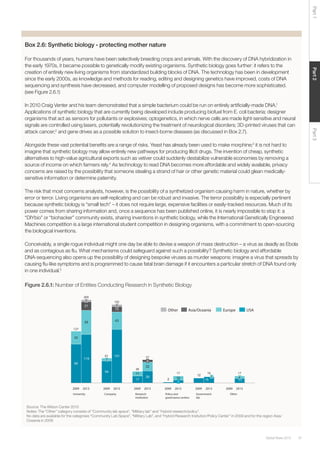
horizons. Figures 1, 2 and 3 are shown
on the inside cover flaps.
Part 2 deep-dives into three topics
that emerged strongly from the
interconnections between risks
and trends: the interplay between
geopolitics and economics, rapid
urbanization in developing countries,
and emerging technologies.
Part 3 discusses risk management
and risk resilience: it presents
survey respondents’ views on which
risks have most successfully been
addressed over the past 10 years,
and shares practices from the public
and private sectors that offer ways
forward to address global risks. The full
methodology for the survey is shared in
Appendix B. The complete set of data
can be explored online at:
www.weforum.org/risks.
Global Risks 201512
Part1Part2Part3
Part 1:
Global Risks 2015
Introduction
The Global Risks 2015 report comes
at a time when various manifestations
of global risks brought into sharp
relief that the world is not equipped
to deal with these events or similar
occurrences in the future. For the
past decade, the Global Risks
report has been calling attention to
global risks and providing a base for
multistakeholder action. Over this
period, the evolution in understanding
how global risks are thought about
and assessed has been significant.
This has led the Forum to update the
methodology it has used to assess
global risks for the 10th edition of
the report, based on input from the
members of the newly established
Advisory Board.
Building on this evolution, in this report
a global risk is defined as an uncertain
event or condition that, if it occurs,
can cause significant negative impact
for several countries or industries
within the next 10 years. Based on
this refined definition, 28 global risks
were identified and grouped into the
five customary categories: economic
risks, environmental risks, geopolitical
risks, societal risks and technological
risks. A description of the risks and the
methodology employed can be found
in Appendix A and Appendix B.
A further development in the 2015
report is the delineation of risks and
trends. This distinction allows a better
understanding of the underlying drivers
of global risks. A trend is defined as
a long-term pattern that is currently
taking place and that could contribute
to amplifying global risks and/or altering
the relationship between them. The
focus on trends can contribute to risk
mitigation; for example, better planned
urbanization can help alleviate certain
risks that concentrate in urban areas.
Moreover, the differentiation between
trends and risks emphasizes the fact
that trends, unlike risks, are occurring
with certainty and can have both
positive and negative consequences.
Trends are long-term, ongoing
processes that can alter the future
evolution of risks or the interrelations
among them, without necessarily
becoming risks themselves.
13Global Risks 2015
Part1Part2Part3
As in previous years, risks are assessed
based on the perception of leaders and
decision-makers obtained through the
Global Risks Perception Survey. The
survey captures the views of the World
Economic Forum’s multistakeholder
communities across different areas
of expertise, geographies and age
groups. It was conducted between
July and September 2014 and
gathered the perceptions of almost
900 leading decision-makers from
business, academia and the public
sector. A more detailed description
of the sample and the survey’s
methodology is presented in Appendix
B. Complementary to the Global
Risks Perception Survey data, the
views of business executives were
also collected on the risks of highest
concern for doing business in their
country, presented in more detail in
Appendix C.
The results provide a snapshot of
current perceptions on global risks
and highlight priorities for action from
three complementary angles: (1) the
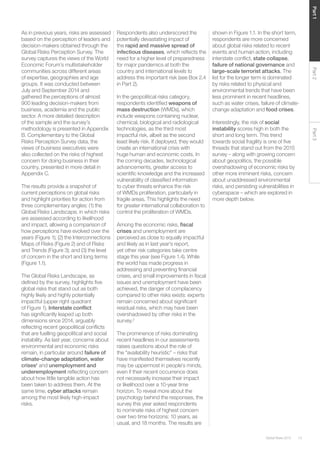
Global Risks Landscape, in which risks
are assessed according to likelihood
and impact, allowing a comparison of
how perceptions have evolved over the
years (Figure 1); (2) the Interconnections
Maps of Risks (Figure 2) and of Risks
and Trends (Figure 3); and (3) the level
of concern in the short and long terms
(Figure 1.1).
The Global Risks Landscape, as
defined by the survey, highlights five
global risks that stand out as both
highly likely and highly potentially
impactful (upper right quadrant
of Figure 1). Interstate conflict
has significantly leaped up both
dimensions since 2014, arguably
reflecting recent geopolitical conflicts
that are fuelling geopolitical and social
instability. As last year, concerns about
environmental and economic risks
remain, in particular around failure of
climate-change adaptation, water
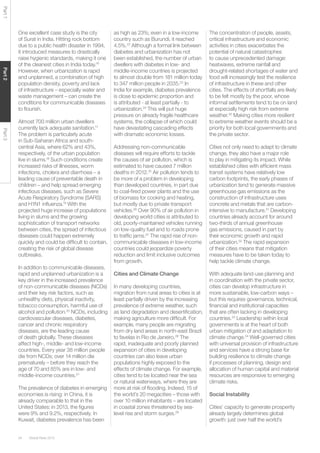
crises1
and unemployment and
underemployment reflecting concern
about how little tangible action has
been taken to address them. At the
same time, cyber attacks remain
among the most likely high-impact
risks.
Respondents also underscored the
potentially devastating impact of
the rapid and massive spread of
infectious diseases, which reflects the
need for a higher level of preparedness
for major pandemics at both the
country and international levels to
address this important risk (see Box 2.4
in Part 2).
In the geopolitical risks category,
respondents identified weapons of
mass destruction (WMDs), which
include weapons containing nuclear,
chemical, biological and radiological
technologies, as the third most
impactful risk, albeit as the second
least likely risk. If deployed, they would
create an international crisis with
huge human and economic costs. In
the coming decades, technological
advancements, greater access to
scientific knowledge and the increased
vulnerability of classified information
to cyber threats enhance the risk
of WMDs proliferation, particularly in
fragile areas. This highlights the need
for greater international collaboration to
control the proliferation of WMDs.
Among the economic risks, fiscal
crises and unemployment are
perceived as close to equally impactful
and likely as in last year’s report,
yet other risk categories take centre
stage this year (see Figure 1.4). While
the world has made progress in
addressing and preventing financial
crises, and small improvements in fiscal
issues and unemployment have been
achieved, the danger of complacency
compared to other risks exists: experts
remain concerned about significant
residual risks, which may have been
overshadowed by other risks in the
survey.2
The prominence of risks dominating
recent headlines in our assessments
raises questions about the role of
the “availability heuristic” – risks that
have manifested themselves recently
may be uppermost in people’s minds,
even if their recent occurrence does
not necessarily increase their impact
or likelihood over a 10-year time
horizon. To reveal more about the
psychology behind the responses, the
survey this year asked respondents
to nominate risks of highest concern
over two time horizons: 10 years, as
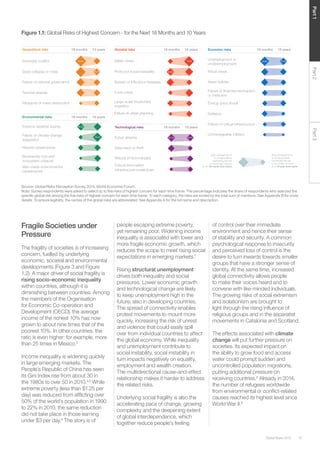
usual, and 18 months. The results are
shown in Figure 1.1. In the short term,
respondents are more concerned
about global risks related to recent
events and human action, including
interstate conflict, state collapse,
failure of national governance and
large-scale terrorist attacks. The
list for the longer term is dominated
by risks related to physical and
environmental trends that have been
less prominent in recent headlines,
such as water crises, failure of climate-
change adaptation and food crises.
Interestingly, the risk of social
instability scores high in both the
short and long term. This trend
towards social fragility is one of five
threads that stand out from the 2015
survey – along with growing concern
about geopolitics, the possible
overshadowing of economic risks by
other more imminent risks, concern
about unaddressed environmental
risks, and persisting vulnerabilities in
cyberspace – which are explored in
more depth below.
Global Risks 201514
Part1Part2Part3
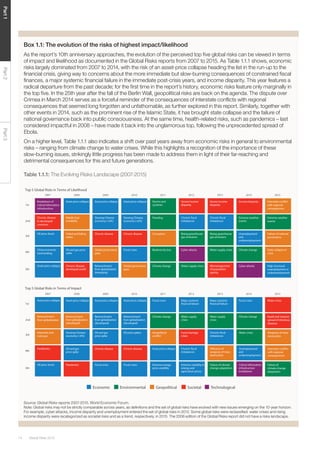
Table 1.1.1: The Evolving Risks Landscape (2007-2015)TaTaT ble 1.1.1: The Evolving Risks Landscape (2007-2015)
Breakdown of
critical information
infrastructure
Breakdown of critical information infrastructure
2008 2009 2010 2011 2012 2013
1st
Asset price collapse Asset price collapse Asset price collapse Fiscal crises Major systemic Major systemic
2nd
Retrenchment
from globalization
(developed)
Retrenchment
from globalization
(developed)
Retrenchment
from globalization
(developed)
Climate change Water supply
crises
Water supply
crises
3rd
Slowing Chinese
economy (<6%)
Oil and gas
price spike
Oil price spikes Geopolitical Food shortage
crises imbalances
4th
Oil and gas
price spike
Chronic disease Chronic disease Asset price collapse
imbalances
5th
Pandemics Fiscal crises Fiscal crises Extreme energy
price volatility
Extreme volatility in
energy and
agriculture prices
weapons of mass
destruction
Economic Environmental Geopolitical Societal Technological
Failure of climate
change adaptation
Breakdown of
critical information
infrastructure
Breakdown of critical information infrastructure
2008 2009 2010 2011 2012 2013
1st
Asset price collapse Asset price collapse Asset price collapse Storms and
cyclones
Severe income
disparity
Severe income
disparity
2nd
Middle East
instability
Slowing Chinese
economy (<6%)
Slowing Chinese
economy (<6%)
Flooding
imbalances imbalances
3rd
Failed and failing
states
Chronic disease Chronic disease Corruption Rising greenhouse
gas emissions
Rising greenhouse
gas emissions
4th
Oil and gas price
spike
Global governance
gaps
Fiscal crises Biodiversity loss Cyber attacks Water supply crises
5th
Chronic disease,
developed world
Retrenchment
from globalization
(emerging)
Global governance
gaps
Climate change Water supply crises Mismanagement
of population
ageing
2014
Fiscal crises
Climate change
and
underemployment
Critical information
infrastructure
2014
Income disparity
events
Unemployment
and
underemployment
Climate change
Cyber attacks
Extreme weather
Water crises
Unemployment
breakdown
2015
Water crises
Rapid and massive
spread of infectious
diseases
Failure of
climate-change
adaptation
2015
Interstate conflict
with regional
consequences
Failure of national
governance
State collapse or
crisis
High structural
unemployment or
underemployment
Extreme weather
events
Weapons of mass
destruction
Interstate conflict
with regional
consequences
2007
Breakdown of
critical information
infrastructure
Chronic disease
in developed
countries
Oil price shock
China economic
hard landing
Asset price collapse
Top 5 Global Risks in Terms of Likelihood
Top 5 Global Risks in Terms of Impact
2007
Asset price collapse
Retrenchment
from globalization
Interstate and
civil wars
Pandemics
Oil price shock
Source: Global Risks reports 2007-2015, World Economic Forum.
Note: Global risks may not be strictly comparable across years, as definitions and the set of global risks have evolved with new issues emerging on the 10-year horizon.
For example, cyber attacks, income disparity and unemployment entered the set of global risks in 2012. Some global risks were reclassified: water crises and rising
income disparity were recategorized as societal risks and as a trend, respectively, in 2015. The 2006 edition of the Global Risks report did not have a risks landscape.
Box 1.1: The evolution of the risks of highest impact/likelihood
As the report’s 10th anniversary approaches, the evolution of the perceived top five global risks can be viewed in terms
of impact and likelihood as documented in the Global Risks reports from 2007 to 2015. As Table 1.1.1 shows, economic
risks largely dominated from 2007 to 2014, with the risk of an asset-price collapse heading the list in the run-up to the
financial crisis, giving way to concerns about the more immediate but slow-burning consequences of constrained fiscal
finances, a major systemic financial failure in the immediate post-crisis years, and income disparity. This year features a
radical departure from the past decade; for the first time in the report’s history, economic risks feature only marginally in
the top five. In the 25th year after the fall of the Berlin Wall, geopolitical risks are back on the agenda. The dispute over
Crimea in March 2014 serves as a forceful reminder of the consequences of interstate conflicts with regional
consequences that seemed long forgotten and unfathomable, as further explored in this report. Similarly, together with
other events in 2014, such as the prominent rise of the Islamic State, it has brought state collapse and the failure of
national governance back into public consciousness. At the same time, health-related risks, such as pandemics – last
considered impactful in 2008 – have made it back into the unglamorous top, following the unprecedented spread of
Ebola.
On a higher level, Table 1.1.1 also indicates a shift over past years away from economic risks in general to environmental
risks – ranging from climate change to water crises. While this highlights a recognition of the importance of these
slow-burning issues, strikingly little progress has been made to address them in light of their far-reaching and
detrimental consequences for this and future generations.
15Global Risks 2015
Part1Part2Part3
Figure 1.1: Global Risks of Highest Concern - for the Next 18 Months and 10 Years
Water crises
Profound social instability
Large-scale involuntary
migration
Failure of urban planning
Unemployment or
underemployment
Fiscal crises
Asset bubble
Failure of financial mechanism
or institution
Energy price shock
Deflation
Unmanageable inflation
Interstate conflict
State collapse or crisis
Terrorist attacks
Weapons of mass destruction
Failure of national governance
47.2%
19.2%
33.5%40.3%
23.3%
21.0%
18 months 10 yearsGeopolitical risks 18 months 10 yearsSocietal risks 18 months 10 yearsEconomic risks
Extreme weather events
Failure of climate-change
adaptation
Natural catastrophes
Biodiversity loss and
ecosystem collapse
Man-made environmental
catastrophes
33.1%
21.5%
18 months 10 yearsEnvironmental risks
Cyber attacks
Data fraud or theft
Critical information
infrastructure breakdown
Misuse of technologies
18 months 10 yearsTechnological risks
Area corresponds to
% of respondents
mentioning the risk
to be of high concern
on an 18-month time frame
Area corresponds to
% of respondents
mentioning the risk
to be of high concern
on a 10-year time frame
Spread of infectious diseases
Food crises
Failure of critical infrastructure
23.3% 20.2%
Source: Global Risks Perception Survey 2014, World Economic Forum.
Note: Survey respondents were asked to select up to five risks of highest concern for each time frame. The percentage indicates the share of respondents who selected the
specific global risk among the five risks of highest concern for each time frame. In each category, the risks are sorted by the total sum of mentions. See Appendix B for more
details. To ensure legibility, the names of the global risks are abbreviated. See Appendix A for the full name and description.
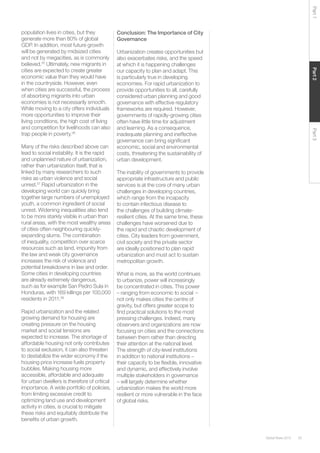
Fragile Societies under
Pressure
The fragility of societies is of increasing
concern, fuelled by underlying
economic, societal and environmental
developments (Figure 3 and Figure
1.2). A major driver of social fragility is
rising socio-economic inequality
within countries, although it is
diminishing between countries. Among
the members of the Organisation
for Economic Co-operation and
Development (OECD), the average
income of the richest 10% has now
grown to about nine times that of the
poorest 10%. In other countries, the
ratio is even higher: for example, more
than 25 times in Mexico.3
Income inequality is widening quickly
in large emerging markets. The
People’s Republic of China has seen
its Gini Index rise from about 30 in
the 1980s to over 50 in 2010.4,5
While
extreme poverty (less than $1.25 per
day) was reduced from afflicting over
50% of the world’s population in 1990
to 22% in 2010, the same reduction
did not take place in those earning
under $3 per day.6
The story is of
people escaping extreme poverty,
yet remaining poor. Widening income
inequality is associated with lower and
more fragile economic growth, which
reduces the scope to meet rising social
expectations in emerging markets.7
Rising structural unemployment
drives both inequality and social
pressures. Lower economic growth
and technological change are likely
to keep unemployment high in the
future, also in developing countries.
The spread of connectivity enables
protest movements to mount more
quickly, increasing the risk of unrest
and violence that could easily spill
over from individual countries to affect
the global economy. While inequality
and unemployment contribute to
social instability, social instability in
turn impacts negatively on equality,
employment and wealth creation.
The multidirectional cause-and-effect
relationship makes it harder to address
the related risks.
Underlying social fragility is also the
accelerating pace of change, growing
complexity and the deepening extent
of global interdependence, which
together reduce people’s feeling
of control over their immediate
environment and hence their sense
of stability and security. A common
psychological response to insecurity
and perceived loss of control is the
desire to turn inwards towards smaller
groups that have a stronger sense of
identity. At the same time, increased
global connectivity allows people
to make their voices heard and to
convene with like-minded individuals.
The growing risks of social extremism
and isolationism are brought to
light through the rising influence of
religious groups and in the separatist
movements in Catalonia and Scotland.
The effects associated with climate
change will put further pressure on
societies. Its expected impact on
the ability to grow food and access
water could prompt sudden and
uncontrolled population migrations,
putting additional pressure on
receiving countries.8
Already in 2014,
the number of refugees worldwide
from environmental or conflict-related
causes reached its highest level since
World War II.9
Global Risks 201516
Part1Part2Part3
As societies become less homogenous
and less bound by common values,
and more polarized into the haves and
have-nots, they will become harder to
govern effectively. This in turn increases
the risk of prolonged economic
stagnation, creating the potential for
a self-reinforcing downward spiral
into social chaos. States will need to
mitigate this risk through policies to
make growth more inclusive: providing
public goods and services such as
social protection, hospitals, schools,
transport and telecommunications
infrastructure.
Growing Worries about
Conflict
Having not featured prominently
in previous editions of the report,
interstate conflict is this year
considered the most likely high-impact
risk over the next 10 years, or indeed
perhaps even sooner. As already
discussed, respondents are even more
concerned about geopolitical risks in
the short term than in the long term
(Figure 1.1)
Many observers believe that the world
is entering a new era of strategic
competition among global powers.
Disillusion about globalization is leading
to more self-interested foreign policies
in combination with a rise in national
sentiment (Figure 3) fuelled in part by
the social pressures described above.
Growing nationalism is evident around
the world: in Russia, as seen in the
Crimea crisis; in India, with the rising
popularity of nationalist politicians;
and in Europe, with the rise of far-right,
nationalistic and Eurosceptic parties in
a number of countries.
Growth and employment creation are
currently expected to remain below
pre-crisis levels in both emerging
markets and advanced economies,
suggesting that the drivers of
nationalism will remain strong, and
raising the possibility of more frequent
and impactful conflicts among states.
Importantly, as can be seen in Figure 2,
interstate conflict is no longer physical
but uses economic means and cyber
warfare to attack people’s privacy as
well as intangible assets.
Geopolitical risks can have cascading
impacts on other risks. As state
structures are challenged by conflict,
the risk of the failure of national
governance and state collapse or crisis
can increase in areas where current
state boundaries do not necessarily
reflect popular self-identification. A
recent example is Iraq and Syria,
where ISIS has claimed control of
territory and attracted 20,000 to
30,000 fighters from a near standing
start.10
The rapid rise and brutality of
ISIS as well as the response of the
international community may underlie
the increased likelihood and impact
attributed by respondents to the
risk of the deployment of weapons
Figure 1.2: The Changing Global Risks
Landscape 2014-2015, Societal Risks
Source: Global Risks Perception Surveys 2013 and
2014, World Economic Forum.
Note: See endnote 25
2014 2015
Water crises
Profound
social instability
Food crises
Failure of
urban planning
Spread of
infectious diseases
Water crises
Profound
social instability
Food crises
Failure of
urban planning
Spread of
infectious diseases
Societal Risks
4.0
5.0
4.0 5.0
Impact
Likelihood
of mass destruction and the higher
potential impact than in previous years
associated with large-scale terrorist
attacks (Figure 1.3).
Failure of national governance features
strongly this year, as the third most
likely risk across the global risks
landscape. This risk area captures a
number of important elements around
the inability to efficiently govern as
a result of corruption, illicit trade,
organized crime, the presence of
impunity and generally weak rule of
law. Over past years, the links between
many forms of global crime and
corruption and their impact on global
security, extremism, terrorism and
fragile states have only grown stronger,
and it is critical to acknowledge and
address them through more effective
policies that curb illegal financial
flows, foster transparent governance
and build capacity around anti-crime
efforts at the national and local levels.
Absent a stronger response from both
the public and private sectors, the risk
is of undoing hard-earned gains in
economic and political stability, and
further eroding trust in leadership.
In a number of countries, such as
India, Indonesia and Romania, new
leaders have been elected in large
part due to their public commitment to
more transparent and corruption-free
governance models, underscoring an
ongoing shift in public expectations.
The growing interconnectedness of
the global economy increases the
economic effects of any geopolitical
conflict. Supply chains that run
across countries in conflict could be
interrupted, leading to disruptions in
the availability of goods or energy.
Survey respondents considered the
risk of an energy price shock to the
global economy as more impactful
and more likely than in previous years,
despite the increasing availability of
shale gas or alternative energy sources.
The interplay between economic and
geopolitical forces is further explored in
Part 2 of this report.
17Global Risks 2015
Part1Part2Part3
Figure 1.3: The Changing Global Risks
Landscape 2014-2015, Geopolitical
Risks
Rising nationalist sentiment and
declining trust among global players
are contributing to a weakening
of international governance,
undermining the international
community’s ability to act decisively
on issues such as conflict resolution,
Internet governance, climate change
and the management of oceans.
Failure to collaborate and implement
common solutions in these areas could
significantly undermine future global
growth.
Box 1.2: The rising threat from non-state actors
The group known as ISIS, ISIL or the Islamic State has gained global notoriety
through its taste for video-recorded executions and large-scale atrocity, with a
background of further human rights abuse that includes arbitrary
imprisonment and sexual enslavement. While its thirst for violence, blood and
misery – and especially the way it glories in these crimes – mark it out from
other non-state armed forces of our age, this is really only a quantitative
distinction. Other groups – many of them part of the global Al Qaeda franchise
– do the same, only less. Al Nusra in Syria, Al Qaeda in the Islamic Maghreb
and the Nigerian group known in the West as Boko Haram all do some of what
ISIS does on a somewhat smaller scale.
But what really marks ISIS out is that it has claimed statehood and with that
has established some of the machinery of state management. ISIS has not
only proclaimed the new Caliphate, the rule of the successors of the Prophet
Muhammad – not that it has any theological credibility to do so – but also
administers the area of northern Iraq and eastern Syria where it holds sway. It
handles law and order, some social services on a selective basis, and has an
intelligence service and system of informers set up for it by former officials of
the overthrown Ba’athist regime of Saddam Hussein. Adding to the lavish
funds it has raised from the Gulf region, it has also taken over and emptied the
central bank in Mosul, making it the richest non-state armed force in the world
and equipping it to be a non-state state.
The phenomenon is not without precedent: the Provisional Revolutionary
Government in South Vietnam did much the same in the late 1960s and early
1970s, without the self-glorification of atrocity and terror. And it is not without
parallel today. The Taliban have effective control over parts of Afghanistan and
was effectively the state in the late 1990s, until the US-led offensive overthrew
it in October 2001. Among other examples, for a long time FARC has been in
control of large areas of Colombia, while the Seleka militia is in charge of
northern areas of Central African Republic. Having withdrawn from Bangui in
January 2014 under heavy international pressure, they are recuperating by
systematically taxing gold and diamond mining, livestock and other economic
activities – behaving in part like a nascent state. Some groups have not based
themselves outside the territory over which they are fighting, but have waged
warfare that is not territorially limited. In the Al Qaeda mode, they have fought
what they perceive to be a global enemy. Today, perhaps the trend is in the
opposite direction: re-entry into an era of the non-state state.
Source: Global Risks Perception Surveys 2013 and
2014, World Economic Forum.
Note: See endnote 25
Weapons of
mass destruction
Terrorist attacks
State collapse
or crisis
Interstate conflictWeapons of
mass destruction
Terrorist attacks
State collapse
or crisis
Interstate conflict
Geopolitical Risks 2014 2015
4.0
5.0
4.0 5.0
Impact
Likelihood
Global Risks 201518
Part1Part2Part3
Economic Risks: Out of
the Spotlight?
The global economy is returning to
growth, albeit sluggishly, and there is
a feeling that significant progress has
been made in reducing the likelihood of
another financial crisis (as explored in
Box 1.4). This may reflect a false sense
of control, as history shows that people
do not always learn from past failures
and are often taken by surprise by the
same risks.
The global unemployment rate is
expected to remain at current levels
until 2018, reflecting a growing
problem of structural unemployment
in advanced economies.11
This will
likely keep wages low, maintaining
deflationary pressures; in the Eurozone,
inflation fell as low as 0.66% in 2014.
As past years have seen a build-up
of debt in many major economies –
notably China, where the corporate
debt-to-GDP ratio went from 92%
in 2003-2007 to 110% in 2013 – the
possible risk is that deflation could
reduce debtors’ ability to repay,
threatening the future stability of the
financial system.12
Conversely, low interest rates have
also fuelled the risk of asset bubbles.
Since the financial crisis, the use of
expansionary monetary policy – such
as quantitative easing and zero interest
rates – has not had the expected
impact of significantly increasing credit
availability in the real economy, instead
leading to a reflation of asset prices.
Credit booms and asset bubbles have
historically resulted in bank bailouts
and recession in the real economy (see
Box 1.3).
The risks of a failure of a major
financial mechanism or institution
and fiscal crises are perceived as
equally impactful and likely as in last
year’s report (Figure 1.4), yet other risks,
such as water crises, interstate conflict
and the failure of climate-change
adaptation, have taken centre stage.
This runs the risk of diverting decision-
makers’ attention away from continuing
economic reforms. Despite recent
efforts (see Box 1.4), either deflationary
pressures or the bursting of an asset-
price bubble could still cause the failure
of a major financial mechanism or
Figure 1.4: The Changing Global Risks
Landscape 2014-2015, Economic Risks
institution – especially as the shadow
banking sector is less regulated yet
increasingly important.13
Likewise, in
many countries public debt levels are
still worryingly high so that the related
risks are likely to persist over many
years.
Decision-makers’ focus on other
risks could lead to inaction at a time
when continued progress in structural
reform is most necessary; The Global
Competitiveness Report 2014-2015
outlines some priorities.14
Maintaining
the momentum of both financial and
fiscal reforms will be crucial to avoid
another major economic crisis.
Box 1.3: Asset bubbles – a new old risk?
The evidence of frothiness is increasing in a number of housing markets in
both advanced and emerging economies – including Canada, the United
Kingdom, Switzerland, France, Sweden, Norway, China, Hong Kong SAR and
Singapore – as well as in a number of credit and equity markets across the
world.
The traditional goal of central banks has been economic stability: keeping
inflation low while achieving robust growth. The current realization is that
central banks must also seek to preserve financial stability – which means,
among other things, avoiding risky bubbles. The current theory is that macro-
prudential regulation and supervision of the financial system will avoid bubbles
and achieve financial stability. However, bubbles are very hard to identify (price
increases could also reflect market movements), and macro-prudential
regulation has not historically been effective and excludes the unregulated
shadow banking system.
If macro-prudential regulation fails again, central banks will be left with only
one tool – monetary policy – to pursue both goals of economic and financial
stability. This may prove impossible. Trying to prick bubbles by using monetary
policy risks causing a bond market rout and a hard landing for the real
economy. However, keeping monetary policy loose in a bid to help the real
economy risks inflating asset bubbles that will, inevitably, eventually burst and
also damage the real economy. Loose monetary policy is the mother of all
bubbles. Attempting to walk this tightrope will be a difficult issue for central
banks in both advanced and emerging markets in the years to come.
Source: Global Risks Perception Surveys 2013 and
2014, World Economic Forum.
Note: See endnote 25
Fiscal crises
5.0
Unemployment or
underemployment
Fiscal crises
Failure of financial
mechanism or institution
Failure of
critical infrastructure
Energy price
shock
Fiscal crises
Unemployment or
underemployment
Fiscal crises
Failure of financial
mechanism or institution
Failure of
critical infrastructure
Energy price
shock
Economic Risks 2014 2015
Likelihood
Impact
4.0
4.0 5.0
5.0
19Global Risks 2015
Part1Part2Part3
Box 1.4: Recent advances in the global regulation of the financial system
The global financial system is undergoing massive structural change as a result not only of the crisis but of the regulatory
changes in its wake. The very fact that the whole post-crisis regulatory overhaul has been spearheaded by the Financial
Stability Board and G20, i.e. with explicit political backing by a global set of policy-makers, is very innovative and has not
been the case in setting international regulatory standards before. The past five years have witnessed a profound change
of international regulatory standards for banks and non-banks alike.
♦ Banks’ regulatory rules have been revised (usually subsumed under the Basel III heading), resulting in stronger capital
requirements, the first-ever globally agreed liquidity standards (for a short-term liquidity and a structural funding
measure), and new standards for constraining large exposures and improving risk management. Also, supervisory
standards are being raised and the international standard setter (Basel Committee) has launched a programme to
assess national implementation, which exerts peer pressure on jurisdictions to implement the reforms in a consistent
manner.
♦ Cross-border resolution difficulties witnessed in the crisis are reflected in the new set of expectations with regard to
effective resolution regimes and a process of recovery and resolution planning for the largest banks, complete with
setting up cross-border crisis management groups composed of authorities from the (most prominent) jurisdictions
where these banks operate.
♦ Regarding non-banks, the international community is finalizing a basic solvency requirement for global insurers who
are systemically important – to date there has been no global solvency standard; over-the-counter derivatives
markets are undergoing major overhaul with measures aimed at mandating and/or incentivizing central clearing and
trading on organized platforms with reporting to trade repositories of all contracts. In terms of insurance regulation,
many countries in Europe, Latin America and Asia are adopting variants of the Solvency II regime. New insurance
regulation has a strong emphasis on corporate governance, disclosure and accountability. These measures are
relevant as they aim to change the broader corporate behaviour.
♦ International accounting standards are being changed, in particular to make loss recognition more forward-looking
(newly issued IFRS9).
♦ Some supervisory authority over the financial sector has been relocated to central banks, most notably in Europe,
where the European Central Bank has taken on additional responsibilities.
Still, of course, challenges remain. Addressing the issue of “too-big-to-fail” remains a key issue. Efforts are needed to: (i)
finalize living wills and identify and remove barriers to firms’ resolvability; (ii) reach consensus on banks’ loss-absorbing
capacity to ensure that they can be resolved; (iii) address obstacles to cross-border cooperation and recognition of
resolution measures; (iv) ensure recovery and resolution of non-banks; and (v) promote better regulation of the shadow
banking sector. Cross-border challenges persist also in over-the-counter derivatives reform. As regulatory regimes
developed in parallel in the two largest markets (European Union and United States), they resulted in a framework that
overlaps and is not completely consistent. Regulatory decisions allowing reliance on home regulatory regimes (known as
“deference”) are urgently needed. Trade reporting requirements have been adopted in key countries but legal barriers
frustrate implementation. Progress on trading standardized contracts on exchanges and electronic trading platforms
continues to slip. Political commitment is needed to advance reforms in all these areas.
Source: This box draws on the latest Global Financial Stability Report and related IMF work.
Note: In addition to the current regulatory reforms described above, some experts believe that profound changes in the corporate culture and incentive systems in the
financial sector are needed to reduce excessive risk-taking.
Global Risks 201520
Part1Part2Part3
Box 1.5: Black Sky – risks to critical infrastructure
The world has more to lose than ever before from massive failure of critical
infrastructure. To improve efficiency and lower cost, various systems have
been allowed to become hyperdependent on one another. The failure of one
weak link – whether from natural disaster, human error or terrorism – can
create ripple effects across multiple systems and over wide geographical
areas.
Large-scale power outages might be the most visible illustration. The initiating
event in the August 2003 power failures in the United States occurred in Ohio
but the worst consequences were felt by 55 million people in the north-eastern
part of the United States and Canada. The July 2012 India blackout was the
largest in history, affecting 670 million people, about 10% of the world
population, and was partially triggered by high demand during a heat wave.
In many countries, infrastructure has not been maintained well enough to
withstand the kinds of catastrophes that could spark such cascading effects.
This is often the result of procrastination, the perception that the risk is so
small that it is not worth considering or crowding out by other priorities, and
the fact that investing in preparedness is rarely immediately rewarded in the
electoral process. The challenge is financial, and incentives are misaligned. For
example, in the United States, over 80% of infrastructure is owned or
managed by private sector firms, which are not responsible for the negative
externalities that failure of their part of the infrastructure could have
elsewhere.1
To increase investment in infrastructure, a coordinated, global,
long-term and multistakeholder approach is required. Upgrading infrastructure
is essential, in recognition that resilient infrastructure has become the
backbone of a competitive economy.
Note:
1
Auerswald, Branscomb, LaPorte and Michel-Kerjan, 2006.
Environment – High
Concern, Little Progress
Over the past decade, awareness has
grown regarding the threats posed
by environmental change to social,
political and economic security. As the
Global Risks Perception Survey 2014
highlights, three of the top 10 risks in
terms of impact over the next 10 years
are environmental risks: water crises,
at the top of the table, and failure of
climate-change adaptation as well as
biodiversity loss (see Figure 1).15
Figure 1.5: The Changing Global Risks
Landscape 2014-2015, Environmental
Risks
Both water crises and failure of
climate-change adaptation are also
perceived as more likely and impactful
than average (upper right quadrant
of Figure 1 and Figure 1.5). Global
water requirements are projected to
be pushed beyond sustainable water
supplies by 40% by 2030.16
Agriculture
already accounts for on average
70% of total water consumption and,
according to the World Bank, food
production will need to increase by
50% by 2030 as the population grows
and dietary habits change.17,18
The
International Energy Agency further
projects water consumption to meet
the needs of energy generation and
production to increase by 85% by
2035.19
Source: Global Risks Perception Surveys 2013 and
2014, World Economic Forum.
Note: See endnote 25
Natural
catastrophesMan-made
environmental
catastrophes
Extreme
weather
events
Biodiversity loss
and ecosystem collapse
Failure of
climate change
adaptation
Natural
catastrophesMan-made
environmental
catastrophes
Extreme
weather
events
Biodiversity loss
and ecosystem collapse
Failure of
climate change
adaptation
Environmental Risks 2014 2015
Impact
Likelihood
4.0
5.0
4.0 5.0
21Global Risks 2015
Part1Part2Part3
The Intergovernmental Panel on
Climate Change notes that weather
extremes in food-producing regions
are already causing price increases
and suggests that the impact of climate
change on weather patterns and rainfall
– causing either floods or droughts –
could cut crop yields by up to 25%.20
The nexus of food, water, energy and
climate change has been identified by
the US National Intelligence Council as
one of four overarching mega trends
that will shape the world in 2030.21
The
risks interconnections map (see Figure
2) shows how survey respondents
perceived this nexus to be related also
to other risks, including large-scale
involuntary migration.
Decision-makers will be forced to
make tough choices about allocations
of water that will impact users across
the economy (Part 3 of this report
highlights an approach developed in
Australia’s Murray-Darling Basin, for
addressing this issue). The situation
will worsen further if more man-made
environmental catastrophes causing
shocks to the system happen: more
recent examples include the Fukushima
power plant disaster threatening to
contaminate both freshwater and
seawater, or the Deepwater Horizon
oil spill contaminating large sections of
coast along the Gulf of Mexico.
Overfishing, deforestation and the
inadequate management of sensitive
ecosystems such as coral reefs are
increasing the stress on food and water
systems. Major biodiversity loss and
ecosystem collapse was assessed
as high impact by respondents, but
below average in terms of likelihood
(see Figure 1); the latter seems to reflect
a misperception. The World Bank
estimates that 75% of the world’s poor,
or 870 million people, make a living
from ecosystems, including tourism
and the goods they produce, while 350
million are affected by the loss of coral
reefs.22
Increasingly, decision-makers
are realizing that biodiversity loss is not
a second-order issue but is intricately
linked to economic development, food
challenges and water security.
The urgency of coordinated global
action on climate change was
reinforced in April and November
2014 by the Intergovernmental Panel
on Climate Change’s release of its
Fifth Assessment Report and the
associated update. It reconfirms that
warming is unequivocally happening
and it is “extremely likely” that human
influence has been the dominant
cause. Atmospheric concentrations
of three major greenhouse gases
(carbon dioxide, methane and nitrous
oxide) are at their highest level in
800,000 years. Strong evidence of the
effects of climate change is already
apparent, in terms of sea level rise,
shrinking glaciers, warmer oceans and
the increasing frequency of weather
extremes.
Even though all of these risks are
well known, governments and
businesses often remain woefully
underprepared, as illustrated by
respondents’ perceptions that relatively
little progress has been made on
these risks in the last decade (see
Figure 3.1). At the heart of the problem
is a risk-management approach
based on responsive measures that
assume things go back to normal
after a crisis – an approach that falls
short with complex or slowly evolving
environmental risks such as climate
change. Stakeholders have been slow
to address the underlying causes
of environmental risks or to address
their economic, social, political and
humanitarian consequences.
Box 1.6: The road to Paris – is 2015 make or break for climate
change?
In 2015 the international community has a once-in-a-generation opportunity to
align the climate change and development agenda. A series of global summits on
climate change, disaster risk reduction, financing for development and sustainable
development goals could embed into the post-2015 global governance
architecture a coherent agenda for tackling interlocking environmental risks.
Convergence among governments on these decisions could kick-start the next
generation of sustainable growth and poverty reduction – through catalysing
private finance and scaling low-carbon, climate-resilient investment, especially but
not only in developing countries. However, the opportunity will be missed if
governments continue to value narrow short-term concerns above the prospect of
longer-term global prosperity and environmental security. More vulnerable
populations will be consigned to the negative spiral of poverty and environmental
degradation.
Until recently, the expectation was that governments would struggle to finalize a
strong global climate accord in time for the Paris climate conference in December
2015. But is the tide beginning to turn? At the United Nations Secretary-General’s
Climate Summit in September 2014, over 1,000 businesses and investors signalled
their support for global carbon pricing. So did some 73 countries, covering 52% of
global GDP and 54% of global emissions.
Major consumer companies and financial institutions see the need to reduce global
climate risks and have mobilized action along their supply chains, for example
through the New York Declaration on Forests and the move towards climate-
friendly coolants. The Oil & Gas Climate Initiative signalled refreshed engagement
from major energy producers.
The hope is that these coalitions of committed businesses could both inject
concrete solutions and create a more positive global atmosphere for governments
to collectively make decisions in 2015. A positive signal is the agreement between
China and the United States in November 2014. A strong set of clear policy signals
to the wider business community is needed from the world’s governments on their
ambition to tackle environmental risks. The year 2015 is not an opportunity the
world can afford to miss.
Global Risks 201522
Part1Part2Part3
Technological Risks: Back
to the Future
The risk of large-scale cyber attacks
continues to be considered above
average on both dimensions of impact
and likelihood (see Figures 1 and
1.6) This reflects both the growing
sophistication of cyber attacks and
the rise of hyperconnectivity, with
a growing number of physical objects
connected to the Internet and more
and more sensitive personal data –
including about health and finances
– being stored by companies in the
cloud. In the United States alone, cyber
crime already costs an estimated $100
billion each year.23
Figure 1.6: The Changing Global Risks
Landscape 2014-2015, Technological
Risks
The IoT is likely to disrupt business
models and ecosystems across a
range of industries. While this will
deliver innovation, the prospect of
many large players across multiple
industries being forced to change
so radically at the same time raises
potential systemic risks such as large-
scale disruption in labour markets
and volatility in financial markets. A
major public security failure could also
prevent the IoT from becoming truly
widespread.
An important characteristic of global
risks, which transpires across the
cases included in this report, is their
Box 1.7: Governing the Internet — the need for mechanisms to
maintain a unified and resilient network
The pace of innovation and the highly distributed nature of the Internet require a
new approach to global Internet governance and cooperation. As more people
rely on the Internet, the question of Internet governance becomes increasingly
important. Two kinds of issues exist: technical matters, to make sure all the
infrastructure and devices that constitute the Internet can talk to each other; and
overarching matters, to address cyber crime, Net neutrality, privacy and freedom
of expression.
Responsibility for the technical infrastructure of the Internet is dispersed among
several organizations, including the Internet Engineering Task Force (IETF) and the
World Wide Web Consortium (W3C), the Regional Internet Registries (RIRs), the
root servers’ operators, and the Internet Corporation for Assigned Names and
Numbers (ICANN). The solutions they propose – policy models, standards,
specifications or best practices – spread through voluntary adoption or ad hoc
conventions, regulations, directives, contracts or other agreements.
No such systems exist for developing and implementing solutions to the
overarching issues. Consequently, governments are feeling pressure to enact
national measures to deal with their citizens’ data and privacy concerns. While
laws that force the “localization” of infrastructure may be easier short-term
solutions than collaborating to define global mechanisms for addressing the
issues, the risk is that “data nationalism” could endanger the network effects that
underlie the Internet’s ability to drive innovation and create social and economic
value.
To advance the conversation, identify possible solutions and contribute to open,
resilient and inclusive Internet governance, the World Economic Forum is
embarking on a multiyear strategic initiative to bring together leaders from the
public and private sectors with civil society leaders and the technical community
to address these issues in an impartial, high-level dialogue. This effort will
complement the expert-level discussions taking place at the Internet Governance
Forum and various other grassroots and government-led initiatives.
interconnectedness, shown in the
Interconnections Map in Figure 2. It is
important to stress that risks cannot
be seen in isolation. The feedback
loops between risks and the fact that
they are also driven by underlying
trends (Figure 3) raise their complexity
and make it more difficult to control
individual risks. Over past years, the
speed of transmission and the strength
of interconnections have increased.
The complexity of addressing risks,
their likelihood and their potential
consequences raise the question of
preparedness, on the global, regional,
national and local levels.
Source: Global Risks Perception Surveys 2013 and
2014, World Economic Forum.
Note: See endnote 25
Data fraud
or theft
Cyber attacks
Critical information
infrastructure breakdown
Data fraud
or theft
Cyber attacks
Critical information
infrastructure breakdown
Technological Risks 2014 2015
5.0
4.0
4.0 5.0
Impact
Likelihood
While the “Internet of Things” (IoT) will
deliver innovations, it will also entail new
risks. Analytics on large and disparate
data sources can drive breakthrough
insights but also raise questions about
expectations of privacy and the fair
and appropriate use of data about
individuals. Security risks are also
intensified. There are more devices to
secure against hackers, and bigger
downsides from failure: hacking the
location data on a car is merely an
invasion of privacy, whereas hacking
the control system of a car would be
a threat to life. The current Internet
infrastructure was not developed with
such security concerns in mind.
23Global Risks 2015
Part1Part2Part3
Terrorist
attacks
Terrorist
attacks
Failure ofFailure ofFailure ofFailure ofFailure ofFailure ofFailure ofFailure ofFailure ofFailure ofFailure of
nationalnationalnationalnationalnationalnationalnationalnational
governancegovernancegovernancegovernancegovernancegovernancegovernancegovernancegovernancegovernancegovernance
Failure ofFailure ofFailure ofFailure ofFailure ofFailure ofFailure ofFailure ofFailure of
climate changeclimate changeclimate changeclimate changeclimate changeclimate changeclimate changeclimate changeclimate changeclimate changeclimate changeclimate changeclimate changeclimate changeclimate change
adaptationadaptationadaptationadaptationadaptationadaptationadaptationadaptationadaptationadaptationadaptationadaptation
Profound
socialsocialsocialsocialsocialsocial
instabilityinstabilityinstabilityinstabilityinstabilityinstabilityinstabilityinstabilityinstabilityinstability
Water
crises
Spread ofSpread ofSpread ofSpread ofSpread ofSpread ofSpread ofSpread ofSpread ofSpread ofSpread of
infectiousinfectiousinfectiousinfectiousinfectiousinfectiousinfectiousinfectiousinfectious
diseasesdiseasesdiseasesdiseasesdiseasesdiseasesdiseasesdiseasesdiseases
Unemployment
or under-
employment
Energy
price
shock
Profound
social instability
Cyber attacks
Failure
of critical
infrastructure
Failure of
urban planning
Food
crises
Large scale
involuntary
migration
Interstate
conflict
Water crises
Profound
social
instability
Failure
of urban
planning
Man-made
environmental
catastrophesInterstate conflict
Failure
of urban
planning
Unemployment
or under–
employment
Sub-Saharan
Africa
South Asia
North America
Latin America
and the Caribbean
Europe
Central Asia
including Russia
Middle East
and North Africa
East Asia
and the Pacific
Interstate
conflict
Preparedness at the
Regional Level Is Different
As most efforts to address global risks
are undertaken at the national and
regional levels, it is important to look
at preparedness from a disaggregated
perspective. Figure 1.7 illustrates
for each world region those risks for
which survey respondents indicated
their region is the least prepared.
Preparedness reflects a combination
of exposure to a risk and the measures
that have already been taken to
mitigate or prepare for it.
It is striking that every region presents a
wholly different set of issues for which it
is least prepared. For example:
♦ High structural unemployment
or underemployment is seen
as the risk for which Europe is
least prepared, followed by large-
scale involuntary migration and
profound social instability. Both
unemployment and migration flows
into Europe are expected to remain
high on the agenda going forward
and are driving factors of social
instability.24
♦ North America identifies failure/
shortfall of critical infrastructure,
large-scale cyber attacks and failure
of climate-change adaptation as
the three risks for which it is least
prepared. Major breakdowns
of infrastructure in the wake of
Superstorm Sandy and the sheer
number of cyber attacks illustrate
the low level of preparedness.
♦ Sub-Saharan Africa is considered
least prepared for infectious
diseases and unemployment. Both
are of key importance given recent
events and the fact that strong
population growth is expected to
exacerbate unemployment in the
coming years, despite expected
economic growth.
♦ Many regions, including Europe,
Latin America and the Caribbean,
and the Middle East and North
Africa, also include profound social
instability among the risks they are
least prepared for.
♦ East Asia and the Pacific is
perceived as least prepared for
interstate conflict and failure of
urban planning. It is also the
only region that reported being
least prepared for man-made
environmental catastrophes
following the 2011 Fukushima
incidence.
♦ Failure of urban planning is among
the first three risks in East Asia and
the Pacific, Latin America and
the Caribbean, and South Asia.
In such regions, urbanization is
especially rapid and the failure of
urban planning can lead to a wide
range of catastrophic scenarios
from social unrest to pandemic
outbreak (Part 2).
Figure 1.7: For Which Global Risks Is Your Region Least Prepared?
Source: Global Risks Perception Survey 2014, World Economic Forum.
Note: Respondents were asked to select three global risks that they believe their region is least prepared for. For legibility reasons, the names of the global risks are
abbreviated. Please see Appendix A for the full name and description. Oceania is not displayed because of the low number of respondents.
1st
2nd
Ranking position
in each region
3rd
Risk category
Economic
Geopolitical
Environmental
Societal
Technological
Global Risks 201524
Part1Part2Part3
Conclusion
Drawing on the perceptions of almost
900 survey respondents, this chapter
focuses on the threats of social fragility
and short-term worries about conflict.
Rising socio-economic inequality, weak
economic growth, food price volatility
and food insecurity, unemployment,
large-scale migration and the growing
heterogeneity and interdependence
of societies are among the key
drivers of social fragility. Growing
social polarization, isolationism and
nationalism in turn have the potential to
trigger geopolitical conflicts.
The section highlights the
interconnections between global risks
and trends. A better understanding of
global risks and the interconnections
between them is key to prompting
discussion about how to prepare,
mitigate and prevent them. Part 2 of
this report analyses in detail selected
clusters of interconnected risks and
how they could evolve – the interplay
between geopolitical and economic
risks, challenges related to urbanization
in developing countries and emerging
technologies.
Endnotes
1
The risk of water crises is classified as a societal risk for the purpose of this report. However, it has an important
environmental dimension.
2
IMF, 2014a.
3
OECD, 2011.
4
Standardized World Income Inequality Database. See http://myweb.uiowa.edu/fsolt/swiid/swiid.html.
5
The Gini index measures the extent to which the distribution of income among individuals or households within an
economy deviates from a perfectly equal distribution on a scale from 0 (perfect equality) to 100 (perfect inequality).
6
UN, 2014.
7
Berg and Ostry, 2011. And Ostry, Berg and Tsangarides, 2014.
8
IPCC, 2014, pp. 1-32.
9
UNHCR, 2014.
10
“Islamic State fighter estimate triples – CIA”, BBC, 12 September 2014; http://www.bbc.com/news/world-middle-
east-29169914.
11
ILO, 2014.
12
IMF, 2014b.
13
IMF, 2014c.
14
World Economic Forum, 2014.
15
As mentioned above, the risk of water crises is classified as a societal risk for the purpose of this report. However, it
has an important environmental dimension.
16
2030 Water Resources Group, 2009.
17
Food and Agriculture Organization of the United Nations, aquastat; http://www.fao.org/nr/water/aquastat/water_
use/index.stm.
18
World Bank, Food Security; http://www.worldbank.org/en/topic/foodsecurity/overview#1.
19
IEA, 2012.
20
Porter et al., 2014.
21
NIC, 2012.
22
World Bank, Biodiversity; http://www.worldbank.org/en/topic/biodiversity/overview.
23
See The Wall Street Journal, “Annual U.S. Cybercrime Costs Estimated at $100 Billion”, 22 July 2013; http://online.
wsj.com/articles/SB10001424127887324328904578621880966242990.
24
In the first nine months of 2014, the number of migrants crossing the Mediterranean Sea into Europe reached
160,000, twice the previous record from 2011. Integrating such a large number of migrants is a big challenge, which
has the potential to destabilize societies if not properly addressed.
25
Global risks may not be strictly comparable across years, as the names and description of the risks were revised
between 2014 and 2015. The risks introduced in 2015 are not displayed in the figures and only the risks for which the
name or the description were slightly revised between 2014 and 2015 are presented. Water crises was categorized
as an environmental risk in 2014 but as a societal risk in 2015. To ensure legibility, the names of the global risks are
abbreviated. Please see Appendix A for the full name and description.
25Global Risks 2015
Part1Part2Part3
References
Auerswald, P., L. Branscomb, T. La Porte and E. Michel-Kerjan (eds). 2006. Seeds of Disaster, Roots of Response:
How Private Action Can Reduce Public Vulnerability. Cambridge University Press, New York, NY, USA.
Berg, A. G. and J. D. Ostry. 2011. “Equality and Efficiency”. Finance and Development. 48(3); http://www.imf.org/
external/pubs/ft/fandd/2011/09/Berg.htm.
International Energy Agency (IEA). 2012. World Energy Outlook 2012: Executive Summary. Paris: IEA; http://www.iea.
org/publications/freepublications/publication/english.pdf.
International Labour Organization (ILO). 2014. Global Employment Trends. Geneva: ILO; http://www.ilo.org/wcmsp5/
groups/public/---dgreports/---dcomm/---publ/documents/publication/wcms_233953.pdf.
International Monetary Fund (IMF). 2014a. World Economic Outlook: Legacies, Clouds, Uncertainties. Washington
DC: IMF; http://www.imf.org/external/pubs/ft/weo/2014/02/
International Monetary Fund (IMF). 2014b. “People’s Republic of China”, 2014 Article IV Consultation—Staff Report;
Press Release; and Statement by the Executive Director for the People’s Republic of China. IMF Country Report No.
14/235. Washington DC: IMF; http://www.imf.org/external/pubs/ft/scr/2014/cr14235.pdf.
International Monetary Fund (IMF). 2014c. Global Financial Stability Report: Risk Taking, Liquidity, and Shadow
Banking: Curbing Excess While Promoting Growth. Washington DC: IMF; https://www.imf.org/external/pubs/ft/
gfsr/2014/02/index.htm.
National Intelligence Council (NIC). 2012. Global Trends 2030: Alternative Worlds. Washington DC: NIC; http://www.
dni.gov/files/documents/GlobalTrends_2030.pdf.
Organisation for Economic Co-Operation and Development (OECD). 2011. Divided We Stand: Why Inequality Keeps
Rising. Paris: OECD.
Ostry, J. D., A. Berg and C. G. Tsangarides. 2014. Redistribution, Inequality, and Growth, IMF Staff Discussion Note.
Washington DC; http://www.imf.org/external/pubs/ft/sdn/2014/sdn1402.pdf.
Porter, J.R., L. Xie, A.J. Challinor, K. Cochrane, S.M. Howden, M.M. Iqbal, D.B. Lobell, and M.I. Travasso. 2014.
“Food security and food production systems”. Climate Change 2014: Impacts, Adaptation, and Vulnerability.
Part A: Global and Sectoral Aspects. Contribution of Working Group II to the Fifth Assessment Report of the
Intergovernmental Panel on Climate Change [Field, C.B., V.R. Barros, D.J. Dokken, K.J. Mach, M.D. Mastrandrea,
T.E. Bilir, M. Chatterjee, K.L. Ebi, Y.O. Estrada, R.C. Genova, B. Girma, E.S. Kissel, A.N. Levy, S. MacCracken, P.R.
Mastrandrea, and L.L.White (eds.)]. Cambridge University Press, Cambridge, United Kingdom and New York, NY,
USA, pp. 485-533.
The 2030 Water Resources Group. 2009. Charting Our Water Future: Economic frameworks to inform decision-
making. Washington DC; http://www.2030wrg.org/wp-content/uploads/2014/07/Charting-Our-Water-Future-Final.
pdf.
United Nations. 2014. The Millennium Development Goals Report 2014. New York; http://www.un.org/
millenniumgoals/2014%20MDG%20report/MDG%202014%20English%20web.pdf.
United Nations Refugee Agency (UNHCR). 2014. Global Trends 2013. Geneva; http://www.unhcr.org/5399a14f9.
html.
World Economic Forum. 2014. The Global Competitiveness Report 2014-2015. Geneva: World Economic Forum;
http://www3.weforum.org/docs/WEF_GlobalCompetitivenessReport_2014-15.pdf.
Global Risks 201526
Part1Part2Part3
Part 2:
Risks in Focus
2.1 Introduction
This section of the Global Risks 2015
report presents deep-dives into
three “risks in focus” – the interplay
between geopolitics and economics,
rapid and unplanned urbanization in
developing countries, and emerging
technologies – that emerged from the
Risks Interconnections Map and the
Risks-Trends Interconnections Map (see
Figures 2 and 3). These provide good
illustrations of the links between different
global risks. The analysis in the following
pages is based on follow-up research
and interviews with experts.
As discussed in Part 1, geopolitical risks
are back, as evident from the central
node of the failure of national governance
in the interconnections maps, and the
strong linkages to interstate conflict
and profound social instability, among
others. With economies tied together
on an unprecedented scale by financial
and trade flows, many analysts are
concerned about the resurgence of the
trend towards the interplay between
geopolitics and economics. While
national governments in the past
also made use of economic tools to
increase their relative power, today’s
strong economic ties arguably make
this interplay more complex and
therefore more difficult to navigate.
This resurgence could have profound
implications for the effectiveness of
global governance mechanisms in other
areas, from combating climate change
to reaching an international solution for
Internet governance.
Even as nation states step up their
efforts to maintain or expand power,
urbanization is slowly but surely
rebalancing the locus of power from
national to city governments. The
data gathered for this report suggest
that urbanization is a critical driver
of profound social instability, failure
of critical infrastructure, water crises,
and the spread of infectious diseases
(see Figure 3). This will only be further
exacerbated by an unprecedented
transition from rural to urban areas:
by 2050, two-thirds of the world’s
population – an estimated 6.3 billion
people – will live in cities, with 80% in
less developed regions.1
Rapid and
unplanned urbanization in these regions
has the potential to drive many risks.
How effectively the world addresses
global risks, ranging from climate
27Global Risks 2015
Part2Part3Part1
change to pandemics, will increasingly
be determined by how well cities are
governed. The concentration of a
large number of people, assets, critical
infrastructure and economic activities
means that the risks materializing at the
city level have the potential to disrupt
society.
From artificial intelligence to synthetic
biology, the need for governance on
a global scale comes into focus when
considering emerging technologies,
given the many uncertainties about how
emerging technologies evolve and their
far-reaching economic, societal and
environmental implications. The data
also point to strong interconnections
with man-made and natural
environmental catastrophes (see Figure
2). The coming years are likely to see
rapid advances in such fields as artificial
intelligence and synthetic biology – and
while many of their impacts are likely to
be beneficial, negative effects will spread
quickly in today’s hyperconnected world.
Some of those negative effects may
be difficult to anticipate and safeguard
against.
In many cases, by addressing the
trends underlying most of the risks, the
vulnerability to risks can be reduced
significantly. In addition, understanding
the context and possible trajectories of a
significant nexus of risks and trends can
help to clarify ways to address them and
to capitalize on opportunities presented
by the trends. That is the aim of the
analysis that follows.
 
2.2 Global Risks Arising
from the Accelerated
Interplay between
Geopolitics and
Economics
Geopolitics traditionally focuses
on military might, resources and
demographics as measures of national
influence, while economics focuses on
growth, productivity and prosperity.
However, geopolitics and economics
have been intertwined through history –
for example in the rise of British political
power on the back of the “economic”
Industrial Revolution, the era of British
and French colonialism, or the Cold
War, when a deep geopolitical divide
separated economies. When the Cold
War ended, an era of common norms
ushered in a global economy; now,
more than 25 years after the fall of the
Berlin Wall, strategic competition is
returning. The world is grappling with
a seemingly accelerating dynamic
between geopolitics and economics.
Today’s realpolitik is not ideologically
driven, includes new players and takes
place in the context of deep economic
integration.
Will the global economy, the efficiency of
the international system and the win-
win logic of commerce be undermined
by geopolitics? How will economic
decisions and spheres of influence
impact the global balance of power?
What global risks could emerge when
countries use economic rather than
military tools to advance their ends?
These questions have been brought
into focus by trends including the
recent heightened tensions in East
Asia, the acceleration of regional
integration in South-East Asia and the
rise of preferential and regional trade
agreements more generally, the shale
gas and oil revolution in the United
States, turbulence in the Middle East
and Ukraine, competing integration
mechanisms in Latin America, China’s
assertion of leadership in the global
economy, and acts of terrorism and
violent strife that are redrawing borders
and sending economies backwards.
Global interconnectedness and the rising
speed of information transmission have
reinforced the interdependence between
geopolitics and economics, with
cyberspace representing an important
new front in the geopolitical equation as
cyber attacks have the growing potential
to inflict economic damage. This makes
it difficult for decision-makers to predict
the development of such situations
as sanctions and other instruments
of economic coercion, thus raising
the risk of unintended consequences.
The interplay between geopolitics and
economics can create, reinforce and
alter the nature of the interconnections
between global risks, affecting many
areas of public policy and international
cooperation.
Governments and businesses alike
need to conduct “geopolitical due
diligence” to not be caught off guard.
The focus below is on three areas where
direct effects are likely – disruptions to
international trade, and threats to political
cooperation and the international rules-
based system.
How Is this Situation Manifested?
In a retreat from the prevailing logic
of globalization that characterized
the 1990s and early 2000s, today’s
international environment is in large
part marked by self-interested nation
states trying to gain relative power over
others, even at the expense of economic
considerations. Rising unemployment
and more difficult fiscal situations
are contributing to the more inward
orientation of economies. The growth
of trade along global value chains and
intensifying financial linkages have
increased the economic cost of rising
protectionist policies, such as tariffs,
sanctions and trade wars, as described
in Box 2.1.
As states turn inwards, their international
economic policies tend to focus on
collaboration with smaller groups of like-
minded countries that would allow them
to better pursue their economic goals.
Countries have always sought to achieve
both geopolitical and economic aims
through regional economic integration
– the European Economic Community,
for example, was established to stabilize
relations and raise the stakes in case
of war as well as to increase market
size and economic opportunities. Many
regional groupings are established as
they allow countries to gain relative
power over others. This type of thinking
is currently why the Association of
Southeast Asian Nations (ASEAN) is
seeking to create a unified market by
Global Risks 201528
Part1Part2Part3
Table 2.1: East Asian-Pacific Free Trade Agreements
Part of the agreement Not part of the agreement
Source: ASEAN, Ministry of Foreign Affairs of the Republic of Korea, The Economist and Oliver Wyman analysis.
Notes: 1
RCEP, promoted by ASEAN, would also include Cambodia, India, Laos and Myanmar.
2
TPP, promoted by the US, would also include Canada, Chile, Mexico and Peru as well as the US.
3
FTAAP, promoted by China, would also include Hong Kong SAR, Papua New Guinea, Russian Fed. and Taiwan, China.
4
Planned or achieved. Korea’s free trade agreements (additionally with Brunei, Cambodia, Indonesia, Malaysia, Philippines, Singapore, Thailand and Vietnam) are
______ through its agreement with ASEAN.
Country RCEP1
TPP2
FTAAP3 Korea, Rep.
bilateral4
Australia
Brunei
Cambodia
China, People’s Rep.
Indonesia
Japan
Korea, Rep.
Malaysia
New Zealand
Philippines
Singapore
Thailand
Vietnam
2015 and pursuing an agreement on
a Regional Comprehensive Economic
Partnership (RCEP). It is also one of the
drivers of the United States’ efforts to
pursue discussions on two major free
trade and investment agreements – the
Transatlantic Trade and Investment
Partnership (TTIP) and the Trans-Pacific
Partnership (TPP).
However, in some cases competing
integration agreements are creating
strategic competition: in Latin America,
the Pacific Alliance and Mercosur
provide different models of integration; in
Ukraine, the country was torn between
the European Union and the Eurasian
Economic Union; and Asian countries
need to assess the US-led TPP and the
ASEAN-led RCEP. As illustrated by Table
2.1, the current situation is a complex mix
of overlapping and competing regional
negotiations.
A driver of the intensifying interplay
between economics and geopolitics
is the growing direct role of the state in
the world economy, which is affecting
traditional trade and investment flows
and potentially enabling countries to
exert geopolitical influence through
economic dependency. This trend
is manifested in increasing state-
led investments in other countries’
infrastructure, such as in the case
of Chinese investment in Africa or
Latin America; strategic investments
by sovereign wealth funds and
state-owned enterprises in land and
businesses in other countries, as
seen in the case of Gulf economies’
investments in Africa, and government
purchases of other governments’ debt.
In August 2014, China and Japan held
7.2% and 7% of US debt, respectively.
To strengthen their geopolitical
position, countries have also reverted
to measures that control access
to economically important national
resources or the prices of commodities
over which they exert monopoly
power to undermine other economies’
performance. These potential ways to
leverage power over other countries
through economic links are increasingly
becoming an explicit part of foreign
policy thinking.
In today’s interdependent global
economy, whenever countries focus
on their domestic market – even if
the decisions are taken by central
banks rather than politicians – there
is potential for unintended effects on
other countries to spill over into the
geopolitical sphere. For instance, one
side effect of Japan’s expansionary
monetary policies to restart its domestic
29Global Risks 2015
Part2Part3Part1
Box 2.1: Global supply chains
– too lean?
With the opening of markets
worldwide and the reduction of
barriers to the flow of goods and
capital, the creation of value has
become a complex process
spanning countries and continents.
The far-reaching global supply chains
set up by multinational corporations
are more efficient, but the complexity
and fragility of their interlinkages
make them vulnerable to systemic
risks, causing major disruptions.
These comprise natural disasters,
including those related to climate
change; global or regional
pandemics; geopolitical instability,
such as conflicts, disruptions of
critical sea lines of communication
and other trade routes; terrorism;
large-scale failures in logistics;
unstable energy prices and supply;
and surges in protectionism leading
to export/import restrictions.
Recent specific examples of threats
to the smooth functioning of global
supply chains include the Ebola
outbreak in West Africa, tensions in
the Middle East and the dispute
between Ukraine and the Russian
Federation. The latter has caused
disruptions in the supply of gas to
European countries, while sanctions
imposed by the European Union and
the Russian Federation have
restricted access to specific sets of
goods and forced some companies
to review the architecture of their
supply chains. One effect is
Germany’s exports to Russia were
reduced by 26.1% in comparison to
the year before, as reported in August
2014.
economy has been the devaluation of
the yen by about 50% in recent years,
much to the detriment of its neighbours,
while quantitative easing in the United
States has impacted international
capital flows into emerging markets.
Global Risks Emerging from the
Interplay between Geopolitics and
Economics
Opinion polls show that the public in
countries such as Japan, Germany
and the United States are increasingly
sceptical about the benefits of trade
and foreign investment, even as their
governments push for increased
liberalization. Despite progress on the
trade facilitation agreement, the larger
Doha Round of trade negotiations has
stalled, costing an estimated $180
billion per year at the global level.
Negotiations of regional agreements
are also being questioned (one example
is TTIP in Germany). Although growing
again, global flows of foreign direct
investment remain down by more than
a quarter from their 2007 peak, and
international trade growth has slowed
since 2012. It has yet to be determined,
however, whether this is merely a
cyclical or structural phenomenon
heralding a phase of de-globalization
in which globalized markets give way
to regional groupings and to a rise in
protectionist measures.2
When confronted with political and
economic volatility at home, countries
often revert to protectionism under the
guise of policies to reduce risk. A recent
OECD report shows that despite their
professed commitment to free trade,
G20 economies have increasingly
reverted to protective measures since
growth slowed in 2012 in the wake of
the global financial crisis.3
Protectionism
can take different forms. It can be
related, for example, to the protection
of strategic sectors, local content
requirements in the case of external
investment, or state bailouts.
Economic sanctions are another type
of punitive geo-economic measure,
such as the tit-for-tat engaged in by
Russia and the West, which indicates
that some countries are ready to
countenance a long period of economic
hardship and diplomatic woe to achieve
their political goals. The risk is thus
significant that if the use of punitive
geo-economic measures becomes
more widespread, a growing number
of countries may revert to protecting
national producers and supply chains,
which could considerably impact global
trade flows. The economic effects of
sanctions can include slow growth,
unemployment and fiscal pressures.
Taken together, the slowdown in
globalization, the rise in protectionism
and the increasing prevalence of
sanctions could give rise to a scenario
of slower growth in advanced and
emerging economies. Slower growth
in emerging economies could translate
into social unrest and political instability
if the aspirations of large portions of the
population cannot be met.
The Increasing Risk to the
Architecture of Global Governance
Much of the interplay between
economic and geopolitical interests
plays out not in the trade arena but
in the Bretton Woods institutions.
Countries’ inability to agree on an
institutionalized, closer coordination
of macroeconomic policies to reduce
global imbalances provides an
interesting example. Some observers
see the failure to mitigate these
imbalances, combined with the return
of strategic competition in an era
defined by an erosion of trust, as raising
a tail-risk possibility of undermining the
Bretton Woods institutions themselves
and the international rule-based system
more generally.
These developments are reflected in
the recent alternative structures being
established by selected countries.
Brazil, Russia, India and China in 2014
set up the New Development Bank,
the so-called BRICs Bank, which
is intended to lend up to $34 billion
globally, particularly for infrastructure
projects. In the same year, together
with 20 other countries, China created
the Asian Infrastructure Investment
Bank for the Asia-Pacific region. Much
as a retreat from global multilateralism
is worrisome, stronger regional
multilateralism is not necessarily a bad
thing, as regional solutions to regional
problems can be consistent with global
governance structures. As already
noted, although economic integration
is not often explicitly targeted, it binds
nations more closely together politically.
Some observers see the current push
Global Risks 201530
Part1Part2Part3
for RCEP as a means to restore trust
in Asia, stabilize security situations and
find solutions at a regional level to other
ongoing problems.
Some observers also see the TPP and
TTIP as the last chance for the United
States and Europe to bring many
developing countries into alignment
with a liberal economic institutional
framework by creating a domestic
market big enough to be able to set
the rules in the global economy – an
implicit recognition that current global
governance institutions are no longer
functioning effectively enough to
achieve this goal. Yet, increasingly,
negotiating countries question the
benefits of these mega regional
agreements.
Any weakening of global governance
could weaken collective resilience to
global risks, which respect no national
borders and require multilateral
responses. These include climate
change, where an inability to agree
on carbon reductions could result in
rising sea levels, more frequent storms
and stress to water supplies; migration
flows, where pressures on societies
and resources could result in conflict;
and Internet governance, where a
tendency towards fragmentation can
already be observed through some
large economies’ efforts to put into
place measures to protect their national
networks. Should a global governance
solution to the Internet not be found,
further fragmentation could significantly
reduce the benefits of communication
and information networks that the
world has come to take for granted.
What Can Be Done?
At a time of highly interconnected
challenges that can only be addressed
through global cooperation,
reducing the barriers to international
collaboration is crucial, as no
collaboration is the worst possible
outcome. What can stakeholders do to
strengthen international collaboration
and to reduce the risk of negative
effects of geo-economic measures?
Many of the challenges related to
international collaboration reflect a
lack of trust among the key players.
Strengthening trust among leaders
and populations in global economies
is therefore key to ensuring effective
collaboration at a time when strategic
competition dominates international
relations. Without trust, no decisions
at the international level will be taken.
However, the responsibility extends
beyond the political level: multinational
companies and consumers also have a
role to play to strengthen the argument
in favour of global collaboration in the
face of growing pressures to prioritize
national economic self-interest.
Conclusion
Faced with competing strategic pivots
and governments’ growing tendency
to look inwards and prioritize their
domestic producers and economies,
and with an increased reliance on
economic levers as a means to gain
geopolitical influence, the coming years
could see competitive relationships
between the major powers develop
into trade and currency wars, requiring
economic diplomacy.
While regional institutions and
alternative structures have a role, global
institutions must respond to pressure
to better reflect the rising wealth and
power of emerging economies. They
remain the most promising means for
Box 2.2: The World Economic Forum’s work on geo-economics
The World Economic Forum is developing a clearer understanding of the
interaction between geopolitics and economics with the support of its
Network of Global Agenda Councils. The Global Agenda Council on Geo-
economics aims to become the world’s leading network of thinkers on the
impact of geopolitics on the global economy and vice versa – launching a
vital global discussion that links leaders from the worlds of politics,
economics and business in a debate about the major trends that are
changing the world. The Council will publish an annual brief identifying the
main geo-economic issues on the horizon and delve into the implications of
emerging developments, such as the use of sanctions or low oil prices for
different regions, actors and sectors. Issues that will be examined in more
depth include the next phase of economic warfare, the next wave of state
capitalism (including the rise of central banks as drivers of geo-economics
and the rise of strategic sectors), the idea of gated globalization, the role of
infrastructure in building alliances, and the weakening of peripheral countries
by regional agreements. The Forum’s work will also include an assessment of
impact on selected industries. It will be developed over the coming years and
the findings will be integrated into the work of the Forum and its communities.
competing powers to build strategic
trust, which could minimize the
detrimental effects of geo-economic
competition on growth and prosperity.
31Global Risks 2015
Part2Part3Part1
2.3 City Limits: The Risks
of Rapid and Unplanned
Urbanization in Developing
Countries
The world is experiencing a historically
unprecedented transition from
predominantly rural to urban living.
In 1950, one-third of the world’s
population lived in cities; today the
number has already reached more
than one-half, and in 2050 city
dwellers are expected to account for
more than two-thirds of the world’s
population (see Figure 2.1).4
This rapid
rise will mainly take place in developing
countries (see Figure 2.2).5
Africa and
Asia – both still comparatively less
urbanized than other regions – will
be the fastest urbanizing regions with
the urban population projected to
reach 56% in Africa and 64% in Asia
by 2050 (currently at 40% and 48%,
respectively).6
These developments
imply an unprecedented shift of the
urban world away from the north-west
to the south and east.7
If managed well, urbanization can bring
important benefits for development.
Cities are an efficient way of organizing
people’s lives: they enable economies
of scale and network effects, and
reduce the need for transportation,
thereby making economic activity more
environmentally friendly. The proximity
and diversity of people can spark
innovation and create employment
as exchanging ideas breeds new
ideas. The diversity of cities can also
inculcate social tolerance and provide
opportunities for civic engagement.
Already today, the linkages between
cities form the backbone of global
trade, and cities overall generate a large
majority of the world’s GDP.
One of the main factors driving rapid
urbanization in emerging economies
is rural-urban migration motivated by
the prospect of greater employment
opportunities and the hope of a better
life in cities. Indeed, when a certain
critical mass of population is reached,
it is economically viable to deliver
many infrastructure projects, such
as public transportation. However, a
higher population density also creates
negative externalities, especially when
urbanization is rapid, poorly-planned
Figure 2.1: Global Urban Population Growth (1950-2050)
Figure 2.2: Forecasted Urban Population Growth 2010-2050
Source: World Economic Forum calculation based on World Urbanization Prospects (2014 revision) data.
and occurs in a context of widespread
poverty.8
Estimates suggest that 40%
of the world’s urban expansion is taking
place in slums, exacerbating socio-
economic disparities and creating
unsanitary conditions that facilitate the
spread of disease.9
The example of the
1994 outbreak of pneumonic plague in
the Indian city of Surat suggests how,
in a worst-case scenario, poverty and
a pandemic in a large-scale informal
settlement could potentially lead to a
breakdown in urban order.10
Rapid urbanization can alter the nature
of almost every global risk considered
in this report by influencing its likelihood
and impact. In addition, cities are points
of convergence of many risks, which
make them particularly vulnerable
to chain reactions and amplify the
interconnection between global risks.
Better knowledge of how such risks
interconnect in their materialization at
the city level is the first step towards
helping cities build resilience. Three
regions – South Asia, East Asia and
the Pacific, and Latin America and the
Caribbean – have identified this risk
as among those for which they are
the least prepared (Figure 1.7 and for
more details see: www.weforum.org/
risks).11
The following sections consider
four selected and particularly daunting
urban challenges: infrastructure, health,
climate change and social instability.
1950 2000 2050
Urban population
(left scale)
Share of urban
population in total
population (right
scale)
70
60
50
40
30
20
10
0
7
6
5
4
3
2
1
0
%oftotalpopulation
billions
Urban Population in 2050 compared with 2010:
Larger but less than double Fivefold or moreDouble or more, but less than fivefoldSmaller
Global Risks 201532
Part1Part2Part3
The Infrastructure Challenge
The quality of a city’s infrastructure
– its housing, electricity, roads,
airports, public transport, drinking
water, sanitation, waste management,
flood defences, telecommunications,
hospitals, schools and so forth – largely
determines its residents’ quality of
life, social inclusion and economic
opportunities. It also largely determines
the city’s resilience to a number of
global risks, in particular environmental,
social and health-related risks,
but also economic risks, such as
unemployment. Indeed, the availability
and quality of infrastructure are at
the core of many of the challenges
faced by rapidly urbanizing cities
in developing countries, which are
developed further in this section of the
report.
As cities in developing countries
are expanding rapidly, it is likely
that infrastructure will not be able
to keep pace with their growth nor
the increased expectations of their
populations. Action to close the
infrastructure gap is urgently needed
and will strongly influence the potential
of risks to have catastrophic cascading
effects.
To provide adequate global
infrastructure for electricity, road and
rail transport, the OECD estimates that
telecommunications and water will cost
approximately $71 trillion by 2030 – an
enormous challenge as it represents
about 3.5% of forecasted global GDP.12
Most of this investment will be needed
in emerging economies. For instance,
the Programme for Infrastructure
Development in Africa estimates that
Africa will need to invest up to $93
billion annually until 2020 for both
capital investment and maintenance;
currently only $45 billion is financed,
which leaves an infrastructure gap of
$48 billion per year to be financed.13
In addition to the provision of
infrastructure, it is critical to consider
its location as risks can emerge if
developed in the wrong location relative
to the needs of the population.
Where will the money come from?
Most governments are under tight
budget constraints and many
developing countries already spend
a large proportion of their national
income to meet the basic needs of their
population.14
Consequently, cities are
looking for public-private collaboration
to involve the private sector in the
design, construction and maintenance
of infrastructure. However, to promote
successful public-private collaboration,
corruption must be tackled, as it is
a traditional problem in construction
Box 2.3: Life in the city – how smart is smart?
Like industry, cities are increasingly investing in information technology-based
systems to address the challenges of managing large enterprises and enabling
service innovations. While these investments often deliver rapid improvements in
efficiency and operational continuity, they also create unexpected new risks:
bugs and brittleness.
The growing amount of software used to manage urban infrastructure increases
the likelihood of coding errors that can cause catastrophic failures, especially in
highly-centralized control systems. For instance, in 2006, San Francisco’s Bay
Area Rapid Transit network was laid low for days when initial efforts to fix a bug
inadvertently triggered a larger and longer outage.
Smart city systems also rely on many underlying technology platforms that are
surprisingly brittle. For example, the Global Positioning System (GPS) is not only
relied on for navigation services but also serves an irreplaceable time
synchronization function. Likewise, thousands of smart city apps and websites
rely for their core computational capability on the cloud computing infrastructure
of companies such as Amazon, which have experienced several major outages
in recent years.
The brittleness of mobile cellular networks presents a special challenge to
resilience for large cities. Unlike the Internet – which, at least in theory,
possesses significant resilience through its multiple, redundant linkages –
cellular networks have several choke points. Cell sites themselves can be
damaged physically. More importantly, the supporting wired infrastructures for
electrical power and “backhaul” connections to the communications grid can
fail: both the Japanese tsunami in 2011 and Superstorm Sandy in 2012 caused
damage to cellular networks that took weeks to repair. The most dangerous
failure mode for cellular networks is due to congestion – during crises, panic
dialling frequently overwhelms the carefully-managed wireless spectrum these
networks depend on.
All levels of government will need to be more assertive in auditing and stress-
testing vital digital infrastructures. The sudden and unexpected failure of these
systems during crises has crippling knock-on effects across official and civilian
response and relief efforts. Even during peacetime, the economic and social
effects of bugs and brittleness can be devastating, with potential for long-lasting
impacts. Assessments must go beyond cybersecurity, as the risks are not just
about external threats but also about the fundamentally unstable dynamics of
digital infrastructures and the complex, chaotic and unpredictable ways they
can interact with civic, social and economic systems.
projects and dissuades investors. In
addition, the key enablers of public-
private collaboration at the city level
include factors such as transparency
(in such matters as partner selection
and contract execution) and the
availability of accurate data to allow
risk assessments. Public-private
collaboration is a way for cities to
33Global Risks 2015
Part2Part3Part1
Box 2.4: Health in cities – robust plans are needed to face the threat of pandemics
Dense urban living facilitates the spread of infectious diseases. Particular vulnerabilities exist in countries where rapid
urbanization results in informal settlements that make it difficult to control transmission and can therefore increase the risks of
mosquito-transmitted epidemics, such as malaria, tuberculosis, dengue and yellow fever.
Various examples highlight the impact of urbanization on pandemics. In the Democratic Republic of the Congo, 83% of
people with tuberculosis live in cities1
(around 40% of the population lives in urban areas).2
In 2009, Mexico City shut down
schools, libraries, museums and nightclubs to halt the spread of H1N1 flu. A 2009 cholera epidemic in Zimbabwe heavily
affected Harare city, Chitungwiza and Kadoma, also stressing the influence of slums and the lack of urban infrastructure as
key igniting factors for the speed and severity of disease outbreaks.3
In today’s hyperconnected world, it is easier for pathogens to be carried from one city to another and quickly scale up the
impact of most outbreaks. The presumed introduction of the virus to the informal settlements of Kenema and Freetown in
Sierra Leone has undoubtedly augmented its spread. Sierra Leone is urbanizing at a rate of 3% each year, and in 2005 more
than 97% of its urban population lived in slums.4
The economic impact of Ebola is enormous for the affected countries and
their neighbouring countries. The estimated economic cost is $32 billion in the worst-case scenario.5
Another aggravating factor to the 2014 Ebola crisis was the lack of a governance mechanism that would allow an effective link
between what was being observed at the country and city levels and the alert mechanisms necessary to trigger an
emergency response. Looking into the future for an adequate response across geographies, the existence of such a
governance mechanism would: (i) allow collaboration between local and national governments, civil society and the private
sector across borders; (ii) coordinate the surveillance, collection, sharing and analysis of infectious disease data in real time;
(iii) incentivize the private sector to develop and scale up the production and distribution of affordable drugs, vaccines and
diagnostics; (iv) establish a network of centres for research into microbial threats; and (v) promote international standards for
best laboratory, regulatory and ethical practice.6
The vulnerability of urban centres to pandemics points to the need for strong public-private coordination involving
organizations beyond the traditional healthcare sector. The ability to mobilize a response from sectors as diverse as food
production, telecommunications and corporate supply chains will determine how epidemics are fought in the future. Local,
national and cross-border government agencies need to build bridges with all stakeholders and learn from what worked in
the past to shape systems with the capacity to respond to pandemics and build the resilience to bounce back afterwards.
Coordinating responses and developing global governance mechanisms are critical to contain future outbreaks, which will
inevitably occur.
identify where cooperation can address
problems that neither municipalities
nor the private sector can solve
alone (for example in advanced
telecommunications infrastructure) and
both will have a major role to play.
Much discussion revolves around the
potential for technology to increase
the efficiency with which urban
infrastructure can be managed.
The use of big data, the Internet of
Things and ubiquitous smartphones
promise to revolutionize aspects
of city management, from keeping
traffic flowing to reducing electricity
outages, tackling crime and preparing
for emergencies. Developing countries
have the opportunity to leapfrog by
avoiding the mistakes made by more
advanced countries and applying the
lessons learned from the development
of smart city infrastructure. However,
while “smart cities” should work better,
they may also be more vulnerable
to cyber error or terror (see Box
2.3). When discussing “smart cities”
it is important to note the human
component. Indeed, if technology
developed for smart cities does not
embrace universal design to ensure
use by all (including the disabled
and the elderly), its benefits could be
controversial.
Cities and Health
In most countries, the health of city
dwellers has improved through better
access to education and healthcare,
better living conditions and targeted
public-health interventions.15
Notes:
1
WHO, 2010.
2
United Nations DESA, 2014.
3
WHO, 2009.
4
Gire et al., 2014.
5
World Bank Group, 2014.
6
Rubin and Saidel, 2014.
Global Risks 201534
Part1Part2Part3
One excellent case study is the city
of Surat in India. Hitting rock bottom
due to a public health disaster in 1994,
it introduced measures to drastically
raise hygienic standards, making it one
of the cleanest cities in India today.16
However, when urbanization is rapid
and unplanned, a combination of high
population density, poverty and lack
of infrastructure – especially water and
waste management – can create the
conditions for communicable diseases
to flourish.
Almost 700 million urban dwellers
currently lack adequate sanitation.17
The problem is particularly acute
in Sub-Saharan Africa and south-
central Asia, where 62% and 43%,
respectively, of the urban population
live in slums.18
Such conditions create
increased risks of illnesses, worm
infections, cholera and diarrhoea – a
leading cause of preventable death in
children – and help spread emerging
infectious diseases, such as Severe
Acute Respiratory Syndrome (SARS)
and H1N1 influenza.19
With the
projected huge increase of populations
living in slums and the growing
sophistication of transport networks
between cities, the spread of infectious
diseases could happen extremely
quickly and could be difficult to contain,
creating the risk of global disease
outbreaks.
In addition to communicable diseases,
rapid and unplanned urbanization is a
key driver in the increased prevalence
of non-communicable diseases (NCDs)
and their key risk factors, such as
unhealthy diets, physical inactivity,
tobacco consumption, harmful use of
alcohol and pollution.20
NCDs, including
cardiovascular diseases, diabetes,
cancer and chronic respiratory
diseases, are the leading cause
of death globally. These diseases
affect high-, middle- and low-income
countries. Every year 38 million people
die from NCDs; over 14 million die
prematurely – before they reach the
age of 70 and 85% are in low- and
middle-income countries.21
The prevalence of diabetes in emerging
economies is rising: in China, it is
already comparable to that in the
United States: in 2013, the figures
were 9% and 9.2%, respectively. In
Kuwait, diabetes prevalence has been
as high as 23%; even in a low-income
country such as Burundi, it reached
4.5%.22
Although a formal link between
diabetes and urbanization has not
been established, the number of urban
dwellers with diabetes in low- and
middle-income countries is projected
to almost double from 181 million today
to 347 million people in 2035.23
In
India for example, diabetes prevalence
is close to epidemic proportion and
is attributed - at least partially - to
urbanization.24
This will put huge
pressure on already fragile healthcare
systems, the collapse of which could
have devastating cascading effects
with dramatic economic losses.
Addressing non-communicable
diseases will require efforts to tackle
the causes of air pollution, which is
estimated to have caused 7 million
deaths in 2012.25
Air pollution tends to
be more of a problem in developing
than developed countries, in part due
to coal-fired power plants and the use
of biomass for cooking and heating,
but mostly due to private transport
vehicles.26
Over 90% of air pollution in
developing world cities is attributed to
old, poorly-maintained vehicles running
on low-quality fuel and to roads prone
to traffic jams.27
The rapid rise of non-
communicable diseases in low-income
countries could jeopardize poverty
reduction and limit inclusive outcomes
from growth.
Cities and Climate Change
In many developing countries,
migration from rural areas to cities is at
least partially driven by the increasing
prevalence of extreme weather, such
as land degradation and desertification,
making agriculture more difficult. For
example, many people are migrating
from dry land areas in north-east Brazil
to favelas in Rio de Janeiro.28
The
rapid, inadequate and poorly planned
expansion of cities in developing
countries can also leave urban
populations highly exposed to the
effects of climate change. For example,
cities tend to be located near the sea
or natural waterways, where they are
more at risk of flooding. Indeed, 15 of
the world’s 20 megacities – those with
over 10 million inhabitants – are located
in coastal zones threatened by sea-
level rise and storm surges.29
The concentration of people, assets,
critical infrastructure and economic
activities in cities exacerbates the
potential of natural catastrophes
to cause unprecedented damage:
heatwaves, extreme rainfall and
drought-related shortages of water and
food will increasingly test the resilience
of infrastructure in these and other
cities. The effects of shortfalls are likely
to be felt mostly by the poor, whose
informal settlements tend to be on land
at especially high risk from extreme
weather.30
Making cities more resilient
to extreme weather events should be a
priority for both local governments and
the private sector.
Cities not only need to adapt to climate
change, they also have a major role
to play in mitigating its impact. While
established cities with efficient mass
transit systems have relatively low
carbon footprints, the early phases of
urbanization tend to generate massive
greenhouse gas emissions as the
construction of infrastructure uses
concrete and metals that are carbon-
intensive to manufacture.31
Developing
countries already account for around
two-thirds of annual greenhouse
gas emissions, caused in part by
their economic growth and rapid
urbanization.32
The rapid expansion
of their cities means that mitigation
measures have to be taken today to
help tackle climate change.
With adequate land-use planning and
in coordination with the private sector,
cities can develop infrastructure in
more sustainable, low-carbon ways –
but this requires governance, technical,
financial and institutional capacities
that are often lacking in developing
countries.33
Leadership within local
governments is at the heart of both
urban mitigation of and adaptation to
climate change.34
Well-governed cities
with universal provision of infrastructure
and services have a strong base for
building resilience to climate change
if processes of planning, design and
allocation of human capital and material
resources are responsive to emerging
climate risks.
Social Instability
Cities’ capacity to generate prosperity
already largely determines global
growth: just over half the world’s
35Global Risks 2015
Part2Part3Part1
population lives in cities, but they
generate more than 80% of global
GDP. In addition, most future growth
will be generated by midsized cities
and not by megacities, as is commonly
believed.35
Ultimately, new migrants in
cities are expected to create greater
economic value than they would have
in the countryside. However, even
when cities are successful, the process
of absorbing migrants into urban
economies is not necessarily smooth.
While moving to a city offers individuals
more opportunities to improve their
living conditions, the high cost of living
and competition for livelihoods can also
trap people in poverty.36
Many of the risks described above can
lead to social instability. It is the rapid
and unplanned nature of urbanization,
rather than urbanization itself, that is
linked by many researchers to such
risks as urban violence and social
unrest.37
Rapid urbanization in the
developing world can quickly bring
together large numbers of unemployed
youth, a common ingredient of social
unrest. Widening inequalities also tend
to be more starkly visible in urban than
rural areas, with the most wealthy areas
of cities often neighbouring quickly-
expanding slums. The combination
of inequality, competition over scarce
resources such as land, impunity from
the law and weak city governance
increases the risk of violence and
potential breakdowns in law and order.
Some cities in developing countries
are already extremely dangerous,
such as for example San Pedro Sula in
Honduras, with 169 killings per 100,000
residents in 2011.38
Rapid urbanization and the related
growing demand for housing are
creating pressure on the housing
market and social tensions are
expected to increase. The shortage of
affordable housing not only contributes
to social exclusion, it can also threaten
to destabilize the wider economy if the
housing price increase fuels property
bubbles. Making housing more
accessible, affordable and adequate
for urban dwellers is therefore of critical
importance. A wide portfolio of policies,
from limiting excessive credit to
optimizing land use and development
activity in cities, is crucial to mitigate
these risks and equitably distribute the
benefits of urban growth.
Conclusion: The Importance of City
Governance
Urbanization creates opportunities but
also exacerbates risks, and the speed
at which it is happening challenges
our capacity to plan and adapt. This
is particularly true in developing
economies. For rapid urbanization to
provide opportunities to all, carefully
considered urban planning and good
governance with effective regulatory
frameworks are required. However,
governments of rapidly-growing cities
often have little time for adjustment
and learning. As a consequence,
inadequate planning and ineffective
governance can bring significant
economic, social and environmental
costs, threatening the sustainability of
urban development.
The inability of governments to provide
appropriate infrastructure and public
services is at the core of many urban
challenges in developing countries,
which range from the incapacity
to contain infectious disease to
the challenges of building climate-
resilient cities. At the same time, these
challenges have worsened due to
the rapid and chaotic development of
cities. City leaders from government,
civil society and the private sector
are ideally positioned to plan rapid
urbanization and must act to sustain
metropolitan growth.
What is more, as the world continues
to urbanize, power will increasingly
be concentrated in cities. This power
– ranging from economic to social
not only makes cities the centre of
gravity, but offers greater scope to
find practical solutions to the most
pressing challenges. Indeed, many
observers and organizations are now
focusing on cities and the connections
between them rather than directing
their attention at the national level.
The strength of city-level institutions
in addition to national institutions –
their capacity to be flexible, innovative
and dynamic, and effectively involve
multiple stakeholders in governance
– will largely determine whether
urbanization makes the world more
resilient or more vulnerable in the face
of global risks.
–
Global Risks 201536
Part1Part2Part3
2.4 Engineering the Future:
How Can the Risks and
Rewards of Emerging
Technologies Be
Balanced?
From networked medical devices to
the Internet of Things, from drought-
resistant crops to bionic prosthetics,
emerging technologies promise to
revolutionize a wide range of sectors
and transform traditional relationships.39
Their impacts will range from the
economic to the societal, cultural,
environmental and geopolitical.
Emerging technologies hold great and
unprecedented opportunities. Some
examples are explored in detail in three
boxes presented in this section:
♦ Synthetic biology could create
bacteria that turn biomass into
diesel (Box 2.6).
♦ Gene drives could assist in the
eradication of insect-borne diseases
such as malaria (Box 2.7).
♦ Artificial intelligence is behind
advances from self-driving cars to
personal care robots (Box 2.8).
Discoveries are proceeding quickly in
the laboratory, and once technologies
demonstrate their usefulness in the real
world, they attract significantly more
investments and develop at an even
greater pace.
However, how emerging technologies
evolve is highly uncertain. Their
potential second- or third-order effects
cannot easily be anticipated, such that
designing safeguards against them
is difficult. Even if the ramifications of
technologies could be foreseen as
they emerge, the trade-offs would
still need to be considered. Would
the large-scale use of fossil fuels for
industrial development have proceeded
had it been clear in advance that
it would lift many out of poverty
but introduce the legacy of climate
change? Would the Haber-Bosch
process have been sanctioned had
it been evident it would dramatically
increase agricultural food production
but adversely impact biodiversity?40
A range of currently emerging
technologies could have similar or
even more profound implications for
mankind’s future. Survey respondents
Box 2.5: Classifying emerging technologies
In general, three broad categories of emerging technologies can be
distinguished: first, those to do with information, the Internet and data transfer,
which include artificial intelligence, the Internet of Things and big data; second,
biological technologies, such as the genetic engineering of drought-resistant
crops and biofuel, lab-grown meat, and new therapeutic techniques based on
RNA1
, genomics and microbiomes; and third, chemical technologies, those
involved in making stronger materials (such as nanostructure carbon-fibre
composites) and better batteries (through germanium nanowires, for example),
recycling nuclear waste and mining metals from the by-products of water
desalination plants.
However, any attempt to categorize emerging technologies is difficult because
many new advances are interdisciplinary in nature. In particular, information
technology underlies many, if not all, advances in emerging technology. A final
category of cross-over technologies would include smart grids in the electricity
supply industry, brain-computer interfaces and bioinformatics –
the growing capacity to use technology to model and understand biology.
Note:
1
RNA stands for ribonucleic acid; it is one of the three major biological macromolecules that are essential
for all known forms of life (along with DNA and proteins). A central tenet of molecular biology states that the
flow of genetic information in a cell goes from DNA through RNA to proteins: “DNA makes RNA makes
protein”. Proteins are the workhorses of the cell; they play leading roles in the cell as enzymes, as structural
components, and in cell signalling, to name just a few. For more information see the RNA Society at http://
www.rnasociety.org/about/what-is-rna/.
highlighted technological risks as highly
connected to man-made environmental
catastrophes.
Emerging technology is a broad and
loose term (see Box 2.5), and debate
about potential risks and benefits is
more vigorous in some areas than in
others. In the examples that follow,
the focus is on technologies that are
considered to have wide benefits and
for which there is strong pressure for
development, as well as high levels
of concern about potential risks and
safeguards.
Causes for Concern
Risks of undesirable impacts of
emerging technologies can be
divided into two categories: the
foreseen and the unforeseen. Some
examples of foreseen risks are
leakage of dangerous substances
through difficulties of containment
(as is sometimes the case with trials
of genetically-modified crops) or
storage errors (as with 2014 security
failures in US disease-control labs
handling lethal viruses);41
the theft or
illegal sale of emerging technologies;
computer viruses, hacker attacks on
human transplants42
, or chemical or
biological warfare. The establishment
of new fundamental capabilities, as is
happening for example with synthetic
biology and artificial intelligence,
is especially associated with risks
that cannot be fully assessed in the
laboratory. Once the genie is out of
the bottle, the possibility exists of
undesirable applications or effects that
could not be anticipated at the time of
invention. Some of these risks could
be existential – that is, endangering the
future of human life (see Boxes 2.6 to
2.8).43
Both foreseen and unforeseen risks
are amplified by the accelerating
speed and complexity of technological
development. Exponential growth
in computing power implies the
potential for a tipping point that
could significantly amplify risks, while
hyperconnectivity allows new ideas
and capabilities to be distributed more
quickly around the world. The growing
complexity of new technologies,
combined with a lack of scientific
knowledge about their future evolution
and often a lack of transparency,
makes them harder for both individuals
and regulatory bodies to understand.
37Global Risks 2015
Part2Part3Part1
Box 2.6: Synthetic biology - protecting mother nature
For thousands of years, humans have been selectively breeding crops and animals. With the discovery of DNA hybridization in
the early 1970s, it became possible to genetically modify existing organisms. Synthetic biology goes further: it refers to the
creation of entirely new living organisms from standardized building blocks of DNA. The technology has been in development
since the early 2000s, as knowledge and methods for reading, editing and designing genetics have improved, costs of DNA
sequencing and synthesis have decreased, and computer modelling of proposed designs has become more sophisticated.
(see Figure 2.6.1)
In 2010 Craig Venter and his team demonstrated that a simple bacterium could be run on entirely artificially-made DNA.1
Applications of synthetic biology that are currently being developed include producing biofuel from E. coli bacteria; designer
organisms that act as sensors for pollutants or explosives; optogenetics, in which nerve cells are made light-sensitive and neural
signals are controlled using lasers, potentially revolutionizing the treatment of neurological disorders; 3D-printed viruses that can
attack cancer;2
and gene drives as a possible solution to insect-borne diseases (as discussed in Box 2.7).
Alongside these vast potential benefits are a range of risks. Yeast has already been used to make morphine;3
it is not hard to
imagine that synthetic biology may allow entirely new pathways for producing illicit drugs. The invention of cheap, synthetic
alternatives to high-value agricultural exports such as vetiver could suddenly destabilize vulnerable economies by removing a
source of income on which farmers rely.4
As technology to read DNA becomes more affordable and widely available, privacy
concerns are raised by the possibility that someone stealing a strand of hair or other genetic material could glean medically-
sensitive information or determine paternity.
The risk that most concerns analysts, however, is the possibility of a synthetized organism causing harm in nature, whether by
error or terror. Living organisms are self-replicating and can be robust and invasive. The terror possibility is especially pertinent
because synthetic biology is “small tech” – it does not require large, expensive facilities or easily-tracked resources. Much of its
power comes from sharing information and, once a sequence has been published online, it is nearly impossible to stop it: a
“DIYbio” or “biohacker” community exists, sharing inventions in synthetic biology, while the International Genetically Engineered
Machines competition is a large international student competition in designing organisms, with a commitment to open-sourcing
the biological inventions.
Conceivably, a single rogue individual might one day be able to devise a weapon of mass destruction – a virus as deadly as Ebola
and as contagious as flu. What mechanisms could safeguard against such a possibility? Synthetic biology and affordable
DNA-sequencing also opens up the possibility of designing bespoke viruses as murder weapons: imagine a virus that spreads by
causing flu-like symptoms and is programmed to cause fatal brain damage if it encounters a particular stretch of DNA found only
in one individual.5
6
20092013
16
1
20092013
17
7
5
2009
61
7
28
204
5
2009
127
20092013
57
6
2013
17
2013 20092013
192
Asia/Oceania Europe USAOther
University Company Research
institution
Policy and
governance centers
Government
lab
Other
Figure 2.6.1: Number of Entities Conducting Research in Synthetic Biology
Source: The Wilson Center 2013
Notes: The “Other” category consists of “Community lab space”, “Military lab” and “Hybrid research/policy”.
No data are available for the categroies “Community Lab Space”, “Military Lab”, and “Hybrid Research Insitution/Policy Center” in 2009 and for the region Asia/
Oceania in 2009
Global Risks 201538
Part1Part2Part3
Synthetic biology is currently governed largely as just another form of genetic engineering. Regulations tend to assume large
institutional stakeholders such as industries and universities, not small and medium-sized enterprises or amateurs. The
governance gap is illustrated by the controversy surrounding the very successful 2013 crowdsourcing of bioluminescent plants,
which exploited a legal loophole dependent on the method used to insert genes.6
The Glowing Plants project, which aims
ultimately to make trees function as street lights, was able to promise to distribute 600,000 seeds without any oversight by a
regulatory body other than the discretion of Kickstarter. The project caused concern not only among activists against genetically-
modified organisms, but also among synthetic biology enthusiasts who feared it might cause a backlash against the technology.7
Differences can already be observed in the focus of DIYbio groups in Europe and the United States due to the differing nature of
regulations on genetically-modified organisms in their regions, with European enthusiasts focusing more on “bio-art”.8
The
amateur synthetic biology community is very aware of safety issues and pursuing bottom-up options for self-regulation in various
ways, such as developing voluntary codes of practice.9
However, self-regulation has been criticized as inadequate, including by
a coalition of civil society groups campaigning for strong oversight mechanisms.10
Such mechanisms would need to account for
the cross-border nature of the technology, and inherent uncertainty over its future direction.11
Notes:
1
Gibson, D. et al., 2010. “Creation of a bacterial cell controlled by a chemically synthesized genome”. Science 329 (5987): 52–6
2
See 3dprint.com article “Autodesk Genetic Engineer is Able to 3D Print Viruses, Soon to Attack Cancer Cells”; http://3dprint.com/19594/3d-printed-virus-fights-
cancer/.
3
See Scientific American article “Yeast Coaxed to Make Morphine”; http://www.scientificamerican.com/podcast/episode/yeast-coaxed-to-make-morphine/.
4
See Inter Press Service News Agency article “Synthetic Biology Could Open a Whole New Can of Worms”; http://www.ipsnews.net/2014/10/synthetic-biology-could-
open-a-whole-new-can-of-worms/.
5
See The Atlantic article “Hacking the President’s DNA”; http://www.theatlantic.com/magazine/archive/2012/11/hacking-the-presidents-dna/309147/.
6
See A. Evans’ article “Glowing Plants: Natural Lighting with no Electricity”; https://www.kickstarter.com/projects/antonyevans/glowing-plants-natural-lighting-with-no-
electricit, and Scientific American article “Glowing Plants: Crowdsourced Genetic Engineering Project Ignites Controversy”; http://www.scientificamerican.com/article/
glowing-plants-controversy-questions-and-answers/.
7
See Crowdfund Insider’s article “Kickstarter Bans GMOs In Wake Of Glowing Plant Campaign”; http://www.crowdfundinsider.com/2013/08/20031-kickstarter-bans-
gmos-in-wake-of-glowing-plant-fiasco/.
8
See NCBI literature “European do-it-yourself (DIY) biology: Beyond the hope, hype and horror”; http://www.ncbi.nlm.nih.gov/pmc/articles/PMC4158858/.
9
See for example BioScience article “Biosafety Considerations of Synthetic Biology in the International Genetically Engineered Machine (iGEM) Competition”; http://
www.biofaction.com/wp-content/uploads/2012/04/igem-biosafety-2013.pdf; “A Biopunk Manifesto”; https://maradydd.livejournal.com/496085.html; and DIYbio Codes;
http://diybio.org/codes/.
10
See “The Principles for the Oversight of Synthetic Biology”; http://www.biosafety-info.net/file_dir/15148916274f6071c0e12ea.pdf.
11
Zhang, J.Y. et al., 2011.
Safeguards and Challenges
As illustrated by the boxes on synthetic
biology, gene drives and artificial
intelligence, governance regimes that
could mitigate the risks associated with
the abuse of emerging technologies –
from formal regulations through private
codes of practice to cultural norms –
present a fundamental challenge that
has the following main aspects.44
The current regulatory framework
is insufficient. Regulations are
comprehensive in some specific
areas of emerging technology, while
weak or non-existent in others, even
if conceptually the areas are similar.
Consider the example of two kinds
of self-flying aeroplane: the use of
autopilot on commercial aeroplanes
has long been tightly regulated,
whereas no satisfactory national and
international policies have yet been
defined for the use of drones.
Spatial issues include where to
regulate, whether at the national
or international level. The latter is
further complicated by the need to
translate regulations into rules that
can be implemented nationally to
be fully enforceable. Undesirable
consequences have the scope to cross
borders, but cultural attitudes differ
widely. For example, public attitudes
are more accepting of genetically-
modified produce in the United States
than the European Union; consequently
the EU has institutionalized the
precautionary principle, while
there is more faith in the US that a
“technological fix” will be available
for most challenges.45
Safeguards,
regulations and governance need to
combine consistency across countries
with the strength to address the
worldwide impacts of potential risks
and the flexibility to deal with different
cultural preferences.
The timing issue is that decisions need
to be taken today for technologies that
have a highly uncertain future path,
the consequences of which will be
visible only in the long term. Regulate
too heavily at an early stage and a
technology may thus fail to develop;
adopt a laissez-faire approach for
too long, and rapid developments
may have irrevocable consequences.
Different kinds of regulatory oversight
may be needed at different stages:
when the scientific research is being
conducted, when the technology
is being developed, and when the
technology is being applied. At the
same time, the natural tendency to
think short term in policy-making
needs to be overcome. Compared
with Internet technology, notably
the physical and life sciences have
longer cycles of development and
need governance regimes to take a
long-term approach. History shows
that it can take a long time to reach
international agreements on emerging
threats – 60 years for bioweapons, 80
years for chemical weapons – so it is
never too early to start discussions.46
The question of who regulates
becomes significant when it is
unclear where a new device fits
into the allocation of responsibility
across existing regulatory bodies.
This is an increasingly difficult
39Global Risks 2015
Part2Part3Part1
Sources: Esvelt et al. 2014 and Oye et al. 2014.
Notes:
1
Begun in particular by Prof. Austin Burt, Imperial College London.
2
CRISPR-Cas9 is a tool that aims to accelerate the technology to edit genomes. It enables an organism’s DNA to be rewritten.
3
See Australia Group, “Guidelines for Transfers of Sensitive Chemical or Biological Items” (June 2012); www.australia-group.net/en/guidelines.html.
4
Adapted from an interview with Kenneth Oye, MIT, on the regulation of genetic engineering: “3 Questions: Kenneth Oye on the regulation of genetic engineering:
Political scientist discusses regulatory gaps in assessing the impact of ‘gene drives’”; http://newsoffice.mit.edu/2014/3-questions-kenneth-oye-regulation-genetic-
engineering-0717.
of risk. For example, a new organism
may escape into the environment
and cause damage. Weighing risks
against benefits involves attempting
to anticipate the issues of tomorrow
and deciding how to allocate scarce
regulatory resources among highly
technical fields.
When a gap in governance exists,
it may create a vacuum of power
that could be filled by religious
movements and action groups
exerting more influence and potentially
stifling innovation. With that risk in
mind, industry players in emerging
technologies where institutions are
weak or non-existent may seek to
respond to a governance gap by
demonstrating their responsibility
through self-regulating – as the
“biohacker” community is attempting in
synthetic biology. Another example of a
private player highlighting a governance
gap is the way Facebook effectively
exerts regulatory power in online
identity management and censorship,
through policies such as forcing
users to display their real names and
removing images that it believes the
majority of users might find offensive.
Sources: Esvelt et al. 2014 and Oye et al. 2014.
Notes:
1
Begun in particular by Prof. Austin Burt, Imperial College London.
2
CRISPR-Cas9 is a tool that aims to accelerate the technology to edit genomes. It enables an organism’s DNA to be rewritten.
3
See Australia Group, “Guidelines for Transfers of Sensitive Chemical or Biological Items” (June 2012); www.australia-group.net/en/guidelines.html.
4
Adapted from an interview with Kenneth Oye, MIT, on the regulation of genetic engineering: “3 Questions: Kenneth Oye on the regulation of genetic engineering:
Political scientist discusses regulatory gaps in assessing the impact of ‘gene drives’”; http://newsoffice.mit.edu/2014/3-questions-kenneth-oye-regulation-genetic-
engineering-0717.
Box 2.7: Gene drives – promises and regulatory challenges
In sexually reproducing organisms, most genes have a 50% chance of being inherited by offspring. However, natural
selection has in some cases favoured certain genes that are inherited more often. For the past decade or so, research has
been exploring how this could be triggered.1
The “gene drives” method “drives” a gene through a population, stimulating a
gene to be preferentially inherited. This gene then can spread through a given population, whose characteristics could thus
be modified by the addition, deletion, editing or even suppression of certain genes.
Gene drives present an unprecedented opportunity to cure some of the most devastating risks to health and the
environment. Applications are foreseen in the fight against malaria and other insect-borne diseases, which the
reprogramming of mosquito genomes could potentially eliminate from entire regions. They are also foreseen in combating
herbicide and pesticide resistance, and in eradicating invasive species that threaten the biodiversity of ecosystems.
Technical challenges remain, relating mainly to the difficulty of editing genomes for programming drives in a way that is
precise (with only the targeted gene affected) and reversible (to prevent and overwrite possible unwanted changes). A team
at Harvard University, MIT and the University of California at Berkeley is making huge progress, such that the development
of purpose-built, engineered gene drives is expected in the next few years.2
However, gene drives carry potential risks to wild organisms, crops and livestock: unintentional damage could possibly be
triggered and cascade through other connected ecosystems. No clear regulatory framework to deal with gene drives
currently exists. The US Food and Drug Administration would consider them as veterinary medicines, requiring the
developers to demonstrate they are safe for animals that need to be protected. So how are they defined? Both the US policy
on Dual Use Research of Concern, which oversees research that has clear security concerns, and the Australia Group
Guidelines, a form of private regulations on transfers of biological material, rely on lists of infectious bacterial and viral
agents.3
They do not have the functional approach that would be needed, for example, to regulate genetic modifications to
sexually reproducing plants and animals.
Scientists and regulators need to work together from an early stage to understand the challenges, opportunities and risks
associated with gene drives, and agree in advance to a governance regime that would govern research, testing and release.
Acting now would allow time for research into areas of uncertainty, public discussion of security and environmental
concerns, and the development and testing of safety features. Governance standards or regulatory regimes need to be
developed proactively and flexibly to adapt to the fast-moving development of the science.4
issue as innovations become more
interdisciplinary and technologies
converge. Examples include
Google Glass, autonomous cars
and M-healthcare: while all rely on
Internet standards, they also have
ramifications in other spheres. Often no
mechanism exists for deciding which
existing regulatory body, if any, should
take responsibility for an emerging
technology.
Striking a balance between precaution
and innovation is an overall dilemma.
Often potentially-beneficial innovations
cannot be tested without some degree
Global Risks 201540
Part1Part2Part3
Box 2.8: Artificial intelligence – rise of the machines
Artificial Intelligence (AI) is the discipline that studies how to create software and systems that behave intelligently. AI scientists
build systems that can solve reasoning tasks, learn from data, make decisions and plans, play games, perceive their
environments, move autonomously, manipulate objects, respond to queries expressed in human languages, translate between
languages, and more.
AI has captured the public imagination for decades, especially in the form of anthropomorphized robots, and recent advances
have pushed AI into popular awareness and use: IBM’s “Watson” computer beat the best human Jeopardy! players; statistical
approaches have significantly improved Google’s automatic translation services and digital personal assistants such as Apple’s
Siri; semi-autonomous drones monitor and strike military targets around the world; and Google’s self-driving car has driven
hundreds of thousands of miles on public roads.
This represents substantial progress since the 1950s, and yet the original dream of a machine that could substitute for arbitrary
human labour remains elusive. One important lesson has been that, as Hans Moravec wrote in the 1980s, “It is comparatively
easy to make computers exhibit adult level performance on intelligence tests or playing checkers, and difficult or impossible to
give them the skills of a one-year-old when it comes to perception and mobility”.1
These and other challenges to AI progress are by now well known within the field, but a recent survey shows that the most-cited
living AI scientists still expect human-level AI to be produced in the latter half of this century, if not sooner, followed (in a few years
or decades) by substantially smarter-than-human AI.2
If they are right, such an advance would likely transform nearly every sector
of human activity.
If this technological transition is handled well, it could lead to enormously higher productivity and standards of living. On the other
hand, if the transition is mishandled, the consequences could be catastrophic.3
How might the transition be mishandled?
Contrary to public perception and Hollywood screenplays, it does not seem likely that advanced AI will suddenly become
conscious and malicious. Instead, according to a co-author of the world’s leading AI textbook, Stuart Russell of the University of
California, Berkeley, the core problem is one of aligning AI goals with human goals. If smarter-than-human AIs are built with goal
specifications that subtly differ from what their inventors intended, it is not clear that it will be possible to stop those AIs from using
all available resources to pursue those goals, any more than chimpanzees can stop humans from doing what they want.4
In the nearer term, however, numerous other social challenges need to be addressed. In the next few decades, AI is anticipated
to partially or fully substitute for human labour in many occupations, and it is not clear whether human workers can be retrained
quickly enough to maintain high levels of employment.5
What is more, while previous waves of technology have also created new
kinds of jobs, this time structural unemployment may be permanent as AI could be better than humans at performing the new
jobs it creates. This may require a complete restructuring of the economy by raising fundamental questions of the nature of
economic transactions and what it is that humans can do for each other. Autonomous vehicles and other cases of human-robot
interaction demand legal solutions fit for the novel combination of automatic decision-making with a capacity for physical harm.6
Autonomous vehicles will encounter situations where they must weigh the risks of injury to passengers against the risks to
pedestrians; what will the legal redress be for parties who believe the vehicle decided wrongly? Several nations are working
towards the development of lethal autonomous weapons systems that can assess information, choose targets and open fire
without human intervention. Such developments raise new challenges for international law and the protection of non-
combatants.7
Who will be accountable if they violate international law? The Geneva Conventions are unclear. It is also not clear
when human intervention occurs: before deployment, during deployment? Humans will be involved in programming autonomous
weapons; the question is whether human control of the weapon ceases at the moment of deployment. AI in finance and other
domains has introduced risks associated with the fact that AI programmes can make millions of economically significant
decisions before a human can notice and react, leading for example to a May 2012 trading event that nearly bankrupted Knight
Capital.8,9
In short, proactive and future-oriented work in many fields is needed to counteract “the tendency of technological advance to
outpace the social control of technology”.10
Notes:
1
Moravec, 1988, p. 15.
2
Müller and Bostrom, 2014.
3
Bostrom, 2014.
4
Omohundro, 2008.
5
Brynjolfsson and McAfee, 2014.
6
Calo, 2014; http://papers.ssrn.com/sol3/papers.cfm?abstract_id=2402972.
7
Human Rights Watch, 2012
8
Johnson et al., 2013.
9
See Reuters, “Error by Knight Capital rips through stock market”;
http://www.reuters.com/article/2012/08/01/us-usa-nyse-tradinghalts-
idUSBRE8701BN20120801.
10
Posner, 2004, p. 20.
41Global Risks 2015
Part2Part3Part1
A fundamental question pertains
to societal, economic and ethical
implications. While emerging
technologies imply the long-term
possibility of a world of abundance,
many countries are struggling with
unemployment and underemployment,
and even a temporary adjustment due
to technological advancement could
undermine social stability. In ethical
terms, advances in transhumanism,
using technology to enhance human
physiology and intelligence, will require
finding a definition for what people
mean by human dignity: are enhanced
human capabilities a basic human
right, or a privilege for those who can
pay, even if that exacerbates and
entrenches inequalities? At the same
time, governance regimes for emerging
technologies are strongly influenced by
the perceptions, opinions and values
of society – whether people are more
enthusiastic about a technology’s
potential benefits than fearful about its
risks. This is very domain-related, and
not always rational or proportional: it
can lead to some technologies being
over-regulated and others under-
regulated. Many biological technologies
that touch on beliefs about religion
and human life, for example, are
regulated relatively stringently, as
evidenced by the worldwide prohibition
on human cloning.47
On the other
hand, the human propensity to
anthropomorphize means that robotic
prototypes in some empathic form of
assistive technology (such as Paro, a
baby harp seal lookalike robot assisting
in the care of people with dementia and
other health problems) easily capture
public sympathy, which may ease
safety, ethical or legal concerns.48,49
In
other areas, such as lethal autonomous
weapons, it would probably be easier
to get close to unanimous public
support to prohibit them as has been
the case for landmines. As such, these
societal implications constitute an
important risk in themselves, as it is
difficult to anticipate their impact on the
use and path of emerging technologies.
Thoughts for the Future
Emerging technologies are developing
rapidly. Their far-reaching societal,
economic, environmental and
geopolitical implications necessitate
a debate today to chart the course
for the future and reap the many
benefits but avoid the risks of emerging
technologies. This is not a trivial task
given the many interdependencies
and uncertainties and the fact that
many challenges transcend the
spheres of decision-makers both
across technologies and borders.
Regulators face the dilemma to
design regulatory systems that are
predictable enough for companies,
investors and scientists to make
rational decisions, but unambiguous
enough to avoid a governance gap that
could jeopardize public consent or give
too much room to non-state actors.
Against this backdrop, evolving and
adaptive regulatory systems should
be designed in a flexible manner to
take into account changing socio-
economic conditions, new scientific
insights and the discovery of unknown
interdependencies.
In light of the complexities and
rapidly changing nature of emerging
technologies, governance should be
designed in such a way as to facilitate
dialogue among all stakeholders.
For regulators, to dialogue with
researchers at the cutting edge of
developing these technologies is the
only way to understand the potential
future implications of new and highly-
technical capabilities. For the scientific
community within and across certain
fields, a safe space is needed to
coalesce around a common language
and have an open discussion around
both benefits and risks. At the same
time, given that risks tend to cross
borders, so must the dialogue on how
to respond. And given the power of
public opinion to shape regulatory
responses, the general public must
also be included in an open dialogue
about the risks and opportunities
of emerging technologies through
carefully-managed communication
strategies. Governance will be
more stable and less likely either to
overlook emerging threats or to stifle
innovation unnecessarily, if the various
stakeholders likely to be affected are
involved in the thinking about potential
regulatory regimes and given the
knowledge to enable them to make
informed decisions.
2.5 Conclusion
Although the interplay between
geopolitics and economics,
urbanization and emerging
technologies are three very different
fields of enquiry, two common themes
emerge: the importance of governance
and the need for proactivity.
The analysis of the interplay between
geopolitics and economics focuses
attention on the need to find ways
to minimize incentives for national
governments to engage in negative
tactics, including by making the
mechanisms of global governance
more effective in resolving tensions
among nation states. As this interplay
leads to regional institutions gaining
in significance, proactive attention to
the quality and effectiveness of their
governance also becomes more
important in creating the capacity to
address risks.
There is no doubt that urbanization
will continue, so improving the
governance of cities will be relevant
to a broad spectrum of global risks.
An opportunity also exists to be
proactive in fostering more effective
links between city governments around
the world, for mutual learning and
collaboration on risks that affect them.
Emerging technologies promise to
play a leading role in improving the
governance of smart cities, but also
present risks. Proactivity is especially
crucial here given that the risks that
might emerge from entirely new fields
of knowledge are impossible to predict.
Effective governance at all levels, from
industry codes of conduct to national
regulations and global cooperation,
will determine how well risks from
emerging technologies are foreseen
and minimized.
Global Risks 201542
Part1Part2Part3
Endnotes
1
United Nations DESA, 2014.
2
See the IMF Finance and Development “Slow Trade” article,; http://www.imf.org/external/pubs/ft/fandd/2014/12/constant.htm.
3
See the “reports on G20 trade and investment measures”; http://www.oecd.org/daf/inv/investment-policy/12th-G20-Report.pdf; see also the Global Trade Alert report, The
Global Trade Disorder,; http://www.globaltradealert.org/16th_GTA_report.
4
United Nations DESA, 2014.
5
Forecasts show that over four-fifths of the world’s urban population will live in less-developed regions by 2050.
6
United Nations DESA, 2014.
7
McKinsey Global Institute, 2011.
8
Glaeser, 2013.
9
United Nations Water, 2013.
10
World Economic Forum, 2014.
11
World Economic Forum Global Risks Perception Survey 2014.
12
OECD, 2007.
13
See “Improved Infrastructure to Support Africa’s Competitiveness” at http://www.afdb.org/en/blogs/afdb-championing-inclusive-growth-across-africa/post/improved-
infrastructure-to-support-africas-competitiveness-11755/ and “Strategic Infrastructure in Africa” at http://www3.weforum.org/docs/AF13/WEF_AF13_African_Strategic_
Infrastructure.pdf.
14
McKinsey Global Institute, 2013.
15
Alirol et al., 2011.
16
World Economic Forum, 2014.
17
Hawkins et al., 2013.
18
See UN Water, Water for Life Decade at http://www.un.org/waterforlifedecade/water_cities.shtml.
19
Alirol et al., 2011.
20
Alirol et al., 2011.
21
World Health Organization, 2014b.
22
IDF, 2013.
23
IDF, 2013.
24
Ramachandran et al., 2008.
25
WHO, 2014a.
26
Seto et al., 2014. See also WHO’s 7 May 2014 news release “Air quality deteriorating in many of the world’s cities”; http://www.who.int/mediacentre/news/releases/2014/air-
quality/en/.
27
See UNEP, “Urban Air Pollution”; http://www.unep.org/urban_environment/Issues/urban_air.asp.
28
See WHO Bulletin “The Impact of Climate Change: Migration and Cities in South America”; https://www.wmo.int/pages/publications/bulletin_en/Bulletin632-2014_southamerica.
html.
29
World Bank, 2010.
30
Revi et al., 2014.
31
Seto et al., 2014.
32
New Climate Economy, 2014.
33
Seto et al., 2014.
34
Revi et al., 2014.
35
McKinsey Global Institute, 2011.
36
OECD, 2014.
37
Muggah, 2012.
38
See The Guardian article “Murder capitals of the world: how runaway urban growth fuels violence”; http://www.theguardian.com/global-development/2014/nov/01/murder-
capitals-world-city-violence.
39
Emerging technologies are defined as contemporary advances and innovation in various fields of technology. See “Emerging Technologies: From Hindsight to Foresight” (page
3); http://www.ubcpress.ca/books/pdf/chapters/2009/emergingtechnologies.pdf.
40
Synthetic nitrogenous fertilizers now provide over half of the nutrients received by the world’s crops: see http://www.engineeringchallenges.org/cms/8996/9132.aspx. See also
the Nature Education article “The Nitrogen Cycle: Processes, Players, and Human Impact”; http://www.nature.com/scitable/knowledge/library/the-nitrogen-cycle-processes-
players-and-human-15644632.
41
See The Guardian article “From anthrax to bird flu – the dangers of lax security in disease-control labs”; http://www.theguardian.com/world/2014/jul/18/anthrax-bird-flu-
dangers-lax-security-disease-control-labs.
42
See the University of Reading archive article “Attacking human implants: a new generation of cybercrime”; http://centaur.reading.ac.uk/35672/.
43
See Nick Bostrom’s article “Superintelligence: Answer to the 2009 EDGE QUESTION; WHAT WILL CHANGE EVERTYTHING?”; http://www.nickbostrom.com/views/
superintelligence.pdf.
44
Governance regime here is defined as the set of actors and processes that together determine how rules are made and applied. This includes regulation (such as top-down laws
and regulatory frameworks made by governments or regulatory authorities) but also other approaches (such as private regulation, codes, standards and even practices determined
by culture and history).
45
Wallach, 2011.
46
Based on an interview with University of California, Berkeley professor Stuart Russell, conducted by the Risks team on 12 November 2014.
47
Wallach, 2011.
48
See The Economist article “Seal of approval: A robot around the house doesn’t just have to be handy. It has to be likeable too”; http://www.economist.com/news/special-
report/21599528-robot-around-house-doesnt-just-have-be-handy-it-has-be-likeable-too-seal.
49
Wallach, 2011.
43Global Risks 2015
Part2Part3Part1
References
Alirol, E., L. Getaz, B. Stoll, F. Chappuis and L. Loutan. 2011. “Urbanisation and infectious diseases in a globalised world”. The Lancet Infectious Diseases, 11(2):131-141.
Asian Development Bank and Inter-American Development Bank. 2014. Sustainable Urbanization In Asia and Latin America. Mandaluyong City: ADB; http://www.adb.org/sites/
default/files/pub/2014/sustainable-urbanization-asia-and-latin-america.pdf.
Association of Southeast Asian Nations (ASAN). 2014. “ASEAN Member States”; http://www.asean.org/asean/asean-member-states
Baru, S. 2012. “A New Era of Geo-economics: Assessing the Interplay of Economic and Political Risk”. IISS Seminar, 23-25 March.
Bostrom, N. 2014. Superintelligence: Paths, Dangers, Strategies. Oxford University Press.
Brynjolfsson, E. and A. McAfee. 2014. The Second Machine Age: Work, Progress, and Prosperity in a Time of Brilliant Technologies. W. W. Norton & Company.
Calo, R. 2014. “Robotics and the Lessons of Cyberlaw”. California Law Review, 103, University of Washington School of Law Research Paper No. 2014-08.
The Economist. 2014. “America’s big bet: America needs to push a free-trade pact in the Pacific more vigorously”; http://www.economist.com/news/special-report/21631797-
america-needs-push-free-trade-pact-pacific-more-vigorously-americas-big-bet
Esvelt, K. M., A. L. Smidler, F. Catteruccia and G. M. Church. 2014. “Concerning RNA-guided gene drives for the alteration of wild populations”. eLife; http://elifesciences.org/
content/early/2014/07/17/eLife.03401.
Gibson, D., J.l Glass, C. Lartigue, V.N Noskov, R.Y Chuang, M.A Algire, G.A Benders, M.G Montague, L. Ma, M.M Moodie, C. Merryman, S. Vashee, R. Krishnakumar, N. Assad-
Garcia, C. Andrews-Pfannkoch, E.A Denisova, L. Young, Z.Q Qi, T.H Segall-Shapiro, C.H Calvey, P.P Parmar, C.A Hutchison, H.O Smith, J.C Venter. 2010. “Creation of a bacterial
cell controlled by a chemically synthesized genome”. Science, 329(5987): 52–6
Gire, S.K. et al. 2014. “Genomic surveillance elucidates Ebola virus origin and transmission during the 2014 outbreak”. Science, 12 September 2014, 345(6202):1369-1372.
Glaeser, E. 2013. A World of Cities: The Causes and Consequences of Urbanization in Poorer Countries. National Bureau of Economic Research (NBER), Working Paper No. 19745.
JEL No.R0.
Hawkins, P., I. Blackett and C. Heymans. 2013. Poor-Inclusive Urban Sanitation: An Overview. Washington DC: International Bank for Reconstruction and Development and The
World Bank; http://www.wsp.org/sites/wsp.org/files/publications/WSP-Poor-Inclusive-Urban-Sanitation-Overview.pdf.
Human Rights Watch. 2012. Losing Humanity: The Case against Killer Robots. New York; http://www.hrw.org/reports/2012/11/19/ losing-humanity-0.
International Diabetes Federation (IDF). 2013. IDF Diabetes Atlas. Sixth edition; http://www.idf.org/sites/default/files/EN_6E_Atlas_Full_0.pdf.
Johnson, N. et al. 2013. “Abrupt rise of new machine ecology beyond human response time”. Scientific Reports 3, No. 2627.
McKinsey Global Institute. 2011. Urban world: Mapping economic power of cities; http://www.mckinsey.com/insights/urbanization/urban_world.
McKinsey Global Institute. 2013. Infrastructure productivity: How to save $1 trillion a year; http://www.mckinsey.com/insights/engineering_construction/infrastructure_productivity.
Moravec, H. 1988. Mind Children, the Future of Robot and Human Intelligence. Cambridge, MA: Harvard University Press.
Ministry of Foreign Affairs of the Republic of Korea. 2014. “FTA Status of ROK”; http://www.mofa.go.kr/ENG/policy/fta/status/overview/index.jsp?menu=m_20_80_10.
Muggah, R. 2012. Researching the Urban Dilemma: Urbanization, Poverty and Violence. Ottawa: International Development Research Centre; http://www.idrc.ca/EN/
PublishingImages/Researching-the-Urban-Dilemma-Baseline-study.pdf.
Müller, V. C. and N. Bostrom. 2014. “Future progress in artificial intelligence: A Survey of Expert Opinion”. Müller (ed.), Fundamental Issues of Artificial Intelligence. Synthese Library;
Berlin: Springer.
New Climate Economy. 2014. Better Growth Better Climate. The New Climate Economy Report; http://newclimateeconomy.report/.
New Zealand Ministry of Foreign Affairs & Trade. 2014. “Regional Comprehensive Economic Partnership”; http://www.mfat.govt.nz/Trade-and-Economic-Relations/2-Trade-
Relationships-and-Agreements/RCEP/.
Office of the United States Trade Representative. 2014. “Trans-Pacific Partnership (TPP)”; http://www.ustr.gov/tpp.
Omohundro, S. M. 2008. “The basic AI drives”. P. Wang et al. (Eds), Artificial General Intelligence 2008: The proceedings of the first AGI Conference. Amsterdam: IOS Press.
Organisation for Economic Co-Operation and Development (OECD). 2014. All on Board Making Inclusive Growth Happen. Paris: OECD; http://www.oecd.org/inclusive-growth/All-
on-Board-Making-Inclusive-Growth-Happen.pdf.
Organisation for Economic Co-Operation and Development (OECD). 2007. Infrastructure to 2030. Mapping policy for electricity, water and transport. Volume 2. Paris: OECD; http://
www.oecd.org/futures/infrastructureto2030/40953164.pdf.
Oye, K. et al. 2014. “Regulating Gene Drives”. Science, 8 August 2014, 345(6197).
Posner, R. 2004. Catastrophe: Risk and Response. New York: Oxford University Press.
Ramachandran, A., S. Mary, A. Yamuna, N. Murugesan, C. Snehalatha 2008. “High prevalence of diabetes and cardiovascular risk factors associated with urbanization in India”.
Diabetes Care, 31(5): 893-898.
Revi, A., D.E. Satterthwaite, F. Aragón-Durand, J. Corfee-Morlot, R.B.R. Kiunsi, M. Pelling, D.C. Roberts and W. Solecki. 2014. “Urban Areas”. Climate Change 2014: Impacts,
Adaptation, and Vulnerability. Part A: Global and Sectoral Aspects. Contribution of Working Group II to the Fifth Assessment Report of the Intergovernmental Panel on Climate
Change [Field, C.B., V.R. Barros, D.J. Dokken, K.J. Mach, M.D. Mastrandrea, T.E. Bilir, M. Chatterjee, K.L. Ebi, Y.O. Estrada, R.C. Genova, B. Girma, E.S. Kissel, A.N. Levy, S.
MacCracken, P.R. Mastrandrea, and L.L. White (eds)]. Cambridge University Press, Cambridge, UK and New York, NY, USA, pp. 535-612.
Rubin, H. and N. Saidel. 2014. Global agency needed for battling infectious diseases. NewScientist; http://www.newscientist.com/article/mg22429921.400-global-agency-needed-
for-battling-infectious-diseases.html#.VI8KyivF91E.
Seto, K.C., S. Dhakal, A. Bigio, H. Blanco, G.C. Delgado, D. Dewar, L. Huang, A. Inaba, A. Kansal, S. Lwasa, J.E. McMahon, D.B. Müller, J. Murakami, H. Nagendra and A.
Ramaswami. 2014. “Human Settlements, Infrastructure and Spatial Planning”. Climate Change 2014: Mitigation of Climate Change. Contribution of Working Group III to the Fifth
Assessment Report of the Intergovernmental Panel on Climate Change [Edenhofer, O., R. Pichs-Madruga, Y. Sokona, E. Farahani, S. Kadner, K. Seyboth, A. Adler, I. Baum, S.
Brunner, P. Eickemeier, B. Kriemann, J. Savolainen, S. Schlömer, C. von Stechow, T. Zwickel and J.C. Minx (eds)]. Cambridge University Press, Cambridge, UK and New York, NY,
USA.
Stratfor Global intelligence. 2014. “China’s Political Landscape Will Change as Cities Grow”; http://www.stratfor.com/sample/image/chinas-political-landscape-will-change-cities-
grow.
United Nations, Department of Economic and Social Affairs (DESA), Population Division. 2014. World Urbanization Prospects: 2014 Revision, Highlights. New York: United Nations;
http://esa.un.org/unpd/wup/Highlights/WUP2014-Highlights.pdf
UN Habitat. 2014. “The challenge of local government financing in developing countries”; http://unhabitat.org/the-challenge-of-local-government-financing-in-developing-countries/.
United Nations Water. 2013. “Water and Urbanization factsheet”; http://www.unwater.org/publications/publications-detail/en/c/204325/.
Wallach, W. 2011. “From Robots to Techno Sapiens: Ethics, Law and Public Policy in the Development of Robotics and Neurotechnologies”. Law, Innovation and Technology, 3(2):
185-207; http://wendellwallach.com/wordpress/wp-content/uploads/2013/10/From-Robots-to-Techno-Sapiens-in-Law-Innovation-and-Technology.pdf
World Bank. 2010. World Development Report 2010: Development and Climate Change. Washington DC: World Bank; http://siteresources.worldbank.org/INTWDR2010/
Resources/5287678-1226014527953/WDR10-Full-Text.pdf.
World Bank Group. 2014. The Economic Impact of the 2014 Ebola Epidemic: Short and Medium Term Estimates for West Africa. Washington DC: World Bank; http://documents.
worldbank.org/curated/en/2014/10/20270083/economic-impact-2014-ebola-epidemic-short-medium-term-estimates-west-africa
World Economic Forum. 2014. The Competitiveness of Cities. Geneva: World Economic Forum; http://www3.weforum.org/docs/GAC/2014/WEF_GAC_CompetitivenessOfCities_
Report_2014.pdf.
World Health Organization (WHO). 2014a. “7 million premature deaths annually linked to air pollution”. News release; http://www.who.int/mediacentre/news/releases/2014/air-
pollution/en/.
World Health Organization (WHO). 2014b. “Noncommunicable Diseases Country Profiles 2014”; http://apps.who.int/iris/bitstream/10665/128038/1/9789241507509_eng.pdf.
World Health Organization (WHO). 2010. “Urbanization and health: Bulletin of the World Health Organization Volume 88, Number 4 (April 2010)” April 2010
World Health Organization (WHO). 2009. “Cholera in Zimbabwe: Epidemiological Bulletin Number 16, Week 13 (22-28 March 2009)”. 31 March 2009.
Zhang, J.Y., C. Marris, N. Rose, N. 2011. “The Transnational Governance of Synthetic Biology: Scientific uncertainty, cross-borderness and the ‘art’ of governance”. BIOS Working
Paper, BIOS, London School of Economics and Political Science, London; https://royalsociety.org/~/media/Royal_Society_Content/policy/publications/2011/4294977685.pdf.
Global Risks 201544
Part1Part2Part3
Part 3:
Good Practices on
Risk Management
and Risk
Resilience
Introduction
Mitigating, preparing for and building
resilience against global risks is a long
and complex process, a necessity
often recognized in theory but difficult
in practice.1
Global risks transcend
borders, meaning that often no single
entity has the capacity and authority
to address them. Multistakeholder
collaboration is required but made
difficult by misaligned incentives and
uncertainties – those with the most to
lose from a risk are often not those with
the most power to address it. And the
highly interconnected nature of global
risks means they need to be addressed
from multiple angles – although this also
means that investments in risk mitigation
and resilience can pay off in multiple
areas.
Analysing and better understanding
global risks is the first step towards
successful efforts to address them.
Risks must be effectively communicated
to the public, government, business
and civil society. Even then, action is
more likely to happen if stakeholders
have examples of good practice on
which to draw. With that in mind, this
year’s Global Risks report shares three
examples of risk management and
resilience practices related to extreme
weather events.
The focus on extreme weather events
is pertinent given that it tied with large-
scale involuntary migration at the bottom
of the list when respondents to the
Global Risks Perception Survey 2014
were asked to rate what progress had
been made in addressing each global
risk over the past 10 years (see Figure
3.1). Water crises and risks related
to extreme weather events, such as
natural disasters, major biodiversity
loss and ecosystem collapse, are also
in the bottom half of responses. In
addition, water crises is the global risk
that is perceived as the most potentially
impactful in the coming decade (see
Figure 1).
The impact of natural hazards is a
combination of the frequency and
intensity of the hazard with the
vulnerability and exposure of people,
assets and economic activities.
Strengthening resilience is an attempt to
reduce the exposure and ultimately the
potentially catastrophic impact of natural
hazards.
45Global Risks 2015
Part2Part3Part1
The first practice presented here
addresses water crises. In the coming
decades, climate change will add to the
pressure that economic growth and
development are already putting on both
groundwater and renewable surface
water resources.2
As water is an issue
that must be managed locally, proven
local initiatives that can be adapted and
replicated elsewhere are needed. The
initiative described here was developed
in Australia’s Murray-Darling Basin and
has been transferred in other regions of
Asia.
Community-level action to build
resilience is the focus of the second
practice outlined below, the newly-
established Resilient America
Roundtable. This highly promising
initiative is helping selected local
communities in the United States to
understand their risk interconnections
and design resilience strategies against
risks, including extreme weather events.
It is hoped that the lessons learned will
enable many more communities to do
the same.
Figure 3.1: Global Risks for Which Most Progress Has Been Made within the Last 10 Years
Source: Global Risks Perception Survey 2014, World Economic Forum.
Note: Respondents were asked to select three global risks for which they believe most progress has been made to address them within the last 10 years. For legibility
reasons, the names of the global risks are abbreviated. See Appendix A for the full name and description.
10.8%
4.1%
5.4%
6.8%
2.5%
3.6%
4.0%
6.5%
6.5%
10.9%
23.8%
10.6%
24.3%
20.2%
20.4%
5.7%
5.2%
16.9%
21.3%
2.9%
3.1%
3.8%
11.3%
16.6%
20.2%
2.5%
3.3%
4.2%
Failure of financial mechanism or institution
Unmanageable inflation
Fiscal crises
Energy price shock
Asset bubble
Deflation
Unemployment or underemployment
Failure of critical infrastructure
Terrorist attacks
Weapons of mass destruction
Failure of national governance
State collapse or crisis
Interstate conflict
Critical information infrastructure breakdown
Cyber attacks
Data fraud or theft
Misuse of technologies
Failure of climate-change adaptation
Man-made environmental catastrophes
Biodiversity loss and ecosystem collapse
Natural catastrophes
Extreme weather events
Spread of infectious diseases
Food crises
Failure of urban planning
Water crises
Profound social instability
Large-scale involuntary migration
Geopolitical risks
Societal risks
Economic risks
Technological risks
Environmental risks
The importance of adequate risk
communication is a recurring theme in
effective risk management practices,
and it is at the heart of the third practice
presented here – on raising public
awareness about flood risks in Saxony,
a region of Germany that is prone to
significant flooding (ZÜRS Public).
The examples showcased here are
not intended to be exhaustive; they
are selected sources of inspiration and
a base for continuing this work in the
future.
Global Risks 201546
Part1Part2Part3
Practice 1: Interdisciplinary
Science for Managing
Water Resources and
Improving Long-Term
Water Security
Securing a reliable supply of clean water
has been one of the most important
issues throughout human history. Water
management involves mitigating four
risks: shortages, including droughts;
inadequate quality; flooding; and
harming ecological systems.3
According
to the United Nations:4
♦	 Water use is growing at twice the
pace of population growth. By 2025,
two-thirds of the world population
will be experiencing water “stress
conditions”.
♦	 One in nine people lacks access to
improved sources of drinking water
and one in three lacks improved
sources of water sanitation. This
causes around 3.5 million deaths
each year.
♦	 Between 2000 and 2006, droughts,
floods and storm surges killed
almost 300,000 people and caused
an estimated $422 billion worth of
damage.
Climate change will increase the
frequency and severity of droughts
and floods and will lead to overall drier
conditions in some world regions.5
This
may heighten the risk of geopolitical
destabilization and armed conflict:
countries that share rivers have a
statistically higher likelihood of armed
conflict, and dry countries experience
more conflict .6,7
The Jordan, Rio
Grande, Mekong and Nile rivers are all
especially associated with conflict risk.
The Murray-Darling Basin
Australia’s Murray-Darling Basin
provides water for over 2 million people,
including much of the city of Adelaide,
as well as 40% of Australia’s agriculture.
Unsustainable rates of water extraction
had been decreasing flow volumes: in
2007, the car ferry at the River Murray
mouth was grounded for the first time in
its 71-year history.8
There was a growing sense that
something had to be done to ensure
that the river system was not destroyed.
Policy-makers realized that they
urgently required a model that could
provide credible and robust estimates
of current and future water availability,
to enable them to set equitable and
efficient allocations for competing uses.
However, such a model had not yet been
designed, let alone built.
The complexity of modelling an entire
river system – which requires handling
vast amounts of often incomplete
data from multiple sources of varying
accuracy and reliability – had been
insurmountable until recently. But prior
investments in fields such as hydrology,
mathematics, climate and statistics had
paid off in the shape of advances that
were making such a model possible.
Then-prime minister John Howard
identified it as a national priority and
committed government funding.
First, climate patterns as well as
individual models of groundwater and
surface water inflows and outflows had
to be developed, for different parts of
an area larger than France. Then these
individual models had to be brought
together into a single, integrated model.
Starting in 2006, a team of around 100
people from 15 organizations developed
ways to handle the uncertainties and
link the models. The resulting system
incorporated 70 individual ground and
surface water models and over a century
of climate data into a 61,000 gigabyte
database – roughly the size of the US
Library of Congress.
The project combined both blue-sky
and applied research. It involved the
development of new techniques for
hydrological, environmental and climate
modelling, with transparency and expert
review to validate methods and build
stakeholder trust. The project is the first
rigorous attempt worldwide to estimate
the impacts of catchment development,
changing groundwater extraction,
climate variability and anticipated
climate change, on water resources at
a basin-scale, explicitly considering the
connectivity of surface and groundwater
systems.9
Today the Murray-Darling Basin
Authority – a government organization
charged with managing the basin’s
water resources – provides a real-time
interactive website where anyone can
view daily and yearly water levels, salt
loads (electrical conductivity) and water
temperatures at recording stations for
all the basin’s major rivers. This provides
traceability and transparency for critical
decisions relating to water allocation. In
a multistakeholder environment where
allocation decisions can impact people’s
livelihoods, trust in the data is critical for
effective policy.
Figure 3.2: The Murray-Darling Basin in Australia
Source: CSIRO Land and Water Flagship
47Global Risks 2015
Part2Part3Part1
Next-Generation Models
The general principles of the
technologies pioneered in the Murray-
Darling Basin are applicable to other
river systems, although they need to be
adapted to the unique environmental
features of each. This is now happening
for the Mekong River Basin, one of the
largest in the world, which covers China,
Myanmar, Lao PDR, Thailand, Cambodia
and Vietnam: over 60 million people
depend on the Mekong for their water
supply, and many hydropower plants are
planned or under construction.
The science of river basin planning is
also advancing to incorporate social
science alongside the physical sciences
in efforts to improve the resilience of
social, economic and environmental
systems. In a 2010 study with funding
from the Australian overseas aid
agency, the Commonwealth Scientific
and Industrial Research Organisation
(CSIRO) and the Mekong River
Commission developed six scenarios
for the Mekong Basin to the year 2050.
The Mekong Futures Project sought to
understand the complex transboundary
regional dynamics to improve decision-
making, ensure participatory processes
and develop shared future visions. The
CSIRO team working on the project
had both physical and socio-economic
science backgrounds.10
Another project will see yet more
advanced techniques applied to model
water availability, ecosystems and
livelihoods for the Koshi River Basin,
which stretches from China across
the Himalayas, through Nepal and into
the Ganges in India. In 2013, CSIRO
commenced a collaborative four-year
project with the International Centre for
Integrated Mountain Development to
inform transboundary water reforms.11
Reliable information about how much
water can be safely extracted from a
river system is vital to help countries
reach agreements on long-term water
security.
As the models increase in sophistication,
the challenge is to plug them into real-
world decision-making processes.
Building the models is hard, but so too is
convincing policy-makers to act on them
when they point towards the need to
make difficult choices.
Practice 2: Resilient
America Roundtable
Floods, hurricanes, wildfires, windstorms
and other natural hazards kill or injure
thousands of people worldwide and
cost billions of dollars in the United
States each year. The factors that make
a community resilient against these
threats – able to protect against, absorb,
mitigate, respond to or recover from
them – differ greatly according to local
circumstances. But many communities
have not even begun to think about how
to assess their resilience, let alone
build it.
Started in January 2014, the Resilient
America Roundtable initiative by
the National Academy of Sciences
aims to work with communities in a
bottom-up way. Over a three-year time
horizon, the purpose of the initiative
is to initiate, nurture and learn from
local efforts to measure and improve
resilience. It emerged from interest
in testing ideas included in the 2012
US National Research Council report
entitled Disaster Resilience: A National
Imperative on reducing vulnerability
to extreme events, decreasing their
costs and mitigating their impacts. The
Resilient America Roundtable has a
strong multistakeholder component:
initiated by nine federal agencies, it
convenes experts from the academic,
public and private sectors. The science
community is represented by the
National Academy of Sciences.
The Resilient America Roundtable has
designed and is currently catalysing
pilot projects in communities in South
Carolina, Seattle/Tacoma and Iowa, thus
offering a geographic representation
by ranging from the west (Seattle/
Tacoma) to the middle (Iowa) to the east
(South Carolina). The communities were
selected based on criteria including their
size, ethnic and economic diversity,
the range and type of natural hazard
risks they face and the presence of
motivated community leadership to own
and maintain the resulting community
resilience strategy in the long term.
The pilot projects are structured
around four pillars: (i) understanding
and communicating risk; (ii) identifying
measures or metrics of resilience,
including baseline conditions, milestones
and definitions of the acceptable
or unacceptable consequences of
the identified risks; (iii) building or
strengthening coalitions or partnerships
in building community resilience; and
(iv) sharing information or data related
to better decision-making for building
resilient communities.
The pilot project initially involves five
steps, the first two of which have been
implemented. First, a Roundtable
subcommittee makes visits to engage
different community groups including
the business community – local corner
stores as well as multinational chains;
local government agencies; emergency
managers and first responders; and
the local chapters of community-based
non-governmental organizations such
as the American Red Cross, the United
Way, Points of Light and the Boys & Girls
Clubs of America. Separate discussions
are held with each about their views
on resilience and what elements of
quality of life must be maintained during
emergency. Around 70-100 people have
participated in these conversations so
far in Iowa and South Carolina.
Second, 70 people are invited to play a
specially-developed “Extreme Events”
game, in which everyone chooses a
role (first responder, individual, elected
official, etc.) in a fictional Coastal City and
makes decisions as a scripted scenario
unfolds that involves a hurricane and
other surprises. The game takes the
players through the efforts of finding,
sharing and distributing resources. Its
purpose is to break the ice and build
trust among the members of each
community. The game will also be made
available online.
Third, a set of interactive table top
exercises will be developed to
understand and map the specific
interdependencies in each community.
The pilots have identified certain
“community priorities” as a basis for
this exercise: in Charleston and Iowa,
economic drivers have emerged as
community priorities; in Charleston,
priorities include cultural identity and
tourism and, in Iowa, the thrust is on
grain production and export.
Fourth, the community participants will
be helped to work through a scenario
of a disrupting event in which critical
infrastructure fails. The goal is to highlight
critical nodes, networks and functions
that act as amplifiers or dampeners as
the effects of a disrupting event cascade
through the system. Finally, the resulting
disruption map will identify the nodes
Global Risks 201548
Part1Part2Part3
that require hardening or redundancy
and that will be used as a basis to design
the community’s resilience strategy.
In terms of barriers, the initiative relates
to two overarching objectives: to build
resilience at the community level; and,
at a higher level, to gain insights into
common themes and local variations
on those themes to knit into a national
or a larger-scale picture. Concerning
the latter, the main challenge has,
therefore, been to structure the pilot
projects in such a way as to be able to
glean common elements or themes
from disparate communities. By using
the same basic approach (the four
pillars) in each community and seeing
which elements of the framework play
out, it is possible to understand the
similarities and differences in how to
build resilience and whether there are
enough common issues that could be
used as a basis to transfer the project
to other communities. The big barrier
for transferability would be if one were
to find through the small sample that
each community builds resilience in its
own ways and that few or weak ties bind
communities together.
Project-wise, the experience has shown
so far that one of the main enabling
factors for building community resilience
to all kinds of risks is for the community
to be functional and for the different
pieces of that community to work
together in a productive way. While a
collegial and cooperative approach
prevails in some communities from the
outset, in others more time needs to
be spent to build trust among different
sectors and stakeholders. In addition,
the key to maintaining momentum is
local leadership: having somebody –
whether an individual, an agency or
an organization – take ownership of
the community resilience strategy in a
way that allows it to be resourced and
maintained over time.
The Resilient America website (http://
resilientamerica.nas.edu) facilitates
connections among the three pilot
and other communities and will share
the resulting information and lessons
learned. It is hoped that the Resilient
America Roundtable’s emphasis on
risk communication and inclusive
understanding of resilience will ultimately
spark ideas for similar initiatives in other
communities or countries.
Practice 3: ZÜRS Public –
Increasing Awareness of
Flood Risk in Saxony – A
Practice on Risk
Communication12
In August 2002, severe floods affected
practically two-thirds of the German
state of Saxony (Figure 3.3 illustrates
the rivers in Saxony, Germany). This
disastrous event led to the development
of the Flood Protection Investment
Programme, which comprises 1,600
individual flood protection measures and
548 flood risk maps for all communities
at risk. A statewide risk awareness
campaign was also launched.
To better communicate on flood risks, in
collaboration with the Ministry of Saxony,
the German Insurance Association
(GDV) developed an online geographic
information system, ZÜRS Public, where
homeowners, tenants and businesses
can see an exact calculation of the risk
exposure to flooding, backflow, torrential
rain and earthquakes of their individual
address.13
While similar to other systems,
such as Tiris in the Austrian region of
Tyrol, it is innovative in its triangulation of
data from insurers, the government and
some 200 water management agencies
across the federal states.14
The results of
this online risk information tool are easy
to understand and free of charge.
Since its establishment in 2001, the
ZÜRS Public online risk assessment
tool has covered some 20 million home
addresses, 200,000 km of rivers, and is
available in Saxony, Lower Saxony and
Saxony-Anhalt. The GDV is working to
develop it into a standardized tool for all
of Germany. Currently the tool is being
developed in Rhineland-Palatinate and
Bavaria.15
Flood risk calculations are
presented in four groups:
♦	 high threat: statistically, floods occur
at least once every 10 years
♦	 medium threat: statistically, floods
occur once every 10-50 years
♦	 low threat: statistically, floods occur
once every 50-200 years
♦	 very low threat: statistically, floods
occur less frequently than once every
200 years
The initiative aligned the interests of
all stakeholders and illustrates the
importance of risk communication.
Citizens benefit by understanding more
about their individual risk exposure.
The insurance industry is incentivized
to participate as the tool encourages
households and businesses to think
about their need for insurance. The
state also benefits from individuals and
businesses taking greater responsibility
for risk prevention, both through private
insurance and investment in physical
prevention measures, as it reduces their
potential liability in the event of disasters.
To raise awareness further, the state
government transparently publishes
information online about applications
for and disbursements of public
compensation for private damages.
Figure 3.3: The Rivers in Saxony, Germany
49Global Risks 2015
Part2Part3Part1
Conclusion
The three practices described in this
section of the report illustrate how risk
mitigation and resilience-building efforts
can be driven by one stakeholder or
can progress through a broad-based
multistakeholder coalition. From an
emphasis on data collection and
analysis in the case of the Murray-Darling
Basin, to community building around
resilience in the United States and risk
communication in Germany, they show
how responses to environmental risks
can be based at the community, regional
or national levels, and highlight the
importance of knowledge and capability
transfer.
Building resilience means finding ways
to change behaviours across sectors
and systems, identifying the barriers that
must be addressed and the enablers
that should be leveraged. Readers of
the Global Risks report are invited to
submit suggestions for practices on
risk management or risk resilience to be
featured in future editions of the report.
Endnotes
1
Resilience is the ability of households, communities and nations to absorb and recover from shocks, while positively
adapting and transforming their structures and means for living in the face of long-term stresses, change and
uncertainty (Mitchell, 2013).
2
IPCC, 2014.
3
OECD, 2013.
4
UN Water, 2013. UN-Water Thematic Factsheets.
5
Sheffield, Wood and Roderick, 2012.
6
Barnett and Adger, 2007.
7
Gleditsch et al., 2006.
8
See David Jean’s article “Mannum’s spirit returns as River Murray flows” in The Australian, 18 March 2013; http://
www.theaustralian.com.au/news/mannums-spirit-returns-as-river-murray-flows/story-e6frg6n6-1226600145938?nk=
ad67eceb8ab2d2391ee90a020efde1a1.
9
CSIRO, 2008 ;
10
Smajgl, A. et al., 2011.
11
CSIRO, 2013.
12
OECD, 2014.
13
See https://www.zuers-solutions.de/platform/resources/apps/ZUERS_public/index.html?lang=de.
14
See https://www.tirol.gv.at/statistik-budget/tiris/.
15
See http://www.gdv.de/2013/06/zuers-public/.
References
Barnett, J. and W.N. Adger. 2007. “Climate change, human security and violent conflict”. Political Geography, 26(6):
639-655.
Commonwealth Scientific and Industrial Research Organisation (CSIRO). 2008. Water Availability in the Murray-Darling
Basin: A report from CSIRO to the Australian Government. Australia: CSIRO.
Commonwealth Scientific and Industrial Research Organisation (CSIRO). 2013. Australia extends its expertise in water
resource management to Asia. Australia: CSIRO; http://www.csiro.au/Portals/Media/Australia-extends-its-expertise-
in-water-resource-management-to-Asia.aspx.
Gleditsch, N.P. et al. 2006. “Conflicts over shared rivers: Resource scarcity or fuzzy boundaries”. Political Geography,
25: 361-382.
Intergovernmental Panel on Climate Change (IPCC). 2014. Climate Change 2014: Synthesis Report of the Fifth
Assessment Report of the Intergovernmental Panel on Climate Change. Geneva: IPCC Secretariat; http://www.ipcc.
ch/pdf/assessment-report/ar5/syr/SYR_AR5_LONGERREPORT.pdf.
Mitchell, A. 2013. Risk and Resilience: From Good Idea to Good Practice: A scoping study for the Experts Group on
Risk and Resilience. OECD Development Co-operation Working Paper. Paris: OECD.
Organisation for Economic Co-operation and Development (OECD). 2013. Water security for better lives: A summary
for policymakers. Paris: OECD.
Organisation for Economic Co-operation and Development (OECD). 2014. Boosting Resilience through Innovative
Risk Governance. Paris: OECD; http://www.oecd.org/gov/risk/boosting-resilience-through-innovative-risk-
management.htm.
Sheffield, J., E.F. Wood and M.L. Roderick. 2012. “Little change in global drought over the past 60 years”. Nature,
491(7424): 435-438.
Smajgl, A. et al. 2011. Visions, beliefs and transformation: Methods for understanding cross-scale and trans-
boundary dynamics in the wider Mekong region. Australia: CSIRO.
United Nations (UN) Water. 2013. UN-Water Thematic Factsheets. Geneva: UN Water; http://www.unwater.org/
statistics/thematic-factsheets/en/.
Global Risks 201550
Our lives are very different today from
when the first Global Risks report was
published a decade ago. Little did the
world imagine the possibility of the
implosion of global financial markets
that plunged the world into a socio-
economic crisis from which it is still
struggling to emerge. The “real world”
was nowhere near as interconnected
with the virtual one: Twitter did not
exist, Facebook was still a student-only
service, and the iPhone and Android
were still one and two years,
respectively, away from their
commercial release. The power of
interconnectivity has since shown itself
forcefully – be it from the convening
power of the Arab Spring, the revelation
of massive cyber espionage around the
National Security Agency, or fast-
moving developments in new disruptive
business models that are
fundamentally changing the global
economic landscape.
While increased interdependencies
have brought the world closer together,
the Global Risks report series
emphasizes the other side of the coin:
as people’s lives are becoming more
complex and more difficult to manage,
businesses, governments and
individuals alike are being forced to
decide upon courses of action in an
environment clouded by multiple layers
of uncertainty. Indeed, understanding
their implications and raising
awareness of the interconnection of
risks are at the basis of the Global Risks
report. On the upside, however, the
world has not stood still: the
importance of risk management and
the need to build resilience has since
become a top issue for decision-
makers who are recognizing that risks
are no longer isolated but inherently
dynamic in nature and crossing many
spheres of influence. Against this
backdrop, the need to collaborate and
learn from each other is clearer than
ever, an aspect that figures prominently
in this year’s report by featuring
initiatives that have demonstrated value
and good practices that can be
replicated elsewhere.
Ten years of “doing risks” has also led
to the recognition that a short-term
vision prevents addressing long-term
issues. Some slower-moving trends
have continued inexorably: the last 10
years have brought conclusive proof
that the earth’s climate is changing and
that human activities are to blame – yet
Conclusion
51Global Risks 2015
progress to mitigate greenhouse gas
emissions remains frustratingly slow.
This lesson is reflected this year in the
introduction of different time horizons
and the differentiation between risks
and trends. Hopefully these innovations
will help many public and private
organizations around the world
address this aspect of human nature in
mitigating risks and building resilience.
Indeed, our self-perception as homines
economici or rational beings has
faltered in the aftermath of the financial
crisis, whose effects are still unfolding
socially, as persistent unemployment,
ever-rising inequality, unmanaged
migration flows and ideological
polarization are among the factors
stretching societies dangerously close
to the breaking point. Social fragility is
even threatening geopolitical stability,
as breakdowns in cooperation within
states make relations between states
more difficult. And a quarter-century
after the fall of the Berlin Wall, interstate
conflict is once again one of the key
risks in terms of likelihood and impact.
Yet the means through which conflicts
can be pursued are growing more
varied, as this report has explored –
from geo-economic tools, such as
trade sanctions, to cyber attacks on
critical infrastructure, to the potential for
a new arms race in lethal autonomous
weapons systems.
We are not powerless in the face of
these concerns. As highlighted
previously, multistakeholder
collaboration and global governance
are key to building resilience and
mitigating risks. From major inter-
governmental conferences in Sendai
and Paris to the finalization of the
Sustainable Development Goals, the
year 2015 presents an unprecedented
range of opportunities to take collective
action to address global risks.
Global Risks 201552
Appendices
53Global Risks 2015
Global Risk Description
Asset bubble in a major economy Unsustainably overpriced assets, such as commodities,
housing, shares, etc., in a major economy or region
Deflation in a major economy Prolonged ultra-low inflation or deflation in a major
economy or region
Energy price shock to the global economy Sharp and/or sustained energy price increases that place
further economic pressures on highly energy-dependent
industries and consumers
Failure of a major financial mechanism or institution Collapse of a financial institution and/or inefficient
functioning of a financial system with implications
throughout the global economy
Failure/shortfall of critical infrastructure Failure to adequately invest in, upgrade and secure
infrastructure networks leads to a breakdown with
system-wide implications
Fiscal crises in key economies Excessive debt burdens generate sovereign debt crises
and/or liquidity crises
High structural unemployment or underemployment A sustained high level of unemployment or underutilization
of the productive capacity of the employed population
Unmanageable inflation Unmanageable increase in the general price level of
goods and services in key economies
Extreme weather events (e.g. floods, storms, etc.) Major property, infrastructure and environmental damage
as well as human loss caused by extreme weather events
Failure of climate-change adaptation Governments and businesses fail to enforce or enact
effective measures to protect populations and to help
businesses impacted by climate change to adapt
Major biodiversity loss and ecosystem collapse
(land or ocean)
Irreversible consequences for the environment resulting
in severely depleted resources for humankind as well as
industries such as fishing, forestry, pharmaceuticals
Major natural catastrophes (e.g. earthquake,
tsunami, volcanic eruption, geomagnetic storms)
Major property, infrastructure and environmental damage
as well as human loss caused by geophysical disasters
such as earthquakes, volcanic activity, landslides,
tsunamis or geomagnetic storms
Man-made environmental catastrophes (e.g. oil
spill, radioactive contamination, etc.)
Failure to prevent major man-made catastrophes causing
harm to lives, human health, infrastructure, property,
economic activity and the environment
Appendix A: 	Description of Global Risks and Trends 2015
EconomicRisksEnvironmentalRisks
Global Risks
A global risk is defined as an uncertain event or condition that, if it occurs, can cause significant negative impact for several
countries or industries within the next 10 years.
Table A.1: Description of Global Risks 2015
Global Risks 201554
Global Risk Description
Failure of national governance (e.g. corruption, illicit
trade, organized crime, impunity, political deadlock,
etc.)
Failure of national governance (e.g. corruption, illicit trade,
organized crime, impunity, political deadlock, etc.)
Interstate conflict with regional consequences A bilateral or multilateral dispute between states escalates
into economic (e.g. trade/currency wars, resource
nationalization), military, cyber, societal or other conflict
Large-scale terrorist attacks Individuals or non-state groups with political or religious
goals successfully inflict large-scale human or material
damage
State collapse or crisis (e.g. civil conflict, military
coup, failed states, etc.)
State collapse of geopolitical importance due to internal
violence, regional or global instability and military coup,
civil conflict, failed states, etc.
Weapons of mass destruction Nuclear, chemical, biological and radiological technologies
and materials are deployed creating international crises
and potential for significant destruction
Failure of urban planning Poorly planned cities, urban sprawl and associated
infrastructure create social, environmental and health
challenges
Food crises Access to appropriate quantities and quality of food and
nutrition becomes inadequate, unaffordable or unreliable on
a major scale
Large-scale involuntary migration Large-scale involuntary migration due to conflict, disasters,
environmental or economic reasons
Profound social instability Major social movements or protests (e.g. street riots, social
unrest, etc.) disrupt political or social stability, negatively
impacting populations and economic activity
Rapid and massive spread of infectious diseases Bacteria, viruses, parasites or fungi cause uncontrolled
spread of infectious diseases (for instance due to resistance
to antibiotics, antivirals and other treatments), leading to
widespread fatalities and economic disruption
Water crises A significant decline in the available quality and quantity of
fresh water, resulting in harmful effects on human health
and/or economic activity
Breakdown of critical information infrastructure and
networks
Systemic failures of critical information infrastructure (e.g.
Internet, satellites, etc.) and networks negatively impact
industrial production, public services and communications
Large-scale cyber attacks State-sponsored, state-affiliated, criminal or terrorist large-
scale cyber attacks cause an infrastructure breakdown
and/or loss of trust in the Internet
Massive incident of data fraud/theft Criminal or state-sponsored wrongful exploitation of private
or official data takes place on an unprecedented scale
Massive and widespread misuse of technologies
(e.g. 3D printing, artificial intelligence, geo-
engineering, synthetic biology, etc.)
Massive and widespread misuse of technologies, such
as 3D printing, artificial intelligence, geo-engineering and
synthetic biology, causing human, environmental and
economic damage
SocietalRisksTechnologicalRisksGeopoliticalRisks
55Global Risks 2015
Trends
A trend is defined as a long-term pattern that is currently taking place and that could contribute to amplifying global risks
and/or altering the relationship between them.
Table A.2: Description of Trends 2015
Trend Description
Ageing population Ageing of populations in developed and developing countries driven by declining fertility
and decrease of middle- and old-age mortality
Climate change Change of climate attributed directly or indirectly to human activity that alters the
composition of the global atmosphere and which is in addition to natural climate
variability
Environmental
degradation
Deterioration in quality of air, soil and water from ambient concentrations of pollutants
and other activities and processes
Growing middle class in
emerging economies
Growing share of population reaching middle-class income levels in emerging
economies
Increasing national
sentiment
Increasing national sentiment among populations and political leaders affecting
countries’ national and international political positions
Increasing polarization of
societies
Inability to reach agreement on key issues within countries due to diverging or extreme
values, political or religious views
Rise of chronic diseases Increasing rates of non-communicable diseases, also known as chronic diseases,
leading to long-term costs of treatment threatening recent societal gains in life
expectancy and quality, placing a burden on economies
Rise of hyperconnectivity Increasing digital interconnection of people and things
Rising geographic
mobility
Increasing mobility of people and things due to quicker and better performing means of
transport and lowered barriers
Rising income disparity Increasing socio-economic gap between rich and poor in major countries or regions
Shifts in power Shifting power from state to non-state actors and individuals, from global to regional
levels, and from developed to emerging market and developing economies
Urbanization Rising number of people living in urban areas, resulting in the physical growth of cities
Weakening of
international governance
Weakening or inadequate global or regional institutions’ (e.g. the UN, IMF, NATO, etc.)
agreements or networks, and loss of trust in them, increasing the global power vacuum
and preventing effective solutions to global challenges
Global Risks 201556
Appendix B: The Global Risks Perception Survey 2014 and
Methodology
As discussed in Part 1, the Global Risks
2015 methodology was reviewed last
year for this edition. A number of
workshops, interviews and discussions
were held with experts and with the
Advisory Board, taking into account
lessons from past editions as well as
developments in the global risks
landscape. The concept of trends was
introduced in both the survey and the
report and some of the global risks
analysed in the past were relabelled
and classified under a different
category or better defined as trends.
The Global Risks Perception Survey
(GRPS or survey) was adjusted
accordingly to capture the main
aspects of both risks and trends and to
assess their interconnectedness and
impact on societies. The following
section describes the survey and
methodology in greater detail.
Figure B.1: The Global Risks Perception Survey Sample Composition
>70
4.2%
Number of participants
Gender
896
Expertise Organization
type
Region
6.9%
Environment
12.5%
Geopolitics
16.2%
Technology
23.1%
Society
41.3%
Economics
1.23%8.0%
Government
8.2%
Other
9.0%
International
15.3%
NGO
18.0%
Academia
41.5%
Business
Age distribution
60–69
15.6%
50–59
25.5%
40–49
20.5%
30–39
17.2%
20–29
16.9%
73.9%
Male
26.1%
Female
Sub-Saharan Africa
8.1%
Middle EastMiddle EastMiddle EastMiddle EastMiddle EastMiddle EastMiddle EastMiddle EastMiddle EastMiddle EastMiddle EastMiddle EastMiddle EastMiddle EastMiddle EastMiddle EastMiddle EastMiddle EastMiddle EastMiddle EastMiddle EastMiddle EastMiddle EastMiddle EastMiddle EastMiddle EastMiddle EastMiddle EastMiddle EastMiddle EastMiddle EastMiddle EastMiddle EastMiddle EastMiddle East
and North Africaand North Africaand North Africaand North Africaand North Africaand North Africaand North Africaand North Africaand North Africaand North Africaand North Africaand North Africaand North Africaand North Africaand North Africaand North Africaand North Africaand North Africaand North Africaand North Africaand North Africaand North Africaand North Africaand North Africaand North Africaand North Africaand North Africaand North Africaand North Africaand North Africaand North Africaand North Africaand North Africaand North Africaand North Africaand North Africaand North Africaand North Africaand North Africaand North Africaand North Africaand North Africaand North Africaand North Africaand North Africaand North Africaand North Africaand North Africaand North Africaand North Africaand North Africaand North Africaand North Africaand North Africaand North Africaand North Africaand North Africaand North Africaand North Africaand North Africaand North Africaand North Africaand North Africaand North Africaand North Africaand North Africaand North Africaand North Africa
4.4%
North America
21.6%
6.5%
Latin America
and the Caribbean
10.6%
Europe
33.4%
East Asia
and the Pacific
10.7%
Central Asia
including Russia
3.7%
Oceania
0.9%
South Asia
Source: Global Risks Perception Survey 2014, World Economic Forum.
Note: Reported shares are based on number of valid responses: Gender: 895 responses; Expertise: 883; Organization type: 885; Age distribution: 882; Region: 847.
The Global Risks
Perception Survey
The Global Risks Perception Survey,
discussed in Part 1, is the main
instrument for assessing global risks
and trends in this report. The survey
was conducted between mid-July and
the end of September 2014 among the
World Economic Forum’s
multistakeholder communities of
leaders from business, government,
academia and non-governmental and
international organizations.1
Raw responses were cleaned to
improve overall data quality and
completeness. All questionnaires with a
completion rate of below 50% were
dropped, reducing the number of
available responses from 1,120 to 896.
In 12 cases, the respondent did not
provide any information about gender,
but it was possible to infer this
information from the other records
provided (first and last names).
Similarly, 101 respondents did not
indicate the region in which they are
based and were manually assigned to
one on the basis of their country of
residence. Among the respondents,
43% completed the survey last year.
Details of the sample composition are
reported in Figure B.1.
The graph below shows the profile of
the 896 survey respondents. To
capture the voice of youth, the survey
also targeted the World Economic
Forum’s community of Global
Shapers.2
Those under 30 years of age
accounted for approximately one-fifth
of respondents.
57Global Risks 2015
The Global Risks
Landscape 2015 (Figure 1)
Respondents were asked to assess the
likelihood and global impact of each of
the 28 risks. For each risk, they were
asked, “How likely is this risk to occur
globally within the next 10 years?” and
“What is the estimated impact globally if
this risk were to materialize? (Impact is
to be interpreted in a broad sense
beyond just economic consequences)”.
The possible answers ranged from 1
(“very unlikely” and “low” impact,
respectively) to 7 (“very likely” and
“high” impact, respectively).
Respondents were given the possibility
to choose a “Don’t know” option if they
felt unable to provide an informed
answer. For each risk, partial
responses, i.e. those assessing only the
likelihood or only the impact, were
dropped. A simple average for both
likelihood and impact for each of the 28
global risks was calculated on this
basis. Formally, for any given risk i, its
likelihood and impact, denoted as
likelihoodi
and impacti
, respectively are:
trends are the most strongly
connected with risks? Please select at
least three pairs and up to six pairs
from the 13 trends below (you can
select the same trend and risk more
than once).” The information thus
obtained was used to construct the
risks-trends interconnections map
included in the inside cover flaps of the
report.
In both cases, a tally was made of the
number of times each pair was cited.
To obtain normalized connection
weights, this value was divided by the
count of the most frequently cited pair
and, in addition, this ratio was square-
rooted to dampen the long-tail effect
(i.e. a few very strong links, and many
weak ones) for display and presentation
purposes. Of the 378 possible pairs of
risks, 122, or 32%, were not cited.
Similarly, of the possible 364 trend-risk
combinations, 116, or 32%, were not
cited. Formally, the intensity of the
interconnection between risks i and j (or
between trend i and risk j), denoted as
interconnectionij
, corresponds to:
likelihood =
1
Ni
likelihoodi,likelihoodi,likelihood n
Ni
n=1
i
impacti=
1
Ni
impacti,n
Ni
n=1
where likelihoodi,n
and impacti,n
are
respectively the likelihood and impact
assigned by respondent n to risk i and
measured on a scale from 1 to 7. Ni
is
the number of respondents for risk i
who assessed both the likelihood and
impact of that risk.
The Global Risks and Risks-
Trends Interconnections
Maps (Figures 2 and 3)
To draw the global risks
interconnections map presented in Part
1, survey respondents were asked to
answer the following question: “In your
view, which are the most strongly
connected risks? Please select at least
three pairs and up to six pairs from the
28 risks below.”
In addition, respondents were asked to
identify three to six pairs of strongly
connected trends and risks,
disregarding directions of causality.
This question read: “In your view, which
where N is the number of respondents.
Variable pairij,n
is 1 when respondent n
selected the pair of risks i and j as part
of his/her selection. Otherwise, it is 0.
The value of the interconnection
determines the thickness and
brightness of each connecting line in
the graph, with the most frequently
cited pair having the thickest and
brightest line.
In the global risks and risks-trends
interconnections maps (Figures 2 and
3), the area of each node
(corresponding to a risk or a trend) is
scaled according to the number of
times the corresponding risk or trend
was cited as a part of the connection
pair.
The placement of the nodes was
computed using ForceAtlas2, a
force-directed network layout algorithm
implemented in Gephi software, which
minimizes edge lengths and edge
crossings by running a physical particle
simulation.3
interconnectionij=
pairij,n
N
n=1
pairmax
with pairmax = maxij ( pairij,n
N
n=1 )
The Risks of Highest
Concern (Figure 1.1)
Although the report generally focuses
on a time horizon of 10 years,
respondents were asked to identify the
risks of highest concern within two
different time frames: 18 months and
10 years. To identify the top 10 global
risks of highest concern, described in
Part 1, respondents answered the
following question: “In this survey, we
are looking at risks within the next 10
years. For this question only, please
select the five global risks that you
believe to be of most concern within
the next 18 months and 10 years,
respectively.” For any given risk i from
the list of 28 risks, the share of total
respondents (N = 896) that declared
being concerned about that risk was
derived as follows:
with ci,n
equal to 1 if respondent N
selected risk i as a risk of concern and
0 otherwise. The risks with the 10
highest shares were selected as the
risks of most concern.
Progress and Preparedness
(Figure 1.7 and Figure 3.1)
Survey respondents were asked to
identify up to three risks for which they
felt most progress to address them has
been made over the past 10 years.
Similarly, they were asked to select up
to three risks which they believed their
region was least prepared for.4
For any given risk i from the list of 28
risks, the share of total respondents (N
= 896) who think that most progress
has been made in addressing that risk
was calculated as follows:
% concerni
1
N
ci,n
N
n=1
% progressi
=
1
N
pi,n
N
n=1
with pi,n
equal to 1 if respondent N
selected risk i, and 0 otherwise.
Similarly, the share of total respondents
who thought that their region is least
prepared for risk i was obtained:
with ri,n
equal to 1 if respondent N
selected risk i, and 0 otherwise.
% preparednes si=
1
N
ri,n
N
n=1
Global Risks 201558
Appendix C: The Executive Opinion Survey and Views of the
Business Community on the Impact of Global
Risks on Their Business
Every year since 1979, the World
Economic Forum conducts the
Executive Opinion Survey (EOS). This
survey captures invaluable information
on a broad range of socio-economic
issues. In the 2014 edition, over 13,000
executives in 144 economies were
surveyed.5
The 2014 edition of the EOS, conducted
between February and May 2014, for
the first time included a question on the
risks of biggest concern. More
specifically, respondents were asked to
select the five global risks that they
were most concerned about for doing
business in their country and to rank
these five risks from 1 (for the one of
highest concern) to 5 (for the one of
lowest concern).
This list of 19 global risks (Table C.1) in
the EOS is different from that used in
the present report, although a majority
of risks on the former list do appear on
the latter, albeit slightly reformulated in
some cases. The EOS list was
established before the Global Risks
Perception Survey (GRPS)
methodology was reviewed and a
number of risks were redefined or
excluded and others were introduced.
In addition, whereas the GRPS was
agnostic about the impact of global
risks on a particular group, the EOS
question specifically asked about the
impact on the ability to do business in
the respondent’s country. Furthermore,
the EOS did not specify any time
horizon, unlike the GRPS which
considered a 10-year horizon. Finally,
the size and nature of the two samples
of respondents differed significantly: a
multistakeholder group of experts in the
case of the GRPS and business
executives in the case of the EOS.
For these reasons, the results of the
GRPS and EOS are not strictly
comparable. Instead, the EOS results
provide a complementary perspective
– that of businesses on the impact of
global risks on their businesses.
To rank the 19 risks based on the level
of concern, each received a score
derived from the rank assigned by
respondents, from 5 for the risk the
respondent ranked first, to 1 for the risk
ranked fifth (all non-cited risks were
assigned a score of zero). As a second
step, for each economy the sum of
points obtained by each risk across all
responses from that economy was
divided by the total of points distributed
across all risks in the economy. The risk
score thus obtained was used to
establish a country-level ranking.6
Figure C.1: Global Risks of Highest Concern for Doing Business, Per Country
Source: Executive Opinion Survey 2014, World Economic Forum.
Note: Only risks that are of highest concern in at least two countries are represented on the map. Other risks of highest concern: Violent interstate conflict (in Armenia),
Breakdown of critical information infrastructure and networks (Cameroon), Escalation of economic and resource nationalization (Lesotho), and Greater incidence of
environmentally-related events (Philippines).
WWWWWWWWater crisesater crisesater crisesater crisesater crisesater crisesater crisesater crisesater crisesater crisesater crisesater crisesater crisesater crisesater crisesater crisesater crisesater crisesater crisesater crisesWater crisesWWater crisesWWater crisesWWater crisesWMajor escalationMajor escalationMajor escalationMajor escalationMajor escalationMajor escalationMajor escalationMajor escalationMajor escalationMajor escalationMajor escalationMajor escalationMajor escalationMajor escalationMajor escalationMajor escalationMajor escalationMajor escalationMajor escalationMajor escalationMajor escalationMajor escalationMajor escalationMajor escalationMajor escalationMajor escalationMajor escalationMajor escalationMajor escalationMajor escalation
in organized crimein organized crimein organized crimein organized crimein organized crimein organized crimein organized crimein organized crimein organized crimein organized crimein organized crimein organized crimein organized crimein organized crimein organized crimein organized crimein organized crimein organized crimein organized crimein organized crimein organized crimein organized crimein organized crimein organized crimein organized crimein organized crimein organized crimein organized crimein organized crimein organized crimein organized crimein organized crimein organized crime
and illicit tradeand illicit tradeand illicit tradeand illicit tradeand illicit tradeand illicit tradeand illicit tradeand illicit tradeand illicit tradeand illicit tradeand illicit tradeand illicit tradeand illicit tradeand illicit tradeand illicit tradeand illicit tradeand illicit tradeand illicit tradeand illicit tradeand illicit tradeand illicit tradeand illicit tradeand illicit tradeand illicit tradeand illicit tradeand illicit trade
Large-scaleLarge-scaleLarge-scaleLarge-scaleLarge-scaleLarge-scaleLarge-scaleLarge-scaleLarge-scaleLarge-scaleLarge-scaleLarge-scaleLarge-scaleLarge-scaleLarge-scaleLarge-scaleLarge-scaleLarge-scaleLarge-scaleLarge-scaleLarge-scaleLarge-scaleLarge-scale
terrterrterrterrterrterrterrterrterrorist attacksorist attacksorist attacksorist attacksorist attacksorist attacksorist attacksorist attacksorist attacksorist attacksorist attacksorist attacksorist attacksorist attacksorist attacksorist attacksorist attacksorist attacksorist attacksorist attacksorist attacksorist attacks
FailurFailurFailurFailurFailurFailurFailurFailurFailurFailurFailurFailure of majore of majore of majore of majore of majore of majore of majore of majore of majore of majore of majore of majore of majore of majore of majore of majore of majore of majore of majore of major
financial mechanismfinancial mechanismfinancial mechanismfinancial mechanismfinancial mechanismfinancial mechanismfinancial mechanismfinancial mechanismfinancial mechanismfinancial mechanismfinancial mechanismfinancial mechanismfinancial mechanismfinancial mechanismfinancial mechanismfinancial mechanismfinancial mechanismfinancial mechanismfinancial mechanismfinancial mechanismfinancial mechanismfinancial mechanismfinancial mechanismfinancial mechanismfinancial mechanismfinancial mechanismfinancial mechanismfinancial mechanismfinancial mechanismfinancial mechanismfinancial mechanismfinancial mechanismfinancial mechanismfinancial mechanismfinancial mechanism
or institutionor institutionor institutionor institutionor institutionor institutionor institutionor institutionor institutionor institutionor institutionor institutionor institutionor institutionor institutionor institutionor institutionor institutionor institutionor institutionor institutionor institution
Fiscal crises in key economiesFiscal crises in key economiesFiscal crises in key economiesFiscal crises in key economiesFiscal crises in key economiesFiscal crises in key economiesFiscal crises in key economiesFiscal crises in key economiesFiscal crises in key economiesFiscal crises in key economiesFiscal crises in key economiesFiscal crises in key economiesFiscal crises in key economiesFiscal crises in key economiesFiscal crises in key economiesFiscal crises in key economiesFiscal crises in key economiesFiscal crises in key economiesFiscal crises in key economiesFiscal crises in key economiesFiscal crises in key economiesFiscal crises in key economiesFiscal crises in key economiesFiscal crises in key economiesFiscal crises in key economiesFiscal crises in key economiesFiscal crises in key economiesFiscal crises in key economiesFiscal crises in key economiesFiscal crises in key economiesFiscal crises in key economiesFiscal crises in key economiesFiscal crises in key economiesFiscal crises in key economiesFiscal crises in key economiesFiscal crises in key economiesFiscal crises in key economiesFiscal crises in key economiesFiscal crises in key economiesFiscal crises in key economiesFiscal crises in key economiesFiscal crises in key economiesFiscal crises in key economiesFiscal crises in key economiesFiscal crises in key economiesFiscal crises in key economiesFiscal crises in key economiesFiscal crises in key economiesFiscal crises in key economiesFiscal crises in key economiesFiscal crises in key economiesFiscal crises in key economiesFiscal crises in key economiesFiscal crises in key economiesFiscal crises in key economiesFiscal crises in key economiesFiscal crises in key economiesFiscal crises in key economiesFiscal crises in key economiesFiscal crises in key economiesFiscal crises in key economiesFiscal crises in key economiesFiscal crises in key economiesFiscal crises in key economiesFiscal crises in key economiesFiscal crises in key economiesFiscal crises in key economiesFiscal crises in key economiesFiscal crises in key economiesFiscal crises in key economiesFiscal crises in key economiesFiscal crises in key economiesFiscal crises in key economiesFiscal crises in key economiesFiscal crises in key economiesFiscal crises in key economiesFiscal crises in key economiesFiscal crises in key economiesFiscal crises in key economiesFiscal crises in key economiesFiscal crises in key economiesFiscal crises in key economiesFiscal crises in key economiesFiscal crises in key economiesFiscal crises in key economies
Liquidity crisesLiquidity crisesLiquidity crisesLiquidity crisesLiquidity crisesLiquidity crisesLiquidity crisesLiquidity crisesLiquidity crisesLiquidity crisesLiquidity crisesLiquidity crisesLiquidity crisesLiquidity crisesLiquidity crisesLiquidity crisesLiquidity crisesLiquidity crisesLiquidity crisesLiquidity crisesLiquidity crisesLiquidity crisesLiquidity crisesLiquidity crisesLiquidity crisesLiquidity crisesLiquidity crises
PrPrPrPrPrPrProfound politicalofound politicalofound politicalofound politicalofound politicalofound politicalofound politicalofound politicalofound politicalofound politicalofound politicalofound politicalofound politicalofound politicalofound politicalofound politicalofound politicalofound politicalofound politicalofound politicalofound politicalofound politicalofound politicalofound politicalofound politicalofound politicalofound politicalofound political
and social instabilityand social instabilityand social instabilityand social instabilityand social instabilityand social instabilityand social instabilityand social instabilityand social instabilityand social instabilityand social instabilityand social instabilityand social instabilityand social instabilityand social instabilityand social instabilityand social instabilityand social instabilityand social instabilityand social instabilityand social instabilityand social instabilityand social instabilityand social instabilityand social instabilityand social instabilityand social instabilityand social instabilityand social instabilityand social instabilityand social instabilityand social instabilityand social instabilityand social instabilityand social instabilityand social instability
Oil price shock toOil price shock toOil price shock toOil price shock toOil price shock toOil price shock toOil price shock toOil price shock toOil price shock toOil price shock toOil price shock toOil price shock toOil price shock toOil price shock toOil price shock toOil price shock toOil price shock toOil price shock toOil price shock toOil price shock toOil price shock toOil price shock toOil price shock toOil price shock toOil price shock toOil price shock toOil price shock toOil price shock toOil price shock toOil price shock toOil price shock to
the global economythe global economythe global economythe global economythe global economythe global economythe global economythe global economythe global economythe global economythe global economythe global economythe global economythe global economythe global economythe global economythe global economythe global economythe global economythe global economythe global economythe global economythe global economythe global economythe global economythe global economythe global economythe global economythe global economythe global economythe global economythe global economythe global economythe global economythe global economythe global economy
PrPrPrPrPrPrPrProlonged neglectolonged neglectolonged neglectolonged neglectolonged neglectolonged neglectolonged neglectolonged neglectolonged neglectolonged neglectolonged neglectolonged neglectolonged neglectolonged neglectolonged neglectolonged neglectolonged neglectolonged neglectolonged neglectolonged neglectolonged neglectolonged neglectolonged neglectolonged neglectolonged neglectolonged neglectolonged neglectolonged neglectolonged neglect
of critical infrastructurof critical infrastructurof critical infrastructurof critical infrastructurof critical infrastructurof critical infrastructurof critical infrastructurof critical infrastructurof critical infrastructurof critical infrastructurof critical infrastructurof critical infrastructurof critical infrastructurof critical infrastructurof critical infrastructurof critical infrastructurof critical infrastructurof critical infrastructurof critical infrastructurof critical infrastructurof critical infrastructurof critical infrastructurof critical infrastructurof critical infrastructurof critical infrastructurof critical infrastructurof critical infrastructurof critical infrastructurof critical infrastructurof critical infrastructurof critical infrastructurof critical infrastructurof critical infrastructurof critical infrastructurof critical infrastructurof critical infrastructurof critical infrastructureeeee
and its development needsand its development needsand its development needsand its development needsand its development needsand its development needsand its development needsand its development needsand its development needsand its development needsand its development needsand its development needsand its development needsand its development needsand its development needsand its development needsand its development needsand its development needsand its development needsand its development needsand its development needsand its development needsand its development needsand its development needsand its development needsand its development needsand its development needsand its development needsand its development needsand its development needsand its development needsand its development needsand its development needsand its development needsand its development needsand its development needsand its development needsand its development needsand its development needsand its development needsand its development needsand its development needsand its development needsand its development needsand its development needsand its development needsand its development needs
59Global Risks 2015
Figure C.2 reports the results at the
global level, as well as for the two main
development status groups, advanced
economies and emerging market and
developing economies.7
Aggregate
scores correspond to the average
scores of each risk across all
economies belonging to the group of
interest.
Figure C.1 shows a snapshot of the
data on a map. Based on the results,
fiscal crises is the risk of highest
concern for doing business in 93 (65%)
of the 144 economies covered by the
survey, well ahead of oil price shock
and profound political and social
instability, both of which come first in 13
economies (9%). The map in Figure C.1
is shaded according to the risk of
highest concern. Within a troubled
geopolitical context, a fragile and
uneven recovery in advanced
economies, and a slowdown in many
emerging economies, it is not
surprising that economic risks are
those of most immediate and highest
concern to businesses.
In advanced economies, concerns
about economic risks are even higher.
Fiscal crises is the risk of highest
concern in 30 of the 35 advanced
economies. In Austria, Germany and
Switzerland, failure of a major financial
mechanism or institution is the one of
highest concern, whereas liquidity
crises is the risk of top concern in
Portugal and Spain.
Among emerging market and
developing economies, fiscal crises is
the risk of highest concern – by far –
but oil price shock comes second,
followed by liquidity crises. Prolonged
neglect of critical infrastructure ranks
fourth; a major obstacle to business
development, economic integration
and trade performance, it is the main
concern in Côte d’Ivoire, Mozambique,
Paraguay and Uganda.
Interested readers can visit the Global
Risks report’s portal at
www.weforum.org/risks to access the
results for individual economies and
regions.
Figure C.2: Global Risks of Highest Concern for Doing Business, for Advanced
Economies and Emerging Market and Developing Economies
Source: Executive Opinion Survey 2014, World Economic Forum.
Note: From the list of global risks above, respondents were asked to select the five global risks of highest concern
for doing business in their country and to rank them between 1 (most problematic) and 5. The bars in the figure
show the responses weighted according to their rankings.
0 4 8 12 16 20
Fiscal crises in key economies
Failure of major financial mechanism or institution
Oil price shock to the global economy
Liquidity crises
Profound political and social instability
Prolonged neglect of critical infrastructure and its development needs
Violent interstate conflict with regional consequences
Greater incidence of environmentally–related events
Breakdown of critical information infrastructure and networks
Major escalation in organized crime and illicit trade
Mismanaged urbanization
Escalation of economic and resource nationalization
Large-scale terrorist attacks
Water crises
Failure of climate change mitigation and adaptation
Massive incident of data fraud/theft
Food crises
Escalation in large-scale cyber attacks
Pandemic outbreak
All respondents Advanced economies
Emerging market and
developing economies
Score
Table C.1: The Executive Opinion Survey 2014 List of 19 Global Risks
Fiscal crises in key economies*
Failure of a major financial mechanism or institution*
Liquidity crises
Oil price shock to the global economy**
Prolonged neglect of critical infrastructure and its development needs**
Greater incidence of environmentally related events (weather, natural
catastrophes, man-made catastrophes)**
Water crises*
Failure of climate-change mitigation and adaptation**
Major escalation in organized crime and illicit trade
Large-scale terrorist attacks*
Violent interstate conflict with regional consequences**
Escalation of economic and resource nationalization
Food crises*
Pandemic outbreak**
Profound political and social instability**
Breakdown of critical information infrastructure and networks*
Escalation in large-scale cyber attacks**
Massive incident of data fraud/theft*
Mismanaged urbanization**
* denotes risks included in both the Global Risks Perception Survey and the Executive Opinion Survey
** denotes risks whose definition was redefined for the Global Risks Perception Survey 2014
Source: Executive Opinion Survey 2014, World Economic Forum.
Global Risks 201560
Endnotes
1
See http://www.weforum.org/communities
2
The Global Shapers Community is a network of hubs developed and led by young people who are exceptional in
their potential, achievement and drive to make a contribution to their communities. See http://www.weforum.org/
community/global-shapers.
3
See Jacomy et al., 2012.
4
Respondents could select the region they were based in from the following list: Europe, Central Asia including
Russia, East Asia and Pacific, South Asia, Sub-Saharan Africa, Middle-East and North Africa, Latin America and the
Caribbean, North America, and Oceania.
5
For more information about the Survey, see Browne et al. 2014.
6
By construction in each economy, the sum of risk scores is therefore 100.
7
Development status classification is from the International Monetary Fund (situation as of April 2014).
References
Browne, C., A. Di Battista, T. Geiger, and T. Gutknecht. 2014. “The Executive Opinion Survey: The Voice of the
Business Community”. The Global Competitiveness Report 2014-2015. Geneva: World Economic Forum;
http://www.weforum.org/reports/global-competitiveness-report-2014-2015
Jacomy, M., S. Heymann, T. Venturini, and M. Bastian. 2012. «ForceAtlas2, A Continuous Graph Layout Algorithm
for Handy Network Visualization»; http://www.medialab.sciences-po.fr/publications/Jacomy_Heymann_Venturini-
Force_Atlas2.pdf.
Global Risks 201562
The Global Risks 2015 report
synthesizes the insights, ideas and
contributions of many individuals
through workshops, group calls and
research. The World Economic Forum
and the Global Risks 2015 report team
is grateful to all who took part in the
challenge to think hard about global
risks. Without their dedication,
guidance and support, it would not
have been possible to develop this
report.
The World Economic Forum would like
to thank our Strategic Partners Marsh
& McLennan Companies and Zurich
Insurance Group for their guidance,
input and support. We also thank our
academic advisers, the National
University of Singapore, the Oxford
Martin School at the University of
Oxford and the Wharton Risk
Management and Decision Processes
Center at the University of
Pennsylvania.
The Global Risks 2015 report
governance is represented by the
Steering Board, the Advisory Board
and the Activation Board, all of which
have provided invaluable input and
guidance.
The Steering Board includes:
John Drzik, President, Global Risk and
Specialties, Marsh, United States
Espen Barth Eide, Managing Director
and Member of the Managing Board,
World Economic Forum, Switzerland
Axel Lehmann, Group Chief Risk
Officer, Zurich Insurance Group,
Switzerland
The Advisory Board is composed of:
Rolf Alter, Director, Public Governance
and Territorial Development,
Organisation for Economic Co-
operation and Development (OECD),
Paris
Mario Blejer, Vice-Chairman, Banco
Hipotecario, Argentina
Oliver Chen, Head, Credit Modeling,
Global Valuation, United Kingdom;
Representing the National University of
Singapore on the Advisory Board
Megan Clark, Chief Executive Officer,
Acknowledgements
63Global Risks 2015
Commonwealth Scientific and Industrial
Research Organisation (CSIRO),
Australia
Marie-Valentine Florin, Managing
Director, International Risk Governance
Council (IRGC), Switzerland
Julian Laird, Head, Policy and
Development, Oxford Martin School,
United Kingdom
Pascal Lamy, Honorary President,
Notre Europe – Jacques Delors
Institute, France
Ursula von der Leyen, Federal Minister
of Defence of Germany
Erwann Michel-Kerjan, Executive
Director, Wharton Risk Center, The
Wharton School, University of
Pennsylvania, United States
Moisés Naím, Distinguished Fellow,
Carnegie Endowment for International
Peace, United States
Jonathan Ostry, Deputy Director,
Research Department, International
Monetary Fund (IMF), Washington DC
Manuel Pulgar-Vidal Otalora, Minister of
Environment of Peru
Nouriel Roubini, Professor of
Economics and International Business,
Leonard N. Stern School of Business,
New York University, United States
Anders Sandberg, James Martin
Research Fellow, Future of Humanity
Institute, University of Oxford, United
Kingdom
Richard Smith-Bingham, Director,
Global Risk Center, Marsh & McLennan
Companies, United Kingdom
Michelle Tuveson, Executive Director,
Centre for Risk Studies, University of
Cambridge Judge Business School,
United Kingdom
Margareta Wahlström, United Nations
Special Representative of the
Secretary-General for Disaster Risk
Reduction, United Nations International
Strategy for Disaster Reduction,
Switzerland
Steve Wilson, Chief Risk Officer,
General Insurance, Zurich Insurance
Group, Switzerland
The Activation Board includes:
Laura Castellano, Zurich Insurance
Group, Switzerland
Jason Groves, Marsh & McLennan
Companies, United Kingdom
Riccardo Moretto, Zurich Insurance
Group, Switzerland
Gregory Renand, Zurich Insurance
Group, Switzerland
Stephen Szaraz, Marsh & McLennan
Companies, United States
Global Risks 2015 Report Corporate
Partners (not already listed above)
Marsh & McLennan Companies
(Marsh, Oliver Wyman)
Shaun Lu
Maurits Paling
Mark Pollard
Maurizio Quintavalle
Thomas M. Quigley
Nick Studer
Alex Wittenberg
Zurich Insurance Group
Daniel Eherer
John Scott
Global Risks 2015 Report Academic
Advisers
National University of Singapore
Tan Chorh Chuan
Ho Teck Hua
Oxford Martin School, University of
Oxford
Ian Goldin
Wharton Risk Management and
Decision Processes Center,
University of Pennsylvania
Howard Kunreuther
The project team would like to thank
the following individuals for their
contribution to the report:
Box 1.1: Global Risks team, World
Economic Forum
Box 1.2: Dan Smith, International Alert
Box 1.3: Nouriel Roubini, New York
University
Box 1.4: Jonathan Ostry, International
Monetary Fund
Box 1.5: Erwann Michel-Kerjan and
Howard Kunreuther, The Wharton
School, University of Pennsylvania
Box 1.6: Bernice Lee, World Economic
Forum
Box 1.7: Danil Kerimi, World Economic
Forum
Box 2.1: Pascal Lamy, Notre Europe
– Jacques Delors Institute
Box 2.2: Anja Kaspersen, World
Economic Forum and Mark Leonard,
European Council on Foreign Relations
(ECFR)
Box 2.3: Anthony Townsend, New York
University
Box 2.4: Arnaud Bernaert and Vanessa
Candeias, World Economic Forum
Box 2.5: Caroline Galvan, World
Economic Forum
Box 2.6: Anders Sandberg, University
of Oxford
Box 2.7: Marie-Valentine Florin,
International Risk Governance Council
Box 2.8: Bernhard Petermeier, World
Economic Forum and Stuart Russell,
University of California, Berkeley
Practice on Water Management:
Megan Clark and Stefan Hajkowicz,
Commonwealth Scientific and Industrial
Research Organisation (CSIRO)
Practice on Resilient America: Lauren
Alexander Augustine, National
Academy of Sciences
Practice on Risk Communication:
Charles Baubion and Catherine
Gamper, Organisation for Economic
Co-operation and Development
(OECD)
The project team would like to thank
the individuals who contributed to the
report by participating in the workshop
on the new methodology of the Global
Risks 2015 report. In addition, the
project team is grateful to the
individuals who took part in the
interviews and group calls conducted
throughout the year for their valuable
inputs.
The participants in the workshop on
the methodology of the Global Risks
2015 report were:
Christoph Bleiker, ABB; Natalie Day,
University of Sussex; Michael Furrer,
Holcim; Evgueni Ivantsov, European
Risk Management Council; Randolph
Kent, King’s College London; Nicholas
Mueller, Swiss Federal Chancellery;
Richard Stoffelen, Holcim; William
Sutherland, University of Cambridge;
Chadia Wannous, UN System Influenza
Coordination (UNSIC), UNDP.
Global Risks 201564
The individuals who took part in the
interviews and group calls were:
Nayef Al-Rodan, University of Oxford;
Ian Anthony, Stockholm International
Peace Research Institute; John Beard,
World Health Organization; Adam
Blackwell, Organization of American
States; Antoine Bommier, Swiss
Federal Institute of Technology (ETH)
Risk Center; William Boulding, Duke
University; Ian Bremmer, Eurasia
Group; Milan Ćirković, University of
Novi Sad; Belisario Contreras,
Organization of American States (OAS);
Mike Douglass, National University of
Singapore; Carl Ganter, Circle of Blue;
Donald Hanna, Roubini Global
Economics ; Ghassan Hasbani,
Graycoats ; Goran Hultin, Manpower
Group; Vincenzo Iozzo, Trail of Bits;
Eugene Kaspersky, Kaspersky Lab;
Michael Keith, University of Oxford;
Felipe Larraín Bascuñán, Pontificia
Universidad Catolica de Chile; Robert
Lawrence, Harvard University; Lee
Sang Yup, Korea Advanced Institute of
Science and Technology (KAIST); Mark
Leonard, European Council on Foreign
Relations (ECFR); Li Tie, China Center
for Urban Development; Masse Lo,
Greenpeace; Maleeha Lodhi, Jang
Group of Newspapers; Herbert
M’cleod, Office of the President of
Sierra Leone; Nicholas Mueller, Swiss
Federal Chancellery ; Mike Muller,
National Planning Commission;
Suzanne Nora Johnson, Brookings
Institution; S. Jay Olshansky, University
of Illinois; Rodrigo Pérez Mackenna,
Ministry of Housing and Urban
Development of Chile; Abhilash Panda,
United Nations Office for Disaster Risk
Reduction (UNISDR); Qian Qiyu,
Nanyang Technological University;
Guha Ramasubramanian, Wipro;
Martin Rees, University of Cambridge;
Ortwin Renn, University of Stuttgart;
Stuart Russell, University of California;
Razeen Sally, National University of
Singapore; Dennis Snower, Kiel
Institute for the World Economy; Shoji
Takenaka, Toshiba Corporation; Coen
Teulings, University of Amsterdam;
Siddharth Tiwari, International
Monetary Fund (IMF); Anthony
Townsend, New York University; Dmitri
Trenin, Carnegie Moscow Center; Adair
Turner, Institute for New Economic
Thinking (INET); and Stephen Walt,
Harvard Kennedy School of
Government.
The project team would like to thank
the Members of the Global Agenda
Council on Risk & Resilience and the
Global Agenda Council on Geo-
economics for their contribution.
Global Agenda Council on Risk &
Resilience: Valerie Amos, United
Nations; Lauren Alexander Augustine,
National Academy of Sciences; Stanley
M. Bergman, Henry Schein; Michael
Berkowitz, Rockefeller Foundation;
Macharia Edwin, Dalberg Global
Development Advisers; Victor Meyer,
Deutsche Bank; Kirstjen Nielsen,
Homeland Security Policy Institute;
Satoru Nishikawa, Japan Water Agency
(JWA); Yuichi Ono, Tohoku University;
Sara Pantuliano, Overseas
Development Institute; Joe Ruiz, The
UPS Foundation; Armen Sarkissian,
Eurasia House International; Shi Peijun,
Beijing Normal University (BNU); Dan
Smith, International Alert; Elizabeth
Hausler Strand, Build Change; Jaan
Tallinn, Centre for the Study of
Existential Risk; Michael Useem,
Wharton School; Margareta
Wahlström, United Nations International
Strategy for Disaster Reduction; Nick
Wildgoose, Zurich Insurance Group;
Alexander Wolfson, Citi.
Global Agenda Council on Geo-
economics: Sanjaya Baru,
International Institute for Strategic
Studies (IISS); Karan Bhatia, General
Electric Company; Ian Bremmer,
Eurasia Group; Michael Fullilove, Lowy
Institute for International Policy; Nik
Gowing, BBC World News; Sergei
Guriev, Fondation Nationale des
Sciences Politiques (Sciences Po);
Victor Halberstadt, Leiden University;
Parag Khanna, New America
Foundation; Hina Rabbani Khar; Felipe
Larraín Bascuñán, Pontificia
Universidad Catolica de Chile; Paul A.
Laudicina, A.T. Kearney; Mark Leonard,
European Council on Foreign Relations
(ECFR); Michael Levi, Council on
Foreign Relations; Kishore Mahbubani,
Lee Kuan Yew School of Public Policy,
National University of Singapore;
Takashi Mitachi, The Boston Consulting
Group; Linah K. Mohohlo, Bank of
Botswana; Moisés Naím, Carnegie
Endowment for International Peace;
Pan Wei, Peking University; Volker
Perthes, Stiftung Wissenschaft und
Politik (SWP); Douglas A. Rediker,
Peterson Institute for International
Economics; Ghassan Salamé, Paris
School of International Affairs (PSIA),
Institut d’Etudes Politiques; Dmitri
Trenin, Carnegie Moscow Center; Yulia
Tseplyaeva, Sberbank; Wu Xinbo,
Fudan University.
At the World Economic Forum
Founder and Executive Chairman
Klaus Schwab
Management Committee
David Aikman, Jennifer Blanke, Espen
Barth Eide, Paolo Gallo, Julien Gattoni,
Lee Howell, Jeremy Jurgens, Helena
Leurent, Adrian Monck, Gilbert Probst,
Philipp Rösler, Rick Samans, Jim
Hagemann Snabe, Murat Sonmez,
Jean-Luc Vez, Dominic Kailash Nath
Waughray and Alois Zwinggi.
The Global Risks 2015 report Project
Team
Margareta Drzeniek Hanouz, Lead
Economist, Director; Ciara Browne,
Director; Attilio Di Battista, Junior
Quantitative Economist; Gaëlle Dreyer,
Project Associate; Caroline Galvan,
Economist, Senior Manager; Thierry
Geiger, Economist, Associate Director;
and Tania Gutknecht, Community
Manager.
The Global Competitiveness and Risks
Team
Roberto Crotti, Quantitative Economist,
Manager; and Cecilia Serin, Senior
Associate.
The Global Risks 2015 report Public
Engagement Team
Oliver Cann, Director; and Amélie
Weinzierl, Media Relations Associate
Production Team
Ann Brady, Associate Director; David
Bustamante, Senior Manager; Marta
Chierego, Associate Director; Kamal
Kimaoui, Director; Fabienne Stassen,
Freelance Editor; Moritz Stefaner,
Freelance Information Visualizer; and
Andrew Wright, Freelance Writer.
The project team expresses its
gratitude to the colleagues from the
World Economic Forum who provided
advice and feedback throughout the
development of the Global Risks 2015
report:
65Global Risks 2015
Marisol Argueta de Barillas, Mercedes
Aubert, Adeyemi Babington-Ashaye,
Arnaud Bernaert, Peter Bisanz, Andrew
Bishop, Carl Björkman, Roberto
Bocca, Annika Brack, Giancarlo Bruno,
Sebastian Buckup, Michael Buehler,
Vanessa Candeias, Oliver Cann,
Andrew Chakhoyan, Alice Charles,
Jonathon Cini, Gemma Corrigan,
Alexander Crueger, Piers Cumberlege,
Nicholas Davis, Isabel de Sola, Elaine
Dezenski, Michael Drexler, Miroslav
Dusek, John Dutton, Rim El Habibi,
Diana El-Azar, David Gleicher,
Fernando Gomez, Rigas Hadzilacos,
Andrew Hagan, Natalie Hatour, William
Hoffman, Antonio Human, Gretchen
Jonker, Elsie Kanza, Anja Kaspersen,
Danil Kerimi, Marina Krommenacker,
James Landale, Trudi Lang, Martina
Larkin, Bernice Lee, Alan Marcus, Viraj
Mehta, Liana Melchenko, Stephan
Mergenthaler, Sven Merten, Tanya
Milberg Alex Mung, Derek O’Halloran,
Sushant Palakurthi Rao, James
Pennington, Bernhard Petermeier,
Benjamin Prampart, Kiana Ranjbar,
Pedro Rodrigues De Almeida, Mel
Rogers, Philipp Rösler, Shubhra
Saxena Kabra, Olivier Schwab,
Sandeep Sharma, Paul Smyke, Jim
Snabe, Marie Sophie Müller, Akira
Tsuchiya, Kristel van der Elst, Regula
Waltenspuel, Bruce Weinelt, Amelie
Weinzierl, Susanne Weissbaecker,
Tiffany West, Olivier Woeffray, Alex
Wong, Johnson Yeh and Saadia Zahidi.
World Economic Forum
91–93 route de la Capite
CH-1223 Cologny/Geneva
Switzerland
Tel.: 	+41 (0) 22 869 1212
Fax: +41 (0) 22 786 2744
contact@weforum.org
www.weforum.org
The World Economic Forum is
an international institution
committed to improving the
state of the world through
public-private cooperation in the
spirit of global citizenship. It
engages with business, political,
academic and other leaders of
society to shape global, regional
and industry agendas.
Incorporated as a not-for-profit
foundation in 1971 and
headquartered in Geneva,
Switzerland, the Forum is
independent, impartial and not
tied to any interests. It
cooperates closely with all
leading international
organizations.

The Global Risks report 2015

  • 1.
    Global Risks 2015 10thEdition Insight Report
  • 2.
    World Economic Forum 91-93route de la Capite CH-1223 Cologny/Geneva Switzerland Tel.: +41 (0) 22 869 1212 Fax: +41 (0) 22 786 2744 contact@weforum.org www.weforum.org Global Risks 2015, 10th Edition is published by the World Economic Forum within the framework of The Global Competitiveness and Benchmarking Network. The information in this report, or on which this report is based, has been obtained from sources that the authors believe to be reliable and accurate. However, it has not been independently verified and no representation or warranty, express or implied, is made as to the accuracy or completeness of any information obtained from third parties. In addition, the statements in this report may provide current expectations of future events based on certain assumptions and may include statements that do not directly relate to a historical or current fact. These statements involve known and unknown risks, uncertainties and other factors which are not exhaustive. Readers are cautioned not to place undue reliance on these statements. The companies contributing to this report undertake no obligation to publicly revise or update any statements, whether as a result of new information, future events or otherwise, and they shall in no event be liable for any loss or damage arising in connection with the use of the information in this report. World Economic Forum Geneva World Economic Forum® © 2015 – All rights reserved. No part of this publication may be reproduced or Transmitted in any form or by any means, including Photocopying and recording, or by any information Storage and retrieval system. REF: 090115 This report and an interactive data platform are available at www.weforum.org/risks.
  • 3.
    Figure 1: TheGlobal Risks Landscape 2015 4.54.03.5 5.0 5.5 4.0 4.5 5.0 4.82 average average 4.74 Likelihood Impact Top 10 risks in terms of Likelihood Categories Interstate conflict Extreme weather events Failure of national governance State collapse or crisis Unemployment or underemployment Natural catastrophes Failure of climate-change adaptation Water crises Data fraud or theft Cyber attacks Top 10 risks in terms of Impact Water crises Weapons of mass destruction Interstate conflict Energy price shock Failure of climate-change adaptation Fiscal crises Unemployment or underemployment Biodiversity loss and ecosystem collapse Spread of infectious diseases Critical information infrastructure breakdown 1 2 3 4 5 6 7 8 9 10 1 2 3 4 5 6 7 8 9 10 7.0 1.0 7.0 plotted area Economic Geopolitical Environmental Societal Technological Misuse of technologies Data fraud or theft Cyber attacks Critical information infrastructure breakdown Water crises Spread of infectious diseases Profound social instability Large-scale involuntary migration Food crises Failure of urban planning Weapons of mass destruction Terrorist attacks State collapse or crisis Interstate conflict Failure of national governance Natural catastrophes Man-made environmental catastrophes Failure of climate-change adaptation Biodiversity loss and ecosystem collapse Unmanageable inflation Unemployment or underemployment Fiscal crises Failure of critical infrastructure Energy price shock Deflation Asset bubble Extreme weather events Failure of financial mechanism or institution Source: Global Risks Perception Survey 2014. Note: Survey respondents were asked to assess the likelihood and impact of the individual risks on a scale of 1 to 7, 1 representing a risk that is not likely to happen or have impact, and 7 a risk very likely to occur and with massive and devastating impacts. See Appendix B for more details. To ensure legibility, the names of the global risks are abbreviated. Also see Appendix A for the full name and description.
  • 4.
    Table A: GlobalRisks 2015 Table B: Trends 2015 Asset bubble in a major economy Deflation in a major economy Energy price shock to the global economy Failure of a major financial mechanism or institution Failure/shortfall of critical infrastructure Fiscal crises in key economies High structural unemployment or underemployment Unmanageable inflation Extreme weather events (e.g. floods, storms, etc.) Failure of climate-change adaptation Major biodiversity loss and ecosystem collapse (land or ocean) Major natural catastrophes (e.g. earthquake, tsunami, volcanic eruption, geomagnetic storms) Man-made environmental catastrophes (e.g. oil spill, radioactive contamination, etc.) Failure of national governance (e.g. corruption, illicit trade, organized crime, impunity, political deadlock, etc.) Interstate conflict with regional consequences Large-scale terrorist attacks State collapse or crisis (e.g. civil conflict, military coup, failed states, etc.) Weapons of mass destruction Failure of urban planning Food crises Large-scale involuntary migration Profound social instability Rapid and massive spread of infectious diseases Water crises Breakdown of critical information infrastructure and networks Large-scale cyber attacks Massive incident of data fraud/theft Massive and widespread misuse of technologies (e.g. 3D printing, artificial intelligence, geo-engineering, synthetic biology, etc.) SocietalTechnologicalGeopoliticalEconomicEnvironmental Ageing population Climate change Environmental degradation Growing middle class in emerging economies Increasing national sentiment Increasing polarization of societies Rise of chronic diseases Rise of hyperconnectivity Rising geographic mobility Rising income disparity Shifts in power Urbanization Weakening of international governance
  • 5.
    Figure 3: TheRisks-Trends 2015 Interconnections Map Trend Interconnection Map Asset bubbleAsset bubble Data fraud or theftData fraud or theft Asset bubbleAsset bubble Data fraud or theftData fraud or theft Ageing populationAgeing population Climate change Environmental degradationEnvironmental degradation Increasing national sentimentIncreasing national sentiment Increasing polarization of societies Rise of chronic diseasesRise of chronic diseases Rise of hyperconnectivity Rising geographic mobilityRising geographic mobility Rising income disparityRising income disparity Shifts in powerShifts in power UrbanizationUrbanization Weakening of international governance Growing middle class in emerging economies Failure of national governance Profound social instability State collapse or crisis Fiscal crises Unemployment or underemployment Extreme weather events Failure of climate- change adaptation Biodiversity loss and ecosystem collapse Failure of urban planning Food crisesWater crises Asset bubbleAsset bubble Data fraud or theftData fraud or theft Asset bubbleAsset bubble Data fraud or theftData fraud or theft Ageing populationAgeing population Climate change Environmental degradationEnvironmental degradation Increasing national sentimentIncreasing national sentiment Increasing polarization of societies Rise of chronic diseasesRise of chronic diseases Rise of hyperconnectivity Rising geographic mobilityRising geographic mobility Rising income disparityRising income disparity Shifts in powerShifts in power UrbanizationUrbanization Weakening of international governance Growing middle class in emerging economies Profound social instability Failure of national governance State collapse or crisis Fiscal crises Unemployment or underemployment Extreme weather events Failure of climate- change adaptation Biodiversity loss and ecosystem collapse Failure of urban planning Food crisesWater crises Interstate conflict Economic Risks Geopolitical Risks Environmental Risks Societal Risks Technological Risks Trends Number and strength of connections (“weighted degree”) Source: Global Risks Perception Survey 2014. Note: Survey respondents were asked to select between three and six trends and to identify for each the risk they believe is most interconnected. See Appendix B for more details. To ensure legibility, the names of the global risks are abbreviated. Also see Appendix A for the full name and description.
  • 6.
    Figure 2: TheGlobal Risks 2015 Interconnections Map Risk Interconnection Map Economic Risks Geopolitical Risks Environmental Risks Societal Risks Technological Risks Number and strength of connections (“weighted degree”) Asset bubble Deflation Energy price shock Failure of financial mechanism or institution Failure of critical infrastructure Fiscal crises Unemployment or underemployment Unmanageable inflation Extreme weather events Failure of climate- change adaptation Biodiversity loss and ecosystem collapse Natural catastrophes Man-made environ- mental catastrophes Failure of national governance Interstate conflict Terrorist attacks State collapse or crisis Weapons of mass destruction Failure of urban planning Food crises Large-scale involuntary migration Profound social instability Spread of infectious diseases Water crises Critical information infrastructure breakdown Cyber attacks Data fraud or theft Misuse of technologies Asset bubble Deflation Energy price shock Failure of financial mechanism or institution Failure of critical infrastructure Fiscal crises Unemployment or underemployment Unmanageable inflation Extreme weather events Biodiversity loss and ecosystem collapse Natural catastrophes Man-made environ- mental catastrophes Failure of national governance Interstate conflict Terrorist attacks State collapse or crisis Weapons of mass destruction Failure of urban planning Food crises Profound social instability Spread of infectious diseases Water crises Cyber attacks Data fraud or theft Misuse of technologies Large-scale involuntary migration Critical information infrastructure breakdown Failure of climate- change adaptation Source: Global Risks Perception Survey 2014. Note: Survey respondents were asked to identify between three and six pairs of global risks they believe to be most interconnected. See Appendix B for more details. To ensure legibility, the names of the global risks are abbreviated. Also see Appendix A for the full name and description.
  • 7.
    Global Risks 2015 10thEdition Strategic Partners Marsh & McLennan Companies Zurich Insurance Group Academic Advisers National University of Singapore Oxford Martin School, University of Oxford Wharton Risk Management and Decision Processes Center, University of Pennsylvania
  • 8.
    Contents 6 Preface KlausSchwab 7 Foreword Espen Barth Eide 8 Executive Summary 10 Introduction 11 Box 1: How has the Global Risks report been used? 12 Part 1: Global Risks 2015 14 Box 1.1: The evolution of the risks of highest impact/likelihood 17 Box 1.2: The rising threat from non-state actors 18 Box 1.3: Asset bubbles – a new old risk? 19 Box 1.4: Recent advances in the global regulation of the financial system 20 Box 1.5: Black Sky – risks to critical infrastructure 21 Box 1.6: The road to Paris – is 2015 make or break for climate change? 22 Box 1.7: Governing the Internet – the need for mechanisms to maintain a unified and resilient network 26 Part 2: Risks in Focus 26 2.1 Introduction 27 2.2 Global Risks Arising from the Accelerated Interplay between Geopolitics and Economics 29 Box 2.1: Global supply chains – too lean? 30 Box 2.2: The World Economic Forum’s work on geo-economics 31 2.3 City Limits: The Risks of Rapid and Unplanned Urbanization in Developing Countries 32 Box 2.3: Life in the city – how smart is smart? 33 Box 2.4: Health in cities – robust plans are needed to face the threat of pandemics 36 2.4 Engineering the Future: How Can the Risks and Rewards of Emerging Technologies Be Balanced? 36 Box 2.5: Classifying emerging technologies 37 Box 2.6: Synthetic biology – protecting mother nature 39 Box 2.7: Gene drives – promises and regulatory challenges 40 Box 2.8: Artificial intelligence – rise of the machines 44 Part 3: Good Practices on Risk Management and Risk Resilience 50 Conclusion 53 Appendix A: Description of Global Risks and Trends 2015 56 Appendix B: The Global Risks Perception Survey 2014 and Methodology 58 Appendix C: The Executive Opinion Survey and Views of the Business Community on the Impact of Global Risks on Their Business 62 Acknowledgements
  • 9.
    Global Risks 20156 This10th edition of the Global Risks report is published at a time of profound transformations to our global context. Ongoing political, economic, social, environmental and technological developments are challenging many of our underlying assumptions. Across every sector of society, decision-makers are struggling to cope with heightened complexity and uncertainty resulting from the world’s highly interconnected nature and the increasing speed of change. Faster communication systems, closer trade and investment links, increasing physical mobility and enhanced access to information have combined to bind countries, economies and businesses more tightly together. In the coming decade – the time horizon of this report – our lives will be even more intensely shaped by transformative forces that are under way already. The effects of climate change are accelerating and the uncertainty about the global geopolitical context and the effects it will have on international collaboration will remain. At the same time, societies are increasingly under pressure from economic, political and social developments including rising income inequality, but also increasing national sentiment. Last but not least, new technologies, such as the Internet or emerging innovations will not bear fruit if regulatory mechanisms at the international and national levels cannot be agreed upon. In a world where risks transcend borders and sectors, the motivations underlying the Global Risks report at its inception in 2005 – to shed light on global risks and help create a shared understanding of the most pressing issues, the ways they interconnect and their potential negative impacts – are more relevant than ever. The shared understanding of challenges is needed as a base for multistakeholder collaboration, which has seen increasing recognition as the most effective way to address global risks and build resilience against them. To further inspire action, in this year’s report we include a new section sharing examples of risk mitigation and resilience practices. As in previous years, the report is based on the annual Global Risks Perception Survey, completed by almost 900 members of the World Economic Forum’s global multistakeholder community. This year’s report introduces a new distinction between risks and trends, which allows the highlighting of trends as an enlarged solution space to many possible risks. The report also presents deep-dive discussions of the risks posed by a resurgence of interlinked economic and geopolitical power plays, the rapid urbanization of the developing world and the exciting realm of emerging technologies, from synthetic biology to artificial intelligence. The coming year offers unprecedented opportunities for much-needed collective action to address key global risks, such as the Sendai world conference on disaster risk reduction and the 2015 United Nations Climate Change Conference in Paris. As we mark the 10th anniversary of the report and highlight progress that has been achieved over the past decade, my hope remains that this work will contribute to the debate on how we think about global risks, mitigate them and strengthen resilience. Klaus Schwab Founder and Executive Chairman World Economic Forum Preface
  • 10.
    7Global Risks 2015 Foreword Collaborationacross countries, areas of expertise and stakeholder groups is necessary to effectively address global risks. As one of the flagship reports of the World Economic Forum, the Global Risks report has been a collaborative effort since its first edition in 2006. Produced within the World Economic Forum’s forward looking networked think tank, the Centre for Global Strategies, the report is able to draw on unique expertise available within the different communities and the knowledge networks of the World Economic Forum as well as within the organization as a whole. The 2015 edition has established a Steering Board to provide strategic guidance as well as a high-level multistakeholder Advisory Board for advising on the methodology and the content of the report. The report’s corporate partners, academic advisors, and members of the Advisory Board contributed greatly to this endeavour. It also strongly builds on ongoing research, projects, debates and initiatives within the World Economic Forum. The insights presented here are the result of numerous discussions, consultations, and workshops and reflect the views of leaders from our various communities through the Global Risks Perception Survey. With this in mind, I would like to thank our corporate report partners, Marsh & McLennan Companies and Zurich Insurance Group, represented on the Steering Board by John Drzik, President, Global Risk and Specialties, Marsh, and Axel Lehmann, Member, Group Chief Risk Officer, Zurich Insurance Group. Further, I am grateful to our academic advisers the National University of Singapore, Oxford Martin School at the University of Oxford and the Wharton Risk Management and Decision Processes Center at the University of Pennsylvania. The report has also greatly benefited from the dedication and valuable guidance of the members of the Global Risks 2015 Advisory Board. Members are Rolf Alter, Organisation for Economic Co-operation and Development; Mario Blejer, Banco Hipotecario; Oliver Chen, Global Valuation, who represents the National University of Singapore; Megan Clark, Commonwealth Scientific and Industrial Research Organization; Marie-Valentine Florin, International Risk Governance Council; Julian Laird, Oxford Martin School; Pascal Lamy, Notre Europe – Jacques Delors Institute; Ursula von der Leyen, Federal Minister of Defence of Germany; Erwann Michel-Kerjan, the Wharton School, University of Pennsylvania; Moisés Naím, Carnegie Endowment for International Peace; Jonathan Ostry, International Monetary Fund; Manuel Pulgar-Vidal Otalora, Minister of Environment of Peru; Nouriel Roubini, New York University; Anders Sandberg, University of Oxford; Richard Smith-Bingham, Marsh & McLennan Companies; Michelle Tuveson, University of Cambridge; Margareta Wahlström, United Nations International Strategy for Disaster Reduction; and Steve Wilson, Zurich Insurance Group. I am also grateful to Margareta Drzeniek Hanouz, Lead Economist and Head, Global Competitiveness and Risks, and the Global Risks 2015 project team members Ciara Browne, Jonathon Cini, Roberto Crotti, Attilio Di Battista, Gaëlle Dreyer, Caroline Galvan, Thierry Geiger, Tania Gutknecht and Cecilia Serin for their contributions to the report. Last but not least, I would like to thank the respondents that completed the Global Risks Perception Survey. Espen Barth Eide Managing Director and Member of the Managing Board World Economic Forum
  • 11.
    Global Risks 20158 The2015 edition of the Global Risks report completes a decade of highlighting the most significant long-term risks worldwide, drawing on the perspectives of experts and global decision-makers. Over that time, analysis has moved from risk identification to thinking through risk interconnections and the potentially cascading effects that result. Taking this effort one step further, this year’s report underscores potential causes as well as solutions to global risks. Not only do we set out a view on 28 global risks in the report’s traditional categories (economic, environmental, societal, geopolitical and technological) but also we consider the drivers of those risks in the form of 13 trends. In addition, we have selected initiatives for addressing significant challenges, which we hope will inspire collaboration among business, government and civil society communities. Mapping Global Risks in 2015 The Global Risks Landscape, a map of the most likely and impactful global risks, puts forward that, 25 years after the fall of the Berlin Wall, “interstate conflict” is once again a foremost concern (see Table 1). However, 2015 differs markedly from the past, with rising technological risks, notably cyber attacks, and new economic realities, which remind us that geopolitical tensions present themselves in a very different world from before. Information flows instantly around the globe and Executive Summary A global risk is an uncertain event or condition that, if it occurs, can cause significant negative impact for several countries or industries within the next 10 years. A trend is defined as a long- term pattern that is currently taking place and that could amplify global risks and/or alter the relationship between them. emerging technologies have boosted the influence of new players and new types of warfare. At the same time, past warnings of potential environmental catastrophes have begun to be borne out, yet insufficient progress has been made – as reflected in the high concerns about failure of climate-change adaptation and looming water crises in this year’s report. These multiple cross-cutting challenges can threaten social stability, perceived to be the issue most interconnected with other risks in 2015, and additionally aggravated by the legacy of the global economic crisis in the form of strained public finances and persistent unemployment. The central theme of profound social instability highlights an important paradox that has been smouldering since the crisis but surfaces prominently in this year’s report. Global risks transcend borders and spheres of influence and require stakeholders to work together, yet these risks also threaten to undermine the trust and collaboration needed to adapt to the challenges of the new global context. The world is, however, insufficiently prepared for an increasingly complex risk environment. For the first time, the report provides insights on this at the regional level: social instability features among the three global risks that Europe, Latin America and the Caribbean, and the Middle East and North Africa are least prepared for. Other societal risks, ranging from the failure of urban planning in South Asia to water crises in the Middle East and North Africa, are also prominent. And capacity to tackle persistent unemployment – an important risk connected with social instability – is a major concern in Europe and sub- Saharan Africa. As in previous years, Part 2 explores three risk constellations that bear on the survey findings. In 2015, these are: Interplay between geopolitics and economics: The interconnections between geopolitics and economics are intensifying because states are making greater use of economic tools, from regional integration and trade treaties to protectionist policies and
  • 12.
    9Global Risks 2015 Table1: The Ten Global Risks in Terms of Likelihood and Impact Source: Global Risks Perception Survey 2014, World Economic Forum. Top 10 global risks in terms of Likelihood Categories Interstate conflict Extreme weather events Failure of national governance State collapse or crisis Unemployment or underemployment Natural catastrophes Failure of climate-change adaptation Water crises Data fraud or theft Cyber attacks Top 10 global risks in terms of Impact Water crises Weapons of mass destruction Interstate conflict Energy price shock Failure of climate-change adaptation Fiscal crises Unemployment or underemployment Biodiversity loss and ecosystem collapse Spread of infectious diseases Critical information infrastructure breakdown 1 2 3 4 5 6 7 8 9 10 1 2 3 4 5 6 7 8 9 10 Economic Geopolitical Environmental Societal Technological The Global Risks Perception Survey 2014 gathered the perceptions of almost 900 members of the World Economic Forum’s multistakeholder community between July and September 2014. cross-border investments, to establish relative geopolitical power. This threatens to undermine the logic of global economic cooperation and potentially the entire international rule-based system. Urbanization in developing countries: The world is in the middle of a major transition from predominantly rural to urban living, with cities growing most rapidly in Asia and Africa. If managed well, this will help to incubate innovation and drive economic growth. However, our ability to address a range of global risks – including climate change, pandemics, social unrest, cyber threats and infrastructure development – will largely be determined by how well cities are governed. Governance of emerging technologies: The pace of technological change is faster than ever. Disciplines such as synthetic biology and artificial intelligence are creating new fundamental capabilities, which offer tremendous potential for solving the world’s most pressing problems. At the same time, they present hard-to-foresee risks. Oversight mechanisms need to more effectively balance likely benefits and commercial demands with a deeper consideration of ethical questions and medium to long-term risks – ranging from economic to environmental and societal. Mitigating, preparing for and building resilience against global risks is long and complex, something often recognized in theory but difficult in practice. Against this backdrop, Part 3 features three proven or promising initiatives that were instituted in response to extreme weather events and climate-change adaptation. The modelling of the Murray-Darling Basin river system in Australia has pioneered innovative methods of water management that are now being adapted for use elsewhere in the world. The Resilient America Roundtable is currently helping selected local communities across the United States to understand how they might be affected by different risks and then design resilience strategies. ZÜRS Public, part of an extensive flood management programme in Germany, is a public-private collaboration that for several years now has been a tool for communicating with homeowners and businesses about their exposure to flood risk. Over the past 10 years, the Global Risks report has raised awareness of the dangers from the interconnected nature of global risks and has persistently called for multistakeholder collaboration to address them. By offering a broad-ranging overview from risk identification and evaluation to practices – from the “what” to the “how” – this year’s report aims to provide the most comprehensive set of insights yet for decision-makers in its decade-long history.
  • 13.
    Global Risks 201510 Forthe past decade, the Global Risks report – now in its 10th edition – has been calling attention to global risks and providing tools to support decision-makers in their efforts to mitigate or prevent global risks or strengthen resilience against them. Since its inception, the report has raised awareness that the world is increasingly interconnected and that global risks cannot be seen in isolation. On the contrary, they can have far-reaching cascading effects as demonstrated by the financial crisis in 2008 and its socio-economic consequences. The year 2014 alone witnessed several such risks with potentially broad implications in the years to come if history serves as a benchmark: the frozen relationship between Russia and the West – unfathomable to most just one year ago – seems to be transporting the world back to a time when geopolitics took primacy. The conflict in Syria and the spread of the Islamic State in the region have set off unprecedented migration flows into neighbouring countries and Europe, which could impact social cohesion if poorly managed. Revelations about data fraud and leaks and cyber espionage have critically undermined global trust, running the risk of complicating the search for solutions to other global governance challenges as well. Successfully addressing these complex and interconnected issues necessitates greater multistakeholder cooperation to increase the capacity to foresee, manage and mitigate global risks and to strengthen society’s preparedness and resilience to them. The report takes the first step towards establishing comprehensive collaboration by fostering a shared understanding of the issues at hand. 10 Years of Risk Awareness Building Over the past decade, the Global Risks report has seen both its readership and its impact increase significantly. The report has become a useful tool for many governments and businesses to assess their exposure to global risks (see Box 1). It has also successfully raised awareness on key risks, such as the threat of increasing resistance to Introduction
  • 14.
    11Global Risks 2015 antibiotics,which was featured in 2013, or important IT-related risks, which are now at the forefront of business concerns. After 10 years, the World Economic Forum is now also in a position to revisit the first Global Risks report, an endeavour that illustrates both the difficulty and the necessity of attempting to think 10 years ahead. The economic risk given most attention in 2007 was the possibility of an asset price bubble, which set off a major financial crisis in the same year. The subsequent years were primarily defined by potential risks related to the stability of financial systems in many countries and the threat of sovereign default, resulting in an economic meltdown the world is still recovering from. The interconnected nature of the global economy today and the scale of the global financial crisis show the need to look beyond the obvious for risk interconnections. Importantly, this 10th edition also reflects a decade of learning and methodological improvements. Fundamentally, the report’s approach remains the same – to identify global risks and their interactions, and to assess them on two dimensions: their perceived likelihood and impact. However, over the years, a number of refinements have been made to the methodology, reflecting the lessons learned from 10 years’ experience in this field. This year’s edition features an updated methodology based on input from the members of the newly established Advisory Board (the list of members appears in the Acknowledgements section at the end of this report). The uncertainty associated with risks, their interconnected nature and often the absence of data make it difficult to accurately quantify a range of risks – for example social unrest, cyber attacks or oil price shocks. A survey is therefore a suitable tool to get a sense of the order of magnitude of the impact and likelihood of risks. The qualitative, perceptions-based approach embodied in the Global Risks Perception Survey has been the base of the World Economic Forum’s work in this area since 2011, capturing the views of decision-makers Box 1: How has the Global Risks report been used? A range of stakeholders were asked how they used the Global Risks report series over the last 10 years. The most common answers were to: ♦ develop scenarios; ♦ prepare crisis exercises; ♦ assess vulnerabilities and their potential for cascade effects; ♦ inform “sense making” exercises in crisis situations; ♦ train top decision-makers; ♦ model risks external to the direct business environment. from the Forum’s multistakeholder constituencies on the perceived impact and probability of risks and the interconnections between them. Perceptions allow us to better understand decision-makers’ priorities, which in turn influence their decisions. Over the years, the reports have put increasing emphasis on the interconnected nature of global risks and the potential spillover effects of systemic risks, putting this aspect of risks on the agenda. The resulting complexities underscore the difficulties stakeholders face when addressing risks and are reflected in this edition’s introduction of trends as drivers of risks. As a result, there is increased emphasis on going beyond the analysis of global risks to include suggestions on what stakeholder alliances can do about them. The focus on solutions in this edition is the strongest yet, with a new section on practices and a stronger focus in the survey on preparedness and progress. The Structure of this Report Part 1 of this report explores the results of the Global Risks Perception Survey 2014. It explains the distinction between risks and trends, visualizes the likelihood of interconnections between risks, and analyses the difference in risk perceptions over different time horizons. Figures 1, 2 and 3 are shown on the inside cover flaps. Part 2 deep-dives into three topics that emerged strongly from the interconnections between risks and trends: the interplay between geopolitics and economics, rapid urbanization in developing countries, and emerging technologies. Part 3 discusses risk management and risk resilience: it presents survey respondents’ views on which risks have most successfully been addressed over the past 10 years, and shares practices from the public and private sectors that offer ways forward to address global risks. The full methodology for the survey is shared in Appendix B. The complete set of data can be explored online at: www.weforum.org/risks.
  • 15.
    Global Risks 201512 Part1Part2Part3 Part1: Global Risks 2015 Introduction The Global Risks 2015 report comes at a time when various manifestations of global risks brought into sharp relief that the world is not equipped to deal with these events or similar occurrences in the future. For the past decade, the Global Risks report has been calling attention to global risks and providing a base for multistakeholder action. Over this period, the evolution in understanding how global risks are thought about and assessed has been significant. This has led the Forum to update the methodology it has used to assess global risks for the 10th edition of the report, based on input from the members of the newly established Advisory Board. Building on this evolution, in this report a global risk is defined as an uncertain event or condition that, if it occurs, can cause significant negative impact for several countries or industries within the next 10 years. Based on this refined definition, 28 global risks were identified and grouped into the five customary categories: economic risks, environmental risks, geopolitical risks, societal risks and technological risks. A description of the risks and the methodology employed can be found in Appendix A and Appendix B. A further development in the 2015 report is the delineation of risks and trends. This distinction allows a better understanding of the underlying drivers of global risks. A trend is defined as a long-term pattern that is currently taking place and that could contribute to amplifying global risks and/or altering the relationship between them. The focus on trends can contribute to risk mitigation; for example, better planned urbanization can help alleviate certain risks that concentrate in urban areas. Moreover, the differentiation between trends and risks emphasizes the fact that trends, unlike risks, are occurring with certainty and can have both positive and negative consequences. Trends are long-term, ongoing processes that can alter the future evolution of risks or the interrelations among them, without necessarily becoming risks themselves.
  • 16.
    13Global Risks 2015 Part1Part2Part3 Asin previous years, risks are assessed based on the perception of leaders and decision-makers obtained through the Global Risks Perception Survey. The survey captures the views of the World Economic Forum’s multistakeholder communities across different areas of expertise, geographies and age groups. It was conducted between July and September 2014 and gathered the perceptions of almost 900 leading decision-makers from business, academia and the public sector. A more detailed description of the sample and the survey’s methodology is presented in Appendix B. Complementary to the Global Risks Perception Survey data, the views of business executives were also collected on the risks of highest concern for doing business in their country, presented in more detail in Appendix C. The results provide a snapshot of current perceptions on global risks and highlight priorities for action from three complementary angles: (1) the Global Risks Landscape, in which risks are assessed according to likelihood and impact, allowing a comparison of how perceptions have evolved over the years (Figure 1); (2) the Interconnections Maps of Risks (Figure 2) and of Risks and Trends (Figure 3); and (3) the level of concern in the short and long terms (Figure 1.1). The Global Risks Landscape, as defined by the survey, highlights five global risks that stand out as both highly likely and highly potentially impactful (upper right quadrant of Figure 1). Interstate conflict has significantly leaped up both dimensions since 2014, arguably reflecting recent geopolitical conflicts that are fuelling geopolitical and social instability. As last year, concerns about environmental and economic risks remain, in particular around failure of climate-change adaptation, water crises1 and unemployment and underemployment reflecting concern about how little tangible action has been taken to address them. At the same time, cyber attacks remain among the most likely high-impact risks. Respondents also underscored the potentially devastating impact of the rapid and massive spread of infectious diseases, which reflects the need for a higher level of preparedness for major pandemics at both the country and international levels to address this important risk (see Box 2.4 in Part 2). In the geopolitical risks category, respondents identified weapons of mass destruction (WMDs), which include weapons containing nuclear, chemical, biological and radiological technologies, as the third most impactful risk, albeit as the second least likely risk. If deployed, they would create an international crisis with huge human and economic costs. In the coming decades, technological advancements, greater access to scientific knowledge and the increased vulnerability of classified information to cyber threats enhance the risk of WMDs proliferation, particularly in fragile areas. This highlights the need for greater international collaboration to control the proliferation of WMDs. Among the economic risks, fiscal crises and unemployment are perceived as close to equally impactful and likely as in last year’s report, yet other risk categories take centre stage this year (see Figure 1.4). While the world has made progress in addressing and preventing financial crises, and small improvements in fiscal issues and unemployment have been achieved, the danger of complacency compared to other risks exists: experts remain concerned about significant residual risks, which may have been overshadowed by other risks in the survey.2 The prominence of risks dominating recent headlines in our assessments raises questions about the role of the “availability heuristic” – risks that have manifested themselves recently may be uppermost in people’s minds, even if their recent occurrence does not necessarily increase their impact or likelihood over a 10-year time horizon. To reveal more about the psychology behind the responses, the survey this year asked respondents to nominate risks of highest concern over two time horizons: 10 years, as usual, and 18 months. The results are shown in Figure 1.1. In the short term, respondents are more concerned about global risks related to recent events and human action, including interstate conflict, state collapse, failure of national governance and large-scale terrorist attacks. The list for the longer term is dominated by risks related to physical and environmental trends that have been less prominent in recent headlines, such as water crises, failure of climate- change adaptation and food crises. Interestingly, the risk of social instability scores high in both the short and long term. This trend towards social fragility is one of five threads that stand out from the 2015 survey – along with growing concern about geopolitics, the possible overshadowing of economic risks by other more imminent risks, concern about unaddressed environmental risks, and persisting vulnerabilities in cyberspace – which are explored in more depth below.
  • 17.
    Global Risks 201514 Part1Part2Part3 Table1.1.1: The Evolving Risks Landscape (2007-2015)TaTaT ble 1.1.1: The Evolving Risks Landscape (2007-2015) Breakdown of critical information infrastructure Breakdown of critical information infrastructure 2008 2009 2010 2011 2012 2013 1st Asset price collapse Asset price collapse Asset price collapse Fiscal crises Major systemic Major systemic 2nd Retrenchment from globalization (developed) Retrenchment from globalization (developed) Retrenchment from globalization (developed) Climate change Water supply crises Water supply crises 3rd Slowing Chinese economy (<6%) Oil and gas price spike Oil price spikes Geopolitical Food shortage crises imbalances 4th Oil and gas price spike Chronic disease Chronic disease Asset price collapse imbalances 5th Pandemics Fiscal crises Fiscal crises Extreme energy price volatility Extreme volatility in energy and agriculture prices weapons of mass destruction Economic Environmental Geopolitical Societal Technological Failure of climate change adaptation Breakdown of critical information infrastructure Breakdown of critical information infrastructure 2008 2009 2010 2011 2012 2013 1st Asset price collapse Asset price collapse Asset price collapse Storms and cyclones Severe income disparity Severe income disparity 2nd Middle East instability Slowing Chinese economy (<6%) Slowing Chinese economy (<6%) Flooding imbalances imbalances 3rd Failed and failing states Chronic disease Chronic disease Corruption Rising greenhouse gas emissions Rising greenhouse gas emissions 4th Oil and gas price spike Global governance gaps Fiscal crises Biodiversity loss Cyber attacks Water supply crises 5th Chronic disease, developed world Retrenchment from globalization (emerging) Global governance gaps Climate change Water supply crises Mismanagement of population ageing 2014 Fiscal crises Climate change and underemployment Critical information infrastructure 2014 Income disparity events Unemployment and underemployment Climate change Cyber attacks Extreme weather Water crises Unemployment breakdown 2015 Water crises Rapid and massive spread of infectious diseases Failure of climate-change adaptation 2015 Interstate conflict with regional consequences Failure of national governance State collapse or crisis High structural unemployment or underemployment Extreme weather events Weapons of mass destruction Interstate conflict with regional consequences 2007 Breakdown of critical information infrastructure Chronic disease in developed countries Oil price shock China economic hard landing Asset price collapse Top 5 Global Risks in Terms of Likelihood Top 5 Global Risks in Terms of Impact 2007 Asset price collapse Retrenchment from globalization Interstate and civil wars Pandemics Oil price shock Source: Global Risks reports 2007-2015, World Economic Forum. Note: Global risks may not be strictly comparable across years, as definitions and the set of global risks have evolved with new issues emerging on the 10-year horizon. For example, cyber attacks, income disparity and unemployment entered the set of global risks in 2012. Some global risks were reclassified: water crises and rising income disparity were recategorized as societal risks and as a trend, respectively, in 2015. The 2006 edition of the Global Risks report did not have a risks landscape. Box 1.1: The evolution of the risks of highest impact/likelihood As the report’s 10th anniversary approaches, the evolution of the perceived top five global risks can be viewed in terms of impact and likelihood as documented in the Global Risks reports from 2007 to 2015. As Table 1.1.1 shows, economic risks largely dominated from 2007 to 2014, with the risk of an asset-price collapse heading the list in the run-up to the financial crisis, giving way to concerns about the more immediate but slow-burning consequences of constrained fiscal finances, a major systemic financial failure in the immediate post-crisis years, and income disparity. This year features a radical departure from the past decade; for the first time in the report’s history, economic risks feature only marginally in the top five. In the 25th year after the fall of the Berlin Wall, geopolitical risks are back on the agenda. The dispute over Crimea in March 2014 serves as a forceful reminder of the consequences of interstate conflicts with regional consequences that seemed long forgotten and unfathomable, as further explored in this report. Similarly, together with other events in 2014, such as the prominent rise of the Islamic State, it has brought state collapse and the failure of national governance back into public consciousness. At the same time, health-related risks, such as pandemics – last considered impactful in 2008 – have made it back into the unglamorous top, following the unprecedented spread of Ebola. On a higher level, Table 1.1.1 also indicates a shift over past years away from economic risks in general to environmental risks – ranging from climate change to water crises. While this highlights a recognition of the importance of these slow-burning issues, strikingly little progress has been made to address them in light of their far-reaching and detrimental consequences for this and future generations.
  • 18.
    15Global Risks 2015 Part1Part2Part3 Figure1.1: Global Risks of Highest Concern - for the Next 18 Months and 10 Years Water crises Profound social instability Large-scale involuntary migration Failure of urban planning Unemployment or underemployment Fiscal crises Asset bubble Failure of financial mechanism or institution Energy price shock Deflation Unmanageable inflation Interstate conflict State collapse or crisis Terrorist attacks Weapons of mass destruction Failure of national governance 47.2% 19.2% 33.5%40.3% 23.3% 21.0% 18 months 10 yearsGeopolitical risks 18 months 10 yearsSocietal risks 18 months 10 yearsEconomic risks Extreme weather events Failure of climate-change adaptation Natural catastrophes Biodiversity loss and ecosystem collapse Man-made environmental catastrophes 33.1% 21.5% 18 months 10 yearsEnvironmental risks Cyber attacks Data fraud or theft Critical information infrastructure breakdown Misuse of technologies 18 months 10 yearsTechnological risks Area corresponds to % of respondents mentioning the risk to be of high concern on an 18-month time frame Area corresponds to % of respondents mentioning the risk to be of high concern on a 10-year time frame Spread of infectious diseases Food crises Failure of critical infrastructure 23.3% 20.2% Source: Global Risks Perception Survey 2014, World Economic Forum. Note: Survey respondents were asked to select up to five risks of highest concern for each time frame. The percentage indicates the share of respondents who selected the specific global risk among the five risks of highest concern for each time frame. In each category, the risks are sorted by the total sum of mentions. See Appendix B for more details. To ensure legibility, the names of the global risks are abbreviated. See Appendix A for the full name and description. Fragile Societies under Pressure The fragility of societies is of increasing concern, fuelled by underlying economic, societal and environmental developments (Figure 3 and Figure 1.2). A major driver of social fragility is rising socio-economic inequality within countries, although it is diminishing between countries. Among the members of the Organisation for Economic Co-operation and Development (OECD), the average income of the richest 10% has now grown to about nine times that of the poorest 10%. In other countries, the ratio is even higher: for example, more than 25 times in Mexico.3 Income inequality is widening quickly in large emerging markets. The People’s Republic of China has seen its Gini Index rise from about 30 in the 1980s to over 50 in 2010.4,5 While extreme poverty (less than $1.25 per day) was reduced from afflicting over 50% of the world’s population in 1990 to 22% in 2010, the same reduction did not take place in those earning under $3 per day.6 The story is of people escaping extreme poverty, yet remaining poor. Widening income inequality is associated with lower and more fragile economic growth, which reduces the scope to meet rising social expectations in emerging markets.7 Rising structural unemployment drives both inequality and social pressures. Lower economic growth and technological change are likely to keep unemployment high in the future, also in developing countries. The spread of connectivity enables protest movements to mount more quickly, increasing the risk of unrest and violence that could easily spill over from individual countries to affect the global economy. While inequality and unemployment contribute to social instability, social instability in turn impacts negatively on equality, employment and wealth creation. The multidirectional cause-and-effect relationship makes it harder to address the related risks. Underlying social fragility is also the accelerating pace of change, growing complexity and the deepening extent of global interdependence, which together reduce people’s feeling of control over their immediate environment and hence their sense of stability and security. A common psychological response to insecurity and perceived loss of control is the desire to turn inwards towards smaller groups that have a stronger sense of identity. At the same time, increased global connectivity allows people to make their voices heard and to convene with like-minded individuals. The growing risks of social extremism and isolationism are brought to light through the rising influence of religious groups and in the separatist movements in Catalonia and Scotland. The effects associated with climate change will put further pressure on societies. Its expected impact on the ability to grow food and access water could prompt sudden and uncontrolled population migrations, putting additional pressure on receiving countries.8 Already in 2014, the number of refugees worldwide from environmental or conflict-related causes reached its highest level since World War II.9
  • 19.
    Global Risks 201516 Part1Part2Part3 Associeties become less homogenous and less bound by common values, and more polarized into the haves and have-nots, they will become harder to govern effectively. This in turn increases the risk of prolonged economic stagnation, creating the potential for a self-reinforcing downward spiral into social chaos. States will need to mitigate this risk through policies to make growth more inclusive: providing public goods and services such as social protection, hospitals, schools, transport and telecommunications infrastructure. Growing Worries about Conflict Having not featured prominently in previous editions of the report, interstate conflict is this year considered the most likely high-impact risk over the next 10 years, or indeed perhaps even sooner. As already discussed, respondents are even more concerned about geopolitical risks in the short term than in the long term (Figure 1.1) Many observers believe that the world is entering a new era of strategic competition among global powers. Disillusion about globalization is leading to more self-interested foreign policies in combination with a rise in national sentiment (Figure 3) fuelled in part by the social pressures described above. Growing nationalism is evident around the world: in Russia, as seen in the Crimea crisis; in India, with the rising popularity of nationalist politicians; and in Europe, with the rise of far-right, nationalistic and Eurosceptic parties in a number of countries. Growth and employment creation are currently expected to remain below pre-crisis levels in both emerging markets and advanced economies, suggesting that the drivers of nationalism will remain strong, and raising the possibility of more frequent and impactful conflicts among states. Importantly, as can be seen in Figure 2, interstate conflict is no longer physical but uses economic means and cyber warfare to attack people’s privacy as well as intangible assets. Geopolitical risks can have cascading impacts on other risks. As state structures are challenged by conflict, the risk of the failure of national governance and state collapse or crisis can increase in areas where current state boundaries do not necessarily reflect popular self-identification. A recent example is Iraq and Syria, where ISIS has claimed control of territory and attracted 20,000 to 30,000 fighters from a near standing start.10 The rapid rise and brutality of ISIS as well as the response of the international community may underlie the increased likelihood and impact attributed by respondents to the risk of the deployment of weapons Figure 1.2: The Changing Global Risks Landscape 2014-2015, Societal Risks Source: Global Risks Perception Surveys 2013 and 2014, World Economic Forum. Note: See endnote 25 2014 2015 Water crises Profound social instability Food crises Failure of urban planning Spread of infectious diseases Water crises Profound social instability Food crises Failure of urban planning Spread of infectious diseases Societal Risks 4.0 5.0 4.0 5.0 Impact Likelihood of mass destruction and the higher potential impact than in previous years associated with large-scale terrorist attacks (Figure 1.3). Failure of national governance features strongly this year, as the third most likely risk across the global risks landscape. This risk area captures a number of important elements around the inability to efficiently govern as a result of corruption, illicit trade, organized crime, the presence of impunity and generally weak rule of law. Over past years, the links between many forms of global crime and corruption and their impact on global security, extremism, terrorism and fragile states have only grown stronger, and it is critical to acknowledge and address them through more effective policies that curb illegal financial flows, foster transparent governance and build capacity around anti-crime efforts at the national and local levels. Absent a stronger response from both the public and private sectors, the risk is of undoing hard-earned gains in economic and political stability, and further eroding trust in leadership. In a number of countries, such as India, Indonesia and Romania, new leaders have been elected in large part due to their public commitment to more transparent and corruption-free governance models, underscoring an ongoing shift in public expectations. The growing interconnectedness of the global economy increases the economic effects of any geopolitical conflict. Supply chains that run across countries in conflict could be interrupted, leading to disruptions in the availability of goods or energy. Survey respondents considered the risk of an energy price shock to the global economy as more impactful and more likely than in previous years, despite the increasing availability of shale gas or alternative energy sources. The interplay between economic and geopolitical forces is further explored in Part 2 of this report.
  • 20.
    17Global Risks 2015 Part1Part2Part3 Figure1.3: The Changing Global Risks Landscape 2014-2015, Geopolitical Risks Rising nationalist sentiment and declining trust among global players are contributing to a weakening of international governance, undermining the international community’s ability to act decisively on issues such as conflict resolution, Internet governance, climate change and the management of oceans. Failure to collaborate and implement common solutions in these areas could significantly undermine future global growth. Box 1.2: The rising threat from non-state actors The group known as ISIS, ISIL or the Islamic State has gained global notoriety through its taste for video-recorded executions and large-scale atrocity, with a background of further human rights abuse that includes arbitrary imprisonment and sexual enslavement. While its thirst for violence, blood and misery – and especially the way it glories in these crimes – mark it out from other non-state armed forces of our age, this is really only a quantitative distinction. Other groups – many of them part of the global Al Qaeda franchise – do the same, only less. Al Nusra in Syria, Al Qaeda in the Islamic Maghreb and the Nigerian group known in the West as Boko Haram all do some of what ISIS does on a somewhat smaller scale. But what really marks ISIS out is that it has claimed statehood and with that has established some of the machinery of state management. ISIS has not only proclaimed the new Caliphate, the rule of the successors of the Prophet Muhammad – not that it has any theological credibility to do so – but also administers the area of northern Iraq and eastern Syria where it holds sway. It handles law and order, some social services on a selective basis, and has an intelligence service and system of informers set up for it by former officials of the overthrown Ba’athist regime of Saddam Hussein. Adding to the lavish funds it has raised from the Gulf region, it has also taken over and emptied the central bank in Mosul, making it the richest non-state armed force in the world and equipping it to be a non-state state. The phenomenon is not without precedent: the Provisional Revolutionary Government in South Vietnam did much the same in the late 1960s and early 1970s, without the self-glorification of atrocity and terror. And it is not without parallel today. The Taliban have effective control over parts of Afghanistan and was effectively the state in the late 1990s, until the US-led offensive overthrew it in October 2001. Among other examples, for a long time FARC has been in control of large areas of Colombia, while the Seleka militia is in charge of northern areas of Central African Republic. Having withdrawn from Bangui in January 2014 under heavy international pressure, they are recuperating by systematically taxing gold and diamond mining, livestock and other economic activities – behaving in part like a nascent state. Some groups have not based themselves outside the territory over which they are fighting, but have waged warfare that is not territorially limited. In the Al Qaeda mode, they have fought what they perceive to be a global enemy. Today, perhaps the trend is in the opposite direction: re-entry into an era of the non-state state. Source: Global Risks Perception Surveys 2013 and 2014, World Economic Forum. Note: See endnote 25 Weapons of mass destruction Terrorist attacks State collapse or crisis Interstate conflictWeapons of mass destruction Terrorist attacks State collapse or crisis Interstate conflict Geopolitical Risks 2014 2015 4.0 5.0 4.0 5.0 Impact Likelihood
  • 21.
    Global Risks 201518 Part1Part2Part3 EconomicRisks: Out of the Spotlight? The global economy is returning to growth, albeit sluggishly, and there is a feeling that significant progress has been made in reducing the likelihood of another financial crisis (as explored in Box 1.4). This may reflect a false sense of control, as history shows that people do not always learn from past failures and are often taken by surprise by the same risks. The global unemployment rate is expected to remain at current levels until 2018, reflecting a growing problem of structural unemployment in advanced economies.11 This will likely keep wages low, maintaining deflationary pressures; in the Eurozone, inflation fell as low as 0.66% in 2014. As past years have seen a build-up of debt in many major economies – notably China, where the corporate debt-to-GDP ratio went from 92% in 2003-2007 to 110% in 2013 – the possible risk is that deflation could reduce debtors’ ability to repay, threatening the future stability of the financial system.12 Conversely, low interest rates have also fuelled the risk of asset bubbles. Since the financial crisis, the use of expansionary monetary policy – such as quantitative easing and zero interest rates – has not had the expected impact of significantly increasing credit availability in the real economy, instead leading to a reflation of asset prices. Credit booms and asset bubbles have historically resulted in bank bailouts and recession in the real economy (see Box 1.3). The risks of a failure of a major financial mechanism or institution and fiscal crises are perceived as equally impactful and likely as in last year’s report (Figure 1.4), yet other risks, such as water crises, interstate conflict and the failure of climate-change adaptation, have taken centre stage. This runs the risk of diverting decision- makers’ attention away from continuing economic reforms. Despite recent efforts (see Box 1.4), either deflationary pressures or the bursting of an asset- price bubble could still cause the failure of a major financial mechanism or Figure 1.4: The Changing Global Risks Landscape 2014-2015, Economic Risks institution – especially as the shadow banking sector is less regulated yet increasingly important.13 Likewise, in many countries public debt levels are still worryingly high so that the related risks are likely to persist over many years. Decision-makers’ focus on other risks could lead to inaction at a time when continued progress in structural reform is most necessary; The Global Competitiveness Report 2014-2015 outlines some priorities.14 Maintaining the momentum of both financial and fiscal reforms will be crucial to avoid another major economic crisis. Box 1.3: Asset bubbles – a new old risk? The evidence of frothiness is increasing in a number of housing markets in both advanced and emerging economies – including Canada, the United Kingdom, Switzerland, France, Sweden, Norway, China, Hong Kong SAR and Singapore – as well as in a number of credit and equity markets across the world. The traditional goal of central banks has been economic stability: keeping inflation low while achieving robust growth. The current realization is that central banks must also seek to preserve financial stability – which means, among other things, avoiding risky bubbles. The current theory is that macro- prudential regulation and supervision of the financial system will avoid bubbles and achieve financial stability. However, bubbles are very hard to identify (price increases could also reflect market movements), and macro-prudential regulation has not historically been effective and excludes the unregulated shadow banking system. If macro-prudential regulation fails again, central banks will be left with only one tool – monetary policy – to pursue both goals of economic and financial stability. This may prove impossible. Trying to prick bubbles by using monetary policy risks causing a bond market rout and a hard landing for the real economy. However, keeping monetary policy loose in a bid to help the real economy risks inflating asset bubbles that will, inevitably, eventually burst and also damage the real economy. Loose monetary policy is the mother of all bubbles. Attempting to walk this tightrope will be a difficult issue for central banks in both advanced and emerging markets in the years to come. Source: Global Risks Perception Surveys 2013 and 2014, World Economic Forum. Note: See endnote 25 Fiscal crises 5.0 Unemployment or underemployment Fiscal crises Failure of financial mechanism or institution Failure of critical infrastructure Energy price shock Fiscal crises Unemployment or underemployment Fiscal crises Failure of financial mechanism or institution Failure of critical infrastructure Energy price shock Economic Risks 2014 2015 Likelihood Impact 4.0 4.0 5.0 5.0
  • 22.
    19Global Risks 2015 Part1Part2Part3 Box1.4: Recent advances in the global regulation of the financial system The global financial system is undergoing massive structural change as a result not only of the crisis but of the regulatory changes in its wake. The very fact that the whole post-crisis regulatory overhaul has been spearheaded by the Financial Stability Board and G20, i.e. with explicit political backing by a global set of policy-makers, is very innovative and has not been the case in setting international regulatory standards before. The past five years have witnessed a profound change of international regulatory standards for banks and non-banks alike. ♦ Banks’ regulatory rules have been revised (usually subsumed under the Basel III heading), resulting in stronger capital requirements, the first-ever globally agreed liquidity standards (for a short-term liquidity and a structural funding measure), and new standards for constraining large exposures and improving risk management. Also, supervisory standards are being raised and the international standard setter (Basel Committee) has launched a programme to assess national implementation, which exerts peer pressure on jurisdictions to implement the reforms in a consistent manner. ♦ Cross-border resolution difficulties witnessed in the crisis are reflected in the new set of expectations with regard to effective resolution regimes and a process of recovery and resolution planning for the largest banks, complete with setting up cross-border crisis management groups composed of authorities from the (most prominent) jurisdictions where these banks operate. ♦ Regarding non-banks, the international community is finalizing a basic solvency requirement for global insurers who are systemically important – to date there has been no global solvency standard; over-the-counter derivatives markets are undergoing major overhaul with measures aimed at mandating and/or incentivizing central clearing and trading on organized platforms with reporting to trade repositories of all contracts. In terms of insurance regulation, many countries in Europe, Latin America and Asia are adopting variants of the Solvency II regime. New insurance regulation has a strong emphasis on corporate governance, disclosure and accountability. These measures are relevant as they aim to change the broader corporate behaviour. ♦ International accounting standards are being changed, in particular to make loss recognition more forward-looking (newly issued IFRS9). ♦ Some supervisory authority over the financial sector has been relocated to central banks, most notably in Europe, where the European Central Bank has taken on additional responsibilities. Still, of course, challenges remain. Addressing the issue of “too-big-to-fail” remains a key issue. Efforts are needed to: (i) finalize living wills and identify and remove barriers to firms’ resolvability; (ii) reach consensus on banks’ loss-absorbing capacity to ensure that they can be resolved; (iii) address obstacles to cross-border cooperation and recognition of resolution measures; (iv) ensure recovery and resolution of non-banks; and (v) promote better regulation of the shadow banking sector. Cross-border challenges persist also in over-the-counter derivatives reform. As regulatory regimes developed in parallel in the two largest markets (European Union and United States), they resulted in a framework that overlaps and is not completely consistent. Regulatory decisions allowing reliance on home regulatory regimes (known as “deference”) are urgently needed. Trade reporting requirements have been adopted in key countries but legal barriers frustrate implementation. Progress on trading standardized contracts on exchanges and electronic trading platforms continues to slip. Political commitment is needed to advance reforms in all these areas. Source: This box draws on the latest Global Financial Stability Report and related IMF work. Note: In addition to the current regulatory reforms described above, some experts believe that profound changes in the corporate culture and incentive systems in the financial sector are needed to reduce excessive risk-taking.
  • 23.
    Global Risks 201520 Part1Part2Part3 Box1.5: Black Sky – risks to critical infrastructure The world has more to lose than ever before from massive failure of critical infrastructure. To improve efficiency and lower cost, various systems have been allowed to become hyperdependent on one another. The failure of one weak link – whether from natural disaster, human error or terrorism – can create ripple effects across multiple systems and over wide geographical areas. Large-scale power outages might be the most visible illustration. The initiating event in the August 2003 power failures in the United States occurred in Ohio but the worst consequences were felt by 55 million people in the north-eastern part of the United States and Canada. The July 2012 India blackout was the largest in history, affecting 670 million people, about 10% of the world population, and was partially triggered by high demand during a heat wave. In many countries, infrastructure has not been maintained well enough to withstand the kinds of catastrophes that could spark such cascading effects. This is often the result of procrastination, the perception that the risk is so small that it is not worth considering or crowding out by other priorities, and the fact that investing in preparedness is rarely immediately rewarded in the electoral process. The challenge is financial, and incentives are misaligned. For example, in the United States, over 80% of infrastructure is owned or managed by private sector firms, which are not responsible for the negative externalities that failure of their part of the infrastructure could have elsewhere.1 To increase investment in infrastructure, a coordinated, global, long-term and multistakeholder approach is required. Upgrading infrastructure is essential, in recognition that resilient infrastructure has become the backbone of a competitive economy. Note: 1 Auerswald, Branscomb, LaPorte and Michel-Kerjan, 2006. Environment – High Concern, Little Progress Over the past decade, awareness has grown regarding the threats posed by environmental change to social, political and economic security. As the Global Risks Perception Survey 2014 highlights, three of the top 10 risks in terms of impact over the next 10 years are environmental risks: water crises, at the top of the table, and failure of climate-change adaptation as well as biodiversity loss (see Figure 1).15 Figure 1.5: The Changing Global Risks Landscape 2014-2015, Environmental Risks Both water crises and failure of climate-change adaptation are also perceived as more likely and impactful than average (upper right quadrant of Figure 1 and Figure 1.5). Global water requirements are projected to be pushed beyond sustainable water supplies by 40% by 2030.16 Agriculture already accounts for on average 70% of total water consumption and, according to the World Bank, food production will need to increase by 50% by 2030 as the population grows and dietary habits change.17,18 The International Energy Agency further projects water consumption to meet the needs of energy generation and production to increase by 85% by 2035.19 Source: Global Risks Perception Surveys 2013 and 2014, World Economic Forum. Note: See endnote 25 Natural catastrophesMan-made environmental catastrophes Extreme weather events Biodiversity loss and ecosystem collapse Failure of climate change adaptation Natural catastrophesMan-made environmental catastrophes Extreme weather events Biodiversity loss and ecosystem collapse Failure of climate change adaptation Environmental Risks 2014 2015 Impact Likelihood 4.0 5.0 4.0 5.0
  • 24.
    21Global Risks 2015 Part1Part2Part3 TheIntergovernmental Panel on Climate Change notes that weather extremes in food-producing regions are already causing price increases and suggests that the impact of climate change on weather patterns and rainfall – causing either floods or droughts – could cut crop yields by up to 25%.20 The nexus of food, water, energy and climate change has been identified by the US National Intelligence Council as one of four overarching mega trends that will shape the world in 2030.21 The risks interconnections map (see Figure 2) shows how survey respondents perceived this nexus to be related also to other risks, including large-scale involuntary migration. Decision-makers will be forced to make tough choices about allocations of water that will impact users across the economy (Part 3 of this report highlights an approach developed in Australia’s Murray-Darling Basin, for addressing this issue). The situation will worsen further if more man-made environmental catastrophes causing shocks to the system happen: more recent examples include the Fukushima power plant disaster threatening to contaminate both freshwater and seawater, or the Deepwater Horizon oil spill contaminating large sections of coast along the Gulf of Mexico. Overfishing, deforestation and the inadequate management of sensitive ecosystems such as coral reefs are increasing the stress on food and water systems. Major biodiversity loss and ecosystem collapse was assessed as high impact by respondents, but below average in terms of likelihood (see Figure 1); the latter seems to reflect a misperception. The World Bank estimates that 75% of the world’s poor, or 870 million people, make a living from ecosystems, including tourism and the goods they produce, while 350 million are affected by the loss of coral reefs.22 Increasingly, decision-makers are realizing that biodiversity loss is not a second-order issue but is intricately linked to economic development, food challenges and water security. The urgency of coordinated global action on climate change was reinforced in April and November 2014 by the Intergovernmental Panel on Climate Change’s release of its Fifth Assessment Report and the associated update. It reconfirms that warming is unequivocally happening and it is “extremely likely” that human influence has been the dominant cause. Atmospheric concentrations of three major greenhouse gases (carbon dioxide, methane and nitrous oxide) are at their highest level in 800,000 years. Strong evidence of the effects of climate change is already apparent, in terms of sea level rise, shrinking glaciers, warmer oceans and the increasing frequency of weather extremes. Even though all of these risks are well known, governments and businesses often remain woefully underprepared, as illustrated by respondents’ perceptions that relatively little progress has been made on these risks in the last decade (see Figure 3.1). At the heart of the problem is a risk-management approach based on responsive measures that assume things go back to normal after a crisis – an approach that falls short with complex or slowly evolving environmental risks such as climate change. Stakeholders have been slow to address the underlying causes of environmental risks or to address their economic, social, political and humanitarian consequences. Box 1.6: The road to Paris – is 2015 make or break for climate change? In 2015 the international community has a once-in-a-generation opportunity to align the climate change and development agenda. A series of global summits on climate change, disaster risk reduction, financing for development and sustainable development goals could embed into the post-2015 global governance architecture a coherent agenda for tackling interlocking environmental risks. Convergence among governments on these decisions could kick-start the next generation of sustainable growth and poverty reduction – through catalysing private finance and scaling low-carbon, climate-resilient investment, especially but not only in developing countries. However, the opportunity will be missed if governments continue to value narrow short-term concerns above the prospect of longer-term global prosperity and environmental security. More vulnerable populations will be consigned to the negative spiral of poverty and environmental degradation. Until recently, the expectation was that governments would struggle to finalize a strong global climate accord in time for the Paris climate conference in December 2015. But is the tide beginning to turn? At the United Nations Secretary-General’s Climate Summit in September 2014, over 1,000 businesses and investors signalled their support for global carbon pricing. So did some 73 countries, covering 52% of global GDP and 54% of global emissions. Major consumer companies and financial institutions see the need to reduce global climate risks and have mobilized action along their supply chains, for example through the New York Declaration on Forests and the move towards climate- friendly coolants. The Oil & Gas Climate Initiative signalled refreshed engagement from major energy producers. The hope is that these coalitions of committed businesses could both inject concrete solutions and create a more positive global atmosphere for governments to collectively make decisions in 2015. A positive signal is the agreement between China and the United States in November 2014. A strong set of clear policy signals to the wider business community is needed from the world’s governments on their ambition to tackle environmental risks. The year 2015 is not an opportunity the world can afford to miss.
  • 25.
    Global Risks 201522 Part1Part2Part3 TechnologicalRisks: Back to the Future The risk of large-scale cyber attacks continues to be considered above average on both dimensions of impact and likelihood (see Figures 1 and 1.6) This reflects both the growing sophistication of cyber attacks and the rise of hyperconnectivity, with a growing number of physical objects connected to the Internet and more and more sensitive personal data – including about health and finances – being stored by companies in the cloud. In the United States alone, cyber crime already costs an estimated $100 billion each year.23 Figure 1.6: The Changing Global Risks Landscape 2014-2015, Technological Risks The IoT is likely to disrupt business models and ecosystems across a range of industries. While this will deliver innovation, the prospect of many large players across multiple industries being forced to change so radically at the same time raises potential systemic risks such as large- scale disruption in labour markets and volatility in financial markets. A major public security failure could also prevent the IoT from becoming truly widespread. An important characteristic of global risks, which transpires across the cases included in this report, is their Box 1.7: Governing the Internet — the need for mechanisms to maintain a unified and resilient network The pace of innovation and the highly distributed nature of the Internet require a new approach to global Internet governance and cooperation. As more people rely on the Internet, the question of Internet governance becomes increasingly important. Two kinds of issues exist: technical matters, to make sure all the infrastructure and devices that constitute the Internet can talk to each other; and overarching matters, to address cyber crime, Net neutrality, privacy and freedom of expression. Responsibility for the technical infrastructure of the Internet is dispersed among several organizations, including the Internet Engineering Task Force (IETF) and the World Wide Web Consortium (W3C), the Regional Internet Registries (RIRs), the root servers’ operators, and the Internet Corporation for Assigned Names and Numbers (ICANN). The solutions they propose – policy models, standards, specifications or best practices – spread through voluntary adoption or ad hoc conventions, regulations, directives, contracts or other agreements. No such systems exist for developing and implementing solutions to the overarching issues. Consequently, governments are feeling pressure to enact national measures to deal with their citizens’ data and privacy concerns. While laws that force the “localization” of infrastructure may be easier short-term solutions than collaborating to define global mechanisms for addressing the issues, the risk is that “data nationalism” could endanger the network effects that underlie the Internet’s ability to drive innovation and create social and economic value. To advance the conversation, identify possible solutions and contribute to open, resilient and inclusive Internet governance, the World Economic Forum is embarking on a multiyear strategic initiative to bring together leaders from the public and private sectors with civil society leaders and the technical community to address these issues in an impartial, high-level dialogue. This effort will complement the expert-level discussions taking place at the Internet Governance Forum and various other grassroots and government-led initiatives. interconnectedness, shown in the Interconnections Map in Figure 2. It is important to stress that risks cannot be seen in isolation. The feedback loops between risks and the fact that they are also driven by underlying trends (Figure 3) raise their complexity and make it more difficult to control individual risks. Over past years, the speed of transmission and the strength of interconnections have increased. The complexity of addressing risks, their likelihood and their potential consequences raise the question of preparedness, on the global, regional, national and local levels. Source: Global Risks Perception Surveys 2013 and 2014, World Economic Forum. Note: See endnote 25 Data fraud or theft Cyber attacks Critical information infrastructure breakdown Data fraud or theft Cyber attacks Critical information infrastructure breakdown Technological Risks 2014 2015 5.0 4.0 4.0 5.0 Impact Likelihood While the “Internet of Things” (IoT) will deliver innovations, it will also entail new risks. Analytics on large and disparate data sources can drive breakthrough insights but also raise questions about expectations of privacy and the fair and appropriate use of data about individuals. Security risks are also intensified. There are more devices to secure against hackers, and bigger downsides from failure: hacking the location data on a car is merely an invasion of privacy, whereas hacking the control system of a car would be a threat to life. The current Internet infrastructure was not developed with such security concerns in mind.
  • 26.
    23Global Risks 2015 Part1Part2Part3 Terrorist attacks Terrorist attacks FailureofFailure ofFailure ofFailure ofFailure ofFailure ofFailure ofFailure ofFailure ofFailure ofFailure of nationalnationalnationalnationalnationalnationalnationalnational governancegovernancegovernancegovernancegovernancegovernancegovernancegovernancegovernancegovernancegovernance Failure ofFailure ofFailure ofFailure ofFailure ofFailure ofFailure ofFailure ofFailure of climate changeclimate changeclimate changeclimate changeclimate changeclimate changeclimate changeclimate changeclimate changeclimate changeclimate changeclimate changeclimate changeclimate changeclimate change adaptationadaptationadaptationadaptationadaptationadaptationadaptationadaptationadaptationadaptationadaptationadaptation Profound socialsocialsocialsocialsocialsocial instabilityinstabilityinstabilityinstabilityinstabilityinstabilityinstabilityinstabilityinstabilityinstability Water crises Spread ofSpread ofSpread ofSpread ofSpread ofSpread ofSpread ofSpread ofSpread ofSpread ofSpread of infectiousinfectiousinfectiousinfectiousinfectiousinfectiousinfectiousinfectiousinfectious diseasesdiseasesdiseasesdiseasesdiseasesdiseasesdiseasesdiseasesdiseases Unemployment or under- employment Energy price shock Profound social instability Cyber attacks Failure of critical infrastructure Failure of urban planning Food crises Large scale involuntary migration Interstate conflict Water crises Profound social instability Failure of urban planning Man-made environmental catastrophesInterstate conflict Failure of urban planning Unemployment or under– employment Sub-Saharan Africa South Asia North America Latin America and the Caribbean Europe Central Asia including Russia Middle East and North Africa East Asia and the Pacific Interstate conflict Preparedness at the Regional Level Is Different As most efforts to address global risks are undertaken at the national and regional levels, it is important to look at preparedness from a disaggregated perspective. Figure 1.7 illustrates for each world region those risks for which survey respondents indicated their region is the least prepared. Preparedness reflects a combination of exposure to a risk and the measures that have already been taken to mitigate or prepare for it. It is striking that every region presents a wholly different set of issues for which it is least prepared. For example: ♦ High structural unemployment or underemployment is seen as the risk for which Europe is least prepared, followed by large- scale involuntary migration and profound social instability. Both unemployment and migration flows into Europe are expected to remain high on the agenda going forward and are driving factors of social instability.24 ♦ North America identifies failure/ shortfall of critical infrastructure, large-scale cyber attacks and failure of climate-change adaptation as the three risks for which it is least prepared. Major breakdowns of infrastructure in the wake of Superstorm Sandy and the sheer number of cyber attacks illustrate the low level of preparedness. ♦ Sub-Saharan Africa is considered least prepared for infectious diseases and unemployment. Both are of key importance given recent events and the fact that strong population growth is expected to exacerbate unemployment in the coming years, despite expected economic growth. ♦ Many regions, including Europe, Latin America and the Caribbean, and the Middle East and North Africa, also include profound social instability among the risks they are least prepared for. ♦ East Asia and the Pacific is perceived as least prepared for interstate conflict and failure of urban planning. It is also the only region that reported being least prepared for man-made environmental catastrophes following the 2011 Fukushima incidence. ♦ Failure of urban planning is among the first three risks in East Asia and the Pacific, Latin America and the Caribbean, and South Asia. In such regions, urbanization is especially rapid and the failure of urban planning can lead to a wide range of catastrophic scenarios from social unrest to pandemic outbreak (Part 2). Figure 1.7: For Which Global Risks Is Your Region Least Prepared? Source: Global Risks Perception Survey 2014, World Economic Forum. Note: Respondents were asked to select three global risks that they believe their region is least prepared for. For legibility reasons, the names of the global risks are abbreviated. Please see Appendix A for the full name and description. Oceania is not displayed because of the low number of respondents. 1st 2nd Ranking position in each region 3rd Risk category Economic Geopolitical Environmental Societal Technological
  • 27.
    Global Risks 201524 Part1Part2Part3 Conclusion Drawingon the perceptions of almost 900 survey respondents, this chapter focuses on the threats of social fragility and short-term worries about conflict. Rising socio-economic inequality, weak economic growth, food price volatility and food insecurity, unemployment, large-scale migration and the growing heterogeneity and interdependence of societies are among the key drivers of social fragility. Growing social polarization, isolationism and nationalism in turn have the potential to trigger geopolitical conflicts. The section highlights the interconnections between global risks and trends. A better understanding of global risks and the interconnections between them is key to prompting discussion about how to prepare, mitigate and prevent them. Part 2 of this report analyses in detail selected clusters of interconnected risks and how they could evolve – the interplay between geopolitical and economic risks, challenges related to urbanization in developing countries and emerging technologies. Endnotes 1 The risk of water crises is classified as a societal risk for the purpose of this report. However, it has an important environmental dimension. 2 IMF, 2014a. 3 OECD, 2011. 4 Standardized World Income Inequality Database. See http://myweb.uiowa.edu/fsolt/swiid/swiid.html. 5 The Gini index measures the extent to which the distribution of income among individuals or households within an economy deviates from a perfectly equal distribution on a scale from 0 (perfect equality) to 100 (perfect inequality). 6 UN, 2014. 7 Berg and Ostry, 2011. And Ostry, Berg and Tsangarides, 2014. 8 IPCC, 2014, pp. 1-32. 9 UNHCR, 2014. 10 “Islamic State fighter estimate triples – CIA”, BBC, 12 September 2014; http://www.bbc.com/news/world-middle- east-29169914. 11 ILO, 2014. 12 IMF, 2014b. 13 IMF, 2014c. 14 World Economic Forum, 2014. 15 As mentioned above, the risk of water crises is classified as a societal risk for the purpose of this report. However, it has an important environmental dimension. 16 2030 Water Resources Group, 2009. 17 Food and Agriculture Organization of the United Nations, aquastat; http://www.fao.org/nr/water/aquastat/water_ use/index.stm. 18 World Bank, Food Security; http://www.worldbank.org/en/topic/foodsecurity/overview#1. 19 IEA, 2012. 20 Porter et al., 2014. 21 NIC, 2012. 22 World Bank, Biodiversity; http://www.worldbank.org/en/topic/biodiversity/overview. 23 See The Wall Street Journal, “Annual U.S. Cybercrime Costs Estimated at $100 Billion”, 22 July 2013; http://online. wsj.com/articles/SB10001424127887324328904578621880966242990. 24 In the first nine months of 2014, the number of migrants crossing the Mediterranean Sea into Europe reached 160,000, twice the previous record from 2011. Integrating such a large number of migrants is a big challenge, which has the potential to destabilize societies if not properly addressed. 25 Global risks may not be strictly comparable across years, as the names and description of the risks were revised between 2014 and 2015. The risks introduced in 2015 are not displayed in the figures and only the risks for which the name or the description were slightly revised between 2014 and 2015 are presented. Water crises was categorized as an environmental risk in 2014 but as a societal risk in 2015. To ensure legibility, the names of the global risks are abbreviated. Please see Appendix A for the full name and description.
  • 28.
    25Global Risks 2015 Part1Part2Part3 References Auerswald,P., L. Branscomb, T. La Porte and E. Michel-Kerjan (eds). 2006. Seeds of Disaster, Roots of Response: How Private Action Can Reduce Public Vulnerability. Cambridge University Press, New York, NY, USA. Berg, A. G. and J. D. Ostry. 2011. “Equality and Efficiency”. Finance and Development. 48(3); http://www.imf.org/ external/pubs/ft/fandd/2011/09/Berg.htm. International Energy Agency (IEA). 2012. World Energy Outlook 2012: Executive Summary. Paris: IEA; http://www.iea. org/publications/freepublications/publication/english.pdf. International Labour Organization (ILO). 2014. Global Employment Trends. Geneva: ILO; http://www.ilo.org/wcmsp5/ groups/public/---dgreports/---dcomm/---publ/documents/publication/wcms_233953.pdf. International Monetary Fund (IMF). 2014a. World Economic Outlook: Legacies, Clouds, Uncertainties. Washington DC: IMF; http://www.imf.org/external/pubs/ft/weo/2014/02/ International Monetary Fund (IMF). 2014b. “People’s Republic of China”, 2014 Article IV Consultation—Staff Report; Press Release; and Statement by the Executive Director for the People’s Republic of China. IMF Country Report No. 14/235. Washington DC: IMF; http://www.imf.org/external/pubs/ft/scr/2014/cr14235.pdf. International Monetary Fund (IMF). 2014c. Global Financial Stability Report: Risk Taking, Liquidity, and Shadow Banking: Curbing Excess While Promoting Growth. Washington DC: IMF; https://www.imf.org/external/pubs/ft/ gfsr/2014/02/index.htm. National Intelligence Council (NIC). 2012. Global Trends 2030: Alternative Worlds. Washington DC: NIC; http://www. dni.gov/files/documents/GlobalTrends_2030.pdf. Organisation for Economic Co-Operation and Development (OECD). 2011. Divided We Stand: Why Inequality Keeps Rising. Paris: OECD. Ostry, J. D., A. Berg and C. G. Tsangarides. 2014. Redistribution, Inequality, and Growth, IMF Staff Discussion Note. Washington DC; http://www.imf.org/external/pubs/ft/sdn/2014/sdn1402.pdf. Porter, J.R., L. Xie, A.J. Challinor, K. Cochrane, S.M. Howden, M.M. Iqbal, D.B. Lobell, and M.I. Travasso. 2014. “Food security and food production systems”. Climate Change 2014: Impacts, Adaptation, and Vulnerability. Part A: Global and Sectoral Aspects. Contribution of Working Group II to the Fifth Assessment Report of the Intergovernmental Panel on Climate Change [Field, C.B., V.R. Barros, D.J. Dokken, K.J. Mach, M.D. Mastrandrea, T.E. Bilir, M. Chatterjee, K.L. Ebi, Y.O. Estrada, R.C. Genova, B. Girma, E.S. Kissel, A.N. Levy, S. MacCracken, P.R. Mastrandrea, and L.L.White (eds.)]. Cambridge University Press, Cambridge, United Kingdom and New York, NY, USA, pp. 485-533. The 2030 Water Resources Group. 2009. Charting Our Water Future: Economic frameworks to inform decision- making. Washington DC; http://www.2030wrg.org/wp-content/uploads/2014/07/Charting-Our-Water-Future-Final. pdf. United Nations. 2014. The Millennium Development Goals Report 2014. New York; http://www.un.org/ millenniumgoals/2014%20MDG%20report/MDG%202014%20English%20web.pdf. United Nations Refugee Agency (UNHCR). 2014. Global Trends 2013. Geneva; http://www.unhcr.org/5399a14f9. html. World Economic Forum. 2014. The Global Competitiveness Report 2014-2015. Geneva: World Economic Forum; http://www3.weforum.org/docs/WEF_GlobalCompetitivenessReport_2014-15.pdf.
  • 29.
    Global Risks 201526 Part1Part2Part3 Part2: Risks in Focus 2.1 Introduction This section of the Global Risks 2015 report presents deep-dives into three “risks in focus” – the interplay between geopolitics and economics, rapid and unplanned urbanization in developing countries, and emerging technologies – that emerged from the Risks Interconnections Map and the Risks-Trends Interconnections Map (see Figures 2 and 3). These provide good illustrations of the links between different global risks. The analysis in the following pages is based on follow-up research and interviews with experts. As discussed in Part 1, geopolitical risks are back, as evident from the central node of the failure of national governance in the interconnections maps, and the strong linkages to interstate conflict and profound social instability, among others. With economies tied together on an unprecedented scale by financial and trade flows, many analysts are concerned about the resurgence of the trend towards the interplay between geopolitics and economics. While national governments in the past also made use of economic tools to increase their relative power, today’s strong economic ties arguably make this interplay more complex and therefore more difficult to navigate. This resurgence could have profound implications for the effectiveness of global governance mechanisms in other areas, from combating climate change to reaching an international solution for Internet governance. Even as nation states step up their efforts to maintain or expand power, urbanization is slowly but surely rebalancing the locus of power from national to city governments. The data gathered for this report suggest that urbanization is a critical driver of profound social instability, failure of critical infrastructure, water crises, and the spread of infectious diseases (see Figure 3). This will only be further exacerbated by an unprecedented transition from rural to urban areas: by 2050, two-thirds of the world’s population – an estimated 6.3 billion people – will live in cities, with 80% in less developed regions.1 Rapid and unplanned urbanization in these regions has the potential to drive many risks. How effectively the world addresses global risks, ranging from climate
  • 30.
    27Global Risks 2015 Part2Part3Part1 changeto pandemics, will increasingly be determined by how well cities are governed. The concentration of a large number of people, assets, critical infrastructure and economic activities means that the risks materializing at the city level have the potential to disrupt society. From artificial intelligence to synthetic biology, the need for governance on a global scale comes into focus when considering emerging technologies, given the many uncertainties about how emerging technologies evolve and their far-reaching economic, societal and environmental implications. The data also point to strong interconnections with man-made and natural environmental catastrophes (see Figure 2). The coming years are likely to see rapid advances in such fields as artificial intelligence and synthetic biology – and while many of their impacts are likely to be beneficial, negative effects will spread quickly in today’s hyperconnected world. Some of those negative effects may be difficult to anticipate and safeguard against. In many cases, by addressing the trends underlying most of the risks, the vulnerability to risks can be reduced significantly. In addition, understanding the context and possible trajectories of a significant nexus of risks and trends can help to clarify ways to address them and to capitalize on opportunities presented by the trends. That is the aim of the analysis that follows.   2.2 Global Risks Arising from the Accelerated Interplay between Geopolitics and Economics Geopolitics traditionally focuses on military might, resources and demographics as measures of national influence, while economics focuses on growth, productivity and prosperity. However, geopolitics and economics have been intertwined through history – for example in the rise of British political power on the back of the “economic” Industrial Revolution, the era of British and French colonialism, or the Cold War, when a deep geopolitical divide separated economies. When the Cold War ended, an era of common norms ushered in a global economy; now, more than 25 years after the fall of the Berlin Wall, strategic competition is returning. The world is grappling with a seemingly accelerating dynamic between geopolitics and economics. Today’s realpolitik is not ideologically driven, includes new players and takes place in the context of deep economic integration. Will the global economy, the efficiency of the international system and the win- win logic of commerce be undermined by geopolitics? How will economic decisions and spheres of influence impact the global balance of power? What global risks could emerge when countries use economic rather than military tools to advance their ends? These questions have been brought into focus by trends including the recent heightened tensions in East Asia, the acceleration of regional integration in South-East Asia and the rise of preferential and regional trade agreements more generally, the shale gas and oil revolution in the United States, turbulence in the Middle East and Ukraine, competing integration mechanisms in Latin America, China’s assertion of leadership in the global economy, and acts of terrorism and violent strife that are redrawing borders and sending economies backwards. Global interconnectedness and the rising speed of information transmission have reinforced the interdependence between geopolitics and economics, with cyberspace representing an important new front in the geopolitical equation as cyber attacks have the growing potential to inflict economic damage. This makes it difficult for decision-makers to predict the development of such situations as sanctions and other instruments of economic coercion, thus raising the risk of unintended consequences. The interplay between geopolitics and economics can create, reinforce and alter the nature of the interconnections between global risks, affecting many areas of public policy and international cooperation. Governments and businesses alike need to conduct “geopolitical due diligence” to not be caught off guard. The focus below is on three areas where direct effects are likely – disruptions to international trade, and threats to political cooperation and the international rules- based system. How Is this Situation Manifested? In a retreat from the prevailing logic of globalization that characterized the 1990s and early 2000s, today’s international environment is in large part marked by self-interested nation states trying to gain relative power over others, even at the expense of economic considerations. Rising unemployment and more difficult fiscal situations are contributing to the more inward orientation of economies. The growth of trade along global value chains and intensifying financial linkages have increased the economic cost of rising protectionist policies, such as tariffs, sanctions and trade wars, as described in Box 2.1. As states turn inwards, their international economic policies tend to focus on collaboration with smaller groups of like- minded countries that would allow them to better pursue their economic goals. Countries have always sought to achieve both geopolitical and economic aims through regional economic integration – the European Economic Community, for example, was established to stabilize relations and raise the stakes in case of war as well as to increase market size and economic opportunities. Many regional groupings are established as they allow countries to gain relative power over others. This type of thinking is currently why the Association of Southeast Asian Nations (ASEAN) is seeking to create a unified market by
  • 31.
    Global Risks 201528 Part1Part2Part3 Table2.1: East Asian-Pacific Free Trade Agreements Part of the agreement Not part of the agreement Source: ASEAN, Ministry of Foreign Affairs of the Republic of Korea, The Economist and Oliver Wyman analysis. Notes: 1 RCEP, promoted by ASEAN, would also include Cambodia, India, Laos and Myanmar. 2 TPP, promoted by the US, would also include Canada, Chile, Mexico and Peru as well as the US. 3 FTAAP, promoted by China, would also include Hong Kong SAR, Papua New Guinea, Russian Fed. and Taiwan, China. 4 Planned or achieved. Korea’s free trade agreements (additionally with Brunei, Cambodia, Indonesia, Malaysia, Philippines, Singapore, Thailand and Vietnam) are ______ through its agreement with ASEAN. Country RCEP1 TPP2 FTAAP3 Korea, Rep. bilateral4 Australia Brunei Cambodia China, People’s Rep. Indonesia Japan Korea, Rep. Malaysia New Zealand Philippines Singapore Thailand Vietnam 2015 and pursuing an agreement on a Regional Comprehensive Economic Partnership (RCEP). It is also one of the drivers of the United States’ efforts to pursue discussions on two major free trade and investment agreements – the Transatlantic Trade and Investment Partnership (TTIP) and the Trans-Pacific Partnership (TPP). However, in some cases competing integration agreements are creating strategic competition: in Latin America, the Pacific Alliance and Mercosur provide different models of integration; in Ukraine, the country was torn between the European Union and the Eurasian Economic Union; and Asian countries need to assess the US-led TPP and the ASEAN-led RCEP. As illustrated by Table 2.1, the current situation is a complex mix of overlapping and competing regional negotiations. A driver of the intensifying interplay between economics and geopolitics is the growing direct role of the state in the world economy, which is affecting traditional trade and investment flows and potentially enabling countries to exert geopolitical influence through economic dependency. This trend is manifested in increasing state- led investments in other countries’ infrastructure, such as in the case of Chinese investment in Africa or Latin America; strategic investments by sovereign wealth funds and state-owned enterprises in land and businesses in other countries, as seen in the case of Gulf economies’ investments in Africa, and government purchases of other governments’ debt. In August 2014, China and Japan held 7.2% and 7% of US debt, respectively. To strengthen their geopolitical position, countries have also reverted to measures that control access to economically important national resources or the prices of commodities over which they exert monopoly power to undermine other economies’ performance. These potential ways to leverage power over other countries through economic links are increasingly becoming an explicit part of foreign policy thinking. In today’s interdependent global economy, whenever countries focus on their domestic market – even if the decisions are taken by central banks rather than politicians – there is potential for unintended effects on other countries to spill over into the geopolitical sphere. For instance, one side effect of Japan’s expansionary monetary policies to restart its domestic
  • 32.
    29Global Risks 2015 Part2Part3Part1 Box2.1: Global supply chains – too lean? With the opening of markets worldwide and the reduction of barriers to the flow of goods and capital, the creation of value has become a complex process spanning countries and continents. The far-reaching global supply chains set up by multinational corporations are more efficient, but the complexity and fragility of their interlinkages make them vulnerable to systemic risks, causing major disruptions. These comprise natural disasters, including those related to climate change; global or regional pandemics; geopolitical instability, such as conflicts, disruptions of critical sea lines of communication and other trade routes; terrorism; large-scale failures in logistics; unstable energy prices and supply; and surges in protectionism leading to export/import restrictions. Recent specific examples of threats to the smooth functioning of global supply chains include the Ebola outbreak in West Africa, tensions in the Middle East and the dispute between Ukraine and the Russian Federation. The latter has caused disruptions in the supply of gas to European countries, while sanctions imposed by the European Union and the Russian Federation have restricted access to specific sets of goods and forced some companies to review the architecture of their supply chains. One effect is Germany’s exports to Russia were reduced by 26.1% in comparison to the year before, as reported in August 2014. economy has been the devaluation of the yen by about 50% in recent years, much to the detriment of its neighbours, while quantitative easing in the United States has impacted international capital flows into emerging markets. Global Risks Emerging from the Interplay between Geopolitics and Economics Opinion polls show that the public in countries such as Japan, Germany and the United States are increasingly sceptical about the benefits of trade and foreign investment, even as their governments push for increased liberalization. Despite progress on the trade facilitation agreement, the larger Doha Round of trade negotiations has stalled, costing an estimated $180 billion per year at the global level. Negotiations of regional agreements are also being questioned (one example is TTIP in Germany). Although growing again, global flows of foreign direct investment remain down by more than a quarter from their 2007 peak, and international trade growth has slowed since 2012. It has yet to be determined, however, whether this is merely a cyclical or structural phenomenon heralding a phase of de-globalization in which globalized markets give way to regional groupings and to a rise in protectionist measures.2 When confronted with political and economic volatility at home, countries often revert to protectionism under the guise of policies to reduce risk. A recent OECD report shows that despite their professed commitment to free trade, G20 economies have increasingly reverted to protective measures since growth slowed in 2012 in the wake of the global financial crisis.3 Protectionism can take different forms. It can be related, for example, to the protection of strategic sectors, local content requirements in the case of external investment, or state bailouts. Economic sanctions are another type of punitive geo-economic measure, such as the tit-for-tat engaged in by Russia and the West, which indicates that some countries are ready to countenance a long period of economic hardship and diplomatic woe to achieve their political goals. The risk is thus significant that if the use of punitive geo-economic measures becomes more widespread, a growing number of countries may revert to protecting national producers and supply chains, which could considerably impact global trade flows. The economic effects of sanctions can include slow growth, unemployment and fiscal pressures. Taken together, the slowdown in globalization, the rise in protectionism and the increasing prevalence of sanctions could give rise to a scenario of slower growth in advanced and emerging economies. Slower growth in emerging economies could translate into social unrest and political instability if the aspirations of large portions of the population cannot be met. The Increasing Risk to the Architecture of Global Governance Much of the interplay between economic and geopolitical interests plays out not in the trade arena but in the Bretton Woods institutions. Countries’ inability to agree on an institutionalized, closer coordination of macroeconomic policies to reduce global imbalances provides an interesting example. Some observers see the failure to mitigate these imbalances, combined with the return of strategic competition in an era defined by an erosion of trust, as raising a tail-risk possibility of undermining the Bretton Woods institutions themselves and the international rule-based system more generally. These developments are reflected in the recent alternative structures being established by selected countries. Brazil, Russia, India and China in 2014 set up the New Development Bank, the so-called BRICs Bank, which is intended to lend up to $34 billion globally, particularly for infrastructure projects. In the same year, together with 20 other countries, China created the Asian Infrastructure Investment Bank for the Asia-Pacific region. Much as a retreat from global multilateralism is worrisome, stronger regional multilateralism is not necessarily a bad thing, as regional solutions to regional problems can be consistent with global governance structures. As already noted, although economic integration is not often explicitly targeted, it binds nations more closely together politically. Some observers see the current push
  • 33.
    Global Risks 201530 Part1Part2Part3 forRCEP as a means to restore trust in Asia, stabilize security situations and find solutions at a regional level to other ongoing problems. Some observers also see the TPP and TTIP as the last chance for the United States and Europe to bring many developing countries into alignment with a liberal economic institutional framework by creating a domestic market big enough to be able to set the rules in the global economy – an implicit recognition that current global governance institutions are no longer functioning effectively enough to achieve this goal. Yet, increasingly, negotiating countries question the benefits of these mega regional agreements. Any weakening of global governance could weaken collective resilience to global risks, which respect no national borders and require multilateral responses. These include climate change, where an inability to agree on carbon reductions could result in rising sea levels, more frequent storms and stress to water supplies; migration flows, where pressures on societies and resources could result in conflict; and Internet governance, where a tendency towards fragmentation can already be observed through some large economies’ efforts to put into place measures to protect their national networks. Should a global governance solution to the Internet not be found, further fragmentation could significantly reduce the benefits of communication and information networks that the world has come to take for granted. What Can Be Done? At a time of highly interconnected challenges that can only be addressed through global cooperation, reducing the barriers to international collaboration is crucial, as no collaboration is the worst possible outcome. What can stakeholders do to strengthen international collaboration and to reduce the risk of negative effects of geo-economic measures? Many of the challenges related to international collaboration reflect a lack of trust among the key players. Strengthening trust among leaders and populations in global economies is therefore key to ensuring effective collaboration at a time when strategic competition dominates international relations. Without trust, no decisions at the international level will be taken. However, the responsibility extends beyond the political level: multinational companies and consumers also have a role to play to strengthen the argument in favour of global collaboration in the face of growing pressures to prioritize national economic self-interest. Conclusion Faced with competing strategic pivots and governments’ growing tendency to look inwards and prioritize their domestic producers and economies, and with an increased reliance on economic levers as a means to gain geopolitical influence, the coming years could see competitive relationships between the major powers develop into trade and currency wars, requiring economic diplomacy. While regional institutions and alternative structures have a role, global institutions must respond to pressure to better reflect the rising wealth and power of emerging economies. They remain the most promising means for Box 2.2: The World Economic Forum’s work on geo-economics The World Economic Forum is developing a clearer understanding of the interaction between geopolitics and economics with the support of its Network of Global Agenda Councils. The Global Agenda Council on Geo- economics aims to become the world’s leading network of thinkers on the impact of geopolitics on the global economy and vice versa – launching a vital global discussion that links leaders from the worlds of politics, economics and business in a debate about the major trends that are changing the world. The Council will publish an annual brief identifying the main geo-economic issues on the horizon and delve into the implications of emerging developments, such as the use of sanctions or low oil prices for different regions, actors and sectors. Issues that will be examined in more depth include the next phase of economic warfare, the next wave of state capitalism (including the rise of central banks as drivers of geo-economics and the rise of strategic sectors), the idea of gated globalization, the role of infrastructure in building alliances, and the weakening of peripheral countries by regional agreements. The Forum’s work will also include an assessment of impact on selected industries. It will be developed over the coming years and the findings will be integrated into the work of the Forum and its communities. competing powers to build strategic trust, which could minimize the detrimental effects of geo-economic competition on growth and prosperity.
  • 34.
    31Global Risks 2015 Part2Part3Part1 2.3City Limits: The Risks of Rapid and Unplanned Urbanization in Developing Countries The world is experiencing a historically unprecedented transition from predominantly rural to urban living. In 1950, one-third of the world’s population lived in cities; today the number has already reached more than one-half, and in 2050 city dwellers are expected to account for more than two-thirds of the world’s population (see Figure 2.1).4 This rapid rise will mainly take place in developing countries (see Figure 2.2).5 Africa and Asia – both still comparatively less urbanized than other regions – will be the fastest urbanizing regions with the urban population projected to reach 56% in Africa and 64% in Asia by 2050 (currently at 40% and 48%, respectively).6 These developments imply an unprecedented shift of the urban world away from the north-west to the south and east.7 If managed well, urbanization can bring important benefits for development. Cities are an efficient way of organizing people’s lives: they enable economies of scale and network effects, and reduce the need for transportation, thereby making economic activity more environmentally friendly. The proximity and diversity of people can spark innovation and create employment as exchanging ideas breeds new ideas. The diversity of cities can also inculcate social tolerance and provide opportunities for civic engagement. Already today, the linkages between cities form the backbone of global trade, and cities overall generate a large majority of the world’s GDP. One of the main factors driving rapid urbanization in emerging economies is rural-urban migration motivated by the prospect of greater employment opportunities and the hope of a better life in cities. Indeed, when a certain critical mass of population is reached, it is economically viable to deliver many infrastructure projects, such as public transportation. However, a higher population density also creates negative externalities, especially when urbanization is rapid, poorly-planned Figure 2.1: Global Urban Population Growth (1950-2050) Figure 2.2: Forecasted Urban Population Growth 2010-2050 Source: World Economic Forum calculation based on World Urbanization Prospects (2014 revision) data. Source: World Economic Forum calculation based on World Urbanization Prospects (2014 revision) data. and occurs in a context of widespread poverty.8 Estimates suggest that 40% of the world’s urban expansion is taking place in slums, exacerbating socio- economic disparities and creating unsanitary conditions that facilitate the spread of disease.9 The example of the 1994 outbreak of pneumonic plague in the Indian city of Surat suggests how, in a worst-case scenario, poverty and a pandemic in a large-scale informal settlement could potentially lead to a breakdown in urban order.10 Rapid urbanization can alter the nature of almost every global risk considered in this report by influencing its likelihood and impact. In addition, cities are points of convergence of many risks, which make them particularly vulnerable to chain reactions and amplify the interconnection between global risks. Better knowledge of how such risks interconnect in their materialization at the city level is the first step towards helping cities build resilience. Three regions – South Asia, East Asia and the Pacific, and Latin America and the Caribbean – have identified this risk as among those for which they are the least prepared (Figure 1.7 and for more details see: www.weforum.org/ risks).11 The following sections consider four selected and particularly daunting urban challenges: infrastructure, health, climate change and social instability. 1950 2000 2050 Urban population (left scale) Share of urban population in total population (right scale) 70 60 50 40 30 20 10 0 7 6 5 4 3 2 1 0 %oftotalpopulation billions Urban Population in 2050 compared with 2010: Larger but less than double Fivefold or moreDouble or more, but less than fivefoldSmaller
  • 35.
    Global Risks 201532 Part1Part2Part3 TheInfrastructure Challenge The quality of a city’s infrastructure – its housing, electricity, roads, airports, public transport, drinking water, sanitation, waste management, flood defences, telecommunications, hospitals, schools and so forth – largely determines its residents’ quality of life, social inclusion and economic opportunities. It also largely determines the city’s resilience to a number of global risks, in particular environmental, social and health-related risks, but also economic risks, such as unemployment. Indeed, the availability and quality of infrastructure are at the core of many of the challenges faced by rapidly urbanizing cities in developing countries, which are developed further in this section of the report. As cities in developing countries are expanding rapidly, it is likely that infrastructure will not be able to keep pace with their growth nor the increased expectations of their populations. Action to close the infrastructure gap is urgently needed and will strongly influence the potential of risks to have catastrophic cascading effects. To provide adequate global infrastructure for electricity, road and rail transport, the OECD estimates that telecommunications and water will cost approximately $71 trillion by 2030 – an enormous challenge as it represents about 3.5% of forecasted global GDP.12 Most of this investment will be needed in emerging economies. For instance, the Programme for Infrastructure Development in Africa estimates that Africa will need to invest up to $93 billion annually until 2020 for both capital investment and maintenance; currently only $45 billion is financed, which leaves an infrastructure gap of $48 billion per year to be financed.13 In addition to the provision of infrastructure, it is critical to consider its location as risks can emerge if developed in the wrong location relative to the needs of the population. Where will the money come from? Most governments are under tight budget constraints and many developing countries already spend a large proportion of their national income to meet the basic needs of their population.14 Consequently, cities are looking for public-private collaboration to involve the private sector in the design, construction and maintenance of infrastructure. However, to promote successful public-private collaboration, corruption must be tackled, as it is a traditional problem in construction Box 2.3: Life in the city – how smart is smart? Like industry, cities are increasingly investing in information technology-based systems to address the challenges of managing large enterprises and enabling service innovations. While these investments often deliver rapid improvements in efficiency and operational continuity, they also create unexpected new risks: bugs and brittleness. The growing amount of software used to manage urban infrastructure increases the likelihood of coding errors that can cause catastrophic failures, especially in highly-centralized control systems. For instance, in 2006, San Francisco’s Bay Area Rapid Transit network was laid low for days when initial efforts to fix a bug inadvertently triggered a larger and longer outage. Smart city systems also rely on many underlying technology platforms that are surprisingly brittle. For example, the Global Positioning System (GPS) is not only relied on for navigation services but also serves an irreplaceable time synchronization function. Likewise, thousands of smart city apps and websites rely for their core computational capability on the cloud computing infrastructure of companies such as Amazon, which have experienced several major outages in recent years. The brittleness of mobile cellular networks presents a special challenge to resilience for large cities. Unlike the Internet – which, at least in theory, possesses significant resilience through its multiple, redundant linkages – cellular networks have several choke points. Cell sites themselves can be damaged physically. More importantly, the supporting wired infrastructures for electrical power and “backhaul” connections to the communications grid can fail: both the Japanese tsunami in 2011 and Superstorm Sandy in 2012 caused damage to cellular networks that took weeks to repair. The most dangerous failure mode for cellular networks is due to congestion – during crises, panic dialling frequently overwhelms the carefully-managed wireless spectrum these networks depend on. All levels of government will need to be more assertive in auditing and stress- testing vital digital infrastructures. The sudden and unexpected failure of these systems during crises has crippling knock-on effects across official and civilian response and relief efforts. Even during peacetime, the economic and social effects of bugs and brittleness can be devastating, with potential for long-lasting impacts. Assessments must go beyond cybersecurity, as the risks are not just about external threats but also about the fundamentally unstable dynamics of digital infrastructures and the complex, chaotic and unpredictable ways they can interact with civic, social and economic systems. projects and dissuades investors. In addition, the key enablers of public- private collaboration at the city level include factors such as transparency (in such matters as partner selection and contract execution) and the availability of accurate data to allow risk assessments. Public-private collaboration is a way for cities to
  • 36.
    33Global Risks 2015 Part2Part3Part1 Box2.4: Health in cities – robust plans are needed to face the threat of pandemics Dense urban living facilitates the spread of infectious diseases. Particular vulnerabilities exist in countries where rapid urbanization results in informal settlements that make it difficult to control transmission and can therefore increase the risks of mosquito-transmitted epidemics, such as malaria, tuberculosis, dengue and yellow fever. Various examples highlight the impact of urbanization on pandemics. In the Democratic Republic of the Congo, 83% of people with tuberculosis live in cities1 (around 40% of the population lives in urban areas).2 In 2009, Mexico City shut down schools, libraries, museums and nightclubs to halt the spread of H1N1 flu. A 2009 cholera epidemic in Zimbabwe heavily affected Harare city, Chitungwiza and Kadoma, also stressing the influence of slums and the lack of urban infrastructure as key igniting factors for the speed and severity of disease outbreaks.3 In today’s hyperconnected world, it is easier for pathogens to be carried from one city to another and quickly scale up the impact of most outbreaks. The presumed introduction of the virus to the informal settlements of Kenema and Freetown in Sierra Leone has undoubtedly augmented its spread. Sierra Leone is urbanizing at a rate of 3% each year, and in 2005 more than 97% of its urban population lived in slums.4 The economic impact of Ebola is enormous for the affected countries and their neighbouring countries. The estimated economic cost is $32 billion in the worst-case scenario.5 Another aggravating factor to the 2014 Ebola crisis was the lack of a governance mechanism that would allow an effective link between what was being observed at the country and city levels and the alert mechanisms necessary to trigger an emergency response. Looking into the future for an adequate response across geographies, the existence of such a governance mechanism would: (i) allow collaboration between local and national governments, civil society and the private sector across borders; (ii) coordinate the surveillance, collection, sharing and analysis of infectious disease data in real time; (iii) incentivize the private sector to develop and scale up the production and distribution of affordable drugs, vaccines and diagnostics; (iv) establish a network of centres for research into microbial threats; and (v) promote international standards for best laboratory, regulatory and ethical practice.6 The vulnerability of urban centres to pandemics points to the need for strong public-private coordination involving organizations beyond the traditional healthcare sector. The ability to mobilize a response from sectors as diverse as food production, telecommunications and corporate supply chains will determine how epidemics are fought in the future. Local, national and cross-border government agencies need to build bridges with all stakeholders and learn from what worked in the past to shape systems with the capacity to respond to pandemics and build the resilience to bounce back afterwards. Coordinating responses and developing global governance mechanisms are critical to contain future outbreaks, which will inevitably occur. identify where cooperation can address problems that neither municipalities nor the private sector can solve alone (for example in advanced telecommunications infrastructure) and both will have a major role to play. Much discussion revolves around the potential for technology to increase the efficiency with which urban infrastructure can be managed. The use of big data, the Internet of Things and ubiquitous smartphones promise to revolutionize aspects of city management, from keeping traffic flowing to reducing electricity outages, tackling crime and preparing for emergencies. Developing countries have the opportunity to leapfrog by avoiding the mistakes made by more advanced countries and applying the lessons learned from the development of smart city infrastructure. However, while “smart cities” should work better, they may also be more vulnerable to cyber error or terror (see Box 2.3). When discussing “smart cities” it is important to note the human component. Indeed, if technology developed for smart cities does not embrace universal design to ensure use by all (including the disabled and the elderly), its benefits could be controversial. Cities and Health In most countries, the health of city dwellers has improved through better access to education and healthcare, better living conditions and targeted public-health interventions.15 Notes: 1 WHO, 2010. 2 United Nations DESA, 2014. 3 WHO, 2009. 4 Gire et al., 2014. 5 World Bank Group, 2014. 6 Rubin and Saidel, 2014.
  • 37.
    Global Risks 201534 Part1Part2Part3 Oneexcellent case study is the city of Surat in India. Hitting rock bottom due to a public health disaster in 1994, it introduced measures to drastically raise hygienic standards, making it one of the cleanest cities in India today.16 However, when urbanization is rapid and unplanned, a combination of high population density, poverty and lack of infrastructure – especially water and waste management – can create the conditions for communicable diseases to flourish. Almost 700 million urban dwellers currently lack adequate sanitation.17 The problem is particularly acute in Sub-Saharan Africa and south- central Asia, where 62% and 43%, respectively, of the urban population live in slums.18 Such conditions create increased risks of illnesses, worm infections, cholera and diarrhoea – a leading cause of preventable death in children – and help spread emerging infectious diseases, such as Severe Acute Respiratory Syndrome (SARS) and H1N1 influenza.19 With the projected huge increase of populations living in slums and the growing sophistication of transport networks between cities, the spread of infectious diseases could happen extremely quickly and could be difficult to contain, creating the risk of global disease outbreaks. In addition to communicable diseases, rapid and unplanned urbanization is a key driver in the increased prevalence of non-communicable diseases (NCDs) and their key risk factors, such as unhealthy diets, physical inactivity, tobacco consumption, harmful use of alcohol and pollution.20 NCDs, including cardiovascular diseases, diabetes, cancer and chronic respiratory diseases, are the leading cause of death globally. These diseases affect high-, middle- and low-income countries. Every year 38 million people die from NCDs; over 14 million die prematurely – before they reach the age of 70 and 85% are in low- and middle-income countries.21 The prevalence of diabetes in emerging economies is rising: in China, it is already comparable to that in the United States: in 2013, the figures were 9% and 9.2%, respectively. In Kuwait, diabetes prevalence has been as high as 23%; even in a low-income country such as Burundi, it reached 4.5%.22 Although a formal link between diabetes and urbanization has not been established, the number of urban dwellers with diabetes in low- and middle-income countries is projected to almost double from 181 million today to 347 million people in 2035.23 In India for example, diabetes prevalence is close to epidemic proportion and is attributed - at least partially - to urbanization.24 This will put huge pressure on already fragile healthcare systems, the collapse of which could have devastating cascading effects with dramatic economic losses. Addressing non-communicable diseases will require efforts to tackle the causes of air pollution, which is estimated to have caused 7 million deaths in 2012.25 Air pollution tends to be more of a problem in developing than developed countries, in part due to coal-fired power plants and the use of biomass for cooking and heating, but mostly due to private transport vehicles.26 Over 90% of air pollution in developing world cities is attributed to old, poorly-maintained vehicles running on low-quality fuel and to roads prone to traffic jams.27 The rapid rise of non- communicable diseases in low-income countries could jeopardize poverty reduction and limit inclusive outcomes from growth. Cities and Climate Change In many developing countries, migration from rural areas to cities is at least partially driven by the increasing prevalence of extreme weather, such as land degradation and desertification, making agriculture more difficult. For example, many people are migrating from dry land areas in north-east Brazil to favelas in Rio de Janeiro.28 The rapid, inadequate and poorly planned expansion of cities in developing countries can also leave urban populations highly exposed to the effects of climate change. For example, cities tend to be located near the sea or natural waterways, where they are more at risk of flooding. Indeed, 15 of the world’s 20 megacities – those with over 10 million inhabitants – are located in coastal zones threatened by sea- level rise and storm surges.29 The concentration of people, assets, critical infrastructure and economic activities in cities exacerbates the potential of natural catastrophes to cause unprecedented damage: heatwaves, extreme rainfall and drought-related shortages of water and food will increasingly test the resilience of infrastructure in these and other cities. The effects of shortfalls are likely to be felt mostly by the poor, whose informal settlements tend to be on land at especially high risk from extreme weather.30 Making cities more resilient to extreme weather events should be a priority for both local governments and the private sector. Cities not only need to adapt to climate change, they also have a major role to play in mitigating its impact. While established cities with efficient mass transit systems have relatively low carbon footprints, the early phases of urbanization tend to generate massive greenhouse gas emissions as the construction of infrastructure uses concrete and metals that are carbon- intensive to manufacture.31 Developing countries already account for around two-thirds of annual greenhouse gas emissions, caused in part by their economic growth and rapid urbanization.32 The rapid expansion of their cities means that mitigation measures have to be taken today to help tackle climate change. With adequate land-use planning and in coordination with the private sector, cities can develop infrastructure in more sustainable, low-carbon ways – but this requires governance, technical, financial and institutional capacities that are often lacking in developing countries.33 Leadership within local governments is at the heart of both urban mitigation of and adaptation to climate change.34 Well-governed cities with universal provision of infrastructure and services have a strong base for building resilience to climate change if processes of planning, design and allocation of human capital and material resources are responsive to emerging climate risks. Social Instability Cities’ capacity to generate prosperity already largely determines global growth: just over half the world’s
  • 38.
    35Global Risks 2015 Part2Part3Part1 populationlives in cities, but they generate more than 80% of global GDP. In addition, most future growth will be generated by midsized cities and not by megacities, as is commonly believed.35 Ultimately, new migrants in cities are expected to create greater economic value than they would have in the countryside. However, even when cities are successful, the process of absorbing migrants into urban economies is not necessarily smooth. While moving to a city offers individuals more opportunities to improve their living conditions, the high cost of living and competition for livelihoods can also trap people in poverty.36 Many of the risks described above can lead to social instability. It is the rapid and unplanned nature of urbanization, rather than urbanization itself, that is linked by many researchers to such risks as urban violence and social unrest.37 Rapid urbanization in the developing world can quickly bring together large numbers of unemployed youth, a common ingredient of social unrest. Widening inequalities also tend to be more starkly visible in urban than rural areas, with the most wealthy areas of cities often neighbouring quickly- expanding slums. The combination of inequality, competition over scarce resources such as land, impunity from the law and weak city governance increases the risk of violence and potential breakdowns in law and order. Some cities in developing countries are already extremely dangerous, such as for example San Pedro Sula in Honduras, with 169 killings per 100,000 residents in 2011.38 Rapid urbanization and the related growing demand for housing are creating pressure on the housing market and social tensions are expected to increase. The shortage of affordable housing not only contributes to social exclusion, it can also threaten to destabilize the wider economy if the housing price increase fuels property bubbles. Making housing more accessible, affordable and adequate for urban dwellers is therefore of critical importance. A wide portfolio of policies, from limiting excessive credit to optimizing land use and development activity in cities, is crucial to mitigate these risks and equitably distribute the benefits of urban growth. Conclusion: The Importance of City Governance Urbanization creates opportunities but also exacerbates risks, and the speed at which it is happening challenges our capacity to plan and adapt. This is particularly true in developing economies. For rapid urbanization to provide opportunities to all, carefully considered urban planning and good governance with effective regulatory frameworks are required. However, governments of rapidly-growing cities often have little time for adjustment and learning. As a consequence, inadequate planning and ineffective governance can bring significant economic, social and environmental costs, threatening the sustainability of urban development. The inability of governments to provide appropriate infrastructure and public services is at the core of many urban challenges in developing countries, which range from the incapacity to contain infectious disease to the challenges of building climate- resilient cities. At the same time, these challenges have worsened due to the rapid and chaotic development of cities. City leaders from government, civil society and the private sector are ideally positioned to plan rapid urbanization and must act to sustain metropolitan growth. What is more, as the world continues to urbanize, power will increasingly be concentrated in cities. This power – ranging from economic to social not only makes cities the centre of gravity, but offers greater scope to find practical solutions to the most pressing challenges. Indeed, many observers and organizations are now focusing on cities and the connections between them rather than directing their attention at the national level. The strength of city-level institutions in addition to national institutions – their capacity to be flexible, innovative and dynamic, and effectively involve multiple stakeholders in governance – will largely determine whether urbanization makes the world more resilient or more vulnerable in the face of global risks. –
  • 39.
    Global Risks 201536 Part1Part2Part3 2.4Engineering the Future: How Can the Risks and Rewards of Emerging Technologies Be Balanced? From networked medical devices to the Internet of Things, from drought- resistant crops to bionic prosthetics, emerging technologies promise to revolutionize a wide range of sectors and transform traditional relationships.39 Their impacts will range from the economic to the societal, cultural, environmental and geopolitical. Emerging technologies hold great and unprecedented opportunities. Some examples are explored in detail in three boxes presented in this section: ♦ Synthetic biology could create bacteria that turn biomass into diesel (Box 2.6). ♦ Gene drives could assist in the eradication of insect-borne diseases such as malaria (Box 2.7). ♦ Artificial intelligence is behind advances from self-driving cars to personal care robots (Box 2.8). Discoveries are proceeding quickly in the laboratory, and once technologies demonstrate their usefulness in the real world, they attract significantly more investments and develop at an even greater pace. However, how emerging technologies evolve is highly uncertain. Their potential second- or third-order effects cannot easily be anticipated, such that designing safeguards against them is difficult. Even if the ramifications of technologies could be foreseen as they emerge, the trade-offs would still need to be considered. Would the large-scale use of fossil fuels for industrial development have proceeded had it been clear in advance that it would lift many out of poverty but introduce the legacy of climate change? Would the Haber-Bosch process have been sanctioned had it been evident it would dramatically increase agricultural food production but adversely impact biodiversity?40 A range of currently emerging technologies could have similar or even more profound implications for mankind’s future. Survey respondents Box 2.5: Classifying emerging technologies In general, three broad categories of emerging technologies can be distinguished: first, those to do with information, the Internet and data transfer, which include artificial intelligence, the Internet of Things and big data; second, biological technologies, such as the genetic engineering of drought-resistant crops and biofuel, lab-grown meat, and new therapeutic techniques based on RNA1 , genomics and microbiomes; and third, chemical technologies, those involved in making stronger materials (such as nanostructure carbon-fibre composites) and better batteries (through germanium nanowires, for example), recycling nuclear waste and mining metals from the by-products of water desalination plants. However, any attempt to categorize emerging technologies is difficult because many new advances are interdisciplinary in nature. In particular, information technology underlies many, if not all, advances in emerging technology. A final category of cross-over technologies would include smart grids in the electricity supply industry, brain-computer interfaces and bioinformatics – the growing capacity to use technology to model and understand biology. Note: 1 RNA stands for ribonucleic acid; it is one of the three major biological macromolecules that are essential for all known forms of life (along with DNA and proteins). A central tenet of molecular biology states that the flow of genetic information in a cell goes from DNA through RNA to proteins: “DNA makes RNA makes protein”. Proteins are the workhorses of the cell; they play leading roles in the cell as enzymes, as structural components, and in cell signalling, to name just a few. For more information see the RNA Society at http:// www.rnasociety.org/about/what-is-rna/. highlighted technological risks as highly connected to man-made environmental catastrophes. Emerging technology is a broad and loose term (see Box 2.5), and debate about potential risks and benefits is more vigorous in some areas than in others. In the examples that follow, the focus is on technologies that are considered to have wide benefits and for which there is strong pressure for development, as well as high levels of concern about potential risks and safeguards. Causes for Concern Risks of undesirable impacts of emerging technologies can be divided into two categories: the foreseen and the unforeseen. Some examples of foreseen risks are leakage of dangerous substances through difficulties of containment (as is sometimes the case with trials of genetically-modified crops) or storage errors (as with 2014 security failures in US disease-control labs handling lethal viruses);41 the theft or illegal sale of emerging technologies; computer viruses, hacker attacks on human transplants42 , or chemical or biological warfare. The establishment of new fundamental capabilities, as is happening for example with synthetic biology and artificial intelligence, is especially associated with risks that cannot be fully assessed in the laboratory. Once the genie is out of the bottle, the possibility exists of undesirable applications or effects that could not be anticipated at the time of invention. Some of these risks could be existential – that is, endangering the future of human life (see Boxes 2.6 to 2.8).43 Both foreseen and unforeseen risks are amplified by the accelerating speed and complexity of technological development. Exponential growth in computing power implies the potential for a tipping point that could significantly amplify risks, while hyperconnectivity allows new ideas and capabilities to be distributed more quickly around the world. The growing complexity of new technologies, combined with a lack of scientific knowledge about their future evolution and often a lack of transparency, makes them harder for both individuals and regulatory bodies to understand.
  • 40.
    37Global Risks 2015 Part2Part3Part1 Box2.6: Synthetic biology - protecting mother nature For thousands of years, humans have been selectively breeding crops and animals. With the discovery of DNA hybridization in the early 1970s, it became possible to genetically modify existing organisms. Synthetic biology goes further: it refers to the creation of entirely new living organisms from standardized building blocks of DNA. The technology has been in development since the early 2000s, as knowledge and methods for reading, editing and designing genetics have improved, costs of DNA sequencing and synthesis have decreased, and computer modelling of proposed designs has become more sophisticated. (see Figure 2.6.1) In 2010 Craig Venter and his team demonstrated that a simple bacterium could be run on entirely artificially-made DNA.1 Applications of synthetic biology that are currently being developed include producing biofuel from E. coli bacteria; designer organisms that act as sensors for pollutants or explosives; optogenetics, in which nerve cells are made light-sensitive and neural signals are controlled using lasers, potentially revolutionizing the treatment of neurological disorders; 3D-printed viruses that can attack cancer;2 and gene drives as a possible solution to insect-borne diseases (as discussed in Box 2.7). Alongside these vast potential benefits are a range of risks. Yeast has already been used to make morphine;3 it is not hard to imagine that synthetic biology may allow entirely new pathways for producing illicit drugs. The invention of cheap, synthetic alternatives to high-value agricultural exports such as vetiver could suddenly destabilize vulnerable economies by removing a source of income on which farmers rely.4 As technology to read DNA becomes more affordable and widely available, privacy concerns are raised by the possibility that someone stealing a strand of hair or other genetic material could glean medically- sensitive information or determine paternity. The risk that most concerns analysts, however, is the possibility of a synthetized organism causing harm in nature, whether by error or terror. Living organisms are self-replicating and can be robust and invasive. The terror possibility is especially pertinent because synthetic biology is “small tech” – it does not require large, expensive facilities or easily-tracked resources. Much of its power comes from sharing information and, once a sequence has been published online, it is nearly impossible to stop it: a “DIYbio” or “biohacker” community exists, sharing inventions in synthetic biology, while the International Genetically Engineered Machines competition is a large international student competition in designing organisms, with a commitment to open-sourcing the biological inventions. Conceivably, a single rogue individual might one day be able to devise a weapon of mass destruction – a virus as deadly as Ebola and as contagious as flu. What mechanisms could safeguard against such a possibility? Synthetic biology and affordable DNA-sequencing also opens up the possibility of designing bespoke viruses as murder weapons: imagine a virus that spreads by causing flu-like symptoms and is programmed to cause fatal brain damage if it encounters a particular stretch of DNA found only in one individual.5 6 20092013 16 1 20092013 17 7 5 2009 61 7 28 204 5 2009 127 20092013 57 6 2013 17 2013 20092013 192 Asia/Oceania Europe USAOther University Company Research institution Policy and governance centers Government lab Other Figure 2.6.1: Number of Entities Conducting Research in Synthetic Biology Source: The Wilson Center 2013 Notes: The “Other” category consists of “Community lab space”, “Military lab” and “Hybrid research/policy”. No data are available for the categroies “Community Lab Space”, “Military Lab”, and “Hybrid Research Insitution/Policy Center” in 2009 and for the region Asia/ Oceania in 2009
  • 41.
    Global Risks 201538 Part1Part2Part3 Syntheticbiology is currently governed largely as just another form of genetic engineering. Regulations tend to assume large institutional stakeholders such as industries and universities, not small and medium-sized enterprises or amateurs. The governance gap is illustrated by the controversy surrounding the very successful 2013 crowdsourcing of bioluminescent plants, which exploited a legal loophole dependent on the method used to insert genes.6 The Glowing Plants project, which aims ultimately to make trees function as street lights, was able to promise to distribute 600,000 seeds without any oversight by a regulatory body other than the discretion of Kickstarter. The project caused concern not only among activists against genetically- modified organisms, but also among synthetic biology enthusiasts who feared it might cause a backlash against the technology.7 Differences can already be observed in the focus of DIYbio groups in Europe and the United States due to the differing nature of regulations on genetically-modified organisms in their regions, with European enthusiasts focusing more on “bio-art”.8 The amateur synthetic biology community is very aware of safety issues and pursuing bottom-up options for self-regulation in various ways, such as developing voluntary codes of practice.9 However, self-regulation has been criticized as inadequate, including by a coalition of civil society groups campaigning for strong oversight mechanisms.10 Such mechanisms would need to account for the cross-border nature of the technology, and inherent uncertainty over its future direction.11 Notes: 1 Gibson, D. et al., 2010. “Creation of a bacterial cell controlled by a chemically synthesized genome”. Science 329 (5987): 52–6 2 See 3dprint.com article “Autodesk Genetic Engineer is Able to 3D Print Viruses, Soon to Attack Cancer Cells”; http://3dprint.com/19594/3d-printed-virus-fights- cancer/. 3 See Scientific American article “Yeast Coaxed to Make Morphine”; http://www.scientificamerican.com/podcast/episode/yeast-coaxed-to-make-morphine/. 4 See Inter Press Service News Agency article “Synthetic Biology Could Open a Whole New Can of Worms”; http://www.ipsnews.net/2014/10/synthetic-biology-could- open-a-whole-new-can-of-worms/. 5 See The Atlantic article “Hacking the President’s DNA”; http://www.theatlantic.com/magazine/archive/2012/11/hacking-the-presidents-dna/309147/. 6 See A. Evans’ article “Glowing Plants: Natural Lighting with no Electricity”; https://www.kickstarter.com/projects/antonyevans/glowing-plants-natural-lighting-with-no- electricit, and Scientific American article “Glowing Plants: Crowdsourced Genetic Engineering Project Ignites Controversy”; http://www.scientificamerican.com/article/ glowing-plants-controversy-questions-and-answers/. 7 See Crowdfund Insider’s article “Kickstarter Bans GMOs In Wake Of Glowing Plant Campaign”; http://www.crowdfundinsider.com/2013/08/20031-kickstarter-bans- gmos-in-wake-of-glowing-plant-fiasco/. 8 See NCBI literature “European do-it-yourself (DIY) biology: Beyond the hope, hype and horror”; http://www.ncbi.nlm.nih.gov/pmc/articles/PMC4158858/. 9 See for example BioScience article “Biosafety Considerations of Synthetic Biology in the International Genetically Engineered Machine (iGEM) Competition”; http:// www.biofaction.com/wp-content/uploads/2012/04/igem-biosafety-2013.pdf; “A Biopunk Manifesto”; https://maradydd.livejournal.com/496085.html; and DIYbio Codes; http://diybio.org/codes/. 10 See “The Principles for the Oversight of Synthetic Biology”; http://www.biosafety-info.net/file_dir/15148916274f6071c0e12ea.pdf. 11 Zhang, J.Y. et al., 2011. Safeguards and Challenges As illustrated by the boxes on synthetic biology, gene drives and artificial intelligence, governance regimes that could mitigate the risks associated with the abuse of emerging technologies – from formal regulations through private codes of practice to cultural norms – present a fundamental challenge that has the following main aspects.44 The current regulatory framework is insufficient. Regulations are comprehensive in some specific areas of emerging technology, while weak or non-existent in others, even if conceptually the areas are similar. Consider the example of two kinds of self-flying aeroplane: the use of autopilot on commercial aeroplanes has long been tightly regulated, whereas no satisfactory national and international policies have yet been defined for the use of drones. Spatial issues include where to regulate, whether at the national or international level. The latter is further complicated by the need to translate regulations into rules that can be implemented nationally to be fully enforceable. Undesirable consequences have the scope to cross borders, but cultural attitudes differ widely. For example, public attitudes are more accepting of genetically- modified produce in the United States than the European Union; consequently the EU has institutionalized the precautionary principle, while there is more faith in the US that a “technological fix” will be available for most challenges.45 Safeguards, regulations and governance need to combine consistency across countries with the strength to address the worldwide impacts of potential risks and the flexibility to deal with different cultural preferences. The timing issue is that decisions need to be taken today for technologies that have a highly uncertain future path, the consequences of which will be visible only in the long term. Regulate too heavily at an early stage and a technology may thus fail to develop; adopt a laissez-faire approach for too long, and rapid developments may have irrevocable consequences. Different kinds of regulatory oversight may be needed at different stages: when the scientific research is being conducted, when the technology is being developed, and when the technology is being applied. At the same time, the natural tendency to think short term in policy-making needs to be overcome. Compared with Internet technology, notably the physical and life sciences have longer cycles of development and need governance regimes to take a long-term approach. History shows that it can take a long time to reach international agreements on emerging threats – 60 years for bioweapons, 80 years for chemical weapons – so it is never too early to start discussions.46 The question of who regulates becomes significant when it is unclear where a new device fits into the allocation of responsibility across existing regulatory bodies. This is an increasingly difficult
  • 42.
    39Global Risks 2015 Part2Part3Part1 Sources:Esvelt et al. 2014 and Oye et al. 2014. Notes: 1 Begun in particular by Prof. Austin Burt, Imperial College London. 2 CRISPR-Cas9 is a tool that aims to accelerate the technology to edit genomes. It enables an organism’s DNA to be rewritten. 3 See Australia Group, “Guidelines for Transfers of Sensitive Chemical or Biological Items” (June 2012); www.australia-group.net/en/guidelines.html. 4 Adapted from an interview with Kenneth Oye, MIT, on the regulation of genetic engineering: “3 Questions: Kenneth Oye on the regulation of genetic engineering: Political scientist discusses regulatory gaps in assessing the impact of ‘gene drives’”; http://newsoffice.mit.edu/2014/3-questions-kenneth-oye-regulation-genetic- engineering-0717. of risk. For example, a new organism may escape into the environment and cause damage. Weighing risks against benefits involves attempting to anticipate the issues of tomorrow and deciding how to allocate scarce regulatory resources among highly technical fields. When a gap in governance exists, it may create a vacuum of power that could be filled by religious movements and action groups exerting more influence and potentially stifling innovation. With that risk in mind, industry players in emerging technologies where institutions are weak or non-existent may seek to respond to a governance gap by demonstrating their responsibility through self-regulating – as the “biohacker” community is attempting in synthetic biology. Another example of a private player highlighting a governance gap is the way Facebook effectively exerts regulatory power in online identity management and censorship, through policies such as forcing users to display their real names and removing images that it believes the majority of users might find offensive. Sources: Esvelt et al. 2014 and Oye et al. 2014. Notes: 1 Begun in particular by Prof. Austin Burt, Imperial College London. 2 CRISPR-Cas9 is a tool that aims to accelerate the technology to edit genomes. It enables an organism’s DNA to be rewritten. 3 See Australia Group, “Guidelines for Transfers of Sensitive Chemical or Biological Items” (June 2012); www.australia-group.net/en/guidelines.html. 4 Adapted from an interview with Kenneth Oye, MIT, on the regulation of genetic engineering: “3 Questions: Kenneth Oye on the regulation of genetic engineering: Political scientist discusses regulatory gaps in assessing the impact of ‘gene drives’”; http://newsoffice.mit.edu/2014/3-questions-kenneth-oye-regulation-genetic- engineering-0717. Box 2.7: Gene drives – promises and regulatory challenges In sexually reproducing organisms, most genes have a 50% chance of being inherited by offspring. However, natural selection has in some cases favoured certain genes that are inherited more often. For the past decade or so, research has been exploring how this could be triggered.1 The “gene drives” method “drives” a gene through a population, stimulating a gene to be preferentially inherited. This gene then can spread through a given population, whose characteristics could thus be modified by the addition, deletion, editing or even suppression of certain genes. Gene drives present an unprecedented opportunity to cure some of the most devastating risks to health and the environment. Applications are foreseen in the fight against malaria and other insect-borne diseases, which the reprogramming of mosquito genomes could potentially eliminate from entire regions. They are also foreseen in combating herbicide and pesticide resistance, and in eradicating invasive species that threaten the biodiversity of ecosystems. Technical challenges remain, relating mainly to the difficulty of editing genomes for programming drives in a way that is precise (with only the targeted gene affected) and reversible (to prevent and overwrite possible unwanted changes). A team at Harvard University, MIT and the University of California at Berkeley is making huge progress, such that the development of purpose-built, engineered gene drives is expected in the next few years.2 However, gene drives carry potential risks to wild organisms, crops and livestock: unintentional damage could possibly be triggered and cascade through other connected ecosystems. No clear regulatory framework to deal with gene drives currently exists. The US Food and Drug Administration would consider them as veterinary medicines, requiring the developers to demonstrate they are safe for animals that need to be protected. So how are they defined? Both the US policy on Dual Use Research of Concern, which oversees research that has clear security concerns, and the Australia Group Guidelines, a form of private regulations on transfers of biological material, rely on lists of infectious bacterial and viral agents.3 They do not have the functional approach that would be needed, for example, to regulate genetic modifications to sexually reproducing plants and animals. Scientists and regulators need to work together from an early stage to understand the challenges, opportunities and risks associated with gene drives, and agree in advance to a governance regime that would govern research, testing and release. Acting now would allow time for research into areas of uncertainty, public discussion of security and environmental concerns, and the development and testing of safety features. Governance standards or regulatory regimes need to be developed proactively and flexibly to adapt to the fast-moving development of the science.4 issue as innovations become more interdisciplinary and technologies converge. Examples include Google Glass, autonomous cars and M-healthcare: while all rely on Internet standards, they also have ramifications in other spheres. Often no mechanism exists for deciding which existing regulatory body, if any, should take responsibility for an emerging technology. Striking a balance between precaution and innovation is an overall dilemma. Often potentially-beneficial innovations cannot be tested without some degree
  • 43.
    Global Risks 201540 Part1Part2Part3 Box2.8: Artificial intelligence – rise of the machines Artificial Intelligence (AI) is the discipline that studies how to create software and systems that behave intelligently. AI scientists build systems that can solve reasoning tasks, learn from data, make decisions and plans, play games, perceive their environments, move autonomously, manipulate objects, respond to queries expressed in human languages, translate between languages, and more. AI has captured the public imagination for decades, especially in the form of anthropomorphized robots, and recent advances have pushed AI into popular awareness and use: IBM’s “Watson” computer beat the best human Jeopardy! players; statistical approaches have significantly improved Google’s automatic translation services and digital personal assistants such as Apple’s Siri; semi-autonomous drones monitor and strike military targets around the world; and Google’s self-driving car has driven hundreds of thousands of miles on public roads. This represents substantial progress since the 1950s, and yet the original dream of a machine that could substitute for arbitrary human labour remains elusive. One important lesson has been that, as Hans Moravec wrote in the 1980s, “It is comparatively easy to make computers exhibit adult level performance on intelligence tests or playing checkers, and difficult or impossible to give them the skills of a one-year-old when it comes to perception and mobility”.1 These and other challenges to AI progress are by now well known within the field, but a recent survey shows that the most-cited living AI scientists still expect human-level AI to be produced in the latter half of this century, if not sooner, followed (in a few years or decades) by substantially smarter-than-human AI.2 If they are right, such an advance would likely transform nearly every sector of human activity. If this technological transition is handled well, it could lead to enormously higher productivity and standards of living. On the other hand, if the transition is mishandled, the consequences could be catastrophic.3 How might the transition be mishandled? Contrary to public perception and Hollywood screenplays, it does not seem likely that advanced AI will suddenly become conscious and malicious. Instead, according to a co-author of the world’s leading AI textbook, Stuart Russell of the University of California, Berkeley, the core problem is one of aligning AI goals with human goals. If smarter-than-human AIs are built with goal specifications that subtly differ from what their inventors intended, it is not clear that it will be possible to stop those AIs from using all available resources to pursue those goals, any more than chimpanzees can stop humans from doing what they want.4 In the nearer term, however, numerous other social challenges need to be addressed. In the next few decades, AI is anticipated to partially or fully substitute for human labour in many occupations, and it is not clear whether human workers can be retrained quickly enough to maintain high levels of employment.5 What is more, while previous waves of technology have also created new kinds of jobs, this time structural unemployment may be permanent as AI could be better than humans at performing the new jobs it creates. This may require a complete restructuring of the economy by raising fundamental questions of the nature of economic transactions and what it is that humans can do for each other. Autonomous vehicles and other cases of human-robot interaction demand legal solutions fit for the novel combination of automatic decision-making with a capacity for physical harm.6 Autonomous vehicles will encounter situations where they must weigh the risks of injury to passengers against the risks to pedestrians; what will the legal redress be for parties who believe the vehicle decided wrongly? Several nations are working towards the development of lethal autonomous weapons systems that can assess information, choose targets and open fire without human intervention. Such developments raise new challenges for international law and the protection of non- combatants.7 Who will be accountable if they violate international law? The Geneva Conventions are unclear. It is also not clear when human intervention occurs: before deployment, during deployment? Humans will be involved in programming autonomous weapons; the question is whether human control of the weapon ceases at the moment of deployment. AI in finance and other domains has introduced risks associated with the fact that AI programmes can make millions of economically significant decisions before a human can notice and react, leading for example to a May 2012 trading event that nearly bankrupted Knight Capital.8,9 In short, proactive and future-oriented work in many fields is needed to counteract “the tendency of technological advance to outpace the social control of technology”.10 Notes: 1 Moravec, 1988, p. 15. 2 Müller and Bostrom, 2014. 3 Bostrom, 2014. 4 Omohundro, 2008. 5 Brynjolfsson and McAfee, 2014. 6 Calo, 2014; http://papers.ssrn.com/sol3/papers.cfm?abstract_id=2402972. 7 Human Rights Watch, 2012 8 Johnson et al., 2013. 9 See Reuters, “Error by Knight Capital rips through stock market”; http://www.reuters.com/article/2012/08/01/us-usa-nyse-tradinghalts- idUSBRE8701BN20120801. 10 Posner, 2004, p. 20.
  • 44.
    41Global Risks 2015 Part2Part3Part1 Afundamental question pertains to societal, economic and ethical implications. While emerging technologies imply the long-term possibility of a world of abundance, many countries are struggling with unemployment and underemployment, and even a temporary adjustment due to technological advancement could undermine social stability. In ethical terms, advances in transhumanism, using technology to enhance human physiology and intelligence, will require finding a definition for what people mean by human dignity: are enhanced human capabilities a basic human right, or a privilege for those who can pay, even if that exacerbates and entrenches inequalities? At the same time, governance regimes for emerging technologies are strongly influenced by the perceptions, opinions and values of society – whether people are more enthusiastic about a technology’s potential benefits than fearful about its risks. This is very domain-related, and not always rational or proportional: it can lead to some technologies being over-regulated and others under- regulated. Many biological technologies that touch on beliefs about religion and human life, for example, are regulated relatively stringently, as evidenced by the worldwide prohibition on human cloning.47 On the other hand, the human propensity to anthropomorphize means that robotic prototypes in some empathic form of assistive technology (such as Paro, a baby harp seal lookalike robot assisting in the care of people with dementia and other health problems) easily capture public sympathy, which may ease safety, ethical or legal concerns.48,49 In other areas, such as lethal autonomous weapons, it would probably be easier to get close to unanimous public support to prohibit them as has been the case for landmines. As such, these societal implications constitute an important risk in themselves, as it is difficult to anticipate their impact on the use and path of emerging technologies. Thoughts for the Future Emerging technologies are developing rapidly. Their far-reaching societal, economic, environmental and geopolitical implications necessitate a debate today to chart the course for the future and reap the many benefits but avoid the risks of emerging technologies. This is not a trivial task given the many interdependencies and uncertainties and the fact that many challenges transcend the spheres of decision-makers both across technologies and borders. Regulators face the dilemma to design regulatory systems that are predictable enough for companies, investors and scientists to make rational decisions, but unambiguous enough to avoid a governance gap that could jeopardize public consent or give too much room to non-state actors. Against this backdrop, evolving and adaptive regulatory systems should be designed in a flexible manner to take into account changing socio- economic conditions, new scientific insights and the discovery of unknown interdependencies. In light of the complexities and rapidly changing nature of emerging technologies, governance should be designed in such a way as to facilitate dialogue among all stakeholders. For regulators, to dialogue with researchers at the cutting edge of developing these technologies is the only way to understand the potential future implications of new and highly- technical capabilities. For the scientific community within and across certain fields, a safe space is needed to coalesce around a common language and have an open discussion around both benefits and risks. At the same time, given that risks tend to cross borders, so must the dialogue on how to respond. And given the power of public opinion to shape regulatory responses, the general public must also be included in an open dialogue about the risks and opportunities of emerging technologies through carefully-managed communication strategies. Governance will be more stable and less likely either to overlook emerging threats or to stifle innovation unnecessarily, if the various stakeholders likely to be affected are involved in the thinking about potential regulatory regimes and given the knowledge to enable them to make informed decisions. 2.5 Conclusion Although the interplay between geopolitics and economics, urbanization and emerging technologies are three very different fields of enquiry, two common themes emerge: the importance of governance and the need for proactivity. The analysis of the interplay between geopolitics and economics focuses attention on the need to find ways to minimize incentives for national governments to engage in negative tactics, including by making the mechanisms of global governance more effective in resolving tensions among nation states. As this interplay leads to regional institutions gaining in significance, proactive attention to the quality and effectiveness of their governance also becomes more important in creating the capacity to address risks. There is no doubt that urbanization will continue, so improving the governance of cities will be relevant to a broad spectrum of global risks. An opportunity also exists to be proactive in fostering more effective links between city governments around the world, for mutual learning and collaboration on risks that affect them. Emerging technologies promise to play a leading role in improving the governance of smart cities, but also present risks. Proactivity is especially crucial here given that the risks that might emerge from entirely new fields of knowledge are impossible to predict. Effective governance at all levels, from industry codes of conduct to national regulations and global cooperation, will determine how well risks from emerging technologies are foreseen and minimized.
  • 45.
    Global Risks 201542 Part1Part2Part3 Endnotes 1 UnitedNations DESA, 2014. 2 See the IMF Finance and Development “Slow Trade” article,; http://www.imf.org/external/pubs/ft/fandd/2014/12/constant.htm. 3 See the “reports on G20 trade and investment measures”; http://www.oecd.org/daf/inv/investment-policy/12th-G20-Report.pdf; see also the Global Trade Alert report, The Global Trade Disorder,; http://www.globaltradealert.org/16th_GTA_report. 4 United Nations DESA, 2014. 5 Forecasts show that over four-fifths of the world’s urban population will live in less-developed regions by 2050. 6 United Nations DESA, 2014. 7 McKinsey Global Institute, 2011. 8 Glaeser, 2013. 9 United Nations Water, 2013. 10 World Economic Forum, 2014. 11 World Economic Forum Global Risks Perception Survey 2014. 12 OECD, 2007. 13 See “Improved Infrastructure to Support Africa’s Competitiveness” at http://www.afdb.org/en/blogs/afdb-championing-inclusive-growth-across-africa/post/improved- infrastructure-to-support-africas-competitiveness-11755/ and “Strategic Infrastructure in Africa” at http://www3.weforum.org/docs/AF13/WEF_AF13_African_Strategic_ Infrastructure.pdf. 14 McKinsey Global Institute, 2013. 15 Alirol et al., 2011. 16 World Economic Forum, 2014. 17 Hawkins et al., 2013. 18 See UN Water, Water for Life Decade at http://www.un.org/waterforlifedecade/water_cities.shtml. 19 Alirol et al., 2011. 20 Alirol et al., 2011. 21 World Health Organization, 2014b. 22 IDF, 2013. 23 IDF, 2013. 24 Ramachandran et al., 2008. 25 WHO, 2014a. 26 Seto et al., 2014. See also WHO’s 7 May 2014 news release “Air quality deteriorating in many of the world’s cities”; http://www.who.int/mediacentre/news/releases/2014/air- quality/en/. 27 See UNEP, “Urban Air Pollution”; http://www.unep.org/urban_environment/Issues/urban_air.asp. 28 See WHO Bulletin “The Impact of Climate Change: Migration and Cities in South America”; https://www.wmo.int/pages/publications/bulletin_en/Bulletin632-2014_southamerica. html. 29 World Bank, 2010. 30 Revi et al., 2014. 31 Seto et al., 2014. 32 New Climate Economy, 2014. 33 Seto et al., 2014. 34 Revi et al., 2014. 35 McKinsey Global Institute, 2011. 36 OECD, 2014. 37 Muggah, 2012. 38 See The Guardian article “Murder capitals of the world: how runaway urban growth fuels violence”; http://www.theguardian.com/global-development/2014/nov/01/murder- capitals-world-city-violence. 39 Emerging technologies are defined as contemporary advances and innovation in various fields of technology. See “Emerging Technologies: From Hindsight to Foresight” (page 3); http://www.ubcpress.ca/books/pdf/chapters/2009/emergingtechnologies.pdf. 40 Synthetic nitrogenous fertilizers now provide over half of the nutrients received by the world’s crops: see http://www.engineeringchallenges.org/cms/8996/9132.aspx. See also the Nature Education article “The Nitrogen Cycle: Processes, Players, and Human Impact”; http://www.nature.com/scitable/knowledge/library/the-nitrogen-cycle-processes- players-and-human-15644632. 41 See The Guardian article “From anthrax to bird flu – the dangers of lax security in disease-control labs”; http://www.theguardian.com/world/2014/jul/18/anthrax-bird-flu- dangers-lax-security-disease-control-labs. 42 See the University of Reading archive article “Attacking human implants: a new generation of cybercrime”; http://centaur.reading.ac.uk/35672/. 43 See Nick Bostrom’s article “Superintelligence: Answer to the 2009 EDGE QUESTION; WHAT WILL CHANGE EVERTYTHING?”; http://www.nickbostrom.com/views/ superintelligence.pdf. 44 Governance regime here is defined as the set of actors and processes that together determine how rules are made and applied. This includes regulation (such as top-down laws and regulatory frameworks made by governments or regulatory authorities) but also other approaches (such as private regulation, codes, standards and even practices determined by culture and history). 45 Wallach, 2011. 46 Based on an interview with University of California, Berkeley professor Stuart Russell, conducted by the Risks team on 12 November 2014. 47 Wallach, 2011. 48 See The Economist article “Seal of approval: A robot around the house doesn’t just have to be handy. It has to be likeable too”; http://www.economist.com/news/special- report/21599528-robot-around-house-doesnt-just-have-be-handy-it-has-be-likeable-too-seal. 49 Wallach, 2011.
  • 46.
    43Global Risks 2015 Part2Part3Part1 References Alirol,E., L. Getaz, B. Stoll, F. Chappuis and L. Loutan. 2011. “Urbanisation and infectious diseases in a globalised world”. The Lancet Infectious Diseases, 11(2):131-141. Asian Development Bank and Inter-American Development Bank. 2014. Sustainable Urbanization In Asia and Latin America. Mandaluyong City: ADB; http://www.adb.org/sites/ default/files/pub/2014/sustainable-urbanization-asia-and-latin-america.pdf. Association of Southeast Asian Nations (ASAN). 2014. “ASEAN Member States”; http://www.asean.org/asean/asean-member-states Baru, S. 2012. “A New Era of Geo-economics: Assessing the Interplay of Economic and Political Risk”. IISS Seminar, 23-25 March. Bostrom, N. 2014. Superintelligence: Paths, Dangers, Strategies. Oxford University Press. Brynjolfsson, E. and A. McAfee. 2014. The Second Machine Age: Work, Progress, and Prosperity in a Time of Brilliant Technologies. W. W. Norton & Company. Calo, R. 2014. “Robotics and the Lessons of Cyberlaw”. California Law Review, 103, University of Washington School of Law Research Paper No. 2014-08. The Economist. 2014. “America’s big bet: America needs to push a free-trade pact in the Pacific more vigorously”; http://www.economist.com/news/special-report/21631797- america-needs-push-free-trade-pact-pacific-more-vigorously-americas-big-bet Esvelt, K. M., A. L. Smidler, F. Catteruccia and G. M. Church. 2014. “Concerning RNA-guided gene drives for the alteration of wild populations”. eLife; http://elifesciences.org/ content/early/2014/07/17/eLife.03401. Gibson, D., J.l Glass, C. Lartigue, V.N Noskov, R.Y Chuang, M.A Algire, G.A Benders, M.G Montague, L. Ma, M.M Moodie, C. Merryman, S. Vashee, R. Krishnakumar, N. Assad- Garcia, C. Andrews-Pfannkoch, E.A Denisova, L. Young, Z.Q Qi, T.H Segall-Shapiro, C.H Calvey, P.P Parmar, C.A Hutchison, H.O Smith, J.C Venter. 2010. “Creation of a bacterial cell controlled by a chemically synthesized genome”. Science, 329(5987): 52–6 Gire, S.K. et al. 2014. “Genomic surveillance elucidates Ebola virus origin and transmission during the 2014 outbreak”. Science, 12 September 2014, 345(6202):1369-1372. Glaeser, E. 2013. A World of Cities: The Causes and Consequences of Urbanization in Poorer Countries. National Bureau of Economic Research (NBER), Working Paper No. 19745. JEL No.R0. Hawkins, P., I. Blackett and C. Heymans. 2013. Poor-Inclusive Urban Sanitation: An Overview. Washington DC: International Bank for Reconstruction and Development and The World Bank; http://www.wsp.org/sites/wsp.org/files/publications/WSP-Poor-Inclusive-Urban-Sanitation-Overview.pdf. Human Rights Watch. 2012. Losing Humanity: The Case against Killer Robots. New York; http://www.hrw.org/reports/2012/11/19/ losing-humanity-0. International Diabetes Federation (IDF). 2013. IDF Diabetes Atlas. Sixth edition; http://www.idf.org/sites/default/files/EN_6E_Atlas_Full_0.pdf. Johnson, N. et al. 2013. “Abrupt rise of new machine ecology beyond human response time”. Scientific Reports 3, No. 2627. McKinsey Global Institute. 2011. Urban world: Mapping economic power of cities; http://www.mckinsey.com/insights/urbanization/urban_world. McKinsey Global Institute. 2013. Infrastructure productivity: How to save $1 trillion a year; http://www.mckinsey.com/insights/engineering_construction/infrastructure_productivity. Moravec, H. 1988. Mind Children, the Future of Robot and Human Intelligence. Cambridge, MA: Harvard University Press. Ministry of Foreign Affairs of the Republic of Korea. 2014. “FTA Status of ROK”; http://www.mofa.go.kr/ENG/policy/fta/status/overview/index.jsp?menu=m_20_80_10. Muggah, R. 2012. Researching the Urban Dilemma: Urbanization, Poverty and Violence. Ottawa: International Development Research Centre; http://www.idrc.ca/EN/ PublishingImages/Researching-the-Urban-Dilemma-Baseline-study.pdf. Müller, V. C. and N. Bostrom. 2014. “Future progress in artificial intelligence: A Survey of Expert Opinion”. Müller (ed.), Fundamental Issues of Artificial Intelligence. Synthese Library; Berlin: Springer. New Climate Economy. 2014. Better Growth Better Climate. The New Climate Economy Report; http://newclimateeconomy.report/. New Zealand Ministry of Foreign Affairs & Trade. 2014. “Regional Comprehensive Economic Partnership”; http://www.mfat.govt.nz/Trade-and-Economic-Relations/2-Trade- Relationships-and-Agreements/RCEP/. Office of the United States Trade Representative. 2014. “Trans-Pacific Partnership (TPP)”; http://www.ustr.gov/tpp. Omohundro, S. M. 2008. “The basic AI drives”. P. Wang et al. (Eds), Artificial General Intelligence 2008: The proceedings of the first AGI Conference. Amsterdam: IOS Press. Organisation for Economic Co-Operation and Development (OECD). 2014. All on Board Making Inclusive Growth Happen. Paris: OECD; http://www.oecd.org/inclusive-growth/All- on-Board-Making-Inclusive-Growth-Happen.pdf. Organisation for Economic Co-Operation and Development (OECD). 2007. Infrastructure to 2030. Mapping policy for electricity, water and transport. Volume 2. Paris: OECD; http:// www.oecd.org/futures/infrastructureto2030/40953164.pdf. Oye, K. et al. 2014. “Regulating Gene Drives”. Science, 8 August 2014, 345(6197). Posner, R. 2004. Catastrophe: Risk and Response. New York: Oxford University Press. Ramachandran, A., S. Mary, A. Yamuna, N. Murugesan, C. Snehalatha 2008. “High prevalence of diabetes and cardiovascular risk factors associated with urbanization in India”. Diabetes Care, 31(5): 893-898. Revi, A., D.E. Satterthwaite, F. Aragón-Durand, J. Corfee-Morlot, R.B.R. Kiunsi, M. Pelling, D.C. Roberts and W. Solecki. 2014. “Urban Areas”. Climate Change 2014: Impacts, Adaptation, and Vulnerability. Part A: Global and Sectoral Aspects. Contribution of Working Group II to the Fifth Assessment Report of the Intergovernmental Panel on Climate Change [Field, C.B., V.R. Barros, D.J. Dokken, K.J. Mach, M.D. Mastrandrea, T.E. Bilir, M. Chatterjee, K.L. Ebi, Y.O. Estrada, R.C. Genova, B. Girma, E.S. Kissel, A.N. Levy, S. MacCracken, P.R. Mastrandrea, and L.L. White (eds)]. Cambridge University Press, Cambridge, UK and New York, NY, USA, pp. 535-612. Rubin, H. and N. Saidel. 2014. Global agency needed for battling infectious diseases. NewScientist; http://www.newscientist.com/article/mg22429921.400-global-agency-needed- for-battling-infectious-diseases.html#.VI8KyivF91E. Seto, K.C., S. Dhakal, A. Bigio, H. Blanco, G.C. Delgado, D. Dewar, L. Huang, A. Inaba, A. Kansal, S. Lwasa, J.E. McMahon, D.B. Müller, J. Murakami, H. Nagendra and A. Ramaswami. 2014. “Human Settlements, Infrastructure and Spatial Planning”. Climate Change 2014: Mitigation of Climate Change. Contribution of Working Group III to the Fifth Assessment Report of the Intergovernmental Panel on Climate Change [Edenhofer, O., R. Pichs-Madruga, Y. Sokona, E. Farahani, S. Kadner, K. Seyboth, A. Adler, I. Baum, S. Brunner, P. Eickemeier, B. Kriemann, J. Savolainen, S. Schlömer, C. von Stechow, T. Zwickel and J.C. Minx (eds)]. Cambridge University Press, Cambridge, UK and New York, NY, USA. Stratfor Global intelligence. 2014. “China’s Political Landscape Will Change as Cities Grow”; http://www.stratfor.com/sample/image/chinas-political-landscape-will-change-cities- grow. United Nations, Department of Economic and Social Affairs (DESA), Population Division. 2014. World Urbanization Prospects: 2014 Revision, Highlights. New York: United Nations; http://esa.un.org/unpd/wup/Highlights/WUP2014-Highlights.pdf UN Habitat. 2014. “The challenge of local government financing in developing countries”; http://unhabitat.org/the-challenge-of-local-government-financing-in-developing-countries/. United Nations Water. 2013. “Water and Urbanization factsheet”; http://www.unwater.org/publications/publications-detail/en/c/204325/. Wallach, W. 2011. “From Robots to Techno Sapiens: Ethics, Law and Public Policy in the Development of Robotics and Neurotechnologies”. Law, Innovation and Technology, 3(2): 185-207; http://wendellwallach.com/wordpress/wp-content/uploads/2013/10/From-Robots-to-Techno-Sapiens-in-Law-Innovation-and-Technology.pdf World Bank. 2010. World Development Report 2010: Development and Climate Change. Washington DC: World Bank; http://siteresources.worldbank.org/INTWDR2010/ Resources/5287678-1226014527953/WDR10-Full-Text.pdf. World Bank Group. 2014. The Economic Impact of the 2014 Ebola Epidemic: Short and Medium Term Estimates for West Africa. Washington DC: World Bank; http://documents. worldbank.org/curated/en/2014/10/20270083/economic-impact-2014-ebola-epidemic-short-medium-term-estimates-west-africa World Economic Forum. 2014. The Competitiveness of Cities. Geneva: World Economic Forum; http://www3.weforum.org/docs/GAC/2014/WEF_GAC_CompetitivenessOfCities_ Report_2014.pdf. World Health Organization (WHO). 2014a. “7 million premature deaths annually linked to air pollution”. News release; http://www.who.int/mediacentre/news/releases/2014/air- pollution/en/. World Health Organization (WHO). 2014b. “Noncommunicable Diseases Country Profiles 2014”; http://apps.who.int/iris/bitstream/10665/128038/1/9789241507509_eng.pdf. World Health Organization (WHO). 2010. “Urbanization and health: Bulletin of the World Health Organization Volume 88, Number 4 (April 2010)” April 2010 World Health Organization (WHO). 2009. “Cholera in Zimbabwe: Epidemiological Bulletin Number 16, Week 13 (22-28 March 2009)”. 31 March 2009. Zhang, J.Y., C. Marris, N. Rose, N. 2011. “The Transnational Governance of Synthetic Biology: Scientific uncertainty, cross-borderness and the ‘art’ of governance”. BIOS Working Paper, BIOS, London School of Economics and Political Science, London; https://royalsociety.org/~/media/Royal_Society_Content/policy/publications/2011/4294977685.pdf.
  • 47.
    Global Risks 201544 Part1Part2Part3 Part3: Good Practices on Risk Management and Risk Resilience Introduction Mitigating, preparing for and building resilience against global risks is a long and complex process, a necessity often recognized in theory but difficult in practice.1 Global risks transcend borders, meaning that often no single entity has the capacity and authority to address them. Multistakeholder collaboration is required but made difficult by misaligned incentives and uncertainties – those with the most to lose from a risk are often not those with the most power to address it. And the highly interconnected nature of global risks means they need to be addressed from multiple angles – although this also means that investments in risk mitigation and resilience can pay off in multiple areas. Analysing and better understanding global risks is the first step towards successful efforts to address them. Risks must be effectively communicated to the public, government, business and civil society. Even then, action is more likely to happen if stakeholders have examples of good practice on which to draw. With that in mind, this year’s Global Risks report shares three examples of risk management and resilience practices related to extreme weather events. The focus on extreme weather events is pertinent given that it tied with large- scale involuntary migration at the bottom of the list when respondents to the Global Risks Perception Survey 2014 were asked to rate what progress had been made in addressing each global risk over the past 10 years (see Figure 3.1). Water crises and risks related to extreme weather events, such as natural disasters, major biodiversity loss and ecosystem collapse, are also in the bottom half of responses. In addition, water crises is the global risk that is perceived as the most potentially impactful in the coming decade (see Figure 1). The impact of natural hazards is a combination of the frequency and intensity of the hazard with the vulnerability and exposure of people, assets and economic activities. Strengthening resilience is an attempt to reduce the exposure and ultimately the potentially catastrophic impact of natural hazards.
  • 48.
    45Global Risks 2015 Part2Part3Part1 Thefirst practice presented here addresses water crises. In the coming decades, climate change will add to the pressure that economic growth and development are already putting on both groundwater and renewable surface water resources.2 As water is an issue that must be managed locally, proven local initiatives that can be adapted and replicated elsewhere are needed. The initiative described here was developed in Australia’s Murray-Darling Basin and has been transferred in other regions of Asia. Community-level action to build resilience is the focus of the second practice outlined below, the newly- established Resilient America Roundtable. This highly promising initiative is helping selected local communities in the United States to understand their risk interconnections and design resilience strategies against risks, including extreme weather events. It is hoped that the lessons learned will enable many more communities to do the same. Figure 3.1: Global Risks for Which Most Progress Has Been Made within the Last 10 Years Source: Global Risks Perception Survey 2014, World Economic Forum. Note: Respondents were asked to select three global risks for which they believe most progress has been made to address them within the last 10 years. For legibility reasons, the names of the global risks are abbreviated. See Appendix A for the full name and description. 10.8% 4.1% 5.4% 6.8% 2.5% 3.6% 4.0% 6.5% 6.5% 10.9% 23.8% 10.6% 24.3% 20.2% 20.4% 5.7% 5.2% 16.9% 21.3% 2.9% 3.1% 3.8% 11.3% 16.6% 20.2% 2.5% 3.3% 4.2% Failure of financial mechanism or institution Unmanageable inflation Fiscal crises Energy price shock Asset bubble Deflation Unemployment or underemployment Failure of critical infrastructure Terrorist attacks Weapons of mass destruction Failure of national governance State collapse or crisis Interstate conflict Critical information infrastructure breakdown Cyber attacks Data fraud or theft Misuse of technologies Failure of climate-change adaptation Man-made environmental catastrophes Biodiversity loss and ecosystem collapse Natural catastrophes Extreme weather events Spread of infectious diseases Food crises Failure of urban planning Water crises Profound social instability Large-scale involuntary migration Geopolitical risks Societal risks Economic risks Technological risks Environmental risks The importance of adequate risk communication is a recurring theme in effective risk management practices, and it is at the heart of the third practice presented here – on raising public awareness about flood risks in Saxony, a region of Germany that is prone to significant flooding (ZÜRS Public). The examples showcased here are not intended to be exhaustive; they are selected sources of inspiration and a base for continuing this work in the future.
  • 49.
    Global Risks 201546 Part1Part2Part3 Practice1: Interdisciplinary Science for Managing Water Resources and Improving Long-Term Water Security Securing a reliable supply of clean water has been one of the most important issues throughout human history. Water management involves mitigating four risks: shortages, including droughts; inadequate quality; flooding; and harming ecological systems.3 According to the United Nations:4 ♦ Water use is growing at twice the pace of population growth. By 2025, two-thirds of the world population will be experiencing water “stress conditions”. ♦ One in nine people lacks access to improved sources of drinking water and one in three lacks improved sources of water sanitation. This causes around 3.5 million deaths each year. ♦ Between 2000 and 2006, droughts, floods and storm surges killed almost 300,000 people and caused an estimated $422 billion worth of damage. Climate change will increase the frequency and severity of droughts and floods and will lead to overall drier conditions in some world regions.5 This may heighten the risk of geopolitical destabilization and armed conflict: countries that share rivers have a statistically higher likelihood of armed conflict, and dry countries experience more conflict .6,7 The Jordan, Rio Grande, Mekong and Nile rivers are all especially associated with conflict risk. The Murray-Darling Basin Australia’s Murray-Darling Basin provides water for over 2 million people, including much of the city of Adelaide, as well as 40% of Australia’s agriculture. Unsustainable rates of water extraction had been decreasing flow volumes: in 2007, the car ferry at the River Murray mouth was grounded for the first time in its 71-year history.8 There was a growing sense that something had to be done to ensure that the river system was not destroyed. Policy-makers realized that they urgently required a model that could provide credible and robust estimates of current and future water availability, to enable them to set equitable and efficient allocations for competing uses. However, such a model had not yet been designed, let alone built. The complexity of modelling an entire river system – which requires handling vast amounts of often incomplete data from multiple sources of varying accuracy and reliability – had been insurmountable until recently. But prior investments in fields such as hydrology, mathematics, climate and statistics had paid off in the shape of advances that were making such a model possible. Then-prime minister John Howard identified it as a national priority and committed government funding. First, climate patterns as well as individual models of groundwater and surface water inflows and outflows had to be developed, for different parts of an area larger than France. Then these individual models had to be brought together into a single, integrated model. Starting in 2006, a team of around 100 people from 15 organizations developed ways to handle the uncertainties and link the models. The resulting system incorporated 70 individual ground and surface water models and over a century of climate data into a 61,000 gigabyte database – roughly the size of the US Library of Congress. The project combined both blue-sky and applied research. It involved the development of new techniques for hydrological, environmental and climate modelling, with transparency and expert review to validate methods and build stakeholder trust. The project is the first rigorous attempt worldwide to estimate the impacts of catchment development, changing groundwater extraction, climate variability and anticipated climate change, on water resources at a basin-scale, explicitly considering the connectivity of surface and groundwater systems.9 Today the Murray-Darling Basin Authority – a government organization charged with managing the basin’s water resources – provides a real-time interactive website where anyone can view daily and yearly water levels, salt loads (electrical conductivity) and water temperatures at recording stations for all the basin’s major rivers. This provides traceability and transparency for critical decisions relating to water allocation. In a multistakeholder environment where allocation decisions can impact people’s livelihoods, trust in the data is critical for effective policy. Figure 3.2: The Murray-Darling Basin in Australia Source: CSIRO Land and Water Flagship
  • 50.
    47Global Risks 2015 Part2Part3Part1 Next-GenerationModels The general principles of the technologies pioneered in the Murray- Darling Basin are applicable to other river systems, although they need to be adapted to the unique environmental features of each. This is now happening for the Mekong River Basin, one of the largest in the world, which covers China, Myanmar, Lao PDR, Thailand, Cambodia and Vietnam: over 60 million people depend on the Mekong for their water supply, and many hydropower plants are planned or under construction. The science of river basin planning is also advancing to incorporate social science alongside the physical sciences in efforts to improve the resilience of social, economic and environmental systems. In a 2010 study with funding from the Australian overseas aid agency, the Commonwealth Scientific and Industrial Research Organisation (CSIRO) and the Mekong River Commission developed six scenarios for the Mekong Basin to the year 2050. The Mekong Futures Project sought to understand the complex transboundary regional dynamics to improve decision- making, ensure participatory processes and develop shared future visions. The CSIRO team working on the project had both physical and socio-economic science backgrounds.10 Another project will see yet more advanced techniques applied to model water availability, ecosystems and livelihoods for the Koshi River Basin, which stretches from China across the Himalayas, through Nepal and into the Ganges in India. In 2013, CSIRO commenced a collaborative four-year project with the International Centre for Integrated Mountain Development to inform transboundary water reforms.11 Reliable information about how much water can be safely extracted from a river system is vital to help countries reach agreements on long-term water security. As the models increase in sophistication, the challenge is to plug them into real- world decision-making processes. Building the models is hard, but so too is convincing policy-makers to act on them when they point towards the need to make difficult choices. Practice 2: Resilient America Roundtable Floods, hurricanes, wildfires, windstorms and other natural hazards kill or injure thousands of people worldwide and cost billions of dollars in the United States each year. The factors that make a community resilient against these threats – able to protect against, absorb, mitigate, respond to or recover from them – differ greatly according to local circumstances. But many communities have not even begun to think about how to assess their resilience, let alone build it. Started in January 2014, the Resilient America Roundtable initiative by the National Academy of Sciences aims to work with communities in a bottom-up way. Over a three-year time horizon, the purpose of the initiative is to initiate, nurture and learn from local efforts to measure and improve resilience. It emerged from interest in testing ideas included in the 2012 US National Research Council report entitled Disaster Resilience: A National Imperative on reducing vulnerability to extreme events, decreasing their costs and mitigating their impacts. The Resilient America Roundtable has a strong multistakeholder component: initiated by nine federal agencies, it convenes experts from the academic, public and private sectors. The science community is represented by the National Academy of Sciences. The Resilient America Roundtable has designed and is currently catalysing pilot projects in communities in South Carolina, Seattle/Tacoma and Iowa, thus offering a geographic representation by ranging from the west (Seattle/ Tacoma) to the middle (Iowa) to the east (South Carolina). The communities were selected based on criteria including their size, ethnic and economic diversity, the range and type of natural hazard risks they face and the presence of motivated community leadership to own and maintain the resulting community resilience strategy in the long term. The pilot projects are structured around four pillars: (i) understanding and communicating risk; (ii) identifying measures or metrics of resilience, including baseline conditions, milestones and definitions of the acceptable or unacceptable consequences of the identified risks; (iii) building or strengthening coalitions or partnerships in building community resilience; and (iv) sharing information or data related to better decision-making for building resilient communities. The pilot project initially involves five steps, the first two of which have been implemented. First, a Roundtable subcommittee makes visits to engage different community groups including the business community – local corner stores as well as multinational chains; local government agencies; emergency managers and first responders; and the local chapters of community-based non-governmental organizations such as the American Red Cross, the United Way, Points of Light and the Boys & Girls Clubs of America. Separate discussions are held with each about their views on resilience and what elements of quality of life must be maintained during emergency. Around 70-100 people have participated in these conversations so far in Iowa and South Carolina. Second, 70 people are invited to play a specially-developed “Extreme Events” game, in which everyone chooses a role (first responder, individual, elected official, etc.) in a fictional Coastal City and makes decisions as a scripted scenario unfolds that involves a hurricane and other surprises. The game takes the players through the efforts of finding, sharing and distributing resources. Its purpose is to break the ice and build trust among the members of each community. The game will also be made available online. Third, a set of interactive table top exercises will be developed to understand and map the specific interdependencies in each community. The pilots have identified certain “community priorities” as a basis for this exercise: in Charleston and Iowa, economic drivers have emerged as community priorities; in Charleston, priorities include cultural identity and tourism and, in Iowa, the thrust is on grain production and export. Fourth, the community participants will be helped to work through a scenario of a disrupting event in which critical infrastructure fails. The goal is to highlight critical nodes, networks and functions that act as amplifiers or dampeners as the effects of a disrupting event cascade through the system. Finally, the resulting disruption map will identify the nodes
  • 51.
    Global Risks 201548 Part1Part2Part3 thatrequire hardening or redundancy and that will be used as a basis to design the community’s resilience strategy. In terms of barriers, the initiative relates to two overarching objectives: to build resilience at the community level; and, at a higher level, to gain insights into common themes and local variations on those themes to knit into a national or a larger-scale picture. Concerning the latter, the main challenge has, therefore, been to structure the pilot projects in such a way as to be able to glean common elements or themes from disparate communities. By using the same basic approach (the four pillars) in each community and seeing which elements of the framework play out, it is possible to understand the similarities and differences in how to build resilience and whether there are enough common issues that could be used as a basis to transfer the project to other communities. The big barrier for transferability would be if one were to find through the small sample that each community builds resilience in its own ways and that few or weak ties bind communities together. Project-wise, the experience has shown so far that one of the main enabling factors for building community resilience to all kinds of risks is for the community to be functional and for the different pieces of that community to work together in a productive way. While a collegial and cooperative approach prevails in some communities from the outset, in others more time needs to be spent to build trust among different sectors and stakeholders. In addition, the key to maintaining momentum is local leadership: having somebody – whether an individual, an agency or an organization – take ownership of the community resilience strategy in a way that allows it to be resourced and maintained over time. The Resilient America website (http:// resilientamerica.nas.edu) facilitates connections among the three pilot and other communities and will share the resulting information and lessons learned. It is hoped that the Resilient America Roundtable’s emphasis on risk communication and inclusive understanding of resilience will ultimately spark ideas for similar initiatives in other communities or countries. Practice 3: ZÜRS Public – Increasing Awareness of Flood Risk in Saxony – A Practice on Risk Communication12 In August 2002, severe floods affected practically two-thirds of the German state of Saxony (Figure 3.3 illustrates the rivers in Saxony, Germany). This disastrous event led to the development of the Flood Protection Investment Programme, which comprises 1,600 individual flood protection measures and 548 flood risk maps for all communities at risk. A statewide risk awareness campaign was also launched. To better communicate on flood risks, in collaboration with the Ministry of Saxony, the German Insurance Association (GDV) developed an online geographic information system, ZÜRS Public, where homeowners, tenants and businesses can see an exact calculation of the risk exposure to flooding, backflow, torrential rain and earthquakes of their individual address.13 While similar to other systems, such as Tiris in the Austrian region of Tyrol, it is innovative in its triangulation of data from insurers, the government and some 200 water management agencies across the federal states.14 The results of this online risk information tool are easy to understand and free of charge. Since its establishment in 2001, the ZÜRS Public online risk assessment tool has covered some 20 million home addresses, 200,000 km of rivers, and is available in Saxony, Lower Saxony and Saxony-Anhalt. The GDV is working to develop it into a standardized tool for all of Germany. Currently the tool is being developed in Rhineland-Palatinate and Bavaria.15 Flood risk calculations are presented in four groups: ♦ high threat: statistically, floods occur at least once every 10 years ♦ medium threat: statistically, floods occur once every 10-50 years ♦ low threat: statistically, floods occur once every 50-200 years ♦ very low threat: statistically, floods occur less frequently than once every 200 years The initiative aligned the interests of all stakeholders and illustrates the importance of risk communication. Citizens benefit by understanding more about their individual risk exposure. The insurance industry is incentivized to participate as the tool encourages households and businesses to think about their need for insurance. The state also benefits from individuals and businesses taking greater responsibility for risk prevention, both through private insurance and investment in physical prevention measures, as it reduces their potential liability in the event of disasters. To raise awareness further, the state government transparently publishes information online about applications for and disbursements of public compensation for private damages. Figure 3.3: The Rivers in Saxony, Germany
  • 52.
    49Global Risks 2015 Part2Part3Part1 Conclusion Thethree practices described in this section of the report illustrate how risk mitigation and resilience-building efforts can be driven by one stakeholder or can progress through a broad-based multistakeholder coalition. From an emphasis on data collection and analysis in the case of the Murray-Darling Basin, to community building around resilience in the United States and risk communication in Germany, they show how responses to environmental risks can be based at the community, regional or national levels, and highlight the importance of knowledge and capability transfer. Building resilience means finding ways to change behaviours across sectors and systems, identifying the barriers that must be addressed and the enablers that should be leveraged. Readers of the Global Risks report are invited to submit suggestions for practices on risk management or risk resilience to be featured in future editions of the report. Endnotes 1 Resilience is the ability of households, communities and nations to absorb and recover from shocks, while positively adapting and transforming their structures and means for living in the face of long-term stresses, change and uncertainty (Mitchell, 2013). 2 IPCC, 2014. 3 OECD, 2013. 4 UN Water, 2013. UN-Water Thematic Factsheets. 5 Sheffield, Wood and Roderick, 2012. 6 Barnett and Adger, 2007. 7 Gleditsch et al., 2006. 8 See David Jean’s article “Mannum’s spirit returns as River Murray flows” in The Australian, 18 March 2013; http:// www.theaustralian.com.au/news/mannums-spirit-returns-as-river-murray-flows/story-e6frg6n6-1226600145938?nk= ad67eceb8ab2d2391ee90a020efde1a1. 9 CSIRO, 2008 ; 10 Smajgl, A. et al., 2011. 11 CSIRO, 2013. 12 OECD, 2014. 13 See https://www.zuers-solutions.de/platform/resources/apps/ZUERS_public/index.html?lang=de. 14 See https://www.tirol.gv.at/statistik-budget/tiris/. 15 See http://www.gdv.de/2013/06/zuers-public/. References Barnett, J. and W.N. Adger. 2007. “Climate change, human security and violent conflict”. Political Geography, 26(6): 639-655. Commonwealth Scientific and Industrial Research Organisation (CSIRO). 2008. Water Availability in the Murray-Darling Basin: A report from CSIRO to the Australian Government. Australia: CSIRO. Commonwealth Scientific and Industrial Research Organisation (CSIRO). 2013. Australia extends its expertise in water resource management to Asia. Australia: CSIRO; http://www.csiro.au/Portals/Media/Australia-extends-its-expertise- in-water-resource-management-to-Asia.aspx. Gleditsch, N.P. et al. 2006. “Conflicts over shared rivers: Resource scarcity or fuzzy boundaries”. Political Geography, 25: 361-382. Intergovernmental Panel on Climate Change (IPCC). 2014. Climate Change 2014: Synthesis Report of the Fifth Assessment Report of the Intergovernmental Panel on Climate Change. Geneva: IPCC Secretariat; http://www.ipcc. ch/pdf/assessment-report/ar5/syr/SYR_AR5_LONGERREPORT.pdf. Mitchell, A. 2013. Risk and Resilience: From Good Idea to Good Practice: A scoping study for the Experts Group on Risk and Resilience. OECD Development Co-operation Working Paper. Paris: OECD. Organisation for Economic Co-operation and Development (OECD). 2013. Water security for better lives: A summary for policymakers. Paris: OECD. Organisation for Economic Co-operation and Development (OECD). 2014. Boosting Resilience through Innovative Risk Governance. Paris: OECD; http://www.oecd.org/gov/risk/boosting-resilience-through-innovative-risk- management.htm. Sheffield, J., E.F. Wood and M.L. Roderick. 2012. “Little change in global drought over the past 60 years”. Nature, 491(7424): 435-438. Smajgl, A. et al. 2011. Visions, beliefs and transformation: Methods for understanding cross-scale and trans- boundary dynamics in the wider Mekong region. Australia: CSIRO. United Nations (UN) Water. 2013. UN-Water Thematic Factsheets. Geneva: UN Water; http://www.unwater.org/ statistics/thematic-factsheets/en/.
  • 53.
    Global Risks 201550 Ourlives are very different today from when the first Global Risks report was published a decade ago. Little did the world imagine the possibility of the implosion of global financial markets that plunged the world into a socio- economic crisis from which it is still struggling to emerge. The “real world” was nowhere near as interconnected with the virtual one: Twitter did not exist, Facebook was still a student-only service, and the iPhone and Android were still one and two years, respectively, away from their commercial release. The power of interconnectivity has since shown itself forcefully – be it from the convening power of the Arab Spring, the revelation of massive cyber espionage around the National Security Agency, or fast- moving developments in new disruptive business models that are fundamentally changing the global economic landscape. While increased interdependencies have brought the world closer together, the Global Risks report series emphasizes the other side of the coin: as people’s lives are becoming more complex and more difficult to manage, businesses, governments and individuals alike are being forced to decide upon courses of action in an environment clouded by multiple layers of uncertainty. Indeed, understanding their implications and raising awareness of the interconnection of risks are at the basis of the Global Risks report. On the upside, however, the world has not stood still: the importance of risk management and the need to build resilience has since become a top issue for decision- makers who are recognizing that risks are no longer isolated but inherently dynamic in nature and crossing many spheres of influence. Against this backdrop, the need to collaborate and learn from each other is clearer than ever, an aspect that figures prominently in this year’s report by featuring initiatives that have demonstrated value and good practices that can be replicated elsewhere. Ten years of “doing risks” has also led to the recognition that a short-term vision prevents addressing long-term issues. Some slower-moving trends have continued inexorably: the last 10 years have brought conclusive proof that the earth’s climate is changing and that human activities are to blame – yet Conclusion
  • 54.
    51Global Risks 2015 progressto mitigate greenhouse gas emissions remains frustratingly slow. This lesson is reflected this year in the introduction of different time horizons and the differentiation between risks and trends. Hopefully these innovations will help many public and private organizations around the world address this aspect of human nature in mitigating risks and building resilience. Indeed, our self-perception as homines economici or rational beings has faltered in the aftermath of the financial crisis, whose effects are still unfolding socially, as persistent unemployment, ever-rising inequality, unmanaged migration flows and ideological polarization are among the factors stretching societies dangerously close to the breaking point. Social fragility is even threatening geopolitical stability, as breakdowns in cooperation within states make relations between states more difficult. And a quarter-century after the fall of the Berlin Wall, interstate conflict is once again one of the key risks in terms of likelihood and impact. Yet the means through which conflicts can be pursued are growing more varied, as this report has explored – from geo-economic tools, such as trade sanctions, to cyber attacks on critical infrastructure, to the potential for a new arms race in lethal autonomous weapons systems. We are not powerless in the face of these concerns. As highlighted previously, multistakeholder collaboration and global governance are key to building resilience and mitigating risks. From major inter- governmental conferences in Sendai and Paris to the finalization of the Sustainable Development Goals, the year 2015 presents an unprecedented range of opportunities to take collective action to address global risks.
  • 55.
  • 56.
    53Global Risks 2015 GlobalRisk Description Asset bubble in a major economy Unsustainably overpriced assets, such as commodities, housing, shares, etc., in a major economy or region Deflation in a major economy Prolonged ultra-low inflation or deflation in a major economy or region Energy price shock to the global economy Sharp and/or sustained energy price increases that place further economic pressures on highly energy-dependent industries and consumers Failure of a major financial mechanism or institution Collapse of a financial institution and/or inefficient functioning of a financial system with implications throughout the global economy Failure/shortfall of critical infrastructure Failure to adequately invest in, upgrade and secure infrastructure networks leads to a breakdown with system-wide implications Fiscal crises in key economies Excessive debt burdens generate sovereign debt crises and/or liquidity crises High structural unemployment or underemployment A sustained high level of unemployment or underutilization of the productive capacity of the employed population Unmanageable inflation Unmanageable increase in the general price level of goods and services in key economies Extreme weather events (e.g. floods, storms, etc.) Major property, infrastructure and environmental damage as well as human loss caused by extreme weather events Failure of climate-change adaptation Governments and businesses fail to enforce or enact effective measures to protect populations and to help businesses impacted by climate change to adapt Major biodiversity loss and ecosystem collapse (land or ocean) Irreversible consequences for the environment resulting in severely depleted resources for humankind as well as industries such as fishing, forestry, pharmaceuticals Major natural catastrophes (e.g. earthquake, tsunami, volcanic eruption, geomagnetic storms) Major property, infrastructure and environmental damage as well as human loss caused by geophysical disasters such as earthquakes, volcanic activity, landslides, tsunamis or geomagnetic storms Man-made environmental catastrophes (e.g. oil spill, radioactive contamination, etc.) Failure to prevent major man-made catastrophes causing harm to lives, human health, infrastructure, property, economic activity and the environment Appendix A: Description of Global Risks and Trends 2015 EconomicRisksEnvironmentalRisks Global Risks A global risk is defined as an uncertain event or condition that, if it occurs, can cause significant negative impact for several countries or industries within the next 10 years. Table A.1: Description of Global Risks 2015
  • 57.
    Global Risks 201554 GlobalRisk Description Failure of national governance (e.g. corruption, illicit trade, organized crime, impunity, political deadlock, etc.) Failure of national governance (e.g. corruption, illicit trade, organized crime, impunity, political deadlock, etc.) Interstate conflict with regional consequences A bilateral or multilateral dispute between states escalates into economic (e.g. trade/currency wars, resource nationalization), military, cyber, societal or other conflict Large-scale terrorist attacks Individuals or non-state groups with political or religious goals successfully inflict large-scale human or material damage State collapse or crisis (e.g. civil conflict, military coup, failed states, etc.) State collapse of geopolitical importance due to internal violence, regional or global instability and military coup, civil conflict, failed states, etc. Weapons of mass destruction Nuclear, chemical, biological and radiological technologies and materials are deployed creating international crises and potential for significant destruction Failure of urban planning Poorly planned cities, urban sprawl and associated infrastructure create social, environmental and health challenges Food crises Access to appropriate quantities and quality of food and nutrition becomes inadequate, unaffordable or unreliable on a major scale Large-scale involuntary migration Large-scale involuntary migration due to conflict, disasters, environmental or economic reasons Profound social instability Major social movements or protests (e.g. street riots, social unrest, etc.) disrupt political or social stability, negatively impacting populations and economic activity Rapid and massive spread of infectious diseases Bacteria, viruses, parasites or fungi cause uncontrolled spread of infectious diseases (for instance due to resistance to antibiotics, antivirals and other treatments), leading to widespread fatalities and economic disruption Water crises A significant decline in the available quality and quantity of fresh water, resulting in harmful effects on human health and/or economic activity Breakdown of critical information infrastructure and networks Systemic failures of critical information infrastructure (e.g. Internet, satellites, etc.) and networks negatively impact industrial production, public services and communications Large-scale cyber attacks State-sponsored, state-affiliated, criminal or terrorist large- scale cyber attacks cause an infrastructure breakdown and/or loss of trust in the Internet Massive incident of data fraud/theft Criminal or state-sponsored wrongful exploitation of private or official data takes place on an unprecedented scale Massive and widespread misuse of technologies (e.g. 3D printing, artificial intelligence, geo- engineering, synthetic biology, etc.) Massive and widespread misuse of technologies, such as 3D printing, artificial intelligence, geo-engineering and synthetic biology, causing human, environmental and economic damage SocietalRisksTechnologicalRisksGeopoliticalRisks
  • 58.
    55Global Risks 2015 Trends Atrend is defined as a long-term pattern that is currently taking place and that could contribute to amplifying global risks and/or altering the relationship between them. Table A.2: Description of Trends 2015 Trend Description Ageing population Ageing of populations in developed and developing countries driven by declining fertility and decrease of middle- and old-age mortality Climate change Change of climate attributed directly or indirectly to human activity that alters the composition of the global atmosphere and which is in addition to natural climate variability Environmental degradation Deterioration in quality of air, soil and water from ambient concentrations of pollutants and other activities and processes Growing middle class in emerging economies Growing share of population reaching middle-class income levels in emerging economies Increasing national sentiment Increasing national sentiment among populations and political leaders affecting countries’ national and international political positions Increasing polarization of societies Inability to reach agreement on key issues within countries due to diverging or extreme values, political or religious views Rise of chronic diseases Increasing rates of non-communicable diseases, also known as chronic diseases, leading to long-term costs of treatment threatening recent societal gains in life expectancy and quality, placing a burden on economies Rise of hyperconnectivity Increasing digital interconnection of people and things Rising geographic mobility Increasing mobility of people and things due to quicker and better performing means of transport and lowered barriers Rising income disparity Increasing socio-economic gap between rich and poor in major countries or regions Shifts in power Shifting power from state to non-state actors and individuals, from global to regional levels, and from developed to emerging market and developing economies Urbanization Rising number of people living in urban areas, resulting in the physical growth of cities Weakening of international governance Weakening or inadequate global or regional institutions’ (e.g. the UN, IMF, NATO, etc.) agreements or networks, and loss of trust in them, increasing the global power vacuum and preventing effective solutions to global challenges
  • 59.
    Global Risks 201556 AppendixB: The Global Risks Perception Survey 2014 and Methodology As discussed in Part 1, the Global Risks 2015 methodology was reviewed last year for this edition. A number of workshops, interviews and discussions were held with experts and with the Advisory Board, taking into account lessons from past editions as well as developments in the global risks landscape. The concept of trends was introduced in both the survey and the report and some of the global risks analysed in the past were relabelled and classified under a different category or better defined as trends. The Global Risks Perception Survey (GRPS or survey) was adjusted accordingly to capture the main aspects of both risks and trends and to assess their interconnectedness and impact on societies. The following section describes the survey and methodology in greater detail. Figure B.1: The Global Risks Perception Survey Sample Composition >70 4.2% Number of participants Gender 896 Expertise Organization type Region 6.9% Environment 12.5% Geopolitics 16.2% Technology 23.1% Society 41.3% Economics 1.23%8.0% Government 8.2% Other 9.0% International 15.3% NGO 18.0% Academia 41.5% Business Age distribution 60–69 15.6% 50–59 25.5% 40–49 20.5% 30–39 17.2% 20–29 16.9% 73.9% Male 26.1% Female Sub-Saharan Africa 8.1% Middle EastMiddle EastMiddle EastMiddle EastMiddle EastMiddle EastMiddle EastMiddle EastMiddle EastMiddle EastMiddle EastMiddle EastMiddle EastMiddle EastMiddle EastMiddle EastMiddle EastMiddle EastMiddle EastMiddle EastMiddle EastMiddle EastMiddle EastMiddle EastMiddle EastMiddle EastMiddle EastMiddle EastMiddle EastMiddle EastMiddle EastMiddle EastMiddle EastMiddle EastMiddle East and North Africaand North Africaand North Africaand North Africaand North Africaand North Africaand North Africaand North Africaand North Africaand North Africaand North Africaand North Africaand North Africaand North Africaand North Africaand North Africaand North Africaand North Africaand North Africaand North Africaand North Africaand North Africaand North Africaand North Africaand North Africaand North Africaand North Africaand North Africaand North Africaand North Africaand North Africaand North Africaand North Africaand North Africaand North Africaand North Africaand North Africaand North Africaand North Africaand North Africaand North Africaand North Africaand North Africaand North Africaand North Africaand North Africaand North Africaand North Africaand North Africaand North Africaand North Africaand North Africaand North Africaand North Africaand North Africaand North Africaand North Africaand North Africaand North Africaand North Africaand North Africaand North Africaand North Africaand North Africaand North Africaand North Africaand North Africaand North Africa 4.4% North America 21.6% 6.5% Latin America and the Caribbean 10.6% Europe 33.4% East Asia and the Pacific 10.7% Central Asia including Russia 3.7% Oceania 0.9% South Asia Source: Global Risks Perception Survey 2014, World Economic Forum. Note: Reported shares are based on number of valid responses: Gender: 895 responses; Expertise: 883; Organization type: 885; Age distribution: 882; Region: 847. The Global Risks Perception Survey The Global Risks Perception Survey, discussed in Part 1, is the main instrument for assessing global risks and trends in this report. The survey was conducted between mid-July and the end of September 2014 among the World Economic Forum’s multistakeholder communities of leaders from business, government, academia and non-governmental and international organizations.1 Raw responses were cleaned to improve overall data quality and completeness. All questionnaires with a completion rate of below 50% were dropped, reducing the number of available responses from 1,120 to 896. In 12 cases, the respondent did not provide any information about gender, but it was possible to infer this information from the other records provided (first and last names). Similarly, 101 respondents did not indicate the region in which they are based and were manually assigned to one on the basis of their country of residence. Among the respondents, 43% completed the survey last year. Details of the sample composition are reported in Figure B.1. The graph below shows the profile of the 896 survey respondents. To capture the voice of youth, the survey also targeted the World Economic Forum’s community of Global Shapers.2 Those under 30 years of age accounted for approximately one-fifth of respondents.
  • 60.
    57Global Risks 2015 TheGlobal Risks Landscape 2015 (Figure 1) Respondents were asked to assess the likelihood and global impact of each of the 28 risks. For each risk, they were asked, “How likely is this risk to occur globally within the next 10 years?” and “What is the estimated impact globally if this risk were to materialize? (Impact is to be interpreted in a broad sense beyond just economic consequences)”. The possible answers ranged from 1 (“very unlikely” and “low” impact, respectively) to 7 (“very likely” and “high” impact, respectively). Respondents were given the possibility to choose a “Don’t know” option if they felt unable to provide an informed answer. For each risk, partial responses, i.e. those assessing only the likelihood or only the impact, were dropped. A simple average for both likelihood and impact for each of the 28 global risks was calculated on this basis. Formally, for any given risk i, its likelihood and impact, denoted as likelihoodi and impacti , respectively are: trends are the most strongly connected with risks? Please select at least three pairs and up to six pairs from the 13 trends below (you can select the same trend and risk more than once).” The information thus obtained was used to construct the risks-trends interconnections map included in the inside cover flaps of the report. In both cases, a tally was made of the number of times each pair was cited. To obtain normalized connection weights, this value was divided by the count of the most frequently cited pair and, in addition, this ratio was square- rooted to dampen the long-tail effect (i.e. a few very strong links, and many weak ones) for display and presentation purposes. Of the 378 possible pairs of risks, 122, or 32%, were not cited. Similarly, of the possible 364 trend-risk combinations, 116, or 32%, were not cited. Formally, the intensity of the interconnection between risks i and j (or between trend i and risk j), denoted as interconnectionij , corresponds to: likelihood = 1 Ni likelihoodi,likelihoodi,likelihood n Ni n=1 i impacti= 1 Ni impacti,n Ni n=1 where likelihoodi,n and impacti,n are respectively the likelihood and impact assigned by respondent n to risk i and measured on a scale from 1 to 7. Ni is the number of respondents for risk i who assessed both the likelihood and impact of that risk. The Global Risks and Risks- Trends Interconnections Maps (Figures 2 and 3) To draw the global risks interconnections map presented in Part 1, survey respondents were asked to answer the following question: “In your view, which are the most strongly connected risks? Please select at least three pairs and up to six pairs from the 28 risks below.” In addition, respondents were asked to identify three to six pairs of strongly connected trends and risks, disregarding directions of causality. This question read: “In your view, which where N is the number of respondents. Variable pairij,n is 1 when respondent n selected the pair of risks i and j as part of his/her selection. Otherwise, it is 0. The value of the interconnection determines the thickness and brightness of each connecting line in the graph, with the most frequently cited pair having the thickest and brightest line. In the global risks and risks-trends interconnections maps (Figures 2 and 3), the area of each node (corresponding to a risk or a trend) is scaled according to the number of times the corresponding risk or trend was cited as a part of the connection pair. The placement of the nodes was computed using ForceAtlas2, a force-directed network layout algorithm implemented in Gephi software, which minimizes edge lengths and edge crossings by running a physical particle simulation.3 interconnectionij= pairij,n N n=1 pairmax with pairmax = maxij ( pairij,n N n=1 ) The Risks of Highest Concern (Figure 1.1) Although the report generally focuses on a time horizon of 10 years, respondents were asked to identify the risks of highest concern within two different time frames: 18 months and 10 years. To identify the top 10 global risks of highest concern, described in Part 1, respondents answered the following question: “In this survey, we are looking at risks within the next 10 years. For this question only, please select the five global risks that you believe to be of most concern within the next 18 months and 10 years, respectively.” For any given risk i from the list of 28 risks, the share of total respondents (N = 896) that declared being concerned about that risk was derived as follows: with ci,n equal to 1 if respondent N selected risk i as a risk of concern and 0 otherwise. The risks with the 10 highest shares were selected as the risks of most concern. Progress and Preparedness (Figure 1.7 and Figure 3.1) Survey respondents were asked to identify up to three risks for which they felt most progress to address them has been made over the past 10 years. Similarly, they were asked to select up to three risks which they believed their region was least prepared for.4 For any given risk i from the list of 28 risks, the share of total respondents (N = 896) who think that most progress has been made in addressing that risk was calculated as follows: % concerni 1 N ci,n N n=1 % progressi = 1 N pi,n N n=1 with pi,n equal to 1 if respondent N selected risk i, and 0 otherwise. Similarly, the share of total respondents who thought that their region is least prepared for risk i was obtained: with ri,n equal to 1 if respondent N selected risk i, and 0 otherwise. % preparednes si= 1 N ri,n N n=1
  • 61.
    Global Risks 201558 AppendixC: The Executive Opinion Survey and Views of the Business Community on the Impact of Global Risks on Their Business Every year since 1979, the World Economic Forum conducts the Executive Opinion Survey (EOS). This survey captures invaluable information on a broad range of socio-economic issues. In the 2014 edition, over 13,000 executives in 144 economies were surveyed.5 The 2014 edition of the EOS, conducted between February and May 2014, for the first time included a question on the risks of biggest concern. More specifically, respondents were asked to select the five global risks that they were most concerned about for doing business in their country and to rank these five risks from 1 (for the one of highest concern) to 5 (for the one of lowest concern). This list of 19 global risks (Table C.1) in the EOS is different from that used in the present report, although a majority of risks on the former list do appear on the latter, albeit slightly reformulated in some cases. The EOS list was established before the Global Risks Perception Survey (GRPS) methodology was reviewed and a number of risks were redefined or excluded and others were introduced. In addition, whereas the GRPS was agnostic about the impact of global risks on a particular group, the EOS question specifically asked about the impact on the ability to do business in the respondent’s country. Furthermore, the EOS did not specify any time horizon, unlike the GRPS which considered a 10-year horizon. Finally, the size and nature of the two samples of respondents differed significantly: a multistakeholder group of experts in the case of the GRPS and business executives in the case of the EOS. For these reasons, the results of the GRPS and EOS are not strictly comparable. Instead, the EOS results provide a complementary perspective – that of businesses on the impact of global risks on their businesses. To rank the 19 risks based on the level of concern, each received a score derived from the rank assigned by respondents, from 5 for the risk the respondent ranked first, to 1 for the risk ranked fifth (all non-cited risks were assigned a score of zero). As a second step, for each economy the sum of points obtained by each risk across all responses from that economy was divided by the total of points distributed across all risks in the economy. The risk score thus obtained was used to establish a country-level ranking.6 Figure C.1: Global Risks of Highest Concern for Doing Business, Per Country Source: Executive Opinion Survey 2014, World Economic Forum. Note: Only risks that are of highest concern in at least two countries are represented on the map. Other risks of highest concern: Violent interstate conflict (in Armenia), Breakdown of critical information infrastructure and networks (Cameroon), Escalation of economic and resource nationalization (Lesotho), and Greater incidence of environmentally-related events (Philippines). WWWWWWWWater crisesater crisesater crisesater crisesater crisesater crisesater crisesater crisesater crisesater crisesater crisesater crisesater crisesater crisesater crisesater crisesater crisesater crisesater crisesater crisesWater crisesWWater crisesWWater crisesWWater crisesWMajor escalationMajor escalationMajor escalationMajor escalationMajor escalationMajor escalationMajor escalationMajor escalationMajor escalationMajor escalationMajor escalationMajor escalationMajor escalationMajor escalationMajor escalationMajor escalationMajor escalationMajor escalationMajor escalationMajor escalationMajor escalationMajor escalationMajor escalationMajor escalationMajor escalationMajor escalationMajor escalationMajor escalationMajor escalationMajor escalation in organized crimein organized crimein organized crimein organized crimein organized crimein organized crimein organized crimein organized crimein organized crimein organized crimein organized crimein organized crimein organized crimein organized crimein organized crimein organized crimein organized crimein organized crimein organized crimein organized crimein organized crimein organized crimein organized crimein organized crimein organized crimein organized crimein organized crimein organized crimein organized crimein organized crimein organized crimein organized crimein organized crime and illicit tradeand illicit tradeand illicit tradeand illicit tradeand illicit tradeand illicit tradeand illicit tradeand illicit tradeand illicit tradeand illicit tradeand illicit tradeand illicit tradeand illicit tradeand illicit tradeand illicit tradeand illicit tradeand illicit tradeand illicit tradeand illicit tradeand illicit tradeand illicit tradeand illicit tradeand illicit tradeand illicit tradeand illicit tradeand illicit trade Large-scaleLarge-scaleLarge-scaleLarge-scaleLarge-scaleLarge-scaleLarge-scaleLarge-scaleLarge-scaleLarge-scaleLarge-scaleLarge-scaleLarge-scaleLarge-scaleLarge-scaleLarge-scaleLarge-scaleLarge-scaleLarge-scaleLarge-scaleLarge-scaleLarge-scaleLarge-scale terrterrterrterrterrterrterrterrterrorist attacksorist attacksorist attacksorist attacksorist attacksorist attacksorist attacksorist attacksorist attacksorist attacksorist attacksorist attacksorist attacksorist attacksorist attacksorist attacksorist attacksorist attacksorist attacksorist attacksorist attacksorist attacks FailurFailurFailurFailurFailurFailurFailurFailurFailurFailurFailurFailure of majore of majore of majore of majore of majore of majore of majore of majore of majore of majore of majore of majore of majore of majore of majore of majore of majore of majore of majore of major financial mechanismfinancial mechanismfinancial mechanismfinancial mechanismfinancial mechanismfinancial mechanismfinancial mechanismfinancial mechanismfinancial mechanismfinancial mechanismfinancial mechanismfinancial mechanismfinancial mechanismfinancial mechanismfinancial mechanismfinancial mechanismfinancial mechanismfinancial mechanismfinancial mechanismfinancial mechanismfinancial mechanismfinancial mechanismfinancial mechanismfinancial mechanismfinancial mechanismfinancial mechanismfinancial mechanismfinancial mechanismfinancial mechanismfinancial mechanismfinancial mechanismfinancial mechanismfinancial mechanismfinancial mechanismfinancial mechanism or institutionor institutionor institutionor institutionor institutionor institutionor institutionor institutionor institutionor institutionor institutionor institutionor institutionor institutionor institutionor institutionor institutionor institutionor institutionor institutionor institutionor institution Fiscal crises in key economiesFiscal crises in key economiesFiscal crises in key economiesFiscal crises in key economiesFiscal crises in key economiesFiscal crises in key economiesFiscal crises in key economiesFiscal crises in key economiesFiscal crises in key economiesFiscal crises in key economiesFiscal crises in key economiesFiscal crises in key economiesFiscal crises in key economiesFiscal crises in key economiesFiscal crises in key economiesFiscal crises in key economiesFiscal crises in key economiesFiscal crises in key economiesFiscal crises in key economiesFiscal crises in key economiesFiscal crises in key economiesFiscal crises in key economiesFiscal crises in key economiesFiscal crises in key economiesFiscal crises in key economiesFiscal crises in key economiesFiscal crises in key economiesFiscal crises in key economiesFiscal crises in key economiesFiscal crises in key economiesFiscal crises in key economiesFiscal crises in key economiesFiscal crises in key economiesFiscal crises in key economiesFiscal crises in key economiesFiscal crises in key economiesFiscal crises in key economiesFiscal crises in key economiesFiscal crises in key economiesFiscal crises in key economiesFiscal crises in key economiesFiscal crises in key economiesFiscal crises in key economiesFiscal crises in key economiesFiscal crises in key economiesFiscal crises in key economiesFiscal crises in key economiesFiscal crises in key economiesFiscal crises in key economiesFiscal crises in key economiesFiscal crises in key economiesFiscal crises in key economiesFiscal crises in key economiesFiscal crises in key economiesFiscal crises in key economiesFiscal crises in key economiesFiscal crises in key economiesFiscal crises in key economiesFiscal crises in key economiesFiscal crises in key economiesFiscal crises in key economiesFiscal crises in key economiesFiscal crises in key economiesFiscal crises in key economiesFiscal crises in key economiesFiscal crises in key economiesFiscal crises in key economiesFiscal crises in key economiesFiscal crises in key economiesFiscal crises in key economiesFiscal crises in key economiesFiscal crises in key economiesFiscal crises in key economiesFiscal crises in key economiesFiscal crises in key economiesFiscal crises in key economiesFiscal crises in key economiesFiscal crises in key economiesFiscal crises in key economiesFiscal crises in key economiesFiscal crises in key economiesFiscal crises in key economiesFiscal crises in key economiesFiscal crises in key economiesFiscal crises in key economies Liquidity crisesLiquidity crisesLiquidity crisesLiquidity crisesLiquidity crisesLiquidity crisesLiquidity crisesLiquidity crisesLiquidity crisesLiquidity crisesLiquidity crisesLiquidity crisesLiquidity crisesLiquidity crisesLiquidity crisesLiquidity crisesLiquidity crisesLiquidity crisesLiquidity crisesLiquidity crisesLiquidity crisesLiquidity crisesLiquidity crisesLiquidity crisesLiquidity crisesLiquidity crisesLiquidity crises PrPrPrPrPrPrProfound politicalofound politicalofound politicalofound politicalofound politicalofound politicalofound politicalofound politicalofound politicalofound politicalofound politicalofound politicalofound politicalofound politicalofound politicalofound politicalofound politicalofound politicalofound politicalofound politicalofound politicalofound politicalofound politicalofound politicalofound politicalofound politicalofound politicalofound political and social instabilityand social instabilityand social instabilityand social instabilityand social instabilityand social instabilityand social instabilityand social instabilityand social instabilityand social instabilityand social instabilityand social instabilityand social instabilityand social instabilityand social instabilityand social instabilityand social instabilityand social instabilityand social instabilityand social instabilityand social instabilityand social instabilityand social instabilityand social instabilityand social instabilityand social instabilityand social instabilityand social instabilityand social instabilityand social instabilityand social instabilityand social instabilityand social instabilityand social instabilityand social instabilityand social instability Oil price shock toOil price shock toOil price shock toOil price shock toOil price shock toOil price shock toOil price shock toOil price shock toOil price shock toOil price shock toOil price shock toOil price shock toOil price shock toOil price shock toOil price shock toOil price shock toOil price shock toOil price shock toOil price shock toOil price shock toOil price shock toOil price shock toOil price shock toOil price shock toOil price shock toOil price shock toOil price shock toOil price shock toOil price shock toOil price shock toOil price shock to the global economythe global economythe global economythe global economythe global economythe global economythe global economythe global economythe global economythe global economythe global economythe global economythe global economythe global economythe global economythe global economythe global economythe global economythe global economythe global economythe global economythe global economythe global economythe global economythe global economythe global economythe global economythe global economythe global economythe global economythe global economythe global economythe global economythe global economythe global economythe global economy PrPrPrPrPrPrPrProlonged neglectolonged neglectolonged neglectolonged neglectolonged neglectolonged neglectolonged neglectolonged neglectolonged neglectolonged neglectolonged neglectolonged neglectolonged neglectolonged neglectolonged neglectolonged neglectolonged neglectolonged neglectolonged neglectolonged neglectolonged neglectolonged neglectolonged neglectolonged neglectolonged neglectolonged neglectolonged neglectolonged neglectolonged neglect of critical infrastructurof critical infrastructurof critical infrastructurof critical infrastructurof critical infrastructurof critical infrastructurof critical infrastructurof critical infrastructurof critical infrastructurof critical infrastructurof critical infrastructurof critical infrastructurof critical infrastructurof critical infrastructurof critical infrastructurof critical infrastructurof critical infrastructurof critical infrastructurof critical infrastructurof critical infrastructurof critical infrastructurof critical infrastructurof critical infrastructurof critical infrastructurof critical infrastructurof critical infrastructurof critical infrastructurof critical infrastructurof critical infrastructurof critical infrastructurof critical infrastructurof critical infrastructurof critical infrastructurof critical infrastructurof critical infrastructurof critical infrastructurof critical infrastructureeeee and its development needsand its development needsand its development needsand its development needsand its development needsand its development needsand its development needsand its development needsand its development needsand its development needsand its development needsand its development needsand its development needsand its development needsand its development needsand its development needsand its development needsand its development needsand its development needsand its development needsand its development needsand its development needsand its development needsand its development needsand its development needsand its development needsand its development needsand its development needsand its development needsand its development needsand its development needsand its development needsand its development needsand its development needsand its development needsand its development needsand its development needsand its development needsand its development needsand its development needsand its development needsand its development needsand its development needsand its development needsand its development needsand its development needsand its development needs
  • 62.
    59Global Risks 2015 FigureC.2 reports the results at the global level, as well as for the two main development status groups, advanced economies and emerging market and developing economies.7 Aggregate scores correspond to the average scores of each risk across all economies belonging to the group of interest. Figure C.1 shows a snapshot of the data on a map. Based on the results, fiscal crises is the risk of highest concern for doing business in 93 (65%) of the 144 economies covered by the survey, well ahead of oil price shock and profound political and social instability, both of which come first in 13 economies (9%). The map in Figure C.1 is shaded according to the risk of highest concern. Within a troubled geopolitical context, a fragile and uneven recovery in advanced economies, and a slowdown in many emerging economies, it is not surprising that economic risks are those of most immediate and highest concern to businesses. In advanced economies, concerns about economic risks are even higher. Fiscal crises is the risk of highest concern in 30 of the 35 advanced economies. In Austria, Germany and Switzerland, failure of a major financial mechanism or institution is the one of highest concern, whereas liquidity crises is the risk of top concern in Portugal and Spain. Among emerging market and developing economies, fiscal crises is the risk of highest concern – by far – but oil price shock comes second, followed by liquidity crises. Prolonged neglect of critical infrastructure ranks fourth; a major obstacle to business development, economic integration and trade performance, it is the main concern in Côte d’Ivoire, Mozambique, Paraguay and Uganda. Interested readers can visit the Global Risks report’s portal at www.weforum.org/risks to access the results for individual economies and regions. Figure C.2: Global Risks of Highest Concern for Doing Business, for Advanced Economies and Emerging Market and Developing Economies Source: Executive Opinion Survey 2014, World Economic Forum. Note: From the list of global risks above, respondents were asked to select the five global risks of highest concern for doing business in their country and to rank them between 1 (most problematic) and 5. The bars in the figure show the responses weighted according to their rankings. 0 4 8 12 16 20 Fiscal crises in key economies Failure of major financial mechanism or institution Oil price shock to the global economy Liquidity crises Profound political and social instability Prolonged neglect of critical infrastructure and its development needs Violent interstate conflict with regional consequences Greater incidence of environmentally–related events Breakdown of critical information infrastructure and networks Major escalation in organized crime and illicit trade Mismanaged urbanization Escalation of economic and resource nationalization Large-scale terrorist attacks Water crises Failure of climate change mitigation and adaptation Massive incident of data fraud/theft Food crises Escalation in large-scale cyber attacks Pandemic outbreak All respondents Advanced economies Emerging market and developing economies Score Table C.1: The Executive Opinion Survey 2014 List of 19 Global Risks Fiscal crises in key economies* Failure of a major financial mechanism or institution* Liquidity crises Oil price shock to the global economy** Prolonged neglect of critical infrastructure and its development needs** Greater incidence of environmentally related events (weather, natural catastrophes, man-made catastrophes)** Water crises* Failure of climate-change mitigation and adaptation** Major escalation in organized crime and illicit trade Large-scale terrorist attacks* Violent interstate conflict with regional consequences** Escalation of economic and resource nationalization Food crises* Pandemic outbreak** Profound political and social instability** Breakdown of critical information infrastructure and networks* Escalation in large-scale cyber attacks** Massive incident of data fraud/theft* Mismanaged urbanization** * denotes risks included in both the Global Risks Perception Survey and the Executive Opinion Survey ** denotes risks whose definition was redefined for the Global Risks Perception Survey 2014 Source: Executive Opinion Survey 2014, World Economic Forum.
  • 63.
    Global Risks 201560 Endnotes 1 Seehttp://www.weforum.org/communities 2 The Global Shapers Community is a network of hubs developed and led by young people who are exceptional in their potential, achievement and drive to make a contribution to their communities. See http://www.weforum.org/ community/global-shapers. 3 See Jacomy et al., 2012. 4 Respondents could select the region they were based in from the following list: Europe, Central Asia including Russia, East Asia and Pacific, South Asia, Sub-Saharan Africa, Middle-East and North Africa, Latin America and the Caribbean, North America, and Oceania. 5 For more information about the Survey, see Browne et al. 2014. 6 By construction in each economy, the sum of risk scores is therefore 100. 7 Development status classification is from the International Monetary Fund (situation as of April 2014). References Browne, C., A. Di Battista, T. Geiger, and T. Gutknecht. 2014. “The Executive Opinion Survey: The Voice of the Business Community”. The Global Competitiveness Report 2014-2015. Geneva: World Economic Forum; http://www.weforum.org/reports/global-competitiveness-report-2014-2015 Jacomy, M., S. Heymann, T. Venturini, and M. Bastian. 2012. «ForceAtlas2, A Continuous Graph Layout Algorithm for Handy Network Visualization»; http://www.medialab.sciences-po.fr/publications/Jacomy_Heymann_Venturini- Force_Atlas2.pdf.
  • 65.
    Global Risks 201562 TheGlobal Risks 2015 report synthesizes the insights, ideas and contributions of many individuals through workshops, group calls and research. The World Economic Forum and the Global Risks 2015 report team is grateful to all who took part in the challenge to think hard about global risks. Without their dedication, guidance and support, it would not have been possible to develop this report. The World Economic Forum would like to thank our Strategic Partners Marsh & McLennan Companies and Zurich Insurance Group for their guidance, input and support. We also thank our academic advisers, the National University of Singapore, the Oxford Martin School at the University of Oxford and the Wharton Risk Management and Decision Processes Center at the University of Pennsylvania. The Global Risks 2015 report governance is represented by the Steering Board, the Advisory Board and the Activation Board, all of which have provided invaluable input and guidance. The Steering Board includes: John Drzik, President, Global Risk and Specialties, Marsh, United States Espen Barth Eide, Managing Director and Member of the Managing Board, World Economic Forum, Switzerland Axel Lehmann, Group Chief Risk Officer, Zurich Insurance Group, Switzerland The Advisory Board is composed of: Rolf Alter, Director, Public Governance and Territorial Development, Organisation for Economic Co- operation and Development (OECD), Paris Mario Blejer, Vice-Chairman, Banco Hipotecario, Argentina Oliver Chen, Head, Credit Modeling, Global Valuation, United Kingdom; Representing the National University of Singapore on the Advisory Board Megan Clark, Chief Executive Officer, Acknowledgements
  • 66.
    63Global Risks 2015 CommonwealthScientific and Industrial Research Organisation (CSIRO), Australia Marie-Valentine Florin, Managing Director, International Risk Governance Council (IRGC), Switzerland Julian Laird, Head, Policy and Development, Oxford Martin School, United Kingdom Pascal Lamy, Honorary President, Notre Europe – Jacques Delors Institute, France Ursula von der Leyen, Federal Minister of Defence of Germany Erwann Michel-Kerjan, Executive Director, Wharton Risk Center, The Wharton School, University of Pennsylvania, United States Moisés Naím, Distinguished Fellow, Carnegie Endowment for International Peace, United States Jonathan Ostry, Deputy Director, Research Department, International Monetary Fund (IMF), Washington DC Manuel Pulgar-Vidal Otalora, Minister of Environment of Peru Nouriel Roubini, Professor of Economics and International Business, Leonard N. Stern School of Business, New York University, United States Anders Sandberg, James Martin Research Fellow, Future of Humanity Institute, University of Oxford, United Kingdom Richard Smith-Bingham, Director, Global Risk Center, Marsh & McLennan Companies, United Kingdom Michelle Tuveson, Executive Director, Centre for Risk Studies, University of Cambridge Judge Business School, United Kingdom Margareta Wahlström, United Nations Special Representative of the Secretary-General for Disaster Risk Reduction, United Nations International Strategy for Disaster Reduction, Switzerland Steve Wilson, Chief Risk Officer, General Insurance, Zurich Insurance Group, Switzerland The Activation Board includes: Laura Castellano, Zurich Insurance Group, Switzerland Jason Groves, Marsh & McLennan Companies, United Kingdom Riccardo Moretto, Zurich Insurance Group, Switzerland Gregory Renand, Zurich Insurance Group, Switzerland Stephen Szaraz, Marsh & McLennan Companies, United States Global Risks 2015 Report Corporate Partners (not already listed above) Marsh & McLennan Companies (Marsh, Oliver Wyman) Shaun Lu Maurits Paling Mark Pollard Maurizio Quintavalle Thomas M. Quigley Nick Studer Alex Wittenberg Zurich Insurance Group Daniel Eherer John Scott Global Risks 2015 Report Academic Advisers National University of Singapore Tan Chorh Chuan Ho Teck Hua Oxford Martin School, University of Oxford Ian Goldin Wharton Risk Management and Decision Processes Center, University of Pennsylvania Howard Kunreuther The project team would like to thank the following individuals for their contribution to the report: Box 1.1: Global Risks team, World Economic Forum Box 1.2: Dan Smith, International Alert Box 1.3: Nouriel Roubini, New York University Box 1.4: Jonathan Ostry, International Monetary Fund Box 1.5: Erwann Michel-Kerjan and Howard Kunreuther, The Wharton School, University of Pennsylvania Box 1.6: Bernice Lee, World Economic Forum Box 1.7: Danil Kerimi, World Economic Forum Box 2.1: Pascal Lamy, Notre Europe – Jacques Delors Institute Box 2.2: Anja Kaspersen, World Economic Forum and Mark Leonard, European Council on Foreign Relations (ECFR) Box 2.3: Anthony Townsend, New York University Box 2.4: Arnaud Bernaert and Vanessa Candeias, World Economic Forum Box 2.5: Caroline Galvan, World Economic Forum Box 2.6: Anders Sandberg, University of Oxford Box 2.7: Marie-Valentine Florin, International Risk Governance Council Box 2.8: Bernhard Petermeier, World Economic Forum and Stuart Russell, University of California, Berkeley Practice on Water Management: Megan Clark and Stefan Hajkowicz, Commonwealth Scientific and Industrial Research Organisation (CSIRO) Practice on Resilient America: Lauren Alexander Augustine, National Academy of Sciences Practice on Risk Communication: Charles Baubion and Catherine Gamper, Organisation for Economic Co-operation and Development (OECD) The project team would like to thank the individuals who contributed to the report by participating in the workshop on the new methodology of the Global Risks 2015 report. In addition, the project team is grateful to the individuals who took part in the interviews and group calls conducted throughout the year for their valuable inputs. The participants in the workshop on the methodology of the Global Risks 2015 report were: Christoph Bleiker, ABB; Natalie Day, University of Sussex; Michael Furrer, Holcim; Evgueni Ivantsov, European Risk Management Council; Randolph Kent, King’s College London; Nicholas Mueller, Swiss Federal Chancellery; Richard Stoffelen, Holcim; William Sutherland, University of Cambridge; Chadia Wannous, UN System Influenza Coordination (UNSIC), UNDP.
  • 67.
    Global Risks 201564 Theindividuals who took part in the interviews and group calls were: Nayef Al-Rodan, University of Oxford; Ian Anthony, Stockholm International Peace Research Institute; John Beard, World Health Organization; Adam Blackwell, Organization of American States; Antoine Bommier, Swiss Federal Institute of Technology (ETH) Risk Center; William Boulding, Duke University; Ian Bremmer, Eurasia Group; Milan Ćirković, University of Novi Sad; Belisario Contreras, Organization of American States (OAS); Mike Douglass, National University of Singapore; Carl Ganter, Circle of Blue; Donald Hanna, Roubini Global Economics ; Ghassan Hasbani, Graycoats ; Goran Hultin, Manpower Group; Vincenzo Iozzo, Trail of Bits; Eugene Kaspersky, Kaspersky Lab; Michael Keith, University of Oxford; Felipe Larraín Bascuñán, Pontificia Universidad Catolica de Chile; Robert Lawrence, Harvard University; Lee Sang Yup, Korea Advanced Institute of Science and Technology (KAIST); Mark Leonard, European Council on Foreign Relations (ECFR); Li Tie, China Center for Urban Development; Masse Lo, Greenpeace; Maleeha Lodhi, Jang Group of Newspapers; Herbert M’cleod, Office of the President of Sierra Leone; Nicholas Mueller, Swiss Federal Chancellery ; Mike Muller, National Planning Commission; Suzanne Nora Johnson, Brookings Institution; S. Jay Olshansky, University of Illinois; Rodrigo Pérez Mackenna, Ministry of Housing and Urban Development of Chile; Abhilash Panda, United Nations Office for Disaster Risk Reduction (UNISDR); Qian Qiyu, Nanyang Technological University; Guha Ramasubramanian, Wipro; Martin Rees, University of Cambridge; Ortwin Renn, University of Stuttgart; Stuart Russell, University of California; Razeen Sally, National University of Singapore; Dennis Snower, Kiel Institute for the World Economy; Shoji Takenaka, Toshiba Corporation; Coen Teulings, University of Amsterdam; Siddharth Tiwari, International Monetary Fund (IMF); Anthony Townsend, New York University; Dmitri Trenin, Carnegie Moscow Center; Adair Turner, Institute for New Economic Thinking (INET); and Stephen Walt, Harvard Kennedy School of Government. The project team would like to thank the Members of the Global Agenda Council on Risk & Resilience and the Global Agenda Council on Geo- economics for their contribution. Global Agenda Council on Risk & Resilience: Valerie Amos, United Nations; Lauren Alexander Augustine, National Academy of Sciences; Stanley M. Bergman, Henry Schein; Michael Berkowitz, Rockefeller Foundation; Macharia Edwin, Dalberg Global Development Advisers; Victor Meyer, Deutsche Bank; Kirstjen Nielsen, Homeland Security Policy Institute; Satoru Nishikawa, Japan Water Agency (JWA); Yuichi Ono, Tohoku University; Sara Pantuliano, Overseas Development Institute; Joe Ruiz, The UPS Foundation; Armen Sarkissian, Eurasia House International; Shi Peijun, Beijing Normal University (BNU); Dan Smith, International Alert; Elizabeth Hausler Strand, Build Change; Jaan Tallinn, Centre for the Study of Existential Risk; Michael Useem, Wharton School; Margareta Wahlström, United Nations International Strategy for Disaster Reduction; Nick Wildgoose, Zurich Insurance Group; Alexander Wolfson, Citi. Global Agenda Council on Geo- economics: Sanjaya Baru, International Institute for Strategic Studies (IISS); Karan Bhatia, General Electric Company; Ian Bremmer, Eurasia Group; Michael Fullilove, Lowy Institute for International Policy; Nik Gowing, BBC World News; Sergei Guriev, Fondation Nationale des Sciences Politiques (Sciences Po); Victor Halberstadt, Leiden University; Parag Khanna, New America Foundation; Hina Rabbani Khar; Felipe Larraín Bascuñán, Pontificia Universidad Catolica de Chile; Paul A. Laudicina, A.T. Kearney; Mark Leonard, European Council on Foreign Relations (ECFR); Michael Levi, Council on Foreign Relations; Kishore Mahbubani, Lee Kuan Yew School of Public Policy, National University of Singapore; Takashi Mitachi, The Boston Consulting Group; Linah K. Mohohlo, Bank of Botswana; Moisés Naím, Carnegie Endowment for International Peace; Pan Wei, Peking University; Volker Perthes, Stiftung Wissenschaft und Politik (SWP); Douglas A. Rediker, Peterson Institute for International Economics; Ghassan Salamé, Paris School of International Affairs (PSIA), Institut d’Etudes Politiques; Dmitri Trenin, Carnegie Moscow Center; Yulia Tseplyaeva, Sberbank; Wu Xinbo, Fudan University. At the World Economic Forum Founder and Executive Chairman Klaus Schwab Management Committee David Aikman, Jennifer Blanke, Espen Barth Eide, Paolo Gallo, Julien Gattoni, Lee Howell, Jeremy Jurgens, Helena Leurent, Adrian Monck, Gilbert Probst, Philipp Rösler, Rick Samans, Jim Hagemann Snabe, Murat Sonmez, Jean-Luc Vez, Dominic Kailash Nath Waughray and Alois Zwinggi. The Global Risks 2015 report Project Team Margareta Drzeniek Hanouz, Lead Economist, Director; Ciara Browne, Director; Attilio Di Battista, Junior Quantitative Economist; Gaëlle Dreyer, Project Associate; Caroline Galvan, Economist, Senior Manager; Thierry Geiger, Economist, Associate Director; and Tania Gutknecht, Community Manager. The Global Competitiveness and Risks Team Roberto Crotti, Quantitative Economist, Manager; and Cecilia Serin, Senior Associate. The Global Risks 2015 report Public Engagement Team Oliver Cann, Director; and Amélie Weinzierl, Media Relations Associate Production Team Ann Brady, Associate Director; David Bustamante, Senior Manager; Marta Chierego, Associate Director; Kamal Kimaoui, Director; Fabienne Stassen, Freelance Editor; Moritz Stefaner, Freelance Information Visualizer; and Andrew Wright, Freelance Writer. The project team expresses its gratitude to the colleagues from the World Economic Forum who provided advice and feedback throughout the development of the Global Risks 2015 report:
  • 68.
    65Global Risks 2015 MarisolArgueta de Barillas, Mercedes Aubert, Adeyemi Babington-Ashaye, Arnaud Bernaert, Peter Bisanz, Andrew Bishop, Carl Björkman, Roberto Bocca, Annika Brack, Giancarlo Bruno, Sebastian Buckup, Michael Buehler, Vanessa Candeias, Oliver Cann, Andrew Chakhoyan, Alice Charles, Jonathon Cini, Gemma Corrigan, Alexander Crueger, Piers Cumberlege, Nicholas Davis, Isabel de Sola, Elaine Dezenski, Michael Drexler, Miroslav Dusek, John Dutton, Rim El Habibi, Diana El-Azar, David Gleicher, Fernando Gomez, Rigas Hadzilacos, Andrew Hagan, Natalie Hatour, William Hoffman, Antonio Human, Gretchen Jonker, Elsie Kanza, Anja Kaspersen, Danil Kerimi, Marina Krommenacker, James Landale, Trudi Lang, Martina Larkin, Bernice Lee, Alan Marcus, Viraj Mehta, Liana Melchenko, Stephan Mergenthaler, Sven Merten, Tanya Milberg Alex Mung, Derek O’Halloran, Sushant Palakurthi Rao, James Pennington, Bernhard Petermeier, Benjamin Prampart, Kiana Ranjbar, Pedro Rodrigues De Almeida, Mel Rogers, Philipp Rösler, Shubhra Saxena Kabra, Olivier Schwab, Sandeep Sharma, Paul Smyke, Jim Snabe, Marie Sophie Müller, Akira Tsuchiya, Kristel van der Elst, Regula Waltenspuel, Bruce Weinelt, Amelie Weinzierl, Susanne Weissbaecker, Tiffany West, Olivier Woeffray, Alex Wong, Johnson Yeh and Saadia Zahidi.
  • 69.
    World Economic Forum 91–93route de la Capite CH-1223 Cologny/Geneva Switzerland Tel.: +41 (0) 22 869 1212 Fax: +41 (0) 22 786 2744 contact@weforum.org www.weforum.org The World Economic Forum is an international institution committed to improving the state of the world through public-private cooperation in the spirit of global citizenship. It engages with business, political, academic and other leaders of society to shape global, regional and industry agendas. Incorporated as a not-for-profit foundation in 1971 and headquartered in Geneva, Switzerland, the Forum is independent, impartial and not tied to any interests. It cooperates closely with all leading international organizations.