










The Fragmented
Marketing Ecosystem
Jeremy A Roberts
WW Program Lead, Customer Analytics, IBM
1.Do you have a business intelligence or analytics team dedicated just to
marketing and ecommerce?
2.Do you know how your customer’s experience has changed over the past
year and have you adjusted to that experience?
3.Do you feel that the data/KPIs is actionable or does is just create more
questions?
4.Do you feel that you have a view of the channels and pathing used by those
customers?
5.How long does it take for your team to identify ecommerce or marketing
data within your KPIs so you can take action?
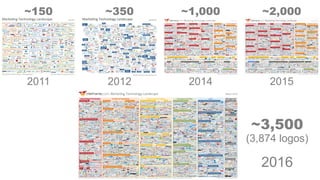
~150 ~350 ~1,000 ~2,000
2011 2012 2014 2015
~3,500
(3,874 logos)
2016
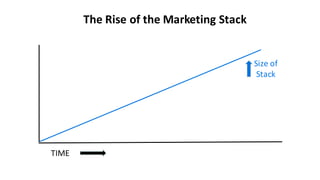
TIME
Amount
of Data
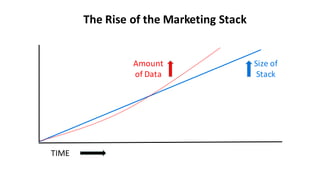
The Rise of the Marketing Stack
Rise of
the stack
% of
unused
data ↑
Rise of
the stack
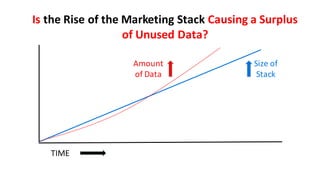
Is the Rise of the Marketing Stack Causing a Surplus
of Unused Data?
TIME
Amount
of Data
Rise of
the stack
Point of
diminishing
return
The Fragmented Marketing Ecosystem
TIME
Amount
of Data
Amount
of
Unused
Data
% of
unused
data ↑
Rise of
the stack
Point of
diminishing
return
The Fragmented Marketing Ecosystem
TIME
Amount
of Data
Amount
of
Unused
Data
% of
unused
data ↑
Integrated
Marketing
Technologies
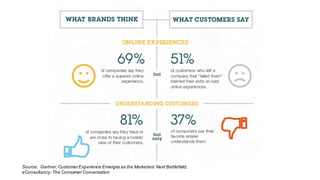
Source: Gartner, Customer Experience Emerges as the Marketers’ Next Battlefield;
eConsultancy: The Consumer Conversation
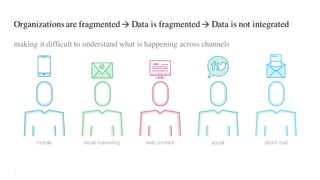
Organizations are fragmented → Data is fragmented → Data is not
integrated
making it difficult to understand what is happening across channels
@
www.
mobile email marketing web content social direct mail
Lack of Marketing Data Integration  Bad Customer Experience
My Story
12
1. Did not have the right tools and technology to offer a modern day
customer experience.
13
1. Did not have the right tools and technology to offer a modern day
customer experience.
2. Had outdated tools that did not do more than see the daily high-
level KPIs, meaning they are not looking for the core problem.
14
1. Did not have the right tools and technology to offer a modern day
customer experience.
2. Had outdated tools that did not do more than see the daily high-
level KPIs, meaning they are not looking for the core problem.
3. Did not hire and train the right personnel to discover or manage
the customer experience in a digital marketing world.
15
1. Did not have the right tools and technology to offer a modern day
customer experience.
2. Had outdated tools that did not do more than see the daily high-
level KPIs, meaning they are not looking for the core problem.
3. Did not hire and train the right personnel to discover or manage
the customer experience in a digital marketing world.
4. Had a mentality of inaction. The fear of innovation kept them in
the dark ages.
16
1. Did not have the right tools and technology to offer a modern day
customer experience.
2. Had outdated tools that did not do more than see the daily high-
level KPIs, meaning they are not looking for the core problem.
3. Did not hire and train the right personnel to discover or manage
the customer experience in a digital marketing world.
4. Had a mentality of inaction. The fear of innovation kept them in
the dark ages.
5. Still looking for that single ”silver bullet” tool that will do
everything and solve their problems.
Does your data accurately tell you the
performance of your marketing programs on a
daily/weekly basis?
Can you tell me the marketing channels that your
customers most frequently interact with and what
their experience was with each?
Do you trust the data you are given? And Why?
I have people skills!
I’m good at dealing with
people!
Tom Smykowski
Digital transformation at the center of every strategy
Digital drives a new demand on customer intelligence
You used to build it and hoped they came
Now you have to reach them even when they are not looking
You have become omnichannel
You just changed your tactics… but did it really change anything?
Your business changed
But do you really understand how it’s changed?
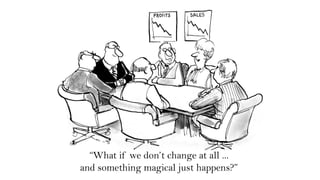
This is the result when nothing changes…
Build an integrated
platform for customer
intelligence irrespective of
where you start
The integration only has
value if the tools can pass
data to each other and
speak the same language
Digital
Analytics
Behavior
Analytics
(Tealeaf)
Journey
Analytics
Customer Experience Analytics
Universal Behavior Exchange↑ ↓
IBM Marketing Cloud
IBM Commerce Cloud
3rd Party Marketing Technologies
Universal Behavior Exchange↑ ↓
8 Key Lessons
Learned
Building success takes
patience and effort
from the entire team
Consistently run an
audit of the
marketing tools, data
& analytics, and
marketing agility
Continually track your
customer’s journey and
shift your marketing mix
to focus on the customer
experience
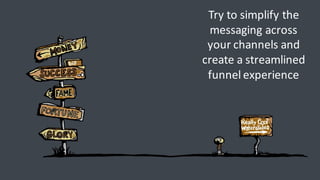
Try to simplify the
messaging across
your channels and
create a streamlined
funnel experience
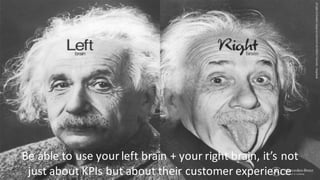
Be able to use your left brain + your right brain, it’s not just about KPIs
but about their customer experience
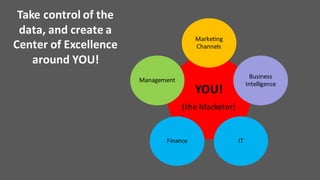
YOU!
(the Marketer)
Marketing
Channels
Business
Intelligence
ITFinance
Management
Take control of the
data, and create a
Center of Excellence
around YOU!
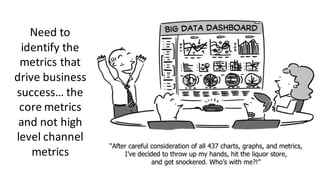
Need to
identify the
metrics that
drive business
success… the
core metrics
and not high
level channel
metrics
If you change the
way you look at
your data, the
data you look at
changes
Li: linkedin.com/in/jeremyaroberts
Tw: @jeremyaroberts
Website: jeremyaroberts.com
Learn More about
Customer Experience
Analytics from IBM
Jeremy A Roberts
WW Program Lead,
Customer Analytics
IBM

The Fragmented Marketing Ecosystem

  • 1.
    The Fragmented Marketing Ecosystem JeremyA Roberts WW Program Lead, Customer Analytics, IBM
  • 2.
    1.Do you havea business intelligence or analytics team dedicated just to marketing and ecommerce? 2.Do you know how your customer’s experience has changed over the past year and have you adjusted to that experience? 3.Do you feel that the data/KPIs is actionable or does is just create more questions? 4.Do you feel that you have a view of the channels and pathing used by those customers? 5.How long does it take for your team to identify ecommerce or marketing data within your KPIs so you can take action?
  • 3.
    ~150 ~350 ~1,000~2,000 2011 2012 2014 2015 ~3,500 (3,874 logos) 2016
  • 4.
    TIME Amount of Data The Riseof the Marketing Stack Rise of the stack
  • 5.
    % of unused data ↑ Riseof the stack Is the Rise of the Marketing Stack Causing a Surplus of Unused Data? TIME Amount of Data
  • 6.
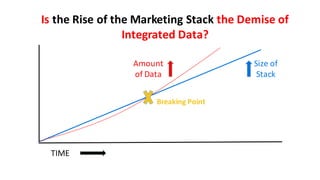
    Rise of the stack Pointof diminishing return The Fragmented Marketing Ecosystem TIME Amount of Data Amount of Unused Data % of unused data ↑
  • 7.
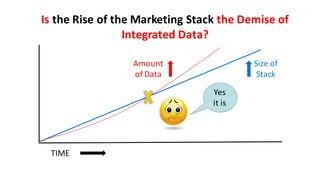
    Rise of the stack Pointof diminishing return The Fragmented Marketing Ecosystem TIME Amount of Data Amount of Unused Data % of unused data ↑ Integrated Marketing Technologies
  • 8.
    Source: Gartner, CustomerExperience Emerges as the Marketers’ Next Battlefield; eConsultancy: The Consumer Conversation
  • 9.
    Organizations are fragmented→ Data is fragmented → Data is not integrated making it difficult to understand what is happening across channels @ www. mobile email marketing web content social direct mail
  • 10.
    Lack of MarketingData Integration  Bad Customer Experience
  • 11.
  • 12.
    12 1. Did nothave the right tools and technology to offer a modern day customer experience.
  • 13.
    13 1. Did nothave the right tools and technology to offer a modern day customer experience. 2. Had outdated tools that did not do more than see the daily high- level KPIs, meaning they are not looking for the core problem.
  • 14.
    14 1. Did nothave the right tools and technology to offer a modern day customer experience. 2. Had outdated tools that did not do more than see the daily high- level KPIs, meaning they are not looking for the core problem. 3. Did not hire and train the right personnel to discover or manage the customer experience in a digital marketing world.
  • 15.
    15 1. Did nothave the right tools and technology to offer a modern day customer experience. 2. Had outdated tools that did not do more than see the daily high- level KPIs, meaning they are not looking for the core problem. 3. Did not hire and train the right personnel to discover or manage the customer experience in a digital marketing world. 4. Had a mentality of inaction. The fear of innovation kept them in the dark ages.
  • 16.
    16 1. Did nothave the right tools and technology to offer a modern day customer experience. 2. Had outdated tools that did not do more than see the daily high- level KPIs, meaning they are not looking for the core problem. 3. Did not hire and train the right personnel to discover or manage the customer experience in a digital marketing world. 4. Had a mentality of inaction. The fear of innovation kept them in the dark ages. 5. Still looking for that single ”silver bullet” tool that will do everything and solve their problems.
  • 18.
    Does your dataaccurately tell you the performance of your marketing programs on a daily/weekly basis?
  • 19.
    Can you tellme the marketing channels that your customers most frequently interact with and what their experience was with each?
  • 20.
    Do you trustthe data you are given? And Why?
  • 21.
    I have peopleskills! I’m good at dealing with people!
  • 22.
  • 23.
    Digital transformation atthe center of every strategy Digital drives a new demand on customer intelligence You used to build it and hoped they came Now you have to reach them even when they are not looking You have become omnichannel You just changed your tactics… but did it really change anything? Your business changed But do you really understand how it’s changed?
  • 24.
    This is theresult when nothing changes…
  • 25.
    Build an integrated platformfor customer intelligence irrespective of where you start The integration only has value if the tools can pass data to each other and speak the same language Digital Analytics Behavior Analytics (Tealeaf) Journey Analytics Customer Experience Analytics Universal Behavior Exchange↑ ↓ IBM Marketing Cloud IBM Commerce Cloud 3rd Party Marketing Technologies Universal Behavior Exchange↑ ↓
  • 26.
  • 27.
    Building success takes patienceand effort from the entire team
  • 28.
    Consistently run an auditof the marketing tools, data & analytics, and marketing agility
  • 29.
    Continually track your customer’sjourney and shift your marketing mix to focus on the customer experience
  • 30.
    Try to simplifythe messaging across your channels and create a streamlined funnel experience
  • 31.
    Be able touse your left brain + your right brain, it’s not just about KPIs but about their customer experience
  • 32.
  • 33.
    Need to identify the metricsthat drive business success… the core metrics and not high level channel metrics
  • 34.
    If you changethe way you look at your data, the data you look at changes
  • 35.
    Li: linkedin.com/in/jeremyaroberts Tw: @jeremyaroberts Website:jeremyaroberts.com Learn More about Customer Experience Analytics from IBM Jeremy A Roberts WW Program Lead, Customer Analytics IBM