HISTORY OF THEPHILIPPINE FLAG
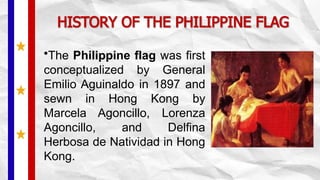
•The Philippine flag was first
conceptualized by General
Emilio Aguinaldo in 1897 and
sewn in Hong Kong by
Marcela Agoncillo, Lorenza
Agoncillo, and Delfina
Herbosa de Natividad in Hong
Kong.
3.
HISTORY OF THEPHILIPPINE FLAG
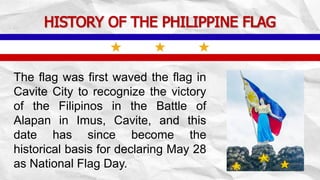
The flag was first waved the flag in
Cavite City to recognize the victory
of the Filipinos in the Battle of
Alapan in Imus, Cavite, and this
date has since become the
historical basis for declaring May 28
as National Flag Day.
Republic Act No.8491, s. 1998
Flag and Heraldic Code of the Philippines
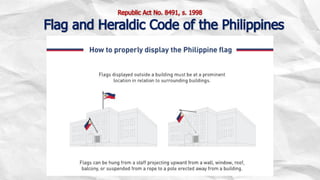
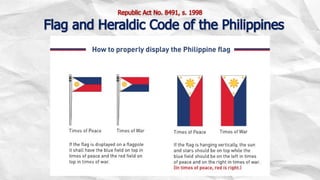
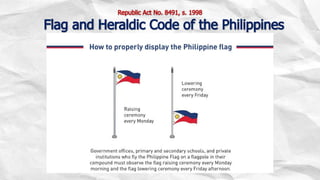
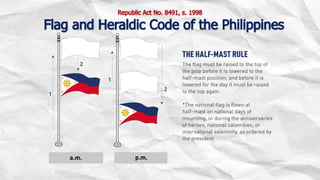
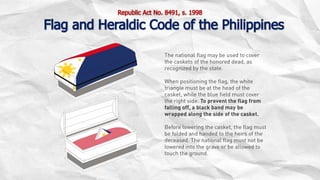
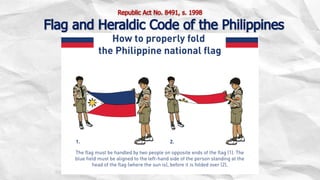
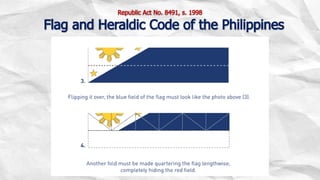
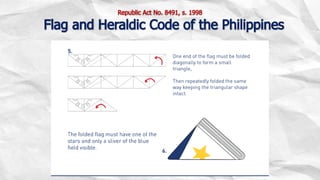
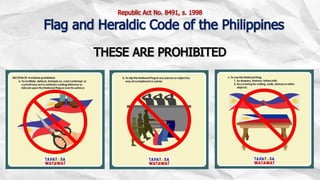
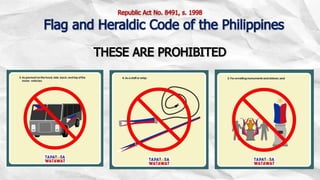
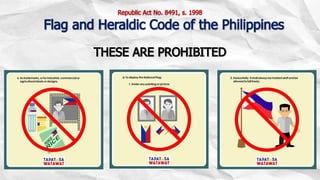
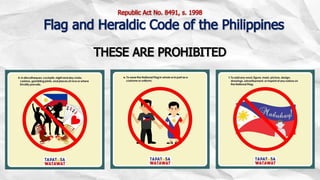
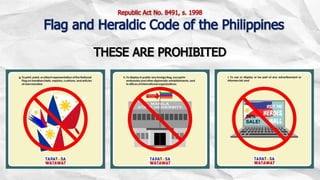
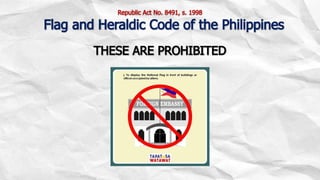
The Flag and Heraldic Code of the Philippines
(approved on February 12, 1998 and signed by President
Fidel V. Ramos) sets the rules for the proper use of the
national flag, anthem, motto, coat-of-arms, and other
symbols. It requires Filipinos to show respect and
reverence for these emblems, as they represent the
country’s ideals, sovereignty, unity, and traditions, and aim
to instill pride, love, and respect for the nation.
6.
Republic Act No.8491, s. 1998
Flag and Heraldic Code of the Philippines
7.
Republic Act No.8491, s. 1998
Flag and Heraldic Code of the Philippines
8.
Republic Act No.8491, s. 1998
Flag and Heraldic Code of the Philippines
9.
Republic Act No.8491, s. 1998
Flag and Heraldic Code of the Philippines
10.
Republic Act No.8491, s. 1998
Flag and Heraldic Code of the Philippines
11.
Republic Act No.8491, s. 1998
Flag and Heraldic Code of the Philippines
12.
Republic Act No.8491, s. 1998
Flag and Heraldic Code of the Philippines
13.
Republic Act No.8491, s. 1998
Flag and Heraldic Code of the Philippines
14.
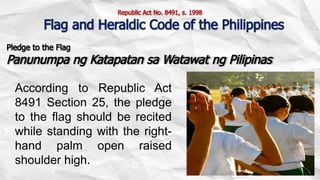
Pledge to theFlag
Panunumpa ng Katapatan sa Watawat ng Pilipinas
According to Republic Act
8491 Section 25, the pledge
to the flag should be recited
while standing with the right-
hand palm open raised
shoulder high.
Republic Act No. 8491, s. 1998
Flag and Heraldic Code of the Philippines