Radical innovations in technology are increasing the
importance of IT in achieving core business objectives—and the
role of IT professionals is shifting accordingly. Chief Information
Officers are seeing their roles grow ever-more strategic.
The Strategic CIO
SOURCES
CMO Council. (2013 March). Big Data’s Biggest Role: Aligning the CMO & CIO.
Economist Intelligence Unit (2013 June). The Strategic CIO: Survey Results
Evans, B. (2012 September 28). The Top 10 Strategic CIO Issues For 2013. Forbes. Retrieved June 19, 2013, from http://www.forbes.com/sites/oracle/2012/09/28/the-top-10-strategic-cio-issues-for-2013/
Gordon, H. (2008). The Chief Information Officer: A Review of the Role. Journal of Information, Information Technology, and Organizations, 5, 125+.
Watson, B. (2009 October 9). ROI and the Strategic CIO. Retrieved June 19, 2013, from http://blogs.cioinsight.com/it-strategy/roi-and-the-strategic-cio.html
Customer-centric manager - Focus is on
customer needs, desires and concerns and
how IT can address them
Operates first as a business executive, second
as technology expert; speaks the language of
the business
Increased responsibility to promote
game-changing innovations
The principal strategist in key emerging areas
like big data analysis, customer-facing mobile
applications, enterprise social networks, and
online learning
Targets technology budget towards innovation,
funding essential new efforts in analytics,
cloud, mobile and social
VS.Operational CIO Strategic CIO
Tech-centric manager - Focus is on managing
complex IT projects
Struggles to present complex topics through a
non-technical lens and present a compelling
business case for new technologies
Limited ability to promote game-changing innovations
A principal strategist in traditional areas of
technology responsibility (business process
infrastructure, security, and cloud computing)
Trapped in 80/20 budget habit – 80% of the budget
goes to maintaining existing IT infrastructure and
20% to innovation
Challenges
Strategies
Explain how new technologies can
solve customer problems
60%
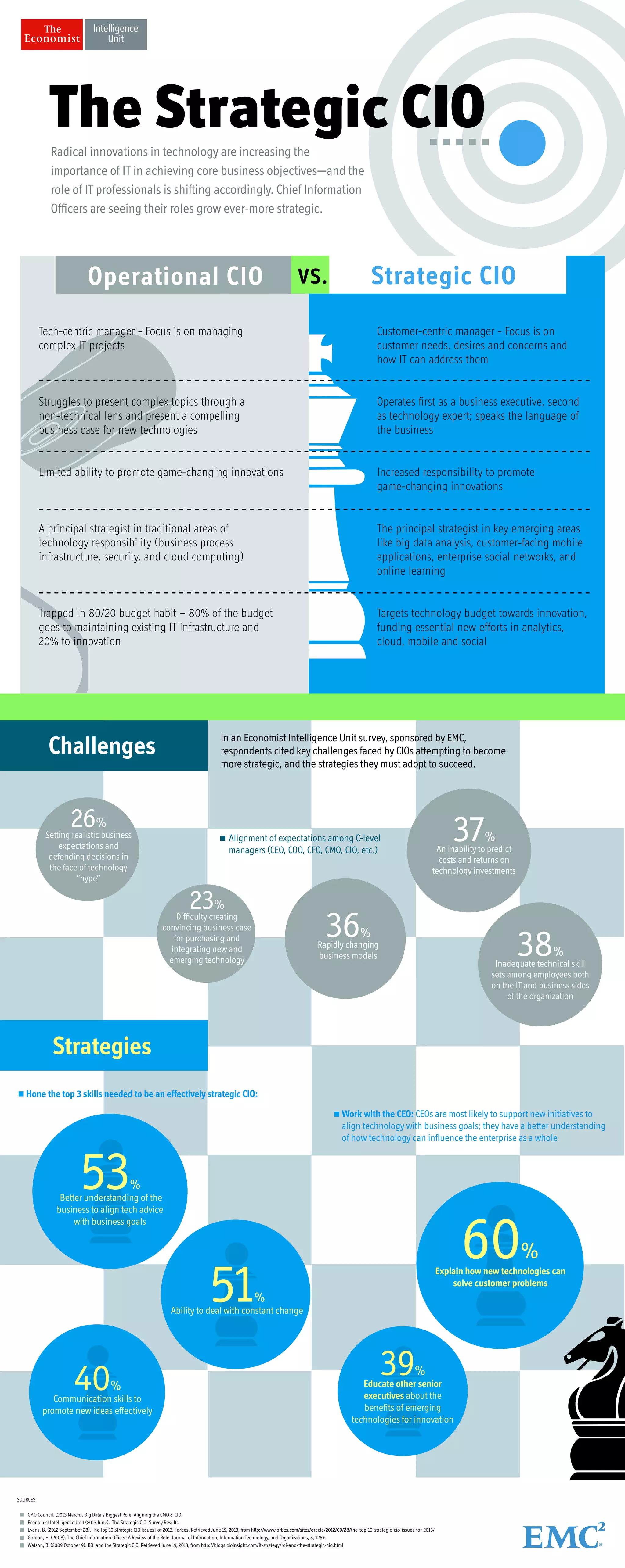
In an Economist Intelligence Unit survey, sponsored by EMC,
respondents cited key challenges faced by CIOs attempting to become
more strategic, and the strategies they must adopt to succeed.
53%
Better understanding of the
business to align tech advice
with business goals
51%
Ability to deal with constant change
40%
Communication skills to
promote new ideas effectively
39%
Educate other senior
executives about the
benefits of emerging
technologies for innovation
26%
Setting realistic business
expectations and
defending decisions in
the face of technology
“hype”
23%
Difficulty creating
convincing business case
for purchasing and
integrating new and
emerging technology
Work with the CEO: CEOs are most likely to support new initiatives to
align technology with business goals; they have a better understanding
of how technology can influence the enterprise as a whole
Hone the top 3 skills needed to be an effectively strategic CIO:
37%
An inability to predict
costs and returns on
technology investments
36%
Rapidly changing
business models 38%
Inadequate technical skill
sets among employees both
on the IT and business sides
of the organization
Alignment of expectations among C-level
managers (CEO, COO, CFO, CMO, CIO, etc.)

The Emerging Strategic CIO Infographic

  • 1.
    Radical innovations intechnology are increasing the importance of IT in achieving core business objectives—and the role of IT professionals is shifting accordingly. Chief Information Officers are seeing their roles grow ever-more strategic. The Strategic CIO SOURCES CMO Council. (2013 March). Big Data’s Biggest Role: Aligning the CMO & CIO. Economist Intelligence Unit (2013 June). The Strategic CIO: Survey Results Evans, B. (2012 September 28). The Top 10 Strategic CIO Issues For 2013. Forbes. Retrieved June 19, 2013, from http://www.forbes.com/sites/oracle/2012/09/28/the-top-10-strategic-cio-issues-for-2013/ Gordon, H. (2008). The Chief Information Officer: A Review of the Role. Journal of Information, Information Technology, and Organizations, 5, 125+. Watson, B. (2009 October 9). ROI and the Strategic CIO. Retrieved June 19, 2013, from http://blogs.cioinsight.com/it-strategy/roi-and-the-strategic-cio.html Customer-centric manager - Focus is on customer needs, desires and concerns and how IT can address them Operates first as a business executive, second as technology expert; speaks the language of the business Increased responsibility to promote game-changing innovations The principal strategist in key emerging areas like big data analysis, customer-facing mobile applications, enterprise social networks, and online learning Targets technology budget towards innovation, funding essential new efforts in analytics, cloud, mobile and social VS.Operational CIO Strategic CIO Tech-centric manager - Focus is on managing complex IT projects Struggles to present complex topics through a non-technical lens and present a compelling business case for new technologies Limited ability to promote game-changing innovations A principal strategist in traditional areas of technology responsibility (business process infrastructure, security, and cloud computing) Trapped in 80/20 budget habit – 80% of the budget goes to maintaining existing IT infrastructure and 20% to innovation Challenges Strategies Explain how new technologies can solve customer problems 60% In an Economist Intelligence Unit survey, sponsored by EMC, respondents cited key challenges faced by CIOs attempting to become more strategic, and the strategies they must adopt to succeed. 53% Better understanding of the business to align tech advice with business goals 51% Ability to deal with constant change 40% Communication skills to promote new ideas effectively 39% Educate other senior executives about the benefits of emerging technologies for innovation 26% Setting realistic business expectations and defending decisions in the face of technology “hype” 23% Difficulty creating convincing business case for purchasing and integrating new and emerging technology Work with the CEO: CEOs are most likely to support new initiatives to align technology with business goals; they have a better understanding of how technology can influence the enterprise as a whole Hone the top 3 skills needed to be an effectively strategic CIO: 37% An inability to predict costs and returns on technology investments 36% Rapidly changing business models 38% Inadequate technical skill sets among employees both on the IT and business sides of the organization Alignment of expectations among C-level managers (CEO, COO, CFO, CMO, CIO, etc.)