The Digital Divide
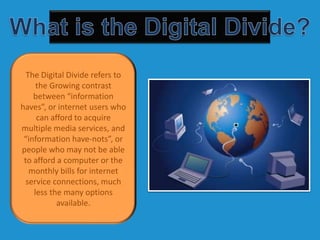
What is the Digital Divide?The Digital Divide refers to the Growing contrast between “information haves”, or internet users who can afford to acquire multiple media services, and “information have-nots”, or people who may not be able to afford a computer or the monthly bills for internet service connections, much less the many options available.
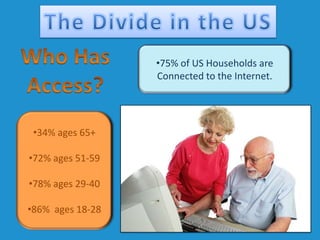
The Divide in the USWho Has Access?75% of US Households are Connected to the Internet.
34% ages 65+
72% ages 51-59
78% ages 29-40
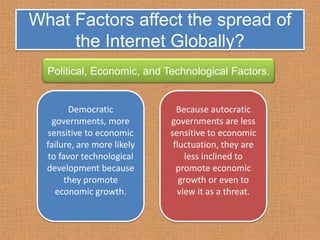
86%  ages 18-28 What Factors affect the spread of the Internet Globally?Political, Economic, and Technological Factors.Democratic governments, more sensitive to economic failure, are more likely to favor technological development because they promote economic growth.Because autocratic governments are less sensitive to economic fluctuation, they are less inclined to promote economic growth or even to view it as a threat.
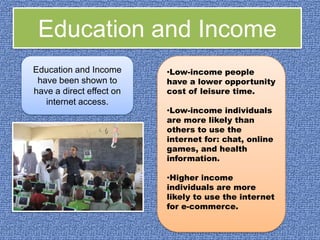
Education and IncomeEducation and Income have been shown to have a direct effect on internet access.Low-income people have a lower opportunity cost of leisure time.
Low-income individuals are more likely than others to use the internet for: chat, online games, and health information.
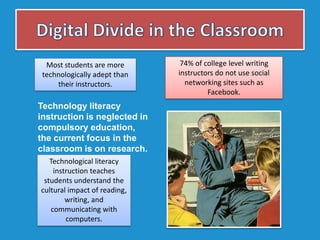
Higher income individuals are more likely to use the internet for e-commerce.Digital Divide in the Classroom74% of college level writing instructors do not use social networking sites such as Facebook.Most students are more technologically adept than their instructors.Technology literacy instruction is neglected in compulsory education, the current focus in the classroom is on research.Technological literacy instruction teaches students understand the cultural impact of reading, writing, and communicating with computers.

The digital divide

  • 1.
  • 2.
    What is theDigital Divide?The Digital Divide refers to the Growing contrast between “information haves”, or internet users who can afford to acquire multiple media services, and “information have-nots”, or people who may not be able to afford a computer or the monthly bills for internet service connections, much less the many options available.
  • 3.
    The Divide inthe USWho Has Access?75% of US Households are Connected to the Internet.
  • 4.
  • 5.
  • 6.
  • 7.
    86% ages18-28 What Factors affect the spread of the Internet Globally?Political, Economic, and Technological Factors.Democratic governments, more sensitive to economic failure, are more likely to favor technological development because they promote economic growth.Because autocratic governments are less sensitive to economic fluctuation, they are less inclined to promote economic growth or even to view it as a threat.
  • 8.
    Education and IncomeEducationand Income have been shown to have a direct effect on internet access.Low-income people have a lower opportunity cost of leisure time.
  • 9.
    Low-income individuals aremore likely than others to use the internet for: chat, online games, and health information.
  • 10.
    Higher income individualsare more likely to use the internet for e-commerce.Digital Divide in the Classroom74% of college level writing instructors do not use social networking sites such as Facebook.Most students are more technologically adept than their instructors.Technology literacy instruction is neglected in compulsory education, the current focus in the classroom is on research.Technological literacy instruction teaches students understand the cultural impact of reading, writing, and communicating with computers.