Functions of the Digestive System
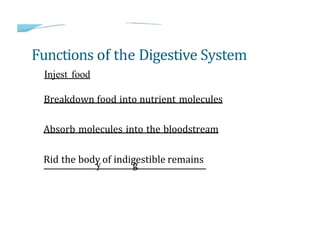
Injest food
Breakdown food into nutrient molecules
Absorb molecules into the bloodstream
Rid the body of indigestible remains
introduction
< There are four stages to
food processing:
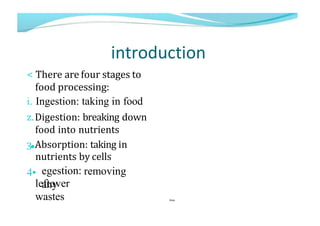
i. Ingestion: taking in food
z.Digestion: breaking down
food into nutrients
3•Absorption: taking in
nutrients by cells
4• egestion: removing
any
leftover
wastes Anus
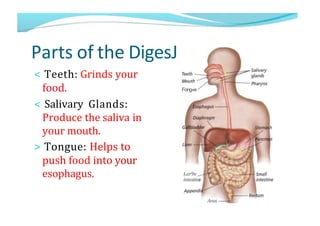
Parts of the DigesJ
< Teeth: Grinds your
food.
< Salivary Glands:
Produce the saliva in
your mouth.
> Tongue: Helps to
push food into your
esophagus.
Fong«e
Lar9e
intestin
Anus
eet
o
C
u
m
t
e
h
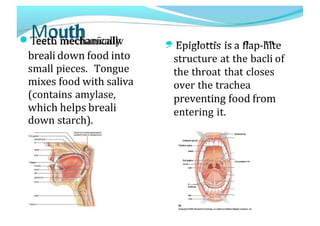
chanically
breali down food into
small pieces. Tongue
mixes food with saliva
(contains amylase,
which helps breali
down starch).
> Epiglottis is a flap-lilte
structure at the bacli of
the throat that closes
over the trachea
preventing food from
entering it.
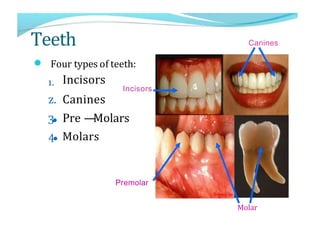
Teeth
Four types of teeth:
Incisors
Incisors
z. Canines
3• Pre —
Molars
4• Molars
Premolar
Canines
Molar
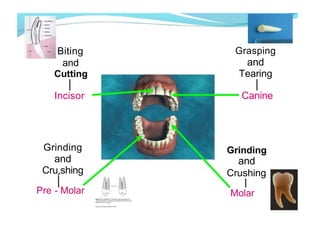
Biting
and
Incisor
Grinding
and
Cru,shing
Pre - Molar
Grasping
and
Tearing
Canine
and
Crushing
Molar
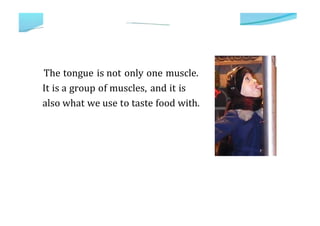
The tongue is not only one muscle.
It is a group of muscles, and it is
also what we use to taste food with.
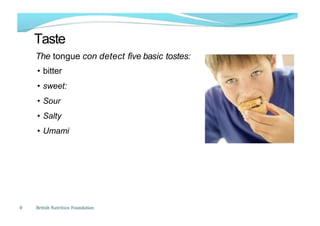
Taste
The tongue con detect five basic tostes:
• bitter
• sweet:
• Sour
• Salty
• Umami
0 British Nutrition Foundation
The Human Die
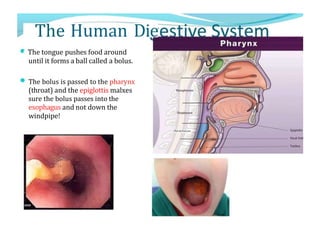
' The tongue pushes food around
until it forms a ball called a bolus.
The bolus is passed to the pharynx
(throat) and the epiglottis malxes
sure the bolus passes into the
esophagus and not down the
windpipe!
Hyt›tij›haryux
The Esophagus
• The muscular tube through which
food passes from the mouth to the
stomach
• As you chew, your tongue helps
mould your food into a mass called
a bolus that then gets pushed to
the back of your mouth
• When yo» swallow, the bolus
enters the top of the esophagus
• The opening of the esophagus lies
next ’to the opening of your
windpipe
• To prevent food from going down
the wrong tube, the opening of
your trachea is closed by the
epiglottis (valve) when you
swallow
|3]
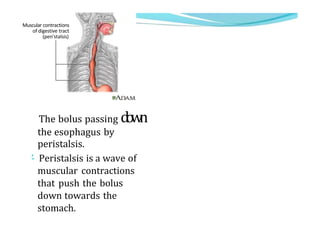
Muscular contractions
of digestive tract
(pen'stalsis)
The bolus passing d
o
w
n
the esophagus by
peristalsis.
’
- Peristalsis is a wave of
muscular contractions
that push the bolus
down towards the
stomach.
„. ,
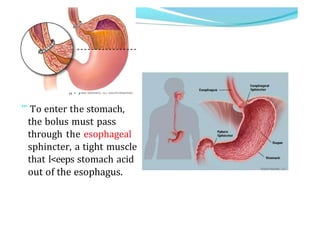
’" To enter the stomach,
the bolus must pass
through the esophageal
sphincter, a tight muscle
that l<eeps stomach acid
out of the esophagus.

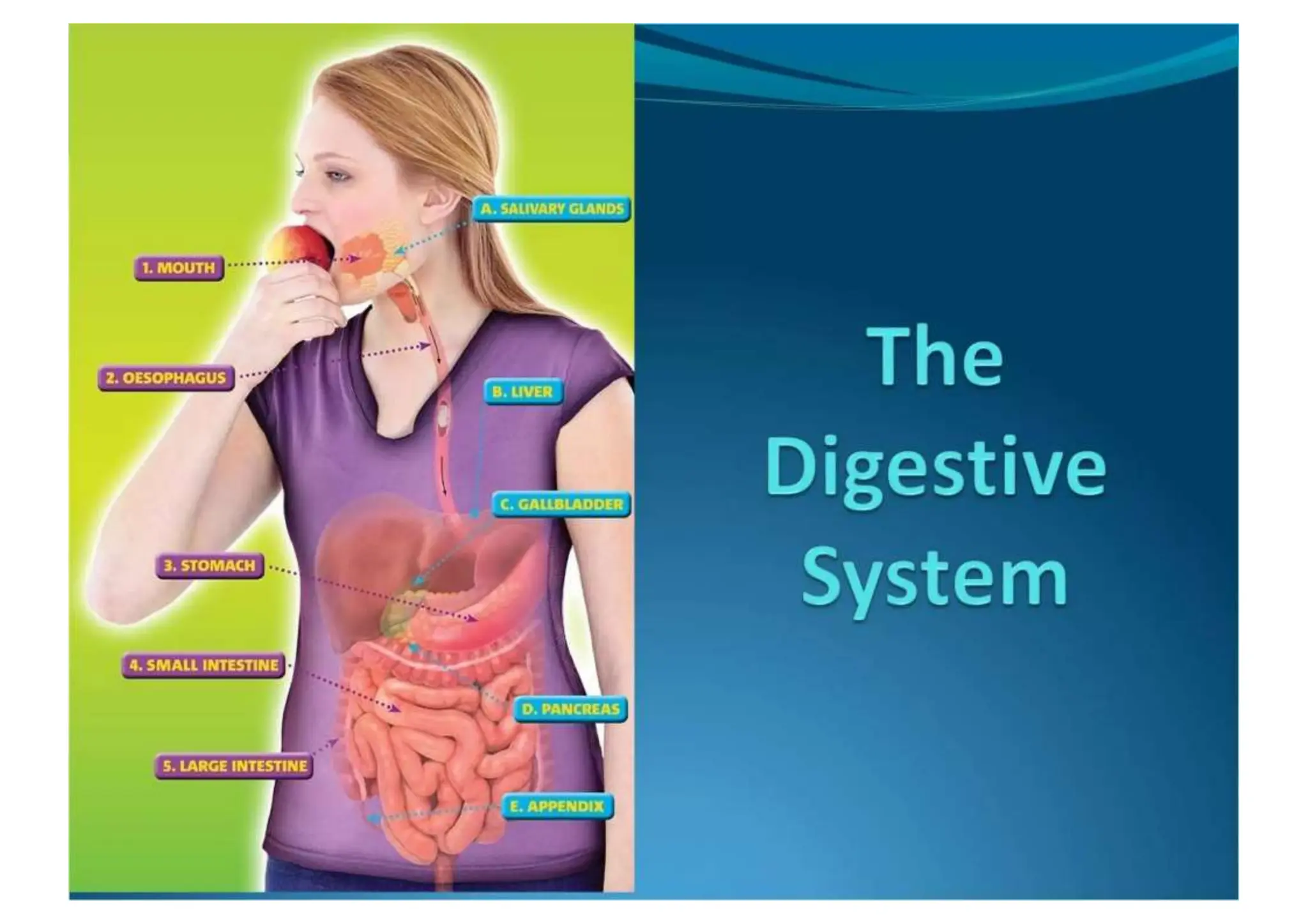
the digestive system with diagrams and labelling

  • 2.
    Functions of theDigestive System Injest food Breakdown food into nutrient molecules Absorb molecules into the bloodstream Rid the body of indigestible remains
  • 3.
    introduction < There arefour stages to food processing: i. Ingestion: taking in food z.Digestion: breaking down food into nutrients 3•Absorption: taking in nutrients by cells 4• egestion: removing any leftover wastes Anus
  • 4.
    Parts of theDigesJ < Teeth: Grinds your food. < Salivary Glands: Produce the saliva in your mouth. > Tongue: Helps to push food into your esophagus. Fong«e Lar9e intestin Anus
  • 5.
    eet o C u m t e h chanically breali down foodinto small pieces. Tongue mixes food with saliva (contains amylase, which helps breali down starch). > Epiglottis is a flap-lilte structure at the bacli of the throat that closes over the trachea preventing food from entering it.
  • 6.
    Teeth Four types ofteeth: Incisors Incisors z. Canines 3• Pre — Molars 4• Molars Premolar Canines Molar
  • 7.
  • 8.
    The tongue isnot only one muscle. It is a group of muscles, and it is also what we use to taste food with.
  • 9.
    Taste The tongue condetect five basic tostes: • bitter • sweet: • Sour • Salty • Umami 0 British Nutrition Foundation
  • 10.
    The Human Die 'The tongue pushes food around until it forms a ball called a bolus. The bolus is passed to the pharynx (throat) and the epiglottis malxes sure the bolus passes into the esophagus and not down the windpipe! Hyt›tij›haryux
  • 12.
    The Esophagus • Themuscular tube through which food passes from the mouth to the stomach • As you chew, your tongue helps mould your food into a mass called a bolus that then gets pushed to the back of your mouth • When yo» swallow, the bolus enters the top of the esophagus • The opening of the esophagus lies next ’to the opening of your windpipe • To prevent food from going down the wrong tube, the opening of your trachea is closed by the epiglottis (valve) when you swallow |3]
  • 13.
    Muscular contractions of digestivetract (pen'stalsis) The bolus passing d o w n the esophagus by peristalsis. ’ - Peristalsis is a wave of muscular contractions that push the bolus down towards the stomach.
  • 14.
    „. , ’" Toenter the stomach, the bolus must pass through the esophageal sphincter, a tight muscle that l<eeps stomach acid out of the esophagus.