Downloaded 14 times
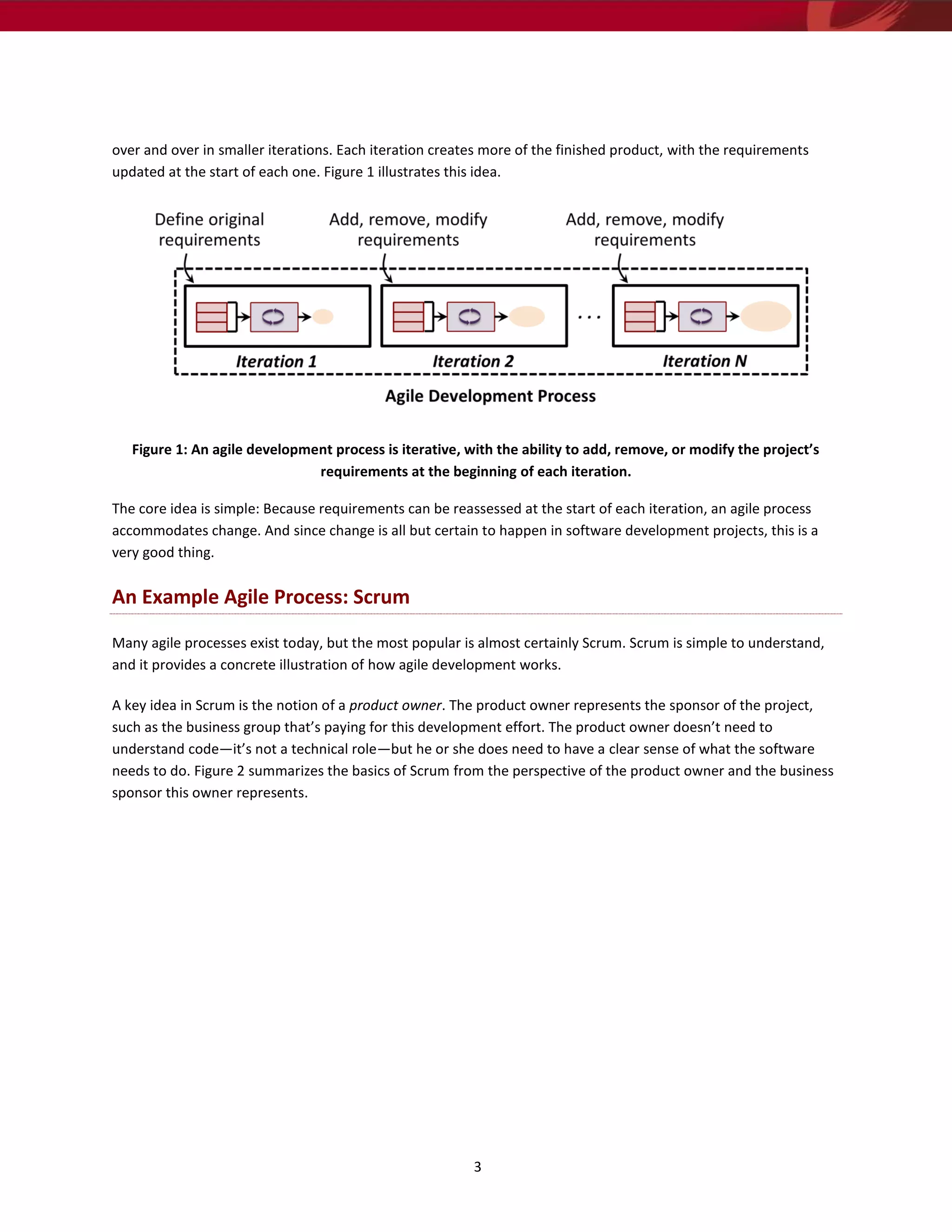
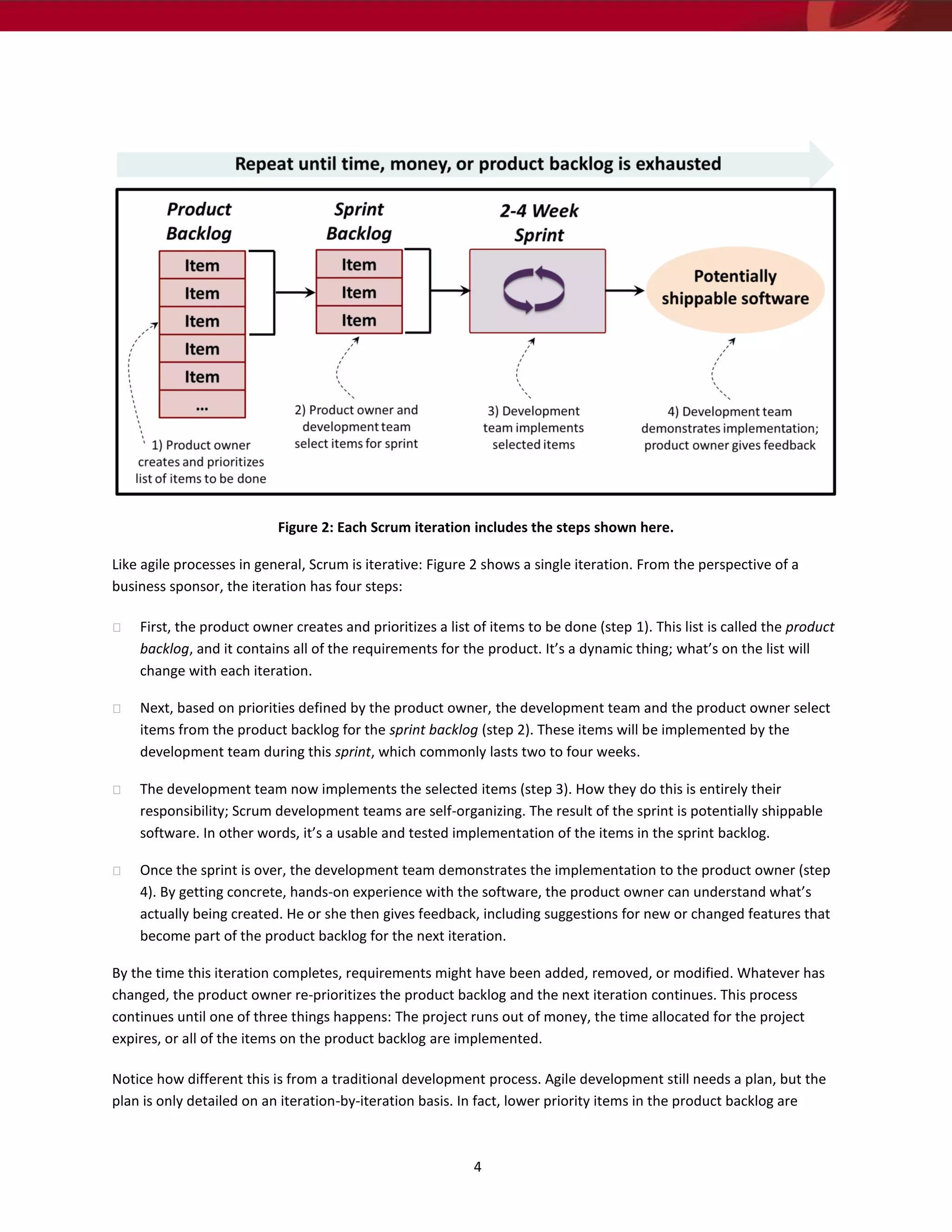

This document discusses the business value of agile development processes. It begins by explaining that traditional "waterfall" development processes do not work well because requirements cannot be fully defined upfront and will change. Agile processes embrace changing requirements by using short iterative cycles where requirements can be modified each iteration. The document then provides Scrum as a popular example of an agile process, outlining its key steps from the perspective of a product owner. Finally, it discusses the business benefits of agile processes, including creating what the business needs, better understanding of the software being created, and reduced project risk.


