THE BIRTH & RISE OF PYTHON : A
TIMELINE
INTRODUCTION OF THE MEMBERS
Name :Vaibhav Dobariyal , 926
 Anil Nanoma , 983
 Pratham Rajpurohit , 924
 Avensh
 DIVISION : G
 FACULTY NAME : Ms. NEHAL RAJPUT
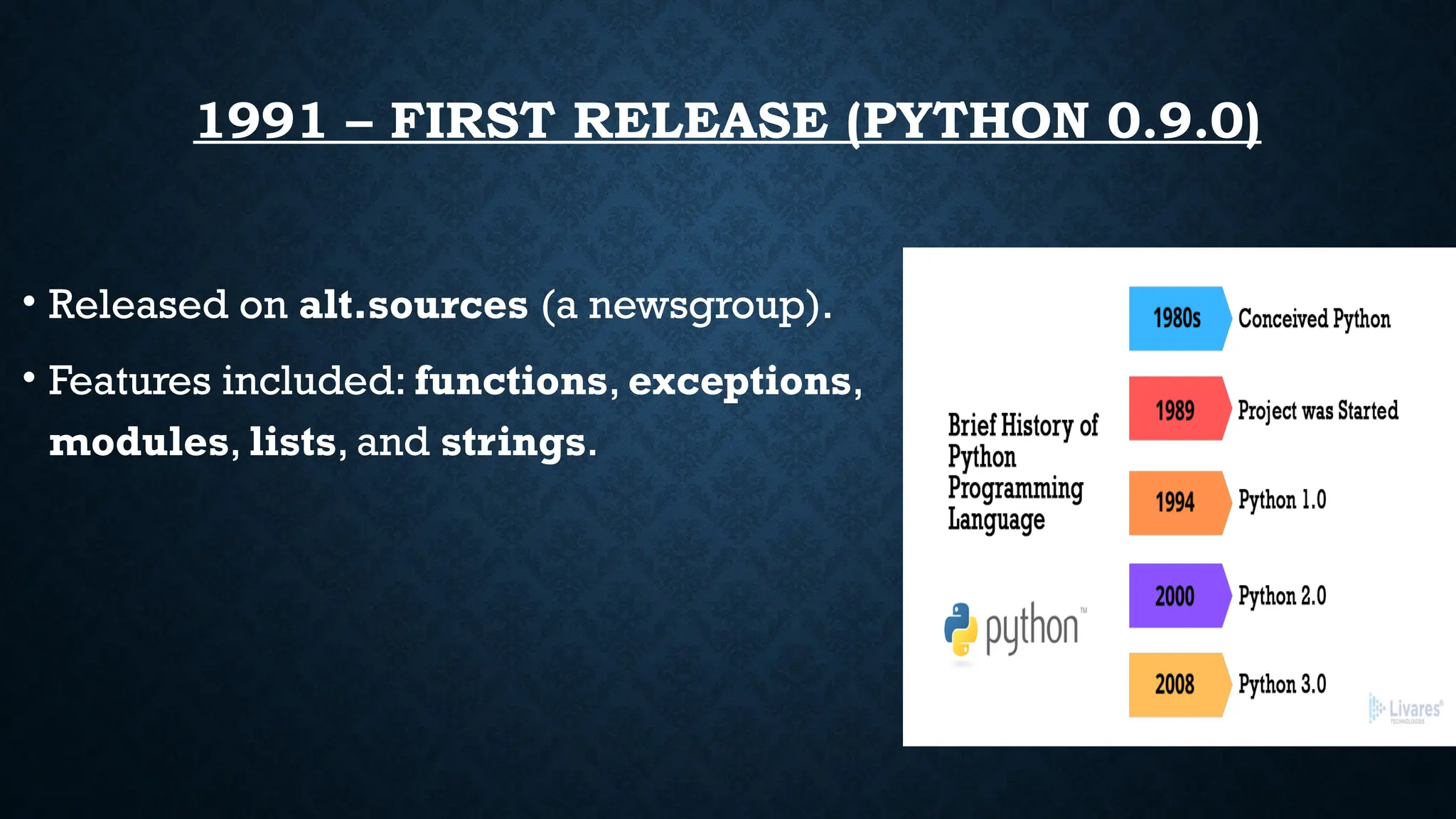
1980S – THE IDEA IS BORN
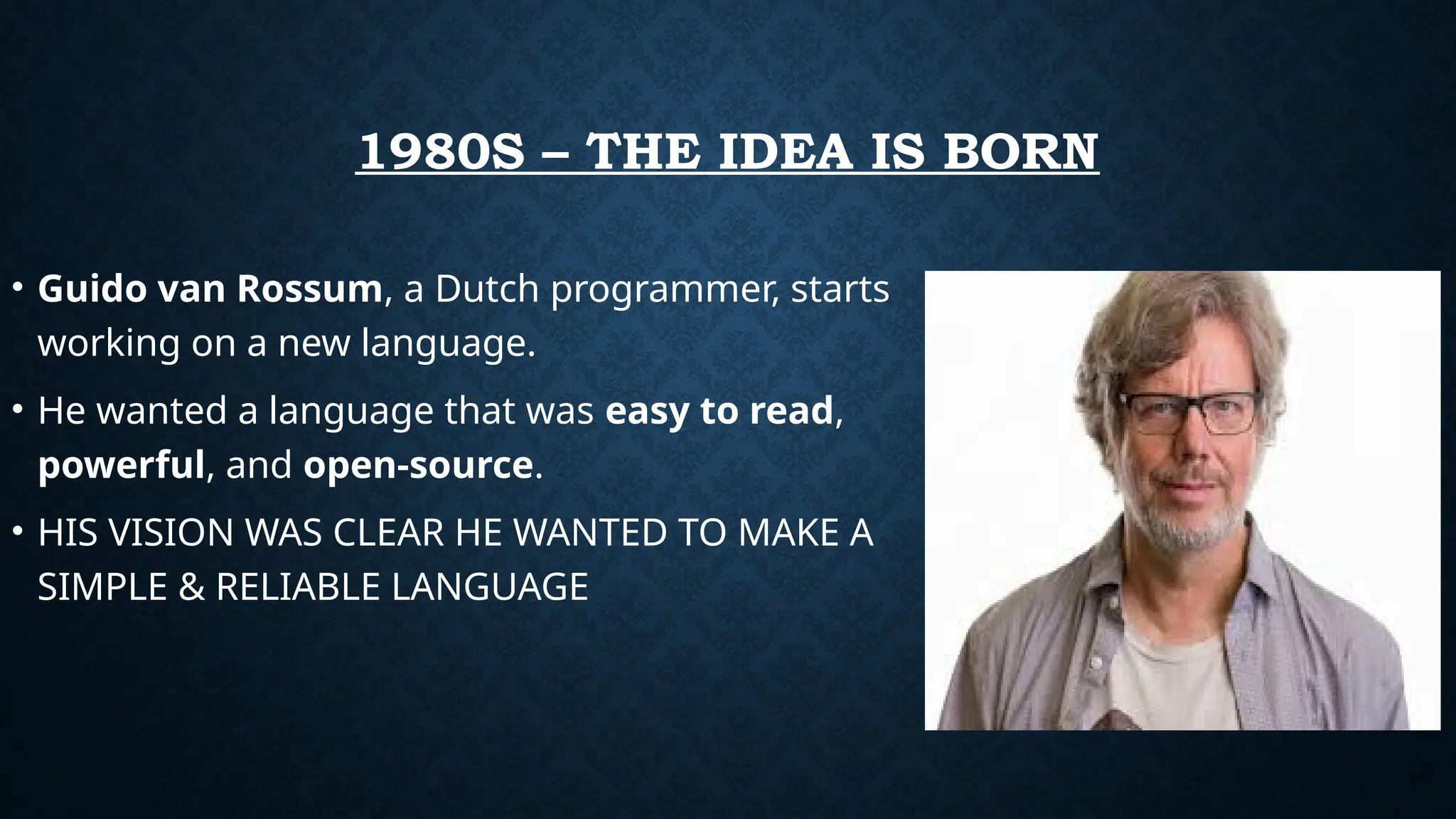
• Guido van Rossum, a Dutch programmer, starts
working on a new language.
• He wanted a language that was easy to read,
powerful, and open-source.
• HIS VISION WAS CLEAR HE WANTED TO MAKE A
SIMPLE & RELIABLE LANGUAGE
1989 – PYTHON BEGINS
• During Christmas, Guido starts
writing Python as a hobby
project.
• Goal: Replace ABC language with
a more flexible scripting tool.
1991 – FIRST RELEASE (PYTHON 0.9.0)
• Released on alt.sources (a newsgroup).
• Features included: functions, exceptions,
modules, lists, and strings.
1994 – PYTHON 1.0
• Introduced more tools like: lambda,
map, filter, reduce.
• Python starts gaining attention in the
developer community.
2000 – PYTHON 2.0
• Added garbage collection and list
comprehensions.
• Python becomes open-source,
community contributions grow.
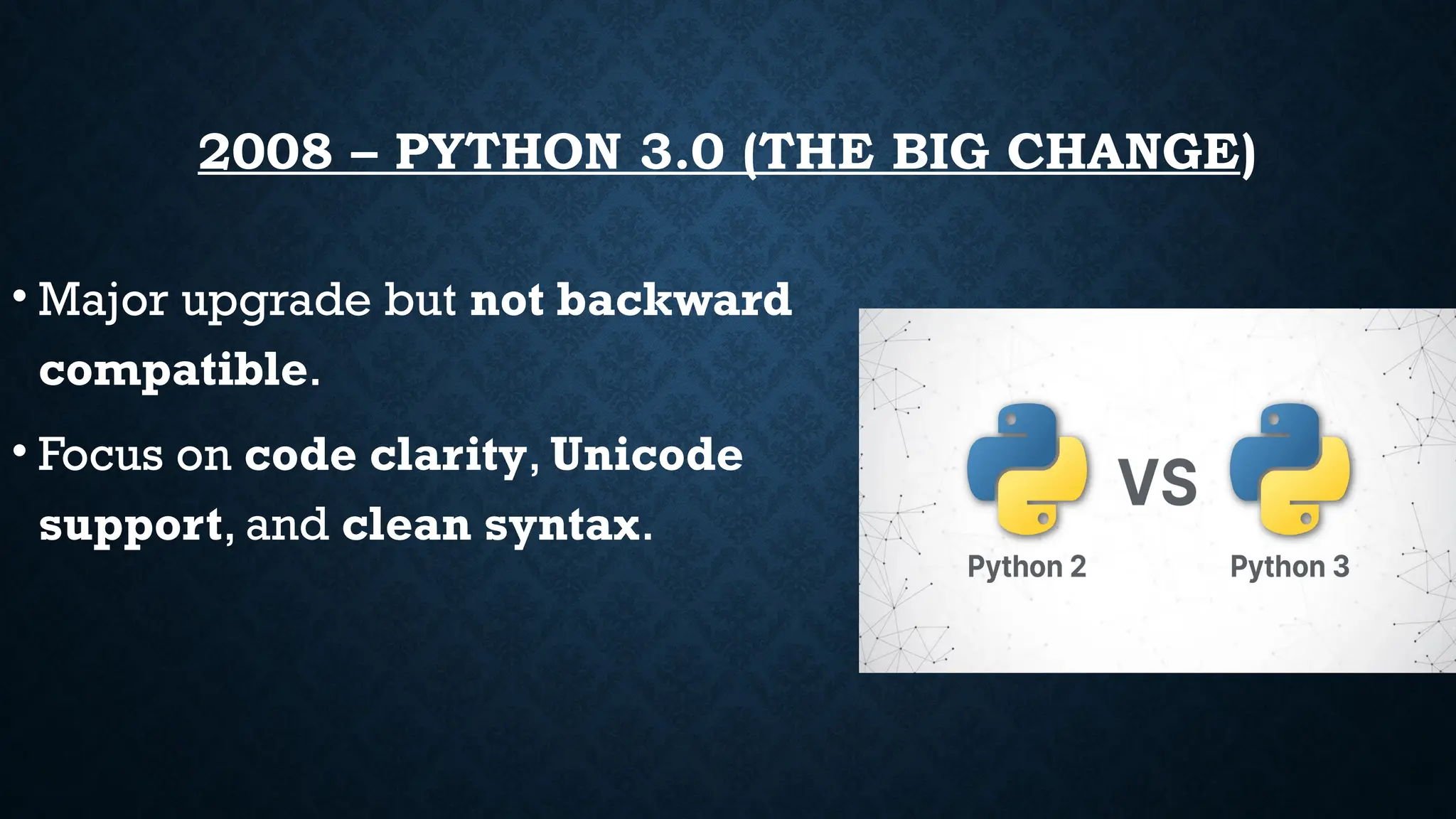
2008 – PYTHON 3.0 (THE BIG CHANGE)
• Major upgrade but not backward
compatible.
• Focus on code clarity, Unicode
support, and clean syntax.
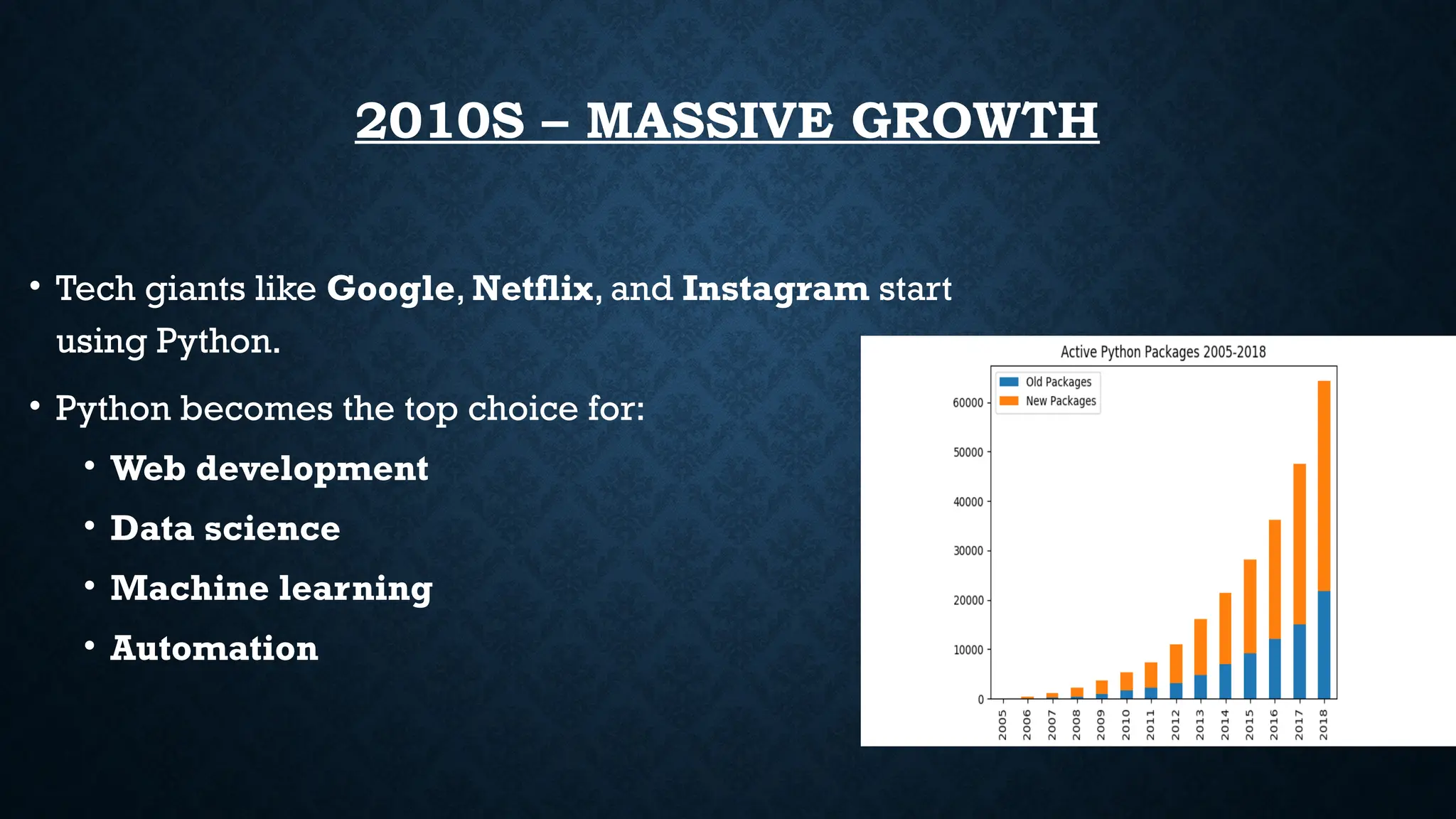
2010S – MASSIVE GROWTH
• Tech giants like Google, Netflix, and Instagram start
using Python.
• Python becomes the top choice for:
• Web development
• Data science
• Machine learning
• Automation
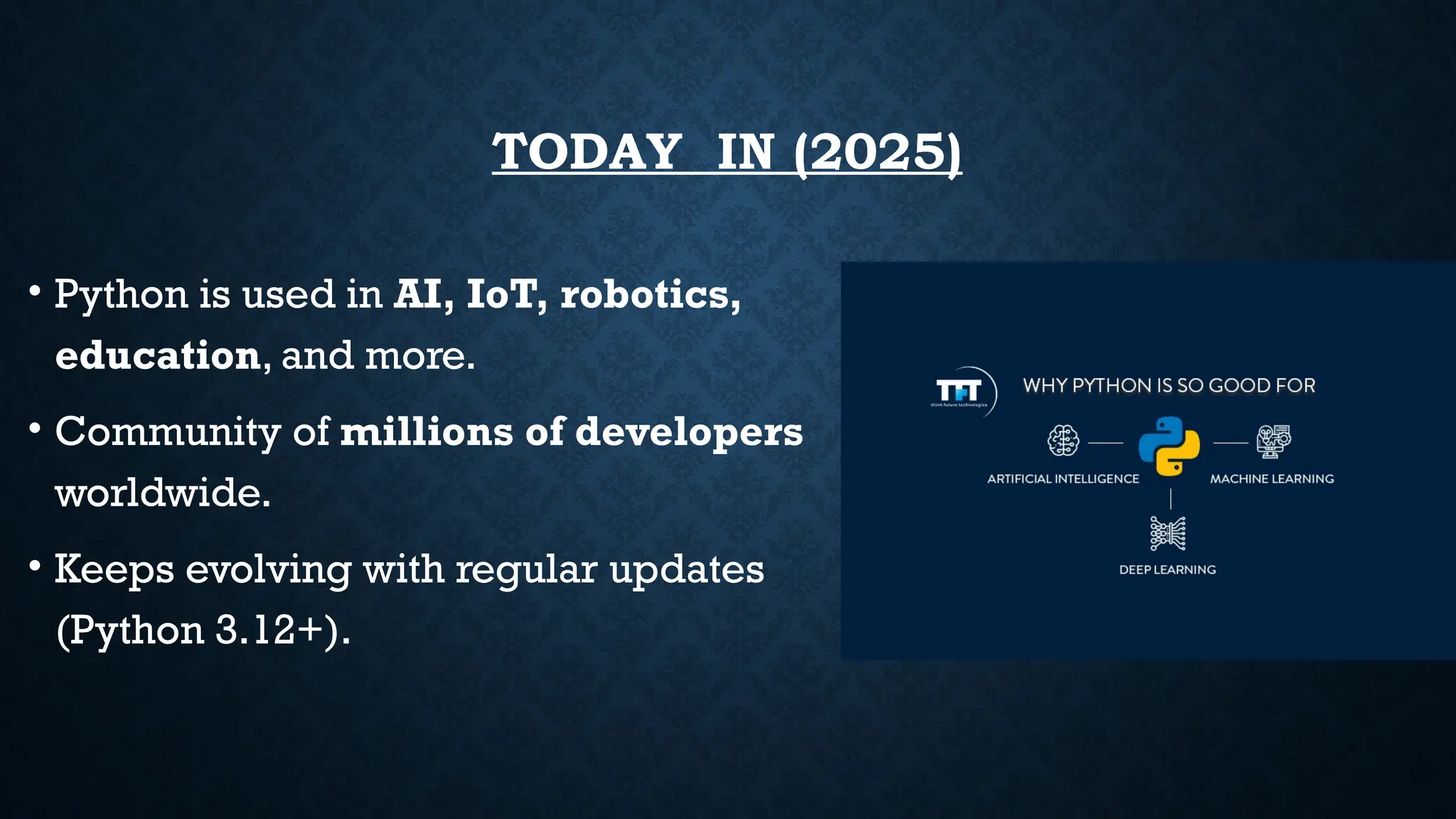
TODAY IN (2025)
• Python is used in AI, IoT, robotics,
education, and more.
• Community of millions of developers
worldwide.
• Keeps evolving with regular updates
(Python 3.12+).
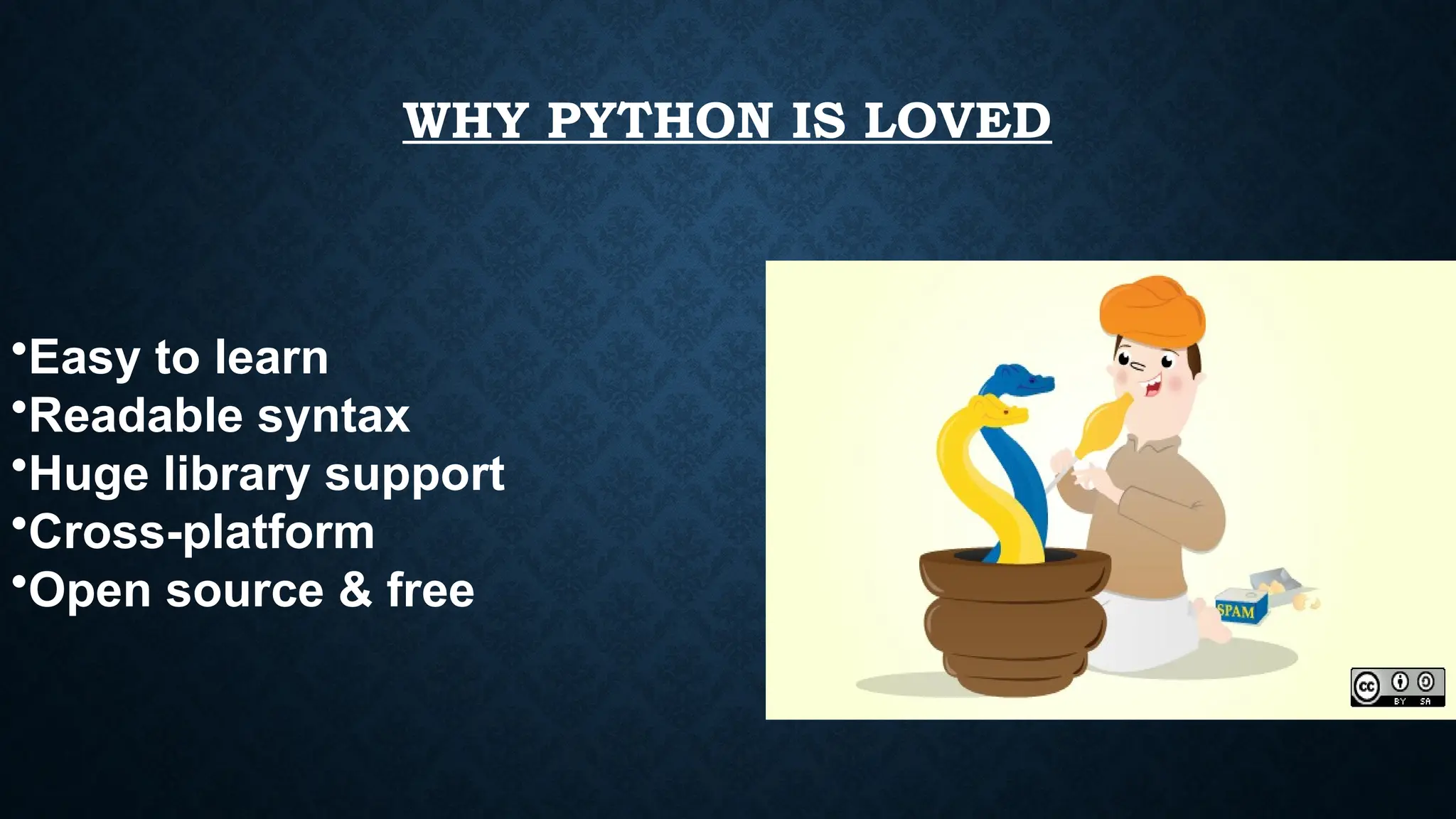
WHY PYTHON IS LOVED
•Easy to learn
•Readable syntax
•Huge library support
•Cross-platform
•Open source & free
THANK YOU

The birth & Rise of python.pptx vaibhavd

  • 1.
    THE BIRTH &RISE OF PYTHON : A TIMELINE
  • 2.
    INTRODUCTION OF THEMEMBERS Name :Vaibhav Dobariyal , 926  Anil Nanoma , 983  Pratham Rajpurohit , 924  Avensh  DIVISION : G  FACULTY NAME : Ms. NEHAL RAJPUT
  • 3.
    1980S – THEIDEA IS BORN • Guido van Rossum, a Dutch programmer, starts working on a new language. • He wanted a language that was easy to read, powerful, and open-source. • HIS VISION WAS CLEAR HE WANTED TO MAKE A SIMPLE & RELIABLE LANGUAGE
  • 4.
    1989 – PYTHONBEGINS • During Christmas, Guido starts writing Python as a hobby project. • Goal: Replace ABC language with a more flexible scripting tool.
  • 5.
    1991 – FIRSTRELEASE (PYTHON 0.9.0) • Released on alt.sources (a newsgroup). • Features included: functions, exceptions, modules, lists, and strings.
  • 6.
    1994 – PYTHON1.0 • Introduced more tools like: lambda, map, filter, reduce. • Python starts gaining attention in the developer community.
  • 7.
    2000 – PYTHON2.0 • Added garbage collection and list comprehensions. • Python becomes open-source, community contributions grow.
  • 8.
    2008 – PYTHON3.0 (THE BIG CHANGE) • Major upgrade but not backward compatible. • Focus on code clarity, Unicode support, and clean syntax.
  • 9.
    2010S – MASSIVEGROWTH • Tech giants like Google, Netflix, and Instagram start using Python. • Python becomes the top choice for: • Web development • Data science • Machine learning • Automation
  • 10.
    TODAY IN (2025) •Python is used in AI, IoT, robotics, education, and more. • Community of millions of developers worldwide. • Keeps evolving with regular updates (Python 3.12+).
  • 11.
    WHY PYTHON ISLOVED •Easy to learn •Readable syntax •Huge library support •Cross-platform •Open source & free
  • 12.