THE BIG
BRAIN
HUMAN BRAIN FACTS:
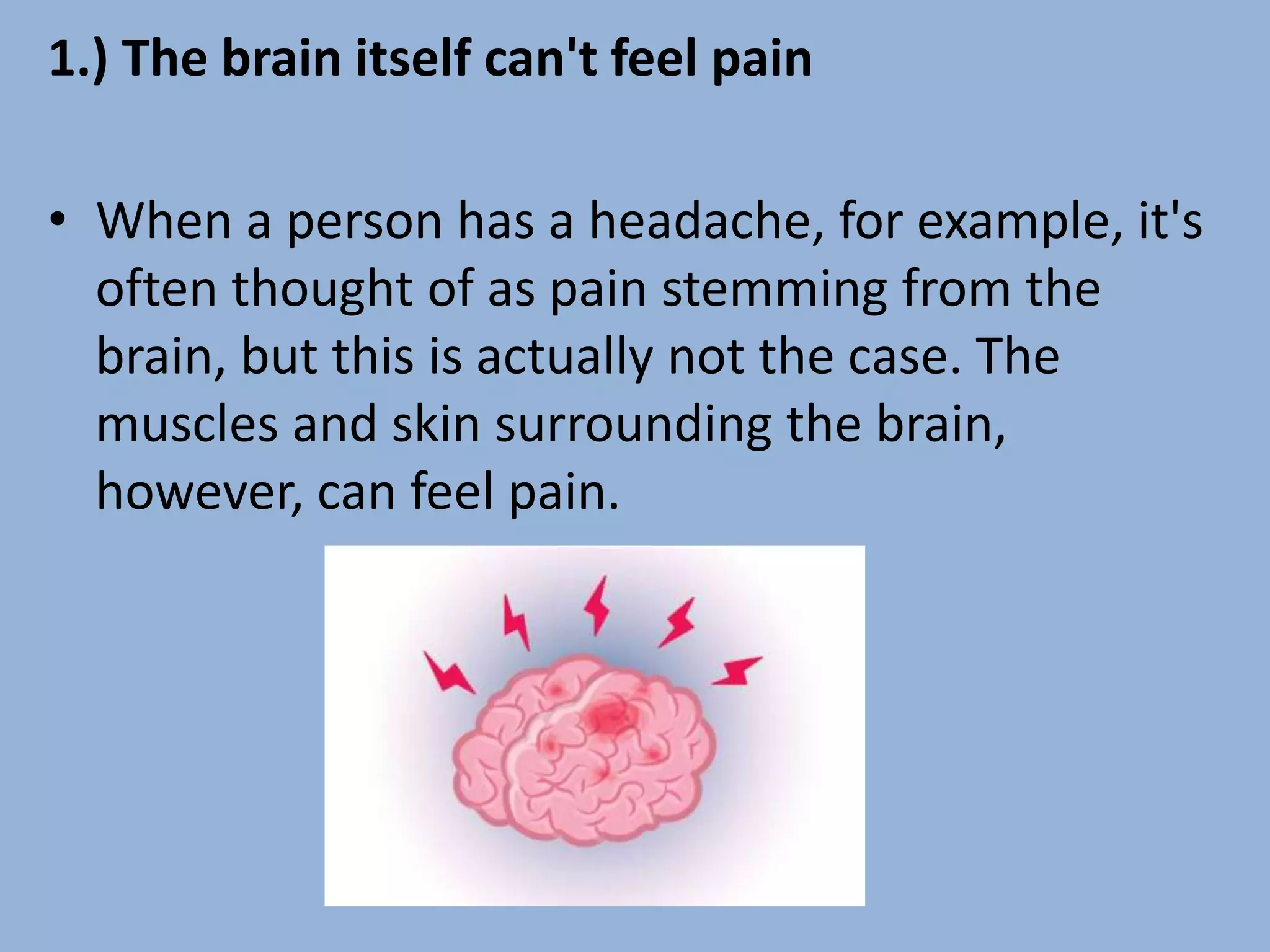
1.) The brain itself can't feel pain
• When a person has a headache, for example, it's
often thought of as pain stemming from the
brain, but this is actually not the case. The
muscles and skin surrounding the brain,
however, can feel pain.
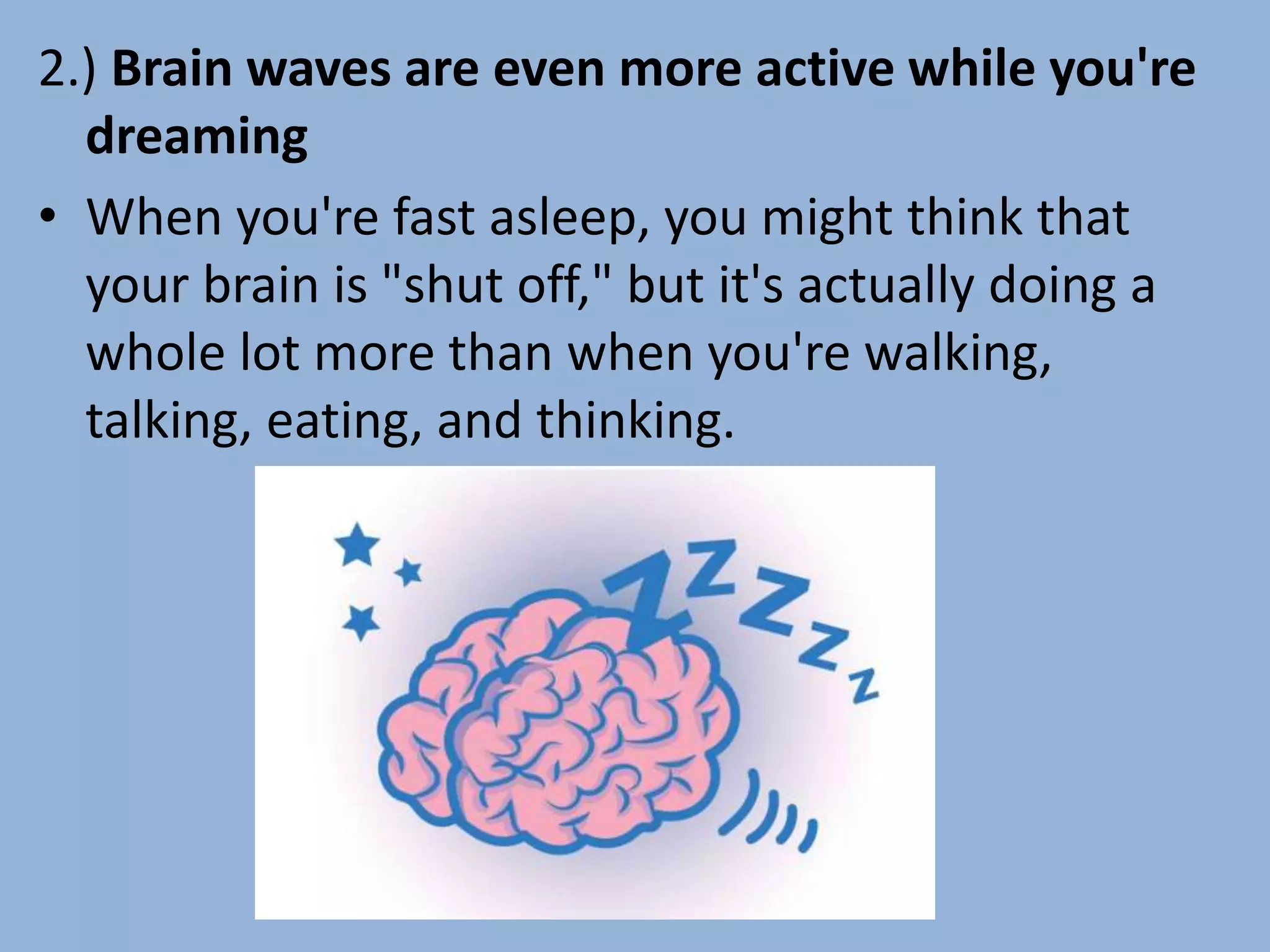
2.) Brain waves are even more active while you're
dreaming
• When you're fast asleep, you might think that
your brain is "shut off," but it's actually doing a
whole lot more than when you're walking,
talking, eating, and thinking.
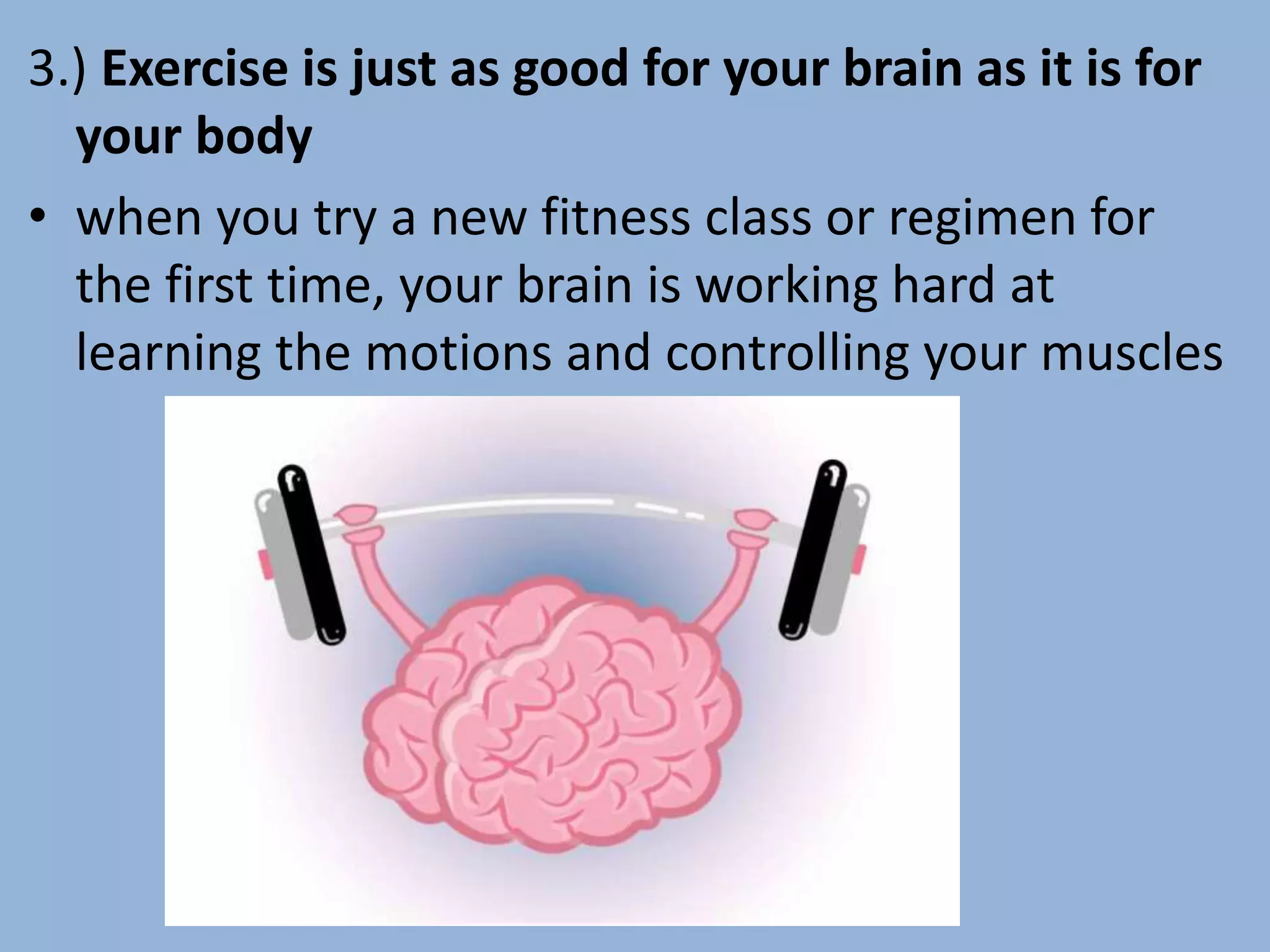
3.) Exercise is just as good for your brain as it is for
your body
• when you try a new fitness class or regimen for
the first time, your brain is working hard at
learning the motions and controlling your muscles
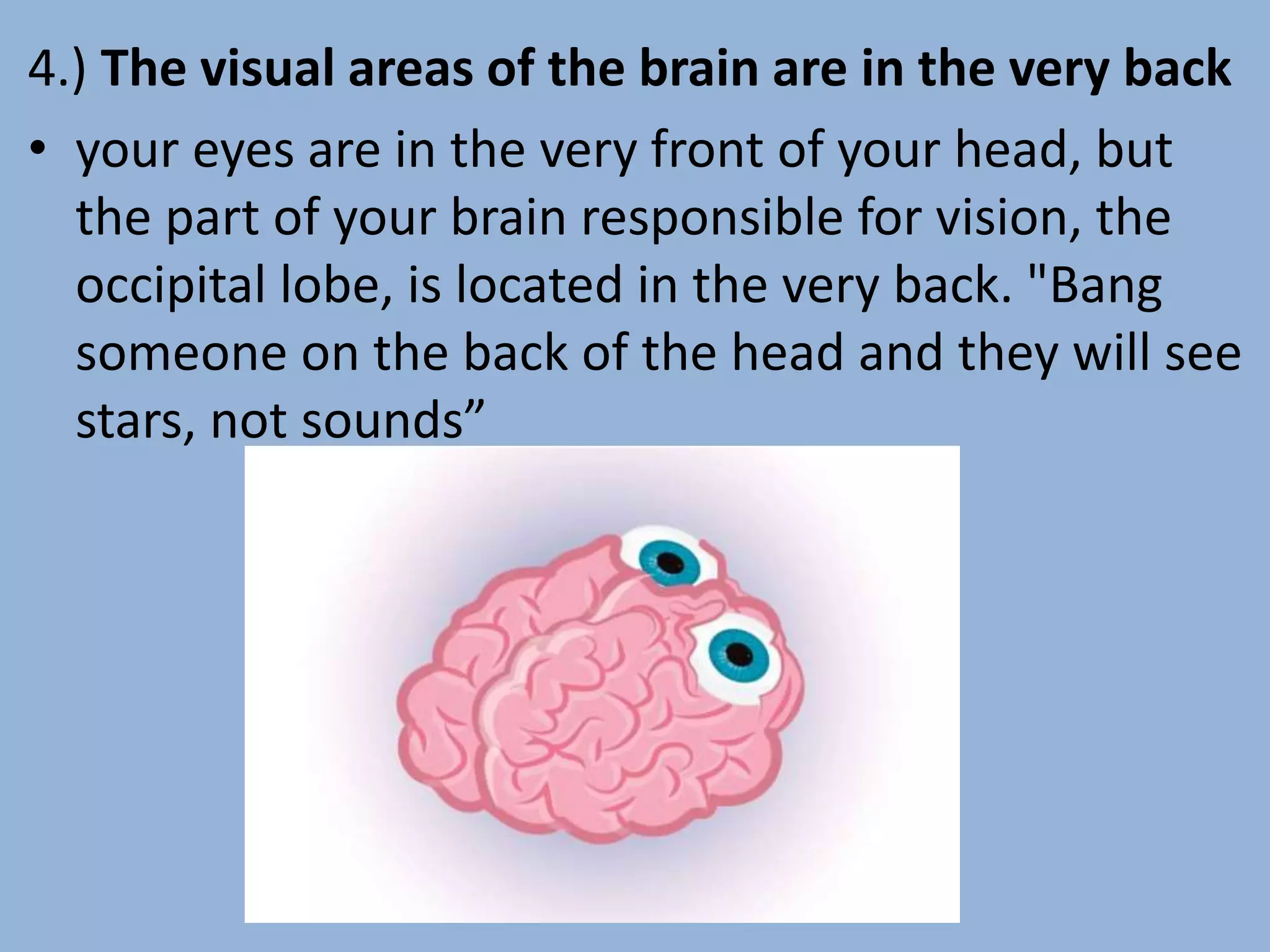
4.) The visual areas of the brain are in the very back
• your eyes are in the very front of your head, but
the part of your brain responsible for vision, the
occipital lobe, is located in the very back. "Bang
someone on the back of the head and they will see
stars, not sounds”
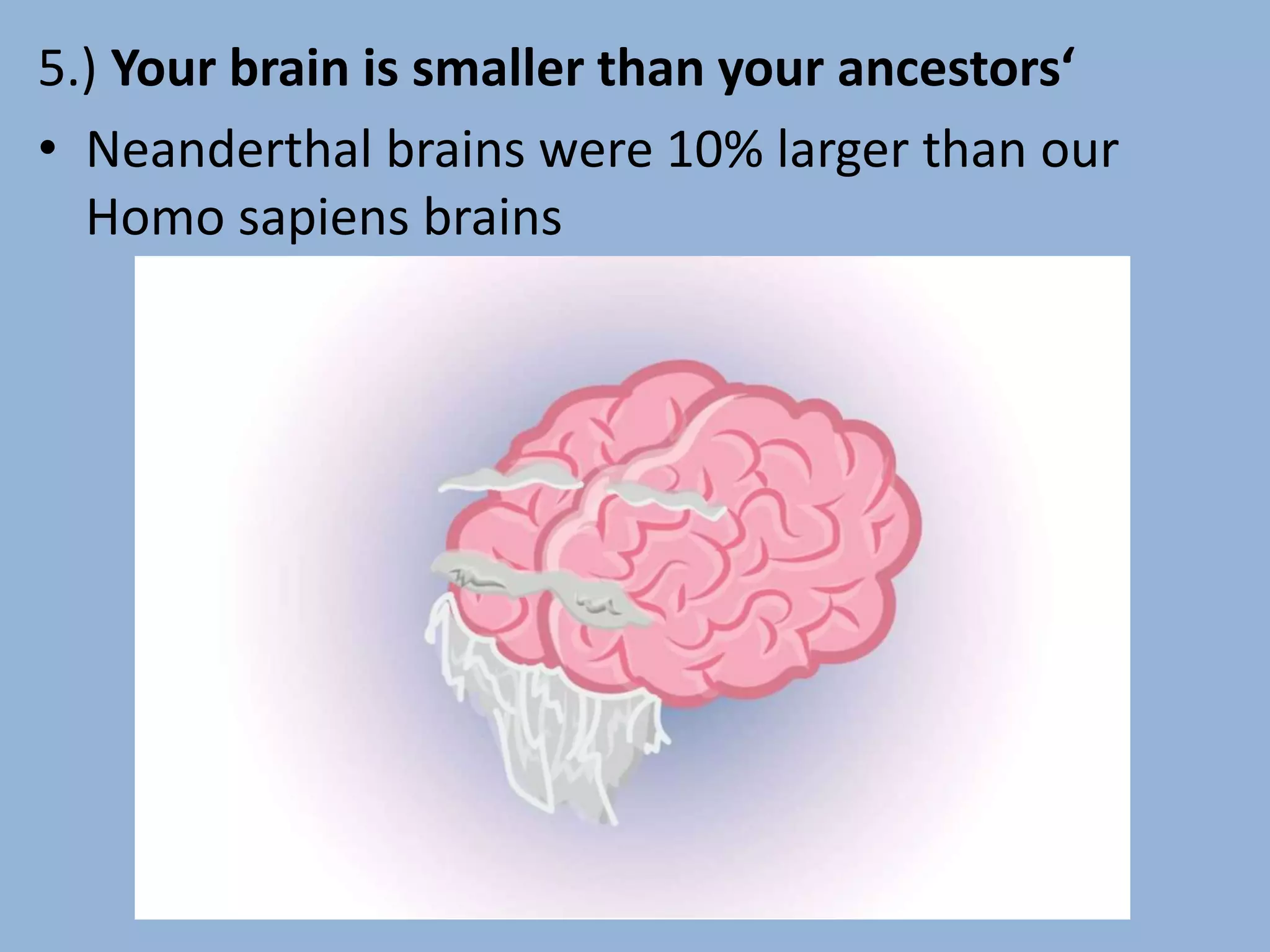
5.) Your brain is smaller than your ancestors‘
• Neanderthal brains were 10% larger than our
Homo sapiens brains
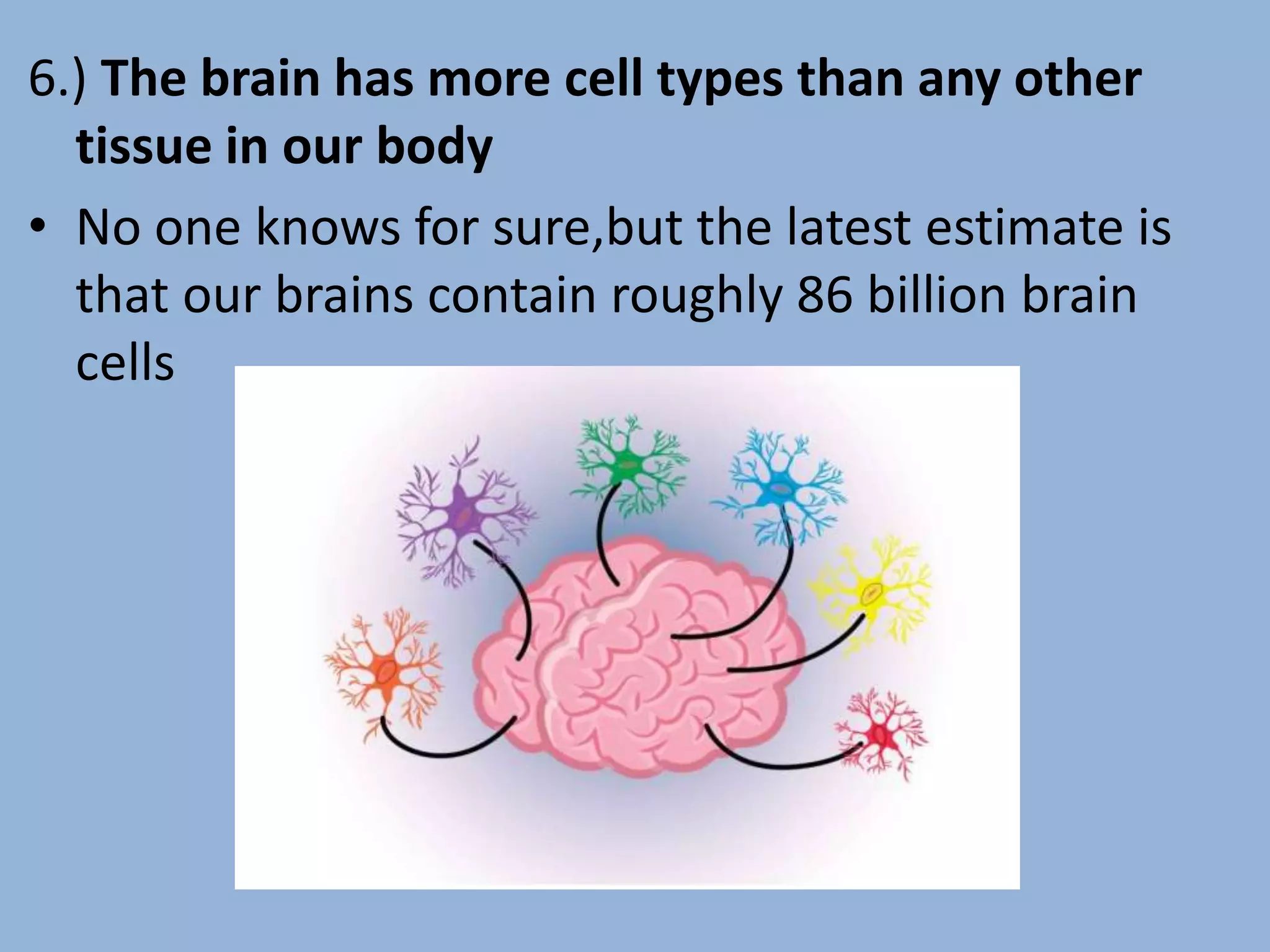
6.) The brain has more cell types than any other
tissue in our body
• No one knows for sure,but the latest estimate is
that our brains contain roughly 86 billion brain
cells
7.) Reading allows your brain to directly download
information
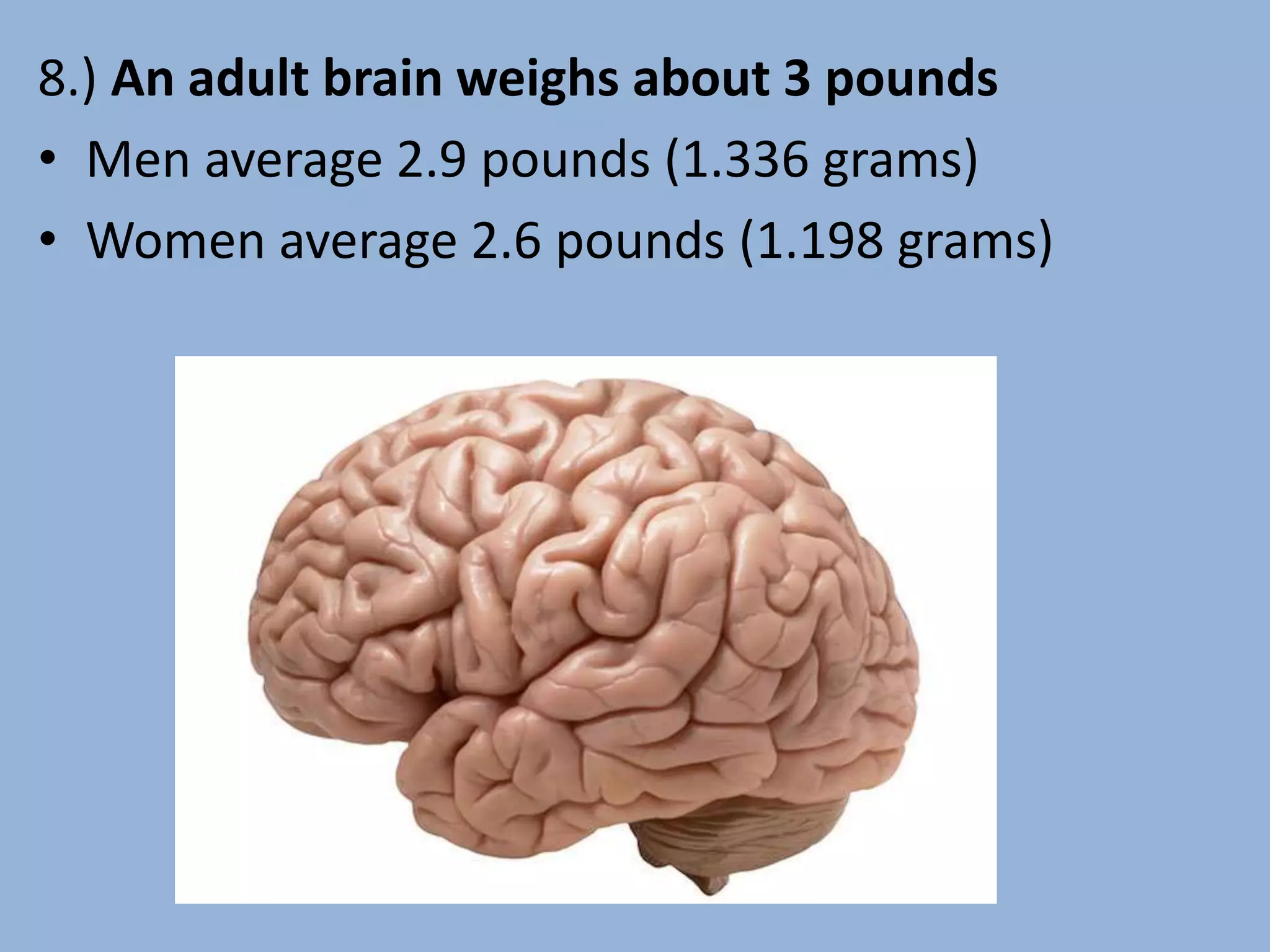
8.) An adult brain weighs about 3 pounds
• Men average 2.9 pounds (1.336 grams)
• Women average 2.6 pounds (1.198 grams)
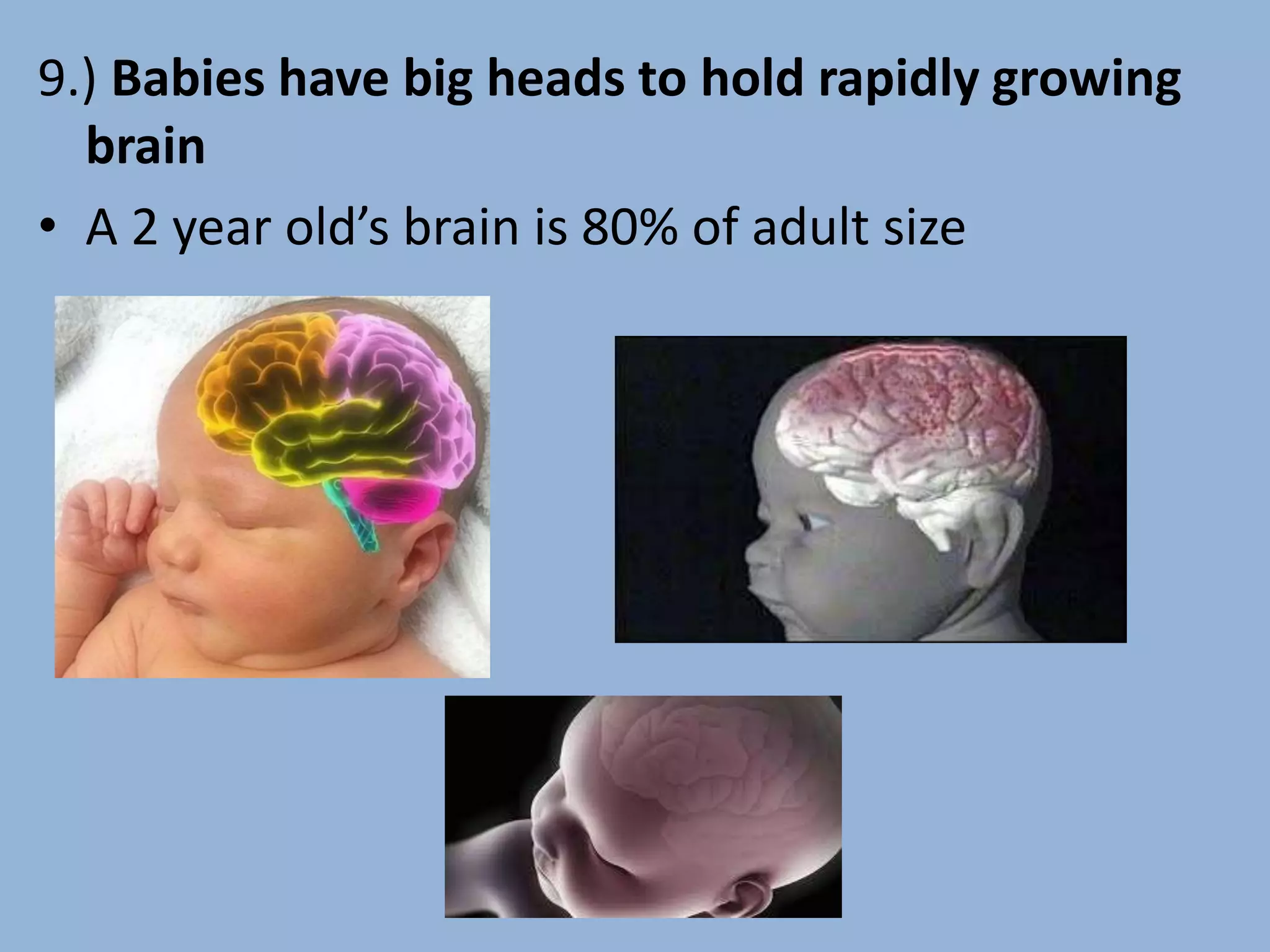
9.) Babies have big heads to hold rapidly growing
brain
• A 2 year old’s brain is 80% of adult size
10.) The reason why we dream is still a scientific
mystery
• Some scientists posit that it’s a way to “exercise
your brain” by keeping it stimulated as you
sleep;Others clain that allows the brain to fully
absorb ithoughts and memories from the day.
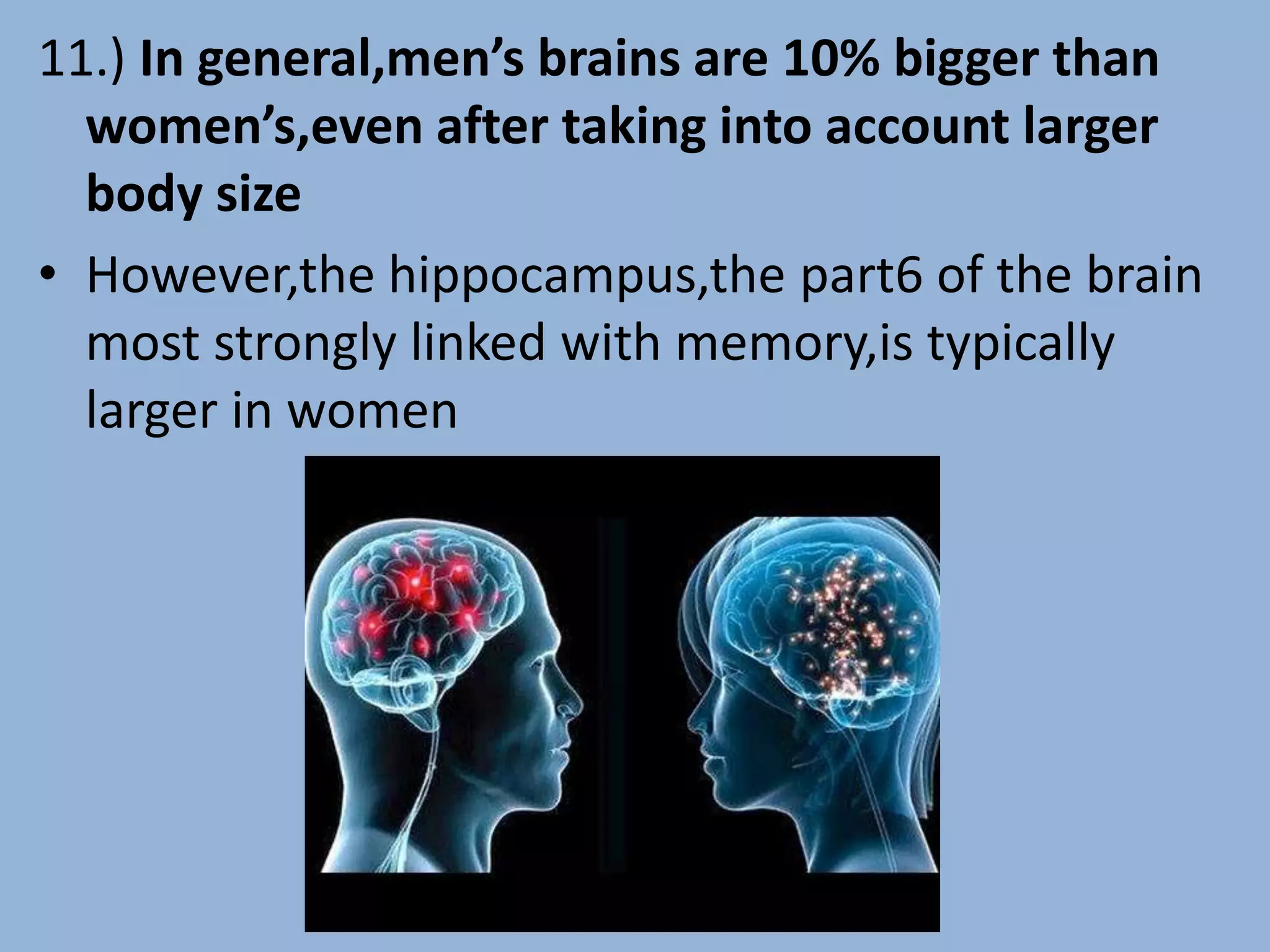
11.) In general,men’s brains are 10% bigger than
women’s,even after taking into account larger
body size
• However,the hippocampus,the part6 of the brain
most strongly linked with memory,is typically
larger in women
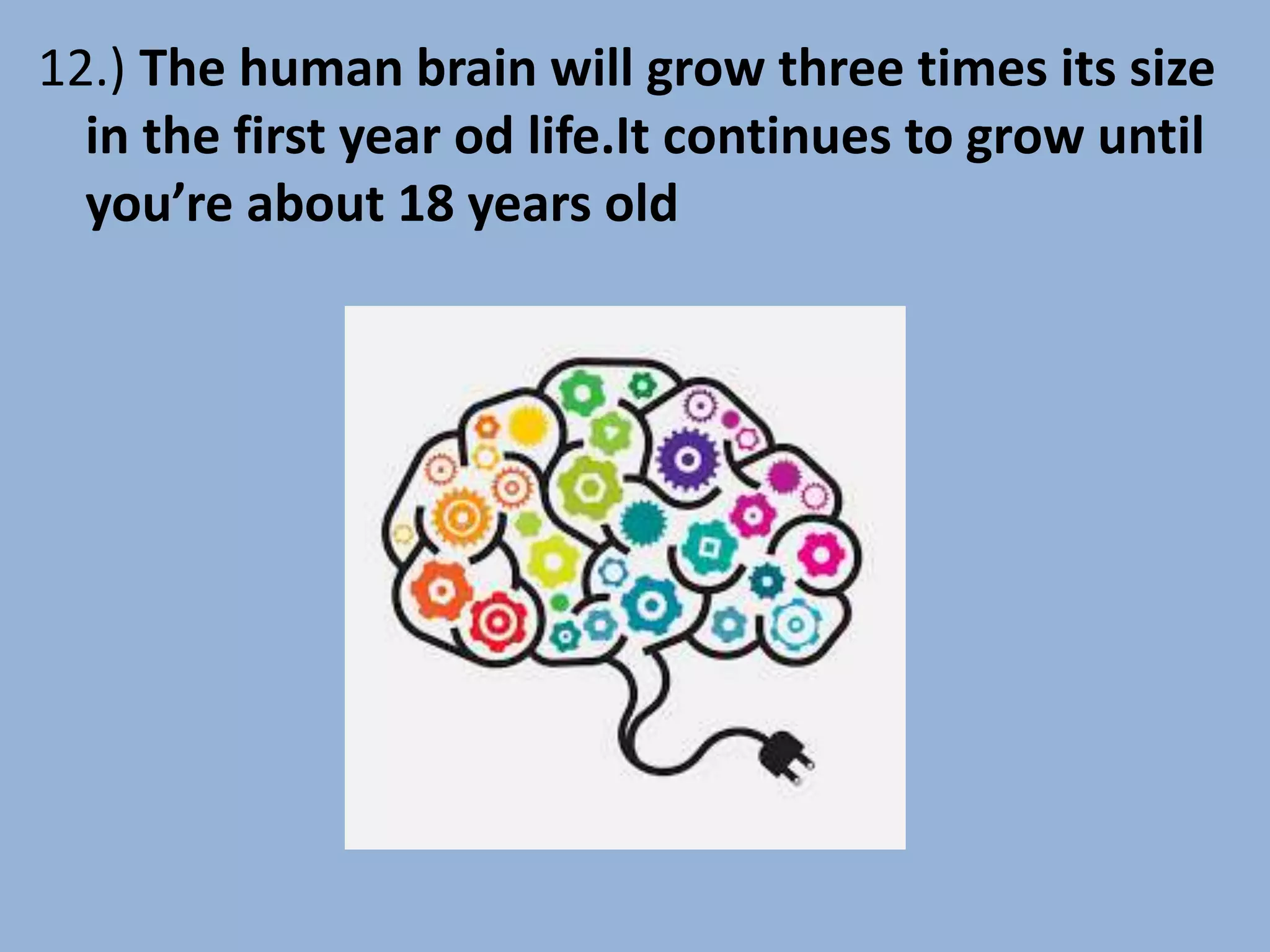
12.) The human brain will grow three times its size
in the first year od life.It continues to grow until
you’re about 18 years old
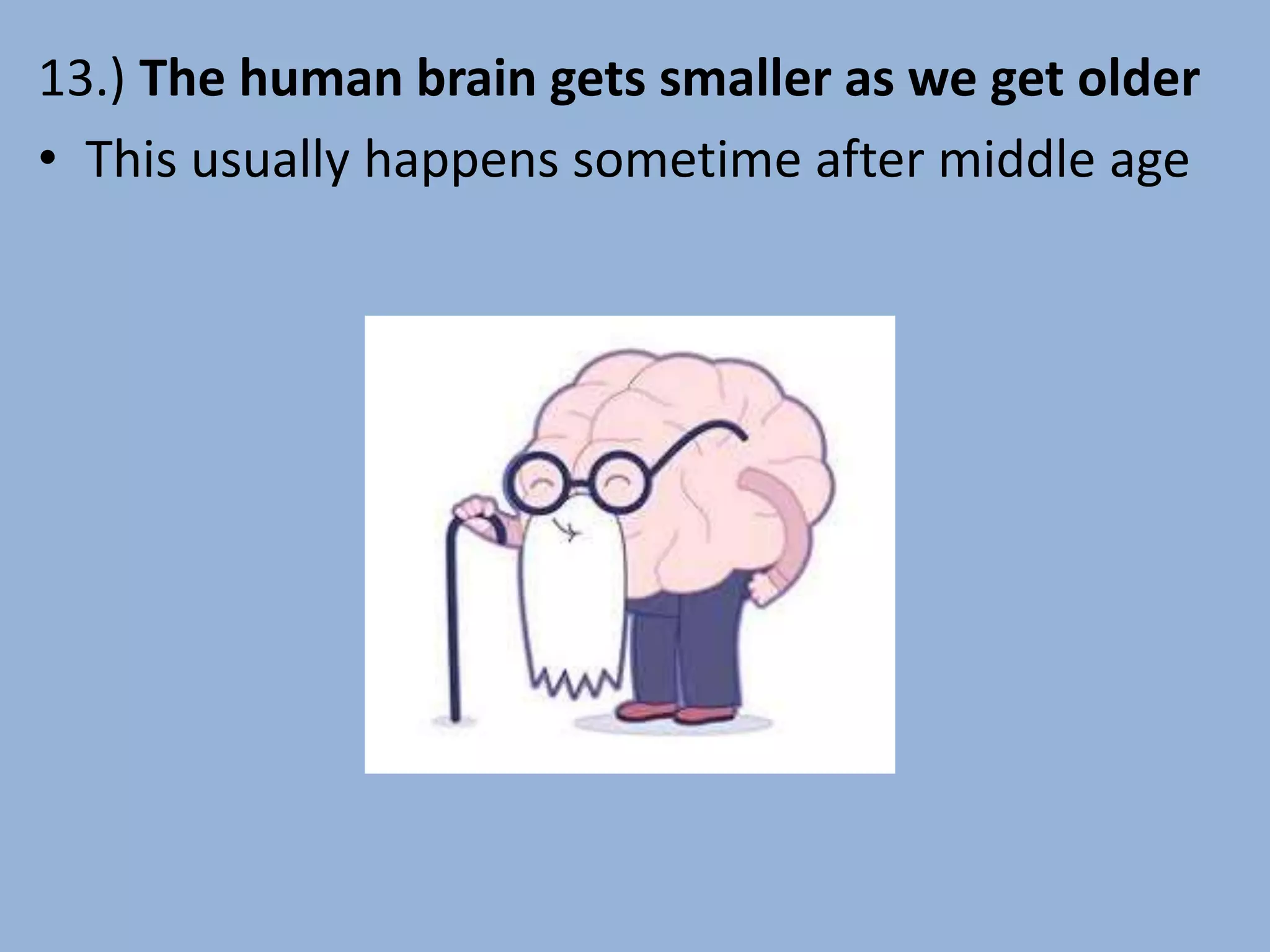
13.) The human brain gets smaller as we get older
• This usually happens sometime after middle age
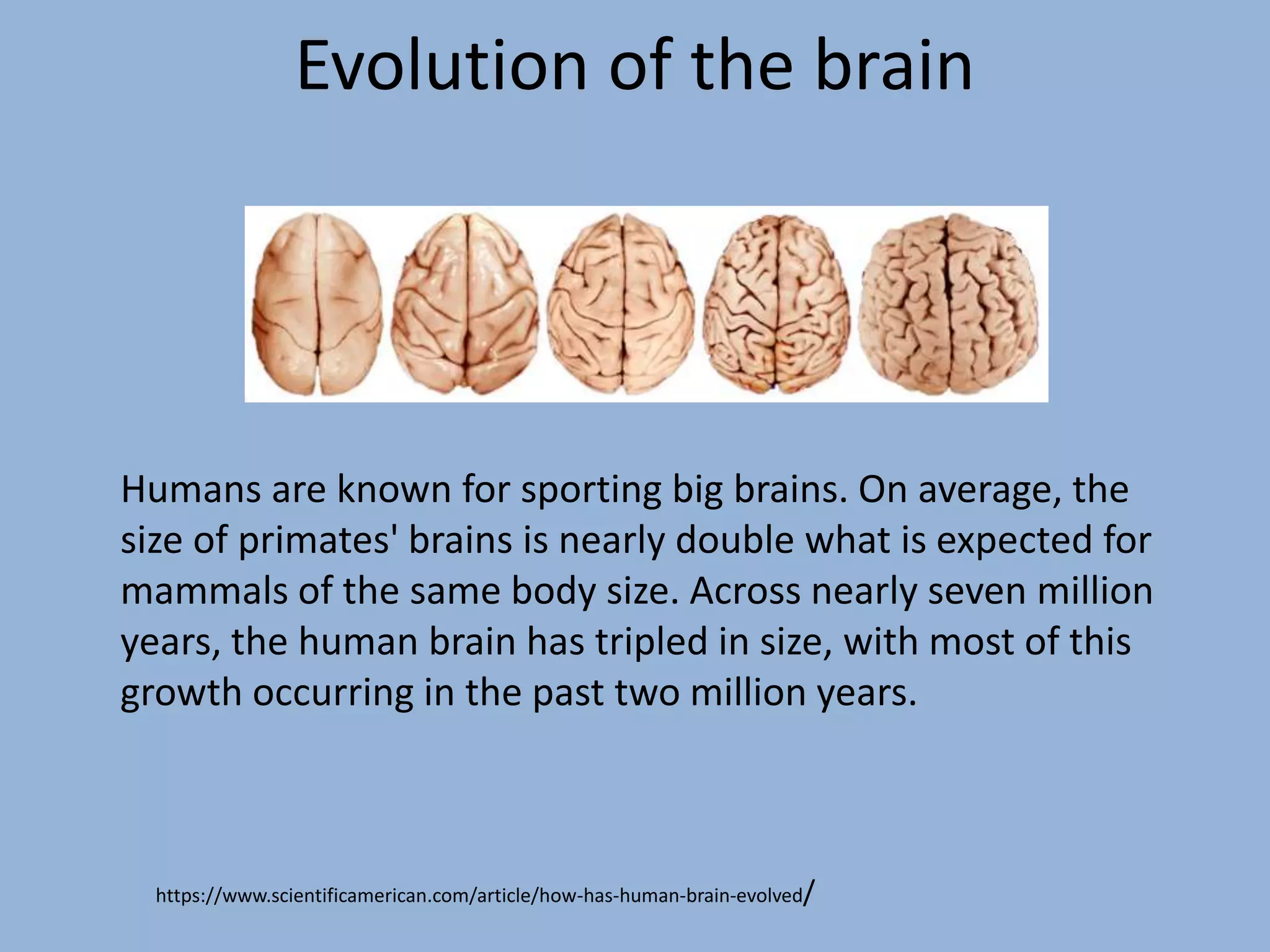
Evolution of the brain
Humans are known for sporting big brains. On average, the
size of primates' brains is nearly double what is expected for
mammals of the same body size. Across nearly seven million
years, the human brain has tripled in size, with most of this
growth occurring in the past two million years.
https://www.scientificamerican.com/article/how-has-human-brain-evolved/
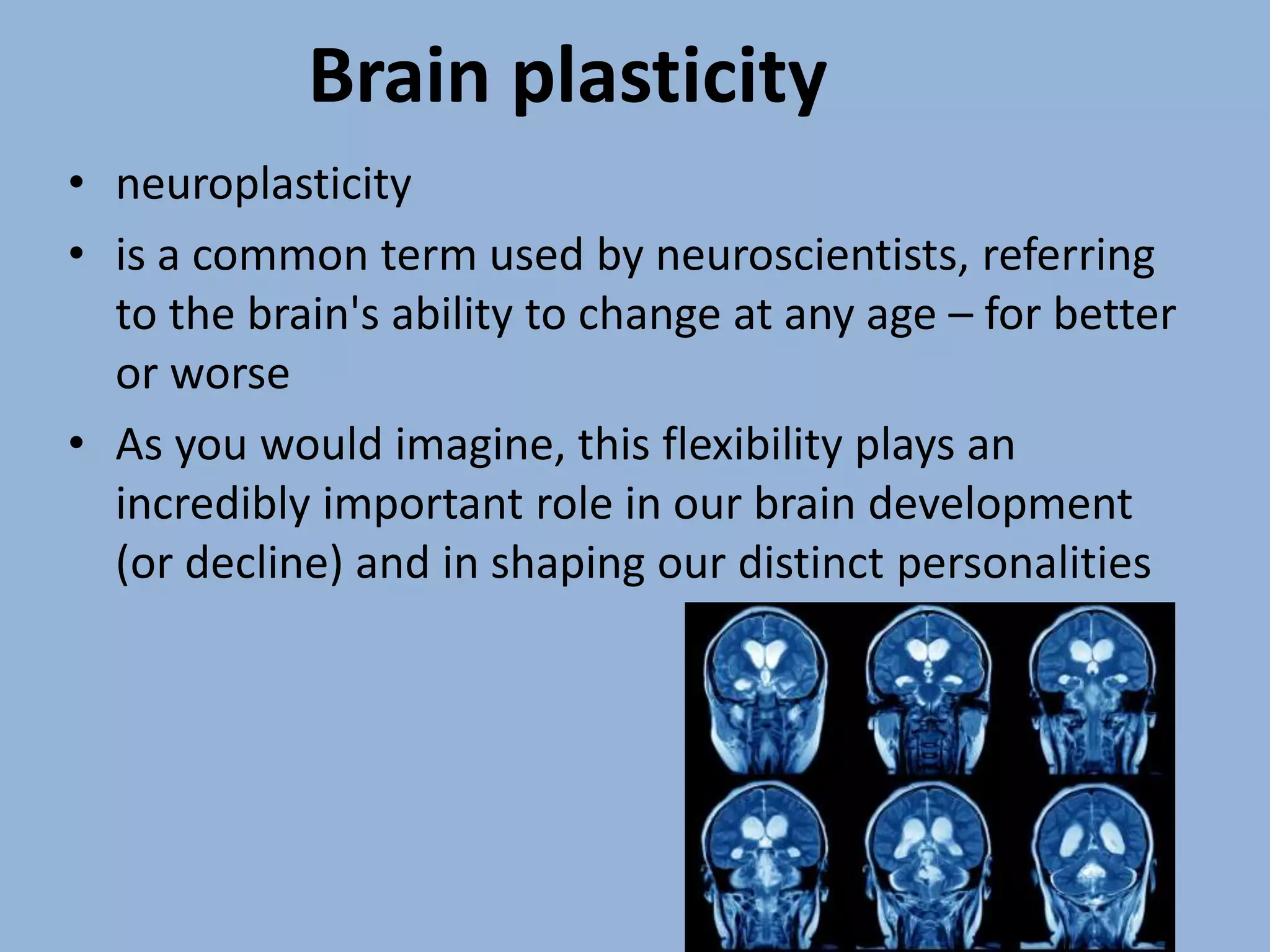
• neuroplasticity
• is a common term used by neuroscientists, referring
to the brain's ability to change at any age – for better
or worse
• As you would imagine, this flexibility plays an
incredibly important role in our brain development
(or decline) and in shaping our distinct personalities
Brain plasticity
How the Brain Changes?
• Changes in the physical brain manifest as changes in our
abilities. For example, each time we learn a new dance step, it
reflects a change in our physical brains: new "wires" (neural
pathways) that give instructions to our bodies on how to
perform the step. Each time we forget someone's name, it
also reflects brain change -"wires„ that once connected to the
memory have been degraded, or even severed. As these
examples show, changes in the brain can result in improved
skills (a new dance step) or a weakening of skills (a forgotten
name)
https://www.brainhq.com/brain-resources/brain-plasticity/what-is-brain-plasticity
Student:
Anamaria Tomašić

The big brain

  • 1.
  • 2.
  • 3.
    1.) The brainitself can't feel pain • When a person has a headache, for example, it's often thought of as pain stemming from the brain, but this is actually not the case. The muscles and skin surrounding the brain, however, can feel pain.
  • 4.
    2.) Brain wavesare even more active while you're dreaming • When you're fast asleep, you might think that your brain is "shut off," but it's actually doing a whole lot more than when you're walking, talking, eating, and thinking.
  • 5.
    3.) Exercise isjust as good for your brain as it is for your body • when you try a new fitness class or regimen for the first time, your brain is working hard at learning the motions and controlling your muscles
  • 6.
    4.) The visualareas of the brain are in the very back • your eyes are in the very front of your head, but the part of your brain responsible for vision, the occipital lobe, is located in the very back. "Bang someone on the back of the head and they will see stars, not sounds”
  • 7.
    5.) Your brainis smaller than your ancestors‘ • Neanderthal brains were 10% larger than our Homo sapiens brains
  • 8.
    6.) The brainhas more cell types than any other tissue in our body • No one knows for sure,but the latest estimate is that our brains contain roughly 86 billion brain cells
  • 9.
    7.) Reading allowsyour brain to directly download information
  • 10.
    8.) An adultbrain weighs about 3 pounds • Men average 2.9 pounds (1.336 grams) • Women average 2.6 pounds (1.198 grams)
  • 11.
    9.) Babies havebig heads to hold rapidly growing brain • A 2 year old’s brain is 80% of adult size
  • 12.
    10.) The reasonwhy we dream is still a scientific mystery • Some scientists posit that it’s a way to “exercise your brain” by keeping it stimulated as you sleep;Others clain that allows the brain to fully absorb ithoughts and memories from the day.
  • 13.
    11.) In general,men’sbrains are 10% bigger than women’s,even after taking into account larger body size • However,the hippocampus,the part6 of the brain most strongly linked with memory,is typically larger in women
  • 14.
    12.) The humanbrain will grow three times its size in the first year od life.It continues to grow until you’re about 18 years old
  • 15.
    13.) The humanbrain gets smaller as we get older • This usually happens sometime after middle age
  • 16.
    Evolution of thebrain Humans are known for sporting big brains. On average, the size of primates' brains is nearly double what is expected for mammals of the same body size. Across nearly seven million years, the human brain has tripled in size, with most of this growth occurring in the past two million years. https://www.scientificamerican.com/article/how-has-human-brain-evolved/
  • 17.
    • neuroplasticity • isa common term used by neuroscientists, referring to the brain's ability to change at any age – for better or worse • As you would imagine, this flexibility plays an incredibly important role in our brain development (or decline) and in shaping our distinct personalities Brain plasticity
  • 18.
    How the BrainChanges? • Changes in the physical brain manifest as changes in our abilities. For example, each time we learn a new dance step, it reflects a change in our physical brains: new "wires" (neural pathways) that give instructions to our bodies on how to perform the step. Each time we forget someone's name, it also reflects brain change -"wires„ that once connected to the memory have been degraded, or even severed. As these examples show, changes in the brain can result in improved skills (a new dance step) or a weakening of skills (a forgotten name) https://www.brainhq.com/brain-resources/brain-plasticity/what-is-brain-plasticity
  • 19.