Texture
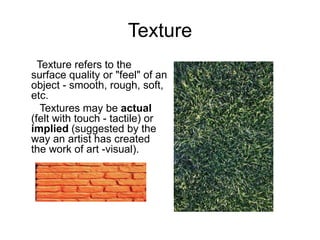
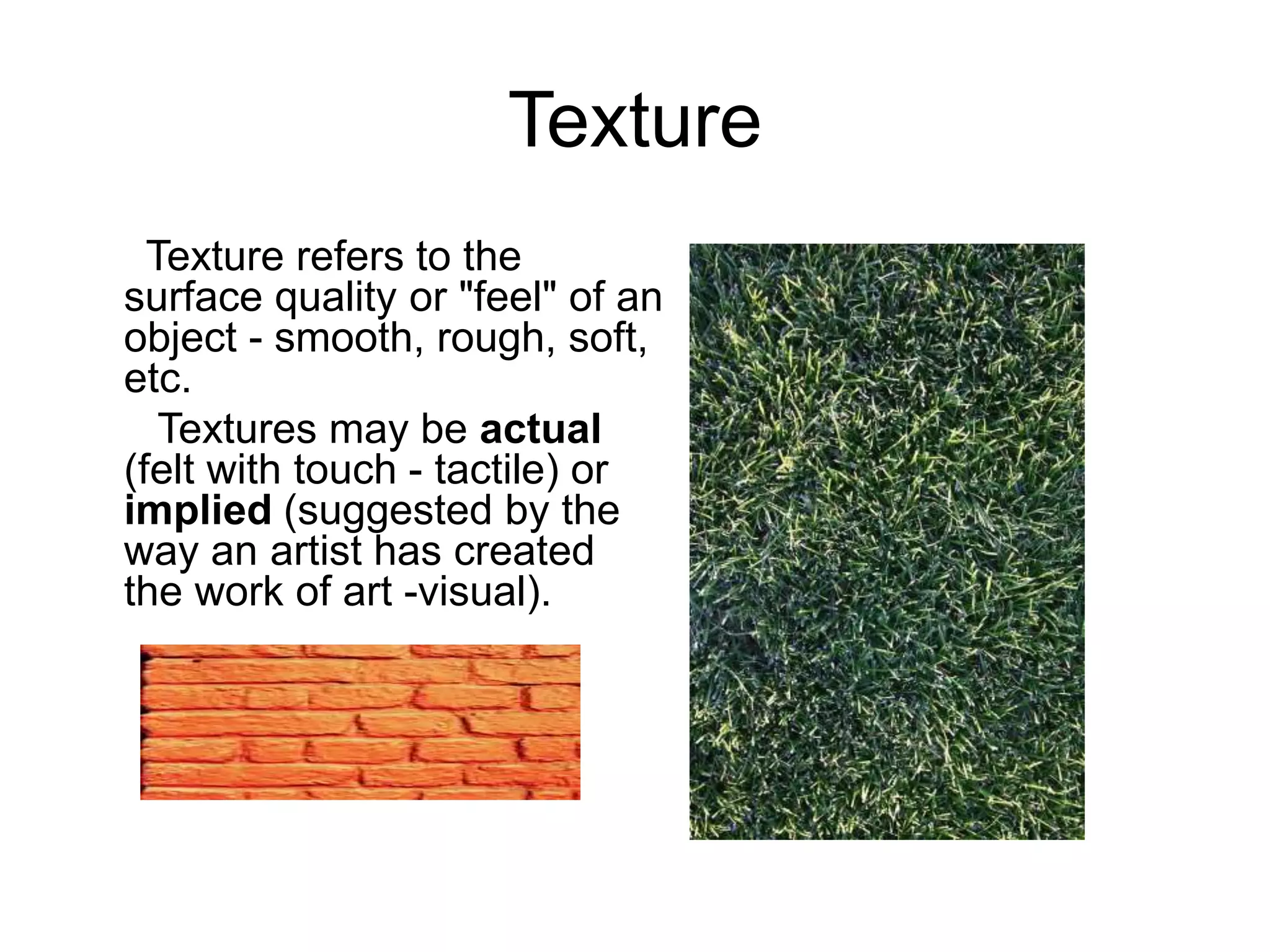
Texture refers to the
surface quality or "feel" of an
object - smooth, rough, soft,
etc.
Textures may be actual
(felt with touch - tactile) or
implied (suggested by the
way an artist has created
the work of art -visual).
Trompe l’oeil
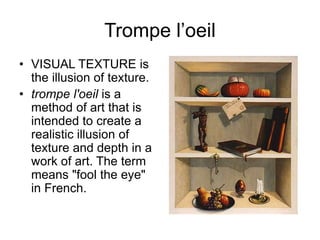
• VISUAL TEXTURE is
the illusion of texture.
• trompe l'oeil is a
method of art that is
intended to create a
realistic illusion of
texture and depth in a
work of art. The term
means "fool the eye"
in French.
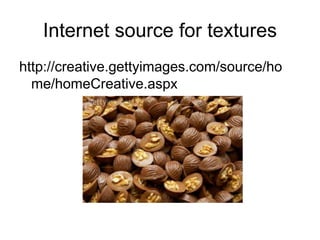
Internet source for textures
http://creative.gettyimages.com/source/ho
me/homeCreative.aspx
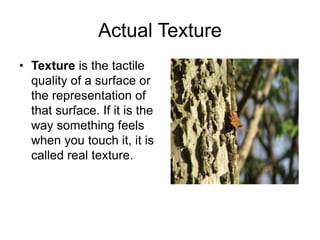
Actual Texture
• Texture is the tactile
quality of a surface or
the representation of
that surface. If it is the
way something feels
when you touch it, it is
called real texture.
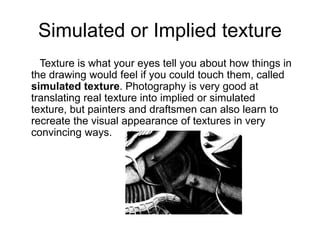
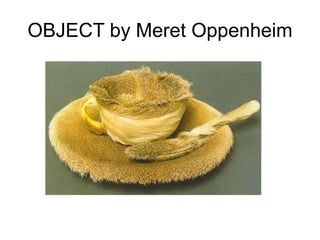
Simulated or Implied texture
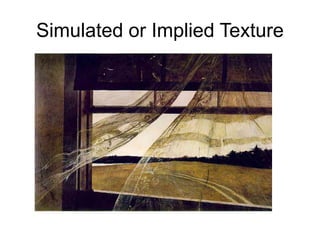
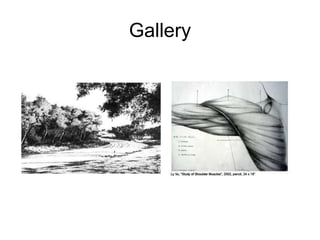
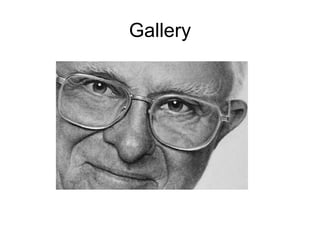
Texture is what your eyes tell you about how things in
the drawing would feel if you could touch them, called
simulated texture. Photography is very good at
translating real texture into implied or simulated
texture, but painters and draftsmen can also learn to
recreate the visual appearance of textures in very
convincing ways.
Simulated or Implied Texture
OBJECT by Meret Oppenheim
Gallery
Gallery
Gallery
Gallery
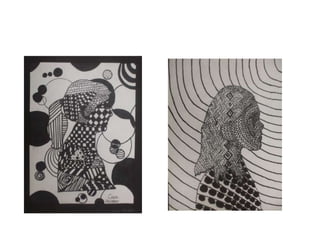
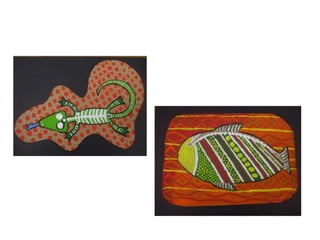
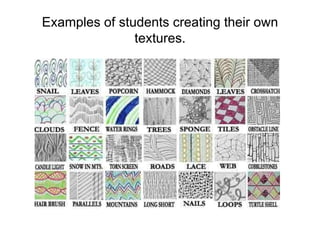
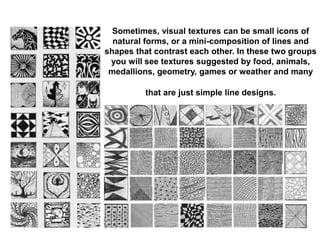
Examples of students creating their own
textures.
Sometimes, visual textures can be small icons of
natural forms, or a mini-composition of lines and
shapes that contrast each other. In these two groups
you will see textures suggested by food, animals,
medallions, geometry, games or weather and many
that are just simple line designs.

Texture.ppt

  • 1.
    Texture Texture refers tothe surface quality or "feel" of an object - smooth, rough, soft, etc. Textures may be actual (felt with touch - tactile) or implied (suggested by the way an artist has created the work of art -visual).
  • 2.
    Trompe l’oeil • VISUALTEXTURE is the illusion of texture. • trompe l'oeil is a method of art that is intended to create a realistic illusion of texture and depth in a work of art. The term means "fool the eye" in French.
  • 3.
    Internet source fortextures http://creative.gettyimages.com/source/ho me/homeCreative.aspx
  • 4.
    Actual Texture • Textureis the tactile quality of a surface or the representation of that surface. If it is the way something feels when you touch it, it is called real texture.
  • 5.
    Simulated or Impliedtexture Texture is what your eyes tell you about how things in the drawing would feel if you could touch them, called simulated texture. Photography is very good at translating real texture into implied or simulated texture, but painters and draftsmen can also learn to recreate the visual appearance of textures in very convincing ways.
  • 6.
  • 9.
    OBJECT by MeretOppenheim
  • 10.
  • 11.
  • 12.
  • 13.
  • 15.
    Examples of studentscreating their own textures.
  • 16.
    Sometimes, visual texturescan be small icons of natural forms, or a mini-composition of lines and shapes that contrast each other. In these two groups you will see textures suggested by food, animals, medallions, geometry, games or weather and many that are just simple line designs.