TERMS FOR
UNDERSTANDING
LITERATURE AND
ART
8th grade English
CJHS
Let’s get artsy!

ART VOCABULARY
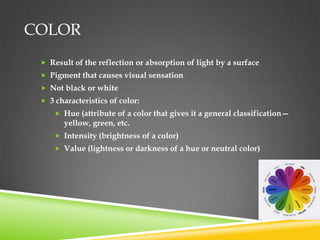
COLOR
  Result of the reflection or absorption of light by a surface
  Pigment that causes visual sensation
  Not black or white
  3 characteristics of color:
      Hue (attribute of a color that gives it a general classification—
       yellow, green, etc.
      Intensity (brightness of a color)
      Value (lightness or darkness of a hue or neutral color)
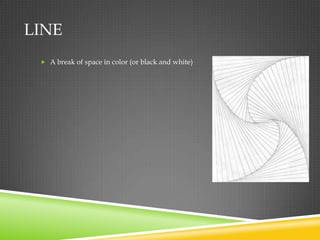
LINE
  A break of space in color (or black and white)
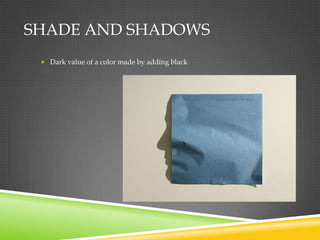
SHADE AND SHADOWS
  Dark value of a color made by adding black
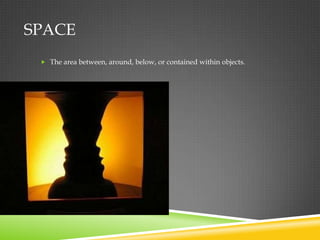
SPACE
  The area between, around, below, or contained within objects.
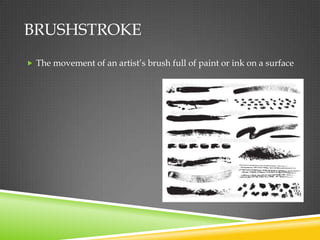
BRUSHSTROKE
 The movement of an artist’s brush full of paint or ink on a surface
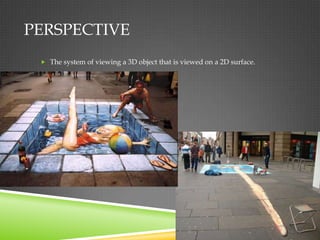
PERSPECTIVE
  The system of viewing a 3D object that is viewed on a 2D surface.
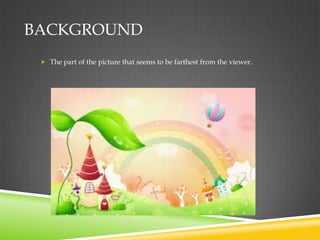
BACKGROUND
  The part of the picture that seems to be farthest from the viewer.
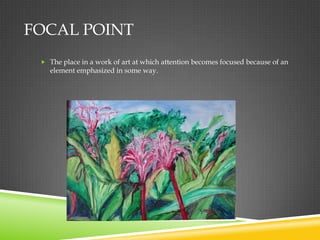
FOCAL POINT
  The place in a work of art at which attention becomes focused because of an
   element emphasized in some way.
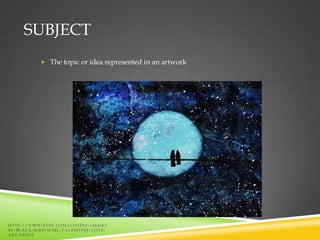
SUBJECT
            The topic or idea represented in an artwork


HTTP://WWW.ETSY.COM /LISTING/664367
86/BLACK-BIRD-WIRE-VALENTINE-LOVE-
ART-PRINT
Let’s get literary!

LITERARY VOCABULARY
THEME
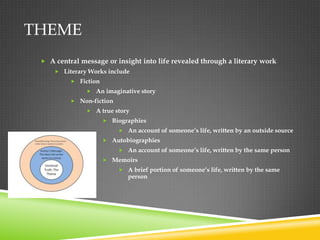
  A central message or insight into life revealed through a literary work
      Literary Works include
           Fiction
                An imaginative story
           Non-fiction
                A true story
                       Biographies
                           An account of someone’s life, written by an outside source
                       Autobiographies
                           An account of someone’s life, written by the same person
                       Memoirs
                           A brief portion of someone’s life, written by the same
                             person
FIGURATIVE LANGUAGE
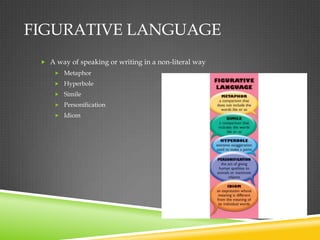
  A way of speaking or writing in a non-literal way
      Metaphor

      Hyperbole
      Simile

      Personification
      Idiom
DENOTATION V.
CONNOTATION
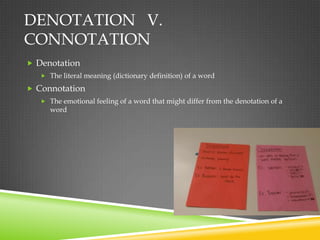
 Denotation
    The literal meaning (dictionary definition) of a word

 Connotation
    The emotional feeling of a word that might differ from the denotation of a
      word
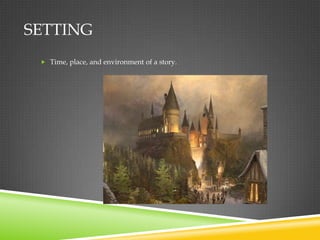
SETTING
  Time, place, and environment of a story.
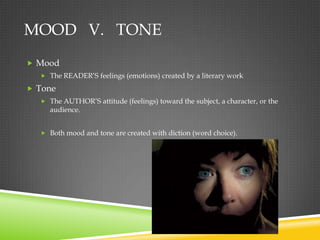
MOOD V. TONE
 Mood
   The READER’S feelings (emotions) created by a literary work

 Tone
   The AUTHOR’S attitude (feelings) toward the subject, a character, or the
    audience.


   Both mood and tone are created with diction (word choice).
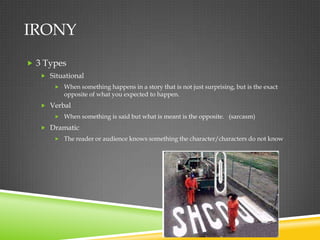
IRONY
 3 Types
    Situational
        When something happens in a story that is not just surprising, but is the exact
          opposite of what you expected to happen.
    Verbal
        When something is said but what is meant is the opposite. (sarcasm)

    Dramatic
        The reader or audience knows something the character/characters do not know
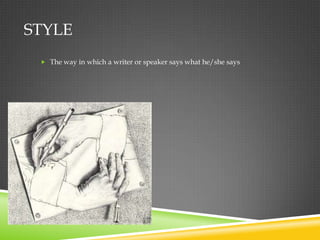
STYLE
  The way in which a writer or speaker says what he/she says
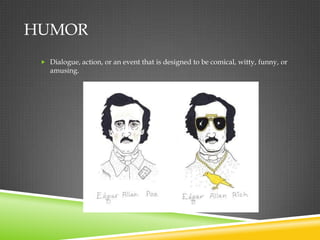
HUMOR
  Dialogue, action, or an event that is designed to be comical, witty, funny, or
    amusing.
PERSPECTIVE V. POINT OF
VIEW
Perspective                       Point of View
 The state of one’s ideas, the    The perspective from which
  facts known to one, and the       a story is told.
  angle from which one views          1st person
  a situation.                        2nd person
                                      3rd person limited
                                      3rd person omniscient

Terms for lit and art

  • 1.
  • 2.
  • 3.
    COLOR  Resultof the reflection or absorption of light by a surface  Pigment that causes visual sensation  Not black or white  3 characteristics of color:  Hue (attribute of a color that gives it a general classification— yellow, green, etc.  Intensity (brightness of a color)  Value (lightness or darkness of a hue or neutral color)
  • 4.
    LINE  Abreak of space in color (or black and white)
  • 5.
    SHADE AND SHADOWS  Dark value of a color made by adding black
  • 6.
    SPACE  Thearea between, around, below, or contained within objects.
  • 7.
    BRUSHSTROKE  The movementof an artist’s brush full of paint or ink on a surface
  • 8.
    PERSPECTIVE  Thesystem of viewing a 3D object that is viewed on a 2D surface.
  • 9.
    BACKGROUND  Thepart of the picture that seems to be farthest from the viewer.
  • 10.
    FOCAL POINT The place in a work of art at which attention becomes focused because of an element emphasized in some way.
  • 11.
    SUBJECT  The topic or idea represented in an artwork HTTP://WWW.ETSY.COM /LISTING/664367 86/BLACK-BIRD-WIRE-VALENTINE-LOVE- ART-PRINT
  • 12.
  • 13.
    THEME  Acentral message or insight into life revealed through a literary work  Literary Works include  Fiction  An imaginative story  Non-fiction  A true story  Biographies  An account of someone’s life, written by an outside source  Autobiographies  An account of someone’s life, written by the same person  Memoirs  A brief portion of someone’s life, written by the same person
  • 14.
    FIGURATIVE LANGUAGE A way of speaking or writing in a non-literal way  Metaphor  Hyperbole  Simile  Personification  Idiom
  • 15.
    DENOTATION V. CONNOTATION  Denotation  The literal meaning (dictionary definition) of a word  Connotation  The emotional feeling of a word that might differ from the denotation of a word
  • 16.
    SETTING  Time,place, and environment of a story.
  • 17.
    MOOD V. TONE Mood  The READER’S feelings (emotions) created by a literary work  Tone  The AUTHOR’S attitude (feelings) toward the subject, a character, or the audience.  Both mood and tone are created with diction (word choice).
  • 18.
    IRONY  3 Types  Situational  When something happens in a story that is not just surprising, but is the exact opposite of what you expected to happen.  Verbal  When something is said but what is meant is the opposite. (sarcasm)  Dramatic  The reader or audience knows something the character/characters do not know
  • 19.
    STYLE  Theway in which a writer or speaker says what he/she says
  • 20.
    HUMOR  Dialogue,action, or an event that is designed to be comical, witty, funny, or amusing.
  • 21.
    PERSPECTIVE V. POINTOF VIEW Perspective Point of View  The state of one’s ideas, the  The perspective from which facts known to one, and the a story is told. angle from which one views  1st person a situation.  2nd person  3rd person limited  3rd person omniscient