During my staying here in Athens, enjoying
the hospitality that the students of E class are
providing, I feel so excited for everything that I
have already seen and everything I keep
learning about the culture of this city! I also
feel so grateful for the love I receive from the
students. Here’s how my journey continues…
This is my friend Ariadni! During my first day at her house, I met her other
friends and then I helped her do her homework fast, so we could do other
fun things as well!
We went for volleyball training!
A good and healthy breakfast for this
new day that begins! Later we’ll make
an interesting visit!
We are at the chorus class!
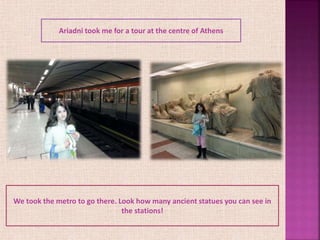
We took the metro to go there. Look how many ancient statues you can see in
the stations!
Ariadni took me for a tour at the centre of Athens
The well known Odeon of Herodus Atticus dominates the west edge of the Acropolis. It was the
third Odeon constructed in ancient Athens. It was constructed with money from Tiverius Klavdius
Atticus Herodus, a very well known and rich Athenian, in memory of his wife.
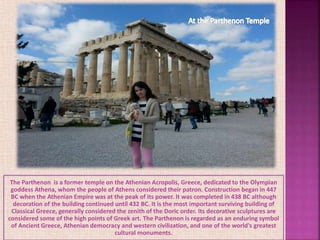
The Parthenon is a former temple on the Athenian Acropolis, Greece, dedicated to the Olympian
goddess Athena, whom the people of Athens considered their patron. Construction began in 447
BC when the Athenian Empire was at the peak of its power. It was completed in 438 BC although
decoration of the building continued until 432 BC. It is the most important surviving building of
Classical Greece, generally considered the zenith of the Doric order. Its decorative sculptures are
considered some of the high points of Greek art. The Parthenon is regarded as an enduring symbol
of Ancient Greece, Athenian democracy and western civilization, and one of the world's greatest
cultural monuments.
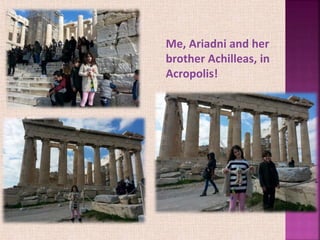
Me, Ariadni and her
brother Achilleas, in
Acropolis!
Caryatid is the woman shaped sculpture that is used in order to support buildings. The name
Caryatid comes from the greek Caryatis which means “daughter of Karyes”, a town next to Sparta.
They are used as pillars as well as decoration, in gates, facades, housetops etc. The best-known and
most-copied examples are those of the six figures of the Caryatid Porch of the Erechtheion on the
Acropolis at Athens. One of those original six figures, removed by Lord Elgin in the early 19th
century, is now in the British Museum in London. The Acropolis Museum holds the other five
figures, which are replaced onsite by replicas. The five originals that are in Athens are now being
exhibited in the new Acropolis Museum, on a special balcony that allows visitors to view them
from all sides.
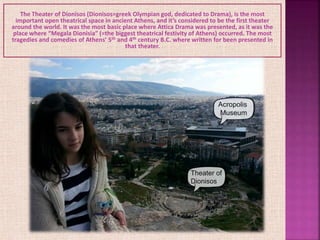
The Theater of Dionisos (Dionisos=greek Olympian god, dedicated to Drama), is the most
important open theatrical space in ancient Athens, and it’s considered to be the first theater
around the world. It was the most basic place where Attica Drama was presented, as it was the
place where “Megala Dionisia” (=the biggest theatrical festivity of Athens) occurred. The most
tragedies and comedies of Athens’ 5th and 4th century B.C. where written for been presented in
that theater.
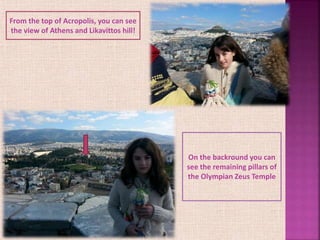
From the top of Acropolis, you can see
the view of Athens and Likavittos hill!
On the backround you can
see the remaining pillars of
the Olympian Zeus Temple
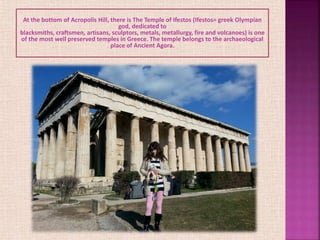
At the bottom of Acropolis Hill, there is The Temple of Ifestos (Ifestos= greek Olympian
god, dedicated to
blacksmiths, craftsmen, artisans, sculptors, metals, metallurgy, fire and volcanoes) is one
of the most well preserved temples in Greece. The temple belongs to the archaeological
place of Ancient Agora.
The Ancient Agora of Athens is the open space that is northwest of Acropolis. During the
ancient years it was the administrative, philosophical, educational, social, cultural but
mostly economical centre of the city. The main road that crossed Agora was used during
the celebration of the great Athens festivities “Panathinea”, for the procession to arrive
in the temple of Acropolis.
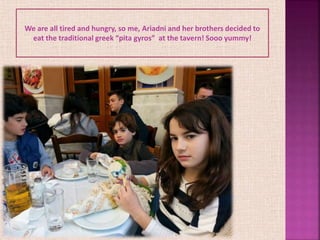
We are all tired and hungry, so me, Ariadni and her brothers decided to
eat the traditional greek “pita gyros” at the tavern! Sooo yummy!
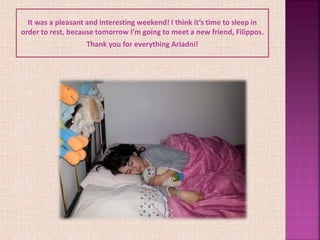
It was a pleasant and interesting weekend! I think it’s time to sleep in
order to rest, because tomorrow I’m going to meet a new friend, Filippos.
Thank you for everything Ariadni!
Today I’m with my friend Filippos! We just came from
school and I’m helping him study geography!
Tentacool is a scientist!! (we’re playing a board game)
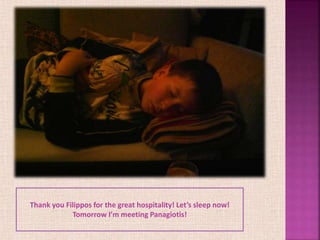
Thank you Filippos for the great hospitality! Let’s sleep now!
Tomorrow I’m meeting Panagiotis!
We’re playing at his room!
We’re having lunch
I’m at my friend’s Panagiotis’ house!
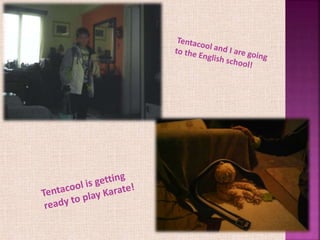
We’re at the English school!
I also met his classmates!
Me and Panagiotis came for basketball training!
Panagiotis’ father is a baker, so Panagiotis took me along to
the bakery and the pastry shop they own.
Mmm! It smells so good here at the bakery’s kneader!
How can anyone resist to all these goodies in the pastry
shop??
Goodbye Panagiotis, I had a great time, thank you!

Tentacool back to E3

  • 2.
    During my stayinghere in Athens, enjoying the hospitality that the students of E class are providing, I feel so excited for everything that I have already seen and everything I keep learning about the culture of this city! I also feel so grateful for the love I receive from the students. Here’s how my journey continues…
  • 4.
    This is myfriend Ariadni! During my first day at her house, I met her other friends and then I helped her do her homework fast, so we could do other fun things as well!
  • 5.
    We went forvolleyball training!
  • 6.
    A good andhealthy breakfast for this new day that begins! Later we’ll make an interesting visit!
  • 7.
    We are atthe chorus class!
  • 8.
    We took themetro to go there. Look how many ancient statues you can see in the stations! Ariadni took me for a tour at the centre of Athens
  • 10.
    The well knownOdeon of Herodus Atticus dominates the west edge of the Acropolis. It was the third Odeon constructed in ancient Athens. It was constructed with money from Tiverius Klavdius Atticus Herodus, a very well known and rich Athenian, in memory of his wife.
  • 11.
    The Parthenon isa former temple on the Athenian Acropolis, Greece, dedicated to the Olympian goddess Athena, whom the people of Athens considered their patron. Construction began in 447 BC when the Athenian Empire was at the peak of its power. It was completed in 438 BC although decoration of the building continued until 432 BC. It is the most important surviving building of Classical Greece, generally considered the zenith of the Doric order. Its decorative sculptures are considered some of the high points of Greek art. The Parthenon is regarded as an enduring symbol of Ancient Greece, Athenian democracy and western civilization, and one of the world's greatest cultural monuments.
  • 12.
    Me, Ariadni andher brother Achilleas, in Acropolis!
  • 13.
    Caryatid is thewoman shaped sculpture that is used in order to support buildings. The name Caryatid comes from the greek Caryatis which means “daughter of Karyes”, a town next to Sparta. They are used as pillars as well as decoration, in gates, facades, housetops etc. The best-known and most-copied examples are those of the six figures of the Caryatid Porch of the Erechtheion on the Acropolis at Athens. One of those original six figures, removed by Lord Elgin in the early 19th century, is now in the British Museum in London. The Acropolis Museum holds the other five figures, which are replaced onsite by replicas. The five originals that are in Athens are now being exhibited in the new Acropolis Museum, on a special balcony that allows visitors to view them from all sides.
  • 14.
    The Theater ofDionisos (Dionisos=greek Olympian god, dedicated to Drama), is the most important open theatrical space in ancient Athens, and it’s considered to be the first theater around the world. It was the most basic place where Attica Drama was presented, as it was the place where “Megala Dionisia” (=the biggest theatrical festivity of Athens) occurred. The most tragedies and comedies of Athens’ 5th and 4th century B.C. where written for been presented in that theater.
  • 15.
    From the topof Acropolis, you can see the view of Athens and Likavittos hill! On the backround you can see the remaining pillars of the Olympian Zeus Temple
  • 16.
    At the bottomof Acropolis Hill, there is The Temple of Ifestos (Ifestos= greek Olympian god, dedicated to blacksmiths, craftsmen, artisans, sculptors, metals, metallurgy, fire and volcanoes) is one of the most well preserved temples in Greece. The temple belongs to the archaeological place of Ancient Agora.
  • 17.
    The Ancient Agoraof Athens is the open space that is northwest of Acropolis. During the ancient years it was the administrative, philosophical, educational, social, cultural but mostly economical centre of the city. The main road that crossed Agora was used during the celebration of the great Athens festivities “Panathinea”, for the procession to arrive in the temple of Acropolis.
  • 18.
    We are alltired and hungry, so me, Ariadni and her brothers decided to eat the traditional greek “pita gyros” at the tavern! Sooo yummy!
  • 19.
    It was apleasant and interesting weekend! I think it’s time to sleep in order to rest, because tomorrow I’m going to meet a new friend, Filippos. Thank you for everything Ariadni!
  • 21.
    Today I’m withmy friend Filippos! We just came from school and I’m helping him study geography!
  • 23.
    Tentacool is ascientist!! (we’re playing a board game)
  • 24.
    Thank you Filipposfor the great hospitality! Let’s sleep now! Tomorrow I’m meeting Panagiotis!
  • 26.
    We’re playing athis room! We’re having lunch I’m at my friend’s Panagiotis’ house!
  • 27.
    We’re at theEnglish school!
  • 28.
    I also methis classmates!
  • 29.
    Me and Panagiotiscame for basketball training!
  • 30.
    Panagiotis’ father isa baker, so Panagiotis took me along to the bakery and the pastry shop they own. Mmm! It smells so good here at the bakery’s kneader!
  • 31.
    How can anyoneresist to all these goodies in the pastry shop??
  • 32.
    Goodbye Panagiotis, Ihad a great time, thank you!