Introduction
 Technophobia is the constant and persistent fear of technology
and, in greater depth, is defined as “the feeling of severe anxiety
associated with using anything technologically advanced”.
 The word technophobia is derived from greek ‘techne’
meaning “art, skill or craft” and phobos meaning “fear or
aversion”.
Symptoms of Technophobes
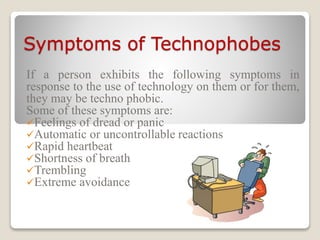
If a person exhibits the following symptoms in
response to the use of technology on them or for them,
they may be techno phobic.
Some of these symptoms are:
Feelings of dread or panic
Automatic or uncontrollable reactions
Rapid heartbeat
Shortness of breath
Trembling
Extreme avoidance
Technophobia can be caused due to general anxiety or fear
about science or mathematical problems.
Technophobia is different from most other specific phobias in
that; the phobic is mainly ignorant and does not welcome
change.
They simply do not understand technology as a result of which
they not only fear it but also shun it.
 Many tend to hate devices, computers and gadgets simply
because they are not used to them.
Naturally, the fear of technology is more prevalent in
the older generations who did not grow up with
computers, complicated acronyms or digital games.
Often, the younger generation tries to teach them to
the older people, who might not like this fact.
This leads to damaged ego and self-esteem which
build up and keep fueling self doubts.
There are many different types of treatment
for phobias, and technophobia is no exception.
The most common treatments for
technophobia include;
1.Cognitive behavioral therapy
2.Exposure therapy
3.Anti-anxiety medications
Cognitive Behavioral Therapy (CBT) for
technophobia generally consists of several one on one visits
with a licensed therapist. In these sessions, the patient and
therapist talk about the patient's thoughts towards technology.
The therapist may try to elicit a shift in the patient's attitudes
over time, which may then lead to an acceptance of technology.
Exposure therapy for technophobia consists of
several weeks or months of gradually increasing exposure to
technology, led by a therapist, but controlled by the patient. For
example, one week the patient will simply be in a room with a
computer, but it is not even plugged in, while they talk with
their therapist. The next week, the computer may be on, and the
following week they may be able to use the mouse. Over time,
exposure therapy combined with structured courses on the use
of technology has been shown to be effective at treating
technophobia, especially in older patients.
There can be infinite uses of the computer
and of new age technology, but if the
teachers themselves are not able to bring it
into the classroom and make it work, then
it fails.

Technophobia

  • 2.
    Introduction  Technophobia isthe constant and persistent fear of technology and, in greater depth, is defined as “the feeling of severe anxiety associated with using anything technologically advanced”.  The word technophobia is derived from greek ‘techne’ meaning “art, skill or craft” and phobos meaning “fear or aversion”.
  • 3.
    Symptoms of Technophobes Ifa person exhibits the following symptoms in response to the use of technology on them or for them, they may be techno phobic. Some of these symptoms are: Feelings of dread or panic Automatic or uncontrollable reactions Rapid heartbeat Shortness of breath Trembling Extreme avoidance
  • 4.
    Technophobia can becaused due to general anxiety or fear about science or mathematical problems. Technophobia is different from most other specific phobias in that; the phobic is mainly ignorant and does not welcome change. They simply do not understand technology as a result of which they not only fear it but also shun it.  Many tend to hate devices, computers and gadgets simply because they are not used to them.
  • 5.
    Naturally, the fearof technology is more prevalent in the older generations who did not grow up with computers, complicated acronyms or digital games. Often, the younger generation tries to teach them to the older people, who might not like this fact. This leads to damaged ego and self-esteem which build up and keep fueling self doubts.
  • 6.
    There are manydifferent types of treatment for phobias, and technophobia is no exception. The most common treatments for technophobia include; 1.Cognitive behavioral therapy 2.Exposure therapy 3.Anti-anxiety medications
  • 7.
    Cognitive Behavioral Therapy(CBT) for technophobia generally consists of several one on one visits with a licensed therapist. In these sessions, the patient and therapist talk about the patient's thoughts towards technology. The therapist may try to elicit a shift in the patient's attitudes over time, which may then lead to an acceptance of technology. Exposure therapy for technophobia consists of several weeks or months of gradually increasing exposure to technology, led by a therapist, but controlled by the patient. For example, one week the patient will simply be in a room with a computer, but it is not even plugged in, while they talk with their therapist. The next week, the computer may be on, and the following week they may be able to use the mouse. Over time, exposure therapy combined with structured courses on the use of technology has been shown to be effective at treating technophobia, especially in older patients.
  • 8.
    There can beinfinite uses of the computer and of new age technology, but if the teachers themselves are not able to bring it into the classroom and make it work, then it fails.