HOW TO TEACH
MILLENNIALS
FROM THE PERSPECTIVE OF A MILLENNIAL
Po-Hao Chen, MD MBA
4th year Resident
Diagnostic Radiology and Nuclear Medicine
Hospital of the University of Pennsylvania
Disclosure
• I have no financial conflict of interest regarding material
presented.
• BUT – I am a member of the millennial generation.
Consider this a warning.
Goals and Objectives
• Describe what makes the "millennial" generation
unique
• Detail the discrepancy between traditional and modern
learning methods
• Elucidate the role of technology in teaching members
of the “millennial” generation.
Context
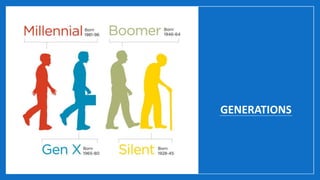
GENERATIONS
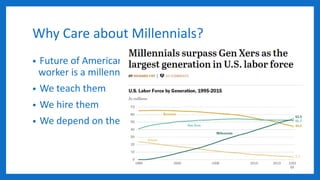
Why Care about Millennials?
• Future of American economy – One in three American
worker is a millennial.
• We teach them
• We hire them
• We depend on them
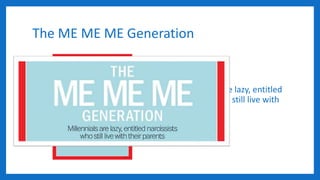
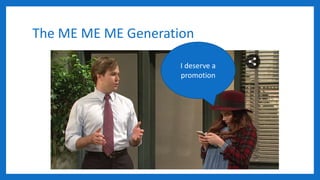
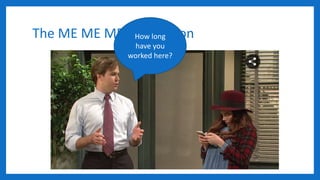
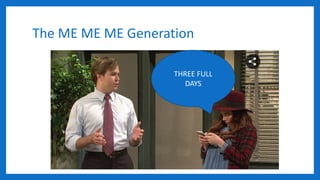
The ME ME ME Generation
• “Millennials are lazy, entitled
narcissists who still live with
their parents.”
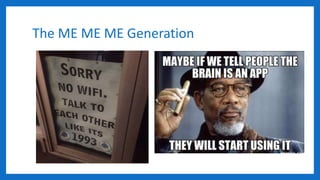
The ME ME ME Generation
I deserve a
promotion
The ME ME ME GenerationHow long
have you
worked here?
The ME ME ME Generation
THREE FULL
DAYS
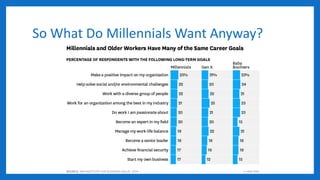
So What Do Millennials Want Anyway?
How Hard Do Millennials Work?
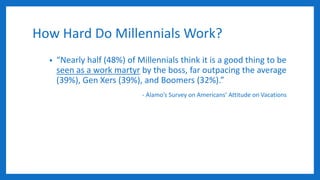
• “Nearly half (48%) of Millennials think it is a good thing to be
seen as a work martyr by the boss, far outpacing the average
(39%), Gen Xers (39%), and Boomers (32%).”
- Alamo’s Survey on Americans’ Attitude on Vacations
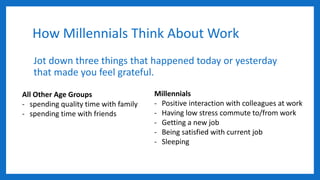
How Millennials Think About Work
Jot down three things that happened today or yesterday
that made you feel grateful.
All Other Age Groups
- spending quality time with family
- spending time with friends
Millennials
- Positive interaction with colleagues at work
- Having low stress commute to/from work
- Getting a new job
- Being satisfied with current job
- Sleeping
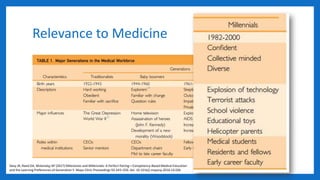
Relevance to Medicine
Desy JR, Reed DA, Wolanskyj AP (2017) Milestones and Millennials: A Perfect Pairing—Competency-Based Medical Education
and the Learning Preferences of Generation Y. Mayo Clinic Proceedings 92:243–250. doi: 10.1016/j.mayocp.2016.10.026
Information Abundance
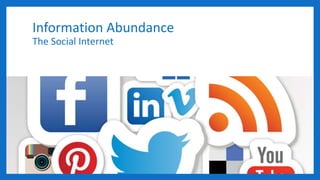
• The social internet
• Immediate feedback
• Contrast with Medical Technology
Information Abundance
The Social Internet
Information Abundance
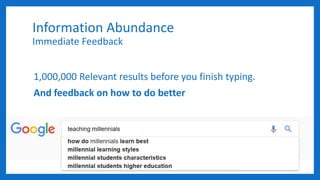
Immediate Feedback
1,000,000 Relevant results before you finish typing.
And feedback on how to do better
Relevance to Medicine
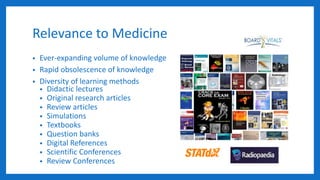
• Ever-expanding volume of knowledge
• Rapid obsolescence of knowledge
• Diversity of learning methods
• Didactic lectures
• Original research articles
• Review articles
• Simulations
• Textbooks
• Question banks
• Digital References
• Scientific Conferences
• Review Conferences
Top 5 Ways to Engage the
Millennial Generation
1. Set Specific Goals
• Learning objectives
• Specific teaching points
• Question and answer format
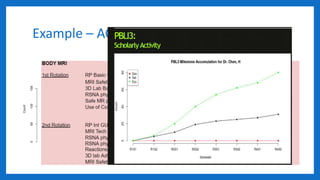
Example – ACGME Milestone
2. Emphasize Relevance
• Millennials are expert Googlers – easy access to
information
• Value of Information:
• Application to case at hand
• Validation of knowledge
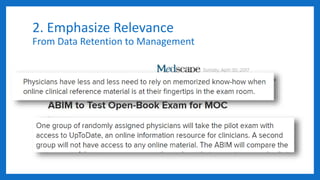
“… millennial generation Web searchers proceed erratically through an
information search process, make only a limited attempt to evaluate the quality or
validity of information gathered.”
Taylor A. A study of the information search behaviour of the millennial generation. Information Research, 2012
2. Emphasize Relevance
From Data Retention to Management
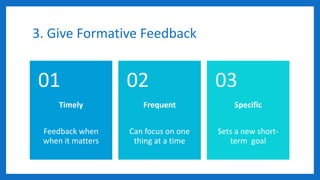
3. Give Formative Feedback
Timely
Feedback when
when it matters
01
Frequent
Can focus on one
thing at a time
02
Specific
Sets a new short-
term goal
03
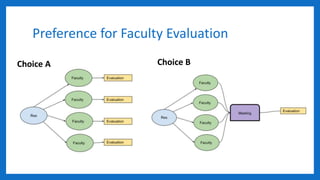
Preference for Faculty Evaluation
Choice A Choice B
Comments
I don't care either way. While I am pro feedback in general, I
think the daily interactions we have with the attendings is
actually the best and most important opportunity for
feedback and that these "evaluations" are just a formality. I
favor encouraging attendings to give real-time, face-to-face
feedback on a daily basis. It doesn't have to be a sit down
formal thing but instead a few minutes here and there to say
things like: try to be consistent with your search pattern, be
careful with your wording of this sort of finding in your
reports, you're doing a great job making the findings and now
I want you to work on honing your own differential diagnoses,
you're doing a really nice job overall, etc.
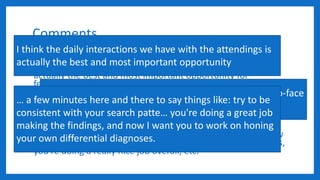
I think the daily interactions we have with the attendings is
actually the best and most important opportunity
I favor encouraging attendings to give real-time, face-to-face
feedback on a daily basis.
… a few minutes here and there to say things like: try to be
consistent with your search patte… you're doing a great job
making the findings, and now I want you to work on honing
your own differential diagnoses.
4. Encourage Self-Directed Learning
• Fund of knowledge
• Reading
• Question bank
• Academic time
• Scientific Research
• Quality Improvement
• Innovation
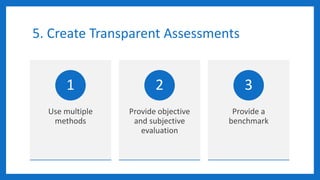
5. Create Transparent Assessments
Use multiple
methods
1
Provide objective
and subjective
evaluation
2
Provide a
benchmark
3
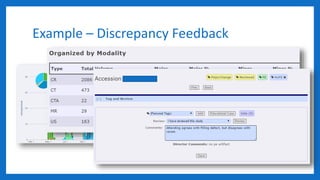
Example – Discrepancy Feedback
Chen PH, Chen YJ, Cook TS. Capricorn–A Web-Based Automatic Case Log and Volume Analytics for Diagnostic Radiology Residents. Academic Radiology. 2015 Oct;22(10):1242–51.
What Hasn’t Changed About
Teaching Millennials
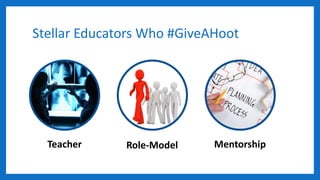
Stellar Educators Who #GiveAHoot
Role-Model MentorshipTeacher
Take Home Points
• Millennial generation grew up with an abundance of information and
technology.
• Trainees can benefit from an emphasis on information relevance, the
transparency of assessment, and the direct implementation of goal-setting.
• Finding time and space for self-directed learning and frequent feedback can help
create personalized career development.
• Despite the ubiquity of “new-age” learning technology, traditional mentorship
and role-models have not changed. In fact, they are all the more important
today.
• Technology is a medium to deliver education, not an end to itself.
References
• 1. Desy JR, Reed DA, Wolanskyj AP. Milestones and Millennials: A Perfect Pairing—Competency-Based Medical
Education and the Learning Preferences of Generation Y. Mayo Clinic Proceedings. 2017 Feb;92(2):243–50.
• 2. Next Year Millennials Will Become the Majority of the Workforce [Internet]. [cited 2017 Mar 29]. Available
from: https://www.panopto.com/blog/next-year-millennials-will-become-the-majority-of-the-workforce-what-
does-that-mean-for-employee-training-2/
• 3. Rise of the Millennials – Why They Know So Much…Yet Understand So Little [Internet]. [cited 2017 Mar 29].
Available from: https://realtruth.org/articles/080804-002-society.html
• 4. The Challenges and Opportunities of Teaching “Generation Y” [Internet]. [cited 2017 Mar 29]. Available from:
https://www.ncbi.nlm.nih.gov/pmc/articles/PMC3244307/
• 5. When Faculty Teach Millennials: The Odd Couple in Academia | Center for Teaching & Learning [Internet]. [cited
2017 Mar 29]. Available from: http://teaching.berkeley.edu/news/when-faculty-teach-millennials-odd-couple-
academia

Teaching millennials from perspective of a millennial

  • 1.
    HOW TO TEACH MILLENNIALS FROMTHE PERSPECTIVE OF A MILLENNIAL Po-Hao Chen, MD MBA 4th year Resident Diagnostic Radiology and Nuclear Medicine Hospital of the University of Pennsylvania
  • 2.
    Disclosure • I haveno financial conflict of interest regarding material presented. • BUT – I am a member of the millennial generation. Consider this a warning.
  • 3.
    Goals and Objectives •Describe what makes the "millennial" generation unique • Detail the discrepancy between traditional and modern learning methods • Elucidate the role of technology in teaching members of the “millennial” generation.
  • 4.
  • 5.
  • 6.
    Why Care aboutMillennials? • Future of American economy – One in three American worker is a millennial. • We teach them • We hire them • We depend on them
  • 7.
    The ME MEME Generation • “Millennials are lazy, entitled narcissists who still live with their parents.”
  • 8.
    The ME MEME Generation
  • 9.
    The ME MEME Generation I deserve a promotion
  • 10.
    The ME MEME GenerationHow long have you worked here?
  • 11.
    The ME MEME Generation THREE FULL DAYS
  • 12.
    So What DoMillennials Want Anyway?
  • 13.
    How Hard DoMillennials Work? • “Nearly half (48%) of Millennials think it is a good thing to be seen as a work martyr by the boss, far outpacing the average (39%), Gen Xers (39%), and Boomers (32%).” - Alamo’s Survey on Americans’ Attitude on Vacations
  • 14.
  • 15.
    How Millennials ThinkAbout Work Jot down three things that happened today or yesterday that made you feel grateful. All Other Age Groups - spending quality time with family - spending time with friends Millennials - Positive interaction with colleagues at work - Having low stress commute to/from work - Getting a new job - Being satisfied with current job - Sleeping
  • 16.
    Relevance to Medicine DesyJR, Reed DA, Wolanskyj AP (2017) Milestones and Millennials: A Perfect Pairing—Competency-Based Medical Education and the Learning Preferences of Generation Y. Mayo Clinic Proceedings 92:243–250. doi: 10.1016/j.mayocp.2016.10.026
  • 17.
    Information Abundance • Thesocial internet • Immediate feedback • Contrast with Medical Technology
  • 18.
  • 19.
    Information Abundance Immediate Feedback 1,000,000Relevant results before you finish typing. And feedback on how to do better
  • 20.
    Relevance to Medicine •Ever-expanding volume of knowledge • Rapid obsolescence of knowledge • Diversity of learning methods • Didactic lectures • Original research articles • Review articles • Simulations • Textbooks • Question banks • Digital References • Scientific Conferences • Review Conferences
  • 21.
    Top 5 Waysto Engage the Millennial Generation
  • 22.
    1. Set SpecificGoals • Learning objectives • Specific teaching points • Question and answer format
  • 23.
  • 24.
    2. Emphasize Relevance •Millennials are expert Googlers – easy access to information • Value of Information: • Application to case at hand • Validation of knowledge “… millennial generation Web searchers proceed erratically through an information search process, make only a limited attempt to evaluate the quality or validity of information gathered.” Taylor A. A study of the information search behaviour of the millennial generation. Information Research, 2012
  • 25.
    2. Emphasize Relevance FromData Retention to Management
  • 26.
    3. Give FormativeFeedback Timely Feedback when when it matters 01 Frequent Can focus on one thing at a time 02 Specific Sets a new short- term goal 03
  • 27.
    Preference for FacultyEvaluation Choice A Choice B
  • 28.
    Comments I don't careeither way. While I am pro feedback in general, I think the daily interactions we have with the attendings is actually the best and most important opportunity for feedback and that these "evaluations" are just a formality. I favor encouraging attendings to give real-time, face-to-face feedback on a daily basis. It doesn't have to be a sit down formal thing but instead a few minutes here and there to say things like: try to be consistent with your search pattern, be careful with your wording of this sort of finding in your reports, you're doing a great job making the findings and now I want you to work on honing your own differential diagnoses, you're doing a really nice job overall, etc. I think the daily interactions we have with the attendings is actually the best and most important opportunity I favor encouraging attendings to give real-time, face-to-face feedback on a daily basis. … a few minutes here and there to say things like: try to be consistent with your search patte… you're doing a great job making the findings, and now I want you to work on honing your own differential diagnoses.
  • 29.
    4. Encourage Self-DirectedLearning • Fund of knowledge • Reading • Question bank • Academic time • Scientific Research • Quality Improvement • Innovation
  • 30.
    5. Create TransparentAssessments Use multiple methods 1 Provide objective and subjective evaluation 2 Provide a benchmark 3
  • 31.
    Example – DiscrepancyFeedback Chen PH, Chen YJ, Cook TS. Capricorn–A Web-Based Automatic Case Log and Volume Analytics for Diagnostic Radiology Residents. Academic Radiology. 2015 Oct;22(10):1242–51.
  • 32.
    What Hasn’t ChangedAbout Teaching Millennials
  • 33.
    Stellar Educators Who#GiveAHoot Role-Model MentorshipTeacher
  • 34.
    Take Home Points •Millennial generation grew up with an abundance of information and technology. • Trainees can benefit from an emphasis on information relevance, the transparency of assessment, and the direct implementation of goal-setting. • Finding time and space for self-directed learning and frequent feedback can help create personalized career development. • Despite the ubiquity of “new-age” learning technology, traditional mentorship and role-models have not changed. In fact, they are all the more important today. • Technology is a medium to deliver education, not an end to itself.
  • 35.
    References • 1. DesyJR, Reed DA, Wolanskyj AP. Milestones and Millennials: A Perfect Pairing—Competency-Based Medical Education and the Learning Preferences of Generation Y. Mayo Clinic Proceedings. 2017 Feb;92(2):243–50. • 2. Next Year Millennials Will Become the Majority of the Workforce [Internet]. [cited 2017 Mar 29]. Available from: https://www.panopto.com/blog/next-year-millennials-will-become-the-majority-of-the-workforce-what- does-that-mean-for-employee-training-2/ • 3. Rise of the Millennials – Why They Know So Much…Yet Understand So Little [Internet]. [cited 2017 Mar 29]. Available from: https://realtruth.org/articles/080804-002-society.html • 4. The Challenges and Opportunities of Teaching “Generation Y” [Internet]. [cited 2017 Mar 29]. Available from: https://www.ncbi.nlm.nih.gov/pmc/articles/PMC3244307/ • 5. When Faculty Teach Millennials: The Odd Couple in Academia | Center for Teaching & Learning [Internet]. [cited 2017 Mar 29]. Available from: http://teaching.berkeley.edu/news/when-faculty-teach-millennials-odd-couple- academia

Editor's Notes

  • #6 Millennial first mentioned: Strauss W, Howe N. Generations: the history of America’s future, 1584 to 2069. New York: Morrow; 1991
  • #8 The discussion surrounding Millennials generation is often emotionally charged, and the language dependent on who is writing and who the audience is. Here’s a TIME magazine article from 2013
  • #17 Desy JR, Reed DA, Wolanskyj AP (2017) Milestones and Millennials: A Perfect Pairing—Competency-Based Medical Education and the Learning Preferences of Generation Y. Mayo Clinic Proceedings 92:243–250. doi: 10.1016/j.mayocp.2016.10.026
  • #18 They’ve known no other way of retrieving information Millennials have specifically been raised on the social internet Millennials learned it when they knew no other way, and this has shaped them as a generation It’s not amazing It’s normal You should be surprised if that isn’t the case
  • #19 They’ve known no other way of retrieving information Millennials have specifically been raised on the social internet Millennials learned it when they knew no other way, and this has shaped them as a generation It’s not amazing It’s normal You should be surprised if that isn’t the case
  • #21 Disconnect with medical education. It is because the nature of the information is different.
  • #25 Provide the answer to important questions
  • #27 Unlike our predecessors, many millennials grow up receiving praise and recognition for their efforts. They are told they can be anything they want to be. Highly motivated by achievement and goal attainment. We don’t just want feedback. We crave for it. We want gentle feedbacks, but we want it frequently. It is the Radiology equivalent of the LIKE button, the bling of the smartphone, the “you might also try this” recommendation. Millennials do have short attention spans. It’s not necessarily a bad thing because it allows millennials to be more efficient at multitasking than their predecessors.
  • #28 “Which method of end-of-rotation evaluation do you prefer?” 36 out of 43 residents responded (84%) 14 of which included passionate comments. It was not until we read all the comments did we realize we haven’t been asking the right question at all.
  • #29 Timely, frequent, specific
  • #30 Next time you find your resident asking for academic time again and again – on the surface it might look like the guy just doesn’t want to work hard. Fits the stereotype. Ask your residents and fellows what they are doing. You’ll be surprised.
  • #32 Chen P-H, Chen YJ, Cook TS. Capricorn–A Web-Based Automatic Case Log and Volume Analytics for Diagnostic Radiology Residents. Academic Radiology. 2015 Oct;22(10):1242–51.
  • #33 Despite all the dramatic changes in technology and learning methods. Some things never change.
  • #34 That is – all of you! You offer something no amount of AI, database, or Facebook can ever replace. Your residents respect you, more than you think.