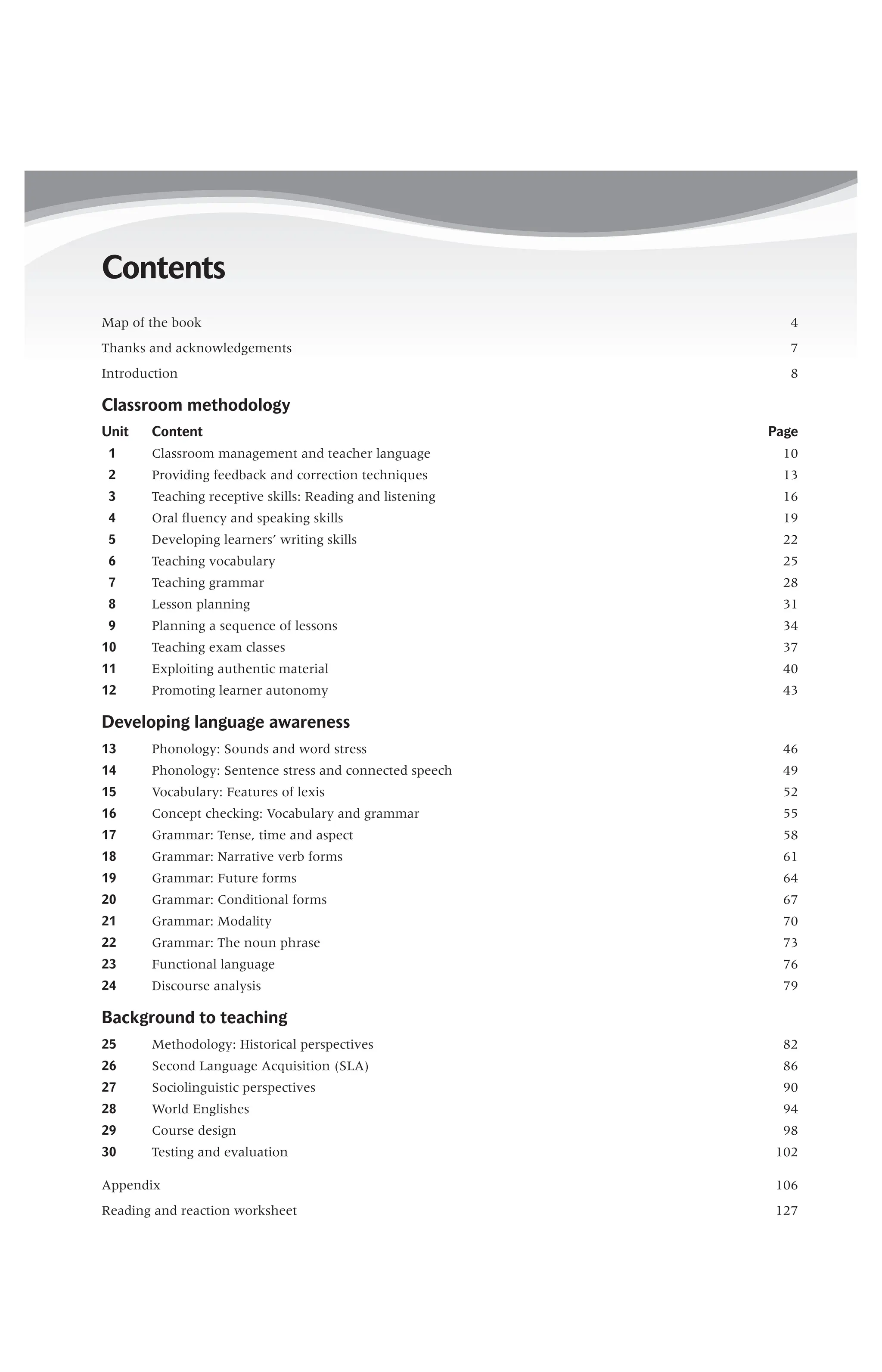
Contents
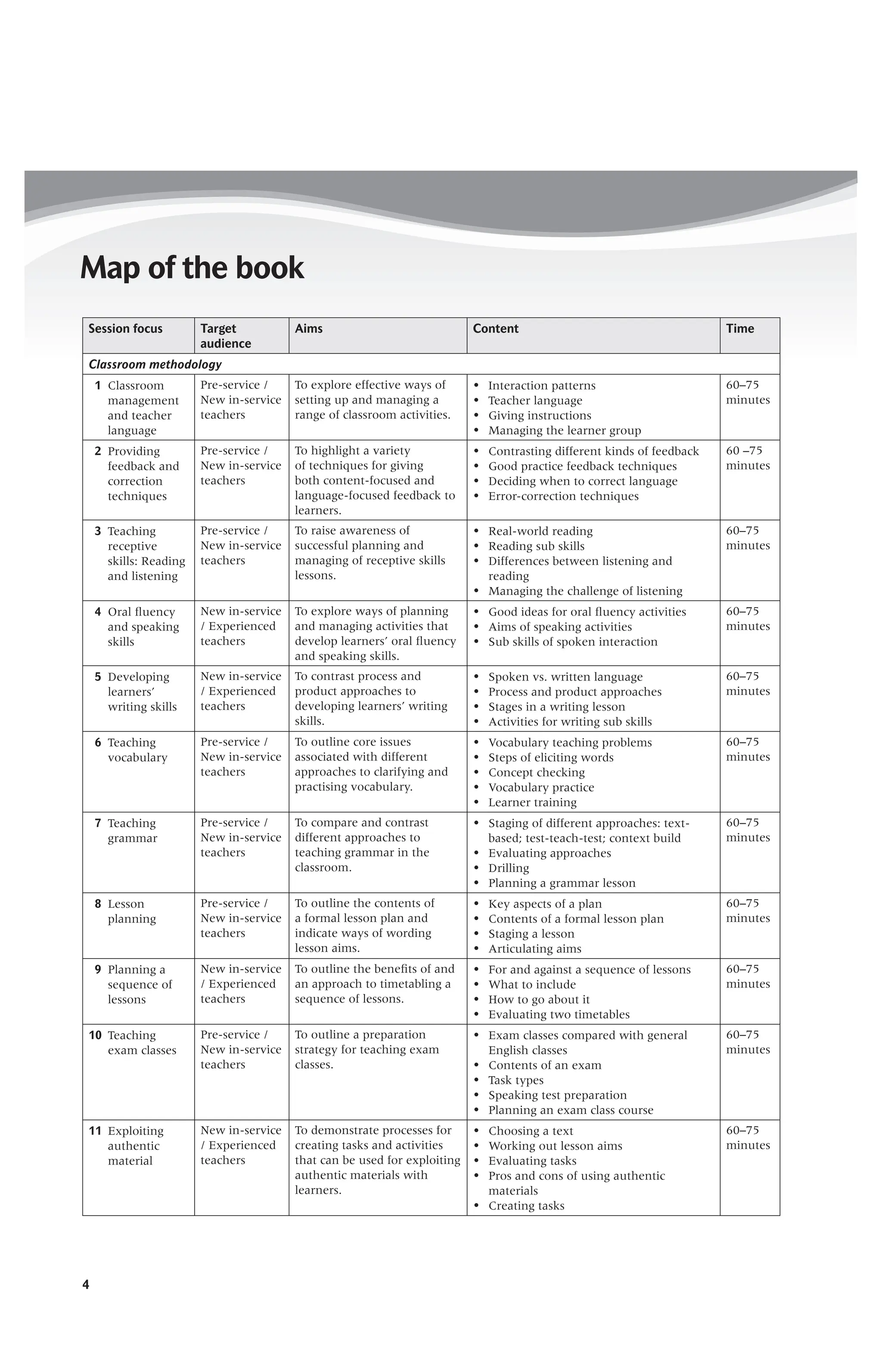
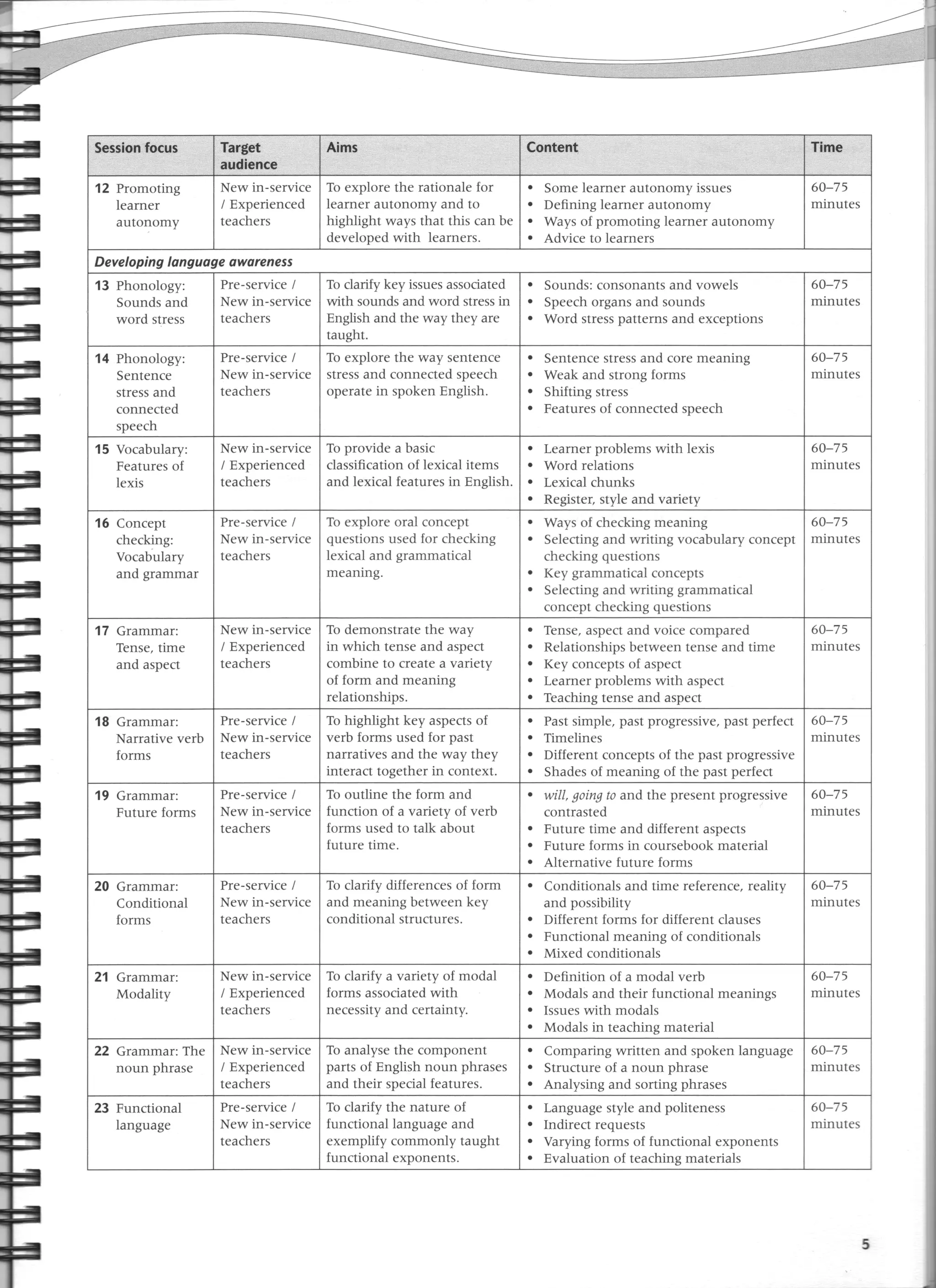
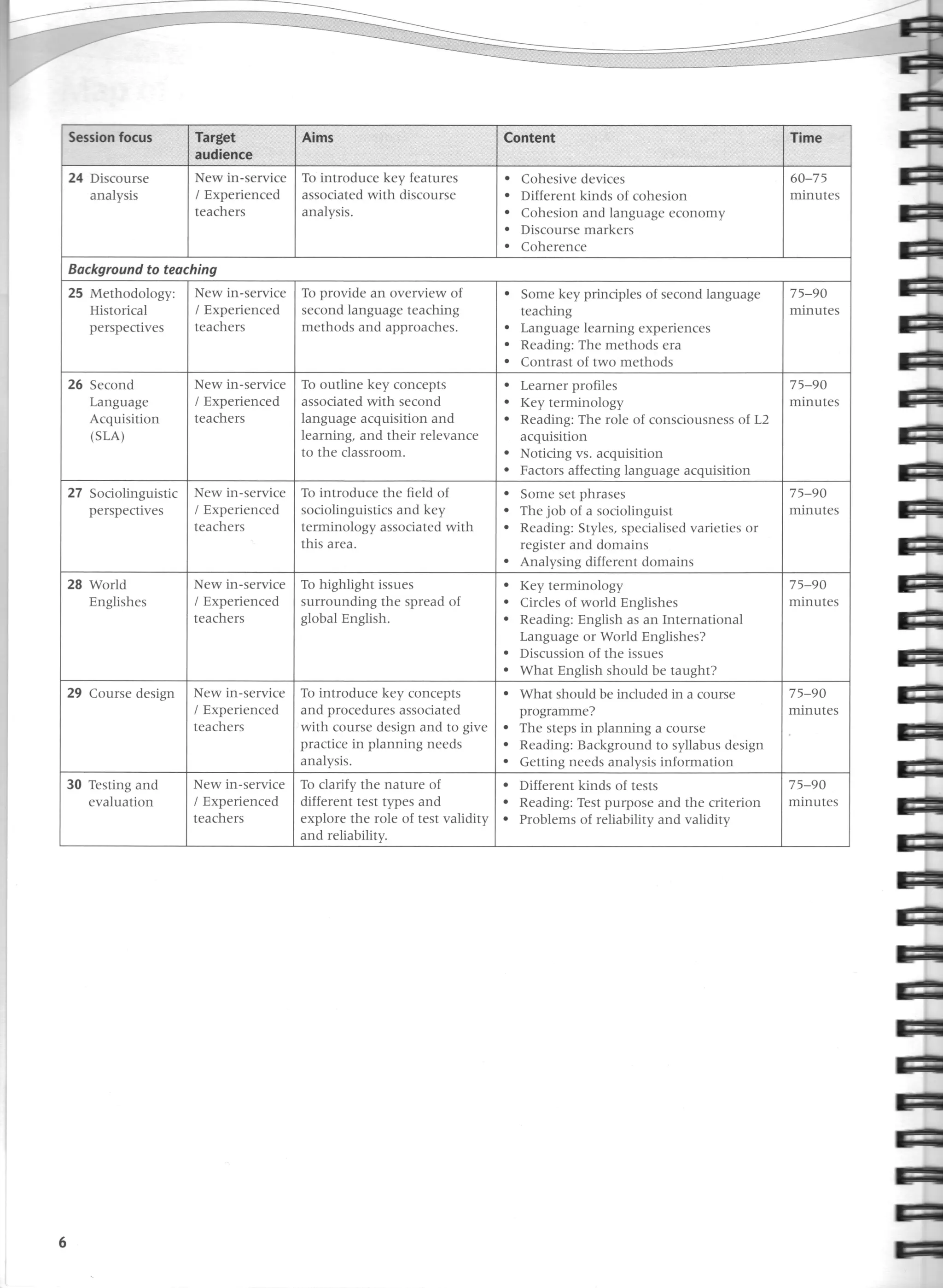
Map of thebook 4
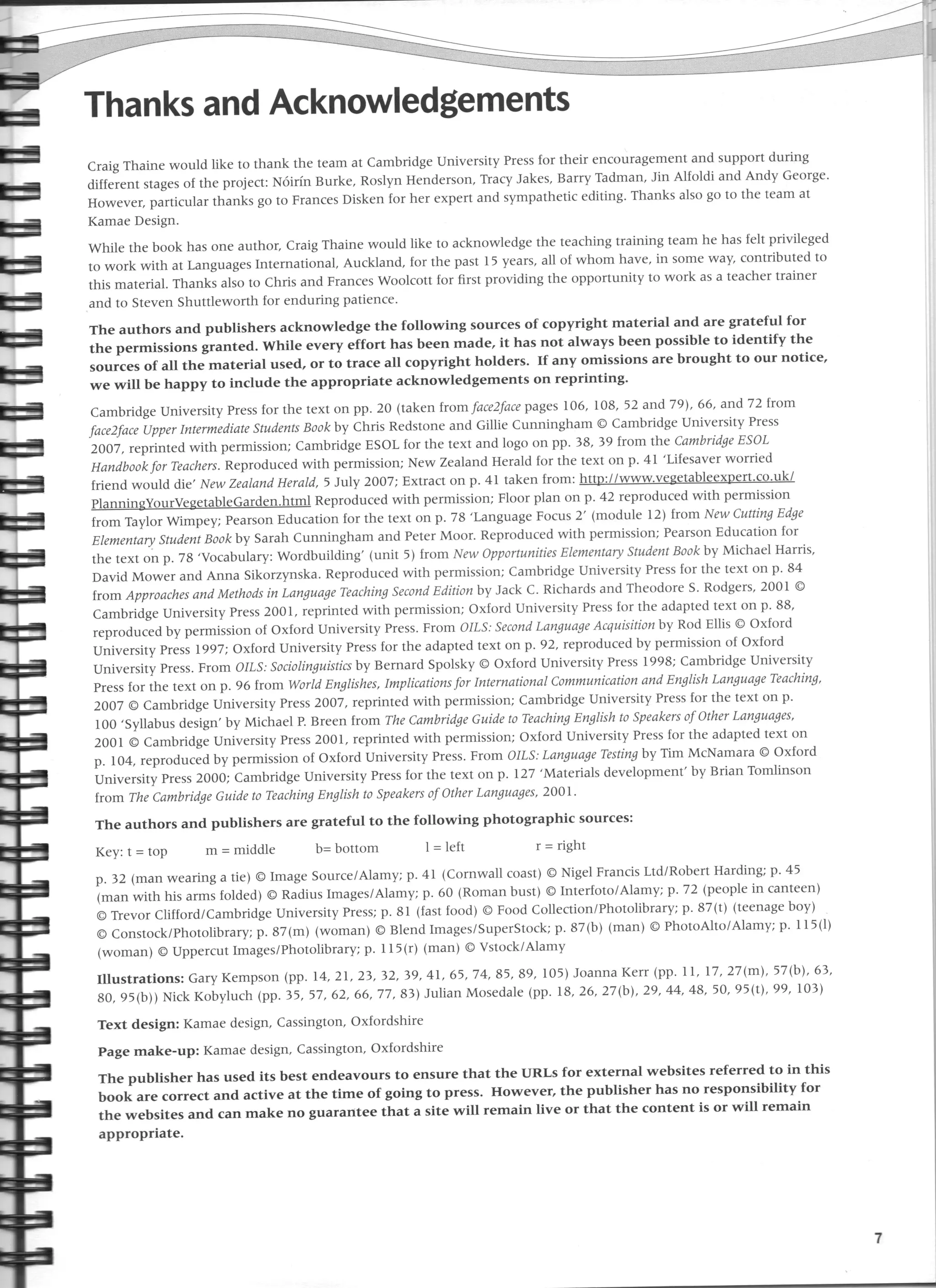
Thanks and acknowledgements 7
Introduction 8
Classroom methodology
Unit Content Page
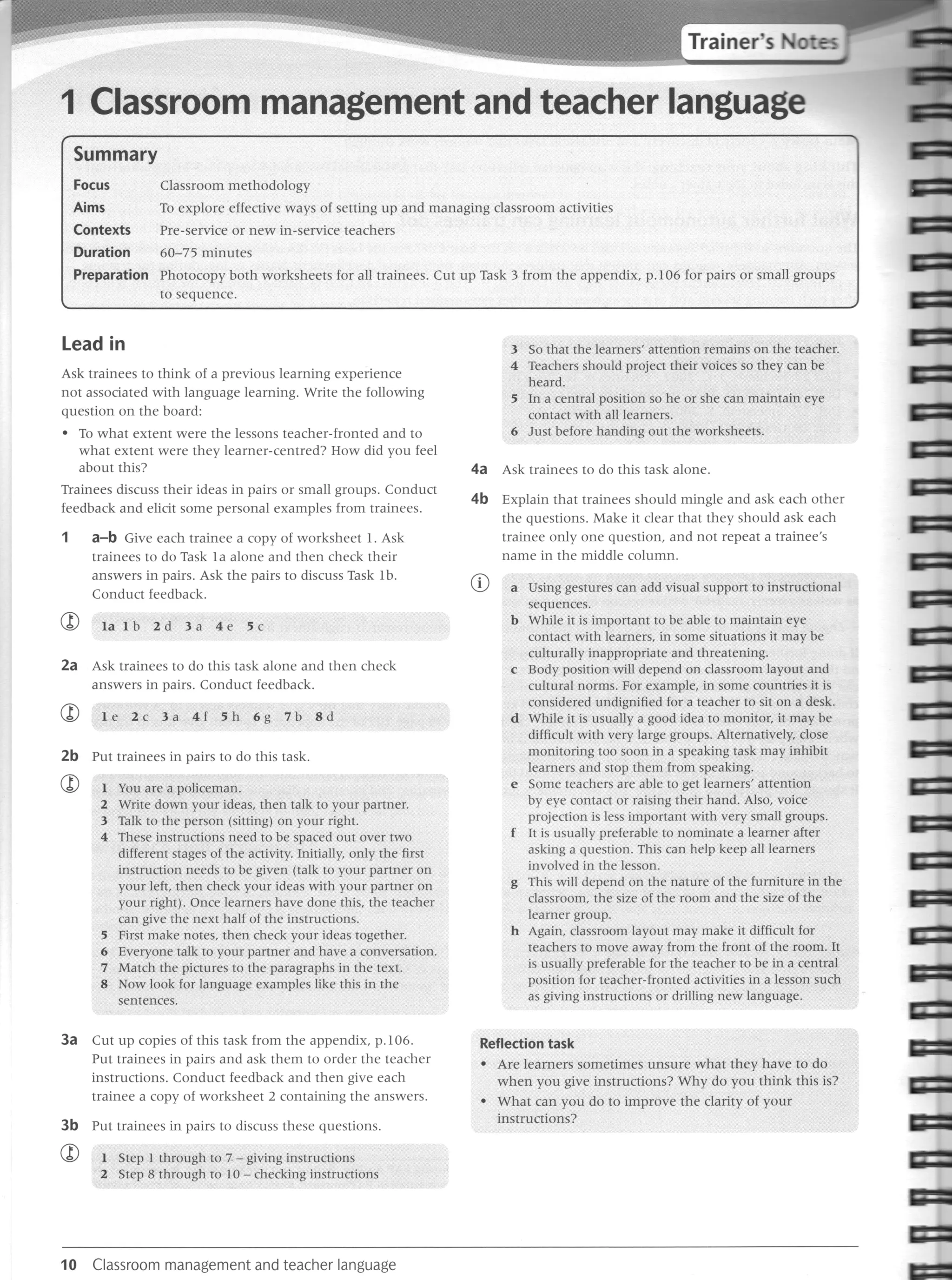
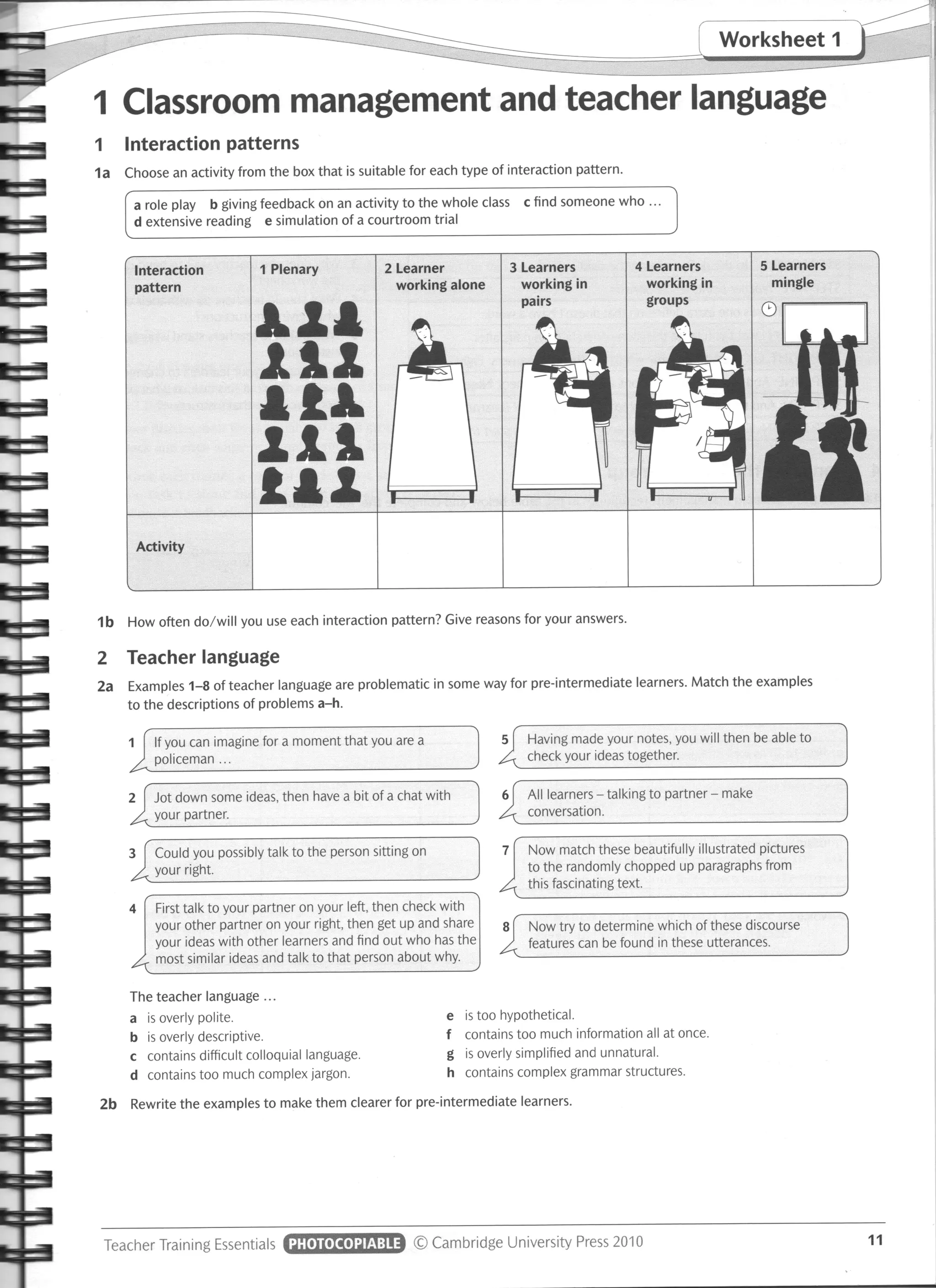
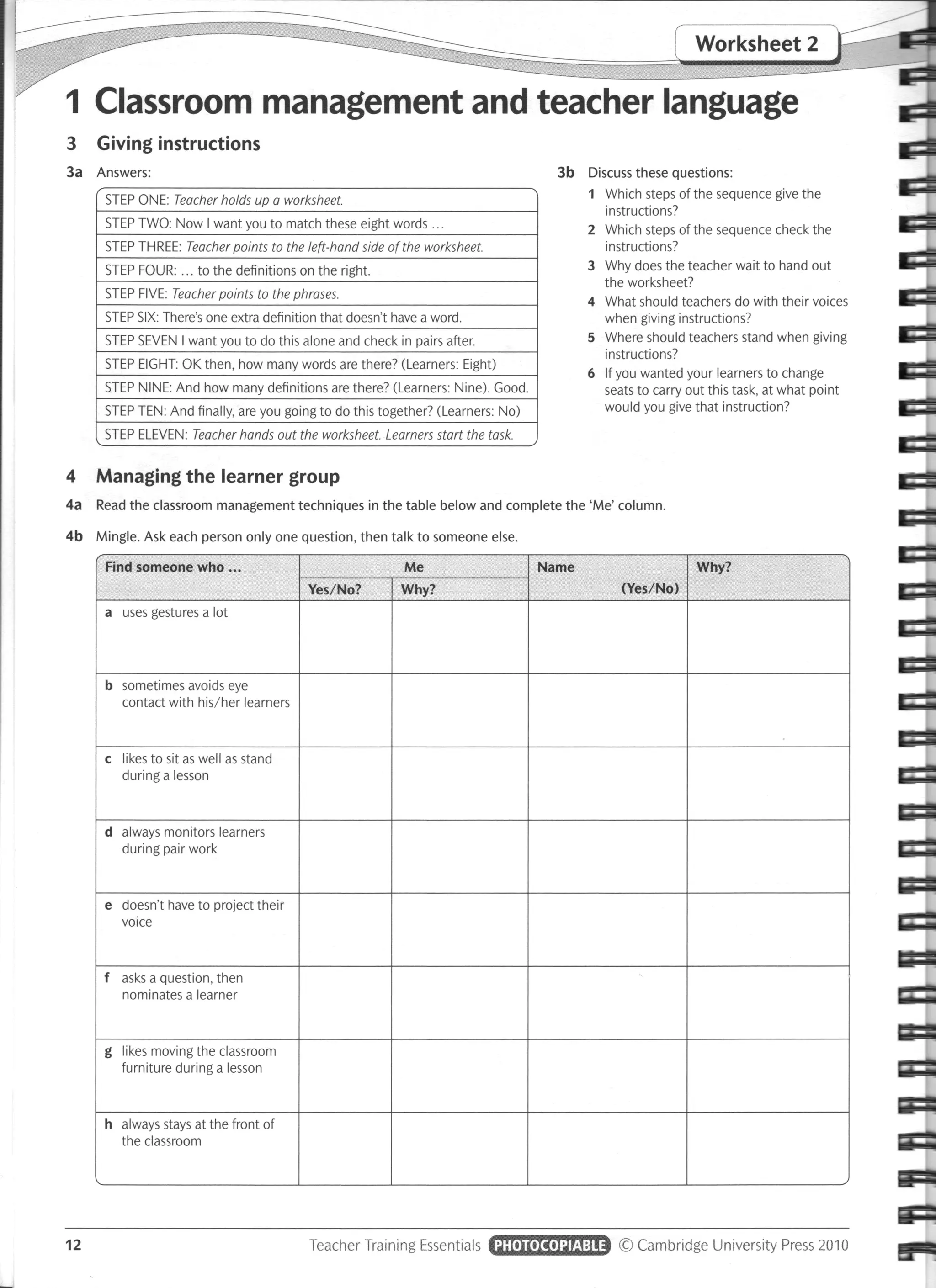
1 Classroom management and teacher language 10
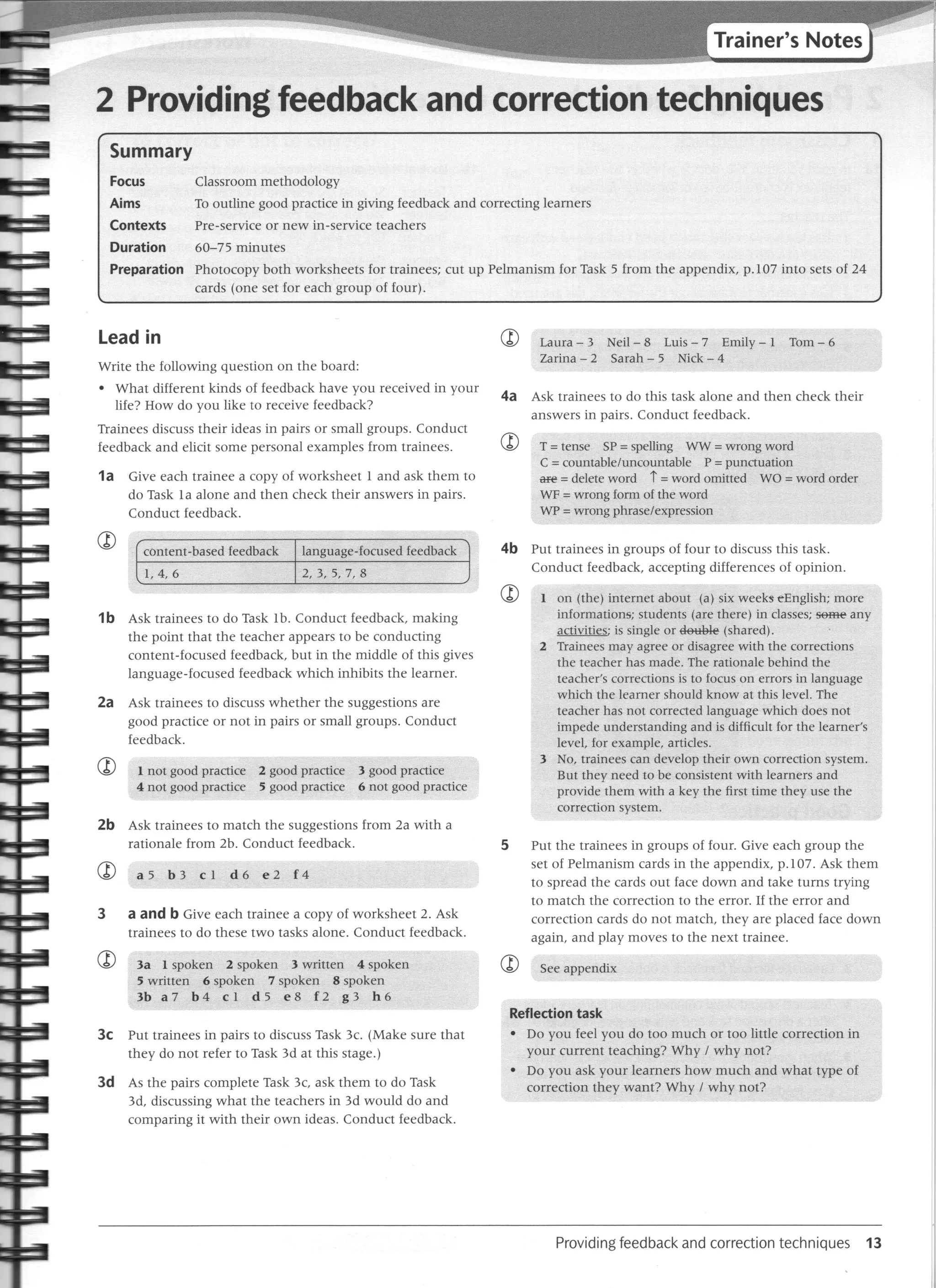
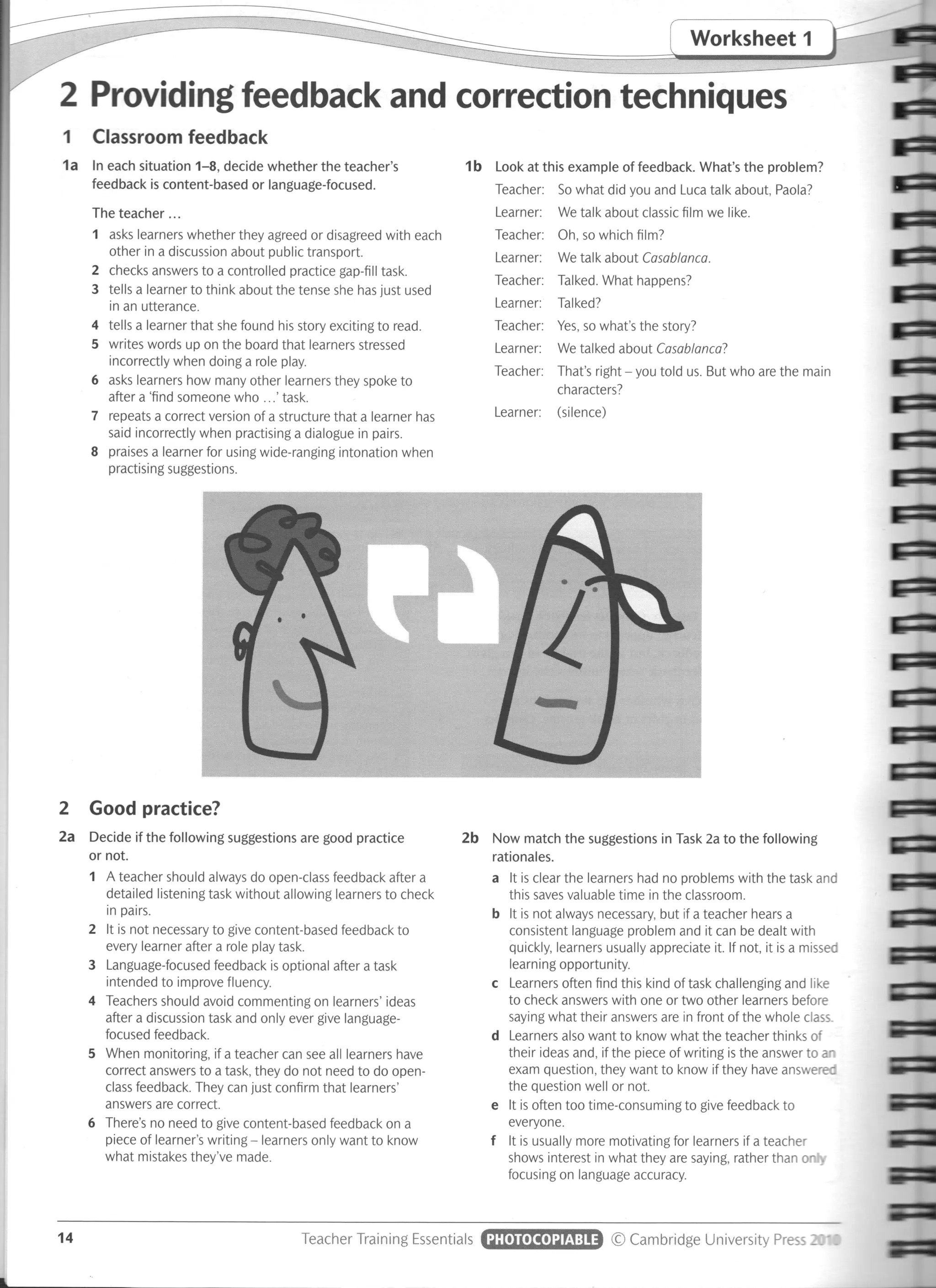
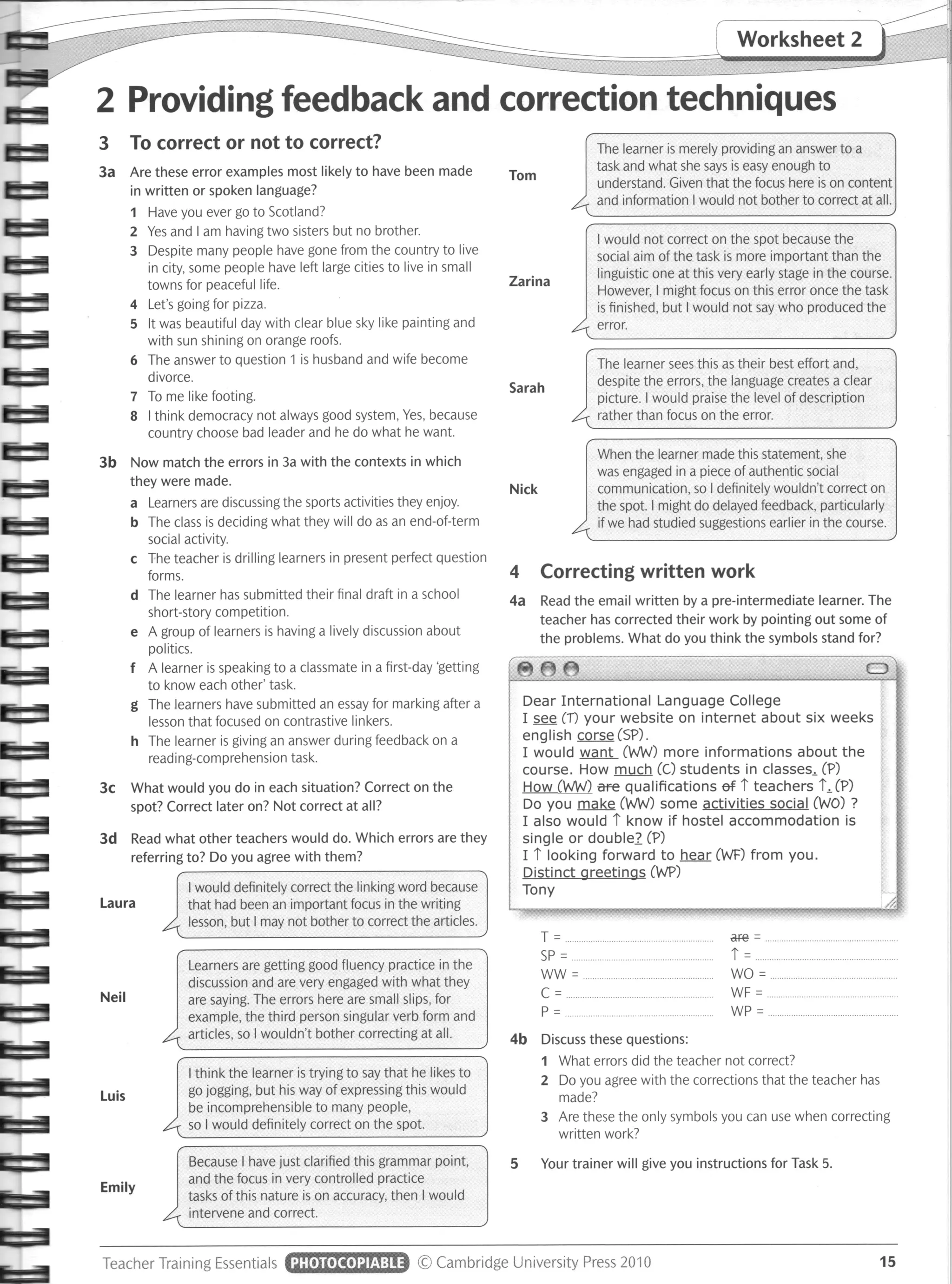
2 Providing feedback and correction techniques 13
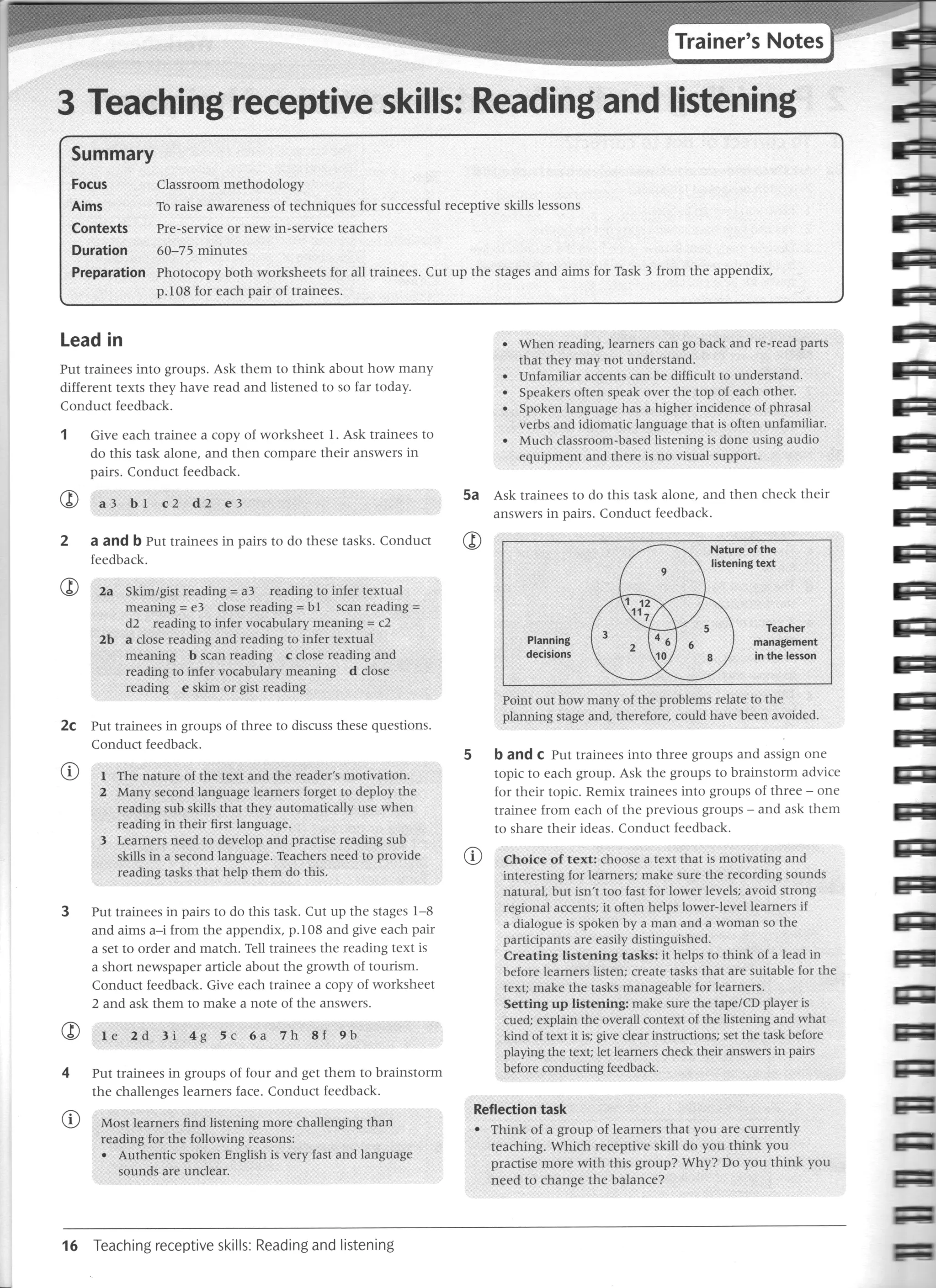
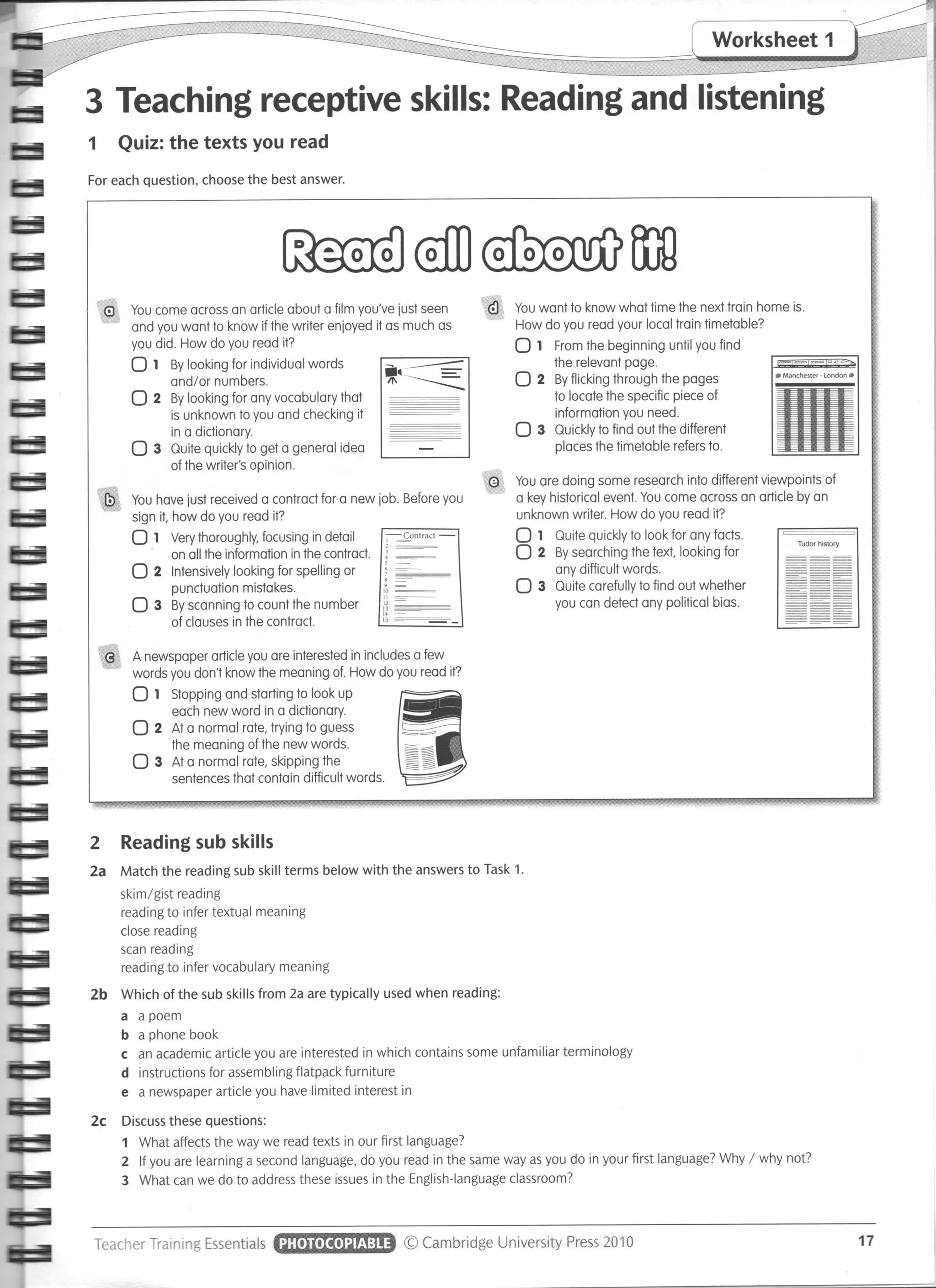
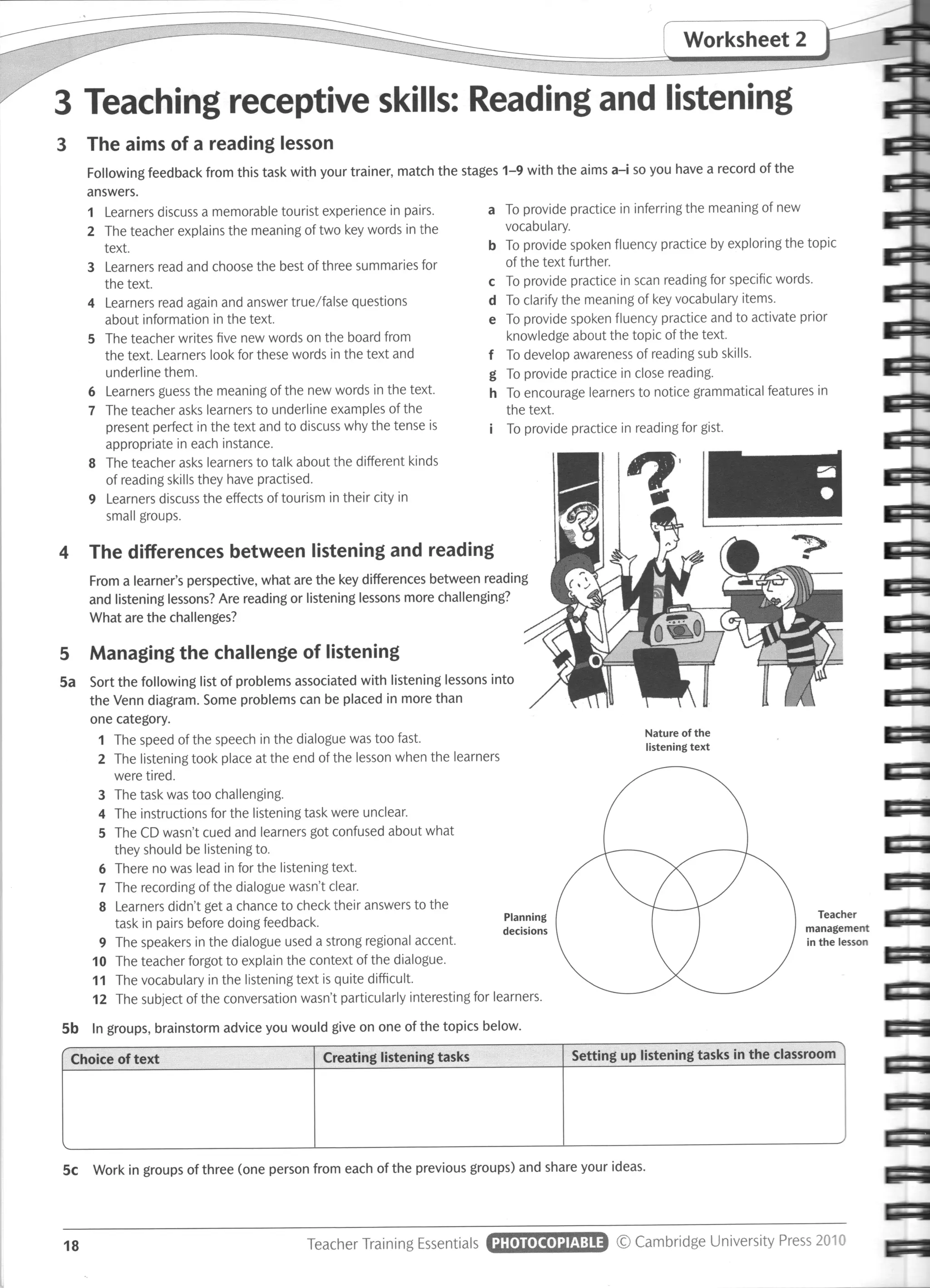
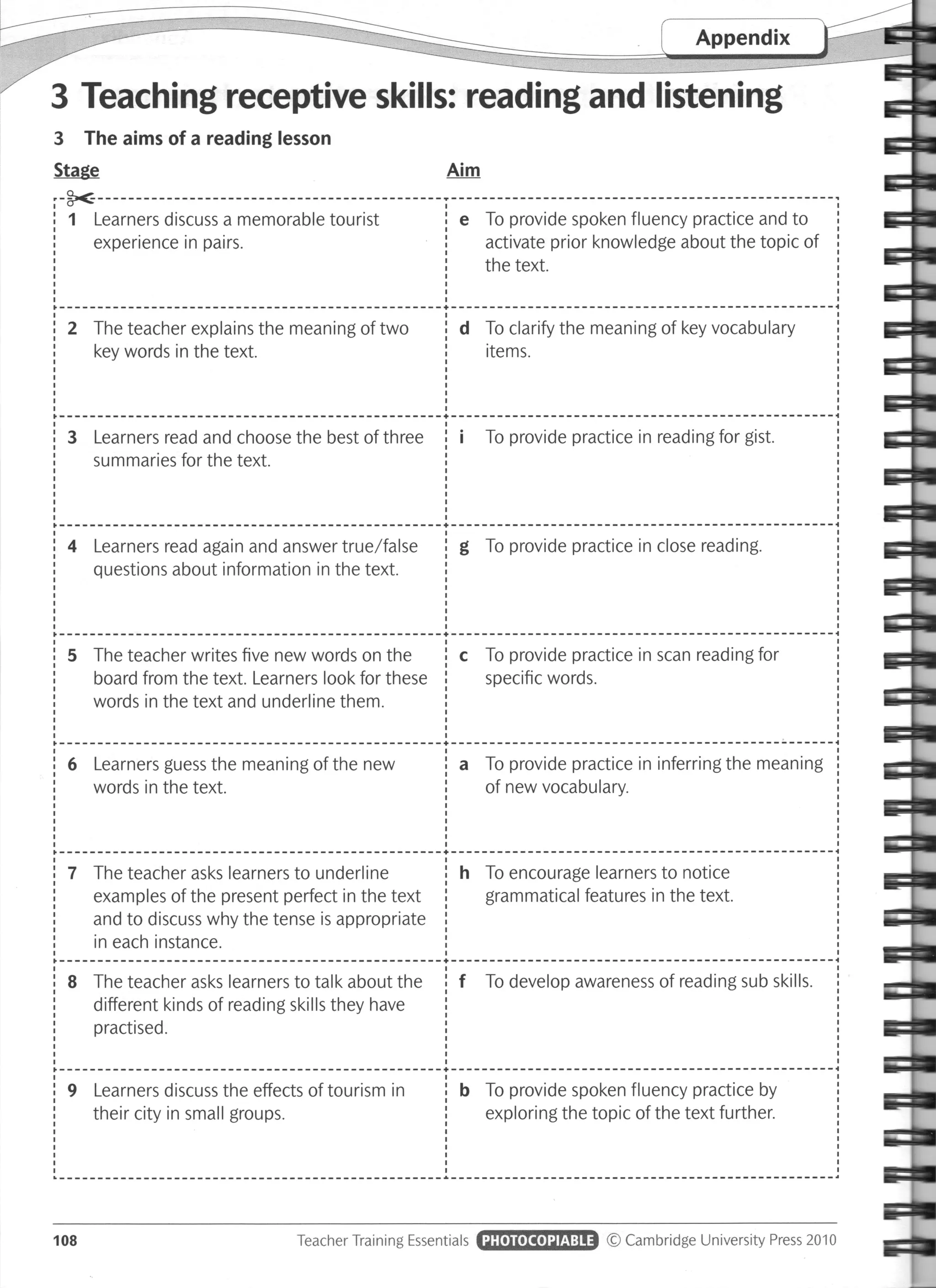
3 Teaching receptive skills: Reading and listening 16
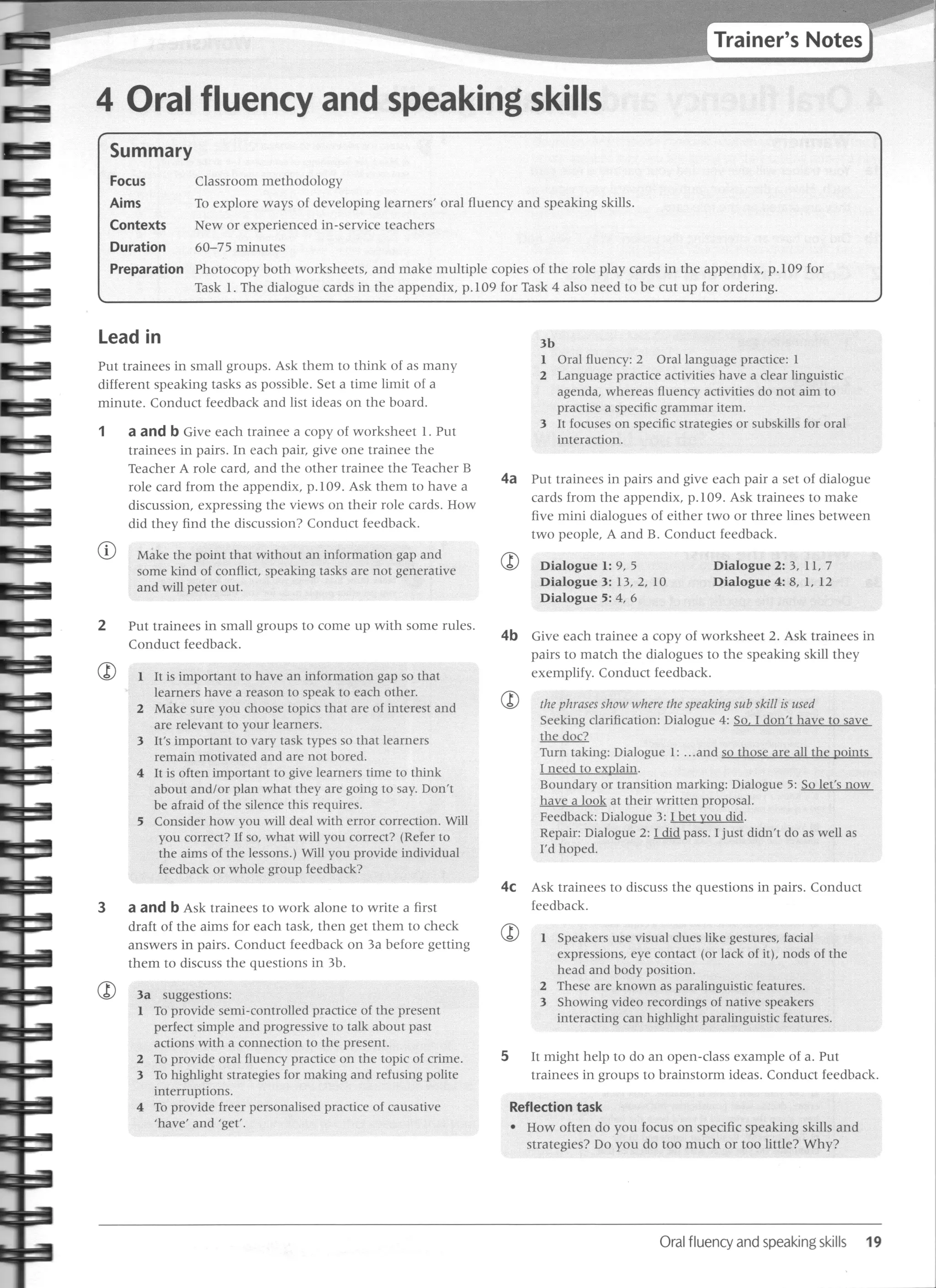
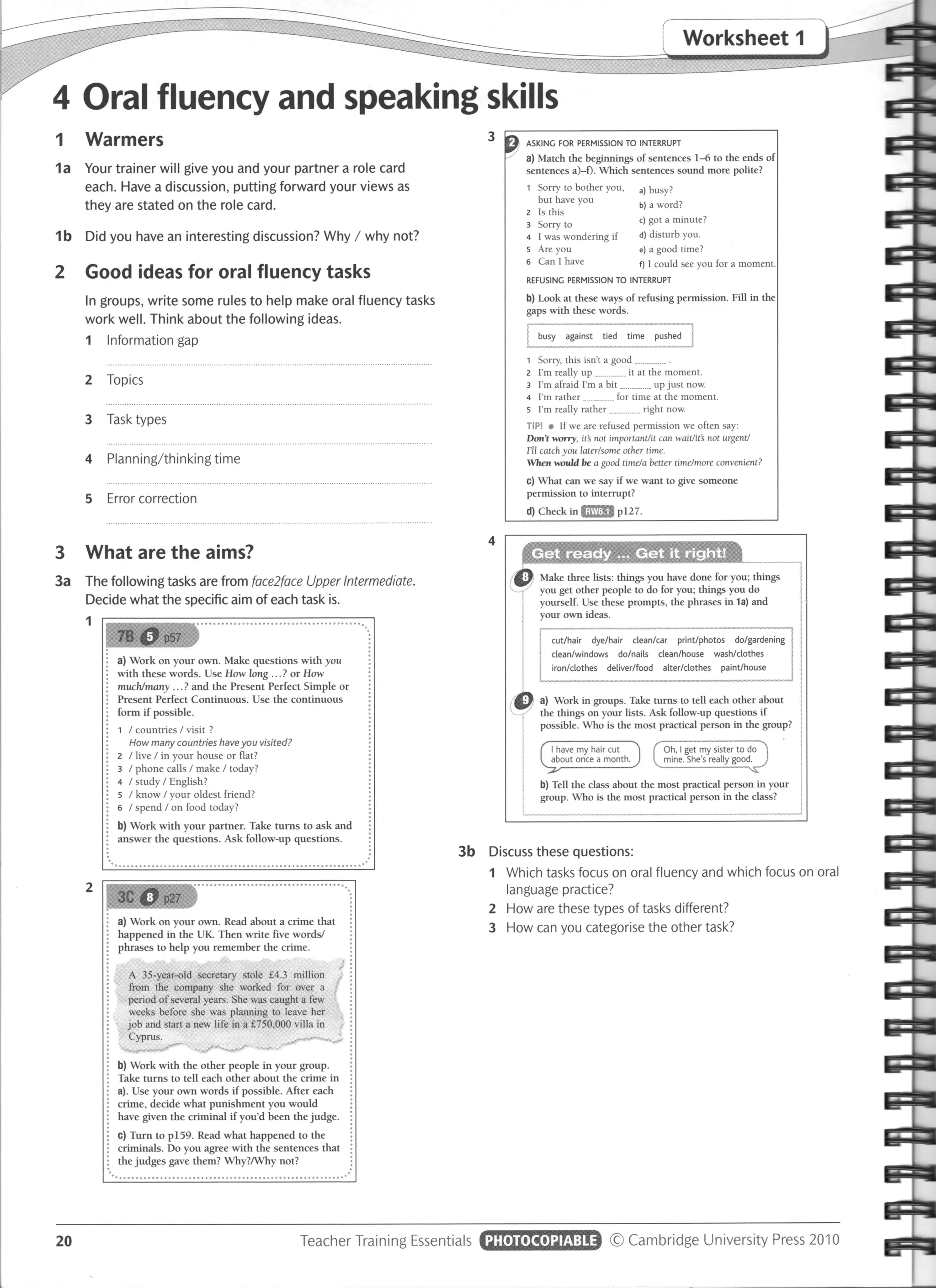
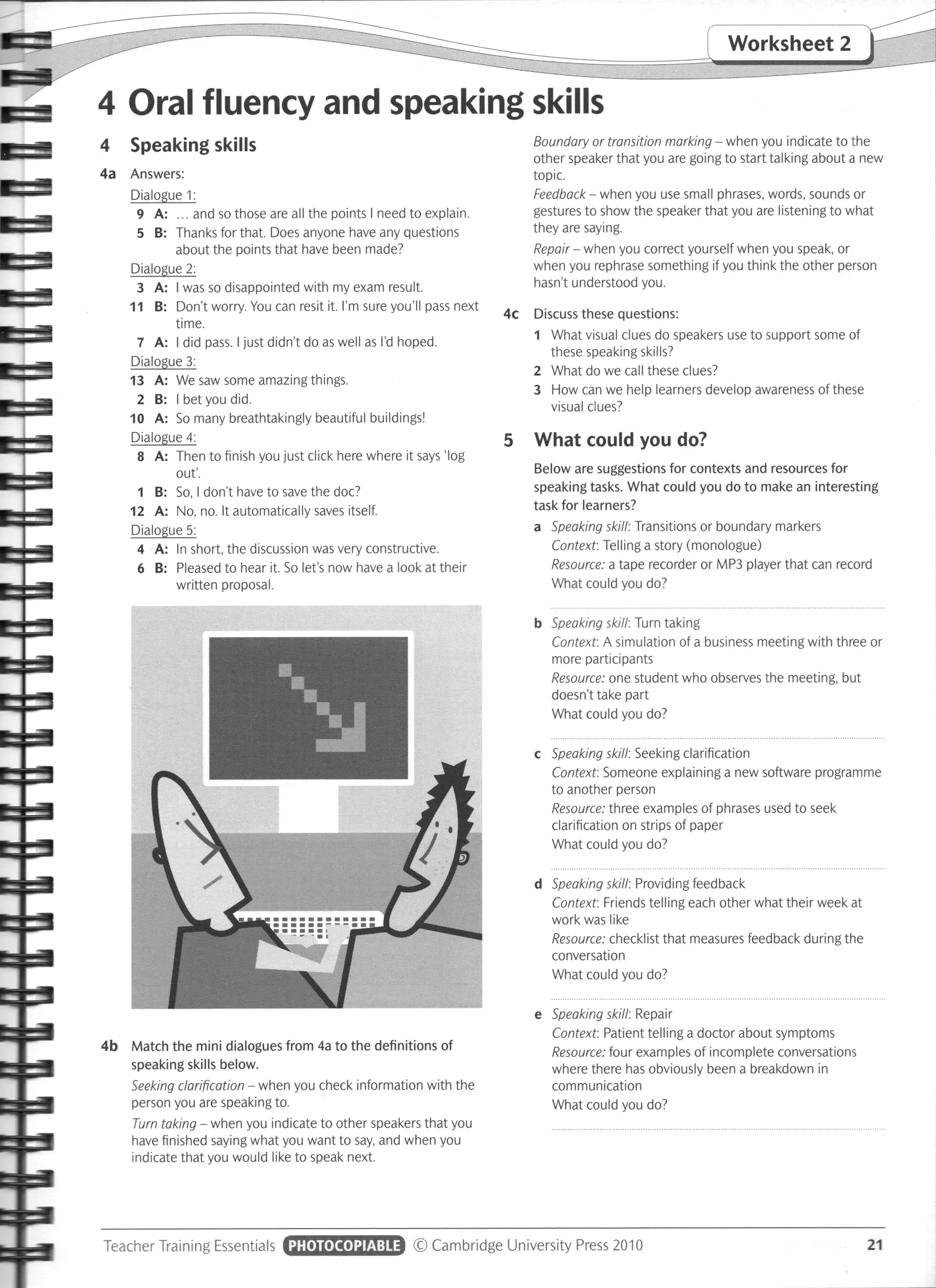
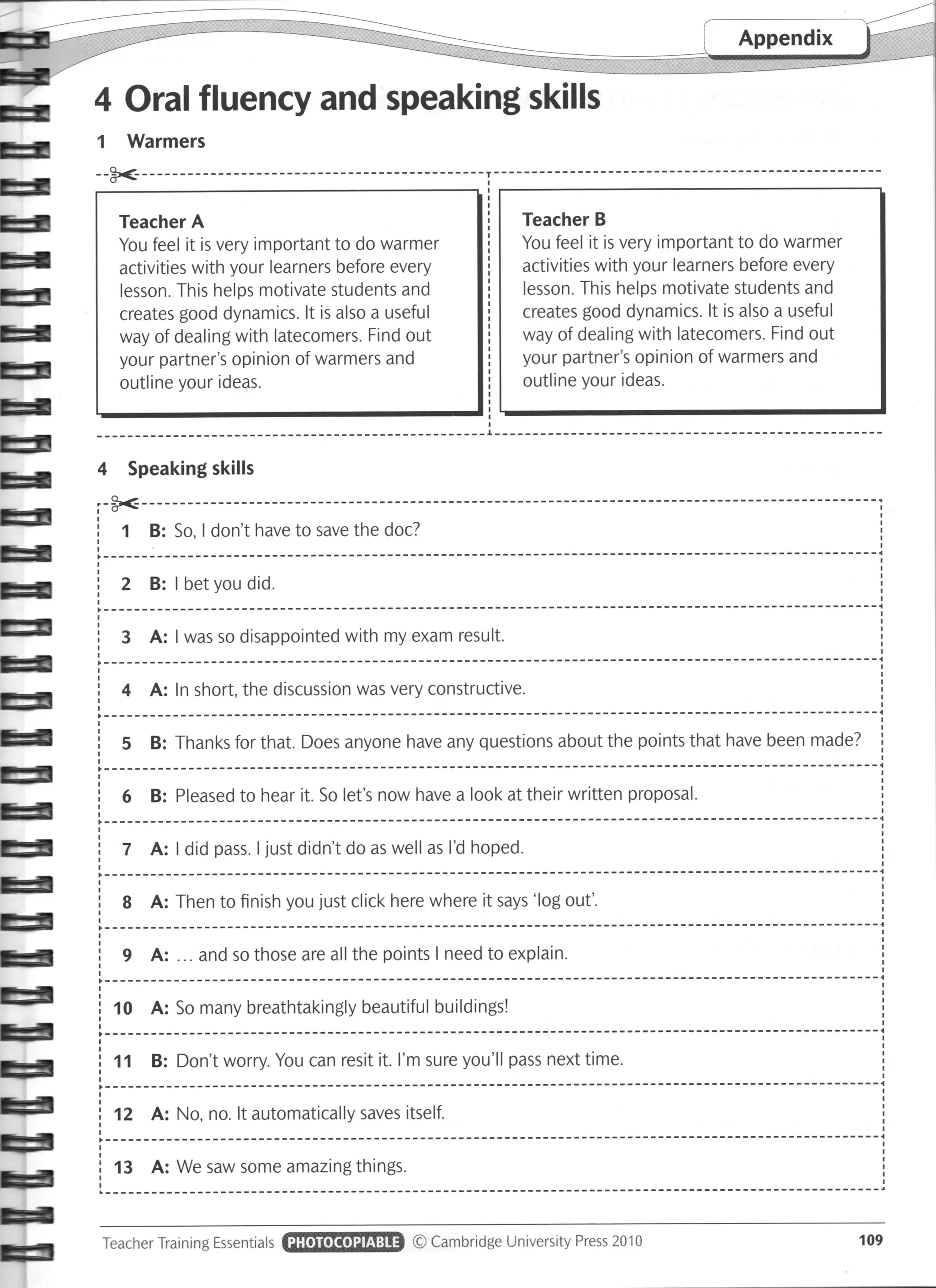
4 Oral fluency and speaking skills 19
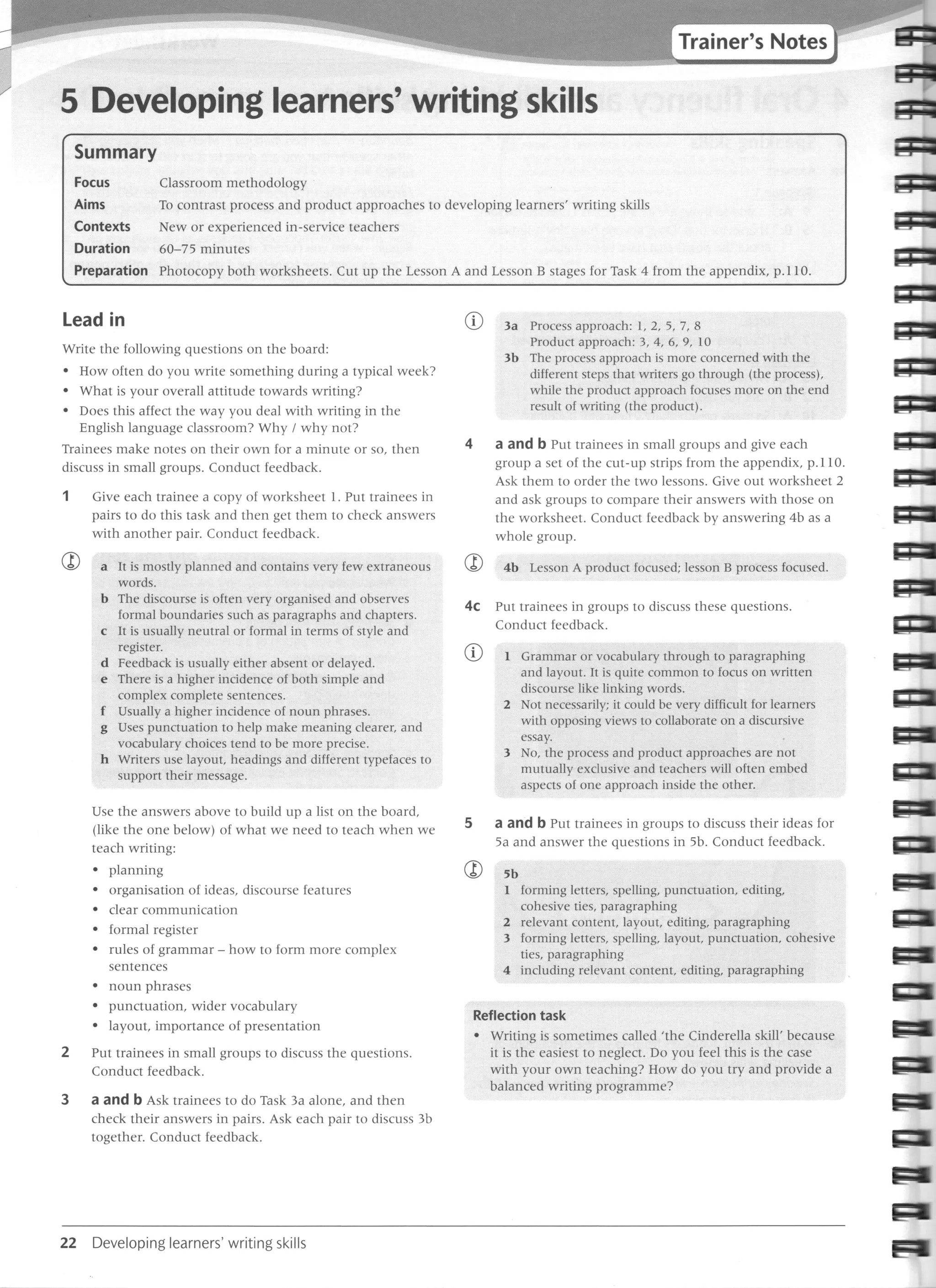
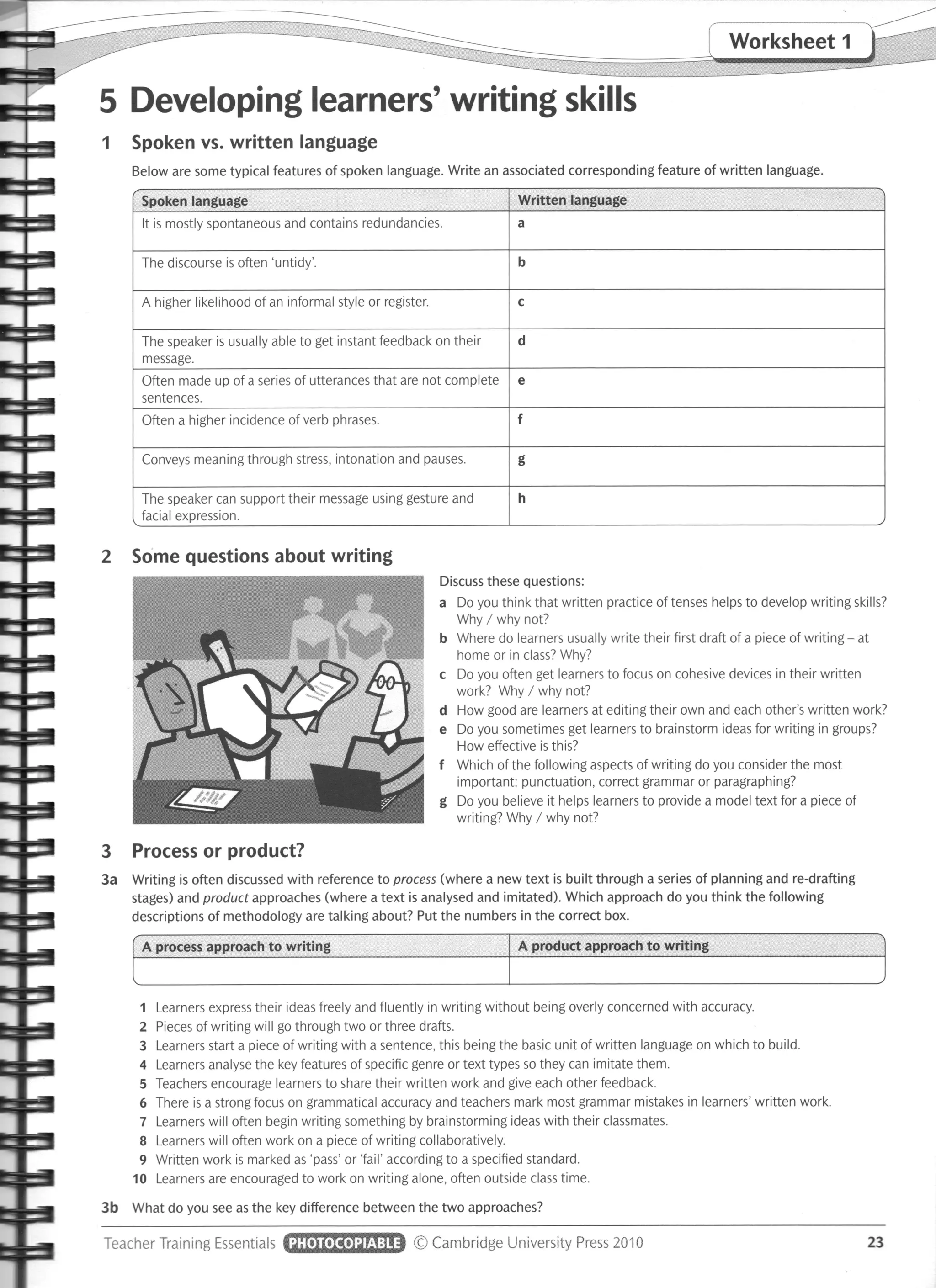
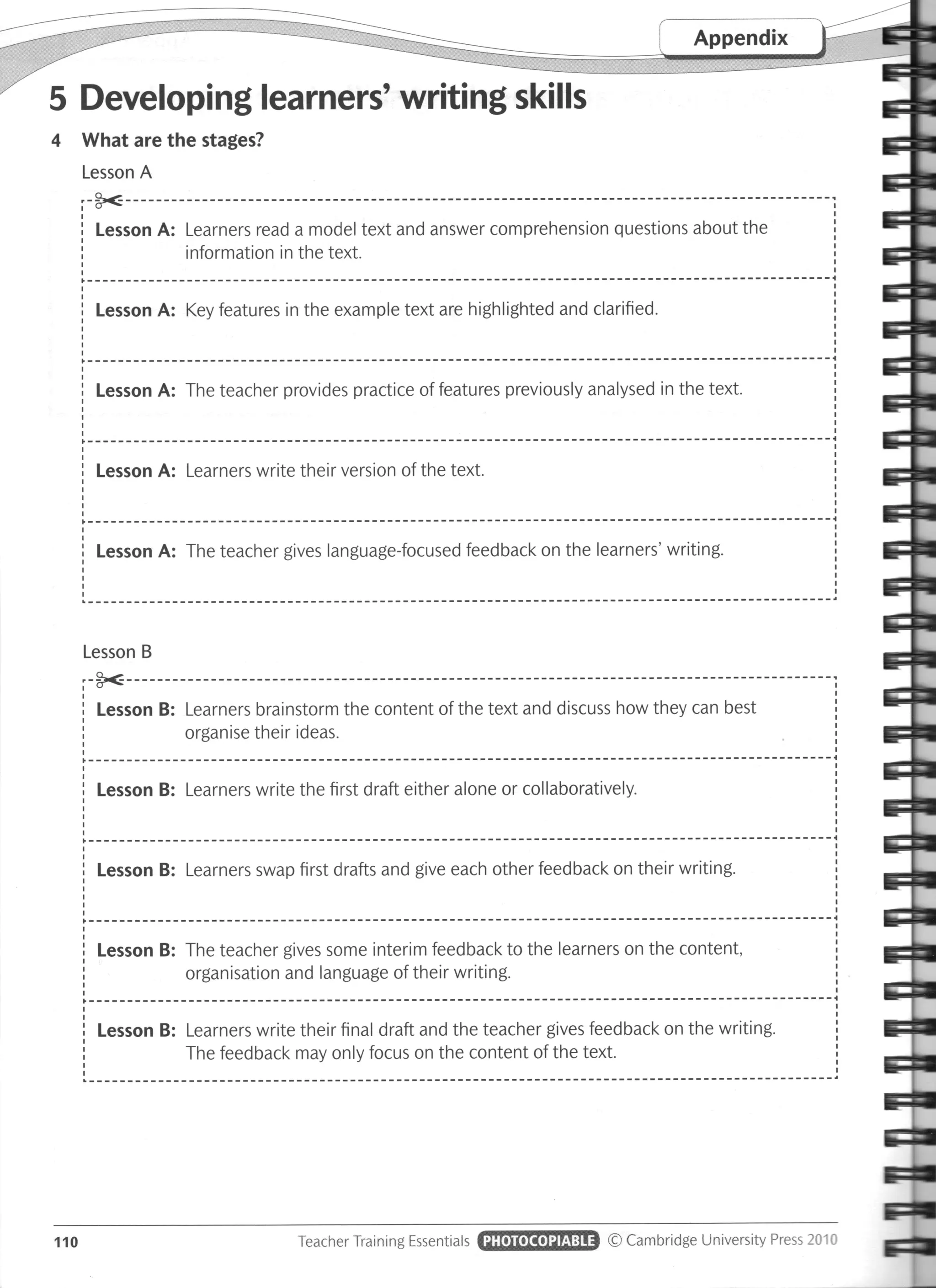
5 Developing learners’ writing skills 22
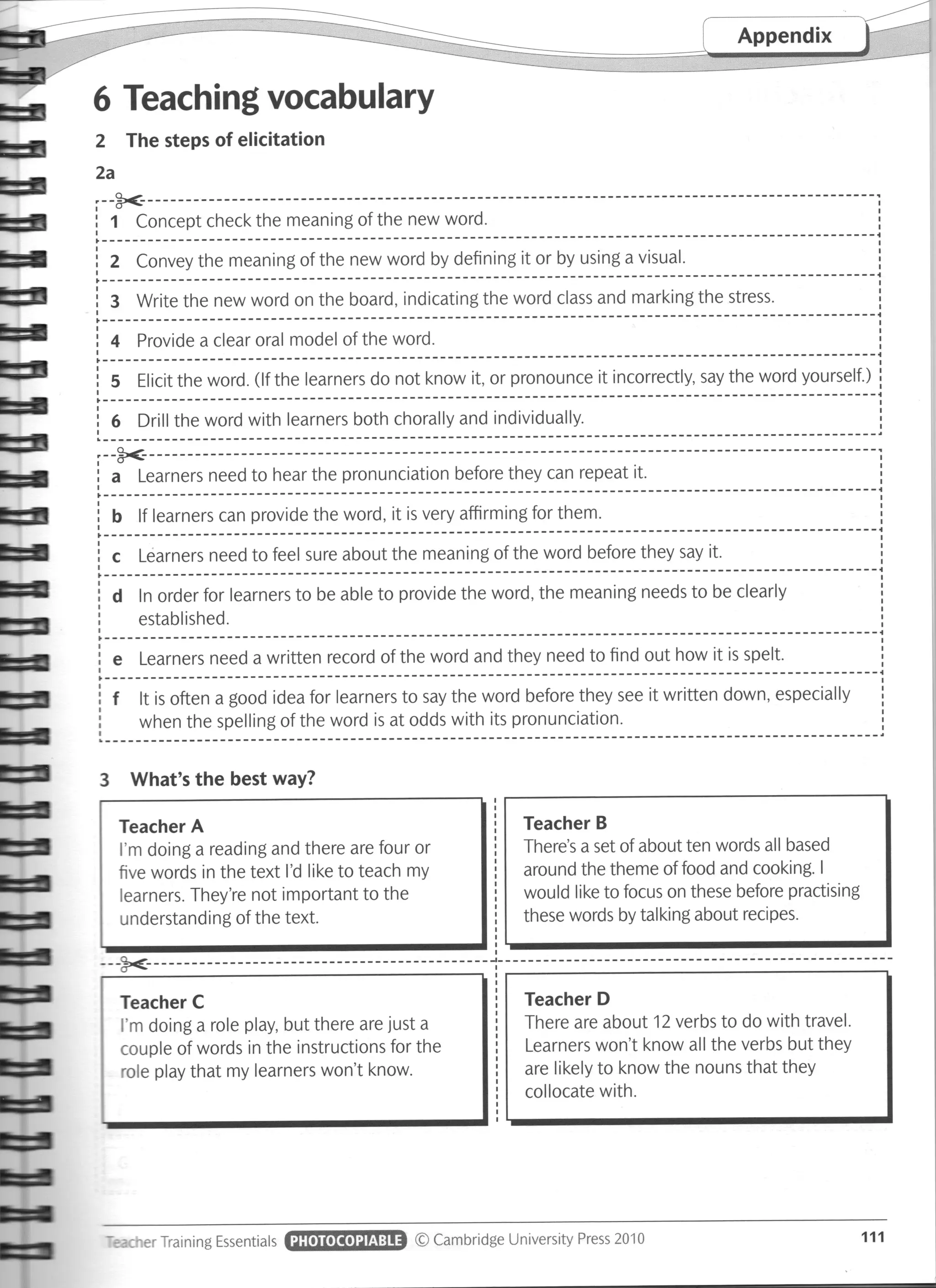
6 Teaching vocabulary 25
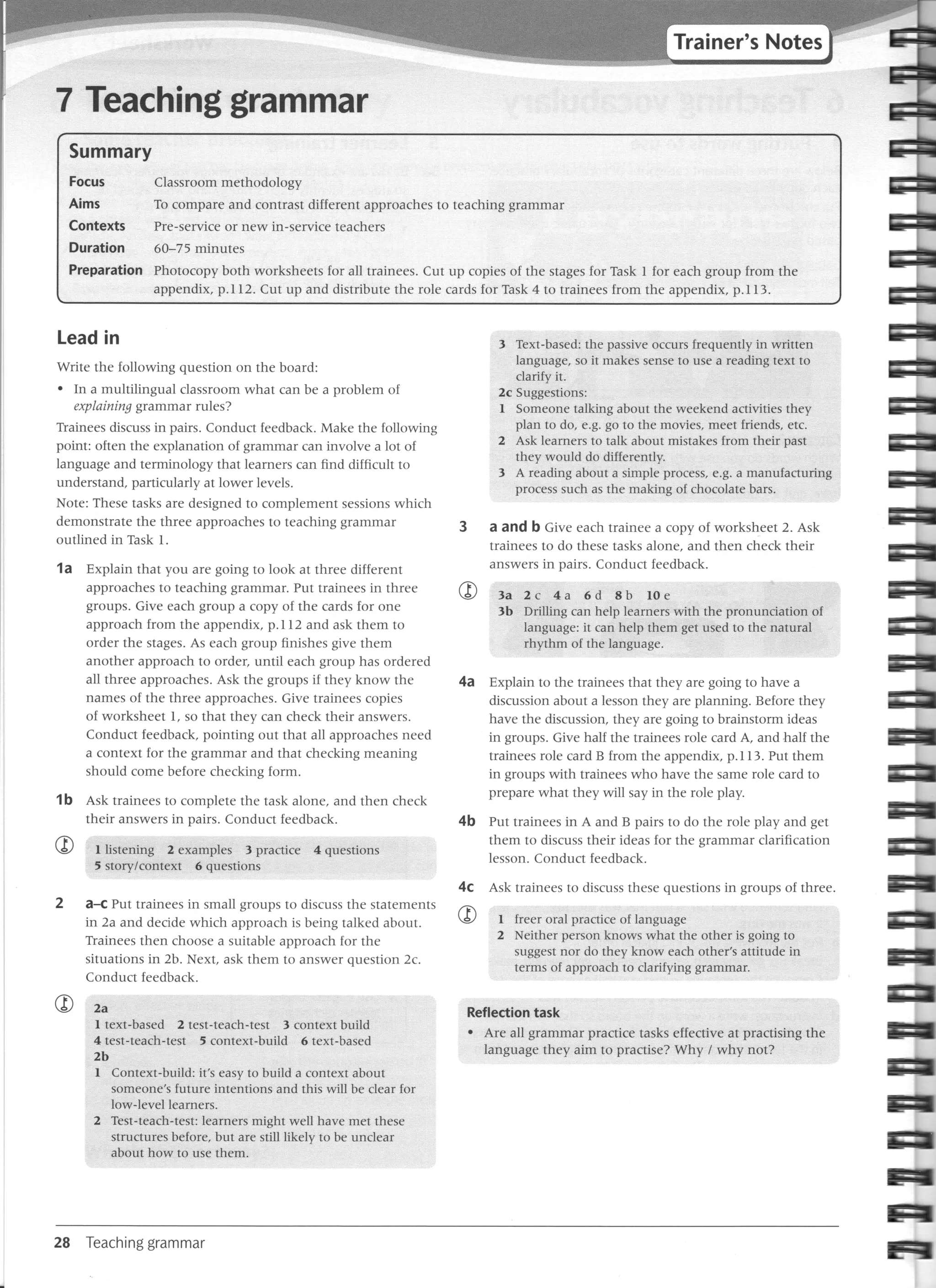
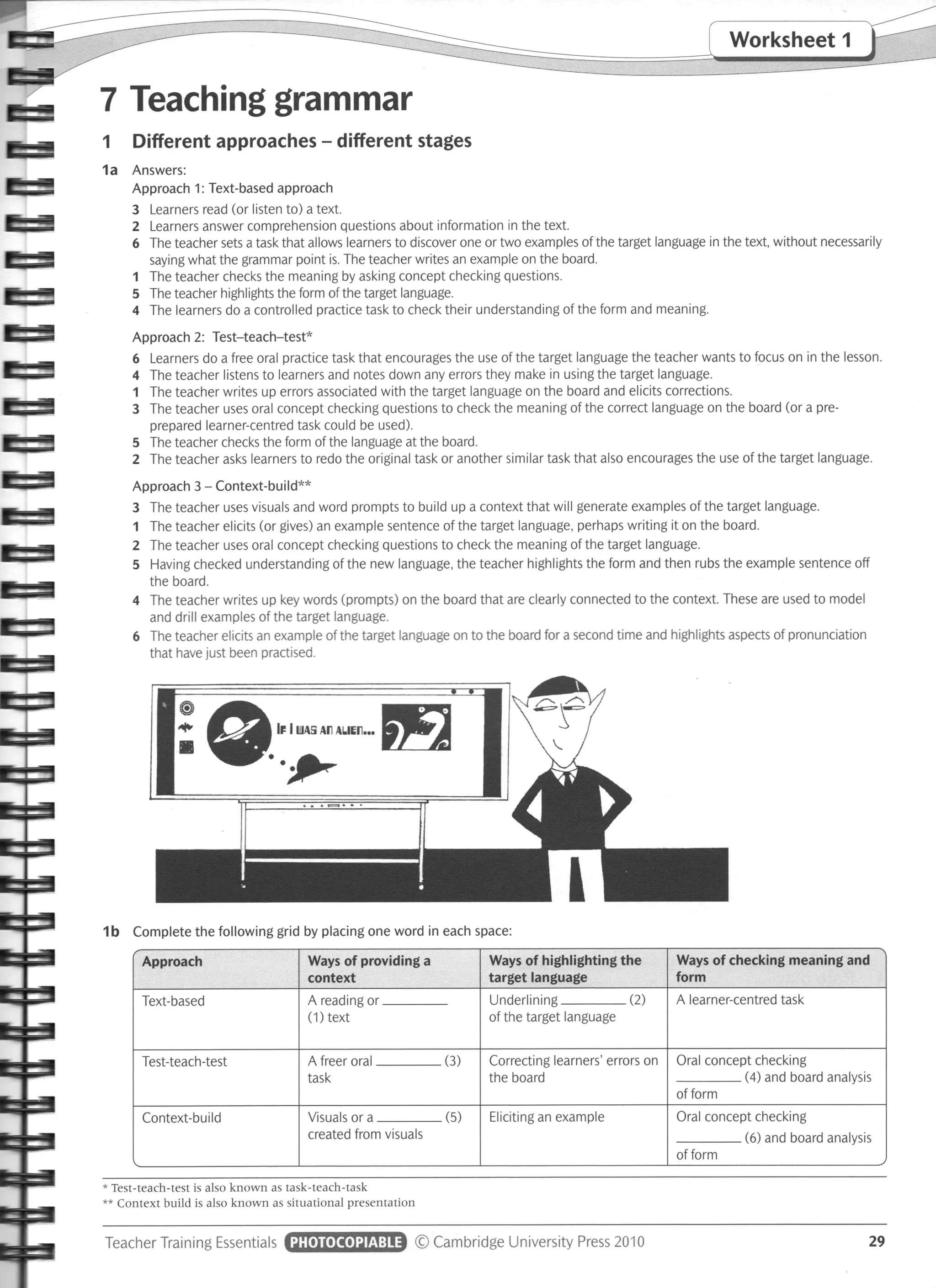
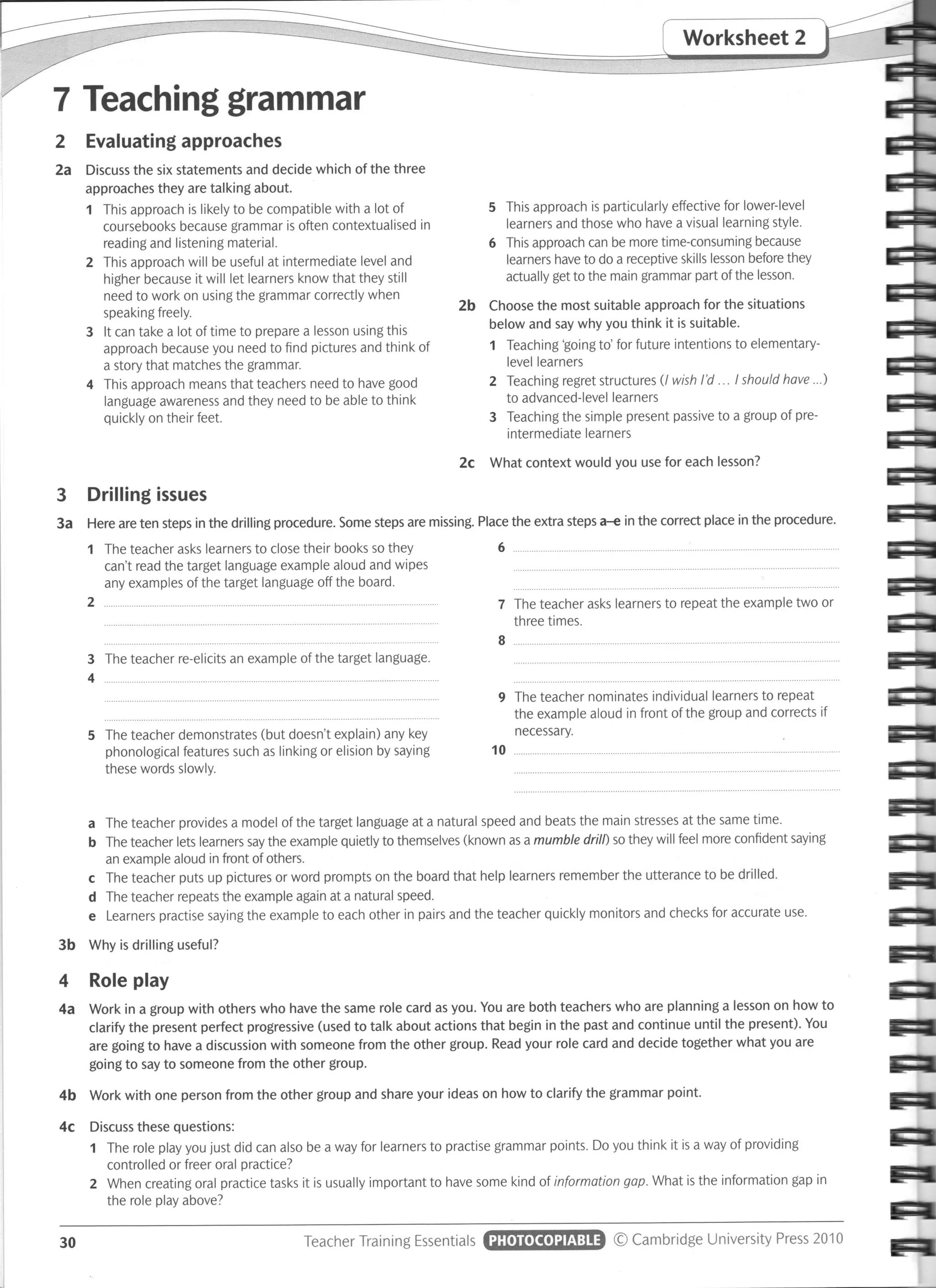
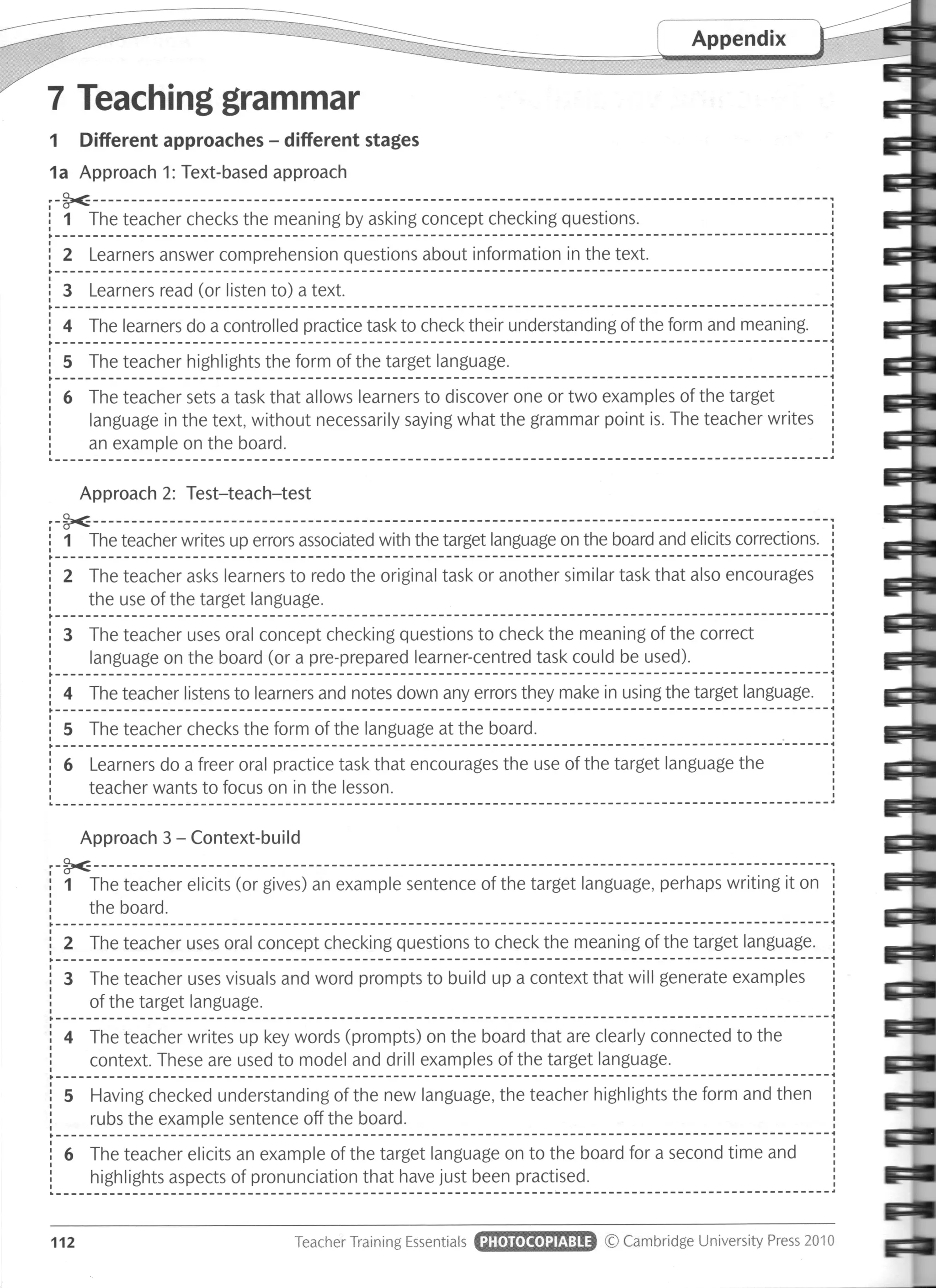
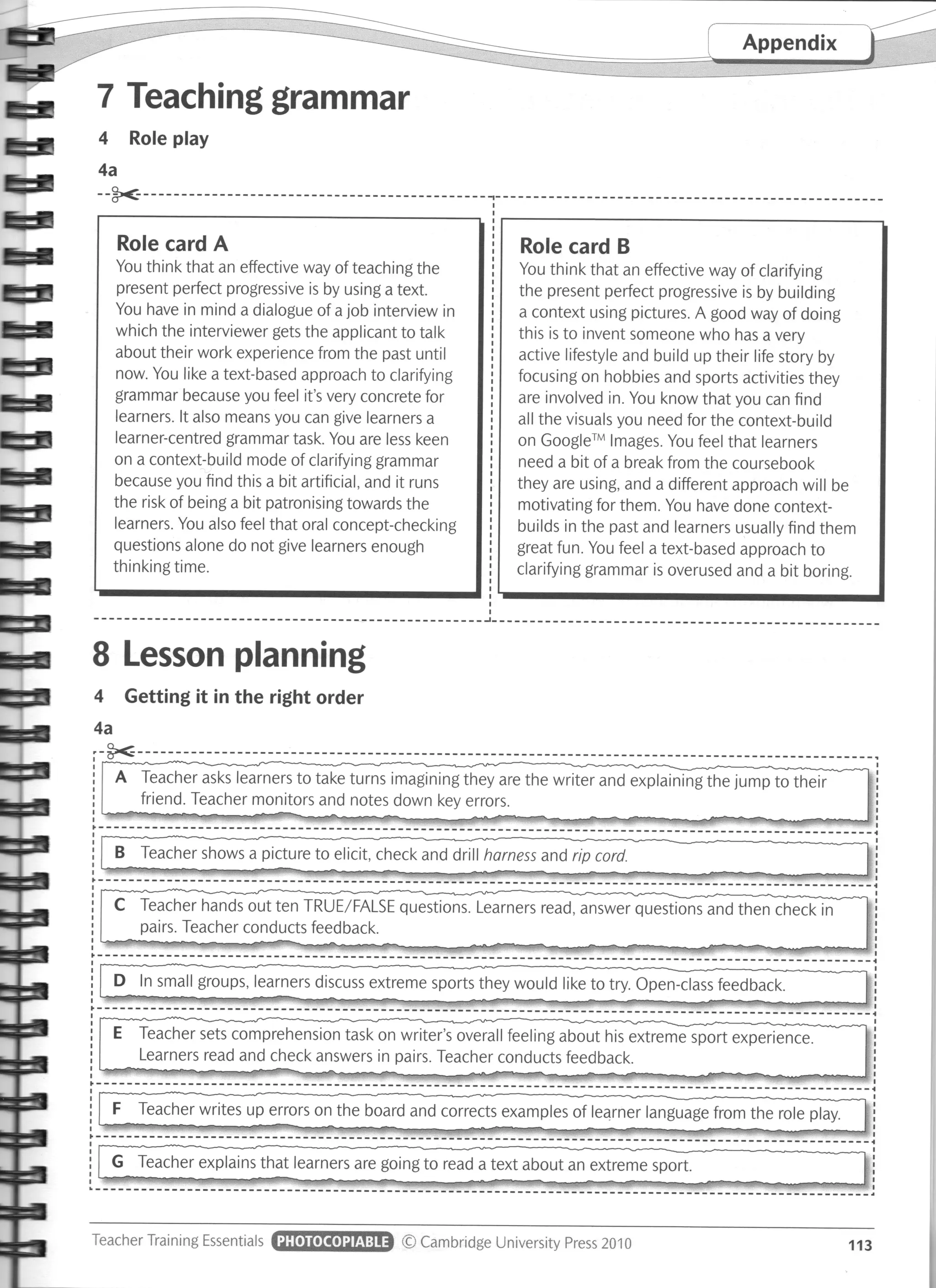
7 Teaching grammar 28
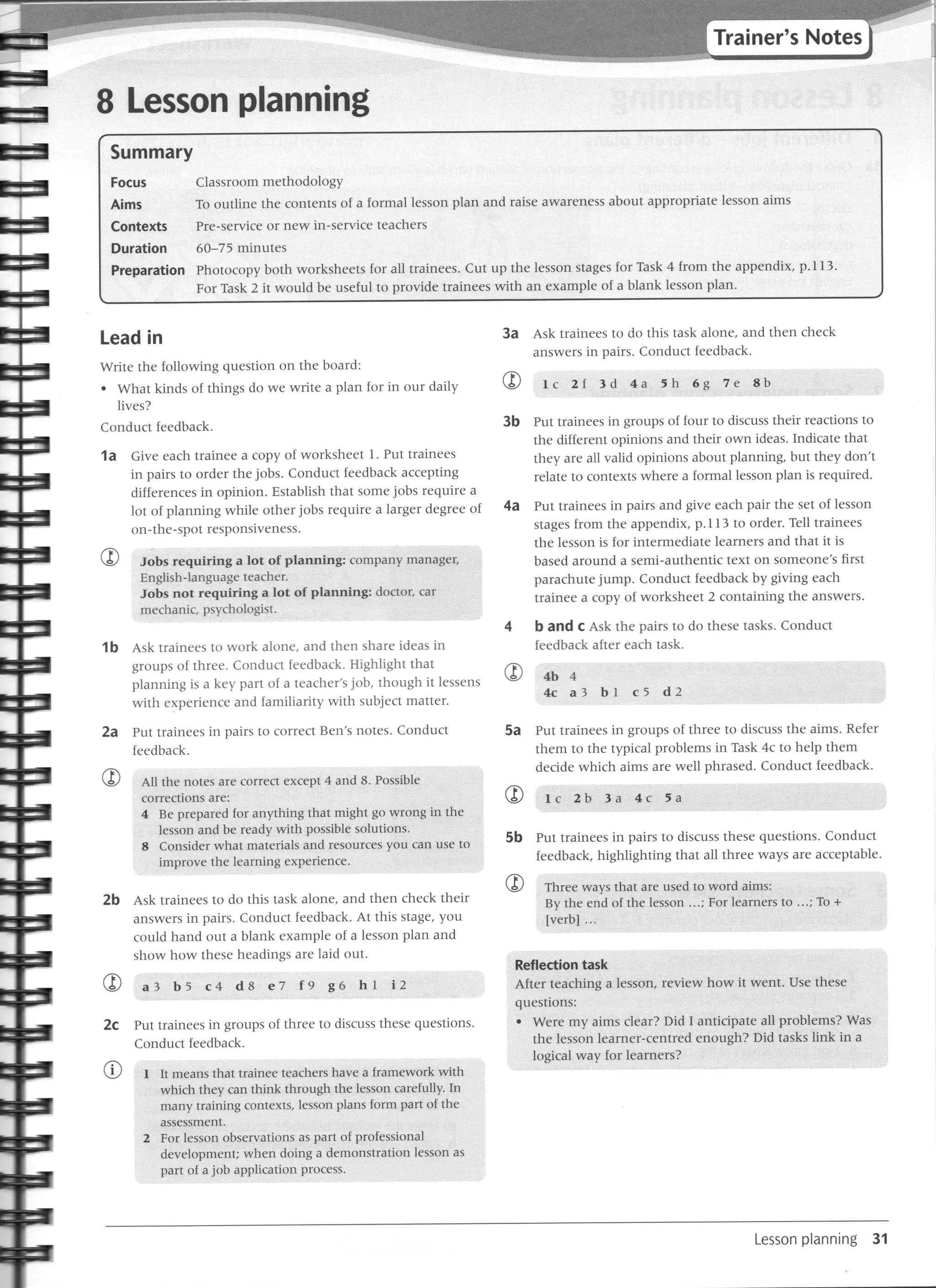
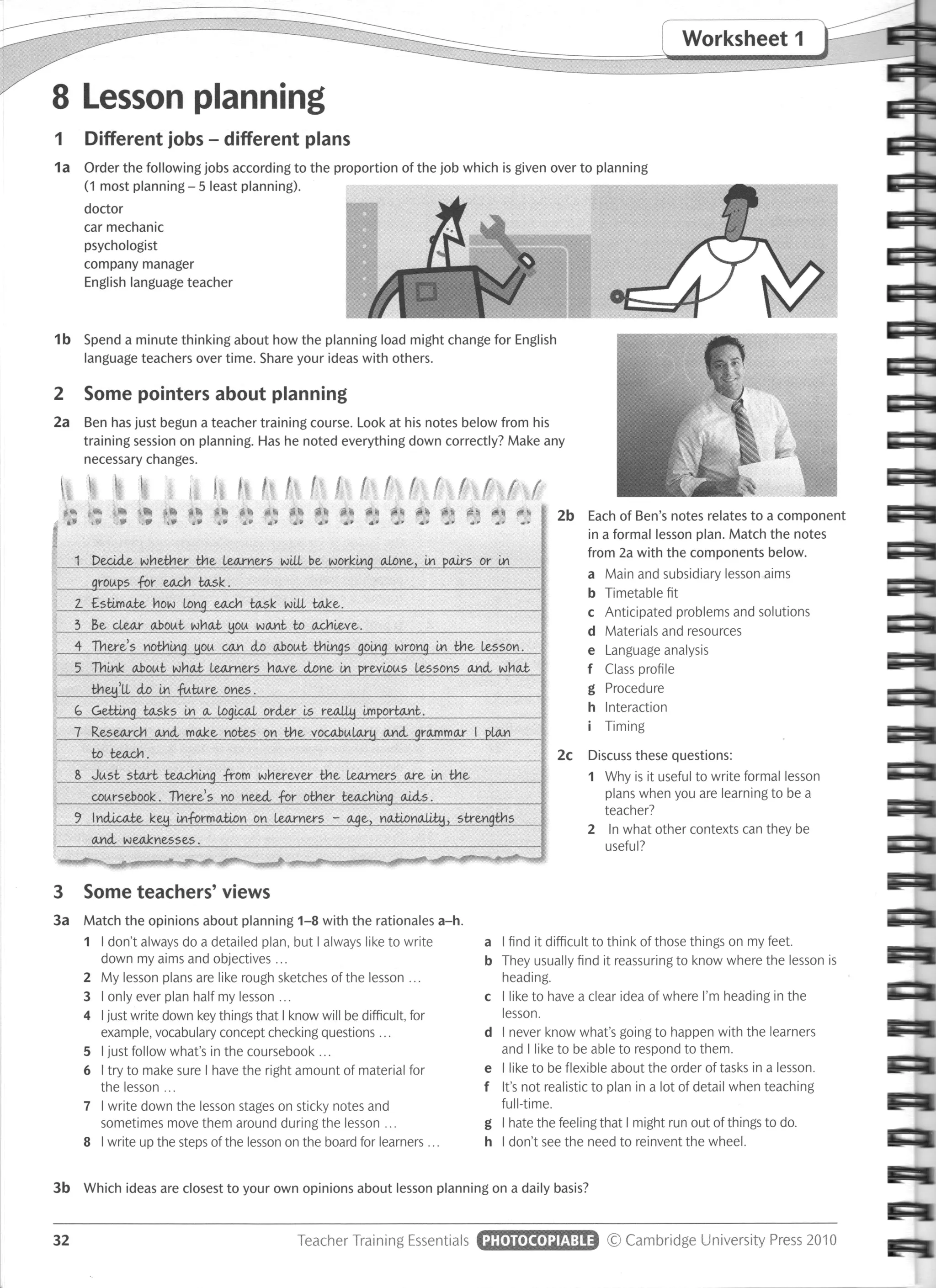
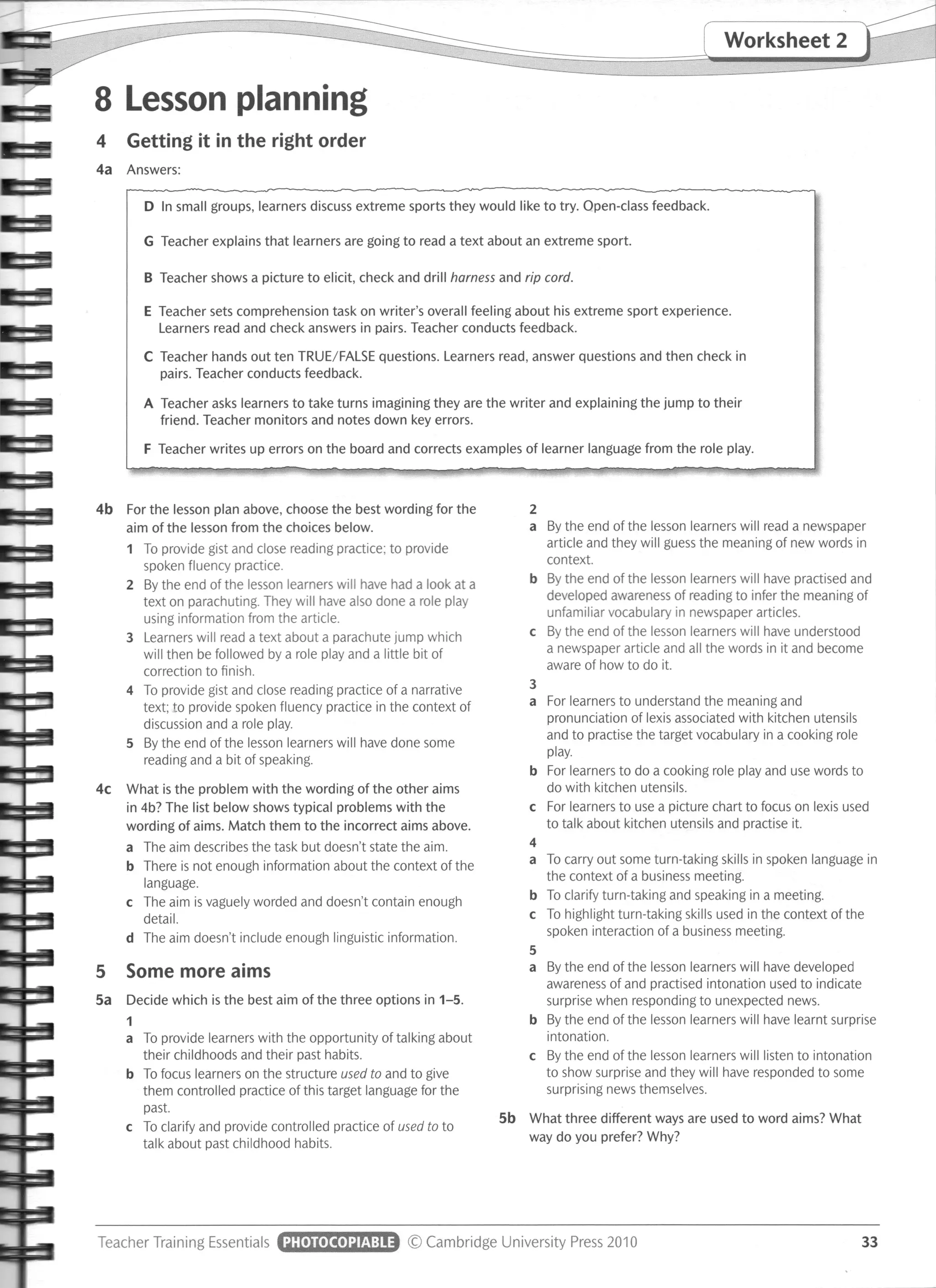
8 Lesson planning 31
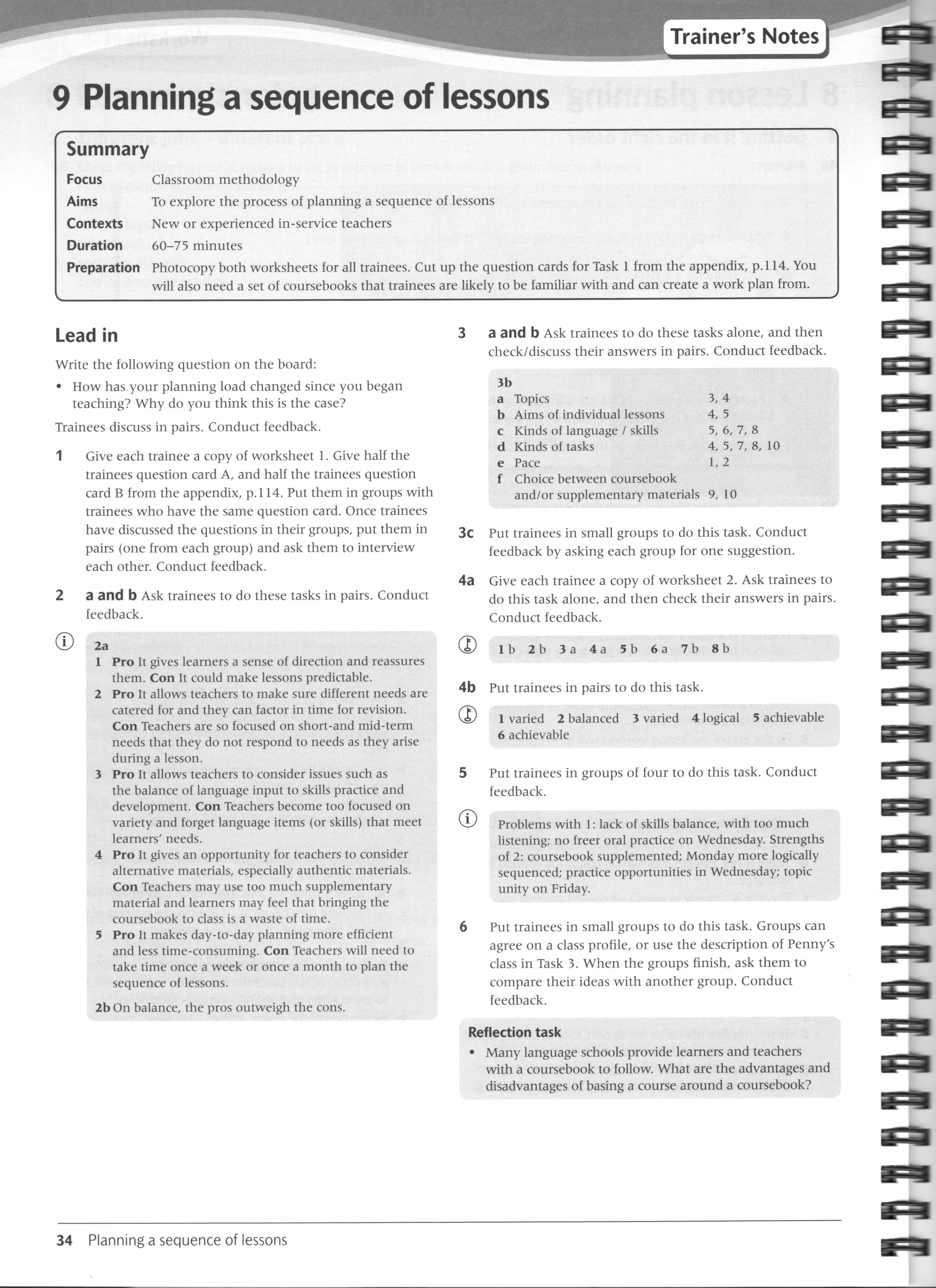
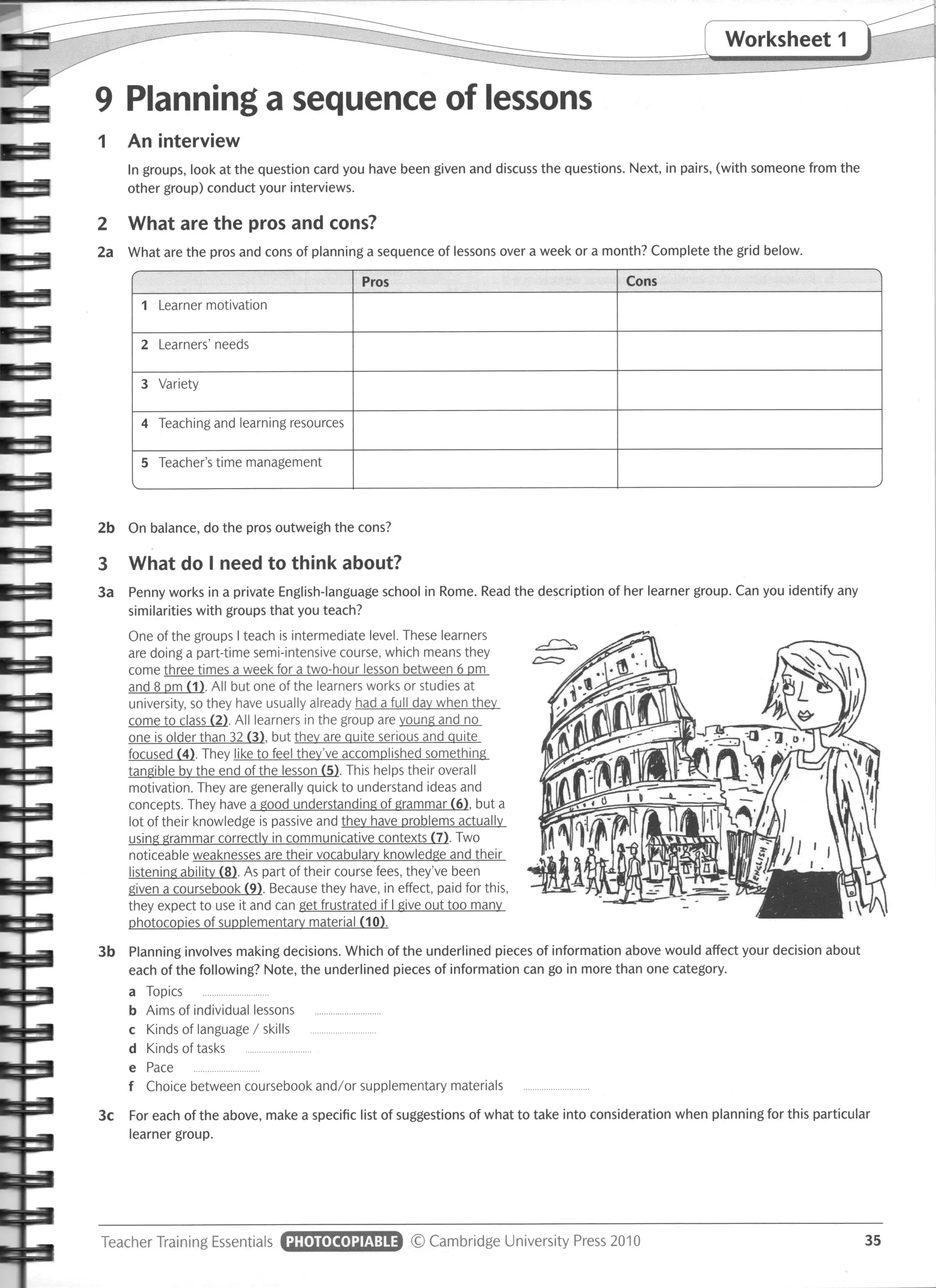
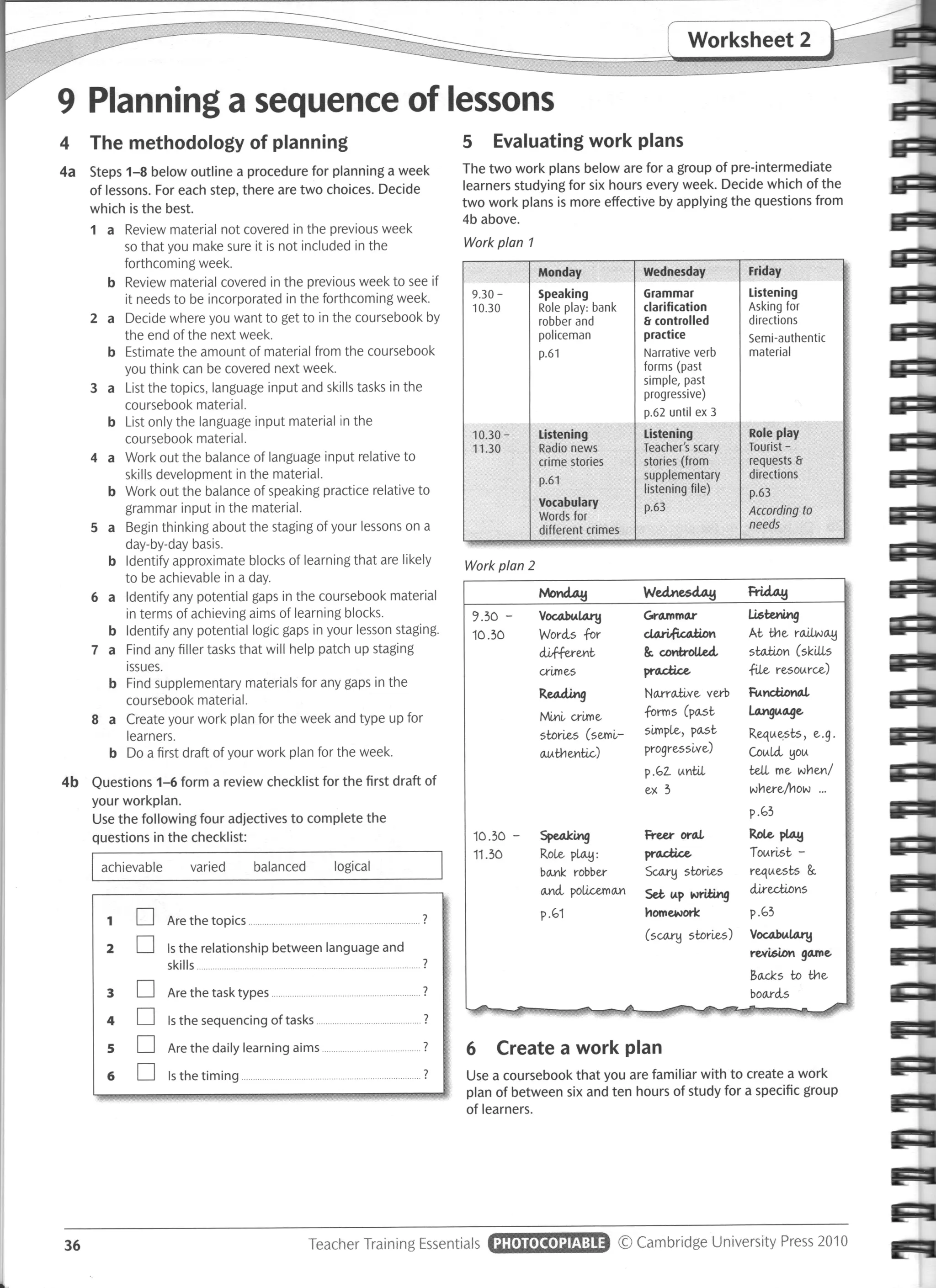
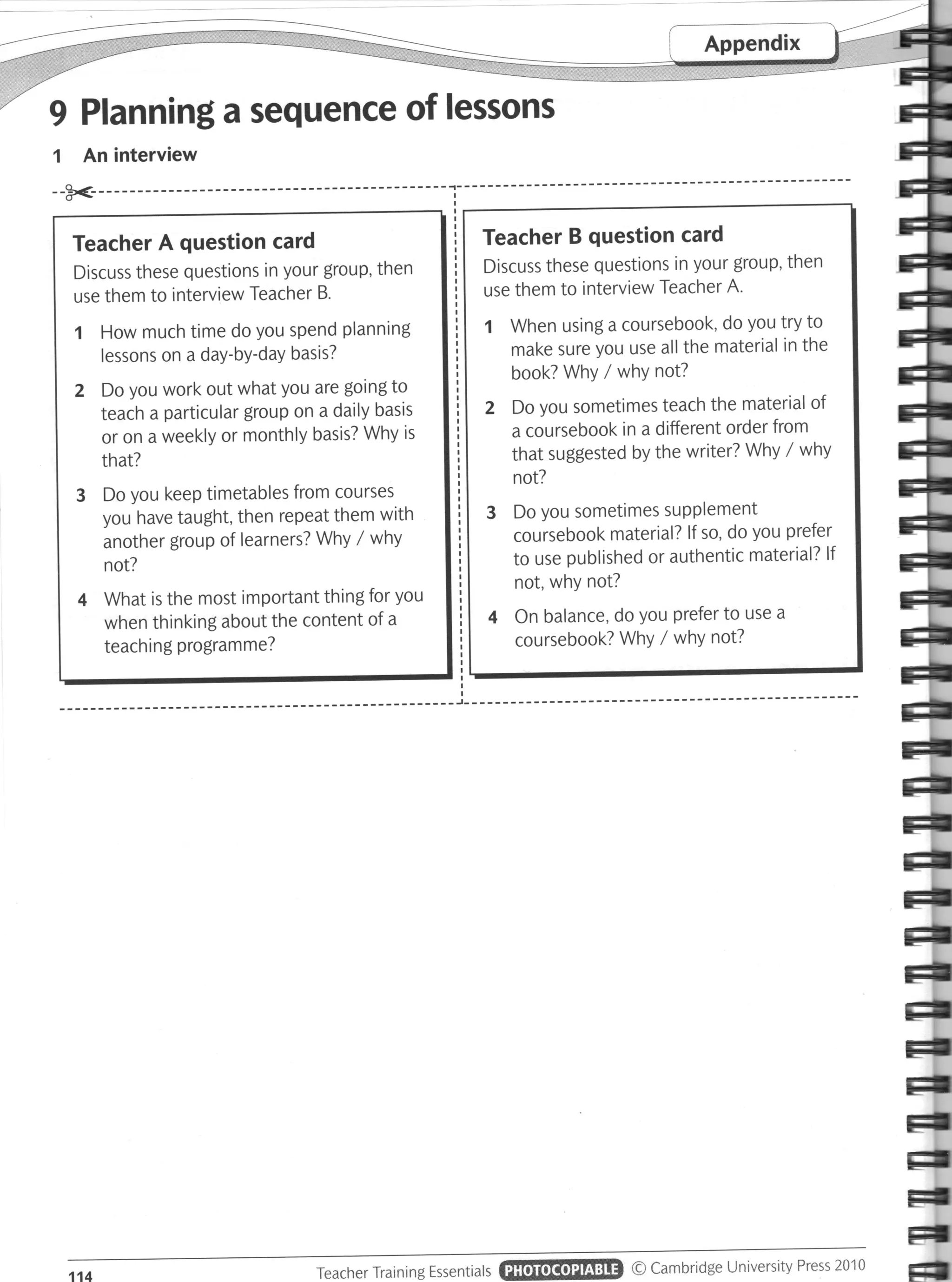
9 Planning a sequence of lessons 34
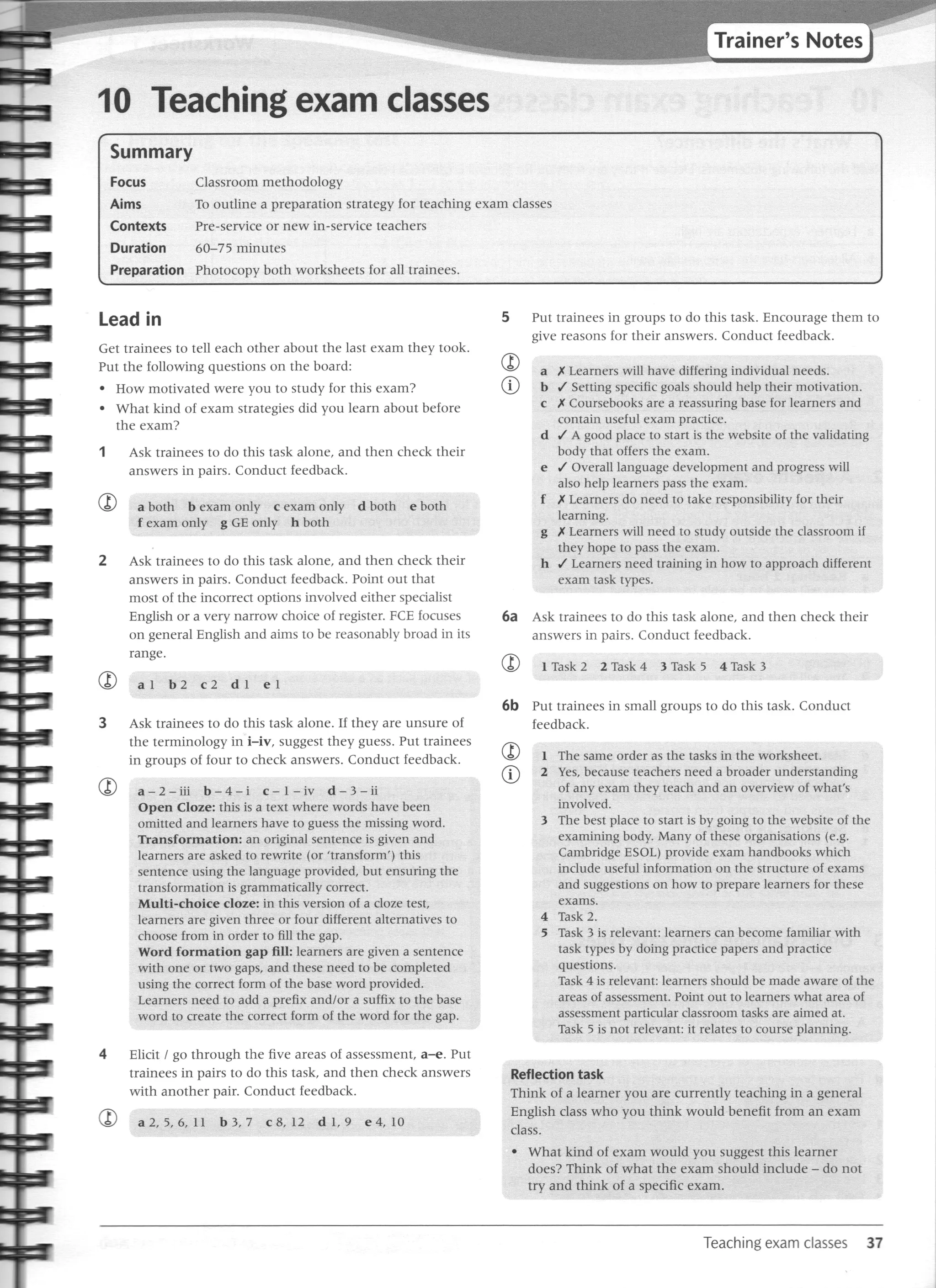
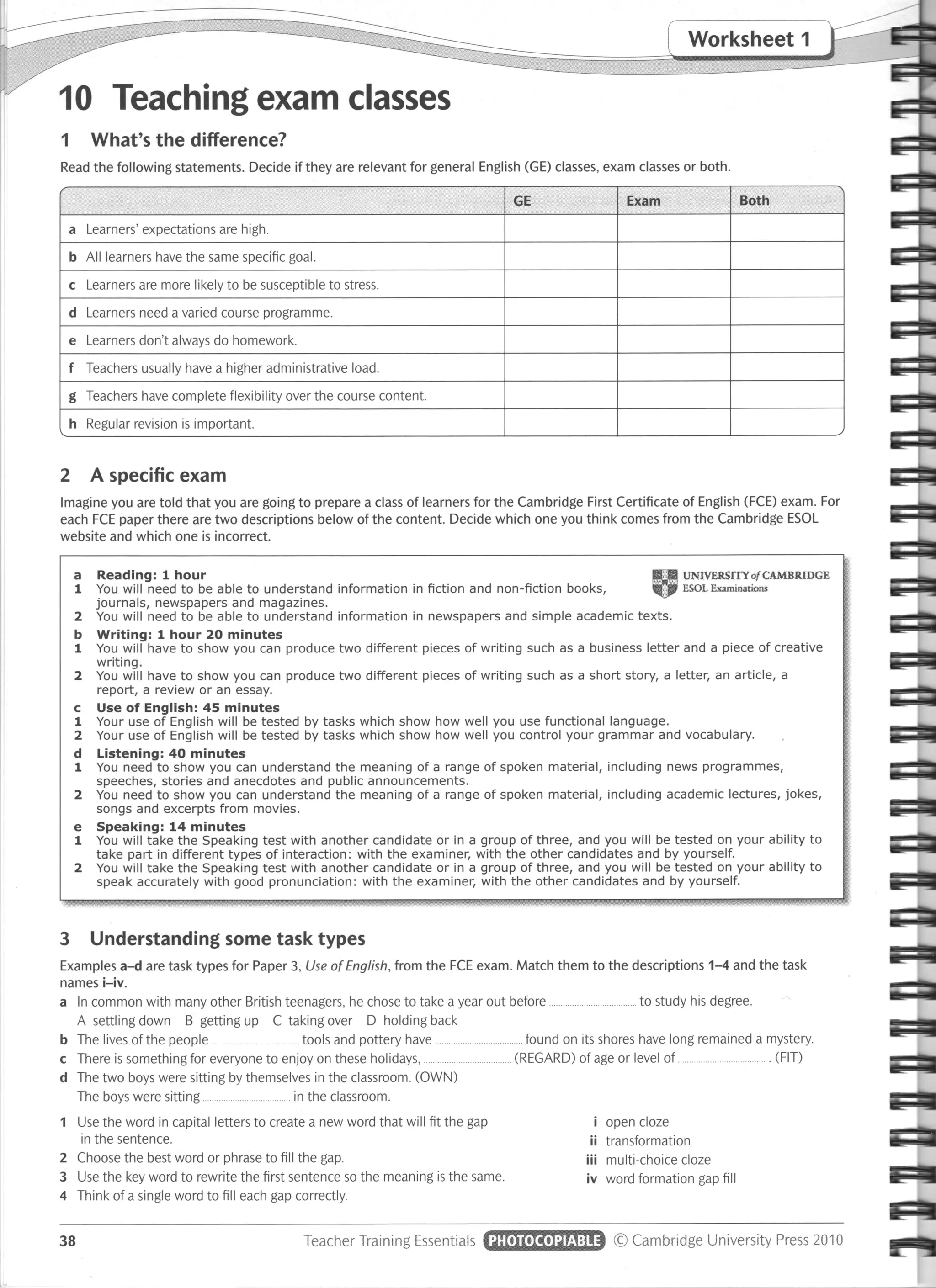
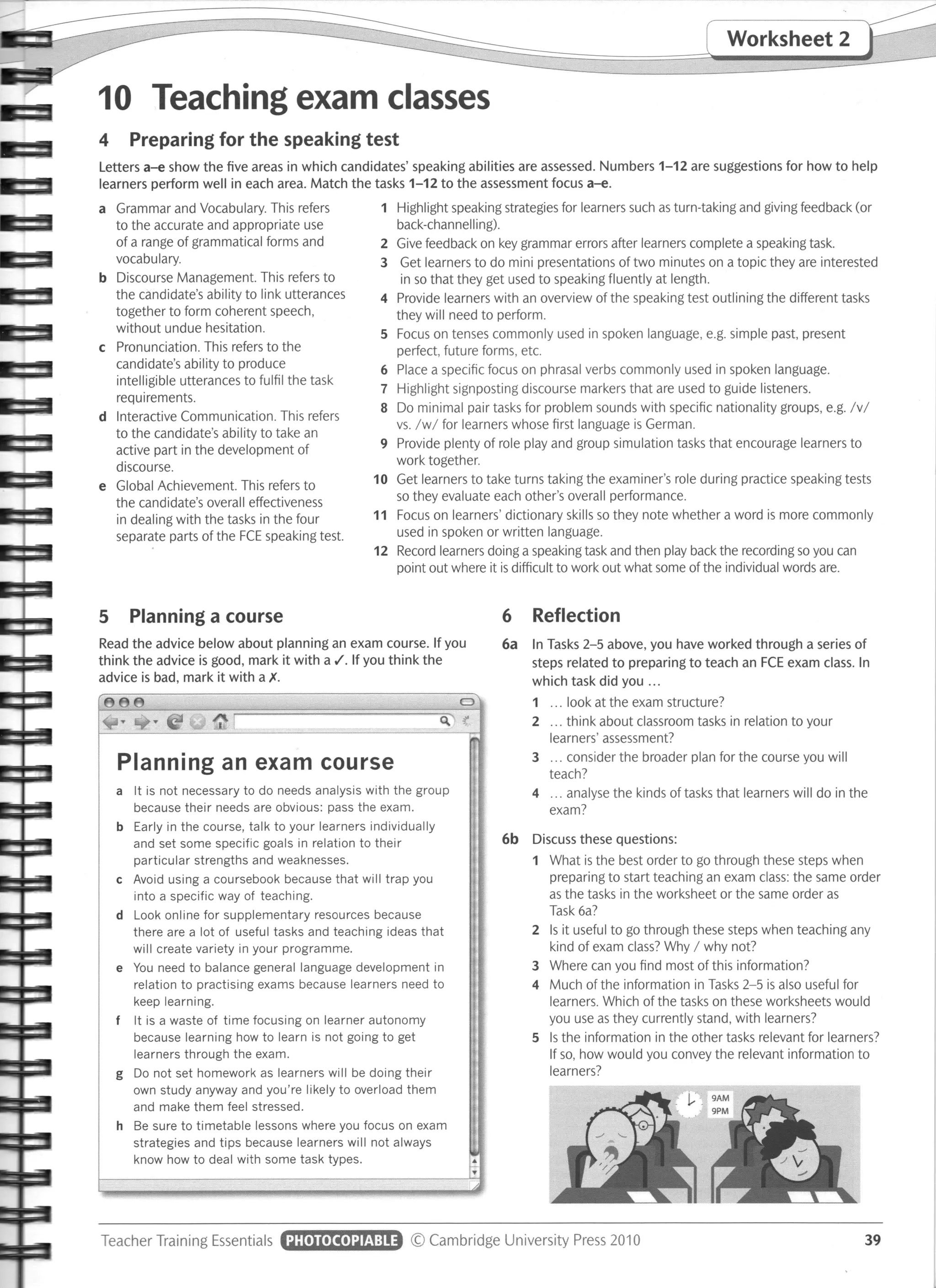
10 Teaching exam classes 37
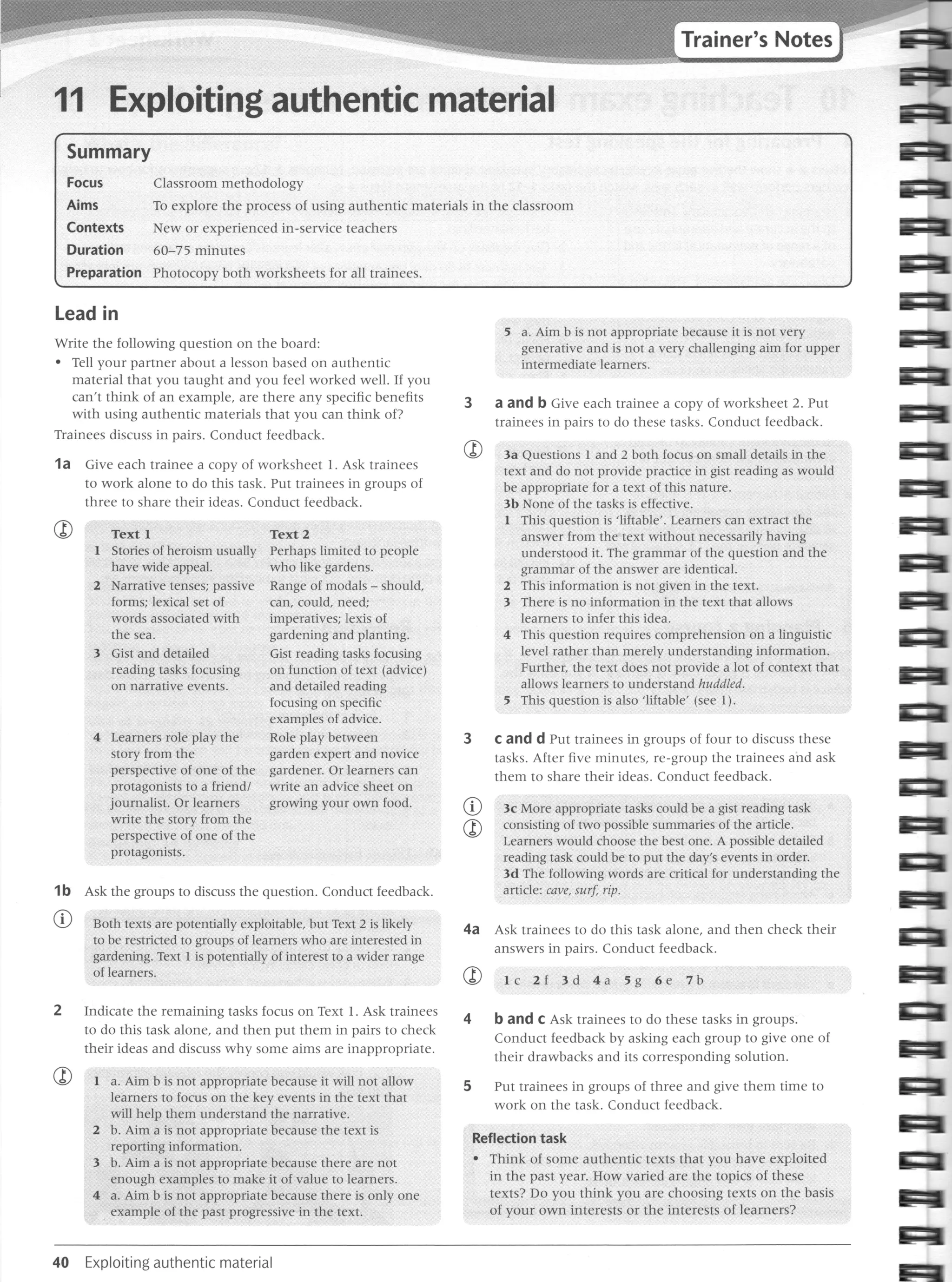
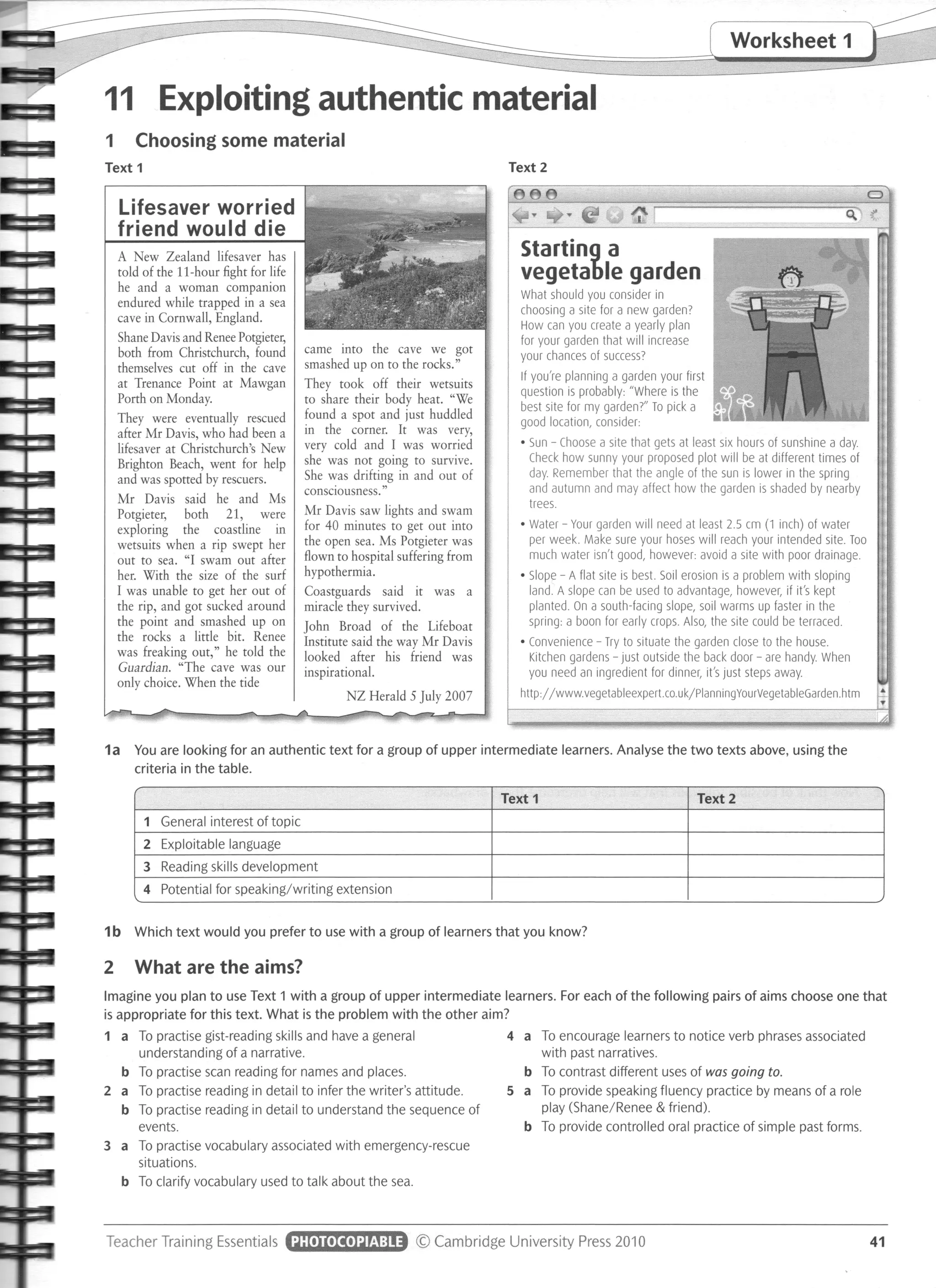
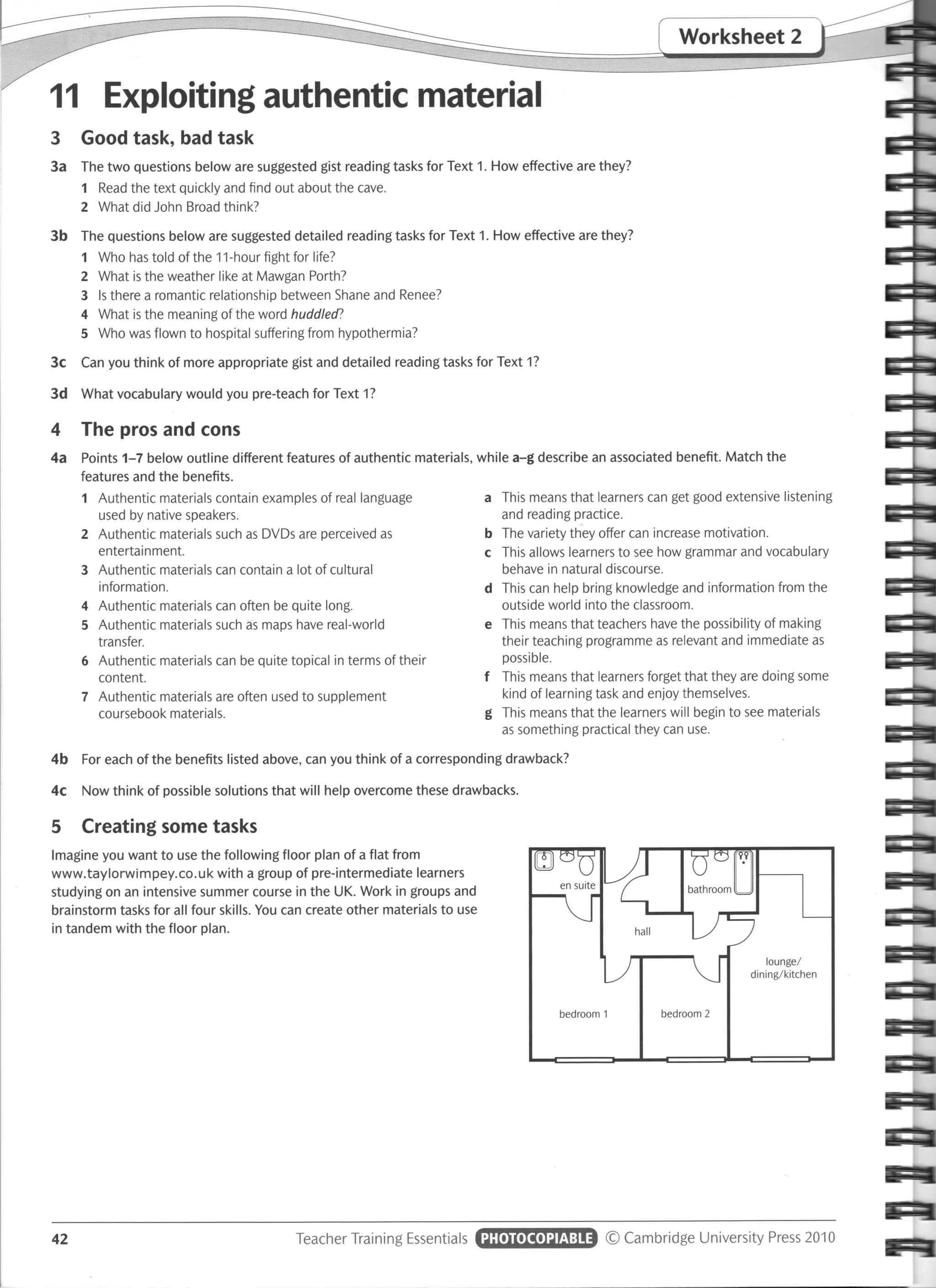
11 Exploiting authentic material 40
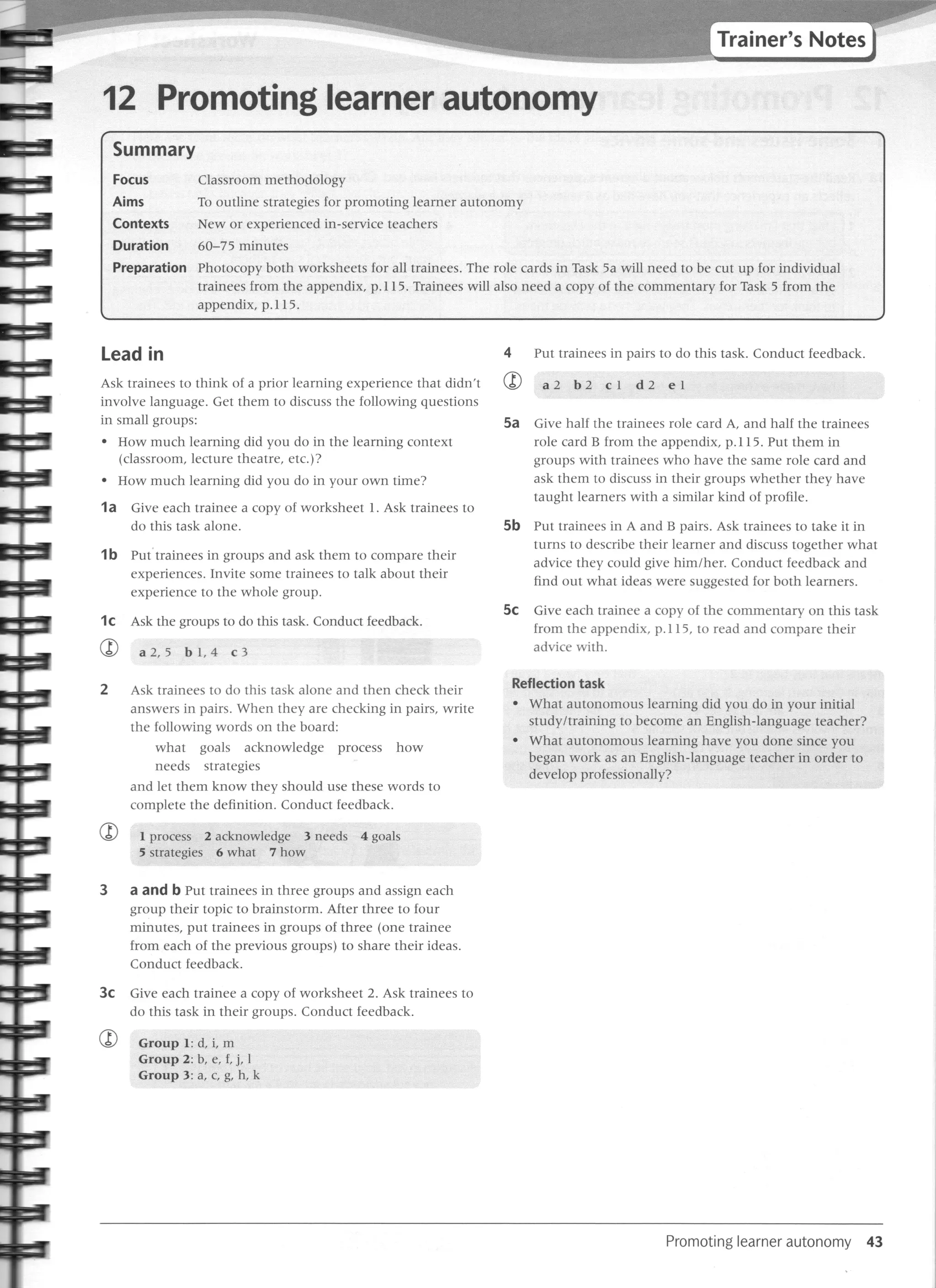
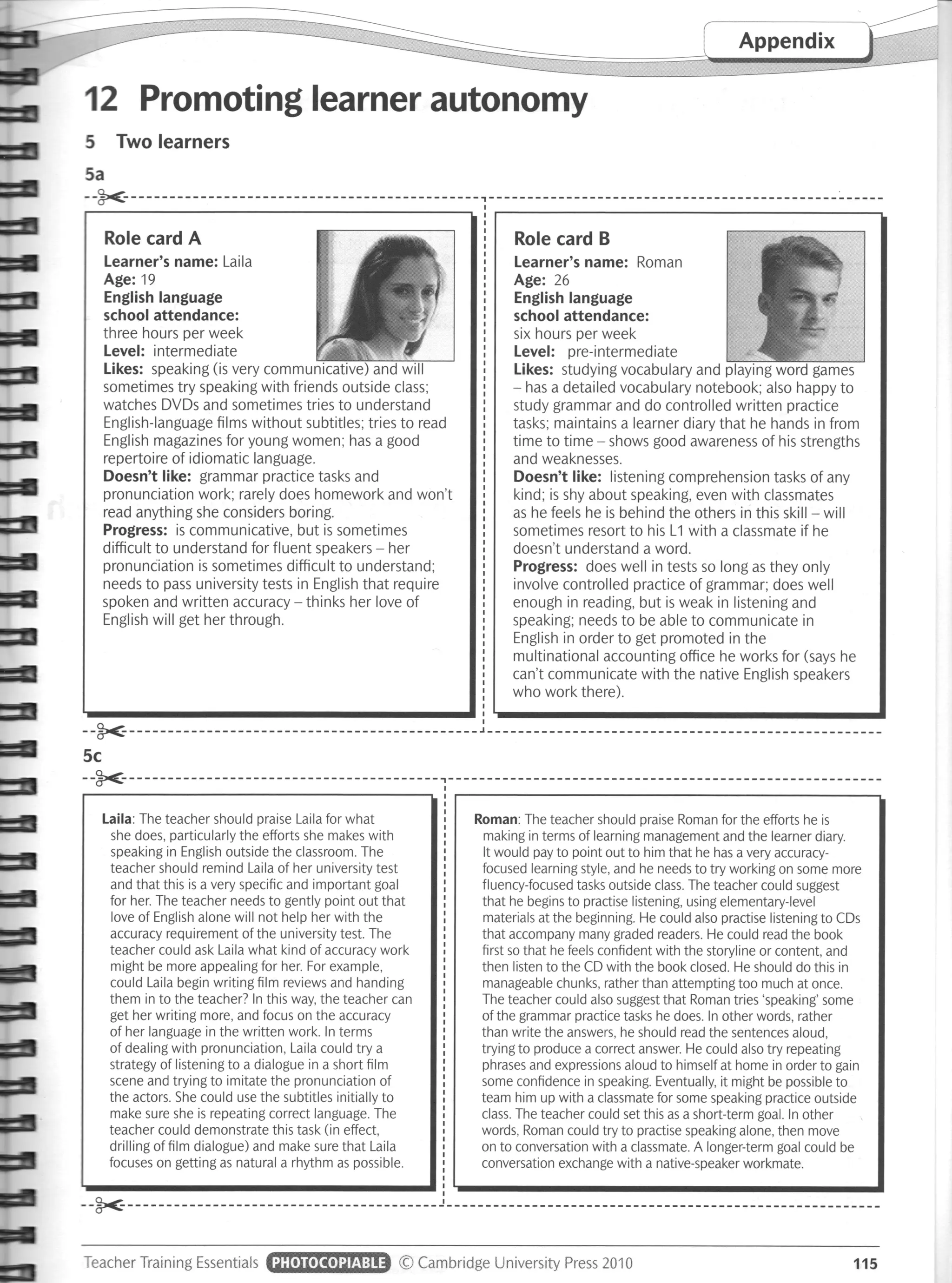
12 Promoting learner autonomy 43
Developing language awareness
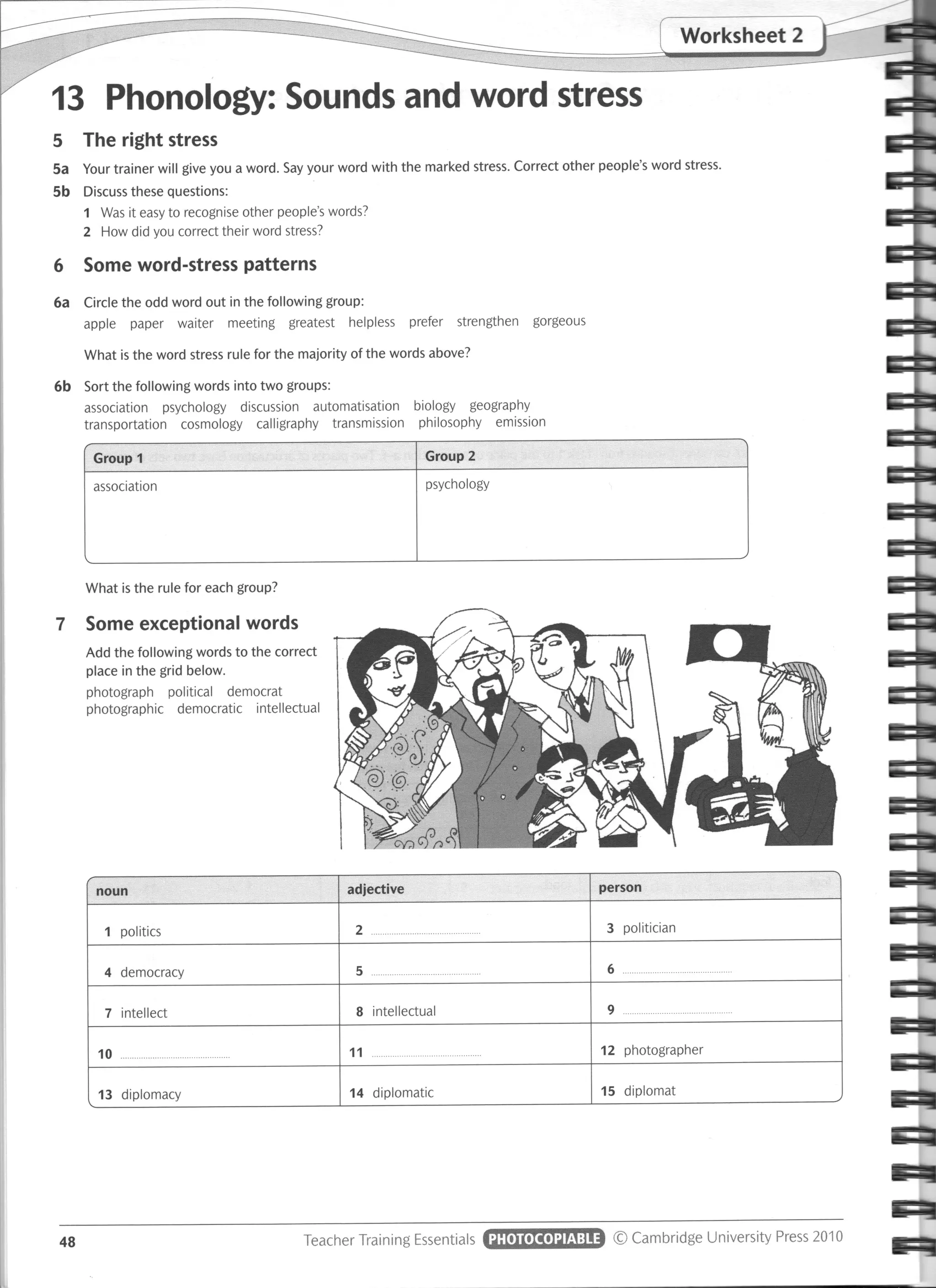
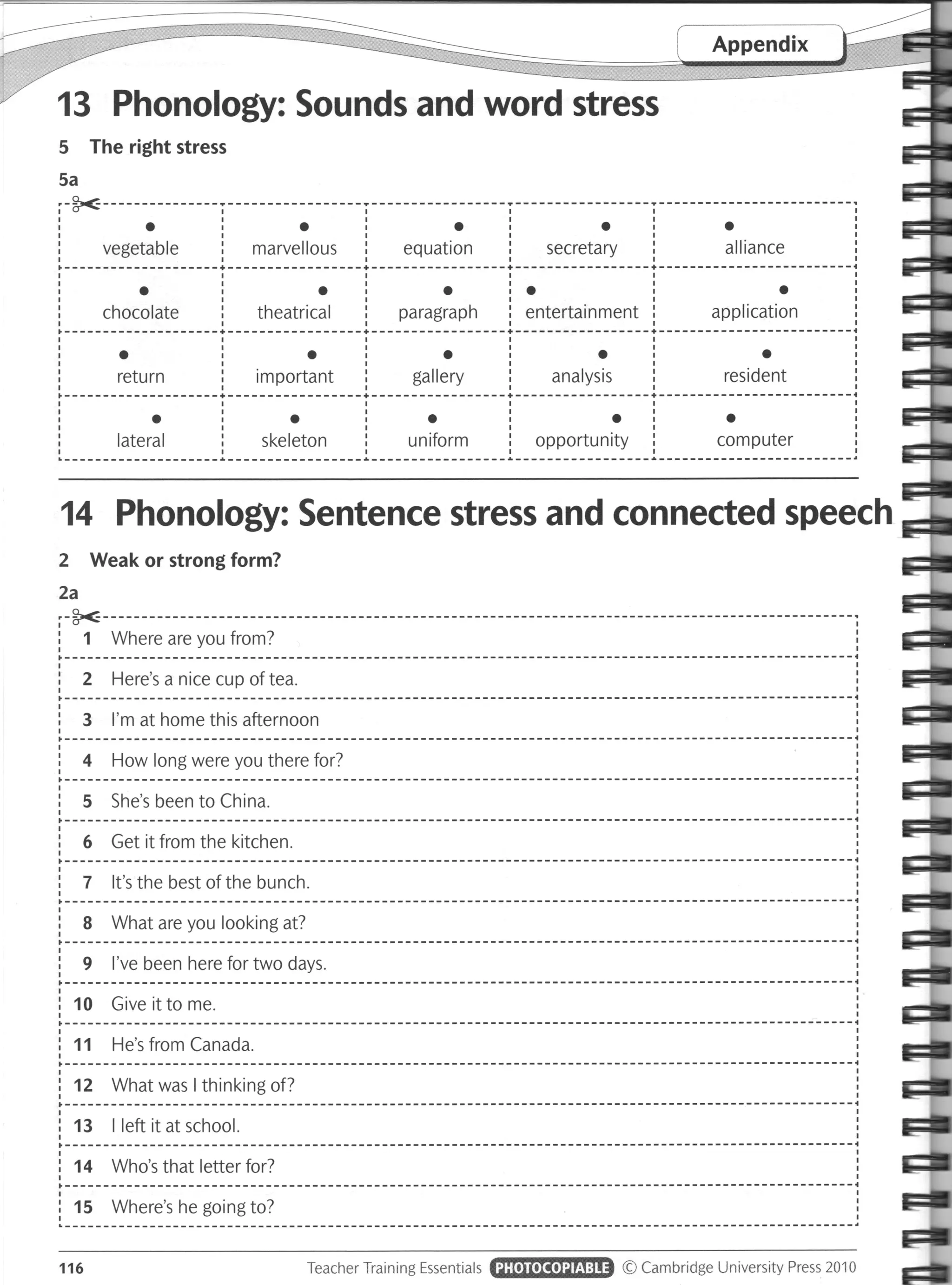
13 Phonology: Sounds and word stress 46
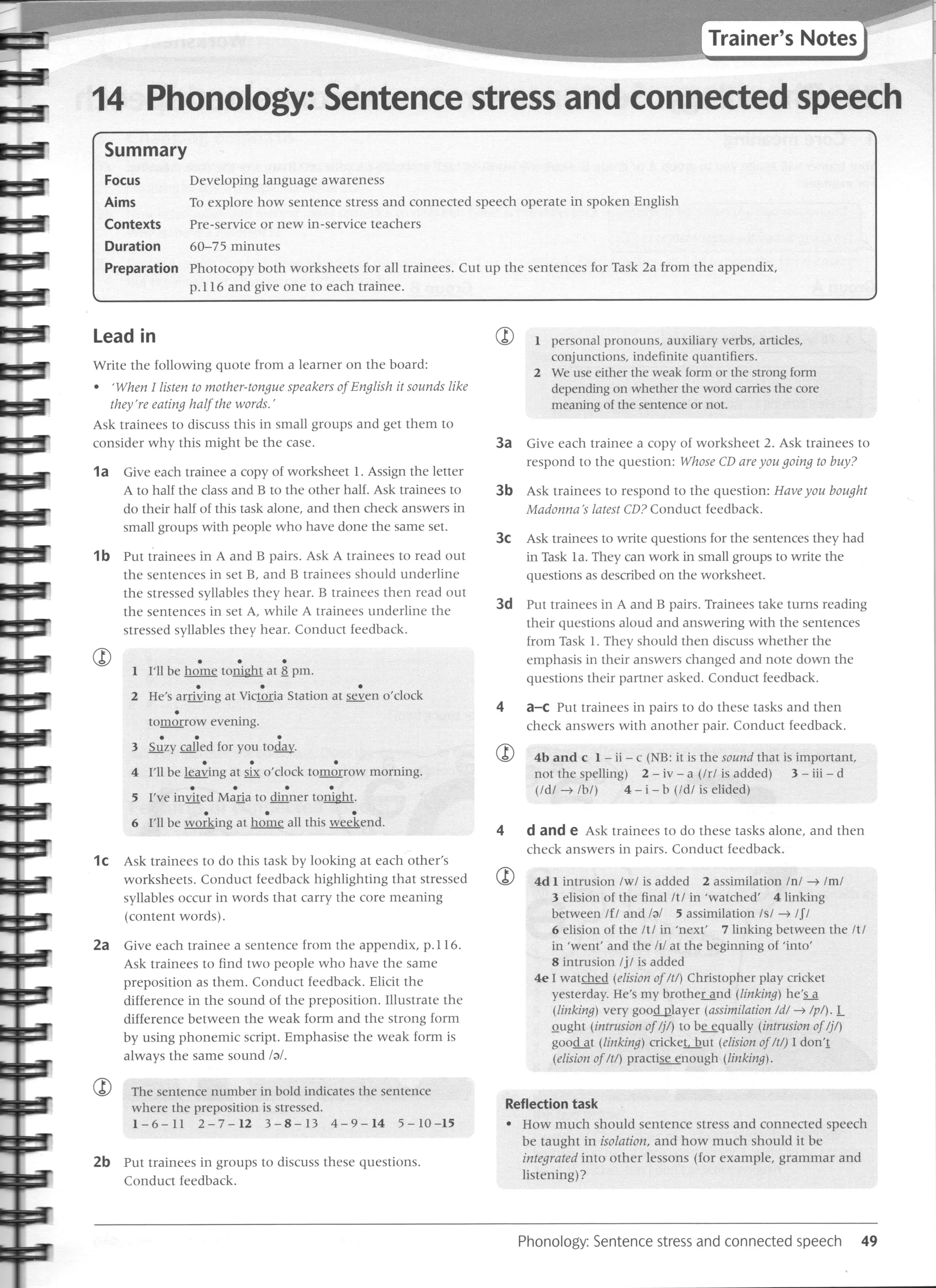
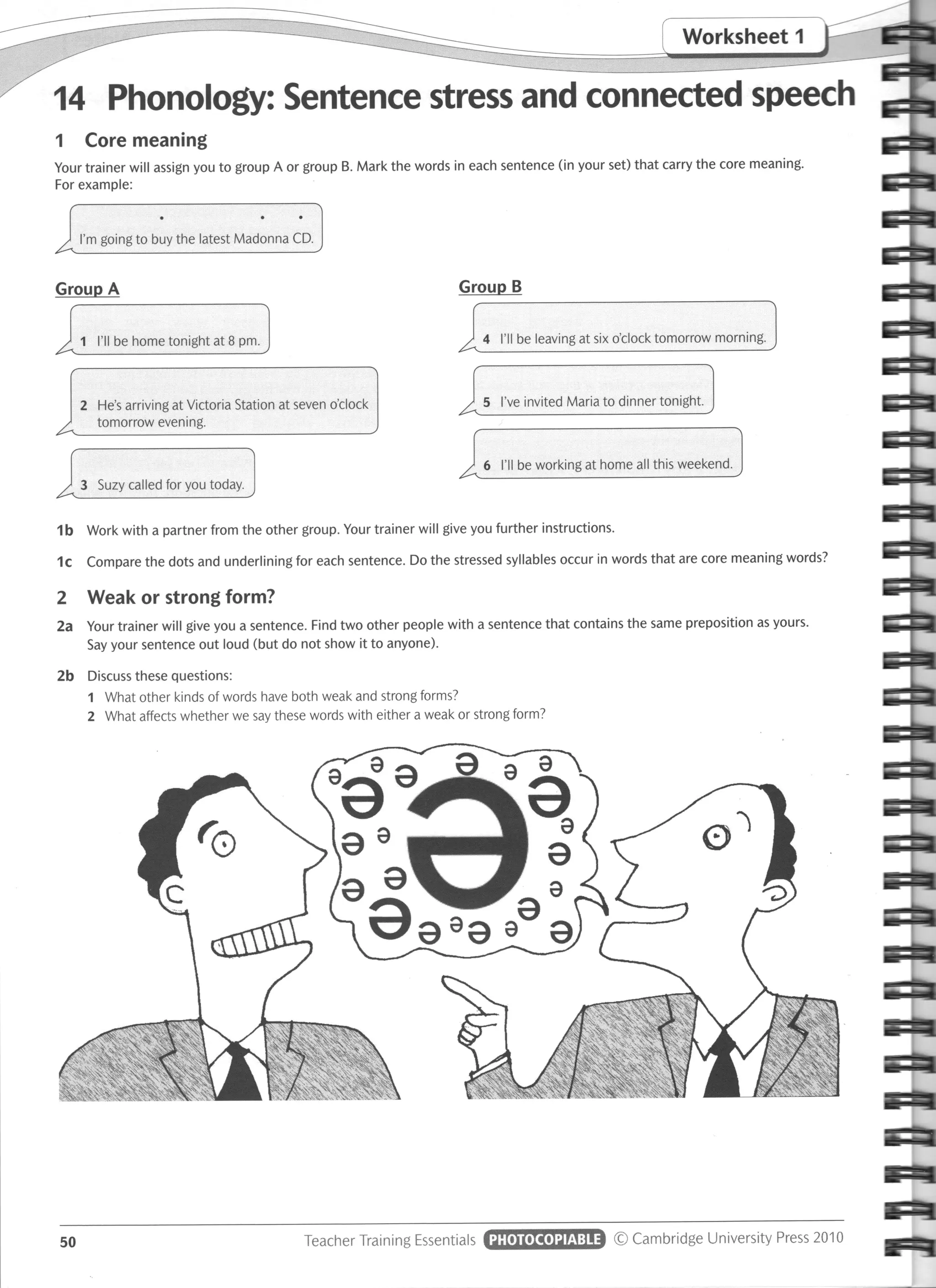
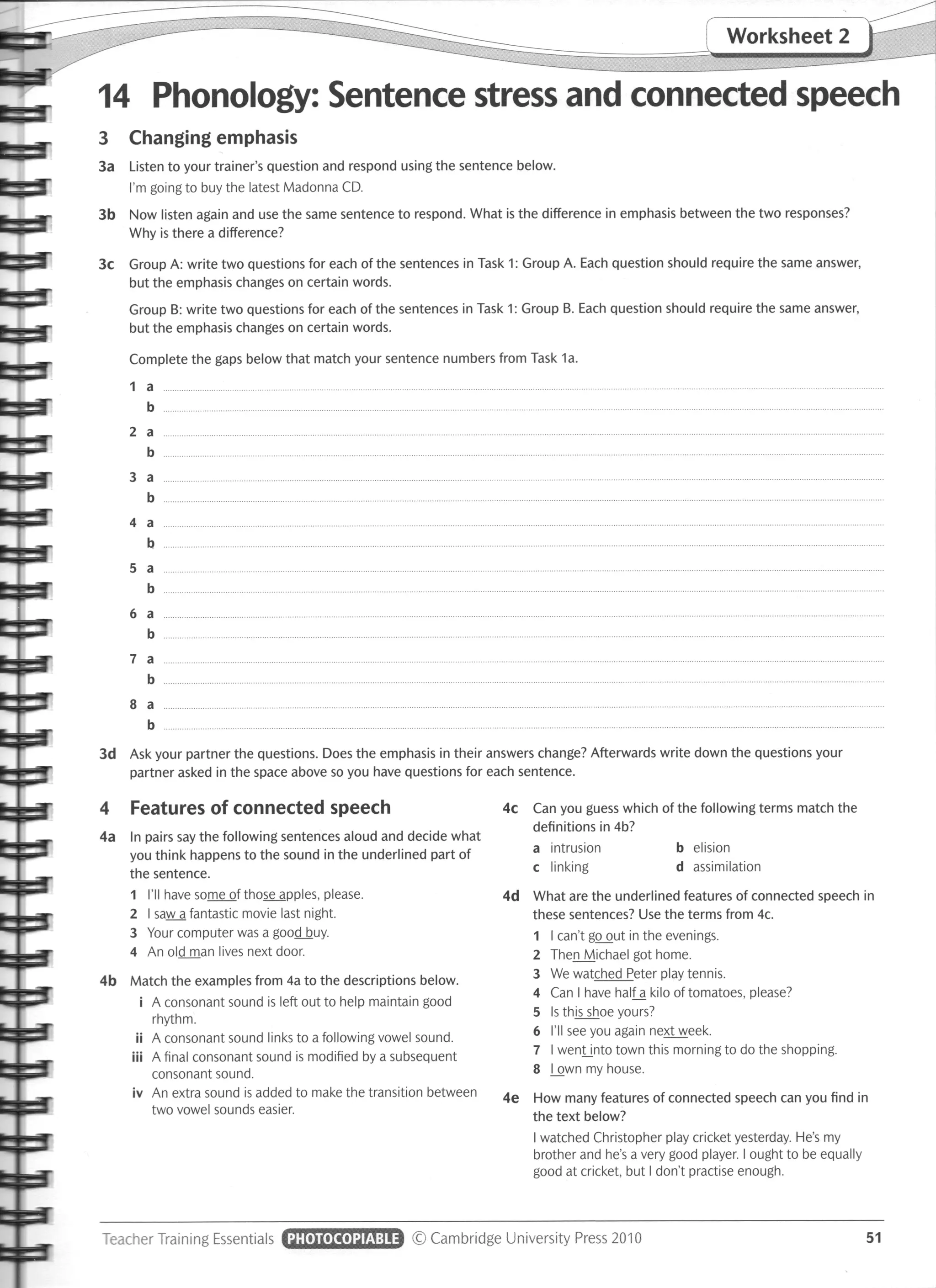
14 Phonology: Sentence stress and connected speech 49
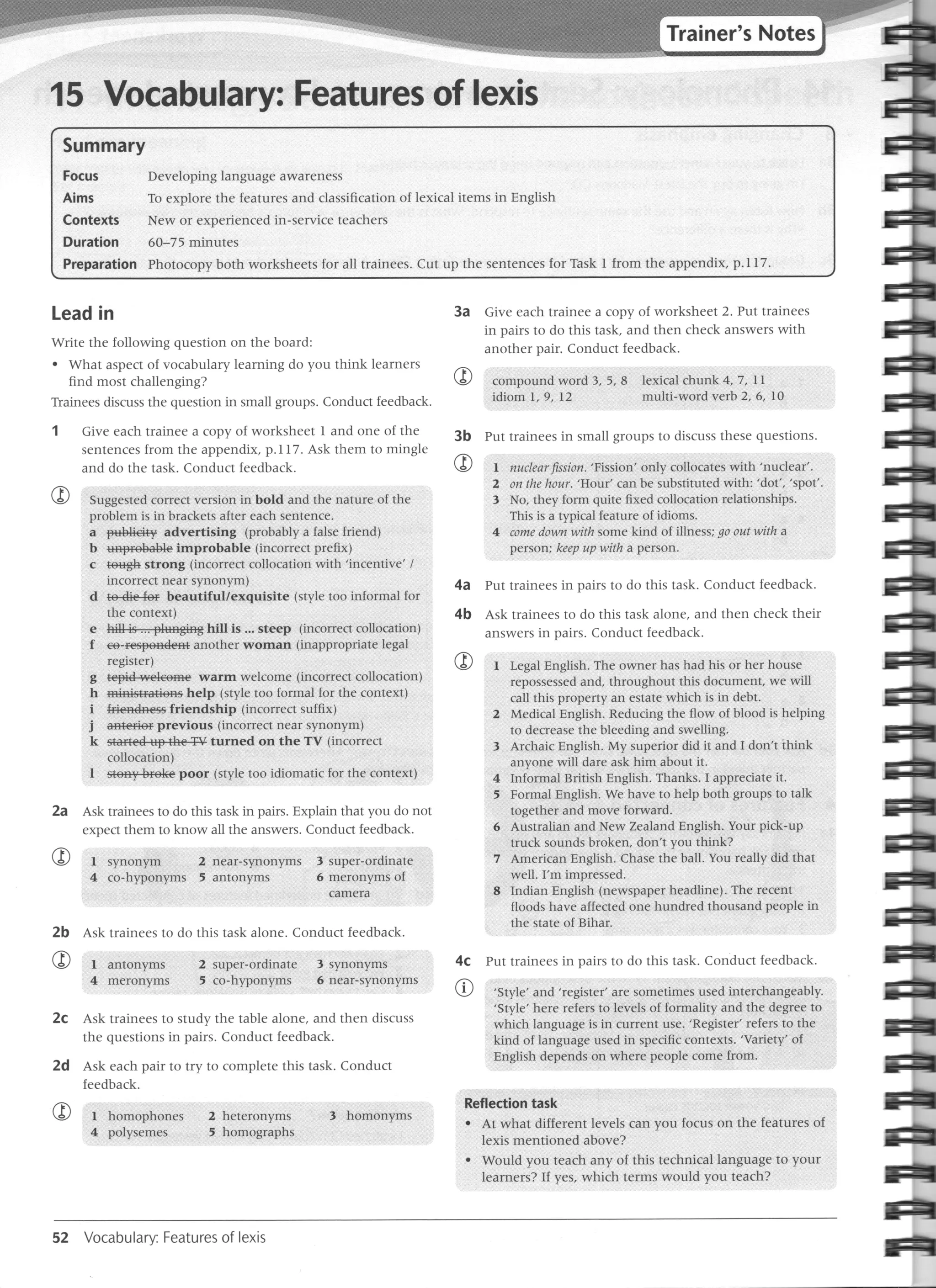
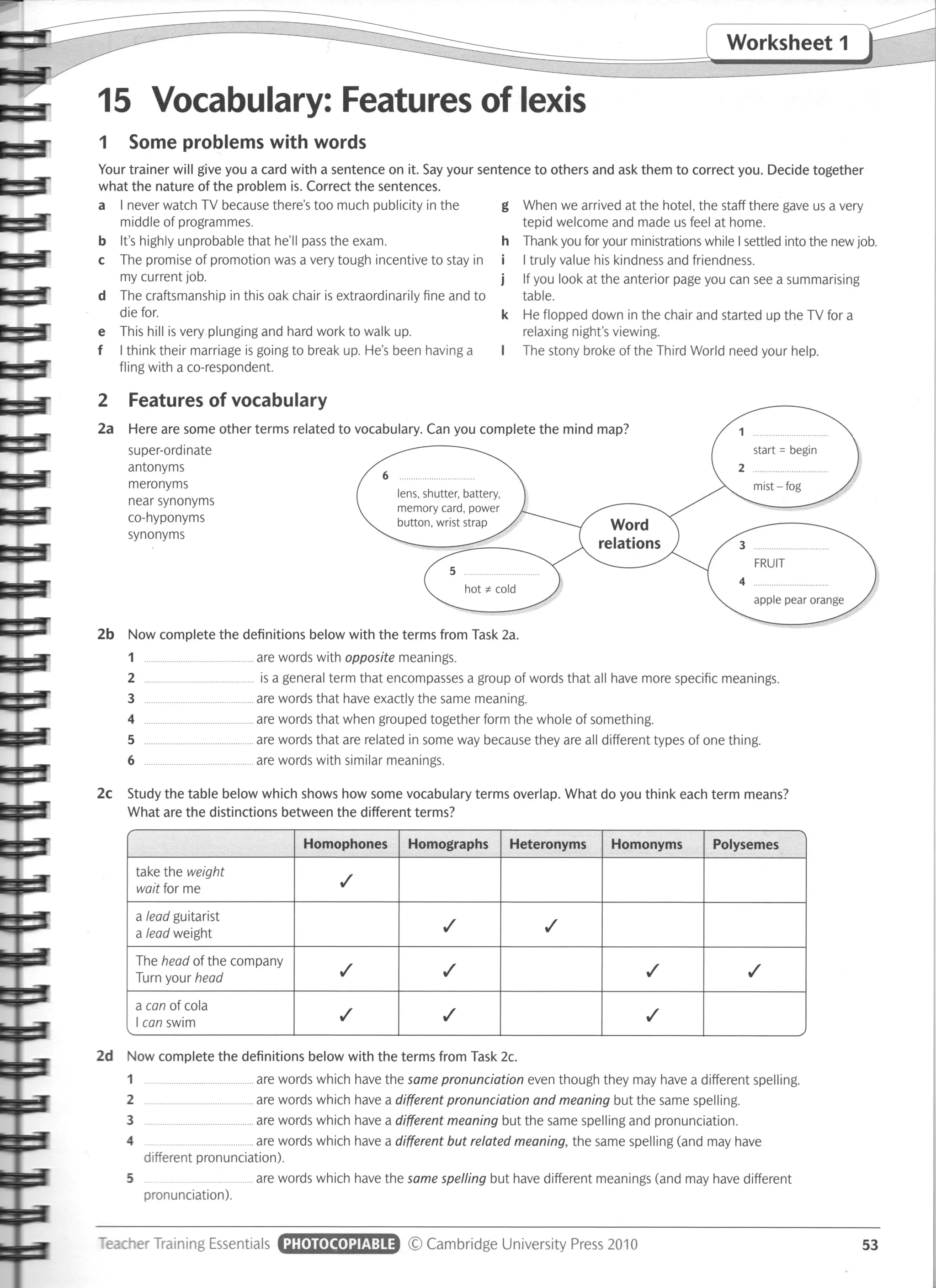
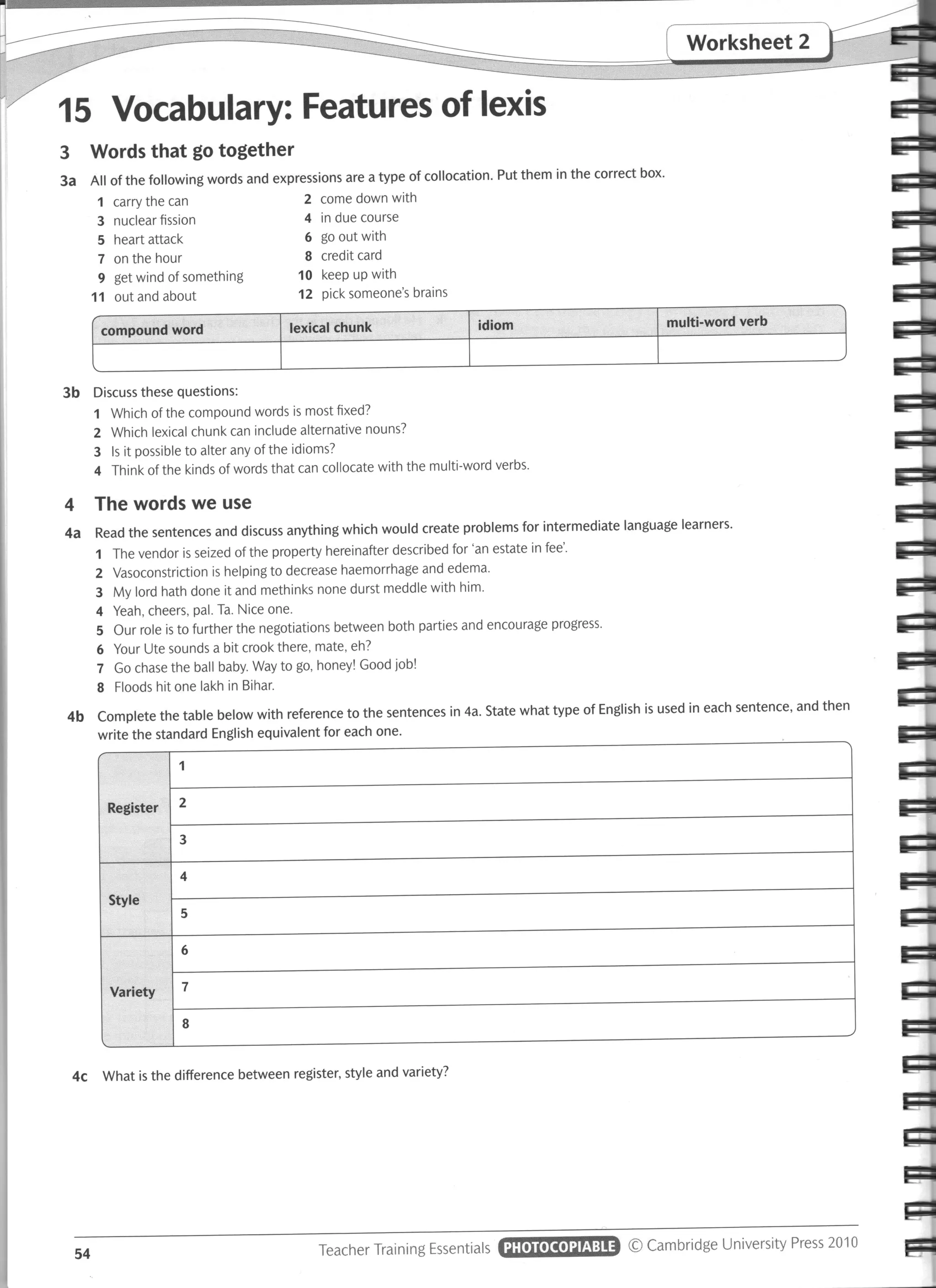
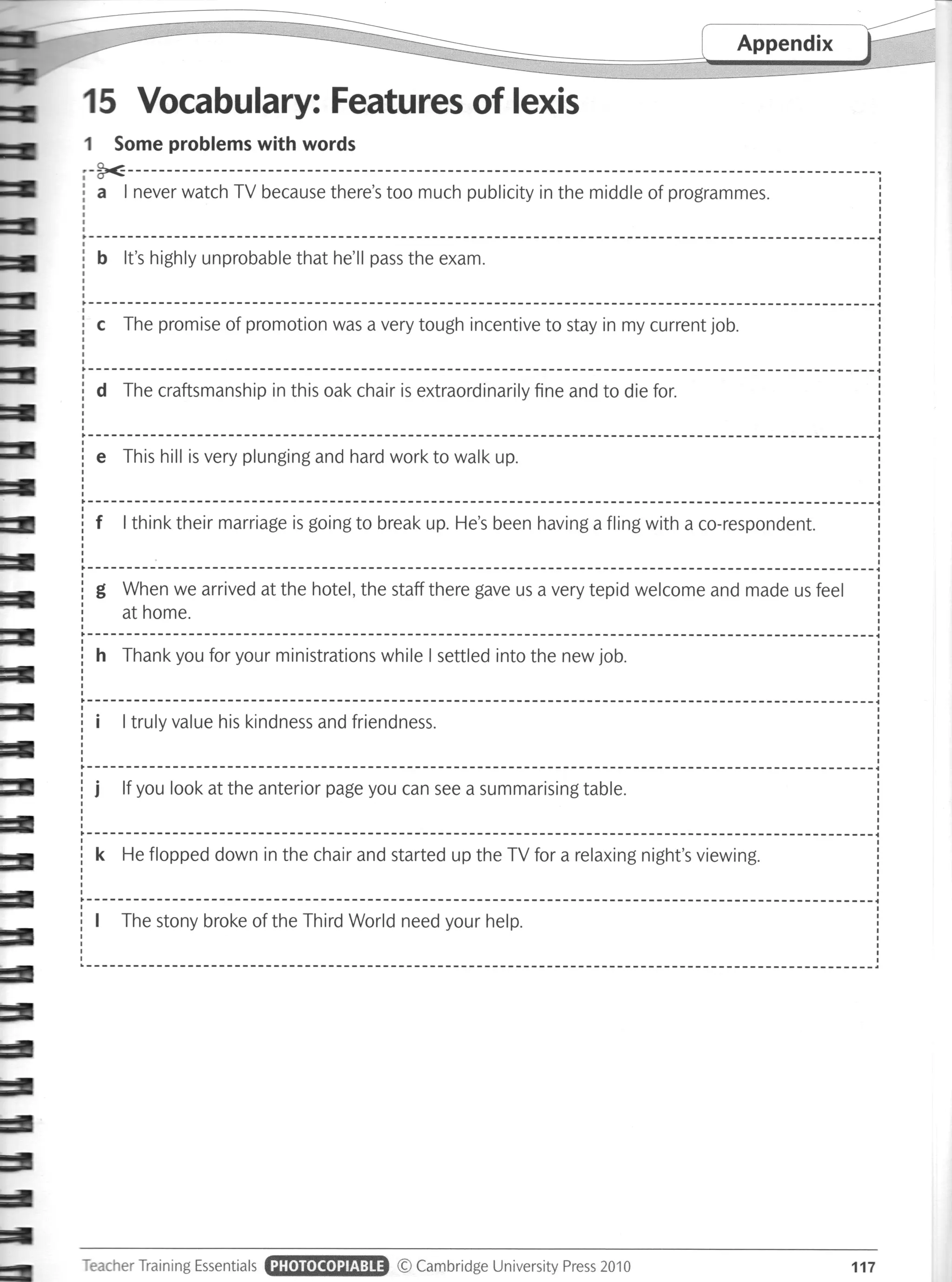
15 Vocabulary: Features of lexis 52
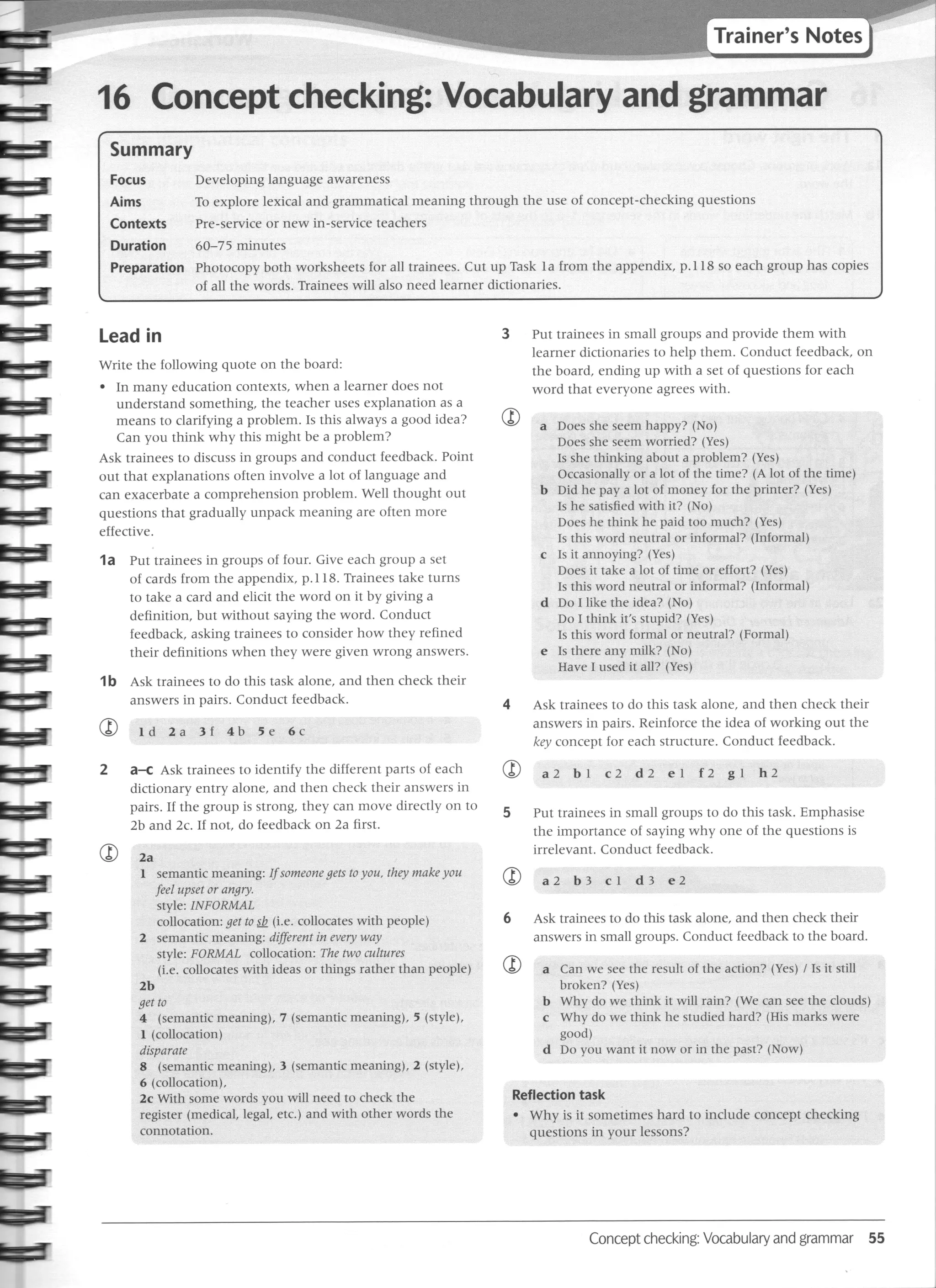
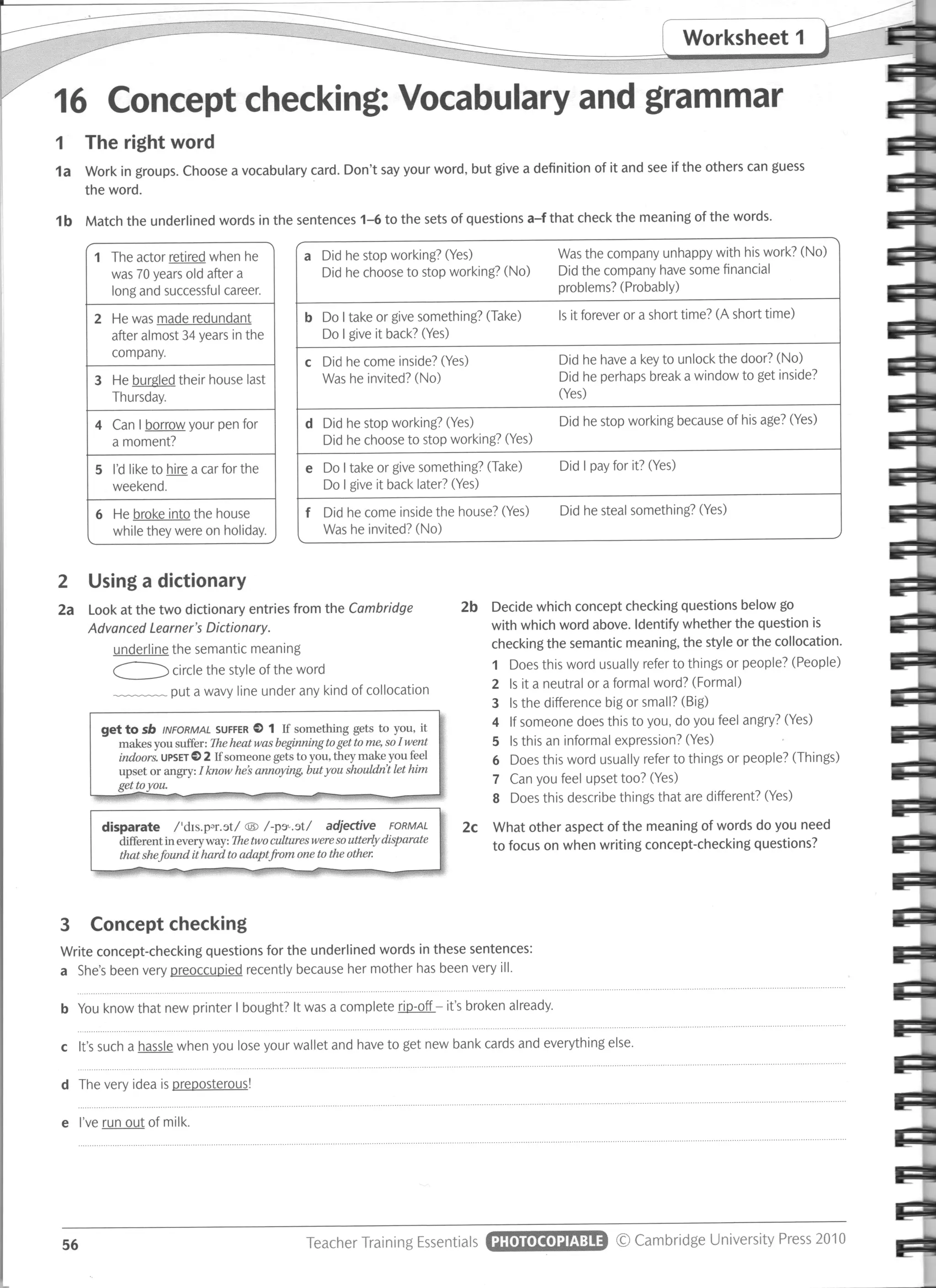
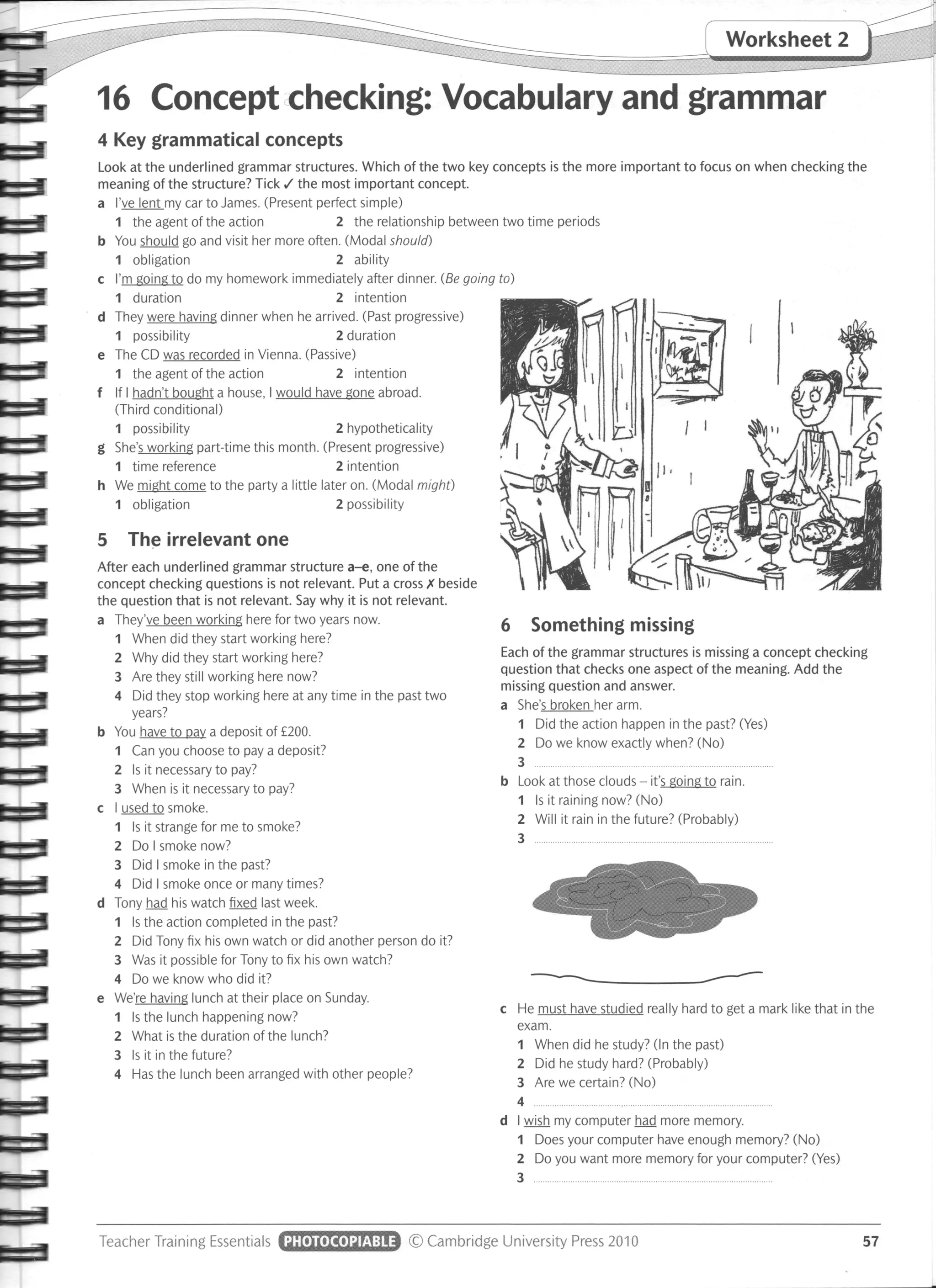
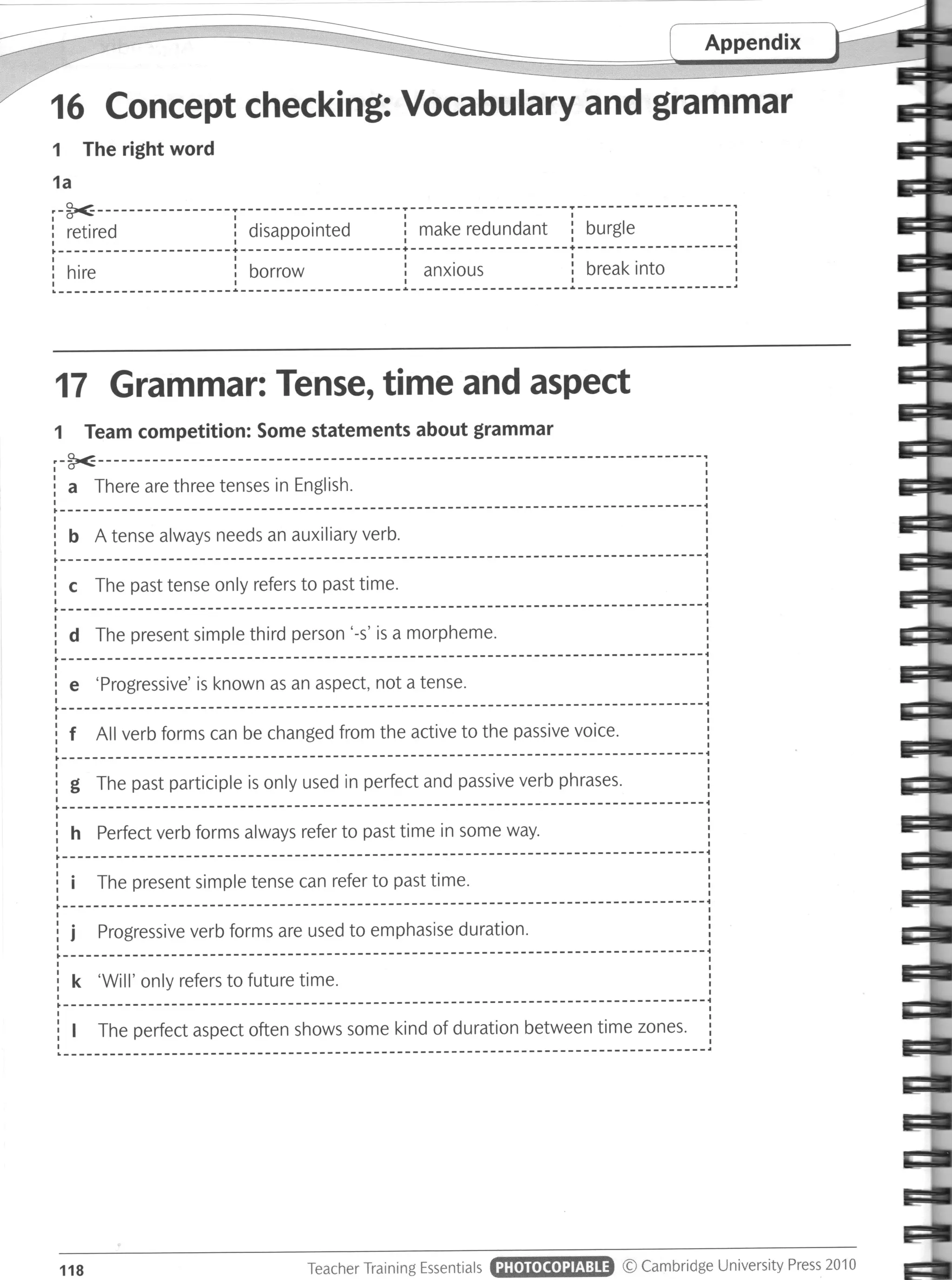
16 Concept checking: Vocabulary and grammar 55
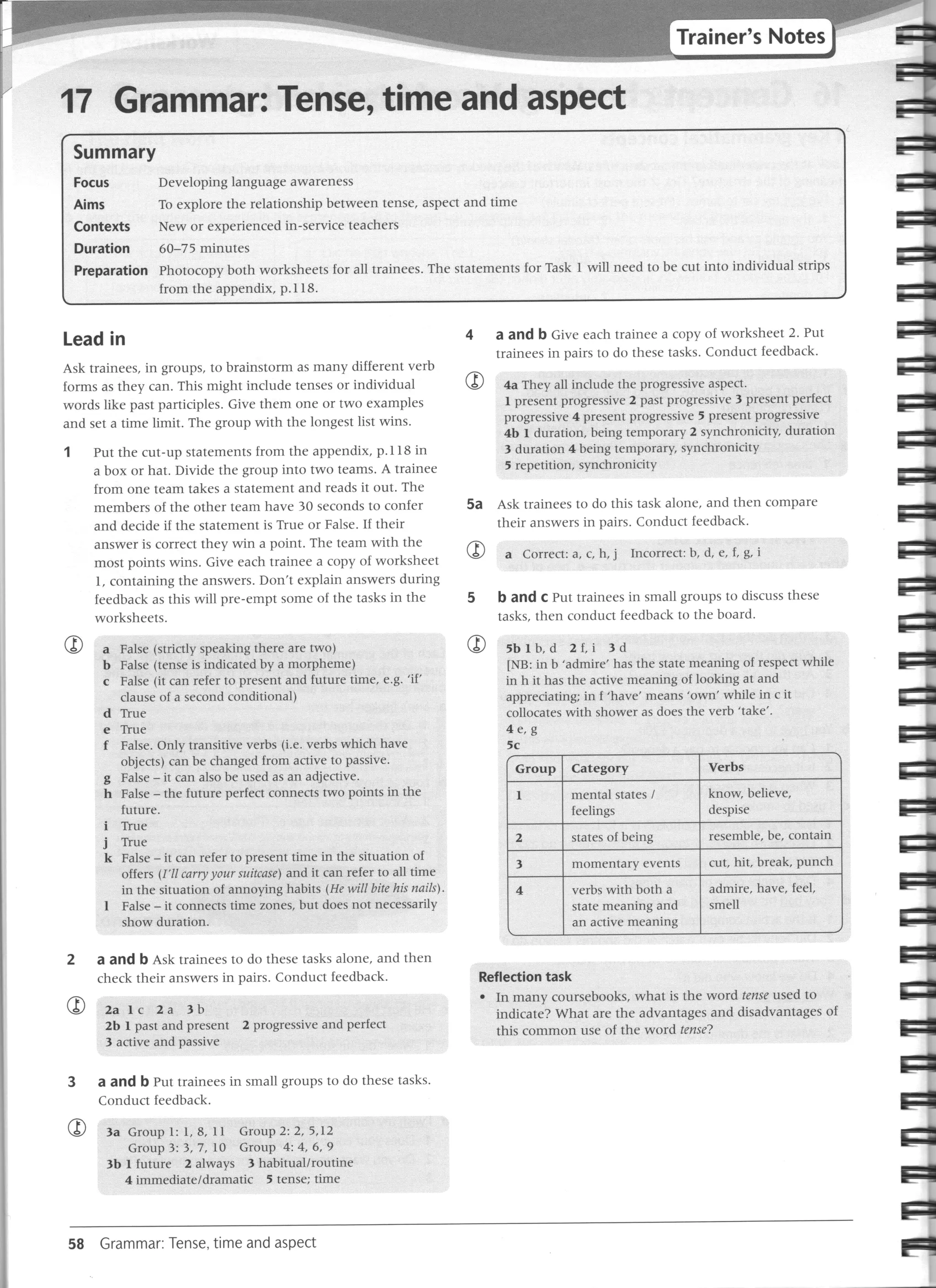
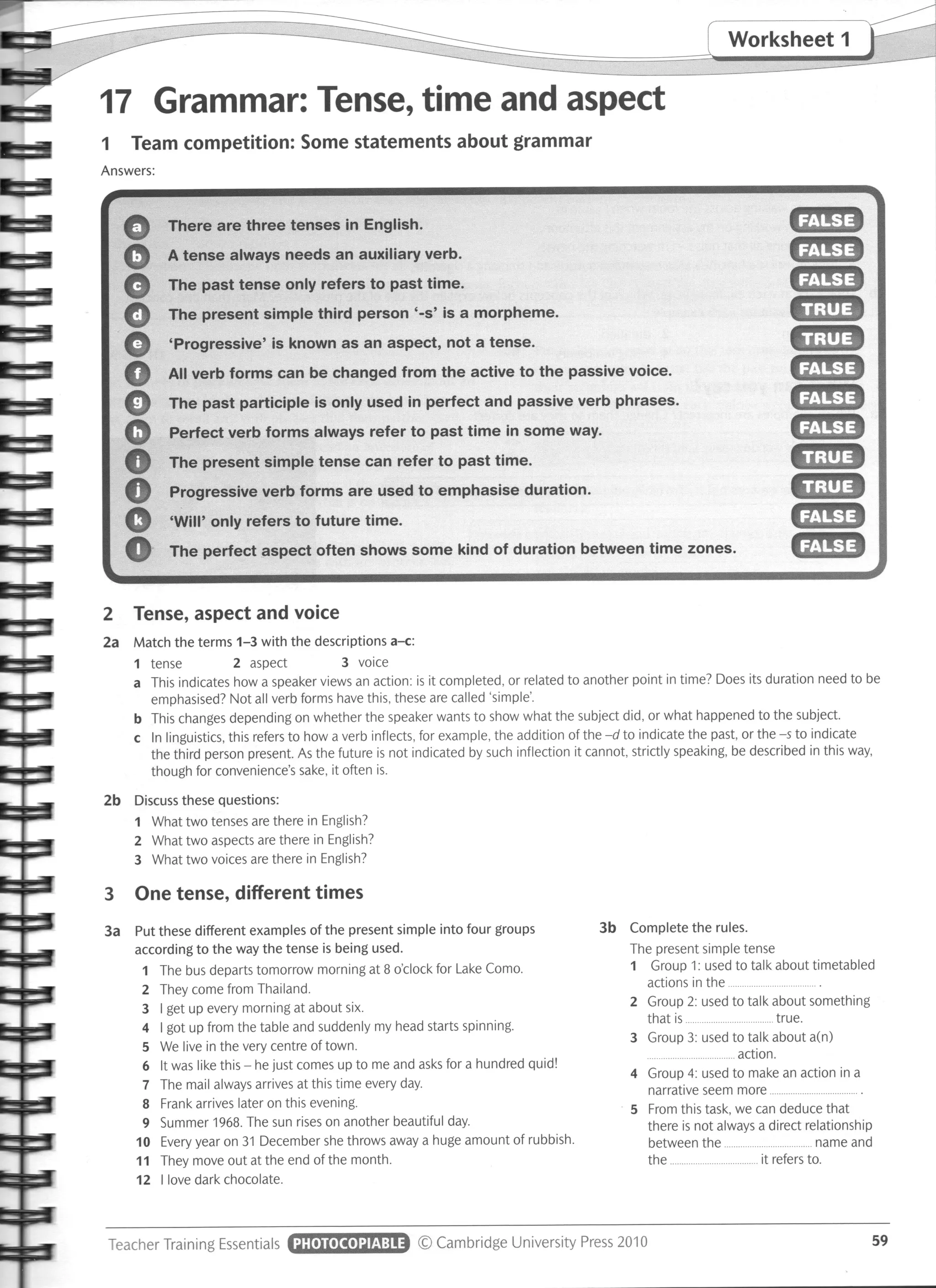
17 Grammar: Tense, time and aspect 58
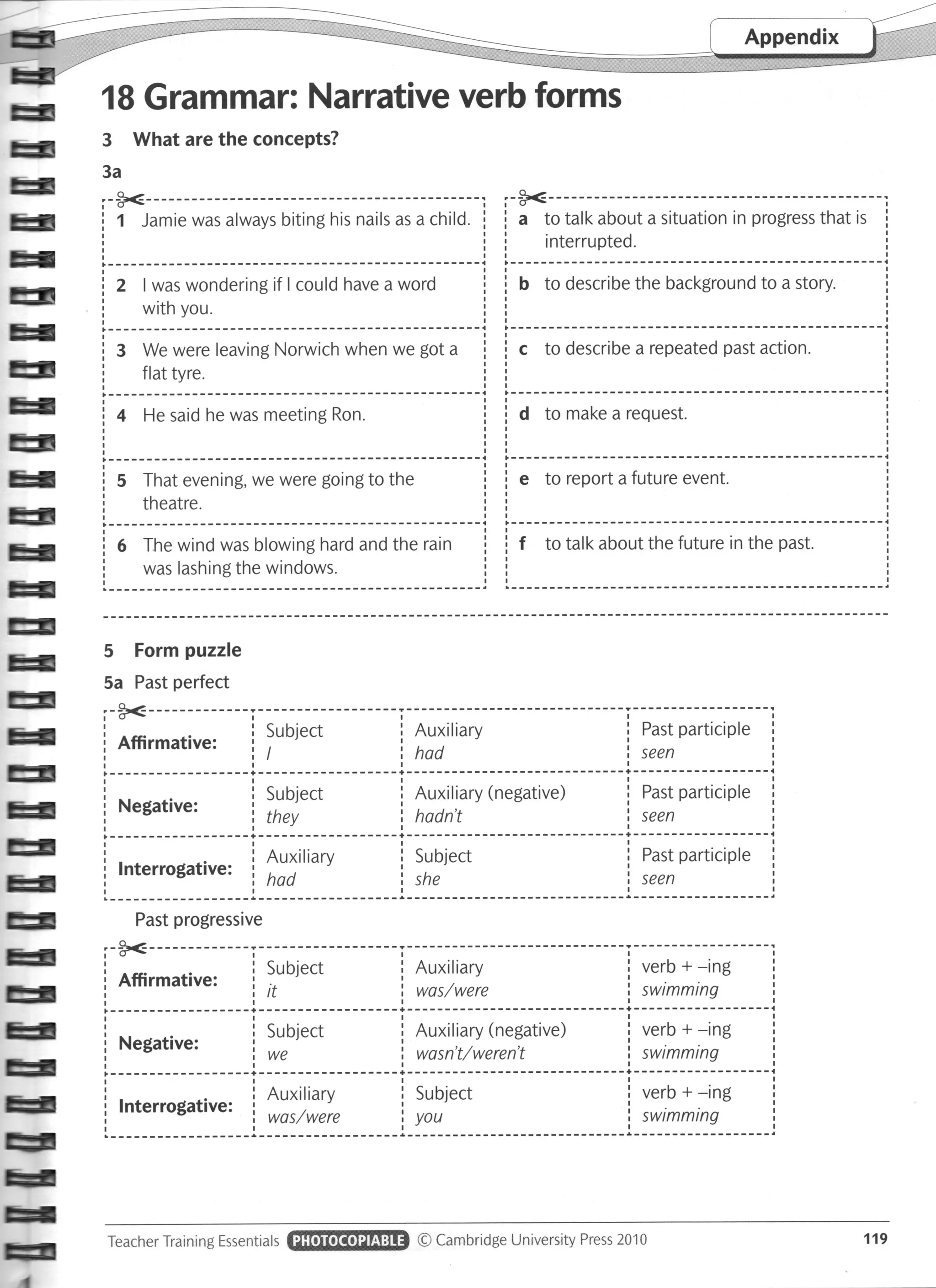
18 Grammar: Narrative verb forms 61
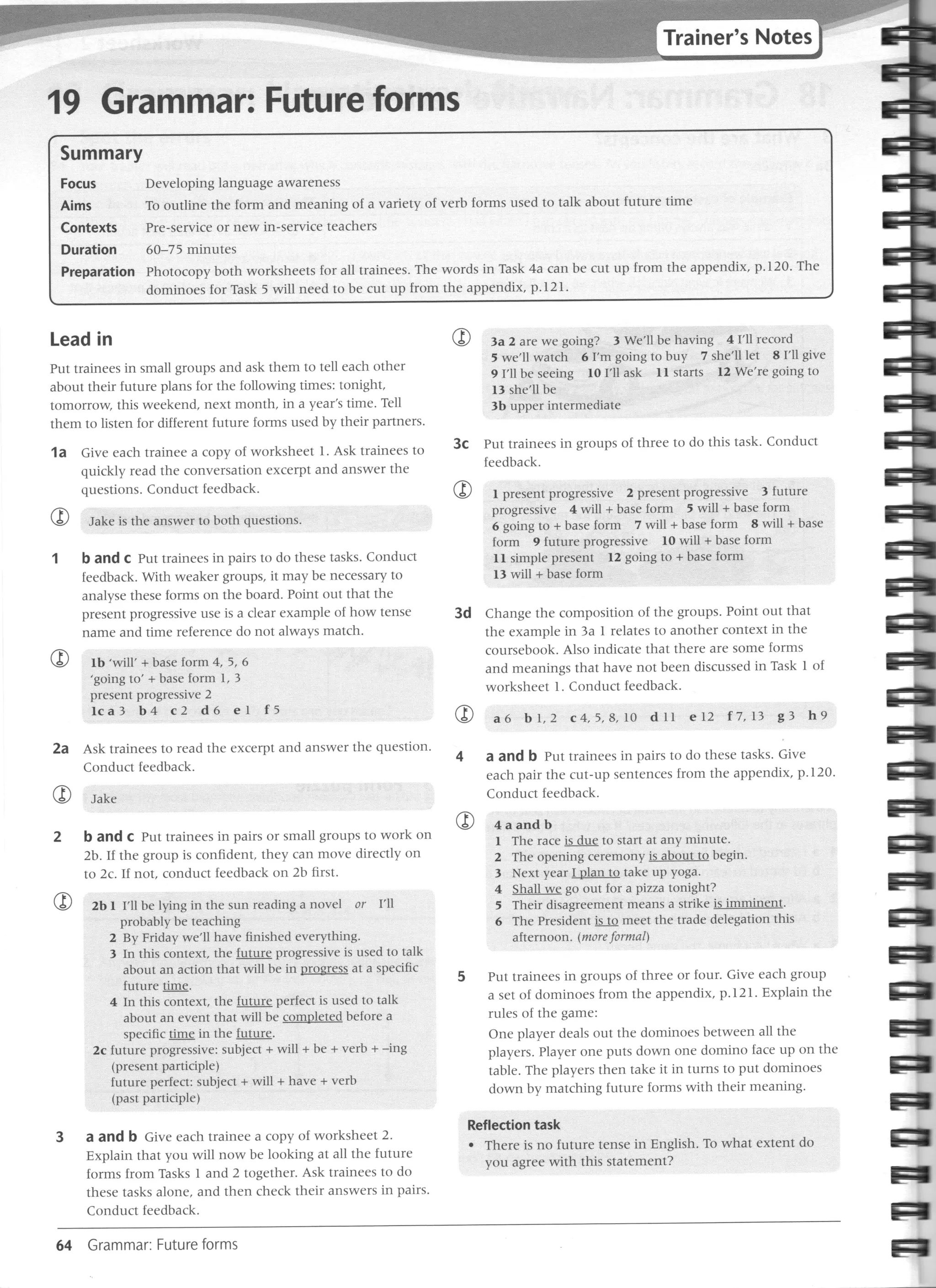
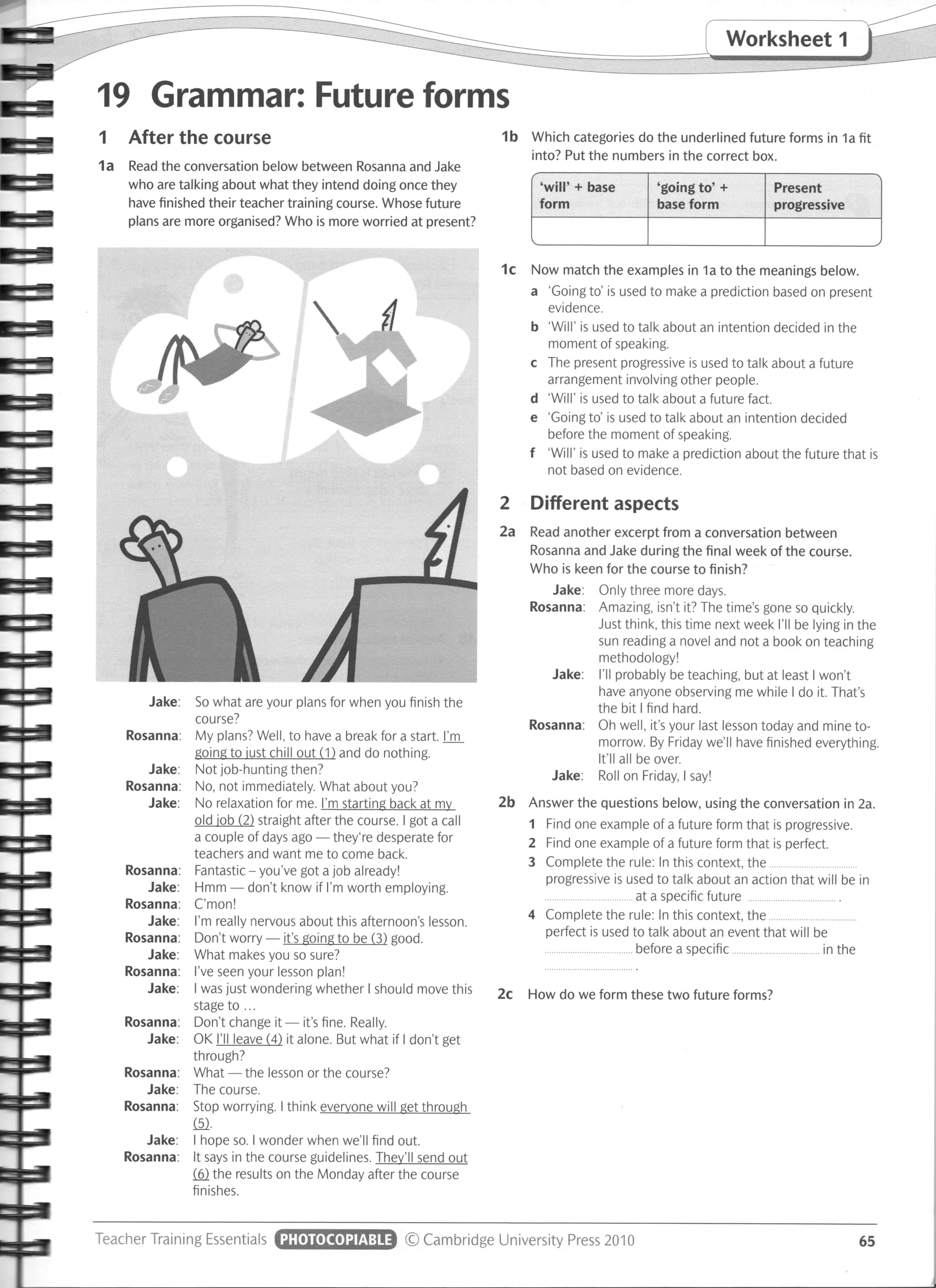
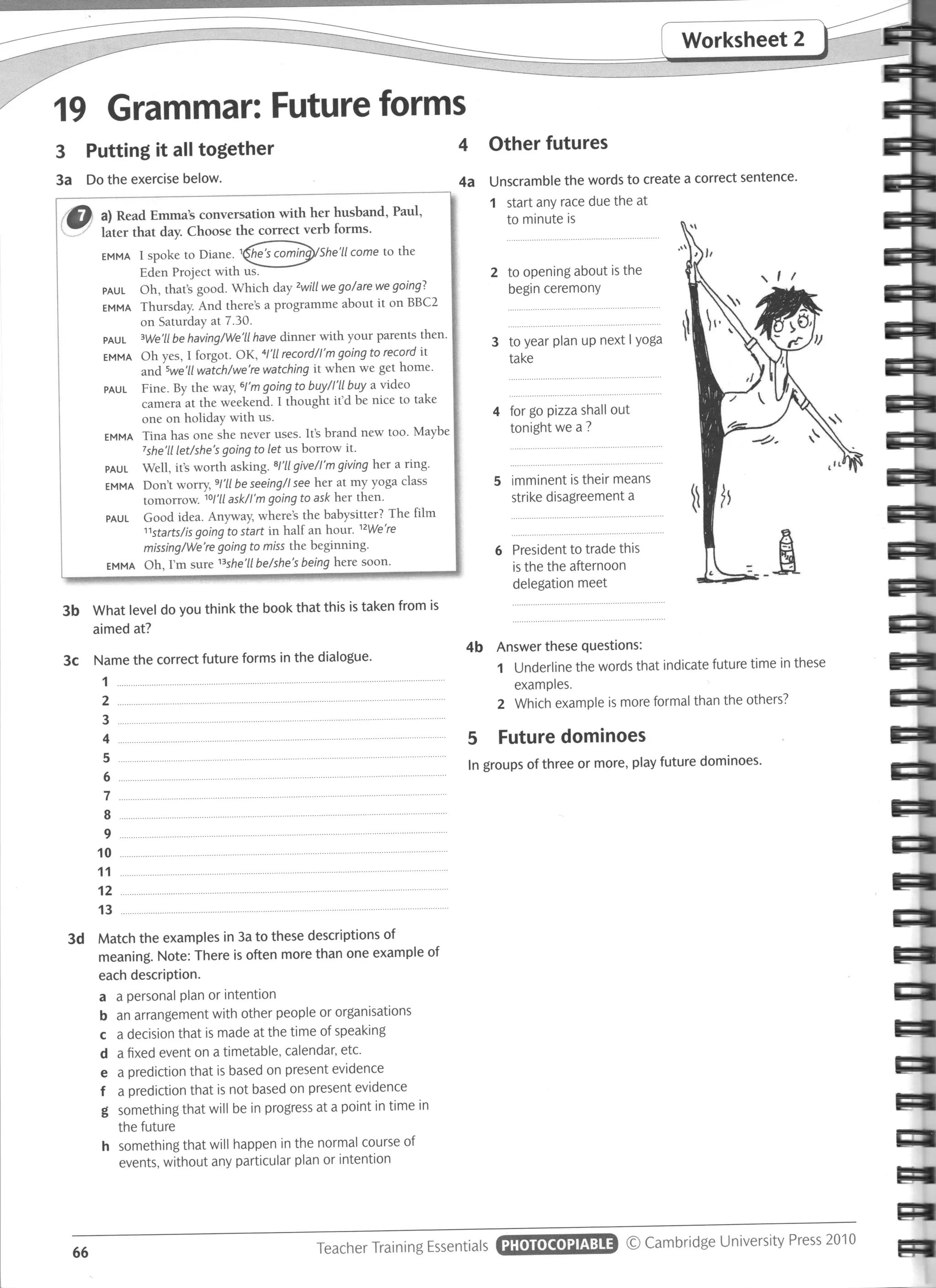
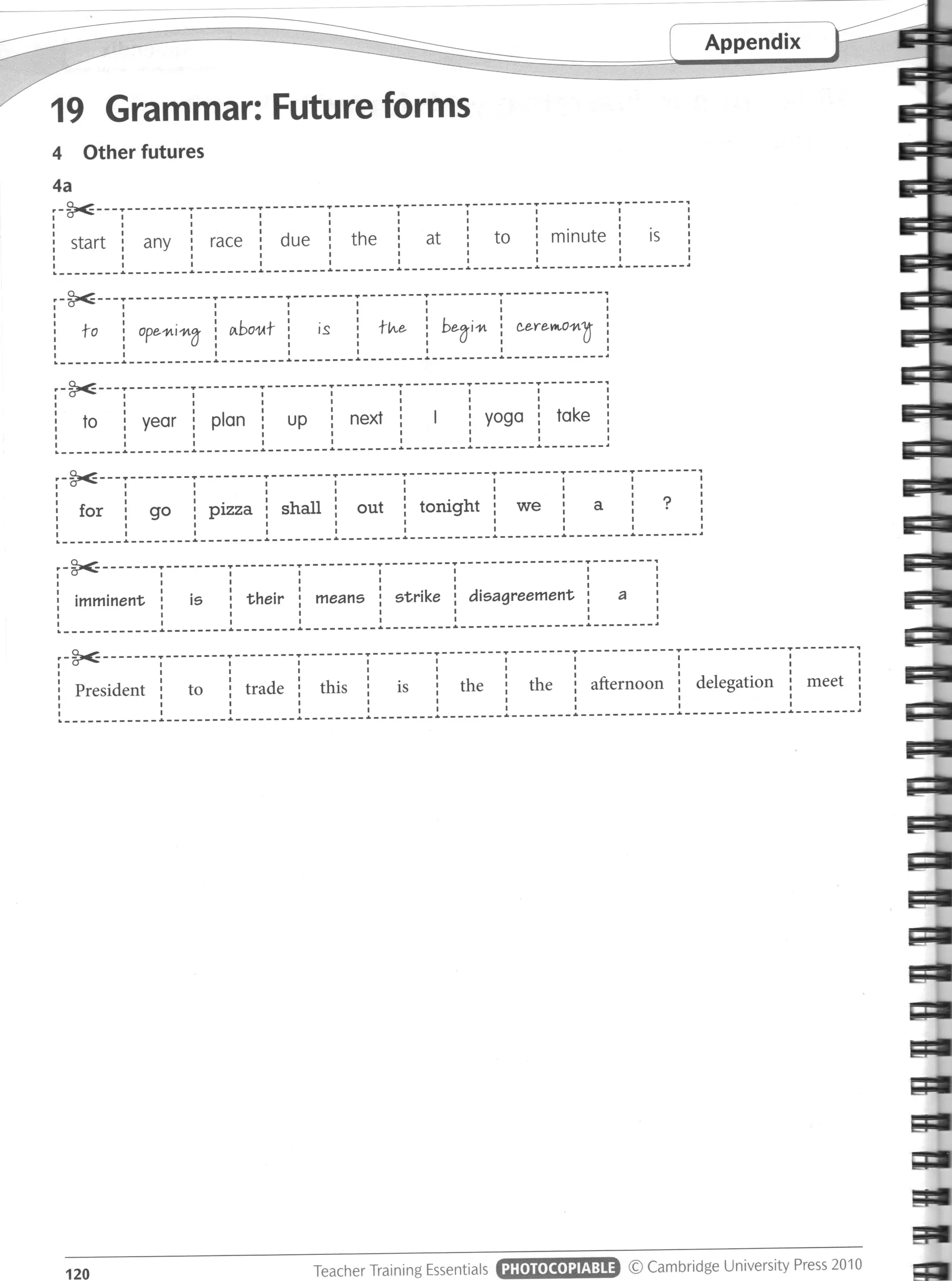
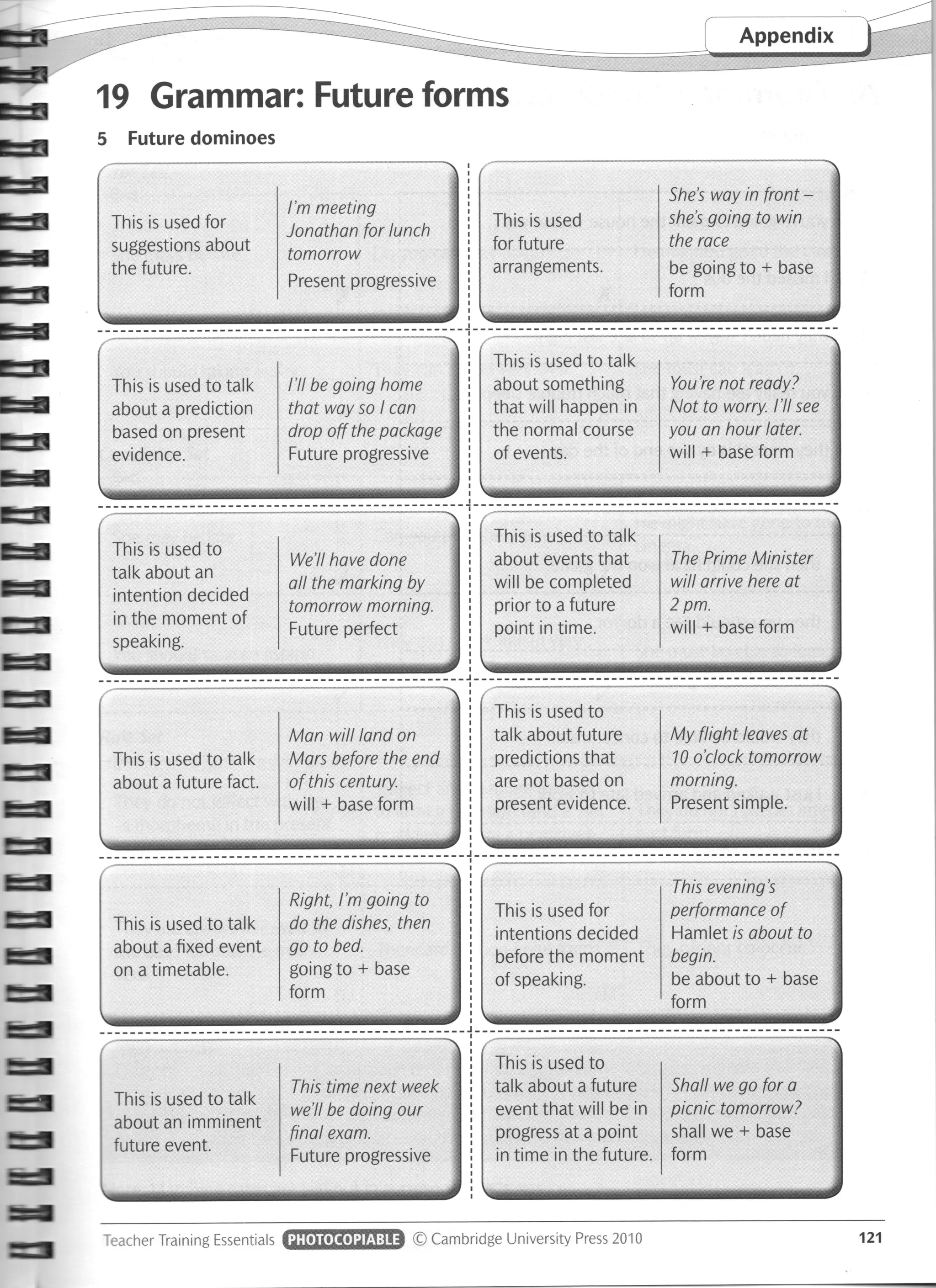
19 Grammar: Future forms 64
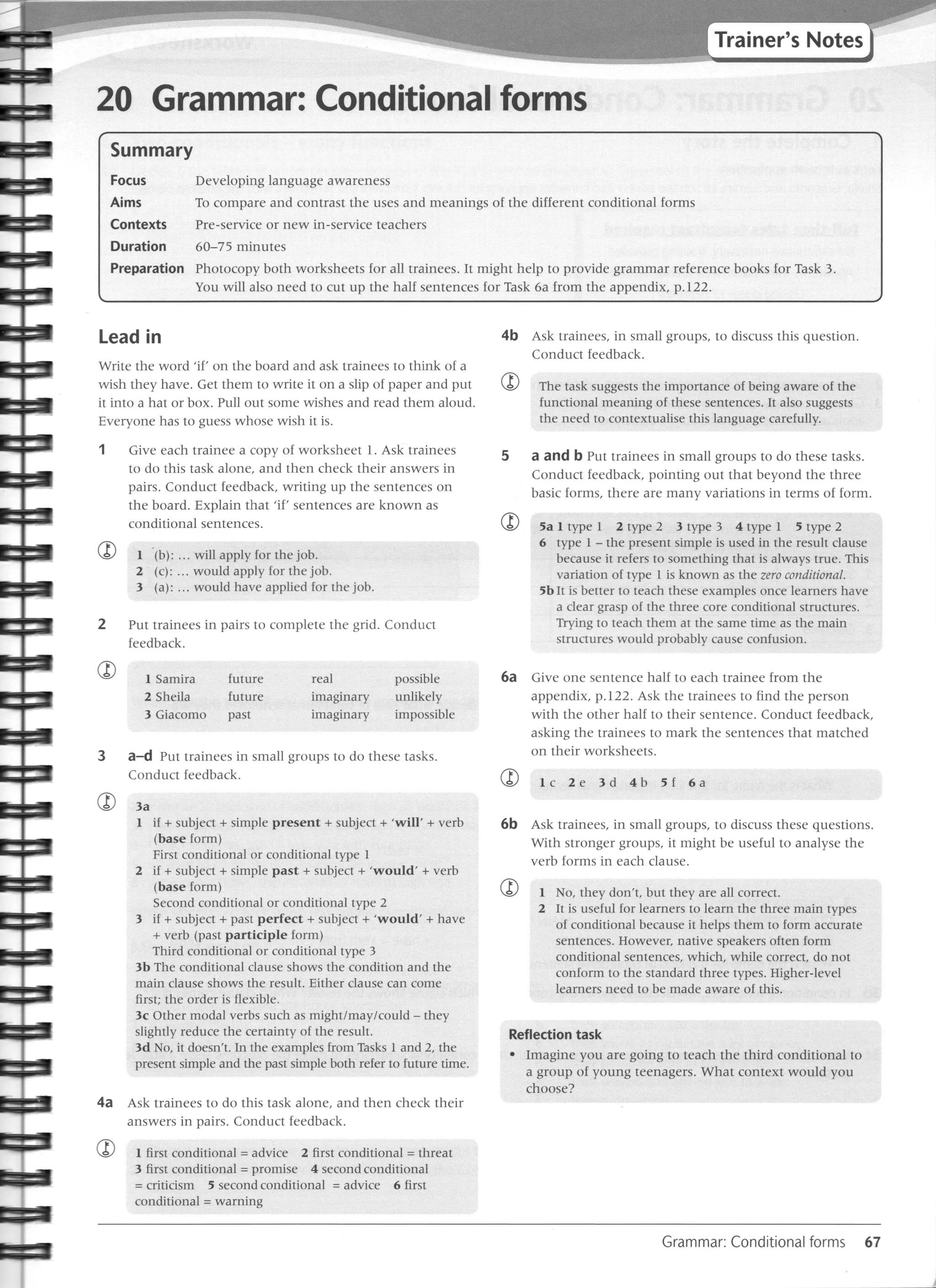
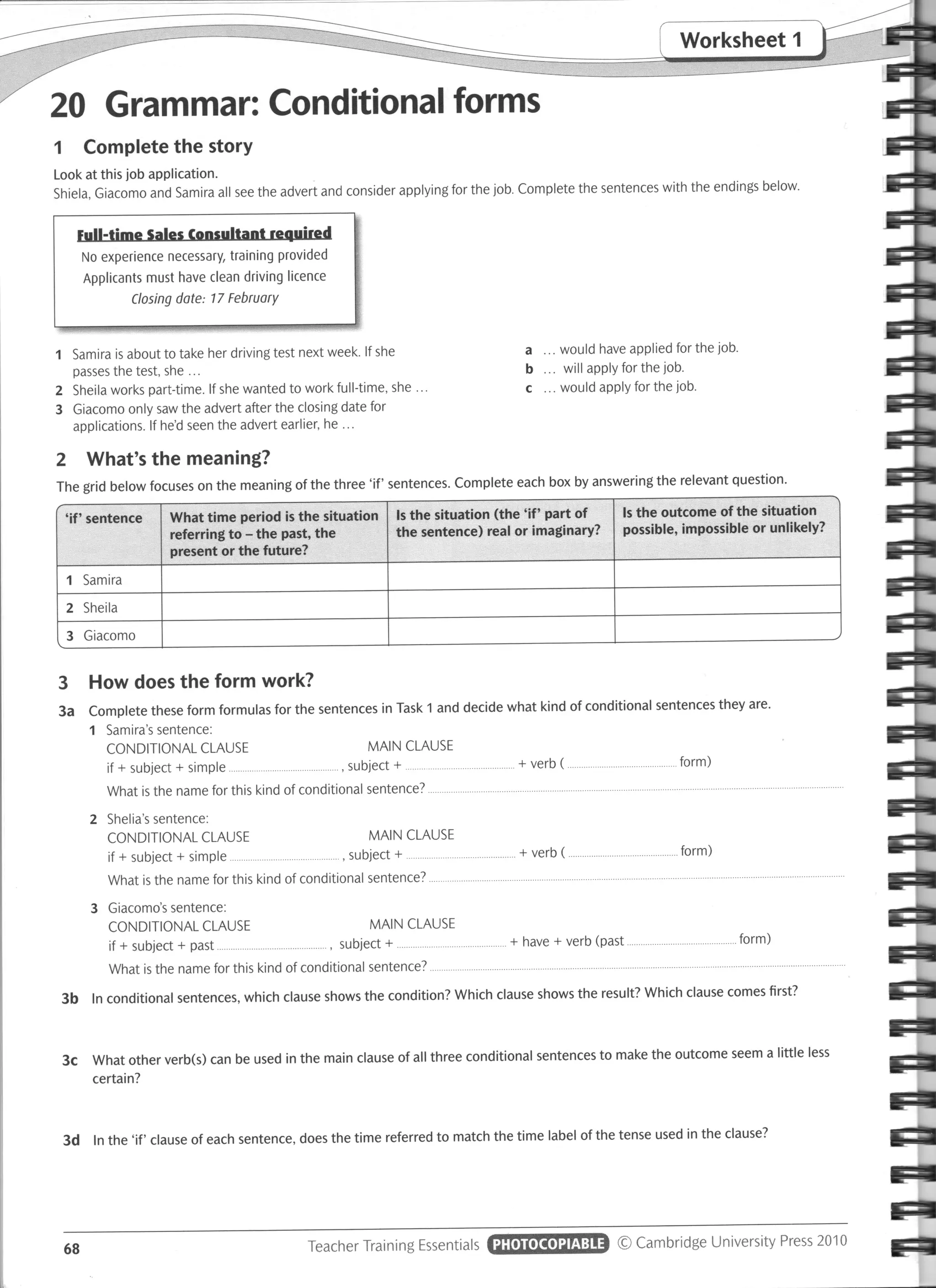
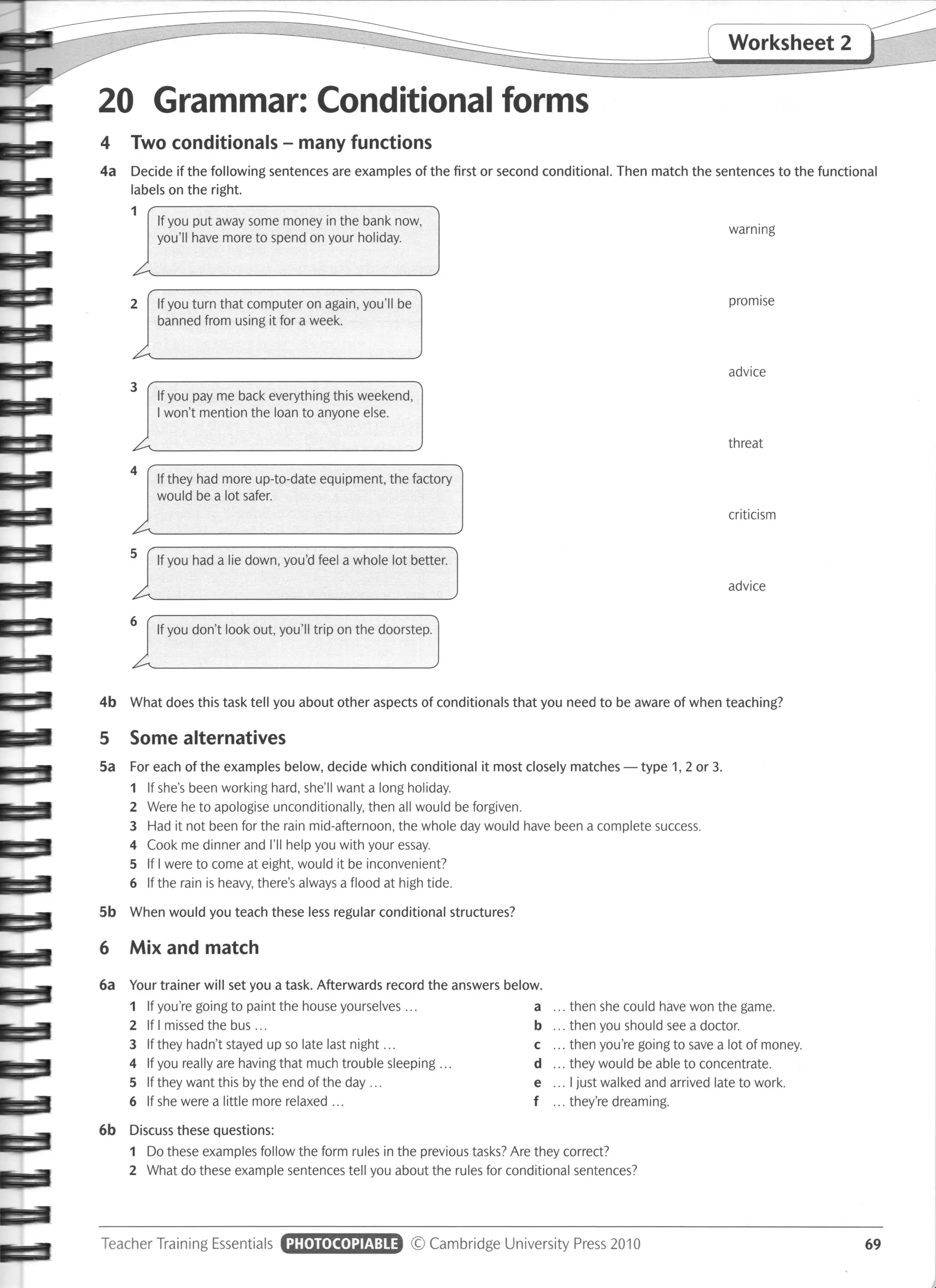
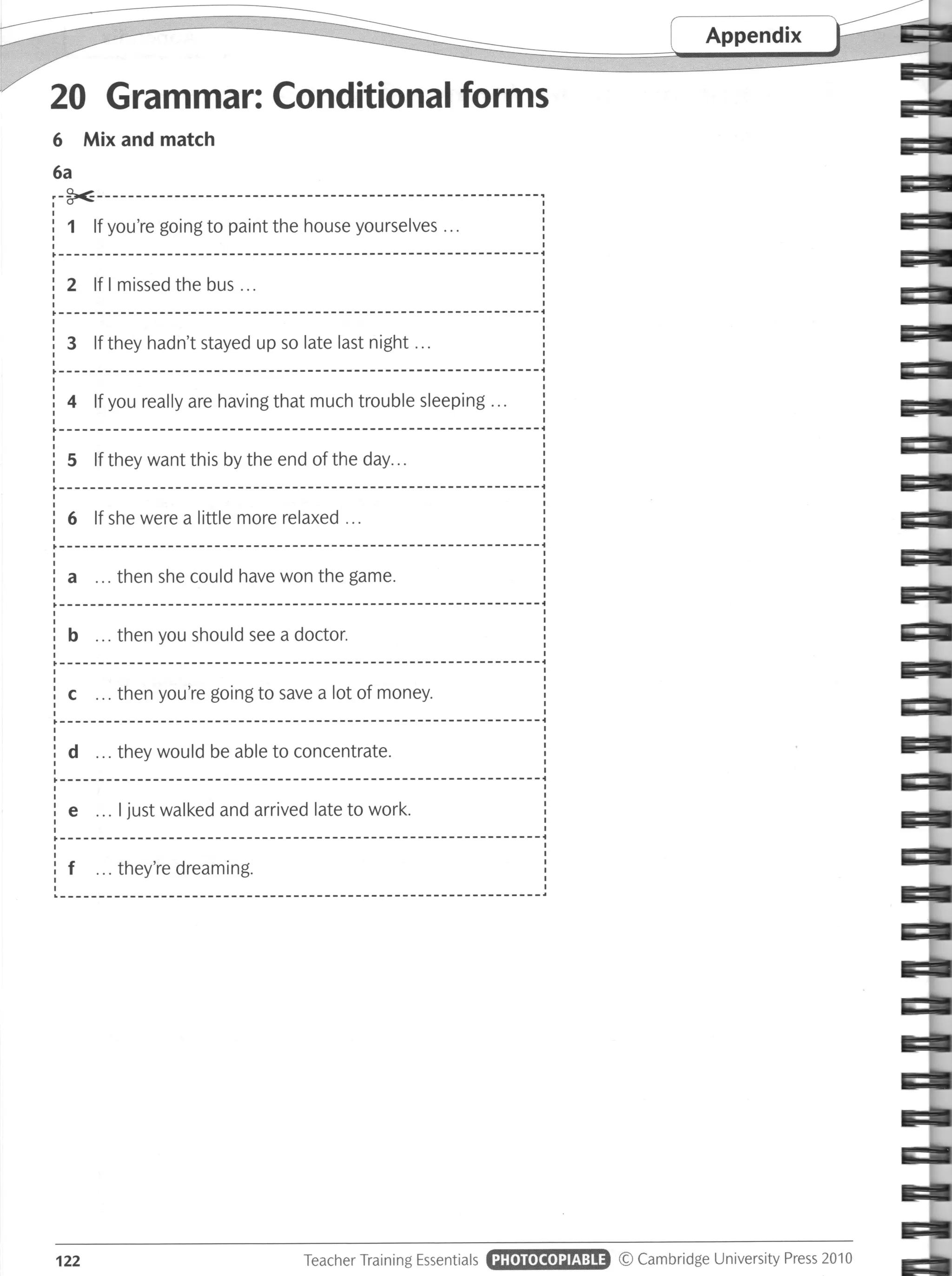
20 Grammar: Conditional forms 67
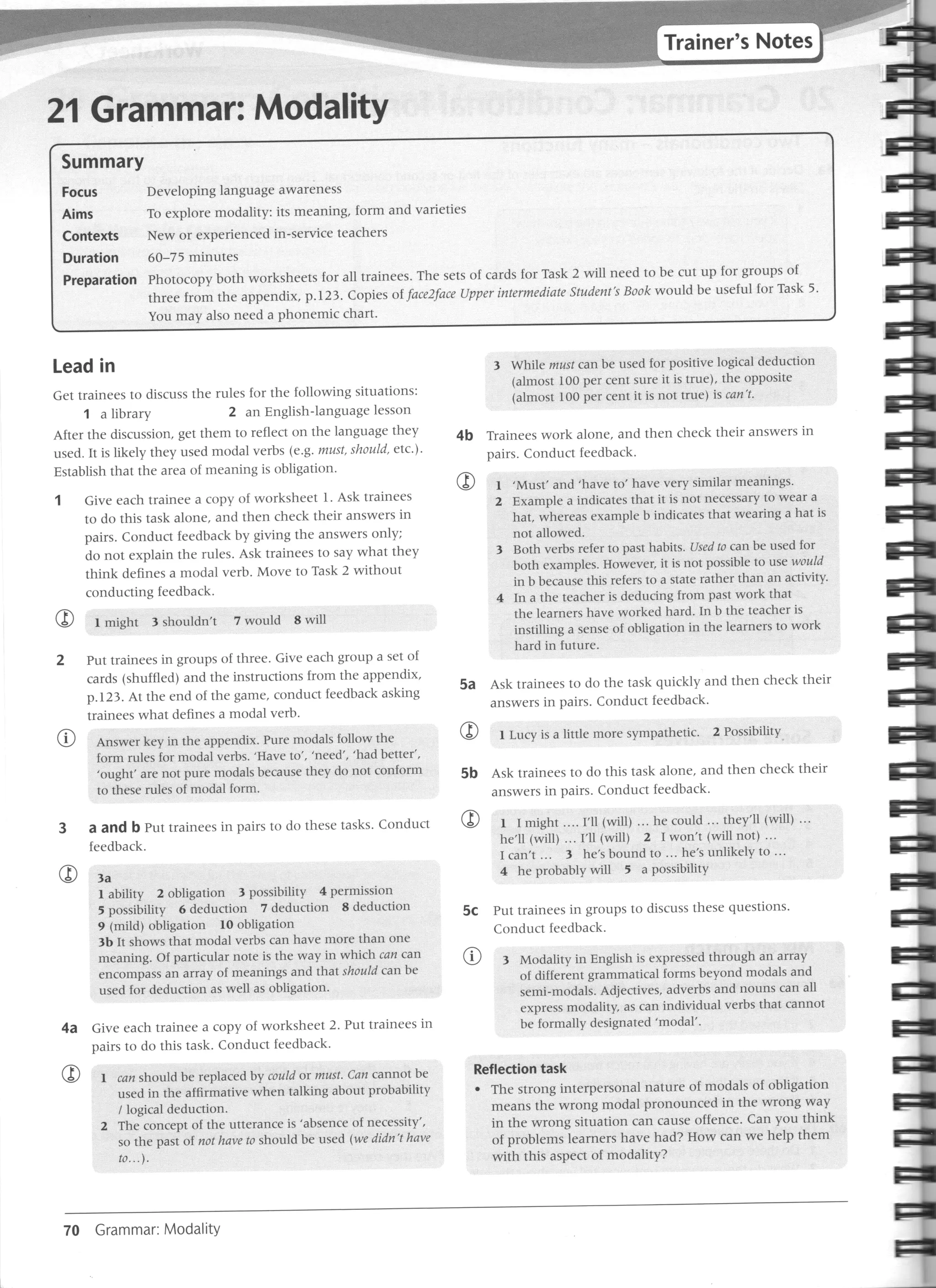
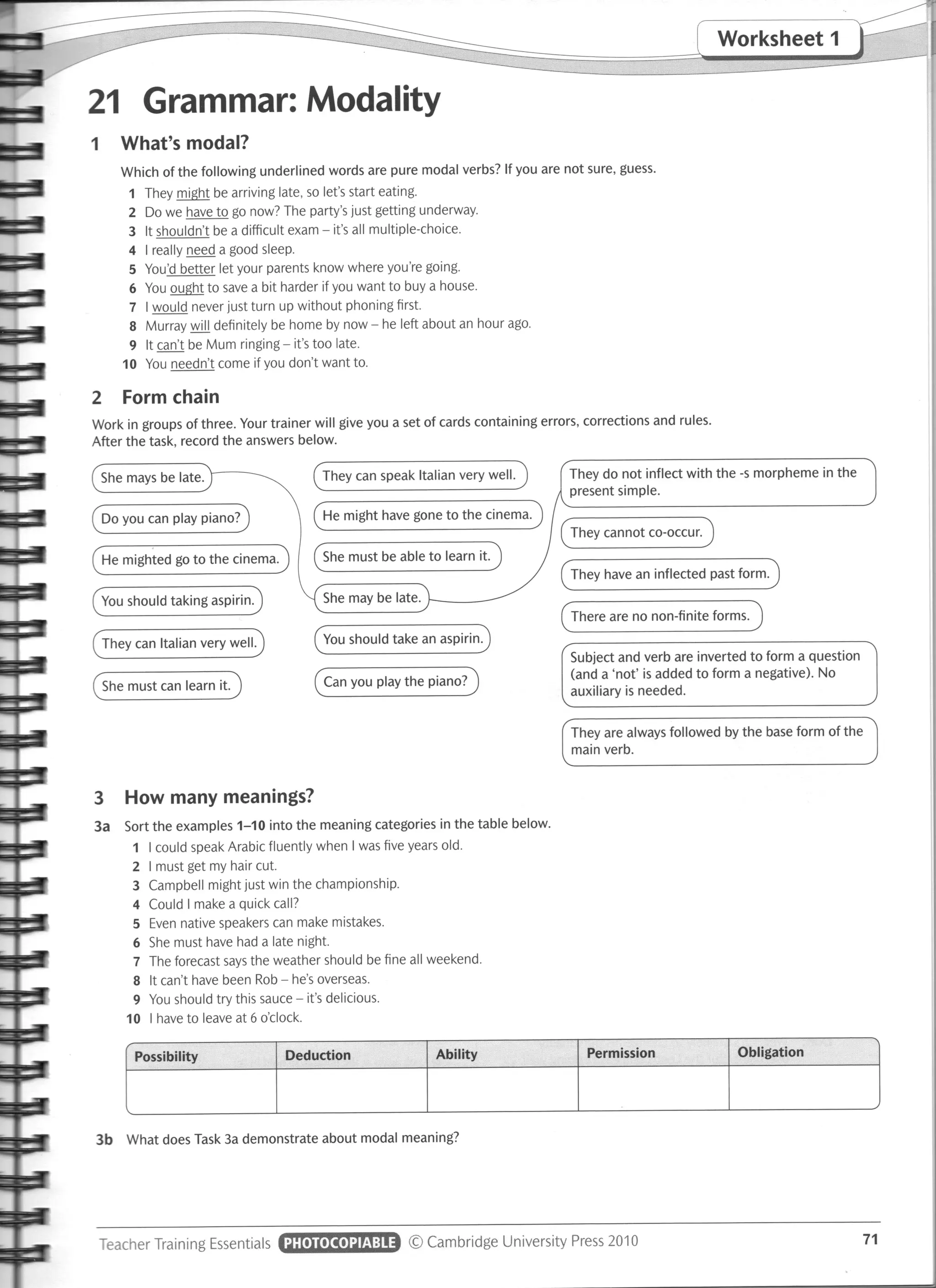
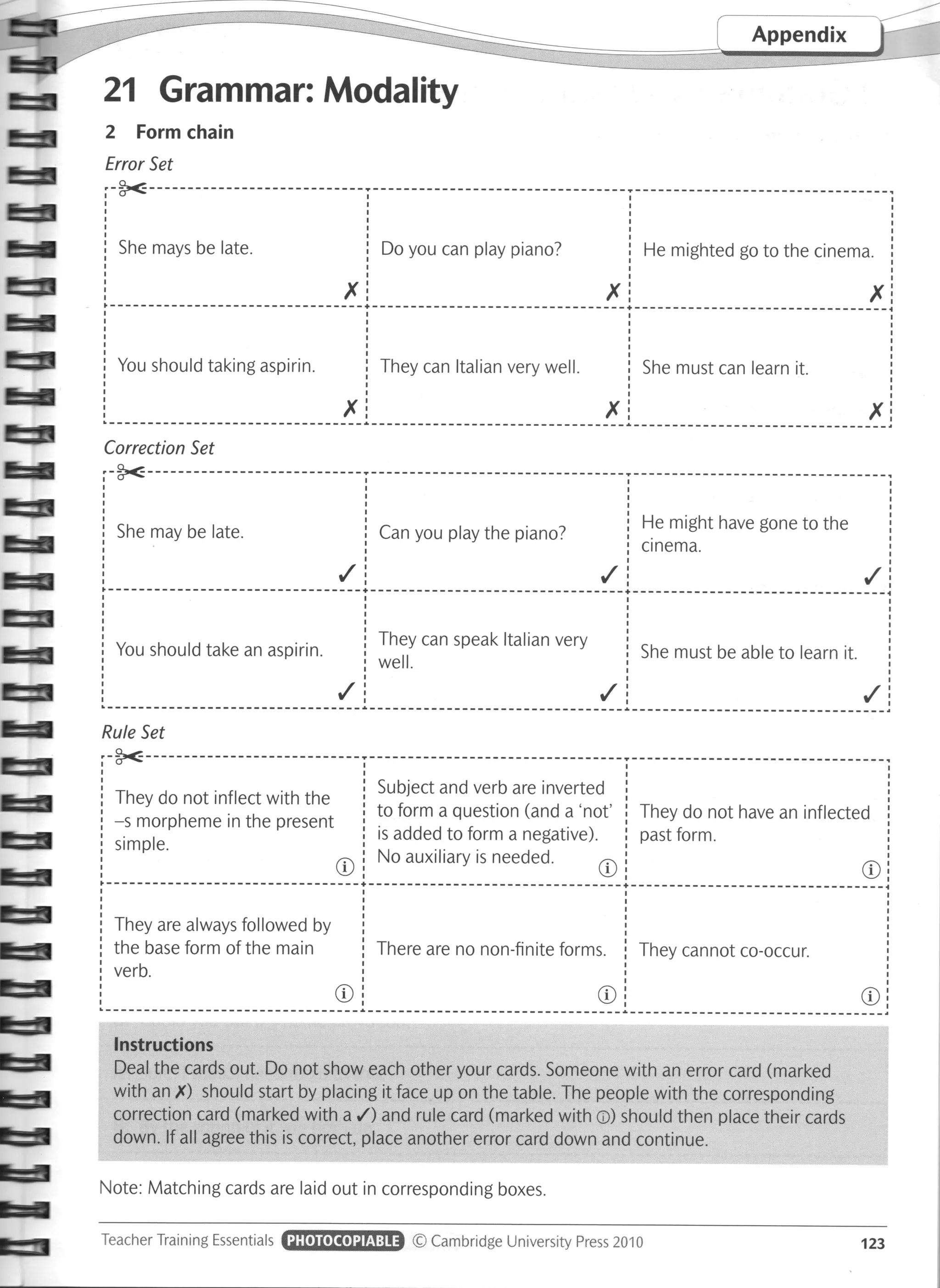
21 Grammar: Modality 70
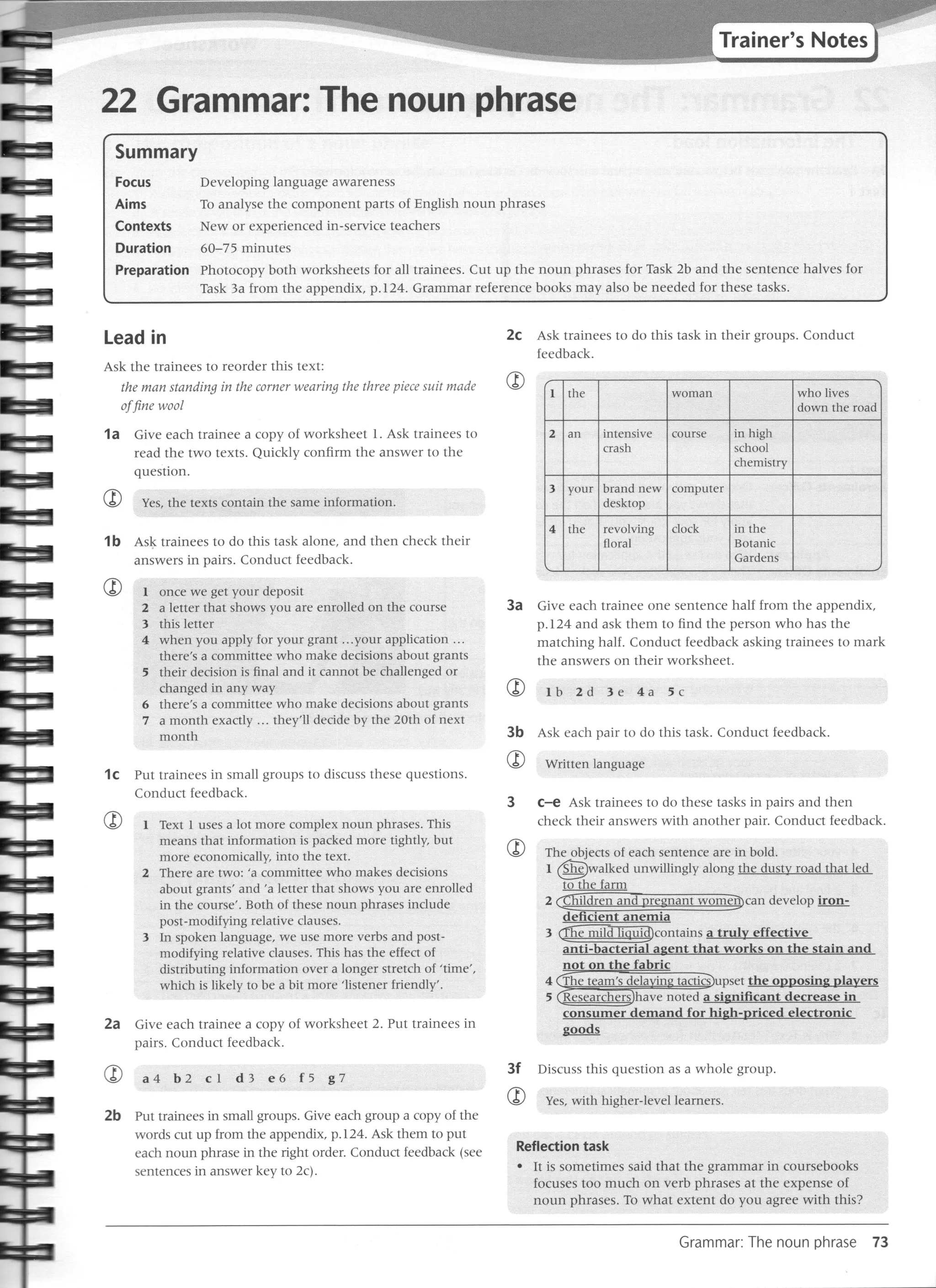
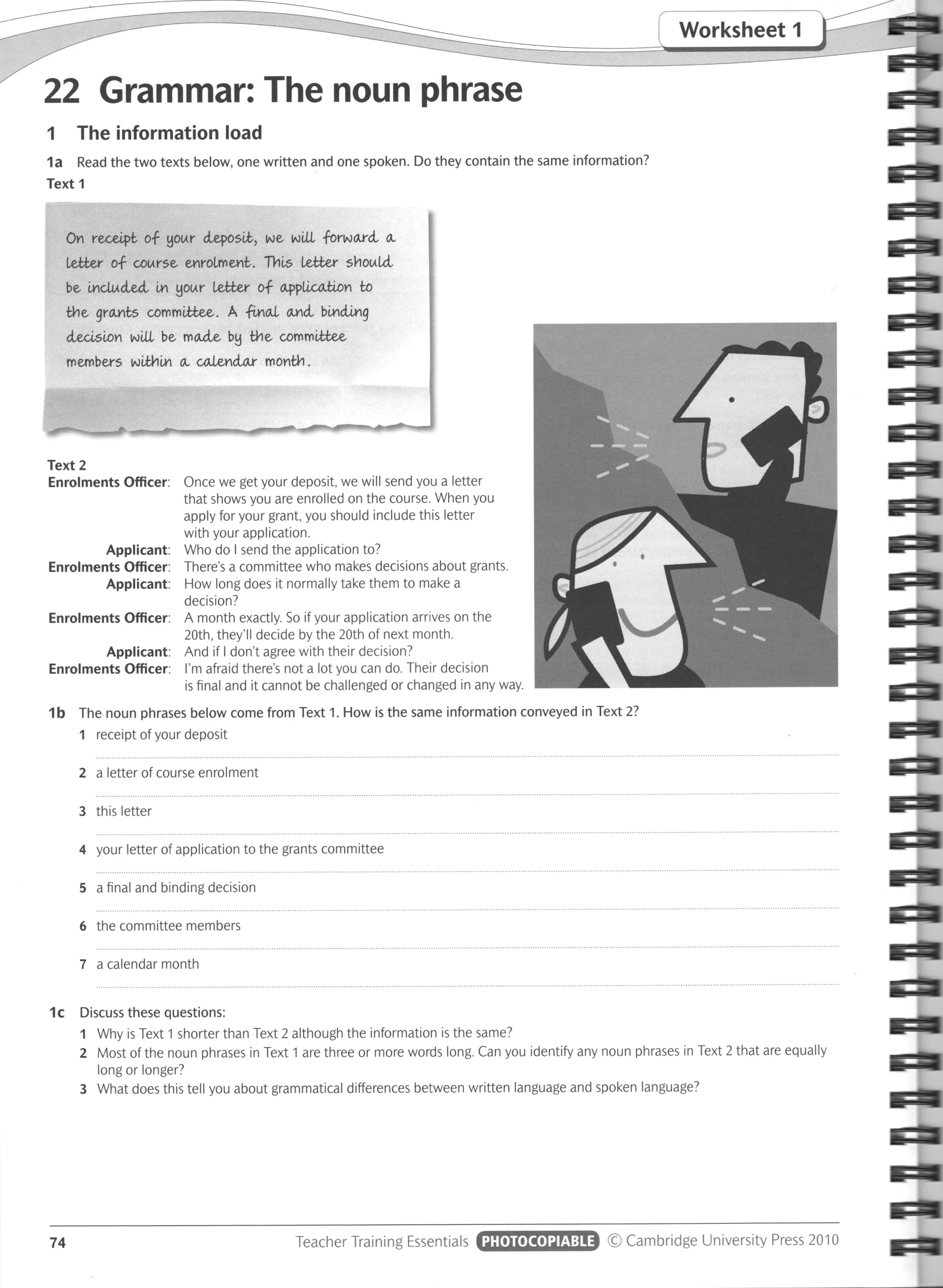
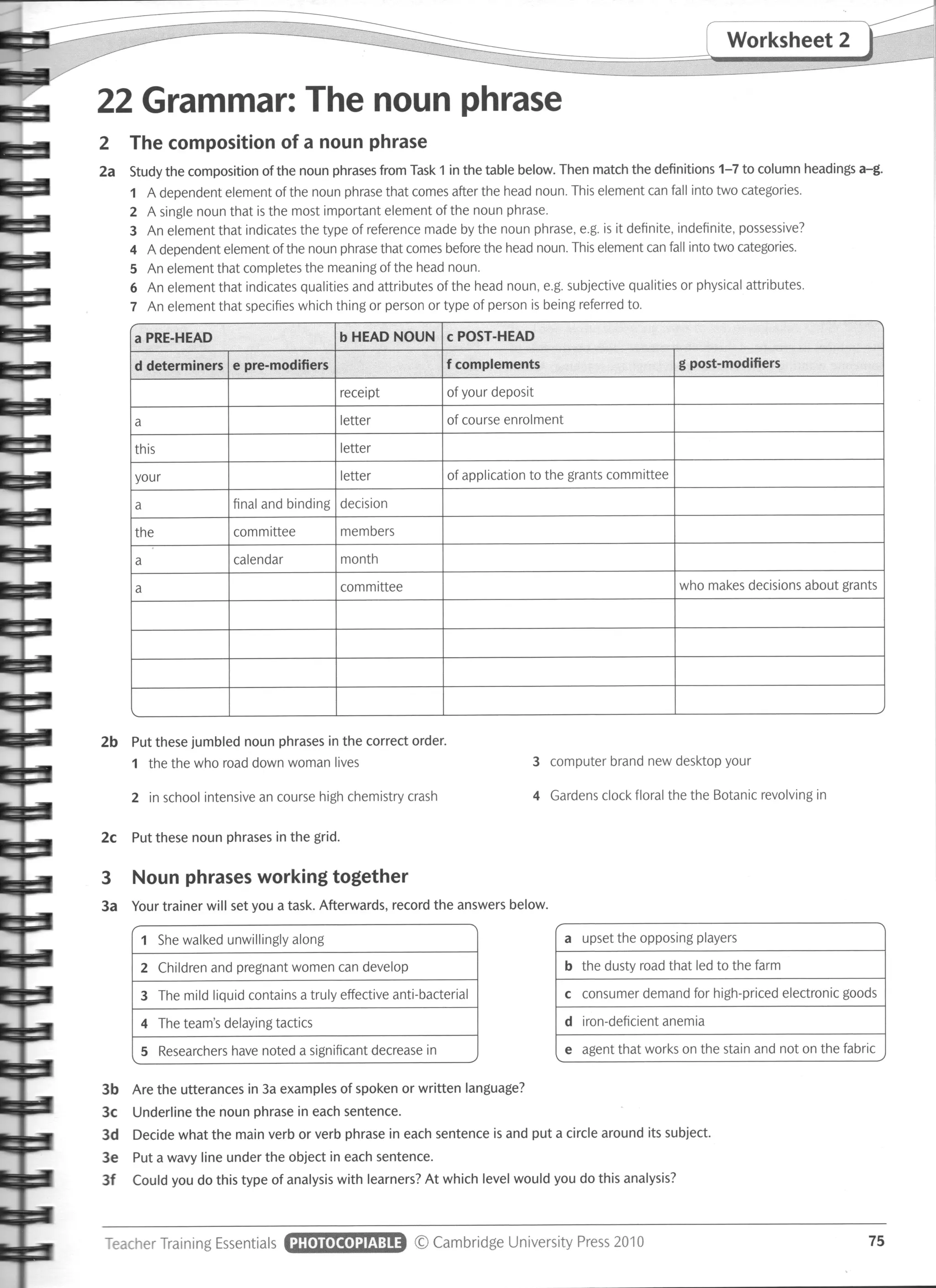
22 Grammar: The noun phrase 73
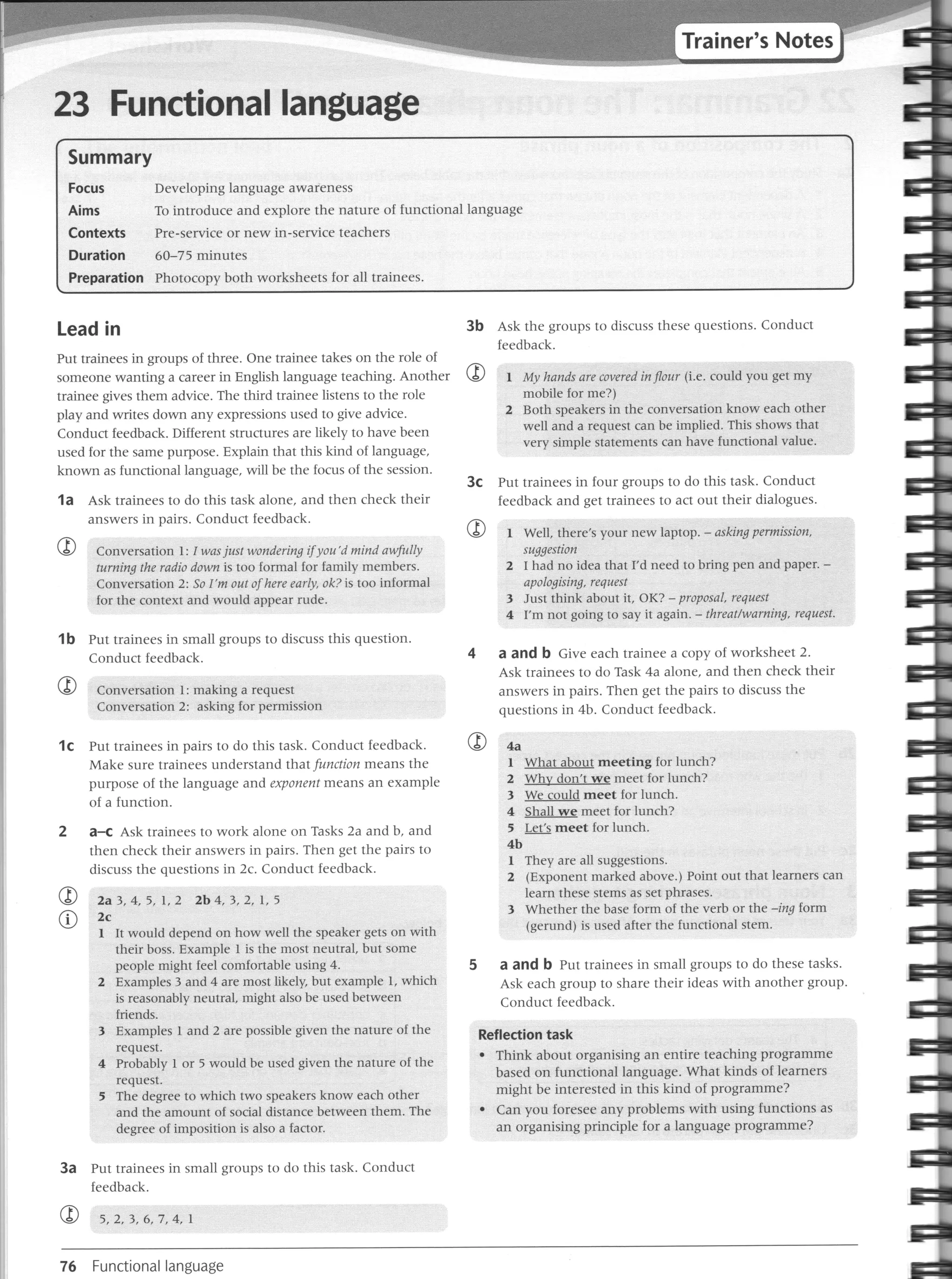
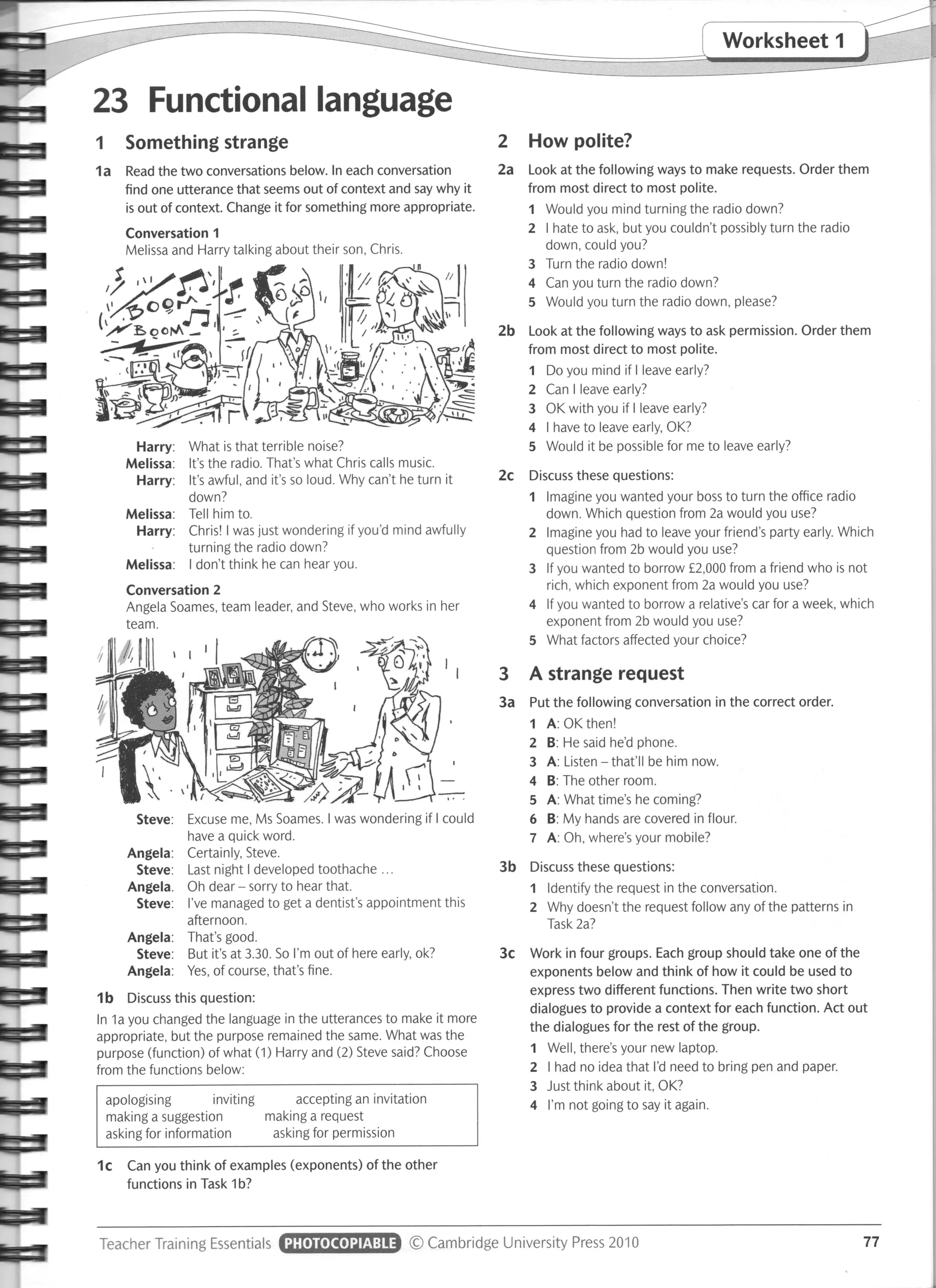
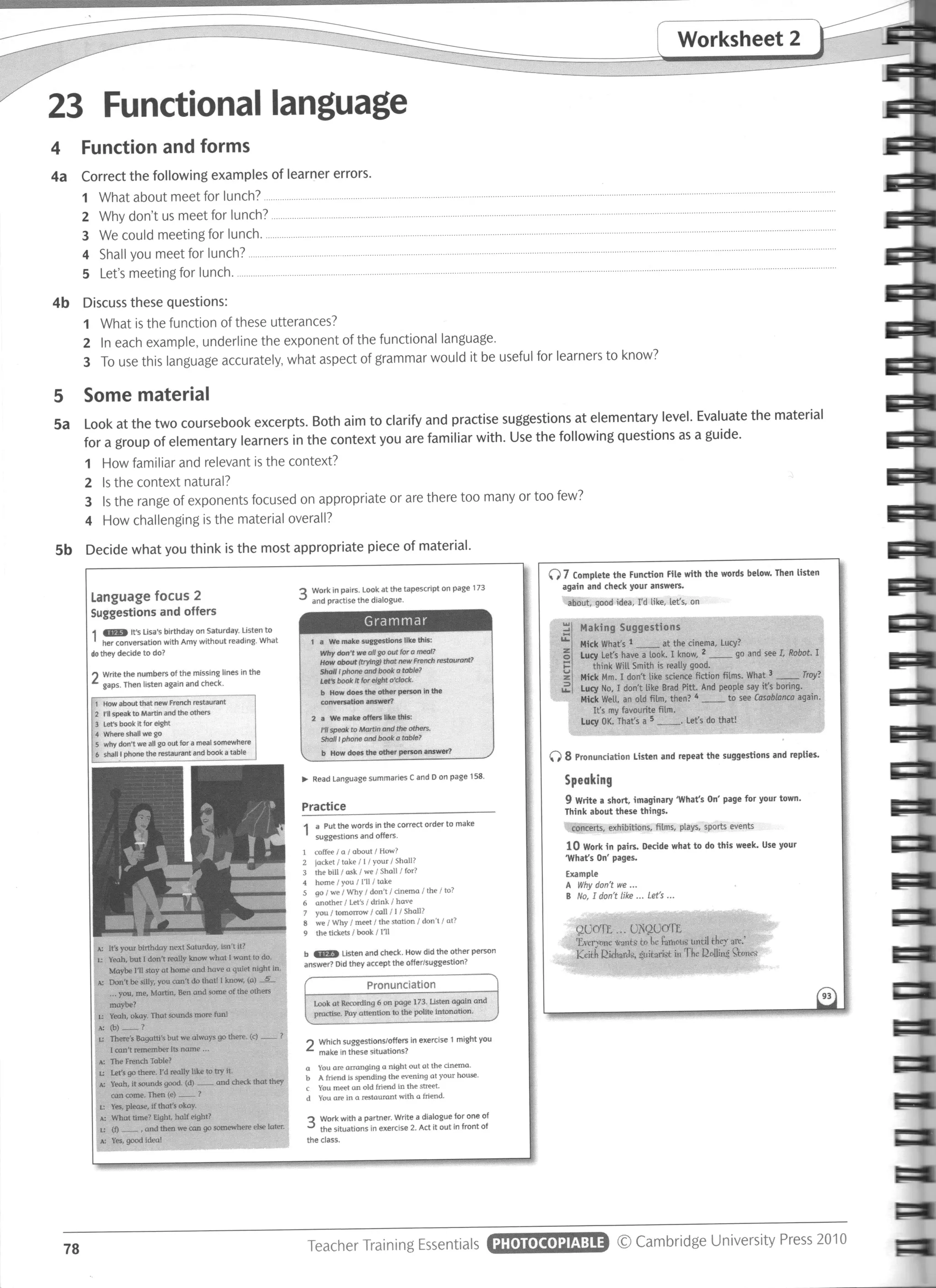
23 Functional language 76
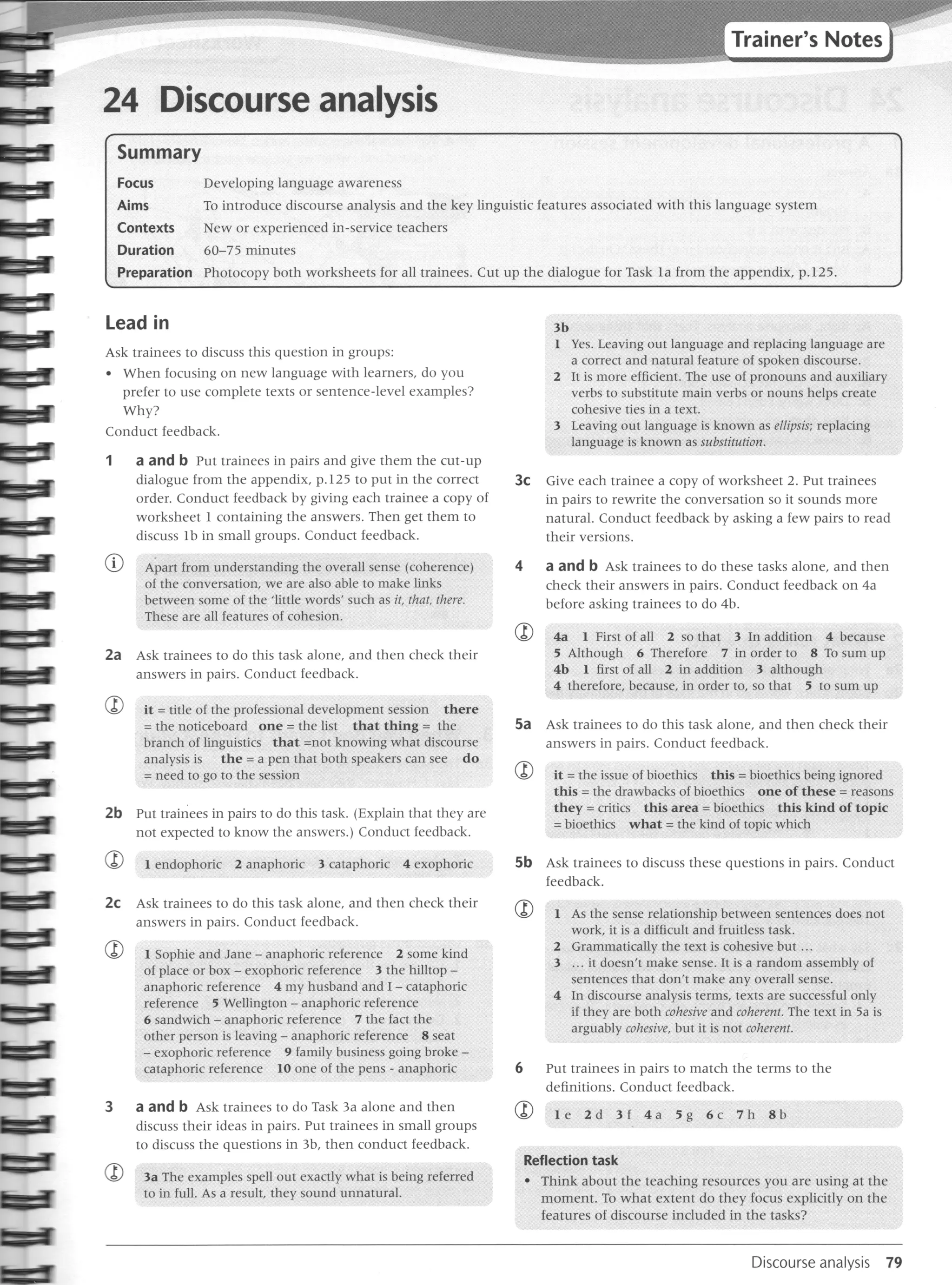
24 Discourse analysis 79
Background to teaching
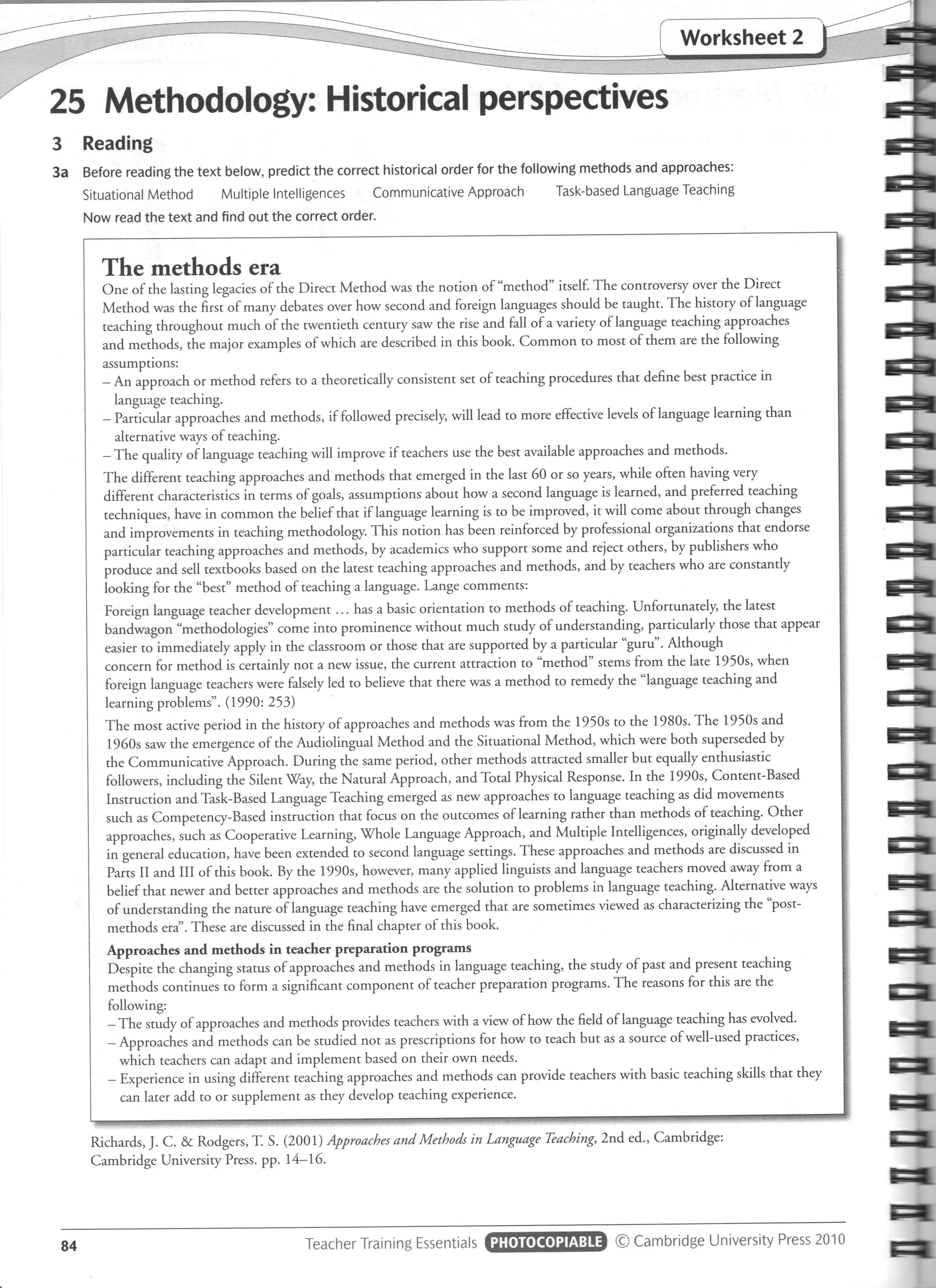
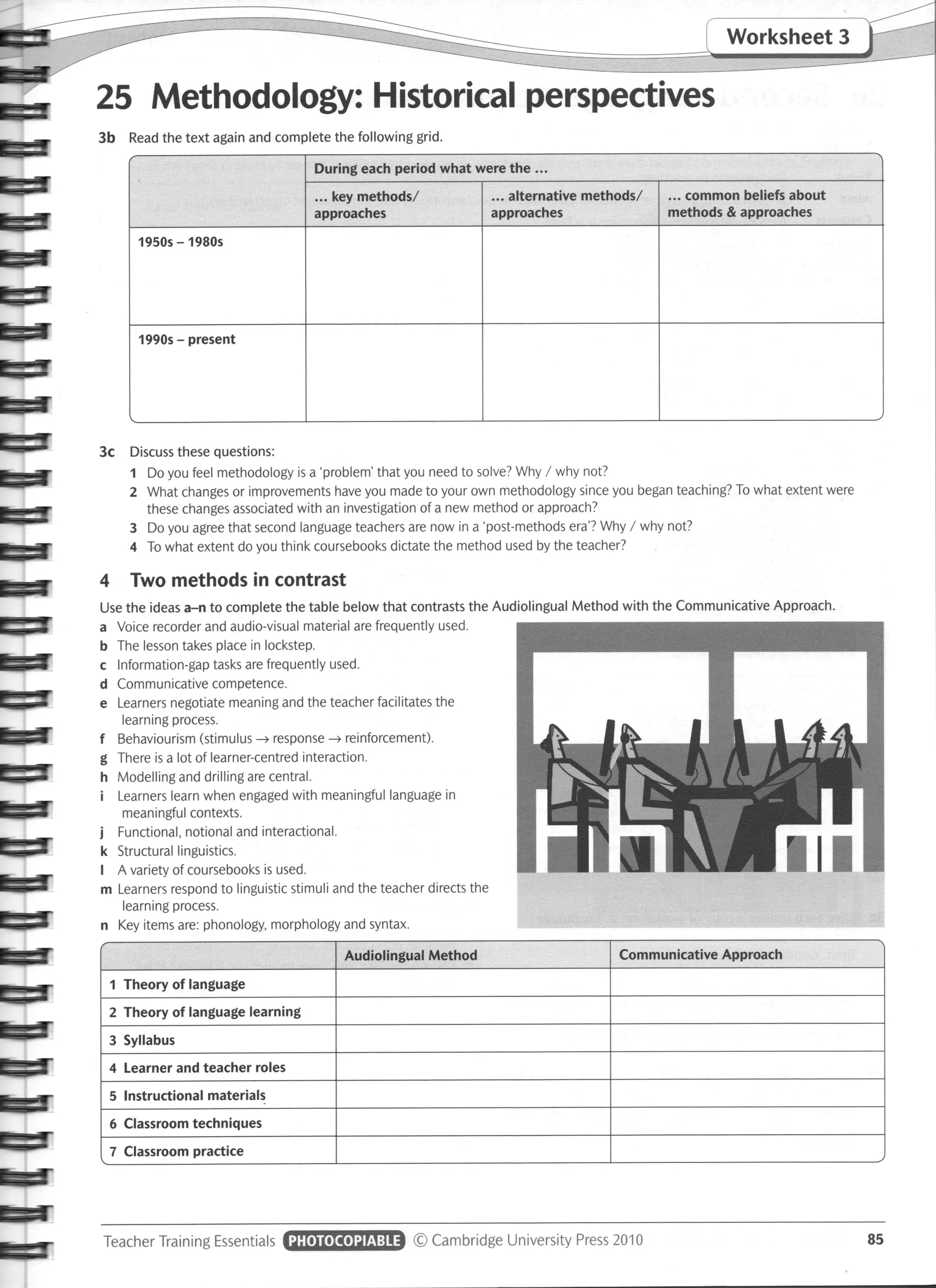
25 Methodology: Historical perspectives 82
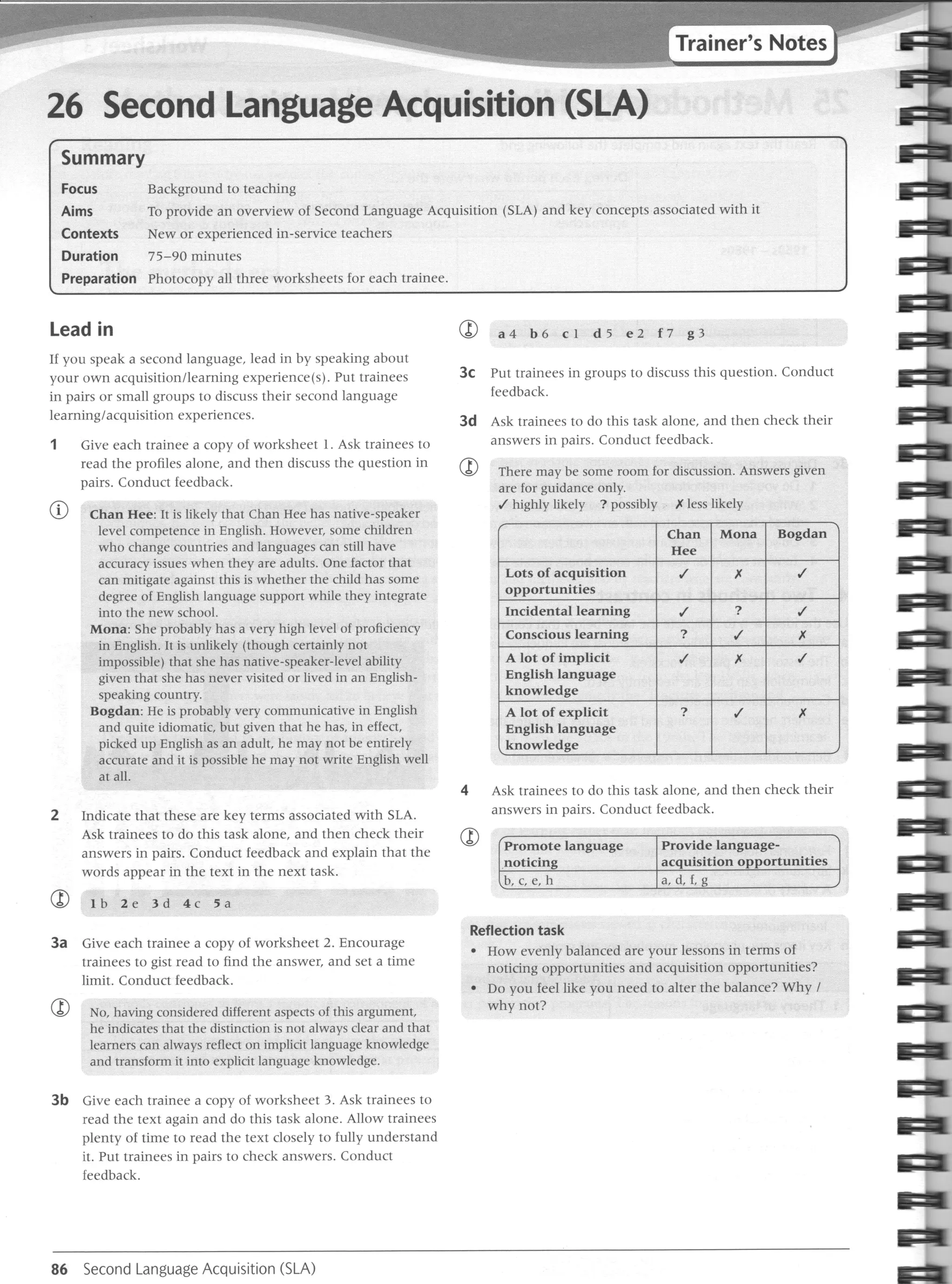
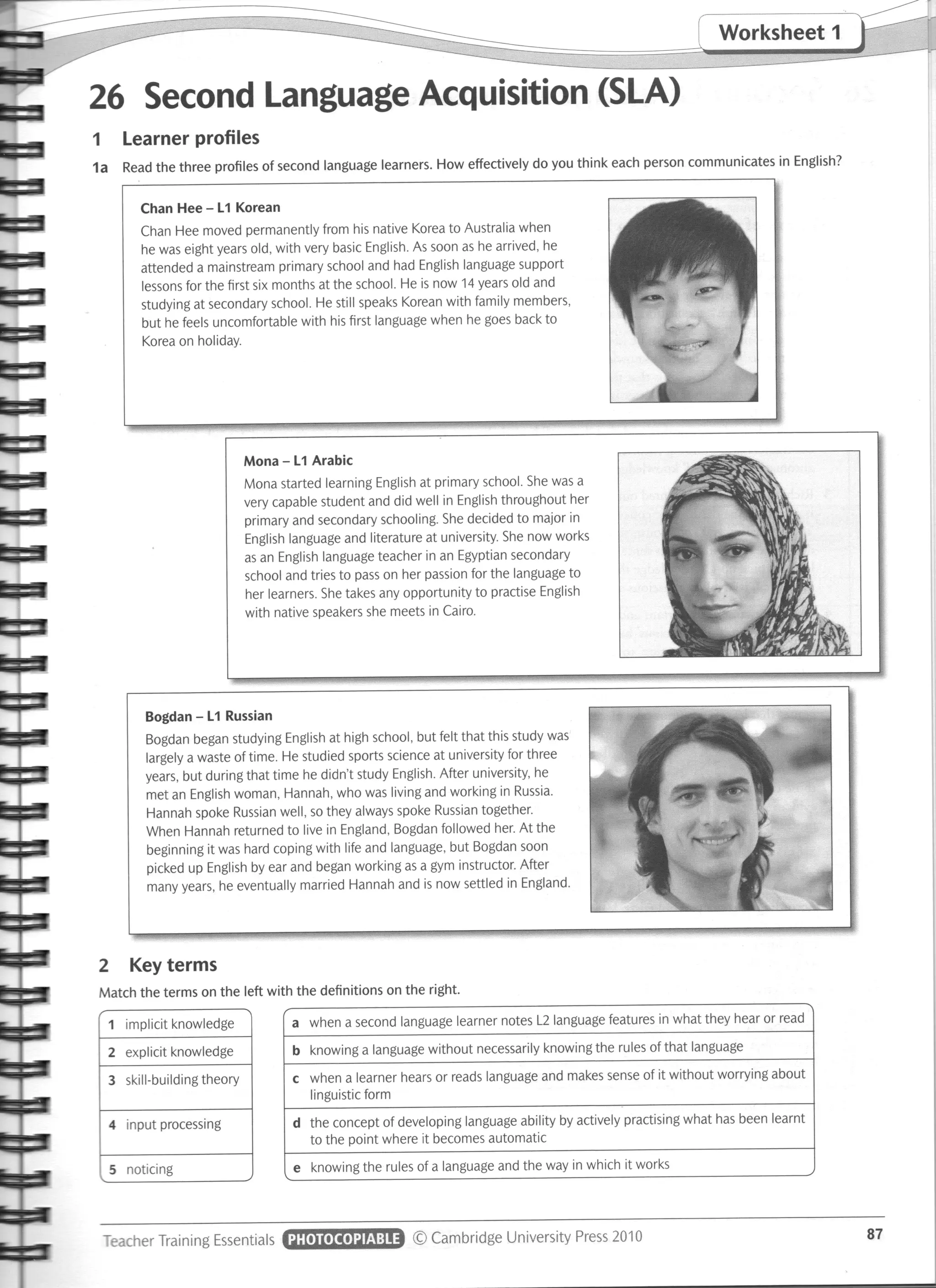
26 Second Language Acquisition (SLA) 86
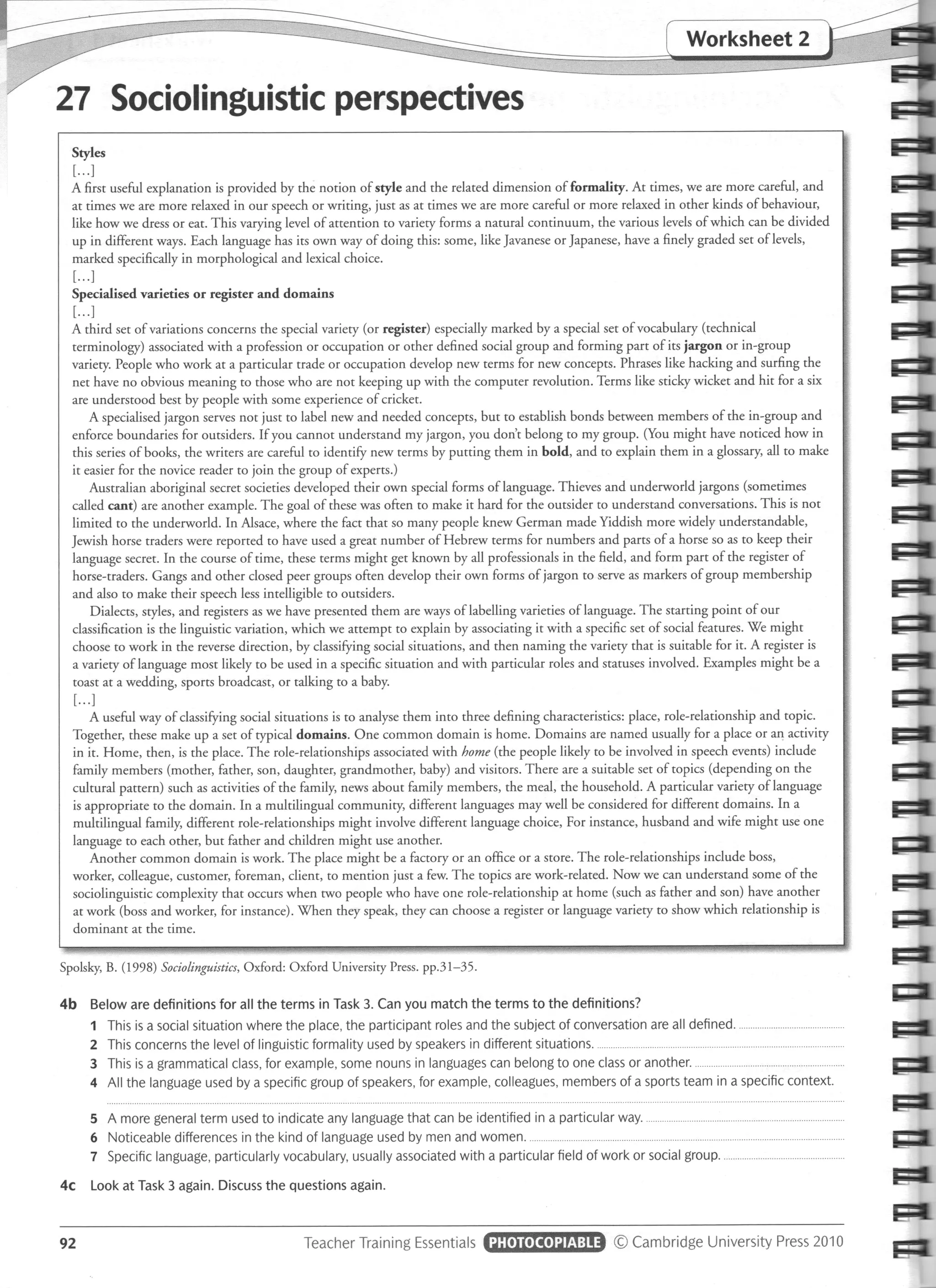
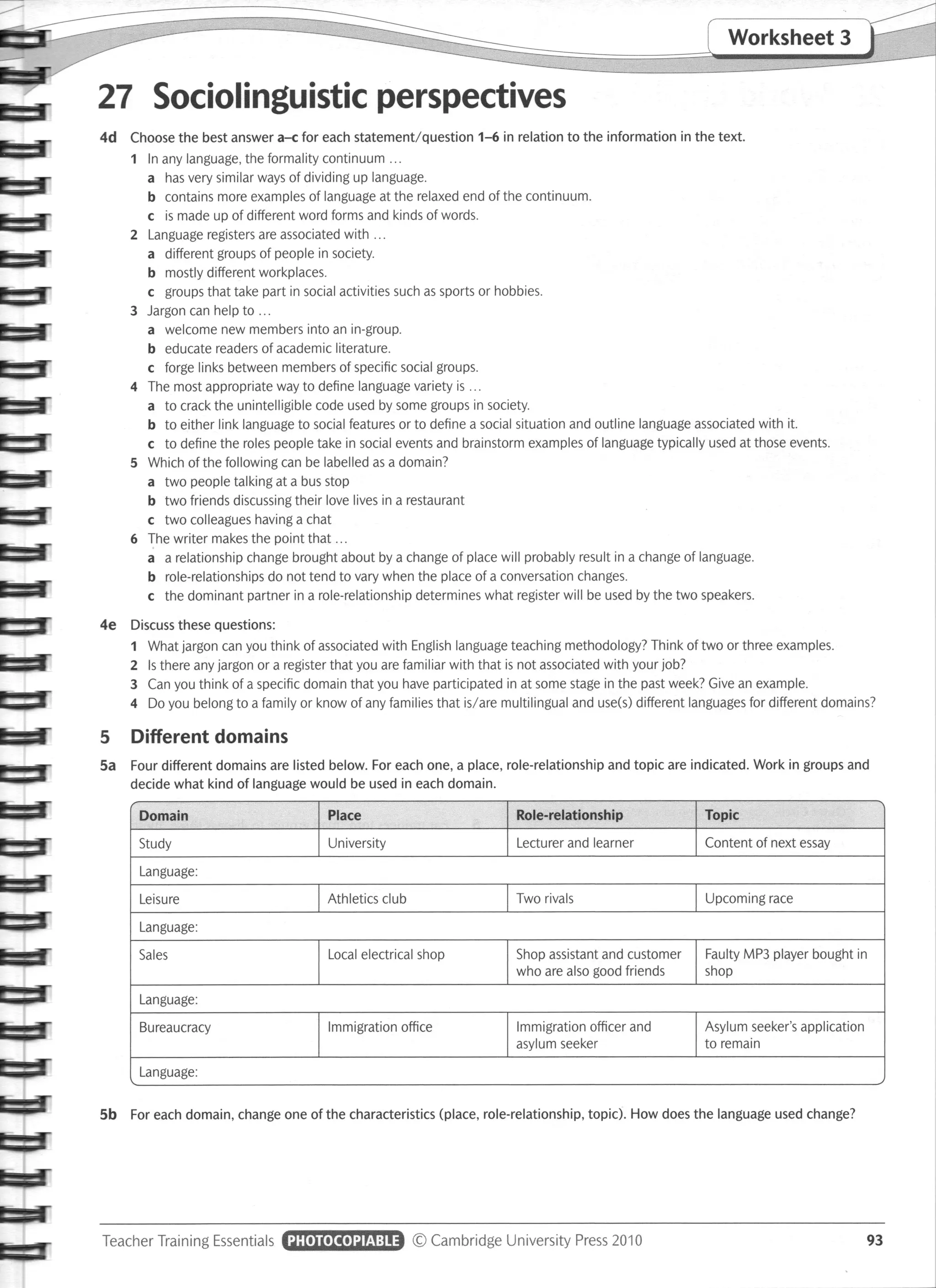
27 Sociolinguistic perspectives 90
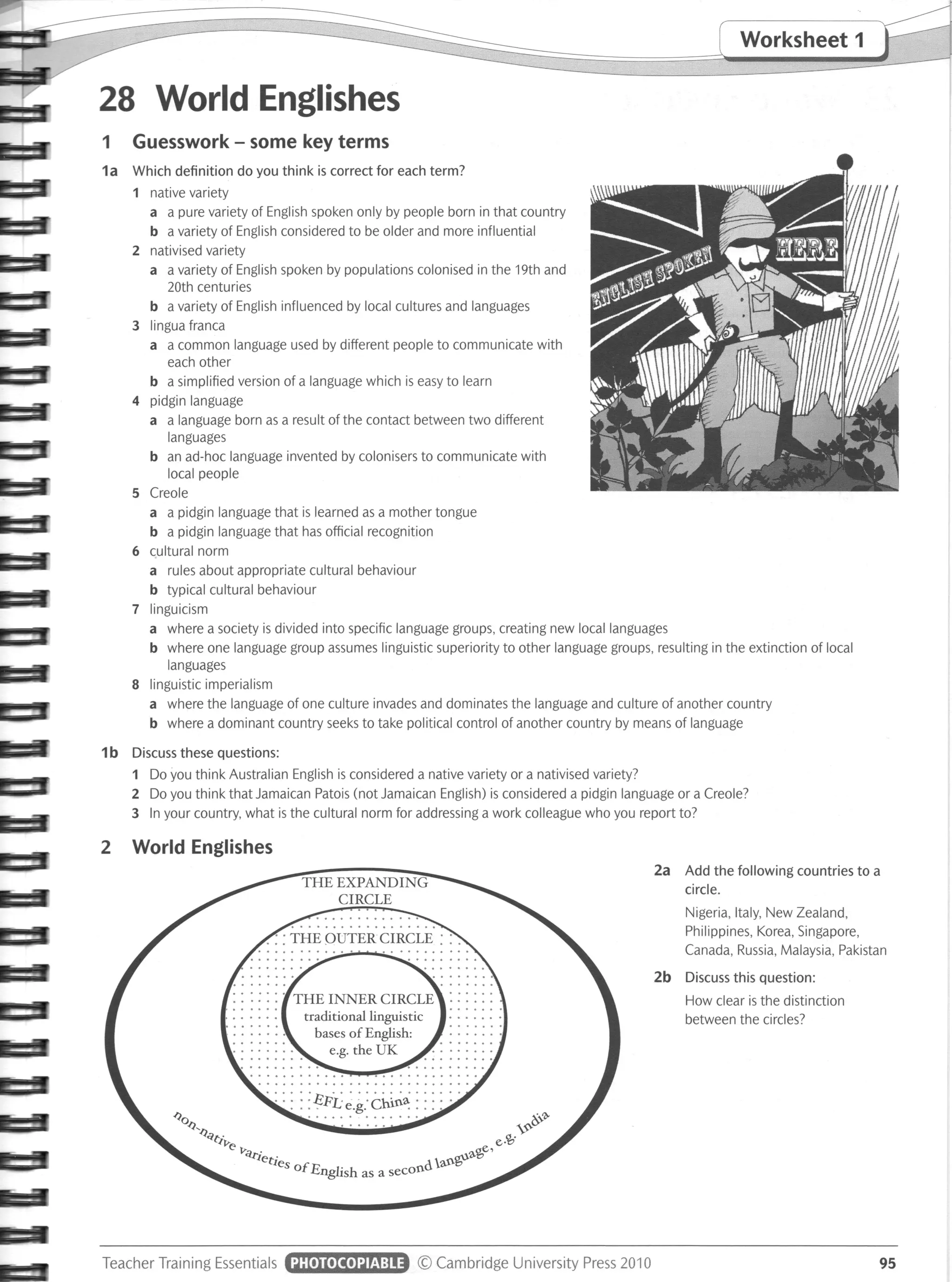
28 World Englishes 94
29 Course design 98
30 Testing and evaluation 102
Appendix 106
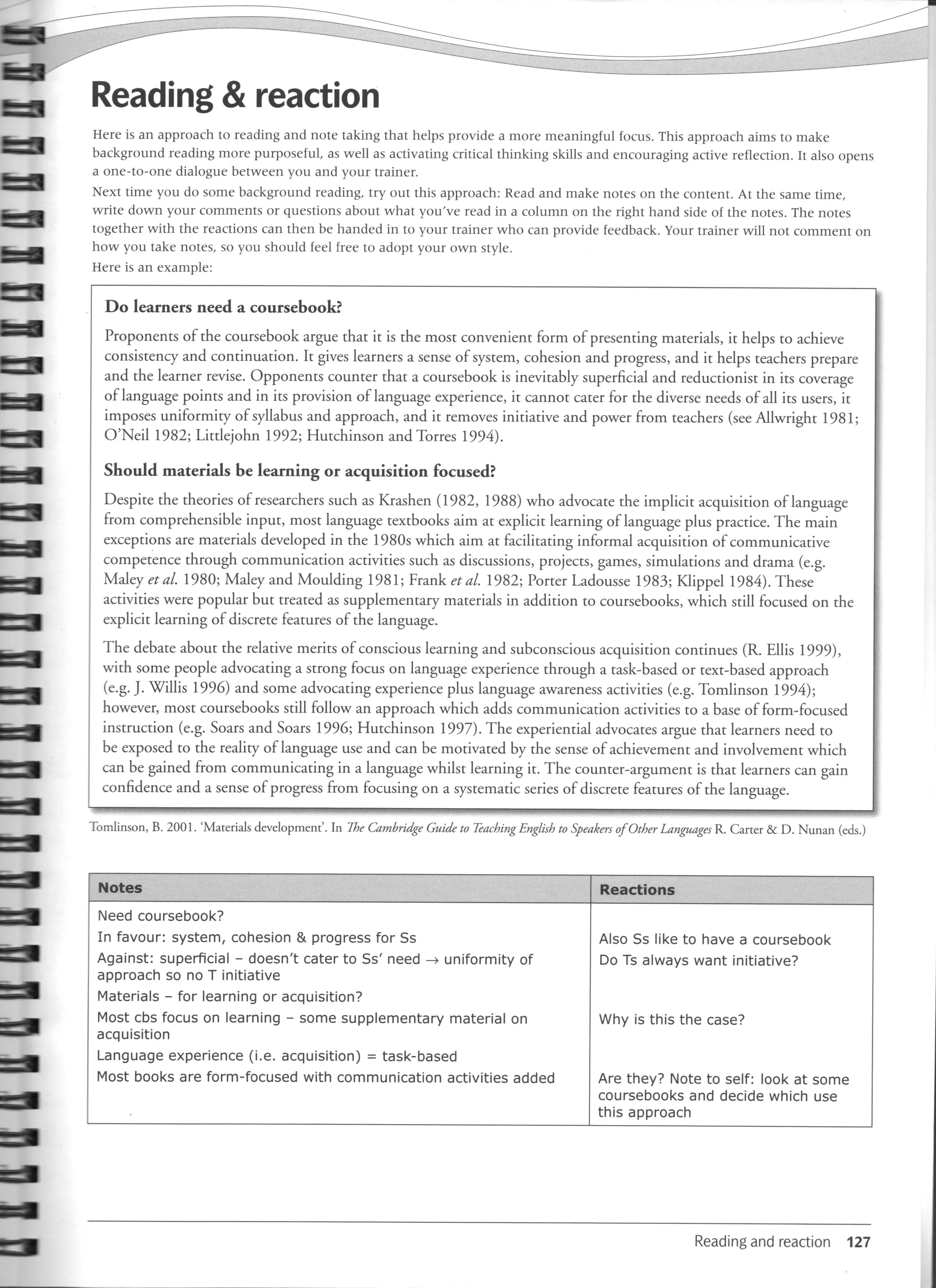
Reading and reaction worksheet 127
5.
4
Session focus Target
audience
AimsContent Time
Classroom methodology
1 Classroom
management
and teacher
language
Pre-service /
New in-service
teachers
To explore effective ways of
setting up and managing a
range of classroom activities.
Ò Interaction patterns
Ò Teacher language
Ò Giving instructions
Ò Managing the learner group
60–75
minutes
2 Providing
feedback and
correction
techniques
Pre-service /
New in-service
teachers
To highlight a variety
of techniques for giving
both content-focused and
language-focused feedback to
learners.
Ò Contrasting different kinds of feedback
Ò Good practice feedback techniques
Ò Deciding when to correct language
Ò Error-correction techniques
60 –75
minutes
3 Teaching
receptive
skills: Reading
and listening
Pre-service /
New in-service
teachers
To raise awareness of
successful planning and
managing of receptive skills
lessons.
Ò Real-world reading
Ò Reading sub skills
Ò Differences between listening and
reading
Ò Managing the challenge of listening
60–75
minutes
4 Oral fluency
and speaking
skills
New in-service
/ Experienced
teachers
To explore ways of planning
and managing activities that
develop learners’ oral fluency
and speaking skills.
Ò Good ideas for oral fluency activities
Ò Aims of speaking activities
Ò Sub skills of spoken interaction
60–75
minutes
5 Developing
learners’
writing skills
New in-service
/ Experienced
teachers
To contrast process and
product approaches to
developing learners’ writing
skills.
Ò Spoken vs. written language
Ò Process and product approaches
Ò Stages in a writing lesson
Ò Activities for writing sub skills
60–75
minutes
6 Teaching
vocabulary
Pre-service /
New in-service
teachers
To outline core issues
associated with different
approaches to clarifying and
practising vocabulary.
Ò Vocabulary teaching problems
Ò Steps of eliciting words
Ò Concept checking
Ò Vocabulary practice
Ò Learner training
60–75
minutes
7 Teaching
grammar
Pre-service /
New in-service
teachers
To compare and contrast
different approaches to
teaching grammar in the
classroom.
Ò Staging of different approaches: text-
based; test-teach-test; context build
Ò Evaluating approaches
Ò Drilling
Ò Planning a grammar lesson
60–75
minutes
8 Lesson
planning
Pre-service /
New in-service
teachers
To outline the contents of
a formal lesson plan and
indicate ways of wording
lesson aims.
Ò Key aspects of a plan
Ò Contents of a formal lesson plan
Ò Staging a lesson
Ò Articulating aims
60–75
minutes
9 Planning a
sequence of
lessons
New in-service
/ Experienced
teachers
To outline the benefits of and
an approach to timetabling a
sequence of lessons.
Ò For and against a sequence of lessons
Ò What to include
Ò How to go about it
Ò Evaluating two timetables
60–75
minutes
10 Teaching
exam classes
Pre-service /
New in-service
teachers
To outline a preparation
strategy for teaching exam
classes.
Ò Exam classes compared with general
English classes
Ò Contents of an exam
Ò Task types
Ò Speaking test preparation
Ò Planning an exam class course
60–75
minutes
11 Exploiting
authentic
material
New in-service
/ Experienced
teachers
To demonstrate processes for
creating tasks and activities
that can be used for exploiting
authentic materials with
learners.
Ò Choosing a text
Ò Working out lesson aims
Ò Evaluating tasks
Ò Pros and cons of using authentic
materials
Ò Creating tasks
60–75
minutes
Map of the book


![Planning and Managing End-of-Unit Integration Activitiesraw[1][1] (1)[2].pptx](https://cdn.slidesharecdn.com/ss_thumbnails/planningandmanagingend-of-unitintegrationactivitiesraw1112-240516203341-0a8ad377-thumbnail.jpg?width=640&height=640&fit=bounds)


