Tuberculosis
Dr. Mahnoor | Department of Community Medicine
Date: [Insert Date]
Learning Objectives
 1. Define tuberculosis and describe its causative agent
and transmission.
 2. Describe the global and national epidemiology of TB.
 3. Identify key risk factors and vulnerable populations.
 4. Explain methods of diagnosis, including the Mantoux
test.
 5. Discuss TB control strategies: DOTS, BCG,
chemoprophylaxis.
 6. Describe WHO treatment categories and the National
TB Control Program (NTP).
Introduction to
Tuberculosis
• Chronic infectious disease caused by Mycobacterium tuberculosis
• Primarily affects lungs but may involve other organs
• Pulmonary TB is the most common and infectious form
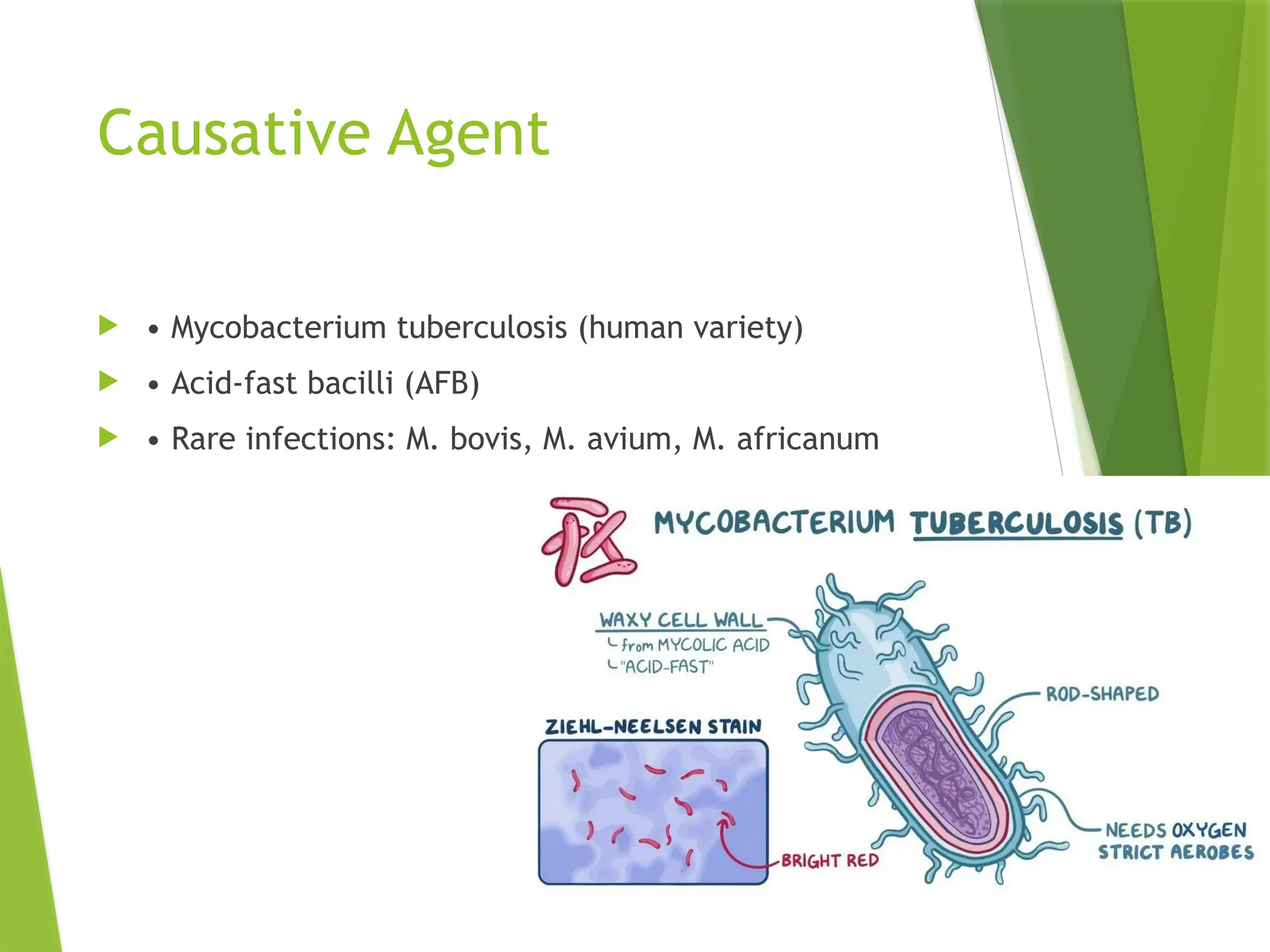
Causative Agent
 • Mycobacterium tuberculosis (human variety)
 • Acid-fast bacilli (AFB)
 • Rare infections: M. bovis, M. avium, M. africanum
Modes of Transmission
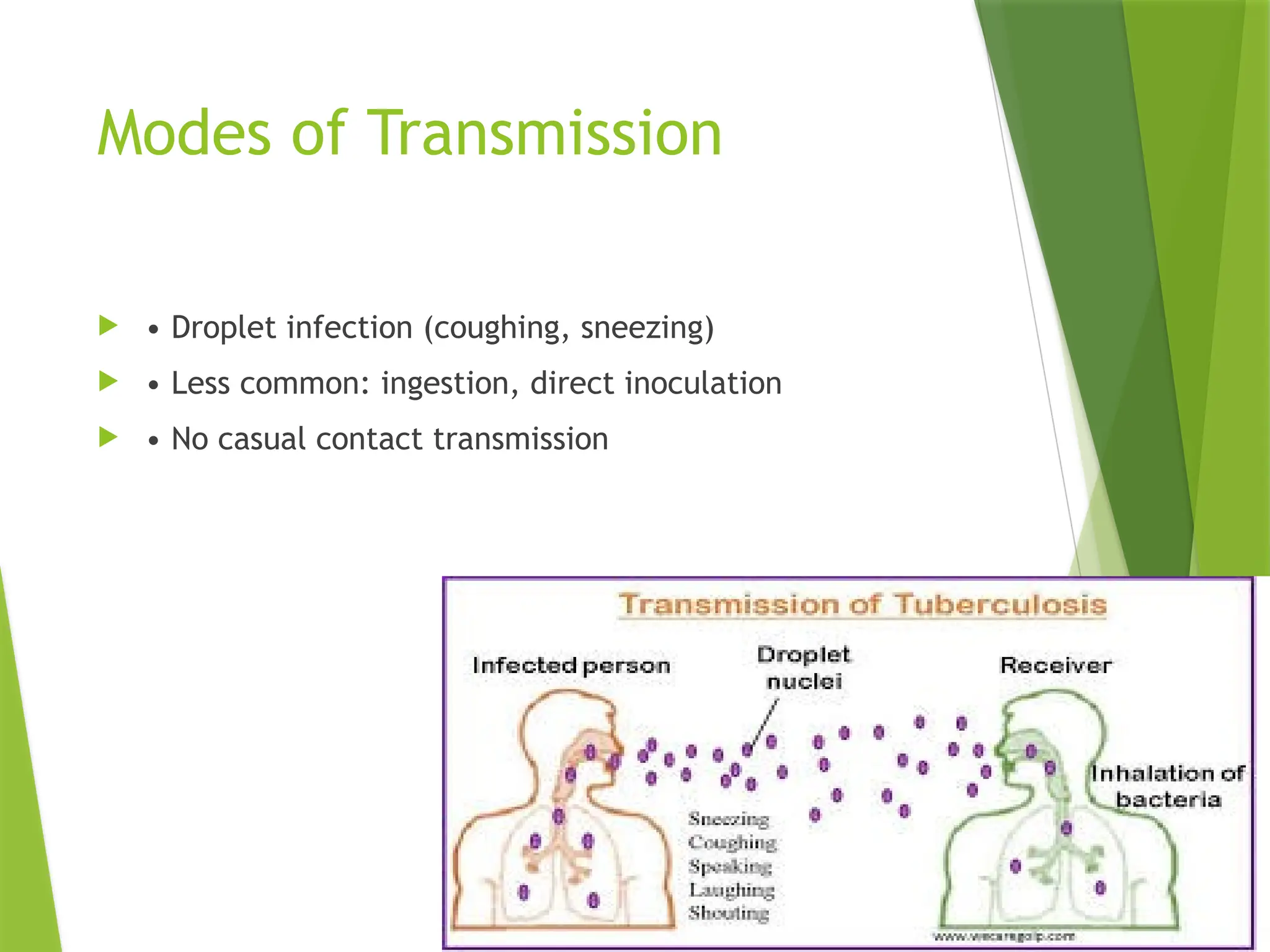
 • Droplet infection (coughing, sneezing)
 • Less common: ingestion, direct inoculation
 • No casual contact transmission
Global Epidemiology
 • WHO: 10.6 million cases annually
 • 1/3rd of population has latent TB
 • High burden: South-East Asia, Africa, Western Pacific
TB in Pakistan
 • 5th highest TB burden globally
 • Incidence: 263/100,000
 • Most common in 15–45 age group
 • Contributing factors: poverty, overcrowding
Risk Factors
 • Host: young adults, HIV, diabetes
 • Environment: poor ventilation, overcrowding
 • Occupations: healthcare workers
 • Socioeconomic: poverty, malnutrition
Diagnosis Overview
 • Symptoms: cough >2 weeks, weight loss, fever
 • Sputum smear microscopy
 • GeneXpert, CXR
 • Mantoux test
 • Culture (gold standard)
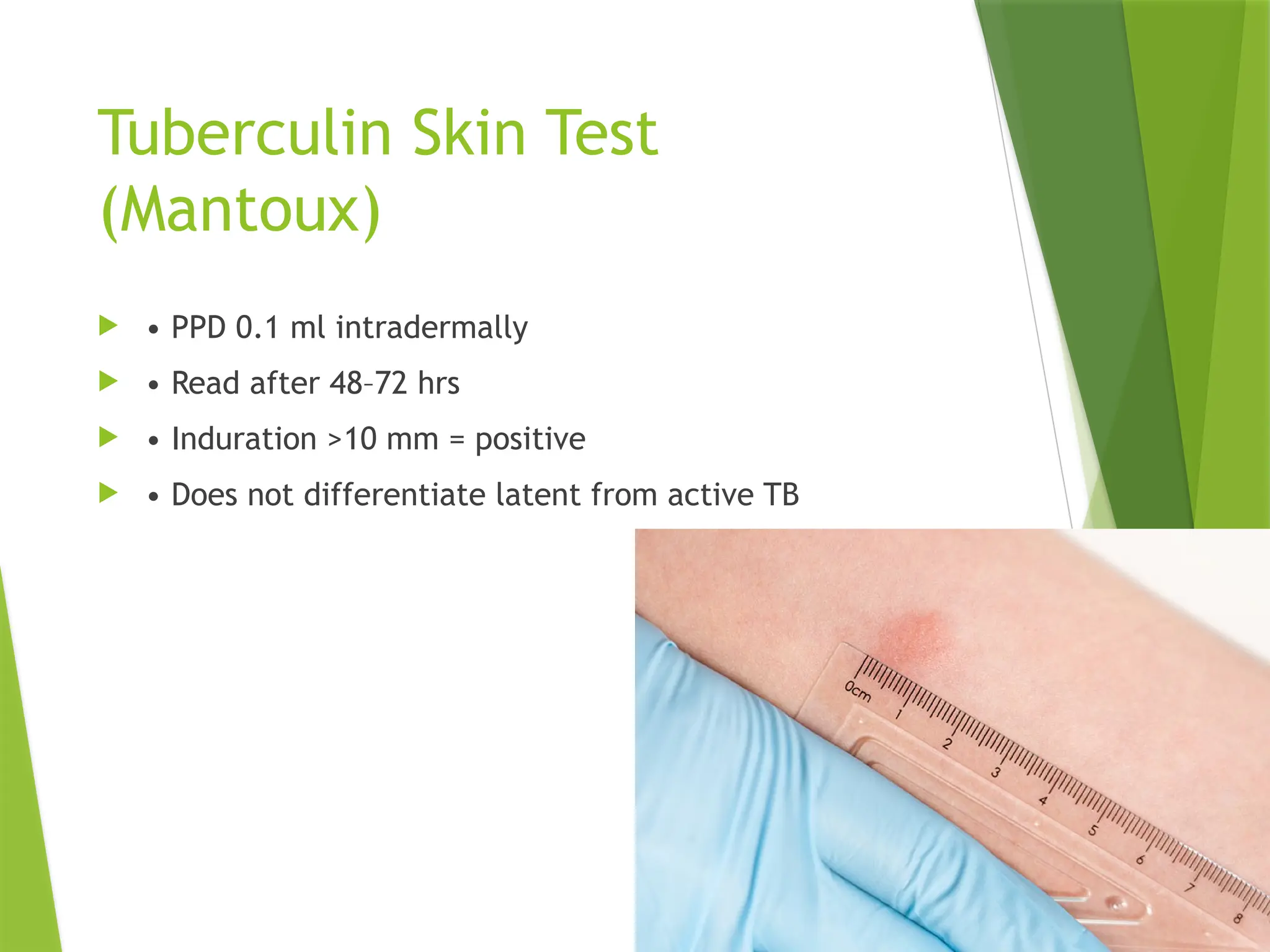
Tuberculin Skin Test
(Mantoux)
 • PPD 0.1 ml intradermally
 • Read after 48–72 hrs
 • Induration >10 mm = positive
 • Does not differentiate latent from active TB
TB Case Definitions (WHO)
 • New case: no or <1 month of treatment
 • Relapse: previously cured, now positive
 • Smear-positive: AFB visible
 • Smear-negative: clinical + radiological signs
TB Control Strategies
 • Early detection and treatment
 • DOTS strategy
 • BCG at birth
 • Health education
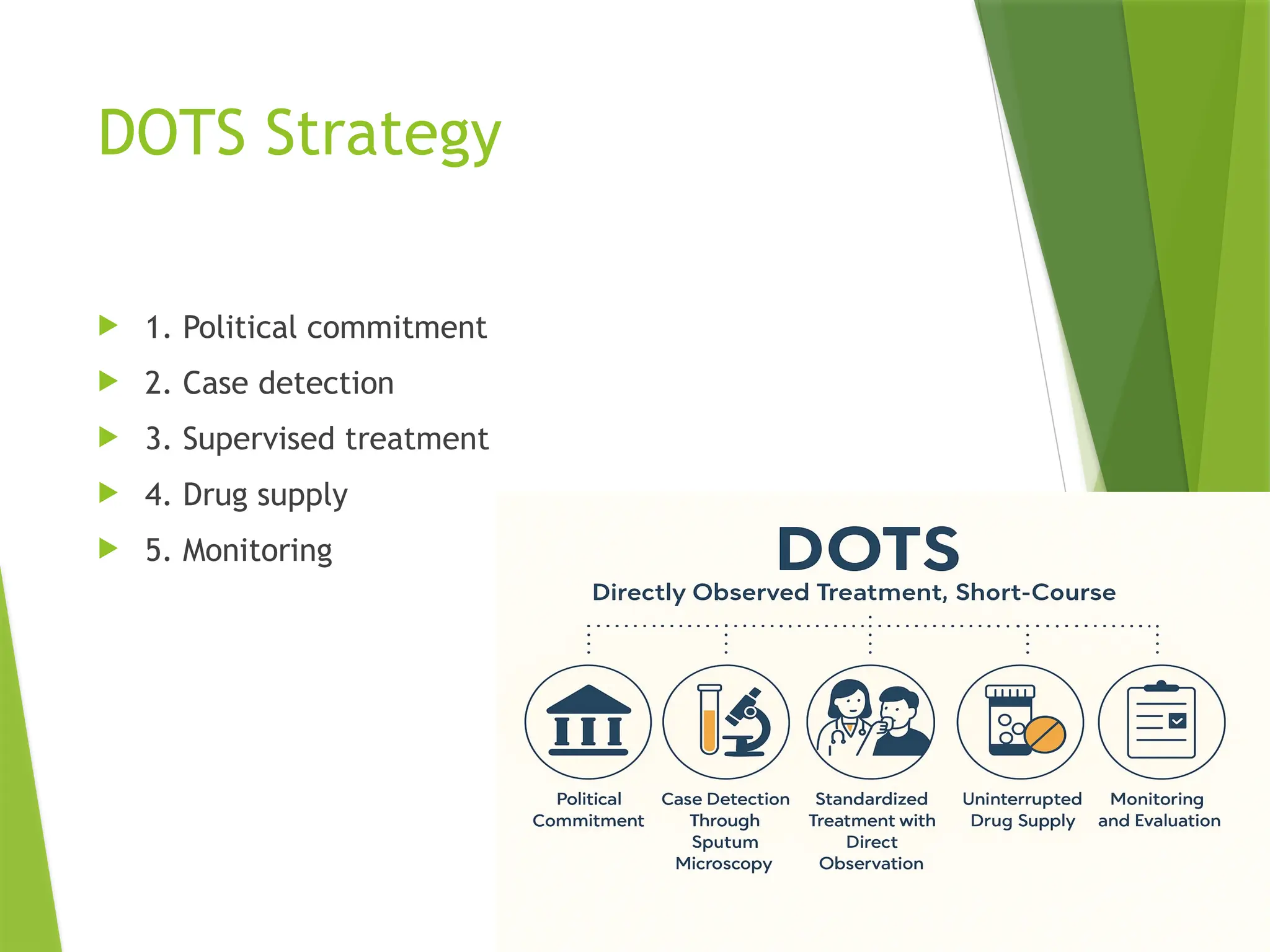
DOTS Strategy
 1. Political commitment
 2. Case detection
 3. Supervised treatment
 4. Drug supply
 5. Monitoring
National TB Control Program
(NTP)
 • Cure rate >85%, detection rate >70%
 • Activities: policy, training, monitoring
 • Community-level DOTS
 • WHO collaboration
BCG Vaccination
 • Live attenuated M. bovis
 • Given at birth (0.05 ml), >4 wks (0.1 ml)
 • Prevents severe TB in children
Chemoprophylaxis
 • INH 6–9 months for children <5, HIV+ with latent TB
 • BCG is preferred for general population
Summary
 • TB is a major public health issue
 • DOTS and BCG are cornerstones
 • Community awareness is key
MCQs for Self-Assessment
 1. Most common TB transmission mode?
 2. Specific test for active TB?
 3. DOTS full form?
 4. NTP diagnostic approach?
 5. BCG efficacy?
Thank You / Q&A
 Questions & Discussion

TB_Prevention of Tuberculosis and BCG vaccine

  • 2.
    Tuberculosis Dr. Mahnoor |Department of Community Medicine Date: [Insert Date]
  • 3.
    Learning Objectives  1.Define tuberculosis and describe its causative agent and transmission.  2. Describe the global and national epidemiology of TB.  3. Identify key risk factors and vulnerable populations.  4. Explain methods of diagnosis, including the Mantoux test.  5. Discuss TB control strategies: DOTS, BCG, chemoprophylaxis.  6. Describe WHO treatment categories and the National TB Control Program (NTP).
  • 4.
    Introduction to Tuberculosis • Chronicinfectious disease caused by Mycobacterium tuberculosis • Primarily affects lungs but may involve other organs • Pulmonary TB is the most common and infectious form
  • 5.
    Causative Agent  •Mycobacterium tuberculosis (human variety)  • Acid-fast bacilli (AFB)  • Rare infections: M. bovis, M. avium, M. africanum
  • 6.
    Modes of Transmission • Droplet infection (coughing, sneezing)  • Less common: ingestion, direct inoculation  • No casual contact transmission
  • 7.
    Global Epidemiology  •WHO: 10.6 million cases annually  • 1/3rd of population has latent TB  • High burden: South-East Asia, Africa, Western Pacific
  • 8.
    TB in Pakistan • 5th highest TB burden globally  • Incidence: 263/100,000  • Most common in 15–45 age group  • Contributing factors: poverty, overcrowding
  • 9.
    Risk Factors  •Host: young adults, HIV, diabetes  • Environment: poor ventilation, overcrowding  • Occupations: healthcare workers  • Socioeconomic: poverty, malnutrition
  • 10.
    Diagnosis Overview  •Symptoms: cough >2 weeks, weight loss, fever  • Sputum smear microscopy  • GeneXpert, CXR  • Mantoux test  • Culture (gold standard)
  • 11.
    Tuberculin Skin Test (Mantoux) • PPD 0.1 ml intradermally  • Read after 48–72 hrs  • Induration >10 mm = positive  • Does not differentiate latent from active TB
  • 12.
    TB Case Definitions(WHO)  • New case: no or <1 month of treatment  • Relapse: previously cured, now positive  • Smear-positive: AFB visible  • Smear-negative: clinical + radiological signs
  • 13.
    TB Control Strategies • Early detection and treatment  • DOTS strategy  • BCG at birth  • Health education
  • 14.
    DOTS Strategy  1.Political commitment  2. Case detection  3. Supervised treatment  4. Drug supply  5. Monitoring
  • 16.
    National TB ControlProgram (NTP)  • Cure rate >85%, detection rate >70%  • Activities: policy, training, monitoring  • Community-level DOTS  • WHO collaboration
  • 17.
    BCG Vaccination  •Live attenuated M. bovis  • Given at birth (0.05 ml), >4 wks (0.1 ml)  • Prevents severe TB in children
  • 18.
    Chemoprophylaxis  • INH6–9 months for children <5, HIV+ with latent TB  • BCG is preferred for general population
  • 19.
    Summary  • TBis a major public health issue  • DOTS and BCG are cornerstones  • Community awareness is key
  • 20.
    MCQs for Self-Assessment 1. Most common TB transmission mode?  2. Specific test for active TB?  3. DOTS full form?  4. NTP diagnostic approach?  5. BCG efficacy?
  • 21.
    Thank You /Q&A  Questions & Discussion

Editor's Notes

  • #2 Introduce yourself and the topic. Mention its importance as part of the Infectious Diseases module.
  • #3 Briefly go through what students should be able to do by the end of the session.
  • #4 Define TB and highlight its primary and extra-pulmonary sites. Stress on its infectious nature.
  • #5 Talk about the characteristics of the bacteria and how it stains positive on Ziehl-Neelsen stain.
  • #6 Emphasize how TB spreads through air and the importance of infection control measures.
  • #7 Give the global picture and mention latent TB as a key public health challenge.
  • #8 Highlight Pakistan’s position and the socio-economic challenges involved.
  • #9 Discuss how multiple factors interplay in TB vulnerability.
  • #10 Discuss each tool briefly and focus on the algorithm used in public sector facilities.
  • #11 Mention when this test is useful and its limitations.
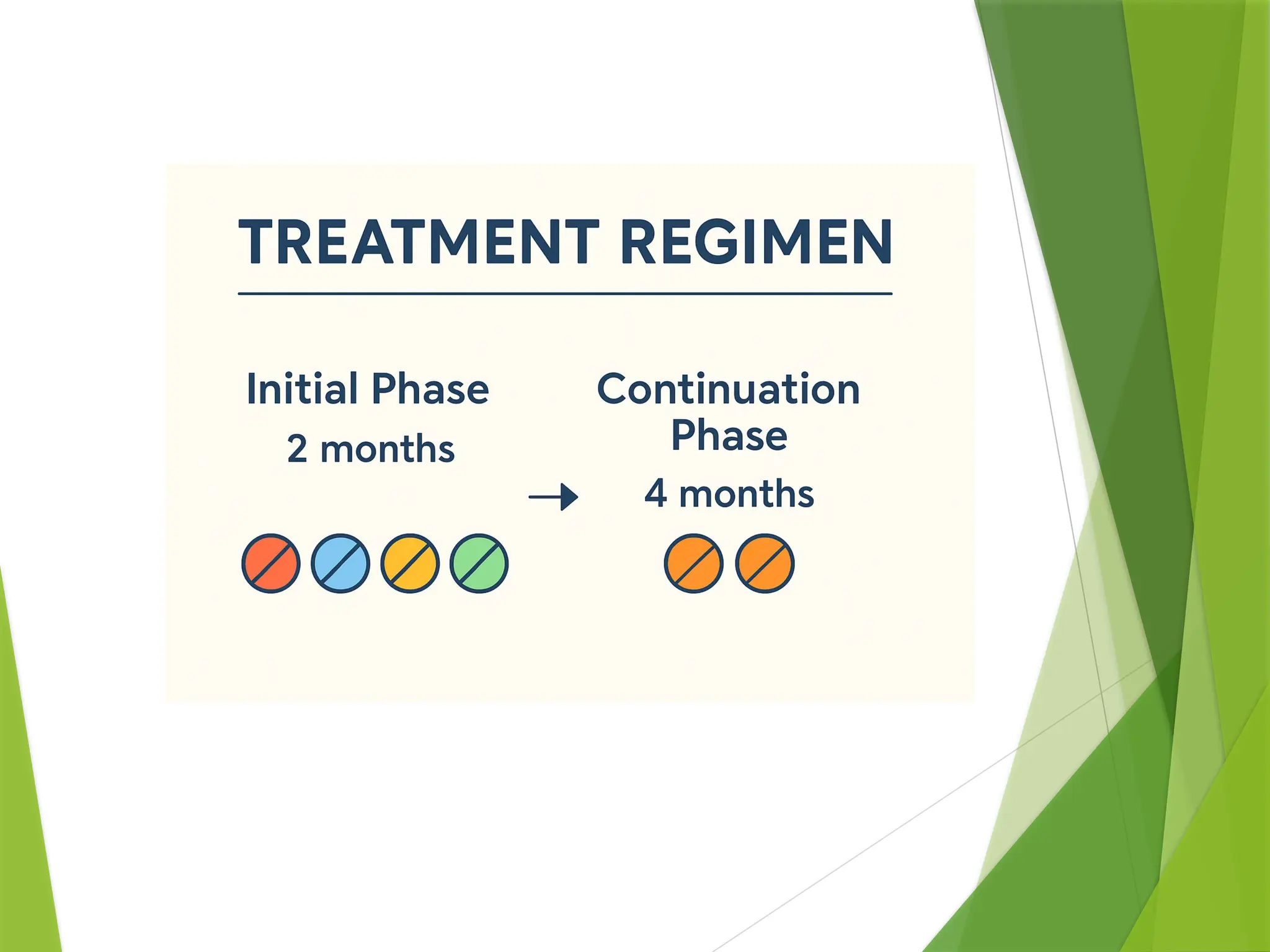
  • #12 Make sure students understand the categories for treatment planning.
  • #13 Introduce the idea of breaking the chain through early diagnosis and treatment.
  • #14 Explain how DOTS revolutionized TB treatment and became WHO's recommended approach.
  • #16 Summarize the program goals and its coordination mechanisms.
  • #17 BCG is not protective against pulmonary TB in adults, but vital for childhood TB prevention.
  • #18 Mention when chemoprophylaxis is offered and its importance in high-risk groups.
  • #19 Use this slide to wrap up and reinforce the big picture.
  • #20 Ask students to attempt answers. Then reveal/discuss answers interactively.
  • #21 Open the floor for questions and clarify concepts.