By Milton Ferney Morales
    Jhon Fredy Espinoza
    Diana Smith Martinez
    Diana Murcia Bravo
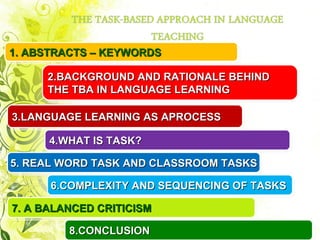
1. ABSTRACTS – KEYWORDS

     2.BACKGROUND AND RATIONALE BEHIND
     THE TBA IN LANGUAGE LEARNING

3.LANGUAGE LEARNING AS APROCESS

      4.WHAT IS TASK?

5. REAL WORD TASK AND CLASSROOM TASKS

      6.COMPLEXITY AND SEQUENCING OF TASKS

7. A BALANCED CRITICISM

         8.CONCLUSION
1. ABSTRACTS and KEYWORDS


•   ABSTRACT
•   It has been poor
•   Contribute to foreign language
•   Necessity to communicate
•   Two ways: communicative
•    Writing
2.BACKGROUND AND RATIONALE BEHIND
THE TBA IN LANGUAGE LEARNING


•   TEACHING METHOD
•   Writing Vs oral language
•   Learning grammar Vs learning how speak
•   Formal Vs informal
•   Accuracy Vs teaching
•    Special activities
•   Responsabilities
3.LANGUAGE LEARNING AS APROCESS


•   VIGOTSKY
•   According Vigotsky ( 1962; 1978)
•   Thinks that:
•   Building skills inside of community
•   Requires a social basis
•   Interaction with environment
•   Wilkin (1976)
•   Incorporate into methodological
•    syntactic and analytic way
•   describes as a strategy
4.WHAT IS TASK?


 1) A classroom activity or exercise that has to develop.
• An objective attainable only by the interaction among
   participants.
• A mechanism for structuring and sequencing interaction.
• A focus on meaning exchange.
2) A language learning endeavor that requires learners to
   comprehend, manipulate, and/or produce the target
   language as they perform some set of workplans.
5. REAL WORD TASK AND CLASSROOM TASKS


• There are some activities can do in outside of
  the classroom, and they are making the bed,
  mending a skirt, etc.
• Tasks are useful for language learning are
  those that require of favour communication
  through language.
6.COMPLEXITY AND SEQUENCING OF TASKS

•Real world task vary in level of complexity.

“TBA should not submit to previously defined
syllabus”
“predefined syllabus are typically content-
based.

* Task-based syllabuses should be process–
and meaning-guided.
* Learner build their own syllabus, according
their needs, and find their own learning.*
SECUENCING importance.

Children       learn sounds       more
complex phonological units: syllables, words,
phrases, simple sentences, and subordinate
sentences.

(Skehan, 1996)… Three types of tasks:
* Pre-tasks:
* During tasks:
* Post-tasks:
7. A BALANCED CRITICISM


METHODOGICAL VARIANTS
TBA BALANCED (grammar – effective
 language)
LEARNT BUT NOT COMMUNICATE
 EFFECTIVELY
CREATE NATURAL LEARNING CONDITIONS
 CLASSROOM
RENOUNCE THE PERMANENT
 COMPARASION WITH NATIVE LANGUAGE
RESEARCH SLA
INSTRUCTION PRACTISING AND USING
 LANGUAGE
EXPLICIT INSTRUCTION REFERS EVENTS
 AND ACTIONS AFFECTING TEACHING IN
 THE CLASSROOM
COMPREHENSIBLE INPUT LANGUAGE
8.CONCLUSION


The TBA adds useful elements and
 contributes to the communicative
  language teaching with valuable
            procedures.
The task-based approach in Language
 Teaching; Aquilino Sánchez; university
 Murcia. Pag.39 -71
Task based

Task based

  • 1.
    By Milton FerneyMorales Jhon Fredy Espinoza Diana Smith Martinez Diana Murcia Bravo
  • 2.
    1. ABSTRACTS –KEYWORDS 2.BACKGROUND AND RATIONALE BEHIND THE TBA IN LANGUAGE LEARNING 3.LANGUAGE LEARNING AS APROCESS 4.WHAT IS TASK? 5. REAL WORD TASK AND CLASSROOM TASKS 6.COMPLEXITY AND SEQUENCING OF TASKS 7. A BALANCED CRITICISM 8.CONCLUSION
  • 3.
    1. ABSTRACTS andKEYWORDS • ABSTRACT • It has been poor • Contribute to foreign language • Necessity to communicate • Two ways: communicative • Writing
  • 4.
    2.BACKGROUND AND RATIONALEBEHIND THE TBA IN LANGUAGE LEARNING • TEACHING METHOD • Writing Vs oral language • Learning grammar Vs learning how speak • Formal Vs informal • Accuracy Vs teaching • Special activities • Responsabilities
  • 5.
    3.LANGUAGE LEARNING ASAPROCESS • VIGOTSKY • According Vigotsky ( 1962; 1978) • Thinks that: • Building skills inside of community • Requires a social basis • Interaction with environment
  • 6.
    Wilkin (1976) • Incorporate into methodological • syntactic and analytic way • describes as a strategy
  • 7.
    4.WHAT IS TASK? 1) A classroom activity or exercise that has to develop. • An objective attainable only by the interaction among participants. • A mechanism for structuring and sequencing interaction. • A focus on meaning exchange. 2) A language learning endeavor that requires learners to comprehend, manipulate, and/or produce the target language as they perform some set of workplans.
  • 8.
    5. REAL WORDTASK AND CLASSROOM TASKS • There are some activities can do in outside of the classroom, and they are making the bed, mending a skirt, etc. • Tasks are useful for language learning are those that require of favour communication through language.
  • 9.
    6.COMPLEXITY AND SEQUENCINGOF TASKS •Real world task vary in level of complexity. “TBA should not submit to previously defined syllabus” “predefined syllabus are typically content- based. * Task-based syllabuses should be process– and meaning-guided. * Learner build their own syllabus, according their needs, and find their own learning.*
  • 10.
    SECUENCING importance. Children learn sounds more complex phonological units: syllables, words, phrases, simple sentences, and subordinate sentences. (Skehan, 1996)… Three types of tasks: * Pre-tasks: * During tasks: * Post-tasks:
  • 11.
    7. A BALANCEDCRITICISM METHODOGICAL VARIANTS TBA BALANCED (grammar – effective language) LEARNT BUT NOT COMMUNICATE EFFECTIVELY CREATE NATURAL LEARNING CONDITIONS CLASSROOM
  • 12.
    RENOUNCE THE PERMANENT COMPARASION WITH NATIVE LANGUAGE RESEARCH SLA INSTRUCTION PRACTISING AND USING LANGUAGE EXPLICIT INSTRUCTION REFERS EVENTS AND ACTIONS AFFECTING TEACHING IN THE CLASSROOM COMPREHENSIBLE INPUT LANGUAGE
  • 13.
    8.CONCLUSION The TBA addsuseful elements and contributes to the communicative language teaching with valuable procedures.
  • 14.
    The task-based approachin Language Teaching; Aquilino Sánchez; university Murcia. Pag.39 -71