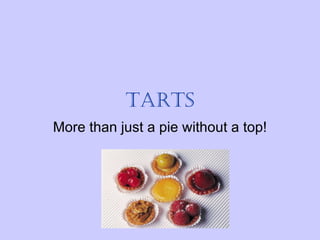
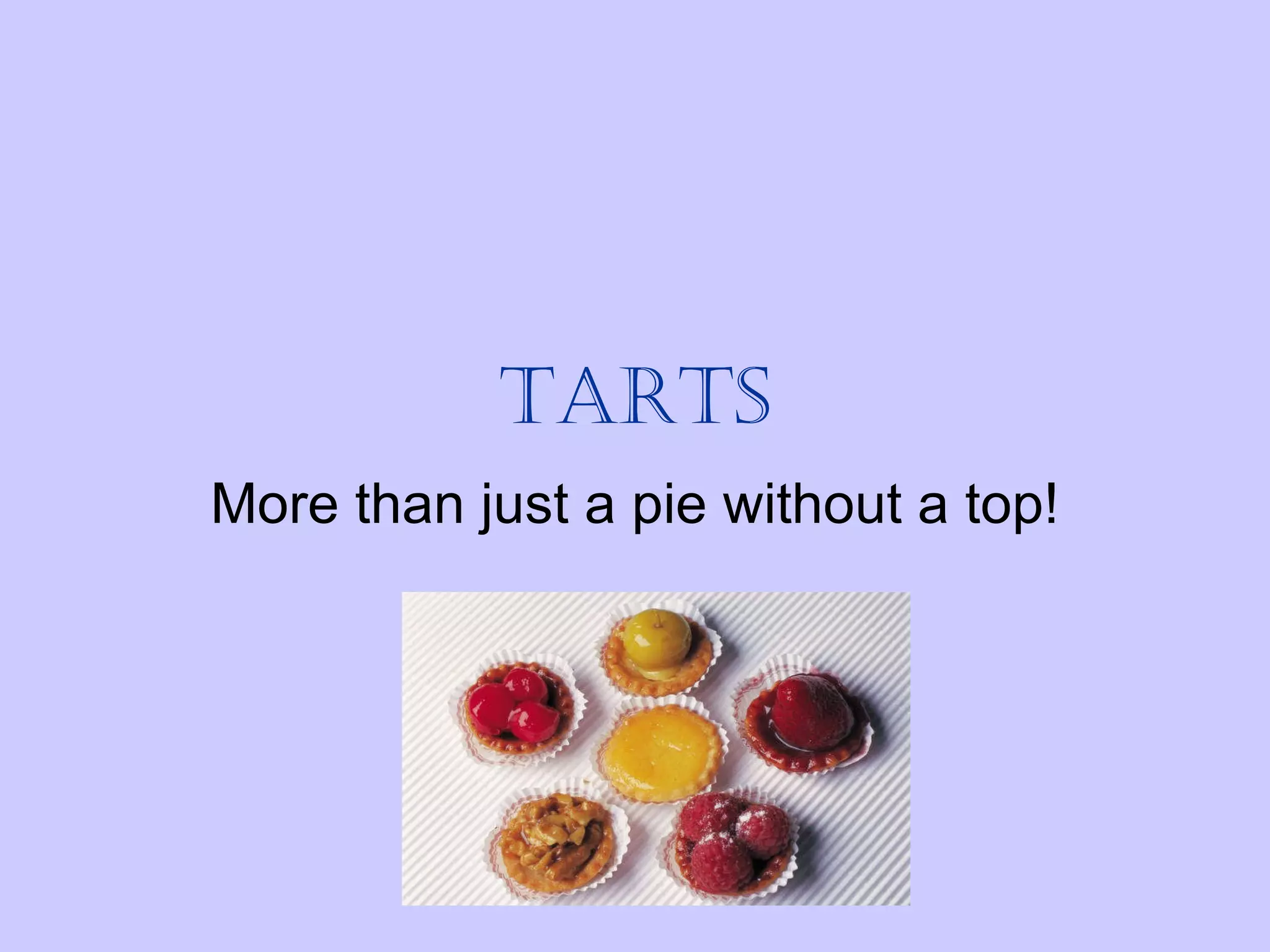
Tarts More than just a pie without a top!
Describe a Tart What is the first thing that pops into your head when you think about a tart? What flavors do you think about? What does it look like? What textures does it contain? What is the price of it?
 
Tart Doughs There are lots of different types of tart doughs Some are crunchy Some are soft Some are rich Some are flavored Doughs are just as important as the filling Best doughs contain the following ingredients:  butter, sugar, egg and low protein flour
Pate Brisee “ Broken Dough” Similar to Pie Dough Flaky Made with biscuit method Flakiness depends upon the amount of mixing:  rubbing the flour into the fat Good for savory tarts Some recipes contain no sugar Must chill dough at least half an hour before rolling
Short Doughs Used for cookies and tart doughs Made by cookie creaming method Variations of the same recipe Pate Sucree:  “sugar dough” Granular sugar and flavored with zest and vanilla Crispy in texture Pate Sablee:  “sandy dough” Powdered sugar and flavorings Crumbly in texture Linzer dough:  Ground almonds or almond flour replaces some of the white flour and flavored with cinnamon and nutmeg Chocolate sugar dough:  Replace some cocoa powder for white flour Must chill dough at least half and hour before rolling dough  Why?
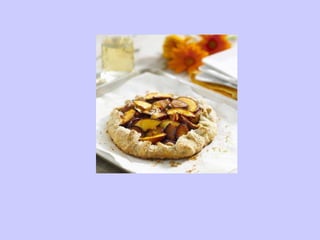
Pasta Frolla Italian for “tender dough” Softer and more biscuit like than short doughs Made by either cookie creaming or biscuit method depending upon recipe Has more eggs/egg yolks Holds it shape well and can be used to make free-form tarts (pan less tarts) Galettes:  French Crostada: Italian
 
Brioche Rich dough Yeast risen Must rest a lot during rolling and lining tart pan to relax gluten or it will shrink a lot Good for savory tarts, cheese and frangipane tarts
Puff Pastry Laminated Dough Steam Risen Good for larger tarts Dock before filling and baking to prevent over puffing
2 Kinds of Assembly Unbaked Pre baked tart shell Pre made filling Just combine filling to shell no oven needed to combine Baked “ to be baked” Un baked tart shell Un cooked filling Combine filling to the shell and bake Can Par bake tart shell if needed  ½ baked = dry, no color: good for filling that needs 15-25 min 2/3 Baked = color on edges:  good for filling that need 10-15 minutes
Steps to Make Unbaked Tart Choose Tart pan Shallow, straight sided, fluted, may have false bottom, lots of sizes and shapes Roll dough to correct thickness Large (9”) roll to #3 or 3mm in thickness Tartlet (3”) roll to #2.5 or 2.5mm in thickness Roll dough to correct thickness
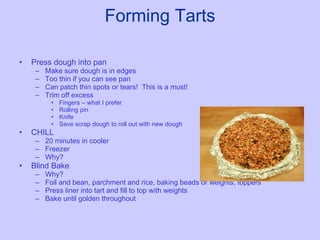
Forming Tarts Press dough into pan Make sure dough is in edges Too thin if you can see pan Can patch thin spots or tears!  This is a must! Trim off excess  Fingers – what I prefer Rolling pin Knife Save scrap dough to roll out with new dough CHILL 20 minutes in cooler Freezer Why? Blind Bake Why? Foil and bean, parchment and rice, baking beads or weights, toppers Press liner into tart and fill to top with weights Bake until golden throughout
Allow tart shell to cool Add Pre-Made filling Mousse Lemon curd Cooked fruit Remove tart pan from tart and place on cardboard round Garnish DONE  
Steps to Make a Baked Tart Dough lined rested tart pan Par bake if needed ½ Bake 2/3 Bake Un cooked filling added Bake until filling and dough are done Cool Remove tart pan from tart and place on cardboard round Garnish DONE  
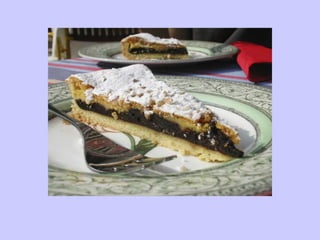
Flavors Unless layering of flavors within tarts Savory Sweet Fruit Cheese Chocolate  Nut Custard Fruit/Cheese, Fruit/Chocolate, Fruit/Nut, Fruit/Custard Etc. etc.etc Great way to utilize odds and ends in cooler.  Garnish can add texture as well as other flavors
 

Tarts

  • 1.
    Tarts More thanjust a pie without a top!
  • 2.
    Describe a TartWhat is the first thing that pops into your head when you think about a tart? What flavors do you think about? What does it look like? What textures does it contain? What is the price of it?
  • 3.
  • 4.
    Tart Doughs Thereare lots of different types of tart doughs Some are crunchy Some are soft Some are rich Some are flavored Doughs are just as important as the filling Best doughs contain the following ingredients: butter, sugar, egg and low protein flour
  • 5.
    Pate Brisee “Broken Dough” Similar to Pie Dough Flaky Made with biscuit method Flakiness depends upon the amount of mixing: rubbing the flour into the fat Good for savory tarts Some recipes contain no sugar Must chill dough at least half an hour before rolling
  • 6.
    Short Doughs Usedfor cookies and tart doughs Made by cookie creaming method Variations of the same recipe Pate Sucree: “sugar dough” Granular sugar and flavored with zest and vanilla Crispy in texture Pate Sablee: “sandy dough” Powdered sugar and flavorings Crumbly in texture Linzer dough: Ground almonds or almond flour replaces some of the white flour and flavored with cinnamon and nutmeg Chocolate sugar dough: Replace some cocoa powder for white flour Must chill dough at least half and hour before rolling dough Why?
  • 7.
    Pasta Frolla Italianfor “tender dough” Softer and more biscuit like than short doughs Made by either cookie creaming or biscuit method depending upon recipe Has more eggs/egg yolks Holds it shape well and can be used to make free-form tarts (pan less tarts) Galettes: French Crostada: Italian
  • 8.
  • 9.
    Brioche Rich doughYeast risen Must rest a lot during rolling and lining tart pan to relax gluten or it will shrink a lot Good for savory tarts, cheese and frangipane tarts
  • 10.
    Puff Pastry LaminatedDough Steam Risen Good for larger tarts Dock before filling and baking to prevent over puffing
  • 11.
    2 Kinds ofAssembly Unbaked Pre baked tart shell Pre made filling Just combine filling to shell no oven needed to combine Baked “ to be baked” Un baked tart shell Un cooked filling Combine filling to the shell and bake Can Par bake tart shell if needed ½ baked = dry, no color: good for filling that needs 15-25 min 2/3 Baked = color on edges: good for filling that need 10-15 minutes
  • 12.
    Steps to MakeUnbaked Tart Choose Tart pan Shallow, straight sided, fluted, may have false bottom, lots of sizes and shapes Roll dough to correct thickness Large (9”) roll to #3 or 3mm in thickness Tartlet (3”) roll to #2.5 or 2.5mm in thickness Roll dough to correct thickness
  • 13.
    Forming Tarts Pressdough into pan Make sure dough is in edges Too thin if you can see pan Can patch thin spots or tears! This is a must! Trim off excess Fingers – what I prefer Rolling pin Knife Save scrap dough to roll out with new dough CHILL 20 minutes in cooler Freezer Why? Blind Bake Why? Foil and bean, parchment and rice, baking beads or weights, toppers Press liner into tart and fill to top with weights Bake until golden throughout
  • 14.
    Allow tart shellto cool Add Pre-Made filling Mousse Lemon curd Cooked fruit Remove tart pan from tart and place on cardboard round Garnish DONE 
  • 15.
    Steps to Makea Baked Tart Dough lined rested tart pan Par bake if needed ½ Bake 2/3 Bake Un cooked filling added Bake until filling and dough are done Cool Remove tart pan from tart and place on cardboard round Garnish DONE 
  • 16.
    Flavors Unless layeringof flavors within tarts Savory Sweet Fruit Cheese Chocolate Nut Custard Fruit/Cheese, Fruit/Chocolate, Fruit/Nut, Fruit/Custard Etc. etc.etc Great way to utilize odds and ends in cooler. Garnish can add texture as well as other flavors
  • 17.