Tackling Social Exclusion 2nd Edition John Pierson
Tackling Social Exclusion 2nd Edition John Pierson
Tackling Social Exclusion 2nd Edition John Pierson
Tackling Social Exclusion 2nd Edition John Pierson
Tackling Social Exclusion 2nd Edition John Pierson
1.
Tackling Social Exclusion2nd Edition John
Pierson download
https://ebookbell.com/product/tackling-social-exclusion-2nd-
edition-john-pierson-5294508
Explore and download more ebooks at ebookbell.com
2.
Here are somerecommended products that we believe you will be
interested in. You can click the link to download.
Tackling Poverty And Social Exclusion Promoting Social Justice In
Social Work 3rd Edition Pierson
https://ebookbell.com/product/tackling-poverty-and-social-exclusion-
promoting-social-justice-in-social-work-3rd-edition-pierson-11927912
A New Benchmark For Mental Health Systems Tackling The Social And
Economic Costs Of Mental Illhealth Oecd
https://ebookbell.com/product/a-new-benchmark-for-mental-health-
systems-tackling-the-social-and-economic-costs-of-mental-illhealth-
oecd-32559284
The European Social Question Tackling Key Controversies Building
Progressive Alternatives Amandine Crespy
https://ebookbell.com/product/the-european-social-question-tackling-
key-controversies-building-progressive-alternatives-amandine-
crespy-51712360
Lucky Iron Fish A Social Enterprise Tackling Iron Deficiency Gavin
Armstrong
https://ebookbell.com/product/lucky-iron-fish-a-social-enterprise-
tackling-iron-deficiency-gavin-armstrong-53645312
3.
Tackling Obesity AndOverweight Matters In Health And Social Care Ruth
Chambers
https://ebookbell.com/product/tackling-obesity-and-overweight-matters-
in-health-and-social-care-ruth-chambers-47223232
Tackling Longterm Global Energy Problems The Contribution Of Social
Science 1st Edition Daniel Spreng
https://ebookbell.com/product/tackling-longterm-global-energy-
problems-the-contribution-of-social-science-1st-edition-daniel-
spreng-2514334
Covid19 Tackling Global Pandemics Through Scientific And Social Tools
Saptarshi Chatterjee
https://ebookbell.com/product/covid19-tackling-global-pandemics-
through-scientific-and-social-tools-saptarshi-chatterjee-48777668
Friend Or Foe Tackling The Issue Of Social Media In Schools Victor C
Strasburger
https://ebookbell.com/product/friend-or-foe-tackling-the-issue-of-
social-media-in-schools-victor-c-strasburger-50442118
Tackling Inequalities In Brazil China India And South Africa The Role
Of Labour Market And Social Policies Oecd
https://ebookbell.com/product/tackling-inequalities-in-brazil-china-
india-and-south-africa-the-role-of-labour-market-and-social-policies-
oecd-6771422
6.
Tackling Social Exclusion
Theconcept of social exclusion has been a central focus of government policy for the
past ten years and is now at the core of much practitioner activity.
Thoroughly updated, this much needed new edition shows how social workers
can combat the social exclusion experienced by service users and at the same time
promote social inclusion. It clearly and accessibly demonstrates how concepts and
theories of social exclusion can be used to improve practice. Tackling Social Exclusion
covers:
social work perspectives and approaches promoting social inclusion;
•
contemporary issues such as preventive work with young children and families,
•
anti-social behaviour and tensions relating to ethnicity, immigration and faith;
the role of the voluntary sector and how service agencies can change their organ-
•
isation to promote inclusion;
the skills needed when working with specific groups including children and
•
families, young people, vulnerable adults and communities, as well as new mate-
rial on social exclusion in more rural areas.
Each chapter is grounded in up-to-date practice examples and explores, through activ-
ities, case studies and exercises, how the perspective of social exclusion is changing
social work today.
John Pierson was formerly a senior lecturer in Social Work and Applied Social Studies
at Staffordshire University. He now works as a consultant and visiting lecturer at the
Creative Communities Unit at Staffordshire University. He is co-editor and author of
the Dictionary of Social Work, Rebuilding Community: Policy and Practice in Urban
Regeneration (2001),and Going Local:Working in Communities and Neighbourhoods
(2007).
For Peter LlewellynFrank Sharp and in memory of
Joyce Yvonne Sharp 1928–2007
In gratitude for the support, guidance and love
12.
Contents
List of figuresviii
Acknowledgements ix
Introduction 1
â•⁄ 1 What social exclusion means 4
â•⁄ 2 Perspectives and approaches to practice 25
â•⁄ 3 Five building blocks for tackling exclusion 47
â•⁄ 4 Working with socially excluded families 72
â•⁄ 5 Reversing the exclusion of young people 93
â•⁄ 6 Working with socially excluded adults 113
â•⁄ 7 Working with disadvantaged neighbourhoods 132
â•⁄ 8 Social work and social exclusion in rural areas 152
â•⁄ 9 Racism and social exclusion 171
10 Social exclusion and the learning organisation 192
Bibliography 207
Index 221
13.
Figures
â•⁄ 1.1 Networksfor getting by and getting ahead 19
â•⁄ 2.1 Bronfenbrenner’s ecological system of human development 33
â•⁄ 2.2 Hardiker’s model: locating preventive practice 37
â•⁄ 3.1 Example of network map of a re-ordered family of a 16-year-old
male 58
â•⁄ 3.2 Arnstein’s ladder of participation 65
â•⁄ 3.3 ‘Eyes on the street’ 69
â•⁄ 4.1 Wellbeing of children in lone-parent families 74
â•⁄ 4.2 Triangle of factors for assessment of children in need 77
â•⁄ 6.1 Support and personal networks compared for an 86-year-old
woman recovering from a stroke 124
â•⁄ 7.1 Cycle of disadvantage in excluded neighbourhoods 136
â•⁄ 9.1 Thin network of the unaccompanied asylum seeker, age 16 189
10.1 Evaluation: the key link in organisational learning 199
10.2 Logic model for a programme reducing pregnancies in young
women, 16–18 200
10.3 ABCD model of evaluation 201
14.
ACKNOWLEDGEMENTS
I am gratefulfor the help and advice that I received from many quarters while writing
this volume. As so often in the past I have benefited from regular conversations with
two close friends and colleagues, Terry Philpot, former editor of Community Care
and now author and freelance journalist, and Martin Thomas, former head of the
Institute of Social Work and Applied Social Studies at Staffordshire University. Grace
McInnes and Khanam Virjee from Taylor Francis have been supportive, facilita-
tive and patient by turns. The volume is more readable for their efforts and advice. I
also pay tribute to the three anonymous reviewers who commented helpfully on the
proposal for this second edition.
Social exclusion is a very large theme to capture within a single volume. Without
the help of advice from the field it would have been difficult to keep pace with devel-
opments. Among these I would like to thank: Bob MacLaren, formerly of Wrexham
Social Services, Paul Boylan, consultant with 4 Children, Neil Jameson of the Citizens’
Organising Foundation, Keith Puttick, principal lecturer in law at Staffordshire
University, Conrad Parke of Regeneration West Midlands, and Sally Sharp and Eric
Beak of Malpas Young Person’s Centre.
Finally, I would like to thank Marilyn Brookstone and her colleagues of Cheshire
County Libraries based at the Bishop Heber High School who systematically and
cheerfully met my every request for scores of books and other documents.
16.
INTRODUCTION
For ten yearsand more the concept of social exclusion has remained central to govern-
ment social policy. It will continue so for the simple reason that profound inequality
and disadvantage still shapes our society. Tackling social exclusion sets a fundamental
agenda for the major public services – health, social services, education, neighbour-
hood regeneration, housing and the police. Within the concept, for all its many shades
of meanings, lies a pathway to social justice, to fairness, to equality, to the guarantee
of inalienable rights.
As we shall see there is much debate, even conflict, about how to tackle it. Since
1997 social exclusion has been widely used as a way of describing a cluster of factors
that cut the links between individuals, families and indeed whole communities, and the
society in which they live. As a concept it points to many different forms of disadvan-
tage and has stimulated just as many innovative practices to counteract it.
There are also criticisms of the concept that need to be made, not least that it can
shift the spotlight away from the fact that poverty pure and simple is the central feature
that shapes society and toward a focus on the behaviour of the excluded. For social
work this presents a special challenge, since in its approximate 140 years of history the
profession has laboured long and hard to join its theories of personal responsibility
and individual behaviour to wider understandings of how society functions. In this
sense, investigations of social exclusion and the development of a practice based on
those investigations present something of a chance to lay down new directions that
social work should take for the twenty-first century.
This volume intends to contribute to that project. It is a second and completely
revised edition of a book first published some seven years ago. At that point in the
early 2000s many of the programmes launched under the Labour government to
tackle exclusion had been launched but had not yet had time to show whether they
were working. We now have some of that evidence – child poverty is reduced (but
not halved as the government had hoped by 2010), teenage pregnancies are down
(but rates remain too high for comfort), children’s services have been unified (but
there is some evidence that as a society we are struggling to maintain high levels of
children’s wellbeing), older people are living longer and are better off (but are still
17.
2â•…Introduction
vulnerable to poorlevels of hospital care and their social links to neighbourhoods an
afterthought).
This edition has been written with greater knowledge of what works and does not
work. It has also been written in the context of significant changes in services – not least
the explicit division in many authorities between adult and children’s services and the
development of outcomes specifying for the first time universal conceptions of well-
being that all services whether working with adults, children or young people should
work toward. There have been significant pressures on policy and practice as well. The
war in Iraq has come and gone to be replaced by renewed war in Afghanistan, funding
streams for particular programmes mentioned in the first volume, such as Sure Start
local programmes and neighbourhood management pathfinders, have come to an end,
and a serious global depression at time of writing has played havoc with governmental
budgets. At the same time government has redirected some of its efforts more toward
changing behaviour of excluded individuals through programmes such as Think Family,
multi-systemic therapies and adults facing chronic exclusion making even more complex
the huge range of programmes that have been brought to bear on exclusion.
Thus there is much to do. As I wrote in the Introduction to the first edition, when
social work explicitly focuses on social exclusion it also takes on new ways of looking
at social problems and of new approaches to these problems. As long as it is subject
to reflection and critical analysis the concept of social exclusion can change the way
social workers think about society and in particular the consequences for practice,
for it highlights the nature of inequality, whether of income, social supports, access
to services, or health and wellbeing. It re-orders practice priorities toward universal
outcomes, preventive work, building social networks and maximising income. To
accomplish this, social work – in its many forms – is asked to work in close partner-
ship with a range of other professions and voluntary groups.
The first edition addressed a wide audience and this second edition does no less.
As used here social work is again viewed as a big tent which includes social workers
with local authority or voluntary agencies, social-care workers of every description,
advice workers, youth workers, youth justice workers, probation officers, social care
managers, community support workers, children centre staff, youth workers, lead
professionals, education social workers, home-care workers and social workers with
primary care and hospital trusts. It is also aimed at a range of community practitioners
and community engagement officers whether in community arts or public health. In an
age of specialisation, we too easily forget that these roles all involve social work skills,
even if the professional designation varies.
Ten years into the new century it is clear that combating exclusion roles and tasks
are evolving continuously. Local authority social workers and social workers with
large voluntary organisations have been handed a multiplicity of new responsibili-
ties. Extra care housing teams, integrated care teams, floating support teams, youth
offending teams, disability service teams, teams looking after care leavers or smoothing
the pathway for older people as they resettle in the community after a stay in hospital
are just part of the evolving landscape. Then too there is the growing number of staff
working with local organisations – housing associations, community centres, cultural
resource centres and advice centres. All deal with aspects of social exclusion and all
draw on social work components – assessing need, collaborating in partnerships, giving
advice, building networks, marshalling resources. They too are among the intended
readers of this volume.
18.
Introductionâ•… 3
But theconviction behind the first edition of this book lies at the heart of this one
as well: the core of social work practice prepares it well for these new challenges.While
social work shares certain elements of professional organisation with medicine, law or
teaching Bill Jordan has noted that it is different in this one important respect: it exerts
its influence on individuals, families and communities through informal negotiation
(Jordan and Jordan 2000). Social workers are thus distinguished from other profes-
sionals by their willingness and capacity to move away from their formal roles and by
meeting people in their own, natural settings. This provides informality and the means
for negotiating solutions to problems rather than imposing them. Jordan (1987) has
also argued that a unique quality of social work is found in the close attention it pays
to individuals’ own understanding of their situation and to the informal processes by
which client or user and social worker broker a solution. This unique way of working
provides social work with many opportunities for tackling exclusion and promoting
inclusion of their service users.
THE STRUCTURE OF THE BOOK
The book as a whole is designed to provide an introduction to the different dimensions
of social exclusion that social workers will encounter. The first three chapters lay foun-
dations. Chapter 1 introduces the concept of social exclusion itself, how it is defined
and measured and the arguments between different perspectives over what it really
signifies. Chapter 2 brings social work into the picture by discussing those values,
approaches and skills that are relevant to tackling exclusion. The aim here is to ground
practitioners in those perspectives that help make sense of the tasks ahead. Chapter
3 lays out the five building blocks for practice: maximising income, strengthening
networks, developing partnership for holistic practice, increasing the participation of
users and residents and finally the importance of small areas or neighbourhoods.
Chapters 4, 5 and 6 each focus on a broad group of users – families with young
children, young people and excluded adults. Recognising that many social workers
practise within broad specialisms, these chapters aim to establish links between the
every day work that social workers are already familiar with and the kinds of roles and
tasks required to tackle the exclusion of users.
The next three chapters look at further elements of practice with the focus on
different kinds of communities. Chapter 7 looks at neighbourhood-based work and
lays out approaches to engagement in excluded neighbourhoods. Chapter 8 considers
the particular impact of social exclusion in rural areas and shire counties where it
often remains hidden but no less potent. Chapter 9 examines the powerful role that
racism continues to play in enforcing exclusion upon a range of ethnic groups, looking
in particular at the concepts of institutional racism and community cohesion. Chapter
10 concludes by discussing the learning organisation and the importance of evaluating
initiatives.
Throughout the aim is to inform and stimulate thought and reflection. The case
studies and even more, the activities prompt the reader to look more closely at prac-
tice, to judge what might be useful, to think anew and build anew.
19.
CHAPTER 1
WHAT SOCIALEXCLUSION MEANS
OBJECTIVES
By the end of this chapter you should:
Understand the concept of social exclusion and the different ways it is
⌀
■
defined.
Know which groups in society are excluded and why.
⌀
■
Reflect on how social work practice can reduce the social exclusion of
⌀
■
service users, their families and neighbourhoods.
This chapter begins with an overview of the concept of social exclusion and the
different meanings that people find in it. For all its widespread use any discussion of
social exclusion provokes sharp debate and these controversial aspects are consid-
ered next. The chapter then explores in more detail some of the components of social
exclusion using case studies to draw these out as clearly as possible for the reader. The
aim here is to provide practitioners and managers in the field with a workable under-
standing of what social exclusion is. The final section of the chapter explains why
tackling social exclusion, and promoting social inclusion, are key social work tasks for
the twenty-first century.
20.
what social exclusionmeansâ•… 5
INTRODUCING THE CONCEPT OF SOCIAL EXCLUSION
Any discussion of social exclusion inevitably raises contentious issues and strong feel-
ings, principally because people with quite different points of view find different mean-
ings in the concept. At stake are deeply held views about society and the causes of
social problems. Some of the differing viewpoints that emerge in such discussions can
take the following form:
As a concept social exclusion is overly vague but government likes it because it
•
downplays the destructive influence of poverty in people’s lives and allows govern-
ment to reconcile a bland notion of social justice with a market economy.
Social exclusion is caused by people excluding themselves from mainstream
•
society through their own actions and delinquent moral values.
Work is the most effective way of overcoming social exclusion because it
•
provides social connections and higher levels of income than benefits. Welfare
policy therefore should contain forceful encouragement and even compulsion
for all on benefits – including disabled people and lone mothers – to take on paid
employment.
Focusing on poverty means only looking at income as the basis for quality of life;
•
social exclusion by contrast focuses more on social relations and the extent to
which people are able to participate in social affairs and attain sufficient power
to influence decisions that affect them.
Are such assertions right? In fact every one of the above points has those who agree
and disagree with it. For example, on the third point, advocates and representatives of
disability organisations would strongly contest what they regard as the pressure from
government on disabled people themselves to find work when in fact they face job
discrimination on an institutional scale.Those who argue for the second point, that social
exclusion is a consequence of individual habits and personality, maintain that exclusion
is the individual’s responsibility. But others would argue that many of the forces of exclu-
sion lie outside the individual’s capacity to act. Although we can not resolve these ques-
tions one way or another for now, as practitioners accumulate experience they will begin
to develop their own understanding of its causes, of what the experience of exclusion is
like, what defines it and the ways in which they may be able to counter it.
ACTIVITY 1.1: DEVELOPING AN UNDERSTANDING OF
SOCIAL EXCLUSION
In your practice you will encounter the term social exclusion frequently and with
different shades of meaning. To help give you a better idea of what social exclu-
sion means for people read the following three case studies and make a note of
those aspects of their lives that you think contribute to their exclusion.
21.
6â•…what social exclusionmeans
CASE STUDY 1: AN ASYLUM SEEKER
Mrs. K. N. is originally from Poland. She settled in Britain some five years ago and is now
the mother of two young children; her husband and father of the children is from Nigeria
and is seeking asylum in Britain. The family is currently living in a west midlands city and
has been refused assistance from the local social services department who said it was not
responsible for paying for accommodation for the family nor for subsistence for the family
as their last settled address was in a city in the northeast of England. The family were told
they would have to apply for assistance from that city.
CASE STUDY 2: PAULINE
Pauline is the mother of a son David who is 12 and has a mild learning disability. She
also cares for a grandson, aged 11 and a granddaughter aged 4, who are the chil-
dren of Pauline’s daughter Marcia who lives near by. Pauline has long been known to
social services with a succession of social workers having concerns about the cleanliness
of her house. The files are replete with comments about how the cycle of problems is
inter-generational. Social workers repeatedly try to negotiate written agreements that are
rarely adhered to. Pauline says, as she has on occasions in the past, that she does not
want social work involvement.
CASE STUDY 3: A DISADVANTAGED NEIGHBOURHOOD
A large disadvantaged housing estate lies on the edge of Leeds with clearly demarcated
geographical and transport boundaries that separate it from the city. The estate was built
in the 1930s to replace extensive slums in the area. A large part of the population of the
estate live below the poverty line. Over two-thirds of households in the area live in council
accommodation; about one-third of households with dependent children are headed by a
single adult. A dispersal order – that is a measure that empowers local police to disperse
groups of young people in order to prevent anti-social behaviour – has been granted to
cover most of the estate. Now when residents see groups of young people gathering they
ring the police who respond quickly to break the groups up.
22.
what social exclusionmeansâ•… 7
Before reading any further, think about what social exclusion means for those in the
case studies above. In the first, the family’s precarious position in relation to public
authorities stems from the father’s claim to asylum which overrides the entitlement
to financial support of other family members. Although asylum seekers are some-
times mixed with refugees in popular imagery, the tabloid press portray them not as
‘invited’ as refugees who are recognised under international convention. Their reason
for seeking asylum in the UK may stem from civil war, cultural practices that oppress
women, or flight from severe economic hardship. These are new and different circum-
stances – at least in the public and the media mind – from those of, say, refugees under
the Geneva Convention of 1951 who are fleeing well-founded fears of persecution for
reasons of race, religion or nationality. In general the children of asylum seekers are
not subject to the Children Act 1989 although local authorities do have responsibility
for unaccompanied children.
The circumstances of asylum seekers graphically illustrate the various forces that
shape exclusion: barriers to the jobs market, thin or non-existent support networks of
their own, extreme difficulties in obtaining the safety-net benefits of the welfare state,
children facing poverty and marginalisation in the school system. Although it is diffi-
cult to assert that one group of people is ‘more excluded’ than another, asylum seekers’
experience demonstrates exclusion’s raw power more than most.
The second case study highlights a very different kind of an excluded individual
– a person who seems to want to reject helpful services, one of those called in govern-
ment parlance ‘the hard to reach’. Government social exclusion policies have increas-
ingly focused on those who are beset by a multitude of problems from which they and
their children cannot seem to get free. Initiatives such as ‘Think Family’ and the offer
of ‘multi-systemic therapy’ are aimed at connecting with those who seem resistant thus
far to services.
The third case study gives a different perspective entirely: how a whole estate or
neighbourhood can suffer exclusion. Derelict or over-crowded housing, abandoned
public spaces, the disappearance of local shops, poor services, postcode stigma, lack of
trust between neighbours all combine to exclude the residents living there. This case
study also involves young people who, locals are afraid, have a tendency to engage
in anti-social behaviour. Since 1997 government has focused particularly on young
people as providing a ready pool of the potentially excluded such as young offenders,
young teenage mothers, truants and those excluded from school, children in care and
young rough sleepers. Local and central government have invested heavily to curtail
the disorder and crime that disaffected youth cause in local communities. Cracking
down on forms of anti-social behaviour, raising the school leaving age and compel-
ling all young people to remain in education, employment or training, and placing
responsibility on their parents for ensuring discipline – all are advocated in the name
of fighting social exclusion.
ORIGINS OF THE CONCEPT SOCIAL EXCLUSION
Despite the many meanings that social exclusion has acquired in recent years in Britain,
the concept itself arose in a specific context in France in the 1970s. There it was used
to describe the condition of certain groups on the margins of society who were cut off
23.
8â•…what social exclusionmeans
both from regular sources of employment and the income safety nets of the welfare
state. Les exclus lacked the substantial rights of les citoyens, either in practice because
they were victims of discrimination – such as disabled people – or because they were
not citizens of the state, such as asylum seekers. Nor did they have access to or connec-
tions with those powerful institutions that might have helped them gain voice such
as the trade unions or residents’ associations. It is important to remember that the
concept of social exclusion arose in France and not in Britain or the United States, both
of which have substantially different political cultures in which privatisation and the
expansion of the free market in delivering public services play a far more prominent
role. In France in particular there has long been an emphasis on citizenship and social
cohesion reflecting a strong nation and a stronger commitment to providing a social
safety net for those outside the labour market.
From France the term gained wide currency in the social policy of the European
Union particularly in the Maastricht Treaty of 1996. When the Labour Party came to
power in the UK in 1997 it swiftly adopted the concept for its own. From the start the
Labour administration saw how its range of social goals could be presented in terms
of reducing social exclusion. As a first important step very soon after its election it
set up the Social Exclusion Unit in the Cabinet Office to ensure that all departments
co-ordinated their efforts in tackling exclusion. This in turn was replaced in 2004 by
the Social Exclusion Task Force, still within the Cabinet Office, as government recog-
nised that it had to restructure its inclusion policies to focus on chronically excluded
adults and multi-problem families.
In the transition from continental Europe to the UK, social exclusion became more
flexible as a policy vehicle, amalgamating with earlier strands of welfare policy in the
UK, particularly whether individuals are defined as eligible for services and benefits
through means tested and targeted resources. Yet the importance of what was new
should not be underestimated. Using social exclusion as the focal point for policy
marked a profound break with government philosophy of the two decades from the
mid 1970s to the mid 1990s. During this period Britain not only saw a large rise in
the proportion of its people living in poverty, particularly children, but had the fastest
rate of rising inequality in the world with the exception of New Zealand. Even so
ministers in that period from time to time suggested there was no such thing as poverty
in Britain. From 1997 on the British government at least recognised that poverty and
exclusion undermined social and individual wellbeing to an unacceptable degree and
announced its intention to do something about it.
Tackling poverty and exclusion and promoting inclusion for all people and groups
in mainstream society gained wide appeal across the political spectrum. For the left it
suggested a greater push toward equality with a focus on tackling deprivation and the
lack of rights, while for the right it suggested shaping a more cohesive, unified society
uniting behind a strong national regime. As we shall see both of these tendencies were
and are to be found inside the Labour party.
Equally the Conservative Party has come to recognise that it cannot ignore the
concepts of relative poverty and social exclusion. Its recent policy statements have
underscored the underlying consensus between both political parties that work is the
route out of poverty for all major groups claiming benefits – whether lone parents on
income support, adults on incapacity benefit or young adults on job seeker’s allow-
ance. Thus the Conservative Party has prescribed tough conditions on people with
disability who are to be required to work or actively seek work for a minimum of 20
24.
what social exclusionmeansâ•… 9
hours a week (or 5 hours ‘depending on capability’) after completing a work capability
assessment. (Although to its credit party policy does say that those who cannot work
at all should be treated with complete respect.)
Conservative policies also require lone parents to work a minimum of 20 hours a
week when their youngest child reaches five years and to work full time (30 hours a week)
when their child reaches 11 years. Even more than the Labour Party, the Conservative
Party places great faith in‘state determined but not state delivered’ services and is calling
for a large-scale system of contracting out back to work services into the private and
non-profit sector (Conservative Party 2008; Centre for Social Justice 2007).
SOCIAL EXCLUSION: CONTROVERSY AND DEBATE
As used in the UK the concept of social exclusion is sufficiently broad to allow different
understandings of society and social problems to exist side by side. Practitioners will
find that social exclusion is interpreted differently and that these different interpreta-
tions frequently relate to different political points of view. For instance there are those
using the term who prefer to focus more on the threat that the socially excluded them-
selves present to social cohesion and mainstream society. But there is also the view that
social exclusion should primarily concern the poverty and disadvantage that people
suffer in the midst of an otherwise wealthy society; those who hold this perspective
tend to think that only by making the UK more equal in wealth through redistribution
and personal resources will the scourge of exclusion finally be overcome.
The three strands of social exclusion
In an influential text Ruth Levitas uncovered three different interpretations or
‘discourses’ within discussions on social exclusion (Levitas 2005).
1 RED: the redistributionist discourse which has as its prime concern those living
in poverty and the social forces that make this happen. RED includes within
these concerns the extreme extent of inequality in Britain. Those holding this
view argue that only through the redistribution of wealth across society as a
whole, through taxation, benefits and services, will poverty and inequality be
eradicated in Britain. It is especially critical of the idea that individual attitudes,
for example toward work, or that moral and cultural attributes are in any way
responsible for exclusion of groups or individuals.
2 MUD: the moral underclass discourse which concentrates on individual delin-
quency and lapses in attitudes and morality. Proponents extend this argument to
whole neighbourhoods or social groups. For example they will view low-income
neighbourhoods as falling prey to criminalised behaviour or as lacking a work
ethic. MUD is also a gendered discourse; it highlights what it regards as moral
weakness in which gender plays an important role. It pinpoints, for example, the
behaviour of absentee fathers who evade child-support responsibilities, young
male offenders, and young teenage women who have children outside a stable
relationship. Proponents argue that the excluded in effect exclude themselves by
25.
10â•…what social exclusionmeans
engaging in certain behaviours such as drug addiction, crime and having chil-
dren out of wedlock. This position is found frequently among those who argue
that there is an ‘underclass’ in society that has become detached from main-
stream social institutions, adopts anti-social behaviour and has values that seem
to justify this behaviour.
3 SID: a social integrationist discourse whose primary focus is on paid work and
entrance into the labour market as a way of achieving a cohesive society. Levitas
argues that this discourse remains uppermost in the policy and practice of the
Labour government since it came to power in 1997. Although it shares some of
the features of the redistributionist discourse insofar as it uses tax and benefits
policy to support people in need while they train or search for work, it tends to
equate social exclusion with exclusion from the labour market (Levitas 2005).
ACTIVITY 1.2: THE DIFFERENT MEANINGS OF SOCIAL
EXCLUSION
Below are three texts each of which reflect one of the three discourses associated
with social exclusion discussed by Levitas above. Try to identify which one exem-
plifies RED, MUD and SID as discussed above.
1 ‘It turns out that the clichés about role models are true. Children grow up
making sense of the world around them in terms of their own experience.
Little boys don’t naturally grow up to be responsible fathers and husbands.
They don’t naturally grow up knowing how to get up every morning at the
same time and go to work. … And most emphatically of all, little boys do not
reach adolescence naturally wanting to refrain from sex, just as little girls don’t
become adolescents naturally wanting to refrain from having babies. That’s
why single-parenthood is a problem for communities, and that’s why illegiti-
macy is the most worrisome aspect of single-parenthood’ (Murray 1996: 31).
2 ‘Well I think there’s a growing body of evidence now that says actually that
probably in many cases, the worst response that we can make to someone
who’s developing a problem – maybe it’s a mental health problem, maybe
it’s something else – is to exclude them from the world of work is not
always the right thing to do. So we have been piloting, again in some
parts of the country, putting some of our employment advisors into GPs’
surgeries so that the GP can consult and discuss and so can the patient’
(Hutton 2006).
3 ‘Britain remains a highly divided country with grotesque extremes of income
and wealth. Until the cause of these disparities are addressed, the work of
the Social Exclusion Unit could seem at best to be marginal, at worst a
political smokescreen. … Social inclusion is no more than an organised
attempt by the state to incorporate people at the margins into this flexible
and global labour market, characterised by insecurity, low wages and poor
conditions, a task made politically more urgent by the growing numbers of
those currently excluded’ (Craig 2000: 6).
26.
what social exclusionmeansâ•… 11
When thinking about social exclusion it is important to have all three strands
in mind, although of course you will rarely encounter them in pure form as
above. But in reflecting on the policies and practices you are having to carry
out knowing which strand is uppermost provides a key signal for what formally
you are being asked to achieve. There is real tension among the three discourses
over what forces shape human behaviour. To what degree is behaviour shaped
by either social, economic and political structures, such as low income, prejudice
and economic decline, or by individual character, personal attributes and moral
codes? This central question has existed since the earliest days of social work
in the late nineteenth century and, as befits such a complicated issue, there is
evidence on both sides. The concept of social exclusion can point to both kinds
of influences and so it remains vital that practitioners think long and deeply on
what is at stake here since social work is often required to make finely balanced
judgements on user behaviour precisely on this issue.
A broad definition of social exclusion
Reflecting the broad nature of social exclusion a number of definitions have been
advanced by various authorities including government.
The Centre for the Analysis of Social Exclusion defines social exclusion in this way: An
individual is socially excluded if (a) he or she is geographically resident in a society, (b)
he or she cannot participate in the normal activities of citizens in that society, and (c) he
or she would like to so participate, but is prevented from doing so by factors beyond his
or her control (Burchardt, et al. 1999).
This definition is broad brush emphasizing that the person is excluded if resident in a
neighbourhood, community or country but is kept from participating in society through
circumstances not of their own making. It is significant because unlike many other defini-
tions – individuals cannot exclude themselves.
With fundamental arguments over human behaviour at stake it is not surprising that
reaching a single, reliable definition of social exclusion in practice is difficult. On
balance the viewpoint offered in this volume places a greater weight on poverty, poor
housing, and the impact of disadvantaged neighbourhoods as shapers of human behav-
iour than on individual motivation, moral capacity and characteristics of personality.
Social exclusion, in the view of this author, drastically reduces the range of choices
that individuals and families have at their disposal. What appears from the point of
view of mainstream society as reasonable and responsible actions for individuals and
families to take are often simply not available to the excluded. This is because the
access, the resources, the means, the knowledge and the support are not there. In short,
broad social and economic factors – social class, access to political power, knowledge
27.
12â•…what social exclusionmeans
of professional systems, discrimination based on race or physical ability – shape the
capabilities of all individuals, augmenting some, and drastically curtailing others.
Reflecting the contradictory nature of the way in which social exclusion is used in
policy and practice we adopt the following definition:
Social exclusion is a process over time that deprives individuals and fami-
lies, groups and neighbourhoods of the resources required for participation
in the social, economic and political activity of society as a whole. This
process is primarily a consequence of poverty and low income, but other
factors such as discrimination, low educational attainment and depleted
environments also underpin it. Through this process people are cut off
for a significant period in their lives from institutions and services, social
networks and developmental opportunities that the great majority of a
society enjoys.
Of course practitioners do not have the luxury of endless debates over definitions
and perspectives. They are, however, charged by their agency at local level and by
central government to undertake certain responsibilities either by law or by profes-
sional commitment and many of these hinge on tackling exclusion and promoting
inclusion of service users. The National Occupational Standards for Social Work for
example refer frequently to advocacy, to respecting individual rights, to promoting
independence and adopts for its own the International Federation of Social Workers
(2009) statement on the key purpose of social work as:
a profession which promotes social change, problem solving in human
relationships and the empowerment and liberation of people to enhance
wellbeing. … Social work intervenes at the points where people interact
with their environments. Principles of human rights and social justice are
fundamental to social work.
Social workers are as well fitted as any of the helping professions to undertake this
work. They have long been familiar with the effects of social exclusion on individuals
and families for a century or more – family breakdown, mental and physical ill-health,
educational under-achievement, unemployment and loss of self-esteem – and are in a
better position than others to negotiate the complex boundaries between individual
and social dynamics required to achieve a greater measure of that social justice.
In coming to grips with exclusion, advancing knowledge has enabled us to ascer-
tain its extent in particular geographical areas and with particular groups of service
users. For example, researchers from the New Policy Institute (Palmer et al. 2008)
have developed indicators that show the extent of exclusion suffered by various
groups in society. Their careful research into social exclusion has shown that these
are the most reliable and effective signposts for social exclusion taking place. As an
example the indicators for the extent of socially excluded children in Britain are the
number of:
children living in workless households
•
low-birth-weight babies under 2.5 kg
•
infant deaths per 1000 of population
•
28.
what social exclusionmeansâ•… 13
16 year olds failing to get five or more GCSEs at A to C
•
permanent exclusions from school
•
births to girls conceiving under 16
•
children cautioned for or guilty of an indictable offence.
•
In using such indicators it is important not to confuse ‘causation’ with ‘correlation’.
Indicators do not identify the ‘causes’ of social exclusion nor do they provide evidence
for arguing individuals or families are responsible for their own exclusion. But they are
quantifiable signposts – ways of estimating the degree of exclusion within a particular
area and for the country as a whole year after year – that shed light on the real world
consequences of exclusion (Palmer et al. 2008).
As our definition above suggests whole neighbourhoods and communities can also
face exclusion.The indicators of exclusion at this level include, among others, the extent
of overcrowded housing, the extent to which people feel unsafe, a high percentage of
residents without a bank or building society account and high levels of burglaries
among others (Palmer et al. 2008: 96–110). For neighbourhoods, as for families, social
exclusion has devastating effects. Certain long-term trends gather pace: vital services
as well as commercial and financial outlets withdraw, vulnerable groups such as lone
parents find themselves housed together in particular areas and the incidence of social
disturbances rise. Social workers are less familiar now with the skills for tackling the
social problems of whole neighbourhoods than they used to be when ‘community
work’ was routinely on the training curriculum. But as we shall see in Chapter 7 there
is a strand within social work of working in neighbourhoods and communities dating
back to the nineteenth century, that when combined with a contemporary skill set can
mean that social workers can address this area based dimension of exclusion also.
THE COMPONENTS OF SOCIAL EXCLUSION
We have thus far discussed the tension within the concept of social exclusion, have
begun to think about what being socially excluded actually means for people and
neighbourhoods, and formulated a working definition of social exclusion as a process
that extends over time. This section follows up these first thoughts by examining its
different components in greater depth.
Of the important forces that drive the process of social exclusion five stand out:
poverty and low income
•
lack of access to the jobs market
•
thin or non-existent social supports and networks
•
the effect of the local area or neighbourhood
•
exclusion from services.
•
These five components intertwine and reinforce one another which means that tack-
ling social exclusion and promoting its opposite, social inclusion, requires a multi-
pronged approach to practice that address each of these domains: maximising options
for income, strengthening social networks, tackling the quality of life in neighbour-
hoods and making services more accessible. Let us examine each more closely.
29.
14â•…what social exclusionmeans
Poverty and low income
The most potent element in the process of social exclusion is poverty and low income.
Any social work practice that aims to reduce exclusion cannot avoid this central fact.
Many commentators, both in government and out, now refer to ‘poverty and social
exclusion’ to ensure that this is understood. Indeed a family with a reasonable income,
or a local neighbourhood with reasonable median income, will usually have ready
resources to overcome barriers and exclusions that they may encounter.
Definitions of poverty have themselves become more diverse and flexible and have
begun to incorporate elements that parallel aspects of social exclusion. Increasingly it
is acknowledged that any definition of poverty, as with social exclusion, is based at
least in part on value judgements, for example whether government should or should
not play a vigorous role in reducing poverty or whether obtaining work is the main
way out of poverty.
Conventionally poverty has been defined in one of two ways – as either absolute
or relative.
Absolute poverty is defined by a fixed standard below which individuals and
families experience complete destitution and so cannot meet even minimum needs
for food and shelter. Many aid agencies and the World Bank and the United Nations
Development Programme use this standard for measuring poverty in the developing
world which they have fixed at two (US) dollars a day. Below that level of income fami-
lies face severe malnutrition and dangerous levels of ill-health. This notion of poverty
is thus broadly fixed at the level of income necessary for basic subsistence. Above that
level families can survive if only barely. Below that level they may starve. No other
criteria are used.
Absolute standards of poverty have the virtue of allowing us to calculate poverty
across different countries. Thus the United Nations Development Programme was able
to estimate in the mid 1990s that within the developing world 30 per cent of all chil-
dren under five are malnourished (UN 1995). But such absolute standards can also
have an exploitative function: the old workhouse system in Britain often relied on an
absolute notion of poverty to decide whether or not a person was truly poor. Only if
they were on the verge of starvation would a person or family agree to come into the
local workhouse where the regime was hard and often tyrannical. When John Moore,
then secretary for social security in the Conservative government, said in 1989 that
there was no such thing as a poverty line he was hewing to a primary definition of
poverty and concluded that in Britain there was no poverty, only inequality (Moore
1989).
Relative poverty on the other hand refers to the lack of resources needed to obtain
the kinds of diet, participate in the activities and have the living conditions and ameni-
ties that are widely approved and generally obtained by most people in a particular
society. A person who suffers this form of poverty has resources so seriously inferior
to those commanded by the average individual or household that they are, in effect,
excluded from ordinary living patterns and social activities.
The work of Peter Townsend (1979) in particular helped us to understand that
the basic standards of living that most people enjoy are implicitly defined within each
society. These standards have not only to do with income but also consumer purchases,
levels of health and wellbeing, and access to goods and services. Those investigating
relative poverty look at the ways in which individual and family life is affected by
30.
what social exclusionmeansâ•… 15
the experience of deprivation. The notion of relative poverty focuses on the degree
to which people are prevented from sharing the living standards, opportunities and
norms of wellbeing that society as a whole has created for itself. In this sense the
concept of relative poverty is closely allied to social exclusion.
Both concepts imply that as society becomes more sophisticated and living
standards rise so do the necessities that an individual or family requires to partici-
pate in the benefits of that society. Information and communication technology
(ICT) presents a good example. In a relatively short time access to a computer and
the ability to use it has moved from the margin of economic and social activity to
its core. Add in its networking and educative functions and it becomes a central
tool that impacts widely on the lives of individuals. Families with no access to or
knowledge of ICT have yet another dimension in which they are poor – ‘information
poverty’ and ‘computer illiteracy’ – which 20 years ago was not even recognised as
a source of concern.
DEFINITIONS OF POVERTY
Absolute poverty
‘a condition characterised by severe deprivation of basic human needs, including
•
food, safe drinking water, sanitation facilities, health, shelter, education and informa-
tion. It depends not only on income but also on access to services’ (UN 1995: 57).
Relative poverty
‘persons, families and groups of persons whose resources (material, cultural and
•
social) are so limited as to exclude them from the minimum acceptable way of life
of the Member State in which they live’ (EEC 1985)
People are said to be living in relative poverty if their income and resources are so
inadequate as to preclude them from having a standard of living considered accept-
able in the society in which they live. Because of their poverty they may experience
multiple disadvantages through unemployment, low income, poor housing, inadequate
healthcare and barriers to lifelong learning, culture, sport and recreation. The standard
for determining low income is generally accepted at 60 per cent or less of the average
household income in any given year. In 2005/06 nearly 13 million people or a fifth of
the UK population were living below this income threshold; only five other countries
of the EU had higher rates of relative poverty (Palmer et al. 2008).
The notion of relative poverty raises a key question: what does society deem as the
standard for deciding who is poor? What are ‘the necessities of life’? Determining the
norms of society is a crucial part of coming to understand what it is that people are
being excluded from when they are poor.
One of the most influential studies that has attempted to define what are the neces-
sities was ‘Breadline Britain’ which through several rigorous public surveys established
31.
16â•…what social exclusionmeans
what the British people considered to be necessities as they have changed since the 1980s.
The surveys showed that the public hold wider-ranging ideas about the necessities of life
than expert opinion might have thought. In those surveys people of all ages and walks
of life move well beyond the basic necessities to acknowledge that social customs, obli-
gation and activities form a platform for needs (Howarth et al. 2001: 14).
There is a striking consensus over many items deemed ‘necessities’, that is those
things that all adults should be able to afford and which they should not have to
do without. For example, in the most recent of these surveys, 95 per cent thought
beds and bedding were necessary (although interestingly 4 per cent thought they were
unnecessary) while 94 per cent thought heating to warm the living areas of the home
was necessary. Other items deemed necessary by the vast majority (with percentages
in brackets) were things like two meals a day (91), a refrigerator (89), fresh fruit and
vegetables daily (86), money to keep the home in a decent state of decoration (82) and
a washing machine (76) (Howarth et al. 2001).
The same consensus however does not always exist over what is not necessary.
There is disagreement, especially over a range of items that are new, technological or
labour-saving.
These two main definitions of poverty – relative and absolute – reveal different ways
of looking at human needs. Absolute definitions provide a universal threshold by which
to measure poverty while relative definitions are concerned not just to look at what is
required for subsistence but at a range of social and psychological resources needed to
fulfil the promise of the autonomous, capable adult participating in their social milieu.
ACTIVITY 1.3: THINKING ABOUT POVERTY
Before reading any further look at the list of items below which have been taken
from the most recent Breadline Britain survey, mentioned above. They have been
scrambled to give you the chance of testing your opinion on what constitutes necessi-
ties against the results of the public survey.Which of the following would you define
as ‘necessities’, that is ‘items which you think all adults should be able to afford and
which they should not have to do without’ (list the items in order of importance):
two pairs of all-weather shoes, television, holiday away from home once a year,
dictionary, car, carpets in living room, microwave oven, daily newspaper, regular
saving of £10 per month, an evening out once a fortnight, visits to friends and
family, visits to the children’s school, a leisure activity, having a telephone, small
amounts of money to spend on self weekly, dressing gown, coach or train fare to
visit friends and family every three months.*
*╇╇ The public’s view was (figures in brackets are percentages): two pairs of all weather shoes (71), televi-
sion (56), holiday away from home once a year not with relatives (55), dictionary (53), car (38), carpets
in living room (67), microwave (23), daily newspaper (30), regular saving of £10 per month (66), an
evening out once a fortnight (37), visits to friends and family (84), visits to the children’s school (81),
hobby or leisure activity (78), having a telephone (71), small amounts of money to spend on self (Gordon
et al. (2000: 13).
32.
what social exclusionmeansâ•… 17
Access to the jobs market and paid employment
While unemployment has long been viewed as a principal factor in causing poverty,
our awareness of its many effects has become more sophisticated since the 1990s.
In particular, our understanding of what exclusion from the labour market means
for individuals and families across their life cycle has expanded considerably. Those
with low levels of skills face the toughest barriers to entering or re-entering the job
market. This mismatch has arisen in part because of the increased requirement for ‘soft
skills’ – skills that relate to motivation, teamwork and problem-solving reflecting the
move toward services and retail, team-production processes, together with emphasis
on quality of service (Giloth 1998: 5). The emerging service economy itself does not
provide orderly advancement (as did the earlier manufacturing economy) because of
the gulf between high-wage, high-skill jobs at one end and low-wage, low-skill work
at the other. Some economists now argue that skills in the technical sense are less
critical to employability than attitude, and that the notion of ‘soft skills’ is simply a
way of denoting the willingness to learn and to accept the disciplinary requirements
of most workplaces.
One strand of government policy applies both enticement and pressure on specific
groups of people to prepare for and seek work more actively. The various Welfare-to-
Work programmes are for groups with an insecure or disadvantaged relationship to the
labour market such as 18–24 year olds, the long-term adult unemployed, people with
disabilities and lone parents.The programmes aim at‘enhancing employability’ of such
groups through training, job search and general ‘work readiness’. The thinking behind
such programmes is that through work those who lived previously on benefits are able
to lift themselves out of poverty and also enjoy the connections and further opportuni-
ties that employment provides. Recent initiatives have taken this line of thinking even
further with claimants on new benefits such as Employment and Support Allowance
having to undergo renewed medical assessment and enter work readiness programmes
(see Chapter 6) and lone parents with children over seven having to secure training
places and employment as they are transferred from income support to jobseeker’s
allowance (see Chapter 4).
This emphasis in government policy on the jobs market and finding work presents
practitioners with another potential conflict over values. How much encouragement or
pressure should be applied to people of working age to find a job? This is a particularly
acute question for those adults that social workers often serve – disabled people, people
with mental health problems or lone parents. Each group has a range of requirements
to be met and barriers to overcome before they can readily find work. Many social
workers may feel uncomfortable in being part of a wider policy goal of pressuring
people into work. They may well share the redistributionist perspective which accepts
that many individuals not able to work because they are raising children or are disa-
bled should be supported through adequate levels of benefits.
The effects of discipline of the labour market and being‘work ready’ are not always
clear cut for particular individuals. On the one hand employment does in general
provide levels of income higher than most state benefits. Work can also provide a sense
of purpose and social interaction and networks that are difficult to find anywhere else.
It also can facilitate contact with relatively powerful institutions such as trade unions
or professional associations. As a result groups that social workers work with want
greater access to the jobs market. Young adults leaving care need training schemes,
33.
18â•…what social exclusionmeans
adults with a learning disability look for supported employment as do young offenders
leaving custody.
On the other hand jobs, particularly in the service sector such as restaurants or call
centres, pay low wages, are often casualised (that is, are part time and temporary) and
stressful and do not bring either the higher income or the valued sense of inclusion in a
work place where a person is trusted and respected (Sennett 2007). Recent research exam-
ining lone parent employment for example has pointed to the existence of a ‘low pay – no
pay’ cycle. Evans and colleagues show that although lone parents are moving into paid
work at a rate similar to that of other non-employed people,they are twice as likely to leave
that work, with low pay one of the main factors associated with exit (Evans et al. 2004).
While official long-term unemployment decreased by half between 1997 and 2004
it has since been rising again – very substantially in 2008–9. Only two-fifths of those
who want paid work but do not have it are officially unemployed while a further fifth
are long-term sick or disabled (Palmer et al. 2008: 67). So we have to be cautious
therefore in assuming that ‘labour market activity’ produces an easy answer to helping
individuals out of social exclusion.
Social supports and social networks
A third component of social exclusion is the weakness in social networks experienced
by groups, families or individuals. ‘Network poverty’ deprives users of social supports
and informal help that we all need to participate in community life and to enjoy the
standards of living shared by the majority of people. Social workers have informally
recognised this to be the case for some while. For example, since the implementation of
the Children Act 1989 they have preferred to place children with relatives and as near
to home as possible rather than in a children’s home or with distant foster parents,
thus preserving the child’s natural networks. But in general focus on networks has been
intermittent and often of low priority. For instance in social care for older people social
workers have reduced their engagement with ‘non-care’ activities such as developing
luncheon clubs, providing specialist transport services and befriending activities which
has undermined the network-enhancing role of social care practice. This is despite
the clear evidence that networks and neighbourhood involvement are instrumental in
underpinning older people’s wellbeing (Wenger 1997; McLeod 2008; see Chapter 7).
Mastering what social networks are and how they thrive is therefore an essential
element in tackling the social exclusion of users. Fortunately our understanding both of
the importance of social networks and how they function has developed considerably
in the last 20 years. There are various ways of describing and measuring the character-
istics of networks. One helpful distinction is to think of networks for ‘getting by’ and
those ‘for getting ahead’; they are very different and perform very different functions.
Networks for getting by
These are the close, supportive networks embedded in everyday relationships of friends,
neighbourhood and family. When we think of the social supports offered by extended
families and friends or by close-knit communities, these are networks for ‘getting by’.
Through these last minute gaps in childcare are filled, a sick person is looked after, a
34.
what social exclusionmeansâ•… 19
small loan or cash to make ends meet are provided and family celebrations or rites of
passage are extended by their participation.
As social workers we are vitally interested in how these networks are viewed by
the people with whom we are working. They may be seen as affirmative, nurturing or
accepting or as antagonistic and inaccessible. At their very worst they can be sources of
heavy responsibility, aggression and scapegoating. Understanding how such networks
function helps us to understand better the distinctive characteristics of socially excluded
and isolated individuals and families (Briggs 1997).
Networks for getting ahead
These networks provide crucial information for individuals and families on jobs,
education, training and on a range of options for advancing individual interests. In
many ways they are the opposite of networks for getting by but can achieve important
goals in their own right. Mark Granovetter has summed up this kind of network in
the phrase the ‘strength of weak ties’ (Granovetter 1973). The ‘weak ties’ he refers to
are the networks found outside the immediate neighbourhood and family and friends;
they are occasional and episodic in nature and are more tenuous than a close personal
relationship. They may be based on ‘someone who knows someone’ about a job possi-
bility or on the links obtained through a skills agency half a city away which a person
visits only occasionally (Briggs 1997). Such networks are often referred to as ‘bridging
social capital’ – the kind of network that provides access to institutions and employ-
ment markets that personal relationships simply cannot offer.
Network for
getting by:
family,
friends,
neighbours
(in black)
Network for getting ahead:
intermediaries, mentors,
‘friend of a friend’, teachers
(in grey)
Employers, training
courses, colleges
YP
P
P
FF
FF
R
CL
CO
P – parent
FF – family friend
YP – young person
CL – college lecturer
CO – training course organiser
R – relative
FIGURE 1.1 Networks for getting by and getting ahead
35.
20â•…what social exclusionmeans
‘Weak ties’ can in fact be very powerful by providing information and opportuni-
ties for self-development. This is particularly so in relation to the jobs market which
has become complex and difficult to navigate for all young people but particularly so
for those from low income urban neighbourhoods or adults who have been out of the
labour market for a lengthy period. Job descriptions are more fluid and firms, focusing
on ‘core competencies’, have hived off entry-level jobs to other organisations that
once were routes to secure positions. Increasingly the networks to which low-skilled
workers and prospective employers belong fail to intersect. As a result it is increasingly
clear that excluded individuals, whether through low income or discrimination, no
matter how highly motivated, cannot on their own reconstruct and negotiate a city’s
map of job connections. Finding a job is no longer an individual transaction where a
person simply acquires skills and then joins a job queue, where they are individually
assessed without other intermediaries being taken into consideration.
Creating new networks of either kind or bolstering existing ones offers a fertile field
for practice,as we shall see in the next chapter.Network mapping,capitalising on existing
strengths within networks for getting by, creating new networks around existing points
of service such as family centres and schools, or by using mentors and volunteers, are all
approaches which social workers should be developing to achieve practical ends in their
work – whether to provide more informal social care, support people in finding work
or helping young parents become more effective in managing their children’s behaviour.
Networks are particularly important when working with individuals that employment
gatekeepers view stereotypically as ill-equipped for the jobs market, such as young males
without qualifications – black and white – or long-term unemployed.
Importance of neighbourhood
Since the 1990s we have learned an immense amount about the power of ‘place’ – the
impact of neighbourhood on the lives of those that live there. We know that conditions
of poverty and exclusion interact and reinforce each other in particular geographical
locations to create a qualitatively different set of conditions that make it virtually
impossible for individuals or families to escape these negative ‘neighbourhood’ effects.
This dynamic between poor schooling, vulnerable families and low income is found
throughout the UK, often on social housing estates on the edges of towns and cities
but also in low-income areas of mixed tenancy and owner-occupied housing in both
urban and rural neighbourhoods.
Yet people’s attachment to their neighbourhood, to their ‘place’ can be deep and
enduring. It tends to be strongest in areas with effective social networks and where
people perceive their area as ‘safe’. While residents in disadvantaged neighbourhoods
in general have lower levels of attachment to their neighbourhood as a whole they
nevertheless express strong attachments to their social networks as a resource in coping
with social problems (Livingston et al. 2008).
When we refer to ‘neighbourhoods’ we are not trying to evoke a cosy well-defined
area where the residents all know and support each other in frequent face-to-face
transactions. Far from it. In working with poor and excluded neighbourhoods we use
that term simply to refer to a recognisable vicinity, perhaps with established bounda-
ries like a road or highway or the edge of an estate, that a majority of residents them-
selves would acknowledge.
36.
what social exclusionmeansâ•… 21
The built environment of a neighbourhood or local area – such as the quality of
the housing, the existence or not of leisure facilities and the road system – is of course
important to the quality of life, but we have come to understand from the range of
research since the 1990s that the social fabric is even more important to understanding
exclusion in a locality. By social fabric we mean the social connections between people,
the strength of local organisations and associations and the extent and vibrancy of
local activity whether commercial or civic. These are assets stored in effect in human
relationships of the area, and are often collectively referred to as ‘social capital’. Such
assets may be stronger, weaker or even non-existent but knowing something of these
relationships for a given area should be fundamental to practice.
In working with low income neighbourhoods, increasing the levels of participa-
tion by local residents – whether in local organisations and institutions, decision-
making affecting the locality or in public services themselves – becomes an important
goal. There are three reasons why. First, raising levels of participation ensures that the
expressed needs of local residents are heard directly and are not shaped subtly by the
interests of service providers or local officials. Second, local people can build skills
and confidence that make them more effective in articulating their needs and demands
and that of their neighbourhood. Third, as local residents learn to participate more
effectively, their experience helps develop skills for further successful collaborations in
solving local problems (Ferguson and Stoutland 1999: 51).
That is the theory at least. But there are practical barriers to participation by local
residents, especially in low-income neighbourhoods, to take into consideration. The sheer
amount of time required, the lack of pay or expenses for that time, the complicated profes-
sional and managerial language that service providers often deploy and burnout by those
who regularly step forward to volunteer to sit on management boards or oversee yet another
survey or attend yet another meeting are all obstacles to be surmounted by local people.
DISTRESSED HOUSING ESTATES
In her research on distressed social housing estates, Anne Power has shown the intensi-
fying effects of exclusion in particular areas. In Dangerous Disorder, which she wrote with
Rebecca Tunstall in 1997, the authors report on their findings from 13 areas where there
had been serious disorder.
There was a vacuum within the estates which tough boys sought to fill – too little work, too
little cash, too few adult male workers and fathers, too many buildings, too many young
boys outside any system. There was too little for these boys to do and too many useless
places for them to attack. The vast majority of estates in difficulty had some empty prop-
erty, abandoned land and unsupervised areas, inviting vandalism, fires, gangs, hidea-
ways and other forms of trouble. Empty property was a signal that their community was
worthless to the outside. But empty property gave boys room for destruction. The damage
caused further abandonment with the consequent weakening of controls.
(Power and Tunstall 1997: 46)
37.
22â•…what social exclusionmeans
Exclusion from services
Closely allied to the importance of locality in the social exclusion of individuals, fami-
lies and groups is the lack of access to basic services. By ‘services’ we mean the whole
range of private and public, in-home and out-of-home services which individuals,
families and groups continually draw on for a variety of purposes. In-home services
include everything from electricity to care for those who need it; out-of-home services
include transport, post office, banking, doctor and hospital facilities or those such as
day care for children and day centres for older people. In poor or disadvantaged neigh-
bourhoods there are often barriers to obtaining such services beyond the means of any
one individual or family to surmount. All such services do have a relationship to the
locality. They may be remote in their style or even conspicuous by their absence while
others will have ready points for local contact but in one way or another through their
quality they have a wide impact on the degree of inclusion or exclusion that people
experience.
Take the example of what the withdrawal of financial services can mean for
neighbourhoods and those that live there already experiencing other forms of exclu-
sion. The number of adults without a bank account fell from nearly 3 million in
2002 to 2 million in 2005 yet many households remain vulnerable to financial exclu-
sion. High levels of financial exclusion have been found in particular groups such
as housing association tenants, care leavers, lone parents, disabled people, members
of ethnic minorities, migrants and asylum seekers. They are vulnerable to higher-
interest credit and loan sharks, they are badly covered by lack of insurance, they
have no bank account into which income can be paid and often pay a higher cost
for their utilities.
ACTIVITY 1.4: Financial exclusion and predatory
lending
Choose a social housing estate where you or your team work and find out which
financial services are and are not provided. Don’t forget to consider services
such as extending credit to families or individuals, counters for cashing benefit
cheques and services to small shops or businesses. It is important to examine the
informal services that people might come into contact with such as credit unions
or loan sharks.
Focusing on exclusion from services requires looking hard at how social work serv-
ices are currently delivered and finding ways for increasing access to them. To take
one example: the proportion of older people receiving home care has fallen by over a
quarter between 1998 and 2007 (New Policy Institute 2009). The reasons for this are
complex and have to do with local authority home-care resources focused on those
deemed most in need, higher charges for home care and the availability of free health
care in hospital. This means that services such as home care, respite care to relieve
38.
what social exclusionmeansâ•… 23
regular family carers occasionally, meals services and day-care centres are all contrib-
uting less and less to maintaining older people at home. The example raises a number
of important questions. Why is this happening? Is this the consequence of political
decisions and local authorities deciding to fund other services? Can people now not
afford such services? Are there other barriers that we do not know about in place that
prevent their being used?
ACTIVITY 1.5: REFLECTING ON WHAT SOCIAL WORK
CAN CONTRIBUTE TO TACKLING SOCIAL
EXCLUSION
Before going on to the next chapter read the list below of social problems that
the government’s Social Exclusion Task Force (2004) associates with social
exclusion.
lack of opportunities for work
•
lack of opportunities to acquire education and work-related skills
•
childhood deprivation
•
families disrupted through high levels of conflict, separation or divorce
•
barriers to older people living active lives
•
inequalities in health
•
poor housing
•
poor neighbourhoods
•
fear of crime
•
groups disadvantaged through poverty or discrimination.
•
Think of your current set of job or student placement responsibilities and
decide which of the social problems listed above you and your team could
tackle. You might want to categorise those problems according to whether
you and your team’s job specifications would have scope for tackling those
problems on your own or in collaboration with others. If you are a social
work or social care student pick out those skills and competencies that you
think could be applied to reducing the exclusion of various service user
groups.
KEY POINTS
Social exclusion is a process that deprives individuals, families, groups and neighbour-
âš‚
❑
hoods from obtaining the resources for participation in social, economic and political
activity that the great majority of society enjoys. These resources are not just material but
have to do with the quality of social interaction. Social exclusion undermines or destroys
channels of access for support and opportunity.
39.
24â•…what social exclusionmeans
The five main components driving the process forward are
âš‚
❑
poverty and low income
âš“
❍
barriers to the jobs market
âš“
❍
lack of support networks
âš“
❍
the effects of living in extremely poor or distressed neighbourhoods
âš“
❍
lack of access to good-quality services.
âš“
❍
Social exclusion presents a number of interlinked problems for social workers to deal with,
âš‚
❑
in the form of individuals with depression and poor mental health, families under stress,
children living in poverty, and older people cut off from activities and social engagement.
Perhaps the biggest challenge for social workers in tackling social exclusion is to develop
approaches that deal with these problems on a neighbourhood or community level.
KEY READING
Guy Palmer, Terrence MacInnes and Peter Kenway, Monitoring Poverty and Social
Exclusion (New Policy Institute and the Joseph Rowntree Foundation, 2008). The
authors measure the extent of social exclusion in Britain based on a range of impor-
tant indicators. The information is provided in clear graphs that are easy to interpret;
produced annually.
John Hills and Kitty Steward (eds), A More Equal Society?: New Labour, Poverty,
Inequality and Exclusion (Policy Press, 2005). Combines hard data with a reflective
exploration of exclusion across a number of aspects of British society in the twenty-
first century.
Gerald Smale, Graham Tuson and Daphne Statham, Social Work and Social
Problems: Working Towards Social Inclusion and Social Change (Macmillan, 2000).
The late, far-seeing Gerry Smale and colleagues describe how in practice social workers
can move from providing short-term aid to families to long-term development work
and social change.
40.
CHAPTER 2
PERSPECTIVES ANDAPPROACHES TO
PRACTICE
This chapter is designed to help practitioners prepare for a practice dedicated to
reducing social exclusion. It aims to do this by discussing the values, approaches and
skills which are useful for guiding practice development and at the same time exam-
ining your own values and attitudes which are crucial to motivation.
Tackling social exclusion requires collaborative approaches focusing on the key
forces of exclusion: low income, health inequalities, low educational attainment,
constricted opportunities for women and race discrimination.This raises particular chal-
lenges for social work practitioners not least because much of this collaborative work
is often deemed ‘preventive’, that requires the practitioner to look beyond risk oriented,
day-to-day decisions in relation to individuals and families on their caseload. Specific
OBJECTIVES
By the end of the chapter you should:
Know the key professional values that underpin a practice committed to
⌀
■
reducing exclusion.
Be able to examine your own values and attitudes toward poverty, depriva-
⌀
■
tion and exclusion.
Be familiar with those social work approaches which provide the greatest
⌀
■
scope for tackling exclusion.
Understand the specific skills for tackling exclusion.
⌀
■
41.
26â•…perspectives and approachesto practice
trends in social care, which focus on financial assessment and criteria for eligibility, and
an emphasis on child protection have only reinforced social work’s reliance on crisis
oriented work with individuals and families leaving less time for addressing social and
economic dimensions of users’ lives (Audit Commission 2000; Barr et al. 2001).
SOCIAL WORK VALUES AND ATTITUDES TOWARDS
POVERTY AND INEQUALITY
Social work is a distinctive profession because of the emphasis it places on social
justice. Its values represent the profound aspirations of professional commitment,‘held
aloft as the ultimate and, perhaps, never wholly attainable ends of policy and practice’
(Clark 2000:31). While values can be thought of as attributes of persons, professions
and organisations they are less precise than we might presume. As Clark puts it they
are ‘the ongoing accomplishments of knowledgeable and reflective human intelligences
immersed in a social world’ (ibid.: 31).
Social work values emerged from a wide range of beliefs, theories, religious affili-
ations and moral and political understandings. Although social work educators and
professional associations refer to values as if they were well established, conflicting
strands make it difficult to find a unified set of values for the whole profession. The
picture is even more complicated because beliefs and values are closely intertwined;
indeed, values have been regarded as well-entrenched core attachments and sentiments
which result in deep beliefs (Lipset 1996). Since beliefs are deep-seated, often life long
and integrated with identity this interconnection between values and beliefs means
that values may be resistant to change and even immune to evidence concerning prac-
tice outcomes.
One of the most profound and difficult questions the profession faces concerns the
nature of poverty and why some people are poor and some are not. Social work has
worked with people in poverty since the origins of the profession in the second half of
the nineteenth century. Yet to this day its values and beliefs about poverty are contradic-
tory and at times overlook the significance of this. One constant thread in social work
practice was and is the ‘pathologising’ of poor people, that is viewing users’ poverty as
the result of that person’s perverse choices, for example spending too much on alcohol
and tobacco (or drugs), being apathetic towards work and failing to recognise family
responsibilities. This deep-seated belief often prompted the social worker to examine
personal expenditure and to offer guidance on users’ moral conduct and led to two of the
earliest (and still potent if often disguised) assessment categories: the ‘deserving’ and the
‘undeserving’ poor (Jones et al. 2005).There are some similarities between this approach
and that of the ‘moral underclass’ perspective discussed in the previous chapter.
The dominant casework tradition in social work is built on this framework. It
tried to secure good personal habits such as thrift, sobriety and hard work through
developing a personal relationship between user and the social worker and to achieve
individual and family change with techniques such as counselling combined with
compulsory interventions sanctioned by law (Pearson 1989). Social work’s profes-
sional values were constructed around the notion of the user as an individual and the
centrality of the worker’s relationship with that individual. A Catholic priest, Father
Biestek (1961), codified these in a number of principles:
42.
perspectives and approachesto practiceâ•… 27
individualisation and the uniqueness of each individual
•
purposeful expression of feelings
•
controlled emotional involvement
•
acceptance
•
non-judgemental attitude
•
client self-determination
•
confidentiality.
•
Although criticised for putting too much emphasis on the individual relationship
between client and practitioner and not enough on the social environments of users
(Pearson 1989; Jones et al. 2005), the principles of casework continue to influence how
social workers view their work and in particular the remedies for tackling exclusion.
WHAT ARE VALUES?
The evidence for the existence of a distinctive and coherent set of normative professional
social work values is extremely tenuous; and the actual range and content of social
workers’ personal and professional values can be conjectured from the professional litera-
ture but is not evidenced by any significant body of empirical social research. The iden-
tification of social work values can therefore be no more than approximate, provisional
and inherently controversial. In broad terms, the values of social work are clearly rooted
in Christian ethics blended with modern Western secular liberal individualism. They share
their origins with the dominant Western tradition of morality.
(Clark 2000: 360).
How effective they are in grounding practitioners to combat social exclusion and
disadvantage is an open question which readers should keep in mind.
Clark finds four broad principles present in social work values:
1 The worth and uniqueness of every person: all persons have equal value regard-
less of age, gender, ethnicity, physical or intellectual ability, income or social
contribution. Respect for individuals is active and needs to be positively demon-
strated rather than just assumed.
2 Entitlement to justice: every person is entitled to equal treatment on agreed prin-
ciples of justice that recognise protection of liberties, human needs and fair distri-
bution of resources.
3 Claim to freedom: every person and social group is entitled to their own beliefs
and pursuits unless it restricts the freedom of others.
4 Community is essential: human life can only be realised interdependently
in communities and much of social work aims to restore or improve specific
communities.
(Clark 2000)
43.
28â•…perspectives and approachesto practice
One strand of social work values developed around the notion of the uniqueness of
each individual, self-determination and the empathy that practitioners should bring
to their work. Other fundamental values emerged to embrace more explicitly political
commitments. Radical social work in the 1970s sought to change economic and social
structures while somewhat later anti-oppressive practice from the 1980s on has sought
to reverse all forms of discrimination (Langan and Lee 1989). The notion of empow-
erment provided yet another set of commitments, enabling people without power to
have more control over their lives and greater voice within institutions and extending
a person’s ability to take effective decisions (Braye and Preston-Shoot 1995: 48).
Beliefs about poverty
Professional values are only as effective as the practitioner makes them. For that reason
personal values are extremely important too. Both professional and individual values
may combine either to distance from or push practitioners toward anti-poverty work.
Personal beliefs about poverty are based in part on your own upbringing and experi-
ences but also on how familiar you are with what it is like to be poor, your under-
standing of society and social structure and what motivates individuals in conditions
of scarcity. In the realm of values and beliefs it is easy to lose the complexity as to
why a person, family or an entire neighbourhood is poor. Yet beliefs and values have
a large influence on the way we understand explanations of poverty. For example, if
you believe that people are themselves largely free to make choices for what happens
to them in life you quite likely will also think that people are poor because of personal
failures for which they bear responsibility. Conversely if you believe in equal oppor-
tunity for everyone you may focus on the barriers that limit opportunity as a cause
of poverty. From the dominant casework perspective poverty is too often seen as the
inevitable backdrop to service provision, the responsibility of other agencies. This is
despite evidence showing that users’ poverty remains the single factor most widely
associated with social work contact.
USERS ARE SMARTER THAN YOU THINK
Some users have long understood social workers’ undying interest in depth psychology
and complicated family relationships as the platform from which they launch their work.
Clients could sometimes work this to their advantage. ‘Tailgunner’ Parkinson, a proba-
tion officer known for his capacity to pierce social work’s pretensions, captured this four
decades ago in a short article entitled simply ‘I give them money’. He wrote, ‘Clients tried
to talk about the gas bill, workers tried to talk about the client’s mother. Perceptive clients
got the gas bill paid by talking about mother’ (Parkinson 1970, cited in Dowling 1999).
44.
perspectives and approachesto practiceâ•… 29
ACTIVITY 2.1: UNDERSTANDING THE REALITY OF POVERTY
Here is a thought experiment. Imagine that you bank on-line and that you have
responded to an email from the bank asking for you to confirm your identity
because there has been some suspicious withdrawals. The email asks for your
user name and password – and, because you are very busy and preparing for a
case conference in a couple of hours time, you supply the information requested
without reflection. An hour later your bank phones you to say that your account
has been cleaned out and your debit card invalidated.
What would your first reaction be?
•
What would you actually do?
•
Would you be able to concentrate on the conference as it went ahead?
•
What would happen to the networking and relationship building with
•
other professionals that you were planning on?
Now assume you are a lone parent with two small children, living on jobseeker’s
allowance paid into your bank account. You have just been informed that there
is some official concern about your benefit that requires investigation and in the
meantime benefit payments have been suspended and you will be informed when
they are to start again. Do you see similarities with the scenario above?
ACTIVITY 2.2: YOUR BELIEFS ABOUT POVERTY
To begin to clarify your views on individual responsibility and poverty consider
the following short scenarios.
1 Ms Neema is white British, 24 years old and the mother of two young
children. Her husband is an asylum seeker and as a family they have been
refused assistance from the local social services who say they are not respon-
sible for providing or paying for temporary accommodation and basic
subsistence because their last settled address was in that of a neighbouring
authority.The council say that it is that authority that should provide assist-
ance. (Note: the main aim of the Asylum Act 1999 was to exclude those
seeking asylum from drawing benefits and instead introduced vouchers for
essential purchases. It also established zones where new arrivals were to
be dispersed and increased the capacity for detention and deportation for
failed applicants.)
2 Mr Kaur is 70 years old, a Sikh and originally from the Punjab. He has
been living in Birmingham for some thirty-five years. He has diabetes and
smokes; as a result of the diabetes he is partially blind and has restricted
mobility from leg ulcers. He says he has worked hard all his life but now
feels he is a burden on his wife who has to attend to his many care needs.
The couple have two working sons who live in other parts of the city. The
45.
30â•…perspectives and approachesto practice
Kaurs live on a state pension and have several outstanding debts for their
utilities – gas, electricity and water. The gas company has written to them
recently about their unpaid bill of some £560 and are threatening court
action.
What do you consider to be the main reasons for each family’s low income?
To what degree do you think the following are responsible for the family’s
predicament:
personal or individual choices and actions
•
cultural and moral attitudes within the family or neighbourhood in which
•
they live
pressures associated with social and economic status such as the impact of
•
social class or the jobs market on their lives?
ACTIVITY 2.3: VALUE REQUIREMENTS IN THE NATIONAL
OCCUPATIONAL STANDARDS
According to the National Occupational Standards social workers must hold the
following values:
a Have respect for:
individuals, families, carers, groups and communities regardless of their
•
age, ethnicity, culture, level of understanding and need
the expertise and knowledge individuals, families, carers, groups and
•
communities have about their own situation.
b Empower individuals, families, carers, groups and communities in decisions
affecting them.
c Be honest about:
the power invested in them, including legal powers
•
their role and resources available to meet need.
•
d Respect confidentiality, and inform individuals, families, carers, groups and
communities about when information needs to be shared with others.
e Be able to:
challenge discriminatory images and practices affecting individuals,
•
families, carers, groups and communities
put individuals, families, carers, groups and communities first.
•
(TOPSS 2002: 4)
Which of these do you think are most applicable to tackling social exclusion? Do you
think certain of these values could inhibit approaches to tackling exclusion?
46.
perspectives and approachesto practiceâ•… 31
Poverty is too often seen as the inevitable backdrop to service provision, the responsi-
bility of other workers and agencies. Even where local authority social service depart-
ments have direct control of important resources, whether grants for children in need,
direct payments to disabled people, or payments to care leavers and foster carers, they
use these powers variably and not as part of an anti-poverty strategy. This limited
engagement in anti-poverty initiatives means that local authority social service depart-
ments have little accumulated experience in tackling poverty as the central pillar of
social exclusion (Dowling 1999; McLeod and Bywaters 2000).
This attitude is reinforced by social work organisations themselves in which
the hierarchy of skill locates the experienced social worker at the top undertaking
‘complex’ work particularly in child protection while leaving bread and butter issues
to family support workers. Nor is anti-poverty work seen as part of the restructured
role of community care manager and purchaser of care. Welfare rights work, on the
other hand, if done at all, is carried out frequently by under-trained staff or assistants.
Many social work training programmes do not stress the importance of obtaining full
and accurate benefits for users while students show less commitment and less dedica-
tion to acquiring expertise and skills than in virtually every other area of the work.
USEFUL PERSPECTIVES
No single social work theory maps out a pathway for combating social exclusion. The
importance of poverty, social networks, neighbourhood environments, partnerships
and participation has long been recognised in social science and social work theory as
separate subjects for investigation but they have not been conceptualised as forming a
single process as components of exclusion.
Some groundwork, however, has been laid and the aim of this section is to famil-
iarise practitioners and educators with those perspectives that help clarify social exclu-
sion and get to grips with it.
Anti-oppressive practice
Anti-oppressive practice merges the separate struggles that social work undertook
against discrimination into a single coherent approach. Feminism, anti-racism and
disability campaigns have all contributed to this approach as has gay and lesbian
thinking. It locates the sources of oppression and disadvantage in social structure and
focuses on how powerful groups retain dominance by exploiting existing political
institutions, language and everyday ‘common sense’ which goes unchallenged because
it seems universal.
Oppression arises from the extreme imbalance of power. Confronting such perva-
sive power is the key element that binds the experiences of the oppressed together.
Certain groups are dominant in society, such as white or able-bodied people, those
with wealth, and men. As a result these groups are able to construct institutions,
from the family to parliament, that promote and expand their own interests while
preserving their political and social power. The point is that this process of domination
will appear natural and an aspect of what is to be expected rather than as something
47.
32â•…perspectives and approachesto practice
that has been socially constructed. For example, the difficulties that we ‘naturally’
associate with being disabled – lack of employment opportunity, barriers to mobility
– actually arise not from the physical impairment a person has but from the elaborate
social attitudes that able-bodied people have constructed around those impairments
and which disadvantage and oppress people who have impairments.
ANTI-OPPRESSIVE PRACTICE
Anti-oppressive practice is based on a belief that social work should make a difference,
so that those who have been oppressed may regain control of their lives and re-establish
their right to be full and active members of society. To achieve this aim, practitioners have
to be political, reflective, reflexive and commited to promoting change.
Dalrymple and Burke 2006: 48
A social work practice that is anti-oppressive begins with this awareness that
barriers to full human development are socially and politically created. Part of any
social work assessment therefore should uncover these ideological constructs and
stereotypes, and the barriers that restrict service users’ freedom to act should be chal-
lenged through workers’ alliance with users. Social workers strive then to improve the
material level of resources for oppressed groups, work to amplify their power, and
challenge dominant groups’ oppression of the marginalised. Braye and Preston-Shoot
(1995) argue that in working with people who are oppressed, it is not sufficient to
increase their say in decisions; the sources of their oppression must also be challenged.
For the individual practitioner engaging in anti-oppressive practice Dalrymple and
Burke link three levels: augmenting the practitioner’s own sense of power, acknowl-
edging the connection between personal problems and existing power structures, and
undertaking social and political action (Dalrymple and Burke 2006).
While anti-oppressive practice clearly has much to offer in contesting exclusion
it has certain limitations. First, it often pays little direct attention to poverty, or to
the power of social class and the means for maximising a family’s income. Jordan
has written that the principles of anti-oppressive practice ‘fail to capture the essen-
tial element in most service users’ oppression – exclusion and marginalisation stem-
ming from poverty’. By focusing on ‘oppression’ in relations between men and women,
white and black, able and disabled, young and old, social work fails to address the fact
that it is itself deeply implicated in the oppression of users. This is because it fails to
tackle the fundamental source of social injustice for users – their poverty (Jordan and
Jordan 2000: 49–50).
Second, anti-oppressive practice is suspicious of notions of neighbourhood and
community because it regards them as masking difference and allowing already domi-
nant interests to speak for a whole community. Yet ‘the neighbourhood’ is a critical
arena of practice where the engagement of local people in initiatives to tackle social
exclusion can be implemented (Barnes 2007). Third, anti-oppressive practice places
48.
perspectives and approachesto practiceâ•… 33
a premium on language as the medium through which oppressive ideologies are
cemented in place and requires close examination of language to reveal the extent of
oppression. One of its main emphases lies in the arena of challenging others’ use of
language – whether that of users, other agencies, professions or community groups.
As necessary as this is it nevertheless directs attention away from the brute constraints
that poverty places on individual families and sees language constructions as founda-
tional to oppression rather than income levels and social class.
An ecological approach
The ecological framework provides a holistic way of looking at the connections
between family, neighbourhood and society and how each level is affected by the others
(Bronfenbrenner 1979). It offers a powerful guide to showing how you can map out
the interconnections through which social exclusion occurs.
Bronfenbrenner looked at an individual’s environment as a set of structures nesting
within structures through which it is possible to picture how institutional decisions,
social attitudes and market operations promote or curtail the opportunities and well-
being of individuals (Figure 2.1). Individuals develop within the:
micro-system of home and family
•
meso-system of school, neighbourhood and other local institutions such as
•
churches, clubs and associations
exo-system through which more distant but powerful institutions and practices
•
bear on the individual’s life. For a child such institutions may be the parent’s
school
extended family
macrosystem
the
media workplace
exosystem
m
icrosystem
mesosystem
CHILD
neighbourhood
family
FIGURE 2.1 Bronfenbrenner’s ecological system of human development
49.
34â•…perspectives and approachesto practice
workplace (and its level of pay and working conditions), the conduct of local
agencies such as youth clubs or something as everyday as the local public trans-
port system. For a young adult it may be how information regarding job oppor-
tunities or skills training is transmitted. For a person with disability it may be
the attitudes of local employers or the supported employment opportunities or
more skills training.
Finally there is the macro-system – a large field embracing the cultural, political,
economic, legal and religious context of society. It includes social attitudes and values
which, although not always articulated in daily life, nevertheless have a huge impact
on individuals. For example our images and opinions on gender, older people, HIV,
crime and punishment emerge often from the macro-system (Barnes 2007).
The ecological approach has several elements that are useful in attacking social
exclusion.
1 It is holistic. It understands that human development is a product of interaction
of forces with a powerful role played by the wider social context or macro-
system so that it prompts social workers to be concerned with the way social
environments impact on different individuals and groups.
2 It stresses that the individual’s perception of these interactions and the social
pressures with which they have to contend are best understood and explained
by that person.
3 It underscores the importance of social supports, social networks and the institu-
tions within communities as fundamental to individual development.
The ecological approach compels the practitioner to consider a range of factors across
the community and family level. As you read through the chapters and in particular
consider the case studies it will be helpful to keep these levels in mind: for example, for
creating a basic map of the forces and structures that socially excluded people have to
contend with (see for example Chapter 3). The ecological approach highlights a range
of responses that might otherwise have been overlooked: the importance of income
and concrete resources such as child care and employment opportunities, and better
co-ordinated services around health, education and housing. It also highlights the
changes that can only be achieved by community building where the capacities of local
people and neighbourhood organisations are developed (see Barnes 2007). However
the way in which a person’s ecology is portrayed in four concentric circles can be
misleading. This seems to suggest that each of the different levels are self-contained
and that there is a practice competence related to each but not one that extends across
all four. In fact the ecological model, like all models, is a construction and does not
capture the dynamic of a person’s life course through time. It is also a systems-based
model which tends to emphasise the virtues of equilibrium and smooth running with
change following only in the event of system-breakdown. It is important to recognise
that all the factors the ecological model highlights are intertwined and dynamic so that
practitioners’ competences need to engage at all levels.
50.
perspectives and approachesto practiceâ•… 35
Community social work
Community social work flourished in the 1980s as a kind of bridge between the radical
social work of the 1970s and the more market oriented, privatised policy and prac-
tice environments of the 1990s. Radical social work often sought directly to change
social and economic structures (at least locally) by raising the consciousness of users
and bringing welfare claimants and trade unionists together in a wide agency for local
change. The premise of community social work is that people in difficulty most often
receive help from other individuals from within their locality and social network. In
this understanding of the assets of networks, community social work sees social serv-
ices as peripheral to many people’s lives. For example, the care of vulnerable adults is
largely undertaken in the community by family, relatives or friends and not by public
services. Child care is offered by family, friends and neighbours. The anti-social activi-
ties of young people are controlled informally at local level without the intervention
of the criminal justice system.
Community social work recognises this capacity within localities and works to
bolster those networks or to bring new networks to life where they are insufficient
to provide help. Rather than focus only on an individual client and their immediate
family it recognises that social problems arise in part through a malfunctioning social
network (Hadley et al. 1987; Darvill and Smale 1990).
The work of the principal proponents of community social work, especially that
of the late Gerald Smale (1988), still offers solid grounding for a practice dedicated
to reducing social exclusion. Its main concerns are acutely relevant: the emphasis on
social problems, interest in networks, the need to ‘go local’, formation of partnerships
and the requirement for practitioners to be ‘bridge builders’ between service systems
and different interest groups (especially those without resources).
In framing its practice community social work avoids the alternative of interven-
tion in the ‘community’ or with the ‘individual’. Community social work teams see
both as legitimate, each requiring planning and resources, and engage in a whole spec-
trum of activities. The spectrum of work includes:
Direct intervention – work carried out with individuals, families and their imme-
•
diate networks to tackle problems that directly affect them.
Indirect intervention – work with wider community groups and other profes-
•
sionals and agencies to tackle problems which affect a range of people including
the individuals involved in the direct work.
Change agent activity – this seeks to change the ways that people relate to each
•
other that are responsible for social problems whether at individual, family, or
neighbourhood levels.Change agent activity has to do with reallocating resources,
such as staff time and money, in different ways to tackle social problems. This
includes making such resources available to neighbourhood residents and organ-
isations and joining with other agencies in holistic solutions.
Service delivery activity providing services that help maintain people in their
•
own homes, to reduce risks to vulnerable people, and to provide relief for over-
loaded parents and carers. This includes making resources available to commu-
nity organisations for this purpose (Smale et al. 2000).
51.
36â•…perspectives and approachesto practice
PRACTICE IS PREVENTIVE
Practice that tackles social exclusion is ‘preventive’ practice; that is, a practice that aims
to direct resources and intervention towards addressing early signs of social difficulties or
social problems before they accelerate and intensify into emergencies that require vastly
greater resources in terms of time, energy and money. The notion of ‘preventive work’
is not wholly satisfactory, first because it raises the question preventing what? Second, it
suggests that it is a kind of optional extra as if social work is not really social work until
it is reacting to harm or imminent crisis. Gerald Smale et al. (2000) prefer the phrase
‘development work’ instead of preventive work and distinguish it from‘curative’ or crisis
work through which social work offers aid in a reactive way in times of emergency.
Safeguarding children provides a good example of how the emphasis on risk
ebbs and flows in relation to preventive work. From the mid 1990s there was official
concern from the Department of Health that too many resources were being drawn
into safeguarding children and that social workers with children and families could use
resources more effectively if they got out from under the shadow of reactive protective
work (Department of Health 1995). The development of outcome oriented work and
the creation of separate children’s services following the publication of Every Child
Matters in 2003 seemed to further underscore the importance of prevention and early
intervention in children’s lives (see Chapter 4). The Scottish Executive in its enquiry
into social work in the twenty-first century also firmly committed itself to a preventive
strategy (Scottish Executive 2006). Then in 2008, following the death of Baby P, that
policy went into reverse with the numbers of children being looked after by the local
authority escalating sharply. Some argued that social work discourse around risk and
child protection had all but disappeared and that this was a needed correction.
A balance between risk oriented intervention and preventive work nevertheless
has to be struck. The aim is both to overcome the effects of social disadvantage for
families and to reduce crime and other anti-social behaviour in the interests of their
local community and wider society.
One widely endorsed model for understanding the relationship between curative
and preventive practice is Pauline Hardiker’s, which she developed for work with chil-
dren and young people (Hardiker 2004).
Practice designed to tackle social exclusion in Hardiker’s model (see Figure 2.2)
in general flows up along the diagonal aiming to embrace larger numbers of people
through its range of collaborative interventions. But this is not exclusively the case,
and those practitioners who clearly work around risk or engage in casework should
also be able to see how their practice fits in tackling social exclusion. Social exclusion
has consequences of self-esteem, mental health problems, violence and the acute conse-
quences of exclusion that affects behaviour requires counselling and therapeutic skills.
Many of the initiatives discussed later in this volume are aware that social deprivation
causes immense individual stress and has personal consequences.
52.
perspectives and approachesto practiceâ•… 37
DEFINING PREVENTION AND EARLY INTERVENTION
Williams and colleagues (Williams et al. 2005) differentiate between the two as
follows:
Prevention refers to strategies or programmes that prevent or delay the onset of
health and behaviour problems, while early intervention refers to strategies and
programmes that reduce the harms and health consequences of behaviours that have
been initiated (Williams et al. 2005: 93).
Little and Mount (1999) made a similar distinction in relation to services for children
in need:
prevention: an activity to stop a social or psychological problem happening in the
first place;
early intervention: activity aimed at stopping those at highest risk of developing
social or psychological problems, or those who show the first signs of difficulty from
displaying unnecessarily long or serious symptoms (Little and Mount 1999: 48–9).
FIGURE 2.2 Hardiker’s model: locating preventive practice
Role of the state
Level of
intervention
Last resort:
safety net
REMEDIAL
INTERVENTIONS
SOCIAL CASE WORK
SOCIAL PLANNING
COMMUNITY
DEVELOPMENT
Base (whole
populations)
First (vulnerable
groups and
communities: diversion)
Second
(early stresses)
Third
(severe stresses)
Fourth
(social breakdown)
Addressing
needs
Combating social
disadvantages
53.
38â•…perspectives and approachesto practice
SOCIAL WORK SKILLS FOR TACKLING EXCLUSION
Trevithick argues that ‘skill’ in social work is difficult to define because it overlaps
with other key terms with which it is used interchangeably, such as ‘intervention’ and
‘competence’. Hence trying to isolate‘skills’ from other techniques and approaches can
be at best a provisional task. Trevithick defines skill broadly, encompassing knowledge,
expertise, judgement and experience that is difficult to separate from a given situation,
course of action or intervention (Trevithick 2005: 64). For her, skill involves reaching
sound judgements on how to work best in a particular environment. Among her list
of 50 skills many have to do with interviewing; among these she includes planning
and preparing for interview, creating rapport, knowing the different types of ques-
tions – open, closed and circular – and when to use them, clarifying and summarising,
providing advice and information and offering encouragement and validation. But
she includes many others such as modelling and teaching others social skills training,
counselling skills, containing anxiety and mediation skills (ibid.).
In the following section we consider those key skills that are particularly pertinent
in combating social exclusion.
Communication skills
Communicating with people is the bedrock of social work practice aiming to reduce
social exclusion. All the building blocks discussed in the next chapter rely in one form
or another on communication. How you communicate, what objectives you have in
mind and in what situations you find yourself having to communicate are all critical
factors you have to consider. In practitioner manuals these skills are often subsumed
under the heading‘interviewing’ as if there were a set of techniques to follow. Interviews
in general are conversations initiated by the social worker for a specific purpose, for
example assessment, providing advice, gathering information or explaining to users a
particular statute or agency policy.
ACTIVITY 2.4: COMMUNICATING – WHAT, WHERE AND TO
WHOM
Consider the following situations. You are:
talking to a 15-year-old boy about his family circumstances
•
having a drink with colleagues after work
•
in a meeting with some 30 residents from the local neighbourhood about
•
how to make services more responsive to their needs
asked to write a report on the social care needs and priorities in your team’s
•
area
in a meeting with some 30 residents from the local neighbourhood and you
•
have been asked at the last minute to chair the meeting
54.
perspectives and approachesto practiceâ•… 39
given ten minutes at a multi-agency forum to convince those present to
•
undertake a particular project.
All the above are tasks in communication. Arrange them in the order of the
difficulty that each would present for you, starting with the most difficult. Why
are they difficult? What makes the easy ones easy? What do you need to do to
improve your communication skills in the difficult situations?
Listening
Social workers have to be good listeners, and be able to absorb and respond to what
users and their families are saying. Often listening is part of a therapeutic endeavour,
reflecting back to the user what the practitioner has heard so that the person can
respond and react to their own statements. However in working to reduce social exclu-
sion with service users the emphasis in communication shifts in a different direction.
The mission is to build capacity and extend capability in work that is often locally
based and preventive or ‘developmental’ in Smale’s terms. A key objective of this
work entails gathering experiences and information on exclusion in the area from the
experts: those who are excluded. You listen to users’ and local residents’ accounts in
order to hear histories, make links between what may appear to be only individual
problems, gather information on networks, become aware of neighbourhood issues,
find out where users’ strengths and resources are and where those of the neighbour-
hoods are.
This might best be described as listening to stories, or ‘gathering stories’ in
Cedersund’s phrase (Cedersund 1999), where the focus of listening becomes the expe-
riences, obstructions and hardships that a person or family has encountered. The value
of stories is that they have many sides to them and may be told and heard in different
ways depending on the life experiences of those telling them and those listening. Stories,
as Parton and O’Byrne argue, are also a way of creating beliefs in that they impose a
coherence on a person’s life experience and have a unique power for ‘setting forth truth
claims’ (Parton and O’Byrne 2000: 49).
Getting people to tell ‘their’ story acts as a way of bringing elements of their
life to awareness – yours, theirs and others. One of the elements of a story that you
are looking for is local knowledge. We may think of local knowledge as partisan
knowledge, because the person who holds it has a passionate interest in a particular
outcome (Scott 1998). As you become more familiar with the range of stories and
their local knowledge the problems that people feel strongly about will emerge. This
is the keystone of what we will refer to in Chapter 7 as ‘relational organising’, which
borrows much of social work’s emphasis on relationship building, and the patience
and empathy that that requires, but applies it to extending the capability of individuals
and their neighbourhood.
Listening to stories means departing from the question and answer format of the
standard interview. In stories knowledge, according to Parton and O’Byrne is ‘ready-
made to be listened to, needs no proof and [is] capable of creating an obedience that
makes reframing or reinterpretation difficult later’ (2000: 49). But while stories, in
The Project GutenbergeBook of Punch, or the London
Charivari, Vol. 108, May 11th, 1895
60.
This ebook isfor the use of anyone anywhere in the United States and most
other parts of the world at no cost and with almost no restrictions
whatsoever. You may copy it, give it away or re-use it under the terms of
the Project Gutenberg License included with this ebook or online at
www.gutenberg.org. If you are not located in the United States, you will
have to check the laws of the country where you are located before using
this eBook.
Title: Punch, or the London Charivari, Vol. 108, May 11th, 1895
Author: Various
Editor: F. C. Burnand
Release date: January 26, 2014 [eBook #44760]
Most recently updated: October 24, 2024
Language: English
Credits: Produced by Malcolm Farmer, Lesley Halamek and the Online
Distributed Proofreading Team at http://www.pgdp.net
*** START OF THE PROJECT GUTENBERG EBOOK PUNCH, OR THE LONDON
CHARIVARI, VOL. 108, MAY 11TH, 1895 ***
61.
PUNCH, OR THELONDON
CHARIVARI.
Volume 108, May 11th, 1895.
edited by Sir Francis Burnand
62.
BRAINS FOR CASH.
[Theunbridled greediness of some authors.—Mr. Gosse.]
Publisher (nervously). And what will your terms be for a short story, in your best
style?
Author (loftily). I have only one style, and that is perfection. I couldn't think of
charging less than fifty guineas a page.
Publisher (aghast). Fifty guineas a page! But are you aware that Lord Macaulay
got only ten thousand for the whole of his history, and that Milton——
Author (rudely). Hang Macaulay and Milton! Surely you would not compare those
second-rate writers with myself! If they were content to work for starvation
wages, I am not.
Publisher. But, say your story runs to twenty pages, as it probably will, I shall
have to pay you for that one short tale the really ridiculous sum of a thousand
pounds!
Author (coolly). Yes, it is rather ridiculous—ridiculously small, I mean. Still, out of
regard to your pocket, I am willing to accept that inadequate remuneration. Is it
a bargain?
Publisher (with a groan). It must be. The public demands your work, and we
have no option. But allow me to remark that your policy is——
Author (gaily). A Policy of Assurance, on which you have to pay the premium.
Ha, ha!
A Year Or Two Later.
Author (deferentially). I have a really capital idea for a work of fiction, on a
subject which I believe to be quite original. What—ahem!—are you prepared to
offer for the copyright?
Publisher. Couldn't think of making an offer till we saw the work. It might turn
out to be worth nothing at all.
63.
Author. Nothing atall! But you forget how my fame——
Publisher. Disappeared when we were obliged to charge the public six shillings
for a story of yours about the size of an average tract. Other writers have come
to the front, you know. Still, if there's anything in your novel, when it's finished,
we should, I daresay, be prepared to offer you a couple of guineas down, and a
couple more when—say—a thousand copies had been sold. Is it a bargain?
Author (sadly). I suppose it must be! Yet I can hardly be said to be paid for my
work.
Publisher. Perhaps not. But you can be said to be paid out!
The Female Ostrich at the
Zoo is dead.
THE STREETS OF LONDON.
The stately streets of London
64.
Are always upin Spring,
To ordinary minds an ex-
traordinary thing.
Then cabs across strange ridges bound,
Or sink in holes, abused
With words resembling not, in sound,
Those Mrs. Hemans used.
The miry streets of London,
Dotted with lamps by night;
What pitfalls where the dazzled eye
Sees doubly ruddy light!
For in the season, just in May,
When many meetings meet,
The jocund vestry starts away,
And closes all the street.
The shut-up streets of London!
How willingly one jumps
From where one's cab must stop, through
pools
Of mud, in dancing pumps!
When thus one skips on miry ways
One's pride is much decreased,
Like Mrs. Gilpin's, for one's chaise
Is three doors off at least.
The free, fair streets of London!
Long, long, in vestry hall,
May heads of native thickness rise,
When April showers fall;
And green for ever be the men
Who spend the rates in May,
By stopping all the traffic then
In such a jocose way!
In Bloom.—On Saturday last there was a letter in the Daily
Telegraph headed Trees for Londoners. The lessee and
manager of the Haymarket Theatre thinks that for
Londoners two Trees are quite sufficient, i.e. his wife and
himself.
65.
THE DRINK QUESTION.
FirstMan. What rot it is to keep this tax on beer!
Second Man. Well, it's better than spirits, anyhow.
First Man. Of course you say that as you've got those shares in that
Distillery Company.
Second Man. Well, you needn't talk, with your Allsopp Debentures.
First Man. Come to that, personally I take no interest in beer. It's poison
to me.
Second Man. It's the finest drink in the world. I never touch spirits.
First Man. They're much more wholesome. I wonder what the
Government will do about Local Veto and Compensation. I suppose, as
I'm a Liberal——
Second Man. So am I. But I respect vested interests. Now, in theory,
teetotalism, especially for the masses——
First Man. Waiter, bring me a whiskey and soda.
Second Man. And bring me a glass of bitter.
First Man. As for Wilfrid Lawson, he's an utter——
Second Man. Oh, Wilfrid Lawson! He's a downright——
[They drink—not Sir Wilfrid's health.
THE LOSS OF THE GALLERY.
(A Fragment from the Chronicles of St. Stephen's.)
But must I give up this comfortable furniture? asked the poor person, looking
at the venerable chairs, some of which were distinctly rickety.
66.
You must, indeed,replied firmly, but still with a certain tenderness, the stern
official.
But I can nearly hear what they are saying, urged the fair petitioner.
I cannot help it.
And all but see them, and once again she peered through the grille.
I am forced to obey my orders, returned the official. You applauded. You
clapped your hands—and you must retire.
And for that little burst of enthusiasm, almost wept the person, I am to lose
all this happiness! To be stopped from hearing an indistinct murmur, seeing a
blurred picture, resting on rickety seats, and breathing a vitiated atmosphere!
Am I to lose all these comforts and pleasures and advantages?
I am afraid so, was the answer. And then the official opened the door of the
Ladies' Gallery of the House of Commons, and the person passed out.
67.
ALL THE DIFFERENCE.
LordW-ls-l-y (to Commander-in-Chief). In
September I have to retire from my Command.
Duke. Dear me! I haven't!
68.
ALL THE DIFFERENCE.
Seniorespriores? Rude Rads, and some Tories,
Would make that apply to mere manner of exit.
If the Spirit of Eld is in charge of our glories,
Why wantonly vex it?
That Spirit of Eld is the note of our era.
Grand old men—and women—at bossing are busy.
Youth? Stuff! Callow youth was indeed the chimera
Of dandyish Dizzy.
But that was when Dizzy, himself young—and curly—
Was Vivian Grey, not the Primrose Dames' darling.
The Great Earl himself did not dominate early.
Oh, out on such snarling!
Old ways, and old wines, and old warriors for ever!
(Or, if not for ever, a whacking big slice of it.)
Great Senex from service 'twere folly to sever,
Whilst winning the price of it.
Retirement is not your true militaire's virtue;
To beat the retreat irks us all, dukes or drummers.
Let Winter hold sway, then—it cannot much hurt you—
For—say x—more summers!
True Hannibal, Gaston de Foix, Alexander,
Napoleon, Don John, the Great Condé, and Cortes
Were types of the true, adolescent commander,
And swayed ere their forties.
Still, they were god-loved and died young, like our Sidney,
But Genius is versatile, Nature is various;
All heroes are not of the same kiddish kidney,
Ask—say—Belisarius!
To grudge him his obolus (screw as we name it)
Because he has drawn it a few years—say fifty—
69.
If Rads hada conscience at all, Sir, would shame it!
But Rads are so—thrifty!
For fellows like Wolseley or Roberts, retirement
Is all very well; they've no call for to stop, Sir.
But oh! for an Army the master requirement
Is grey hairs—a-top, Sir!
FAMILIAR PHRASE EXPLAINED.
Robinson. Well, old Chap, how did you sleep last
Night?
Smith (who had dined out). 'Like a Top.' As soon
as my Head touched the Pillow, it went round and
round!
NINETY YEAR!
[In the retrospect of ninety years there is a pathetic
mixture of gratitude for ample opportunities, and
70.
humiliation for insignificantperformances.—Dr. James
Martineau, on his Ninetieth Birthday.]
Air—Thackeray's Age of Wisdom
Ho! petty prattler of sparkling sin,
Paradox-monger, slave of the queer!
All your wish is a name to win,
To shook the dullards, to sack the tin,—
Wait till you come to Ninety Year!
Curled locks cover your shallow brains,
Twaddle and tinkle is all your cheer.
Sickly and sullied your amorous strains,
Pessimist praters of fancied pains,—
What do you think of this Ninety Year?
Ninety times over let May-day pass
(If you should live, which you won't I fear),
Then you will know that you were but an ass,
Then you will shudder and moan, Alas!
Would I had known it some Ninety Year!
Pledge him round! He's a Man, I declare;
His heart is warm, though his hair be grey.
Modest, as though a record so fair,
A brain so big, and a soul so rare,
Were a mere matter of every day.
His eloquent lips the Truth have kissed,
His valiant eyes for the Right have shone.
Pray, and listen—'twere well you list—
Look not away lest the chance be missed,
Look on a Man, ere your chance be gone!
Martineau lives, he's alive, he's here!
He loved, and married, seventy years' syne.
Look at him, taintless of fraud or fear,
Alive and manful at Ninety Year,
And blush at your pitiful pessimist whine!
Hamlet (amended by Lord Farrar).—In my mind's eye, O ratio!
72.
FIRST IMPRESSIONS OFTHE ROYAL
ACADEMY.
No. 436. The President and Mr. Marks, R.A., as seen
at a long range.
No. 147. A
Father's Cuss!
No. 39. Bray on the
Thames. By T. Sidney
Cooper, R.A.
No. 321. You should
see us dance the Pole-ka!
By Arthur Wardle.
73.
No. 172. Couldn't
'ePadmore? By
John S. Sargent,
A.R.A.
No. 503. How
long! how long!
Portrait of a blasé
youth. Even his cane
is jade-d! By John S.
Sargent, A.R.A.
No. 91. Gloucestershire Colts
at practice. New left-handed
bowler promises well. By George
Clausen, A.R.A.
No. 195. All
snuggled up! The
President is
compelled to
economise space!
A. R. AT THE R. A.
(I.e., A Representative at the Royal Academy.)
Anyone arriving at Burlington House so early as to be the
first person to pay his money and take his choice, will
probably look straight before him, and will feel somewhat
confused at seeing in the distance, but exactly opposite
him, a dignified figure wearing a chain of office, politely
rising to receive the early visitor. It can be no other than
the President himself, will at once occur to the stranger
within the gates; and yet, did I not hear that he was
abroad for the benefit of his health? Then, just as he is
about to bow his acknowledgments of the courtesy
extended to him personally by the Chief Representative of
Art in this country, he will notice seated, at the President's
left hand, and staring at him, with a pen in his hand, ready
either to take down the name of the visitor, or to make a
sketch of him, a gentleman in whose lineaments anyone
having the pleasure of being personally acquainted with Mr.
Stacy Marks, R.A., would at once recognise those of that
distinguished humourist in bird-painting. Is there wisions
about? will the puzzled visitor quote to himself, and then
boldly advancing, hat in hand, to be soon replaced on head,
he will come face to face with the biggest picture in the Academy, covering
almost the entire wall.
The stately figure is not Sir Frederic Leighton, P.R.A., who unfortunately has been
compelled to go abroad for the benefit of his health—prosit!—nor is the seated
figure Mr. S. Marks; but the former is The Bürgermeister of Landsberg, Bavaria,
and the latter is his secretary, while the other figures, all likenesses, are his
Town Council in solemn deliberative assembly. The picture, an admirable one,
and, as will be pretty generally admitted, a masterpiece of the master's, is No.
436 in the book, the work of Meister Hubert Herkomer, R.A.
74.
No. 277. TheG. O. M. at
Cannes. By T. Graham.
But as this is in Gallery No. VI., and as it is not every
one who will be privileged to see the picture as the
early bird has seen it, and as some few others may,
perhaps, see it during the season, this Representative
retraces his steps from No. VI., and commences de
novo with No. 1.
No. 17. Finan Haddie, fresh as ever, caught by J. C.
Hook, R.A. Title, of course, should have been Finan
Haddie Hook'd.
Sir John Millais' St. Stephen (not a parliamentary
subject), showing that Good Sir John's hand has lost
none of its cunning, is No. 18; and after bowing
politely to Mrs. Johnson-Ferguson, and pausing before
this charming picture by Luke Fildes, R.A., to take a
last Luke at her, you will pass on, please, to No. 25,
The Fisherman and the Jin, and will wonder why Val. C. Prinsep, R.A., spells the
cordial spirit with a J instead of a G. It is a spirited composition.
No. 31. Mr. John S. Sargent, A., let Mrs. Ernest Hills go out of his studio in a
hurry. She is evidently to be finished in his next.
No. 34. A Quiet Rehearsal. Lady Amateur all alone, book in hand, to which she
is not referring, trying to remember her part and say it off by heart. It is by W. B.
Richmond, A. To quote a cigarette paper, this work may be fairly entitled A
Richmond Gem.
No. 43. Evening. By B. W. Leader, A. Delightful. Artistic aspirants in this line
cannot play a better game than that of Follow my Leader.
This Representative recognised Dr. Jameson, C.B., by Herkomer, at a glance. If
you are asked by anyone to look at Hay Boat do not correct him and say You
mean A Boat, or you will find yourself in the wrong boat, but admire Hilda
Montalba's painting, and pass on to Ouless, R.A.'s, excellent portrait of J. J.
Aubertin (a compound name, whose first two syllables suggest delightful music
while the last syllable means money); thence welcome our old friend Frith, R.A.,
who, in 67, [and a trifle over, eh?] shows us Mrs. Gresham and Her Little
Daughter. From the little D.'s expressive face may be gathered that she has
just received a Gresham Lecture. After noting No. 73 and 83 (the unhappily
separated twins) together, you may look on No. 126. Two fierce animals deer-
stalking in a wild mountainous region, painted by Arthur Wardle. Only from what
coign of vantage did Mr. Wardle, the artist, make this life-like sketch? However,
75.
he came outof the difficulty safe and sound, and we are as glad to welcome a
Wardle as we should be to see his ancient associate Pickwick, or a Weller,
in Burlington House.
No. 139. Charming is Sir F. Leighton's Fair One with the Golden Locks. To
complete the picture the hairdresser should have been thrown in. She is en
peignoir, and evidently awaiting his visit. This is the key to these locks.
No. 242. Mr. Andrew C. Gow, R.A., gives us Buonaparte riding on the sands with a
party of officers, 1805. The Emperor is cantering ahead of the staff. Another
title might be Going Nap at Boulogne.
No. 160. A Lion Tamer's Private Rehearsal. But Briton Rivière, R.A., calls it
Phœbus Apollo.
No. 251. Queer incident in the life of a respectable middle-aged gentleman. Like
Mr. Pickwick, he has mistaken his room in the hotel, and has gone to bed.
Suddenly, lady, in brilliant diamond tiara, returns from ball, and finds him there.
The noise she makes in opening the curtains awakes him. He starts up alarmed.
Hallo! he cries, and for the moment the ballad of Margaret's Grim Ghosts
recurs to his mind. His next thought is, How fortunate I went to bed in my
copper-coloured pyjamas, with a red cummerbund round me. Of course he
apologised, and withdrew. What happened subsequently is not revealed by the
artist who has so admirably depicted this effective scene, and whose name is Sir
John Millais, Bart., R.A.
No. 368. Excellent likeness, by Mr. Arthur S. Cope, of the well-known and
popular parson Rogers. A Parsona Grata. This typical old-fashioned English
clergyman, who, in ordinary ministerial functions, would be the very last person
to be associated with a chasuble, will henceforth never be dissociated from a
Cope.
No. 491. A picture by Mr. Fred Roe. If Nelson's enemies had only known of this
incident in his lifetime!! Here is our great naval hero, evidently half seas over,
being personally conducted through some by-streets of Portsmouth, on his way
back to the Victory, in order to avoid the crowd. Rather a hard Roe, this.
No. 767. Congratulations to T. B. Kennington on his Alderman George Doughty,
J.P., or, as the name might be from the characteristic colouring, Alderman
Deorge Gouhty, which is quite in keeping with the proverbial aldermanic tradition.
76.
Welcome to ourwebsite – the perfect destination for book lovers and
knowledge seekers. We believe that every book holds a new world,
offering opportunities for learning, discovery, and personal growth.
That’s why we are dedicated to bringing you a diverse collection of
books, ranging from classic literature and specialized publications to
self-development guides and children's books.
More than just a book-buying platform, we strive to be a bridge
connecting you with timeless cultural and intellectual values. With an
elegant, user-friendly interface and a smart search system, you can
quickly find the books that best suit your interests. Additionally,
our special promotions and home delivery services help you save time
and fully enjoy the joy of reading.
Join us on a journey of knowledge exploration, passion nurturing, and
personal growth every day!
ebookbell.com



















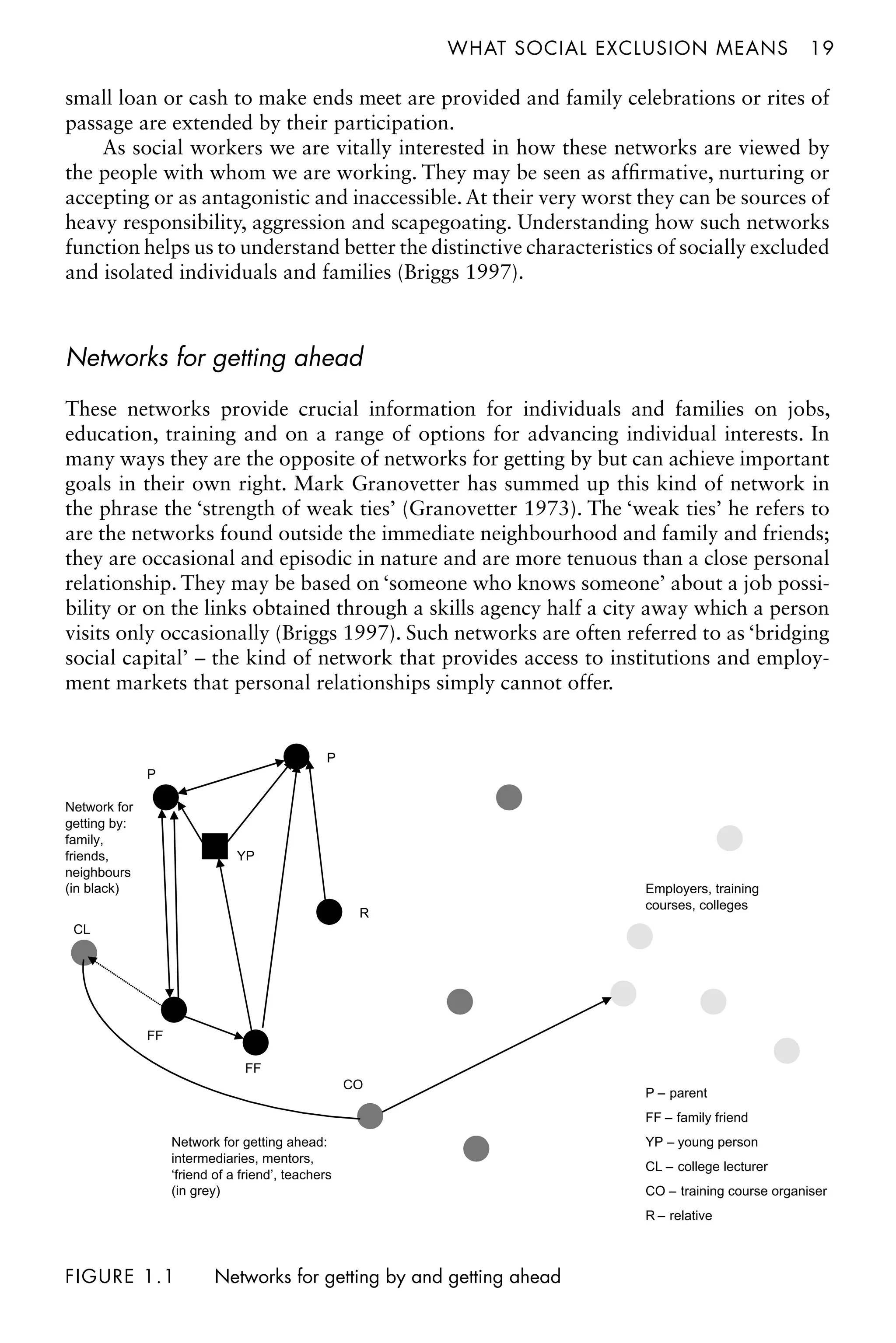






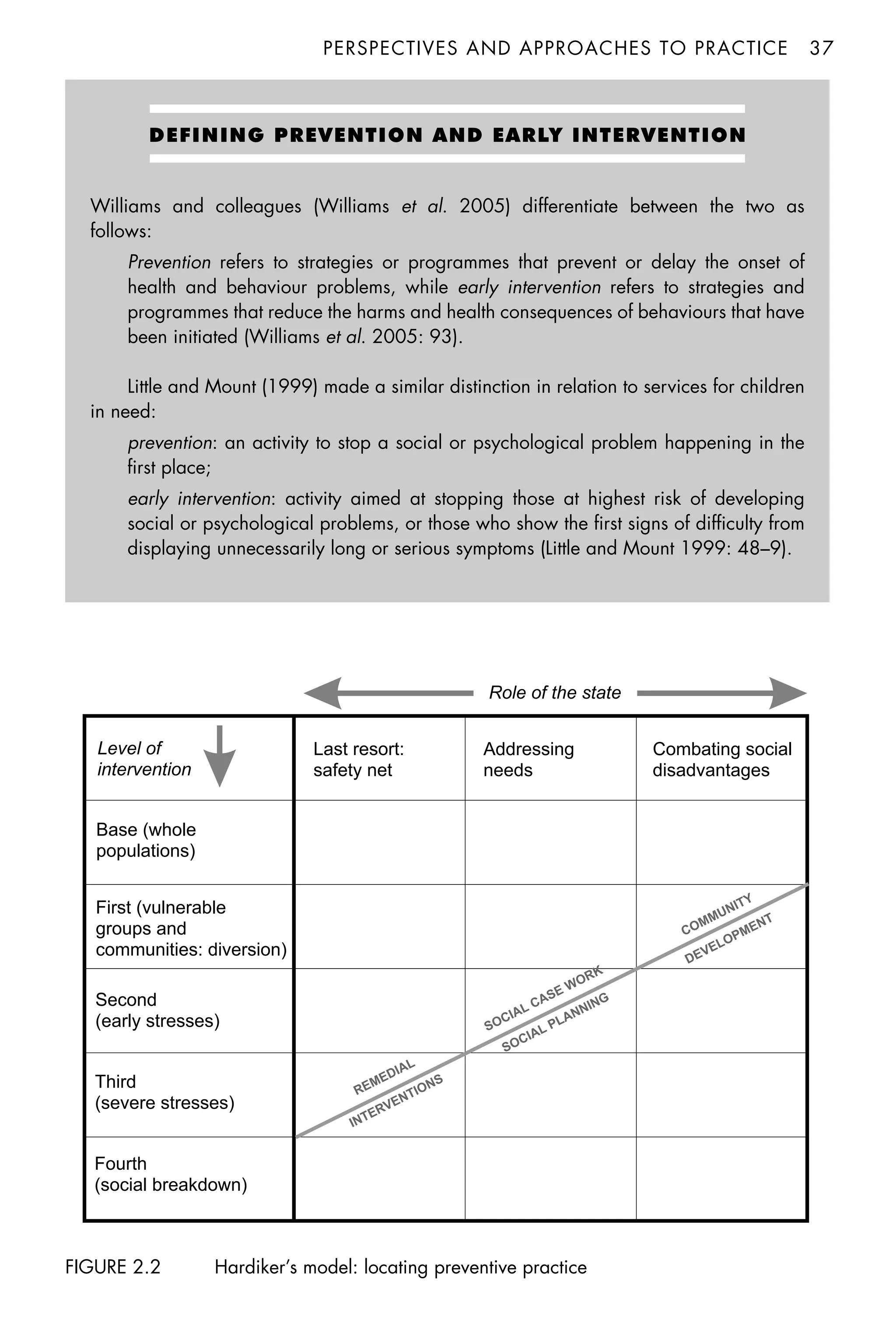

![perspectives and approaches to practiceâ•… 39
given ten minutes at a multi-agency forum to convince those present to
•
undertake a particular project.
All the above are tasks in communication. Arrange them in the order of the
difficulty that each would present for you, starting with the most difficult. Why
are they difficult? What makes the easy ones easy? What do you need to do to
improve your communication skills in the difficult situations?
Listening
Social workers have to be good listeners, and be able to absorb and respond to what
users and their families are saying. Often listening is part of a therapeutic endeavour,
reflecting back to the user what the practitioner has heard so that the person can
respond and react to their own statements. However in working to reduce social exclu-
sion with service users the emphasis in communication shifts in a different direction.
The mission is to build capacity and extend capability in work that is often locally
based and preventive or ‘developmental’ in Smale’s terms. A key objective of this
work entails gathering experiences and information on exclusion in the area from the
experts: those who are excluded. You listen to users’ and local residents’ accounts in
order to hear histories, make links between what may appear to be only individual
problems, gather information on networks, become aware of neighbourhood issues,
find out where users’ strengths and resources are and where those of the neighbour-
hoods are.
This might best be described as listening to stories, or ‘gathering stories’ in
Cedersund’s phrase (Cedersund 1999), where the focus of listening becomes the expe-
riences, obstructions and hardships that a person or family has encountered. The value
of stories is that they have many sides to them and may be told and heard in different
ways depending on the life experiences of those telling them and those listening. Stories,
as Parton and O’Byrne argue, are also a way of creating beliefs in that they impose a
coherence on a person’s life experience and have a unique power for ‘setting forth truth
claims’ (Parton and O’Byrne 2000: 49).
Getting people to tell ‘their’ story acts as a way of bringing elements of their
life to awareness – yours, theirs and others. One of the elements of a story that you
are looking for is local knowledge. We may think of local knowledge as partisan
knowledge, because the person who holds it has a passionate interest in a particular
outcome (Scott 1998). As you become more familiar with the range of stories and
their local knowledge the problems that people feel strongly about will emerge. This
is the keystone of what we will refer to in Chapter 7 as ‘relational organising’, which
borrows much of social work’s emphasis on relationship building, and the patience
and empathy that that requires, but applies it to extending the capability of individuals
and their neighbourhood.
Listening to stories means departing from the question and answer format of the
standard interview. In stories knowledge, according to Parton and O’Byrne is ‘ready-
made to be listened to, needs no proof and [is] capable of creating an obedience that
makes reframing or reinterpretation difficult later’ (2000: 49). But while stories, in](https://image.slidesharecdn.com/2647254-250723082453-fe328d88/75/Tackling-Social-Exclusion-2nd-Edition-John-Pierson-54-2048.jpg)





![This ebook is for the use of anyone anywhere in the United States and most
other parts of the world at no cost and with almost no restrictions
whatsoever. You may copy it, give it away or re-use it under the terms of
the Project Gutenberg License included with this ebook or online at
www.gutenberg.org. If you are not located in the United States, you will
have to check the laws of the country where you are located before using
this eBook.
Title: Punch, or the London Charivari, Vol. 108, May 11th, 1895
Author: Various
Editor: F. C. Burnand
Release date: January 26, 2014 [eBook #44760]
Most recently updated: October 24, 2024
Language: English
Credits: Produced by Malcolm Farmer, Lesley Halamek and the Online
Distributed Proofreading Team at http://www.pgdp.net
*** START OF THE PROJECT GUTENBERG EBOOK PUNCH, OR THE LONDON
CHARIVARI, VOL. 108, MAY 11TH, 1895 ***](https://image.slidesharecdn.com/2647254-250723082453-fe328d88/75/Tackling-Social-Exclusion-2nd-Edition-John-Pierson-60-2048.jpg)

![BRAINS FOR CASH.
[The unbridled greediness of some authors.—Mr. Gosse.]
Publisher (nervously). And what will your terms be for a short story, in your best
style?
Author (loftily). I have only one style, and that is perfection. I couldn't think of
charging less than fifty guineas a page.
Publisher (aghast). Fifty guineas a page! But are you aware that Lord Macaulay
got only ten thousand for the whole of his history, and that Milton——
Author (rudely). Hang Macaulay and Milton! Surely you would not compare those
second-rate writers with myself! If they were content to work for starvation
wages, I am not.
Publisher. But, say your story runs to twenty pages, as it probably will, I shall
have to pay you for that one short tale the really ridiculous sum of a thousand
pounds!
Author (coolly). Yes, it is rather ridiculous—ridiculously small, I mean. Still, out of
regard to your pocket, I am willing to accept that inadequate remuneration. Is it
a bargain?
Publisher (with a groan). It must be. The public demands your work, and we
have no option. But allow me to remark that your policy is——
Author (gaily). A Policy of Assurance, on which you have to pay the premium.
Ha, ha!
A Year Or Two Later.
Author (deferentially). I have a really capital idea for a work of fiction, on a
subject which I believe to be quite original. What—ahem!—are you prepared to
offer for the copyright?
Publisher. Couldn't think of making an offer till we saw the work. It might turn
out to be worth nothing at all.](https://image.slidesharecdn.com/2647254-250723082453-fe328d88/75/Tackling-Social-Exclusion-2nd-Edition-John-Pierson-62-2048.jpg)




![humiliation for insignificant performances.—Dr. James
Martineau, on his Ninetieth Birthday.]
Air—Thackeray's Age of Wisdom
Ho! petty prattler of sparkling sin,
Paradox-monger, slave of the queer!
All your wish is a name to win,
To shook the dullards, to sack the tin,—
Wait till you come to Ninety Year!
Curled locks cover your shallow brains,
Twaddle and tinkle is all your cheer.
Sickly and sullied your amorous strains,
Pessimist praters of fancied pains,—
What do you think of this Ninety Year?
Ninety times over let May-day pass
(If you should live, which you won't I fear),
Then you will know that you were but an ass,
Then you will shudder and moan, Alas!
Would I had known it some Ninety Year!
Pledge him round! He's a Man, I declare;
His heart is warm, though his hair be grey.
Modest, as though a record so fair,
A brain so big, and a soul so rare,
Were a mere matter of every day.
His eloquent lips the Truth have kissed,
His valiant eyes for the Right have shone.
Pray, and listen—'twere well you list—
Look not away lest the chance be missed,
Look on a Man, ere your chance be gone!
Martineau lives, he's alive, he's here!
He loved, and married, seventy years' syne.
Look at him, taintless of fraud or fear,
Alive and manful at Ninety Year,
And blush at your pitiful pessimist whine!
Hamlet (amended by Lord Farrar).—In my mind's eye, O ratio!](https://image.slidesharecdn.com/2647254-250723082453-fe328d88/75/Tackling-Social-Exclusion-2nd-Edition-John-Pierson-70-2048.jpg)


![No. 277. The G. O. M. at
Cannes. By T. Graham.
But as this is in Gallery No. VI., and as it is not every
one who will be privileged to see the picture as the
early bird has seen it, and as some few others may,
perhaps, see it during the season, this Representative
retraces his steps from No. VI., and commences de
novo with No. 1.
No. 17. Finan Haddie, fresh as ever, caught by J. C.
Hook, R.A. Title, of course, should have been Finan
Haddie Hook'd.
Sir John Millais' St. Stephen (not a parliamentary
subject), showing that Good Sir John's hand has lost
none of its cunning, is No. 18; and after bowing
politely to Mrs. Johnson-Ferguson, and pausing before
this charming picture by Luke Fildes, R.A., to take a
last Luke at her, you will pass on, please, to No. 25,
The Fisherman and the Jin, and will wonder why Val. C. Prinsep, R.A., spells the
cordial spirit with a J instead of a G. It is a spirited composition.
No. 31. Mr. John S. Sargent, A., let Mrs. Ernest Hills go out of his studio in a
hurry. She is evidently to be finished in his next.
No. 34. A Quiet Rehearsal. Lady Amateur all alone, book in hand, to which she
is not referring, trying to remember her part and say it off by heart. It is by W. B.
Richmond, A. To quote a cigarette paper, this work may be fairly entitled A
Richmond Gem.
No. 43. Evening. By B. W. Leader, A. Delightful. Artistic aspirants in this line
cannot play a better game than that of Follow my Leader.
This Representative recognised Dr. Jameson, C.B., by Herkomer, at a glance. If
you are asked by anyone to look at Hay Boat do not correct him and say You
mean A Boat, or you will find yourself in the wrong boat, but admire Hilda
Montalba's painting, and pass on to Ouless, R.A.'s, excellent portrait of J. J.
Aubertin (a compound name, whose first two syllables suggest delightful music
while the last syllable means money); thence welcome our old friend Frith, R.A.,
who, in 67, [and a trifle over, eh?] shows us Mrs. Gresham and Her Little
Daughter. From the little D.'s expressive face may be gathered that she has
just received a Gresham Lecture. After noting No. 73 and 83 (the unhappily
separated twins) together, you may look on No. 126. Two fierce animals deer-
stalking in a wild mountainous region, painted by Arthur Wardle. Only from what
coign of vantage did Mr. Wardle, the artist, make this life-like sketch? However,](https://image.slidesharecdn.com/2647254-250723082453-fe328d88/75/Tackling-Social-Exclusion-2nd-Edition-John-Pierson-74-2048.jpg)