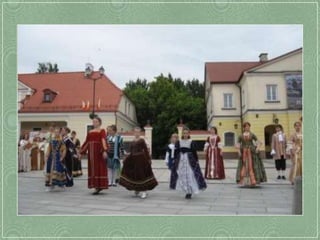
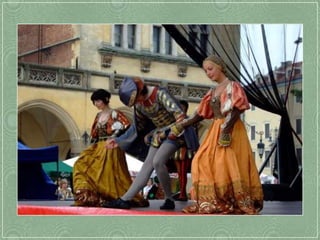
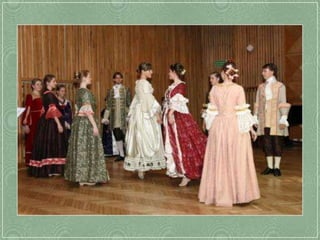
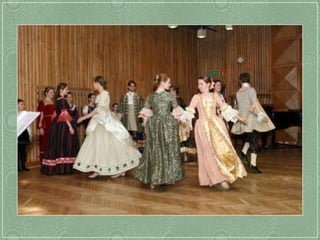
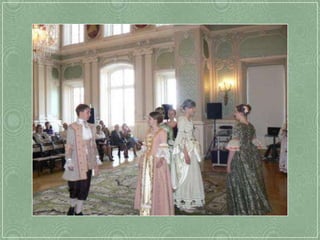
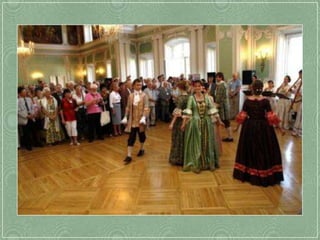
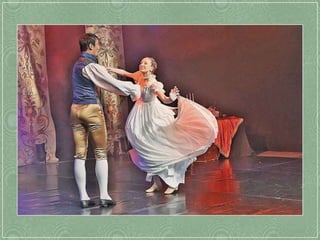
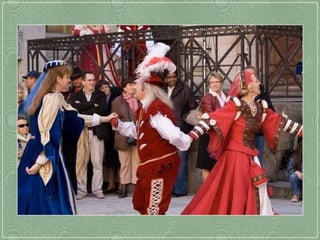
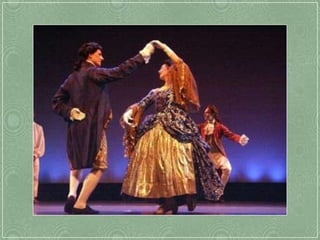
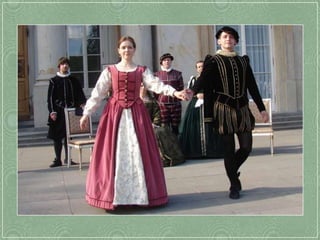
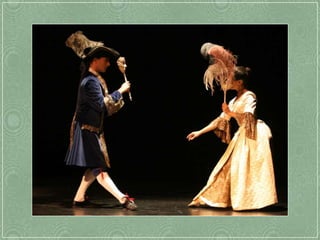
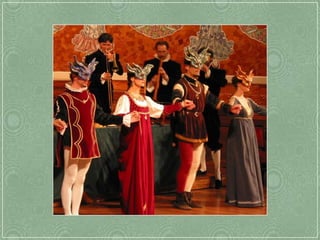
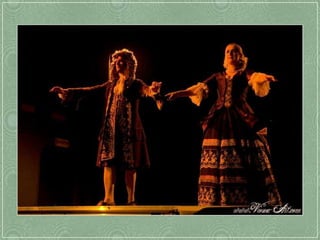
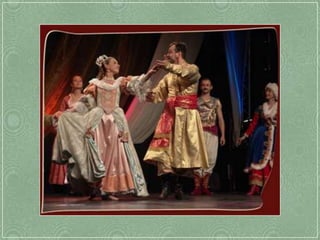
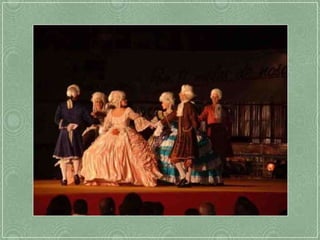
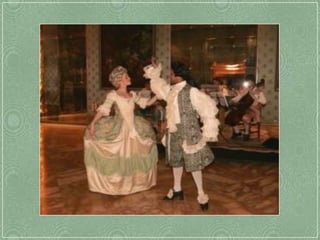
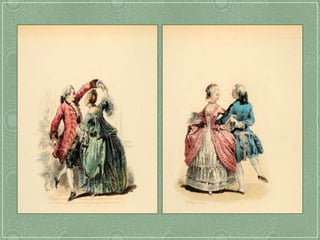
Courtly dance
It is a dance form that evolved in the late Middle Ages and was popular into the
eighteenth century the richest manors of Europe's , among the crowned heads, of the
highest aristocracy and courtiers. Enjoyed the greatest success in the manors of Italian,
French and English. When this kind of entertainment began to be popular and occupied
more and more and more time, appeared a new profession - organizer playground, a
prototype of the choreographer.
The court dances are classified as historical dances. Some of them are derived from of
folk dances..
The best known types of courtly dance are:

 gawot – gavotte
 menuet
 kontredans – contredanse
 passacaglia
 pawana – pavane
 saltarello – saltarelle
 sarabanda – sarabande
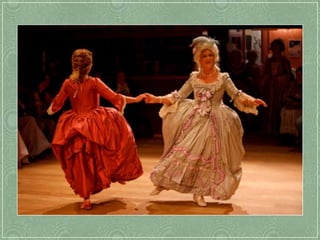
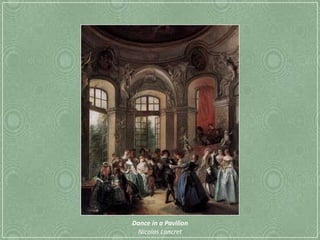
Dance in a Pavilion
 Nicolas Lancret
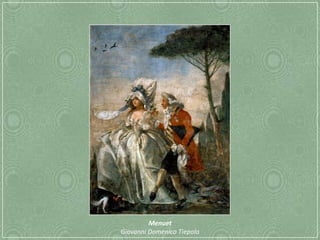
Menuet
Giovanni Domenico Tiepolo
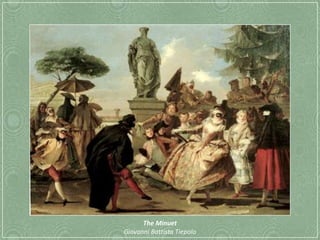
The Minuet
Giovanni Battista Tiepolo
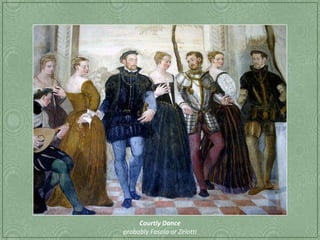
Courtly Dance
probably Fasolo or Zelotti
Background sound – Polnischer Tanz ; Valentin Haussmann
The illustrations - taken from accessible websites
The presentation was made by ​- Anna

Tańce - taniec dworski

  • 3.
    Courtly dance It isa dance form that evolved in the late Middle Ages and was popular into the eighteenth century the richest manors of Europe's , among the crowned heads, of the highest aristocracy and courtiers. Enjoyed the greatest success in the manors of Italian, French and English. When this kind of entertainment began to be popular and occupied more and more and more time, appeared a new profession - organizer playground, a prototype of the choreographer. The court dances are classified as historical dances. Some of them are derived from of folk dances.. The best known types of courtly dance are:  gawot – gavotte  menuet  kontredans – contredanse  passacaglia  pawana – pavane  saltarello – saltarelle  sarabanda – sarabande
  • 24.
    Dance in aPavilion Nicolas Lancret
  • 25.
  • 26.
  • 27.
  • 28.
    Background sound –Polnischer Tanz ; Valentin Haussmann The illustrations - taken from accessible websites The presentation was made by ​- Anna