System
dynamic
Name: Muhammad Saad
Roll no: 20011598-079
8/27/2023 Annual Review 2
System dynamic
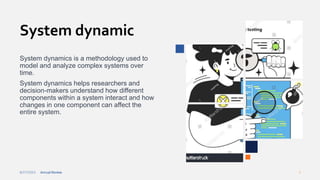
System dynamics is a methodology used to
model and analyze complex systems over
time.
System dynamics helps researchers and
decision-makers understand how different
components within a system interact and how
changes in one component can affect the
entire system.
8/27/2023 Annual Review 3
Benefit of system dynamic
 Dynamic Behavior: The methodology
excels at capturing dynamic behavior
and temporal changes within a system.
 Long-Term Perspective: System
dynamics models are often used to
simulate the behavior of systems over
extended periods, allowing for the
exploration of long-term trends and
effects.
 Feedback and Nonlinear Effects:
System dynamics models excel at
representing feedback loops and
nonlinear relationships, which are
common in complex systems.
 Iterative Process: The modeling
process in system dynamics is often
iterative, allowing for continuous
refinement and improvement of the
model as new data and insights become
available.
 Risk Assessment: System dynamics
models can help identify potential risks
and vulnerabilities within a system.
8/27/2023 Annual Review 4
Disadvantages of system
dynamic
Complexity: Creating and understanding
system dynamics models can be complex
and challenging, especially for individuals
who are new to the methodology.
Data Requirements: System dynamics
models often require a significant amount
of data to accurately represent real-world
systems.
Limited Scope: System dynamics models
may struggle to capture certain aspects of
a system, particularly those that involve
intricate details or are outside the scope of
the chosen model structure.
8/27/2023 Annual Review 5
Implement in Anylogic
1. Create a New Model: Open AnyLogic and create a new model. Choose the appropriate
project type (e.g., Process Modeling, Discrete Event, or Agent-Based) depending on the
nature of your system dynamics model.
2. Set Up the Model: Define the main components of your system dynamics model, such as
stocks, flows, variables, and feedback loops. In AnyLogic, you can use various modeling
elements, such as "Stocks and Flows" elements, to represent the components of your
system.
3. Define Equations and Relationships: Within each modeling element, you can define
equations that describe the relationships between different variables. Specify how
variables interact, how flows affect stocks, and any delays or feedback loops that are
important to your model.
4. Run Simulations: AnyLogic allows you to run simulations of your system dynamics model
over time. Set the simulation parameters, such as the simulation duration and time step,
and then run the simulation to observe how the system evolves over time based on the
defined equations and relationships.
8/27/2023 Annual Review 6
Implement in Anylogic
1) Analyze Results: After running simulations, analyze the results using various visualization
tools provided by AnyLogic. You can create graphs, charts, and animations to visualize the
behavior of your system under different scenarios.
2) Refine and Iterate: System dynamics modeling often involves an iterative process of
refining and improving the model. Based on the simulation results, make adjustments to
your model's equations, parameters, or structure to better reflect the real-world dynamics
of the system.
3) Validation and Sensitivity Analysis: Validate your model by comparing simulation
results to real-world data or expert knowledge. Perform sensitivity analyses to understand
how changes in input parameters or assumptions impact the model's behavior.
8/27/2023 Annual Review 7
THANK YOU

System dynamic20011598-079.pptx

  • 1.
  • 2.
    8/27/2023 Annual Review2 System dynamic System dynamics is a methodology used to model and analyze complex systems over time. System dynamics helps researchers and decision-makers understand how different components within a system interact and how changes in one component can affect the entire system.
  • 3.
    8/27/2023 Annual Review3 Benefit of system dynamic  Dynamic Behavior: The methodology excels at capturing dynamic behavior and temporal changes within a system.  Long-Term Perspective: System dynamics models are often used to simulate the behavior of systems over extended periods, allowing for the exploration of long-term trends and effects.  Feedback and Nonlinear Effects: System dynamics models excel at representing feedback loops and nonlinear relationships, which are common in complex systems.  Iterative Process: The modeling process in system dynamics is often iterative, allowing for continuous refinement and improvement of the model as new data and insights become available.  Risk Assessment: System dynamics models can help identify potential risks and vulnerabilities within a system.
  • 4.
    8/27/2023 Annual Review4 Disadvantages of system dynamic Complexity: Creating and understanding system dynamics models can be complex and challenging, especially for individuals who are new to the methodology. Data Requirements: System dynamics models often require a significant amount of data to accurately represent real-world systems. Limited Scope: System dynamics models may struggle to capture certain aspects of a system, particularly those that involve intricate details or are outside the scope of the chosen model structure.
  • 5.
    8/27/2023 Annual Review5 Implement in Anylogic 1. Create a New Model: Open AnyLogic and create a new model. Choose the appropriate project type (e.g., Process Modeling, Discrete Event, or Agent-Based) depending on the nature of your system dynamics model. 2. Set Up the Model: Define the main components of your system dynamics model, such as stocks, flows, variables, and feedback loops. In AnyLogic, you can use various modeling elements, such as "Stocks and Flows" elements, to represent the components of your system. 3. Define Equations and Relationships: Within each modeling element, you can define equations that describe the relationships between different variables. Specify how variables interact, how flows affect stocks, and any delays or feedback loops that are important to your model. 4. Run Simulations: AnyLogic allows you to run simulations of your system dynamics model over time. Set the simulation parameters, such as the simulation duration and time step, and then run the simulation to observe how the system evolves over time based on the defined equations and relationships.
  • 6.
    8/27/2023 Annual Review6 Implement in Anylogic 1) Analyze Results: After running simulations, analyze the results using various visualization tools provided by AnyLogic. You can create graphs, charts, and animations to visualize the behavior of your system under different scenarios. 2) Refine and Iterate: System dynamics modeling often involves an iterative process of refining and improving the model. Based on the simulation results, make adjustments to your model's equations, parameters, or structure to better reflect the real-world dynamics of the system. 3) Validation and Sensitivity Analysis: Validate your model by comparing simulation results to real-world data or expert knowledge. Perform sensitivity analyses to understand how changes in input parameters or assumptions impact the model's behavior.
  • 7.