



Symbolism: A Movement in
Modern English Poetry
Symbolism as a literary movement was first
expressly announced and named by Jean
Moreas in Le Figaro on 18 September 1886.
The wave of criticism and revival
“The Symbolism of Poetry” (1900) by William
Butler Yeats the symbolist poem as a short
lyric, perpetuating an emotion that is then
transformed into “some great epic,”
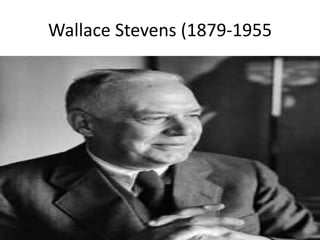
Wallace Stevens (1879-1955
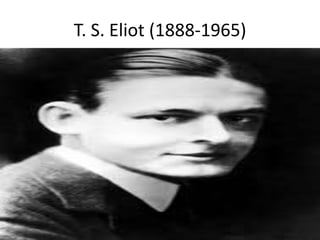
T. S. Eliot (1888-1965)
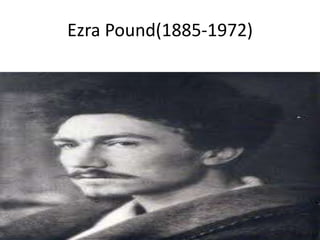
Ezra Pound(1885-1972)
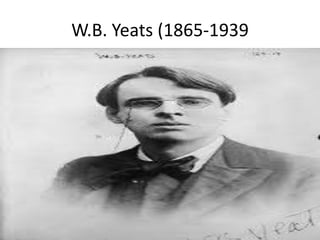
W.B. Yeats (1865-1939
Symbolism was a reaction against the rigidity
imposed on French poetry by that neo-classic
school, the Parnassian
objectives
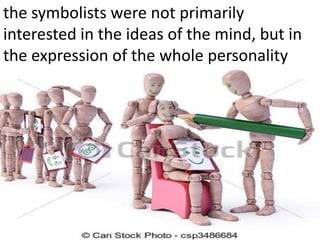
the symbolists were not primarily
interested in the ideas of the mind, but in
the expression of the whole personality
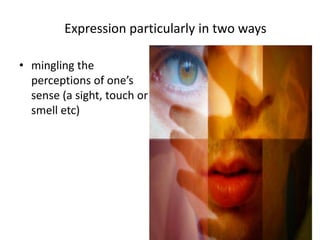
Expression particularly in two ways
• mingling the
perceptions of one’s
sense (a sight, touch or
smell etc)
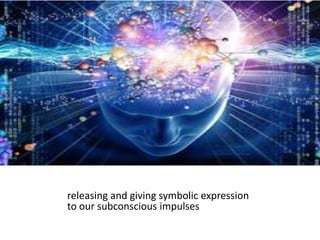
releasing and giving symbolic expression
to our subconscious impulses
Features
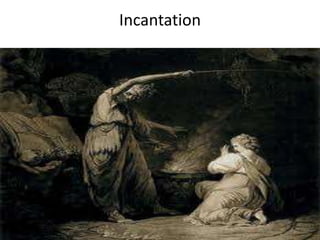
Incantation
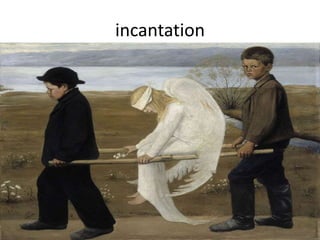
incantation
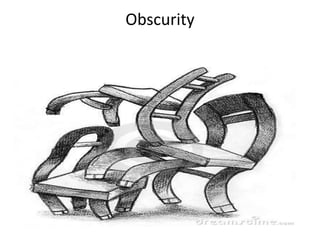
Obscurity
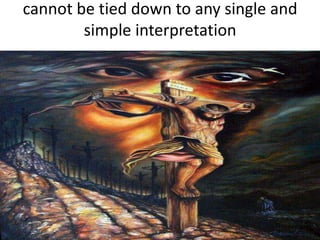
cannot be tied down to any single and
simple interpretation
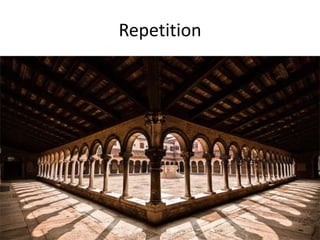
Repetition
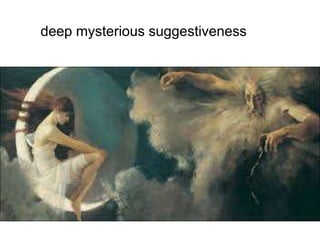
deep mysterious suggestiveness
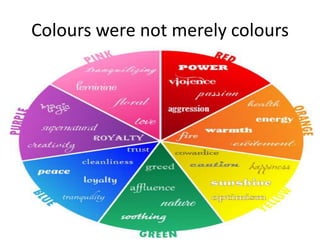
Colours were not merely colours
Form of language
• free verse
• dense syntax
• figurative language
• rhythm
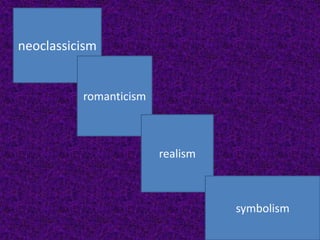
neoclassicism
romanticism
realism
symbolism
we get a composite and very attractive
type of poetry in which one moves
without logical links from the realms of
objectively shared common experience
into the private domain of the poet’s
mind
Works consulted
• Dina Ripsman Eylon’s
article “symbolism”
• Dr loius’article
“symbols”
• HISTORY OS ENGLISH
LITERATURE T Singh
• Modern Poetry
Symbolism In Modern Poetry

Symbolism In Modern Poetry

Editor's Notes

  • #3 At the end of the nineteenth century, Symbolism lost it dominance in France. Yet the movement’s popularity increased and spread to continental Europe, England, Russia,the United States, and South America.
  • #4  Oscar Wilde (1854-1900), W.B. Yeats
  • #18 freer play to the imagination of both reader and poet
  • #20 repetitive rhythms of the symbolists have in them a hypnotic quality as well, and they recall the texture of dreams and of subconscious states of mind
  • #21 the interpretation of these poems is almost as tricky, and full of traps, as the interpretation of dreams. 
  • #22 The were expressions…feelings…motives…
  • #26 its extreme this leads to Surrealist poetry never very successful in England, 
  • #27 How form the poetry