INORGANIC QUALITATIVE
ANALYSIS
K+ , Cl- , NH4
+ , Br-
(A) Preliminary tests
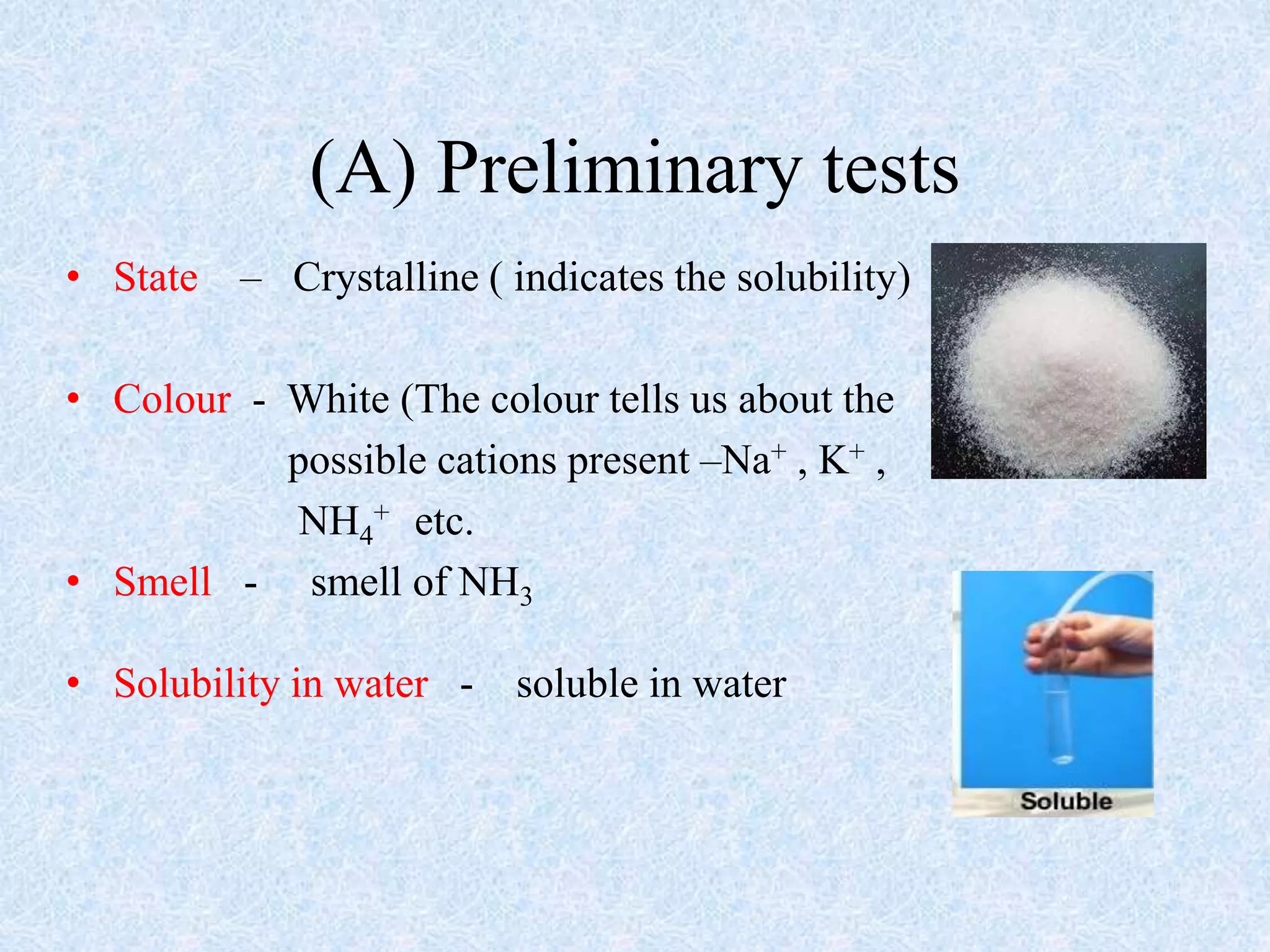
• State – Crystalline ( indicates the solubility)
• Colour - White (The colour tells us about the
possible cations present –Na+ , K+ ,
NH4
+ etc.
• Smell - smell of NH3
• Solubility in water - soluble in water
(B) Dry Tests
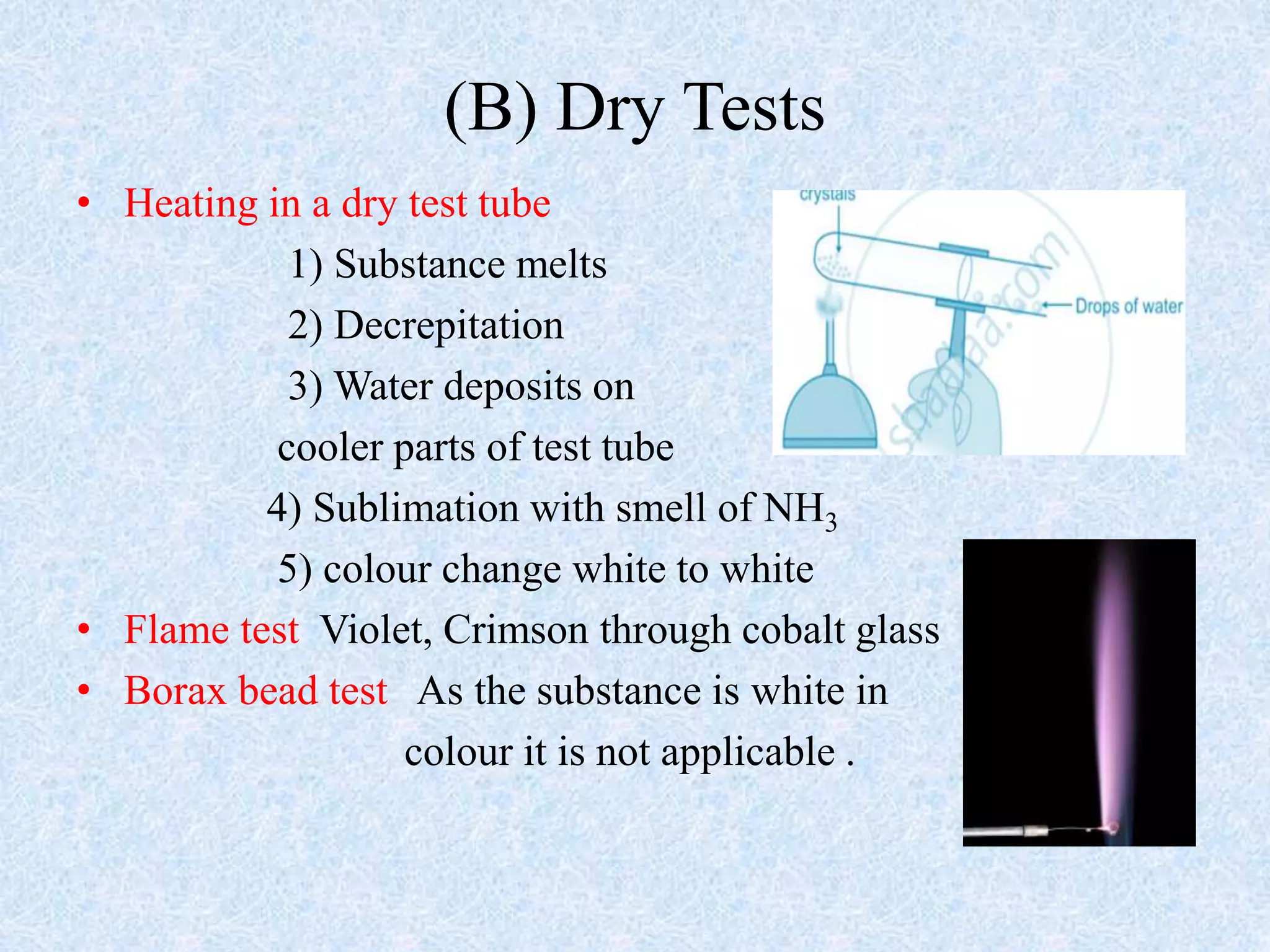
• Heating in a dry test tube
1) Substance melts
2) Decrepitation
3) Water deposits on
cooler parts of test tube
4) Sublimation with smell of NH3
5) colour change white to white
• Flame test Violet, Crimson through cobalt glass
• Borax bead test As the substance is white in
colour it is not applicable .
Test for NH4
+
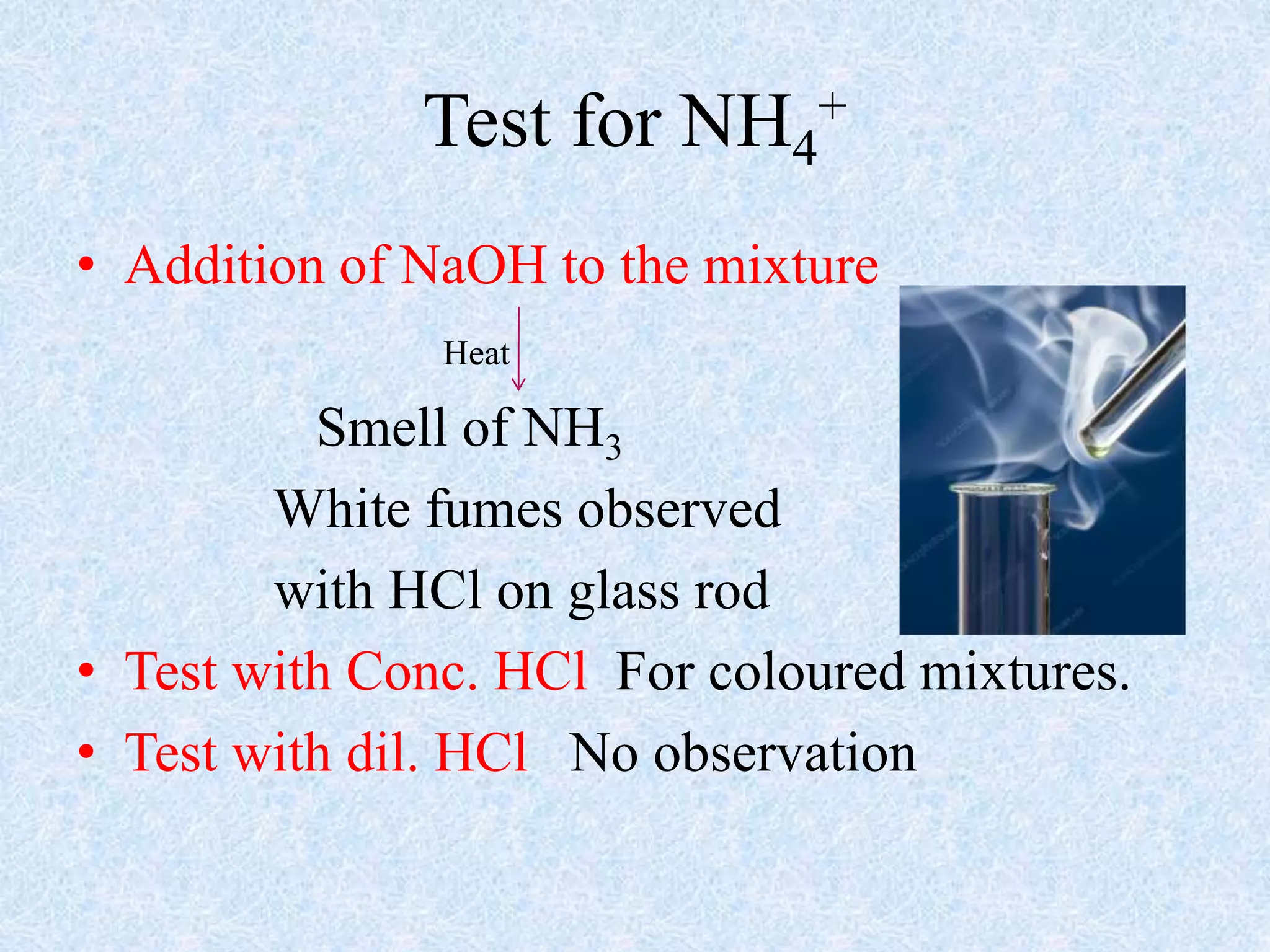
• Addition of NaOH to the mixture
Heat
Smell of NH3
White fumes observed
with HCl on glass rod
• Test with Conc. HCl For coloured mixtures.
• Test with dil. HCl No observation
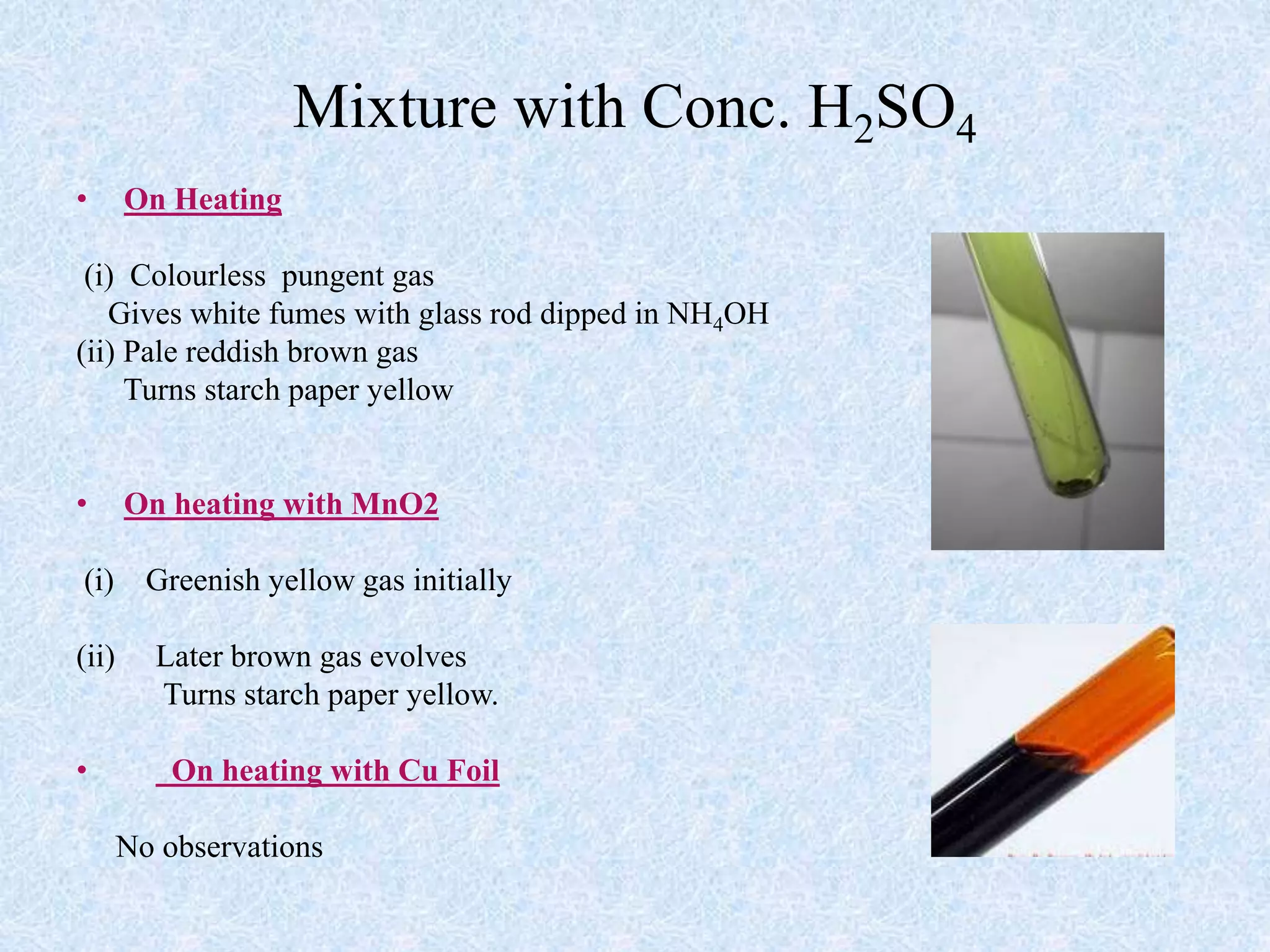
Mixture with Conc. H2SO4
• On Heating
(i) Colourless pungent gas
Gives white fumes with glass rod dipped in NH4OH
(ii) Pale reddish brown gas
Turns starch paper yellow
• On heating with MnO2
(i) Greenish yellow gas initially
(ii) Later brown gas evolves
Turns starch paper yellow.
• On heating with Cu Foil
No observations
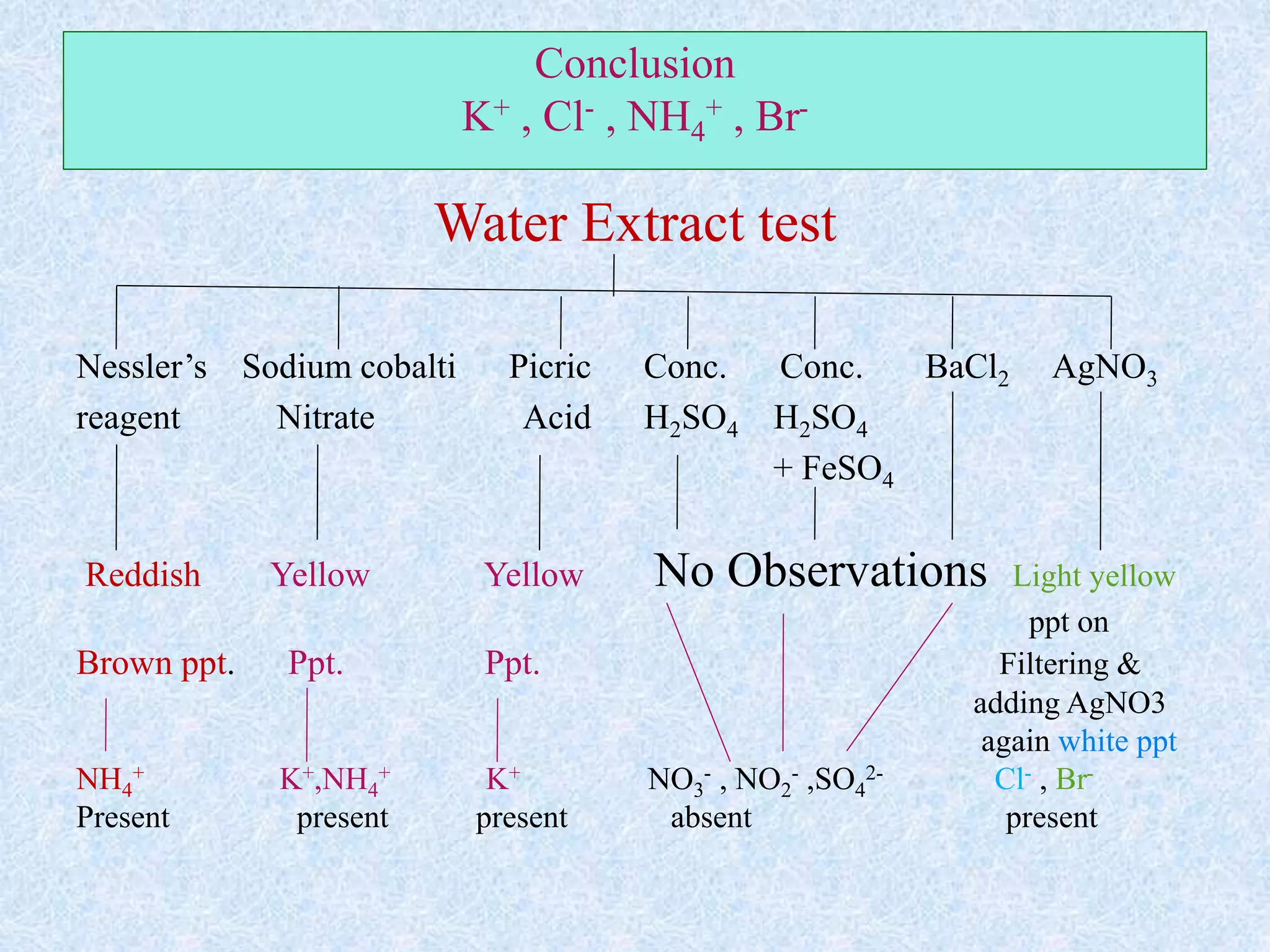
Conclusion
K+ , Cl- , NH4
+ , Br-
Water Extract test
Nessler’s Sodium cobalti Picric Conc. Conc. BaCl2 AgNO3
reagent Nitrate Acid H2SO4 H2SO4
+ FeSO4
Reddish Yellow Yellow No Observations Light yellow
ppt on
Brown ppt. Ppt. Ppt. Filtering &
adding AgNO3
again white ppt
NH4
+ K+,NH4
+ K+ NO3
- , NO2
- ,SO4
2- Cl- , Br-
Present present present absent present
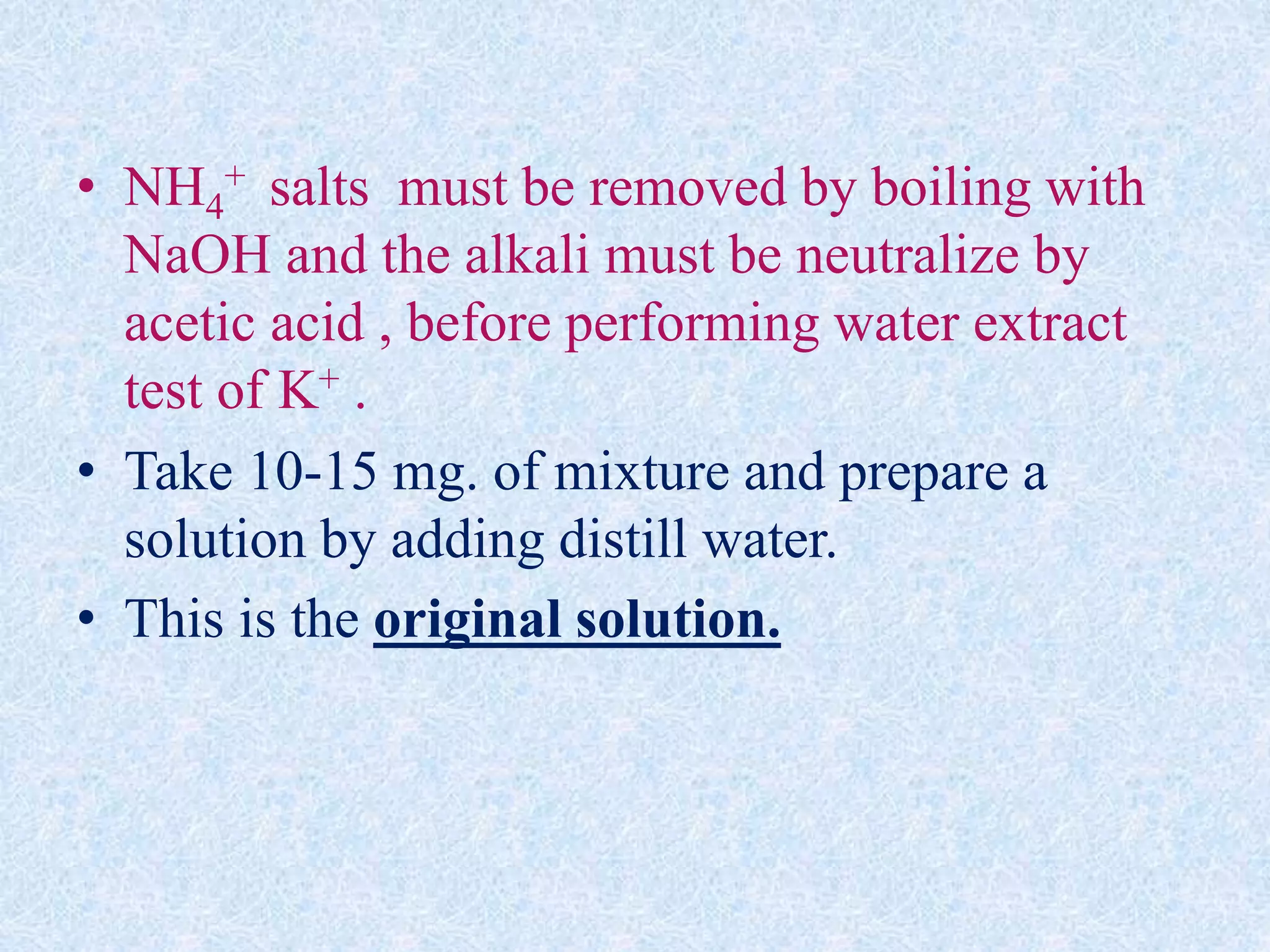
• NH4
+ salts must be removed by boiling with
NaOH and the alkali must be neutralize by
acetic acid , before performing water extract
test of K+ .
• Take 10-15 mg. of mixture and prepare a
solution by adding distill water.
• This is the original solution.
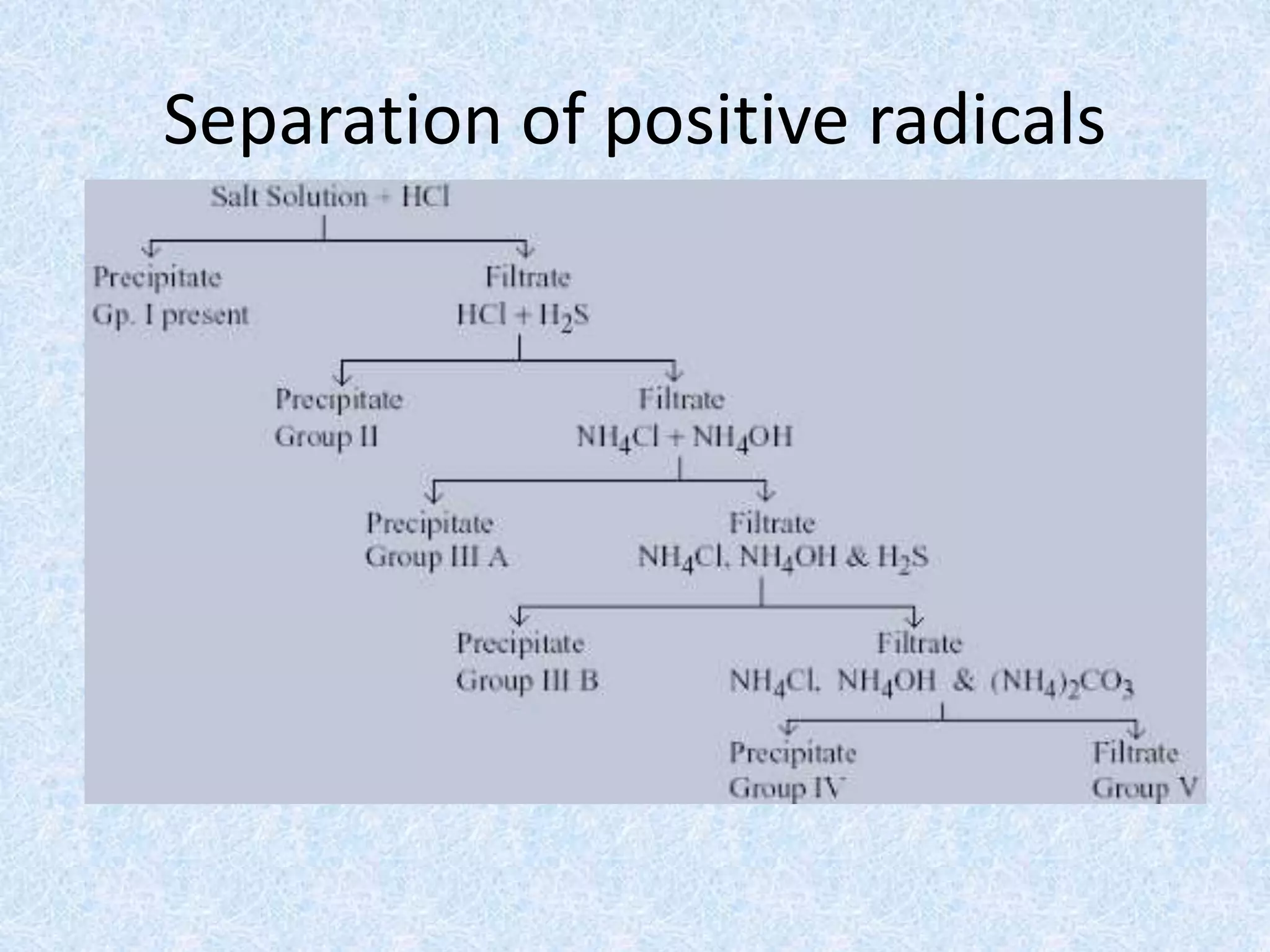
Separation of positive radicals
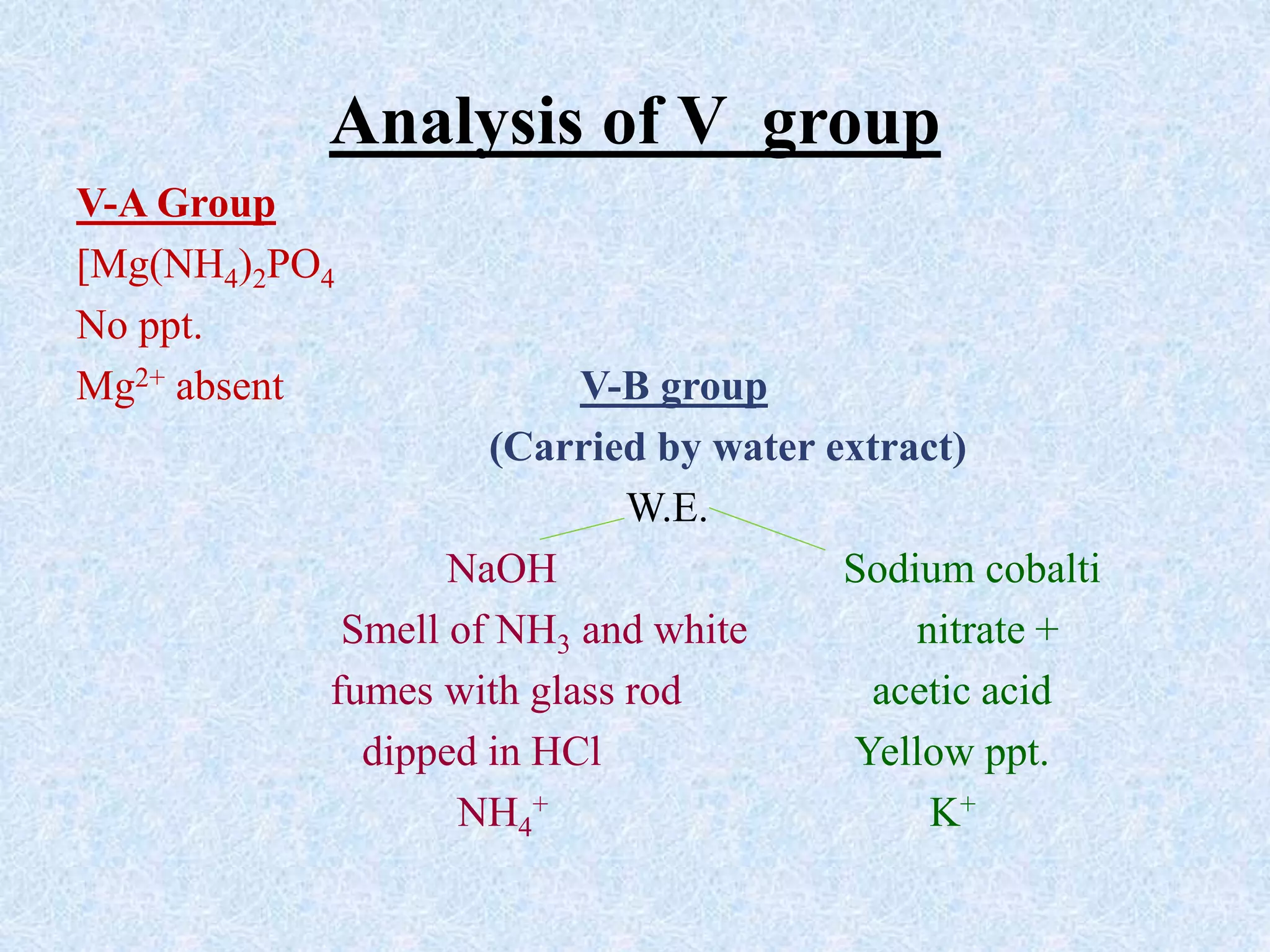
Analysis of V group
V-A Group
[Mg(NH4)2PO4
No ppt.
Mg2+ absent V-B group
(Carried by water extract)
W.E.
NaOH Sodium cobalti
Smell of NH3 and white nitrate +
fumes with glass rod acetic acid
dipped in HCl Yellow ppt.
NH4
+ K+
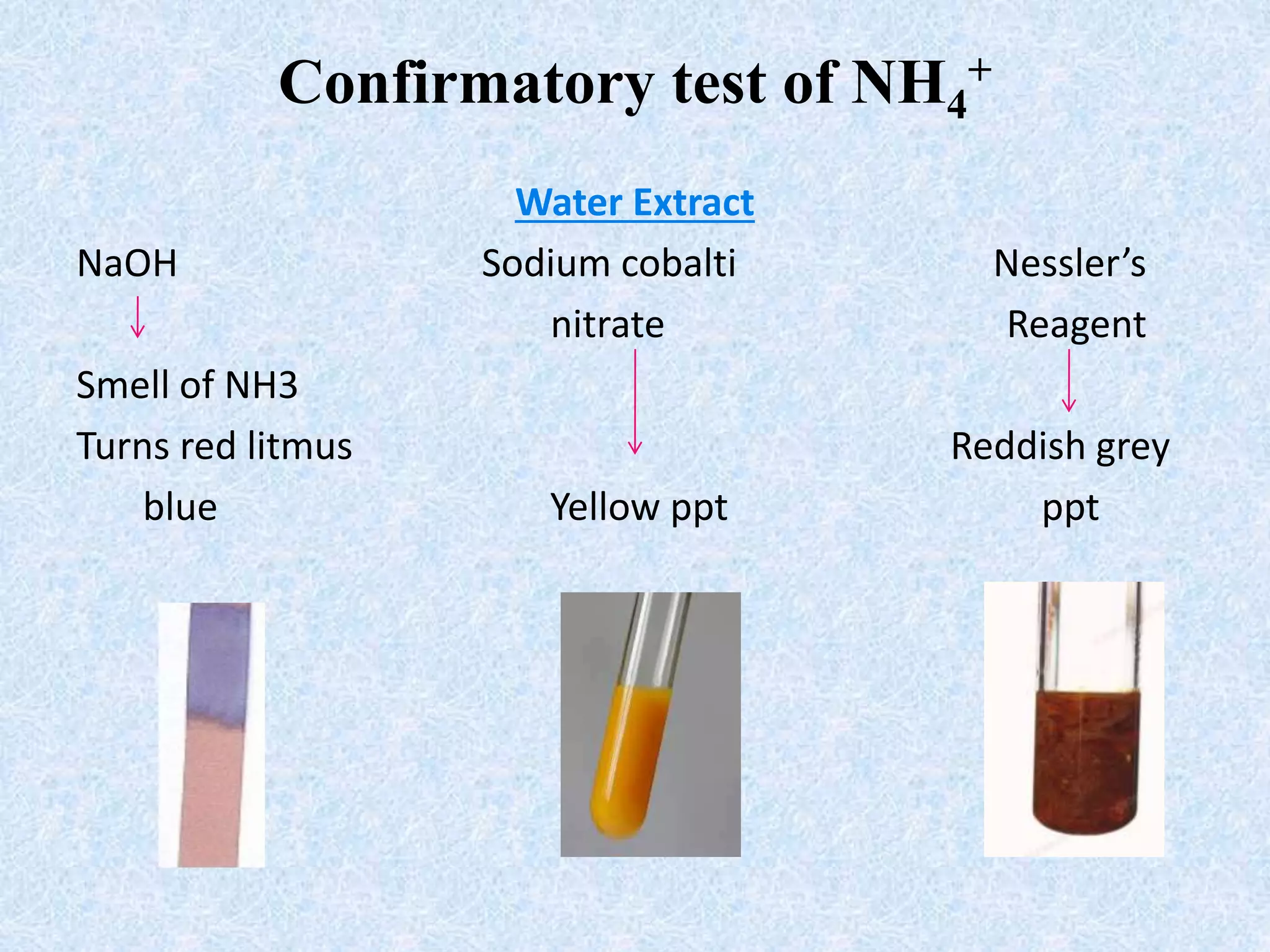
Confirmatory test of NH4
+
Water Extract
NaOH Sodium cobalti Nessler’s
nitrate Reagent
Smell of NH3
Turns red litmus Reddish grey
blue Yellow ppt ppt
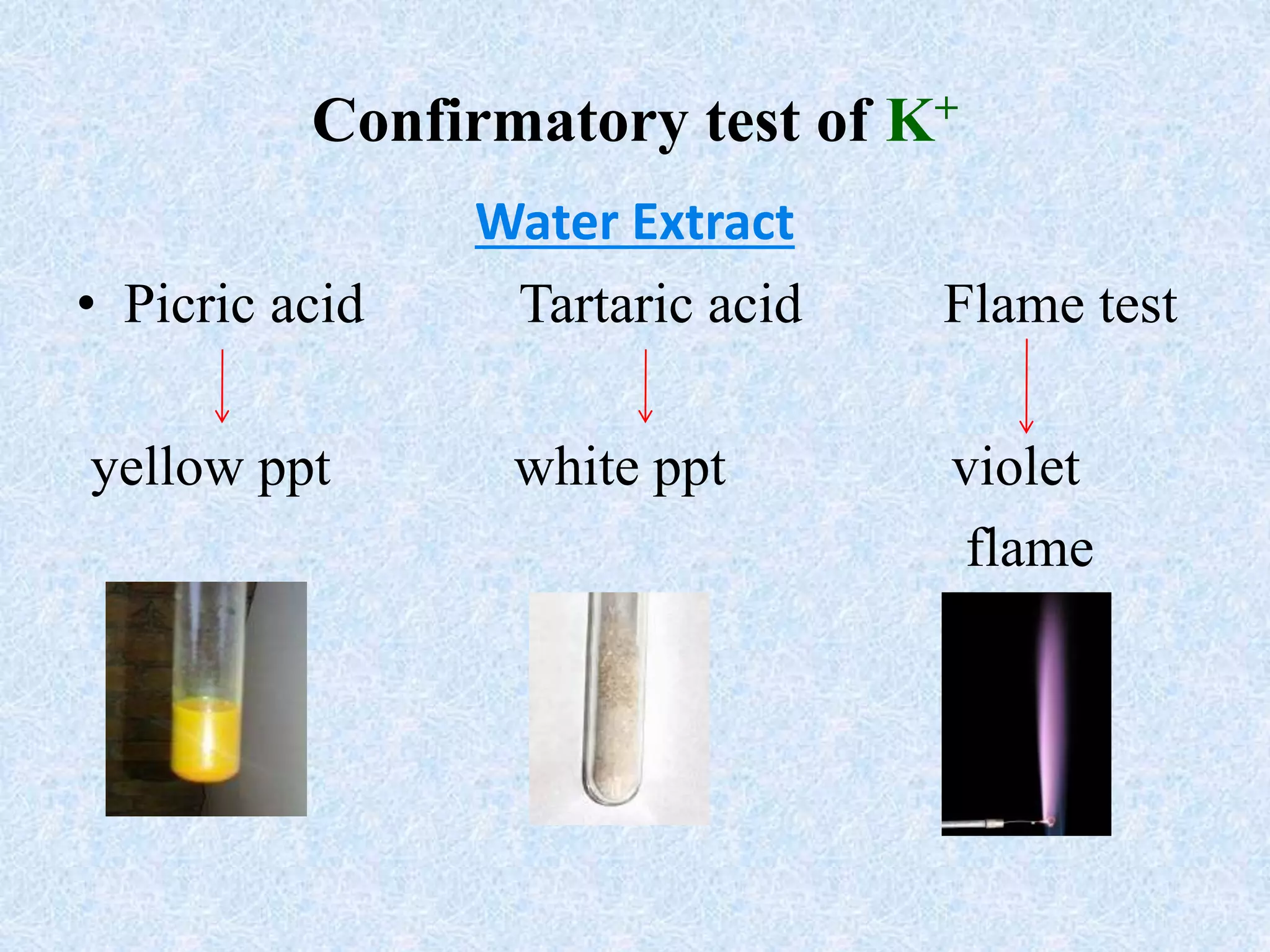
Confirmatory test of K+
Water Extract
• Picric acid Tartaric acid Flame test
yellow ppt white ppt violet
flame
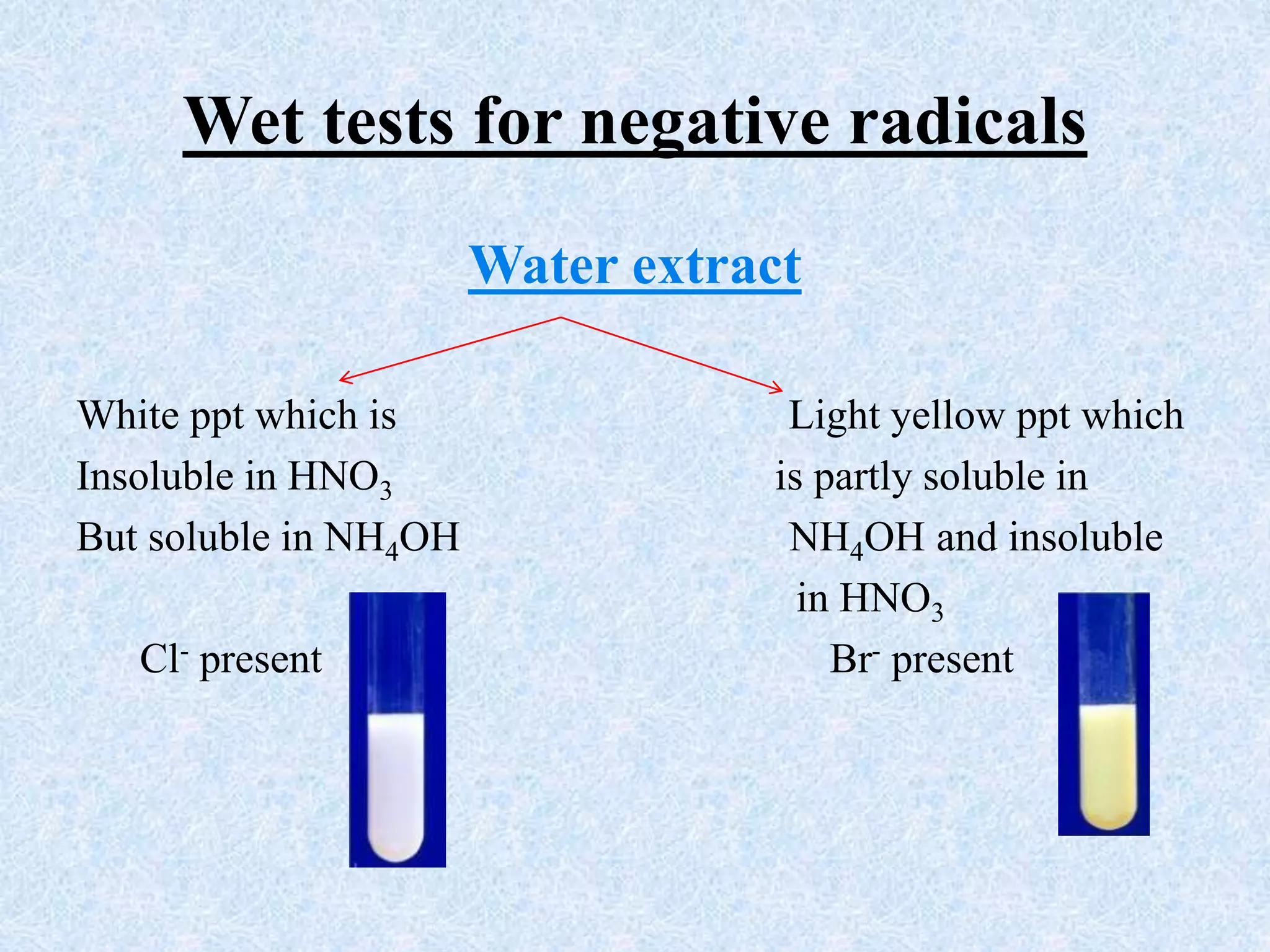
Wet tests for negative radicals
Water extract
White ppt which is Light yellow ppt which
Insoluble in HNO3 is partly soluble in
But soluble in NH4OH NH4OH and insoluble
in HNO3
Cl- present Br- present
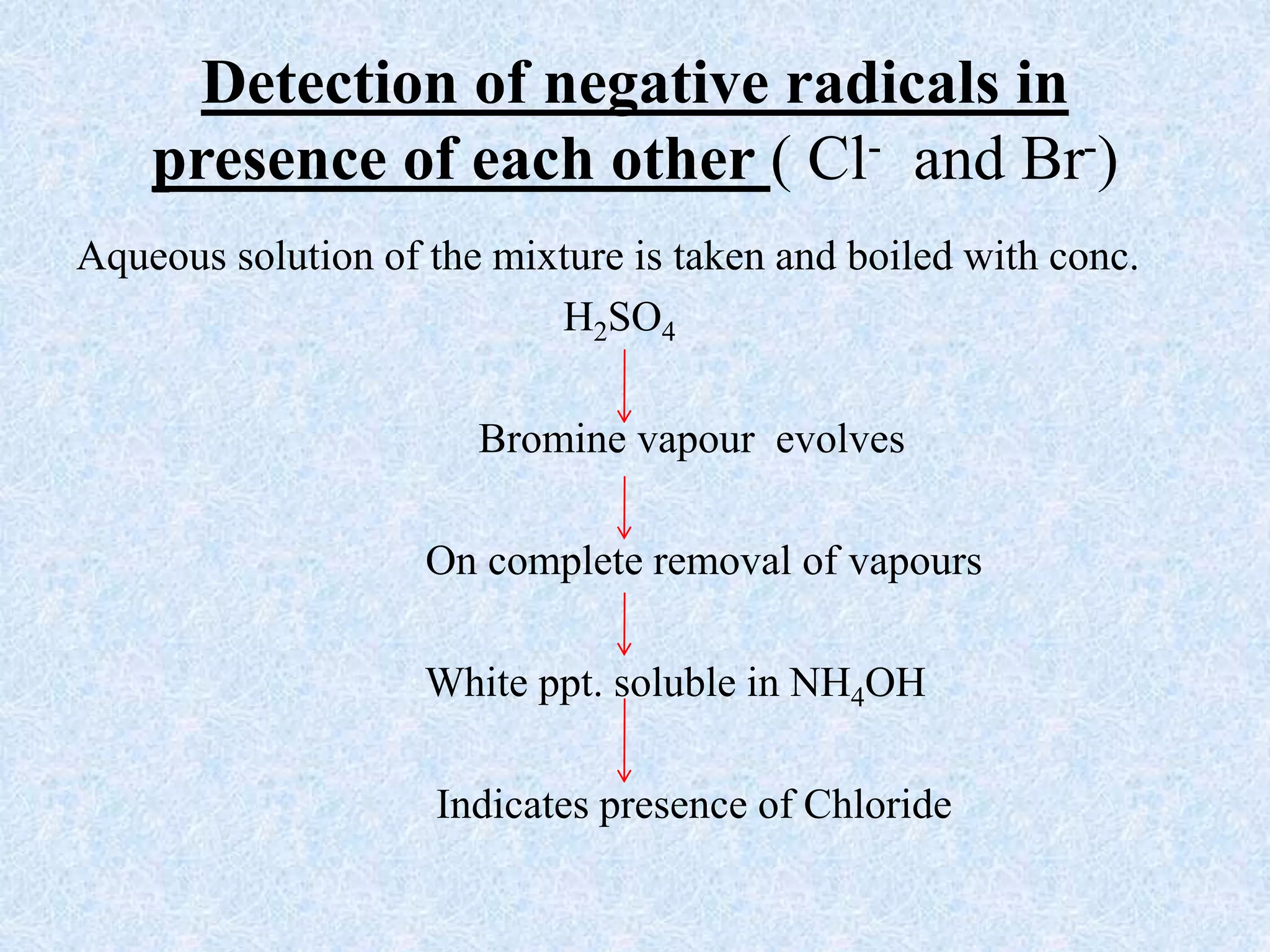
Detection of negative radicals in
presence of each other ( Cl- and Br-)
Aqueous solution of the mixture is taken and boiled with conc.
H2SO4
Bromine vapour evolves
On complete removal of vapours
White ppt. soluble in NH4OH
Indicates presence of Chloride
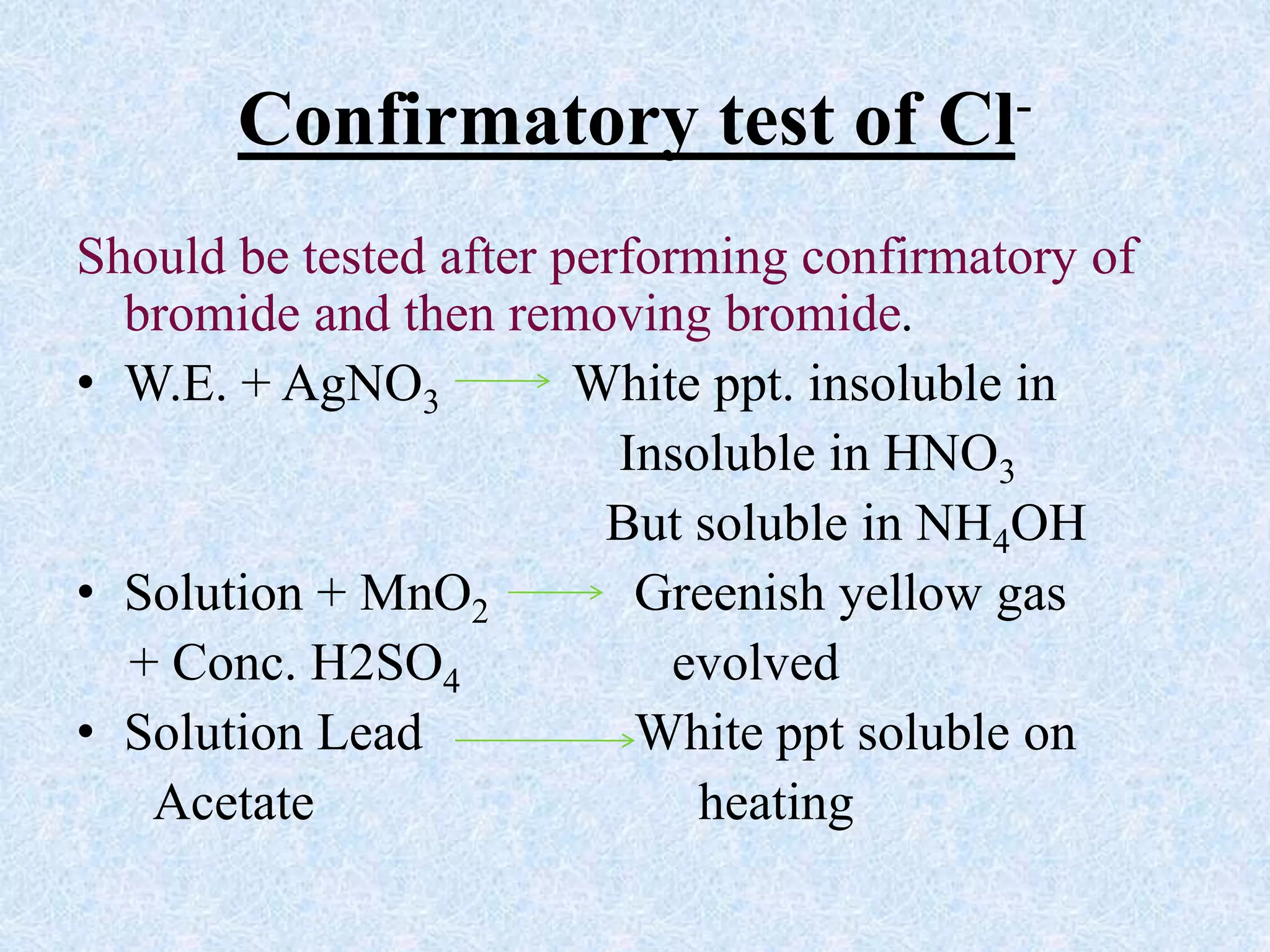
Confirmatory test of Cl-
Should be tested after performing confirmatory of
bromide and then removing bromide.
• W.E. + AgNO3 White ppt. insoluble in
Insoluble in HNO3
But soluble in NH4OH
• Solution + MnO2 Greenish yellow gas
+ Conc. H2SO4 evolved
• Solution Lead White ppt soluble on
Acetate heating
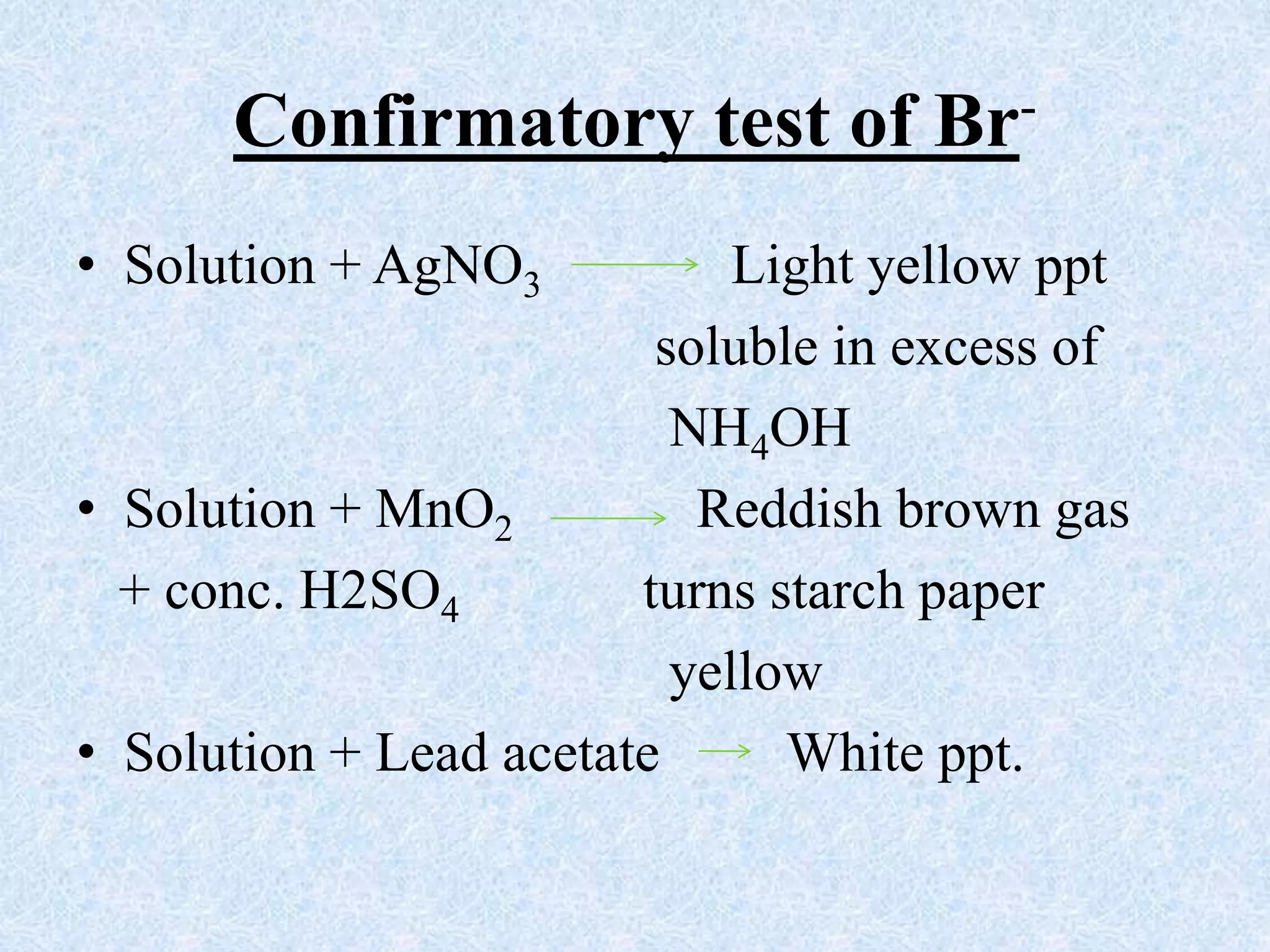
Confirmatory test of Br-
• Solution + AgNO3 Light yellow ppt
soluble in excess of
NH4OH
• Solution + MnO2 Reddish brown gas
+ conc. H2SO4 turns starch paper
yellow
• Solution + Lead acetate White ppt.
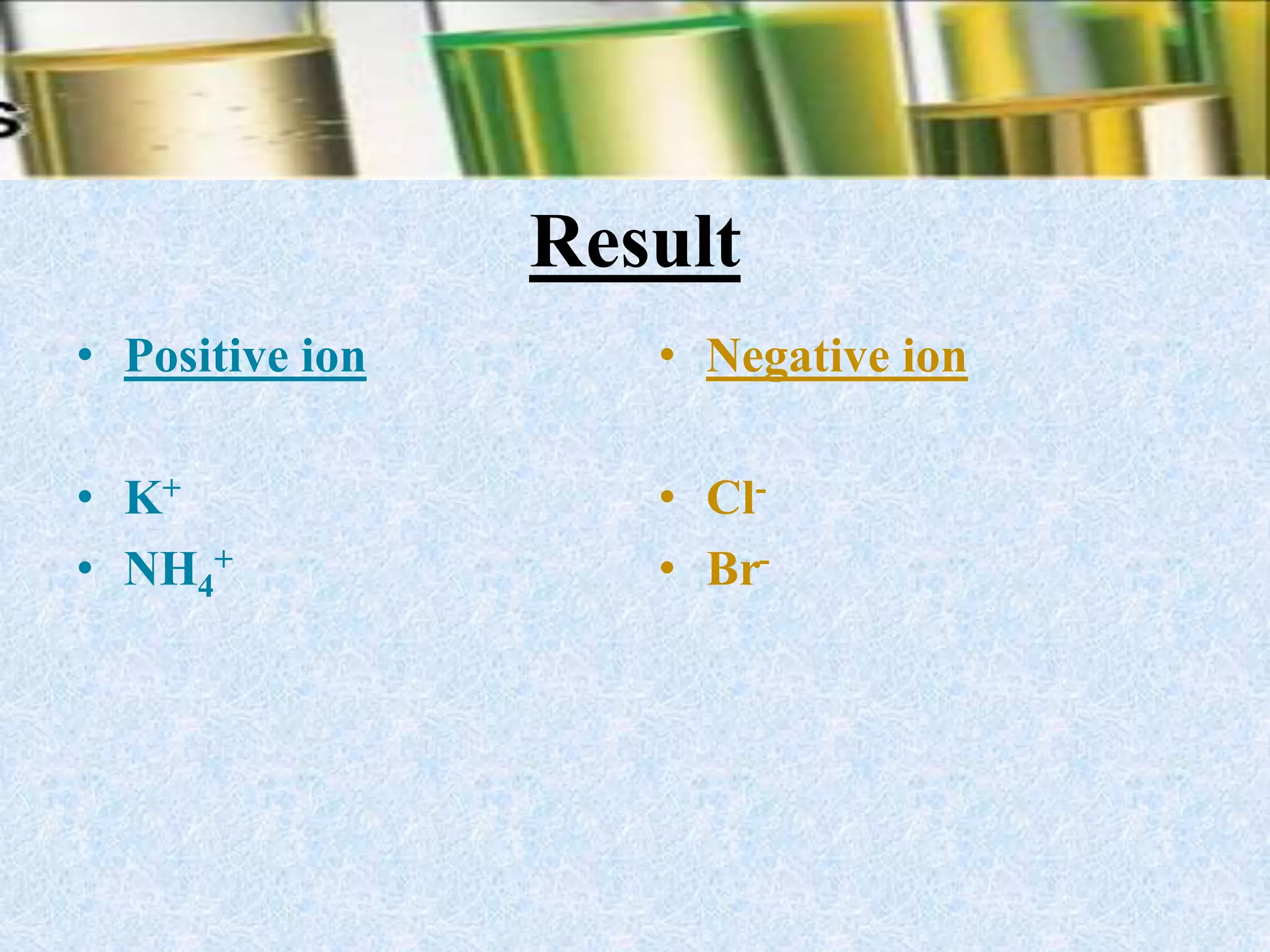
Result
• Positive ion
• K+
• NH4
+
• Negative ion
• Cl-
• Br-

sy practical soluble mixture.ppt

  • 1.
  • 2.
    (A) Preliminary tests •State – Crystalline ( indicates the solubility) • Colour - White (The colour tells us about the possible cations present –Na+ , K+ , NH4 + etc. • Smell - smell of NH3 • Solubility in water - soluble in water
  • 3.
    (B) Dry Tests •Heating in a dry test tube 1) Substance melts 2) Decrepitation 3) Water deposits on cooler parts of test tube 4) Sublimation with smell of NH3 5) colour change white to white • Flame test Violet, Crimson through cobalt glass • Borax bead test As the substance is white in colour it is not applicable .
  • 4.
    Test for NH4 + •Addition of NaOH to the mixture Heat Smell of NH3 White fumes observed with HCl on glass rod • Test with Conc. HCl For coloured mixtures. • Test with dil. HCl No observation
  • 5.
    Mixture with Conc.H2SO4 • On Heating (i) Colourless pungent gas Gives white fumes with glass rod dipped in NH4OH (ii) Pale reddish brown gas Turns starch paper yellow • On heating with MnO2 (i) Greenish yellow gas initially (ii) Later brown gas evolves Turns starch paper yellow. • On heating with Cu Foil No observations
  • 6.
    Conclusion K+ , Cl-, NH4 + , Br- Water Extract test Nessler’s Sodium cobalti Picric Conc. Conc. BaCl2 AgNO3 reagent Nitrate Acid H2SO4 H2SO4 + FeSO4 Reddish Yellow Yellow No Observations Light yellow ppt on Brown ppt. Ppt. Ppt. Filtering & adding AgNO3 again white ppt NH4 + K+,NH4 + K+ NO3 - , NO2 - ,SO4 2- Cl- , Br- Present present present absent present
  • 7.
    • NH4 + saltsmust be removed by boiling with NaOH and the alkali must be neutralize by acetic acid , before performing water extract test of K+ . • Take 10-15 mg. of mixture and prepare a solution by adding distill water. • This is the original solution.
  • 8.
  • 9.
    Analysis of Vgroup V-A Group [Mg(NH4)2PO4 No ppt. Mg2+ absent V-B group (Carried by water extract) W.E. NaOH Sodium cobalti Smell of NH3 and white nitrate + fumes with glass rod acetic acid dipped in HCl Yellow ppt. NH4 + K+
  • 10.
    Confirmatory test ofNH4 + Water Extract NaOH Sodium cobalti Nessler’s nitrate Reagent Smell of NH3 Turns red litmus Reddish grey blue Yellow ppt ppt
  • 11.
    Confirmatory test ofK+ Water Extract • Picric acid Tartaric acid Flame test yellow ppt white ppt violet flame
  • 12.
    Wet tests fornegative radicals Water extract White ppt which is Light yellow ppt which Insoluble in HNO3 is partly soluble in But soluble in NH4OH NH4OH and insoluble in HNO3 Cl- present Br- present
  • 13.
    Detection of negativeradicals in presence of each other ( Cl- and Br-) Aqueous solution of the mixture is taken and boiled with conc. H2SO4 Bromine vapour evolves On complete removal of vapours White ppt. soluble in NH4OH Indicates presence of Chloride
  • 14.
    Confirmatory test ofCl- Should be tested after performing confirmatory of bromide and then removing bromide. • W.E. + AgNO3 White ppt. insoluble in Insoluble in HNO3 But soluble in NH4OH • Solution + MnO2 Greenish yellow gas + Conc. H2SO4 evolved • Solution Lead White ppt soluble on Acetate heating
  • 15.
    Confirmatory test ofBr- • Solution + AgNO3 Light yellow ppt soluble in excess of NH4OH • Solution + MnO2 Reddish brown gas + conc. H2SO4 turns starch paper yellow • Solution + Lead acetate White ppt.
  • 16.
    Result • Positive ion •K+ • NH4 + • Negative ion • Cl- • Br-