   1) To promote the welfare of the people of
    South Asia and to improve their quality of
    life;
   2) To accelerate economic growth, social
    progress and cultural development in the
    region and to provide all individuals the
    opportunity to live in dignity and to realize
    their full potential;
   3) To promote and strengthen collective
    self-reliance among the countries of South
    Asia;
   4)    To   contribute   to    mutual   trust,
    understanding and appreciation of one
    another's problems;
   5) To promote active collaboration and
 •Bangladesh
 •India
 •Pakistan
 •Sri Lanka
 •Nepal
 •Maldives
 •Bhutan
 •Afghanistan
   Lord Curzon, Viceroy
    of    India   laid  its
    foundation stone in
    1904.
   One of the best
    examples of Dhaka's
    architecture.
   It is a happy blend of
    European and Mughal
    elements.
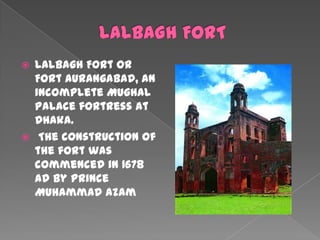
   Lalbagh Fort or
    Fort Aurangabad, an
    incomplete Mughal
    palace fortress at
    Dhaka.
    The construction of
    the fort was
    commenced in 1678
    AD by prince
    Muhammad Azam
   Ahsan Manzil situated at
    Kumartoli of Dhaka on
    the bank of the
    Buriganga.
   It was the residential
    palace and the kachari
    of the nawabs of Dhaka.
   Abdul Ghani built the
    palace during 1859 and
    completed in 1872.
   Ruplal House an imposing
    early 19th century mansion
    located on the northern bank
    of the Buriganga, in the
    Farashganj locality of old
    Dhaka.
   Two affluent merchant
    brothers named Ruplal Das
    and Raghunath build it in
    1840.
   Nimtali Palace was built
    towards the end of the
    Mughal rule in Dhaka as
    a residence of the Naib-
    Nazim.
   Lord Clive got it build
    for the residence of Naib-
    Nazim in 1765-66
   The production of
    pottery is one of the
    most ancient arts.
   The earliest specimens of
    pottery are those of the
    Northern Black Polished
    Ware. This pottery
    spread into Bangladesh
    from the north later
    than fourth century B. C.
   Shatranji, a variety of
    handloom carpet which is
    the heritage of Rangpur
    and the country.
   Shatranji earned renown
    with new designs and
    weaving techniques
   The advent of Bengali New
    Year is gaily observed
    throughout the country. The
    Day (mid-April) is a public
    holiday. Most colorful daylong
    gatherings along with
    arrangement of cultural
    program and traditional Panta
    at Ramna Park, Dhaka is a
    special feature of Pahela
    Baishakh. Tournaments, boat
    races etc. are held in cities and
    villages amidst great jubilation.
    Many fairs are held in Dhaka
    and other towns and villages.
   Eid-e-Miladunnabi is the birth
    and death day of Prophet
    Muhammad (s). He was born
    and died the same day on
    12th Rabiul Awal (Lunar
    Month). The day is national
    holiday, national flag is flown
    atop public and private
    houses and special food is
    served in orphanages,
    hospitals and jails. At night
    important public buildings are
    illuminated and milad mahfils
    are held.
Although there are 38 different languages of
Bangladesh, Bengali is by far the most widely spoken
language in the country – an estimated 98% of the
population can speak it, and it enjoys the status of
official language and the lingua franca of the nation.
Arabic text is widely used in education. English is also
widely used, especially in urban areas.


         That says I love you in Bangla. Ami tomakey bhalobashey.
Swarnim"saarcppt

Swarnim"saarcppt

  • 2.
    1) To promote the welfare of the people of South Asia and to improve their quality of life;  2) To accelerate economic growth, social progress and cultural development in the region and to provide all individuals the opportunity to live in dignity and to realize their full potential;  3) To promote and strengthen collective self-reliance among the countries of South Asia;  4) To contribute to mutual trust, understanding and appreciation of one another's problems;  5) To promote active collaboration and
  • 3.
     •Bangladesh  •India •Pakistan  •Sri Lanka  •Nepal  •Maldives  •Bhutan  •Afghanistan
  • 6.
    Lord Curzon, Viceroy of India laid its foundation stone in 1904.  One of the best examples of Dhaka's architecture.  It is a happy blend of European and Mughal elements.
  • 7.
    Lalbagh Fort or Fort Aurangabad, an incomplete Mughal palace fortress at Dhaka.  The construction of the fort was commenced in 1678 AD by prince Muhammad Azam
  • 8.
    Ahsan Manzil situated at Kumartoli of Dhaka on the bank of the Buriganga.  It was the residential palace and the kachari of the nawabs of Dhaka.  Abdul Ghani built the palace during 1859 and completed in 1872.
  • 9.
    Ruplal House an imposing early 19th century mansion located on the northern bank of the Buriganga, in the Farashganj locality of old Dhaka.  Two affluent merchant brothers named Ruplal Das and Raghunath build it in 1840.
  • 10.
    Nimtali Palace was built towards the end of the Mughal rule in Dhaka as a residence of the Naib- Nazim.  Lord Clive got it build for the residence of Naib- Nazim in 1765-66
  • 13.
    The production of pottery is one of the most ancient arts.  The earliest specimens of pottery are those of the Northern Black Polished Ware. This pottery spread into Bangladesh from the north later than fourth century B. C.
  • 14.
    Shatranji, a variety of handloom carpet which is the heritage of Rangpur and the country.  Shatranji earned renown with new designs and weaving techniques
  • 15.
    The advent of Bengali New Year is gaily observed throughout the country. The Day (mid-April) is a public holiday. Most colorful daylong gatherings along with arrangement of cultural program and traditional Panta at Ramna Park, Dhaka is a special feature of Pahela Baishakh. Tournaments, boat races etc. are held in cities and villages amidst great jubilation. Many fairs are held in Dhaka and other towns and villages.
  • 16.
    Eid-e-Miladunnabi is the birth and death day of Prophet Muhammad (s). He was born and died the same day on 12th Rabiul Awal (Lunar Month). The day is national holiday, national flag is flown atop public and private houses and special food is served in orphanages, hospitals and jails. At night important public buildings are illuminated and milad mahfils are held.
  • 17.
    Although there are38 different languages of Bangladesh, Bengali is by far the most widely spoken language in the country – an estimated 98% of the population can speak it, and it enjoys the status of official language and the lingua franca of the nation. Arabic text is widely used in education. English is also widely used, especially in urban areas. That says I love you in Bangla. Ami tomakey bhalobashey.