Sustainable Tourism in
Namibia
By Ivana Akotowaa Ofori
Sustainable Tourism
Preserves
natural
environment
Respects
culture of the
locals
Guarantees
livelihood of
locals
Some facts about Namibia
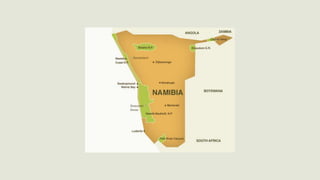
 Most arid country south of the Sahara Desert
 Receives 258 millimeters of rain a year.
 Very low population density – about 2 people per kilometer.
 Three topographical zones:
 Western Coastal zone – home of Namib Desert
 Eastern Desert Zone
 Semi-arid central plateau
 Desertification is a barrier to economic progress
 300 days of sunshine a year – great for tourism.
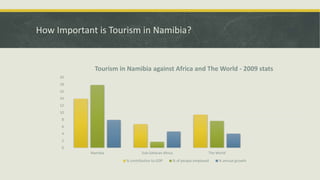
How Important is Tourism in Namibia?
0
2
4
6
8
10
12
14
16
18
20
Namibia Sub-Saharan Africa The World
Tourism in Namibia against Africa and The World - 2009 stats
% contribution to GDP % of people employed % annual growth
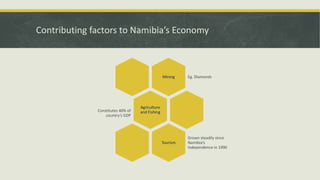
Contributing factors to Namibia’s Economy
Mining Eg. Diamonds
Agriculture
and FishingConstitutes 40% of
country’s GDP
Tourism
Grown steadily since
Namibia’s
Independence in 1990
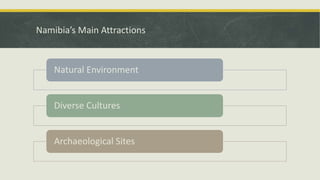
Namibia’s Main Attractions
Natural Environment
Diverse Cultures
Archaeological Sites
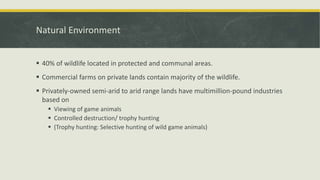
Natural Environment
 40% of wildlife located in protected and communal areas.
 Commercial farms on private lands contain majority of the wildlife.
 Privately-owned semi-arid to arid range lands have multimillion-pound industries
based on
 Viewing of game animals
 Controlled destruction/ trophy hunting
 (Trophy hunting: Selective hunting of wild game animals)
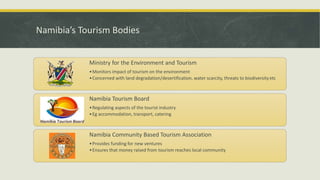
Namibia’s Tourism Bodies
Ministry for the Environment and Tourism
•Monitors impact of tourism on the environment
•Concerned with land degradation/desertification, water scarcity, threats to biodiversity etc
Namibia Tourism Board
•Regulating aspects of the tourist industry
•Eg accommodation, transport, catering
Namibia Community Based Tourism Association
•Provides funding for new ventures
•Ensures that money raised from tourism reaches local community
Issues Faced vs UN Environmental Program
Recommendations
Issues
 Overconsumption of resources
 Tourists consume up to 3 times
water of local people
 Demands for hot water uses a lot
of fuelwood
 Low carrying capacity of desert
environments
 High waste output
 Looting of paintings and engravings
UNEP Recommendations
 Use alternatives to fuelwood
 Use purified water instead of mineral
water in plastic bottles
 Use dry toilets, burn toilet paper
 Use biodegradable detergent
 Tourists take their non-biodegradable
waste home
 Forbidding flash photography etc
Issues Faced vs UN Environmental Program
Recommendations
Issues
 Tourists’ disrespectful behaviour
 Eg, in the way they dress
 Use of offensive gestures
 Intrusive photography
 Restricting locals’ access to grazing
land and water, where resources
are under pressure
UNEP Recommendations
 Produce should be bought from
local communities
 Encourage intercultural
understanding
 Provide language training
 Draw on expertise and knowledge
of local communities
Responsible tourism at
the local scale
Himba people of Kaokoland
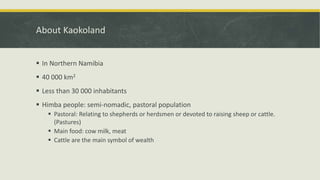
About Kaokoland
 In Northern Namibia
 40 000 km2
 Less than 30 000 inhabitants
 Himba people: semi-nomadic, pastoral population
 Pastoral: Relating to shepherds or herdsmen or devoted to raising sheep or cattle.
(Pastures)
 Main food: cow milk, meat
 Cattle are the main symbol of wealth
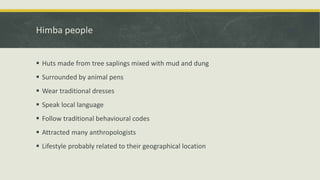
Himba people
 Huts made from tree saplings mixed with mud and dung
 Surrounded by animal pens
 Wear traditional dresses
 Speak local language
 Follow traditional behavioural codes
 Attracted many anthropologists
 Lifestyle probably related to their geographical location
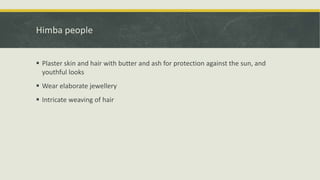
Himba people
 Plaster skin and hair with butter and ash for protection against the sun, and
youthful looks
 Wear elaborate jewellery
 Intricate weaving of hair
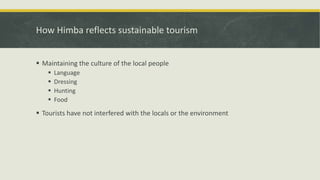
How Himba reflects sustainable tourism
 Maintaining the culture of the local people
 Language
 Dressing
 Hunting
 Food
 Tourists have not interfered with the locals or the environment
Damaraland
Accommodation at Damaraland Camp
 Damaraland was named by the World Travel and Tourism Council in 2005 as the
winner of the Tourism Tomorrow Conservation Award
 Award recognizes and promotes practices in responsible tourism
 Camp is run by local Damara people, and western operator Wilderness Safaris
 Set up in 1996
 Camp consists of tents on wooden platforms, shaded and open to breeze
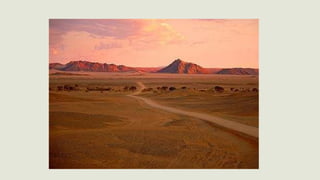
 Verandahs have a view of the Haub River Valley and the mountains
 Game is driven into the valley
Accommodation at Damaraland Camp
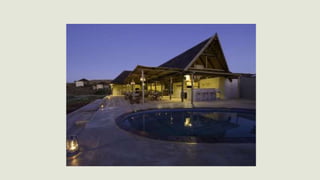
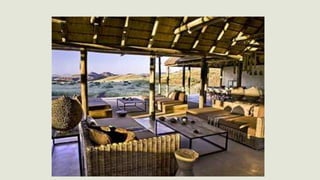
 Food is eaten in a dining area of local stone and canvas
 Plunge pool for guests
 Sustains itself without donor funding
 Profits go to
 mobile clinics,
 educational materials,
 running water,
 Anti-poaching patrols. (Poaching: illegal hunting of game)
 10% income goes back onto the communities from Wilderness Safaris
 Populations in conservancy have doubled since 1996.
More Helpful Sites
 http://www.mdgfund.org/program/sustainableculturaltourismnamibia
 http://www.worldwildlife.org/stories/namibia-s-sustainable-tourism-success

Sustainable tourism in Namibia

  • 1.
  • 2.
  • 3.
    Some facts aboutNamibia  Most arid country south of the Sahara Desert  Receives 258 millimeters of rain a year.  Very low population density – about 2 people per kilometer.  Three topographical zones:  Western Coastal zone – home of Namib Desert  Eastern Desert Zone  Semi-arid central plateau  Desertification is a barrier to economic progress  300 days of sunshine a year – great for tourism.
  • 5.
    How Important isTourism in Namibia? 0 2 4 6 8 10 12 14 16 18 20 Namibia Sub-Saharan Africa The World Tourism in Namibia against Africa and The World - 2009 stats % contribution to GDP % of people employed % annual growth
  • 6.
    Contributing factors toNamibia’s Economy Mining Eg. Diamonds Agriculture and FishingConstitutes 40% of country’s GDP Tourism Grown steadily since Namibia’s Independence in 1990
  • 7.
    Namibia’s Main Attractions NaturalEnvironment Diverse Cultures Archaeological Sites
  • 8.
    Natural Environment  40%of wildlife located in protected and communal areas.  Commercial farms on private lands contain majority of the wildlife.  Privately-owned semi-arid to arid range lands have multimillion-pound industries based on  Viewing of game animals  Controlled destruction/ trophy hunting  (Trophy hunting: Selective hunting of wild game animals)
  • 9.
    Namibia’s Tourism Bodies Ministryfor the Environment and Tourism •Monitors impact of tourism on the environment •Concerned with land degradation/desertification, water scarcity, threats to biodiversity etc Namibia Tourism Board •Regulating aspects of the tourist industry •Eg accommodation, transport, catering Namibia Community Based Tourism Association •Provides funding for new ventures •Ensures that money raised from tourism reaches local community
  • 10.
    Issues Faced vsUN Environmental Program Recommendations Issues  Overconsumption of resources  Tourists consume up to 3 times water of local people  Demands for hot water uses a lot of fuelwood  Low carrying capacity of desert environments  High waste output  Looting of paintings and engravings UNEP Recommendations  Use alternatives to fuelwood  Use purified water instead of mineral water in plastic bottles  Use dry toilets, burn toilet paper  Use biodegradable detergent  Tourists take their non-biodegradable waste home  Forbidding flash photography etc
  • 11.
    Issues Faced vsUN Environmental Program Recommendations Issues  Tourists’ disrespectful behaviour  Eg, in the way they dress  Use of offensive gestures  Intrusive photography  Restricting locals’ access to grazing land and water, where resources are under pressure UNEP Recommendations  Produce should be bought from local communities  Encourage intercultural understanding  Provide language training  Draw on expertise and knowledge of local communities
  • 12.
    Responsible tourism at thelocal scale Himba people of Kaokoland
  • 13.
    About Kaokoland  InNorthern Namibia  40 000 km2  Less than 30 000 inhabitants  Himba people: semi-nomadic, pastoral population  Pastoral: Relating to shepherds or herdsmen or devoted to raising sheep or cattle. (Pastures)  Main food: cow milk, meat  Cattle are the main symbol of wealth
  • 14.
    Himba people  Hutsmade from tree saplings mixed with mud and dung  Surrounded by animal pens  Wear traditional dresses  Speak local language  Follow traditional behavioural codes  Attracted many anthropologists  Lifestyle probably related to their geographical location
  • 15.
    Himba people  Plasterskin and hair with butter and ash for protection against the sun, and youthful looks  Wear elaborate jewellery  Intricate weaving of hair
  • 16.
    How Himba reflectssustainable tourism  Maintaining the culture of the local people  Language  Dressing  Hunting  Food  Tourists have not interfered with the locals or the environment
  • 17.
  • 19.
    Accommodation at DamaralandCamp  Damaraland was named by the World Travel and Tourism Council in 2005 as the winner of the Tourism Tomorrow Conservation Award  Award recognizes and promotes practices in responsible tourism  Camp is run by local Damara people, and western operator Wilderness Safaris  Set up in 1996  Camp consists of tents on wooden platforms, shaded and open to breeze  Verandahs have a view of the Haub River Valley and the mountains  Game is driven into the valley
  • 21.
    Accommodation at DamaralandCamp  Food is eaten in a dining area of local stone and canvas  Plunge pool for guests  Sustains itself without donor funding  Profits go to  mobile clinics,  educational materials,  running water,  Anti-poaching patrols. (Poaching: illegal hunting of game)  10% income goes back onto the communities from Wilderness Safaris  Populations in conservancy have doubled since 1996.
  • 23.
    More Helpful Sites http://www.mdgfund.org/program/sustainableculturaltourismnamibia  http://www.worldwildlife.org/stories/namibia-s-sustainable-tourism-success