Sustainable packaging in
India
Abhay Bhagwat
B Tech - Mechanical Engineering, IIT Bombay, 1991
https://www.linkedin.com/in/abhaybhagwat/
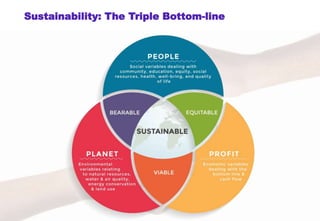
Sustainability: The Triple Bottom-line
3
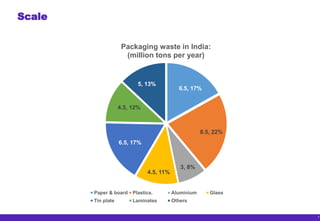
Scale
6.5, 17%
8.5, 22%
3, 8%
4.5, 11%
6.5, 17%
4.5, 12%
5, 13%
Packaging waste in India:
(million tons per year)
Paper & board Plastics. Aluminium Glass
Tin plate Laminates Others
4
5
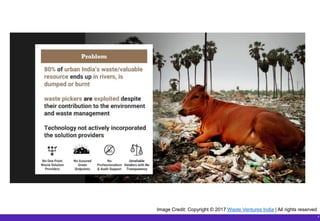
Image Credit: Copyright © 2017 Waste Ventures India | All rights reserved
6
Problem definition
— Indian Packaging industry turnover is $16.5 billion pa (ranked 11th in the
world). Flexibles are 25-30% of this, and growing at a CAGR of 9.8%
— India generates around 68.8 Million TPA solid waste, of which, Packaging
waste is 38.5 Mn TPA. Over 60% of this gets collected and recycled
— The majority of post consumer packaging formats are recycled but Flexible
Packaging waste isn’t. And this is because it is currently of zero (in fact,
negative) commercial value.
— The problem of packaging sustainability in India is twofold:
1. Expand the recycling of non-flexibles and go up the Pyramid to
improve sustainability
2. Prevent flexibles from becoming litter/landfill
7
Our vision
• Each Company should become
‘flexibles-neutral’
• Establish a flexible waste management
program to prevent from going into the
biosphere, an equivalent weight of the
MLP (multi-layer packaging) that the
company produces/sells
• Catalyse a litter-free India
• Lead the creation of an ecosystem
• Evolve a “flexible credits” mechanism
analogous to carbon credits
• If all companies offset their flexibles
waste, no new waste will enter the
biosphere.
• Recover the matter and energy in the
flexibles, create new businesses and
improve ragpickers’ lives
8
Part 1: The supply side.
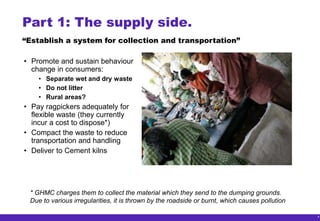
• Promote and sustain behaviour
change in consumers:
• Separate wet and dry waste
• Do not litter
• Rural areas?
• Pay ragpickers adequately for
flexible waste (they currently
incur a cost to dispose*)
• Compact the waste to reduce
transportation and handling
• Deliver to Cement kilns
* GHMC charges them to collect the material which they send to the dumping grounds.
Due to various irregularities, it is thrown by the roadside or burnt, which causes pollution
“Establish a system for collection and transportation”
9
• Any gaseous acids (e.g., from PVC) are
neutralized by the lime in the raw
materials
• Massive, growing market exists for the
end product
• Can absorb all of India’s flexible
waste
• Capital assets already exist and can be
used without major modifications
• Minimises additional costs compared
to other routes
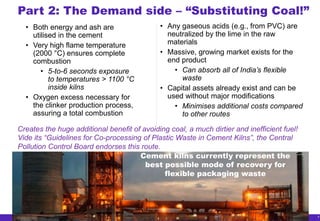
Part 2: The Demand side – “Substituting Coal!”
• Both energy and ash are
utilised in the cement
• Very high flame temperature
(2000 °C) ensures complete
combustion
• 5-to-6 seconds exposure
to temperatures > 1100 °C
inside kilns
• Oxygen excess necessary for
the clinker production process,
assuring a total combustion
Cement kilns currently represent the
best possible mode of recovery for
flexible packaging waste
Creates the huge additional benefit of avoiding coal, a much dirtier and inefficient fuel!
Vide its “Guidelines for Co-processing of Plastic Waste in Cement Kilns”, the Central
Pollution Control Board endorses this route.
10
Part 3: The Enablers
• How to make this a viable market?
• Should ideally be self-financing at high scale
• Any deficit made up via EPR / government spend / incentives
• Launch “flexible waste credits” akin to “Carbon Credits”
• Verifiable mechanism of recovery
• Sold by Cement Kilns
• Purchased by Users
• Creates a competitive market that optimizes prices
• Appropriate Regulation to create a ‘level playing field’ among
users
11
What will the benefits be?
• Environmental:
• Litter-free India, clean waterbodies, healthy animals, biodiversity
• Reduction of ~ 10 million tons in the coal burnt by cement kilns
resulting directly in less air pollution and smog
• Economic growth
• No need to ban plastics
• No need for expensive and difficult to recycle “biodegradable
plastics”
• No need to make plastics from food sources
• No need to for cost escalation which will affect the poor consumers
who typically use small portion sachets, etc
• Social benefits
• 1.35 billion Indians can get high quality, affordable products
• Government machinery can focus on other harmful pollutants
• Better lives for the ragpickers and their children
• India can show the way to the rest of the “third world”
12
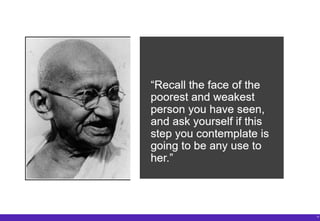
“Recall the face of the
poorest and weakest
man you have seen,
and ask yourself if this
step you contemplate is
going to be any use to
him.”
Appendix
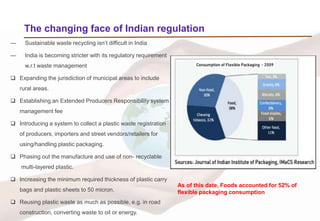
The changing face of Indian regulation
— Sustainable waste recycling isn’t difficult in India
— India is becoming stricter with its regulatory requirement
w.r.t waste management
❑ Expanding the jurisdiction of municipal areas to include
rural areas.
❑ Establishing an Extended Producers Responsibility system
management fee
❑ Introducing a system to collect a plastic waste registration
of producers, importers and street vendors/retailers for
using/handling plastic packaging.
❑ Phasing out the manufacture and use of non- recyclable
multi-layered plastic.
❑ Increasing the minimum required thickness of plastic carry
bags and plastic sheets to 50 micron.
❑ Reusing plastic waste as much as possible, e.g. in road
construction, converting waste to oil or energy.
As of this date, Foods accounted for 52% of
flexible packaging consumption
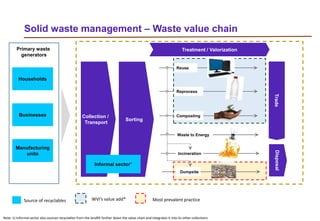
Solid waste management – Waste value chain
Primary waste
generators
Collection /
Transport
Sorting
Trade
Households
Businesses
Treatment / Valorization
Disposal
Reuse
Reprocess
Composting
Waste to Energy
Incineration
Dumpsite
Manufacturing
units
Informal sector¹
Source of recyclables
Note: 1) Informal sector also sources recyclables from the landfill further down the value chain and integrates it into its other collections
WVI’s value add* Most prevalent practice
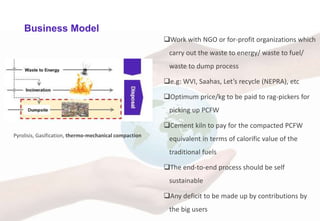
Business Model
❑Work with NGO or for-profit organizations which
carry out the waste to energy/ waste to fuel/
waste to dump process
❑e.g: WVI, Saahas, Let’s recycle (NEPRA), etc
❑Optimum price/kg to be paid to rag-pickers for
picking up PCFW
❑Cement kiln to pay for the compacted PCFW
equivalent in terms of calorific value of the
traditional fuels
❑The end-to-end process should be self
sustainable
❑Any deficit to be made up by contributions by
the big users
Pyrolisis, Gasification, thermo-mechanical compaction

Sustainable packaging in India

  • 1.
    Sustainable packaging in India AbhayBhagwat B Tech - Mechanical Engineering, IIT Bombay, 1991 https://www.linkedin.com/in/abhaybhagwat/
  • 2.
  • 3.
    3 Scale 6.5, 17% 8.5, 22% 3,8% 4.5, 11% 6.5, 17% 4.5, 12% 5, 13% Packaging waste in India: (million tons per year) Paper & board Plastics. Aluminium Glass Tin plate Laminates Others
  • 4.
  • 5.
    5 Image Credit: Copyright© 2017 Waste Ventures India | All rights reserved
  • 6.
    6 Problem definition — IndianPackaging industry turnover is $16.5 billion pa (ranked 11th in the world). Flexibles are 25-30% of this, and growing at a CAGR of 9.8% — India generates around 68.8 Million TPA solid waste, of which, Packaging waste is 38.5 Mn TPA. Over 60% of this gets collected and recycled — The majority of post consumer packaging formats are recycled but Flexible Packaging waste isn’t. And this is because it is currently of zero (in fact, negative) commercial value. — The problem of packaging sustainability in India is twofold: 1. Expand the recycling of non-flexibles and go up the Pyramid to improve sustainability 2. Prevent flexibles from becoming litter/landfill
  • 7.
    7 Our vision • EachCompany should become ‘flexibles-neutral’ • Establish a flexible waste management program to prevent from going into the biosphere, an equivalent weight of the MLP (multi-layer packaging) that the company produces/sells • Catalyse a litter-free India • Lead the creation of an ecosystem • Evolve a “flexible credits” mechanism analogous to carbon credits • If all companies offset their flexibles waste, no new waste will enter the biosphere. • Recover the matter and energy in the flexibles, create new businesses and improve ragpickers’ lives
  • 8.
    8 Part 1: Thesupply side. • Promote and sustain behaviour change in consumers: • Separate wet and dry waste • Do not litter • Rural areas? • Pay ragpickers adequately for flexible waste (they currently incur a cost to dispose*) • Compact the waste to reduce transportation and handling • Deliver to Cement kilns * GHMC charges them to collect the material which they send to the dumping grounds. Due to various irregularities, it is thrown by the roadside or burnt, which causes pollution “Establish a system for collection and transportation”
  • 9.
    9 • Any gaseousacids (e.g., from PVC) are neutralized by the lime in the raw materials • Massive, growing market exists for the end product • Can absorb all of India’s flexible waste • Capital assets already exist and can be used without major modifications • Minimises additional costs compared to other routes Part 2: The Demand side – “Substituting Coal!” • Both energy and ash are utilised in the cement • Very high flame temperature (2000 °C) ensures complete combustion • 5-to-6 seconds exposure to temperatures > 1100 °C inside kilns • Oxygen excess necessary for the clinker production process, assuring a total combustion Cement kilns currently represent the best possible mode of recovery for flexible packaging waste Creates the huge additional benefit of avoiding coal, a much dirtier and inefficient fuel! Vide its “Guidelines for Co-processing of Plastic Waste in Cement Kilns”, the Central Pollution Control Board endorses this route.
  • 10.
    10 Part 3: TheEnablers • How to make this a viable market? • Should ideally be self-financing at high scale • Any deficit made up via EPR / government spend / incentives • Launch “flexible waste credits” akin to “Carbon Credits” • Verifiable mechanism of recovery • Sold by Cement Kilns • Purchased by Users • Creates a competitive market that optimizes prices • Appropriate Regulation to create a ‘level playing field’ among users
  • 11.
    11 What will thebenefits be? • Environmental: • Litter-free India, clean waterbodies, healthy animals, biodiversity • Reduction of ~ 10 million tons in the coal burnt by cement kilns resulting directly in less air pollution and smog • Economic growth • No need to ban plastics • No need for expensive and difficult to recycle “biodegradable plastics” • No need to make plastics from food sources • No need to for cost escalation which will affect the poor consumers who typically use small portion sachets, etc • Social benefits • 1.35 billion Indians can get high quality, affordable products • Government machinery can focus on other harmful pollutants • Better lives for the ragpickers and their children • India can show the way to the rest of the “third world”
  • 12.
    12 “Recall the faceof the poorest and weakest man you have seen, and ask yourself if this step you contemplate is going to be any use to him.”
  • 13.
  • 14.
    The changing faceof Indian regulation — Sustainable waste recycling isn’t difficult in India — India is becoming stricter with its regulatory requirement w.r.t waste management ❑ Expanding the jurisdiction of municipal areas to include rural areas. ❑ Establishing an Extended Producers Responsibility system management fee ❑ Introducing a system to collect a plastic waste registration of producers, importers and street vendors/retailers for using/handling plastic packaging. ❑ Phasing out the manufacture and use of non- recyclable multi-layered plastic. ❑ Increasing the minimum required thickness of plastic carry bags and plastic sheets to 50 micron. ❑ Reusing plastic waste as much as possible, e.g. in road construction, converting waste to oil or energy. As of this date, Foods accounted for 52% of flexible packaging consumption
  • 15.
    Solid waste management– Waste value chain Primary waste generators Collection / Transport Sorting Trade Households Businesses Treatment / Valorization Disposal Reuse Reprocess Composting Waste to Energy Incineration Dumpsite Manufacturing units Informal sector¹ Source of recyclables Note: 1) Informal sector also sources recyclables from the landfill further down the value chain and integrates it into its other collections WVI’s value add* Most prevalent practice
  • 16.
    Business Model ❑Work withNGO or for-profit organizations which carry out the waste to energy/ waste to fuel/ waste to dump process ❑e.g: WVI, Saahas, Let’s recycle (NEPRA), etc ❑Optimum price/kg to be paid to rag-pickers for picking up PCFW ❑Cement kiln to pay for the compacted PCFW equivalent in terms of calorific value of the traditional fuels ❑The end-to-end process should be self sustainable ❑Any deficit to be made up by contributions by the big users Pyrolisis, Gasification, thermo-mechanical compaction