Sustainable Development:
Securing a Better Future
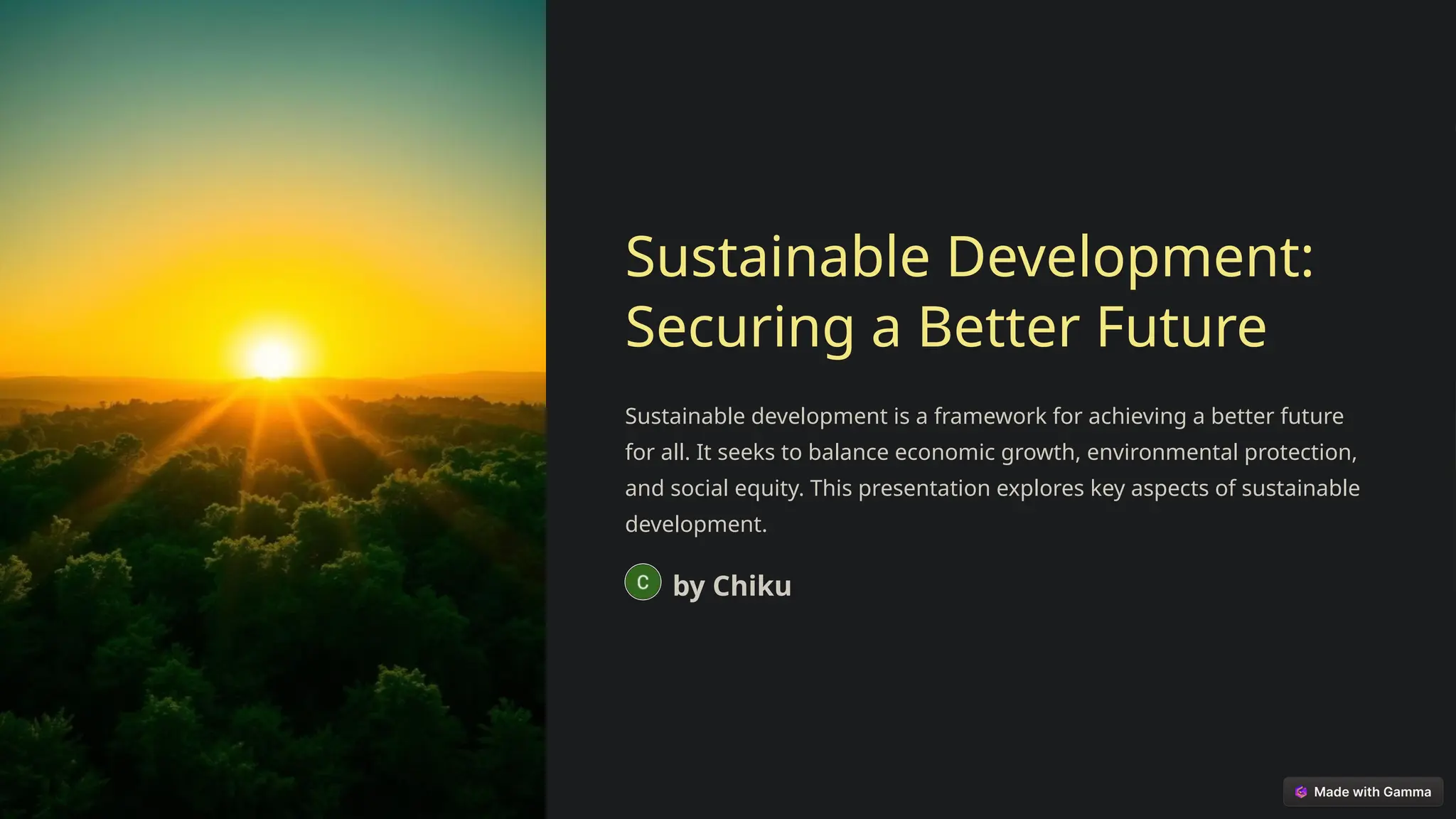
Sustainable development is a framework for achieving a better future
for all. It seeks to balance economic growth, environmental protection,
and social equity. This presentation explores key aspects of sustainable
development.
by Chiku
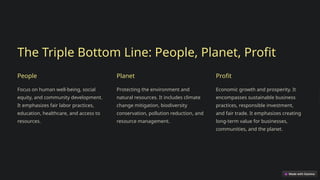
The Triple Bottom Line: People, Planet, Profit
People
Focus on human well-being, social
equity, and community development.
It emphasizes fair labor practices,
education, healthcare, and access to
resources.
Planet
Protecting the environment and
natural resources. It includes climate
change mitigation, biodiversity
conservation, pollution reduction, and
resource management.
Profit
Economic growth and prosperity. It
encompasses sustainable business
practices, responsible investment,
and fair trade. It emphasizes creating
long-term value for businesses,
communities, and the planet.
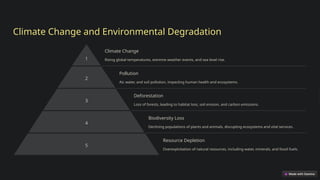
Climate Change and Environmental Degradation
1
Climate Change
Rising global temperatures, extreme weather events, and sea level rise.
2
Pollution
Air, water, and soil pollution, impacting human health and ecosystems.
3
Deforestation
Loss of forests, leading to habitat loss, soil erosion, and carbon emissions.
4
Biodiversity Loss
Declining populations of plants and animals, disrupting ecosystems and vital services.
5
Resource Depletion
Overexploitation of natural resources, including water, minerals, and fossil fuels.
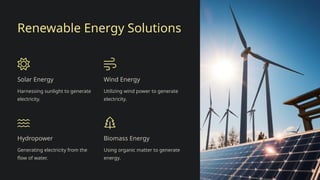
Renewable Energy Solutions
Solar Energy
Harnessing sunlight to generate
electricity.
Wind Energy
Utilizing wind power to generate
electricity.
Hydropower
Generating electricity from the
flow of water.
Biomass Energy
Using organic matter to generate
energy.
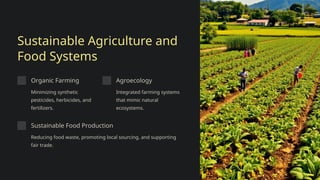
Sustainable Agriculture and
Food Systems
Organic Farming
Minimizing synthetic
pesticides, herbicides, and
fertilizers.
Agroecology
Integrated farming systems
that mimic natural
ecosystems.
Sustainable Food Production
Reducing food waste, promoting local sourcing, and supporting
fair trade.
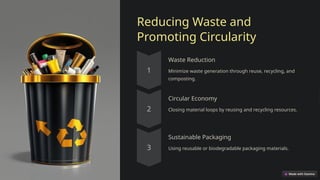
Reducing Waste and
Promoting Circularity
Waste Reduction
Minimize waste generation through reuse, recycling, and
composting.
Circular Economy
Closing material loops by reusing and recycling resources.
Sustainable Packaging
Using reusable or biodegradable packaging materials.
Green Buildings and Sustainable Infrastructure
1
Energy Efficiency
Minimizing energy consumption through insulation, efficient appliances, and renewable energy
sources.
2
Water Conservation
Reducing water use through low-flow fixtures, rainwater harvesting, and
greywater systems.
3
Sustainable Materials
Utilizing recycled and renewable materials in
construction.
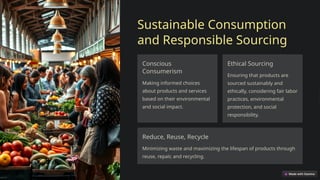
Sustainable Consumption
and Responsible Sourcing
Conscious
Consumerism
Making informed choices
about products and services
based on their environmental
and social impact.
Ethical Sourcing
Ensuring that products are
sourced sustainably and
ethically, considering fair labor
practices, environmental
protection, and social
responsibility.
Reduce, Reuse, Recycle
Minimizing waste and maximizing the lifespan of products through
reuse, repair, and recycling.
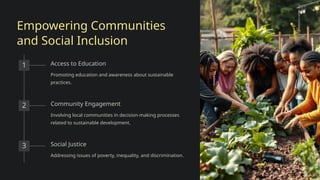
Empowering Communities
and Social Inclusion
1 Access to Education
Promoting education and awareness about sustainable
practices.
2 Community Engagement
Involving local communities in decision-making processes
related to sustainable development.
3 Social Justice
Addressing issues of poverty, inequality, and discrimination.

Sustainable-Development-Securing-a-Better-Future.pptx

  • 1.
    Sustainable Development: Securing aBetter Future Sustainable development is a framework for achieving a better future for all. It seeks to balance economic growth, environmental protection, and social equity. This presentation explores key aspects of sustainable development. by Chiku
  • 2.
    The Triple BottomLine: People, Planet, Profit People Focus on human well-being, social equity, and community development. It emphasizes fair labor practices, education, healthcare, and access to resources. Planet Protecting the environment and natural resources. It includes climate change mitigation, biodiversity conservation, pollution reduction, and resource management. Profit Economic growth and prosperity. It encompasses sustainable business practices, responsible investment, and fair trade. It emphasizes creating long-term value for businesses, communities, and the planet.
  • 3.
    Climate Change andEnvironmental Degradation 1 Climate Change Rising global temperatures, extreme weather events, and sea level rise. 2 Pollution Air, water, and soil pollution, impacting human health and ecosystems. 3 Deforestation Loss of forests, leading to habitat loss, soil erosion, and carbon emissions. 4 Biodiversity Loss Declining populations of plants and animals, disrupting ecosystems and vital services. 5 Resource Depletion Overexploitation of natural resources, including water, minerals, and fossil fuels.
  • 4.
    Renewable Energy Solutions SolarEnergy Harnessing sunlight to generate electricity. Wind Energy Utilizing wind power to generate electricity. Hydropower Generating electricity from the flow of water. Biomass Energy Using organic matter to generate energy.
  • 5.
    Sustainable Agriculture and FoodSystems Organic Farming Minimizing synthetic pesticides, herbicides, and fertilizers. Agroecology Integrated farming systems that mimic natural ecosystems. Sustainable Food Production Reducing food waste, promoting local sourcing, and supporting fair trade.
  • 6.
    Reducing Waste and PromotingCircularity Waste Reduction Minimize waste generation through reuse, recycling, and composting. Circular Economy Closing material loops by reusing and recycling resources. Sustainable Packaging Using reusable or biodegradable packaging materials.
  • 7.
    Green Buildings andSustainable Infrastructure 1 Energy Efficiency Minimizing energy consumption through insulation, efficient appliances, and renewable energy sources. 2 Water Conservation Reducing water use through low-flow fixtures, rainwater harvesting, and greywater systems. 3 Sustainable Materials Utilizing recycled and renewable materials in construction.
  • 8.
    Sustainable Consumption and ResponsibleSourcing Conscious Consumerism Making informed choices about products and services based on their environmental and social impact. Ethical Sourcing Ensuring that products are sourced sustainably and ethically, considering fair labor practices, environmental protection, and social responsibility. Reduce, Reuse, Recycle Minimizing waste and maximizing the lifespan of products through reuse, repair, and recycling.
  • 9.
    Empowering Communities and SocialInclusion 1 Access to Education Promoting education and awareness about sustainable practices. 2 Community Engagement Involving local communities in decision-making processes related to sustainable development. 3 Social Justice Addressing issues of poverty, inequality, and discrimination.