SURROGACY
BY: KASHMIRA SAHANI
MEANING
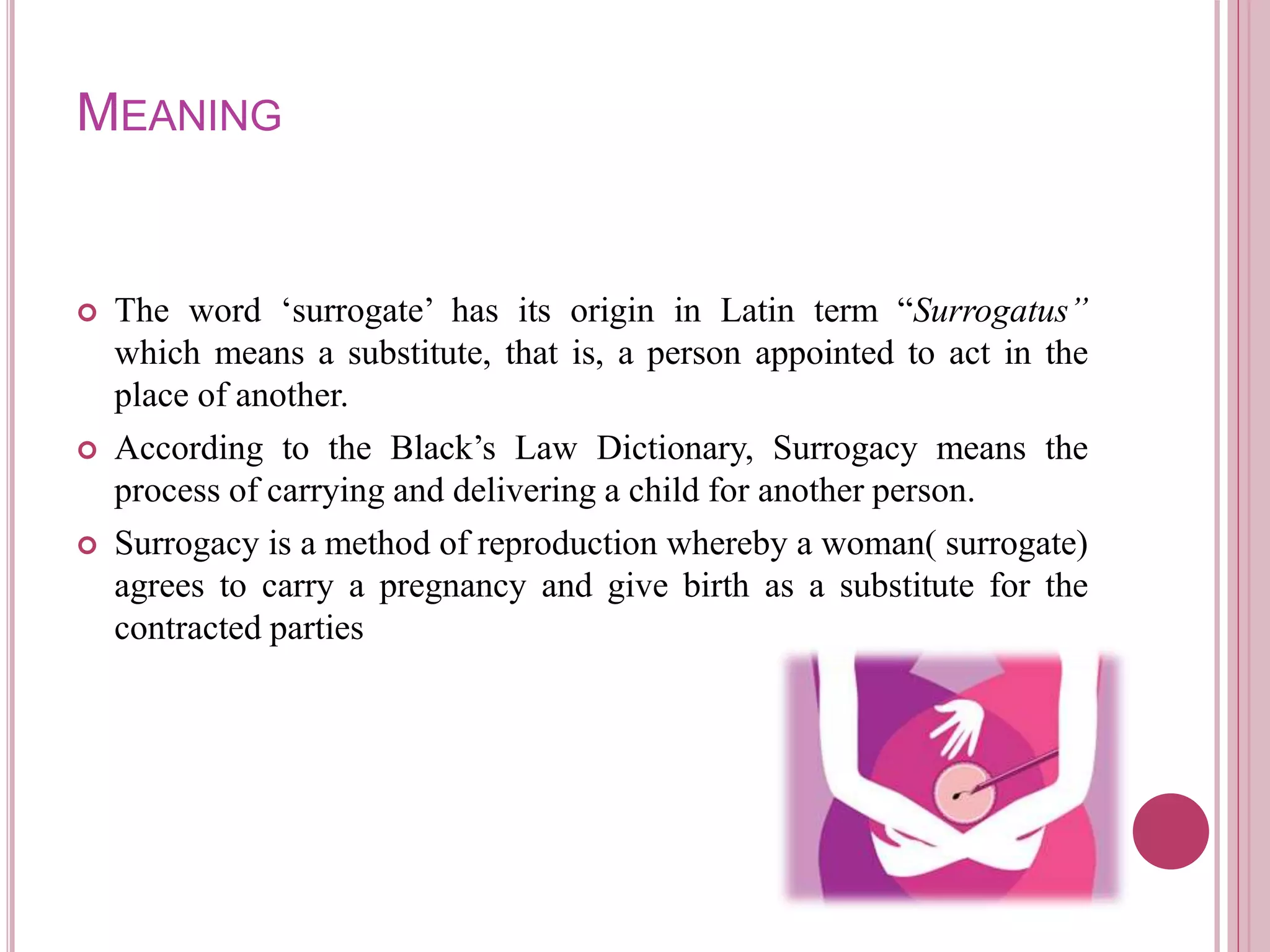
 The word ‘surrogate’ has its origin in Latin term “Surrogatus”
which means a substitute, that is, a person appointed to act in the
place of another.
 According to the Black’s Law Dictionary, Surrogacy means the
process of carrying and delivering a child for another person.
 Surrogacy is a method of reproduction whereby a woman( surrogate)
agrees to carry a pregnancy and give birth as a substitute for the
contracted parties
THE SURROGACY (REGULATION) BILL, 2016
Section 2(zb) “surrogacy" means a practice whereby one
woman bears and gives birth to a child for an intending
couple with the intention of handing over such child to
the intending couple after the birth;
 Section 2(ze) “surrogate mother" means a woman
bearing a child who is genetically related to the intending
couple, through surrogacy from the implantation of
embryo in her womb and fulfils the conditions as
provided in sub-clause (b) of clause (iii) of section 4
 Section2(b) “altruistic surrogacy" means the surrogacy in which no
charges, expenses, fees, remuneration or monetary incentive of
whatever nature, except the medical expenses incurred on surrogate
mother and the insurance coverage for the surrogate mother, are
given to the surrogate mother or her dependents or her
representative;
 Section2(f) “commercial surrogacy" means commercialization of
surrogacy services or procedures or its component services or
component procedures including selling or buying of human embryo
or trading in the sale or purchase of human embryo or gametes or
selling or buying or trading the services of surrogate motherhood by
way of giving payment, reward, benefit, fees, remuneration or
monetary incentive in cash or kind, to the surrogate mother or her
dependents or her representative, except the medical expenses
incurred on the surrogate mother and the insurance coverage for the
surrogate mother
TYPES ON THE BASIS OF METHODS
 Traditional or Partial Surrogacy
 Gestational Surrogacy or Total Surrogacy
TYPES ON THE BASIS OF MONEY
 Commercial surrogacy
 Emotional surrogacy
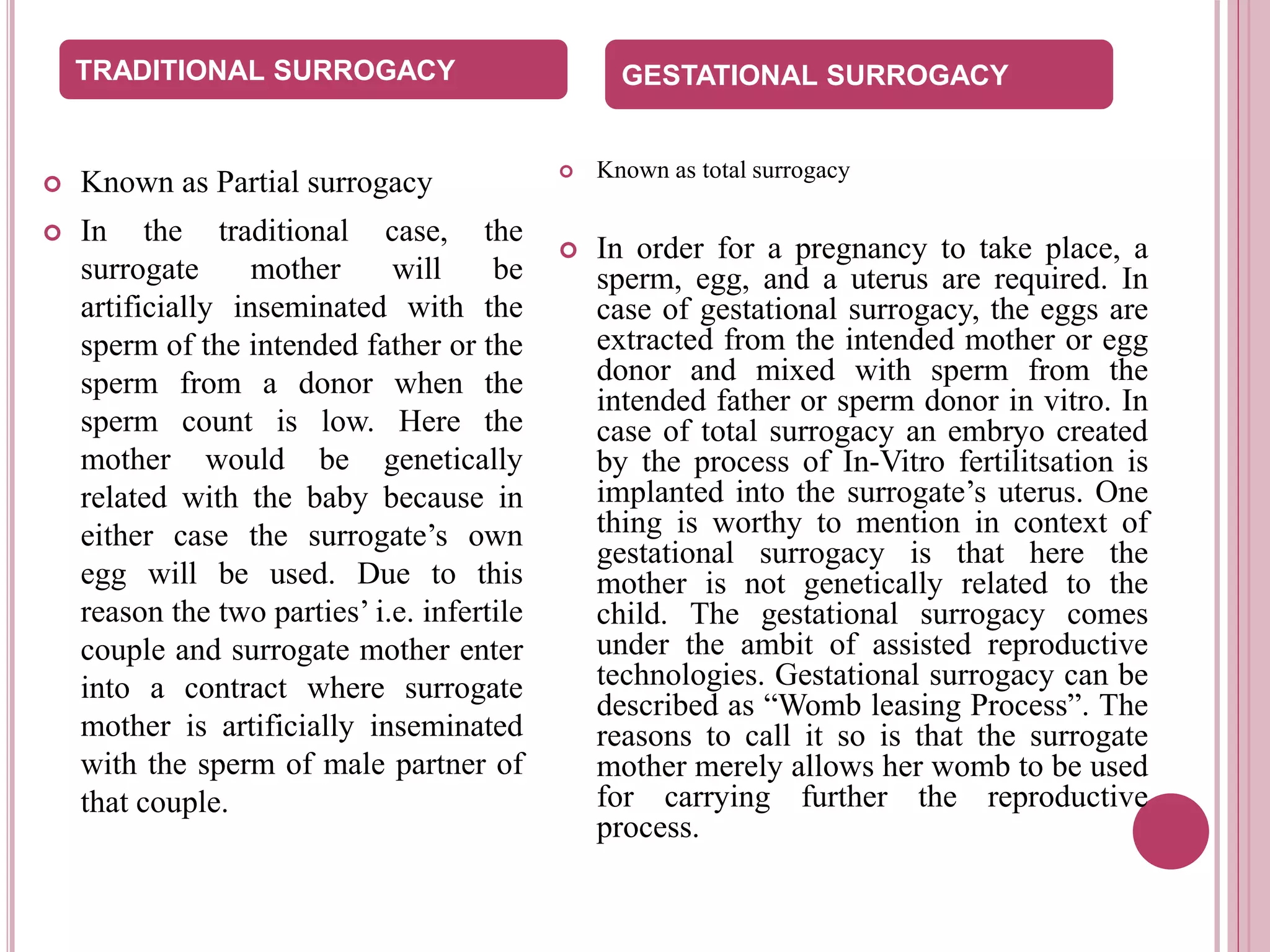
 Known as Partial surrogacy
 In the traditional case, the
surrogate mother will be
artificially inseminated with the
sperm of the intended father or the
sperm from a donor when the
sperm count is low. Here the
mother would be genetically
related with the baby because in
either case the surrogate’s own
egg will be used. Due to this
reason the two parties’ i.e. infertile
couple and surrogate mother enter
into a contract where surrogate
mother is artificially inseminated
with the sperm of male partner of
that couple.
 Known as total surrogacy
 In order for a pregnancy to take place, a
sperm, egg, and a uterus are required. In
case of gestational surrogacy, the eggs are
extracted from the intended mother or egg
donor and mixed with sperm from the
intended father or sperm donor in vitro. In
case of total surrogacy an embryo created
by the process of In-Vitro fertilitsation is
implanted into the surrogate’s uterus. One
thing is worthy to mention in context of
gestational surrogacy is that here the
mother is not genetically related to the
child. The gestational surrogacy comes
under the ambit of assisted reproductive
technologies. Gestational surrogacy can be
described as “Womb leasing Process”. The
reasons to call it so is that the surrogate
mother merely allows her womb to be used
for carrying further the reproductive
process.
TRADITIONAL SURROGACY GESTATIONAL SURROGACY
 In commercial surrogacy
arrangements the surrogate mother
enters into an agreement with the
commissioning parents or single
parent to bear the burden of
pregnancy. In return of her
agreeing to carry the term of the
pregnancy, she is paid by the
commissioning parents for that.
The usual fee is around $ 25,000
to $ 30,000 in India which is
around 1/3rd of that in developed
countries like the USA.
 It is that form of surrogacy in
which the surrogate mother
does not receive any financial
reward for the pregnancy or for
the pain to be undertaken by
her or for the handing over of
the child to the commissioning
parents. It is also known as
Altruistic Surrogacy.
COMMERCIAL EMOTIONAL
FEATURES OF THE SURROGACY BILL, 2016
 1. Surrogacy will not be allowed for –
 Homosexual couples
 Single parents
 Couples in live-in relationships
 Foreigners
 Couples with children
 Attempts at commercial surrogacy
 2. Couple must be married for atleast 5 years.
3. Either one of couple must have proven infertility.
4. Only Indian citizens; NRIs are also not included
5. Age of couple: 23-50 for females and 26-55 for males.
6. Women can be surrogates only once and a married couple can
only have one surrogate child.
7. The couple should employ an “altruistic relative”, i.e. the
surrogate mother should be a relative who is sympathetic to the
situation.
8. Egg donation is banned
THANKYOU

Surrogacy ppt

  • 1.
  • 2.
    MEANING  The word‘surrogate’ has its origin in Latin term “Surrogatus” which means a substitute, that is, a person appointed to act in the place of another.  According to the Black’s Law Dictionary, Surrogacy means the process of carrying and delivering a child for another person.  Surrogacy is a method of reproduction whereby a woman( surrogate) agrees to carry a pregnancy and give birth as a substitute for the contracted parties
  • 3.
    THE SURROGACY (REGULATION)BILL, 2016 Section 2(zb) “surrogacy" means a practice whereby one woman bears and gives birth to a child for an intending couple with the intention of handing over such child to the intending couple after the birth;  Section 2(ze) “surrogate mother" means a woman bearing a child who is genetically related to the intending couple, through surrogacy from the implantation of embryo in her womb and fulfils the conditions as provided in sub-clause (b) of clause (iii) of section 4
  • 4.
     Section2(b) “altruisticsurrogacy" means the surrogacy in which no charges, expenses, fees, remuneration or monetary incentive of whatever nature, except the medical expenses incurred on surrogate mother and the insurance coverage for the surrogate mother, are given to the surrogate mother or her dependents or her representative;  Section2(f) “commercial surrogacy" means commercialization of surrogacy services or procedures or its component services or component procedures including selling or buying of human embryo or trading in the sale or purchase of human embryo or gametes or selling or buying or trading the services of surrogate motherhood by way of giving payment, reward, benefit, fees, remuneration or monetary incentive in cash or kind, to the surrogate mother or her dependents or her representative, except the medical expenses incurred on the surrogate mother and the insurance coverage for the surrogate mother
  • 5.
    TYPES ON THEBASIS OF METHODS  Traditional or Partial Surrogacy  Gestational Surrogacy or Total Surrogacy TYPES ON THE BASIS OF MONEY  Commercial surrogacy  Emotional surrogacy
  • 6.
     Known asPartial surrogacy  In the traditional case, the surrogate mother will be artificially inseminated with the sperm of the intended father or the sperm from a donor when the sperm count is low. Here the mother would be genetically related with the baby because in either case the surrogate’s own egg will be used. Due to this reason the two parties’ i.e. infertile couple and surrogate mother enter into a contract where surrogate mother is artificially inseminated with the sperm of male partner of that couple.  Known as total surrogacy  In order for a pregnancy to take place, a sperm, egg, and a uterus are required. In case of gestational surrogacy, the eggs are extracted from the intended mother or egg donor and mixed with sperm from the intended father or sperm donor in vitro. In case of total surrogacy an embryo created by the process of In-Vitro fertilitsation is implanted into the surrogate’s uterus. One thing is worthy to mention in context of gestational surrogacy is that here the mother is not genetically related to the child. The gestational surrogacy comes under the ambit of assisted reproductive technologies. Gestational surrogacy can be described as “Womb leasing Process”. The reasons to call it so is that the surrogate mother merely allows her womb to be used for carrying further the reproductive process. TRADITIONAL SURROGACY GESTATIONAL SURROGACY
  • 7.
     In commercialsurrogacy arrangements the surrogate mother enters into an agreement with the commissioning parents or single parent to bear the burden of pregnancy. In return of her agreeing to carry the term of the pregnancy, she is paid by the commissioning parents for that. The usual fee is around $ 25,000 to $ 30,000 in India which is around 1/3rd of that in developed countries like the USA.  It is that form of surrogacy in which the surrogate mother does not receive any financial reward for the pregnancy or for the pain to be undertaken by her or for the handing over of the child to the commissioning parents. It is also known as Altruistic Surrogacy. COMMERCIAL EMOTIONAL
  • 8.
    FEATURES OF THESURROGACY BILL, 2016  1. Surrogacy will not be allowed for –  Homosexual couples  Single parents  Couples in live-in relationships  Foreigners  Couples with children  Attempts at commercial surrogacy  2. Couple must be married for atleast 5 years. 3. Either one of couple must have proven infertility. 4. Only Indian citizens; NRIs are also not included 5. Age of couple: 23-50 for females and 26-55 for males. 6. Women can be surrogates only once and a married couple can only have one surrogate child. 7. The couple should employ an “altruistic relative”, i.e. the surrogate mother should be a relative who is sympathetic to the situation. 8. Egg donation is banned
  • 9.