suraj yadav.pdf by sooraj yadav B.com H for students
1.
BUDGET
Presented by :Suraj Yadav
Class : SBMU 210 [ B.Com( Hons.)]
Section : C
Enrollment Number: CSJMU250022452
2.
Introduction to
Budgeting
Budgeting isthe process of planning, organizing, and
controlling financial resources by estimating income and
expenditures over a specific period of time. It acts as a
financial roadmap for individuals, businesses, or institutions to
achieve their goals
Budgeting involves creating a financial plan that outlines:
Expected income (revenue)
Planned expenses (costs)
It helps in balancing spending with income, avoiding deficits,
and saving for future needs.
3.
Objectives of Budgeting
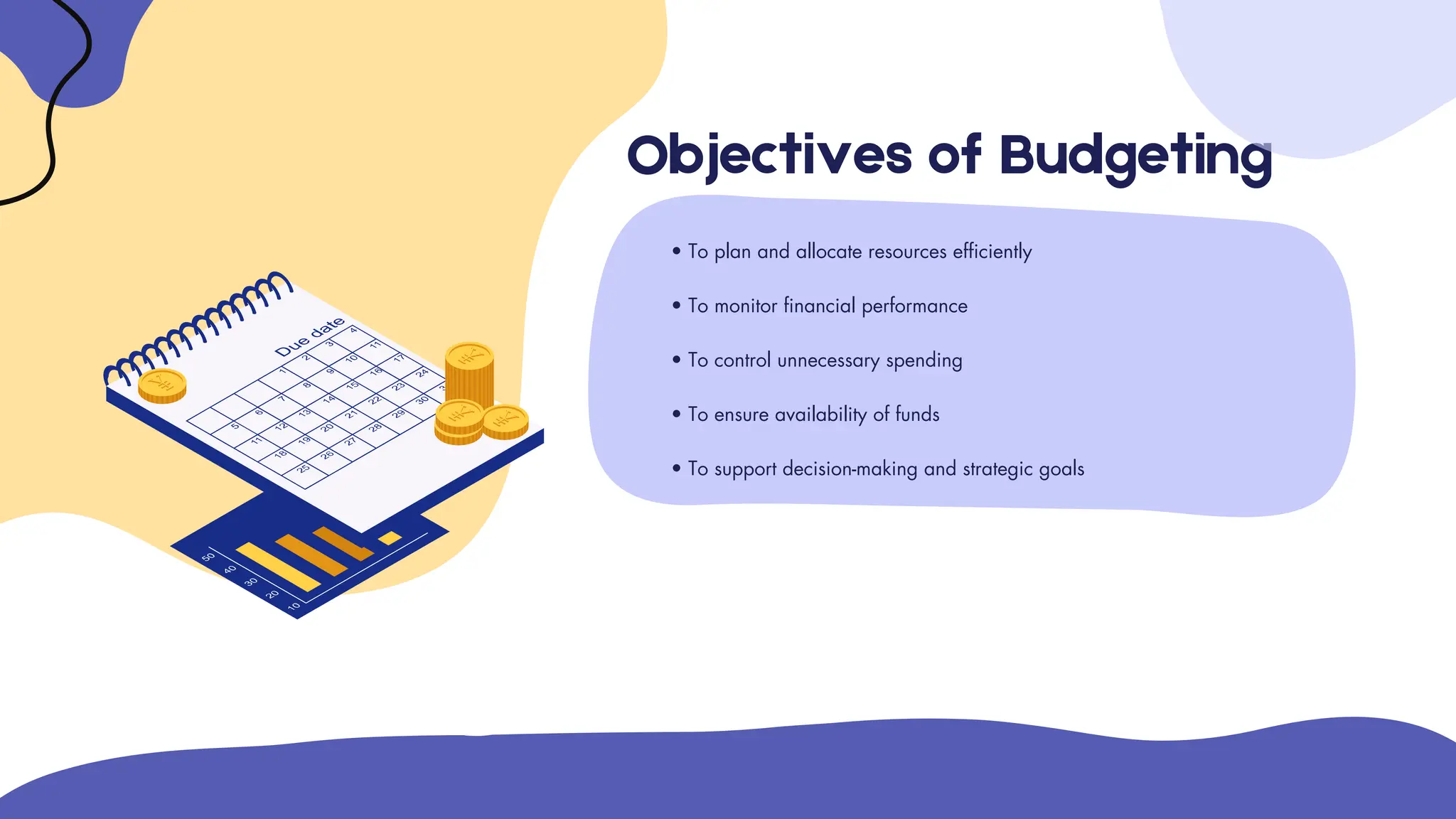
•To plan and allocate resources efficiently
• To monitor financial performance
• To control unnecessary spending
• To ensure availability of funds
• To support decision-making and strategic goals
4.
Importance of Budget
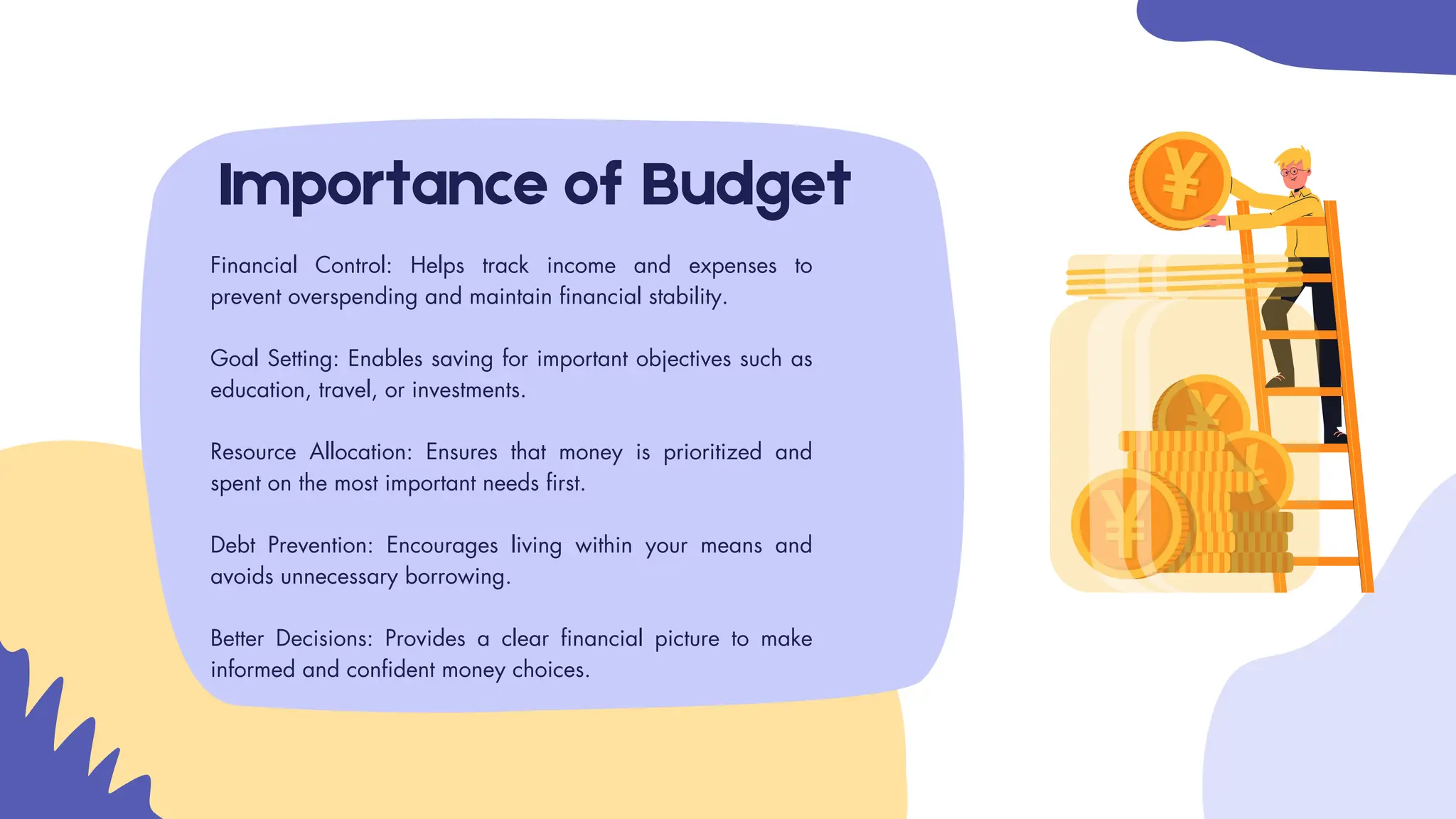
FinancialControl: Helps track income and expenses to
prevent overspending and maintain financial stability.
Goal Setting: Enables saving for important objectives such as
education, travel, or investments.
Resource Allocation: Ensures that money is prioritized and
spent on the most important needs first.
Debt Prevention: Encourages living within your means and
avoids unnecessary borrowing.
Better Decisions: Provides a clear financial picture to make
informed and confident money choices.
5.
Types of Budget
PersonalBudget
Tracks an individual’s or household’s
income and expenses to manage daily
finances.
Operating Budget
Used by businesses to plan and control
day-to-day operational costs like salaries,
utilities, and materials.
Capital Budget
Focuses on long-term investments and
expenditures, such as buying equipment,
buildings, or major upgrades.
Cash Flow Budget
Projects incoming and outgoing cash
to ensure there’s enough liquidity to
meet obligations on time.
Static Budget
A fixed budget that does not change
with actual levels of activity or
production.
Flexible Budget
Adjusts based on changes in activity
levels or sales volume, providing a
more dynamic financial plan.
6.
Steps in Budgeting
SetGoals — Define what you want to achieve.
Gather Info — Collect income and expense details.
Categorize — Group income and expenses.
Estimate — Forecast your earnings and spending.
Plan — Allocate money to each category.
Implement — Follow the budget plan.
Monitor — Track actual spending.
Adjust — Update the budget as needed.
7.
Components of aBudget
Income: This includes all the money you earn from different
sources, such as your salary, business profits, government aid, or
any other earnings. Knowing your total income helps you
understand how much money you have to work with.
Fixed Expenses: These are regular costs that stay the same every
month, like rent, loan repayments, insurance, and subscriptions.
Because they don’t change, they are easier to plan for in your
budget.
Variable Expenses: These expenses can change from month to
month. Examples include utility bills, groceries, transportation,
and entertainment. It’s important to track these closely to avoid
overspending.
Savings: This is the portion of your income that you set
aside for emergencies or future goals. Saving regularly
helps build financial security and prepares you for
unexpected expenses.
Investments: Money allocated to buying assets such as
stocks, bonds, or real estate. Investments help grow
your wealth over time and secure your financial future.
8.
Challenges in Budgeting
1.)Unpredictable Expenses or Income Changes: Sometimes
unexpected costs arise, or income may vary, making it hard to
stick to a set budget.
2.) Lack of Discipline: Sticking to a budget requires self-
control, and many people find it difficult to avoid impulsive or
unnecessary spending.
3.) Overestimating Income or Underestimating Expenses:
Misjudging how much money will come in or how much will
be spent can lead to budget shortfalls.
4.) Unexpected Emergencies or Economic Fluctuations: Events
like medical emergencies, job loss, or changes in the
economy can disrupt even the best-planned budgets.
9.
1.) Better FinancialControl: Budgeting helps track income and
expenses, preventing overspending and helping you stay
within your means.
2.) Goal Achievement: It allows you to set and prioritize
financial goals like saving for education, buying a house, or
starting a business.
3.) Efficient Resource Allocation: Budgeting ensures your
money is spent on important needs first, avoiding wasteful
expenses.
4.) Preparedness for Emergencies: Regular budgeting includes
setting aside savings, which provides a safety net for
unexpected situations.
Benefits of Budgeting
10.
CONCLUSION
In conclusion, budgetingis an essential practice
that plays a crucial role in financial
management for individuals, businesses, and
governments alike. It provides a clear
framework to plan and control income and
expenditures, helping to avoid unnecessary
debt and promote savings. By setting realistic
goals and tracking expenses, budgeting
ensures efficient allocation of resources and
prepares individuals and organizations for
future uncertainties. While challenges such as
unpredictable expenses and lack of discipline
can make budgeting difficult, the benefits of
financial control, goal achievement, and security
far outweigh these obstacles. Ultimately,
mastering the art of budgeting empowers
people to make informed decisions, build
wealth, and achieve long-term financial
stability.
![BUDGET
Presented by : Suraj Yadav
Class : SBMU 210 [ B.Com( Hons.)]
Section : C
Enrollment Number: CSJMU250022452](https://image.slidesharecdn.com/surajyadav-251014161131-73557db9/75/suraj-yadav-pdf-by-sooraj-yadav-B-com-H-for-students-1-2048.jpg)